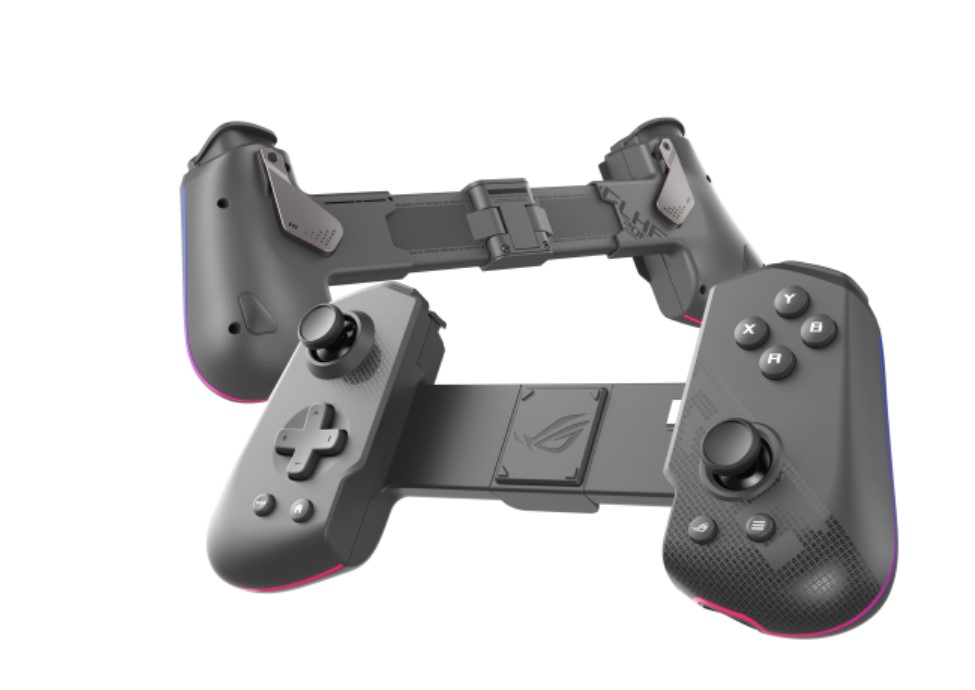
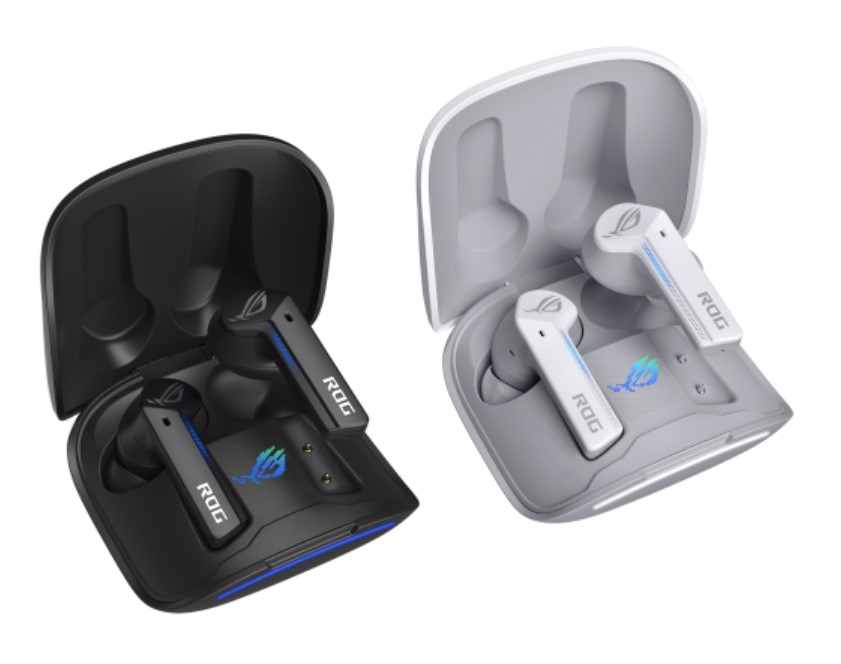
CES 2024 is currently underway. A host of brands have unveiled their products. ASUS has also announced a gaming controller called the ROG Tessen Mobile Controller. It is aimed at smartphone gamers and is touted to turn a phone into gaming handheld. The Taiwanese brand has also unveiled the ROG Cetra TWS earphones. Let’s take a look at the accessories in detail.
ASUS introduces ROG Tessen Mobile Controller
Beginning with the striking highlight, the ROG Tessen Mobile Controller is equipped with a foldable hinge offering portability. It can be folded in to half when not in use and can easily slip in to bags or pockets. The controller has rubber support pads of varying thickness and an extended USB-C port ensuring compatibility with various Android phones without having to remove their cases. There is an 18W passthrough port for charging the device while gaming simultaneously.
The ASUS ROG Tessen Mobile Controller features RGB lights and extendable handgrips. There are mechanical switches and a D-pad, analog triggers, and ALPS joysticks offering 22-degree movement for precise controls.
Through the Armoury Crate, users can configure button remapping, ROG button customization, and adjust Aura lighting settings.
ASUS ROG Cetra TWS specifications
The ASUS ROG Cetra TWS earphones are also geared towards gaming enthusiasts. They feature an in-ear design with RGB lightning, a stem, and silicone ear tips. The earbuds are IPX4-certified water-resistant.
The ASUS ROG Cetra TWS is equipped with a 10mm driver unit. The audio device features hybrid active noise cancellation. It supports 7.1 virtual surround sound and various EQ modes via Armoury Crate. There is a low latency mode for a lag-free experience. The TWS earphones are claimed to deliver 27 hours of usage with ANC disabled and with the feature enabled can offer 22 hours of playtime. They also support wireless charging.
ASUS has not revealed the availability and pricing details of the ROG Tessen Mobile Controller and ROG Cetra TWS earphones.
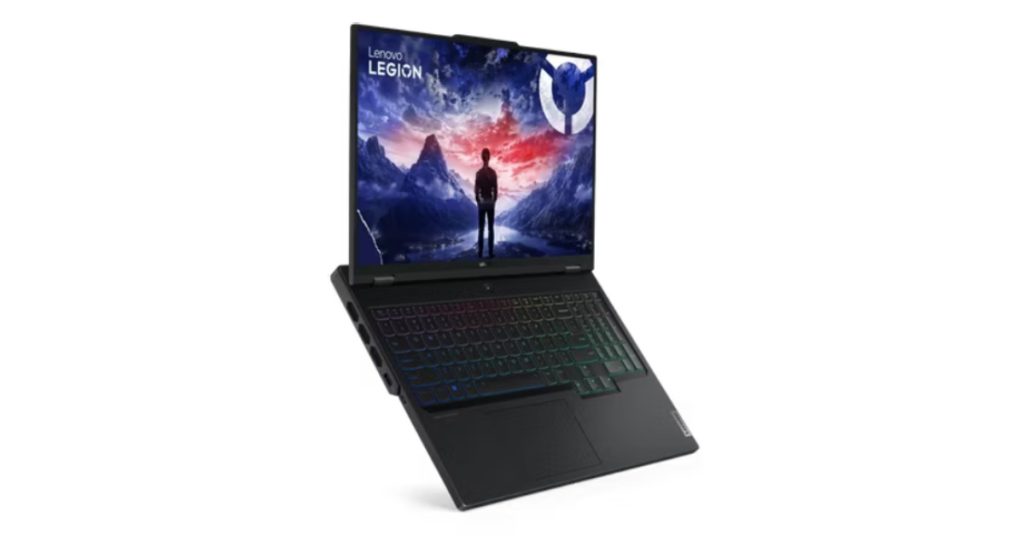
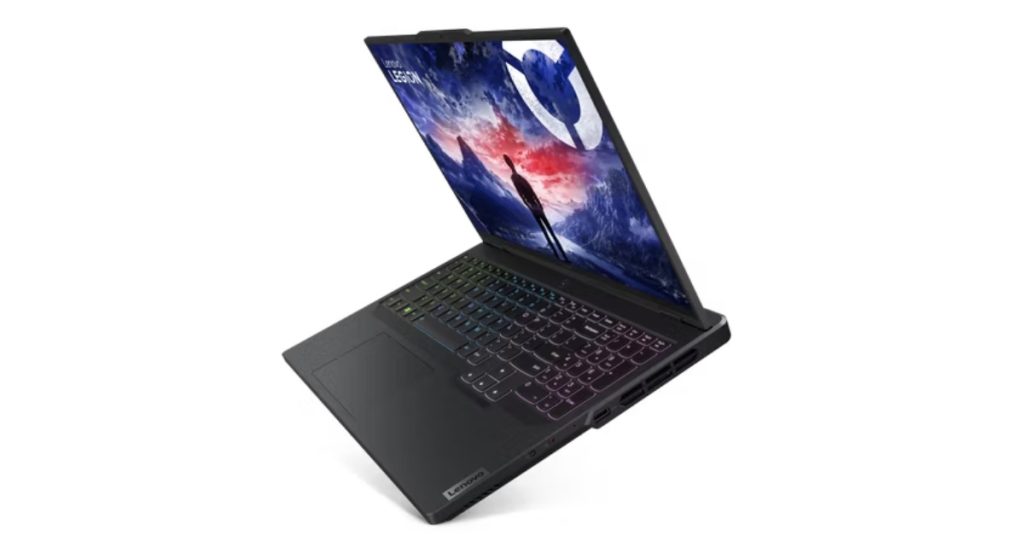
Lenovo is back with refreshed versions of its popular Legion Pro gaming laptops, the Legion Pro 7i and Legion Pro 5i for 2024. Both models get a boost in processing power with Intel’s latest Raptor Lake Refresh CPUs, up to the flagship Core i9-14900HX. But that’s not all – let’s dive into what each laptop brings to the table.
Lenovo Legion Pro 7i, Legion Pro 5i Specifications
The Legion Pro 7i is the ultimate powerhouse, packing a 16-inch 240 Hz IPS display with stunning visuals and smooth gameplay. VESA DisplayHDR 400 certification and 100% sRGB color gamut guarantee vibrant, accurate colors.
This machine can handle even the most demanding AAA titles thanks to its high-end NVIDIA GeForce RTX 4090 graphics card and up to 32 GB of RAM. And to keep you going during marathon gaming sessions, Lenovo has equipped it with a whopping 99.99 Wh battery with fast 330 W charging.
The Legion Pro 5i offers a sweet spot between performance and value. It retains the same captivating 16-inch 240 Hz IPS display as its bigger brother, ensuring high refresh rates and smooth visuals.
While the GPU specs top out at an NVIDIA GeForce RTX 4070, it’s still a formidable force for most gaming needs. It comes with an 80 Wh battery which supports 300 W charging.
Both laptops benefit from the latest Raptor Lake Refresh processors, offering a noticeable performance boost over previous generations. Additionally, both feature a variety of ports for all your peripherals, including Thunderbolt 4, HDMI 2.1, and RJ45 for wired networking.
Specification
Legion Pro 7i
Legion Pro 5i
Processor
Intel Core i9-14900HX
Intel Core i9-14900HX
RAM
Up to 32GB (2 X 16GB) 5600Mhz
Up to 32GB (2 X 16GB) 5600Mhz
Storage
Up to 2TB M.2 2280 PCIe SSD (Gen4)
Up to 2TB M.2 2280 PCIe SSD (Gen4)
Graphics
Up to NVIDIA GeForce RTX 4090 Laptop GPU 16 GB GDDR6 (175W) 2040Mhz Boost Clock
Up to NVIDIA GeForce RTX 4070 Laptop GPU 8 GB GDDR6 (140W) 2175Mhz Boost Clock
Display
16-inch 2560×1600 resolution, 240hz refresh rate, 3ms response time
16-inch 2560×1600 resolution, 240hz refresh rate, 3,m or 5ms response time
Wireless
Intel Killer Wi-Fi 6E
Intel Killer Wi-Fi 6E
Battery
Up to 99.99WH
80WH
Camera
Built in 1080p or 720p Webcam with E-Shutter
Built in 1080p or 720p Webcam with E-Shutter
Dimensions
14.3 x 10.33 x 0.89 inches
14.3 x 10.26 x 0.89 inches
Pricing and Availability
The Legion Pro 7i starts at €3,299 in Europe and $2,699 in the US, while the Legion Pro 5i starts at a more friendly €1,399 and $1,399, respectively. Both models are expected to hit store shelves in March 2024.
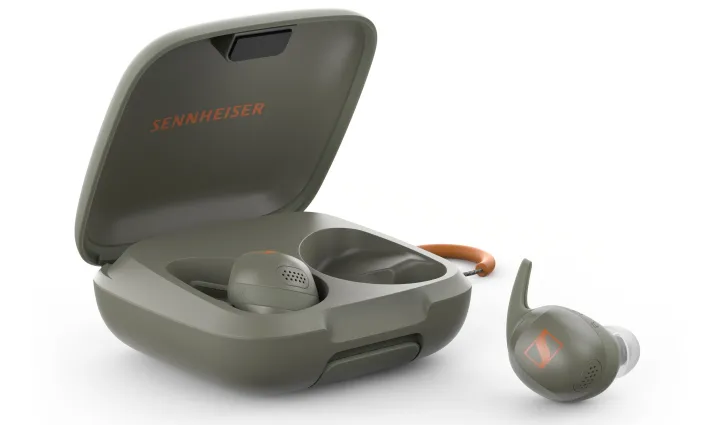
Sennheiser had just unveiled its Momentum True Wireless 4 during CES 2024. Alongside this flagship earbuds, the company also released the new Momentum Sport earbuds, which were specifically built for those with an active lifestyle. It comes with unique features and design so let’s have a look.
Sennheiser Momentum Sport Specs
The Momentum Sport earbuds feature a semi open design that allows for better environmental awareness. This is perfect for people who are physically active and head out often. Despite this design, it still offers an adaptive active noise cancellation (ANC). This is also paired with an adjustable transparency mode and anti wind mode. Since it is built for outdoor use as well, it comes with a shock proof chassis and clog resistant ear tips. Furthermore, it is rated for IP55 water and dust resistance.
The highlighting feature of the Sennheiser Momentum Sport is the health related sensors housed in the earbuds. This includes a photoplethysmography (PPG) heart rate sensor and a body temperature sensor. These sensors are crucial for people who are fitness enthusiasts and often use fitness related apps and services. This includes the likes of Apple Watch/Health, Garmin Watch/Connect, Strava, and Peloton.
These new truly wireless earbuds can last for up to six hours on a single full charge while the charging case offer an additional 18 hours of audio playback. It will be available in multiple color options, namely polar black, burned olive, and metallic graphite. The truly wireless earbuds will go on sale starting from 9th April 2024 for a price tag of 330 US Dollars.
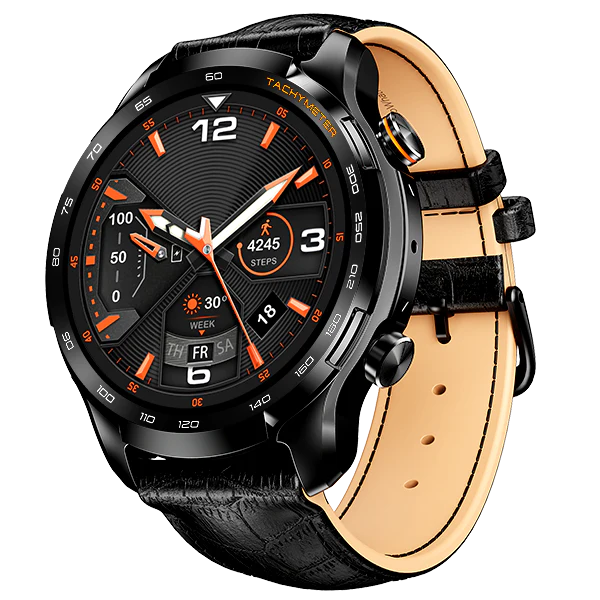
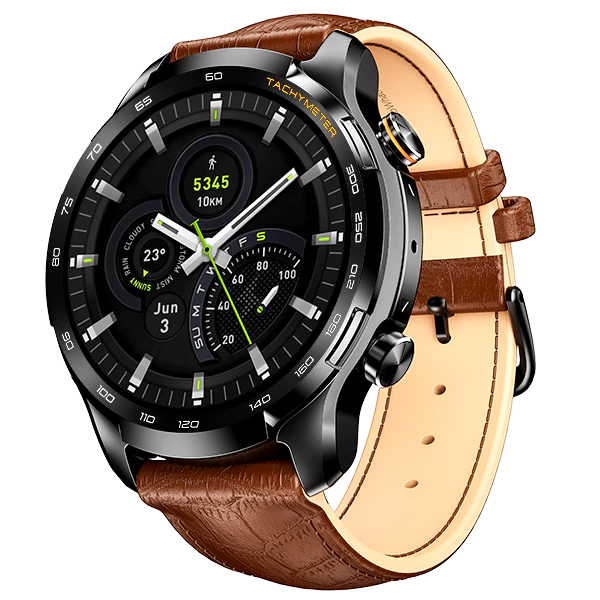
boAt recently unveiled the Lunar Pro LTE, its maiden eSIM-enabled smartwatch. The watch combines a sleek round dial design with two side buttons, exuding both style and functionality. Now, the brand has officially started selling the smartwatch in the Indian market.
boAt Lunar Pro LTE specs
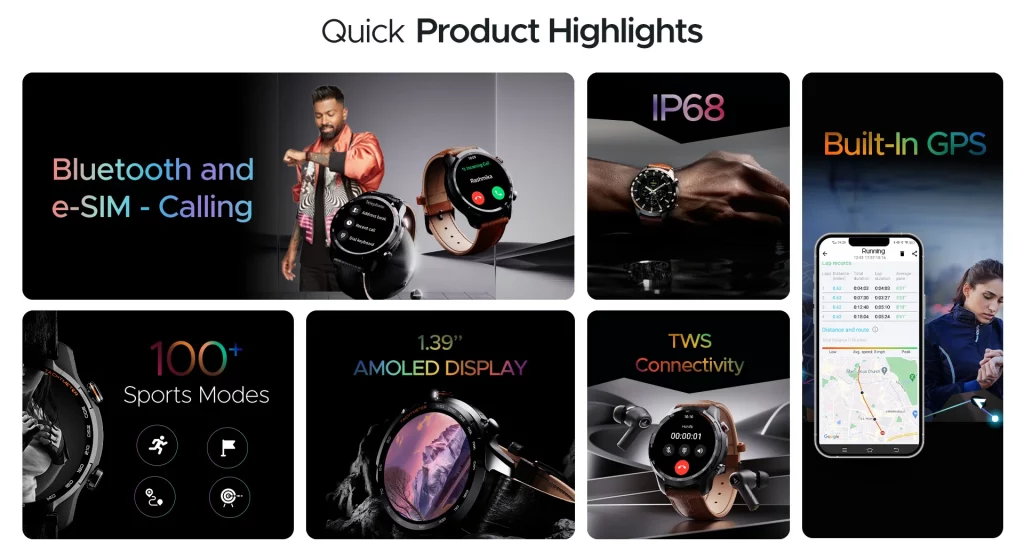
The Lunar Pro LTE is different from the rest of the smartwatches offered by boAt as it supports LTE calling through an eSIM. Users can now make and receive calls, send messages, and even indulge in Bluetooth calling – all without the need for their smartphones. The exciting news is that boAt has partnered with Jio for this venture, and Airtel users might soon enjoy the eSIM feature too.
The smartwatch boasts a vivid 1.39-inch always-on AMOLED screen that supports customizable watch faces. Beyond its stylish appearance, the Lunar Pro LTE is a health enthusiast’s dream, offering comprehensive monitoring of heart rate, SpO2, menstrual cycles, and sleep, along with over 100 sports modes. It comes equipped with a built-in GPS and is resilient against water and dust with its IP68 rating. The brand claims a battery life of up to 7 days with normal usage and up to 2 days with e-SIM calling.
Key features of the boAt Lunar Pro LTE include Bluetooth calling support, a quick dial pad, and compatibility with voice assistants. The watch also covers a spectrum of health features, such as sedentary alerts, camera control, music control, weather updates, and more.
Pricing & availablity
The boAt Lunar Pro LTE is currently available for a special launch price of Rs. 9,999. It comes in sleek black and refined brown color options and is available on Flipkart and boat-lifestyle.com. As a bonus, purchasers of the smartwatch receive a complimentary plan worth Rs. 399 (valid for 3 months) on a new Jio SIM.
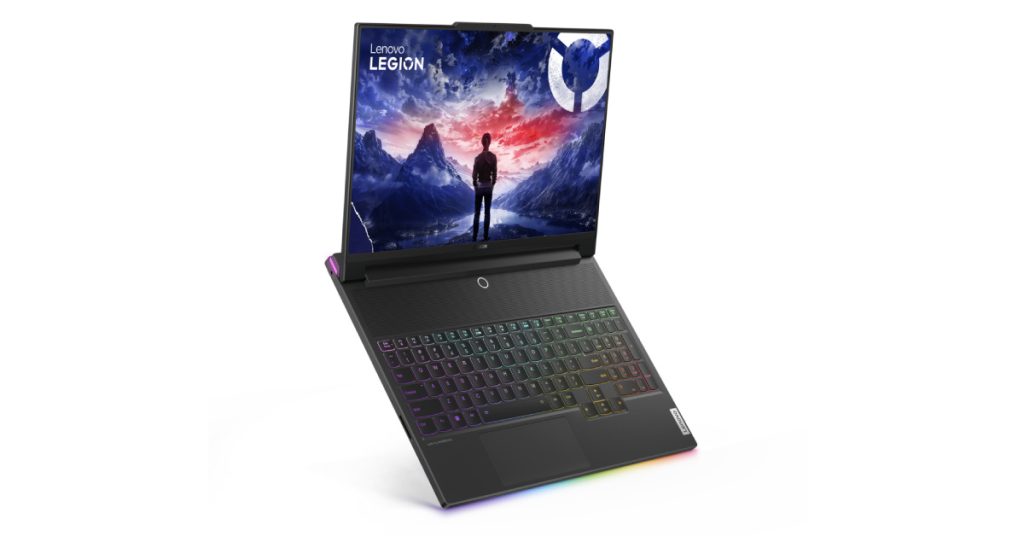
Lenovo has announced its new lineup of gaming laptops for 2024, including refreshed versions of the Legion 9i, Legion 7i, Legion 5i, and Legion Slim 5. These laptops all come with newer hardware inside, completed with some AI magic. Let’s talk about them in detail here.
Lenovo Legion 9i
The top-of-the-line model is the Legion 9i. The laptop comes with a 16-inch 3.2K mini LED display with a 165Hz refresh rate and a 3ms response time. It also has a powerful Intel Core i9-14900HX processor and up to an Nvidia GeForce RTX 4090 graphics card.
The Legion 9i Gen 9 is also equipped with Lenovo’s LA3-P AI chip, which uses the power of AI to dynamically allocate power to the CPU and GPU for maximum performance.
The laptop has a variety of I/O ports, including two Thunderbolt 4.0 ports, one USB 3.2 Gen2 Type-C port, two USB 3.2 Gen1 Type-A ports, an HDMI 2.1 port, an RJ 45 Ethernet jack, a micro SD card reader, and a combo audio jack.
The Legion 9i Gen 9 is available in one colorway: Carbon Black. It is not the most portable laptop at 2.56 kg (5.64 lbs), but gaming laptops seldom are. The laptop starts at $4,399 and will be available for purchase in the coming days.
Specification
Description
Processor
Up to Intel Core i9-14900HX
RAM
Up to 64 GB 5600MHz DDR5 (2 x 16GB)
Storage
Up to 2TB M.2 2280 PCIe SSD (Gen4)
Graphics
Up to NVIDIA GeForce RTX 4090 Laptop GPU 16 GB GDDR6 (150W TGP)
Display
Up to 16-inch 3.2k (3200 x 2000) Mini LED 16:10 (165 HZ / 3 ms Response Time)
Wireless
Up to Wi-Fi 7
Bluetooth
Starting from Bluetooth 5.1
Battery
99.99 Whr
Ports
Left Side
1 X Audio Combo Jack, 1 X SD card Reader 3.0
Right Side
1 X USB Type-C, 1 X USB Type-A, 1 X eShutter Button
Rear
1 X DC in, 1 X USB Type-A (USB 32 Gen 1, Always on USB 5V2A), 2 X Thunderbolt 4 (3.2 Gen. DisplayPort 1.4, Power Delivery 3.0 140W), 1 x HDMI 2.1, 1 X RJ45
Camera
Optional 1080p FHD webcam
Dimensions & Weight
14.08×10.93×0.74 inches & 5.64 pounds
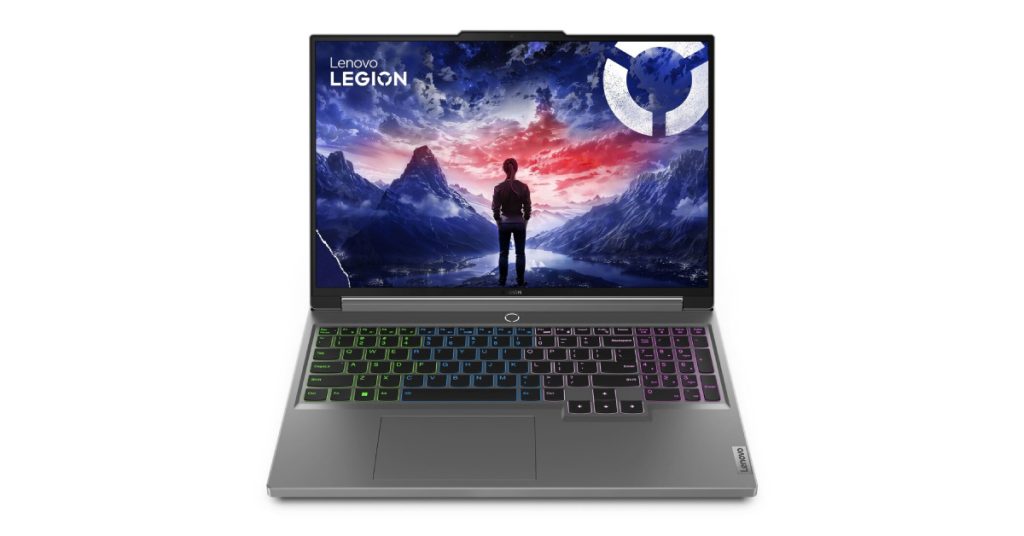
Lenovo Legion 7i, Legion 5i
The Legion 7i and 5i are both powerful gaming laptops that are almost identical, with a few major differences like the port selection, battery capacity, and finishes.
The Legion 7i and 5i Gen 9 can be configured with up to an Intel Core i9-14900HX Raptor Lake Refresh CPU and up to an RTX 4070 laptop board, making them gaming and content creation powerhouses.
The laptop has a brand new “Coldfront: Hyper” thermal design that keeps the internals cool by preventing hot exhaust air from mixing with cold intake air. The result is that Lenovo Legion 7i and 5i Gen 9 can push max TDPs of 170 and 190 W respectively.
Both the Legion 7i and 5i Gen 9 pack 16-inch 1600p IPS panels with 100% sRGB coverage, 500 nits of peak brightness, a 3ms response time, a 240 Hz refresh rate, and NVIDIA G-SYNC.
On the Legion 7i, users also have the option of a 3.2K panel a 165 Hz refresh rate, 430 nits of brightness, 100% DCI-P3 coverage, and NVIDIA G-SYNC. All panels available for the Legion 7i and 5i Gen 9 support Dolby Vision and are Panton X-Rite validated.
The Legion 7i is set to go on sale in March at a starting price of $2,099 while users will be able to purchase the Legion 5i Gen 9 in April for an entry-level price of $1,399.
Specification
Legion 7i Gen 9
Legion 5i Gen 9
Processor
Up to Intel Core i9-14900HX
Up to Intel Core i9-14900HX
RAM
32 GB DDR5 (2 x 16GB) (User configurable up to 64GB)
Up 32 GB DDR5 (2 x 16GB) (User configurable up to 64GB)
Storage
Up to 1TB M.2 2280 PCIe SSD (Gen4)
Up to 1TB M.2 2280 PCIe SSD (Gen4)
Graphics
Up to NVIDIA GeForce RTX 4070 Laptop GPU 8GB GDDR6 (115W)
Up to NVIDIA GeForce RTX 4060 Laptop GPU 8GB GDDR6
Display
16-inch 3.2K (3200 x 2000) IPS, 165 Hz 3ms response time OR 16-inch WQXGA (2560 x 1600) IPS, 240Hz, 5ms or 3ms response time
16-inch (2560×1600) IPS, 240 Hz 3ms response time
Wireless
Up to Wi-Fi 7 and Bluetooth 5.1
Up to Wi-Fi 6E and Bluetooth 5.1
Battery
99.99 Whr
Up to 80 Whr
Camera
Built-in FHD Webcam with E-Shutter
Built-in FHD Webcam with E-Shutter
Dimensions
14.08 x 10.33 x 0.69–0.78 inches
14.16 x 10.33 x 0.78–0.99 inches
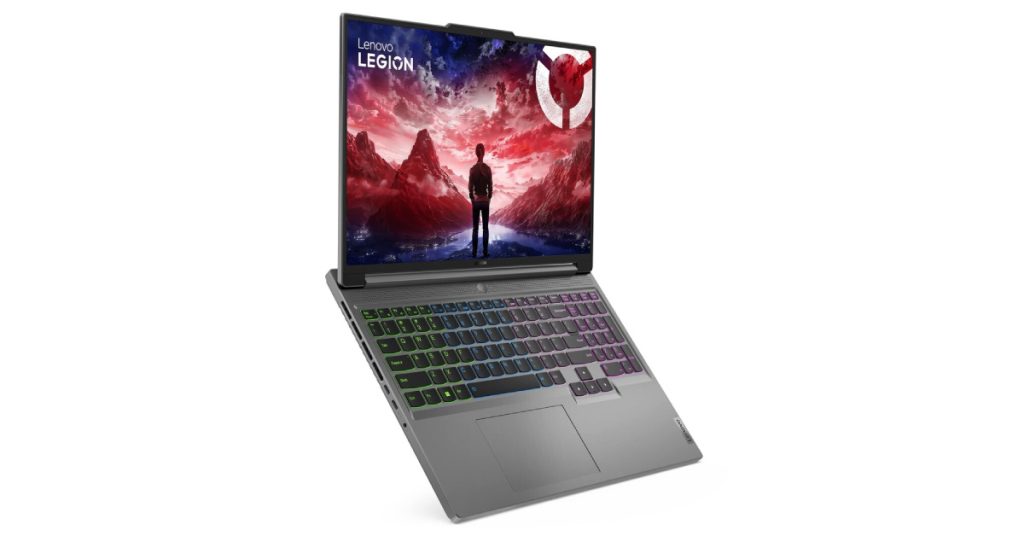
Lenovo Legion Slim 5
The Legion Slim 5 is a mid-range machine that is an update to the 2023 model, with new AMD CPUs, a more powerful GPU option, and an optional 240 Hz display.
The Slim 5 16 Gen 9 has a sleek and understated design that doesn’t scream “gamer.” It’s packed with ports, including two USB-C ports with DisplayPort, two USB-A ports, an HDMI 2.1 port, an RJ45 jack, and an SD card reader.
The 16-inch display is available in either a 165 Hz or 240 Hz refresh rate option, both with a 3ms response time and 500 nits of brightness. The 240 Hz panel is a new addition for 2024 and is sure to please gamers who demand the smoothest possible gameplay.
Under the hood, the Slim 5 16 Gen 9 is powered by AMD Ryzen 8040 Hawk Point CPUs and up to an NVIDIA RTX 4070 laptop GPU. The thinner version of the laptop is limited to an RTX 4050 GPU, but that’s still plenty of power for most games.
The laptop also comes with up to an 80 Wh battery, Wi-Fi 6E, and Bluetooth 5.1. The Lenovo Slim 5 16 Gen 9 will go on sale in April starting at $1,499.
Specification
Description
Processor
AMD Ryzen 8040 Series
RAM
Up to 32 GB 5600MHz DDR5 (2 x 16GB) (User configurable up to 64GB RAM)
Storage
Up to 1TB M.2 2280 PCIe SSD (Gen4)
Graphics
Up to NVIDIA GeForce RTX 4070 Laptop GPU 8GB GDDR6 (115W) 2175MHz Boost Clock
Display
16-inch 2560×1600 resolution, 240hz refresh rate, 3ms or 5ms response time
Wireless
Up to Wi-Fi 6E and Bluetooth 5.1
Battery
Up to 80WHr
Camera
Up to Built-in FHD Webcam (1080p) with E-Shutter
Dimensions
NVIDIA GeForce RTX 4070/4060 models: 14.16 x 10.2 x 0.78–0.99 inchesNVIDIA GeForce RTX 4050 model: 14.16″ x 10.25″ x 0.78″–0.86 inches
AT CES 2024, TCL announced several products. As a pioneer in display, the highlight of the company’s showcase was a monstrous 118-inch mini LED TV.
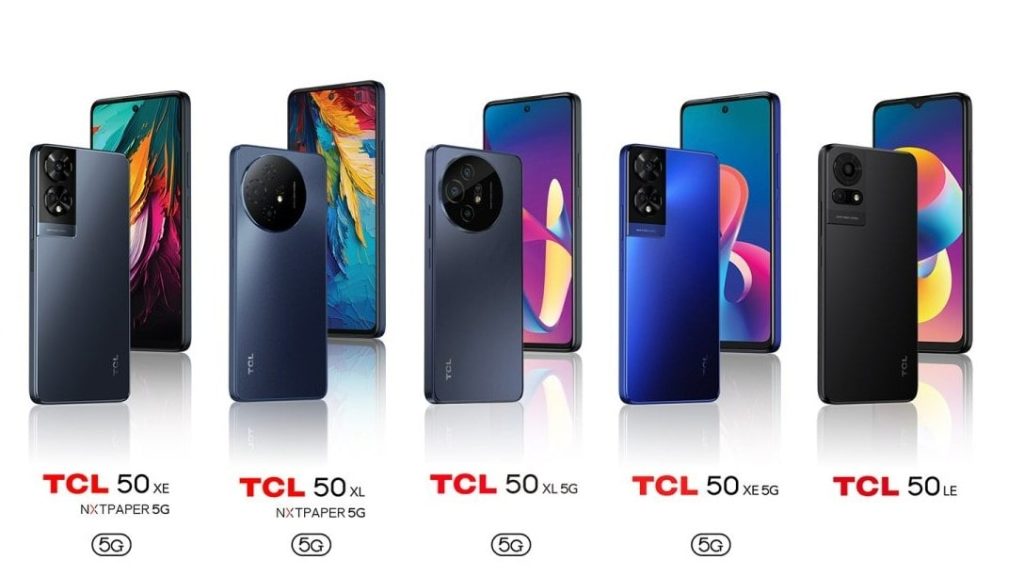
But the firm also announced its latest smartphone lineup dubbed TCL 50 series. The lineup consists of five models and all of them are heading to the US.
The TCL 50 series includes the following handsets.
TCL 50 XL NXTPAPER 5G
TCL 50 XE NXTPAPER 5G
TCL 50 XL 5G
TCL 50 XE 5G
TCL 50 LE
The first two phones on the list use the company’s latest NXTPAPER 3.0 technology. TCL claims that its new tech filters harmful blue light by up to 61% while retaining sharp images, vibrant colors, deep contrast, and natural motion.
The Circularly Polarized Light (CPL) display and NXTPAPER 3.0 tech on these smartphones deliver a visual experience close to reading books in natural light. The integration of DC dimming enables a reduction in eye strain by providing a flicker-free viewing experience.
As for the TCL 50 XL 5G, it is equipped with a large 6.8-inch FHD+ 120Hz display. The screen is paired with dual speakers with DTS sound support. It is backed by a 5,010mAh battery.
Further, the TCL 50 XE 5G sports a slightly smaller 6.6-inch HD+ 90Hz display. It also comes with dual speakers and a 5,010mAh battery.
Finally, the TCL 50 LE is the most affordable of all with a smaller 4,000mAh battery, It features a 6.6-inch 90Hz display, dual speakers, and a 13MP main camera.
TCL didn’t reveal when exactly these products will be available in the US.
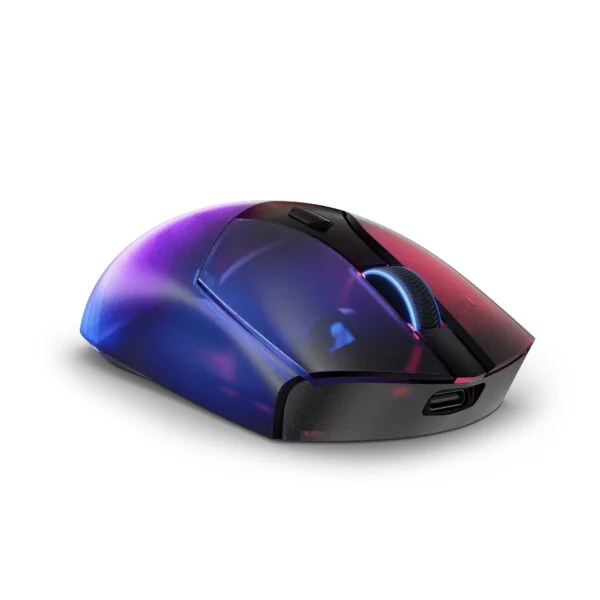
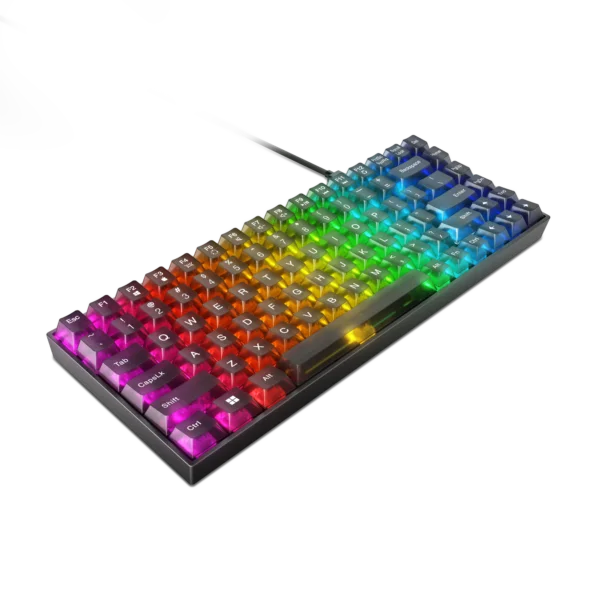
Lenovo has just announced various new laptops during the CES 2024 event. But the PCs weren’t alone, as the company also unveiled a bunch of new peripherals like the new Legion M410 Wireless RGB Gaming Mouse and the Legion K510 Pro Mini Gaming Keyboard. So here are all the details regarding the latest Legion gaming products.
Lenovo Legion Gaming Mouse & Mini Keyboard
As the name suggests, the M410 is a wireless gaming mouse that features RGB lighting. Looking at its design, the body appears to be built with translucent material with internal mechanisms being barely visible. This also enables the RGB lighting to shine through the insides. Like most gaming mouse, it comes with side buttons on the left side, which means it favors right handed gamers despite having an ambidextrous design. It features up to 16,000 DPI and supports 2.4GHz wireless connection and wired support.
The Legion gaming mouse is rechargeable and promises up to 53 hours of battery life on a single full charge. The brand states customizable buttons are rated for up to 30 million clicks and a 2-zone RGB lighting is housed within the body. Lenovo’s new Legion K510 Mini Pro Keyboard is built for gamers who prefer more real estate on their desktop. It features a 75-percent size form factor and comes with mechanical switches that support anti-ghosting. The model offers arrow and function keys, with each key housing RGB that outputs 16.8 million colors.
Unfortunately, the pricing details for both the Legion M410 Wireless RGB Gaming Mouse and the Legion K510 Pro Mini Keyboard have yet to be announced. There is no news regarding the gaming keyboard’s availability either, but the M410 wireless gaming mouse is expected to be released sometime in May 2024. With the CES 2024 kicking off, you can click here to check out our latest coverage of the ongoing event.
At CES 2024, Lenovo introduced two new devices that promise to redefine the way users engage with their technology – the Lenovo Yoga True Wireless Stereo Earbuds and the Lenovo Yoga Pro Mouse.
Lenovo Yoga True Wireless Stereo Earbuds
Lenovo Yoga True Wireless Stereo Earbuds are tailored to accompany the Lenovo Yoga device ecosystem. These earbuds offer an unparalleled level of versatility, seamlessly pairing and interacting with any Yoga PC.
A standout feature is the ability to effortlessly switch between multiple devices, adapting to the dynamic needs of users transitioning between work and entertainment modes. Eliminating the need for tedious re-pairing, these earbuds streamline the user experience.
With active noise cancellation featuring three microphones in each earbud, users can immerse themselves in a world of pristine audio, perfect for both work and leisure. The touch-sensitive controls provide a convenient way to navigate calls and enhance overall user interaction.
Engineered for durability, the earbuds boast an IPX4 water-resistant rating, safeguarding against splashes. The quick-charging functionality ensures they are always ready to accompany users on their creative journeys.
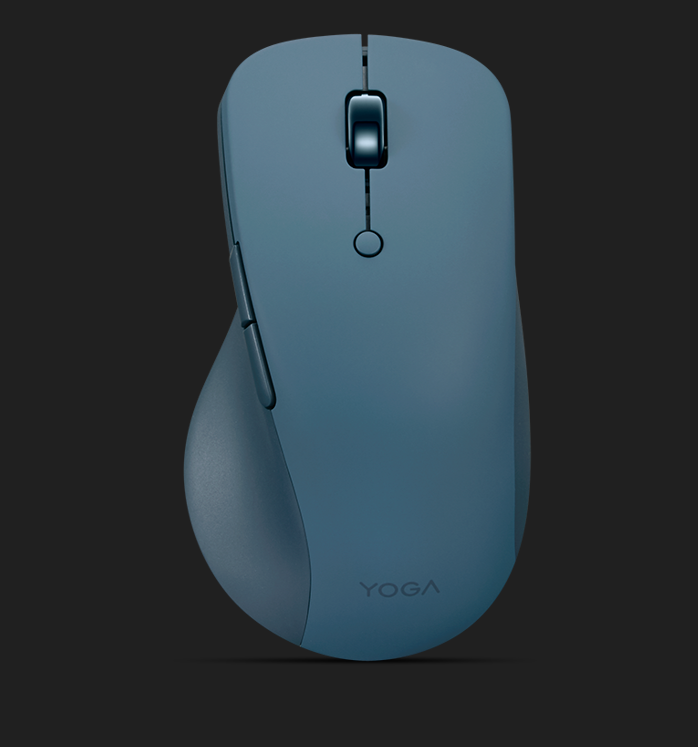
Also unveiled at CES 2024, the Lenovo Yoga Pro Mouse takes the traditional mouse experience to new heights. Featuring ergonomic engineering, multi-device Bluetooth Swift pairing, and programmable buttons, this mouse prioritizes user comfort and efficiency.
The three-stage on-the-fly DPI adjustment, reaching up to 4000 dpi, guarantees precise cursor control, adapting to diverse tasks and preferences. With a 380mAh battery, the Yoga Pro Mouse offers extended usage between charges, aligning with Lenovo’s commitment to convenience and productivity.
The Lenovo Yoga Pro Mouse is expected to be available starting April 2024, with a starting price of $39.99.
This CES 2024 launches solidify Lenovo’s position at the forefront of innovation, delivering devices that seamlessly integrate into the creative process.
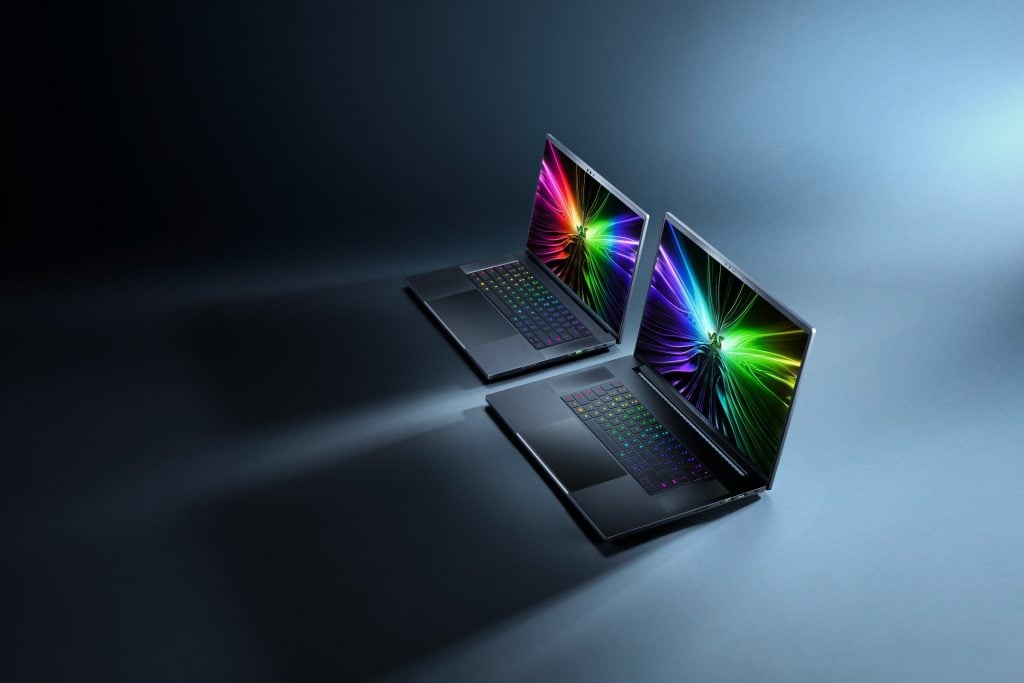
As expected at the ongoing CES 2024 in Las Vegas, Razer has unveiled the Blade 2024 series laptops. Last week, the brand teased some key details of the latest offerings. The Blade 2024 lineup includes the 14, 16, and 18-inch variants. The Blade 16 and Blade 18 are touted to be the world’s first laptops in the display department. Read on to know all the details about the Blade 2024 laptops.
Razer Blade 2024 series specifications
Beginning with the Razer Blade 16, it is the world’s first laptop with a 16-inch OLED screen bearing a resolution of 2,560 x 1,600 pixel, a 240Hz refresh rate, and a 0.2ms response time. The OLED panel is said to be developed in collaboration with Samsung. It is also the world’s first VESA Certified Clear MR 11000 laptop for motion blur. The Blade 16 is offered in dual-mode mini-LED options. The laptop features an RGB keyboard, quad-speaker setup, and an anodized aluminum chassis with a backlit Razer logo.
Under the hood, the Razer Blade 16 is equipped with up to 14th generation Intel Core i9-14900HX processors. It can be paired with up to Nvidia GeForce RTX 4090 GPU onboard with the ability to draw up to 175W power. The machine packs up to 16GB RAM and 1TB SSD storage. It also features the brand’s patented vapor chamber technology for heat dissipation.
The Razer Blade 16 carries a starting price tag of $2,999.99 and is up for pre-orders from the brand’s website.
As for the Razer Blade 14, it is a portable offering aimed at gamers on the go. The latest model packs incremental upgrades compared to last year’s model. The device sports a Calman-certified 14-inch display with QHD+ resolution and 240Hz refresh rate. Internally, it is equipped with an AMD Ryzen 9 8945HS processor with AI features. It packs up to RTX 4070 GPU with 140W TGP. The Blade 14 is claimed to deliver up to 10.5 hours of battery life.
Razer has just provided a glimpse at the Blade 18. The brand has not revealed much details. It is touted to redefine the large-format gaming laptop category. The Blade 18 as previously teased is the world’s first 18-inch laptop with a 4K 165Hz display. It will boast a ThunderBolt 5 port which will support 240W charging, 120Gbps data transfer, and 540Hz refresh rate video.
The rest of the details of the Blade 14 and Blade 18 will be announced closer to the launch later this year.
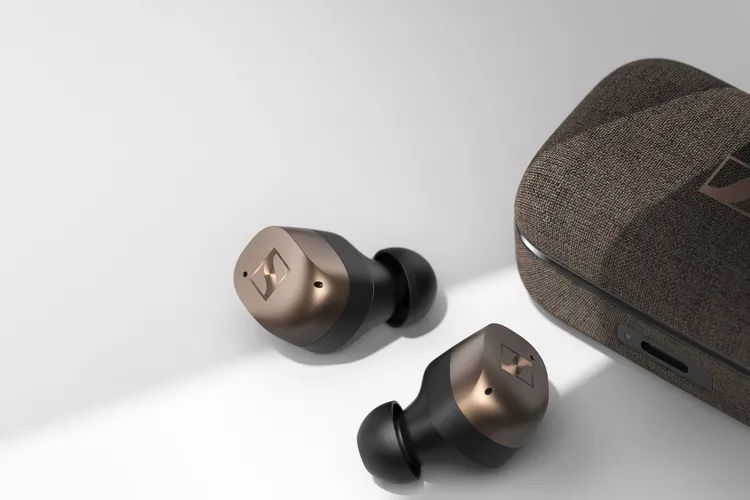
During the CES 2024 event, Sennheiser announced a bunch of next generation truly wireless earbuds. The flagship model out of this lot is the Momentum True Wireless 4 earbuds, which is the successor to the True Wireless 3. These feature some impressive specs and features. So here’s everything you need to know.
Sennheiser Momentum True Wireless 4 Specs
As per official notes, the Momentum True Wireless 4 features a bunch of upgrades over its predecessor. The company claims that these enhancements make it the “most capable earbuds yet.” The earbuds supports Bluetooth 5.4 on the Qualcomm Snapdragon S5 Sound Gen 2 platform. It even offers Snapdragon Sound Technology as well as AptX support for lossless audio quality and ultra low latency. Other audio codecs include AptX Adaptive, AAC, and SBC.
The Momentum True Wireless 4 feature Auracast support and comes with a brand new antenna design to improve “signal continuity while on the go”. There are even enhancements to the Adaptive ANC (Active Noise Cancellation) while the battery life has also seen a rise with up to 7.5 hours. Sennheiser’s new earbuds also offer power efficient Bluetooth LE audio and have a total battery life of around 30 hours.
You can charge the charging case of the earbuds using USB Type-C port or Qi wireless charging. It retains its premium design for the earbuds and charging case as well. The Sennheiser Momentum True Wireless 4 is set to be launched on 29th February 2024 for a price tag of 299.95 US Dollars. Till then, you can check out our other coverage of the CES 2024 event by clicking here.
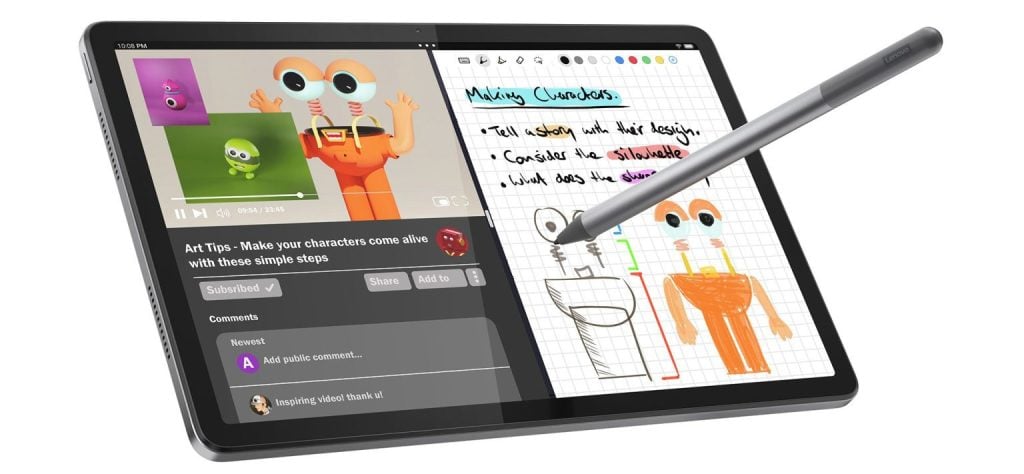
Lenovo has announced its latest budget-friendly tablet, the Lenovo Tab M11, at the CES 2024 tech trade fair. The learning-focused tablet comes equipped with the Lenovo Tab Pen stylus for writing and drawing. For making use of the stylus, Lenovo offers a range of apps, such as Nobo which converts handwriting into text, MyScript Calculator 2 for solving equations in real-time, and WPS Office for editing documents. Here is a look at the specifications, features, and price of the device.
Lenovo Tab M11 specifications and features
Lenovo Tab M11
The Lenovo Tab M11 has an 11-inch IPS LCD panel that offers a resolution of 1920 x 1200 pixels and a 90Hz refresh rate. Under the hood, it has the Heilo G88 chipset, up to 8 GB of RAM, and up to 128 GB of storage. There is a microSD card slot onboard for more storage.
The Tab M11 runs on Android 13 and is promised to receive Android 14 and 15 OS upgrades. It has a 7,040mAh battery with 15W charging support. The M11 has an 8-megapixel front camera and an 8-megapixel rear camera. In some markets, the tablet will be offered with a 13-megapixel rear camera.
Lenovo Tab M11
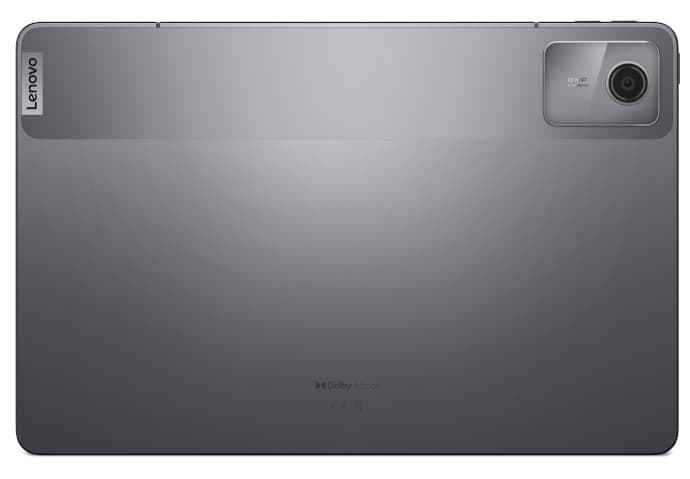
In terms of connectivity, the Tab M11 offers options such as Wi-Fi 802.11ac, Bluetooth 5.1, and a USB-C port. It comes with other features, such as dual speakers with Dolby Atmos support and a 3.5mm audio jack. The device measures 166.31 x 55.26 x 7.15mm and weighs 465 grams.
Lenovo Tab M11 price
The Lenovo Tab M11 will be available for purchase in April in two configurations, such as 4 GB RAM + 64 GB storage and 8 GB RAM + 128 GB storage. It will carry a starting price of $179 and be sold in shades such as Luna Grey and Seafoam.
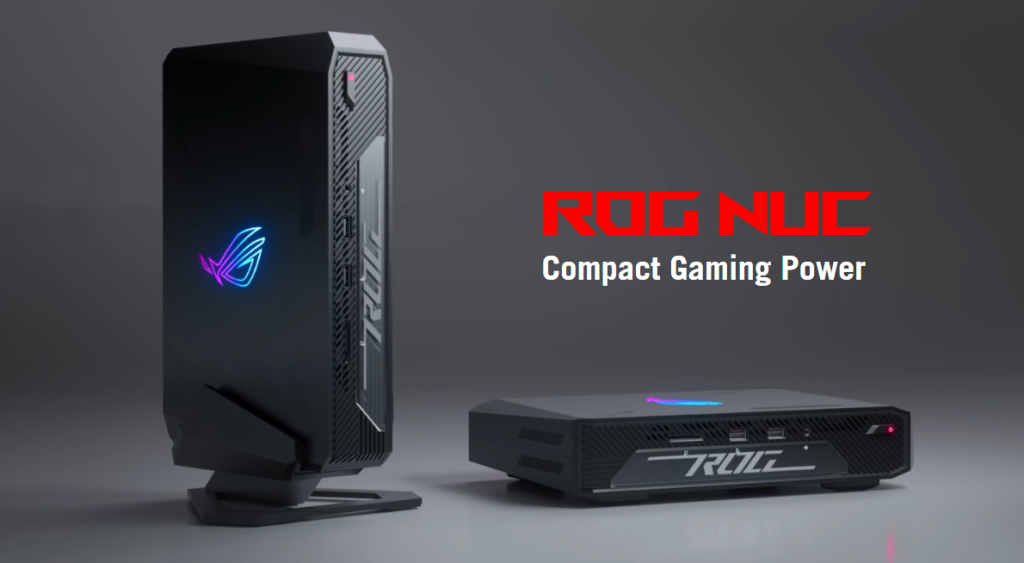
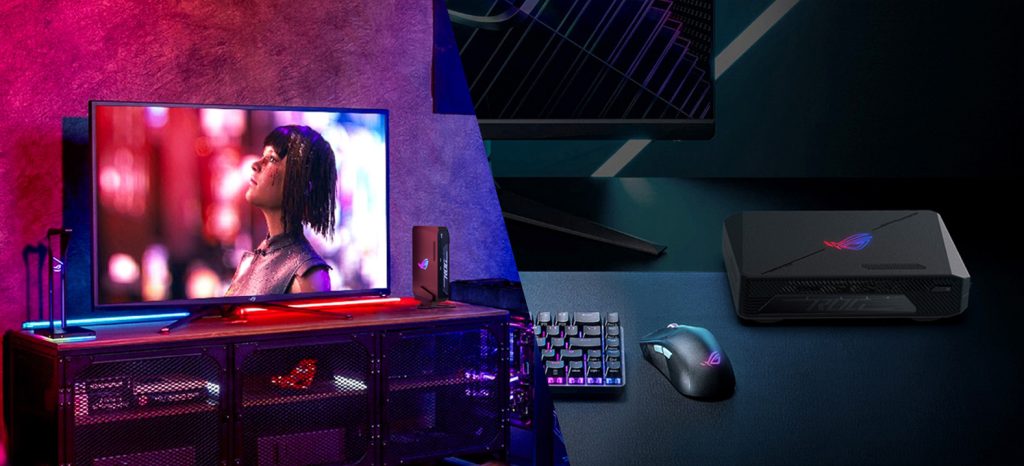
ASUS has introduced the ROG NUC mini PC at CES 2024. While most mini PCs in the market cater to office use, the ROG NUC stands out as a compact powerhouse, providing gamers the flexibility to play at their convenience.
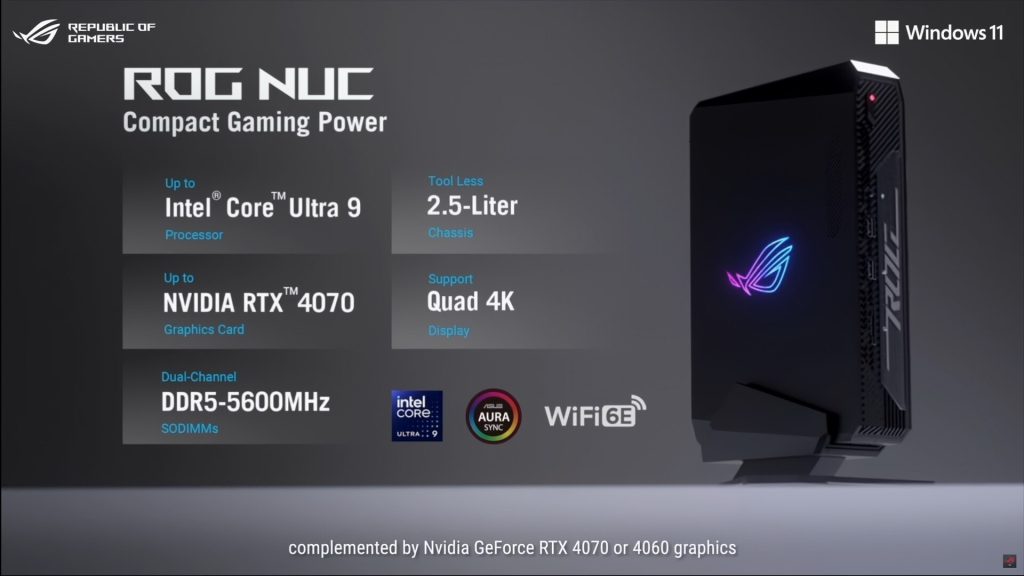
At the heart of the ROG NUC lies the raw power of Intel Core Ultra 7 or Core Ultra 9 (Intel Core Ultra 9 185H) processors, delivering the very best performance obtainable with a mobile CPU. The Performance Hybrid Architecture ensures seamless multitasking, while Intel Thread Director and Intel Smart Cache optimize workloads for a silky-smooth gaming experience. Paired with NVIDIA RTX 4060 or RTX 4070 Discrete Graphics, the ROG NUC promises high-end graphics. In addition to that, the mini PC can support up to four 4K-enabled display outputs.
Designed for user convenience, the tool-less chassis allows for easy integration in under 10 minutes, all within a minimalistic 270 x 180 x 50 mm form factor. In addition to its performance features, the ROG NUC seamlessly integrates with the ROG Raikiri PRO controller for a refined gaming experience. Users can customize their setup with ARGB lighting and the ROG Armory Crate app, creating personalized light displays.
Connectivity is a focal point, with HDMI 2.1a, DisplayPort 1.4, Thunderbolt 4 / USB4 Type-C, USB 3.2 Gen 2, USB 2.0, and Intel Killer WiFi 6E AX1690i. Compatible with both Microsoft Windows 11 and Linux distros, the ROG NUC offers operating system flexibility.
Unfortunately, there is no information available about the pricing and availability at this moment. In related news, ASUS has also launched the ROG Phone 8 series smartphones starting at $1,099. These gaming phones come with a 165Hz refresh rate display, Snapdragon 8 Gen 3, and a 50MP triple camera system.
Besides Snapdragon 8 Gen 3 phones, Snapdragon 8 Gen 2 phones are also getting a lot of attention these days. Redmi, iQOO, and HONOR have already launched phones with this processor, and all of them are selling like hotcakes. Of course, OnePlus won’t let this opportunity go, and the Oneplus Ace 3 in my hand is their final answer to this challenge.
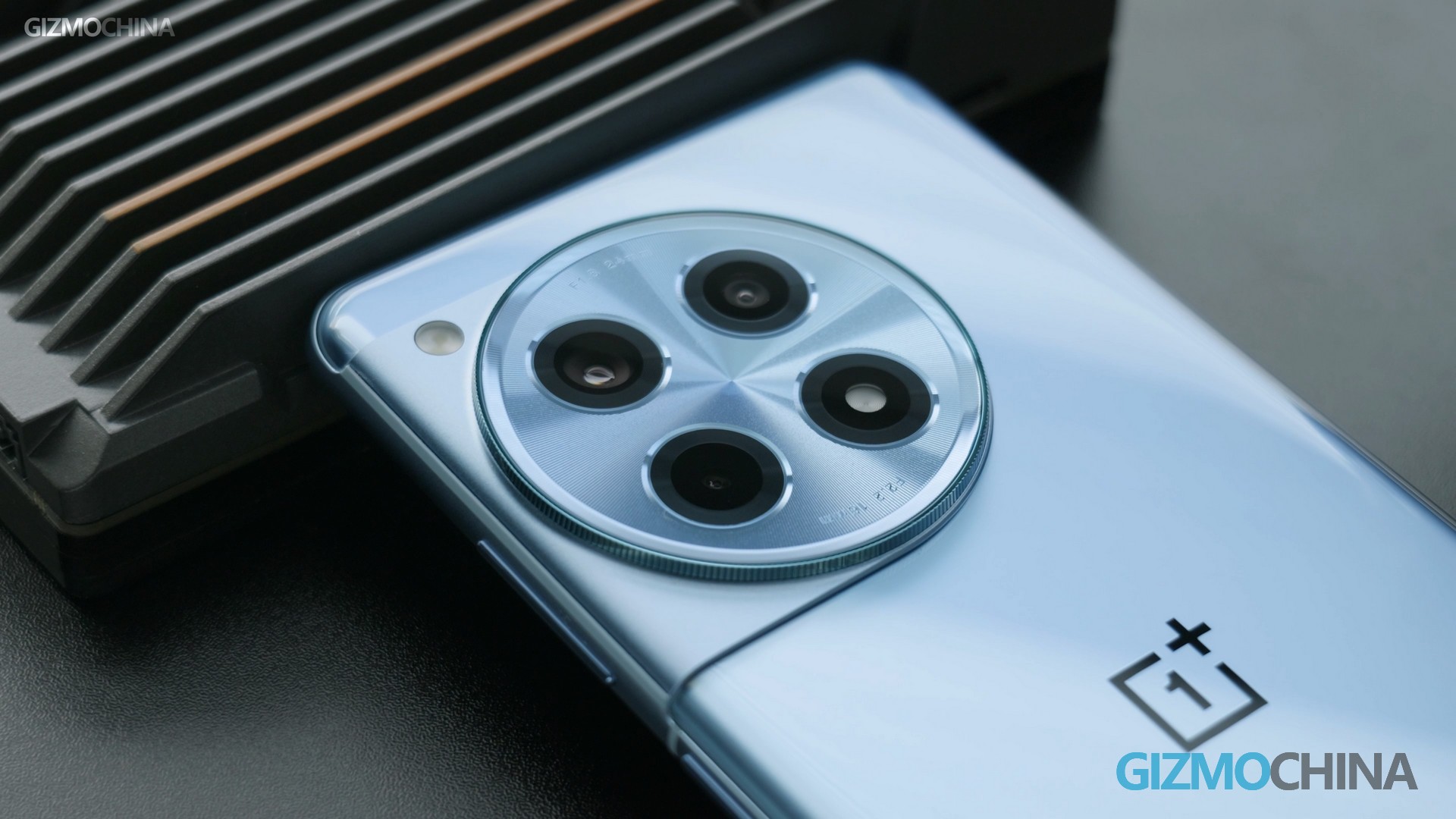
I thought that when I saw this camera design, my heart wouldn’t flutter anymore. But I was wrong, and I still can’t help spitting it out. In 2023, OnePlus used the same design on five different models. Even on the iPhone, the standard and Pro versions are different. I really hope this is the last time I see this design in 2024, shall we, OnePlus?
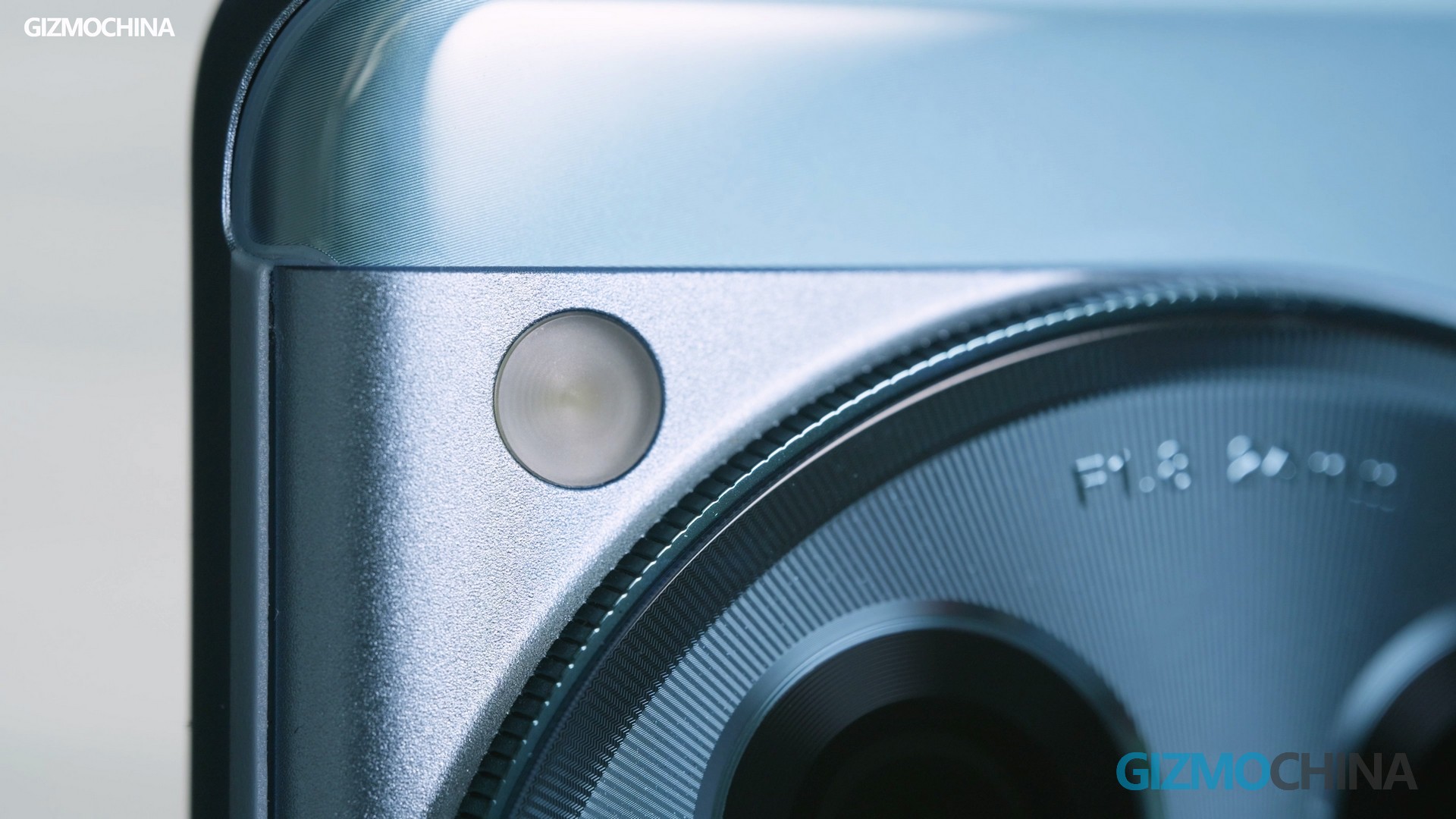
One thing that’s funny is that you might think this is a flash here, but it’s actually an ambient light sensor. The flash is in the upper left corner. Design aside, other things about the Oneplus Ace 3 still has a bit of improvement over the Oneplus Ace 2 Pro. For example, the frame is now metal, and the IR emitter is back.
There is also a step back, that super large vibration motor has become a normal linear motor, and the typing feel is rather ordinary. Other than that, everything else is unchanged, the weight and dimensions are so similar. The fingerprint recognition is also very reasonably placed. There’s no wireless charging, no IP68, and even the USB is still 2.0. Considering that other brands are doing the same, this should be a common way to save money at this price point.
Display
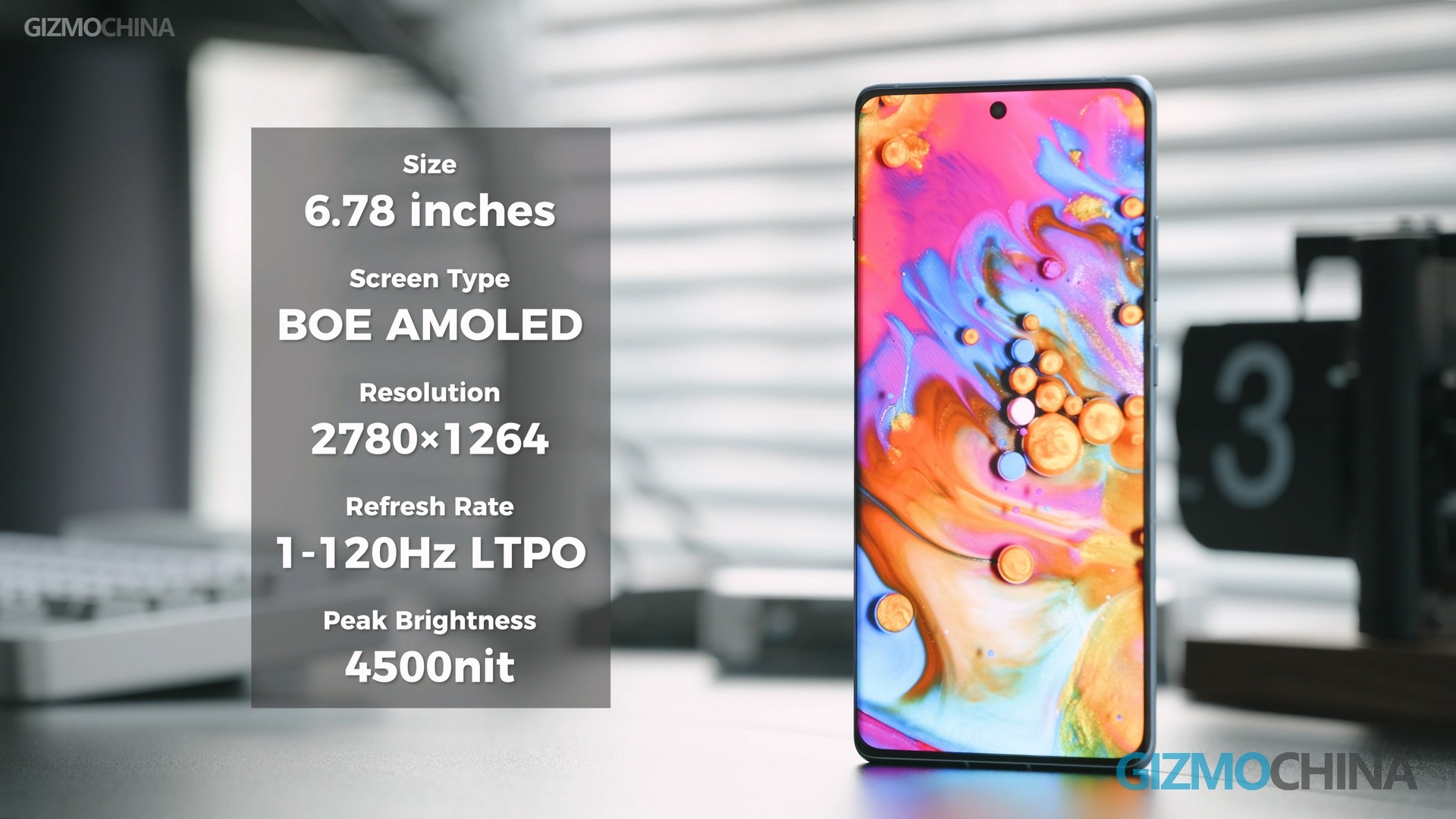
The Oneplus Ace 3’s display panel is the same as the realme GT5 Pro’s, the one from BOE that claims a window peak brightness of 4,500nit, but with a slightly lower refresh rate than the GT5 Pro’s. Well, that gimmick aside, the screen has its highlights.
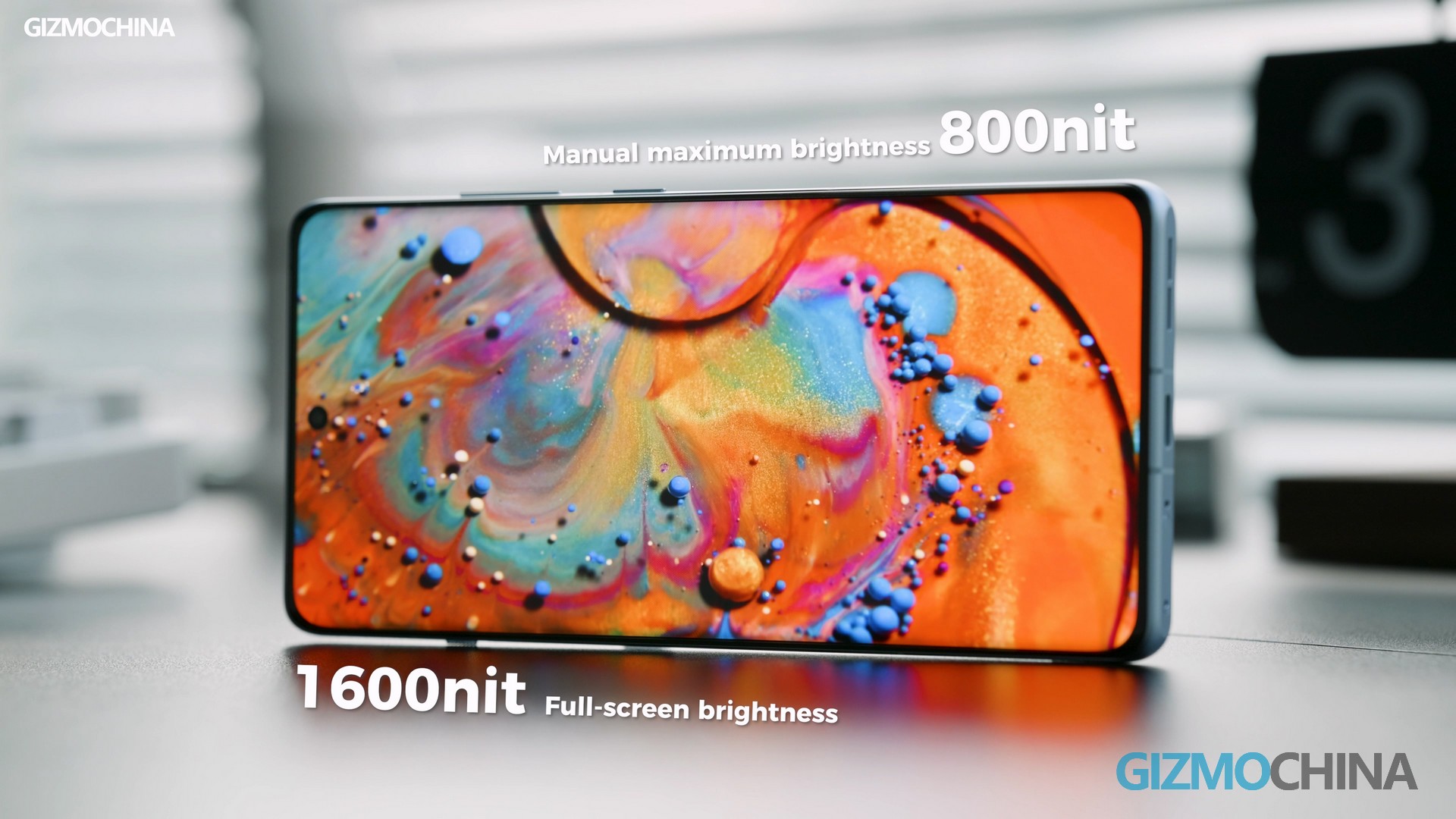
For example, the full-screen brightness under bright light can reach 1600nit, and the manual maximum brightness can reach 800nit. And there’s LTPO, Corning Gorilla Victus 2, and all sorts of eye-protecting features. The dimming strategy that’s on the OnePlus 12 is on the Ace 3 as well.
Compared to the Redmi K70 in the same price range, it’s slightly less impressive in terms of resolution. But it’s much better than the iQOO Neo9. So, the OnePlus is top-notch in terms of display.
Benchmark & Gaming
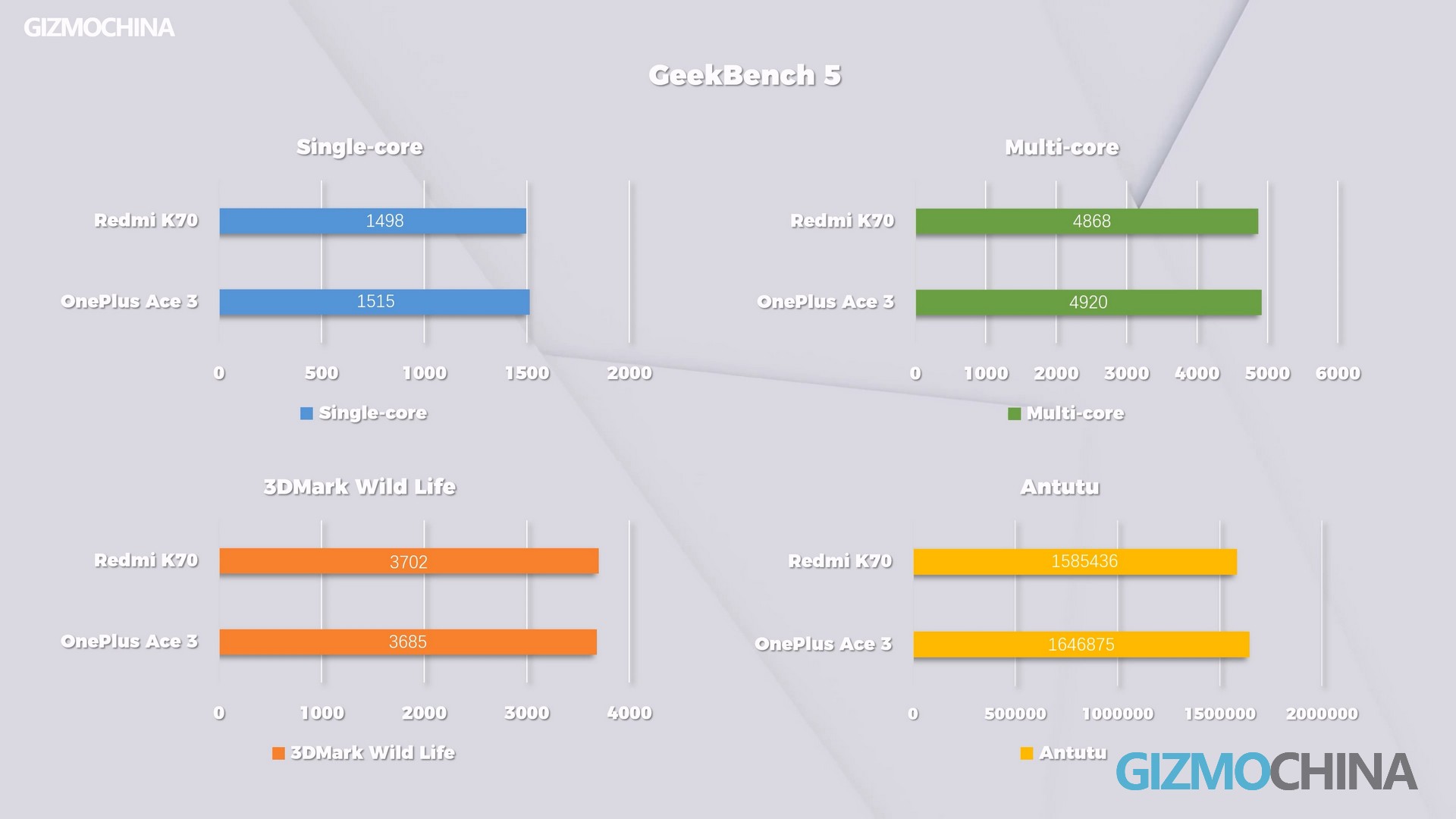
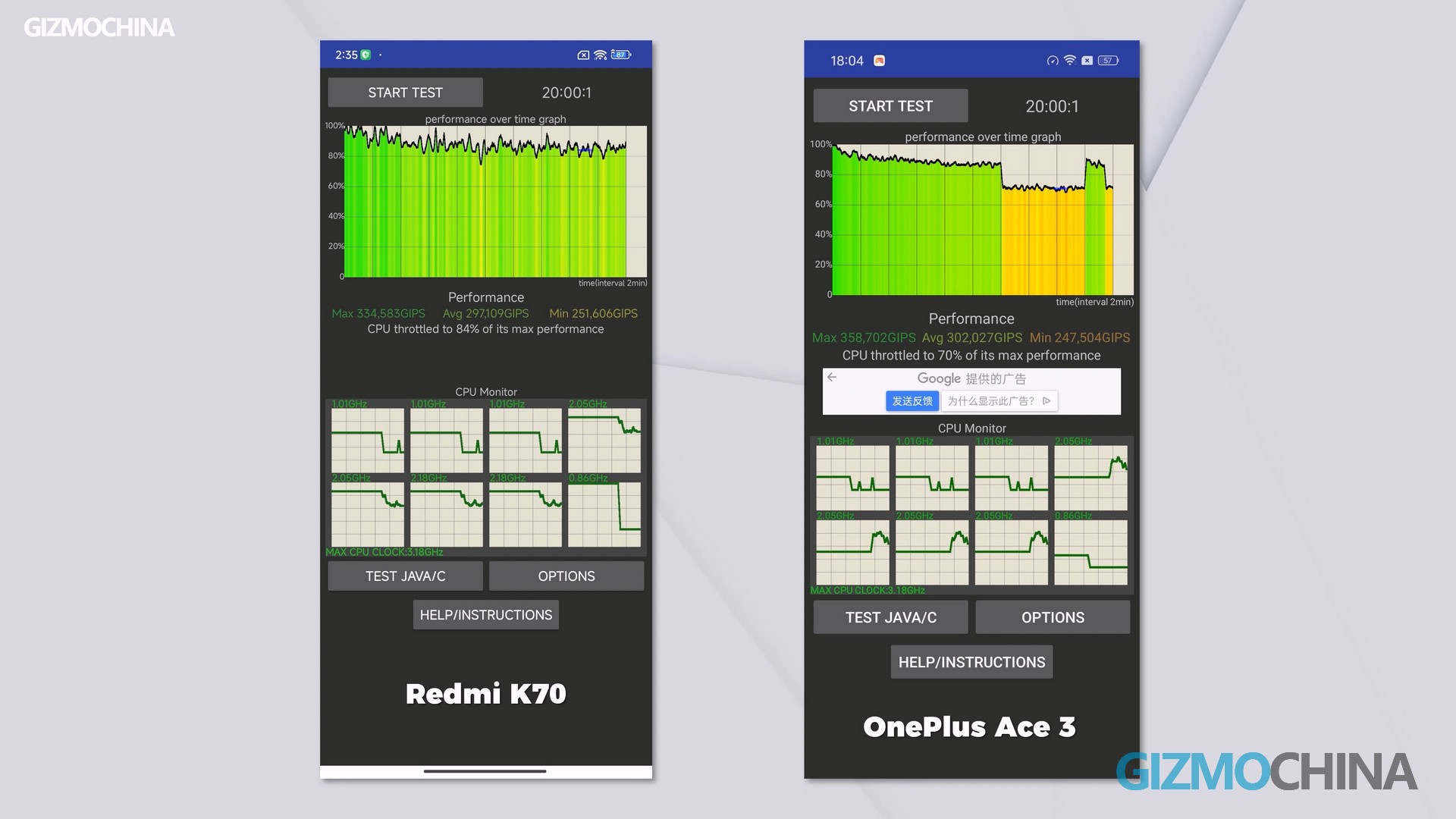
The processor in the Oneplus Ace 3 is the Snapdragon 8 Gen 2. It’s been popular lately to take last year’s flagship processors and give them to mid-range phones, and it’s really making everyone happy. It’s gotten cheaper, and the performance is still strong. Benchmark and CPU Throttling Test are available for you here. The biggest surprise for me is still in the gaming section.
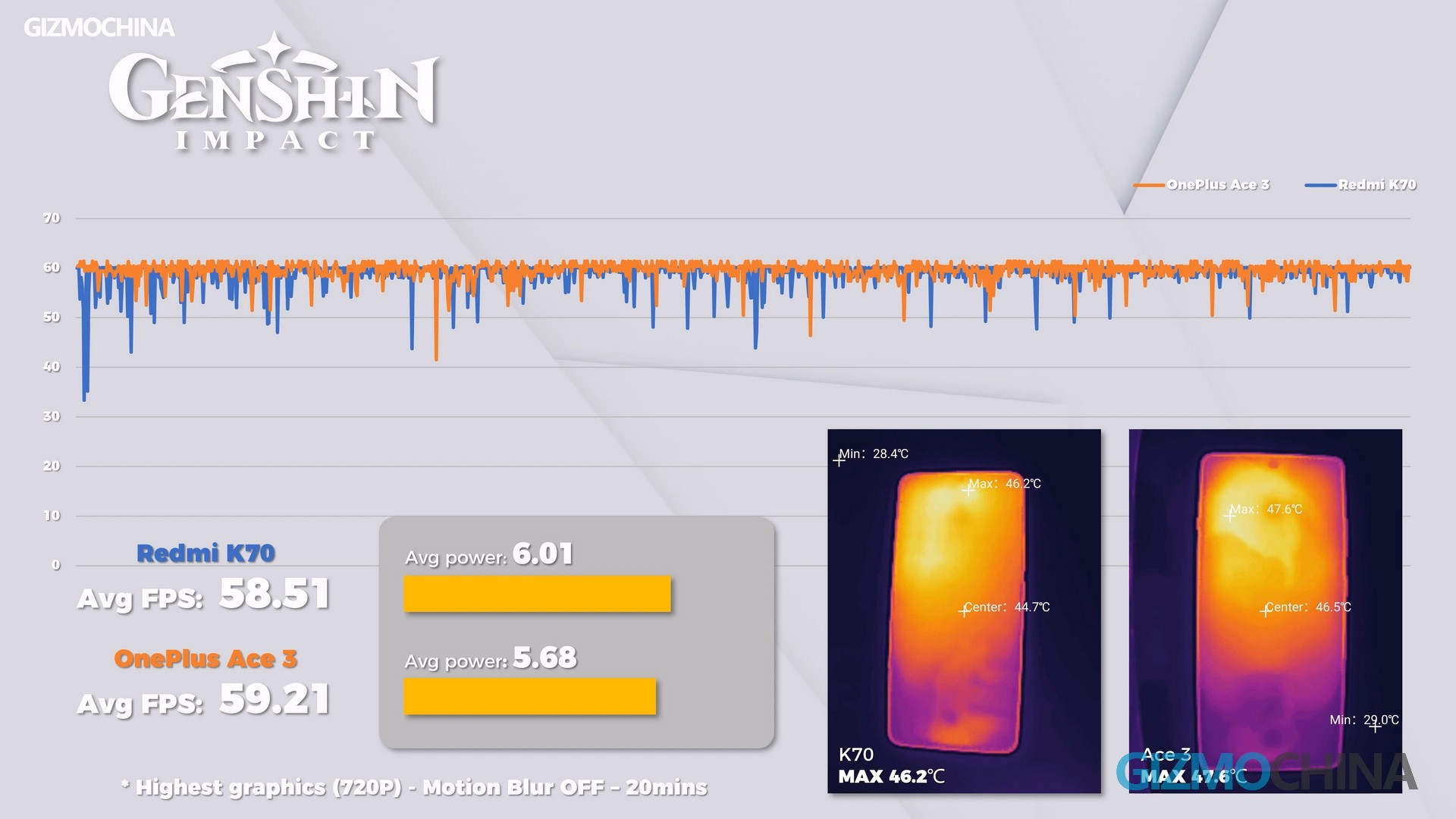
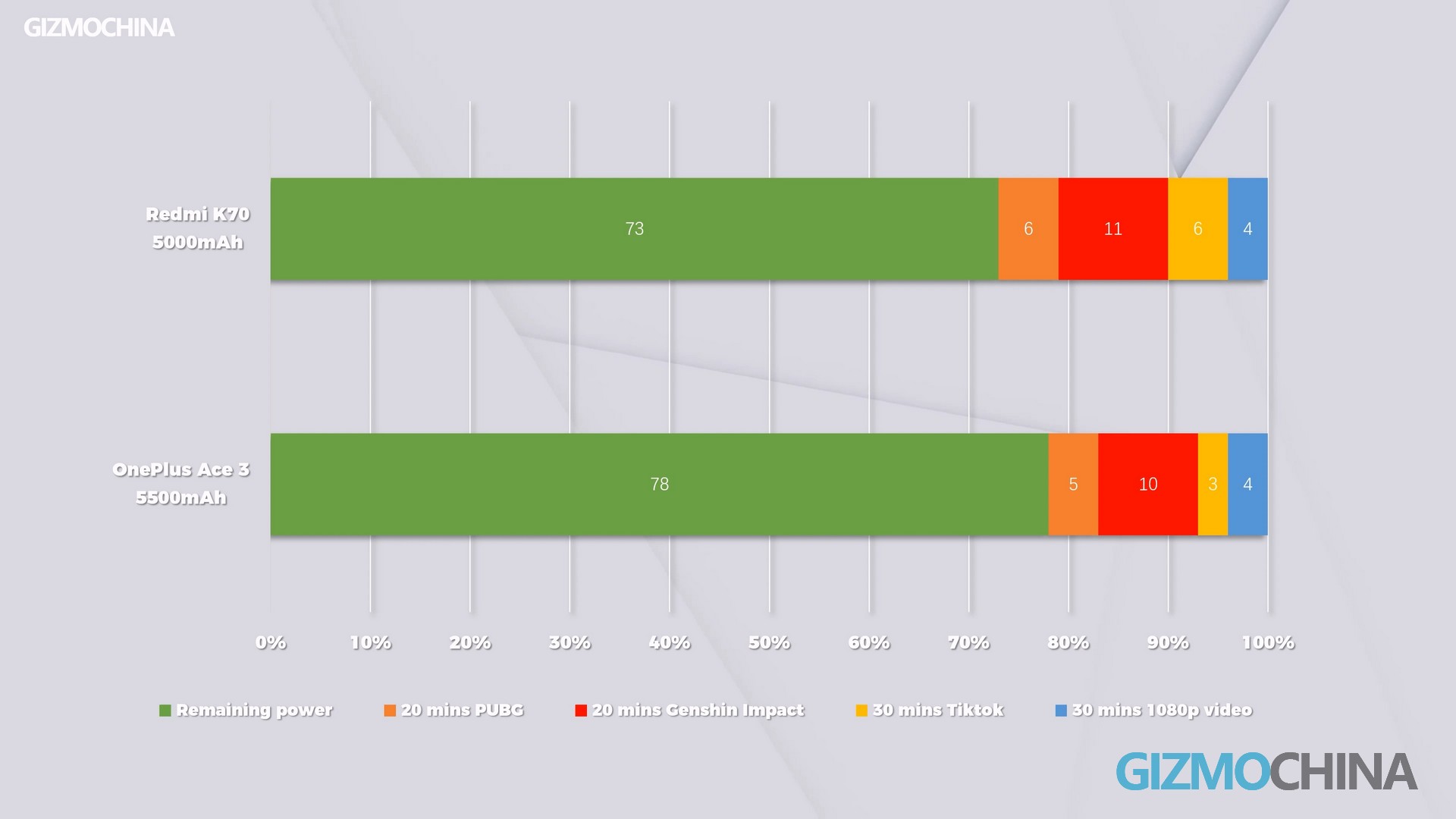
While last year’s 8 Gen 2 phone didn’t conquer Genshin impact, Ace 3 did it this year. No downclocking, and no lag. And the power consumption is so low that the K70 has to bow to it. Because it uses a normal VC thermal, the maximum temperature will be slightly higher, but it’s acceptable. Most importantly, it supports super-resolution and frame interpolation.
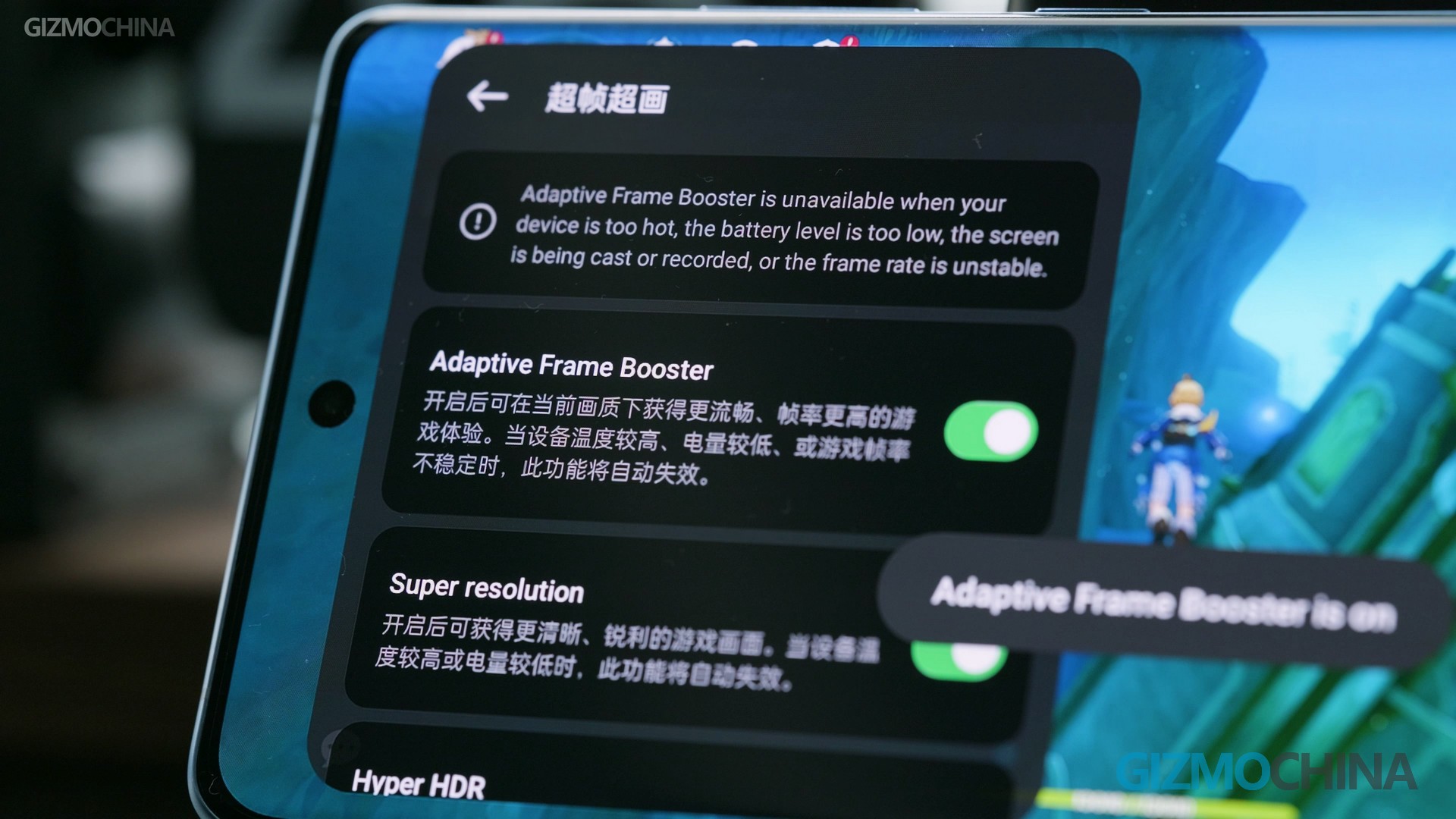
Unlike iQOO, these two features of Oneplus Ace 3 can be used in all games. Meaning all games can be played at 1200P and 120Hz, that’s awesome. It does deliver a sharper and smoother gaming experience, although it increases latency a little bit and automatically shuts off when the temperature gets too high. It’s totally acceptable though. These two features put the Oneplus Ace 3 far ahead of other phones in its price range in terms of gaming experience.
Camera
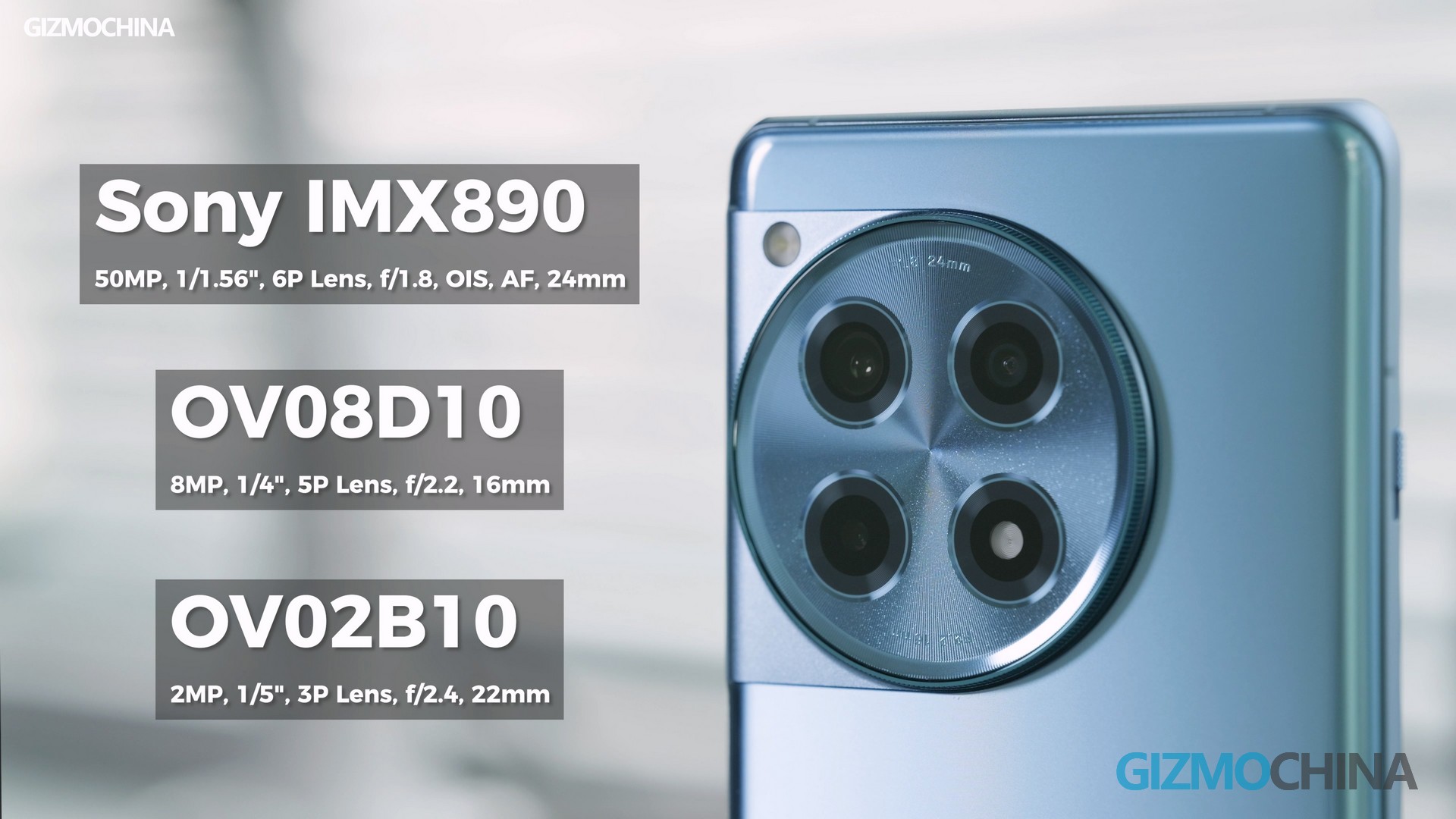
The Oneplus Ace 3‘s main camera uses the IMX890, a sensor commonly used in OPPO family phones. Like the iQOO Neo9 and Redmi K70, the main camera is a flagship performer.
A good main camera not only takes a good 23mm photo, but even at 56mm, which is twice the zoom, you can get a decent photo. With no help from the Hasselblad, the color style is the same old eye-pleasing look, with higher saturation and exposure. If you want a greater sense of atmosphere in your photos. You’ll have to manually adjust the exposure or exposure compensation.
Although sometimes it can be a bit buggy, too much HDR can make some highlight areas look a bit strange. For example, in this photo, the neon lights were always unreal when the HDR was turned on. Turning off HDR would bring it back to normal.
Or this one, where the traffic light in the back is shot in black. Overall though, most of the time it performed as usual, and I’m still quite happy with the photos taken by the Ace 3’s main camera.
Indeed, the OnePlus Ace 3’s main camera is good enough. But the other two cameras are just far off. The macro camera, in particular, is worse than I expected. Not only is the image quality poor, but it’s also seriously buggy. the left side of the photo is greenish and the right side is reddish, I’ve never seen such a bad camera in my life.
I hope it’s just something wrong with my phone, or other Ace 3 buyers should ask OnePlus for compensation. As for the ultra-wide camera, we all know this 8 MP camera is not good. There’s not enough clarity when there’s enough light, and it gets worse when there’s not enough light. And of course, it can’t record video over 1080p 30fps.
All in all, it is not very good. In fact, OnePlus has also given up on these two cameras, as you can’t take pictures with them at all in Pro mode. So we’ve decided not to dive into them both anymore either.
Battery & Charging
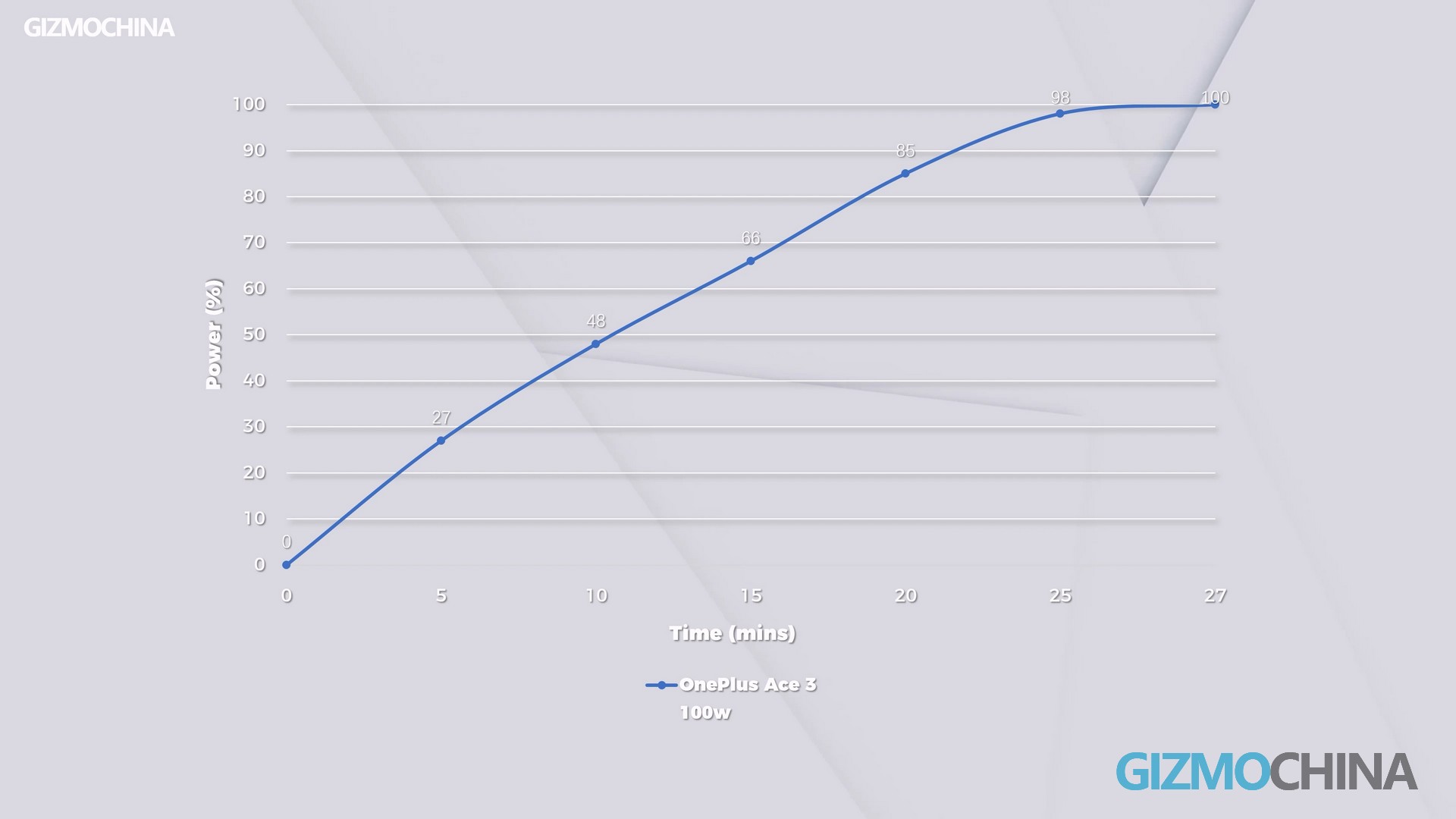
The Oneplus Ace 3 has 100W of charging power and a 5500mAh battery. I really like this combination, it has high charging power without sacrificing battery capacity. Apart from the Redmagic 9 Pro and Nubia Z60 Pro, there are almost no rivals for the large 5500mAh battery. You can tell that OnePlus still takes battery life seriously, which makes the Ace 3 the king of battery life in its price range.
Conclusion
My colleague met the CEO of OnePlus China at the event where we purchased the OnePlus Ace 3. I heard him say that this is not the first time, the CEO was also there when we purchased the Ace 2 Pro. Even for a mid-range phone, the CEO personally came to meet us, so you can see that OnePlus really wants to get our approval.
Well, I wonder if everyone is happy with the Ace 3 this time? Personally, I still want them to try a little harder. Getting rid of that macro camera and also a redesigned camera module would be my dream Ace 3.
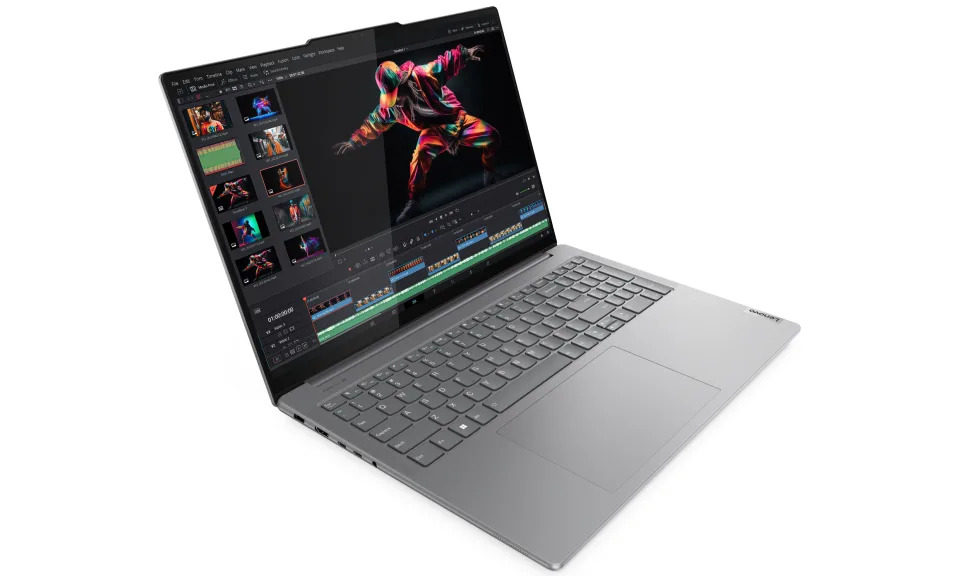
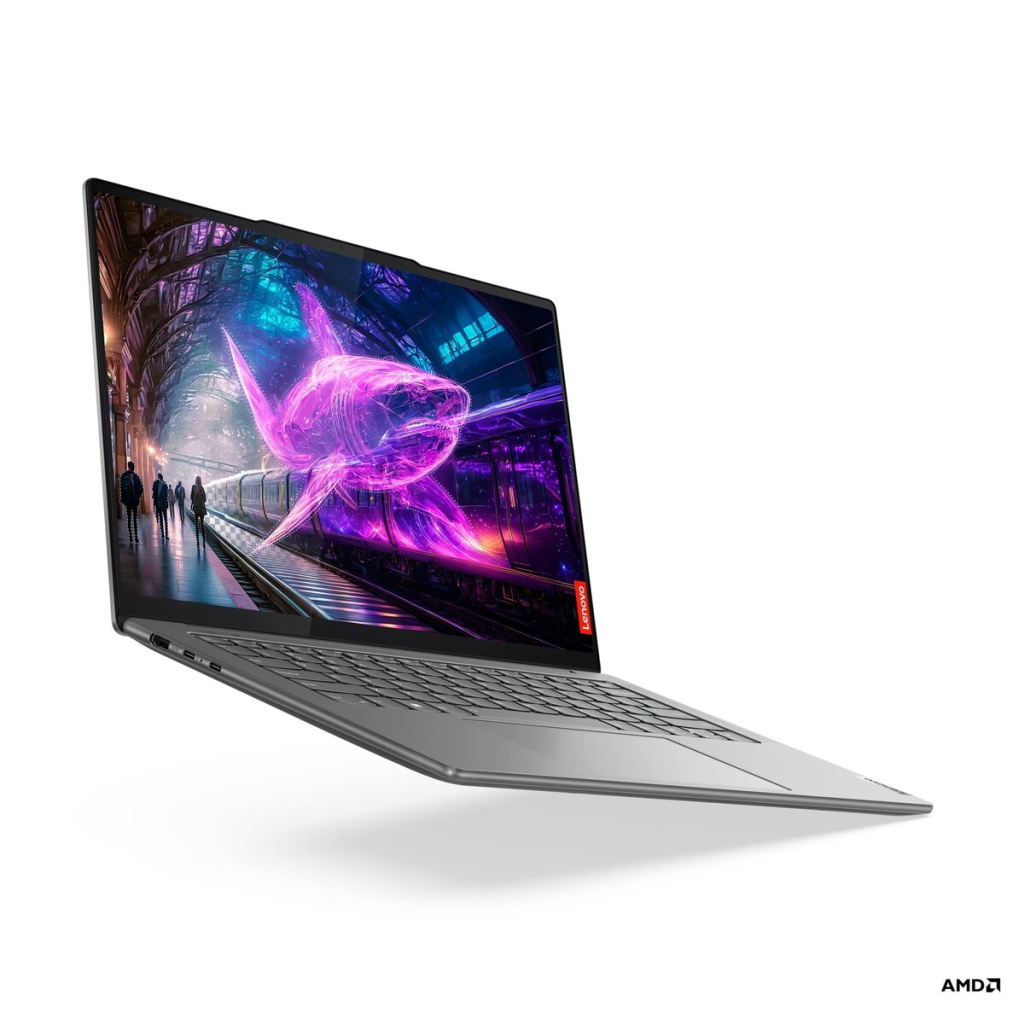
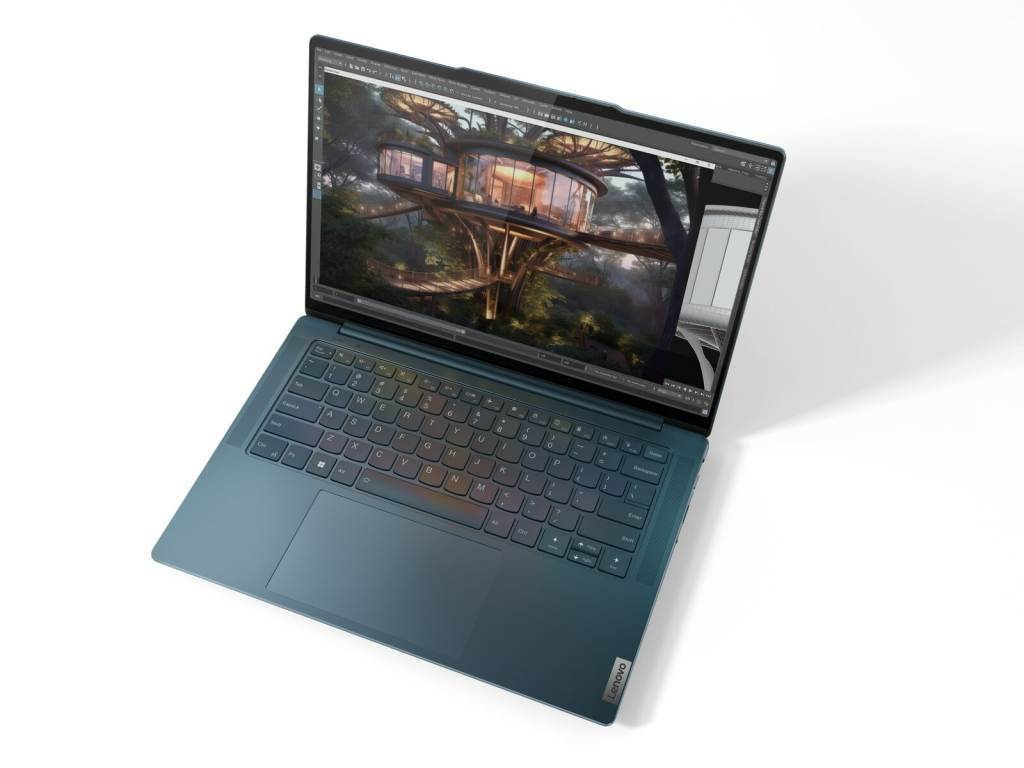
Lenovo has unveiled a wide range of Yoga series of convertible laptops at the CES 2024. Although the Chinese brand announced as many as eight Yoga devices, this post focuses on three products, namely the Yoga Pro 9i, the Yoga Pro 7i, and the Yoga Pro 7. Here is a look at the specifications of each of these devices.
Lenovo Yoga Pro 9i (2024) specifications, price
Lenovo Yoga Pro 9i (2024)
The Yoga Pro 9i (2024) offers a 16-inch 3.2K (3200 x 2000 pixels) IPS screen with a 165Hz refresh rate, PureSight Pro technology, and supports 400 nits of brightness. Alternatively, a Mini LED display option is available, elevating the brightness to 1200 nits. The device is powered by Intel Core Ultra 5/7/9 H Series processors and runs on Windows 11, complemented by an NVIDIA GeForce RTX 4070 laptop GPU for graphics performance and an 84Wh battery. With memory options of up to 64 GB LPDDR5X and storage capacities of up to 1TB PCIe M.2, the Yoga Pro 9i ensures efficient multitasking and ample storage.
The Yoga Pro 9i has a 5-megapixel webcam, IR camera, and TOF electronic camera shutter, accompanied by four microphones for enhanced audio capture. It comes with other features, such as six speakers with four back-to-back subwoofers enriched with Smart Amp technology, Dolby Atmos Audio, Thunderbolt 4, USB-A, HDMI 2.0, a full-sized SD card reader, Wi-Fi 6E, and Bluetooth 5.1.
The Yoga Pro 9i’s design includes a flexible hinge that showcases a sleek design with dimensions of 362 x 253 x 17.9 mm and weighs 2.18 kg. Priced at $1,649, it comes in two color options, such as Tidal Teal and Luna Grey.
Lenovo Yoga Pro 7i (2024), Yoga 7 Pro (2024) specifications and price
Lenovo Yoga Pro 7i (2024)
The Yoga Pro 7 and Yoga Pro 7i laptops share common ground in their display specifications, both offering a 14.5-inch 2.5K (2560 x 1600 pixels) IPS screen with a 90Hz refresh rate, 16:10 aspect ratio, and TUV low blue light certification. In terms of processing power, they provide flexibility with Intel Core Ultra 5/7/9 H Series and AMD Ryzen 8845HS processors, respectively. Both laptops run on Windows 11 and offer optional graphics upgrades with up to a NVIDIA GeForce RTX 4050 laptop GPU for the Yoga Pro 7i and up to an NVIDIA GeForce RTX 3050 laptop GPU for the Yoga Pro 7. Memory options include up to 32GB of LPDDR5X for the Pro 7i and up to 16GB of LPDDR5X for the Pro 7. Additionally, storage options reach up to 1 TB of PCIe M.2 for both models.
Lenovo Yoga Pro 7 (2024)
The camera setup of the Yoga Pro 7 and 7i comprises an FHD webcam, IR camera, and ToF camera shutter, along with four microphones for enhanced audio capture. Connectivity options include Wi-Fi 6E and Bluetooth 5.1. The Yoga Pro 7 series have 4 x 2W speakers and Dolby Atmos Audio for an enhanced audio experience. Both laptops offer a variety of ports, including USB Type-C Thunderbolt, HDMI, USB-A, and an Audio Combo Jack for versatile connectivity.
The Yoga Pro 7 and 7i come with a 180-degree hinge for versatile usage and pack a common battery capacity of 73 WHr. In terms of dimensions, both measure 326 x 227 x 15.6 mm and weigh around 1.49 kg. Both devices come in Tidal Teal and Luna Grey color options. The Yoga 7 Pro is priced at $1,349 and is set to go on sale by April of this year. Priced at 999 euros (incl. VAT), the Yoga Pro 7i will be available in select EMEA markets starting this month, and it will not be sold in North America.
At CES 2024, Sony unveiled its latest innovation, a spatial content creation system geared towards professionals working in 3D design and animation. This headset-and-controller combo aims to bridge the gap between the virtual and physical realms, offering creators a unique and immersive experience.
Unlike its PlayStation VR sibling, this headset isn’t targeting gamers. Instead, it boasts high-resolution 4K OLED displays powered by the Snapdragon XR2+ Gen 2 platform, catering to professionals who require precision and detail in their work.
Sony’s CEO, Kenichiro Yoshida, emphasized the system’s ability to “expand the creation space by overlaying virtual objects into physical spaces.” This is achieved through a unique controller setup, replacing traditional joysticks with a finger-worn ring and a handheld pointer. These intuitive tools mimic natural gestures, allowing creators to manipulate virtual objects with ease as if they were physically present in the room.
But what about those moments when you need a break from the virtual realm? Sony has you covered. The front of the headset flips up, seamlessly transitioning users back to the physical world. This flexibility ensures creators can maintain a connection with their surroundings while still enjoying the immersive benefits of the virtual workspace.
Sony isn’t new to the world of 3D creation. Their previous Spatial Reality Display offered a taste of this technology, but the new system takes it a step further. It boasts “proprietary rendering technology” capable of delivering real-time, high-definition textures and lifelike character expressions. This level of detail promises to revolutionize the way 3D models are created and visualized.
While the exact release date and price remain undisclosed, Sony has confirmed the system’s arrival sometime later this year. It faces competition from Apple’s Vision Pro, set to hit stores next month. However, Sony’s focus on professional creators and intuitive controls might give them an edge in this emerging market.
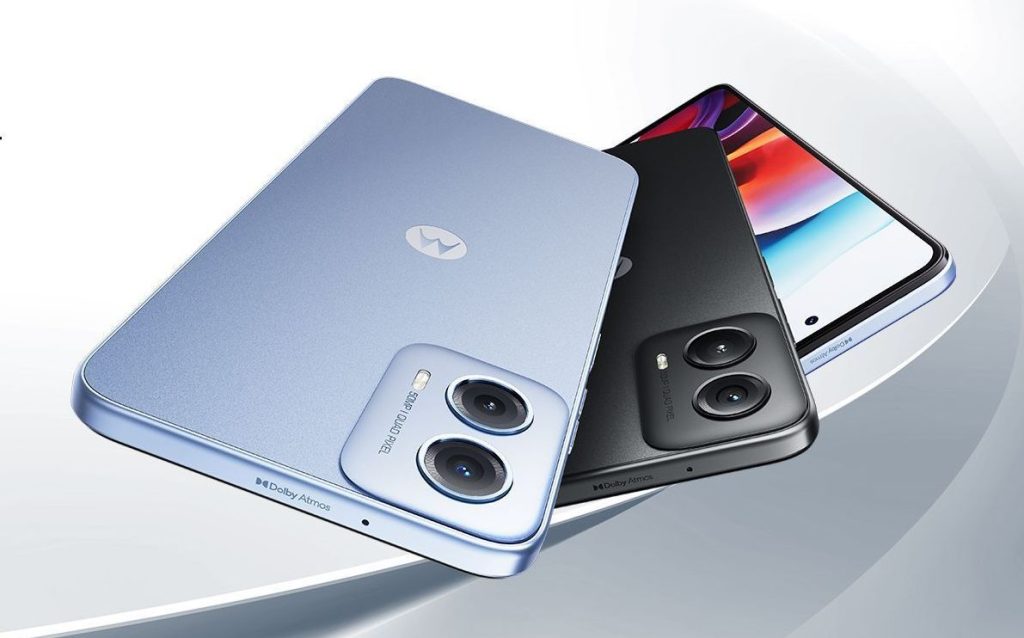
As scheduled, Motorola has launched its first product of 2024 in India. The device, which is officially called Moto G34 5G, is a budget 5G smartphone.
It initially went official in China before Christmas. India is the first international market to receive this handset.
Let’s go through the features of this phone along with its pricing and availability details.
Motorola Moto G34 5G Specifications
The Moto G34 5G features a plastic build like most budget smartphones. But one of the color variants has a vegan leather finish on the back. Also, it is IP52-rated for splash resistance.
The device is built around a 6.5-inch centered punch-hole display. The panel offers an HD+ resolution (1600 x 720 pixels) and a 120Hz refresh rate.
Under the hood, the handset houses a Qualcomm Snapdragon 695 SoC. The chipset is paired with LPDDR4x RAM and UFS 2.2 storage. As for software, it boots the latest Android 14.
The phone sports a dual-camera setup on the rear comprising a 50MP primary sensor and a 2MP macro snapper. On the front, it has a 16MP selfie camera.
Other features of the device include Dolby Atmos-supported dual stereo speakers, a MicroSD card slot, a 3.5mm headphone jack, and Ready For (only on the 8GB RAM variant).
Last but not least, the smartphone draws energy from a 5,000mAh battery and supports 18W charging.
Motorola Moto G34 5G Price in India
The Motorola Moto G34 5G arrives in the following two memory configurations.
4GB + 128GB – ₹10,999 (~$130)
8GB + 128GB – ₹11,999 (~$145)
The phone can be availed in either Ice Blue, Charcoal Black, or Ocean Green (vegan leather) color options. It will be available for purchase starting January 17 via Flipkart and leading retail stores.
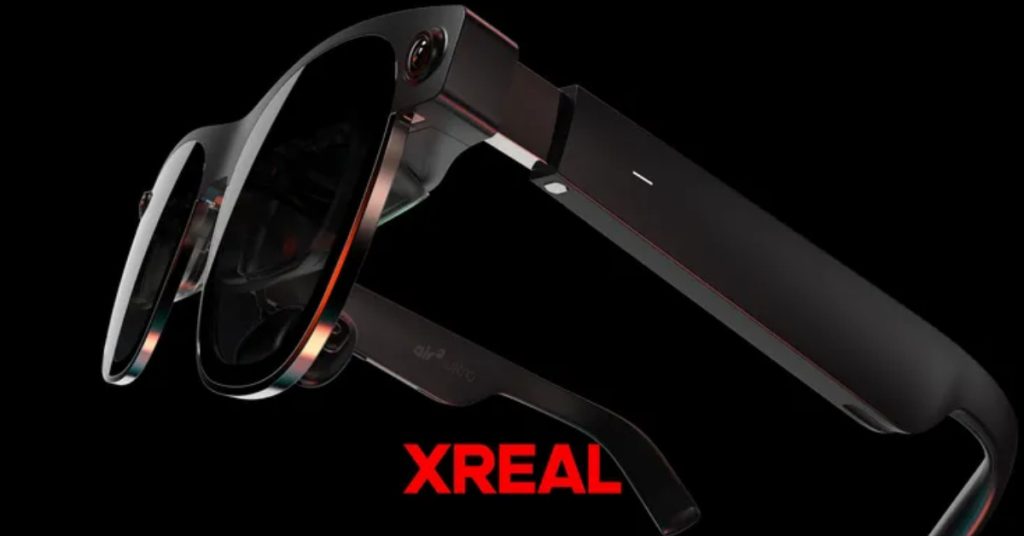
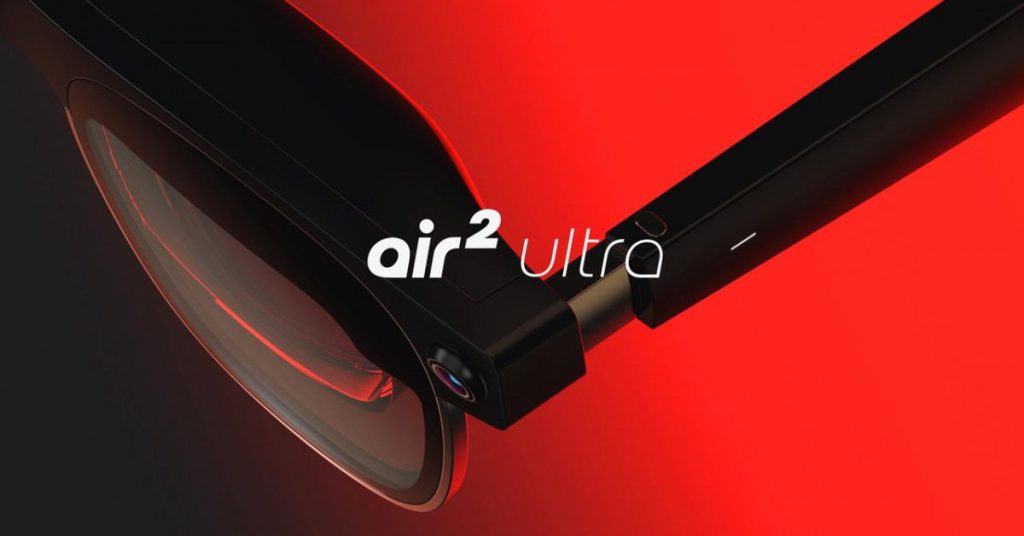
Xreal, known for its AR glasses, has unveiled its latest offering, the Air 2 Ultra, at CES 2024. This comes ahead of the much-anticipated launch of Apple’s Vision Pro, making it clear that Xreal is vying for a slice of the high-end AR market.
The Air 2 Ultra utilizes two 3D sensors with advanced computer vision, allowing users to interact with real-world objects and manipulate them in a digital space. This opens doors for creative applications like 3D object manipulation, virtual furniture placement, and immersive gaming experiences.
Design-wise, the Air 2 Ultra resembles stylish sunglasses, making them comfortable for extended wear. Weighing just 80 grams, they boast adjustable temples and three nose pad sizes for a snug fit.
Notably, these are the first titanium AR glasses, equipped with Sony’s Micro OLED panels. Each eye enjoys a Full HD display with a 52-degree field of view and 42 pixels per degree – surpassing the Apple Vision Pro in sharpness. Xreal claims you can project a virtual 154-inch screen onto your surroundings.
The display also has a refresh rate of 120Hz and brightness comes at 500 nits, so you can use it outdoors too. There are also features like auto-dimming lenses for immersion, directional audio for privacy, and voice interaction.
However, do note that, unlike standalone headsets, the Air 2 Ultra requires external processing power from a smartphone, computer, or Xreal’s Beam module. Sure, this makes it lighter and potentially more affordable, with a price tag of $699 compared to Apple’s rumored $3,499 Vision Pro. But it also means relying on compatible devices for processing power.
Xreal says Air 2 Ultra is currently mainly intended for developers, as there won’t be much AR content at launch and the SDK will receive significant upgrades in the coming months.
At CES 2024, Asus announced a slew of new devices, including the 2024 Zephyrus G14 and G16 thin-and-light gaming notebooks. The new Zephyrus notebooks feature a CNC-machined aluminium chassis, customizable slash lighting on the lid, an OLED panel, an edge-to-edge keyboard design, and a new Platinum White shade. The ultra-portable designs incorporate efficient cooling technology, including tri-fan setups, liquid metal, and vapor chambers.
Asus ROG Zephyrus G14, Zephyrus G16 specifications
2024 Asus ROG Zephyrus G14
The Asus ROG Zephyrus G14 has a 14-inch ROG Nebula Display OLED 3K (2880 x 1800 pixels) that supports a 120 Hz refresh rate and 0.2 ms response time. Running on an AMD Ryzen 8000 Series processor, the notebook comes equipped with a 73Wh battery and an Nvidia GeForce RTX 4070 GPU with a maximum TGP of 90W. It comes with up to 32 GB of LPDDR5X onboard memory and a storage option of up to 1 TB of M.2 2280 PCIe4.0 SSD storage.
The laptop offers other features, including a 1-zone RGB keyboard, stereo speakers with Smart Amplifier, and Dolby Atmos for immersive audio. Connectivity includes Wi-Fi 6E and Bluetooth 5.3, while I/O ports consist of USB-4, USB-C (USB 3.2 Gen 2), HDMI 2.1, and more. Lastly, it weighs 1.50kg.
On the other hand, the ROG Zephyrus G16 has a 16-inch ROG Nebula Display OLED 2.5K (2560 × 1600 pixels) that supports a 240 Hz refresh rate and 0.2 ms response time. It is powered by an Intel Core Ultra 9 processor, a 90Wh battery, an Nvidia GeForce RTX 4090 GPU with a maximum TGP of 115W, up to 32 GB of LPDDR5X-7467 MHz onboard memory and offers storage options up to 4 TB of M.2 2280 PCI 4.0 SSD.
2024 Asus ROG Zephyrus G16
Like the G14, the G16 features a 1-zone RGB keyboard and stereo speakers with Smart Amplifier, Dolby Atmos, and Hi-Res Audio. Connectivity options include Wi-Fi 6E and Bluetooth 5.3, with connectivity ports like Thunderbolt 4 and SD Card Reader. While the G14 weighs 1.50kg, the larger G16 weights 1.85kg.
The 2024 Zephyrus G14 and G16 laptops come with three months of Xbox Game Pass Ultimate. Unfortunately, there is no information available about the pricing of these laptops. Both devices are expected to be available for purchase in some markets in February.
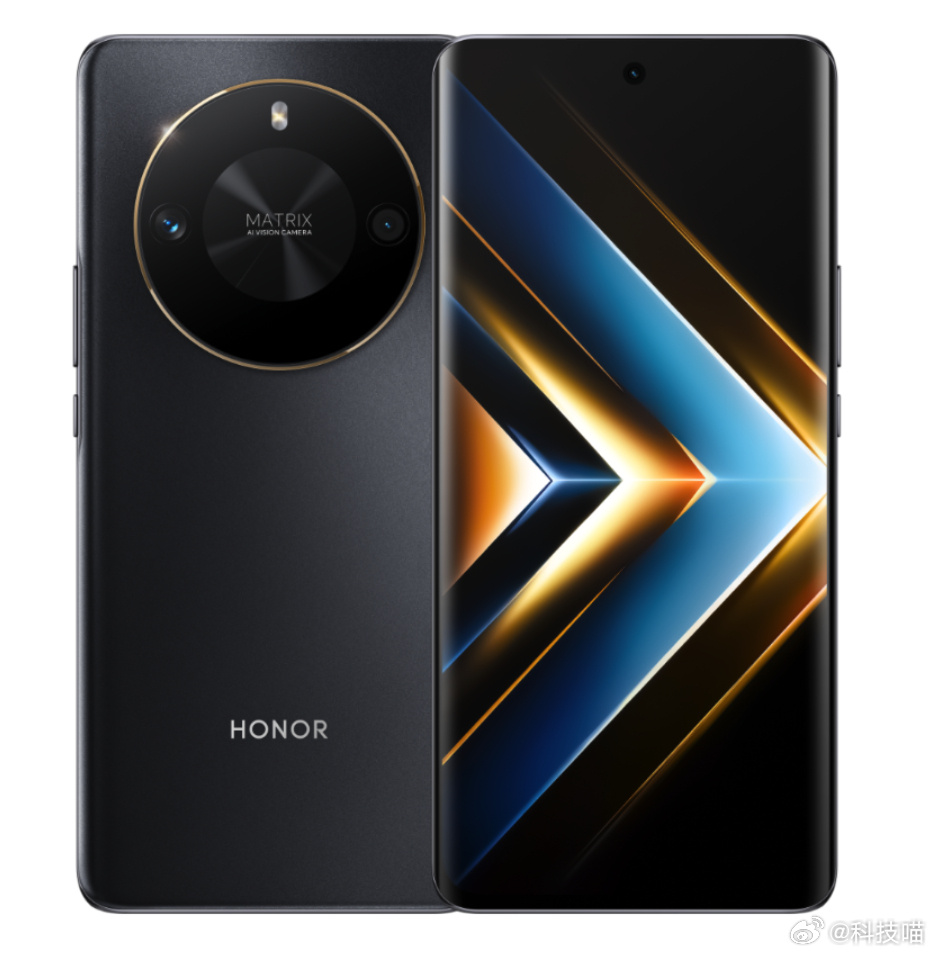
Last week, Honor took off covers from the Honor 90 GT smartphone in China. While it features the Snapdragon 8 Plus Gen 1 chipset, Honor claims that with the support of the company’s GPU Turbo, its gaming performance can surpass that of Snapdragon 8 Gen 2-powered devices. Starting today, the X50 GT is available for purchase with an enticing price of 1,999 Yuan (~$280).
Honor X50 GT price
Honor X50 GT Honor X50 GT
In China, the Honor X50 GT is available in four configurations, such as 12 GB RAM + 256 GB storage, 16 GB RAM + 256 GB storage, 16 GB RAM + 512 GB storage, and 16 GB RAM + 1 TB storage. These models are priced at 1,999 Yuan (~$280), 2,299 Yuan (~$325), 2,499 Yuan (~$350), and 2,799 Yuan (~$395). It can be purchased in shades like black and silver.
Honor X50 GT specifications
The Honor X50 GT features a 6.78-inch curved-edge OLED display with a 1.5K resolution of 2652 x 1200 pixels, a 120Hz refresh rate, and a 1920Hz PWM high-frequency dimming. Powered by the Snapdragon 8+ Gen 1 chip, it boasts LPDDR5 RAM and UFS 3.1 storage. The device is equipped with a 5,800mAh battery that supports 35W fast charging.
Its camera setup includes an 8-megapixel front camera and a dual rear camera system with a 108-megapixel primary camera and a 2-megapixel depth sensor. To manage heat, it incorporates a 5100mm² VC heat dissipation unit. Additional features comprise an in-display fingerprint scanner, an IR blaster, and an IP53 rating for water resistance. The Honor X50 GT runs on Android 14 with MagicOS 7.2.
The Honor X50 GT is said to be aimed at an online audience in China. For the offline market, the company is selling a rebranded device named the Honor X50 Pro.
OPPO Find X7 Ultra seamlessly combines technological innovation with thoughtful design. You can now get this premium smartphone for a starting price of $999 at Giztop. The phone comes in Black, Orange, and Blue color variants.
At the core of the device is the Qualcomm Snapdragon 8 Gen 3 octa-core processor, delivering exceptional performance alongside 12GB or 16GB of LPDDR5X RAM. This ensures smooth multitasking, quick app launches, and seamless navigation. Storage options 256GB or 512GB of UFS 4.0 storage, ensuring ample space for contacts, music, photos, and apps.
The 6.82-inch 10-bit LTPO 2.0 AMOLED display boasts a 120Hz refresh rate and a resolution of 3168×1440 pixels. Covering sRGB/P3 and 100% of the DCI-P3 color gamut, it provides an immersive and vivid viewing experience. The impressive 5,000,000:1 contrast ratio adds to the visual delight, making it ideal for both media consumption and productivity.
In the camera department, the quad-camera system is a standout feature. With a 50MP 1-inch wide-angle camera, a 50MP super wide-angle camera, a 50MP super-light-sensitive periscope telephoto camera, and a 50MP close-up periscope telephoto camera, the OPPO Find X7 Ultra offers versatility in capturing high-quality images in various scenarios.
A robust 5000mAh battery powers the device, supporting a 100W SuperVOOC charge for quick recharging. Additional features include 50W AirVOOC Flash Charge, 10W reverse wireless charging, and an Ultra Power Saving mode, enhancing battery efficiency.
The dual SIM functionality adds flexibility, enabling users to manage two different networks simultaneously. However, it’s important to note that when both SIM slots are active, only one can receive LTE service.
OPPO Find X7 Ultra offers a compelling package with powerful performance, a stunning display, versatile camera capabilities, and convenient storage options, making it a standout choice.
We use cookies on our website to give you the most relevant experience by remembering your preferences and repeat visits. By clicking “Accept”, you consent to the use of ALL the cookies.
This website uses cookies to improve your experience while you navigate through the website. Out of these, the cookies that are categorized as necessary are stored on your browser as they are essential for the working of basic functionalities of the website. We also use third-party cookies that help us analyze and understand how you use this website. These cookies will be stored in your browser only with your consent. You also have the option to opt-out of these cookies. But opting out of some of these cookies may affect your browsing experience.
Necessary cookies are absolutely essential for the website to function properly. This category only includes cookies that ensures basic functionalities and security features of the website. These cookies do not store any personal information.
Any cookies that may not be particularly necessary for the website to function and is used specifically to collect user personal data via analytics, ads, other embedded contents are termed as non-necessary cookies. It is mandatory to procure user consent prior to running these cookies on your website.