Advertisement

Vivo X300 FE spotted with 90W charger at TUV certification

In December 2025, Vivo launched the Vivo X300 and X300 Pro for the global market. Since that time, there have been reports that the X300 FE is also in the works. This device was spotted with model number V2537 at the Bluetooth SIG certification with its final marketing name and has already been certified by India’s BIS and Europe’s EEC. Now, the device has bagged more certifications, suggesting that its launch could be approaching.

The Vivo X300 FE is believed to be closely related to the Vivo S50 Pro Mini, which recently debuted in China. Vivo has previously rebranded the China’s Vivo S30 Pro Mini for global markets under the X200 FE name, making this strategy likely once again.

Vivo X300 FE spotted at IMDA, TUV

Vivo X300 FE IMDA listing

The Vivo X300 FE has now appeared in IMDA certification, confirming several connectivity features, including NFC support. While the listing does not reveal detailed specifications, it strengthens expectations that the device is nearing an official announcement.
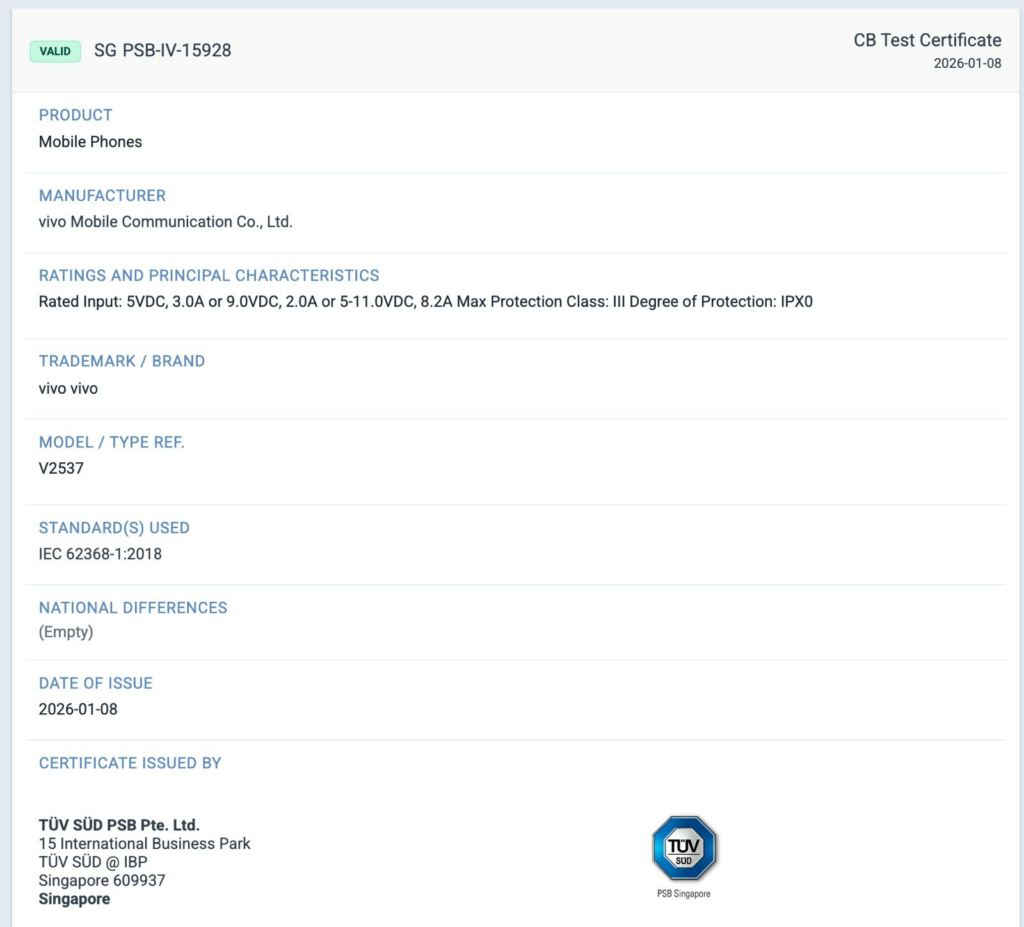
Vivo X300 FE TUV listing

The handset has also been spotted on the TUV certification platform, which confirms support for up to 90W charging. Interestingly, the Vivo S50 Pro Mini also supports 90W fast charging, further suggesting that the X300 FE could be a rebranded version designed for markets outside China.

Vivo X300 FE specifications (rumored)

Vivo S50 Pro Mini
Vivo S50 Pro Mini

The Vivo X300 FE may feature a 6.31-inch LTPO AMOLED display with a 1.5K resolution, a 120Hz refresh rate, and a peak brightness of up to 5000nits. The camera setup is expected to include a 50-megapixel front camera, alongside a rear system featuring an OIS-enabled 50-megapixel main sensor, an 8-megapixel ultra-wide lens, and a 50-megapixel periscope telephoto camera for enhanced zoom capabilities.

Under the hood, this compact flagship could be powered by the Snapdragon 8 Gen 5 chipset, paired with LPDDR5x RAM and UFS 4.1 storage for improved performance and faster data handling. It is also expected to ship with OriginOS 6 based on Android 17, along with a 6,500mAh battery supporting 90W wired and 40W wireless charging.

Vivo X300 FE launch timeframe (expected)

With multiple certifications already secured, a March launch appears possible across several markets. Meanwhile, Vivo is currently focused on its February 19 launch event in India, where the Vivo V70 and V70 Elite are expected to make their debut.

For more daily updates, please visit our News Section.

Stay ahead in tech! Join our Telegram community and sign up for our daily newsletter of top stories.

(via)

Android 17 for Poco: Full list of eligible devices revealed

Android 17 (internally codenamed “Cinnamon Bun”) has officially entered its early testing phase. Google has shifted its strategy this year, replacing the traditional Developer Previews with a “Canary” channel to streamline development. We expect the stable build of Android 17 to start rolling out to Pixel devices around June 2026. Following this, Poco users can look forward to the update arriving alongside the company’s skin, likely HyperOS 3 or the upcoming HyperOS 4, which promises a “Zero-Legacy” architecture for faster performance.

Poco devices eligible for Android 17

Here is the list of Poco devices currently eligible to receive the Android 17 update:

Poco Phones

  • Poco F-Series: Poco F8 Pro, Poco F8 Ultra, Poco F7, Poco F7 Pro, Poco F7 Ultra, Poco F6, Poco F6 Pro
  • Poco X-Series: Poco X8 Pro, Poco X8 Pro Max, Poco X7, Poco X7 Pro, Poco X6 Pro
  • Poco M-Series: Poco M8 5G, Poco M8 Pro 5G, Poco M7 4G, Poco M7 5G, Poco M7 Plus
  • Poco C-Series: Poco C85 4G, Poco C85 5G, Poco C71

Poco Tablets

  • Poco Pad M1
  • Poco Pad X1

Android 17 key features

Android 17 focuses heavily on Large Screen Adaptivity. For the first time, Google is making it mandatory for apps to be resizable, effectively killing off those annoying black “letterbox” bars on tablets and foldables. This will ensure that Poco Pad users enjoy a truly immersive, full-screen experience across all their favorite apps without developers needing to manually “opt-in.”

On the visual front, Android 17 expands the Material 3 Expressive design. Users can expect more translucent “blur” effects throughout the UI, particularly in the volume sliders and power menus. Under the hood, a new “lock-free MessageQueue” is set to reduce dropped frames, making the system feel smoother than ever, while enhanced privacy controls will give users clearer visibility into how apps access sensitive data.

For more daily updates, please visit our News Section.

Stay ahead in tech! Join our Telegram community and sign up for our daily newsletter of top stories.

(via)
iPhone Flip may be in development as Apple explores clamshell foldable design

Apple is expected to enter foldable smartphone market this year with the launch of the iPhone Fold (tentative name) in September this year. There have been reports that the brand is also planning to launch a flip-style foldable similar to the Samsung Galaxy Z Flip 7 and Motorola Razr 60 in the future, but it may depend on the market response to the company’s first foldable launching this year. Now, a new Bloomberg report reveals that the company has started testing a flip phone.

Apple reportedly testing flip-style foldable iPhone

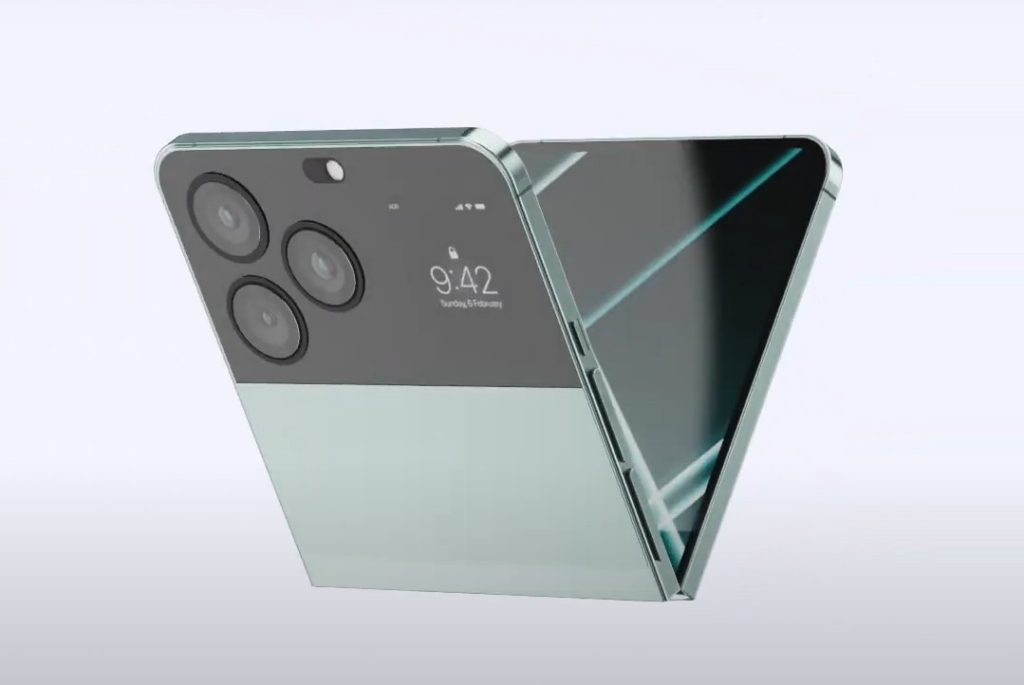
iPhone Flip concept image
iPhone Flip concept image | Source

According to the report, Apple has already tested a clamshell-style foldable iPhone, often referred to as the iPhone Flip. A known supply chain source has revealed that the company has moved beyond initial concept discussions and conducted internal testing, though it has not yet committed to mass production.

Earlier reports from reliable industry analysts also indicated that Apple was exploring a square, flip-style form factor, signaling broader experimentation with foldable designs beyond a single model. While details about the testing phase remain limited, the existence of such prototypes suggests Apple is carefully evaluating multiple directions before finalizing its long-term foldable strategy. The flip-style device would likely target users who prioritize portability and compactness, offering a smaller folded footprint compared to the book-style model expected to debut first.

Industry speculation indicates that the earliest potential launch window for an iPhone Flip could be around 2027, although a later timeline appears more realistic depending on technological readiness and consumer demand. Apple is believed to be watching market reception to its first foldable device closely before committing to another form factor.

The upcoming book-style foldable is expected to focus on productivity with a larger inner display, potentially delivering tablet-like functionality when unfolded. A clamshell alternative, on the other hand, would appeal to users seeking a more pocket-friendly flagship experience similar to existing flip foldables in the market. As competition in foldables grows, Apple’s multi-design approach suggests the company is aiming to cover different user preferences rather than limiting itself to a single foldable category.

For more daily updates, please visit our News Section.

Stay ahead in tech! Join our Telegram community and sign up for our daily newsletter of top stories.

Huawei FreeBuds Pro 5 to Debut Globally on Feb 26 Ahead of MWC 2026

Huawei will unveil its FreeBuds Pro 5 wireless earbuds internationally on February 26 in Madrid, Spain, according to a teaser posted on the company’s Instagram. The launch precedes Mobile World Congress 2026 in Barcelona by several days. The earbuds debuted in China last November and now enter global markets with several technical upgrades over previous models.

Huawei FreeBuds Pro 5: Key features

The FreeBuds Pro 5 features dual-driver audio systems in each earbud, engineered for enhanced sound clarity and depth. Huawei’s proprietary NearLink technology enables lossless audio transmission at speeds reaching 4.6 Mbps. The earbuds support AAC, SBC, LDAC, and L2HC codecs, ensuring broad device compatibility.

Active Noise Cancellation has been substantially improved, with Huawei claiming triple the performance of the previous generation. This advancement relies on upgraded microphones and the company’s Kirin A3 chipset, which handles audio processing and environmental noise reduction.

The earbuds use an in-ear, stem-style design housed in a compact, pebble-shaped charging case. An IP67 rating provides dust and water resistance. With Active Noise Cancellation active, the earbuds deliver five hours of playback per charge. The charging case extends the total battery life to 33 hours.

Huawei has not disclosed global pricing or regional availability. These details should emerge during the Madrid launch event.

For more daily updates, please visit our News Section.

Stay ahead in tech! Join our Telegram community and sign up for our daily newsletter of top stories.

(Source)

Unreleased Galaxy S26 Plus was allegedly being sold for a whopping $1,650

With Samsung’s Galaxy Unpacked event scheduled for February 25, leaks around the Samsung Galaxy S26 series are already everywhere. But this one’s unusual.

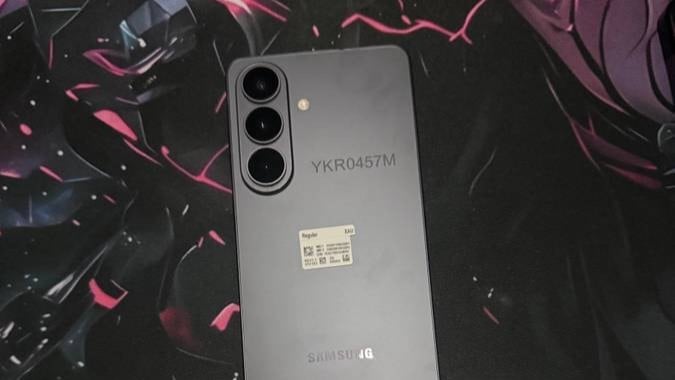
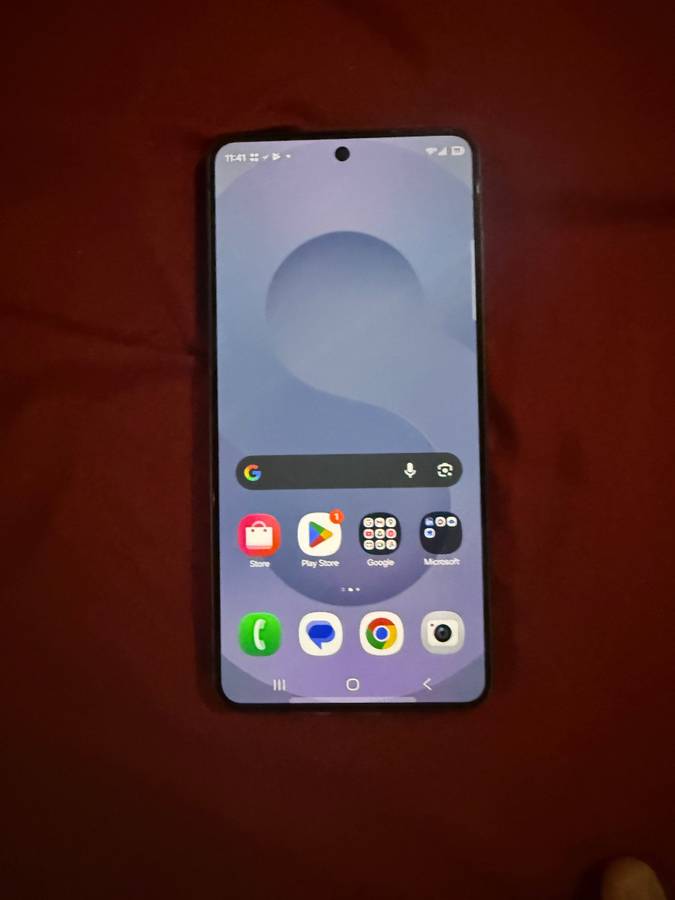
A device claimed to be a Galaxy S26 Ultra recently appeared in a Craigslist listing, priced at $1,650, well before the phone has even been officially announced.

Photos from the listing, shared on X by tipster @Kakooli98, show what looks like a fully working device running official Galaxy S26 series wallpaper. At first glance, it seems legitimate. But there’s a catch. Despite being mentioned as a Galaxy S26 Ultra, the camera layout in the photos features a single pill-shaped camera island. That design, paired with the size, aligns more closely with what’s rumored for the Samsung Galaxy S26 Plus.

The $1,650 asking price is well above what the S26 Plus is expected to cost at retail. Current estimates put it somewhere around the $1,000–$1,100 range, depending on storage.

That premium alone makes the listing questionable. Even if authentic, pre-release devices can carry risks. They may run unfinished software or lack warranty support.

The unit shown in the listing appears in a Black finish, which recent leaks have pointed to as one of the launch colors for the S26 Plus.

Beyond that, the overall design doesn’t appear radically different from recent Galaxy models, though subtle refinements are expected across the lineup.

It’s still unclear how this device ended up on Craigslist. It could be a legitimate internal sample that slipped out, or something less straightforward.

Either way, it’s one of the first instances of a seemingly functional Galaxy S26 unit appearing outside controlled leaks or dummy models.

With Unpacked just days away, official details will soon replace speculation. Until then, listings like this are best viewed with caution.

Don’t miss a thing! Join our Telegram community for instant updates and grab our free daily newsletter for the best tech stories!

For more daily updates, please visit our News Section.

(Source)

Insta360 Luna Leak Points to Dual-Lens Pocket Camera With Optical Zoom

Insta360 appears to be working on a new compact vlogging camera, and early details suggest it could take a slightly different approach from DJI’s Osmo Pocket lineup.

The device, reportedly called the Insta360 Luna, has been referenced in recent leaks and patent filings. At the company’s annual conference, CEO Liu Jingkang reportedly confirmed that a vlogging-focused camera is in development and said it would launch before July 2026. That likely puts the release window somewhere between March and June, though no exact date has been shared yet.

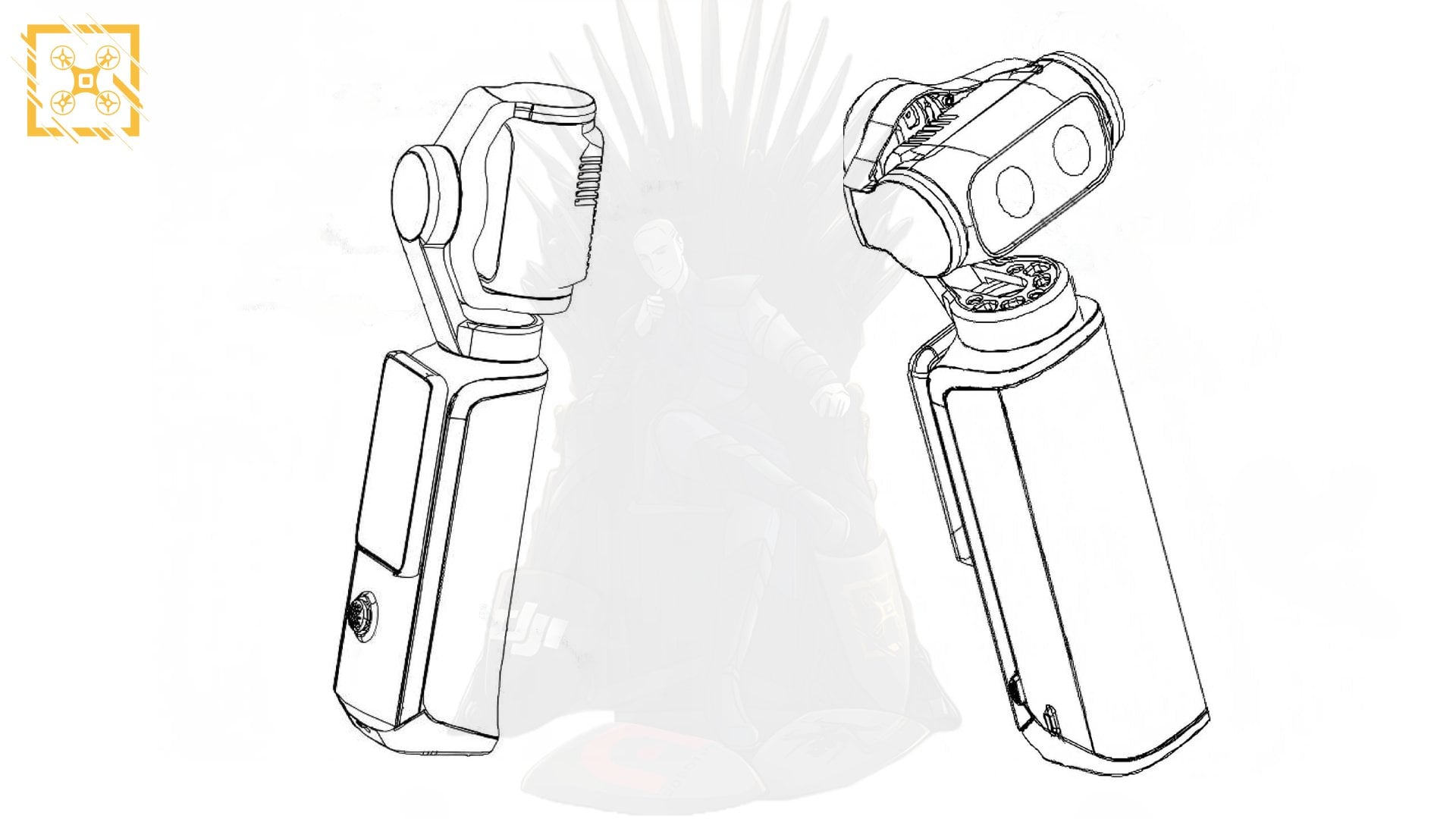
What makes the Luna interesting is its rumored dual-lens setup. Instead of relying on a single wide sensor and digital crop, the Luna is said to feature two distinct lenses: a standard wide (1x) camera and a dedicated 3x optical telephoto module. If accurate, that would allow users to switch focal lengths without losing image quality, something pocket gimbal cameras haven’t traditionally prioritized.

Based on patent sketches and early reports, the zoom transition could be controlled through a small joystick or touchscreen gestures on a fold-out display. The concept feels closer to smartphone-style zoom switching than the fixed wide-angle approach most pocket cameras use.

Leaks also point to an emphasis on image processing. Reports suggest the Luna may use a dual-stage system, where initial image enhancement happens before final processing. In practical terms, that could mean better noise handling and improved dynamic range, particularly in mixed or low lighting. Of course, how much difference that makes will depend on sensor size and real-world tuning.

For context, the current DJI Osmo Pocket 3 remains one of the most popular compact gimbal cameras in this space. There are also rumors that DJI is preparing an upgraded model with dual cameras, which could arrive before Insta360’s launch window closes.

Don’t miss a thing! Join our Telegram community for instant updates and grab our free daily newsletter for the best tech stories!

For more daily updates, please visit our News Section.

(Source: Igor Bogdanov)

World’s First 10,000mAh Sodium-Ion Flashlight Delivers 2,500 Lumens, Works at -40°C

A new crowdfunded flashlight called the Sodiumfrostglow is getting attention for one specific reason: it uses a sodium-ion battery instead of the usual lithium-ion pack. That might not sound dramatic at first, but in very cold weather, battery chemistry matters a lot.

According to the campaign page, the Sodiumfrostglow is designed to keep working in temperatures as low as -40°C. The makers claim that while lithium-ion batteries can lose a significant portion of their capacity in extreme cold, this sodium-ion battery retains much more of its usable charge. They’re quoting around 88% capacity retention at those temperatures, compared to roughly 15% for lithium under similar conditions.

If accurate, that’s a big deal for winter campers, mountaineers, or anyone dealing with long outages in freezing climates. The device includes a 10,000mAh battery, which also allows it to function as a power bank. It supports USB-C charging at up to 10W and can output 5W to charge smaller electronics like smartphones or GPS units.

Brightness is rated at 2,500 lumens, which puts it firmly in the “serious outdoor tool” category rather than basic household flashlight territory.

The campaign also highlights longevity claims: more than 3,000 full charge cycles and improved tolerance to deep discharge compared to lithium-ion packs. Sodium-ion chemistry is generally considered safer and less prone to thermal runaway, though it’s still a relatively new technology in consumer electronics.

The project first appeared on Kickstarter in late 2025, where it surpassed its $10,000 funding goal and reportedly raised over $20,000 from around 200 backers. It has since moved to Indiegogo for continued funding. Early backer pricing currently sits around $73 plus shipping, with a projected retail price closer to $90.

What makes the Sodiumfrostglow interesting isn’t just the lumen output or battery size. It’s the chemistry choice. Cold weather has always been a weak spot for lithium-ion batteries in everyday hardware.

Don’t miss a thing! Join our Telegram community for instant updates and grab our free daily newsletter for the best tech stories!

For more daily updates, please visit our News Section.

(Source)

Every Xiaomi, Redmi, & POCO Devices Set to Get the Android 17 Based HyperOS Update

While Xiaomi has just hit the brakes on HyperOS updates for all smartphones until March, this is only temporary as China celebrates its annual New Year holiday. But what about the next generation HyperOS? Xiaomi accidentally leaked HyperOS 4 in a recent global bug report, and fresh reports hint at the platform being based on a self-developed architecture that retains native Android services. While the official release is still at large, here’s a full list of all the eligible Xiaomi, Redmi, and POCO devices that will receive the Android 17 update.

Note: The list is based on official update policy and support documentation.

Xiaomi 17 Ultra
Xiaomi 17 Ultra

Full List of Xiaomi Devices Eligible for the Android 17 Update

  • Xiaomi 17 Ultra & Xiaomi 17 Ultra Leica Edition
  • Xiaomi 17
  • Xiaomi Pad 8
  • Xiaomi 17 Pro
  • Xiaomi Pad 8 Pro
  • Xiaomi 17 Pro Max
  • Xiaomi 15T
  • Xiaomi 15T Pro
  • Redmi K Pad, Xiaomi Pad Mini
  • Xiaomi MIX FLIP 2
  • Xiaomi Pad 7S Pro 12.5
  • Xiaomi 15S Pro
  • Xiaomi CIVI 5 Pro
  • Xiaomi Pad 7 Ultra
  • Xiaomi 15 Ultra
  • Xiaomi 15
  • POCO Pad X1, Xiaomi Pad 7
  • Xiaomi 15 Pro
  • Xiaomi Pad 7 Pro
  • Xiaomi 14T
  • Redmi K70 Ultra, Xiaomi 14T Pro
  • Xiaomi MIX FLIP
  • Xiaomi MIX FOLD 4
  • Xiaomi 14 CIVI, Xiaomi Civi 4 Pro
  • Xiaomi 14 Ultra
  • Xiaomi Pad 6S Pro 12.4
  • Xiaomi 14
  • Xiaomi 14 Pro
  • Xiaomi 13T
  • Redmi K60 Ultra, Xiaomi 13T Pro
  • Xiaomi Mix Fold 3
  • Xiaomi 13 Ultra
  • Xiaomi 13
  • Xiaomi 13 Pro
  • POCO M8 5G, Redmi Note 15 5G
  • POCO M8 Pro 5G, Redmi Note 15 Pro+
  • POCO F8 Pro, Redmi K90
  • POCO F8 Ultra, Redmi K90 Pro Max
  • POCO Pad M1, Redmi Pad 2 Pro
  • POCO C85 5G, Redmi 15C 5G
  • POCO C85 4G, Redmi 15C 4G
  • POCO M7 Plus, Redmi 15
  • POCO M7 4G, Redmi 15 4G
  • POCO F7, Redmi Turbo 4 Pro
  • POCO F7 Pro, Redmi K80
  • POCO F7 Ultra, Redmi K80 Pro
  • POCO C71, Redmi A5 4G
  • POCO X7 Pro, Redmi Turbo 4
  • POCO M7 5G, Redmi 14R 5G
  • POCO X7, Redmi Note 14 Pro
  • POCO X6 Pro, Redmi K70e
  • POCO F6 Pro, Redmi K70
  • POCO F6, Redmi Turbo 3
  • Redmi Turbo 5
  • Redmi Turbo 5 Max
  • Redmi Note 15 Pro 4G
  • Redmi Pad 2 Pro 5G
  • Redmi Note 15
  • Redmi Note 15 Pro
  • Redmi K80 Ultra
  • Redmi Pad 2
  • Redmi Pad 2 4G
  • Redmi Note 14S
  • Redmi Note 14 Pro 4G
  • Redmi Note 14 4G
  • Redmi Note 14 Pro+

When Will the Android 17 Update Drop?

Google’s Android 17 stable release is expected around June–July 2026, and Xiaomi should adapt its custom skin with the major OS upgrade. Early beta builds are likely to roll out soon after the official Android launch, with flagship Xiaomi phones and high-end tablets getting first access. Broader rollout to mid-range and budget models could stretch into late 2026 and early 2027, depending on regional testing and certification.

There’s More

According to the XiaomiTime report, some devices that are relatively new still won’t get Android 17 (For example, the Redmi Note 14 5G and POCO M7 Pro 5G). Xiaomi typically launches the first beta update during the Google I/O event, and based on the previous rollout, the Xiaomi 17 series should get the update first, including the upcoming Xiaomi 17T Pro.

Keep in mind that this is still just an unconfirmed report based on Xiaomi’s official policy and software support. So take this list with a pinch of salt and stick around for more.

For more daily updates, please visit our News Section.

Tech enthusiast? Get the latest news first! Follow our Telegram channel and subscribe to our free newsletter for your daily tech fix! ⚡

Samsung Galaxy S26 Ultra vs Galaxy S25 Ultra: Everything You Should Know

The Galaxy Ultra lineup is Samsung’s top-of-the-line flagship smartphones that offer the best hardware and software features. Over the last couple of weeks, leaks have hinted that the upcoming Galaxy S26 Ultra will be a meaningful upgrade over the Galaxy S25 Ultra. But how significant are these changes, and is it worth upgrading if you already own an S25 Ultra? It is expected to bring stronger performance, enhanced cameras, and smarter features. So, we’ve broken down the leaks, rumors, and expected differences between these two flagship phones.

1. Design & Display: Refining What Worked

Samsung Galaxy S26 Ultra Privacy Display

Both Ultra models follow Samsung’s premium design language: large displays, minimal bezels, and top-tier build quality. The S25 Ultra already set a high bar with a vibrant AMOLED panel, peak brightness, and sharp detail. Rumors point to the S26 Ultra retaining a similar standard with the top-end Dynamic AMOLED display but possibly polishing it further, with marginal brightness gains.

But apart from the high resolution and smooth refresh rate, the South Korean tech giant is bringing a new Privacy Display feature. This would allow certain parts of the screen to remain visible, hiding the contents of the display from sneaky onlookers.

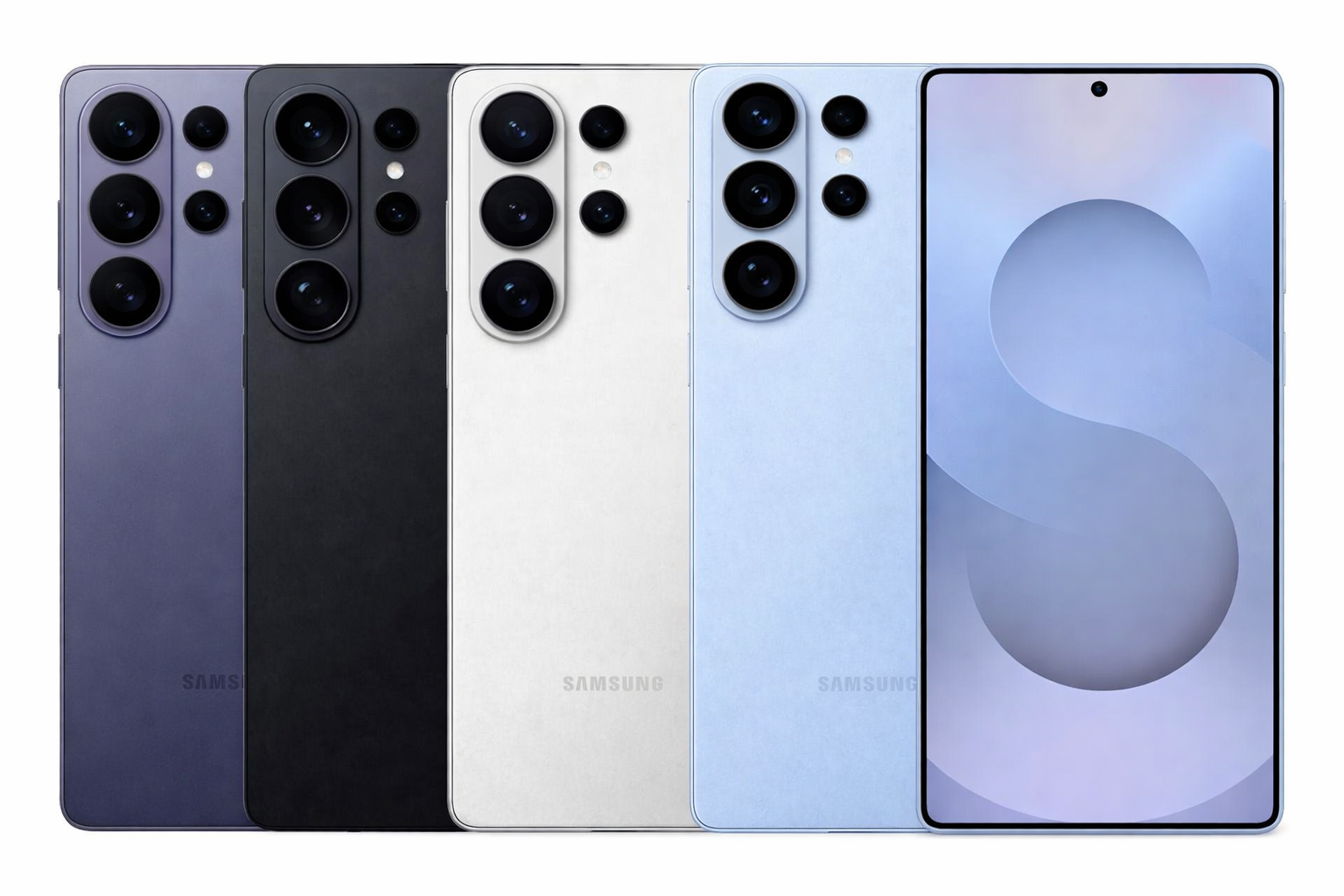
Leaked hands-on images have also showcased subtle design refinements rather than a revolutionary look. The rear camera module, frames, and ergonomics are getting minor tweaks, along with new color options (such as black, white, blue, and purple.) and a slightly sleeker design. Samsung’s next flagship might be getting slimmer. Last year’s S25 Ultra measured 8.2mmthick, while the S26 Ultra may measure just 7.9mm.

2. Next-Gen Power Inside

Samsung Galaxy S26 Ultra promo
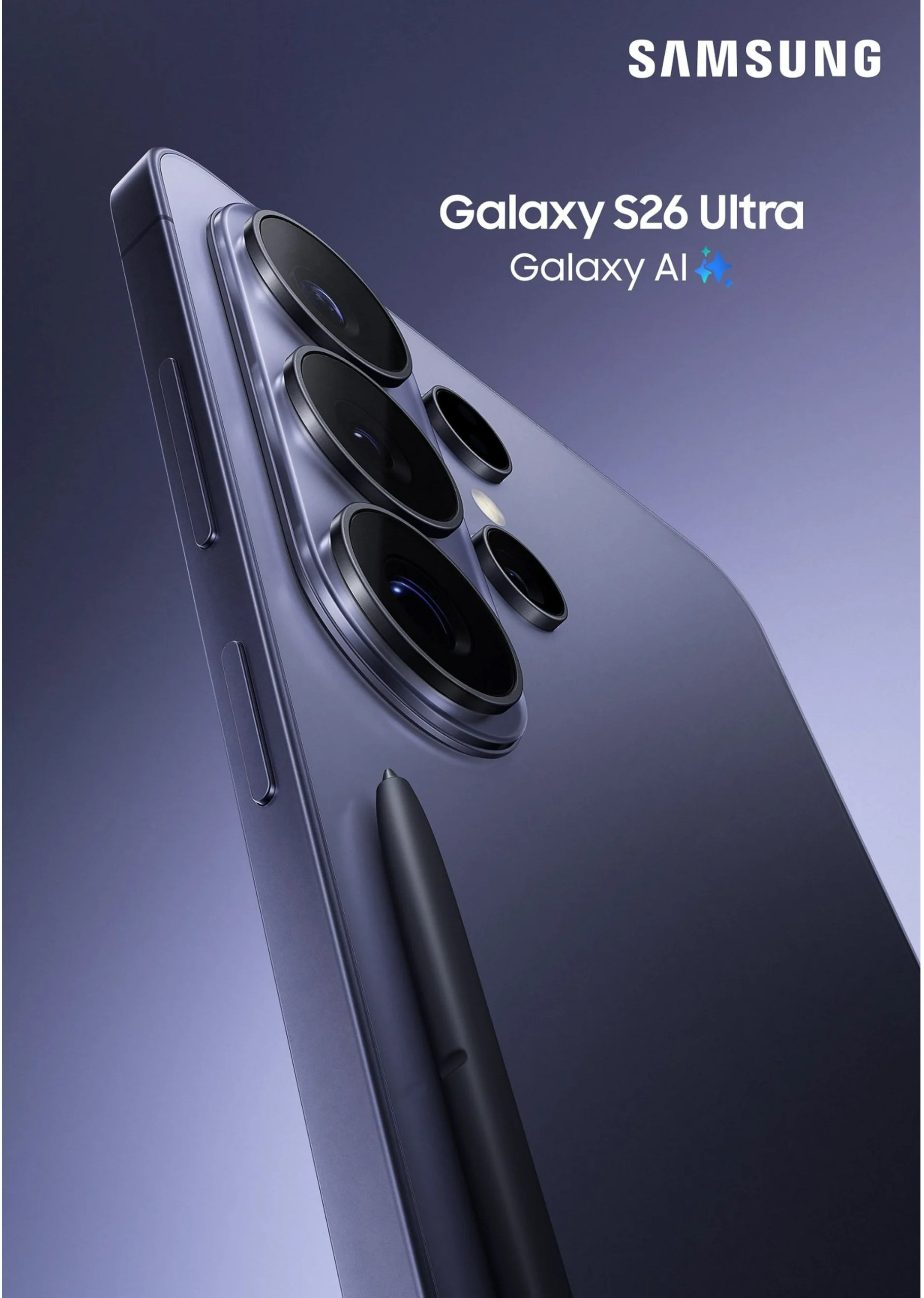
Samsung Galaxy S26 Ultra promo image shared by Evan Blass

One of the clearest areas of improvement is raw performance. While the S25 Ultra already delivered flagship-class speed with its Snapdragon 8 Gen Elite for Galaxy, leaks indicate the S26 Ultra will upgrade to the Snapdragon 8 Elite Gen 5 for every region. It is unclear if this will also be a slightly faster version of the 8 Elite Gen 5, but the early GeekBench listing suggests notable gains in both single and multi core performance.

This should translate to smoother multitasking, faster app launches, and improved endurance under heavy workloads and gaming. We can also expect better AI performance and improved power efficiency. Samsung could upgrade the thermal dissipation system on the S26 Ultra for better heat management, which should help in prolonged heavy use.

3. Cameras

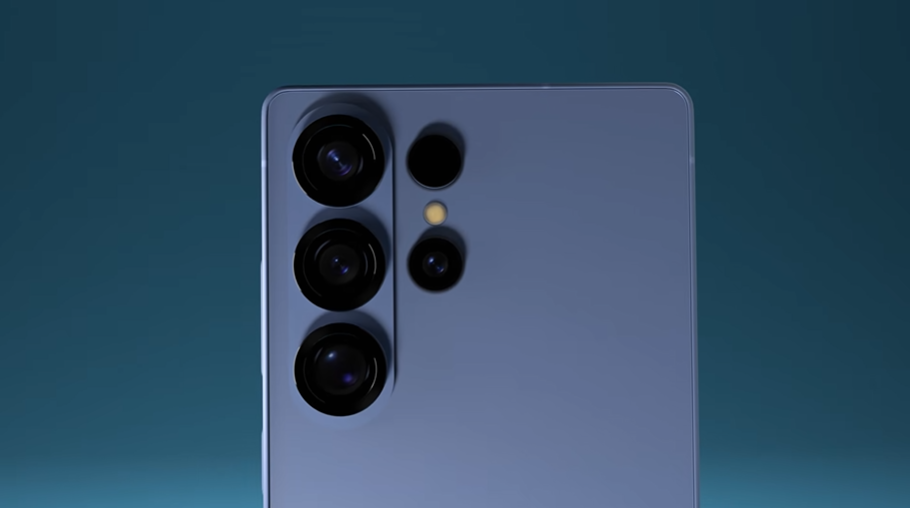
Samsung Galaxy S26 Ultra render

Samsung’s Ultra series typically offers the best mobile camera experience, and the Galaxy S26 Ultra appears to carry forward this philosophy. Recent leaks have hinted at the next-gen flagship getting slight updates in terms of hardware. But the biggest upgrade is to the main sensor, which is still a 200MP shooter but with a wider f/1.4 aperture, which should help improve night photography and low light video capture.

This is coupled with a 50MP ultra wide angle lens, a 50MP periscope telephoto shooter with 5x optical zoom, and a 10MP telephoto camera with a 3x optical zoom. There were rumors of Samsung even working on external camera accessories for the Galaxy S26 Ultra, which might enhance the photography experience. A fresh leak revealed a larger punch hole cutout on the front that might be hinting at a larger camera for selfies and video calls.

4. Battery & Charging

Despite Chinese brands offering massive battery capacities thanks to the Silicon-Carbon cell technology, Samsung is sticking to the older Li-Ion battery for the upcoming Galaxy S26 Ultra. So, we may once again see a humble (yet still sizeable) 5,000mAh battery pack. However, wired charging speeds might be getting a jump from 45W to 60W or 65W. Wireless charging is getting enhanced with the Qi2 standard, but there has been mixed news regarding built-in magnets for a MagSafe-like charging convenience.

5. Software

Samsung is expected to ship the Galaxy S26 Ultra with its latest One UI 8.5 custom skin. This is still based on the Android 16 OS, but with various improvements over One UI 8. Furthermore, it will also get up to 7 years of major Android OS updates and security patches. Samsung’s recent focus on AI means the S26 Ultra could get enhanced voice assistants, camera AI, and adaptive battery/ performance tweaks as well.

6. Verdict

For owners of older Galaxy flagships, the S26 Ultra is likely a compelling upgrade thanks to performance, camera, and software gains. For S25 Ultra owners, the decision depends on how much value you place on these incremental refinements. When combined with refined AI and software experiences, it’s a worthwhile step forward for buyers who want the very best Samsung has to offer in 2026.

For more daily updates, please visit our News Section.

Don’t miss a thing! Join our Telegram community for instant updates and grab our free daily newsletter for the best tech stories!

Huawei leads China’s online smartwatch market with 46.8% sales growth in 2025

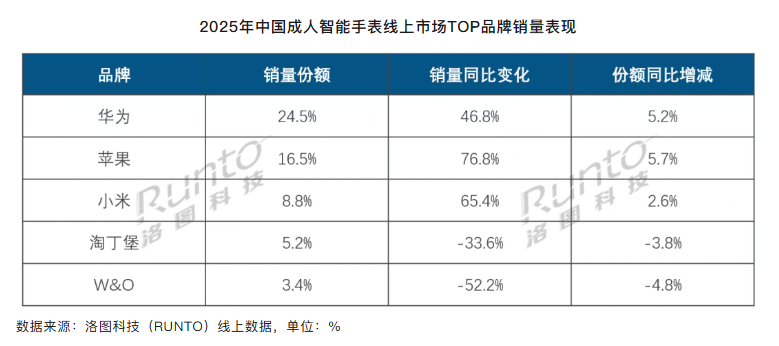
China’s smartwatch market experienced significant growth in 2025. According to a report by Runto, the online sales of adult smartwatches reached 21.34 million units, a 15.6% increase compared to 2024. Revenue climbed 50.8% year-on-year to 24.48 billion yuan ($3.43 billion), driven by a higher average selling price of 1,147 yuan ($160.58).

huawei watch 6 pro

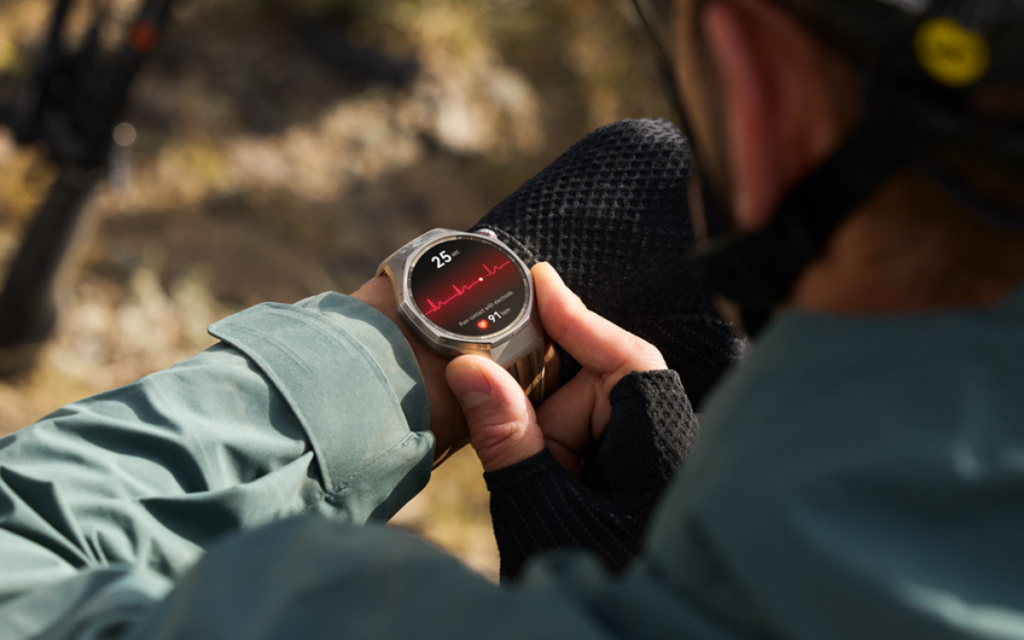
Huawei ranked first with a 24.5% share of unit sales. The company reported a 46.8% sales increase year-on-year, with its market share growing by 5.2 percentage points. Huawei refreshed its smartwatch lineup in 2025. The FIT series focused on slim designs, the Watch 5 enhanced HarmonyOS AI and health monitoring, and the GT 6 targeted users looking for long battery life and sports features. Huawei positioned the Ultimate 2 series for high-end outdoor use.

China online smartwatch market 2025

The HarmonyOS ecosystem played a central role in Huawei’s success. The company integrated wearables with smartphones, home devices, and medical systems, creating an interconnected user experience. Huawei also introduced age-friendly features and medical-grade health tracking, which helped it expand into the senior market.

Apple ranked second with a 16.5% share of online unit sales. The company gained 5.7 percentage points in market share compared to 2024. Apple launched the S11, SE 3, and Ultra 3 in 2025. The S11 performed well due to consumer subsidies, while the Ultra 3 targeted premium users. Apple captured over 60% of sales in the 3,000+ yuan ($420+) price range and secured 40% of the market’s revenue share.

Xiaomi captured an 8.8% share of unit sales in 2025. The company focused on the 1,000 yuan ($140) price segment, emphasizing value-for-money products. It expanded its lineup with the Redmi Watch 6, Xiaomi Watch 5, and Watch S4, boosting sales in both entry-level and mid-range tiers.

Heading into 2026, competition remains sharply defined. Huawei continues to strengthen its position through ecosystem integration and localized health services, while Apple maintains a firm grip on high-end consumer spending.

For more daily updates, please visit our News Section.

Stay ahead in tech! Join our Telegram community and sign up for our daily newsletter of top stories! 💡

(Via)

Honor MagicPad 4 Teased: 12.3″ 165Hz Screen, Snapdragon 8 Gen 5, 10,000mAh Battery

Honor has begun teasing the MagicPad 4, its next flagship tablet, ahead of an expected April 1 launch in China. The device follows the MagicPad 3 series and arrives as Honor prepares to showcase its Magic V6 foldable and Robot Phone at MWC 2026 in Barcelona.

The MagicPad 4 features a 12.3-inch display with a 165 Hz refresh rate. This high refresh rate should enable smoother scrolling, improved gaming performance, and enhanced responsiveness across applications.

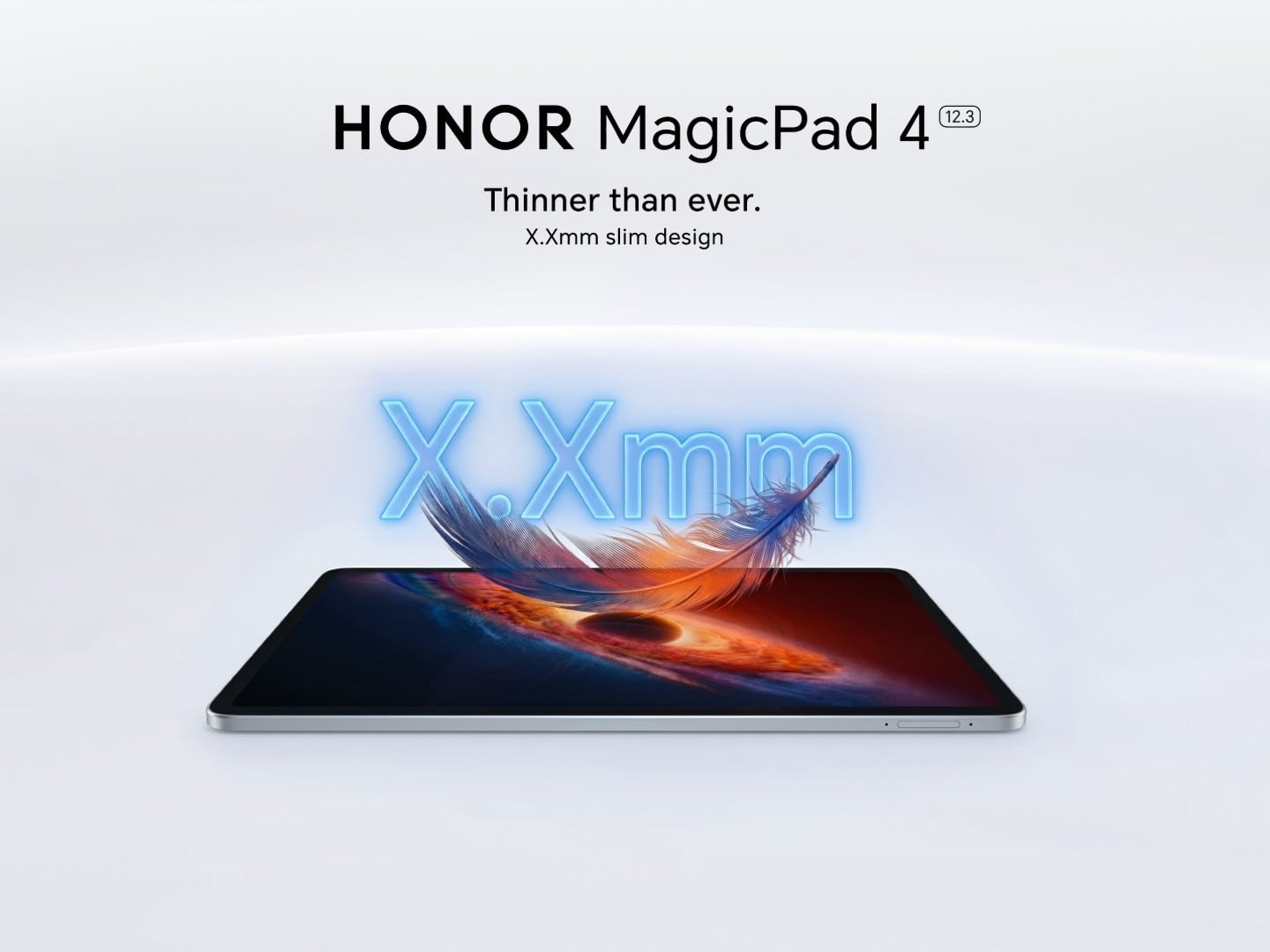
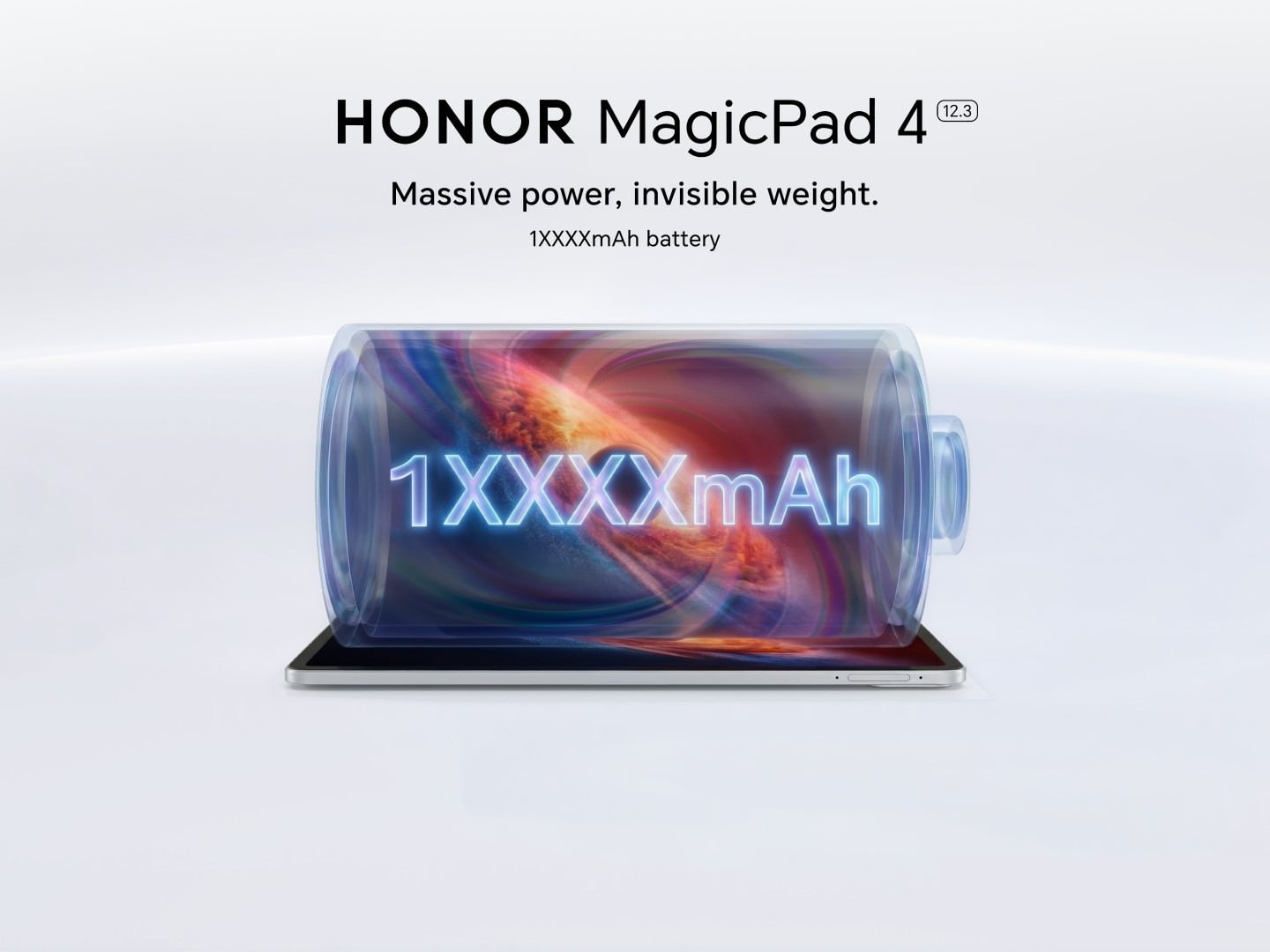
Honor will equip the tablet with a recent Snapdragon 8 series processor, likely the Snapdragon 8 Gen 5 based on current rumors. This chipset already powers multiple smartphones and is said to arrive on the upcoming Lenovo Legion Y700 2026 tablet. If confirmed, the MagicPad 4 would rank among the most powerful Android tablets announced to date, capable of handling intensive gaming, multitasking, and demanding applications. The MagicPad 4 houses at least a 10,000 mAh battery while maintaining a thickness below 5 mm.

According to terms from Honor’s “MagicPad 4 for £1” promotional competition, general availability should begin by April 1. The company has not disclosed complete specifications or pricing details; however, the £1 registration entitles you to a £100 early bird voucher, which users will likely be able to use shortly after the debut of the MagicPad 4 at MWC Barcelona (March 2 to March 5).

For more daily updates, please visit our News Section.

Tech enthusiast? Get the latest news first! Follow our Telegram channel and subscribe to our free newsletter for your daily tech fix!

(Source)

ViewSonic unveils new 27-inch QHD 360Hz Fast IPS gaming monitor

ViewSonic has unveiled its new gaming monitor, the VX27G26-2K-3, targeting competitive gamers and esports enthusiasts. The company has not revealed pricing or availability details yet, but the monitor is expected to launch in China first.

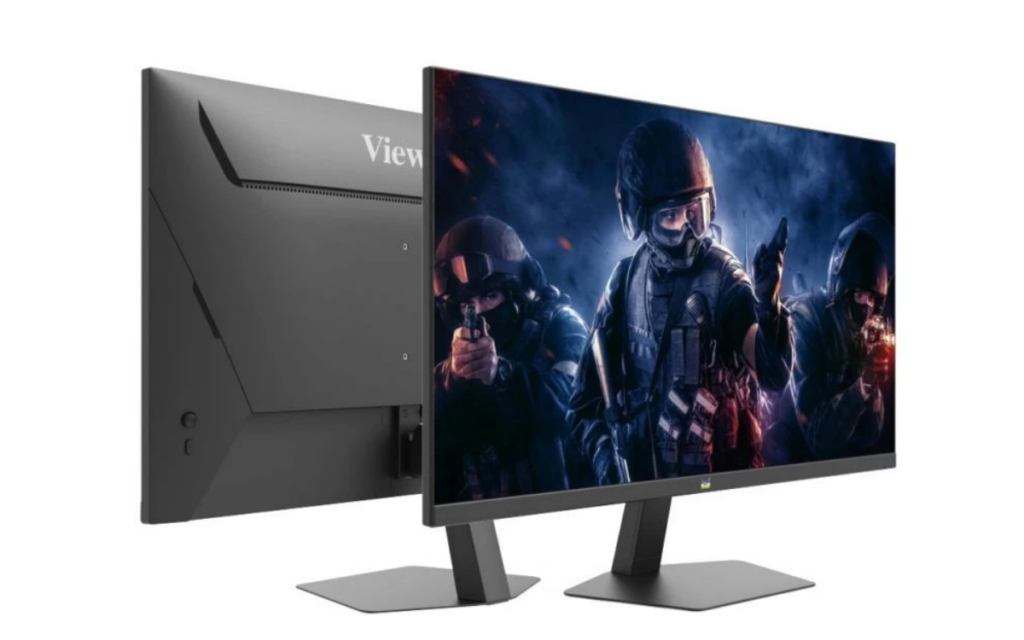
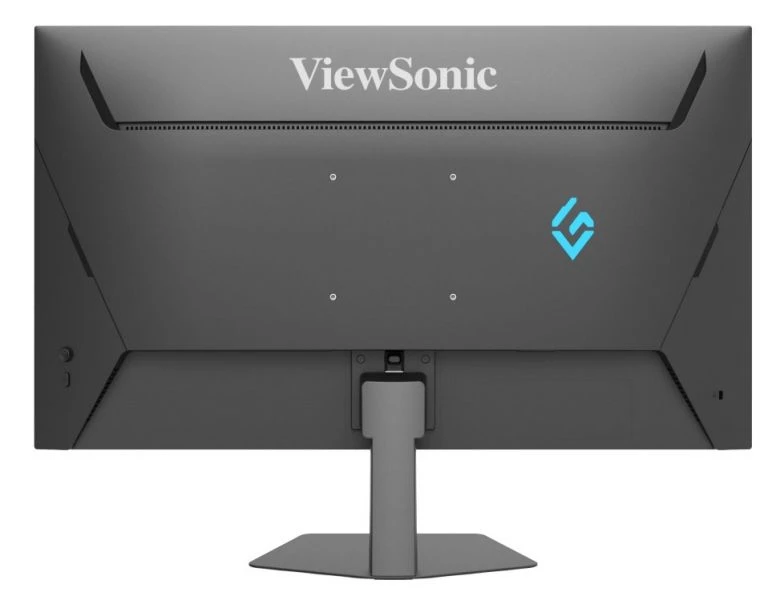
ViewSonic VX27G26-2K-3

ViewSonic VX27G26-2K-3 Specs

The VX27G26-2K-3 features a 27-inch QHD (2560 × 1440) Fast IPS display with a 16:9 aspect ratio. It supports a native 360Hz refresh rate and a 1ms GTG response time, delivering smooth gameplay.

The panel supports HDR10 and achieves a brightness of 450 nits, with a minimum brightness of 400 nits. It provides a 1000:1 static contrast ratio and covers 100% of the sRGB color gamut and 98% of the DCI-P3 color space. These features ensure accurate colors and sharp details, making it suitable for both gaming and content creation.

ViewSonic has included two HDMI 2.1 ports and two DisplayPort 1.4 inputs on the VX27G26-2K-3. The HDMI ports support a refresh rate of up to 320Hz, while the DisplayPort connections enable the full native 360Hz refresh rate. The monitor is also compatible with FreeSync and G-Sync, which reduces screen tearing and stuttering during gameplay.

ViewSonic VX27G26-2K-3

The VX27G26-2K-3 includes gaming-focused features such as low blue light and flicker-free technology to reduce eye strain. It supports customizable crosshairs, multiple color modes, and a Night Vision mode for improved visibility in darker scenes. The design features three-side borderless bezels and ambient lighting with an esports-style “G” accent.

The VX27G26-2K-3 does not include built-in speakers. The stand supports tilt adjustments ranging from -5° to 20°, and users can mount the display using a 100x100mm VESA bracket. The monitor weighs 4.3kg with the stand and 3.5kg without it.

In related news, BenQ has recently launched the GW90TC series featuring 144Hz IPS panels, 20W USB-C connectivity, and a fully ergonomic stand. Xiaomi has also introduced the 2K Monitor A27Qi 2026 with improved color accuracy, a 1,300:1 contrast ratio, and a 120Hz refresh rate.

For more daily updates, please visit our News Section.

Stay ahead in tech! Join our Telegram community and sign up for our daily newsletter of top stories! 💡

(Source, Via)

Best DJI Drones 2026: Best Models You Should Consider

DJI is one of the most popular brands for consumer and prosumer grade drones. In 2026, the brand is still a market leader, offering a wide range of models like compact travel drones, cinematic powerhouses, immersive FPV flyers, and beginner-friendly models. Whether you’re a professional shooting high-end videos, capturing vacation footage, or simply getting into aerial photography as a hobby, DJI has a drone for every need and skill level. So here are our top picks of the best DJI drones you should consider buying in 2026.

1. DJI Mavic 4 Pro

DJI-Mavic-4-Pro-Gimbal
DJI Mavic 4 Pro

At the top of DJI’s consumer lineup, the Mavic 4 Pro stands out as a premium aerial camera drone. It features a 100 MP main camera and a 360-degree rotating gimbal for dynamic cinematic footage, plus 6K/60 fps HDR video capture and up to 51 minutes of flight time. This combination of high-end imaging and long endurance makes it ideal for filmmakers, content creators, and professionals who demand the highest quality aerial footage.

2. DJI Mini 5 Pro

DJI Mini 5 Pro
DJI Mini 5 Pro

For those looking for pro-grade features in a lightweight, registration-friendly package, the Mini 5 Pro is one of DJI’s best drones. With a 1-inch CMOS sensor capable of 50 MP photos and 4K/120 fps video, omnidirectional obstacle sensing, and around 50 minutes of flight time, it blends portability with performance. It is perfect for travel, adventure shoots, and everyday aerial content creation.

3. DJI Flip

DJI Flip
DJI Flip

The DJI Flip blends portability with versatile capability in a sub-250 g foldable design. It is especially suited for creators who want a drone that’s easy to travel with and capable of capturing smooth 4K ultra high resolution with capable stabilization and intelligent flight modes. This makes the tiny drone versatile for indoor and outdoor use. Its lightweight build avoids many drone registration requirements in global markets.

4. DJI Neo 2

DJI Neo 2

If you’re just entering the world of drones or want the simplest possible flying experience, the DJI Neo 2 offers a compelling mix of features. At its heart is a 1/2-inch sensor that records 4K videos, omnidirectional sensing, and gesture based controls, motion launch, and easy tracking. The drone arrives with a lightweight build and simplified operation, making it perfect as an entry-level model. DJI even released a new update that lets users control this drone from their smartwatch.

5. DJI Avata 2

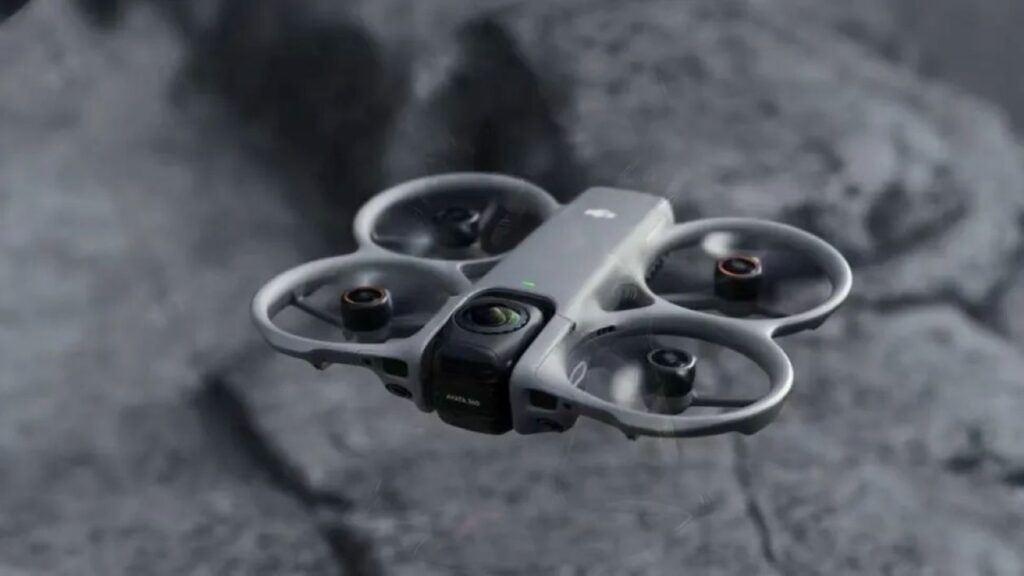
DJI Avata 2
DJI Avata 2

For those who want immersive, first-person flight (FPV) and dynamic cinematic movement, the Avata 2 delivers. This model offers a wide angle camera and smooth electronic stabilization. The FPV style drone is designed for fast, exhilarating flights, especially when paired with DJI’s goggles and dedicated controllers. It’s ideal for action footage, sports filming, and creative FPV shots that standard drones can’t capture as effectively.
6. The Takeaway

DJI’s drone lineup in 2026 spans from ultra-mobile sub-250 g models to pro-grade aerial systems. Whether you’re capturing cinematic vistas, exploring new perspectives, or just enjoying drone flying as a hobby, DJI’s 2026 lineup has something to elevate your aerial experience this year. So you have plenty of options to choose from and experiment with.

For more daily updates, please visit our News Section.

Tech enthusiast? Get the latest news first! Follow our Telegram channel and subscribe to our free newsletter for your daily tech fix! ⚡

This Emulation App Lets You Turn Your MacBook Into a Gaming PC With Steam Support

If you’ve ever wished your MacBook could play your full Steam PC game library without streaming or complex virtualization, a new emulation app could be the answer. GameSir’s GameHub PC platform is heading to the macOS platform, bringing support for Windows and Steam games.

What GameHub on Mac Is All About

To recall, the GameHub is an app developed by Chinese gaming accessory maker GameSir, known for its controllers and software tools. The platform is already popular on Android for letting users run Windows and Steam games. It has become a go-to solution for gamers who want to play Steam titles by linking their library directly within the app.

Now, GameSir has announced that macOS support is on the way, bringing that same idea to MacBook, iMac, Mac Mini and Mac Studio users. Once the Mac version arrives, it should allow users to run Windows and Steam games natively on macOS, effectively letting your Mac act like a gaming PC, without the need to install Windows or use complicated emulators.

GameSir GameHub PC Emulation App for Macbooks
GameSir GameHub PC Emulation App for Macs

New Features On the Way

The official announcement and teaser posters shared so far show that GameHub for Mac will include several customization options tailored to gaming. This marked a big step beyond casual ported titles. So here are some key features on the platform:

  • AI image upscaling (super-resolution) to clean up game visuals
  • Graphics performance tweaks for balancing performance and quality
  • Color mode settings for HDR or enhanced palettes
  • V-Sync toggle to control frame timing and smoothness

All of these tools aim to help tailor each game’slook and performance on Apple Silicone hardware. While GameSir hasn’t confirmed a release date yet, the announcement simply says the macOS port is “coming soon.”

For more daily updates, please visit our News Section.

Don’t miss a thing! Join our Telegram community for instant updates and grab our free daily newsletter for the best tech stories!

DJI’s Avata 360 Drone Just Leaked: Pricing, Launch Timeline & Design Details

DJI’s long-rumored Avata 360 has just surfaced in another leak, bringing fresh information about its regional launch timing, early design cues, and the pricing tiers. The latest leak comes ahead of the official debut of the next generation 360 capable tiny drone. So here are all the details.

DJI Avata 360 Launching with a Competitive Price Tag?

According to the latest images circulating from sources like DroneXL and insider leaks, the drone is expected to be offered in at least three configurations at launch:

  • Base drone only with one battery: around 2,988 Yuan (roughly 435 US Dollars)
  • Drone + RC 2 controller combo: around 3,988 Yuan (roughly 575 US Dollars)
  • Fly-More bundle with three batteries, a charging hub, a carry case and a choice of RC 2 or Goggles N3: around 5,688 Yuan (roughly 825 US Dollars)

This tiered pricing strategy could make the Avata 360 considerably more accessible than some premium 360-drone rivals while giving buyers options based on how much gear they want right out of the box.

DJI Avata 360

Launch Timeline

Leaks point toward DJI staging a China-centric launch for the Avata 360 in March 2026, possibly followed by a separate global unveiling a couple of weeks later. This pattern would mirror earlier DJI rollouts where China got first access before a broader release. Rumors also hint at review units already making their way to influencers and tech reviewers via DJI’s beta app.

Design Elements

A series of leaked photos and packaging renders hint at a distinctive design for the Avata 360, built around dual camera modules and a device footprint optimized for 360° capture. Some leaks even show the drone with a rotating camera unit that could help transition between traditional FPV and full-sphere 360° shooting modes.

For more daily updates, please visit our News Section.

Tech enthusiast? Get the latest news first! Follow our Telegram channel and subscribe to our free newsletter for your daily tech fix! ⚡

(Via)

Samsung’s wide foldable design appears in internal software build

A report earlier this week revealed that Samsung has already started internal testing of One UI 9 for its next-generation foldables. 

At first glance, the list looked familiar, with the Galaxy Z Fold 8 and Galaxy Z Flip 8 showing up as expected. But tucked between those familiar names was Samsung’s long-rumored wide-screen foldable.

Now, thanks to the same One UI 9 test build, we have our first real hint at what this mysterious device might look like.

This is Samsung’s wide-screen foldable!

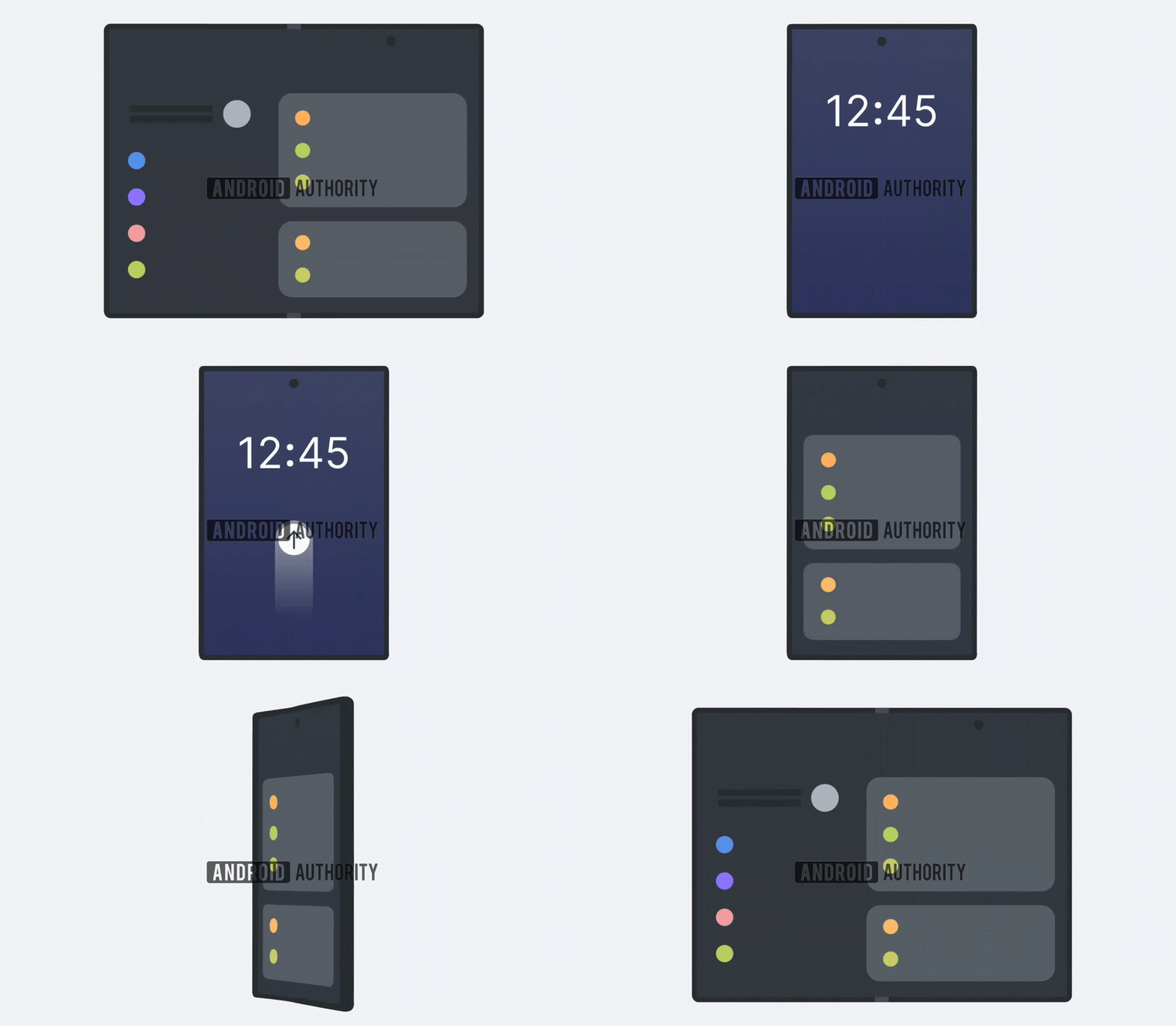
Animations found in the software (spotted by Android Authority) show a new foldable device opening and closing. The animations themselves are basic and don’t reveal many hardware details, but their existence is notable. It’s the clearest sign yet that Samsung is actively developing a wider Galaxy Z Fold-style device.

From what we can see, this foldable appears noticeably wider than Samsung’s current book-style foldables. It’s not a detailed look; there’s no visible camera module, no ports, and no obvious design flourishes. Still, even these simple outlines are enough to set expectations. 

This looks like a foldable designed around a broader inner display to improve multitasking and media consumption without relying on extreme aspect ratios.

Right now, Huawei is the only major smartphone brand openly experimenting with this wider foldable form factor. The company launched the Pura X last year, clearly showing its interest in wider, tablet-like foldables. 

Samsung wide foldable design black

As of now, there’s already chatter about the Pura X2, which is rumored to feature a larger inner display, possibly stretching close to seven inches.

If Samsung follows through, this could set up another familiar rivalry, this time around the wide-screen foldables. That said, it’s worth keeping expectations in check. 

A device appearing in a software build doesn’t guarantee it will ever see a commercial release. Samsung has tested plenty of ideas over the years that never made it to store shelves.

For more daily updates, please visit our News Section.

Stay ahead in tech! Join our Telegram community and sign up for our daily newsletter of top stories.

Honor Magic V6 live images confirm its most premium color option

We already know that Honor is getting ready to unveil the Magic V6 foldable. Now, just ahead of the official reveal, the device has made a brief appearance in a bunch of official-looking photos. 

Several users on the Chinese social media platform Weibo shared photos of Hong Kong actor and singer Nicholas Tse on what looked like a commercial shoot, holding an ultra-slim foldable phone. It doesn’t take much guesswork to assume it’s the upcoming Honor Magic V6.

The photos confirm that Magic V6 retains the company’s familiar octagonal rear camera module. The frame shows visible antenna lines, which point to a metal build. But the more interesting detail this time might be the finish.

A previous leak from Weibo tipster WhyLab claimed the device would arrive in a red vegan leather finish. The phone in these new images seems to match that description, and this will likely be the prime color of the foldable.

Honor Magic V6 Specifications

The Magic V6 has passed China’s 3C certification with a typical battery capacity of around 7,150mAh. As far as we know, it could be the largest battery ever fitted into a foldable flagship. Honor is also said to be pairing that with 120W fast charging

The rest of the rumored specs include a Snapdragon 8 Elite Gen 5 chip, a 200-megapixel main camera with a large sensor, and a periscope telephoto lens. Other expected features include wireless charging, full waterproofing, and support for Beidou satellite communication. 

And because this is an Honor foldable, it’s reasonable to assume the company will continue to push on thinness and weight. That’s been the pitch for the past few generations.

For context, last year’s Honor Magic V5 already pushed the limits of thinness and weight, measuring just 8.8mm when folded and weighing 219 grams, while packing a 6,100mAh battery. 

We won’t have to wait much longer to see how much of this holds up. The Honor Magic V6 is expected to be unveiled at Mobile World Congress, which kicks off on March 5th.

For more daily updates, please visit our News Section.

Stay ahead in tech! Join our Telegram community and sign up for our daily newsletter of top stories.

Casio launches G-Shock collab watch with ASSC featuring transparent floral design

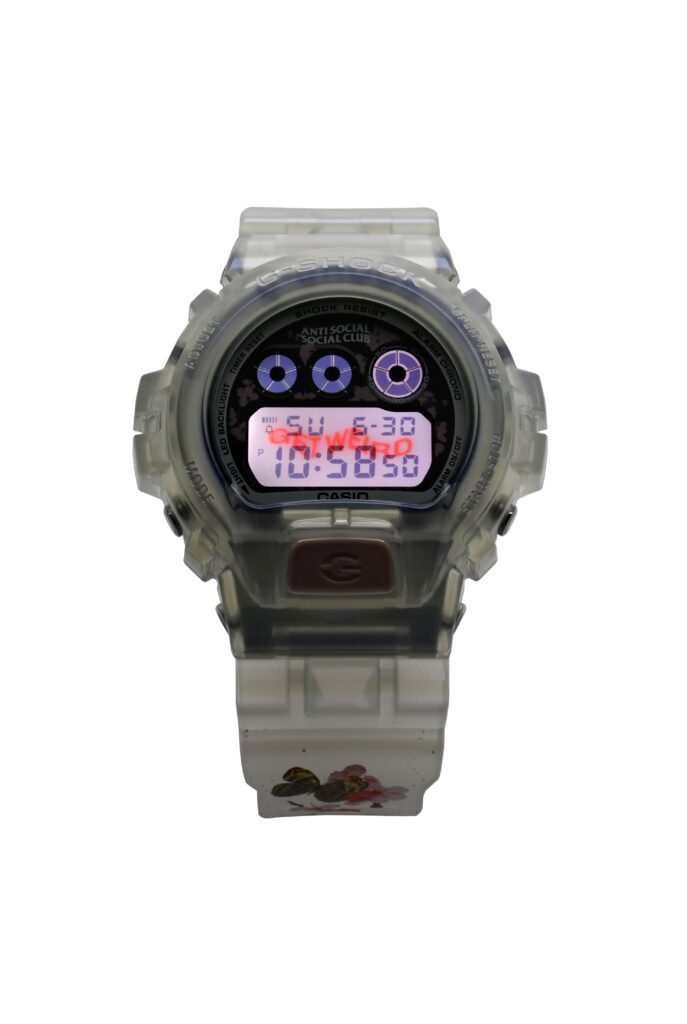
Casio has launched a new G-Shock DW6900 model in partnership with streetwear label Anti Social Social Club (ASSC). The new watch, officially named DW6900ASSC25-7, is now available in the U.S. and priced at $170.

G-Shock DW6900ASSC25-7

G-Shock DW6900ASSC25-7 Specifications

This release marks the second collaboration between G-Shock and ASSC. The companies designed the model to retain G-Shock’s bold, durable build while introducing stylistic elements inspired by ASSC’s fashion-forward identity.

The case and strap use a translucent, frosted resin material that gives the watch a light, airy appearance. The clear construction allows internal mechanisms to show through slightly, giving the watch a layered look without compromising durability.

The watch features G-Shock’s familiar round bezel and robust structure. It includes large side buttons and a shock-resistant shell that maintains G-Shock’s reputation for toughness. The dial displays a black base decorated with pink floral patterns, which contrast sharply with the transparent casing. The top of the dial includes “Anti Social Social Club” branding in bold white letters with pink outlining.

The digital display retains all standard DW6900 functions, including timekeeping, date, stopwatch, alarms, and a countdown timer. Above the main digital screen, three circular sub-dials add symmetry and visual depth.

Below the display, G-Shock replaced its standard “G” button with a soft pink version to match the floral accents. Pressing the button triggers an electro-luminescent backlight that reveals a hidden “Get Weird” logo, a subtle nod to ASSC’s signature slogan.

The resin band continues the theme with cherry blossom and butterfly graphics printed along its length. Though the design introduces delicate and playful elements, the strap still includes a dependable metal buckle and keeps the watch securely fastened.

The model includes 200-meter water resistance, a two-year battery life using a CR2016 battery, and a full auto-calendar that runs until 2099. The watch also supports both 12-hour and 24-hour time formats.

In related news, Casio has recently launched a new women’s analog watch with a stainless steel band and a minimalist dial. The company has also introduced a new vintage-style digital watch with leather straps.

For more daily updates, please visit our News Section.

Stay ahead in tech! Join our Telegram community and sign up for our daily newsletter of top stories! 💡

(Casio)

Xiaomi Civi 6 isn’t canceled after all, here are the specs

Back in October, a report claimed that Xiaomi had no plans to launch the Xiaomi Civi 6, casting doubt over the future of the series. Since then, information has been scarce. But now, new leaks coming out of China suggest the device is very much alive.

Two well-known Chinese tipsters — Smart Pikachu and Digital Chat Station — shared fresh posts on Weibo that points to the Xiaomi Civi 6. Digital Chat Station hinted at an upcoming phone equipped with a dedicated AI key. 

While the post didn’t explicitly mention the Civi branding, online discussions quickly connected the dots. Around the same time, Smart Pikachu resurfaced an older message he had written months ago and clarified that it was about the Civi 6.

Xiaomi Civi 6 Expected Specifications

Meanwhile, another leak making rounds on Weibo shares the possible specs of Xiaomi Civi 6. 

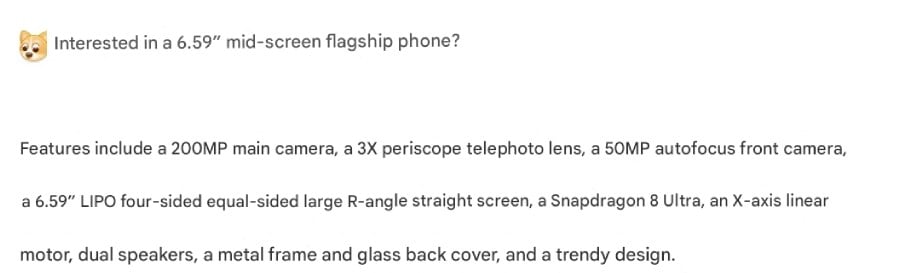
The phone is said to feature a 200-megapixel main camera, paired with a 3x telephoto lens. On the front, there’s reportedly a 50-megapixel autofocus selfie camera. 

The display is rumored to be a 6.59-inch LIPO four-sided curved panel, which suggests slim bezels and a more premium feel. Powering the device could be Qualcomm’s Snapdragon 8 Elite chipset. Other leaked details include an X-axis linear motor, dual speakers, a metal frame, and a glass back.

Perhaps the most interesting addition is the AI button with remapping functionality. This should allow users to point the button to AI features of their liking. 

Still, there’s a degree of uncertainty. Weibo tipsters often avoid naming specific devices in their posts, which leaves room for interpretation. While the margin of error appears small, nothing is official yet.

Another open question is availability. Previous Civi models, including the Xiaomi Civi 3, were limited to the Chinese market. There’s a possibility that the Civi 6 could also remain China-exclusive. Alternatively, Xiaomi may choose to rebrand it for global markets, potentially as the Xiaomi 17 Civi.

For more daily updates, please visit our News Section.

Stay ahead in tech! Join our Telegram community and sign up for our daily newsletter of top stories.

Oppo Find N6 Geekbench reveals Snapdragon 8 Elite Gen 5 in a unique 7-core setup

Oppo has quietly started talking about its upcoming Find N6 foldable, even though official teasers haven’t surfaced yet. Just as that happens, the foldable has now appeared in a Geekbench listing with a top-tier Snapdragon chip.

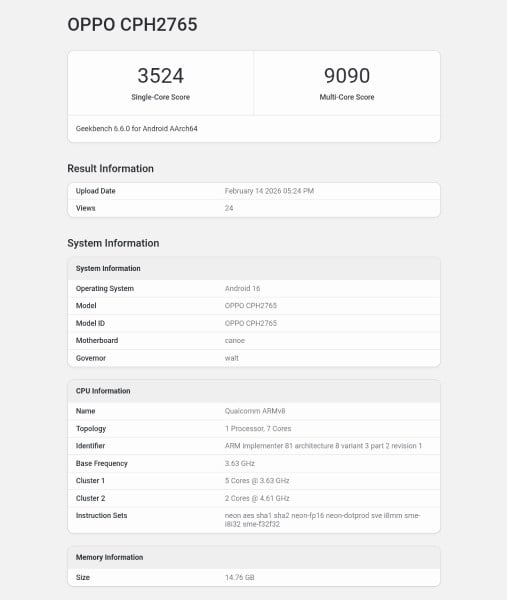
According to the benchmark entry, the Find N6 runs on the new Snapdragon 8 Elite Gen 5. Interestingly, this is the 7-core version of the chip rather than the typical 8-core setup we’ve seen in the 8 Elite Gen 5. The configuration includes two prime cores clocked at up to 4.61 GHz and five performance cores running at 3.63 GHz. That means, it’s missing one performance core from its usual counterpart. 

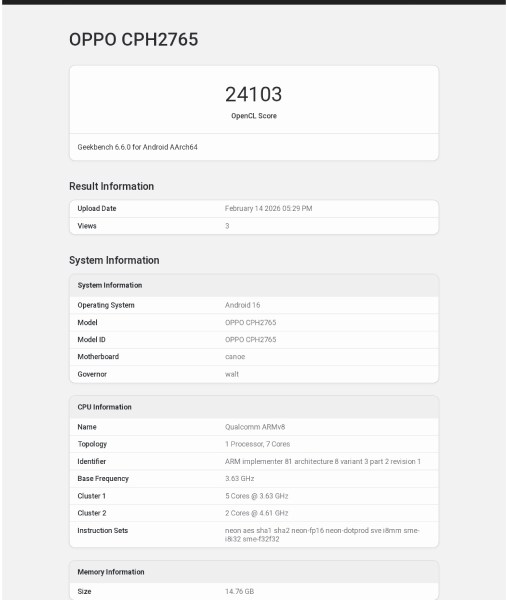
The Adreno 840 GPU handles graphics duties, and the listing shows an OpenCL score of 24,103. On the CPU side, the Find N6 recorded a single-core score of 3,524 and a multi-core score of 9,090.

The benchmark also confirms that the device is running Android 16 and comes with 16GB of RAM.

Oppo Find N6 spotted with 7-core Snapdragon 8 Elite Gen 5

What stands out in this benchmark run is the reveal of the 7-core Snapdragon 8 Elite Gen 5. While it’s not entirely surprising, given that the Find N5 also uses a 7-core Snapdragon 8 Elite chip, the key point is that Qualcomm hasn’t officially announced this version yet.

OPPO Find N5
OPPO Find N5

In any case, foldables present unique engineering challenges, such as limited internal space, heat management concerns, and battery constraints. A slightly trimmed core layout could be Qualcomm’s way of optimizing sustained performance without pushing thermals too far.

Of course, benchmark scores only tell part of the story. Real-world performance depends on software optimization, cooling systems, and how aggressively Oppo tunes the chipset. Still, early numbers like these usually indicate that a launch isn’t too far away.

For more daily updates, please visit our News Section.

Stay ahead in tech! Join our Telegram community and sign up for our daily newsletter of top stories.