Xiaomi is best known for smartphones, smart home gear, and the occasional electric vehicle update. Now it wants a place in robotics research too.
The company has announced Xiaomi-Robotics-0, an open-source vision-language-action (VLA) model with 4.7 billion parameters. It’s designed to combine visual understanding, language comprehension, and real-time action execution, which Xiaomi says are the core of “physical intelligence.” And according to the company, it’s already setting multiple state-of-the-art records in both simulations and real-world tests.

At a high level, robotics models like this solve a closed loop: perception, decision, and execution. A robot needs to see the world, understand what it’s being asked to do, decide on a plan, and then carry it out smoothly. Xiaomi says Robotics-0 was built specifically to balance broad understanding with fine motor control.
1. The Xiaomi-Robotics-0 model is built on two main components
To do that, the model uses what’s known as a Mixture-of-Transformers (MoT) architecture. It splits responsibilities between two main components.
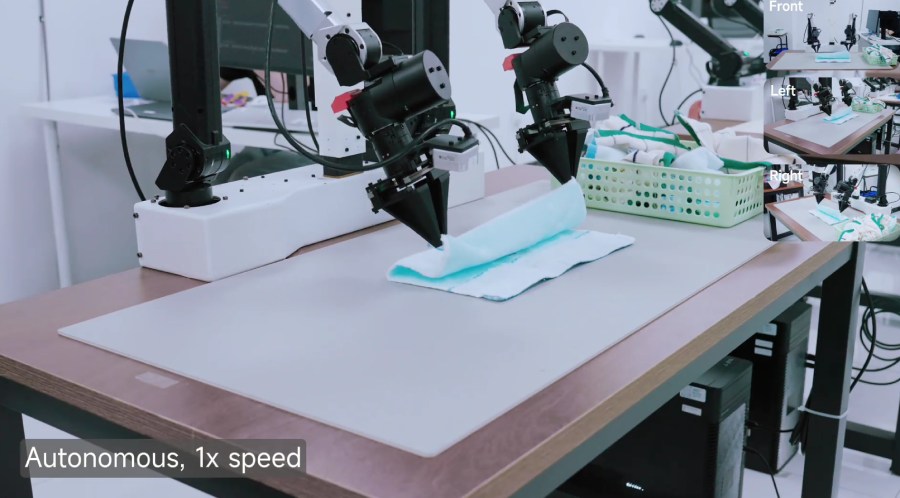
The first is a Visual Language Model (VLM), which acts as the “brain.” It’s trained to interpret human instructions — including vague ones like “Please fold the towel” — and understand spatial relationships from high-resolution visual input. This part handles object detection, visual question answering, and logical reasoning.
The second component is what Xiaomi calls the Action Expert. This is built around a multi-layer Diffusion Transformer (DiT). Instead of producing a single action at a time, it generates something called an “Action Chunk,” — understand it as a sequence of movements — using flow-matching techniques to keep motion accurate and smooth.
One common issue with VLA models is that when they learn to perform physical actions, they tend to lose some of their original understanding capabilities. Xiaomi says it avoided that by co-training the model on both multimodal data and action data. The result, at least in theory, is a system that can still reason about the world while learning how to move within it.
2. How is it trained?
The training process happens in stages. First, an “Action Proposal” mechanism forces the VLM to predict possible action distributions while interpreting images. This aligns its internal representation of what it sees with how actions are performed. After that, the VLM is frozen, and the DiT is trained separately to generate accurate action sequences from noise, relying on key-value features rather than discrete language tokens.
Xiaomi also tackled another practical problem called inference latency. It is when delays between model predictions and physical movement can create awkward pauses or unstable behavior.
Xiaomi says it implemented an asynchronous inference, decoupling model computation from robot operation, so movements remain continuous even if the model takes extra time to think.
To improve stability, Xiaomi is using a “Clean Action Prefix” technique, which feeds the previously predicted action back into the model to ensure smooth, jitter-free motion over time.
Meanwhile, a Λ-shaped attention mask biases the model toward current visual input instead of relying too heavily on past states. The goal is to make the robot more responsive to sudden environmental changes.
3. Xiaomi-Robotics-0 Benchmark
In benchmark testing, Xiaomi-Robotics-0 reportedly achieved state-of-the-art results in LIBERO, CALVIN, and SimplerEnv simulations, outperforming around 30 other models.
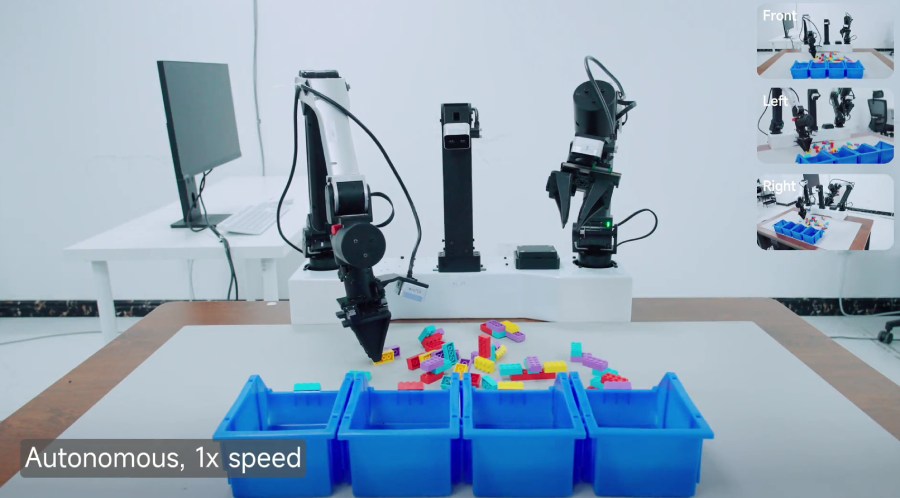
More interestingly, Xiaomi deployed it on a dual-arm robot platform in real-world experiments. In long-horizon tasks like folding towels and disassembling building blocks, Xiaomi says the robot demonstrated steady hand-eye coordination and handled both rigid and flexible objects without obvious breakdowns.
Unlike earlier VLA systems that often sacrificed multimodal reasoning once action training began, the Robotics-0 model retains strong visual and language capabilities, especially in tasks that blend perception with physical interaction.
For more daily updates, please visit our News Section.
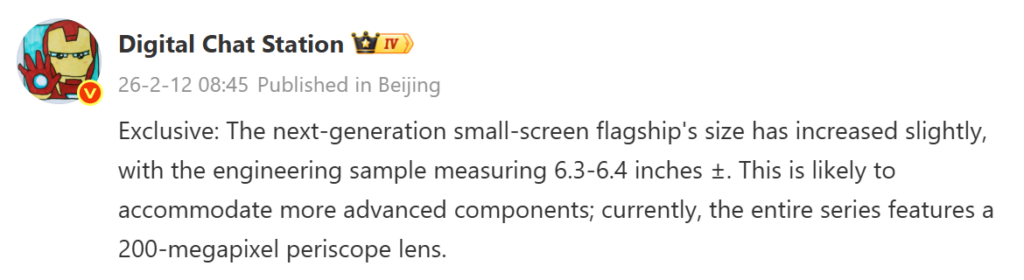
Xiaomi is expected to unveil the Xiaomi 18 series in September in China. Initially, the lineup may include the Xiaomi 18, 18 Pro, and 18 Pro Max, followed by the Xiaomi 18 Ultra’s launch by the end of the year. Today, tipster Digital Chat Station shared a Weibo post revealing key details about the Xiaomi 18.
Xiaomi 18 key details tipped
Xiaomi 18 series leak by DCS
To recall, the Xiaomi 17 and 17 Pro are compact flagship phones equipped with a 6.3-inch display. DCS’s latest leak suggests that the Xiaomi 18’s display size may slightly increase to 6.4 inches while still retaining a compact form factor. It is likely that the Xiaomi 18 Pro may also feature a 6.4-inch display. The inclusion of a larger screen could allow Xiaomi to incorporate more advanced components inside.
Past reports have claimed that the Xiaomi 18 will finally receive a periscope telephoto camera, which would be a major upgrade since its predecessor features a standard telephoto camera. The new leak reveals that not only the Xiaomi 18, but also other models in the series, such as the 18 Pro, 18 Pro Max, and 18 Ultra, may all feature a 200-megapixel periscope telephoto camera.
The tipster has previously claimed that the Xiaomi 18 Pro and 18 Pro Max will feature dual 200-megapixel cameras, possibly for the primary and periscope telephoto sensors. Speaking of the Pro models, these devices are expected to retain a rear-facing secondary display, but it may be more versatile than before.
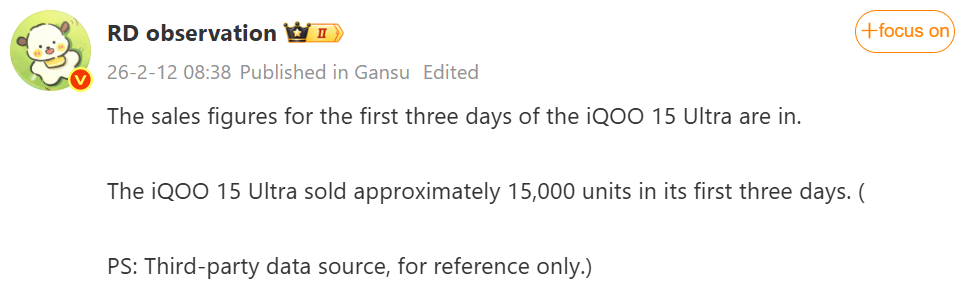
The iQOO 15 Ultra debuted in China earlier this month as a performance-focused flagship designed for gaming enthusiasts and power users. Soon after its launch, early market reports began surfacing, offering insight into how the device is performing commercially during its initial sales phase. A newer update that has emerged has revealed that the 15 Ultra has met with an amazing market response.
Early sales performance and demand trends
iQOO 15 Ultra sales report
According to the above-shown tech blogger, the iQOO 15 Ultra reportedly sold out during its first sale cycle, with approximately 15,000 units shipped within the first three days. The data is sourced from third-party tracking and should be considered indicative rather than official. Despite that, the figures suggest healthy initial demand, particularly considering the premium positioning of the device.
DCS’s iQOO 15 Ultra market response Weibo post, which was released soon after the launch
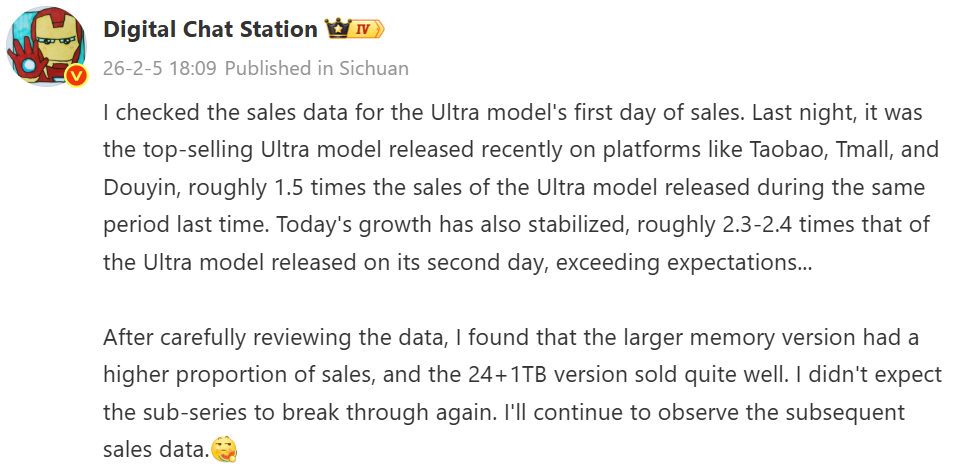
Earlier, tipster Digital Chat Station indicated that early performance of the latest Ultra model exceeded expectations. JD.com platform data reportedly showed that the Ultra variant achieved around 1.5 times the same-period sales compared to the previous Pro model. Sales momentum continued to grow, reaching roughly 2.3 to 2.4 times the second-day growth of the earlier Pro generation. The tipster also highlighted strong interest in higher-memory versions, with the 24GB+1TB configuration seeing notable demand among early buyers.
iQOO 15 Ultra specifications, price
iQOO 15 Ultra
The iQOO 15 Ultra is positioned as a gaming-centric flagship powered by the Snapdragon 8 Elite Gen 5 chipset, paired with LPDDR5X Ultra Pro RAM and UFS 4.1 storage. It features a 6.85-inch flat Samsung M14 AMOLED display with 2K resolution and a 144Hz refresh rate, along with advanced touch response capabilities aimed at competitive gaming scenarios. Cooling is handled through an Ice Dome thermal system with active airflow components designed to sustain high performance.
The device runs OriginOS 6 based on Android 16 and includes a triple-camera setup consisting of a 50-megapixel main camera, 50-megapixel ultra-wide lens, and 50-megapixel periscope telephoto camera. Powering the handset is a 7400mAh battery supporting 100W wired and 40W wireless charging.
Pricing in China starts at 5,699 Yuan (~$825) for the 16GB+256GB model and goes up to 7,699 Yuan (~$1,115) for the 24GB+1TB variant. While the iQOO 15 Ultra is a very exciting device for performance enthusiasts, it is unlikely to launch outside China, limiting its global availability despite strong early interest.
For more daily updates, please visit our News Section.
In March, Oppo is expected to unveil the company’s ultimate flagship phone — the Find X9 Ultra. So far, reports have revealed many details about its core specifications, but some information has yet to surface. In a recent X post, tipster Yogesh Brar mentioned the X9 Ultra’s display refresh rate and battery size.
Oppo Find X9 Ultra battery size tipped
Oppo Find X8 Ultra
Previous reports have revealed that the Find X9 Ultra will feature a 6.82-inch flat OLED panel that supports a 2K resolution, similar to the previous generation. However, its screen refresh rate had not appeared in any leaks. Brar claims that the X9 Ultra’s EVT (Engineering Validation Test) unit supports a 144Hz refresh rate. He believes the retail unit will likely support a 120Hz refresh rate.
Another detail that had remained unclear about the Find X9 Ultra is its battery size. Oppo has previously claimed that it won’t launch a flagship phone without a 7,000mAh battery, which suggests that the X9 Ultra would pack a similarly sized battery. The tipster mentioned that the X9 Ultra will house a 7,050mAh battery.
This indicates that the Find X9 Ultra’s battery will be smaller than the Find X9 Pro, which packs a larger 7,500mAh battery. The X9 Ultra’s rumored battery is still larger than the Find X8 Ultra, which houses a 6,100mAh battery. Reports suggest that the X9 Ultra will arrive with support for 80W wired and 50W wireless charging.
As per reports, the Find X9 Ultra will feature a 200MP (main) + 50MP (ultra-wide) + 200MP (3x periscope) + 50MP (periscope) quad-camera setup and a 50MP front camera. Under the hood, it is expected to feature the Snapdragon 8 Elite Gen 5 chip and run on ColorOS 16 based on Android 16.
For more daily updates, please visit our News Section.
A South Korean edition of the Samsung Galaxy S26 Plus was spotted on the Geekbench benchmarking platform in January. Now, its global edition has also emerged on the same benchmarking platform ahead of the Feb. 25 launch. Here’s a look at the details that have surfaced through the listing.
Samsung Galaxy S26 Plus Geekbench listing
Samsung Galaxy S26 Plus (global version) Geekbench listing
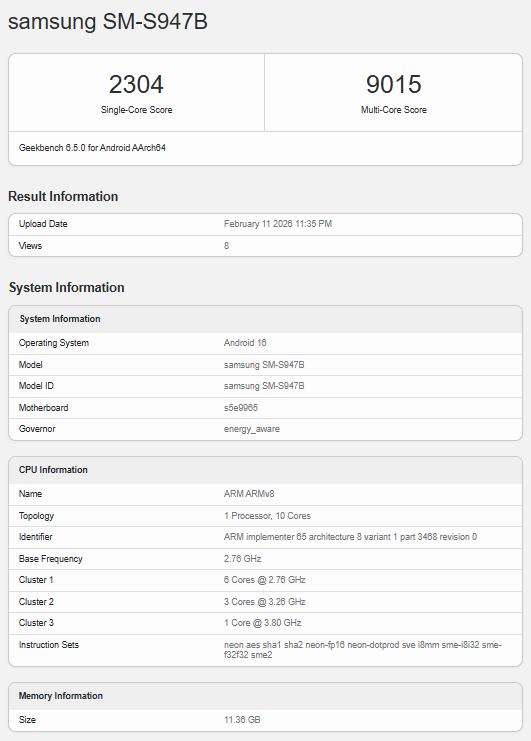
The SM-S947B Samsung phone that has appeared on Geekbench is the global version of the Galaxy S26 Plus. This device has been found to be equipped with the Exynos 2600, which is mentioned with its part number s5e9965. Therefore, it appears that the S26 Plus will ship with Samsung’s Exynos chip in most markets.
There’s still a possibility that the S26 Plus may come with the Snapdragon 8 Elite Gen 5 for Galaxy in the US. While its US edition hasn’t been spotted on Geekbench yet, the Galaxy S26’s US edition was spotted with the Snapdragon chip on the same benchmarking platform last month.
The Galaxy S26 Plus Geekbench listing further reveals 12GB of RAM and Android 16, which is expected to be overlaid with the latest One UI 8.5. It scored 2,304 and 9,015 points in the single-core and multi-core tests on Geekbench 6.5, respectively.
As per recent reports, it appears that the Galaxy S26 Ultra will only be available with the Snapdragon 8 Elite Gen 5 for Galaxy in all markets across the globe. The Exynos 2600, which is the world’s first 2nm chip, is expected to be a powerful offering, featuring a 10-core architecture with up to 3.80GHz clock speeds. Only time will tell how the Exynos 2600 performs in real-world usage compared to its Snapdragon counterpart.
For more daily updates, please visit our News Section.
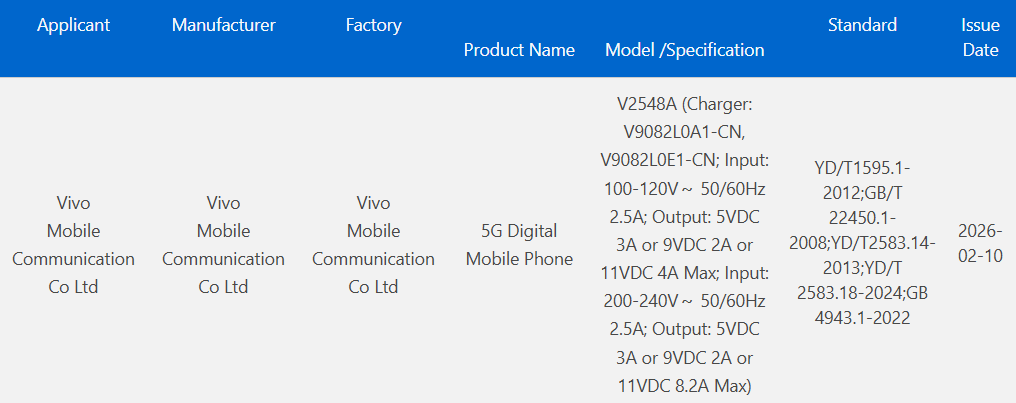
Vivo is expected to hold a major launch event in China next month (March). The event will see the arrival of multiple devices, such as the Vivo X300 Ultra, Vivo X300 Max, Vivo Pad 6 Pro, and the company’s first vlogging camera. Among these, the X300 Ultra and Pad 6 Pro have already been approved by China’s 3C certification platform. Now, the Max model has also appeared in the 3C database, meeting a very important prerequisite before launch.
The above-shown 3C listing shows that an upcoming Vivo phone with model number V2548A has been spotted with a 90W charger. As per previous reports, this phone will be called the Vivo X300 Max when it hits the Chinese market. For those unfamiliar, this device was initially dubbed the Vivo X300s by the rumor mill.
Vivo X300 Max specifications (rumored)
According to a fresh Weibo post by tipster Digital Chat Station, the Vivo X300 Max will arrive with a 6.78-inch LTPO OLED panel with a flat design. It will support a 1.5K resolution and possibly a 120Hz refresh rate. For security, it will feature an ultrasonic in-screen fingerprint sensor.
On the back, the Vivo X300 Max will have a large circular camera module equipped with a 200-megapixel main camera, an ultra-wide lens, and a 50-megapixel periscope telephoto lens with macro capabilities, co-developed with Zeiss and featuring a new optical setup.
The X300 Max will ship with Android 16 with a layer of OriginOS 6 on top and will support band N79 in China. Under the hood, it will feature the Dimensity 9500 and a battery of around 7,000mAh capacity with 90W fast charging support. Finally, it will also have an IP68/69-rated dust- and water-resistant chassis.
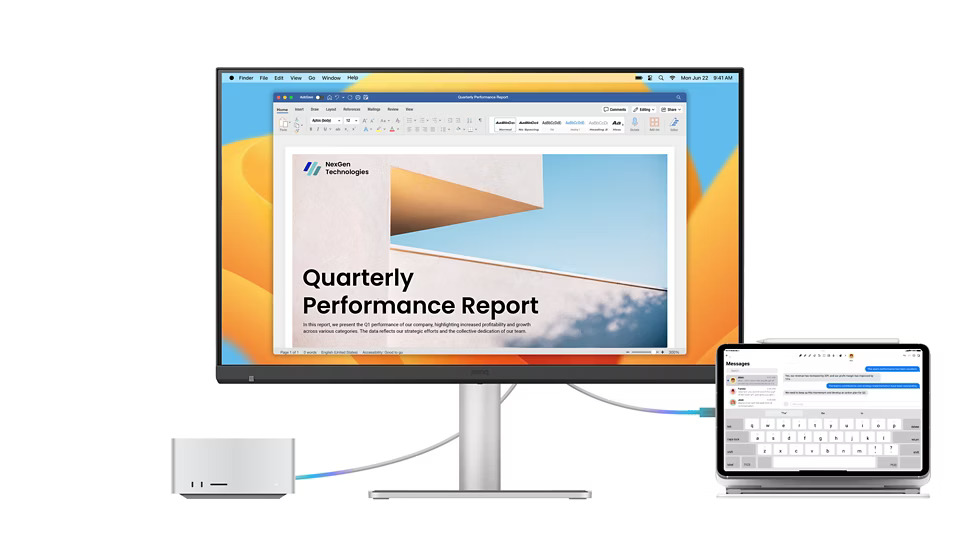
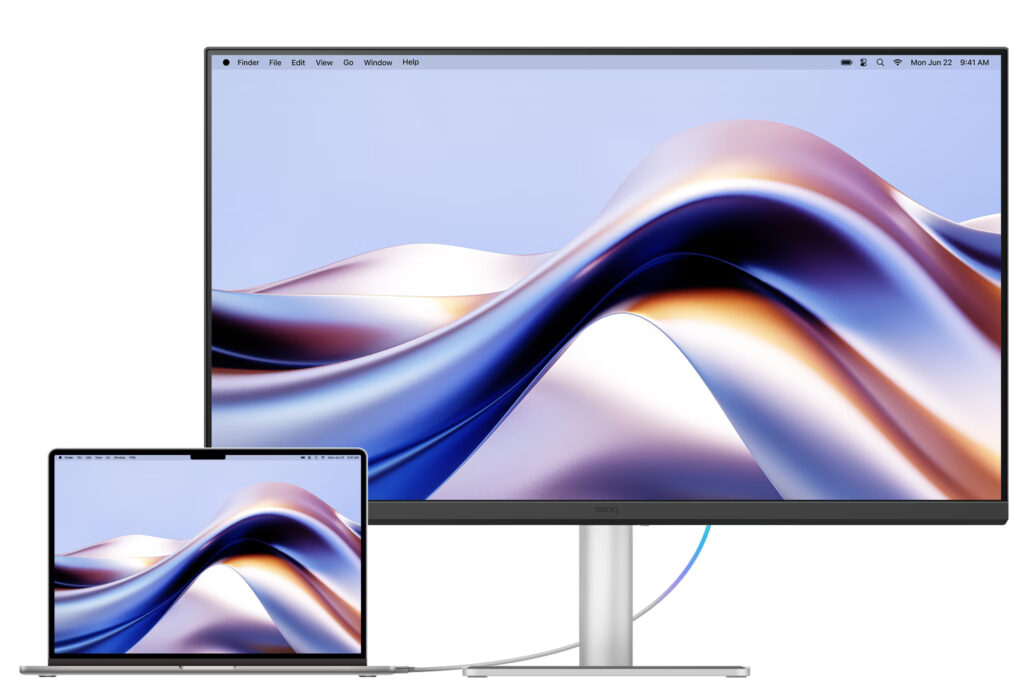
BenQ has added two new models to its Mac-focused monitor lineup, and this time the company is clearly aiming higher. The new MA270S and MA320UG lean into glossy panels while keeping the Thunderbolt-heavy connectivity and color tuning that BenQ has been building into its MA series. If you’ve been looking at the Apple Studio Display but hesitating on the price, these might be worth a closer look.
BenQ MA270S
The headline feature here is what BenQ calls Nano Gloss coating. Instead of going fully matte, which can mute contrast, or fully reflective, which can be distracting, the company is trying to strike a middle ground. The idea is to preserve the punch and clarity of a glossy screen while softening glare just enough for everyday use.
Both monitors use IPS panels and cover nearly the full P3 color space: 99% on the 27-inch model and 98% on the 32-inch.
The MA270S is probably the more direct competitor to Apple’s own display. It’s a 27-inch 5K panel (5120 x 2880), which works out to around 218 pixels per inch, essentially the same pixel density as Apple’s 27-inch Retina displays. That means proper macOS scaling, crisp text, and no awkward resolution compromises. For designers, photographers, or anyone who spends all day staring at small UI elements, that matters.
BenQ MA320UG
The MA320UG, on the other hand, takes a slightly different route. It’s larger at 32 inches and sticks to 4K resolution, but adds a 120Hz refresh rate. That won’t turn it into a gaming monitor, but animations and scrolling do feel noticeably smoother at higher refresh rates.
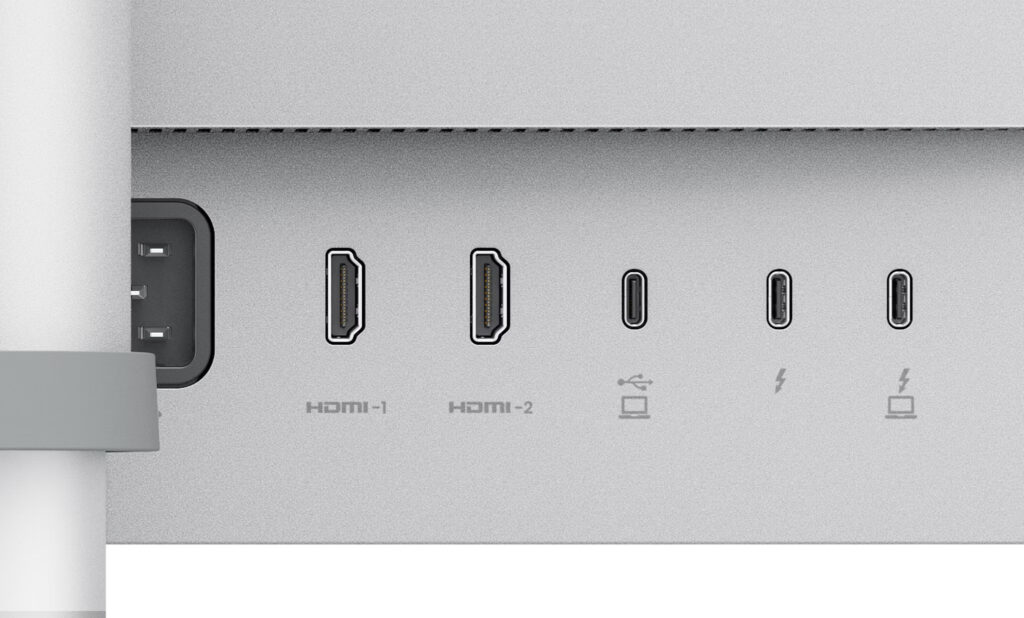
Both models include two Thunderbolt 4 ports, with up to 96W power delivery, plus additional USB-C, USB-A, and HDMI ports. There’s also KVM support for switching between systems. Small touches like brightness and volume control directly through macOS keyboards help the experience feel more native.
Ports on the MA320UG and MA270S
The stands are fully adjustable, with height, tilt, pivot, and swivel support. Nothing flashy there, just practical ergonomics.
Pricing hasn’t been confirmed yet, though the monitors are already listed on BenQ’s European website. If the company keeps them below Apple’s pricing, they could appeal to users who want sharpness or a glossy panel without committing to Apple’s ecosystem pricing.
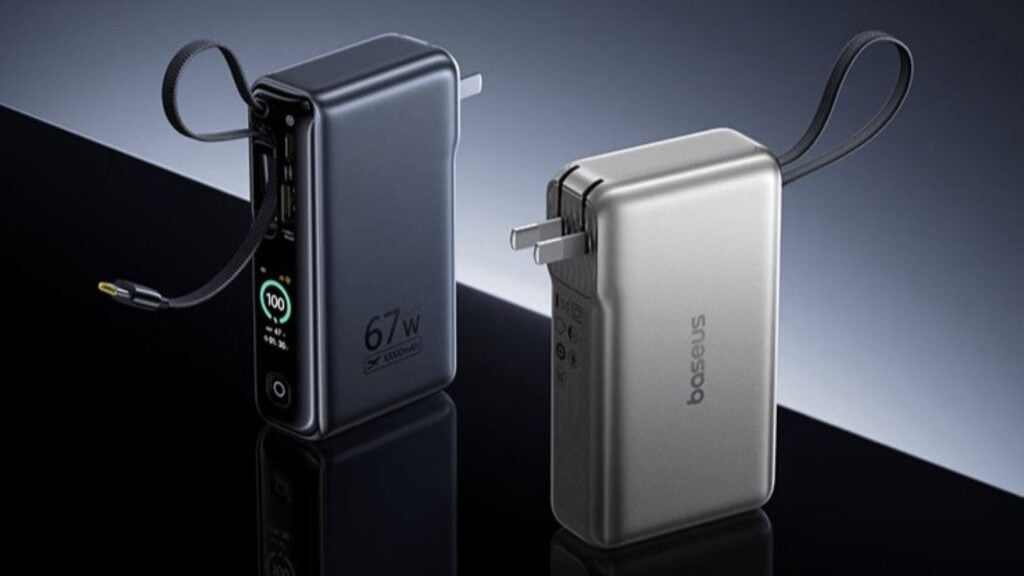
Baseus has introduced a new portable charger in China that tries to solve a common annoyance: carrying both a wall charger and a power bank.
The new EnerGeek GT 21 combines the two into a single device. It’s a 67W charger with built-in AC prongs, but it also packs a 10,000mAh battery inside. So you can plug it directly into a wall like a normal adapter, or toss it in a bag and use it as a power bank later. It includes a retractable USB-C cable built into the body, which extends up to about 80cm.
In addition to the built-in cable, there’s a USB-C port and a USB-A port. You can charge up to three devices at once, though power is shared when everything is plugged in.
When used as a power bank with all three outputs active, the built-in cable can deliver up to 45W, while the remaining two ports share a combined 15W.
There’s also a small digital display on the front. It shows remaining battery percentage and output details.
On the battery side, the capacity is rated at 10,000mAh, which should provide at least one full charge for most modern smartphones in real-world conditions. It supports common fast-charging standards like PD, PPS, AFC, UFCS, and SCP, so compatibility shouldn’t be an issue either.
The foldable prongs make it easier to carry, and the size appears compact enough to replace both a wall brick and a power bank in a travel bag. For frequent travelers, that kind of consolidation can actually make a difference.
The EnerGeek GT 21 is currently priced at CNY 399 (around $58) in China. There’s no word yet on international availability, but Baseus typically brings its products to other markets, so a wider launch wouldn’t be surprising.
It’s not a revolutionary device, but it does feel practical. If the build quality holds up, it could be a solid option for people who want fewer cables and fewer chargers to think about
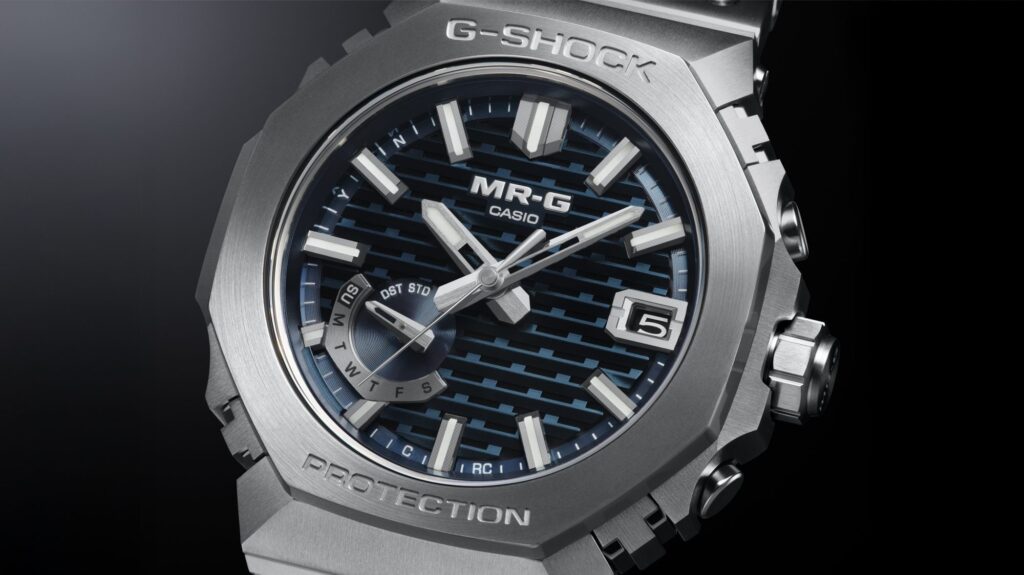
Casio has launched the MRGB2100D-2A in the United States. The premium G-Shock MR-G timepiece had previously been released in Japan, Europe, and the UK. It is priced at $4,700 and now joins the brand’s US catalog as part of the flagship MRG-B2100 series.
Casio MRGB2100D-2A Specifications
The MRGB2100D-2A has a silver-toned case with a blue dial inspired by the Japanese hanada-iro shade. The dial features a horizontal texture, bold metallic hour markers, a framed date window at 3 o’clock, and a small day sub-dial at 7 o’clock, creating a balanced, highly legible layout.
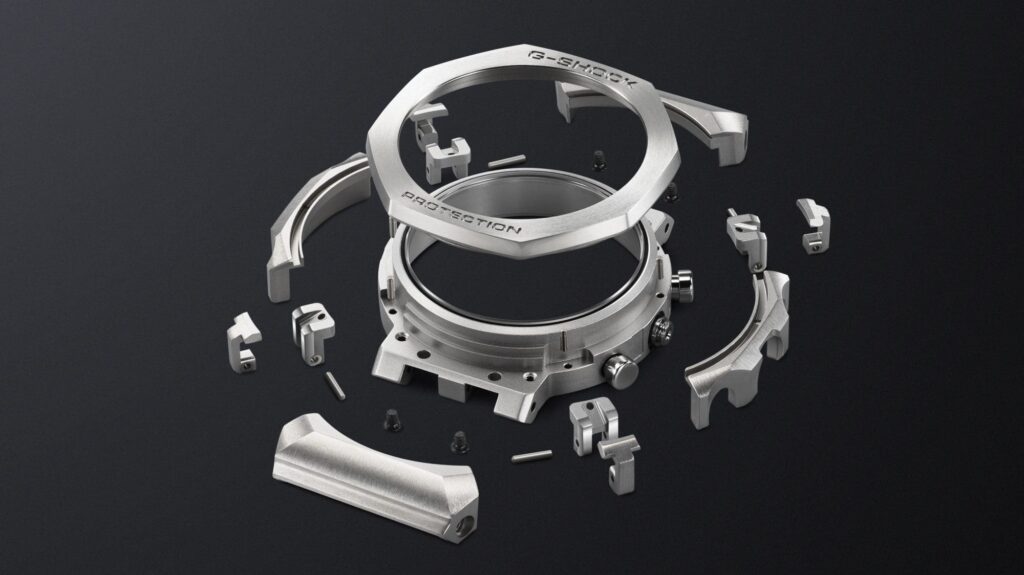
Casio builds the MRGB2100D-2A using premium materials. Its octagonal bezel is made of Cobarion, a Japanese alloy four times harder than titanium with a platinum-like shine. The case and crown use Ti64 titanium, while the bracelet is crafted from DAT55G, another titanium alloy prized for its durability and wear resistance. Each of the 27 bezel components is individually polished for precision, and a titanium carbide coating further improves scratch resistance.
The watch features solar-powered timekeeping, Multi-Band 6 radio calibration, and Bluetooth connectivity via Casio’s Mobile Link app, which enables auto time adjustment, watch status updates, and a phone finder. It offers 200-meter water resistance, magnetic resistance, a screw-lock crown, and sapphire crystal glass with an anti-reflective coating.
Casio includes additional design elements inspired by traditional Japanese woodworking techniques. The dial’s latticework structure, known as kigumi, allows light to pass through and power the solar panel. The 12 o’clock marker features a precision-assembled two-part structure that reflects Yamagata Casio’s advanced manufacturing technology.
The MRGB2100D-2A weighs 122 grams and measures 49.5 x 44.4 x 13.6 mm. It supports a full-auto calendar, LED Super Illuminator light, and power-saving mode. The watch is available now through the official Casio store and select retailers.
Apple has reportedly acquired Israeli AI startup Q.ai for ~$2 billion.
Future AirPods could enable silent, lip-based interaction.
The move signals Apple’s deeper push into AI-powered wearable interfaces.
Apple is reportedly exploring a future where users can interact with devices without speaking. According to reports from Financial Times and Reuters, the company has acquired Israeli startup Q.ai for approximately $2 billion, its largest deal since acquiring Beats Electronics.
Q.ai specializes in machine learning systems that analyze micro-movements in facial skin, lip motions, and subtle muscle activity. The technology can detect silently mouthed words, emotional expressions, and even physiological indicators like heart rate and breathing patterns.
Industry analyst Ming-Chi Kuo has previously predicted camera-enabled AirPods could launch in 2026, potentially featuring infrared sensors similar to Face ID’s depth-mapping system. Combined with Q.ai’s algorithms, such hardware could allow users to send messages, activate Siri, or control music without saying a word.
The technology may also extend beyond earbuds to devices like Apple Vision Pro and future smart glasses. Q.ai’s founder, Aviad Maizels, previously co-founded PrimeSense, whose 3D sensing technology later evolved into Apple’s Face ID system.
If implemented, silent facial input could mark a shift from voice commands to discreet, sensor-based interaction, reshaping how users engage with wearable AI while raising new privacy questions.
Privacy Questions:
Silent facial tracking raises significant privacy considerations. Continuous monitoring of lip and muscle movements could generate highly sensitive biometric data. If stored improperly, such data might reveal emotional states, health indicators, or private communications. There are also concerns about potential misuse, including unauthorized tracking or remote intent detection.
If implemented, silent facial input could redefine human-computer interaction, while intensifying the debate over how much data wearable devices should be allowed to observe.
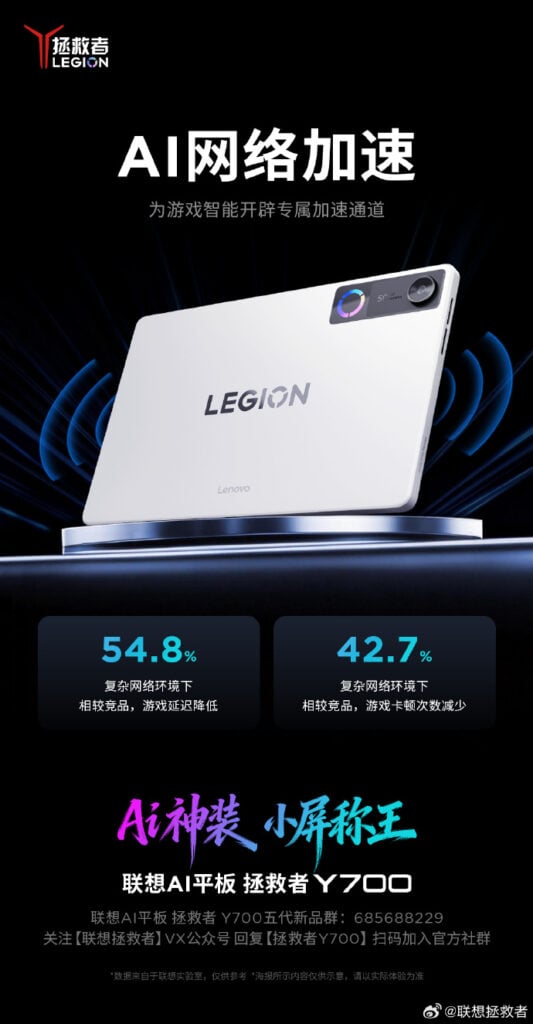
Lenovo has officially started teasing its upcoming Legion Y700 (2026), which is set to launch in March. The company claims the device features a new AI-powered network acceleration system that can reduce game latency by 54.8% in complex network conditions. The tablet also lowers in-game stutter rates by 42.7% compared to rival models, according to Lenovo’s internal data.
The Legion Y700 (2026) introduces a dedicated acceleration channel for gaming. Lenovo says the AI engine detects congested or unstable network environments and prioritizes real-time gaming traffic to reduce packet loss and jitter.
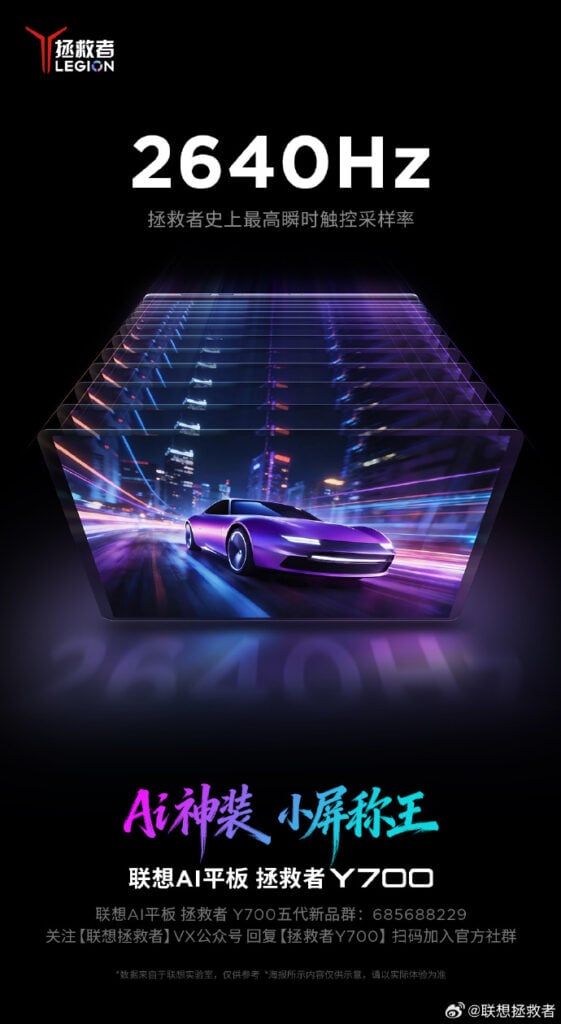
Lenovo also teased that the tablet supports a 2640Hz touch sampling rate. The display is tuned for ultra-fast response, allowing for near-instant input detection. The company describes it as “instant touch, instant response,” reinforcing the tablet’s focus on performance gaming.
In an earlier teaser, Lenovo confirmed that the Legion Y700 will feature an 8.8-inch 3K+ LCD display with a resolution of 3040 x 1904 pixels, a 165Hz refresh rate, and 12-bit color depth. The screen supports up to 800 nits of peak brightness and the DCI-P3 wide color gamut.
Lenovo also explained that the 165Hz refresh rate reduces the refresh interval to 6.06ms, compared to 6.94ms at 144Hz and 16.67ms at 60Hz, resulting in lower input latency and improved motion clarity during gameplay.
According to a leak from Digital Chat Station, the Lenovo Legion Y700 (2026) will be powered by Qualcomm’s Snapdragon 8 Elite Gen 5 chipset. The tablet is expected to launch in multiple variants, including 12GB + 256GB, 16GB + 512GB, and 24GB + 1TB configurations.
It will feature a 50MP rear camera with an RGB ring light and pack a roughly 9,000mAh battery. The retail box will include a 68W fast charger, and the device is also said to come with dual USB-C ports.
While it’s not Lenovo’s first AI-enabled product, this is its most aggressive attempt to blend AI into the gaming tablet experience. The Legion Y700 (2026) will be available in black and white colors.
For more daily updates, please visit our News Section.
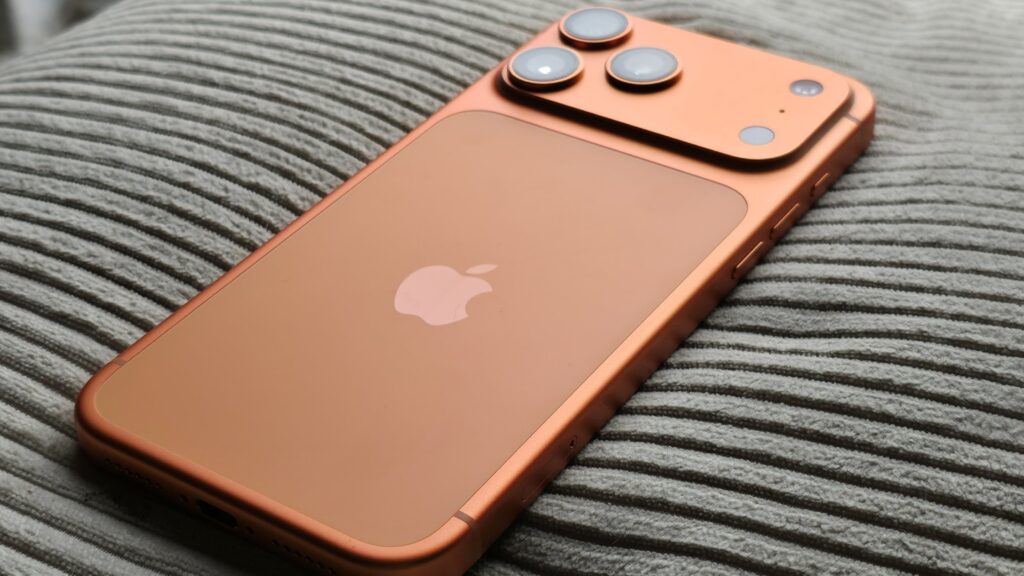
Memory prices have been climbing for a while, largely because of strong demand from AI infrastructure and data centers. That usually spells trouble for smartphone pricing. But if recent analyst notes are accurate, Apple isn’t planning to pass those increases directly to buyers of its next Pro iPhones.
According to GF Securities analyst Jeff Pu, Apple intends to keep the starting prices of the iPhone 18 Pro and iPhone 18 Pro Max in line with their predecessors. That would mean $1,099 and $1,199 respectively for base 256GB configurations, assuming no last-minute changes.
The information comes from supply chain checks shared in a note reviewed by MacRumors. Pu suggests Apple has been negotiating aggressively with memory suppliers, including Samsung and SK Hynix, to soften the impact of rising DRAM and NAND prices. Similar negotiations are reportedly taking place around display panels and camera modules.
In short, Apple appears willing to absorb some of the pressure.
Apple has also shifted to quarterly memory contract negotiations instead of semi-annual agreements, giving it more flexibility, though that could also mean exposure to further price bumps later in 2026.
Even so, Kuo believes Apple’s strategy is clear: keep entry pricing stable for the Pro models, even if that trims margins slightly in the short term.
That wouldn’t be surprising. Apple’s Services business continues to grow steadily, bringing in over $30 billion in a single quarter recently. A stable hardware price helps protect market share, and any margin pressure on devices can be offset over time through ecosystem revenue.
The broader industry isn’t quite as insulated. IDC has warned that smartphone prices could rise by 6–8% this year due to component shortages. Meanwhile, Samsung executives have already hinted at cost pressures ahead of upcoming launches.
For now, the iPhone 18 Pro lineup is expected to arrive in September 2026. Nothing is official yet, and pricing decisions often come down to late-stage market conditions. But if these reports hold true, Apple seems prepared to lean on its scale.
The original Snapdragon 8 Elite was introduced in 2024 as the company’s first mobile chipset featuring an Oryon CPU, then came the Snapdragon 8 Elite Gen 5 next year as its successor, which was earlier supposed to launch as Snapdragon 8 Elite Gen 2, but Qualcomm had a different plan.
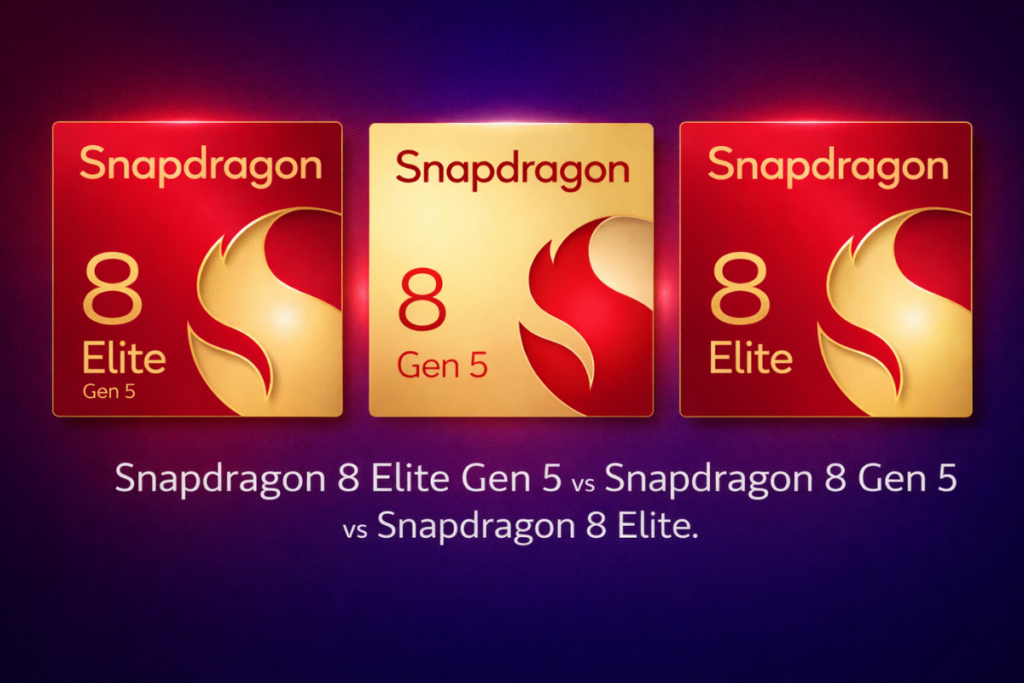
A few weeks after the Snapdragon 8 Elite Gen 2’s announcement, Qualcomm followed up with the Snapdragon 8 Gen 5 as an affordable flagship alternative for premium mid-range devices. While it appears to be a successor to Snapdragon 8 Elite, the latter actually delivers better performance. The inconsistent naming scheme from Qualcomm is confusing many people, so we’ve created this detailed post explaining how the Snapdragon 8 Elite Gen 5, Snapdragon 8 Gen 5, and Snapdragon 8 Elite stack up against each other.
Here’s the spec sheet for a quick overview:
Snapdragon 8 Elite Gen 5
Snapdragon 8 Gen 5
Snapdragon 8 Elite
Announced
September 2025
November 2025
October 2024
Process node
TSMC’s 3nm (N3P)
TSMC’s 3nm (N3P)
TSMC’s 3nm (N3E)
CPU cores
8-core
8-core
8-core
CPU cores
2 x 4.61GHz — Oryon (3rd gen) 6 x 3.63GHz — Oryon (3rd gen)
2 x 3.8GHz — Oryon (3rd gen) 6 x 3.32GHz — Oryon (3rd gen)
2 x 4.32GHz — Oryon (2nd gen) 6 x 3.53GHz — Oryon (2nd gen)
GPU
Adreno 840 Ray tracing support Snapdragon Elite Gaming features
Adreno 829 Ray tracing support Snapdragon Elite Gaming features
Adreno 830 Ray tacing support Snapdragon Elite Gaming features
NPU
Qualcomm Hexagon NPU Agentic AI support
Qualcomm Hexagon NPU
Memory
LPDDR5X, up to 5.3GHz
LPDDR5X, up to 4.8GHz
LPDDR5X, up to 5.3GHz
Storage
UFS 4.1
UFS 4.1
UFS 4.0
Camera
Qualcomm Spectra ISP (Triple AI-ISPs, 20-bit) up to 320MP single camera up to 108MP single camera (MFNR, ZSL, 30fps) up to 48MP triple camera (MFNR, ZSL, 30fps) up to 4K/120fps video recording real-time semantic segmentation (limitless) Advanced Professional Video (APV) codec
Qualcomm Spectra ISP (Triple AI-ISPs, 20-bit) up to 320MP single camera up to 108MP single camera (MFNR, ZSL, 30fps) up to 48MP triple camera (MFNR, ZSL, 30fps) up to 4K/120fps video recording real-time semantic segmentation
Qualcomm Spectra ISP (Triple AI-ISPs, 18-bit) up to 320MP single camera up to 108MP single camera (MFNR, ZSL, 30fps) up to 48MP triple cameras (MFNR, ZSL, 30fps) real-time semantic segmentation (limitless) up to 8K/30fps video recording
Snapdragon 8 Elite Gen 5 vs 8 Gen 5 vs 8 Elite: Benchmark numbers
Note: The benchmark tests were performed on the iQOO 15 (Snapdragon 8 Elite Gen 5), OnePlus 15R (Snapdragon 8 Gen 5), and OnePlus 13 (Snapdragon 8 Elite).
Geekbench performance
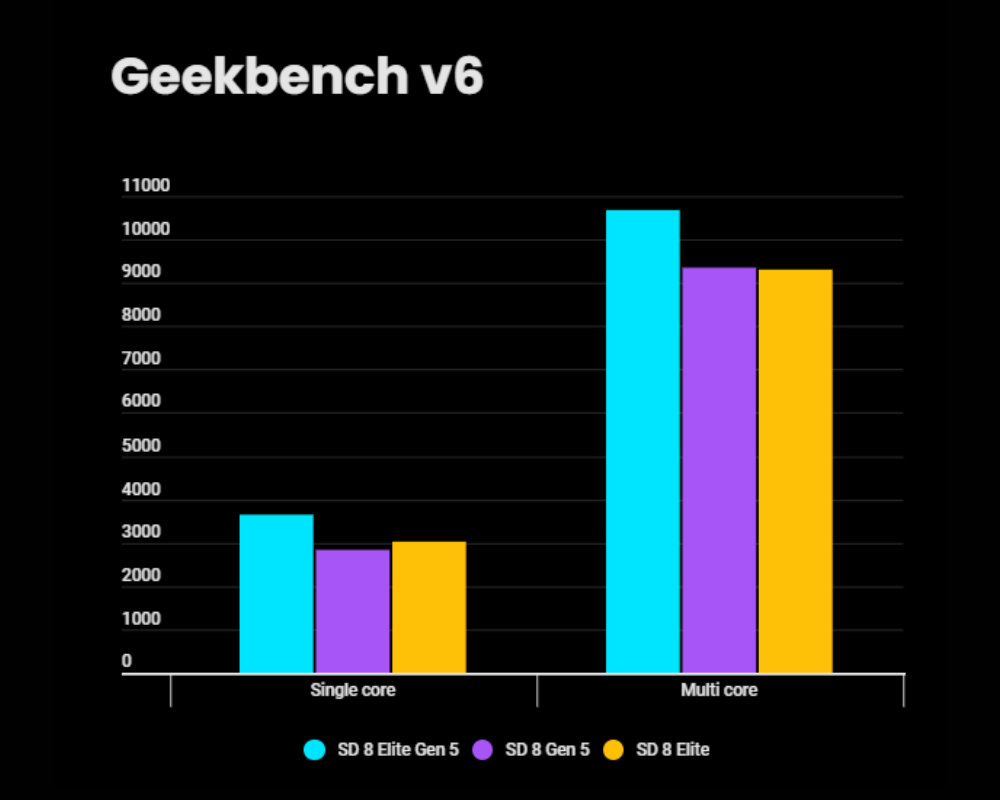
The Snapdragon 8 Elite Gen 5, unsurprisingly, achieves the highest score in both single-core and multi-core tests (3649, 10682), followed by the Snapdragon 8 Elite, which gets about 7% higher single-core score than the Snapdragon 8 Gen 5, while the multi-core scores for the two chips don’t have a big difference.
Single core
Multi core
SD 8 Elite Gen 5
3,649
10,682
SD 8 Gen 5
2,837
9,352
SD 8 Elite
3,026
9,306
AnTuTu performance
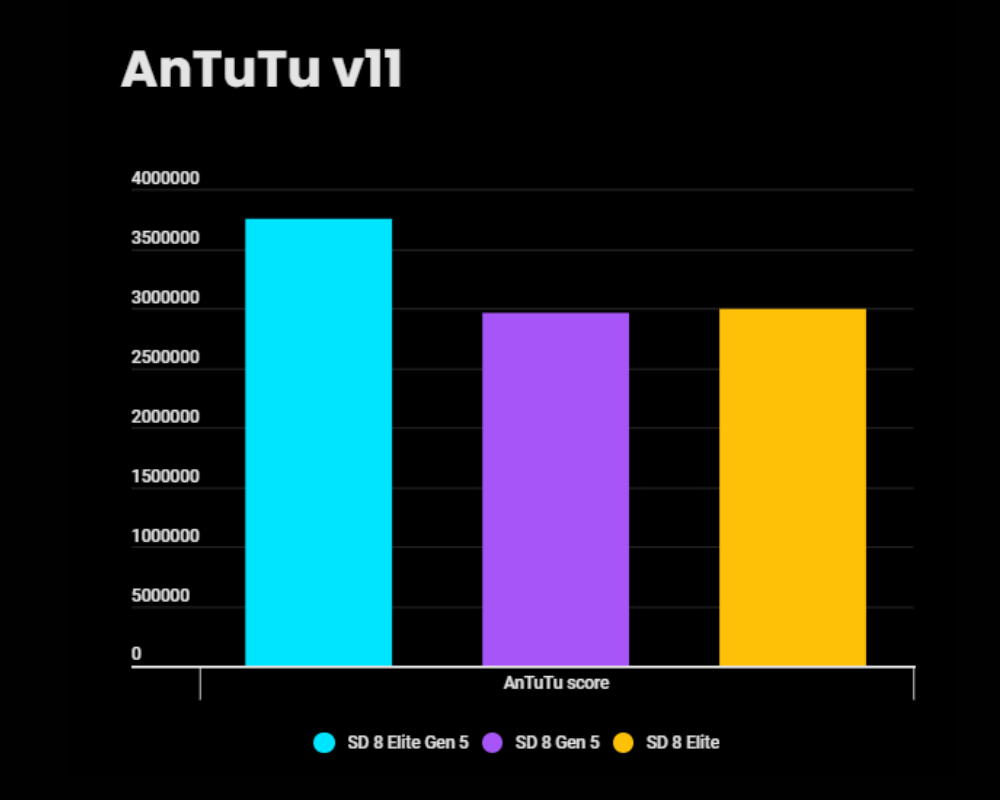
The Snapdragon 8 Elite Gen 5 is far ahead of the other two, with a total score above 3.7 million. The Snapdragon 8 Elite almost touches the 3 million mark, while the Snapdragon 8 Gen 5 is just below it, scoring 2.96 million points.
AnTuTu score
SD 8 Elite Gen 5
3,751,084
SD 8 Gen 5
2,961,236
SD 8 Elite
2,994,563
3DMark performance
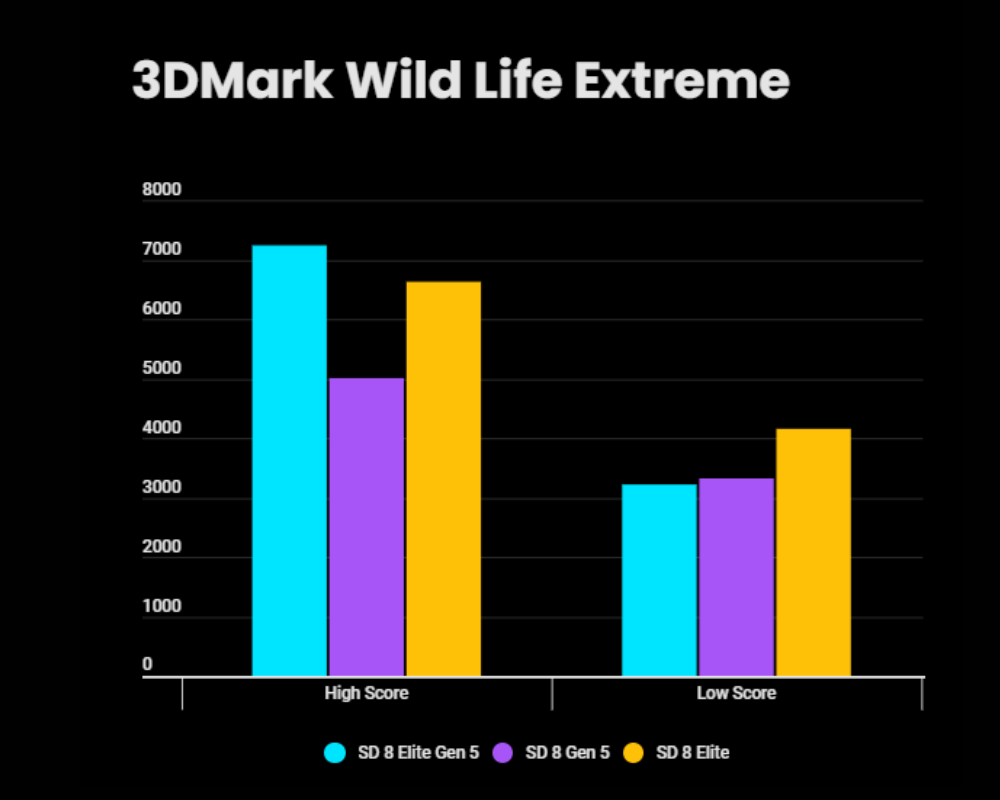
The result isn’t any different on 3DMark than AnTuTu and Geekbench. The Snapdragon 8 Elite Gen 5 pulls off the best high score in the Wild Life Extreme test, followed by the Snapdragon 8 Elite and then the Snapdragon 8 Gen 5.
High score
Low score
SD 8 Elite Gen 5
7,240
3,219
SD 8 Gen 5
5,009
3,321
SD 8 Elite
6,628
4,155
However, things get interesting when you look at low scores. The Snapdragon 8 Elite Gen 5 has the worst low score of 3,219. In contrast, the Snapdragon 8 Gen 5 scores 3,321 points, and the Snapdragon 8 Elite scores 4,155 points. This could mean a higher gaming stability on a Snapdragon 8 Elite-powered device than on devices powered by the other two chipsets. However, that also depends on the software tuning, gaming optimizations, and cooling solution of a device.
The benchmarks focus solely on performance and don’t address other important aspects, such as connectivity and camera capabilities. Let’s talk about them and other important stuff in the following section to get the complete picture.
Snapdragon 8 Elite Gen 5 vs 8 Gen 5 vs 8 Elite: Key differences
CPU, GPU, and NPU
The Snapdragon 8 Elite Gen 5 and 8 Gen 5 have been manufactured using TSMC’s 3nm (N3P) node, which offers slightly improved performance and efficiency over the N3E node used for the Snapdragon 8 Elite.
All three Qualcomm chips have the same 2+6 core configuration. The Snapdragon 8 Elite Gen 5 and 8 Gen 5 feature third-generation Oryon CPU, while the Snapdragon 8 Elite has a second-generation Oryon CPU. Despite a generation older CPU, the 8 Elite beats the 8 Gen 5 on benchmarks because its cores run at higher clock speeds.
As for graphics rendering, the Snapdragon 8 Elite Gen 5 features the powerful Adreno 840 GPU with excellent ray tracing capabilities, along with a full suite of Snapdragon Elite Gaming features to enhance the gaming experience further. In contrast, the 8 Gen 5 has an Adreno 829, and the 8 Elite has Adreno 830. Both GPUs support ray tracing and offer Snapdragon Elite Gaming features.
Now, coming to AI capabilities, the Snapdragon 8 Elite Gen 5 features the largest and most capable NPU with agentic AI support. The NPU performance of the two other chips is nearly identical, but the Snapdragon 8 Gen 5’s official page mentions agentic AI support, whereas the Snapdragon 8 Elite doesn’t.
Camera and Imaging
The camera capabilities of the Snapdragon 8 Elite Gen 5 and 8 Gen 5 are nearly identical, except that the latest Elite chip features Advanced Professional Video (APV) codes for near-lossless, pro-grade capture and limitless real-time semantic segmentation. The Snapdragon 8 Elite features a lower-bit ISP, while the rest of its specs are mostly the same as those of the Snapdragon 8 Gen 5.
Connectivity
While all three Qualcomm chips offer robust connectivity features, the Snapdragon 8 Elite Gen 5 excels by delivering higher download and upload speeds over 5G. The rest of the connectivity specs are almost the same.
Elon Musk proposed building a Moon factory to produce AI-powered satellites.
The plan includes launching satellites using an electromagnetic “Mass Drive” system.
The proposal comes as xAI faces leadership exits and possible IPO pressure.
AI- generated image for representation only
Elon Musk has proposed building a factory on the Moon to manufacture AI-powered satellites, according to a February 10 report by The New York Times. Musk shared the idea during an internal xAI meeting, suggesting that lunar infrastructure could unlock computing power far beyond today’s limits.
The concept includes a giant electromagnetic catapult, often described as a “mass driver,” that would launch satellites into space from the Moon’s lower-gravity environment. Musk reportedly argued that future AI systems will require unprecedented computing capacity and that Earth alone may not be enough.
The proposal expands on Musk’s broader space-AI strategy following the merger of xAI and SpaceX. The long-term vision includes building a self-sustaining Moon city, then moving toward Mars colonization and eventually interstellar exploration. However, no timeline or construction roadmap was shared.
The timing is notable. xAI, founded in 2023 and known for its Grok chatbot integrated into X, is reportedly facing internal leadership changes. Investors are said to be focused on near-term growth and a potential IPO within 18–24 months. Meanwhile, SpaceX is also preparing for a possible public offering.
Musk recently claimed X has about 600 million monthly active users, though the number has not been independently verified.
While supporters see bold innovation, critics question whether now is the right moment for such an ambitious lunar pivot.
Why Moon Has Advantages for an AI Factory?
Lower gravity makes it easier and cheaper to launch satellites into space.
No atmosphere means fewer weather delays during launches.
Abundant solar energy with long periods of sunlight.
Large open space for building massive facilities.
Fewer environmental regulations compared to Earth.
Potential access to lunar resources for construction materials.
Cooler space environment could help with heat management for data systems.
Less risk of natural disasters like earthquakes or storms.
Strategic position for launching satellites into deep space.
Last year, Xiaomi unveiled the Xiaomi 18 series in the same month as the first phones powered by the Snapdragon 8 Elite Gen 5 in China. On the other hand, Vivo introduced the Vivo X300 and X300 Pro as the world’s first phones featuring the Dimensity 9500 chip in China. It appears both brands could once again be among the first to launch flagship phones equipped with next-generation flagship chipsets this year.
September launch window and chipset plans
Snapdragon 8 Elite Gen 6, Dimensity 9600 phones to launch in September, claims DCS
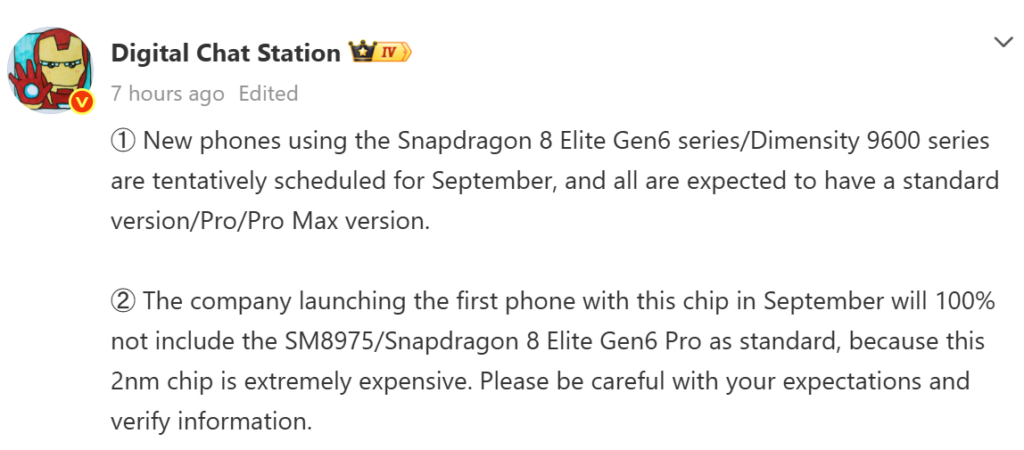
According to tipster Digital Chat Station, new smartphones powered by the Snapdragon 8 Elite Gen 6 series and the MediaTek Dimensity 9600 series are currently scheduled for a September debut. Interestingly, the tip suggests that brands planning to introduce these next-generation chipsets are preparing to offer three versions as standard practice, namely a regular model, a Pro variant, and a Pro Max edition.
To recall, the Xiaomi 17 lineup, which debuted in September 2025, included three models: Xiaomi 17, 17 Pro, and 17 Pro Max. These models are likely to be succeeded by the Xiaomi 18, 18 Pro, and 18 Pro Max in the same month this year.
While Vivo announced the Vivo X300 and X300 Pro in September last year, it appears that this year’s lineup may launch earlier and is likely to include three models, such as the Vivo X500, X500 Pro, and X500 Pro Max. Rumors suggest that the X400 branding may be skipped, as the number 4 is considered an unlucky number in some Asian countries.
Readers should note that the tipster has not specified any device names in the leak. The Oppo Find X10 series is also expected to include the Find X10, X10 Pro, and X10 Pro Max powered by the Dimensity 9600. So, it remains unclear whether the tipster was referring to Oppo or Vivo as the other brand alongside Xiaomi. However, in recent years, Vivo has often been the first brand to launch MediaTek’s latest flagship chipsets, so the second brand mentioned in the leak could be Vivo. Readers are advised to treat this information cautiously.
In today’s leak, DCS also cautions that the company expected to debut the new chip in September is unlikely to ship its device with the SM8975, also referred to as the Snapdragon 8 Elite Gen 6 Pro, as a standard configuration. The reason cited is the extremely high cost of the 2nm chipset, which could significantly impact pricing.
Here, the tipster may be suggesting that Xiaomi will not launch a Snapdragon 8 Elite Gen 6 Pro-powered phone in September. Previous leaks have claimed that this chip is designed for ultra-premium devices and is likely to power the Xiaomi 18 Ultra, which may debut by the end of this year in China.
For more daily updates, please visit our News Section.
ByteDance launches Seedream 5.0 with advanced image editing and lower pricing.
Alibaba unveils Qwen-Image-2.0, supporting 1K-token prompts and 2K images.
Both models directly challenge Google’s Nano Banana Pro amid rising US-China AI rivalry.
AI-generated image for representation only
China’s tech giants are accelerating the global AI race. ByteDance and Alibaba Cloud have introduced new image-generation models designed to compete with Google’s Nano Banana Pro.
The launches highlight growing competition between China and the United States in creative AI tools. Both companies aim to lower costs while improving performance for businesses and individual creators.
ByteDance’s Seedream 5.0 is now available for beta testing on Jimeng in China and on CapCut globally. The company says the model has stronger reasoning skills and a better understanding of complex prompts.
It allows users to edit specific parts of an image without regenerating the entire design. In one test, a “snowy night” scene was created and later modified by switching lights on and off, while keeping the rest unchanged.
The launch follows ByteDance’s recent Seedance 2.0 AI video model, which focuses on realistic AI-generated videos.
Alibaba Cloud’s Qwen-Image-2.0 combines image generation and editing in a single system. It supports up to 1,000-token prompts and produces 2K-resolution images.
The model can handle structured layouts, multi-panel designs, and consistent characters across scenes. It also performs strongly in rendering Chinese text and complex calligraphy.
Together, these launches position both firms as serious global competitors in AI-powered creative tools.
Major Features Compared:
Feature
ByteDance Seedream 5.0
Alibaba Qwen-Image 2.0
Google Nano Banana Pro
Developer
ByteDance
Alibaba Cloud (Qwen team)
Google DeepMind (Gemini)
Core Function
Text-to-image generation + editing
Unified image generation + editing
Image generation + advanced editing
Native Output Resolution
Supports 2K and 4K outputs
Native 2K (2048×2048) output
Up to 4K resolution output
Prompt Handling
Designed for detailed prompt understanding
Supports long prompts (up to ~1K tokens)
Advanced prompt-based generation (no official token limit stated)
Text Rendering
Generates legible text within images
Strong typography and structured text rendering
Advanced multilingual text rendering
Generation + Editing Integration
Supports selective image edits
Generation and editing integrated in one model
Integrated image creation and editing tools
Availability
Beta testing via Jimeng (China) and CapCut (global)
Available via Qwen platforms
Available through Gemini apps and Google AI tools
Model Base / Engine
Proprietary Seedream model
Qwen multimodal architecture
Built on Gemini 3 Pro Image
Disclaimer: Feature details are based on publicly available data and may be subject to updates or changes.
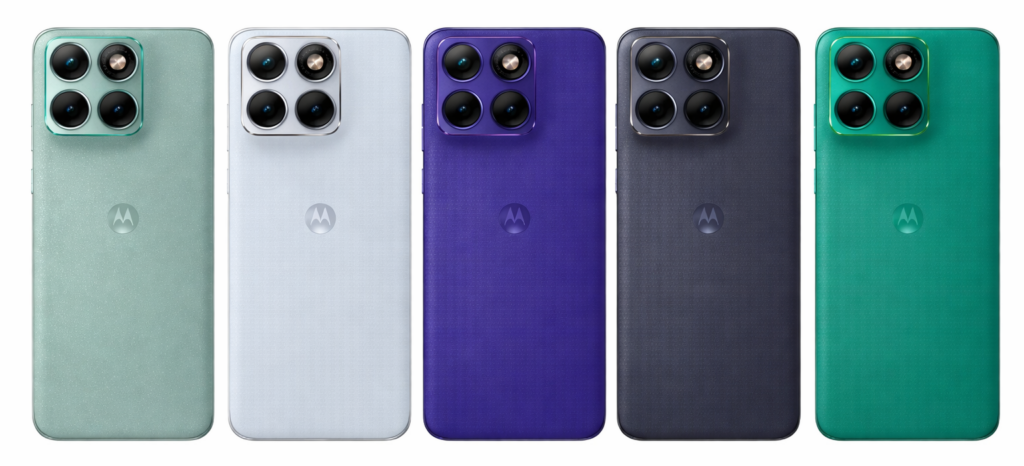
In January, well-known tipster Evan Blass shared the key specifications of the Motorola Edge 70 Fusion. Later, another report surfaced to showcase the phone in Silhouette (Black) and Country Air shades. Now, Blass is back again with a fresh set of images that showcase the phone in as many as five color options.
New renders highlight design and colour options
Motorola Edge 70 Fusion color options
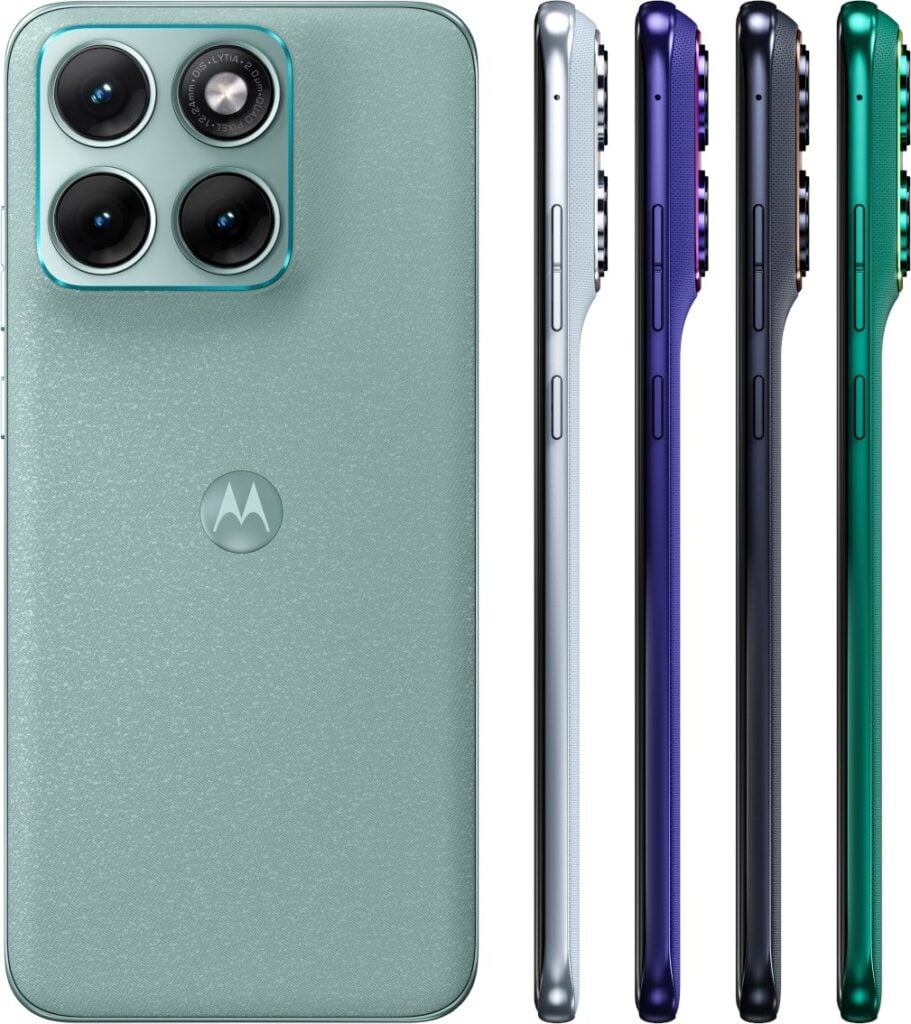
The latest set of images showcases the Motorola Edge 70 Fusion in other paintjobs, such as Blue Surf, Orient Blue, and Sporting Green. The renders indicate a familiar design language as the Edge 70, including Motorola’s signature rear camera layout and a textured back panel inspired by nylon and linen materials. The device appears relatively slim despite housing a large battery, suggesting that Motorola may be focusing on balancing ergonomics with endurance.
Promotional images accompanying the leak provide a clearer look at the curved edges and quad-curved display profile. While the overall aesthetic resembles earlier Edge series models, the updated finishes and materials give the device a slightly refreshed appearance. The smartphone is also expected to retain a premium design approach without moving into flagship pricing territory.
Readers can checkout the source link for more images.
Motorola Edge 70 Fusion specifications (rumored)
Motorola Edge 70 Fusion color options
The Motorola Edge 70 Fusion is rumoured to feature a 6.78-inch quad-curved AMOLED display with 1.5K resolution, 144Hz refresh rate, HDR10+ support and peak brightness reaching up to 5,200 nits, protected by Gorilla Glass 7i. It could be powered by the Snapdragon 7s Gen 3 chipset paired with up to 12GB RAM and 256GB storage.
The handset may include a 50-megapixel primary camera using a Sony LYTIA sensor alongside a 32-megapixel front camera. It will house a large 7,000mAh battery with 68W charging support, Android 16 out of the box, IP68 and IP69 ratings, and MIL-STD-810H certification for durability.
Although pricing details remain unclear, the emergence of marketing materials indicates that the Edge 70 Fusion could be unveiled in the near future, likely targeting markets where previous Fusion models were available.
For more daily updates, please visit our News Section.
Bluetooth audio has evolved far beyond simply connecting earbuds to smartphones. In 2026, it powers televisions, cars, laptops, gaming systems, and home entertainment setups. What was once a convenience feature is now the backbone of modern wireless sound. As this shift accelerates, brands that deliver practical and affordable solutions like Faster Speakers are becoming increasingly important.
From Wires to Wireless Living
Traditional audio systems came with long cables, complicated installations, and limited flexibility. Rearranging a room meant rearranging wires. Adding speakers required effort and compatibility checks. Bluetooth eliminated these everyday frustrations.
Today, users expect seamless pairing, automatic reconnection, and clean setups without clutter. Faster Speakers fit directly into this lifestyle by offering simple, user-friendly wireless audio designed for everyday use, not technical complexity.
2026: A Major Upgrade in Bluetooth Technology
Recent improvements such as Bluetooth LE Audio, the LC3 codec, multi-stream audio, and broadcast audio have significantly improved sound efficiency and clarity. These upgrades allow better audio quality at lower power consumption while enabling multiple device connections at once.
For brands like Faster, these advancements mean delivering reliable performance, strong battery life, and stable connectivity at accessible price points, making modern Bluetooth benefits available to more users.
Wireless Sound at Home, in Cars, and at Work
Bluetooth is now standard in cars for hands-free calling and music streaming. In homes, it allows wireless TV-to-headphone connections and clutter-free speaker setups. In hybrid work environments, stable Bluetooth audio ensures smoother meetings and easy device switching.
Faster Speakers align with this multi-device world. Designed for portability, travel, outdoor use, and home entertainment, they provide practical solutions without overwhelming users with unnecessary features.
Real-World Reliability Over Technical Specs
Today’s buyers prioritize quick pairing, consistent connection strength, long battery life, easy controls, and dependable after-sales support. Technical bitrate numbers matter less than real-world performance.
This is where Faster stands out. By focusing on everyday reliability and affordability, the brand addresses what users actually need, wireless sound that works consistently.
The Bigger Picture
Global Bluetooth device shipments crossed 5 billion in 2023 and continue to rise. The Bluetooth speaker market alone sold hundreds of millions of units recently, proving that wireless sound is now the default choice.
As Bluetooth becomes invisible, seamless infrastructure, brands like Faster Speakers play a key role in making that technology accessible. Wireless audio is no longer optional, and practical, reliable speakers are at the center of this transformation.
How to Choose the Right Bluetooth Device?
Bluetooth Version 5.2 or newer – Better stability, range, and efficiency.
Support for modern codecs (like LC3) – Clearer sound with lower battery usage.
Multi-device pairing – Easy switching between phone, laptop, and tablet.
Strong battery life – Longer playback and fewer charging interruptions.
Stable connectivity – Performs well even in crowded wireless environments.
Low latency support – Important for gaming and video streaming.
Comfort and build quality – Especially for earbuds and headphones.
Simple controls – Easy buttons or touch controls for daily use.
Reliable warranty & support – Ensures long-term peace of mind.
Infinix has started teasing the arrival of the Note 60 series for the global market. The Note 60 Pro will be the company’s first smartphone to feature a Snapdragon chip, but this will not be the case for the standard Note 60. A Geekbench listing that surfaced today reveals it will feature a MediaTek chip.
Infinix Note 60 Geekbench listing
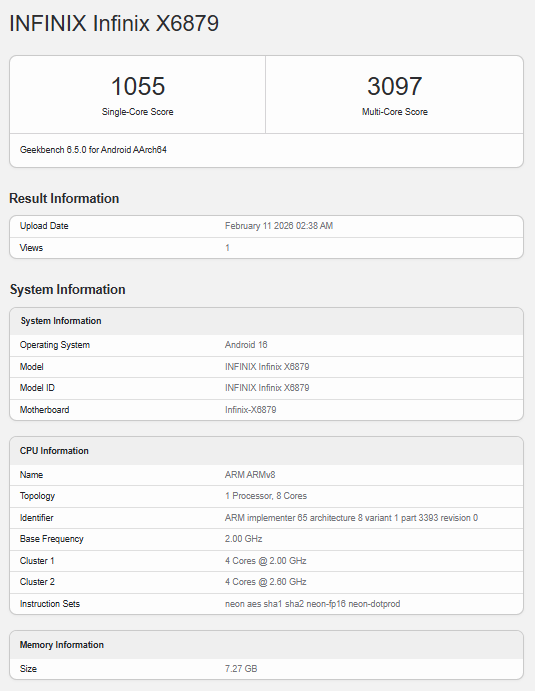
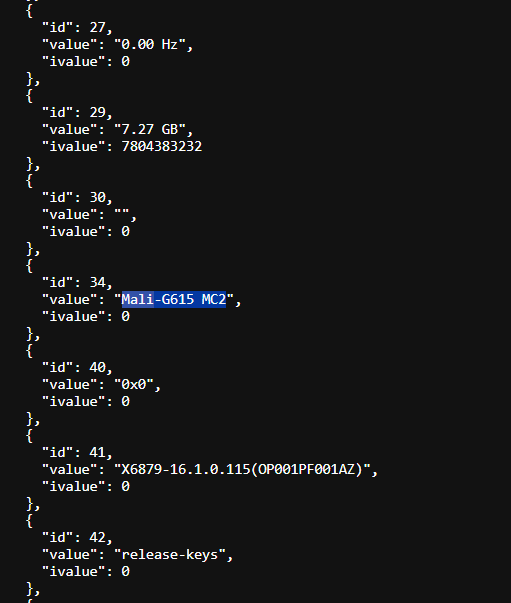
A forthcoming Infinix smartphone with the model number X6879 has appeared on Geekbench. This device was previously spotted on an Indonesian certification platform with the Infinix Note 60 branding.
The Note 60’s Geekbench listing reveals that its MediaTek chip comprises four cores running at 2.0GHz and four cores operating at 2.60GHz. For graphics, it features the Mali-G615 MC2 GPU. These details strongly suggest that the Note 60 is powered by the Dimensity 7400, which is likely to be marketed as the Dimensity 7400 Ultimate.
The Geekbench listing also shows 8GB of RAM and Android 16. In Geekbench 6.5’s single-core and multi-core tests, the device scored 1,055 and 3,097 points, respectively.
The inclusion of the Dimensity 7400 Ultimate will be an upgrade as the previous generation featured the Dimensity 7300 Ultimate. For those who don’t, the predecessor was called the Note 50s 5G as the brand skipped the Note 50 model.
The Infinix Note 60 is likely to borrow some specifications from the Note 60 Pro. It may feature a 144Hz AMOLED screen and a 6,500mAh battery, but it may not include the dot-matrix rear display, which is expected to remain exclusive to the Pro variant.
At present, there is no additional information about the Note 60 series. Since the brand has already begun teasing the lineup, it appears that the launch could take place within the next few weeks.
For more daily updates, please visit our News Section.
Redmi is reportedly working on the Redmi K90 Ultra for China. It will succeed the Redmi K80 Ultra, which debuted in June 2025. A previous report claimed that the K90 Ultra would launch much earlier than its predecessor. Now, a new Weibo post by a reliable tipster has emerged supporting this claim.
Redmi K90 Ultra launch timeframe (rumored)
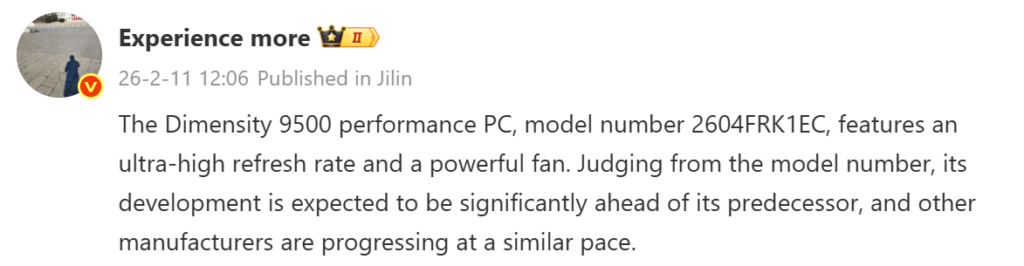
According to Experience More, a sub-series performance-focused smartphone powered by the Dimensity 9500 is currently in development. While he did not mention the name of the device, it appears that he could be referring to the Redmi K90 Ultra.
He added that the device, carrying the model number 2604FRK1EC, is said to feature an ultra-high refresh rate display along with a built-in cooling fan, indicating a strong focus on gaming and sustained performance. This model number, along with its Redmi K90 Ultra branding, was spotted in the GSMA IMEI database back in December 2025.
The numbers “2604” indicate that the Redmi K90 Ultra may debut as early as April in China. The device will be powered by the Dimensity 9500, not the Dimensity 9500 Plus chip as previously speculated. The D9500+ is expected much later in the second half of the year.
Redmi K80 Ultra
As per reports, the K90 Ultra is expected to feature a massive 6.8-inch display offering a 1.5K resolution and a 165Hz refresh rate. Under the hood, it may pack an 8,500mAh battery with 100W charging. Other rumored features include a metal frame, an ultrasonic in-display fingerprint sensor, and full water resistance.
The Xiaomi 17T Pro is said to be a tweaked version of the K90 Ultra designed for the global market. This device, which is said to carry the model number 2602EPTC0G, may lack a few features, including the cooling fan. The model number for the 17T Pro also hints at an early launch, but since the Xiaomi 17 and 17 Ultra have not yet launched globally, it appears that the 17T Pro may debut within the first half of this year.
For more daily updates, please visit our News Section.
We use cookies on our website to give you the most relevant experience by remembering your preferences and repeat visits. By clicking “Accept”, you consent to the use of ALL the cookies.
This website uses cookies to improve your experience while you navigate through the website. Out of these, the cookies that are categorized as necessary are stored on your browser as they are essential for the working of basic functionalities of the website. We also use third-party cookies that help us analyze and understand how you use this website. These cookies will be stored in your browser only with your consent. You also have the option to opt-out of these cookies. But opting out of some of these cookies may affect your browsing experience.
Necessary cookies are absolutely essential for the website to function properly. This category only includes cookies that ensures basic functionalities and security features of the website. These cookies do not store any personal information.
Any cookies that may not be particularly necessary for the website to function and is used specifically to collect user personal data via analytics, ads, other embedded contents are termed as non-necessary cookies. It is mandatory to procure user consent prior to running these cookies on your website.