Advertisement

Lenovo to unveil keyboard and mouse combo that doesn’t need charging

PCs won’t be Lenovo’s only focus at CES 2026. The company is also reportedly planning to show off an unusual keyboard and mouse combo that you may never need to plug in.

According to Windows Latest, Lenovo is preparing to unveil what it calls the Lenovo Self-Charging Kit Concept. And if you guessed it, yes, the keyboard and mouse rely on solar power. The twist is they’re designed to harvest energy, not just outdoors, but from indoor lighting as well. 

The report claims Lenovo is using a next-generation solar light–harvesting technology that can continuously power both peripherals in a wide range of environments. More impressively, the system is said to generate power under indoor lighting as low as 50 lux.

In comparison, the small solar panels commonly found in calculators typically need around 200 to 500 lux to function. 

The attached image shows the keyboard and mouse combo, with the keyboard likely featuring solar panels on top of the arrow keys. However, it’s difficult to spot it on the mouse.

More keyboard and mouse innovations

Lenovo is also introducing the Lenovo Adaptable Keyboard Concept at CES. According to the report, this keyboard can adjust key stroke behavior using optical actuation controls, though Lenovo hasn’t explained exactly how this mechanism works. 

It also has indicators for Wi-Fi, Bluetooth, and battery status on an isle on top, along with an additional icon on the top right. 

Finally, Lenovo will launch the Lenovo 900 Wireless Low-Profile Mechanical Keyboard and Mouse, featuring a translucent design and Thunder Grey and Cloud Grey shades.

Unlike the other two concepts, this set isn’t a concept model. While there’s no image of it, the 900 series is said to feature the company’s custom 4-point mechanical switch for a more satisfying typing experience, along with multi-device pairing via a unified 2.4G dongle or dual Bluetooth.


For more daily updates, please visit our News Section.

Tech enthusiast? Get the latest news first! Follow our Telegram channel and subscribe to our free newsletter for your daily tech fix! ⚡

(Source)
Oppo K15 Turbo Pro key specifications leak reveals Dimensity 9500s, active cooling fan, and more

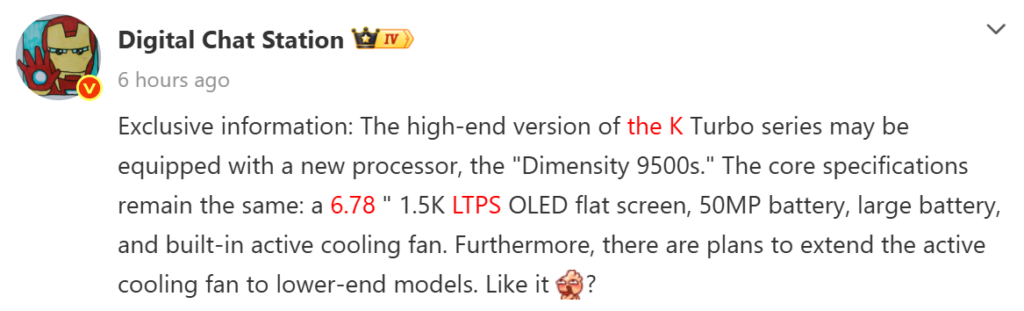
Oppo is reportedly working on the K15 Turbo series of gaming-focused phones for China. Since September, well-known tipster Digital Chat Station has been leaking details about the K15 Turbo lineup. One of his previous leaks revealed that the K15 Turbo will feature the Snapdragon 8s Gen 4 chip, whereas the K15 Turbo Pro will have the newer Snapdragon 8 Gen 5 onboard. A new leak now suggests that the company may have opted for an upcoming Dimensity 9500 series chip.

Oppo K15 Turbo Pro key specifications tipped

Oppo K15 Turbo Pro leak by DCS

According to DCS’ leak, the Oppo K15 Turbo Pro will sport a 6.78-inch OLED LTPS screen that delivers a 1.5K resolution. The device will feature a 50-megapixel main camera, a large battery, and a built-in active cooling fan. The leak suggests that it will inherit these specifications from the K13 Turbo Pro.

While previous leaks claimed that the K15 Turbo Pro would feature the Snapdragon 8 Gen 5 chip, today’s leak reveals that it will instead be powered by the upcoming Dimensity 9500s chipset. The tipster has not shared any details about the chipset’s specifications.

As per previous leaks, the standard Oppo K15 Turbo could be equipped with a smaller 6.59-inch 1.5K OLED LTPS screen. As mentioned above, it is expected to feature the Snapdragon 8s Gen 4 chipset. Likely, both devices could be equipped with a 7,000mAh to 8,000mAh battery.

Oppo K13 Turbo series

The new leak also provides information about the Oppo K15 Turbo series’ launch timeframe. Considering that the Oppo Find N6 is expected to launch in January 2026, followed by the Find X9 Ultra in March, it is likely that the K15 Turbo series could be announced in Q2 2026.

For more daily updates, please visit our News Section.

Stay ahead in tech! Join our Telegram community and sign up for our daily newsletter of top stories.

Samsung is testing One UI 8.5 on these Galaxy devices

Samsung One UI 8.5 update testing

The public One UI 8.5 beta testing began earlier this month, and so far, it has remained exclusive to the Galaxy S25 series. However, the brand is internally testing the latest One UI build on multiple Galaxy devices, suggesting quicker rollout, at least for these devices.

Samsung is testing One UI 8.5 internally on many Galaxy smartphones, and that’s not limited to premium lineups. Several Galaxy A-series phones are also under testing. Here’s the complete list:

  • Galaxy S25 Edge
  • Galaxy S25 FE
  • Galaxy S24, S24+, S24 Ultra
  • Galaxy S24 FE
  • Galaxy S23, S23+, S23 Ultra
  • Galaxy S23 FE
  • Galaxy A56
  • Galaxy A55
  • Galaxy A36
  • Galaxy A17
  • Galaxy A17 5G
  • Galaxy A16 5G
  • Galaxy Z Fold 7, Z Flip 7
  • Galaxy Z Fold 6, Z Flip 6 
  • Galaxy Z Fold 5, Z Flip 5

While internal testing may expand to more Galaxy devices, the public One UI 8.5 beta program is likely to remain exclusive to the Galaxy S25 series. The remaining Galaxy devices eligible for this upgrade may receive the stable update directly sometime next year.

Since One UI 8.5 testing is already underway for these Galaxy devices, Samsung shouldn’t take long to release the stable update to these devices once the rollout begins.

The stable version of One UI 8.5 will debut with the Galaxy S26 series early next year, and then the rollout will begin for older Galaxy devices. The Galaxy S25 series will be the first phones to receive the stable update to One UI 8.5. The rollout will then expand to recent Galaxy S and Z series phones, followed by the affordable phones.

We’ll keep you updated with the latest developments around One UI 8.5 in our Samsung section. You can also join our Telegram channels to get instant notifications about the latest updates, product launches, and big breakthroughs in tech.

Please Note: When you buy something using the links in our articles, we may earn a small commission at no cost to you.

Please Note: When you buy something using the links in our articles, we may earn a small commission at no cost to you.

Sony WF-1000XM6 shows up in retailer listing, with color options and a possible launch date

Sony’s next-generation flagship earbuds may be closer than expected. The WF-1000XM6 has surfaced once again, this time through a parts retailer listing that hints at both color options and a possible launch window.

The earbuds appeared on Encompass Parts’ website, which lists replacement components tied to model number YY2985. That model code isn’t new—it has already been linked to the WF-1000XM6 through Sony’s Sound Connect app and earlier regulatory filings, including documents from the FCC. This latest appearance further strengthens the case that the product is nearing release.

According to the listing, Sony plans to offer the WF-1000XM6 in black and silver, sticking to the familiar color palette seen on previous XM-series earbuds. No technical details are mentioned, but the consistency across multiple leaks suggests the final hardware is already locked in.

The WF-1000XM6 has been circulating in rumors since mid-2024, initially alongside Sony’s WH-1000XM6 over-ear headphones, which launched earlier this year. Sony even briefly referenced the earbuds inside its app before quietly removing the mention—something that often happens shortly before an official announcement.

Interestingly, Encompass Parts lists a February 27, 2026 shipping date for the components. That date could simply be a placeholder, but it lines up with speculation that Sony is aiming for an early 2026 release rather than a late-2025 launch. Sites like The Walkman Blog believe the earbuds could be announced shortly after CES 2026, which wraps up on January 9.

While Sony hasn’t confirmed anything yet, expectations are high. Fans are hoping for improvements in active noise cancellation, battery life, and overall sound quality—areas where the WF-1000XM5 already set a high bar.

For now, this quiet retailer listing is the clearest sign yet that Sony’s next premium earbuds are almost ready to step into the spotlight.

Please Note: When you buy something using the links in our articles, we may earn a small commission at no cost to you.

Don’t miss a thing! Join our Telegram community for instant updates and grab our free daily newsletter for the best tech stories!

For more daily updates, please visit our News Section.

(Source)

Lenovo’s 2026 ThinkPad X1 Carbon Gen 14 and X1 2-in-1 Gen 11 reportedly earn a 9/10 iFixit repairability score

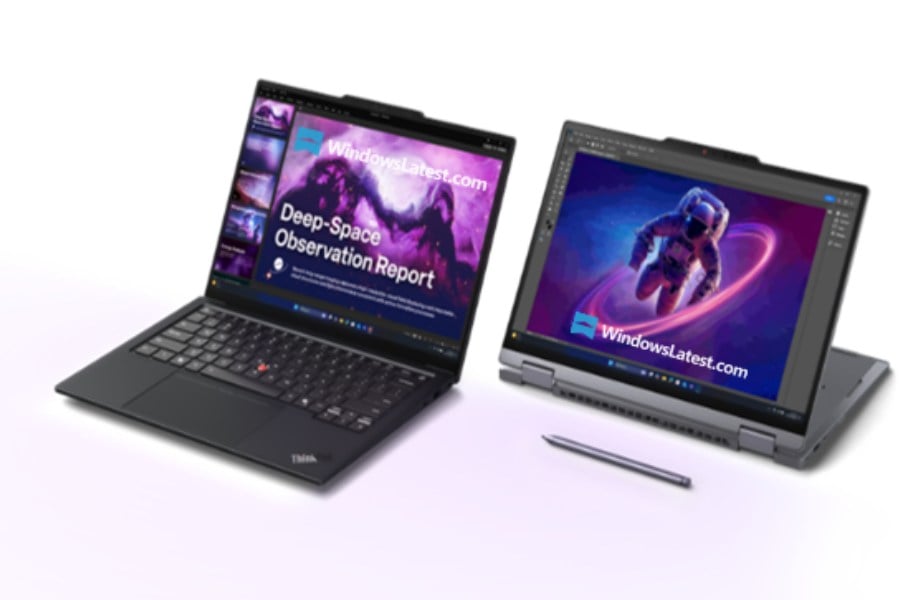
Lenovo’s next-generation ThinkPad X1 laptops may be getting one of their biggest internal updates in years. According to a new report published by Windows Latest, Lenovo has quietly redesigned the internals of the upcoming ThinkPad X1 Carbon Gen 14 Aura Edition and ThinkPad X1 2-in-1 Gen 11 Aura Edition, with a focus on repairability, thermals, and sustainability.

The two laptops are among the many products Lenovo will unveil at CES 2026. 

The biggest change, reportedly, is dual-sided motherboard layout, meaning components are now placed on both sides of the board instead of one. This redesign saves internal space and allows Lenovo to improve heat dissipation, maintain performance for longer periods, and even make room for a larger touchpad. 

More importantly, the report claims that the new internal design scored an impressive 9 out of 10 in iFixit’s repairability assessment.

Performance and Specs

As for the performance, both ThinkPad models are expected to ship with Intel Core Ultra X7 Series 3 processors, paired with Intel Arc graphics offering up to 12 Xe cores. Lenovo is also leaning heavily into AI, with an integrated NPU capable of delivering up to 50 TOPS. 

The company is said to be advertising a 20 percent improvement in thermal performance, with sustained power draw reaching 30W.

On the outside, the laptops feature a new 10-megapixel webcam with a wide 110-degree field of view and distortion correction. The ThinkPad X1 2-in-1 Gen 11 also adds a new magnetic stylus that can be stored and charged directly on the device.

The display options are extensive, too. You can choose from a WUXGA IPS panel rated at 500 nits to a 2.8K OLED configuration with VRR, EyeSafe certification, and wide color gamuts.

Memory option includes up to 64GB of LPDDR5x RAM, storage reaches 2TB via PCIe Gen 5, and both models support Windows 11 and Linux.

Despite all this, the laptops stay impressively light. The X1 Carbon Gen 14 reportedly starts at just 996 grams, while the 2-in-1 model begins at 1.182kg. Connectivity includes Thunderbolt 4, HDMI 2.1, Wi-Fi 7, optional 5G, and Bluetooth 5.4.

Lenovo is also doubling down on sustainability, using recycled magnesium, aluminum, plastics, and even 100 percent recycled cobalt in the batteries, alongside plastic-free packaging.

For more daily updates, please visit our News Section.

Tech enthusiast? Get the latest news first! Follow our Telegram channel and subscribe to our free newsletter for your daily tech fix! ⚡

(Source)
Global Oppo Reno 15 has been spotted with Snapdragon 7 Gen 4 on Geekbench

Oppo recently confirmed details such as the design, build, and display of the Reno 15 series, which is expected to launch in multiple markets, including India, in January 2026. Recently, two Reno 15 series models were spotted with the Dimensity 8450 chip on Geekbench, revealing their chipsets. Now, the base Reno 15 has appeared on the same benchmarking platform, revealing the chipset it will come equipped with.

Oppo Reno 15 Geekbench listing

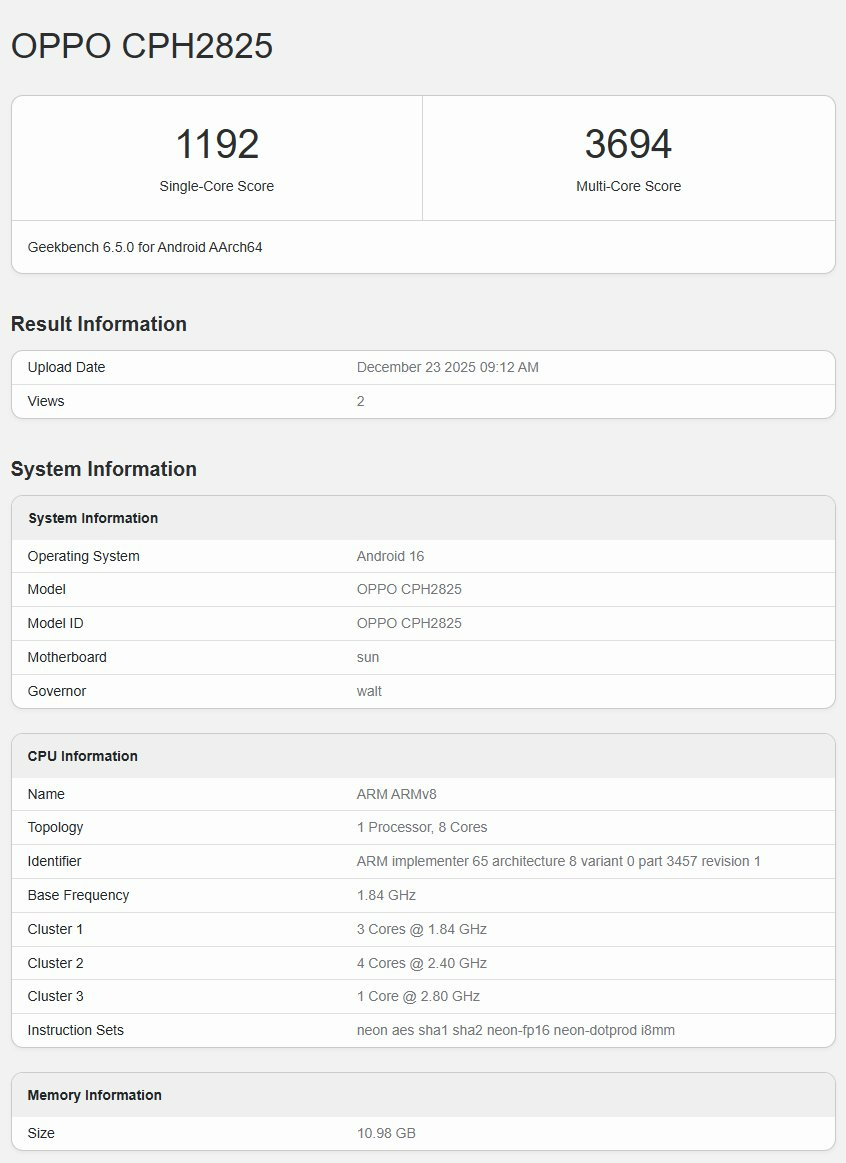
The above screenshot reveals that an upcoming Oppo smartphone with the model number CPH2825 has surfaced on Geekbench. According to previously seen certification listings, this device will carry the Oppo Reno 15 moniker when it hits the global market.

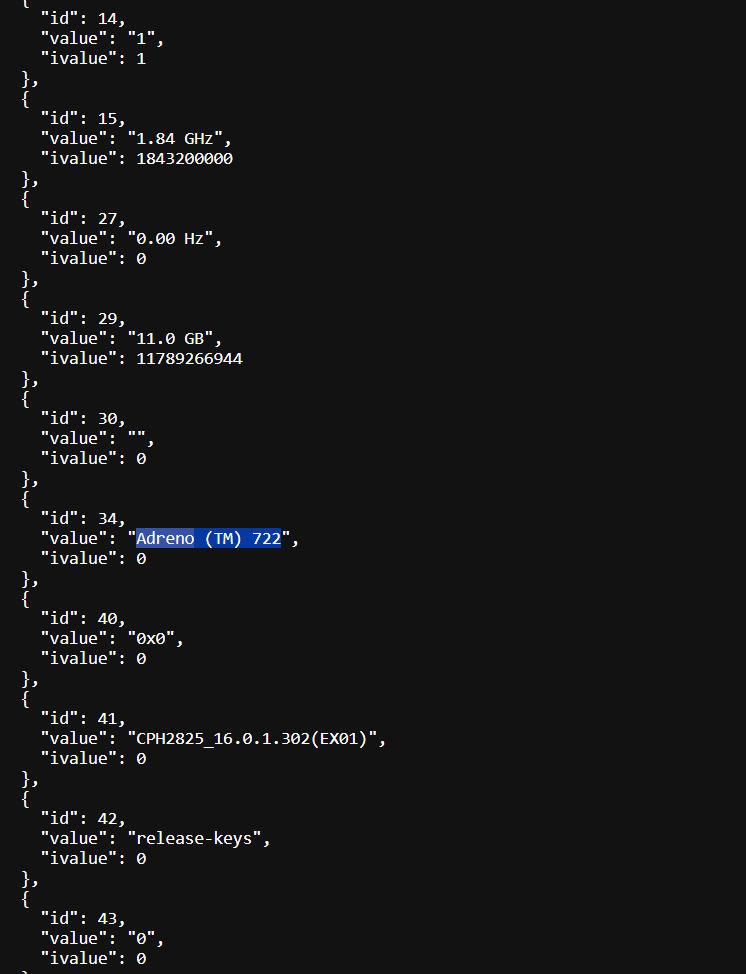
This device has been spotted with the Snapdragon 7 Gen 4 chipset. Although the chip’s name is not directly mentioned, the CPU configuration and GPU information available in its metadata offer clear hints that it is equipped with Qualcomm’s most powerful Snapdragon 7-series chip.

The Geekbench listing further reveals 12GB of RAM and Android 16. It scored 1,192 and 3,694 points in the single-core and multi-core tests, respectively, which is consistent with what the Snapdragon 7 Gen 4 can offer.

The inclusion of the Snapdragon 7 Gen 4 suggests that the Oppo Reno 15 could be a rebranded version of the Reno 15c, which debuted earlier this month in China. The 15c features a 6.59-inch OLED LTPS 1.5K 120Hz screen and a 50-megapixel sensor in its selfie camera cut-out.

The back panel of the device houses a 50-megapixel (Sony LYT-700) main camera with OIS support, an 8-megapixel (Sony IMX355) ultra-wide lens, and a 50-megapixel (Samsung JN5) telephoto camera with 3x optical zoom. It packs a 6,500mAh battery with 80W wired charging but lacks support for wireless charging.

Oppo Reno 15 series
Oppo Reno 15 series

The Reno 15c is also equipped with features such as an in-screen fingerprint scanner, dual speakers, an X-axis linear motor, an IR blaster, and an IP68/69-rated body with a metal middle frame. Lastly, it runs on ColorOS 16 based on Android 16.

For more daily updates, please visit our News Section.

Stay ahead in tech! Join our Telegram community and sign up for our daily newsletter of top stories.

(via)

Xiaomi 17 Ultra Leica Edition confirmed

Xiaomi has now officially confirmed that the upcoming Xiaomi 17 Ultra will arrive in a special Leica Edition. The move further reinforces Xiaomi’s long-running partnership with Leica, with the company signaling a deeper level of collaboration this time around.

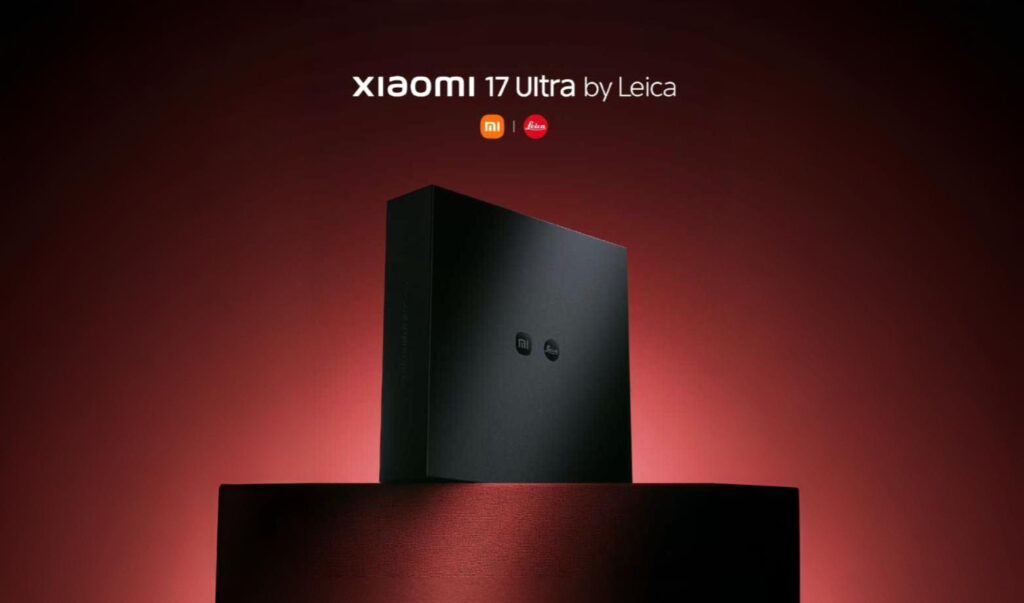
The announcement was accompanied by a teaser image showing the phone’s retail box. It’s finished in black and carries both Xiaomi and Leica branding. The caption references a “strategic cooperation upgrade,” suggesting closer joint development rather than just tuning or branding.

Based on the official main and telephoto samples revealed so far, the hardware and software components of the Xiaomi 17 Ultra’s camera system appear to work hand in hand. Xiaomi has already hinted that the 17 Ultra will introduce what the brand calls a new phase of mobile imaging, though specifics remain limited for now.

What has been confirmed is the camera hardware. The phone will feature a 1-inch main sensor, paired with a 200MP variable zoom periscope telephoto camera. Xiaomi says the telephoto system has received Leica’s Apochromatic optical certification, technically a first for a smartphone. This is aimed at reducing chromatic aberration and improving image clarity. The periscope setup supports continuous optical zoom across the 75mm to 100mm focal range, or 3-4.3x. It should be particularly useful for portraits.

On the design side, the phone isn’t much different from its competitors. An official hands-on video confirms flat sides, rounded corners, four color options, and a thickness of 8.29mm. As Huawei Central points out, the Xiaomi 17 Ultra is going to be the “thinnest Ultra Xiaomi has released so far”.

With the official launch just hours away, Xiaomi appears to be positioning the 17 Ultra as one of its most photography-focused flagships yet. Independent testing, of course, will determine how much of that promise translates into real-world results.

Don’t miss a thing! Join our Telegram community for instant updates and grab our free daily newsletter for the best tech stories!

For more daily updates, please visit our News Section.

Xiaomi confirms no Redmi gaming laptop in 2026

Xiaomi seems to be in no rush to refresh its Redmi gaming laptop lineup in 2026. The news comes straight from Ma Zhiyu, Xiaomi’s product marketing director, who confirmed the decision during a recent user interaction on Weibo.

Responding to a user who asked whether Redmi would launch a new gaming laptop next year, Ma gave a blunt “no.” If that holds, Xiaomi will skip a Redmi-branded gaming laptop for the second year in a row. 

Redmi G Pro 2024

That said, the company isn’t abandoning laptops altogether. Ma confirmed that Redmi notebooks will still receive an upgrade in 2026.

Here’s a quick recap of Redmi’s laptop lineup

For context, Xiaomi sells both portable and gaming laptops under the Redmi sub-brand. The most recent gaming model is the Redmi G Pro 2024, which packs Intel’s Core i7-14650HX processor, 16GB of RAM, a 1TB SSD, and Nvidia’s RTX 4060 GPU.

The device is built around a 16-inch 2.5K 240Hz variable refresh rate screen with a response speed of 3ms, G-SYNC technology, and 500 nits of brightness.

The laptop also supports Xiaomi’s HyperOS Intelligent Connectivity, enabling cross-device camera access, shared keyboard and mouse control, phone collaboration, and app handoff features. 

On the audio side, it includes Nahimic sound enhancements. However, the top-end Redmi G Pro Gaming Laptop 2024 configuration (Core i9-14900HX, 2.5K display, 240Hz refresh rate, and 16GB RAM with 1TB storage) is currently out of stock on Xiaomi’s online store.

RedmiBook 2025

The portable RedmiBook 2025, on the other hand, comes in both 14-inch and 16-inch models. Both are powered by Intel Core 5 220H CPU and come with up to 32GB of RAM and 1TB of PCIe SSD.

Xiaomi confirms there will be no Redmi gaming laptop in 2026The Redmi Book 14 has a 56 Wh battery, while the Redmi Book 16 features a 72 Wh capacity. Both support 100W fast charging via a GaN adapter.

For more daily updates, please visit our News Section.

Stay ahead in tech! Join our Telegram community and sign up for our daily newsletter of top stories.

(Via)

iPhone 17 Pro RAM costs surge by 230%, forcing Apple to prepare countermeasures

The ongoing global DRAM shortage is starting to squeeze Apple’s margins, and the iPhone 17 lineup may be the first to feel that pressure. A new report claims Apple is facing a dramatic spike in DRAM, raising questions about how much longer it can absorb rising component costs without passing them on to consumers.

According to the report, the cost of 12GB LPDDR5X RAM used in the iPhone 17 Pro models has surged from $25 to $29 per unit to $70. That’s a staggering 230% surge, which would unsurprisingly hurt almost any company.

Apple usually avoids these shocks thanks to long-term supply contracts that lock in component pricing well in advance. But DRAM appears to be a tougher problem for Apple to sidestep this time.

iPhone 17 Pro

Apple’s existing DRAM supply agreements with SK Hynix and Samsung are rumored to expire in January 2026. Once those contracts end, Apple will need to renegotiate pricing, and under current market conditions, it’s hard to imagine the company securing anything close to the old $25-per-unit rate.

The latest rumors suggest Apple is already preparing countermeasures. The company is relatively in a strong position for now, but that buffer won’t last forever.

Apple is also forced to join hands with Samsung

The situation appears even more dire when considering broader industry trends. SK Hynix and Micron are reportedly scaling back LPDDR memory production to focus on high-margin HBM memory, which is in massive demand for AI accelerators and data centers. As a result, Apple may end up relying heavily on Samsung for RAM in the iPhone 18 series.

A near-monopoly of that kind would weaken Apple’s negotiating power. If talks fall apart, Apple could be forced to raise iPhone prices, especially since the iPhone 18 lineup is rumored to adopt six-channel LPDDR5X memory to boost bandwidth and AI performance.

The upgrade makes sense on paper, but it also means Apple will need even more DRAM at a time when prices are already inflated.

If DRAM costs stay near $70 per unit, Apple may have little choice but to pass some of that expense on to consumers.

Please Note: When you buy something using the links in our articles, we may earn a small commission at no cost to you.

For more daily updates, please visit our News Section.

Stay ahead in tech! Join our Telegram community and sign up for our daily newsletter of top stories.

(Source)

Samsung may be working on external camera accessories for Galaxy S26 Ultra

Samsung could be laying the groundwork for deeper support of professional filming accessories on future Galaxy phones. Android Authority reports that references to TILTA hardware were found while digging through the latest Camera Assistant app tied to One UI 8.5. For those unfamiliar, TILTA is widely used in filmmaking for camera cages, follow-focus systems, mounts, and lens control gear.

Vivo X200 Ultra with 2.35x telephoto converter

The code suggests Samsung may be adding native support for these accessories. So it could allow users to control focus and other camera settings directly through external hardware in the near future. If implemented, this would make Galaxy phones easier to integrate into more advanced shooting setups.

Of course, the feature is not currently active in the One UI 8.5 beta. It may arrive with the stable version of the update in the Galaxy S26 series.

The timing is notable. There have been no major upgrades in the camera department across Galaxy flagships over the past few generations. At the same time, comparisons highlighting the widening gap in image quality between Galaxy phones and their Chinese competitors have become increasingly common.

One reason Samsung has stuck with older, relatively smaller sensors seems to be the design aesthetic of Galaxy phones. As seen with rivals, larger optical hardware leads to bulkier camera modules, which would clash with Samsung’s preference for cleaner designs and individual camera cutouts.

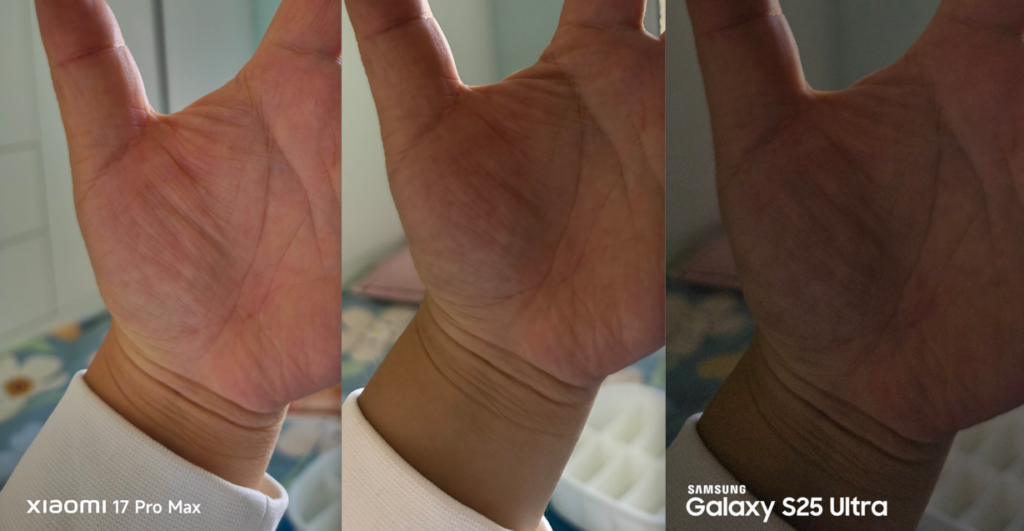
Xiaomi 17 pro max | iPhone 17 Pro max | Galaxy S25 Ultra (main camera)

The Galaxy S26 Ultra is widely expected to retain most of the hardware from the S25 Ultra, which could widen the image-quality gap even further as Chinese smartphone makers continue upgrading their optics. The Xiaomi 17 Ultra, for instance, includes a 3x-4.3x continuous optical zoom setup similar to the photography-focused Sony Xperia flagships. The brand just shared some comparison shots with two unspecified flagships, and the gap is wild.

This is where external hardware becomes relevant for Samsung. They will allow photography-enthusiast Galaxy fans to stick with the brand they like while still gaining a noticeable upgrade, likely for an additional cost.

(Source)

Oppo Find N6 launch window surfaces, Find X9 Ultra tipped for March 2026

Oppo has couple of new devices lined up for Q1 2026 launch in China. A recent Weibo post by tipster Smart Pikachu sheds light on when the upcoming Find N6 foldable and the camera-centric Find X9 Ultra are expected to arrive.

Oppo Find N6 could arrive ahead of the Lunar New Year

Oppo Find N6, X9 Ultra launch timeframe tipped

According to the tipster, both devices are now on a fast-track development timeline. The Oppo Find N6 is said to be targeting a launch before the Lunar New Year 2026, which begins on February 17. If this plan holds, the foldable could be announced sometime in January, allowing Oppo to complete the launch well before the annual holiday slowdown in China.

If launched within this window, the Find N6 would likely become the first Snapdragon 8 Elite Gen 5 -powered foldable smartphone to debut in 2026, giving Oppo an early start in the next-generation foldable segment. The Find N5 did not release in India, but a recent report claimed that the company has started testing it in the country.

Oppo Find X9 Ultra tipped for a March debut

The Oppo Find X9 Ultra, meanwhile, is expected to follow a different timeline. The tipster claims that the phone is currently pencilled in for a March 2026 unveiling. Camera hardware is once again expected to be its main highlight, with reports pointing to a five-camera system that includes two 200-megapixel sensors. While the tipster did not specify it, the penta-setup may also factor in a multispectral sensor.

While the post does not explicitly confirm companion devices, earlier reports indicate that Oppo could introduce additional models alongside the Find X9 Ultra. These may include the Find X9s and Find X9s+. The Find X9s is rumored to be a smaller flagship powered by the forthcoming Dimensity 9500 Plus chipset, while the X9s+ could serve as a refreshed version of the current Find X9.

At this stage, it remains unclear whether the X9s variants will be released outside China. However, industry chatter suggests that the Find X9 Ultra could see a wider, possibly global rollout, marking a first for the Ultra series.

As with all leaks, these timelines should be taken with caution until Oppo makes an official announcement.

For more daily updates, please visit our News Section.

Stay ahead in tech! Join our Telegram community and sign up for our daily newsletter of top stories.

Red Magic 11 Air officially confirmed, key specifications tipped

Back in October, Nubia unveiled the Red Magic 11 Pro and Red Magic 11 Pro+ gaming phones in China. There have been reports that the brand is working on an “Air”-branded successor to the Red Magic 10 Air, which debuted back in April 2025. Today, Red Magic Gaming Phone Product Manager Jiang Chao officially confirmed the existence of the Red Magic 11 Air.

Red Magic 11 Air key specifications revealed

Red Magic 11 Air officially confirmed, specs tipped

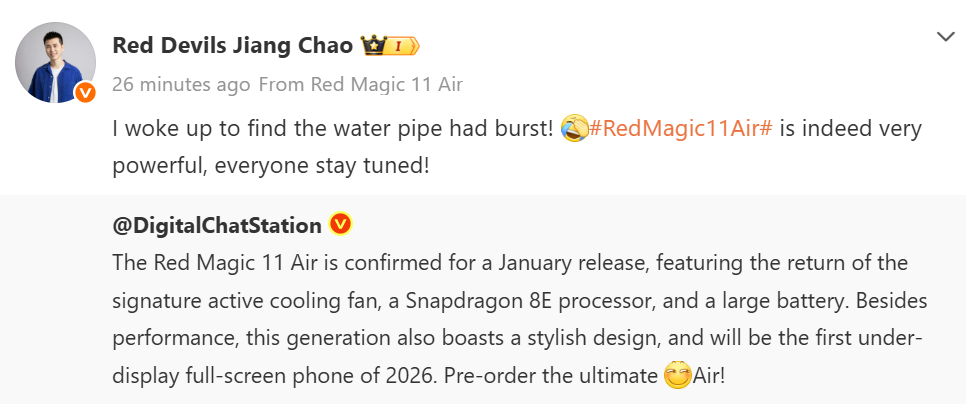
As seen above, popular tipster Digital Chat Station has claimed that the Red Magic 11 Air will be unveiled in January 2026 in China. The said Weibo post has been reshared by Chao, who stated that the device is indeed very powerful.

According to DCS, the Red Magic 11 Air will come equipped with the company’s signature active cooling fan, a Snapdragon 8 Elite chipset, and a large battery. Apart from performance, the affordable gaming phone will sport a stylish design. It will be the first phone with an under-display selfie camera to launch in 2026.

The device, which reportedly bears the model number NX799J, was spotted on China’s TENAA certification platform last month. The listing revealed that it will feature a 6.85-inch OLED screen with 1.5K resolution, equipped with a 16-megapixel under-display front camera. On the back, it will feature a 50-megapixel + 8-megapixel dual-camera setup.

RED MAGIC 10 Air
Red Magic 10 Air

The Red Magic 11 Air may arrive with up to 24GB of RAM and up to 1TB of storage. It will house a battery with a capacity of around 7,000mAh. In terms of dimensions, it will measure 163.82 x 76.54 x 7.85mm and weigh around 207 grams.

For more daily updates, please visit our News Section.

Stay ahead in tech! Join our Telegram community and sign up for our daily newsletter of top stories.

Realme Pad 3 5G to launch alongside Realme 16 Pro series, key specifications revealed

The rumor mill has been gradually leaking details about the Realme Pad 3, a budget-friendly 5G-enabled tablet. Speculation suggests that the tablet may debut alongside the Realme Buds Air 8 and the Realme 16 Pro series on Jan. 6, 2026, in India. Ahead of the expected launch, reliable tipster Abhishek Yadav has revealed the key specifications of the device.

Realme Pad 3 5G key specifications revealed

Realme-Pad-2
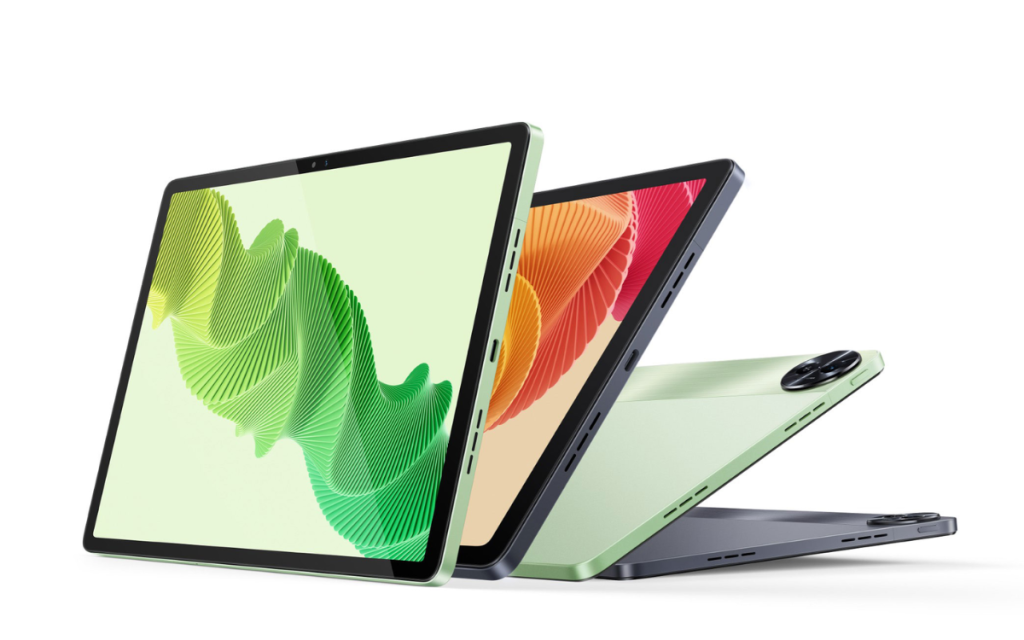
Realme Pad 2

According to the tipster, the Realme Pad 3 will feature an 11.6-inch LCD panel with a 2.8K resolution and 500 nits of brightness. The inclusion of the Dimensity 7300 Max chip will bring support for smooth performance and 5G connectivity.

Under the hood, the Realme Pad 3 will feature a massive 12,200mAh battery with 45W fast charging. It will have a pair of 8-megapixel cameras, one on the front and the other on the back.

The leak further states that Realme will also announce accessories like a keyboard and a stylus for the Realme Pad 3. While these accessories will be sold separately, the company may bundle the stylus for free for early buyers of the tablet.

The same tipster previously claimed that the Pad 3 will be available in Wi-Fi-only and Wi-Fi + 5G variants. It is expected to arrive in two configurations, such as 8GB+128GB and 8GB+256GB. In terms of colour options, buyers could be provided with choices like Space Grey and Champagne Gold.

The Realme Pad 3 will arrive as the successor to the Realme Pad 2, which debuted back in 2023. The 4G-enabled tablet was made available with an 11.52-inch LCD 2K screen, a Helio G99 chip, and an 8,360mAh battery with 33W fast charging support.

For more daily updates, please visit our News Section.

Stay ahead in tech! Join our Telegram community and sign up for our daily newsletter of top stories.

Xiaomi 17 Ultra’s 200MP variable zoom telephoto impresses in side-by-side comparison test

Xiaomi has shared another round of teasers for the Xiaomi 17 Ultra, this time focusing on its periscope telephoto camera. The phone uses a 200MP telephoto sensor developed with Leica, with a reported size of 1/1.4 inches. Xiaomi claims the setup covers equivalent focal lengths from 75mm to 100mm, which puts it squarely in the portrait and mid-range zoom range.

Xiaomi published side-by-side telephoto samples taken at 85mm, 90mm, and 100mm focal lengths, which effectively showcase its 3x-4.3x continuous optical zoom. Xiaomi did not name the other two phones used for comparison, for obvious reasons.

In a previous teaser, the company mentioned its “LOFIC ultra-high dynamic range technology,” and the 85mm and 90mm samples suggest Xiaomi was not exaggerating its claims. Overall, Xiaomi 17 Ultra’s brightness and color reproduction appear more consistent than the other two phones used in the test.

Xiaomi also shared a handful of low-light portrait shots taken with the telephoto camera. In these, subject separation looks clean, there is little to no visible noise, and the skin tone looks fairly natural.

These teaser image samples published through official channels are supposed to be carefully taken and hand-picked, but they still showcase what exactly the phone can do in skilled hands. As for the improvements on top of the 15 Ultra, we’ll need to test the two phones side-by-side once we get access to the 17 Ultra.

Together, the teasers suggest Xiaomi is positioning the 17 Ultra as one of its strongest camera phones yet, and a serious contender among the top camera flagships expected in 2026.

Xiaomi briefly mentioned a new “Red Carpet Camera” mode as well, describing it as a feature designed to give portraits a more polished, cinematic look. No further details were provided. The Xiaomi 17 Ultra is scheduled to launch in China on December 25, 2025. With just days to go, Xiaomi is expected to continue releasing camera samples and feature teases ahead of the official announcement.

Don’t miss a thing! Join our Telegram community for instant updates and grab our free daily newsletter for the best tech stories!

For more daily updates, please visit our News Section.

(Sources: portrait samples | telephoto comparison)

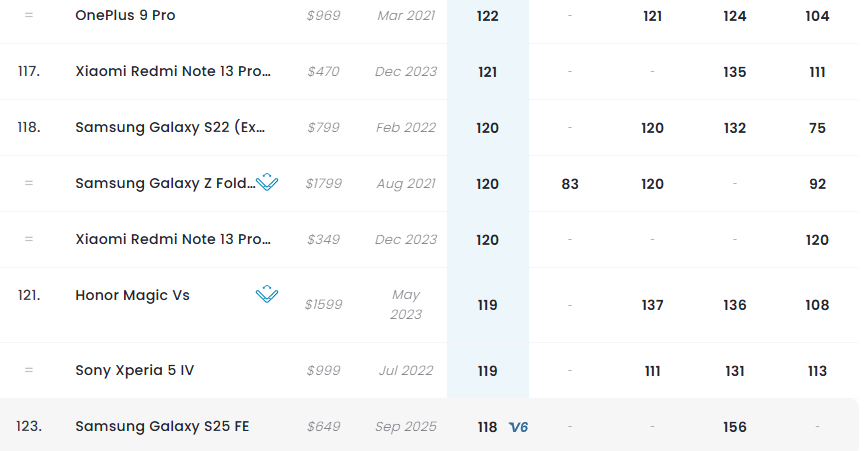
Galaxy S25 FE struggles in DxOMark camera test, trails iPhone 13 from 2021

Samsung’s latest Galaxy S25 FE has posted a weak showing in DxOMark’s camera rankings, placing it well behind several older and more affordable phones.

Samsung Galaxy S25 FE

The Galaxy S25 FE is positioned as a more affordable alternative to the Galaxy S25+, with a price tag of $499 for the 128GB variant in the US as of writing. The base variant (256GB) of the S26+, in comparison, costs $849 in the region. To reach that price point, Samsung made several hardware compromises, including using the in-house Exynos 2400 chipset instead of the Snapdragon 8 Elite and scaling back the camera hardware.

According to DxOMark’s testing, the S25 FE scored 118 points, placing it 123rd overall in the site’s global camera rankings. That puts it behind devices released several years ago, including the iPhone 12 Pro Max, iPhone 13, and Google’s Pixel 6a from 2022, which scored 122 points.

The phone’s camera setup includes a 50MP main sensor with a 1/1.57-inch size, a 12MP ultrawide with a much smaller 1/3-inch sensor, and an 8MP telephoto camera offering 3x optical zoom. DxOMark’s analysis suggests the smaller sensor sizes play a significant role in the phone’s shortcomings.

In still photography, the main camera delivers acceptable exposure and generally accurate colors in good lighting. However, image quality drops noticeably when switching to the ultrawide or telephoto cameras. DxOMark notes visible noise in both photos and videos, even in bright conditions.

Galaxy S25 FE in DxOMark camera ranking

Video performance also falls short. HDR footage is described as inconsistent, with underexposed scenes and occasional pink color casts linked to unstable white balance. Portrait shots show a clear loss of fine detail, while motion in scenes often leads to visible artifacts.

These issues, according to DxOMark, reflect the limits of the hardware choices rather than software tuning alone. As a result, the site suggests buyers in this price range consider alternatives such as Xiaomi’s 15 or 14T, or Google’s Pixel 10, which deliver stronger camera performance at similar prices.

The results highlight a growing challenge for Samsung’s Fan Edition lineup. As competition in the mid-range segment intensifies, camera hardware compromises are becoming harder to justify—especially when rivals, both new and old, continue to outperform on image quality.

Please Note: When you buy something using the links in our articles, we may earn a small commission at no cost to you.

Don’t miss a thing! Join our Telegram community for instant updates and grab our free daily newsletter for the best tech stories!

For more daily updates, please visit our News Section.

(Source)
Hisense unveils XR10 and PX4-Pro laser projectors ahead of CES 2026

Hisense has announced two new laser projectors, XR10 and PX4-Pro, just ahead of CES 2026. The company aims to redefine home projection with a focus on high brightness, wide color fidelity, and flexible design that adapts to modern living spaces.

Hisense XR10

Hisense XR10

The XR10 is Hisense’s new flagship Laser TV model. It appears to be a rebranded version of the Vidda C5 Boundless Master that debuted in China earlier this year. The model features the company’s advanced LPU 3.0 Digital Laser Engine and a pure RGB triple-laser light source. The projector reaches 6,000 ANSI lumens of brightness, making it suitable for both dark rooms and bright, ambient-lit environments.

Hisense has equipped the XR10 with a new IRIS system that automatically adjusts lens aperture and exposure based on lighting conditions. The projector also supports a wide optical zoom range of 0.84x to 2.0x, allowing screen sizes from 65 inches to 300 inches.

The XR10 uses 16 all-glass lenses to improve light transmittance and thermal stability. It delivers a 6000:1 native contrast ratio and covers a wide BT.2020 color gamut. Hisense claims a speckle suppression rate of just 6 percent to reduce visual noise.

The projector includes a four-camera and dual TOF intelligent sensing system. With AI-assisted auto adjustments, it supports ±15° side-projection correction and offers vertical and horizontal lens shift. It also features an industry-first fully sealed microchannel liquid cooling system that maintains thermal efficiency without loud fan noise.

PX4-Pro

The PX4-Pro is a new ultra-short-throw (UST) laser projector aimed at consumers looking for theater-grade performance in everyday living spaces. It projects up to 200 inches diagonally from a close distance and delivers 3,500 ANSI lumens of brightness with a 4K resolution.

This model continues the design language of the PX3-Pro and features Hisense’s TriChroma laser technology along with IMAX Enhanced certification. The IRIS system helps achieve a maximum contrast ratio of 6000:1, while support for low latency caters to gaming use.

Hisense has not confirmed pricing or release dates for either model, but both will be on display at CES 2026 in Las Vegas, Central Hall, Booth 17704.

For more daily updates, please visit our News Section.

Stay ahead in tech! Join our Telegram community and sign up for our daily newsletter of top stories! 💡

How a Fake Samsung Galaxy Phone Operation Was Exposed in a Major Police Raid in India

Police in India’s capital city of Delhi have cracked down on a sophisticated counterfeit smartphone operation, which was caught selling fake Samsung Galaxy smartphones. The local law enforcement has made arrests and even confiscated hundreds of these counterfeit Galaxy phones, so here’s everything you need to know.

Police Shut Down Fake Samsung Galaxy Phone Racket, Over 500 Counterfeits Seized

The Delhi Police recently dismantled an illegal phone assembly and sales operation that was passing off counterfeit Samsung Galaxy devices as genuine products. The raid was carried out in the Karol Bagh neighborhood, which led to the arrest of four suspects and seizure of more than 512 fake Galaxy smartphones along with a cache of electronic components and tools used in the scheme.

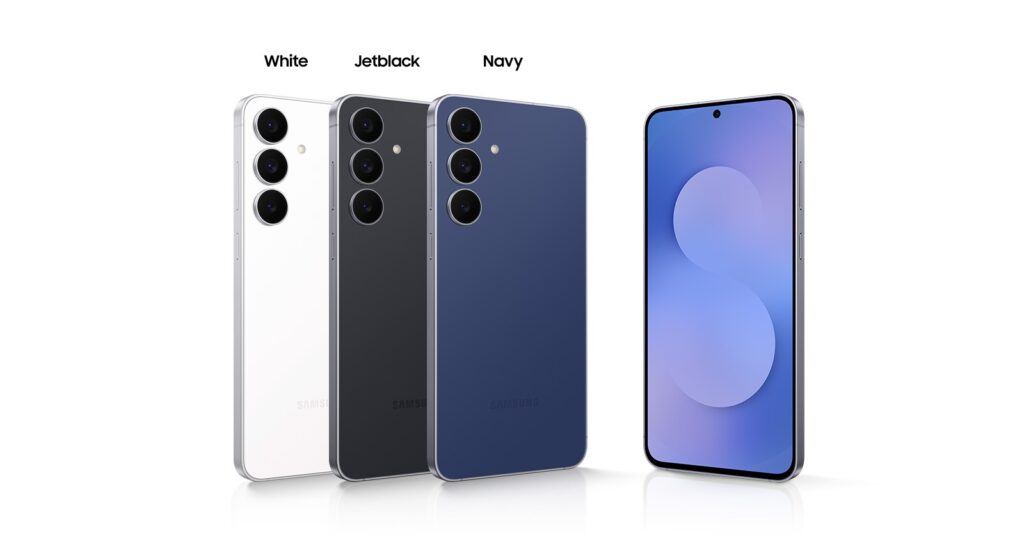
Galaxy S25 Ultra with S Pen
Samsung Galaxy S25 Ultra

As per official police reports, the group was sourcing various parts like motherboards, cameras, batteries, and frames from abroad, primarily from suppliers in China. These components were then assembled together with salvaged or generic components to build phones that resemble Samsung’s premium smartphones, like the Galaxy S Ultra lineup, and even the Galaxy Fold and Flip series.

To make the units appear authentic, investigators found hundreds of fake IMEI stickers marked “Made in Vietnam”, a tactic intended to mislead buyers and evade network checks. While most of these devices cost over 1,200 US Dollars in the Indian market, the illegal business was selling these fake Samsung phones for around 450 US Dollars (around Rs 35,000 to Rs 40,000). So unsuspecting buyers were lured into what appeared to be attractive deals that were too good to be true. The police are currently investigating to uncover the deeper network for such a business, like its supply chain.

For more daily updates, please visit our News Section.

Tech enthusiast? Get the latest news first! Follow our Telegram channel and subscribe to our free newsletter for your daily tech fix! ⚡

Honor Win teaser shows new “Turbine” cooling fan in action

Honor is gearing up to release its performance focused flagship smartphones in its home market of China. But ahead of the official announcement, a fresh teaser has showcased the Honor Win and Honor Win RT’s active cooling solution in action, so let’s check it out.

Honor Win series teased with Turbine cooling fan

The Chinese brand’s upcoming Honor Win just surfaced in a fresh video trailer that offers us a glimpse of the new “Dongfeng Turbine Cooling” Fan. As the name suggests, this is a tiny physical fan that spins at 25,000 RPM. In the video teaser, the Honor Win’s fan manages to cool down the chip powering the smartphone, preventing thermal throttling. This is a dual 360° surround fan that has a direct-drive cooling airflow.

Honor Win Cooling Fan Teaser

When in full speed, the company claims that the temperature drops by around 5.7 degrees Celsius. Honor also stated that this is a durable moving piece that is promised to last for at least five years. The Honor Win and Win RT is powered by the Snapdragon 8 Elite Gen 5 SoC, which is paired with LPDDR5X Ultra RAM and UFS 4.1 storage.

While this confirms the device’s performance first focus, a recent leak has revealed capable camera hardware for photography. This includes a 50MP Sony LYT700 main camera and a 122MP ultra wide angle lens on the Win RT model. Meanwhile, the Honor Win is a premium model that also gets a 50MP Sony IMX856 telephoto shooter with 3x optical zoom. Other notable features include a massive 10,000mAh battery, a 1.5K 6.83-inch 120Hz OLED display and 100W wired fast charging support.

For more daily updates, please visit our News Section.

Don’t miss a thing! Join our Telegram community for instant updates and grab our free daily newsletter for the best tech stories!

Redmi Note 15 5G Teased in India with Slim 7.35mm Body & IP66 Rating

Xiaomi has already begun teasing the Redmi Note 15 5G in the Indian market over the last couple of days. We have even seen leaks revealing some key details of this upcoming mid range phone. Now, official teasers have confirmed its design elements, like its slim body and IP rating. So let’s check it out.

Redmi Note 15 5G Teased

Redmi Note 15 5G
Redmi Note 15 5G teased with an IP66 rating

The Chinese tech giant previously announced the Redmi Note 15 5G in the global market alongside its various siblings in the global market earlier this month. Meanwhile, its Indian release is set for 6th January 2026. But ahead of the launch, the company has confirmed that the device will arrive with a slim 7.35mm body, despite housing a large 5,520mAh battery pack.

For protection against the elements, the Redmi Note 15 5G has an IP66 rating that is certified with a dustproof design and resistance to water projected in jets. This arrives right after the teaser for the display specs of the new smartphone. To recall, the Note 15 is set to sport a tall 6.77-inch curved AMOLED display that offers a 120Hz refresh rate, 3200 nits of peak brightness, TÜV Triple Eye Care certification, and Hydro Touch 2.0.

Redmi Note 15 5G - Glacier Blue
Redmi Note 15 5G – Glacier Blue

Based on what we know so far, the Redmi Note 15 5G will be equipped with the Snapdragon 6 Gen 3 SoC, which is paired with 8GB of RAM and up to 256GB of internal storage. For photography, the rear will have a 108MP main camera that supports OIS, multi-focal portrait, 4K video recording, and Dynamic Shot. A recent price leak has even revealed that the device may carry a starting price tag of Rs 22,999 (roughly 257 US Dollars).

For more daily updates, please visit our News Section.

Tech enthusiast? Get the latest news first! Follow our Telegram channel and subscribe to our free newsletter for your daily tech fix! ⚡

OnePlus Rolls Out OxygenOS 16 Update for OnePlus 11R and Nord 3 in India

If you own a OnePlus 11R and a OnePlus Nord 3 in India, the company is finally bringing the OxygenOS 16 update. The latest Android 16 OS based update is rolling out with OnePlus’ custom skin, so here’s everything you need to know.

OnePlus Nord 3 & OnePlus 11R Receive OxygenOS 16 in India

OnePlus 11R
OnePlus 11R

The Chinese brand is releasing the new OxygenOS iteration for the OnePlus 11R and Nord 3. OnePlus has confirmed that the update is only rolling out in India, so a wider release should follow soon. The OnePlus 11R is getting the OxygenOS 16 update that carries the CPH2487_16.0.1.300(EX01) firmware version, which has a hefty download size of 3.51GB. Meanwhile, the Nord 3 is receiving CPH2491_16.0.2.400(EX01) firmware build.

Along with Android 16 OS, OnePlus is also bringing the November 2025 Android Security patch for the OnePlus 11R. So both models are now getting the refreshed UI that brings fluid animations and improved user experience thanks to Parallel Processing and Trinity Engine. There are also various AI powered features such as Mind Space, AI powered Photos, Notes, Recorder, Writer, and much more.

OnePlus Nord 3

OxygenOS 16 also brings improved integration of Google Gemini. OnePlus promises enhanced performance and seamless sharing support for Windows and Mac, along with improved syncing with iPhones and Apple Watch. For security, OxygenOS 16 upgrades data protection with enhanced virus scanning speed in Phone Manager and additional features. In related news, the OnePlus Nord 5 also received this update last month, while the older flagship, the OnePlus 11, got this major OS upgrade earlier this month.

For more daily updates, please visit our News Section.

Tech enthusiast? Get the latest news first! Follow our Telegram channel and subscribe to our free newsletter for your daily tech fix and stay ahead in tech! ⚡