Advertisement

OnePlus Ace 6T vs Galaxy S24: Why the Cheaper Ace 6T Might Make More Sense

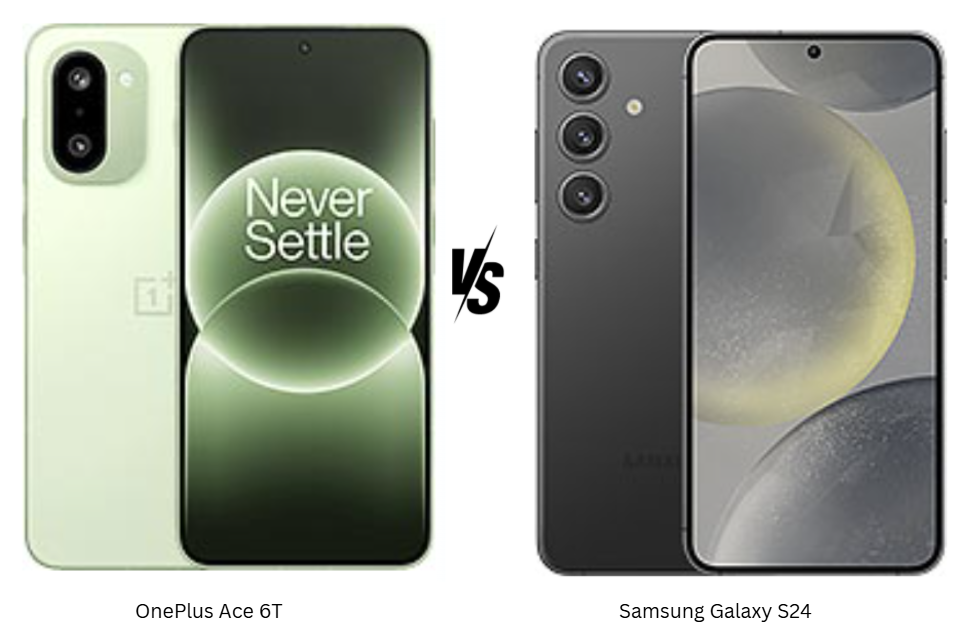
OnePlus Ace 6T vs Samsung Galaxy S24 comparison isn’t just about choosing a phone; it’s about choosing a philosophy. One promises flagship-level power at an aggressive price, while the other delivers a carefully polished premium experience built for long-term use. Buyers looking at these two devices are typically weighing raw value against refinement, making this comparison especially important for anyone deciding whether performance or long-term stability matters more in daily life.
l

1. Design and Display 

Build and Feel

The OnePlus Ace 6T focuses on visual boldness and durability, using a premium glass-and-metal construction with added ceramic-like coating for a distinctive finish. It feels engineered for power users who value robustness and modern design flair. The Samsung Galaxy S24, by contrast, prioritizes refinement and compact elegance. Its Armor Aluminum frame and Gorilla Glass Victus 2 create a cleaner, more understated premium feel that fits comfortably into daily professional use. The Samsung approach feels more universally polished, while the OnePlus design leans toward performance-first aesthetics.

Display Quality

OnePlus pushes display boundaries with an ultra-smooth high-refresh AMOLED panel, extremely high peak brightness, and rich HDR formats. Content feels immersive and gaming-friendly, especially during fast motion. Samsung counters with a color-accurate LTPO AMOLED display that dynamically adapts refresh rates for efficiency and consistency. While it is less extreme on paper, Samsung’s tuning feels more natural and balanced for long viewing sessions.

Verdict

The Ace 6T feels exciting and bold, while the Galaxy S24 feels refined and dependable.

Please Note: When you buy something using the links in our articles, we may earn a small commission at no cost to you.

2. Specifications 

Performance

The OnePlus Ace 6T is built around a next-generation flagship chipset paired with extremely fast storage and generous memory options. Everyday interactions feel instant, and sustained gaming performance remains stable with fewer slowdowns. Samsung’s Galaxy S24 offers top-tier performance as well, but its experience varies by region due to different chipsets. Still, optimization and thermal management feel mature, making daily usage consistently smooth rather than aggressively fast.

Battery and Charging

Battery life is a defining strength for the Ace 6T. Its large-capacity silicon-carbon battery and ultra-fast wired charging make it feel nearly impossible to drain in a single day. Quick top-ups significantly reduce charging anxiety. Samsung’s smaller battery focuses more on efficiency than brute capacity, delivering reliable day-long endurance but much slower charging speeds. Wireless charging and reverse wireless charging add convenience, though not speed.

Verdict

OnePlus feels built for heavy users and gamers, while Samsung prioritizes balanced, predictable performance.

3. Camera 

Main and Secondary Lenses

Samsung clearly leads in camera versatility. Its triple-camera system covers wide, ultra-wide, and true optical zoom, making it far more adaptable for travel, portraits, and video recording. Samsung’s video capabilities, including higher resolutions and advanced stabilization, feel more creator-focused. The OnePlus Ace 6T delivers solid image quality from its main sensor, with pleasing colors and reliable stabilization, but its secondary camera feels more functional than exciting.

Selfie Camera

Samsung’s front camera benefits from better autofocus and higher video quality, making it stronger for video calls and social content. The OnePlus selfie camera performs well in good lighting but lacks the same level of detail and dynamic range.

Verdict

Samsung feels tailor-made for photography and video, while OnePlus cameras are competent but not the main attraction.

4. Pricing 

Pricing dramatically separates these two phones. The OnePlus Ace 6T delivers flagship-level performance, massive battery capacity, and ultra-fast charging at a price that feels aggressively consumer-friendly. It offers exceptional value for users who prioritize speed, endurance, and hardware over brand ecosystem features. The Galaxy S24 costs significantly more, but that premium buys long-term software support, stronger cameras, a refined design, and ecosystem extras like DeX and wireless charging.

For value-focused buyers, the Ace 6T feels like getting more than what is paid for. For users who want stability, longevity, and a well-rounded flagship experience, the Galaxy S24 justifies its higher price with polish rather than raw specs.

5. Conclusion 

The OnePlus Ace 6T stands out with its massive battery, ultra-fast charging, high refresh-rate display, and cutting-edge performance hardware. It feels tailored for power users, gamers, and anyone who values speed and endurance above all else. Samsung’s Galaxy S24 differentiates itself through long-term software support, superior camera versatility, wireless features, and seamless ecosystem integration that extends beyond the phone itself.

Verdict

The Ace 6T feels like a performance monster offering incredible value, while the Galaxy S24 feels like a refined flagship built for longevity and everyday reliability. Choosing between them depends less on specifications and more on priorities: raw power and charging speed versus camera quality, software support, and ecosystem polish.

In the end, for most users who want the most capability for the price, the OnePlus Ace 6T makes more sense and offers better value.

Read More:

OnePlus 15s launching in India soon? Compact phone visits BIS

OnePlus recently launched its flagship OnePlus 15 model in the Indian market, with the value flagship OnePlus 15R debuting yesterday. Now, it appears that the next premium compact phone from OnePlus might be arriving soon. A fresh certification sighting in India has revealed a new model, which could be the OnePlus 15s. So here’s everything you need to know.

OnePlus 15s spotted on BIS

In a fresh tweet from @kpgc10kai_, a screenshot of the BIS listing can be seen that showcases an upcoming device that carries the CPH2793 model number. While the certification database doesn’t confirm an official moniker, the tipster believes that this is the OnePlus 15s model. Another tweet from the same person also claimed that the CPH2795 also refers to the OnePlus 15s, while the Chinese exclusive OnePlus 15T variant is expected to carry the PLU110 model number.

OnePlus 15R
OnePlus 15R

Unfortunately, the BIS listing doesn’t reveal any finer details like its launch timeline or specs. But based on what we know so far, the new compact flagship phone is expected to sport a 6.31-inch BOE X3 OLED panel offering a 1.5K resolution and a 165Hz refresh rate. Under the hood, the device is said to feature the Snapdragon 8 Elite Gen 5 SoC.

Rumors have hinted at a gigantic 7,500mAh battery pack that could power this device, which might also support 100W or 120W wired fast charging. For photography, the main camera is expected to be a 50MP Sony IMX906 sensor that is also found on the OnePlus 15 and OnePlus 15R. But reports have also claimed a 200MP Samsung HP5 sensor as well, but this still seems unlikely. Alongside the main camera, the company might bring a 50MP Samsung JN5 telephoto shooter.

For more daily updates, please visit our News Section.

Don’t miss a thing! Join our Telegram community for instant updates and grab our free daily newsletter for the best tech stories!

Xiaomi’s new budget power bank can power your laptops: Launched in the UK

Back in August 2025, Xiaomi announced the new Power Bank 10000 in the brand’s home market of China. This accessory was later released globally, namely in the Eurozone. But now, it is finally rolling out in the UK with a charging output that can power your laptops at a budget price tag.

Xiaomi Power Bank 10000 67W Specifications

The Chinese tech giant just announced the Xiaomi Power Bank 10000 in the UK, bringing a versatile and portable charging solution to users on the go. As the name suggests, the new power bank houses a large 10,000mAh capacity. You can even check the battery levels via a small digital display on the side. It arrives with an integrated USB-C cable that brings 67W charging, which the brand claims can power up the Xiaomi 15 to full in just under an hour.

Xiaomi Power Bank 10000

Meanwhile, the iPhone 16 Pro can hit 56 percent charge, and the M3 iPad Air 11-inch can reach 33 percent in just 30 minutes. Alongside the built-in cable, the USB-C and USB-A ports allow users to charge three devices at the same time. The Xiaomi Power Bank 10000 also supports fast charging input as well, taking just 1.3 hours to fully charge thanks to its 65W USB-C input.

Talking about its dimensions, the new affordable power bank measures 115 x 66 x 26mm in terms of dimensions and weighs around 247 grams. At the moment, the Xiaomi Power Bank 10000 has just debuted in the UK in two color options. This includes an Ice Blue and a Tan variant. It is listed for purchase from the brand’s official website in the UK for 32.99 Pounds Sterling.

Please Note: When you buy something using the links in our articles, we may earn a small commission at no cost to you.

For more daily updates, please visit our News Section.

Tech enthusiast? Get the latest news first! Follow our Telegram channel and subscribe to our free newsletter for your daily tech fix! ⚡

Stable OriginOS 6 update now rolling out to iQOO Neo 10R

iQOO Neo 10R OriginOS 6 update

The OriginOS 6 update, based on Android 16, has nearly reached all eligible high-end phones and is now expanding to mid-range phones. The latest to join the party is the iQOO Neo 10R. The update has arrived right on schedule and is planned to cover more Vivo and iQOO devices over the coming weeks.

The iQOO Neo 10R is getting the OriginOS 6 update (via) with the firmware version PD2352BF_EX_A_16.1.10.7.W30. For now, it’s available to those who have already installed the beta build. However, its expansion to other users shouldn’t take long.

iQOO Neo 10R OriginOS 6 update

For the beta users, the update package weighs just 137MB, as it only changes the beta state to stable, along with a few improvements. Non-beta users will receive a significantly larger update package with a download size of about 3-5GB.

If you’re rocking an iQOO Neo 10R, go to Settings > About phone > System updates to check for the available update. If the update isn’t available, check back again later. Major updates are usually rolled out in batches, and therefore, may take a little longer to reach your device.

Related: Check the official OriginOS 6 rollout timeline here
Here’s what’s new in OriginOS 6 update

OriginOS 6 is a pretty significant upgrade, especially for Vivo and iQOO devices outside China, as it marks the shift from Funtouch OS. The latest upgrade offers visual enhancements throughout the system, including improved lighting effects, better blur and transparency, and a new system font for improved readability.

The upgrade introduces Origin Island, which shows real-time updates, smart notifications, and timely suggestions. It also enables drag-and-drop sharing between apps. OriginOS 6 also features a redesigned Control Center and notification layout that feels modern and well-organized. 

The lock screen gets new clock styles, deeper layout controls, and new widgets. The update also delivers noticeable performance gains, thanks to the new Origin Smooth Engine, leading to faster app launches, more fluid animations, and smoother multitasking. It also brings meaningful quality-of-life upgrades, such as cross-device features for Windows and Mac, AI-powered captions and search, improved notes, file management, and optimized battery efficiency.

Be sure to visit the Android 16 section on Gizmochina to get the latest updates. Or, if you prefer your news instant and on-the-go, hop into our Telegram channel for rapid-fire software updates and all the biggest tech headlines.

Xiaomi MiMo-V2-Flash LLM Just Dropped: These Are the Most Interesting Things About It

Xiaomi has unveiled its most advanced open-source large language model to date, called MiMo-V2-Flash, as part of its expanding push into foundation AI. The new model focuses on high-speed performance and an efficient architecture, with strong capabilities in reasoning and code generation.

Xiaomi positions MiMo-V2-Flash as a direct competitor to leading models such as DeepSeek V3.2 and Claude 4.5 Sonnet. Let’s take a closer look at how the model works, its key features, and how to access it.

Xiaomi MiMo

1. Purpose-Built for Speed and Agents

MiMo-V2-Flash is a Mixture-of-Experts (MoE) model with 309 billion total parameters and 15 billion active parameters. The model is purpose-built for AI agent scenarios and multi-turn interactions that require fast inference.

Xiaomi uses a 1:5 hybrid attention architecture, which combines Global Attention and Sliding Window Attention (SWA) with a 128-token window. The native context length is 32,000 tokens, and the model is trained with support for up to 256,000 tokens.

This design helps MiMo-V2-Flash maintain high efficiency while scaling across long-context tasks. Xiaomi claims it delivers output faster than several leading models, including DeepSeek and Claude, while maintaining lower operational costs.

2. Benchmark Performance and Pricing

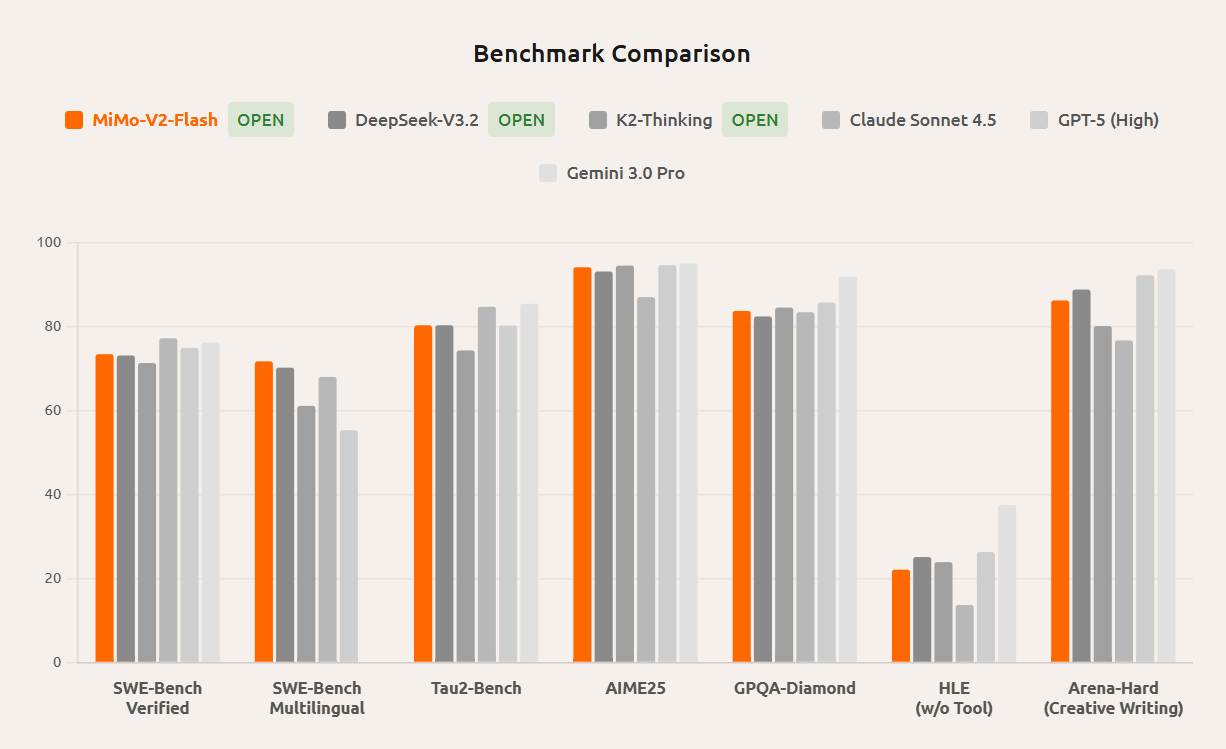
Benchmark results show MiMo-V2-Flash performing at the top tier across various domains. The model ranks in the top two among open-source models in reasoning tasks such as AIME 2025 and GPQA-Diamond.

In software engineering benchmarks like SWE-Bench Verified and SWE-Bench Multilingual, it outperforms other open-source models and reaches levels comparable to GPT-5 and Claude 4.5 Sonnet.

Xiaomi has priced the API at $0.1 per million input tokens and $0.3 per million output tokens. The API is currently available for free for a limited time. According to the company, MiMo-V2-Flash generates responses at 150 tokens per second, while maintaining only 2.5% of Claude’s inference cost.

3. Technical Innovations Inside

The architecture includes Multi-Token Prediction (MTP), which allows the model to generate multiple tokens in parallel and verify them before output. This method increases decoding throughput without increasing attention or memory overhead. Xiaomi reports that with a three-layer MTP, the model reaches 2.0 to 2.6 times speed improvement compared to standard decoding.

Xiaomi also introduced a new post-training method called Multi-Teacher Online Policy Distillation (MOPD). The technique uses multiple teacher models to guide the student through token-level rewards in an on-policy learning process. It allows the model to achieve high performance with less than 1/50th of the training resources needed in traditional RL pipelines. MOPD also supports plug-and-play teachers, enabling continuous self-improvement cycles.

4. How to Access It?

Xiaomi has launched a web AI chat interface called MiMo Studio at aistudio.xiaomimimo.com, allowing users to interact directly with the model. The service supports web search, agent workflows, and code generation. It also features a toggle for switching between instant replies and slower “thinking” responses for deeper reasoning.

The model can generate functional HTML web pages and integrates well with development tools like Claude Code and Cursor. Xiaomi has also showcased creative and functional web demos.

5. Fully Open-Source

MiMo-V2-Flash is fully open-source under the MIT license. Model weights are available on Hugging Face, and all inference code is published on GitHub.

The company contributed inference code to SGLang on launch day and aims to grow developer adoption by offering transparent, low-cost access to high-performance AI tools.

MiMo-V2-Flash reflects Xiaomi’s shift toward becoming a serious player in the AI space. It brings competitive reasoning, fast code generation, and efficient agent deployment to the open-source ecosystem.

In related AI news, China has equipped traffic police with AI-powered smart glasses for real-time vehicle inspections, while a separate report highlights how even so-called “all-AI companies” still require human oversight due to limits in autonomous decision-making.

For more daily updates, please visit our News Section.

Stay ahead in tech! Join our Telegram community and sign up for our daily newsletter of top stories! 💡

iQOO 15 Mini reportedly cancelled as compact phones receive lukewarm response

There are a couple of new compact phones in the works. These include the Honor Magic 8 Slim / Mini, the Vivo X300s, the Oppo Find X9s, and the OnePlus 15s / 15T. There have been mixed reports on the existence of the iQOO 15 Mini. In November, tipster Digital Chat Station revealed that iQOO had stopped developing it, but a leak that surfaced a few days later said that it was still in development. However, a new Weibo post by DCS again states that the phone may not see the light of day.

iQOO 15 Mini may have been shelved

As can be seen above, a Weibo user asked DCS whether there was any news about iQOO’s compact phone, which is dubbed the iQOO 15 Mini by the rumor mill. DCS responded by saying, “The project is currently suspended. (machine translated).”

So, what could be the reason behind killing this project? In another Weibo post, the tipster suggests that compact smartphones are losing momentum, prompting two major parent brands to plan larger flagship models for 2026. These devices will sit above standard flagships, offering better cameras, stronger performance, and bigger batteries, possibly carrying “Max” or “Plus” branding.

From a broader industry perspective, compact flagship phones often face practical challenges. Developing a small handset capable of housing Pro-level hardware involves higher research and engineering costs, yet such devices still tend to compromise on sustained performance and battery capacity. As a result, they often end up being priced higher without offering clearly superior specifications, making it harder for compact flagships to appeal to a wider audience.

For instance, the upcoming OnePlus 15s / 15T is still rumoured to lack some essential features, such as an ultra-wide camera and wireless charging, despite being positioned as a top-tier flagship. This reality helps explain why brands may be stepping back from small-screen projects like the iQOO 15 Mini.

As far as rumored iQOO 15 Mini specs are concerned, it was said to feature a 6.31-inch OLED 1.5K display, a Dimensity 9500 or 9500+ chip, a 7,000mAh+ battery, a metal middle frame, and an ultrasonic in-screen fingerprint sensor. It was speculated to launch in April 2026.

For more daily updates, please visit our News Section.

Stay ahead in tech! Join our Telegram community and sign up for our daily newsletter of top stories.

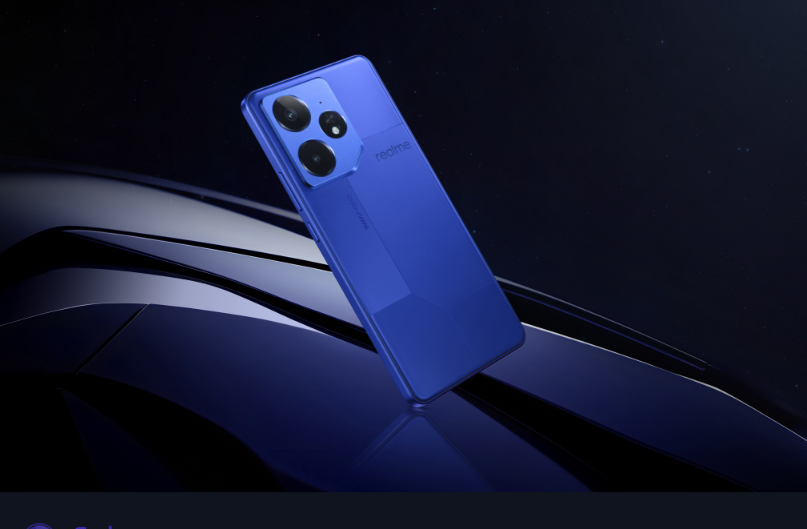
Realme Neo 8 specs leaked again, could be OnePlus 15R / Ace 6T killer

OnePlus unveiled the OnePlus Ace 6T earlier this month in China. It debuted as the world’s first phone powered by the Snapdragon 8 Gen 5 chip. The OnePlus 15R, which landed in India and the global market, is a tweaked version of the same phone. Rumors suggest that Realme is preparing a new Snapdragon 8 Gen 5 phone for China, which may rival the OnePlus Ace 6T.

Realme Neo 8 specs tipped again

Realme Neo 8 specs leak again

The above leak states that the upcoming Realme phone equipped with the Snapdragon 8 Gen 5 chipset will have a durable and premium build, featuring a fully water-resistant body with a metal frame and a glass back.

It is said to be equipped with an ultrasonic in-screen fingerprint sensor and a massive single-cell 8,000mAh battery. Unfortunately, the tipster has not specified the name of the device.

This could be the forthcoming Realme Neo 8, which is expected to feature a Samsung AMOLED flat screen with support for a 1.5K resolution. It is expected to ship with Android 16 and Realme UI 7, but the rest of its specifications are under wraps.

The Realme Neo 8 is one of the many Snapdragon 8 Gen 5 phones expected to release in China in the coming days. Vivo has already launched the camera-focused Vivo S50 Pro Mini powered by the Snapdragon 8 Gen 5. The Moto X70 Ultra and iQOO Z11 Turbo are also expected to feature the Snapdragon 8 Gen 5.

realme-Neo7-submarine
Realme Neo 7

Realme is currently silent on the arrival of the Realme Neo 8. In China, the Realme 16 Pro and 16 Pro+ have already received TENAA certification, indicating that these phones may debut in the coming weeks in the home market. The Neo 8 may launch after the Realme 16 Pro series, likely in January 2026.

For more daily updates, please visit our News Section.

Stay ahead in tech! Join our Telegram community and sign up for our daily newsletter of top stories.

iPhone 18 Pro could get a major front redesign with unconventional hole-punch camera placement

Apple’s iPhone 18 Pro and iPhone 18 Pro Max could bring a big change to the front design, according to a new report from The Information. The change would be one of the biggest shifts to the iPhone’s front layout in years.

Apple introduced the notch with the iPhone X in 2017 and switched to the Dynamic Island on the iPhone 14 Pro models in 2022. The current iPhone 17 lineup still uses a pill-shaped cutout for the front camera and Face ID, while under-display solutions have been under development for some time.

The latest report claims Apple is planning to place most of the Face ID hardware under the AMOLED display, leaving only a small cutout for the front-facing camera. Unlike the current centered Dynamic Island, that camera is said to move to the upper left corner of the screen.

If accurate, this would give the iPhone 18 Pro an asymmetrical front design. That would be a departure from Apple’s long-standing preference for centered cutouts and symmetrical layouts. Earlier rumors had suggested Apple would either keep the pill-shaped cutout or simply shrink it further, so this would mark a different direction.

Camera upgrades may also be coming to the back. At least one rear camera, likely the main sensor, is expected to gain a variable aperture. This would allow the camera to physically adjust how much light enters the lens, offering better control over depth of field and low-light shots.

The same report also mentions Apple’s foldable iPhone. The device is said to feature a 5.3-inch display when folded and a larger 7.7-inch display when unfolded. The folded screen is expected to use a roughly 2:3 aspect ratio, while the unfolded display would shift closer to 4:3. This would make the device shorter in its folded form than some existing foldables.

Apple’s first foldable iPhone is now expected to launch alongside the iPhone 18 lineup in September 2026.

As with all early reports, plans could still change, but the details suggest Apple is experimenting with more noticeable design shifts than usual for its next flagship cycle.

Don’t miss a thing! Join our Telegram community for instant updates and grab our free daily newsletter for the best tech stories!

For more daily updates, please visit our News Section.

(Source | Image)

Exynos 2600 leaks with even higher prime core speed, and AMD JUNO GPU

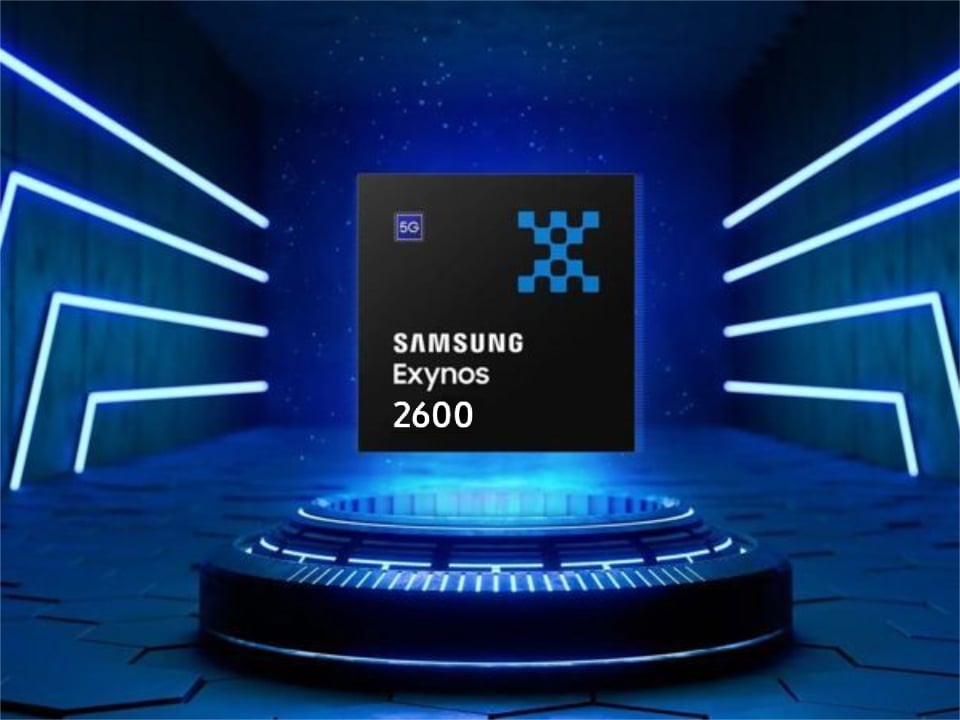
The Exynos 2600 has been a big hype for the Samsung Galaxy S26 series, as it’s the world’s first 2nm chip used in a smartphone. Now, a new leak from well-known Samsung tipster Ice Universe gives us what could be the final look at its CPU and GPU configuration.

We’ve already seen early performance hints from Geekbench listings, but this new information suggests Samsung may be squeezing out a bit more power. According to Ice Universe, the Exynos 2600 will stick with a 10-core CPU layout, which aligns with previous leaks.

Exynos 2600

The change could be on the prime core, which is now said to clock at 3.9GHz. That’s slightly higher than the 3.8GHz speed seen in earlier benchmarks, and while the difference sounds small, it could help Samsung push higher peak performance in demanding tasks.

The rest of the CPU setup looks familiar. The three high-performance cores are expected to run at 3.2GHz, while the six efficiency cores are clocked at 2.75GHz. 

On the graphics side, the Exynos 2600 reportedly uses a GPU called AMD JUNO, running at 985MHz. As the name suggests, Samsung continues its partnership with AMD for graphics, which has been a major talking point for recent Exynos chips. 

The GPU is said to support OpenGL ES 3.2, OpenCL 3.0, and Vulkan 1.3, covering all the modern graphics APIs needed for high-end gaming and advanced visuals.

Samsung will gatekeep Exynos 2600

If you’re curious about its performance, the chip scored 3,455 points in the single-core test and 11,621 points in the multi-core test in its latest Geekbench sighting. For comparison, our Xiaomi 17 unit powered by Qualcomm’s Snapdragon 8 Elite Gen 5 reached 3,078 points in single-core and 9,162 points in multi-core.

Even with on-par performance—if not better—Samsung is reportedly planning to use the Exynos 2600 exclusively in the Galaxy S26 and Galaxy S26 Plus for the Korean market. The rest of the world is expected to get models powered by the Snapdragon 8 Elite Gen 5.

Don’t miss a thing! Join our Telegram community for instant updates and grab our free daily newsletter for the best tech stories!

For more daily updates, please visit our News Section.

(Source)

From 55 inches to 115 inches, Samsung’s Micro RGB TVs are going big in 2026

The Samsung Micro RGB TVs are set to expand in 2026, signalling the company’s push to bring ultra-premium display technology to a wider range of screen sizes. The new lineup aims to bridge cinematic-scale displays and premium living room televisions under one advanced display platform.

Samsung expands Micro RGB TV lineup for 2026

From 55 inches to 115 inches, Samsung’s Micro RGB TVs are going big in 2026

Samsung has confirmed that its Micro RGB TV range will grow significantly in 2026, with new models spanning 55-inch, 65-inch, 75-inch, 85-inch, 100-inch, and 115-inch sizes. Building on the 115-inch Micro RGB TV introduced in 2025, the upcoming lineup introduces refined display architecture designed to deliver more accurate colors, improved clarity, and smoother motion across all sizes.

At the core of the lineup is Samsung’s Micro RGB display technology, which uses independently lit red, green, and blue LEDs that are smaller than 100 microns. This structure allows for precise light control and better colour accuracy compared to conventional LED panels. Samsung is also pairing this hardware with advanced picture processing features such as AI-based upscaling and motion enhancement to improve brightness control and real-time visual refinement.

The 2026 Micro RGB TVs will be powered by Samsung’s new AI engine, designed to enhance frame-by-frame clarity and realism. Features such as expanded color enhancement and advanced HDR processing aim to improve dynamic range and preserve fine details in complex scenes. Samsung has also confirmed that these TVs achieve full coverage of the BT.2020 colour space, ensuring accurate reproduction of a wider range of colours.

In addition to visual upgrades, the lineup introduces improvements in smart features and audio. Samsung’s updated Vision AI platform enables conversational interactions through Bixby, content discovery, and access to AI-driven tools such as live translation and generative wallpapers.

Samsung plans to showcase the new Micro RGB TV lineup at CES 2026 in Las Vegas, offering a closer look at how the company intends to reshape premium home entertainment across varied screen sizes.

For more daily updates, please visit our News Section.

Stay ahead in tech! Join our Telegram community and sign up for our daily newsletter of top stories.

Official: Xiaomi 17 Ultra is launching next week

The Xiaomi 17 Ultra has officially been confirmed for launch next week, marking the arrival of Xiaomi’s next ultra-premium smartphone. With Xiaomi and Leica deepening their long-standing partnership, the upcoming flagship is expected to introduce meaningful changes rather than incremental updates, setting the stage for what could be Xiaomi’s most ambitious phone yet.

Xiaomi 17 Ultra launch timeframe officially confirmed

Xiamoi 17 Ultra to launch next week

Xiaomi founder, chairman, and CEO Lei Jun has confirmed that the Xiaomi 17 Ultra will be unveiled next week in China, likely following the company’s usual Thursday launch pattern. Alongside the launch confirmation, Xiaomi also announced a global upgrade to its imaging partnership with Leica. This new phase moves beyond joint development into a “strategic co-creation” model, where both brands collaborate from the earliest stages of product design to reshape mobile photography experiences.

As part of this upgraded collaboration, Xiaomi has introduced a new optical system for smartphones. The highlight is the industry’s first Leica APO-certified telephoto lens for mobile devices, designed to deliver improved colour accuracy, reduced chromatic aberration, and better clarity at long focal lengths. Xiaomi claims this system significantly improves night photography, high-contrast scenes, and telephoto image quality.

Leaks suggest the Xiaomi 17 Ultra returns to a flat display design and uses a high-efficiency panel that delivers clarity exceeding traditional 2K screens while consuming less power. At its core, the device is said to be powered by the Snapdragon 8 Elite Gen 5 chipset, paired with a battery close to 7,000mAh.

Charging capabilities are tipped to include 100W wired and 80W wireless fast charging. The phone is expected to support ultrasonic fingerprint authentication and maintain IP68 dust and water resistance.

The camera setup reportedly shifts to a triple rear camera system. The primary sensor is expected to be OmniVision’s new 50-megapixel OV50X 1-inch sensor with large pixel size and advanced HDR processing. This is likely to be joined by a 50-megapixel ultra-wide camera with macro support and a 200-megapixel periscope telephoto camera, possibly offering up to 5x optical zoom.

In addition to the smartphone, Xiaomi may also unveil a new NAS product at the same event, signalling broader ecosystem expansion alongside the Xiaomi 17 Ultra. For those who are unaware, the 17 Ultra’s blind pre-orders have already started in China. Globally, it is expected to launch in March along with the standard Xiaomi 17.

For more daily updates, please visit our News Section.

Stay ahead in tech! Join our Telegram community and sign up for our daily newsletter of top stories.

Poco M8, M8 Pro renders, specifications leaked well before January 2026 launch

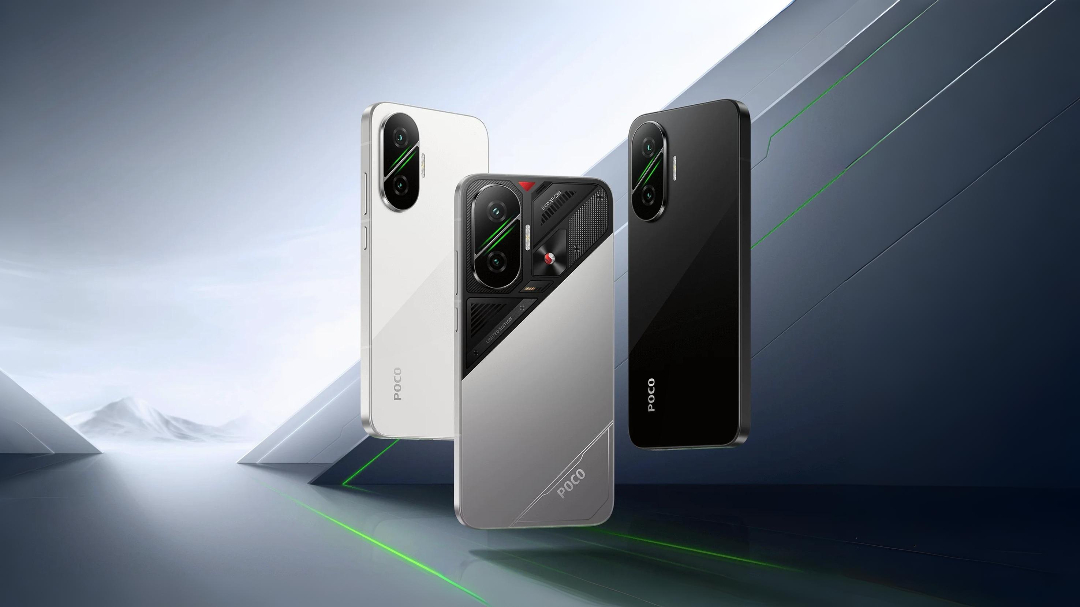
The Poco M8 series, which is expected to include the Poco M8 and M8 Pro, may debut soon, as both models have been spotted on multiple certification platforms. A new report by WinFuture.de has revealed almost everything about the M8 duo, including their official renders.

Poco M8, M8 Pro renders, specifications

As per the publication, the Poco M8 and M8 Pro are rebadged versions of the Redmi Note 15 and Note 15 Pro+. However, the Poco phones do offer minor changes in design and technical specifications.

As per the report, the Poco M8 Pro will have a 6.83-inch OLED panel that offers a 1.5K resolution (2772 x 1080p) and up to a 120Hz refresh rate. On the other hand, the Poco M8 is expected to arrive with a 6.77-inch OLED FHD+ 120Hz display.

The Poco M8 will be powered by the Snapdragon 6 Gen 3 and a 5,520mAh battery with 45W charging support. On the other hand, the M8 Pro will be equipped with the Snapdragon 7s Gen 4v and a 6,500mAh battery with 100W charging.

The Poco M8 may arrive with 8GB of RAM and 256GB of storage, whereas the M8 Pro will be available with 8GB / 12GB of RAM and 256GB / 512GB of storage. The report concludes by stating that the M8 will have an IP65 rating, whereas the M8 Pro will offer an IP68 rating. Unfortunately, the report has no information about the camera specs of both phones.

The leaked renders show that the M8 and M8 Pro will arrive in black, blue and silver shades. The latter has black edges on both sides with a dual-tone look in the middle.

Poco M8 series launch timeframe (rumored)

In a recent X post, tipster Abhishek Yadav also claimed that the Poco M8 Pro will be a rebranded version of the Redmi Note 15 Pro+ with one major difference. While the Note 15 Pro+ has a 200-megapixel main camera, an 8-megapixel ultra-wide lens, and a 32-megapixel front camera, the Poco M8 Pro will have a 50-megapixel main camera, while the rest of the cameras will remain the same.

For more daily updates, please visit our News Section.

Stay ahead in tech! Join our Telegram community and sign up for our daily newsletter of top stories.

Honor Magic 8 Slim / Mini key specifications, color variants revealed

Honor is reportedly working on a compact phone with a slim and lightweight build. Since the official moniker of the device is under wraps, it is being referred to by different names, such as Magic 8 Slim and Magic 8 Mini. In a new Weibo post, reliable tipster Digital Chat Station has revealed the key specifications of this phone, along with its color variants.

Honor Magic 8 Slim / Mini key details tipped

Hoonor Magic 8 Slim / Mini specs tipped

Starting from the front, the Honor Magic 8 Slim / Mini (codenamed Lindy) will feature a 6.3-inch display with a flat design. A previous leak from the same source revealed that it will be an OLED LTPO panel delivering a 1.5K resolution.

Under the hood, the Magic 8 Slim / Mini is expected to feature the Dimensity 9500 chipset. Considering that MediaTek is already gearing up to launch the Dimensity 9500 Plus chipset as its overclocked variant in March or April 2026, the Magic 8 Slim may debut much earlier, probably after the Honor Power 2, which is expected to launch in January 2026.

Without going into details, the tipster mentions in the new leak that the Magic 8 Slim / Mini will offer decent imaging capabilities, a metal frame, and an ultrasonic in-screen fingerprint sensor. It will be available in four finishes, such as Feather White, Shadow Black, Light Orange, and Fairy Purple. He added that the device is ready, and its development and launch are being accelerated.

In a previous leak, the tipster revealed that this slim phone has a thickness of only 5 to 6.x mm despite packing a 5,500mAh battery. At present, there is no information about its fast-charging capabilities, but it is said to support wireless charging.

A previous leak claimed that the Honor Magic 8 Slim / Mini may feature a 200-megapixel main camera, but a newer leak claimed that this sensor could be replaced by a 50-megapixel lens. The camera setup is also expected to feature a periscope telephoto camera.

Previous reports have also suggested that Honor is also working on the Honor Magic 8 RSR (aka Honor Magic 8 Ultra). This will be the company’s ultimate flagship phone powered by the Snapdragon 8 Elite Gen 5. The Magic 8 RSR and 8 Slim / Mini are expected to debut together.

For more daily updates, please visit our News Section.

Stay ahead in tech! Join our Telegram community and sign up for our daily newsletter of top stories.

Honor Win to offer 10,000mAh battery, Snapdragon 8 Elite Gen 5

Honor is all set to launch the Honor Win series of smartphones on Dec. 26 in China. The lineup will include dual flagship phones, namely the Honor Win RT and the more powerful Honor Win. There have been reports that these phones will pack huge batteries, and a new official teaser has revealed that the Honor Win will arrive with a 10,000mAh battery.

Honor Win key specs confirmed

Honor Win
Honor Win’s About Phone page

A Weibo user shared an image of the ‘About Phone’ page of the Honor Win, claiming that its 10,000mAh battery is incredible and that it is practically a power bank. The said post was reposted by Honor Performance Optimization R&D Engineer A Yong, bolstering the authenticity of the image.

The ‘About Phone’ image confirms that the Honor Win will feature an OLED panel that offers a 1.5K resolution of 2800 x 1272 pixels. Under the hood, the device is equipped with the Snapdragon 8 Elite Gen 5 chipset.

At present, the Red Magic 11 Pro (Chinese edition) is the only Snapdragon 8 Elite Gen 5-powered phone to pack an 8,000mAh battery. The upcoming Honor Win is even more powerful than the Magic 11 Pro, as it offers an extraordinary combination of a 10,000mAh silicon-carbon battery and the Snapdragon 8 Elite Gen 5.

The Honor Win also features 16GB of LPDDR5x Ultra RAM, coupled with 16GB of virtual RAM. The device is also equipped with Honor’s self-developed chips, such as the C1+ RF enhancement chip and the E2 power efficiency enhancement chip.

Recent reports have revealed that the Honor Win will have a triple camera setup headlined by a 50-megapixel sensor. Its display size is said to be 6.83 inches and is expected to support a 1.5K resolution. It will be available in three shades, such as black, white, and blue.

Honor Win color options

In related news, Honor is also working on the Honor Power 2 equipped with a 10,050mAh battery. However, this upper mid-range phone is expected to feature the Dimensity 8500 chip and is likely to debut in January 2026 in China.

For more daily updates, please visit our News Section.

Stay ahead in tech! Join our Telegram community and sign up for our daily newsletter of top stories.

After Xiaomi, Honor confirms tablet price hike due to soaring memory costs

Honor has confirmed that it will raise prices on its tablet lineup due to the continued surge in memory and storage chip costs. The announcement follows similar moves by Xiaomi, which recently increased prices across multiple tablet models in the Chinese market.

HONOR MagicPad 13

The general manager of Honor’s tablet and IoT division said on Weibo that the company can no longer absorb the rising memory prices. He advised consumers to buy tablets soon before the new pricing takes effect.

Honor tablet price hike

The pricing pressure is tied to a broader trend in the tech industry. Since September, spot prices for DRAM and NAND flash have jumped by more than 300%, according to third-party research firms. Analysts attribute this rise to the growing demand from AI data centers, which is diverting chip supply away from traditional consumer electronics.

Xiaomi was among the first to respond. The company raised the starting price of the Xiaomi Pad 8 from 2,199 yuan ($307.86) to 2,299 yuan ($321.86). It also adjusted the Pad 8 Pro’s base price from 2,799 yuan ($391.86) to 2,899 yuan ($405.86). The entire Redmi Pad 2 lineup saw a uniform 200 yuan ($28.00) price increase, with the entry-level model now starting at 1,199 yuan ($167.86).

Honor is now expected to follow with a similar adjustment. Industry experts believe more brands will implement price hikes or adopt other strategies, such as lowering specifications or redistributing costs across the supply chain.

The impact is not limited to tablets and smartphones. PC components tied closely to RAM and storage are also expected to see price increases, with revised pricing likely to appear starting next year. Prices are already elevated, and potential exits by major players such as Samsung from parts of the market could push costs even higher.

Consumers planning to buy a tablet in the coming weeks may want to act quickly.

For more daily updates, please visit our News Section.

Stay ahead in tech! Join our Telegram community and sign up for our daily newsletter of top stories! 💡

OnePlus Watch Lite launches with budget pricing, 3000 nits AMOLED display, & up to 10-day battery

OnePlus just launched the OnePlus 15R in the global market, and alongside this value flagship, the company also released the new OnePlus Watch Lite. This wearable arrives as a budget model, bringing decent specs, proprietary operating system, and much more. So here’s everything you need to know.

OnePlus Watch Lite Specifications

The Chinese brand announced the OnePlus Watch Lite with a 1.46-inch circular AMOLED display that has a 464 x 464 pixels resolution, sapphire crystal glass, and 3000 nits of peak brightness. This screen is housed in a 316L stainless steel frame. The smartwatch measures just 8.9mm thick and weighs around 59 grams. Customers can couple this smartwatch with a black or white fluororubber strap that has a stainless steel buckle.

OnePlus Watch Lite

On a single full charge, the OnePlus Watch Lite can last for up to 10 days. It also runs on the OxygenOS Watch 7.1 and not Google’s Wear OS. Although, it supports both Android and iOS devices (iOS 14 or higher). This is a lighter software compared to Google’s platform, which brings dual sync feature that lets you sync with two devices simultaneously. OnePlus’ new budget smartwatch arrives with heart rate monitoring, blood oxygen tracking, skim temperature mapping, stress levels tracking, and sleep monitoring. There is even support for more than 100 sports modes and fall detection.

Other notable features include fast charging, 44mm casing, an IP68 rating for water and dust resistance. The OnePlus Watch Lite was just announced in the European market and the UK for €159 and £159, respectively. The pricing and availability details for other regions like the US and India are still unknown, so stick around for more.

For more daily updates, please visit our News Section.

Tech enthusiast? Get the latest news first! Follow our Telegram channel and subscribe to our free newsletter for your daily tech fix! ⚡

OnePlus Pad Go 2 launches in India with Dimensity 7300-Ultra, 10,050mAh battery, and 5G connectivity

OnePlus has launched a new tablet in India called the OnePlus Pad Go 2. It was announced alongside the OnePlus 15R and sits in the mid-range category, aimed at users who want a large display and long battery life without moving into premium pricing.

The Pad Go 2 is available in Lavender Drift and Shadow Black. That said, the Shadow Black colour is only offered on the 5G model. Powering the tablet is the MediaTek Dimensity 7300-Ultra, which is built on a 4nm process. OnePlus is offering the tablet with 8GB of RAM, paired with either 128GB or 256GB of UFS 3.1 storage.

Up front, the tablet gets a 12.1-inch LCD screen with a 2.8K resolution. It supports an adaptive refresh rate of up to 120Hz and goes up to 600 nits manually and 900 nits in HBM. Dolby Vision support is included, along with 98% coverage of the DCI-P3 colour space.

On the software side, the Pad Go 2 runs OxygenOS 16, based on Android 16. OnePlus has added features like Open Canvas for multitasking, along with AI tools such as AI Writer and AI Recorder. Audio output comes from a quad-speaker setup.

Battery capacity has also been increased compared to the earlier Pad Go. The new model packs a 10,050mAh battery and supports 33W SuperVOOC fast charging. There’s also 6.5W reverse wired charging, which can be used to charge smaller accessories if needed. For cameras, the tablet includes an 8MP unit on the back and an 8MP camera on the front for video calls.

Pricing and availability:

Pricing starts at Rs. 26,999 for the 8GB + 128GB Wi-Fi variant. The 8GB + 256GB Wi-Fi version is priced at Rs. 29,999, while the 5G model with 256GB storage costs Rs. 32,999. Sales begin in India on December 18.

OnePlus is also selling the Pad Go 2 Stylo for Rs. 3,999 and a Folio Case for Rs. 1,499 separately. The stylus supports 4,096 levels of pressure sensitivity.

Tech enthusiast? Get the latest news first! Follow our Telegram channel and subscribe to our free newsletter for your daily tech fix!

For more daily updates, please visit our News Section.

(Source: OnePlus)

Counterfeit RAM Scam Hits Amazon: Fake DDR5 Kits Sold in Sealed Packaging

A sophisticated new scam targeting high-end computer hardware has emerged on Amazon, specifically focusing on expensive DDR5 memory kits. According to a report by VideoCardz, fraudsters are deceiving buyers by placing ancient DDR2 modules inside counterfeit packaging designed to look like brand-new, high-performance retail kits.

The issue came to light when a consumer identified as BravoNorris purchased four ADATA XPG Caster DDR5-6000 32GB kits from Amazon Spain. While the exterior packaging arrived in factory-sealed plastic wrap and appeared entirely legitimate, the contents inside the third kit were a different story. Upon opening the box, the buyer discovered old DDR or DDR2 memory sticks that had been glued to metal blocks to mimic the weight of modern modules. These fake units were finished with low-quality counterfeit stickers to further the deception.

This seems to be a classic case of return fraud executed with high precision. In this scenario, a scammer purchases a genuine high-end RAM kit and carefully swaps the expensive DDR5 modules with worthless old hardware and weights. The package is then professionally resealed to look factory-new and returned to Amazon. Because the packaging appears untouched, the automated logistics systems often restock the item as new inventory without a technical inspection of the internal components.

ADATA has responded to the incident by advising customers to buy memory products only from authorized retail partners instead of unknown third-party marketplace sellers. The company also pointed to its online verification portal and said it will step up consumer education around genuine packaging and security features to help curb counterfeit products.

The rise in hardware fraud is closely linked to the current economic climate in the tech industry. As AI-related demand consumes the global supply of DRAM and NAND flash memory, prices for DDR5 and SSDs have climbed significantly. This scarcity has made high-end memory a lucrative target for organized scammers, and the industry is now bracing for ripple effects that could impact the pricing and security of motherboards, GPUs, and upcoming gaming consoles.

To safeguard against these sophisticated scams, it is recommended to record a continuous, uncut video of the unboxing process. This footage serves as essential evidence if a refund dispute arises. Additionally, buyers should physically inspect the module notch, as DDR5 has a specific alignment that differs from older generations, and use manufacturer websites to verify that the serial numbers on the modules match the retail box.

For more daily updates, please visit our News Section.

Stay ahead in tech! Join our Telegram community and sign up for our daily newsletter of top stories! 💡

(Source)

OnePlus 15R launches with Snapdragon 8 Gen 5, 7400mAh battery, & 165Hz Display for Rs 47,999

A month after releasing its flagship phone, OnePlus has finally dropped its value flagship. The OnePlus 15R has just made its global debut, packing high end specs and features at a more affordable price point. So here’s everything you need to know about its hardware, design, pricing, and launch offers.

OnePlus 15R
OnePlus 15R

1. OnePlus 15R: Design & Display

Starting with the OnePlus 13s, the Chinese brand has settled on a new signature design. While the flat rear and front aren’t new, the raised metallic camera module is the most recognizable aspect of the OnePlus 15 series. So at first glance, it looks like a cut down version of the flagship OnePlus 15. The Indian market is also getting an exclusive purple variant that uses fiberglass, but all variants get an IP66 + IP68 + IP69 + IP69K rating for water and dust resistance. It arrives with Corning’s Gorilla Glass 7i for protection.

The OnePlus 15R measures around 8.1mm thick and weighs about 213 grams. Moving to the front, you get a tall 6.83-inch AMOLED display with a 1.5K resolution, TÜV Rheinland Intelligent Eye Care 5.0 certification, 3840Hz PWM dimming, and DC dimming. You get a peak brightness of 1800 nits, although it can go as low as 2 nits (1 nit with Reduce White Point enabled). There is also up to 165Hz refresh rate on select apps, so the phone typically runs a 120Hz. For gaming fans, OnePlus offers a dedicated chip for a 3200Hz touch sampling rate.

2. Performance

Under the hood, the OnePlus 15R is equipped with Qualcomm’s latest Snapdragon 8 Gen 5 SoC, which offers performance similar to last year’s Snapdragon 8 Elite. The chip is coupled with 12GB LPDDR5X RAM and up to 512TB UFS 4.1 storage. A massive 7400mAh battery pack powers this device, which supports 80W wired fast charging.

Keeping these hefty specs cooled is a 360° Cryo-Velocity Cooling System that includes a 5,704mm² 3D vapor chamber and an aerospace grade aerogel insulation layer for improved heat dissipation. Other notable features include Bluetooth 6, Wi-Fi 7, NFC, stereo speakers, an in-display ultrasonic fingerprint scanner, an infrared sensor, and dual nano SIM support. Out of the box, the OnePlus 15R runs on the Android 16 OS based OxygenOS 16 custom skin.

3. Camera

For photography, this budget flagship packs the 50MP Sony IMX906 main camera that supports OIS (Optical Image Stabilization), which is the same 1/1.56-inch sensor that is also found on the flagship OnePlus 15. This is paired with an 8MP ultra wide angle lens and a 32MP selfie camera on the front with autofocus. The brand’s DetailMax Engine imaging tech returns on this model, and there is even support for 4K120fps video recording.

4. Pricing, Availability, & Launch Offers

The OnePlus 15R just debuted in the Indian market in three color options, namely Charcoal Black, Mint Breeze, and Electric Violet. It is also selling in two storage configurations, so here are the pricing details:

This model is available for purchase from the brand’s official website, OnePlus Store app, Amazon India, offline retail stores, and OnePlus’ Experience Stores as well. First sales are set to kick off on 22nd December 2025, with pre-orders already live. Notably, customers who pre-order get the OnePlus Nord Buds 3 TWS for free. As a part of the introductory launch offer, the OnePlus 15T can be purchased with an instant bank discount of up to Rs 3,000. OnePlus is giving 180 day phone replacement plan as well as a Lifetime Display Warranty for OnePlus 15R owners.

Please Note: When you buy something using the links in our articles, we may earn a small commission at no cost to you.

For more daily updates, please visit our News Section.

Don’t miss a thing! Join our Telegram community for instant updates and grab our free daily newsletter for the best tech stories!

Are Value Flagships Worth It? Here’s What You Sacrifice

Value flagships are all the rage in 2025, becoming the tech industry’s new buzzwords. For a relatively affordable price tag, you can get flagship level performance, powerful camera systems, and a premium design. Sounding too good to be true? It probably is since there is always a slight catch (or two). On paper, these devices seem like “no brainer” buys, but there are always compromises to consider. So in this article, we unpack where brands trim costs and what it means for you as a buyer.

1. Flagship Performance on a Budget*

OnePlus 15R
OnePlus 15R

At the heart of most value flagships is a powerful SoC, which is often a recent Snapdragon or Dimensity flagship chip. This is coupled with plenty of RAM and storage as well. So you get impressive benchmark scores, smoother everyday performance, and a great gaming experience. But there are a few ways brands can cut corners in this regard.

One of the most common aspects is choosing an older generation flagship chip. An example is the Snapdragon 8 Elite/8 Gen 5 powered devices that are coming out now. While these are still quite powerful, the Snapdragon 8 Elite Gen 5 stands out as the most powerful Android chipset. Similarly, we have the Dimensity 9500 SoC, which is basically just as powerful.

Another area that can impact performance is the thermal dissipation system. A top tier smartphone brings advanced cooling solutions like vapor chambers, heat pipes, and graphite layers. You might find these on gaming or performance focused value flagships, but other models could skip or simplify such a feature entirely. This can lead to thermal throttling, which leads to an inconsistent experience during sustained performance.

Please Note: When you buy something using the links in our articles, we may earn a small commission at no cost to you.

2. Where Display Quality Gets Trimmed

Samsung Galaxy S25 FE

Another common corner cut in value flagships is the display. Premium devices typically use high-end AMOLED panels with top-tier brightness, colour accuracy, and adaptive refresh technologies. To keep costs down, value flagships might employ panels with lower peak brightness, less refined calibration, lower resolution, and a few other downgrades.

In-display fingerprint scanners are quite common for smartphones, but there are different types here as well. An ultrasonic sensor is typically reserved for flagship phones, while anything below these carries an optical scanner. LTPO is another display tech that enables variable refresh rates. This helps conserve battery life without compromising on display smoothness. Fortunately, more and more smartphones are beginning to shift to the more advanced fingerprint scanning tech, but only Chinese brands are leading this shift.

Please Note: When you buy something using the links in our articles, we may earn a small commission at no cost to you.

3. Camera Trade-Offs

Poco F7
Poco-F7

Cameras are one of the biggest battlegrounds for mid-range smartphones. Many value flagships boast high megapixel counts and multi-lens arrays that sound flagship-level on spec sheets. However, delivering truly flagship-class imaging is about more than megapixels. A true premium phone offers larger sensor sizes, better image processing, and software optimizations. Some models even offer special tuning from major camera brands like Hasselblad.

Please Note: When you buy something using the links in our articles, we may earn a small commission at no cost to you.

4. Durability & Wireless Charging

Brands trying to make value flagships cheaper often take out certain features related to charging or use materials weaker materials for the build quality. Wireless charging is one of the first aspects that don’t make the cut. Similarly, Corning Gorilla Glass is often used for a more robust build quality. The Gorilla Glass Victus 2 is a high end glass solution that is better against scratches and shattering. But more affordable models get the weaker and cheaper Gorilla Glass 7i that is often found on mid range phones.

For more daily updates, please visit our News Section.

Tech enthusiast? Get the latest news first! Follow our Telegram channel and subscribe to our free newsletter for your daily tech fix! ⚡