Meizu’s official Weibo account on Monday announced that the Meizu POP3 TWS will be released tomorrow. The announcement post said that the earpods will be paying a tribute to the “national quintessence.”
The post further contains an image of two oval pieces. These are said to be the inspiration behind the design of the earbuds themselves, which will likely be thin and round. If that’s untrue, then it’s likely that the oval pieces are actually meant to depict the ‘stem’ of the earbuds alone that will house the batteries.
The Meizu POP3 TWS earbuds will also likely be lighter than their predecessors if past release patterns are to go by. The first generation of Meizu POP true wireless earphones was born in April 2018 and weighed 5.8g. Subsequent releases have seen a reduction in weight with the Meizu POP2 weighing 5.4g followed by the Meizu POP2s at just 5.1g.
Meizu POP 2s
The Meizu POP3 earbuds will also come with a “no tail” design like its past iterations and will hence favor a rounded design over a cylindrical stem.
Meizu had earlier launched the Meizu POP Pro TWS earbuds at the beginning of the year with the ANC (active noise cancellation) feature. These had 10mm drivers, Bluetooth 5.0, IPX5 rating, three-microphone intelligent call noise reduction algorithm, and were claimed to provide 20 hours of music playback.
And as for a global launch of the Meizu POP3 earbuds, there isn’t any news as of yet but there could be an announcement soon. The POP2 had cost 299 yuan (~$45) and similar pricing can be expected from the POP3 as well.
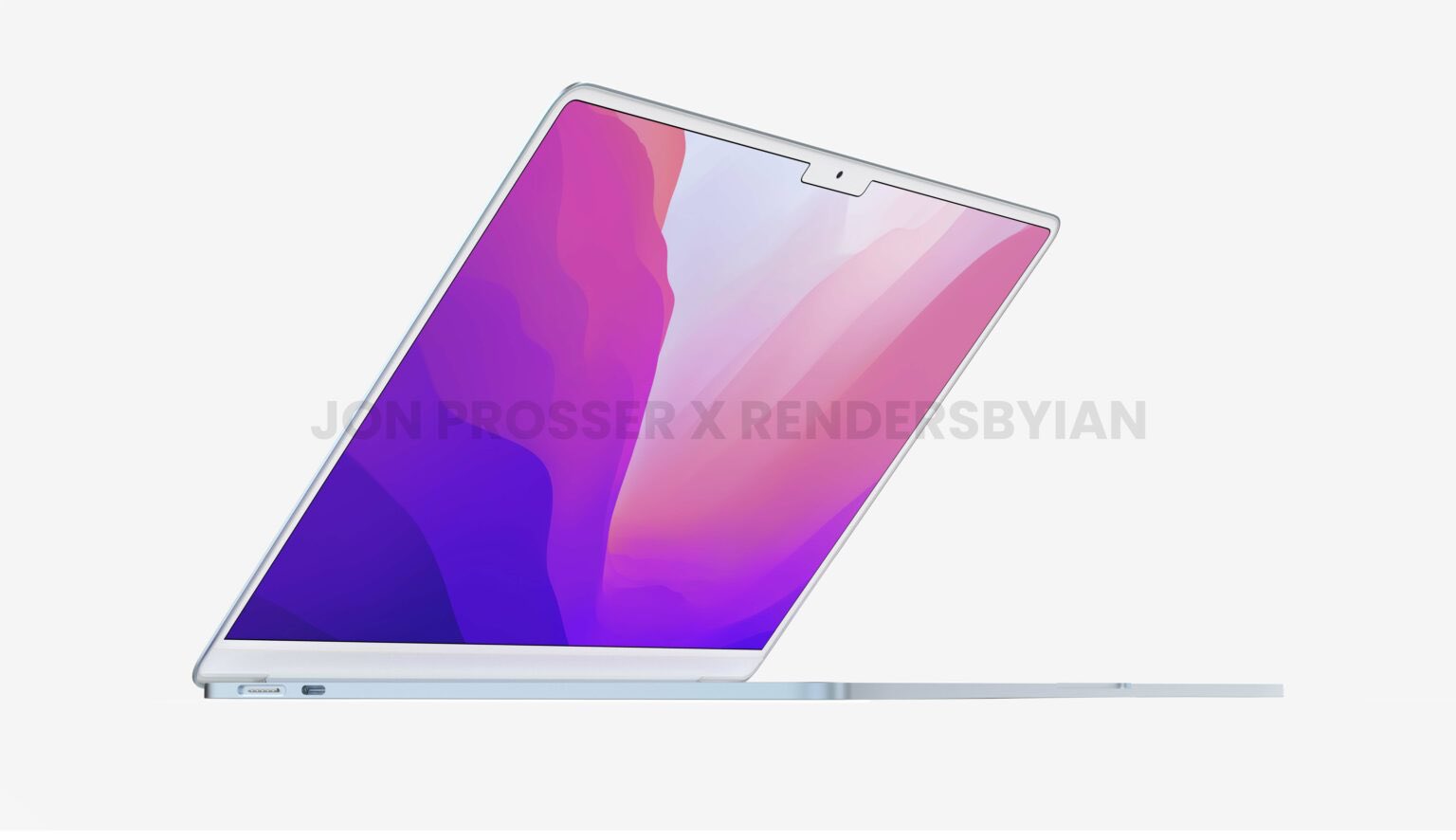
The renders of the upcoming Apple MacBook Air has just been leaked. These renders reveal that the next generation MacBook Air model features an extremely thin design, especially for its display frame.
The new renders were shared by Jon Prosser and Ian Zelbo that also added that the new MacBook Air will apparently be arriving sometime in early 2022. Furthermore, the Cueprtino based giant is reportedly planning on including the new notched display design to its cheaper laptop model as well. As of right now, this notched display can be found in the MacBook Pro 14 and MacBook Pro 16 that were launched recently.
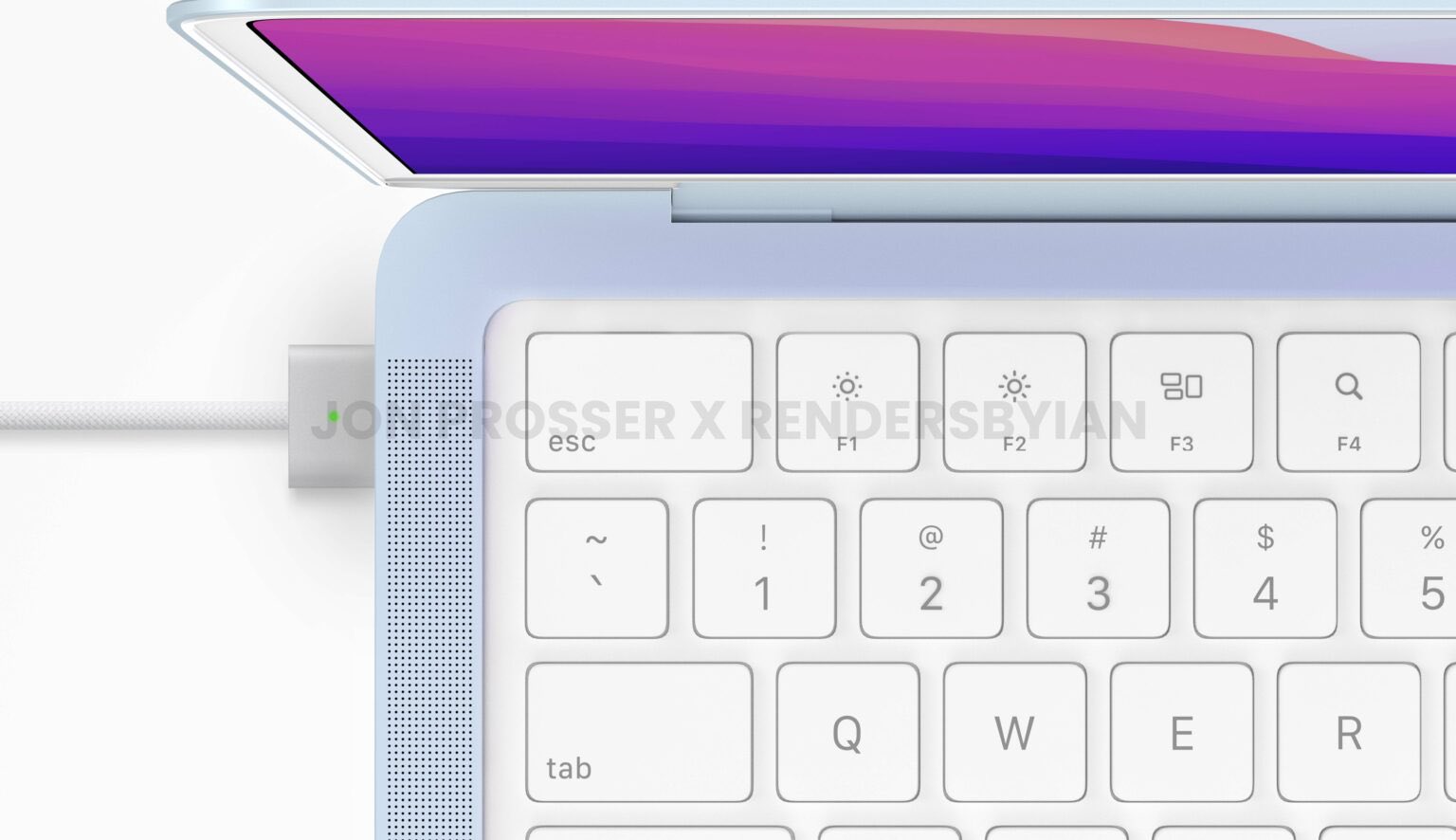
Furthermore, the leak showcased that the company will also be adopting white bezels for the MacBook Air, which is a color that has not been seen since the 2010s MacBooks that adopted a polycarbonate build. Despite having narrow bezels on the sides, the chin is still quite noticeable. Prosser and Zelbo added that the MacBook Air will feature MagSafe 3 support as well as dual Thunderbolt 4 and a 3,5mm audio jack for ports.
Although, the leaked design showcase an almost impossibly thin design that looks barely wide enough for an audio jack. In other words, we can also expect the laptop not featuring a full sized keyboard either. Zelbo claims to have seen a prototype model, which is what the renders are based on. Under the hood, the new MacBook Air features is expected to feature the Apple M2 chipset and will likely arrive in multiple color variants as well.
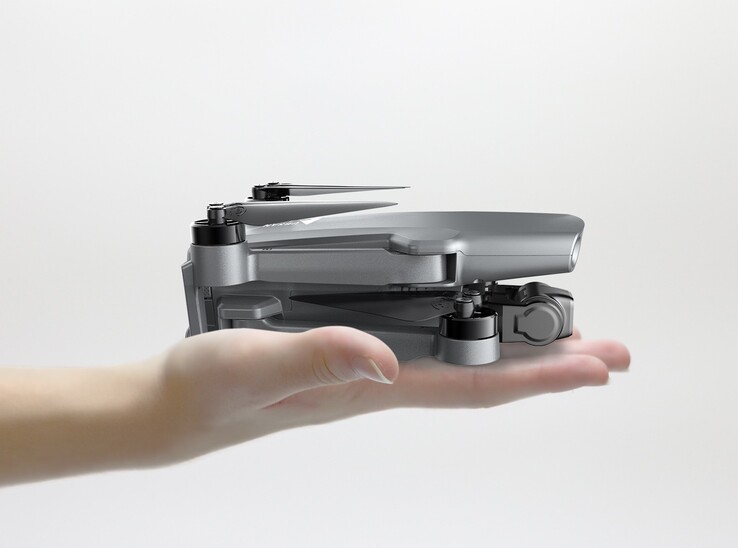
Husban has just launched the new Zino Mini drone. This is the third product released by the company this year. It is a lightweight and compact drone, with the company’s tagline for it stating that it aims to “let more people fly.”
The Zino Mini weigh just 249 grams and sports a 1/1.3 inch CMOS sensor that is capable of shooting at 4K resolution at 30 fps. Although, this video will be streamed to the paired smartphone at just 1080p resolution. Furthermore, the Zino Mini can fly for up to 40 minutes, or for 10 kilometers, on a single full charge from its 3,000mAh battery pack. Notably, the drone also features an AI tracking mode that can accurately locate moving people, vehicles, or animals and even offers a night time mode that uses an algorithm to optimize recordings made in low light.
The drone is available in two storage configurations, namely a 64GB or 128GB internal storage versions that can be expanded via a microSD card slot. A major difference between Husban’s newly launched Zino Mini and the Zino Mini Pro is the obstacle detection feature, with the latter offering three sensors on the sides while the Zino Mini only offers on downward facing sensor.
On the other hand, the Zino MINI SE is an even more affordable drone from the brand but its skips even more features like the obstacle avoidance entirely. The Zino Mini will be available for a price of 459 US Dollars, although, Husban has yet to release the product in the market or revealed when it the product will actually be hitting online or offline shelves.
OPPO introduced the Pro+ model in the Reno lineup with the 5th generation. The first device was called OPPO Reno5 Pro+, which was later followed by OPPO Reno6 Pro+. Now, according to a reliable leaker, there may not be an OPPO Reno7 Pro+.
OPPO Reno6 Pro+
We have been hearing about the OPPO Reno7 series for the past few days from the same source – Digital Chat Station. The tipster now suggests that the 7th gen Reno family may not include a Pro+ model.
The leaker says that the prototypes of vanilla and Pro variants are much better than their predecessor. They have improvements in both display and camera departments.
Above all, he hasn’t heard about the Pro+ variant yet. Hence, he thinks that OPPO Reno7 Pro+ may not exist after all.
Anyway, we would advise you to consider this information with a pinch of salt. That’s because we are still days away from the launch of the OPPO Reno7 series.
As per previous leaks, the regular OPPO Reno7 will be similar to its predecessor in terms of design with a metal frame and a punch-hole at the top left corner of the screen. It will feature a 50MP Sony IMX766 primary sensor that measures 1/1.56” in size and a notification LED ring around the camera.
Lastly, an unreliable source tipped that OPPO Reno7, OPPO Reno7 Pro, and OPPO Reno7 Pro+ will be powered by MediaTek Dimensity 920, MediaTek Dimensity 1200, Qualcomm Snapdragon 888 respectively.
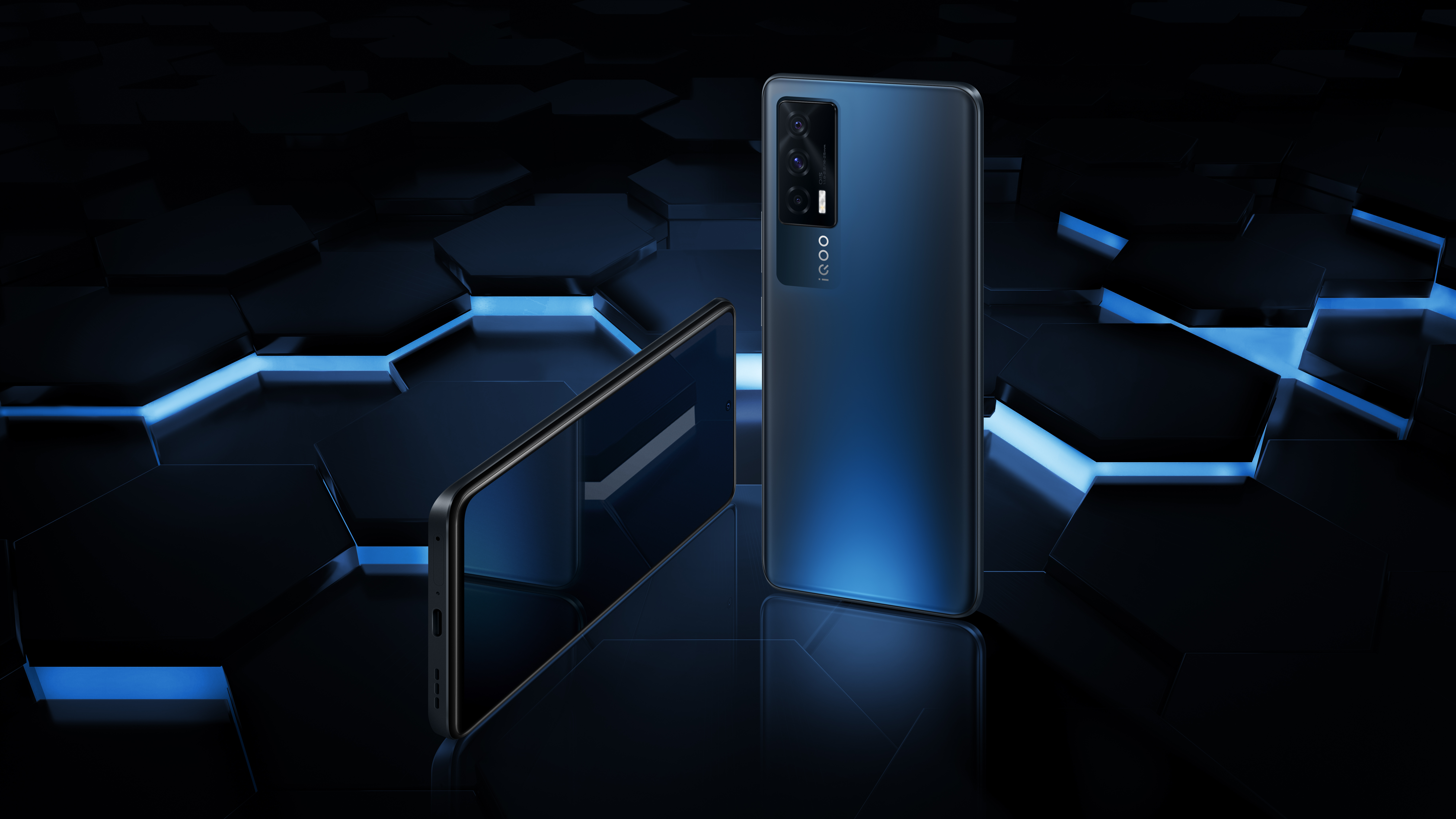
iQOO is reportedly working on two news phones namely, the iQOO 9 and iQOO Neo5s smartphone. Some reports have claimed that the latter could be called iQOO Neo6. A Chinese tipster has claimed that the iQOO Neo phone will break cover by mid-November.
A couple of iQOO phones have been recently appeared at certification sites. The handset with model number V2154A was spotted at the 3C certification site with a 66W fast charger. Another model with a V2136GA model number was spotted at the TENAA certification site with full specs.
The tipster who tipped the November arrival of the next iQOO Neo phone claimed that it will be powered by the Snapdragon 888 chipset. It will be sporting a BOE supplied curved edge screen powered by a new generation of independent display chip. It will include liquid cooling technology for heat dissipation. Its battery will be larger than the previous generation iQOO Neo phone.
iQOO Neo5
In addition, it will come with a 66W fast charger, which in turn suggests that the V2154A model debut with the Neo5s moniker. The handset is yet to appear at TENAA with full specifications.
Other reports have claimed that the iQOO Neo5s will come with a 6.56-inch OLED 120Hz panel and a 4,500mAh battery. It may feature a 16-megapixel front camera and an OIS-ready 48-megapixel Sony IMX598 primary snapper. It is also expected to arrive with dual speakers and a linear motor. The Neo5s may come with 12 GB of RAM and 256 GB of storage.
Vivo has launching NEX lineup of smartphones that mainly act as an experimental devices from the Chinese brand. It has been more than a year now since the company launched a new device under its NEX lineup.
Now, a new report coming from Digital Chat Station claims that the next smartphone getting launched by Vivo will be the NEX lineup device. It has also been revealed that the phone will be powered by the Qualcomm Snapdragon 898 chipset.
Apart from that, the report also mentions launching the iQOO 9 series smartphones after the Vivo NEX series phone launch. This one too with be powered by the upcoming Qualcomm Snapdragon 898 SoC.
While details about the next-generation Vivo NEX smartphone has not been revealed by the company, the recently certified model V2102A, powered by SD898 chipset and having 44W fast charging support, was believed to be it. However, the phone is now expected to arrive as a Y-series phone with the Y71T moniker.
Previously, we reported that the next-generation NEX series smartphone, the successor of the NEX 3 from Vivo, won’t be called NEX 5. Instead, the device is likely to be called Vivo NEX Fold given that it will be a foldable smartphone. While the exact launch date is not yet known, we expect to know more about it in the coming weeks.
As for the upcoming Qualcomm Snapdragon 888 chipset, it will be manufactured using the Samsung 4nm process with a new architecture and Adreno 730 GPU. The company is also expected to launch another variant of the same, manufactured by TSMC at a later date.
In a bid to enter the US and European market, the popular Chinese smartphone manufacturer – Hotwav introduced a new competitive smartphone – Hotwav Cyber 7. The new smartphone is launched at the effective price of $299 from Banggood. Surprisingly, the company is currently offering a $100 discount along with free shipping in the US and European countries. The interested users can grab the smartphone at the final price of $199, along with a chance to grab a free Hotwav C1 Smart Watch.
Hotwav Cyber 7 is a premium rugged smartphone that carries a beautiful design and powerful specifications. In the classic colors, the smartphone impresses folks with design precision and quality. The smartphone is built with highly durable material and even carries IP68/69K which certifies water and dust protection.
Hotwav Cyber 7 Specs
Further, the smartphone is bundled with an 8280 mAh battery that supports up to 600 hours of standby time and 18W fast charging. It is sufficient enough to sustain more than three days of normal usage upon a single full charge. Hotwav Cyber 7 smartphone comes powered with MediaTek Dimensity 700 SoC with 5G support while coupling an octa-core processor and a powerful GPU. It is available in 8GB RAM + 128GB internal storage variant.
To offer a pleasant viewing experience, the company added a 6.3-inch FHD+ display well-protected with Corning Gorilla Glass. In the camera department, the smartphone features a quad-rear camera sensor carrying a 48MP primary sensor, an 8MP wide-angle sensor, a 2MP macro sensor, and a 20MP HD night vision camera with infrared lights.
Hotwav is offering its devices across the Middle East and Southeast Asia since 2008. It has average monthly shipments of 300000 units. “Hotwav’s core competitiveness lies in the quality of the product which also serves as the cornerstone of innovation,” said Hotwav CEO Park Xie. “Going forward, the company will continue its commitment to innovation without compromising quality.”
Hotwav Cyber 7 is a delight to the users at such a competitive price while offering highly-performance specifications. You can grab it from the Banggood at a discounted price of $200.
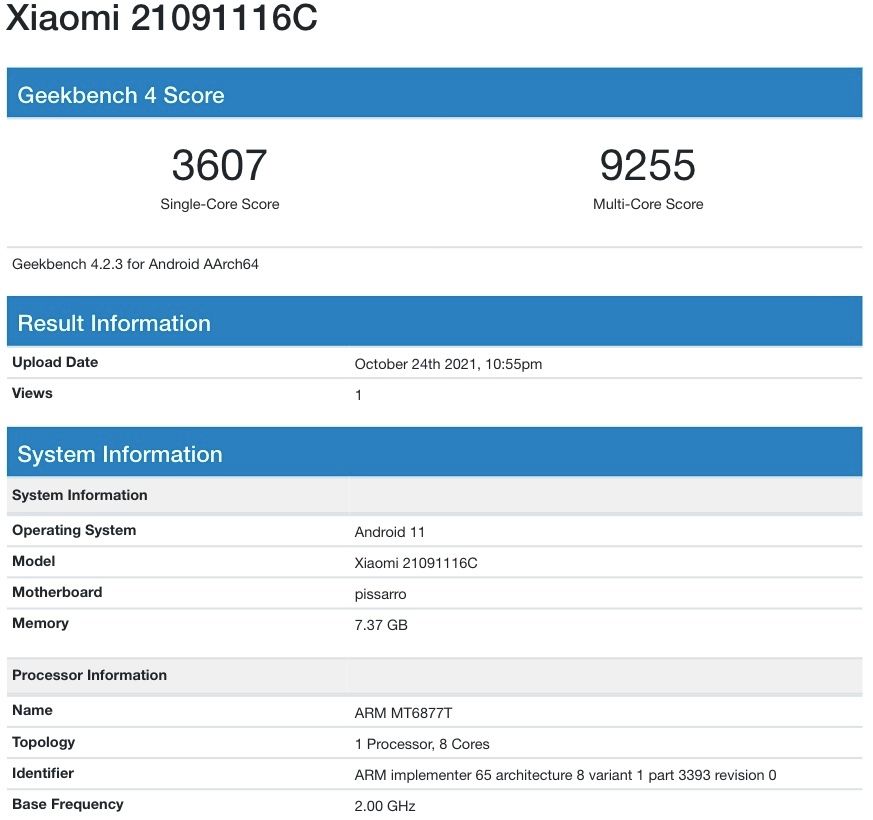
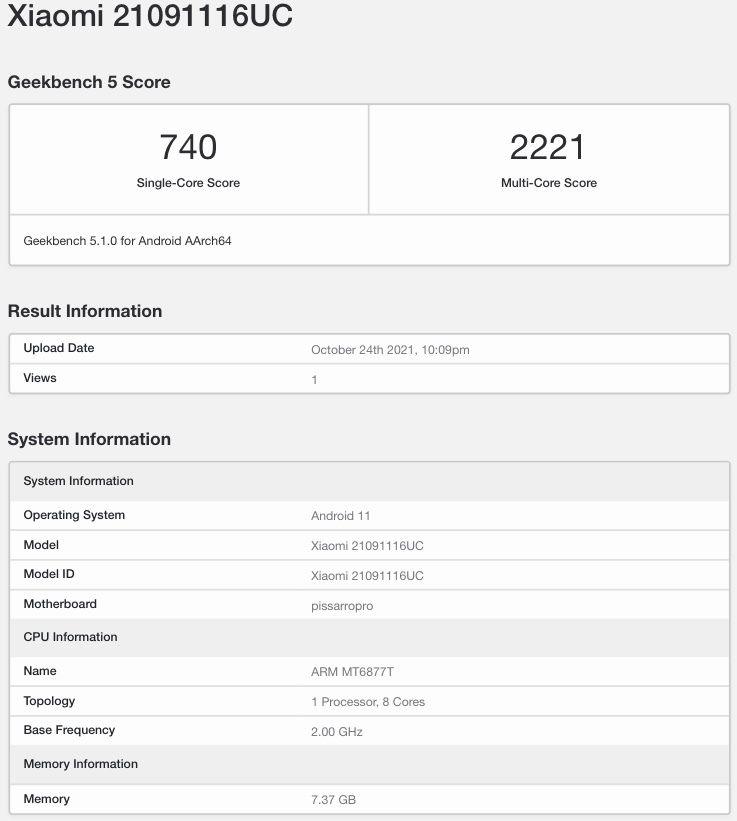
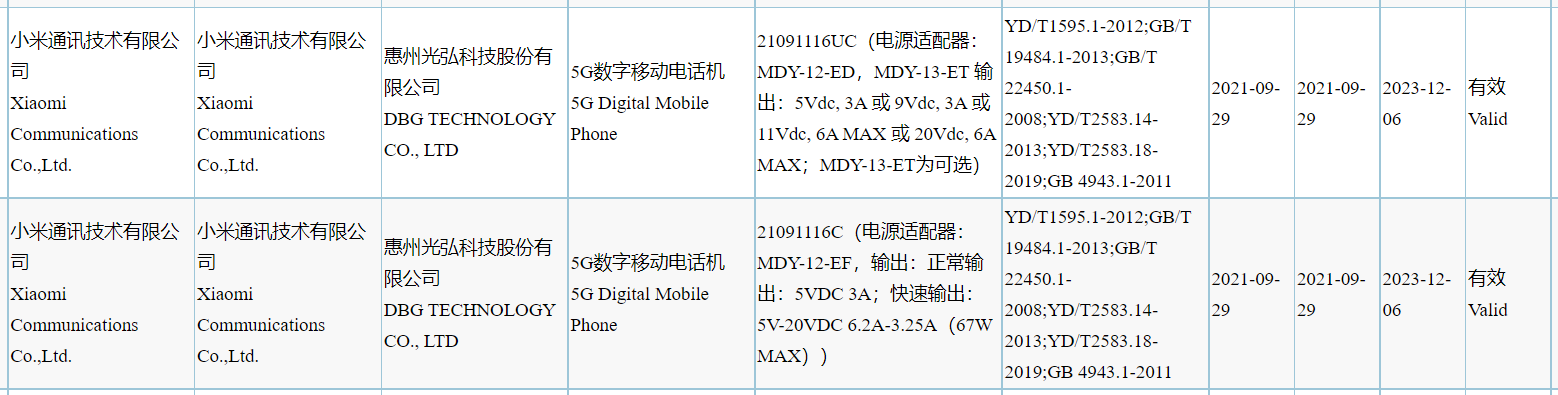
Two Xiaomi devices with model numbers 21091116C and 21091116UC have surfaced in the database of the Geekbench benchmarking site today (via. MySmartPrice). Both models may belong to the upcoming Redmi Note 11 series of smartphones. The Geekbench listings of both models show that they are powered by the same Dimensity chipset.
The Geekbench listings of the 21091116C and 21091116UC show that they are codenamed as Pissarro and PissaroPro. Probably, the two handsets seemingly belong to the upcoming Redmi Note 11 series.
1 of 3
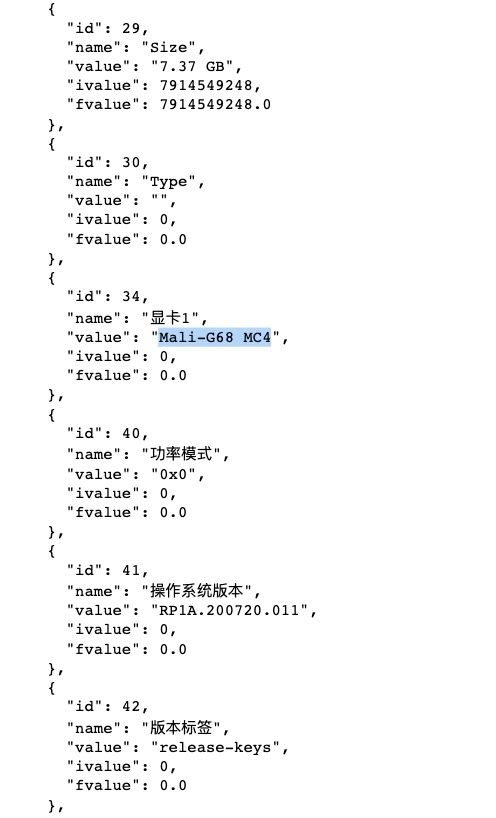
The benchmark listings of the 21091116C and 21091116UC further reveal that they are powered by MT6877T chip. The source code of the listings shows that the chip tags along with the Mali-G68 MC4 graphics. These clues show that both models are powered by the Dimensity 920 chipset. The Geekbench listings also mention that both models have 8 GB of RAM and Android 11 OS.
The above-mentioned 21091116C and 21091116UC smartphones were spotted at the 3C certification platforms last month. The 3C listings revealed that 21091116C may support 67W fast charging, while the 21091116UC come with 120W rapid charging. It is advisable to wait for further reports to know the final monikers of both models.
Past reports have revealed that the Redmi Note 11 Pro has Dimensity 920 chip and 67W fast charging, while the Redmi Note 11 Pro+ has Dimensity 1200 chip with 120W rapid charging. Both phones have a 120Hz AMOLED screen, 6 GB / 8 GB of LPDDR4x RAM, 128 GB / 256 GB of UFS 3.1 storage, and a 5,000mAh battery, a 16-megapixel front camera, and a 108-megapixel + 8-megapixel + 2-megapixel triple camera unit.
Redmi has scheduled a launch event on 28th October in China where the company will take the wraps off its upcoming Redmi Note 11 series smartphones. Along with the new phones, the brand will also be launching its new Redmi Watch 2 at the same event.
So far, the company has teased a couple of features related to the upcoming device but the pricing details are kept under the wrap. However, in the latest leak, the pricing of the Redmi Watch 2 has been leaked online.
The upcoming Redmi Watch 2 has been priced at 399 yuan, which roughly converts to $63. This was leaked through online retailer JD‘s mobile application in the “Guess you like” widget which displayed this upcoming wearable device along with the pricing. Clicking on the product showed a page with a message that the product is yet to be announced.
Recently, the official account of Redmi on Weibo has confirmed that the Watch 2 will feature a 1.6-inch AMOLED display with a larger screen-to-body ratio. For comparison, the original Redmi Watch launched last year has a smaller 1.4-inch LCD panel.
Despite its name, we expect this device to be a fitness tracker and not a smartwatch, similar to its predecessor. It could be running a customized version of RTOS like several every other similar product in the market.
It could come loaded with features like a heart-rate sensor, SpO2 sensor, GPS, multiple sports modes, sleep monitoring, water resistance, and more. The device is expected to come in three color options — Elegant Black, Space Blue, and Ivory.
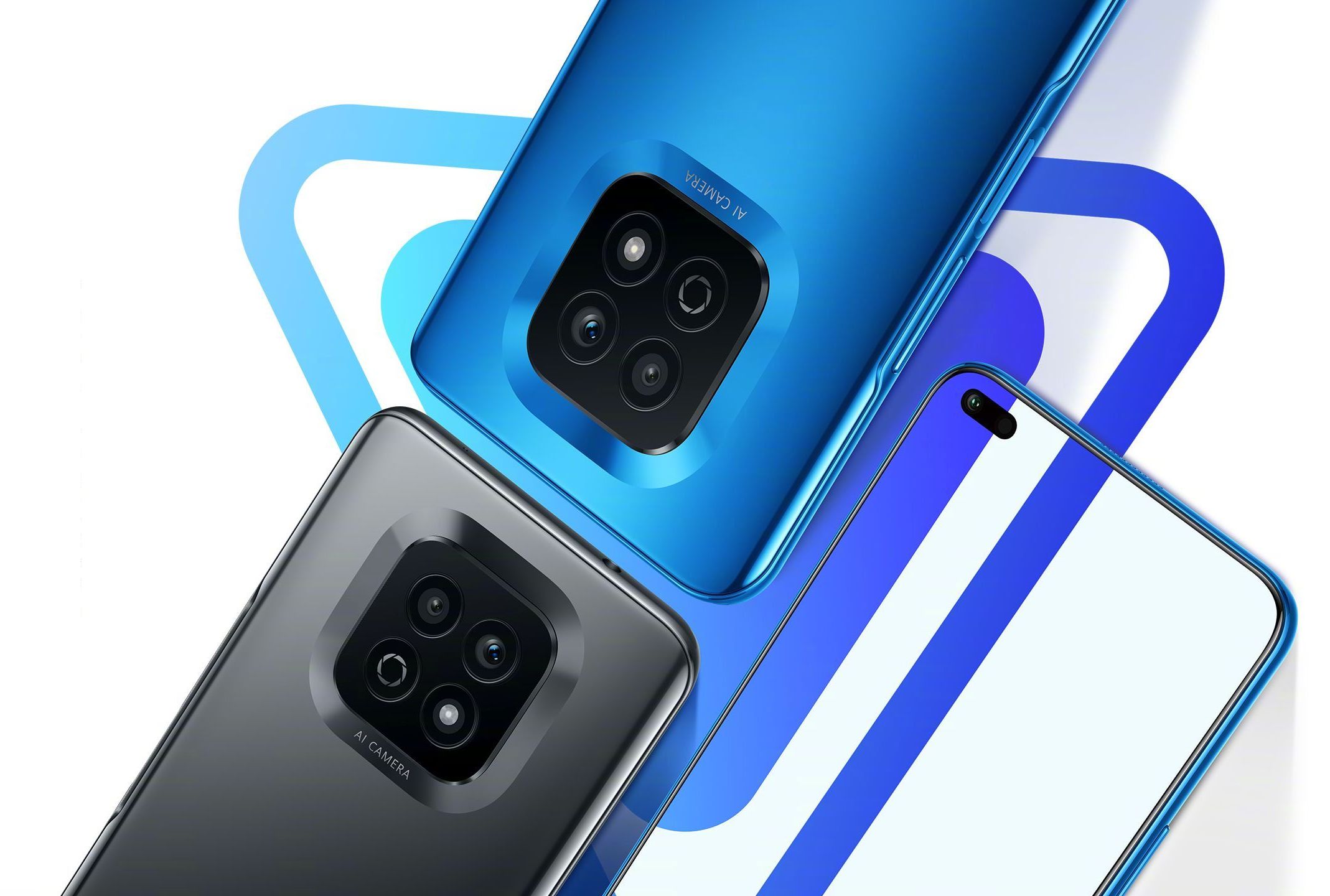
Honor will be announcing the Honor Play5 Vitality Edition smartphone in China later today at 7:30 PM (local time). Before launch, the Chinese manufacturer has released a new poster of the phone to showcase its design and color variants.
The new poster shows the Honor Play5 Vitality Edition in black and blue color variants. The back panel of the device has a square-shaped camera housing, which seems to include a dual-camera system and an LED flash. The top edge of the device has a 3.5mm audio jack and it features a side-facing fingerprint scanner.
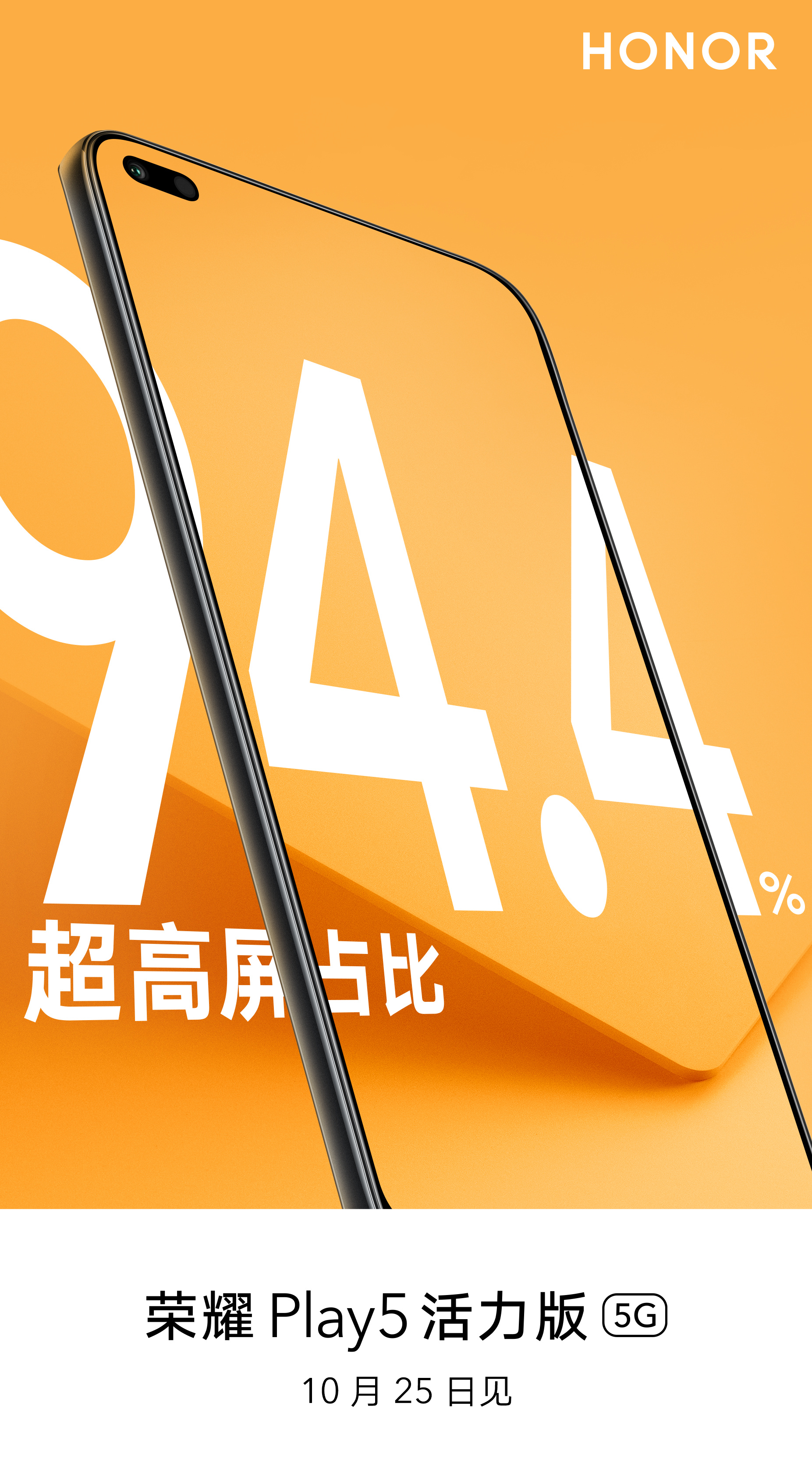
Coming to the front, the Play5 Vitality Edition features a pill-shaped cutout on the screen. The company recently confirmed that it will offer an impressive screen space of 94.4 percent. While the detailed specs of the phone are not known, the company recently revealed that it will carry support for 66W fast charging. The device is expected to arrive with support for fast charging.
Honor Play5 Vitality Edition
In related news, Honor will be also announcing the Honor X30i and X30 Max smartphones in China on Oct. 28. The X30i is said to arrive with specs such as a 6.7-inch LCD FHD+ 90Hz screen, Dimensity 810 SoC, a 4,000mAh battery that supports 22.5W fast charging. It may come with 48-megapixel triple cameras and an 8-megapixel selfie camera.
The X30 Max may arrive with a 7.09-inch FHD+ screen, Dimensity 900 chip, and a 5,000mAh battery that supports 22.5W fast charging. It may offer 64-megapixel dual cameras and an 8-megapixel selfie camera.
In the next few days, on 28th October, Redmi will be officially announcing its next-generation Note series smartphones — Redmi Note 11. Ahead of the launch, the company is teasing the phone’s features through teaser posters.
Now, the company has started taking pre-orders for the Redmi Note 11 Pro and Redmi Note 11 Pro+ smartphones via JD.com. If you want to pre-order the upcoming smartphone, then you’ll have to deposit 100 yuan or 200 yuan, depending on the model.
Both the smartphones will come in three memory variants — 6GB RAM with 128GB storage, 8GB RAM with 128GB storage, and 8GB RAM with 256GB storage. The Pro model will come in four color options while the Pro+ will be limited to just three color options.
As of now, not much has been officially revealed about this new smartphone lineup. But, going by the track record, we expect three devices in this series — Redmi Note 11, Redmi Note 11 Pro, and Redmi Note 11 Pro+.
The company has today teased that the smartphone series will come with support for 120W fast charging technology. However, we expect this feature to be available only on the Pro+ model and not all three.
If the rumors are to be believed, then the Redmi Note 11 Pro+ will feature a Samsung AMOLED display with a high refresh rate of 120Hz. Under the hood, the device will be powered by the MediaTek Dimensity 1200 chipset, along with up to 8GB LPDDR4x RAM and 256GB UFS 3.1 storage.
Coming to the camera department, the device is expected to feature a triple-camera setup on the back, which could include a 108-megapixel primary sensor, an 8-megapixel ultrawide lens, and a 2-megapixel depth sensor.
Other features on the device include dual speakers, X-axis linear motor, an IR blaster, and NFC. The Redmi Note 11 Pro+ is said to come in Mysterious Blackland, Shallow Dream Galaxy, and Time Quiet Purple colors.
Redmi will be announcing the Redmi Note 11 series of smartphones on Oct. 28 in China. As usual, the company has been teasing the key features of the Note 11 family before its official announcement. Fresh information reveals that the company will be offering 120W fast charge support for first on its Note lineup.
The below-shown poster reveals that the Redmi Note 11 series will support 120W rapid charging, which is Xiaomi’s fastest charging technology. So far, the company has been offering 120W charging on flagship devices. The Redmi Note 11 lineup is expected to include three models such as Note 11, Note 11 Pro, and Note 11 Pro+. Probably, the 120W fast charging could be made available only on the Note 11 Pro+ handset.
Rumors have it that the specs of the Redmi Note 11 Pro+ will be almost identical to Note 11 Pro. The Pro model is expected to arrive with Dimensity 920 chipset and 67W fast charging, whereas the Pro+ is speculated to arrive with a better chipset and fast charging tech.
Redmi Note 11 Pro+ specifications (Rumored)
The Redmi Note 11 Pro+ has a 120Hz AMOLED panel, Dimensity 1200 chipset, LPDDR4x RAM, UFS 3.1 storage, and a 5,000mAh battery. It features a 16-megapixel camera for snapping selfies, and a triple camera unit featuring a 108-megapixel main camera, an 8-megapixel ultrawide lens, and a 2-megapixel depth assist camera. It will come with other features like dual speakers, X-axis linear motor, an IR blaster, and NFC.
It will be available in three variants such as 6 GB RAM + 128 GB storage, 8 GB RAM + 128 GB storage, and 8 GB RAM + 256 GB storage. It will come in colors like Mysterious Blackland, Shallow Dream Galaxy, and Time Quiet Purple.
In 2019, Huawei launched its first virtual reality glasses dubbed the Huawei VR Glass. It then followed with a successor called the Huawei VR Glass 6DOF Game Set with improved features and 360º controllers in October 2020. However, this new model is yet to be commercially available after more than a year.
Huawei VR Glass 6DOF Game Set
When Huawei announced the new VR Glass last year, it said the device will be available to developers by December 2020 and be available for purchase in April 2021. Unfortunately, that is yet to happen. However, new info has revealed that the new VR Glass should arrive soon.
The news of the launch of the 2nd generation Huawei VR Glass comes from the leaker Teme @RODENT950 who posted the info on Twitter a few days ago.
Huawei has some products planned for release before the year wraps up such as a new foldable smartphone. So there is a chance the new VR headset will be announced at the event.
When it was first unveiled last year at the World VR Industry Conference Cloud Summit, Huawei only revealed the design and a few features of the device but didn’t disclose the price. The first-generation model launched for ¥2999 (~$470) and is still available for purchase on Vmall. Since its successor packs upgrades in multiple areas, we can expect a higher price tag.
The 2nd generation Huawei VR Glass or Huawei VR Glass 6DOF Game Set shares a similar design to its predecessor but now adds two cameras at the top for tracking. It also upgrades the Google Daydream-like controller to a pair similar to that of the Oculus Quest but with three buttons instead of two along with a joystick.
The first generation Huawei VR Glass launched with a design reminiscent of ski glasses. It packed dual 2.1-inch LCD displays with a combined resolution of 3200 x 1600 and a refresh rate of up to 90Hz depending on the device connected to. It was pretty light at 166 grams thanks to not having a built-in battery and also had two diopter dials for adjusting the focus for people who wear prescription glasses.
The Huawei VR glasses launched with compatibility for both its own phones as well as Windows PCs so we should see its successor retaining this feature. The headset could be powered by an external source such as a connected phone, PC, or portable battery pack. It also shipped with a controller in the box.
There is no info on when the 2nd Generation Huawei VR Glass will be released but there is a chance it will arrive before the end of the year.
Chromebooks have become increasingly popular lately. While there are lots of options available from various manufacturers, there has actually not been a new player in the space. That should change soon as LG has its first Chromebook coming.
LG is not new to making computers. Its LG Gram line of slim and light Windows PCs are sold in various markets and have received generally positive reviews. Now, it is ready to bring its hardware to the Chromebook market.
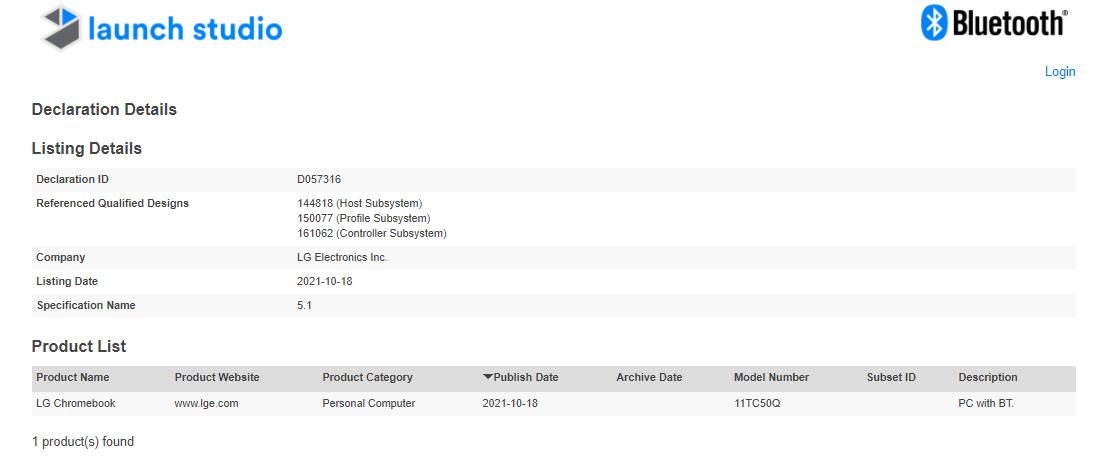
The LG Chromebook will be its first Chromebook laptop and it has been spotted on the website of the Bluetooth Special Interest Group where it has received its certification. The listing was first reported by Chrome Unboxed, however, it doesn’t reveal much save that the computer has the model number “11TC50Q” and has Bluetooth 5.1.
There are so many unknown details at the moment but what is most exciting to know is what the LG Chromebook will look like. Of course, the specs are important too and so also is the price but we most likely won’t get to know these details until the device launches.
There is a chance the LG Chromebook may arrive this year but the possibility of a CES launch can’t be ruled out, which in all honesty, is a better avenue for announcing its first Chromebook.
Realme was expected to bring the Realme 9 smartphone series last month but the company delayed the launch till next year. Now, the Realme 9 series will be launching in early 2022. But, ahead of the official launch, one of the Realme 9 series phones have appeared on the IMEI database.
According to the IMEI, a Realme smartphone with model number RMX3393 has just passed the certification. It is believed to be the upcoming Realme 9 Pro Plus. Although the certification doesn’t reveal anything significant it just hints at the phone’s arrival.
Realme 8s
As per previous leaks, the Realme 9 Pro and 9 Pro Plus are expected to be a significant upgrade over the current Realme 8 series phones. The Realme 9 series is expected to feature a 120Hz high refresh rate display. It is touted to be an AMOLED panel. Now, it remains to be seen whether it has a notch screen or a punch-hole display.
Under the hood, the series is expected to come powered by the Qualcomm Snapdragon 870 SoC. It leak is in line with what Realme revealed last month. The company suggested that the phones will debut with mainstream processors. It seems that the mid-range Snapdragon 870 will board the budget-range 9 series phones.
Realme GT Neo 2T Specifications
In related news, Realme recently launched the Realme GT Neo 2T smartphone in China. The device comes with a 6.43-inch Samsung AMOLED display with a 1080 x 2400 resolution. It has a 120Hz refresh rate and a touch sampling rate of 360Hz. The device has a triple camera system with a 64MP main sensor, an 8MP ultra-wide lens, and a 2MP macro snapper. It has a single 16MP selfie camera.
It is powered by the MediaTek Dimensity 1200 SoC and has 12GB of RAM and 256GB of UFS 3.1 internal storage. The phone also has a virtual RAM expansion feature that allows the phone to use up to 7GB as RAM from the storage.
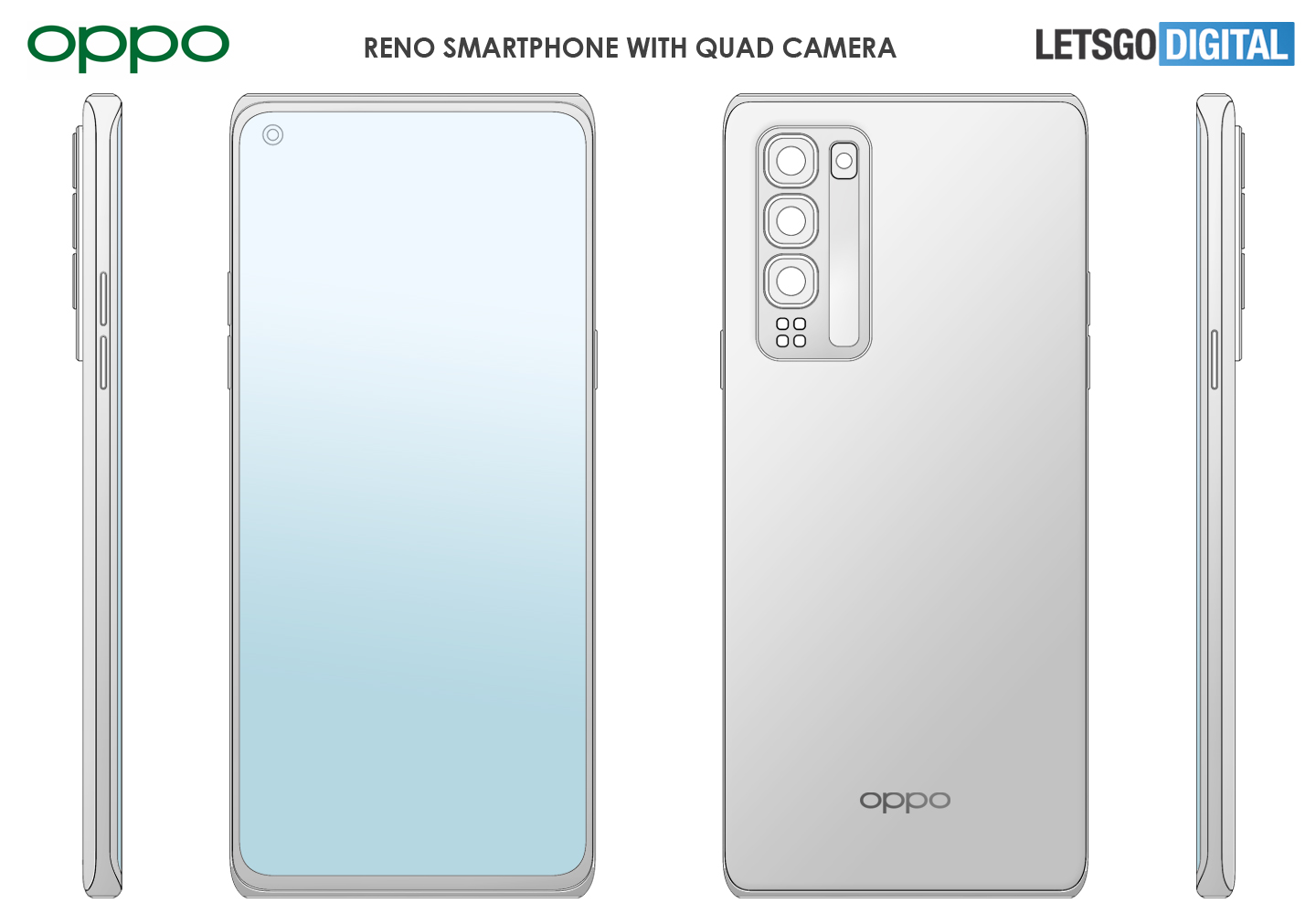
Guangdong Oppo Mobile Telecommunication submitted a design patent for a smartphone with China National Intellectual Property Administration (CNIPA) last year in December. The documentation of the design patent, which was released last week includes several product images, which suggests that it could be a Reno series handset. Lets Go Digital, which was first to spot the patent listing claimed that the below-shown design may belong to the upcoming Reno7 Pro handset.
The alleged design patent of the Reno7 Pro shows that it has a punch-hole display with rounded corners and super-slim bezels. Its right edge has a power key, and the volume up/down buttons are available on the left side. Its top edge has a microphone, whereas the bottom side features a SIM card slot, a USB-C port, and a speaker grille.
Image by letsgodigital
Located at the upper-left corner of the phone’s back are three vertically aligned cameras, followed by what appears to be a quad-LED flash unit. A fourth camera seems to be present on the right side of the topmost camera. The publication claimed that the Chinese manufacturer also submitted an alternative front design without a punch-hole camera. This indicates that other design could be hinting at the presence of an under-display camera.
The rumor mill is yet to spill concrete information on the specs of the Reno7 Pro. It is speculated to feature the Dimensity 1200 chipset and a Sony IMX766 50-megapixel primary camera. The Reno7 series, which reportedly includes Reno7 and Reno7 Pro+ is expected to launch in November in China. The Pro+ variant is speculated to come with the Snapdragon 888 SoC.
The Reno7 5G could be coming with a 6.5-inch OLED FHD+ 90Hz display, Dimensity 920, LPDDR4x RAM, UFS 3.1 storage, and a 4,500mah battery with 65W fast charging. For photography, it may feature a 32-megapixel front camera and a 50-megapixel (Sony IMX766 lens) triple camera unit.
Tomorrow, Honor will be announcing the Honor Play5 Vitality Edition (aka Play5 Youth Edition or Lite) in China. And on Oct. 28, it will be unveiling the Honor X30i and X30 Max smartphones. Ahead of the launch, the company has released new posters to reveal the design of the upcoming phones.
The Honor Play5 Vitality Edition’s first poster, which was released last week, revealed that it will be sporting a square-shaped camera module. It has three cameras and an LED flash. For security, it has a side-facing fingerprint scanner.
The above-shown new poster released by the brand reveals that the Play5 Vitality Edition will be sporting a pill-shaped camera cutout. This indicates that the phone will be equipped with dual selfie cameras. The company confirmed that the device will offer a screen-to-body ratio of 94.4 percent. The handset is expected to arrive with support for 66W rapid charging, 8 GB of RAM, and 128 GB of storage.
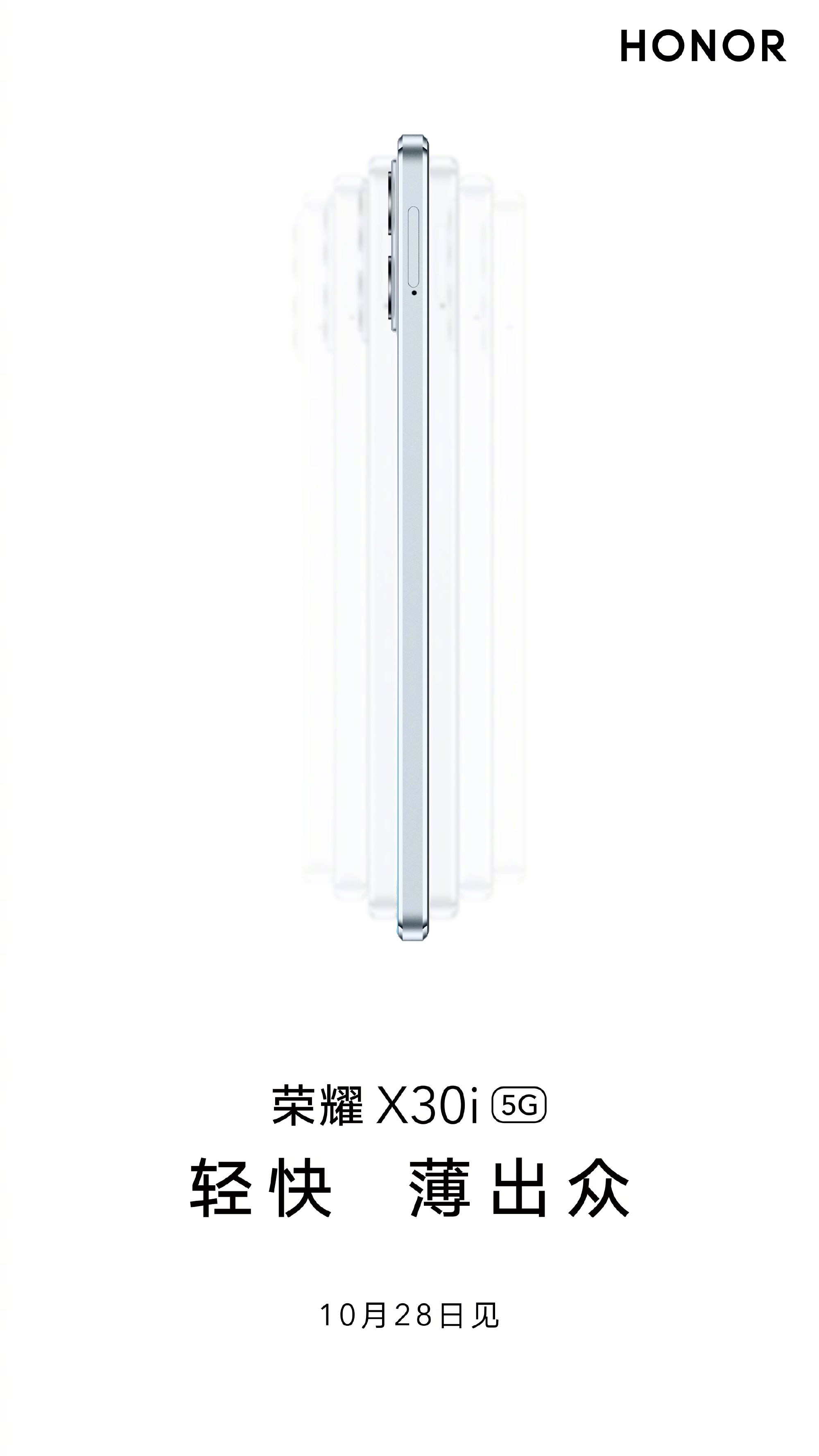
The Honor X30i’s new poster shows that the device will sport a slim design. A recent leak revealed that the device measures 7.45mm in thickness and weighs 175 grams. It is expected to arrive with specs like a 6.7-inch FHD+ 90Hz LCD display, 8-megapixel front camera, 48-megapixel triple cameras, Dimensity 810, and a 4,000mAh battery with 22.5W fast charging.
1 of 2
Honor X30i side
Honor X30 Max front
The X30 Max’s poster shows that it will be sporting a dewdrop notch display with a slightly thick chin. Its bottom edge has a 3.5mm audio jack, a microphone, a USB-C port, and a speaker grille. It carries support for 5G connectivity and promises a long battery life. Reports have revealed that it has a 7.09-inch FHD+ display, an 8-megapixel selfie camera, 64-megapixel dual cameras, Dimensity 900 chip, a 5,000mAh battery with 22.5W rapid charging.
A Motorola phone with XT2165-3 model number was spotted in the database of Federal Communications Commission (FCC) last month. This device has also been spotted at the Wi-Fi Alliance certification site. Now, publication My Smart Pricehas shared the leaked renders of the Motorola XT2165-3 to showcase its design and color variants.
The renders of the XT2165-3 show that its display has a centrally positioned punch-hole and a thick chin. The handset’s back features a triple-camera setup and a fingerprint scanner embedded under the Motorola logo.
The buttons for volume and power are available on the right side of the device. It will be available in colors like light blue and dark green.
Motorola-XT2165-3
The FCC certification of the device revealed that it is a 4G device. Its appearance suggests that it could be packed with mid-range specs. It is advisable to wait for further reports to know the moniker of the device.
Recent reports have revealed that the Moto G51 and Moto G71 are the upcoming G-series phones from the brand. So far, it has been found that the G71 is a 5G-ready device, which carries support for NFC connectivity. As far as the Moto G51 is concerned, it is expected to arrive with specs like a Full HD+ display, a 13-megapixel front camera, a 50-megapixel (main) + 8-megapixel (ultrawide) + 2-megapixel triple camera unit, Snapdragon 750G chip, 4 GB of RAM, and Android 11 OS. Probably, Motorola will announce the G51 and G71 as early as next month.
This week was a pretty interesting one with key announcements such as the new MacBook Pro computers, the Pixel 6 series, and customizable Galaxy Z Flip3. However, there are still a few launches scheduled for the last week of Techtober. Here is a roundup of the new announcements scheduled for next week:
Honor Play5 Vitality Edition – October 25
The Honor Play5 series will get a new member on October 25. The phone, which will launch as the Honor Play5 Vitality Edition, will be unveiled in China and it has been confirmed it will have dual rear cameras, a side-mounted fingerprint scanner, and support for 66W fast charging.
Honor 50 and Honor 50 Lite Europe launch – October 26
Following the launch in China, Honor will head to Europe on Tuesday, October 26, for the unveiling of the Honor 50 series. The Honor 50 already made its global debut in Malaysia but when it lands in Europe, it won’t be coming alone. There will also be an Honor 50 Lite but unlike the Honor 50 which is a 5G phone, the lite model will have a 4G chipset.
Palm Earbuds
Palm, the TCL-owned brand, will announce its first pair of wireless earbuds on October 26. The earbuds are expected to have a closed-fit design based on the teaser and will be arriving in a market that is already saturated. It remains to be seen how it will stand out from the competition.
Google is finally back to play seriously in the smartphone market. After a year of releasing only mid-rangers, Big G is back with the new Pixel 6 and Pixel 6 Pro: both flagships as well as the first phones with the first proprietary chipset called Google Tensor. Given that both are flagships, if you are not an expert it may be hard for you to choose one of these phones. That is the reason why we decided to publish an internal comparison between the specifications of the Google Pixel 6 and the Pixel 6 Pro. Here you will learn the main differences between the latest Google flagships.
Google Pixel 6 vs Google Pixel 6 Pro
Google Pixel 6
Google Pixel 6 Pro
DIMENSIONS AND WEIGHT
158.6 x 74.8 x 8.9 mm,
207 g
163.9 x 75.9 x 8.9 mm,
210 g
DISPLAY
6.4 inches, 1080 x 2400 pixels (Full HD+), AMOLED
6.71 inches, 1440 x 3120 pixels (Quad HD+), AMOLED
The Google Pixel 6 and the Pixel 6 Pro do not have exactly the same design, but we are talking about very similar aesthetics. Both come with a brand new design language including a horizontal camera module on the rear side, as well as a punch-hole display with the hole placed in the middle of the upper part of the panels. The displays are flat but they have a high screen to body ratio. The phones are not so thin because they pack big batteries, but the build quality is great. They both come with the Gorilla Glass Victus protection as well as the IP68 certification making them waterproof and dustproof.
Display
There are noticeable differences between the displays of the new Google phones. First of all, the Google Pixel 6 has a smaller panel: its diagonal is 6.4 inches, while the Pro variant has a 6.7-inch display. Then we have different resolutions: the vanilla version has a Full HD+ display, while the Google Pixel 6 Pro has a Quad HD+ resolution with 1440 x 3120 pixels. Further, the Pro variant has the LTPO technology with an adaptive refresh rate from 1 to 120 Hz. The vanilla Pixel 6 lacks the LTPO technology and it has a maximum refresh rate of just 90 Hz. Both the phones feature an under-display fingerprint reader and stereo speakers, as well as a punch hole in the middle.
Specs & Software
The Google Pixel 6 and the Pixel 6 Pro are powered by the Google Tensor mobile platform which is the first SoC made by Google. It is also the first processor coming with 2 Cortex-X1 CPUs: the two advanced cores run at a max frequency of 2.8 GHz. There are also two mid-end Cortex A76 cores with a frequency of 2.25 GHz and 4 low-power Cortex-A55 cores with a frequency of 1.8 GHz. The phones differ in terms of memory configurations: the Google Pixel 6 sports 8 GB of RAM and either 128 or 256 GB of internal storage depending on the configuration, while the Pixel 6 Pro has 12 GB of RAM and 128, 256, or 512 GB of native storage. The handsets run Android 12 out of the box and they will get five years of software support, as well as three years of major Android updates.
Camera
The Google Pixel 6 and the Pixel 6 Pro share the same 50 MP main camera with OIS and the same 12 MP ultrawide camera, but the Pro variant adds a 48 MP telephoto sensor with 4x optical zoom. Further, the Pixel 6 Pro has a better 11.1 MP front camera which supports 4K video recording, while the vanilla version has an inferior 8 MP camera with 1080p video recording.
Last but not least, the Google Pixel 6 Pro has a bigger battery: it is a unit with a capacity of 5003 mAh, while the vanilla Pixel 6 has just 4614 mAh.
Price
The starting price of the Google Pixel 6 is €649/$699, while the Pixel 6 Pro costs €899/$899. The Pixel 6 Pro is a better phone from almost every point of view: it has a better display, bigger battery, superior cameras, and better memory configurations. But you can save money with the vanilla version while still getting the same amazing Google Tensor chipset and the same software support.
Google Pixel 6 vs Google Pixel 6 Pro: PRO and CONS
We use cookies on our website to give you the most relevant experience by remembering your preferences and repeat visits. By clicking “Accept”, you consent to the use of ALL the cookies.
This website uses cookies to improve your experience while you navigate through the website. Out of these, the cookies that are categorized as necessary are stored on your browser as they are essential for the working of basic functionalities of the website. We also use third-party cookies that help us analyze and understand how you use this website. These cookies will be stored in your browser only with your consent. You also have the option to opt-out of these cookies. But opting out of some of these cookies may affect your browsing experience.
Necessary cookies are absolutely essential for the website to function properly. This category only includes cookies that ensures basic functionalities and security features of the website. These cookies do not store any personal information.
Any cookies that may not be particularly necessary for the website to function and is used specifically to collect user personal data via analytics, ads, other embedded contents are termed as non-necessary cookies. It is mandatory to procure user consent prior to running these cookies on your website.