Advertisement

Google Pixel 6 vs Pixel 6 Pro: Specs Comparison

Google is finally back to play seriously in the smartphone market. After a year of releasing only mid-rangers, Big G is back with the new Pixel 6 and Pixel 6 Pro: both flagships as well as the first phones with the first proprietary chipset called Google Tensor. Given that both are flagships, if you are not an expert it may be hard for you to choose one of these phones. That is the reason why we decided to publish an internal comparison between the specifications of the Google Pixel 6 and the Pixel 6 Pro. Here you will learn the main differences between the latest Google flagships.
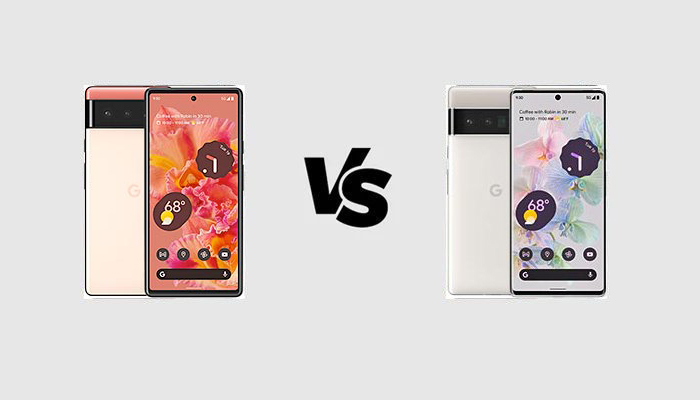
Google Pixel 6 vs Google Pixel 6 Pro

Google Pixel 6 Google Pixel 6 Pro
DIMENSIONS AND WEIGHT 158.6 x 74.8 x 8.9 mm,
207 g
163.9 x 75.9 x 8.9 mm,
210 g
DISPLAY 6.4 inches, 1080 x 2400 pixels (Full HD+), AMOLED 6.71 inches, 1440 x 3120 pixels (Quad HD+), AMOLED
PROCESSOR Google Tensor, octa-core 2.8 GHz Google Tensor, octa-core 2.8 GHz
MEMORY 8 GB RAM, 128 GB – 8 GB RAM, 256 GB 12 GB RAM, 128 GB – 12 GB RAM, 256 GB – 12 GB RAM, 512 GB
SOFTWARE Android 12 Android 12
CONNECTIVITY Wi-Fi 802.11 a/b/g/n/ac/6e, Bluetooth 5.2, GPS Wi-Fi 802.11 a/b/g/n/ac/6e, Bluetooth 5.2, GPS
CAMERA Dual 50 + 12 MP, f/1.9 + f/2.2
8 MP f/2.0 front camera
Triple 50 + 48 + 12 MP, f/1.9 + f/3.5 + f/2.2
11.1  MP f/2.2 front camera
BATTERY 4614 mAh, fast charging 30W and Qi fast wireless charging 21W 5003 mAh, fast charging 30W and Qi fast wireless charging 23W
ADDITIONAL FEATURES 5G, optional eSIM, IP68 waterproof, reverse wireless charging 5G, optional eSIM, IP68 waterproof, reverse wireless charging

Design

The Google Pixel 6 and the Pixel 6 Pro do not have exactly the same design, but we are talking about very similar aesthetics. Both come with a brand new design language including a horizontal camera module on the rear side, as well as a punch-hole display with the hole placed in the middle of the upper part of the panels. The displays are flat but they have a high screen to body ratio. The phones are not so thin because they pack big batteries, but the build quality is great. They both come with the Gorilla Glass Victus protection as well as the IP68 certification making them waterproof and dustproof.


Display

There are noticeable differences between the displays of the new Google phones. First of all, the Google Pixel 6 has a smaller panel: its diagonal is 6.4 inches, while the Pro variant has a 6.7-inch display. Then we have different resolutions: the vanilla version has a Full HD+ display, while the Google Pixel 6 Pro has a Quad HD+ resolution with 1440 x 3120 pixels. Further, the Pro variant has the LTPO technology with an adaptive refresh rate from 1 to 120 Hz. The vanilla Pixel 6 lacks the LTPO technology and it has a maximum refresh rate of just 90 Hz. Both the phones feature an under-display fingerprint reader and stereo speakers, as well as a punch hole in the middle.


Specs & Software

The Google Pixel 6 and the Pixel 6 Pro are powered by the Google Tensor mobile platform which is the first SoC made by Google. It is also the first processor coming with 2 Cortex-X1 CPUs: the two advanced cores run at a max frequency of 2.8 GHz. There are also two mid-end Cortex A76 cores with a frequency of 2.25 GHz and 4 low-power Cortex-A55 cores with a frequency of 1.8 GHz. The phones differ in terms of memory configurations: the Google Pixel 6 sports 8 GB of RAM and either 128 or 256 GB of internal storage depending on the configuration, while the Pixel 6 Pro has 12 GB of RAM and 128, 256, or 512 GB of native storage. The handsets run Android 12 out of the box and they will get five years of software support, as well as three years of major Android updates.


Camera

The Google Pixel 6 and the Pixel 6 Pro share the same 50 MP main camera with OIS and the same 12 MP ultrawide camera, but the Pro variant adds a 48 MP telephoto sensor with 4x optical zoom. Further, the Pixel 6 Pro has a better 11.1 MP front camera which supports 4K video recording, while the vanilla version has an inferior 8 MP camera with 1080p video recording.


Battery

Last but not least, the Google Pixel 6 Pro has a bigger battery: it is a unit with a capacity of 5003 mAh, while the vanilla Pixel 6 has just 4614 mAh.


Price

The starting price of the Google Pixel 6 is €649/$699, while the Pixel 6 Pro costs €899/$899. The Pixel 6 Pro is a better phone from almost every point of view: it has a better display, bigger battery, superior cameras, and better memory configurations. But you can save money with the vanilla version while still getting the same amazing Google Tensor chipset and the same software support.


Google Pixel 6 vs Google Pixel 6 Pro: PRO and CONS

Google Pixel 6

PRO

  • More compact
  • More affordable
  • Same chipset as the Pro

CONS

  • Inferior display
  • Inferior cameras


Google Pixel 6 Pro

PRO

  • Wider display
  • Better panel
  • More RAM
  • Superior cameras
  • Bigger battery

CONS

  • Price

RELATED

Check the latest videos from our YouTube channel and subscribe:
Pixel 4 prototype photos show it could have had a curved display

The Pixel 4 was one of two flagship phones Google announced in 2019. The phone had a different design from the Pixel 3 but it turns out it could have had a different design.

Prototype photos of the Pixel 4 have been posted on the web and they show Google experimented with a curved display for the flagship. The retail version of the Pixel 4 has a flat display.

The photos were shared on Twitter by Mishaal Rahman, the former Editor-in-Chief of XDA Developers. The photos were originally posted on a Chinese forum according to the source that shared the photos with him

The curved display is not the only thing that didn’t make it to the final version. The photo also shows the prototype Pixel 4 has a thick bezel for its chin similar to that of the Pixel 3. On the back, there isn’t a significant difference from the final model. The camera housing is a squircle and it is home to two cameras.

The Pixel 4 launched with a 5.7-inch FHD+ 90Hz OLED display, a Snapdragon 855 processor, 6GB of RAM, and up to 128GB of storage. The phone has a thick bezel at the top that is home to an 8MP front-facing camera, a ToF 3D sensor, and components for the Soli Radar technology that allows for a variety of different functions.

The phone also packed a 12.2MP main camera and a 16MP telephoto camera with OIS and 2x optical zoom. It also has a 2800mAh battery capacity, support for 18W fast charging and wireless charging, stereo speakers, Face ID, an IP68 rating, and dual-SIM support with eSIM. It launched with Android 10 and is upgradeable to Android 12.


RELATED:

A new OnePlus Bullets Wireless may launch in India soon

Even with the popularity of earbuds, manufacturers are still making other forms of headphones including the wireless neckband-style type. For fans of neckband wireless headphones, a new report says we may soon get a new pair from OnePlus.

OnePlus neckband-style wireless headphones are sold under the Bullets Wireless line, and considering it has been a year since the launch of the OnePlus Bullets Wireless Z, the news about a new model coming soon isn’t too surprising.

The source of the info is the Indian leaker Abhishek Yadav (@yabhisekhd) and he disclosed in a tweet that he was informed by a source that OnePlus will soon launch (a pair) wireless Bluetooth neckband earphones(s) in India.

While no details about the features of the Bluetooth earphones were provided, we can expect some basic functions such as water and sweat resistance, Quick Switch, Fast Pair, and Warp Charge.

The new headphones should launch as the OnePlus Bullets Wireless Z 2 or OnePlus Bullets Wireless 3. It has been more than two years since the launch of the OnePlus Bullets Wireless 2, so a successor is long overdue.

We do not know when the earphones will launch but it will most likely be launched alongside other products. The OnePlus 9RT is expected to launch in India, so both products may arrive together.


RELATED:

Realme Pad, Realme Book, and more to come in Neo Green

The Realme GT Neo2 is available in three colors – Neo Blue, Neo Black, and Neo Green. The green appears to be a favorite as Realme has launched some other products in the same color such as the Realme Watch T1 and the Realme Buds Air 2. It may soon extend the paint job to other popular products including the Realme Pad and Realme Book.

Yesterday, Realme VP and newly-appointed President of Realme International Business Group, Madhav Sheth, shared a photo of all of the companies products in Neo Green. Alongside the Realme GT Neo2, Buds Air 2, straps of the Watch T1, and the Realme Buds Wireless 2 Neo, the photo also shows the Realme Pad, Realme Book (review), and a Realme Wireless Mouse in Neo Green.

The Realme Pad is currently available in Real Gold and Real Gray color options while the Realme Book comes in Real Blue and Real Gray. Both devices are very popular but should see more adoption when Realme launches them in Green. The Realme Wireless Mouse-Silent which is sold in Malaysia is also shown in green.

We don’t know yet when the new colorway for these products will be released but there is a possibility they won’t be available in all regions.

It is nice to see manufacturers get creative with colors and deviate from the black, gray, or white that we are used to seeing. We hope this trend continues thus providing users with more options to pick up a device.


RELATED:

Xiaomi’s Mi Smart Band 6 NFC finally up for grabs in Europe

Xiaomi had announced with their September launch event that the Mi Smart Band 6 NFC will be making its way to Europe. The non-NFC variant of the band has been selling since March but it’s only now that the NFC variant has become available for purchase as well.

The Mi Smart Band 6 NFC brings along on-wrist payment support thanks to a partnership with Mastercard. Mind you, the band is still not available across the entire continent and is limited to Italy, at least for now, where it sells for €54.99 (~$64) on Xiaomi’s Italian store and Amazon Italy (via Notebookcheck).

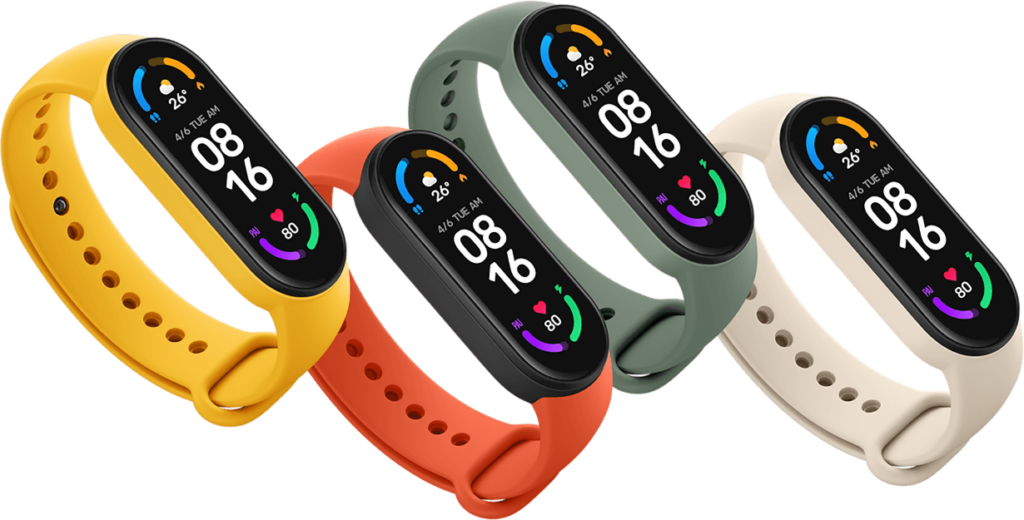
Xiaomi Mi Smart Band 6

Xiaomi had previously released the Mi Band 4 NFC as the first NFC-enabled fitness tracker for global audiences, which makes the Mi Smart Band 6 NFC the second. In China, both the NFC and non-NFC variants of the band were made available at the same time.

It is likely that Xiaomi is held back due to a possibly tedious process involved in getting banks to support the NFC-based payment system. Thus, if Xiaomi is indeed planning on making the Mi Smart Band 6 NFC available to more countries in Europe, it is going to take time.

The Mi Smart Band 6 NFC appears to be identical to its non-NFC sibling aside from the addition of the NFC tech. As such, it comes with a 1.56-inch AMOLED display, 5 ATM waterproofing, and a 125 mAh LiPo battery that has been claimed to last up to 14 days. The band also supports Amazon Alexa voice control, PPG heart rate sensor, 30 sports modes, and Bluetooth 5.0.

RELATED:

iQOO to update its entire portfolio to Android 12 in India

Chinee smartphone brand iQOO made its debut in India in early 2020. Since then, the company has released five handsets. Yesterday, the firm revealed that all these phones are eligible for the Android 12 update. It even shared a beta rollout timeline.

iQOO Logo Featured

Smartphone brand iQOO says that it will upgrade its entire portfolio sold in India to Android 12. This means even the affordable iQOO 3 and the expensive iQOO 7 Legend will get the tases of the latest version of Android.

As per the schedule shared by the company, the devices released in 2021 will start receiving beta builds from the end of December. On the other hand, the iQOO 3 launched in 2020 will get the beta update by the end of March 2022.

iQOO Android 12 Beta Update Timeline India

From the end of December 2021

From the end of March 2022

Going by the beta update plan, we can expect iQOO to roll out Android 12 stable builds for all supported phones before the end of H1 2022.

What are your thoughts on iQOO’s Android 12 update schedule for India? Do let us know in the comment section below.


RELATED:


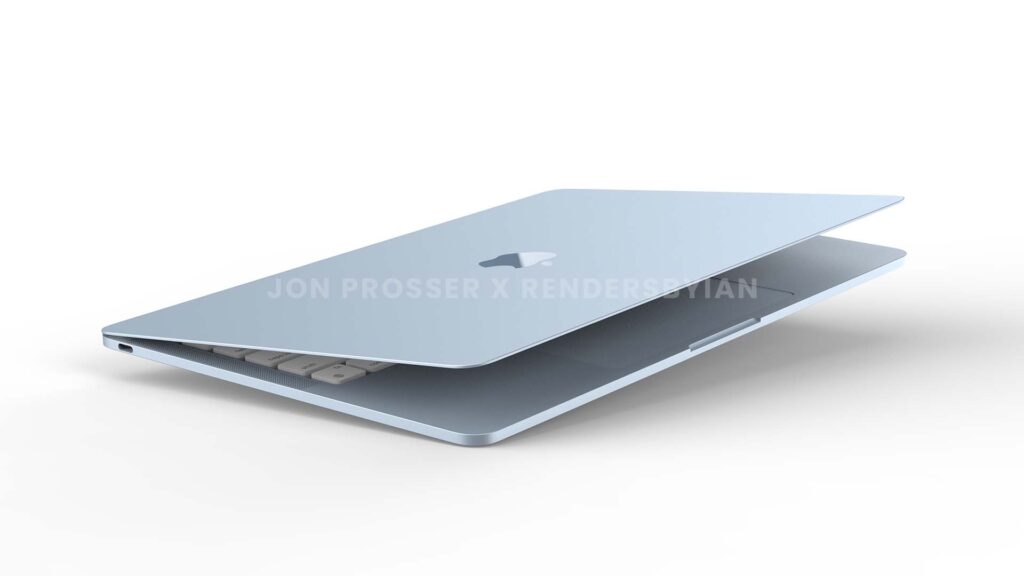
MacBook Air 2022 may be the first to feature an ‘M2’ chip, multiple other specs leaked

A leakster has revealed that the upcoming MacBook Air will use a brand new ‘M2’ chip. While its performance specs have not been unmentioned, the processor will most likely not be more powerful than the M1 Pro and M1 Max chips that the latest MacBook Pros come with.

The MacBook Air is after all not aimed at professional users and favors value for money. But that obviously doesn’t mean that the notebook will be delivering lackluster performance as the current MacBook Air with its M1 chip has already proven its prowess.

MacBook Air 2021 render

Further, dylandkt has claimed in the series of tweets that the upcoming MacBook Air once again will not be coming with any cooling fans. This suggests that the ‘M2’ silicon is once again highly efficient and requires less power which in turn generates less heat.

The leakster talked about the design of the notebook as well saying that it will be doing away with its familiar wedge shape for a more squarish design not unlike the one found on the current 14 and 16-inch MacBook Pro models. The upcoming Air will also be thinner and lighter.

Mini-LED is considered likely, although the leakster couldn’t confirm if Apple will be adopting a notch to house the 1080p camera. ProMotion variable refresh rate tech will not be making its way to the MacBook Air 2022.

Apart from this, the 2022 MacBook Air will feature USB C ports, a 30W power adapter, full-sized function keys, and multiple external display support according to dylandkt.

Last but not least, the laptop’s starting price is expected to increase slightly. The color options will be similar to the ones found on the iMac 24. The laptop’s bezels and keyboard will transition from black to an off-white hue.

The new MacBook Air with the M2 chip is expected to make its debut in the middle of 2022.

RELATED:

Samsung Galaxy A53 could come in orange and other colors

The Galaxy A52 series is probably the best mid-range smartphone lineup from Samsung in a long time. We first heard about its successor Galaxy A53 in August. Two months later, we now hear more details about the upcoming handset.

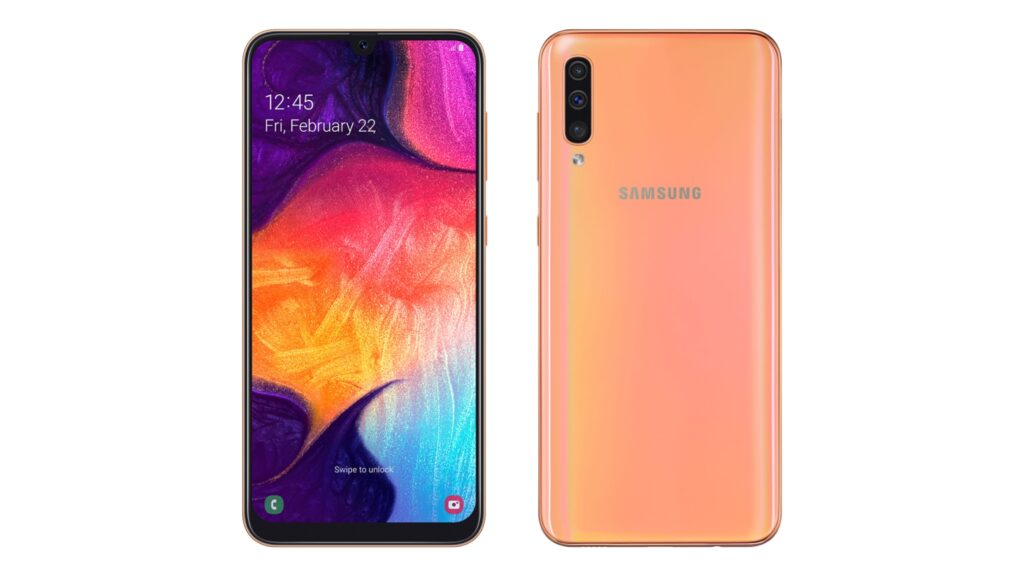
Samsung Galaxy A50 Coral Featured A
Samsung Galaxy A50 (Coral)

A report by GalaxyClub reveals the colors the Galaxy A53 will be available in. According to the publication, the forthcoming Galaxy A5x series device will arrive in the following four colors.

Samsung Galaxy A53 Colors

  • Black
  • White
  • Light Blue
  • Orange

The South Korean tech giant is not known for orange-colored handsets. The last phone from the company in this color was the Galaxy A50 (Coral) from 2019.  

Since almost all Galaxy A series models currently share colors, other smartphones could also be available in this new orange hue.

Further, the source says that the Galaxy A53 will come with 5G as standard, unlike the Galaxy A52 that comes in 4G and 5G variants, in addition to an ‘s’ version with an upgraded chipset.

As per the previous report by the same publication, the Samsung Galaxy A53 will sport a 64MP primary sensor. However, the exact sensor is not known but we can speculate it to feature OIS like the current-gen Galaxy A52.

Having said that, as the Galaxy A52 was unveiled after the Galaxy S21 series, the Galaxy A53 may also break cover after the Galaxy S22 series. Hence, we expect to learn more about this phone in the coming months.


RELATED:


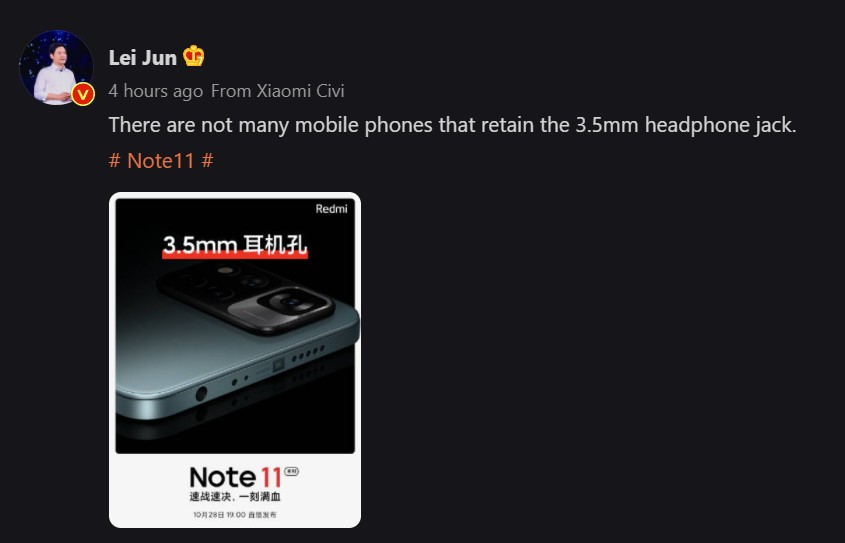
Redmi Note 11 series will retain the headphone jack, Xiaomi CEO reveals

Xiaomi CEO Lei Jun today revealed with a post on Weibo that the entirety of the Redmi Note 11 series will be retaining the headphone jack. He also highlighted that there aren’t many phones around anymore that still keep it.

lei jun weibo redmi note 11 headphone jack

The latter may sound unreasonable to some though considering most of the budget offerings continue to offer the trusty 3.5mm standard. But it is to be noted here that the Redmi Note 11 series isn’t exactly a budget offering anymore. Or at least that’s what the latest rumors seem to suggest.

While the most affordable in the lineup – Redmi Note 11 – will reportedly be starting at CNY 1199 (roughly $187), the priciest variant might cost CNY 2499 (~$391), which is the highest ever for any Redmi Note model.

This puts the priciest variant i.e., Redmi Note 11 Pro+ in the midrange segment. And headphone jacks have indeed grown scarce at that price point of late. The phone is thus a great alternative for audiophiles who wish to stick to wired headphones but also desire decent specifications.

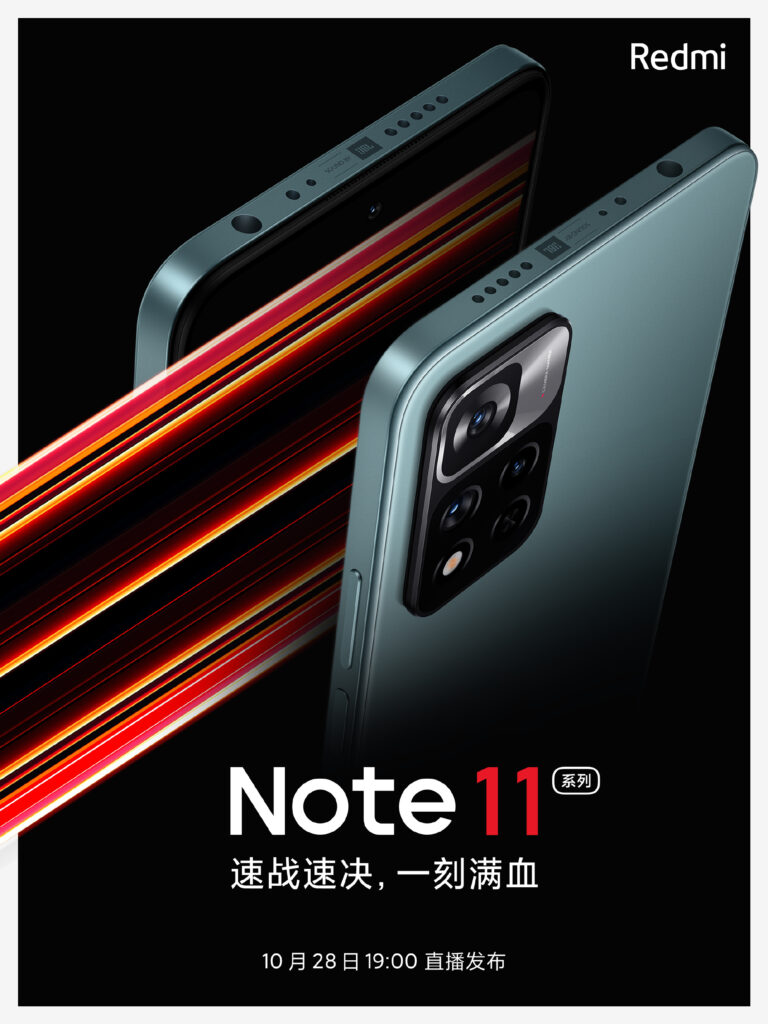
redmi note 11 inline

And speaking of specifications, the Redmi Note 11 series is rumored to actually have a serious upgrade over the Redmi Note 10 series. There are talks about the top model coming with a Mediatek Dimensity 920, which is an upper-midrange 5G processor.

Do note here that none of this has been confirmed officially yet, so it’s advisable to take it all with a pinch of salt.

What is confirmed till now is that the Redmi Note 11 series will sport Samsung AMOLED displays with high refresh rate support and narrow bezels. Further, the phones will come with a triple rear camera setup and have side-mounted fingerprint scanners. Also revealed was that AG glass for the rear panel will be standard across the lineup.

RELATED:

Samsung Galaxy Tab S8 Ultra renders reveal a notch

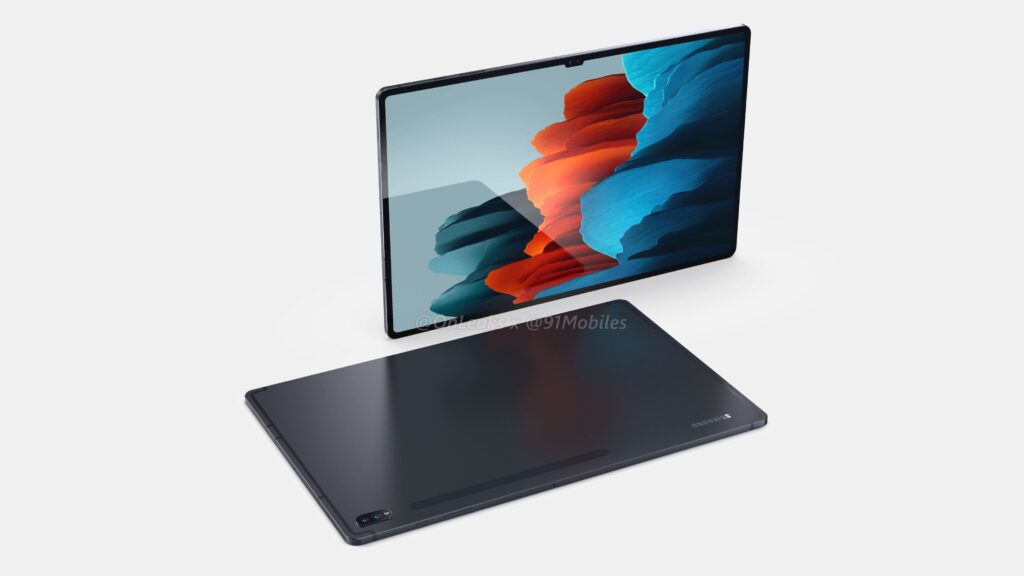
Samsung is expected to debut the Galaxy Tab S8 series in early 2022. Ahead of that, we got to see the renders of the vanilla Galaxy Tab S8 yesterday. A few hours later, the same source has now shared the renders of Galaxy Tab S8 Ultra.

Samsung Galaxy Tab S8 Ultra Render Leak 02

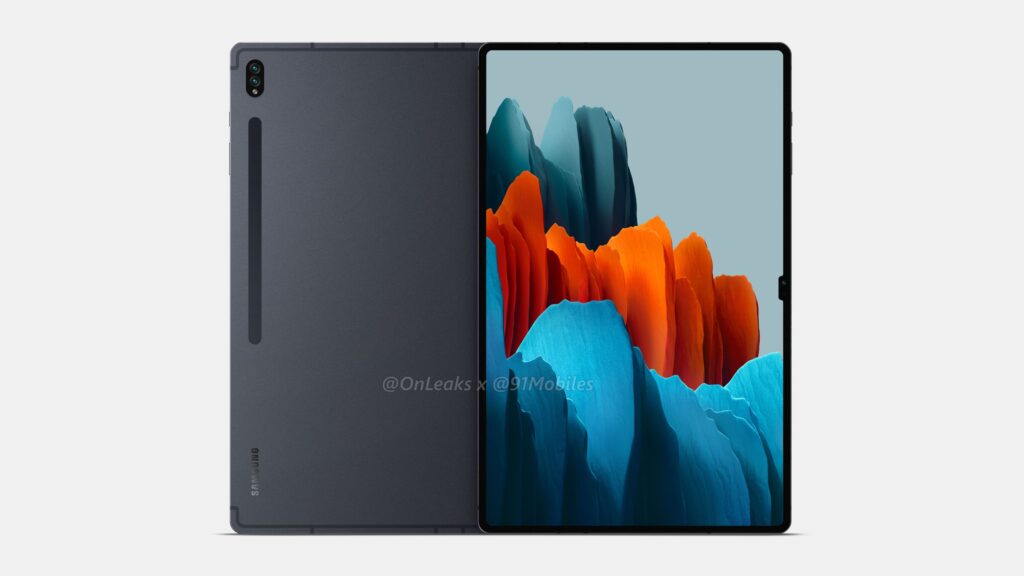
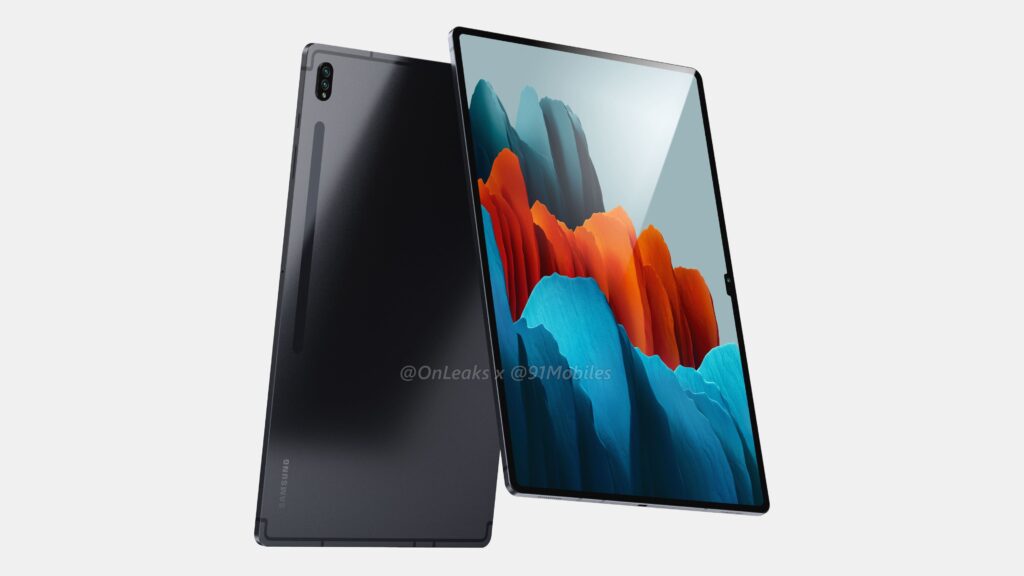
Well-known leaker Steve Hemmerstoffer (@OnLeaks) has partnered with 91Mobiles to reveal the design of the upcoming Galaxy Tab S8 Ultra. The renders by him give us an idea about the tablet’s look. 

According to the renders, the Galaxy Tab S8 Ultra will feature a notch for the front-facing camera. If this happens to be true, then Samsung’s 8th gen flagship Android tablet will go official as the first-ever mainstream tablet with a notch.

Samsung Galaxy Tab S8 Ultra Render Leak 04

Thanks to this notch, the 14.6-inch display-equipped slate will have minimal bezels all-around. Although slim bezels are good for aesthetics, they are not preferable on a product like a tablet that needs to be held in hands by their sides.

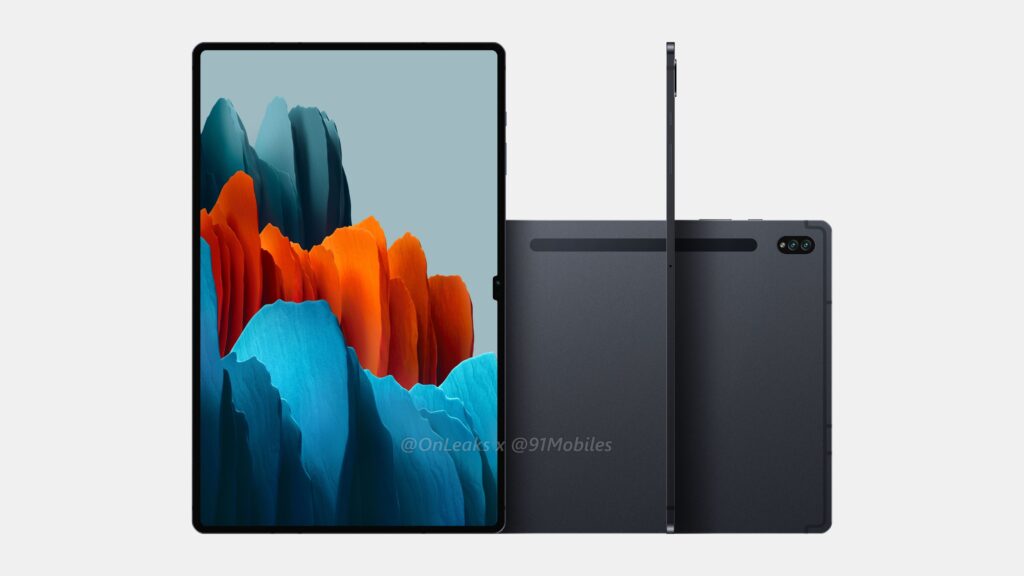
On the back, the product will have the exact same design as the vanilla Galaxy Tab S8. This means It will house a vertically aligned dual-camera array, a magnetic strip to hold and charge the S Pen stylus, and Samsung branding.

Samsung Galaxy Tab S8 Ultra Render Leak 03

The right side will include a power key and volume buttons, whereas the left side may sport connectors for the official keyboard accessory but they are not shown in the renders. Then, the slate will have quad speakers with dual speaker grilles on the top and the bottom sides. The bottom side will also house a USB Type-C port.

Last but not least, the product will measure 325.8 x 207.9 x 5.4mm in dimensions.

Samsung Galaxy Tab S8 Ultra Render Leak 01

According to previous reports, the Samsung Galaxy Tab S8 Ultra will flaunt a 14.6-inch OLED display with a resolution of 2960 x 1848 pixels, 240 PPI, 120Hz refresh rate, and BRS (Border Reduction Structure). It will be backed by an 11,500mAh battery. An older report even detailed more information along with price but they probably aren’t accurate.


RELATED:


GTA Trilogy Definitive Edition will launch on November 11

Rockstar games for a long time was in talks for remastering the old Grand Theft Auto games. The older games including GTA 3, GTA Vice City, and GTA San Andreas will now arrive with a fresh coat of graphics. Today, Rockstar Games has shared the release date of the game.

The GTA Trilogy Definitive Edition will be launched on November 11 on all platforms like Playstation, Xbox, PC, and Nintendo. Notably, it will be a digital version and the physical version of the Trilogy will be released on December 7. Furthermore, it is touted that later in 2022 the remastered trilogy will be launched for mobile devices.

While the game is yet to officially arrive, Rockstar games have shared a short clip of the GTA trilogy game. It appears that the graphics in the game is more modern compared to the original graphics. It brings 3D depth to the objects and has shadows and reflection turned to high. It also has some game environmental upgrades.

The GTA Trilogy Definitive Edition will also celebrate the launch and anniversary of the original GTA 3. We expect to see some special surprises and easter eggs in the game once it’s launched.

RELATED:

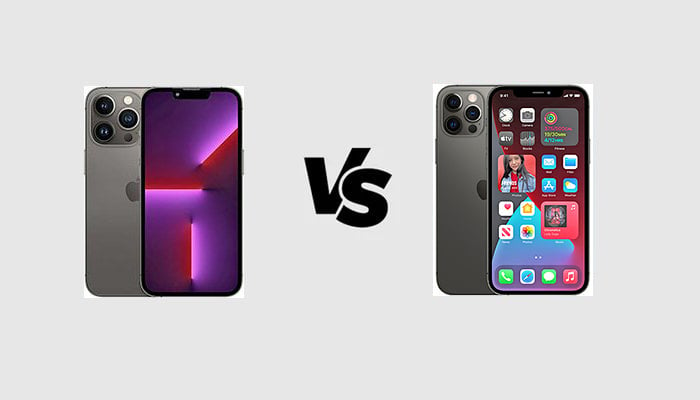
iPhone 13 Pro vs iPhone 12 Pro Max: Specs Comparison

Choosing the best iPhone for your needs and saving the right amount of money while doing it is not an easy thing. You could choose a model from the new generation or you could opt for an older iPhone which is still on sale in order to save more money. The new iPhone 13 Pro and the iPhone 12 Pro Max are sold with the same listing price tag because we are talking about the base Pro variant of the new series and the highest-end variant of the old series. But given that the price is the same, which one should you choose? It depends on your actual needs: here is a comparison between their specifications which will answer this question in the best possible way.

Apple iPhone 13 Pro vs Apple iPhone 12 Pro Max

Apple iPhone 13 Pro Apple iPhone 12 Pro Max
DIMENSIONS AND WEIGHT 146.7 x 71.5 x 7.7 mm,
204 g
160.8 x 78.1 x 7.4 mm,
228 g
DISPLAY 6.1 inches, 1170 x 2532 pixels (Full HD+), Super Retina XDR OLED 6.7 inches, 1284 x 2778p (Full HD+), Super Retina XDR OLED
PROCESSOR Apple A15 Bionic hexa-core 3.22 GHz Apple A14 Bionic hexa-core 3.1 GHz
MEMORY 6 GB RAM, 512 GB – 6 GB RAM, 128 GB – 6 GB RAM, 256 GB – 6 GB RAM, 1 TB 6 GB RAM, 512 GB – 6 GB RAM, 128 GB – 6 GB RAM, 256 GB
SOFTWARE iOS 15 iOS 15
CONNECTIVITY Wi-Fi 802.11 a/b/g/n/ac/ax, Bluetooth 5, GPS Wi-Fi 802.11 a/b/g/n/ac/ax, Bluetooth 5, GPS
CAMERA Quad 12 + 12 + 12 MP + TOF 3D LiDAR scanner, f/1.5 + f/2.8 + f/1.8
Dual 12 MP + SL 3D f/2.2
Quad 12 + 12 + 12 MP + TOF 3D LiDAR scanner, f/1.6 + f/2.0 + f/2.4
Dual 12 MP + SL 3D f/2.2
BATTERY 3125 mAh, fast charging 20W and Qi wireless charging 7.5W 3687 mAh, Fast Charging 22W, Qi wireless charging 7.5W
ADDITIONAL FEATURES 5G, optional dual SIM, optional eSIM, MagSafe 15W, IP68 waterproof 5G, optional dual SIM, optional eSIM, MagSafe 15W, IP68 waterproof

Design

The iPhone 13 Pro comes with an important improvement when it comes to aesthetics: a smaller notch. The notch of the new iPhone is 20 percent smaller if compared to the old generation. On the other hand, the iPhone 13 Pro has a thicker body and a more protruding camera module because it packs more advanced sensors. But it is also more compact thanks to its smaller display, and it is also lighter with a weight of 204 grams. Given that it comes with a smaller notch and compact dimensions, I actually prefer the iPhone 13 Pro.


Display

The iPhone 13 Pro has a more advanced display thanks to a single addition: the high 120 Hz refresh rate. The iPhone 12 series is the latest one coming only with a standard refresh rate, while the Pro variants of the iPhone 13 series are the first Apple phones with a high refresh rate. The iPhone 13 Pro also provides a higher brightness. But there is an important detail that may let you choose the iPhone 12 Pro Max: its bigger display size. The iPhone 12 Pro Max is more suitable for productivity because of its 6.7-inch display, while the iPhone 13 Pro has a compact 6.1-inch panel. Both the displays are Super Retina XDR OLED panels with HDR10, Dolby Vision, and a 1170p resolution, but the 13 Pro has a higher average brightness.


Specs & Software

If you desire to get higher performance, then go for the iPhone 13 Pro without thinking twice. It has a more powerful Apple A15 Bionic chipset which provides up to 50 percent better CPU performance and even better GPU performance. The memory configurations are the same, but the iPhone 13 Pro adds a fourth variant with 1 TB of internal storage. Another important advantage of the iPhone 13 Pro is the presence of iOS 15 out of the box, that is the reason why it will get one year more of software support. But note that despite the iPhone 13 Pro providing higher performance, the iPhone 12 Pro Max may remain a better phone for productivity due to its bigger display and battery.


Camera

The iPhone 13 Pro has important improvements on the camera front. First of all, the sensors come with brighter focal apertures. Further, on the 13 Pro, there are a few additional features improving the photo and video quality. The camera hardware is not very different, but the few changes alongside the new software make the difference.


Battery

Thanks to its bigger dimensions, the iPhone 12 Pro Max packs a bigger battery and has longer battery life. The capacity of its battery is 3687 mAh, while the iPhone 13 Pro has just 3095 mAh. The difference in terms of battery life is important, while the charging speeds are exactly the same, but the 13 Pro naturally charges faster because of its smaller battery capacity.


Price

You can currently buy the iPhone 13 Pro and the iPhone 12 Pro Max for less than €1100/$999. You can usually find better street prices for the iPhone 12 Pro Max because it is an older device, while the 13 Pro has been on sale just for a few weeks. The advantages of the iPhone 12 Pro Max are its bigger display and its bigger battery, but for the rest, the iPhone 13 Pro is superior. It has a smaller display, but it comes with a better processor, better cameras, and iOS 15 out of the box.


Apple iPhone 13 Pro vs Apple iPhone 12 Pro Max: PRO and CONS

Apple iPhone 13 Pro

PRO

  • Smaller notch
  • Better chipset
  • More advanced cameras
  • More compact
  • iOS 15 out of the box
  • 120 Hz refresh rate

CONS

  • Smaller battery


Apple iPhone 12 Pro Max

PRO

  • Thinner
  • Better prices
  • Bigger battery
  • Wider display

CONS

  • Bigger dimensions

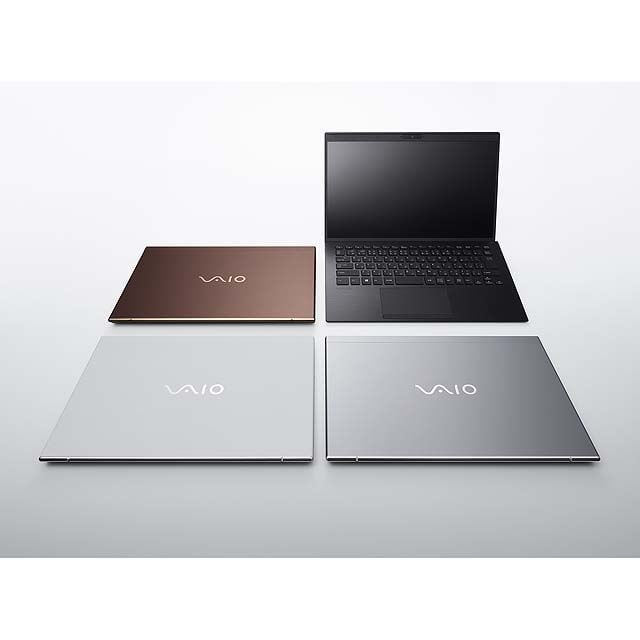
VAIO SX12 and SX14 with 11th Gen Intel processors launched in Japan

VAIO has officially launched two new VAIO SX series laptops in Japan. The all-new VAIO SX12 and SX14 come with 12.5-inch and 14-inch screen sizes. The laptops bring 11th generation Intel processors and run on the latest Windows 11 OS.

There are multiple models under the SX12 and SX14 lineups. The VJS12490111B and VJS12490211W start at ¥269,800(~$2,378). Both are powered by an Intel Core i7-1195G7 processor and has 16GB of RAM and 512GB of SSD. The duo has a 12.5-inch screen with a Full-HD resolution.

VAIO SX12 and SX14 with 11th Gen Intel processors launched in Japan

Next up, the company launched lower-end models – VJS12490311B, VJS12490411T, VJS12490611S, and VJS12490511P. The laptops are powered by an Intel Core i5-1155G7 processor and have up to 16GB of RAM and 256GB of SSD. Again, the trio has the same 12.5-inch screen. The laptops start at ¥199,800(~$1,761). 

In the SX14, there are various models including the VJS14490111B, VJS14490211B, VJS14490311T, VS1449011W, VJS14490511W. These laptops come with a 14-inch display with FHD resolution. The former laptop runs on Intel’s Core i7-1195G7, whereas, the other models have Intel i5-1155G7 processors. The laptops come with up to 16GB of RAM and 512GB of SSD. The 14-inch laptop starts from ¥229,800(~$2,076). 

RELATED:

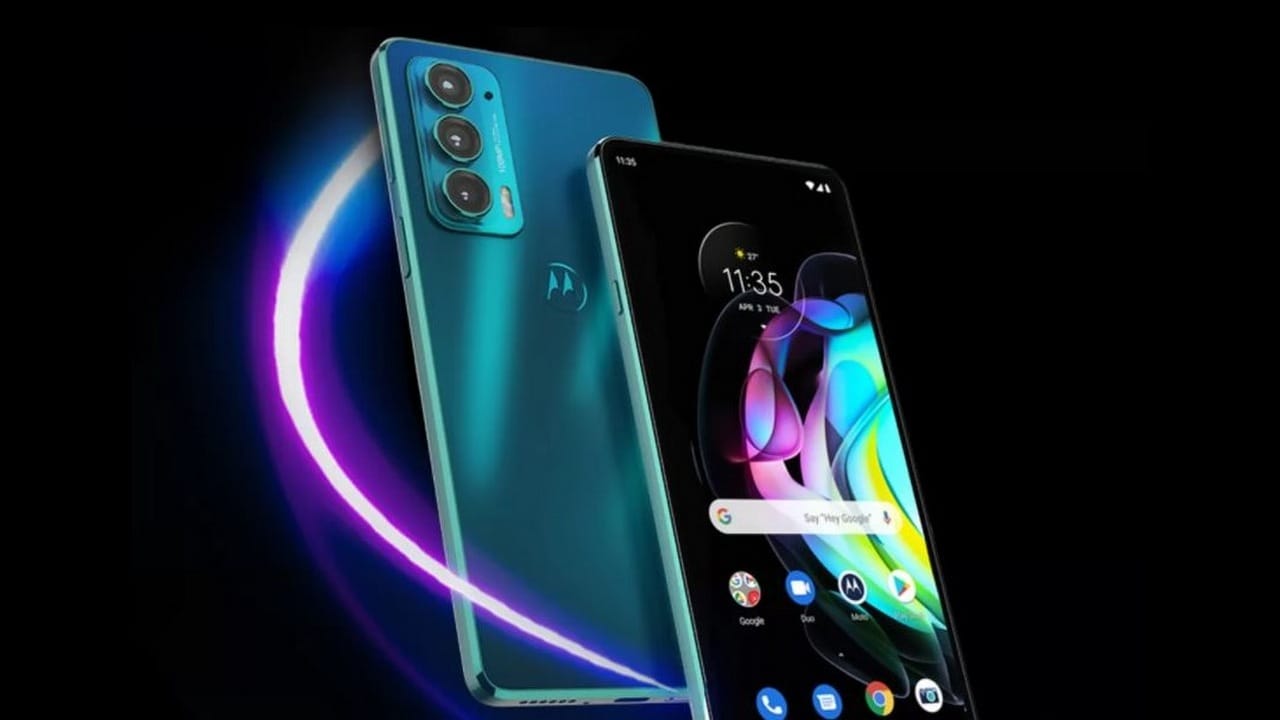
Motorola Edge 20, Edge 20 Fusion are now available in Japan

Back in August, Motorola India launched the all-new Edge 20 series including the vanilla Edge 20 and the Edge 20 Fusion. Now, the phones have landed in the Japanese market at a budget price range. The major highlight of the phones is the 108MP camera, OLED display, and Snapdragon/Dimensity SoCs.

Motorola Edge 20 and Edge 20 Fusion Specifications and Pricing 

The Motorola Edge 20 and Edge 20 Fusion come with major differences in specs but do share the same screen. The Edge 20 duo has a 6.67-inch OLED display with Full-HD+ resolution. The Edge 20 has a whopping 144Hz refresh rate, whereas, the Edge 20 Fusion boasts a 90Hz refresh rate.

Under the hood, the Edge 20 is powered by the Qualcomm Snapdragon 778 SoC paired with 8GB of RAM and 128GB of onboard storage. On the other hand, the Fusion is fueled by the MediaTek Dimensity 800U SoC paired with the same 8GB RAM and 128GB onboard storage.

Motorola

The Duo features a triple camera system at the rear and a single 32MP selfie camera. The Edge 20 has a 108MP main lens, a 16MP wide-angle lens, and lastly a telephoto lens with up to 30x digital zoom. The Fusion has a 108MP main lens, an 8MP secondary lens, and lastly a 2MP depth sensor.

The Fusion has a 5,000mAh battery with 30W fast charging support, whereas, the vanilla Edge 20 packs a 4,000mAh cell. Both the phones support fast charging technology. The series runs on Android 11 out of the box.

As of now, the exact pricing details regarding phones are unknown. But, the sale price of the phones is touted to be ¥43,800(~$386). The Edge 20 is available in Frosted Onyx, whereas, the Edge 20 Fusion comes in Electric Graphite colour.

RELATED:

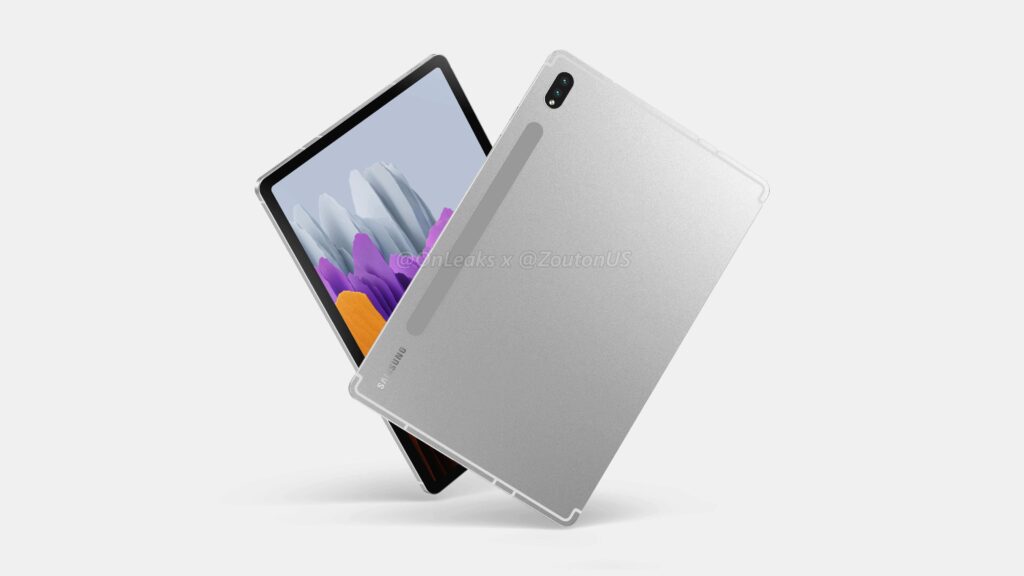
Samsung Galaxy Tab S8 design exposed via renders, key specs leak as well

Samsung usually releases its Galaxy Tab S series of flagship tablets alongside the Galaxy Noe series in the second half of every year. But in 2021, the company canceled both these products. However, we have been hearing about the Galaxy Tab S8 series for months. The new lineup of tablets is expected to go official in early 2022. Ahead of that, the vanilla Galaxy Tab S8 leaks in renders along with specifications.

Samsung Galaxy Tab S8 Render Leak 02

Popular leaker Steve Hemmerstoffer (@OnLeaks) has partnered with Zouton to share the 3D CAD renders of the upcoming Galaxy Tab S8. The tipster has also revealed the key specs of this tablet.

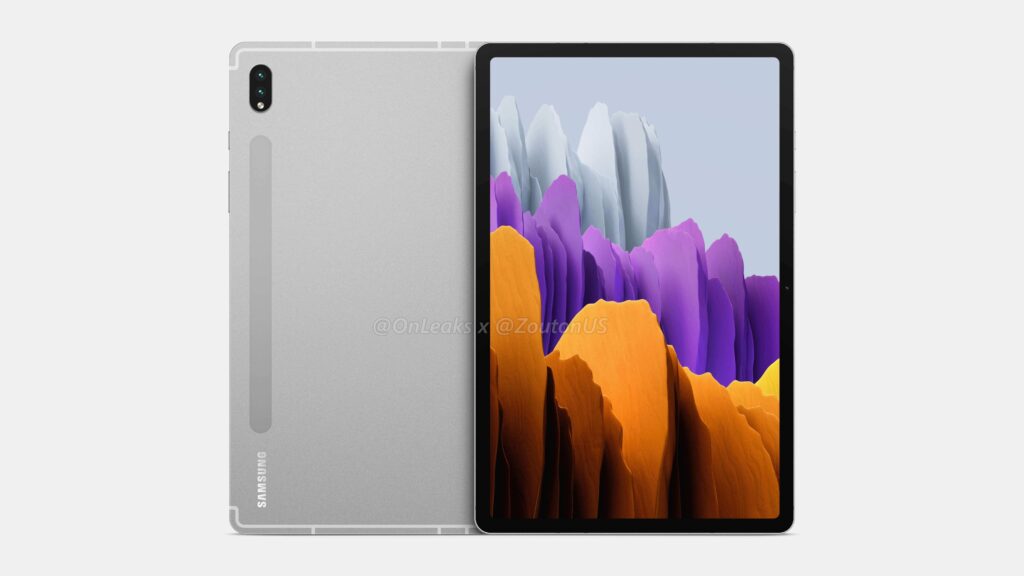
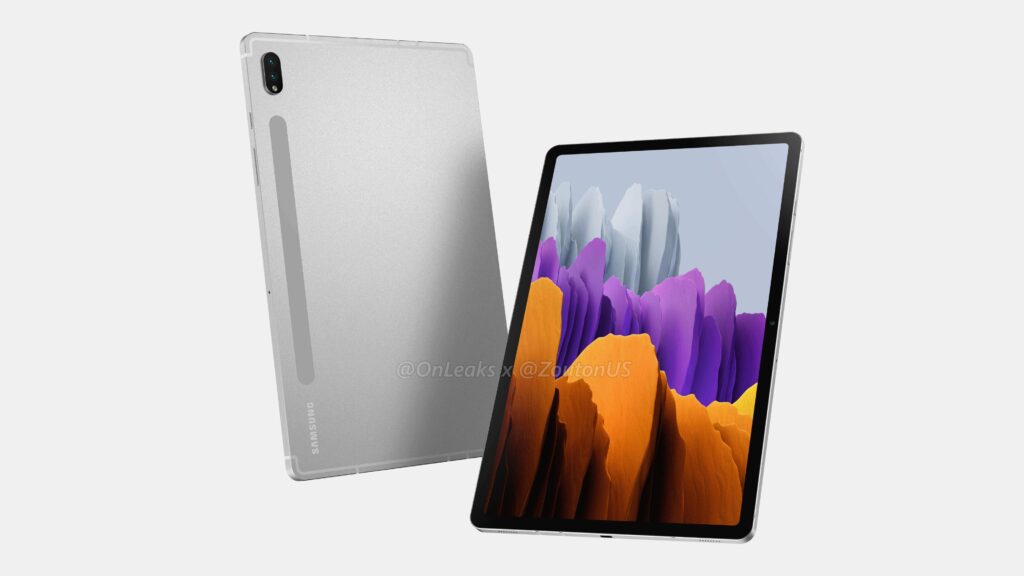
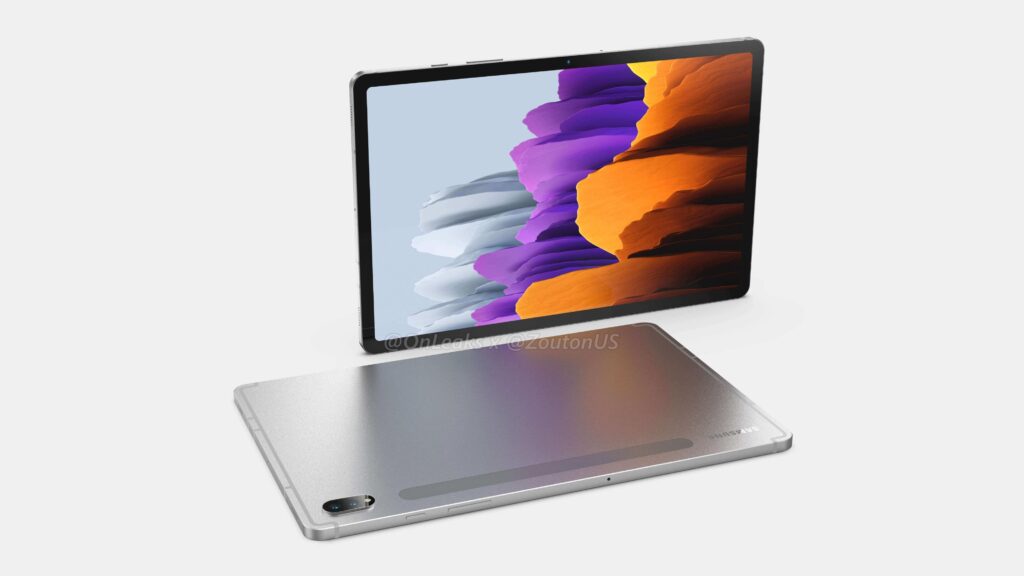
According to the renders, the tablet will have a flat frame like its predecessor. The font will be fully occupied by the screen with minimal bezels all-around to hold the product. The front-facing camera will sit on the right bezel, which is the ideal location.

Samsung Galaxy Tab S8 Render Leak 03

On the back, the slate will house a vertically-aligned dual-camera array, a magnetic strip to hold/charge the S Pen stylus, and Samsung branding. Whereas, the right side will include a power button with an embedded fingerprint sensor and volume keys. Finally, it will have a USB Type-C port at the bottom with two speaker grilles on either side and another two speaker grilles at the top with a secondary microphone hole at the center.

Samsung Galaxy Tab S8 Render Leak 01

Talking about specifications, the Galaxy Tab S8 is said to sport an 11-inch IPS LCD panel with a resolution of 1600 x 2560 pixels and a 120Hz refresh rate. It will be powered by a Qualcomm Snapdragon 888 SoC paired with 8GB RAM and 128GB storage,

On the software front, the device will run One UI but the actual version is a mystery for now. As for energy, it will be backed by an 8,000mAh battery with support for 45W fast charging.

Samsung Galaxy Tab S8 Render Leak 04

Last but not least, the slate will measure 253.75 x 165.30 x 6.24mm in dimensions.


RELATED:


Bagotte BS900 Vacuum Cleaner hands-on: Smart Design, Affordable price

We all know Dyson is the most popular and probably the best vacuum cleaner brand in the market right now. But best quality does come at a price, and not everyone can afford to pay an exorbitant amount for their vacuum cleaner.

But is it possible to spend half the price of a vacuum cleaner to get 80% of its experience? That’s what we are trying to find out by using the Bagotte BS900. And it looks like this vacuum cleaner comes close to offering an extremely good value for your money.

Bagotte BS900 review featured 3

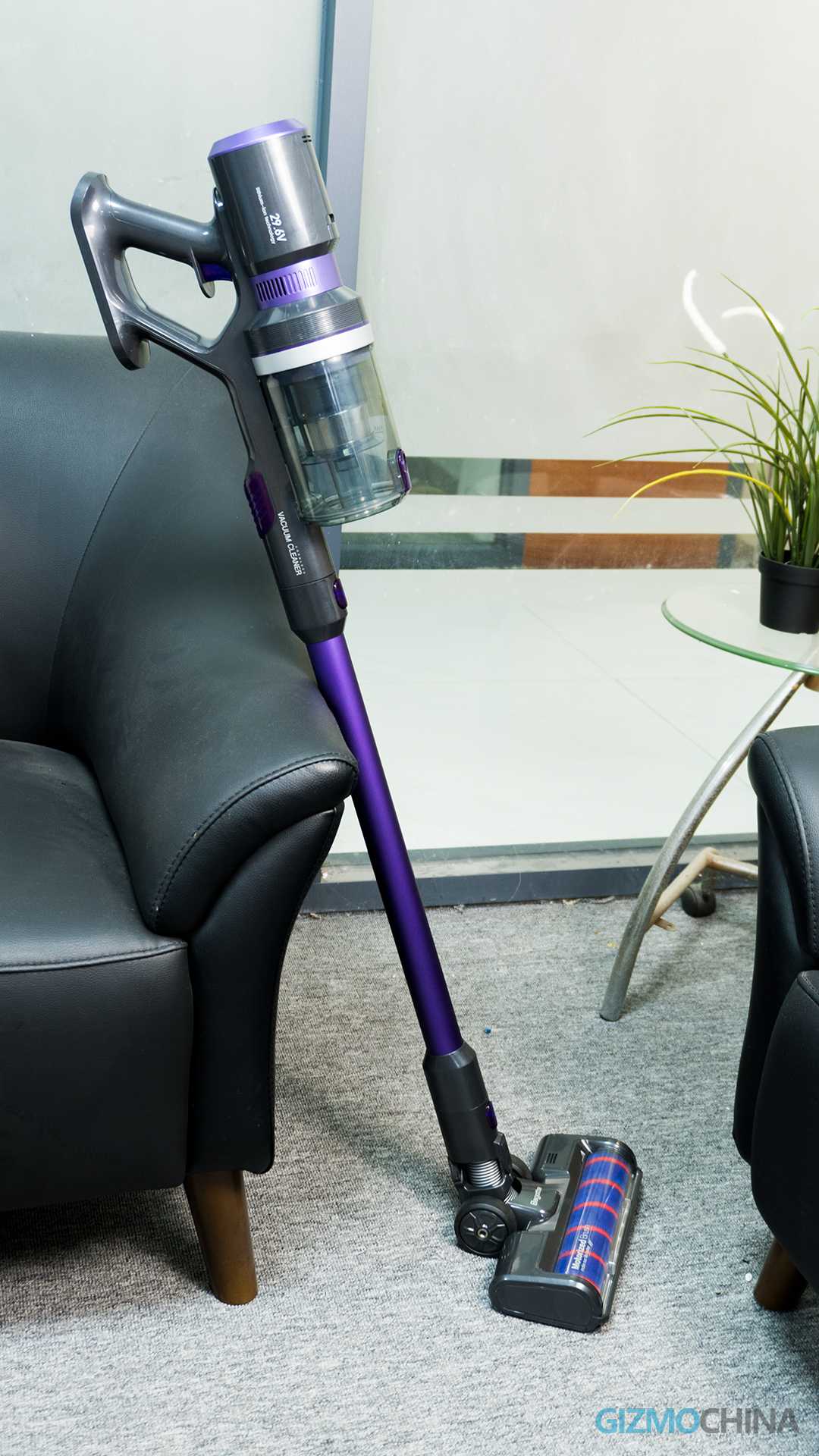
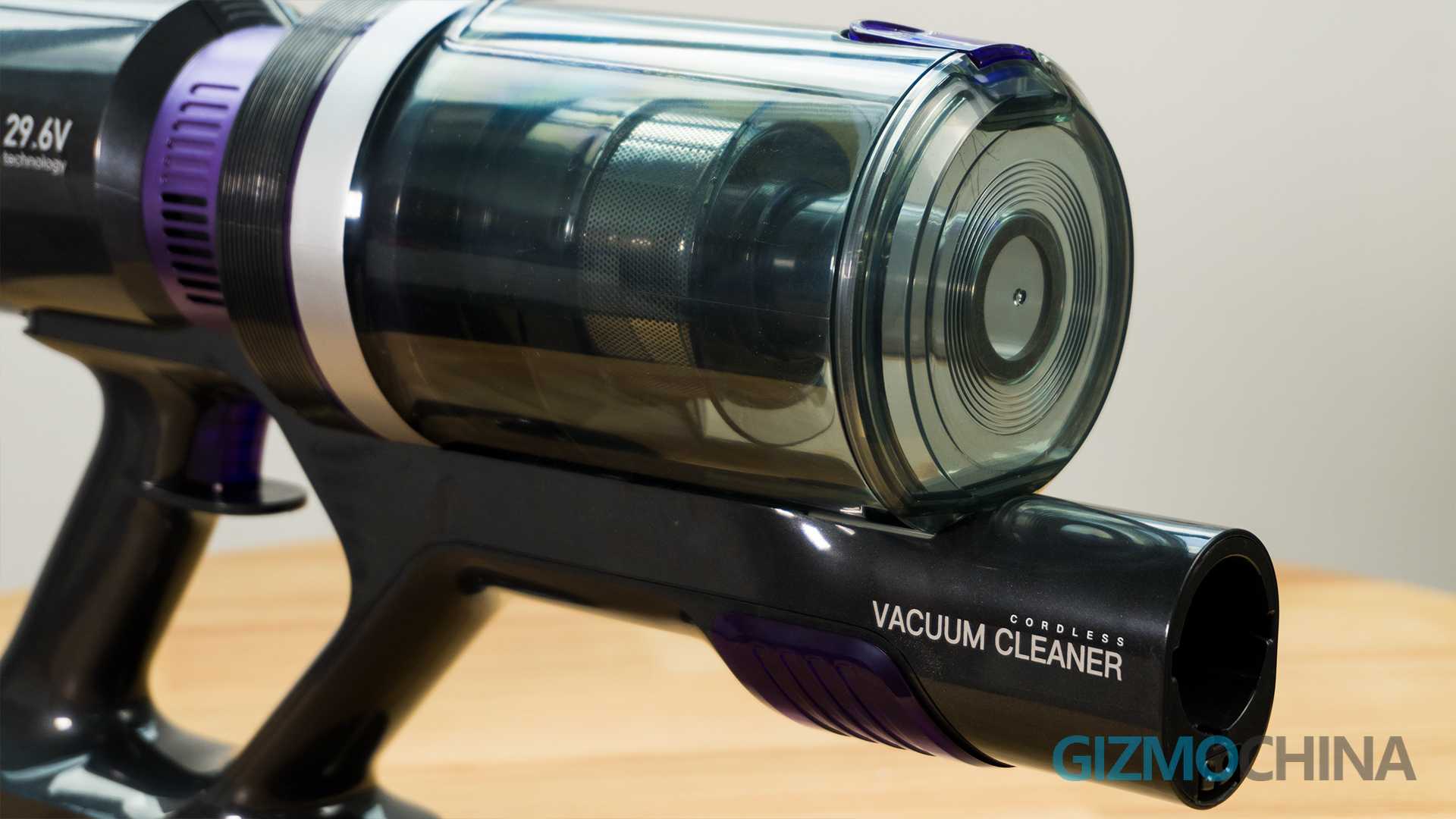
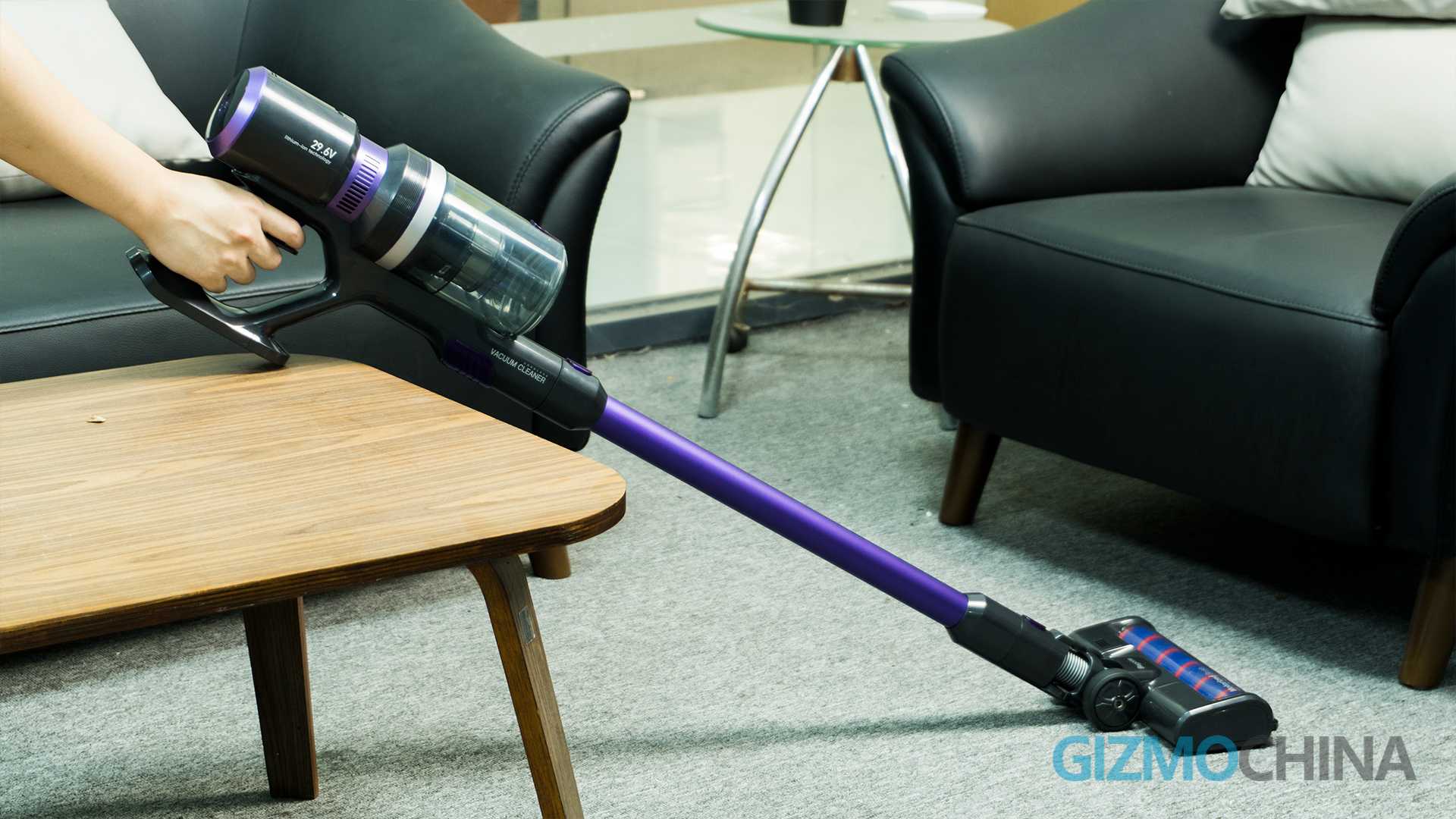
Bagotte BS900 is designed with black as the main color and purple as the secondary color. The purple extension bar is made of metal, which also ensures the strength of the extension bar. The overall look is not too different from most of Dyson’s vacuum cleaners.

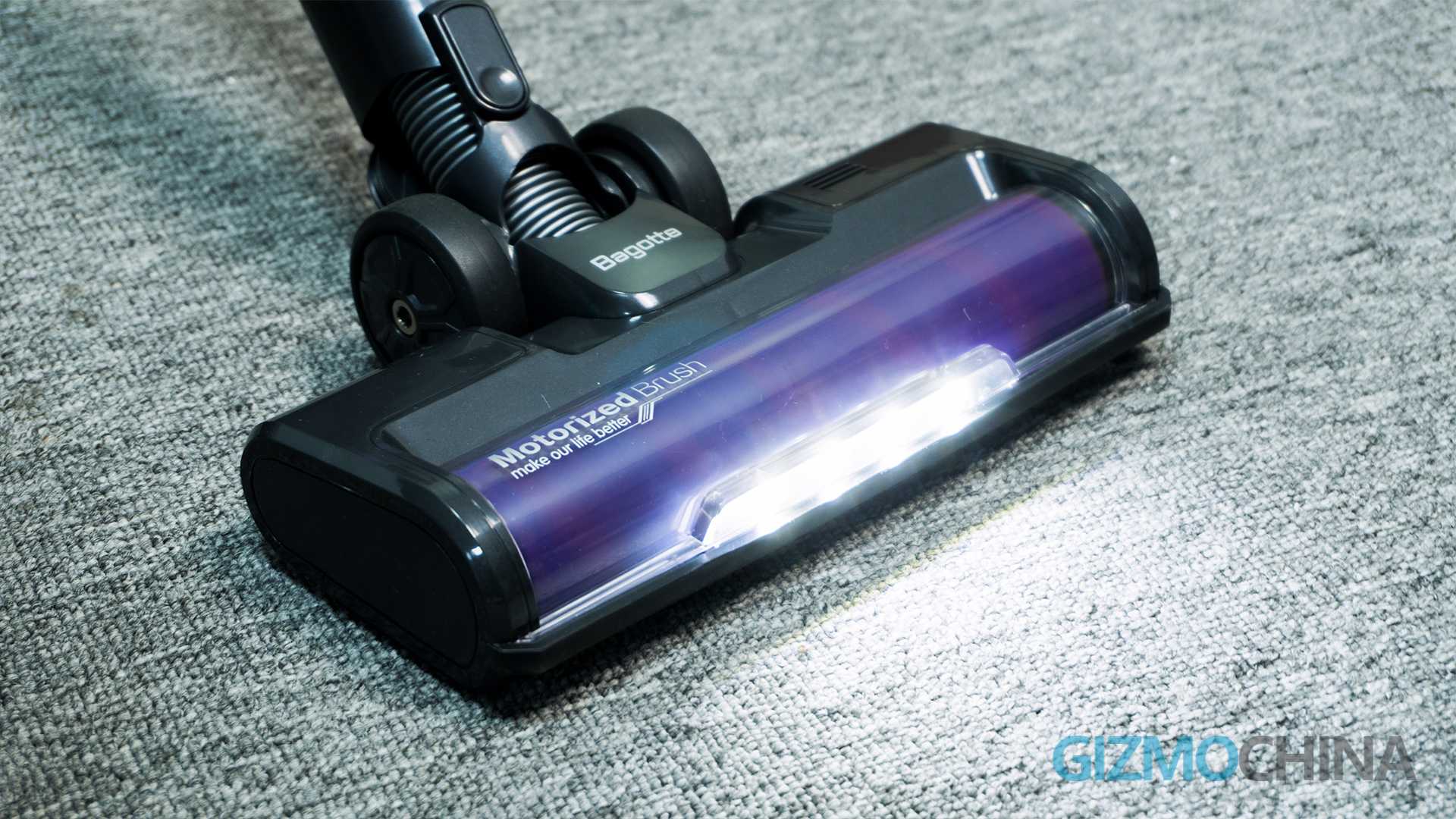
Bagotte BS900 review vaccum cleaner The Bagotte BS900 uses a 400w brushless motor with a suction power of 25,000 Pa, which ensures that all fine dust and hairs can be sucked into the vacuum cleaner. And there are four LED lights in front of the standard brush head, which allows you to see if you’re cleaning in the dark.

Bagotte BS900 review vacuum cleaner 2

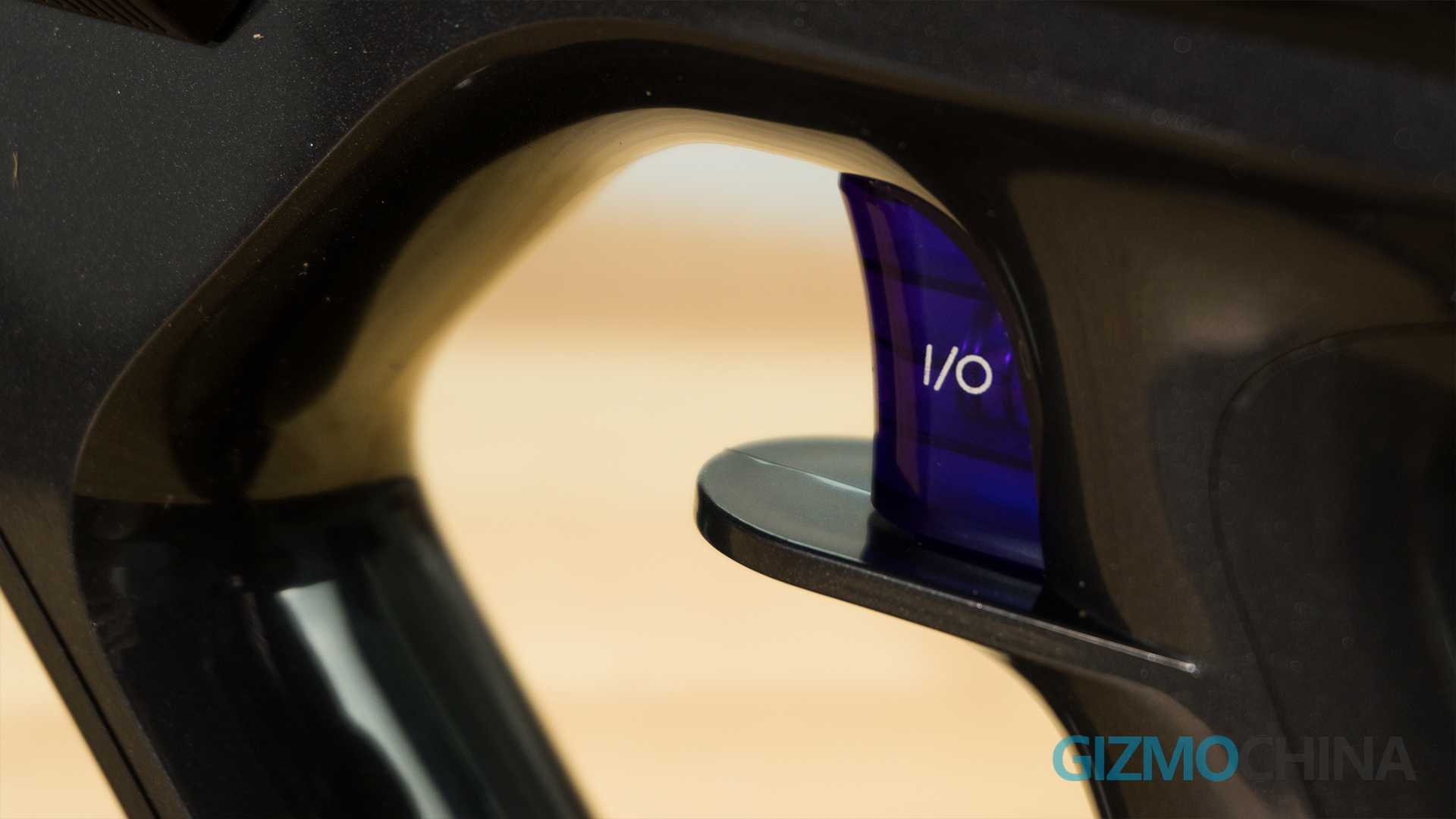
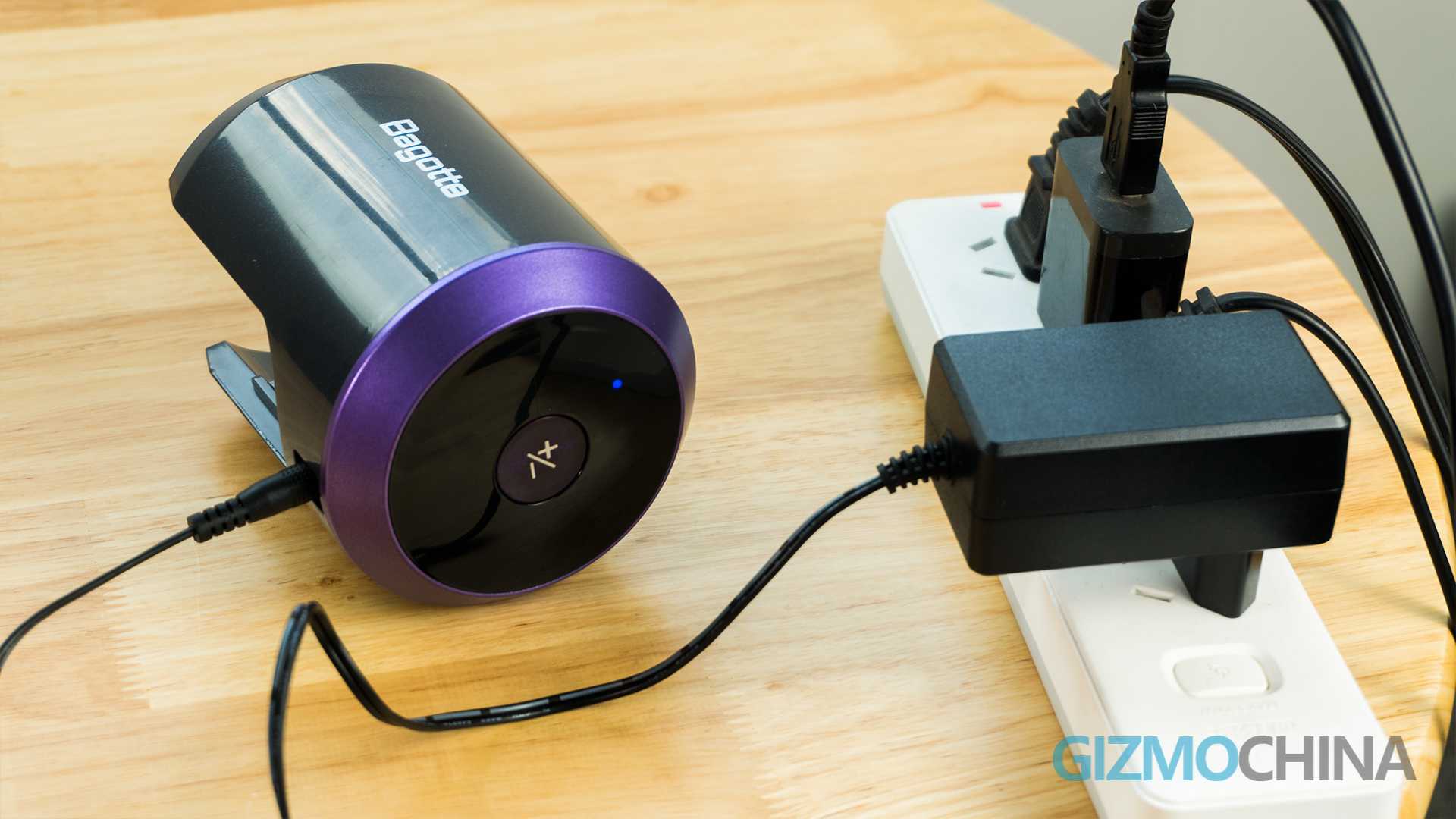
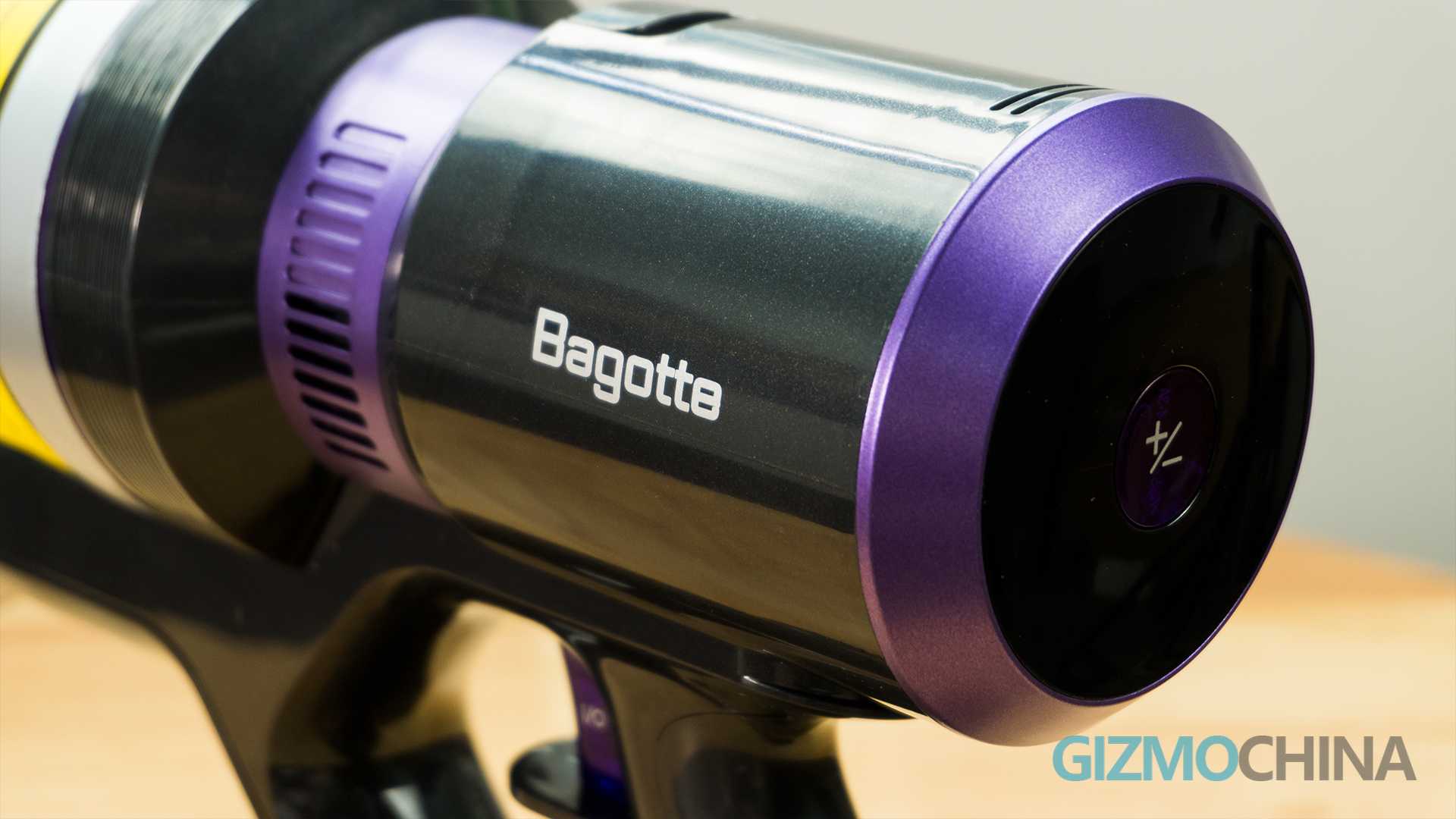
The operation is very simple, a long press on the trigger button is to start, and then press again is to close. There is only one button behind the motor that can adjust the suction level. There are three suction levels to choose from, so you can decide on the suction level according to your situation. The battery is removable and can be pulled out separately for charging. The battery can be fully charged in three hours and can be used for up to 55 minutes at a time.

Bagotte BS900 review button
Tigger Button

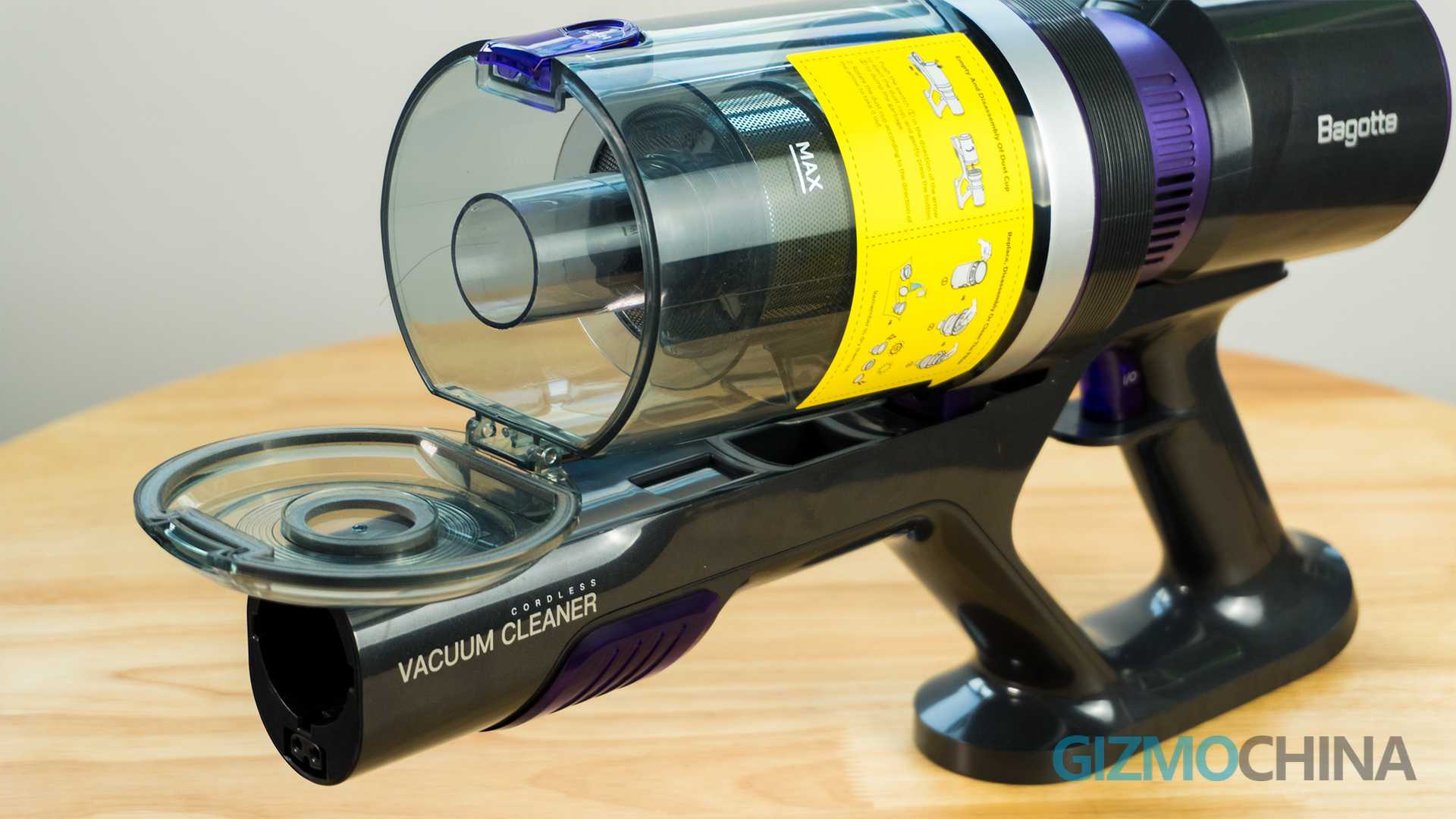
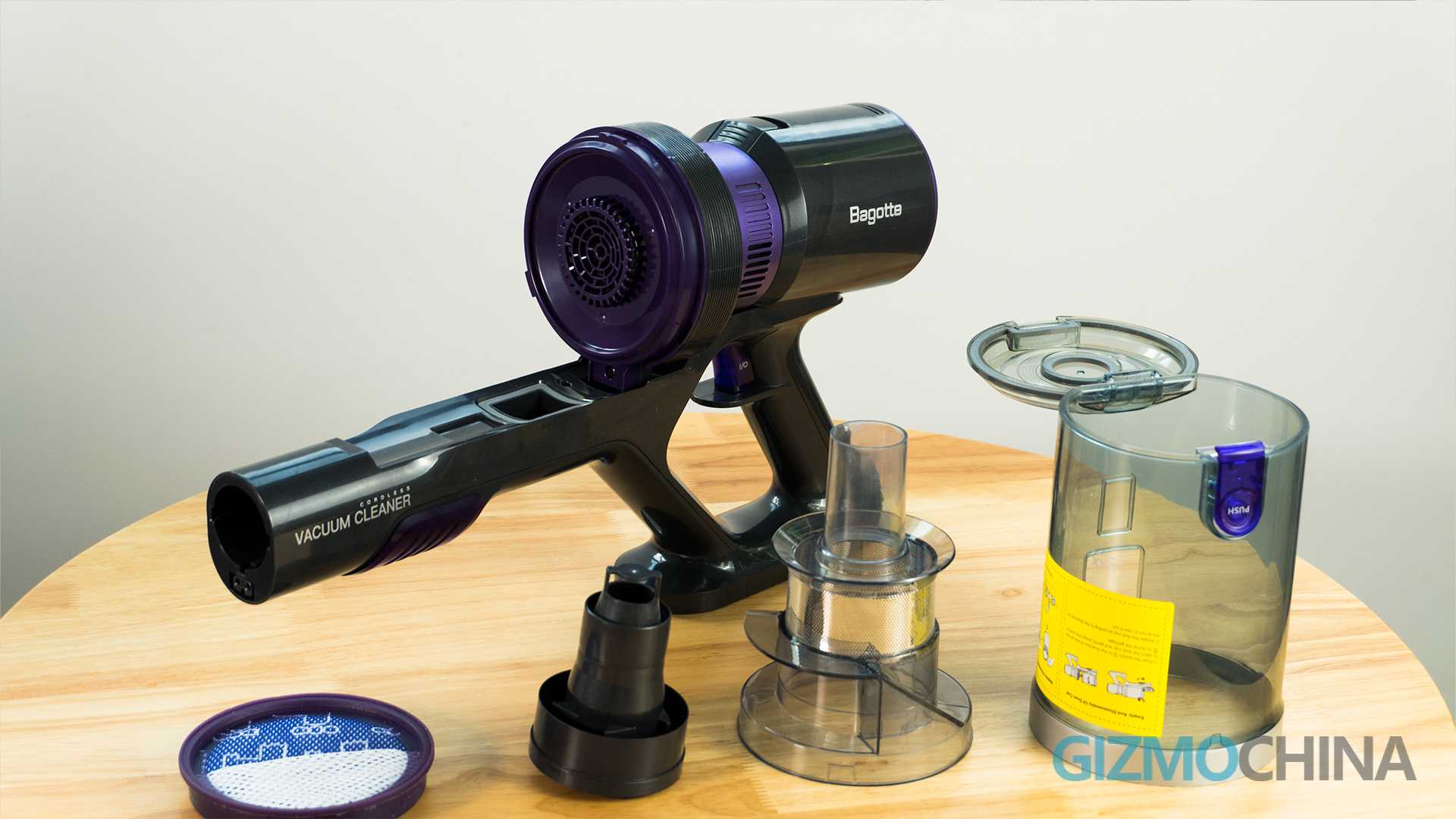
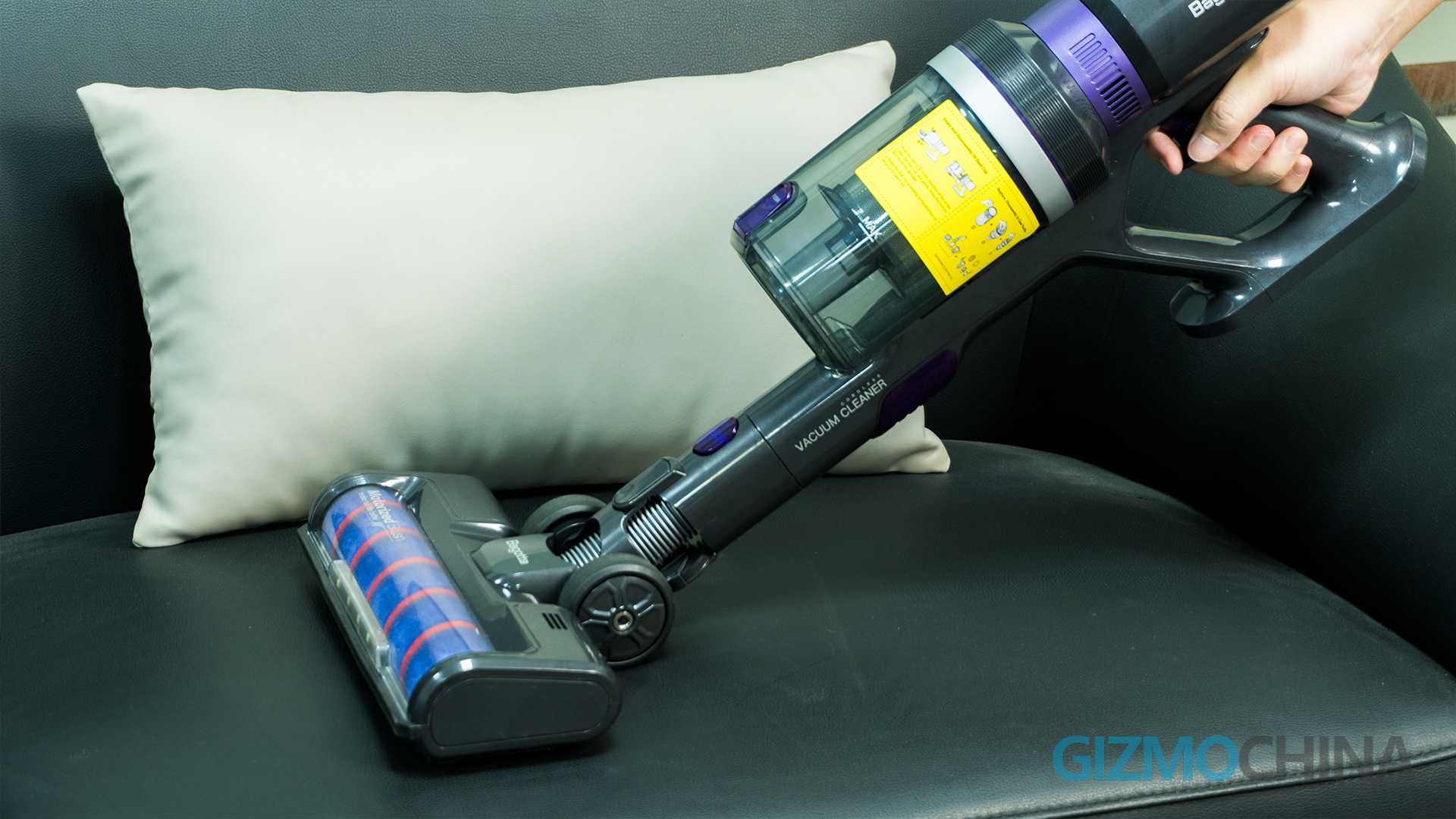
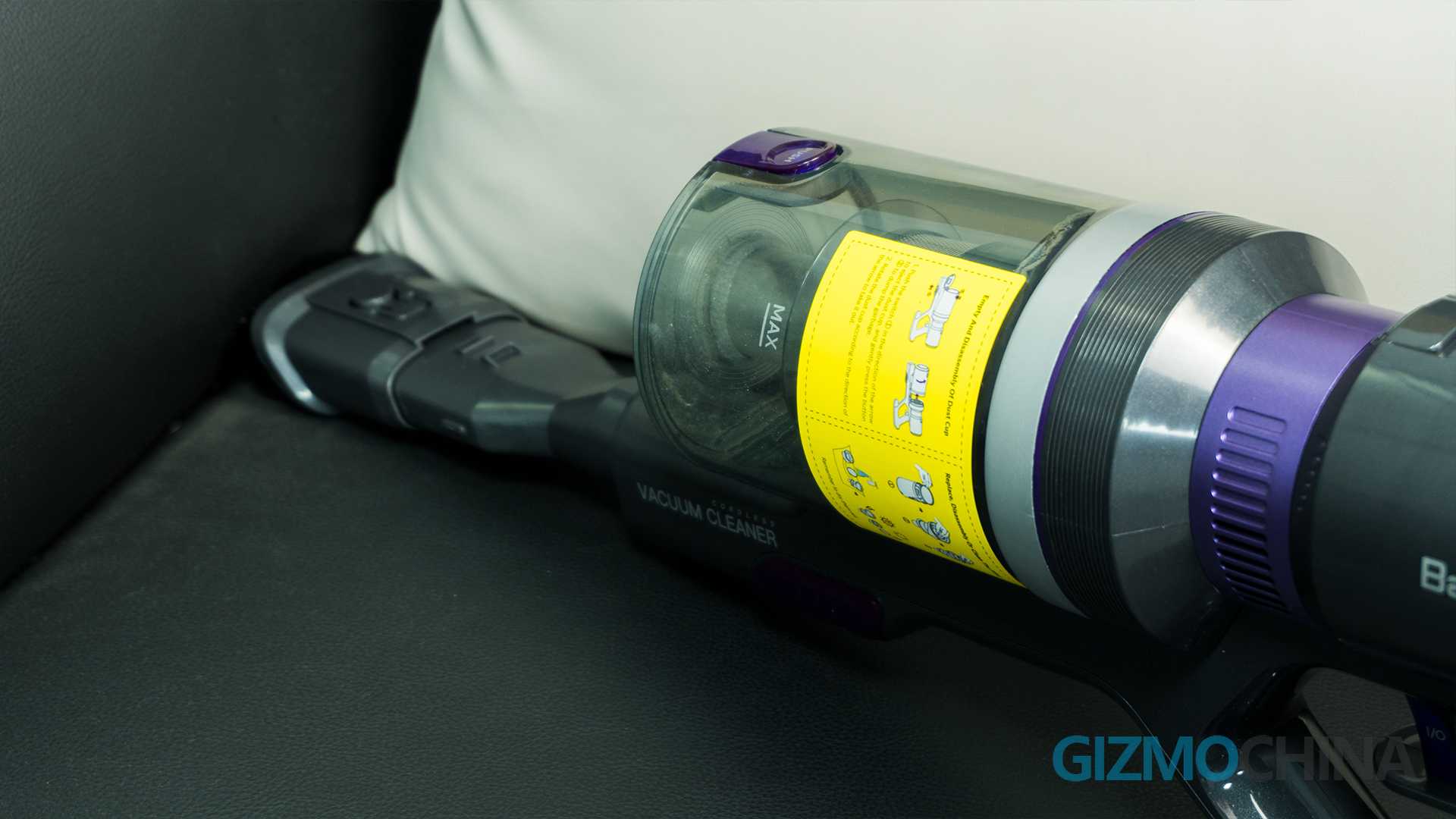
Cleaning the dust is also a two-step process: pull the switch at the bottom and press the button on the dust collection bucket to empty the dust. The entire vacuum cleaner is also easy to disassemble, and the entire dust collection bucket can be removed individually for easier cleaning.

Bagotte BS900 review 04

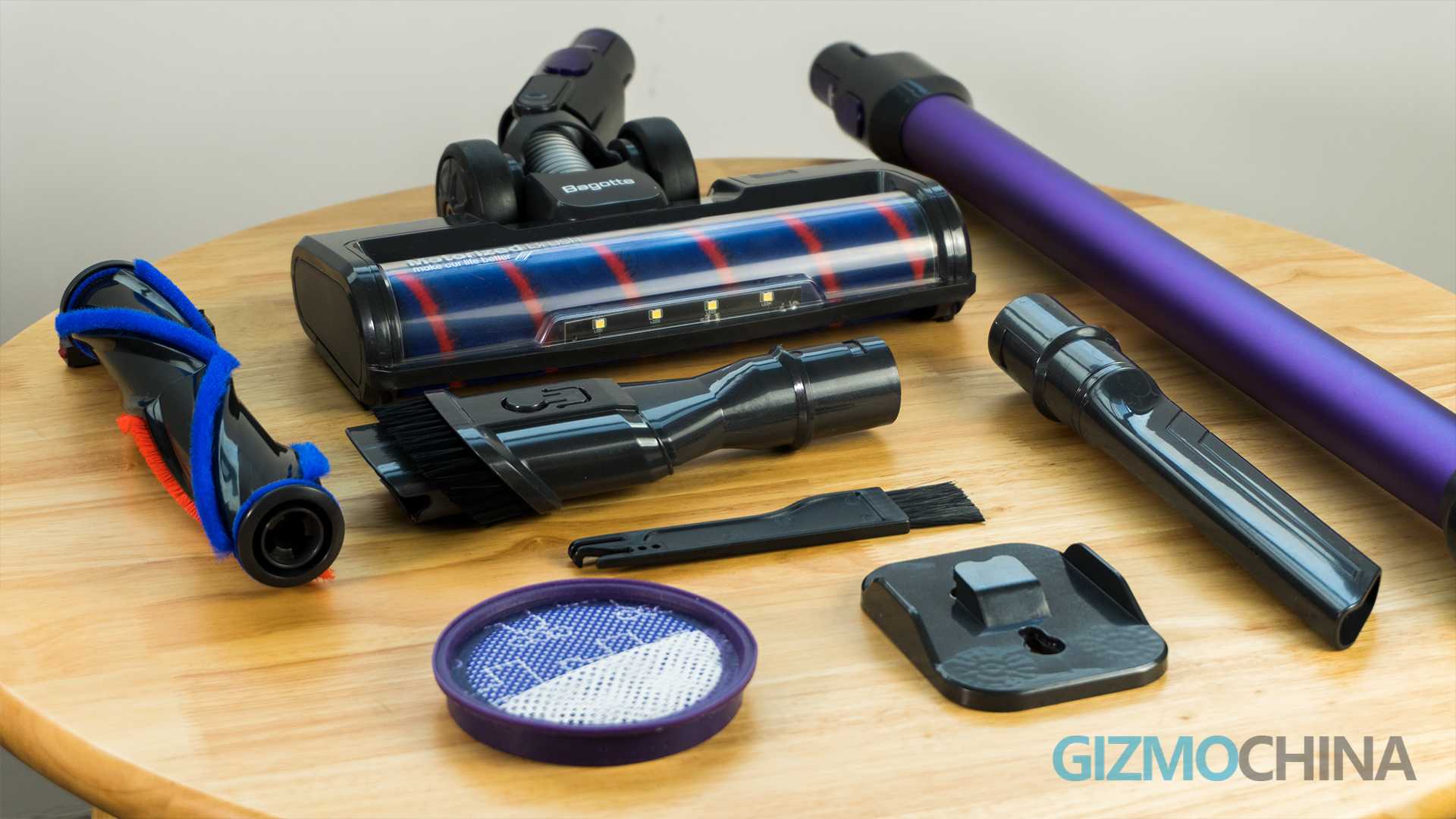
The Bagotte BS900 not only has a standard brush, but also comes with two different types of suction heads and another brush. It can be used in different scenarios such as bed vacuuming, cleaning gaps that are hard to reach, and so on.

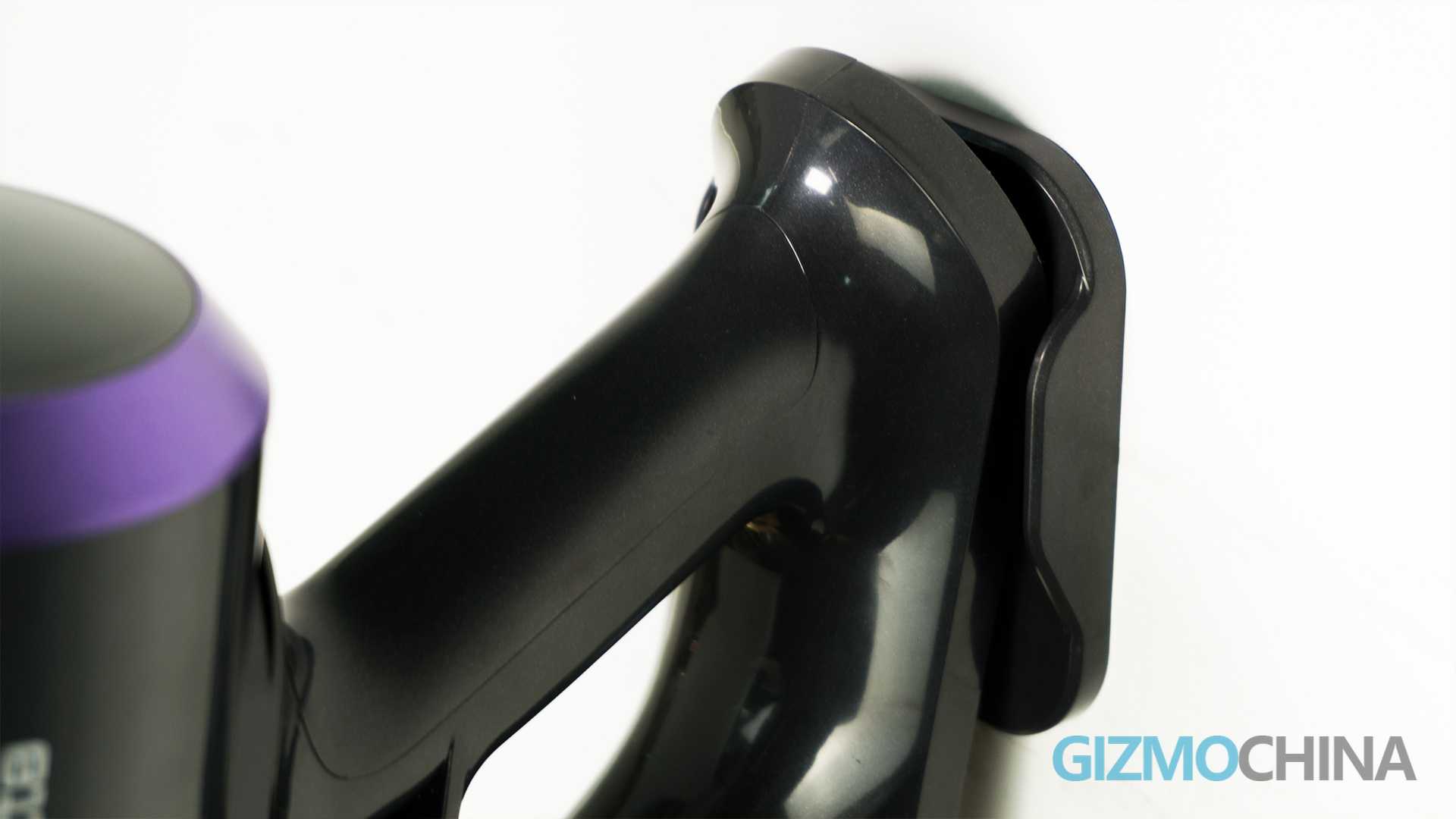
An additional HEPA filter is also included. And for your storage convenience, a wall bracket is included. It can be fixed to the wall using double-sided tape or screws.  So Bagotte has thought a lot about the overall design.

Bagotte BS900 review accessoriesThe basic functions and design of the Bagotte BS900 are well done, and there is a lot of free stuff attached. For users on a tight budget (around $200), the Bagotte BS900 is a good choice for those who want to buy a vacuum cleaner.

Purchase link: Grab Bagotte BS900 on Amazon.

OnePlus 9RT Full Review: The perfect balance of camera and price

We thought OnePlus’ first phone in the second half of the year would be the OnePlus 9T, but it turned out to be the OnePlus 9RT. 

Yes, only six months have passed since the release of the OnePlus 9R, and OnePlus is rushing to launch an upgraded version. 

OnePlus 9RT review featured 3

Why exactly is OnePlus launching this phone? Maybe we can get the answer from the phone. 

VIDEO REVIEW:

OnePlus 9RT Review: Design

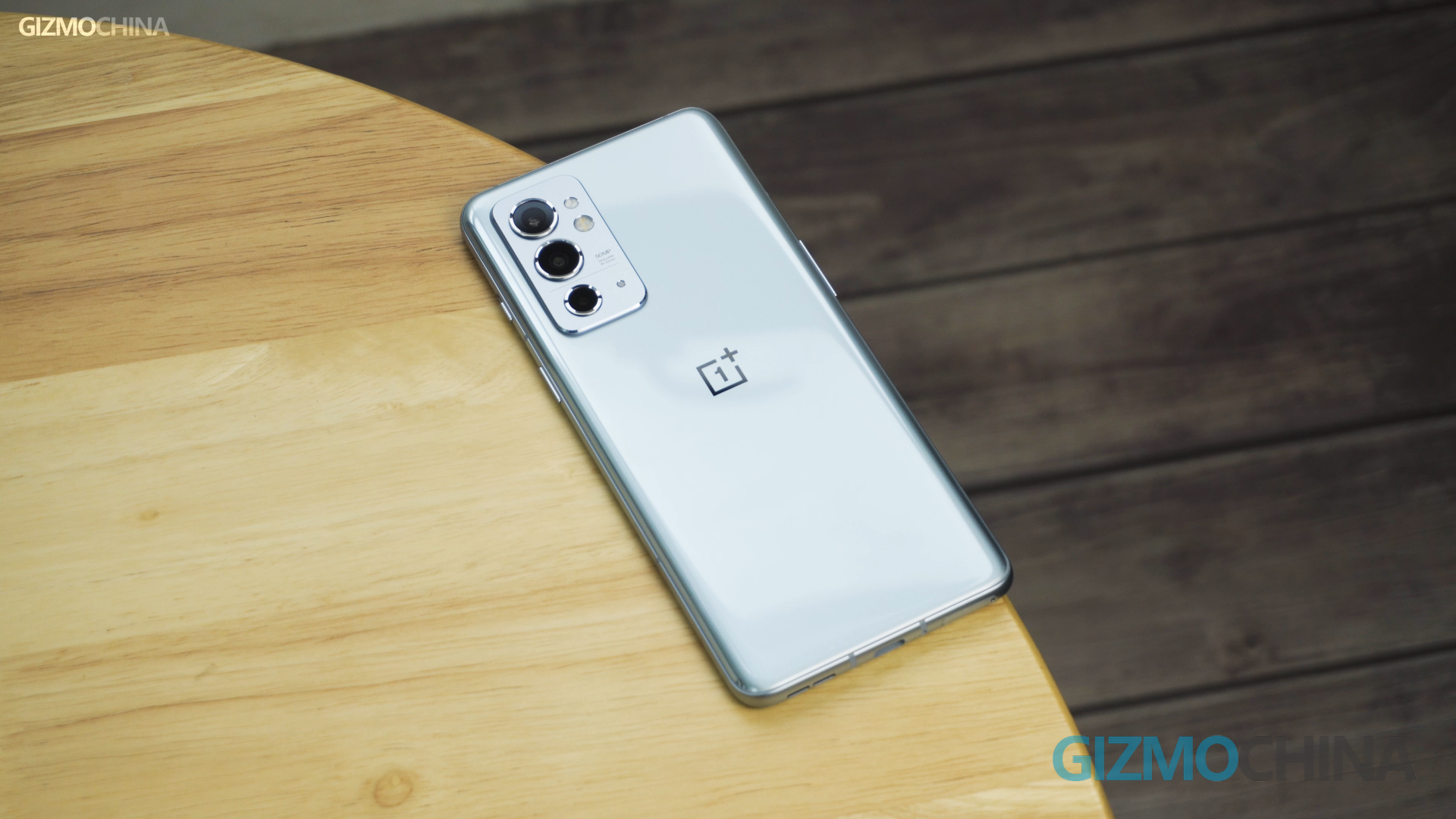
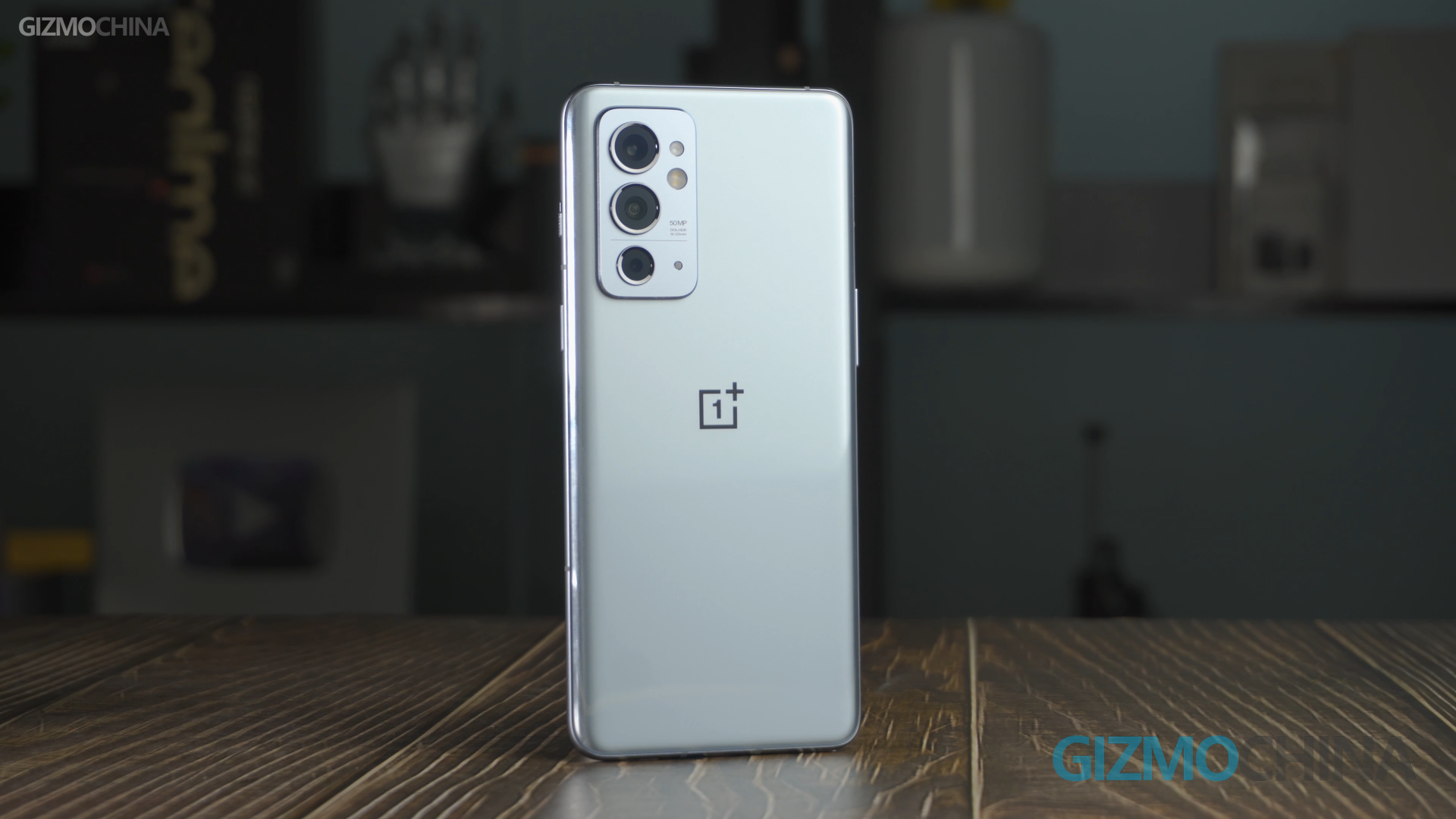
Although it is said to be an upgraded version of the OnePlus 9R, the OnePlus 9RT is more like a twin of the OnePlus 9. The almost identical appearance of all three reflects the continuity of the OnePlus design, but it also inevitably feels like it lacks novelty. This silver 9RT looks like a ceramic glazed material and doesn’t get fingerprints easily.

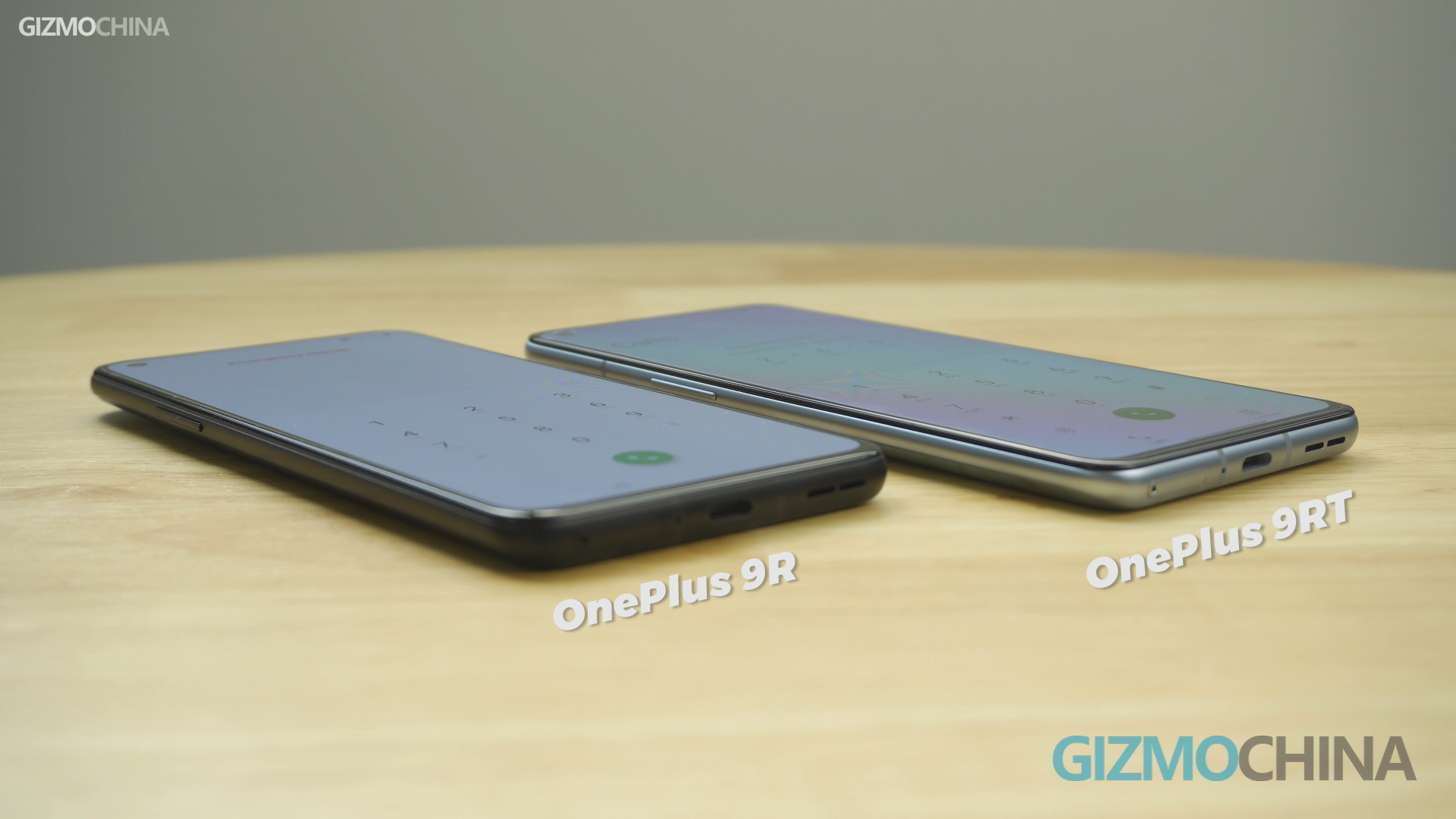
OnePlus 9RT review ports sizeThe new process makes this silver my favorite of the three colors of the 9RT, and the feel of the phone that OnePlus has been emphasizing is great on the OnePlus 9RT. The rounded frame and back cover are very tight and the weight of less than 200g brings excellent experience.

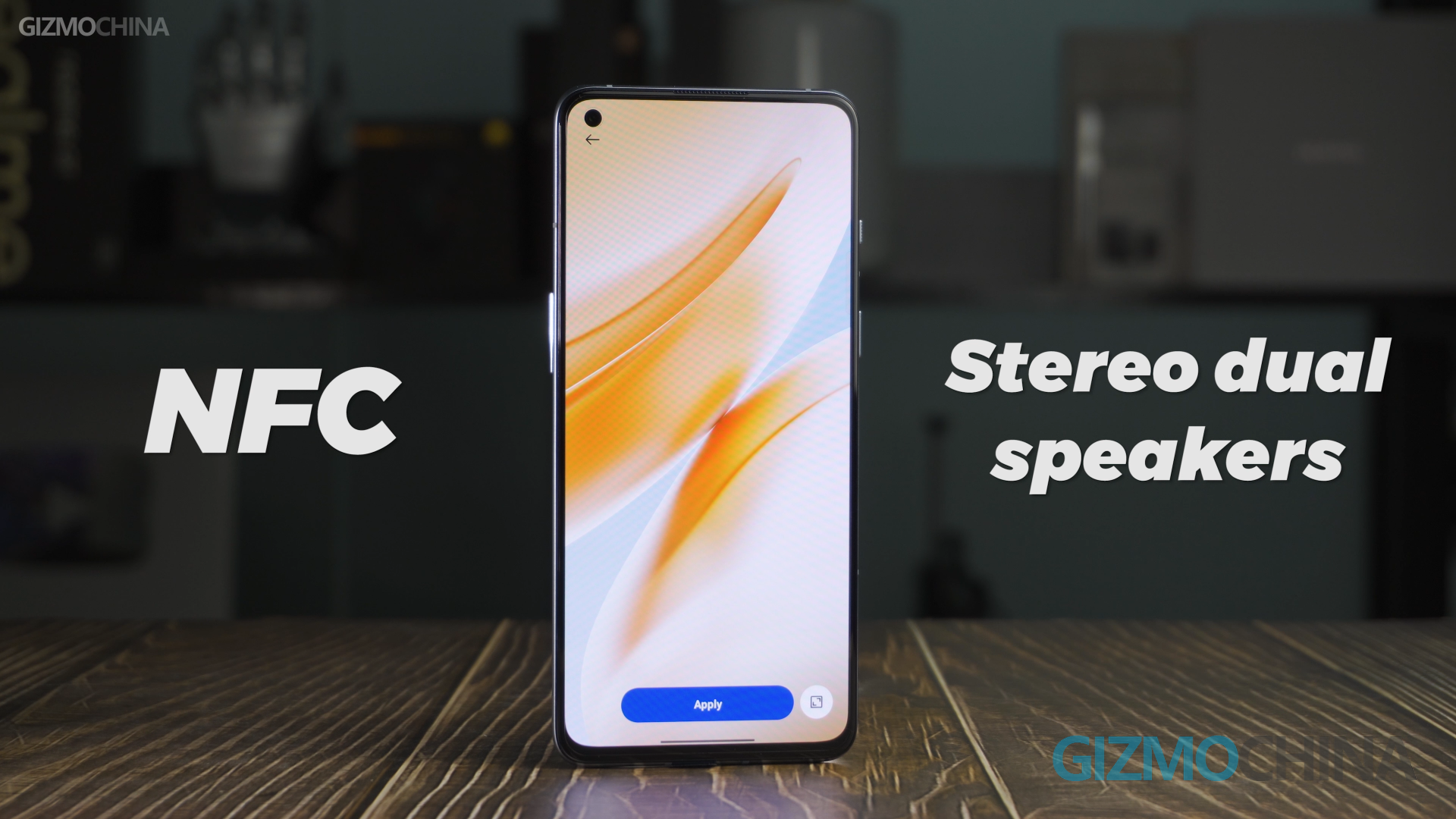
OnePlus 9RT review nfc stereo speakersFeatures such as NFC and stereo dual speakers are not missing either. If I could sum up the design of the OnePlus 9RT in one sentence, it would be: it looks ordinary, but it’s comfortable to use.
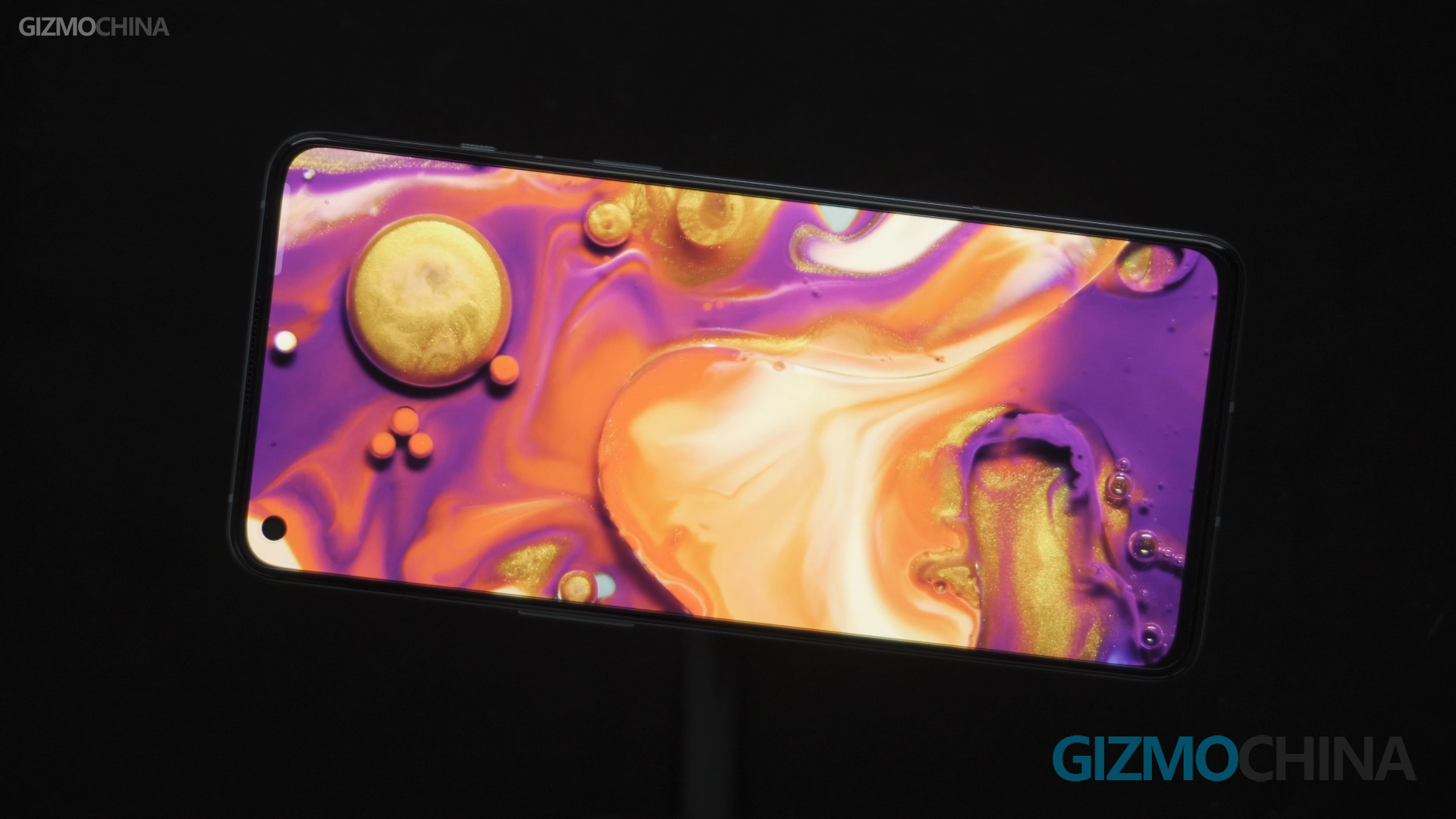
OnePlus 9RT display Hands on 10

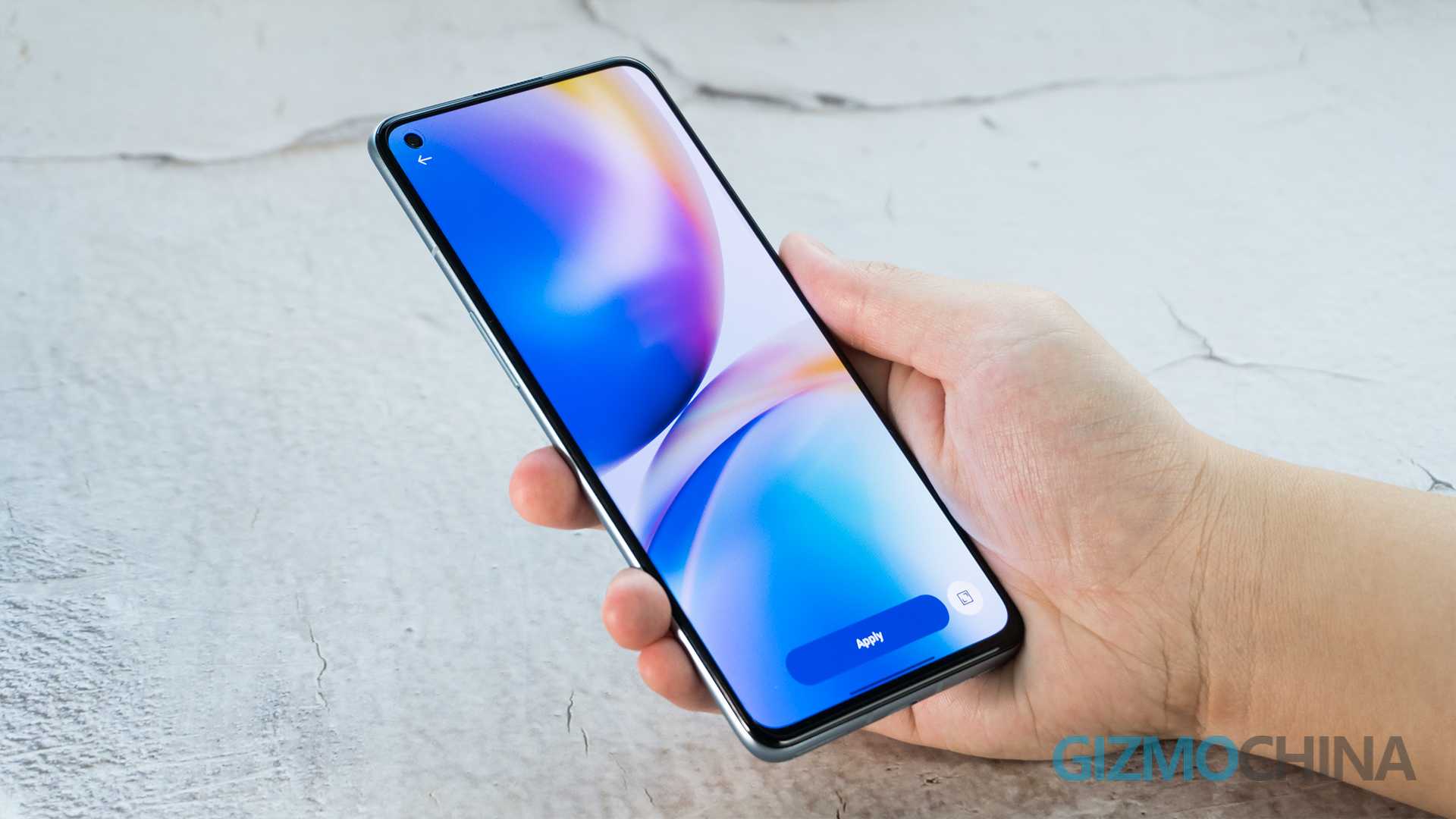
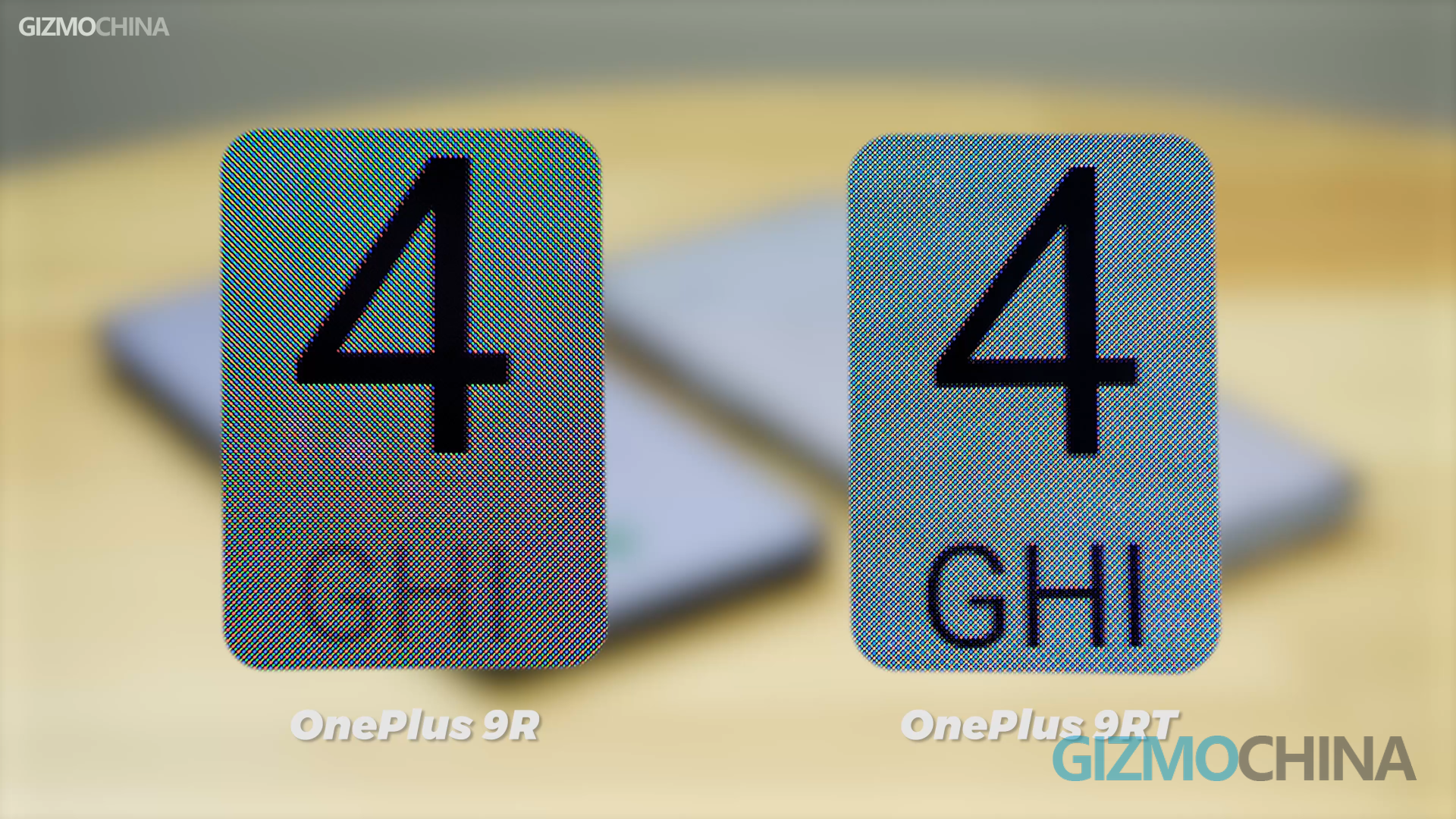
The specs of the screen have also changed slightly compared to the OnePlus 9R. The size has gotten bigger, so the PPI is a bit lower at the same resolution. This time, the 9RT adds sub-pixel rendering of fonts, which theoretically improves the clarity of some fonts. The downside is that there may be colored streaks around the edges of the fonts.

OnePlus 9RT review display 2But even after zooming in, you can’t see a big difference, and the impact on daily use is ignorable. The biggest difference is that the screen of the OnePlus 9RT is no longer Fluid AMOLED. The biggest disadvantage of the OnePlus 9RT with a regular AMOLED is that it is not transparent enough. The lower bezel is also wider than the 9R, and the rainbow effect is noticeable when you look at it sideways. Although it is difficult to find these shortcomings during normal use, in general, the screen of the OnePlus 9RT is a bit of a step backwards compared to the 9R. 

OnePlus 9RT review display quality
OnePlus 9RT display pixel comparison

OnePlus 9RT Review: Performance, Benchmark, & Gaming
OnePlus 9RT review Benchmarks

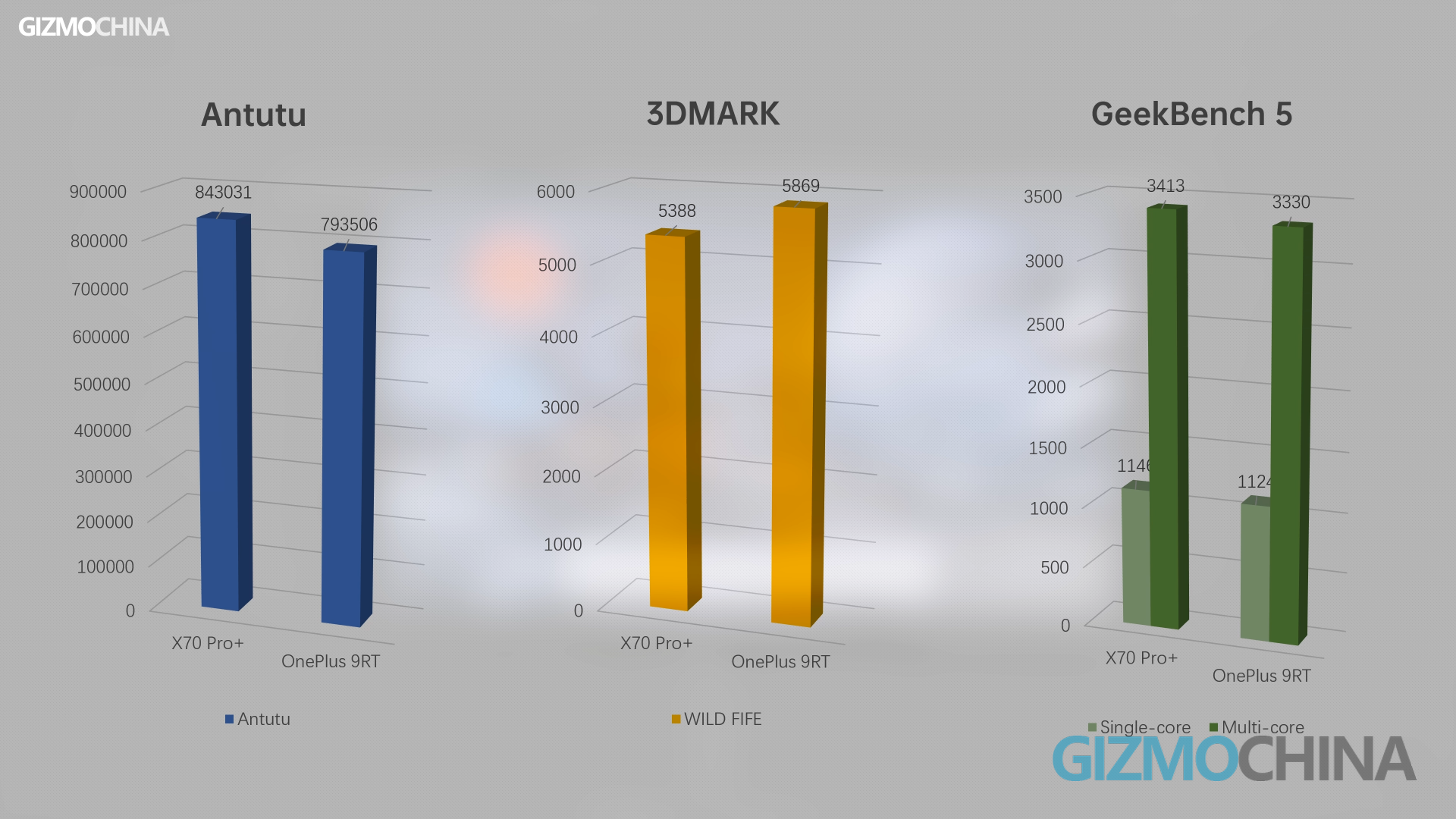
OnePlus 9RT does not use Snapdragon 888+, rather comes with Snapdragon 888, and the system is equipped with the latest Color OS 12, with Benchmark scores of 793506 on AnTuTu, 3DMARK score of 5869, Geekbench 5 single-core of 1124, and multi-core score of 3330. This time, OnePlus focused on optimizing the gaming experience, with the in-game touch sampling rate reaching up to 600Hz.

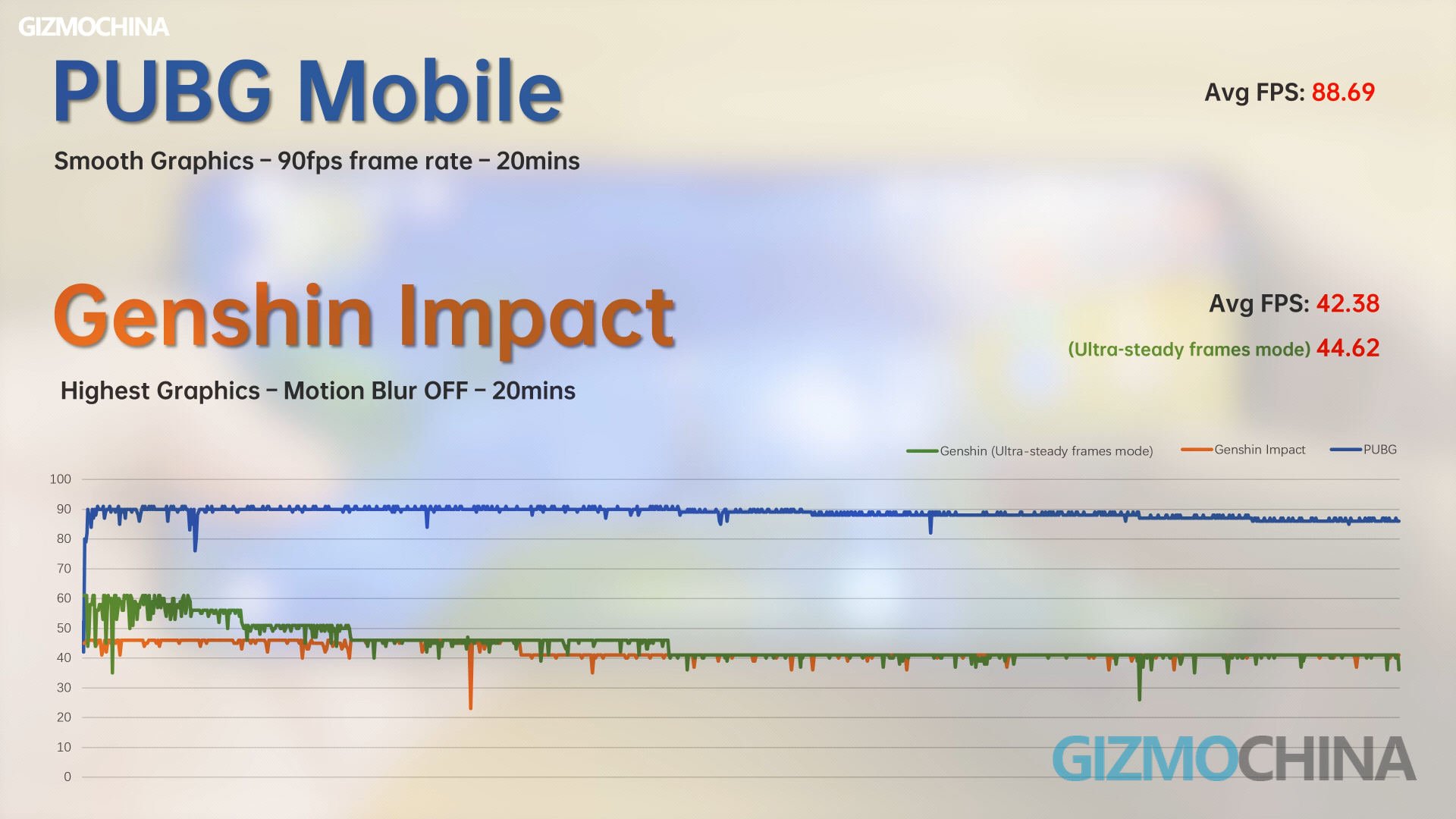
OnePlus 9RT review gaming PUBG GenshinThe 90FPS frame rate for PUBG is satisfactory, although it’s not 90 FPS throughout, but an average of 88 FPS is considered very good. OnePlus 9RT also has an official cooperation with Genshin Impact this time, but the optimized Genshin Impact performance doesn’t seem to be as impressive as we thought it would be, with the frame rate quickly locking in at 40 fps. Obviously, OnePlus is looking for stability and lower gaming temperatures than high frame rates.

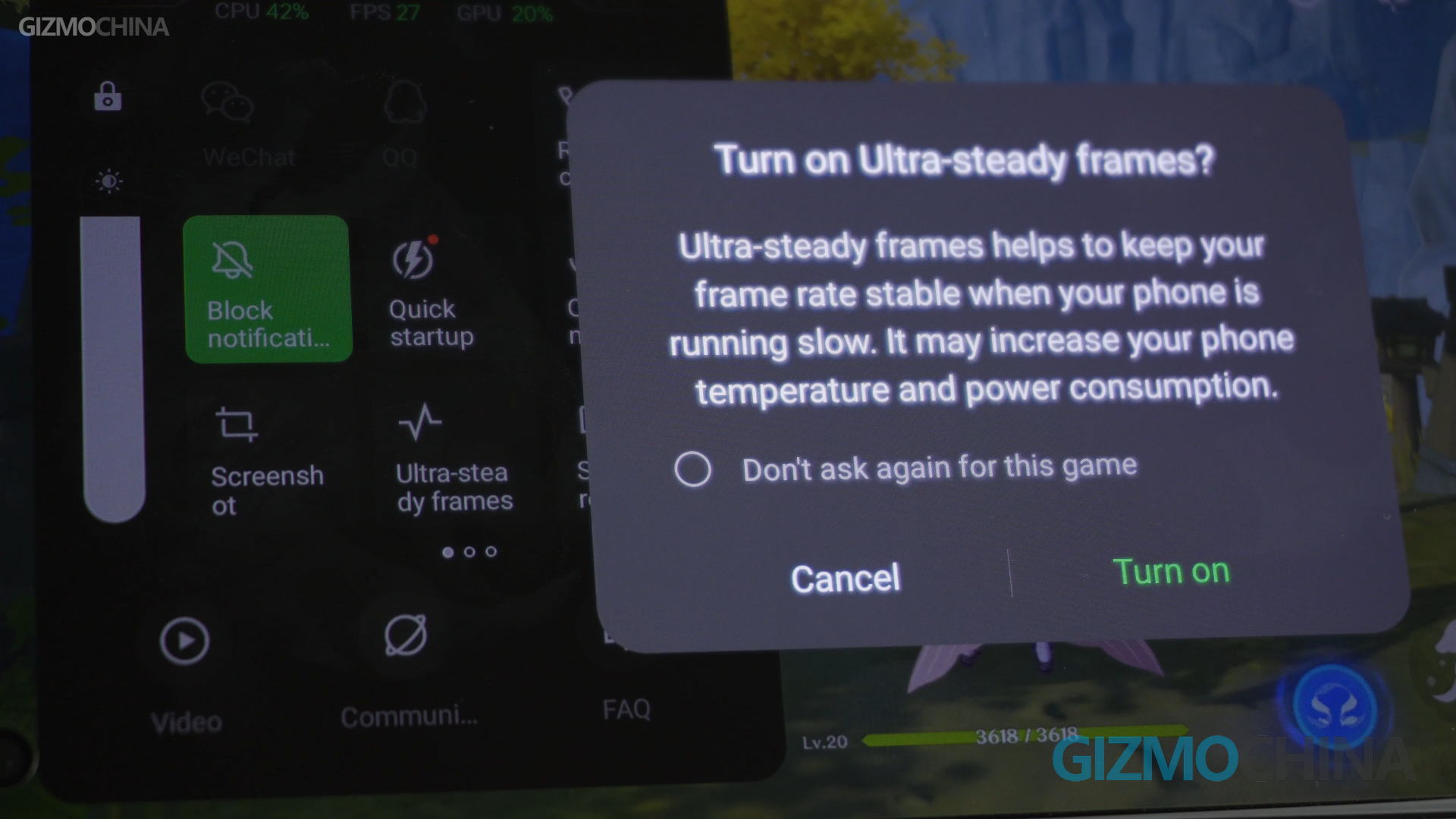
This time, the 9RT has a new “Ultra-steady frame mode”. The performance is roughly the same when you turn it on, except that the frame rate is a bit higher at the beginning. But the smooth drop in frame rate does bring a better gaming experience than some phones with higher frame rates but without this stability. It seems that the 9RT has made some efforts in gaming, so users who like to play games can consider this model.

OnePlus 9RT Review: Cameras

OnePlus 9RT review camera featured

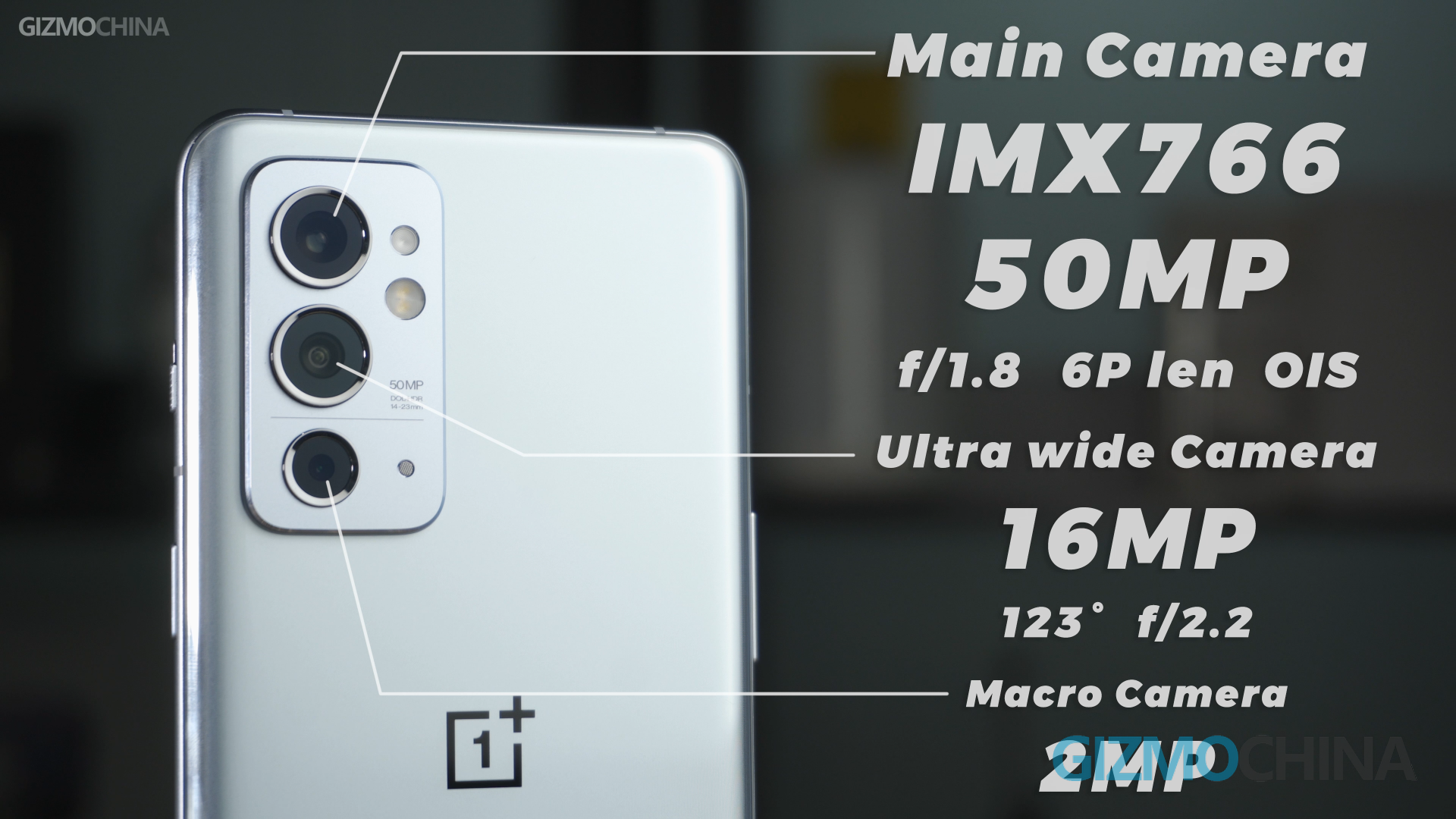
The biggest upgrade to the OnePlus 9RT should be its camera. The main camera has been upgraded from IMX586 to IMX766, which is a very big improvement in all specs compared to the 9R. Since the Mi 11 is also at the same price point and has a flagship sensor, we chose the Mi 11 as the model to compare.

Main Camera

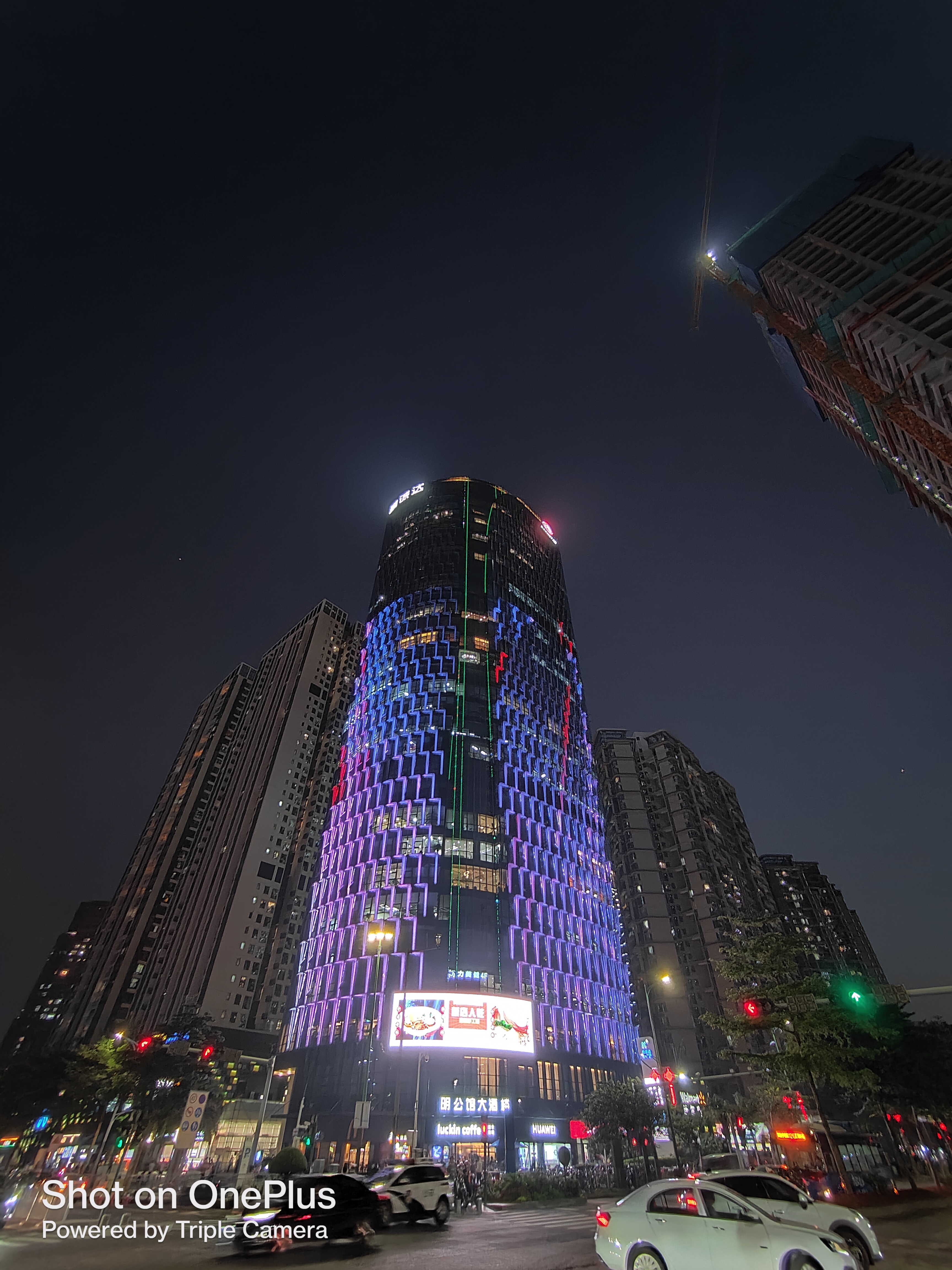
Daytime performance is good, the colors are gorgeous but not too saturated, it will look better. Dynamic range is also good. At night, you can see how great the IMX766 is. You can see detail in both the highlights and shadows. And with a larger single pixel size, capable of reducing exposure time, the Mi 11’s super high pixel count actually suffers in dark light. It’s safe to say that the OnePlus 9RT’s main camera is on par with many flagship phones. The only complaint is that I wish they would reduce AI sharpening of the image to a certain extent, which can be over-sharpened at times. The main camera also adds a “HI-RES Mode”, which can take 100-megapixel photos with AI interpolation. However, it doesn’t improve the clarity of the image much and is still far from the quality of the real 100-megapixel photo from the Mi 11. And if you use this mode it may also lack AI color tone resulting in the final shot not being as good as the photos taken in Auto mode. So it is not recommended using this mode on a daily basis.

Ultra-Wide Camera

I am still very impressed with the ultra-wide camera, even though it is not an upgrade. The dynamic range is excellent, especially the control of highlights. Even though the Ultra Wide Camera doesn’t have a large sensor size, with the excellent algorithm, OnePlus 9RT gets correct exposure in dark lighting at night. And the auto mode also incorporates the night view algorithm, so you can see some difference between the photos it takes in auto mode and night mode in low light. The overall experience of using this camera is excellent.

Macro Camera

The performance of the 2MP macro lens is the same as most budget phones, and the closest focusing distance is actually 4cm. Its image quality is worse than that of cropping with the main camera, so we won’t go into too much detail about its camera quality.

Coming to the video recording, I was honestly shocked by the 9RT’s video shooting capability. Not only do the main and ultra-wide angle cameras support 4k 60FPS recording, but you can also freely switch between the main and ultra wide angle cameras during recording at 4k 30FPS. Many phones in the same price range can’t do this, including the Mi 11. AI Highlight mode allows you to record videos with more vibrant colors and a bit of dynamic range improvement. But because the effect is not significantly improved, and you can only shoot 1080P 30FPS video, it is not recommended for everyday use.

Do check out our video review added above for the video shooting comparison.


OnePlus 9RT Review: Battery Life & Charging

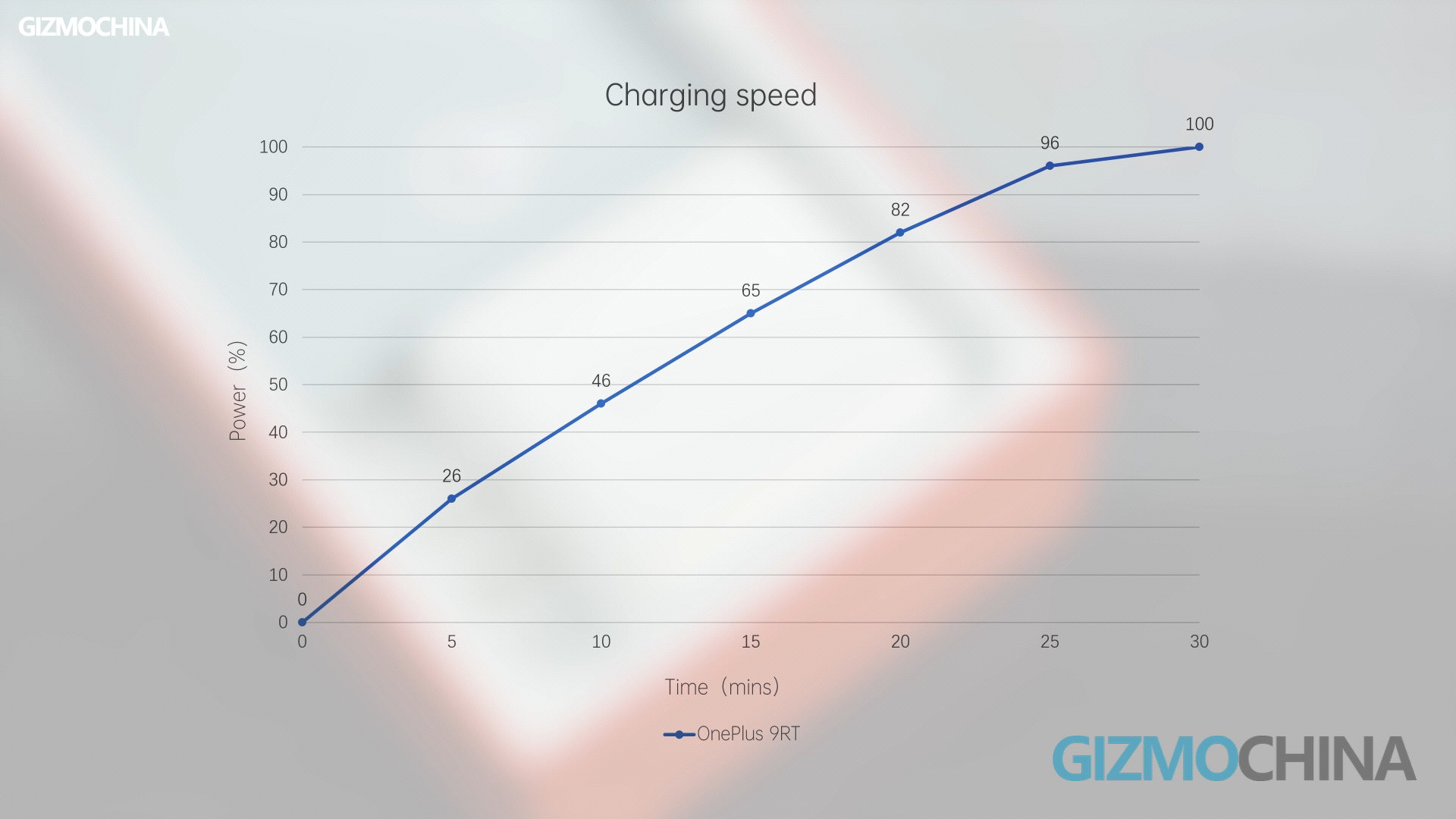
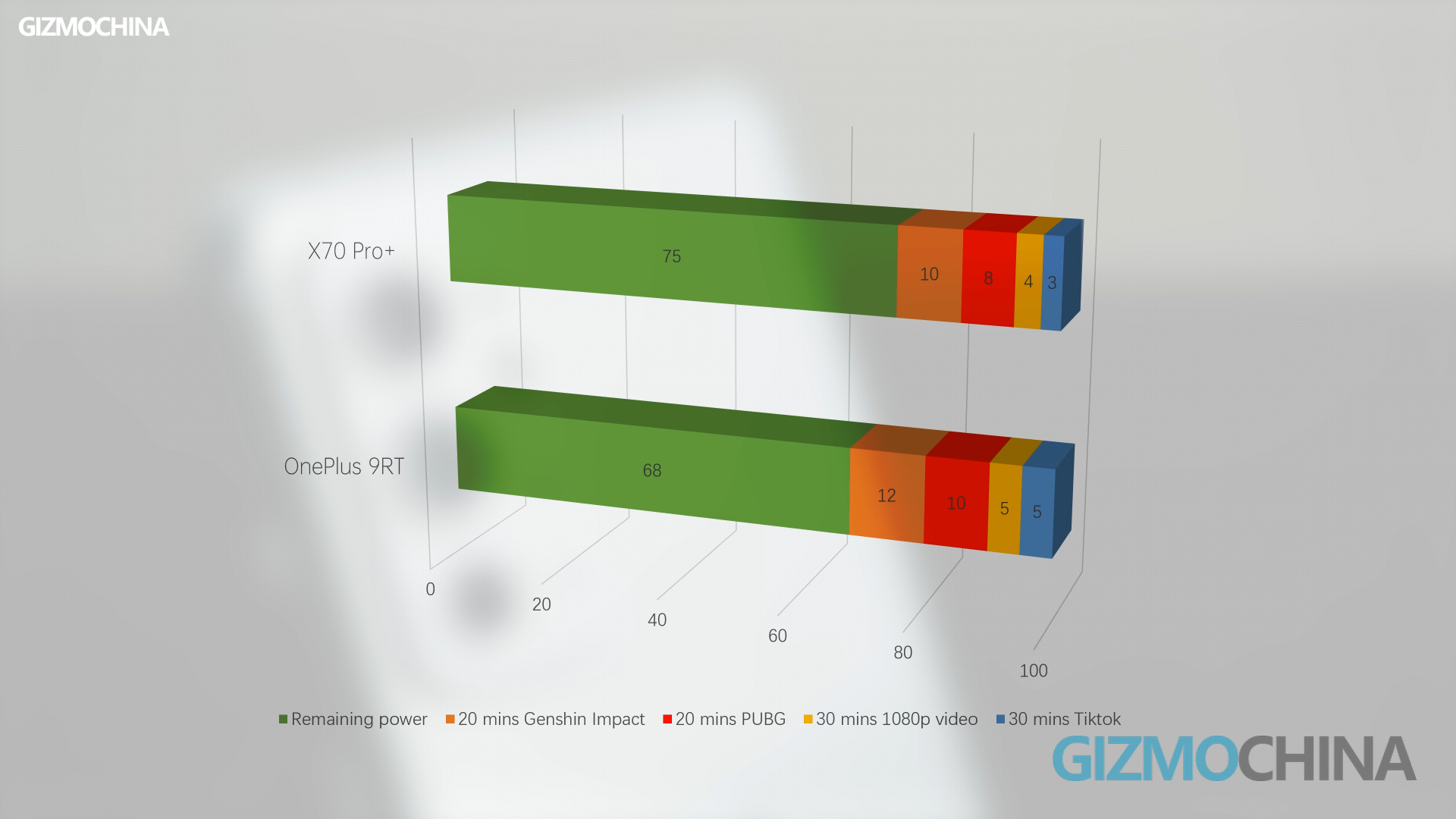
OnePlus 9RT supports up to 65W of charging power. The special 65w charger is right inside the box. It takes five minutes to charge to 36%, fifteen minutes to 65%, and takes only half an hour to fully charge to 100%. The battery is still 4500mAh, and the power consumption of each scene is shown in the picture.

OnePlus 9RT review 04Half hour of Tiktok consumes 5%, half-hour of online video around 5%, two games consume 10% and 12% respectively. This power consumption is at a relatively normal level for a Snapdragon 888 phone.

OnePlus 9RT review 03

So why did OnePlus launch the 9RT? 

OnePlus 9RT review featured

After comparing the OnePlus 9, 9R, and 9RT, I found that the biggest difference between them is the camera. The OnePlus 9 has the best camera of the three, while the 9R is the cheapest. The OnePlus 9RT is the phone that has the best balance of price and photo experience. In fact, its camera surpasses our expectations as well. 

So what do you think about the phone?


RELATED:


Huawei MateBook 14 2021 Ryzen Edition launched, features up to Ryzen 7 5700U processor

Huawei recently quietly released Ryzen variants of its MateBook 14 2021 laptop in China equipped with the latest AMD Ryzen 5 5500U and Ryzen 7 5700U processors.

huawei-matebook-14-2021-featured

The MateBook has a 2K resolution FullView display with a tall 3:2 aspect ratio and its bezels are extremely slim resulting in a 90% screen-to-body ratio (via IT Home). The display supports 100% sRGB color gamut and comes with tech to reduce blue light. The touch screen supports advanced gestures that you get on a regular smartphone, like pinch to zoom and 3-finger swipe to capture screenshots.

The laptop weighs 1.49kg, measures just 15.9mm thick, and its body is made up of an aluminum alloy.

huawei-matebook-14-2021

It is powered by a battery with a 56Wh capacity which helps it last for up to 11 hours while playing Full HD videos. Huawei claims that with just a 15-minute charge, you can get 2.5 hours of screen time. For heat dissipation, the laptop has dual heat pipes and dual Shark fin fans.

The laptop comes with Huawei Share support for seamless connection and file sharing between your Huawei phone and Huawei laptop.

Its interfaces are comprised of 2x USB 3.2 Gen 1 ports, 1x HDMI port, 1x USB Type-C port, a 3.5mm headphone jack, and a 65W USB Type-C port charger.

huawei-matebook-14-2021-inline

To protect your privacy, the built-in webcam is innovatively housed within a button at the top of the keyboard, and only pops up when you press it.

The Huawei MateBook 14 2021 Ryzen Edition comes in Space Gray and Haoyue Silver color options. Its Ryzen 5 5500U variant with 16GB RAM and 512GB ROM (NVMe PCIe SSD) is priced at 5999 Yuan or around $939. As for the Ryzen 7 5700U, also with 16GB RAM and 512GB ROM, the price tag says 6299 Yuan or around $986.

RELATED:

Lei Jun withdraws from Director Roles at various Xiaomi backed firms

Lei Jun, the founder and CEO of Xiaomi, has successfully withdrawn from a number of the company’s units and even certain firms that are backed by the Chinese tech giant.

Xiaomi Mi 11 Lei Jun featured

According to a PanDaily report, the industrial and commercial registration information regarding Chengdu Beida Asset Management Co recently made two notable updates, one of which revealed that Lei Jun has withdrawn from the company’s Executive Director position. For those unaware, Chengdu Beida Asset Management is owned by Tianxing Digital Technology, which runs a mobile payment platform that is owned by the smartphone maker.

Previously, the senior official of the Chinese tech giant had also withdrawn from his position of Chairman of Xiaomi Credit Management Co. Ltd. and the Director position of Shanghai Xiaomi Financial Information Service as well. Back in July, Lei Jun even withdrew from the position of Executive Director of Chongqing Xiaomi Commercial Factoring Co. Ltd.

Xiaomi

As of right now, the executive is still the Executive Director, Chairman, and CEO of Xiaomi, which focuses on smartphones, smart TVs, and other smart household products and ecosystems as well. His responsibilities includes strategy making, corporate culture building and key products development, along with supervising the senior management team. Despite leaving a number of firms backed by the company, he is still the director at various other subsidiaries, merged affiliated firms, and other entities backed by Xiaomi.

RELATED:


ASUS announces Android 12 stable update plan for its smartphones

Smartphone brands have started sharing plans to upgrade their devices to Android 12. The latest OEM to join this bandwagon is ASUS. The Taiwanese PC maker has confirmed to update six of its handsets to the latest version of Android by the first half of 2022.

Android 12 Logo Featured A

ASUS has stopped releasing budget and mid-range smartphones. Hence, right now, the company only sells high-end ZenFone models and ROG Phones. These devices are also limited to certain regions.

Unlike other OEMs, ASUS is still following the two Android update policy. Hence, the ZenFone 6 and the ROG Phone 2 will not be receiving the Android 12 update. Whereas, the newser 6 devices will get access to the fresh version of Android.

The company says (via XDA Developers) that the upcoming software update will also bring ZenUI-specific changes and its own battery as well as performance-related tweaks.

Having said that, the Android 12 stable rollout will begin in December 2021. The ZenFone 8 and the ZenFone 8 Flip will be the first to receive it, followed by ROG Phone 5 and ROG Phone 5S in Q1 2022. Finally, the ZenFone 7 and ROG Phone 3 will be updated sometime later in H1 2022.

ASUS Android 12 Stable Update Timeline

From December 2021

From Q1 2021

From H1 2021

What are your thoughts on ASUS’ Android 12 stable update schedule? Do let us know in the comment section below.


RELATED: