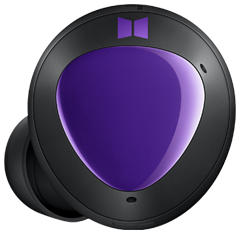
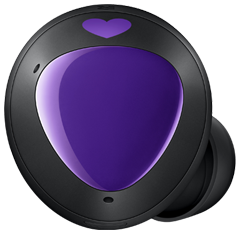
Samsung launched the Galaxy S20 series earlier this year. The company is known for releasing new colors of its devices after a certain period of time. This is a long-used strategy to boost sales when the curve flattens. This year, the electronics giant has partnered with BTS, a K-Pop band to launch a limited edition Galaxy S20 Plus and Galaxy Buds Plus TWS.
The South Korean maker is not releasing something crazy as they did with superhero-themed Galaxy S series phone back in the day. Aso, it does not look anything like the recently announced heavily themed Oppo Ace 2 EVA and iQOO 3 5G Transformers.
Instead, the company is taking a safe route by simply coating the Galaxy S20 Plus with BTS’ signature purple color. On the other hand, the Galaxy Buds Plus gets an extra tiny BTS’ ‘I Purple You’ logo on the buds as well as the charging case.
Apart from the above-mentioned subtle changes, the handset and the TWS remains the same except maybe it could arrive with special BTS theme out of the box.
1 of 4
Samsung officially teased the limited edition Galaxy S20 Plus on its Twitter profile with July 9 launch date. The teaser video also mentioned the availability will vary by country and hence don’t expect it to release everywhere.
However, the BTS-themed Galaxy Buds was first revealed by Max Weinbach of XDA Developers who also shared the official poster of Galaxy S20 Plus BTS Edition.
The Consumer Technology Association (CTA) organisers of the popular Consumer Electronics Show (CES) which usually holds in January in Las Vegas has announced that CES 2021 will be held in-person in January next year. The group says it intends to make the platform available to exhibitors to be able to get across to consumers. This time around, the event will see more live streaming of events and a broader safety guideline will be adopted.
CES 2020 was held in January this year just at the nick of time before the COVID-19 pandemic became a global health crisis. The Mobile World Congress (MWC) 2020 wasn’t that lucky as it was cancelled before it could hold in February 2020 before the event could hold.
Last year’s CES event recorded an estimated 175,000 attendees. Although we don’t expect that much persons to attend next year;’s event, it remains to be seen if it would be possible to maintain a safe environment in the wake of the COVID 19 pandemic. CTA says it intends to “regularly clean and sanitize spaces” and offer “sanitization stations.” It also plans to widen aisles and seats to increase distancing, limit “touchpoints” by using tech like mobile payments and provide on-site health services. The organisation says it will also look into doing temperature scans and that it plans to issue “best practices,” like wearing of face mask.
As of this moment, it is difficult to say if it will be possible to hold a large-scale conference in January. he pandemic is still raging and a vaccine isn’t expected until next year. Even if CTA gets the green light from health authorities to hold the been, the outfit will still have to deal with a lack of enthusiasm from attendees who may not want to attend due to safety concerns.
Is it too early for CTA to schedule CES 2021 for January in the face of COVID 19? Lets us known what you think in the comment section.
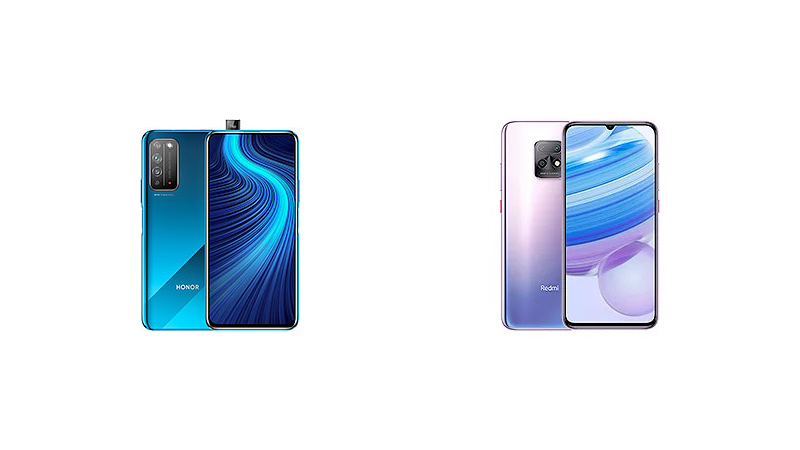
It is becoming every day easier to find very affordable smartphones with the support to 5G connectivity. In this article, we are comparing the latest affordable 5G devices which are also among the cheapest 5G phones released until now. Their names are similar and so are their specifications, that is why we chose them for this comparison: we are talking about Honor X10 and Redmi 10X. Both devices released by “sub-brands” and both with midrange specifications. But who is the best? Let’s discover it together with an in-depth specs comparison.
Huawei Honor X10 vs Xiaomi Redmi 10X
Huawei Honor X10
Xiaomi Redmi 10X 5G
DIMENSIONS AND WEIGHT
163.7 x 76.5 x 8.8 mm, 203 grams
164.2 x 75.8 x 9 mm, 205 grams
DISPLAY
6.63 inches, 1080 x 2400p (Full HD+), LTPS IPS LCD
Triple 48 + 8 + 2 MP f/1.8, f/2.4 and f/2.4
16 MP f/2.2 front camera
Triple 48 + 8 + 2 MP f/1.8, f/2.2 and f/2.4
16 MP f/2.3 front camera
BATTERY
4300 mAh, Fast charging 22.5W
4520 mAh, Fast charging 22.5W
ADDITIONAL FEATURES
Dual SIM slot, 5G
Dual SIM slot, 5G
Design
Honor X10 5G distinguishes from most of the affordable phones out there for providing a full screen display with no notch or holes. Indeed, it is equipped with a pop-up front camera popping up thanks to a motorized mechanism. That is why it has a more attractive design than Redmi 10X. On the other hand, Redmi 10X 5G still comes with a very high screen-to-body ratio (but it has a waterdrop notch) and it is even well built. It comes with a glass back and it is splash resistant, while Honor X10 does not offer protections against water and liquids.
Display
If you are a gamer or you just prefer having a smoother viewing experience, you should go for the Honor X10 as it offers a high 90 Hz refresh rate. But if you want the best image quality, choose the Redmi 10X as it offers an AMOLED panel instead of an IPS one, as well as the HDR10+ certification. Honor X10 has a slightly wider display, but that is just a minimal difference. Both come with a 20:9 aspect ratio, but while Redmi 10X has a notched display, Honor 10X has a full screen panel thanks to a pop-up camera. Do you prefer a high refresh rate or a better image quality?
Specs & Software
Just like the number that identifies them is the same, the performances of the Kirin 820 5G and the Mediatek Dimensity 820 chipsets found on Honor X10 5G and Redmi 10X 5G are very similar. The Dimensity 820 has slightly better results on AnTuTu benchmarks (410K points against 380K points scored by the Kirin 820 5G), but on Geekbench the Kirin 820 takes the crown. The two handsets are equipped with up to 8 GB of RAM but Redmi 10X provides up to 256 GB of internal storage, while Honor X10 stops at 128 GB. Honor X10 and Redmi 10X run Android 10 customized by EMUI and MIUI, respectively. Global customers will not get Google services with the Honor 10X. The handsets support 5G connectivity in its sub-6 GHz frequencies.
Camera
You should get a very close photo quality with Honor X10 and Redmi 10X, and they are not among the best camera phones, neither in the midrange segment. They boast a triple camera setup composed of a 48 MP main sensor (40 MP on the Honor 10X), an 8 MP ultrawide sensor and a 2 MP depth sensor. On the front side, they both have a 16 MP selfie snapper. You should get a pretty nice camera quality, but nothing special compared to the other devices you can find at the same price.
Redmi 10X has a bigger battery than Honor 10X: we are talking about 4520 mAh against 4300 mAh. And given that both the chipsets are built at 7 nm, both the phones support 5G, and Redmi 10X has a more efficient (and smaller) AMOLED display, we believe that Redmi 10X 5G will last more on a single charge. Note that our opinion is only based on the specs and we still did not test the battery life of these devices. Also note that Honor X10 is still a good battery phone and, unlike Redmi 10X 5G, it supports reverse charging.
Price
Honor X10 and Redmi 10X 5G launched in the Chinese market and both the companies are yet to launch them globally. The base variant of the Honor X10 carries a price tag of 1899 Yuan in China, which roughly translates into $267. The Redmi 10X 5G starts from just 1599 Yuan (approx. $225). The Honor 10X actually offers a higher refresh rate, a full screen design, and reverse charging, but Redmi has an amazing AMOLED HDR10+ display and a bigger battery, as well as a glass back, an infrared port, and a splash proof body making it slightly more interesting. Which one would you pick?
Huawei Honor X10 vs Xiaomi Redmi 10X: PRO and CONS
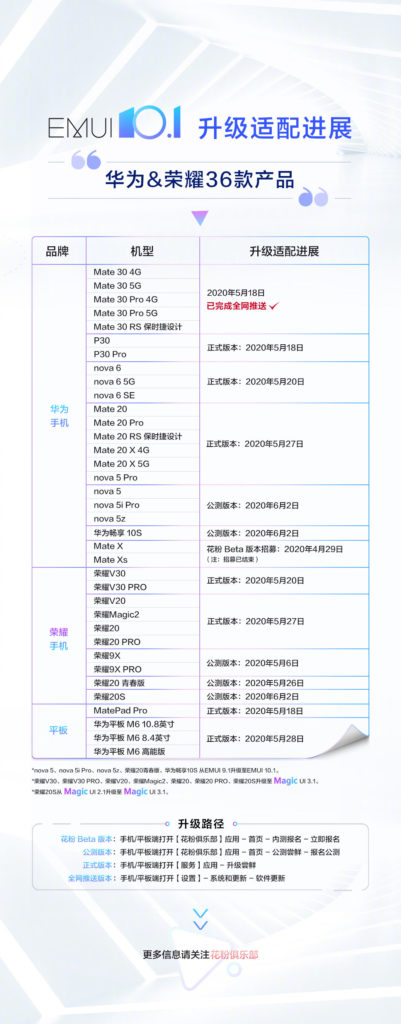
Huawei has been rolling out EMUI 10.1 ever since the company announced it alongside P40 series. Initially, it was available as closed beta releases in China. Soon, the company began to roll out open beta as well as stable builds in its home country. Now, according to EMUI official Weibo account, Huawei has successfully rolled out EMUI 10.1 to 36 devices.
The 36 devices that have received EMUI 10.1 include Honor-branded smartphones as well. Also, it is worth noting that not all the devices have received stable build as some of them are still limited to public beta.
For instance, Nova 5i Pro, Nova 5, Nova 5z, Enjoy 10S, and Honor 20S have just started receiving open beta builds today.
Further, Honor devices are receiving Magic UI 3.1, which is a fork of EMUI 10.1 with some minor tweaks. Anyway, it took the company two months to roll out the update to 36 devices.
To be fair, Huawei’s performance is much better than Oppo, which is yet to release ColorOS 7 to all of its device in China, let alone international markets.
Having said that, only a few devices have received the EMUI 10.1 update globally and the company is yet to reveal its rollout plan for international markets clearly.
Most of us have become home-bound due to the ongoing global COVID-19 crisis. Everything has changed over the past few months, including the working pattern as most of the MNCs are asking employees to work from home. This has increased reliance on our old Desktop PCs which were once engulfed with dust from several years. While the dust can be easily removed, there’s a very good chance that you haven’t upgraded your home PC in years.
To solve this, we have compiled a few tips to improve Desktop PC performance either by doing some internal cleaning or upgrading hardware at minimal costs.
After COVID-19, the unused electronics aka home desktops have emerged as real life-savers for gamers as well as the working population. However, some users are getting performance issues with Desktop PCs due to the old hardware or some other technical reasons.
There can be multiple reasons behind a sluggish PC. It can be a software glitch, a networking problem, or old hardware. You can troubleshoot the machine to find the root cause. But if it is related to hardware then we recommend you perform the below-mentioned steps to upgrade PC hardware at minimal costs.
Options to Upgrade Hardware on old Desktop PC
The user can change RAM, Storage device, Graphics Card, CPU, or even the whole motherboard if you have a feasible budget.
Note: Before upgrading any storage device, make sure to backup data. Also, check the compatibility of your hardware before making a purchase.
Upgrade to SSD
The best option to upgrade your old PC with 30-50% improvements in the desktop performance is by replacing the Hard-drive with a Solid State Drive (SSD). It will help the user to improve the boot-time, software opening time, and improve multitasking. If you haven’t used an SSD based PC before, know that the improvement in performance is significant.
The SATA SSDs can give speeds of up to 600MB/s, while the NVMe based SSDs offer speeds up to 3.2 GB/s. These speeds are at least 9X faster than the 7200 RPM Hard Drive.
There are multiple SSD available from Western Digital, Kingston, SanDisk, Samsung, Seagate, Crucial, Corsair, and others. These start from the nominal price of INR 2500 (~$33) for 240GB SSD.
Another major reason for the performance bottleneck on your PC could be the limited RAM. The machine can hang, or make programs stutter if there’s insufficient RAM. But you can easily upgrade the RAM either by adding another RAM stick or replacing the old one.
But before proceeding for the RAM upgrade, we suggest you check the desktop PC compatibility by knowing the hardware residing on the board. You can use tools like CPUz and others to get hardware information.
There are different type of RAMs that are available on the basis of compatibility:
DDR1 – Mostly used on old PCs.
DDR2 – A decade-old RAM type.
DDR3 – Prominently used by most of the PCs built till 2017.
DDR4 – Prevalent on most of the PCs these days offering better speed.
DDR5 – New to the market with faster speed.
There are various RAM manufacturers like Kingston, HyperX, Corsair, Hynix, ADATA, and many others.
How to Find Compatible RAM Easily?
Almost every brand offers a vast type of RAMs for PCs, and we have concluded some best ways to find compatible RAMs Sticks for your desktop PC. Before you upgrade your RAM, you need to find compatible RAM sticks for your PC. There are a couple of options that offer this service, but we recommend the following:
Kingston Memory Search: Users can easily search compatible RAM by using the Kingston Memory Search feature on its website. It will automatically search hardware present on your device and filters the compatible Memory sticks. You can easily choose between Kingston Value RAM (KVR) which is a standard RAM for all the OEM PCs and laptops. There’s another option of Kingston System Specific Memory (KSM) that gives maximum performance and is guaranteed to work with a specific system.
Use CPUz to find hardware information: A 2 MB software can help you locate the compatible hardware for your desktop PC. After getting the hardware information, you can easily search for the RAM that fits in your motherboard.
It is highly advisable to check RAM compatibility before buying a new pair of RAM.
Nowadays, 8GB RAM is a basic configuration if you’re looking for basic tasks like browsing. There are a number of brands available but make sure to go for known names like Kingston or if you want something more powerful than even the HyperX series, depending upon your requirement. But as we mentioned above, if you are upgrading your PC in 2020, make sure to have at least 8GB of RAM. We actually recommend 16GB of RAM to ensure smooth performance.
Upgrade GPU
Graphics card has become a dire necessity on desktop PC even if you’re not a typical gamer. It aids better performance for work-based professional tools like Adobe Photoshop, Adobe Illustrator, Corel Draw, and even handles Video Editing efficiently. The Graphics card mutually works with CPU by handling all the graphic tasks like display rendering, image handling, playing high-resolution videos, etc.
Like the RAM, and Storage drive, a compatible GPU is required to work effectively. We suggest you go through motherboard compatibility before buying a new GPU for your desktop PC.
Upgrade CPU
Upgrading your CPU will also significantly improve your PC performance. But it’ll be way more expensive than upgrading to an SSD or a larger RAM module.
But if it is feasible for you, you can definitely do that. However, we won’t recommend you to add a brand new CPU to your old motherboard. You can run into compatibility issues and if you are not careful, you might end up making an expensive and wrong purchase.
There’s another way out, you can buy a second-hand CPU which is more powerful and compatible with your current configuration. You can grab old CPUs from eBay, AliExpress, and many other online retailers.
Upgrade Whole PC (Motherboard + CPU + RAM + PSU)
It is well said that Sky is the limit and there are various new powerful options if you want to fully renovate your current PC hardware. Interested users can add a new motherboard, CPU, RAM, Storage, and PSU if you have the funds.
So these are some primary ways to eliminate the lag on desktop PCs. Users can opt for any of the above options to improve performance. Usually, upgrading to an SSD or a better RAM module should speed things up significantly. So make sure to consider these upgrades before deciding to go for a complete motherboard upgrade.
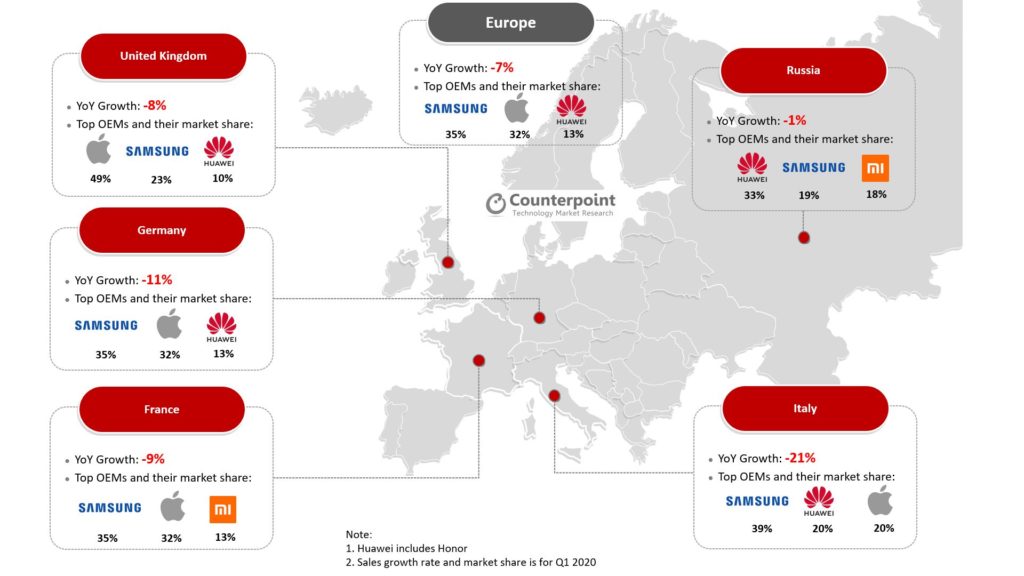
The global smartphone market sales declined in Q1 2020 as a result of COVID-19 pandemic. But some brands grew in this period in certain regions. For instance, Realme is the fastest growing brand in South East Asia. Now, Counterpoint Research has released its report for the European market, which reiterates a similar trend.
According to the report, the European smartphone market declined 7% YoY and 23% QoQ in Q1 2020. Also, Western Europe was affected more (9% YoY) due to lockdowns compared to Eastern Europe (5% YoY).
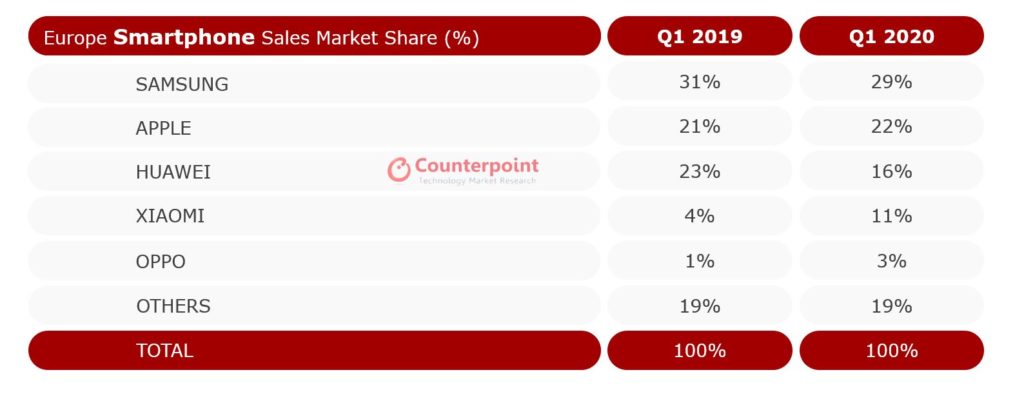
As far as rankings are concerned, Samsung led the market with 29% market share followed by Apple ( 22%), Huawei (16%), Xiaomi (11%), and Oppo (3%) respectively.
The biggest loser was Huawei whose market share dipped by 43% YoY, thanks to the US ban. Xiaomi and Oppo benefitted from this as their share increased almost three-fold in the same period.
Xiaomi itself grew 145% YoY and together with Oppo, both the Chinese companies witnessed 150% YoY growth in their market share. On the other hand, Apple remained stable and the iPhone 11 was the top-selling model in the region.
Talking about Samsung, its sales were boosted by the launch of Galaxy S20 series, thanks to the company’s marketing campaigns and strong supply chain.
Interestingly, Huawei’s sub-brand Honor led the Russian smartphone market and the region was least affected due to pandemic. Whereas, Italy was the severely affected nation with 21% YoY decline.
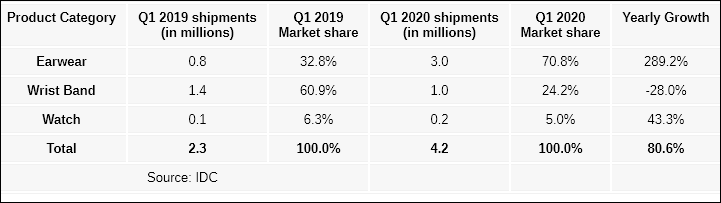
India’s wearable market registered strong growth in Q1 2020 IDC reports in its Quarterly Wearable Tracker. The wearable device shipments grew at a solid 80% YoY during the January-March period.
IDC reports that an estimated 4.2 million wearable devices were shipped and this includes ear wears, wrist bands and smartwatches. The earwear category had the strongest growth with an estimated 3 million shipments claiming 70.8% market share, representing yearly growth of 289.2% from the same period last year.
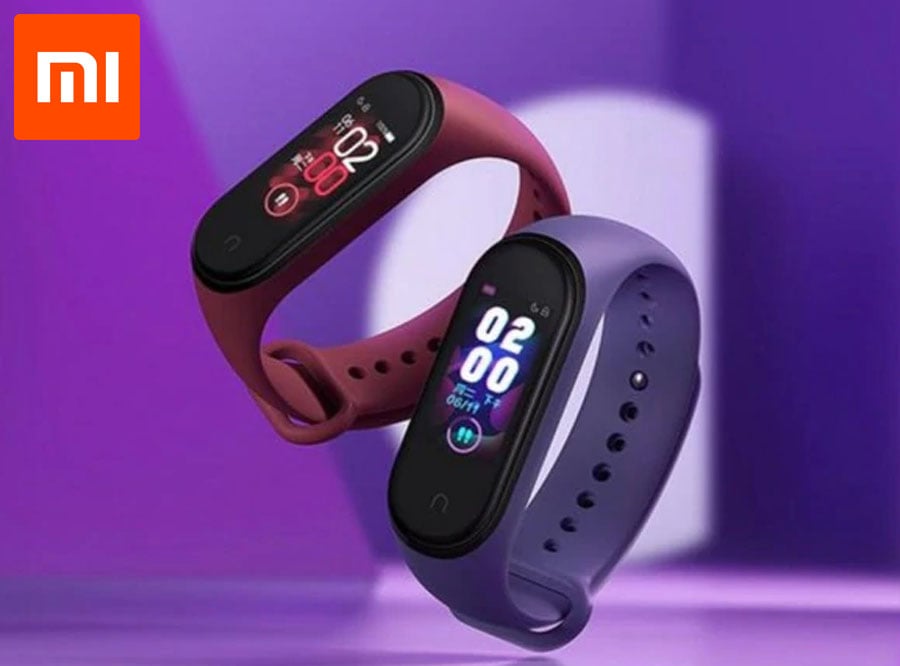
Xiaomi’s Mi Band 4
An estimated 1 million wrist bands were shipped in Q1 2020 which is a 28% decline from last year’s Q1 shipment of 1.4 million units. Turns out the smartwatch market isn’t so popular in India as the entire industry managed just 200,000 shipments.
Xiaomi still remains the market leader in the wrist band segment. The Chinese tech giant commanded a 41.9% share of the entire market in Q1 2020. US-based GOQii electronics comes in at the second place. Huami controls the smartwatch segment with a 22.4% market share, followed by Fossil with 17.9% and Apple with 17.7%.
In the hearable segment, boAt audio maintained a 23.9% market share with Samsung coming in close at second place with a 23.6% market share. However, Samsung is the market leader in terms of TWS earphone shipments, followed by Apple.
Sony Xperia 1 II, the company’s latest flagship smartphone which is pronounced as Xperia 1 Mark Two, was recently confirmed to be available for purchase in the United States from 24th July for a price of whopping $1,199.
Now, the company has started taking pre-orders for the smartphone in the US through Amazon, Best Buy, B&H, Adorama, or Focus Camera. For those who are unaware, the smartphone was unveiled by the company in February this year.
Those who pre-orders the smartphone before 28th June will be getting a free pair of Sony WF-1000XM3 noise-canceling earbuds. But not everyone will get it. Only those are eligible who pre-order the device from B&H, Adorama, and Focus Camera.
The Sony Xperia 1 II features a 6.5-inch 4K HDR OLED screen that comes with a 21:9 aspect ratio, making it taller than other flagship phones available in the market. Under the hood, it is powered by Qualcomm Snapdragon 865 SoC along with 8GB of RAM and 256GB of internal storage with support for expandable storage up to 1TB.
The highlight of the smartphone is its triple-camera setup on the back which is developed by the engineers who made Sony A7 III and other popular mirrorless cameras. The phone’s camera setup includes three 12-megapixel sensors — wide, ultra-wide, and zoom.
Sony says that the smartphone can shoot up to 20fps in burst mode with features like autofocus and auto-exposure enabled. This makes the phone an ideal candidate for capturing action and sports events.
Further, the camera can do human/animal eye-tracking and also offers features like Pro Mode, Movie Settings, and more. On the front side, the device comes with an 8-megapixel snapper with an f/2.0 aperture
The phone runs the Android 10 operating system and is powered by a 4,000mAh battery that comes with support for 21W fast charging and wireless charging. Although it’s a 5G smartphone, it seems that it won’t be compatible with the 5G bands in the US.
Xiaomi announced MIUI 12 initially in China and even started rolling out beta builds to the eligible devices from the day of the conference itself. Later last month, the company held a separate global launch event and revealed supported internationally available devices. Now, as promised, the first batch of phones – Mi 9, Mi 9T, Mi 9T Pro, Redmi K20, and Redmi K20 Pro are receiving MIUI 12 Global Stable Beta update.
For the unaware, Xiaomi has a unique type of MIUI build known as Stable Beta. These builds can be only installed on devices with beta-authorized Mi account signed in.
Which means these builds are meant for beta testers chosen by the company before rolling out the update to the public. However, users can bypass this limitation if their device has an unlocked bootloader with custom recovery like TWRP installed.
In most cases, Xiaomi rolls out the same build as a final stable update to the public by removing the beta Mi account authorization server side. But if the early birds happen to find critical bugs, the company would release another stable beta build and the same process would repeat.
In simpler words, the MIUI 12 Global Stable Beta update, which is currently being rolled out to Mi 9, Mi 9T, Mi 9T Pro, Redmi K20, and Redmi K20 Pro cannot be installed by all users unless they have a custom recovery installed on their device.
Anyway, here’s the download link for the above-mentioned devices for interested users.
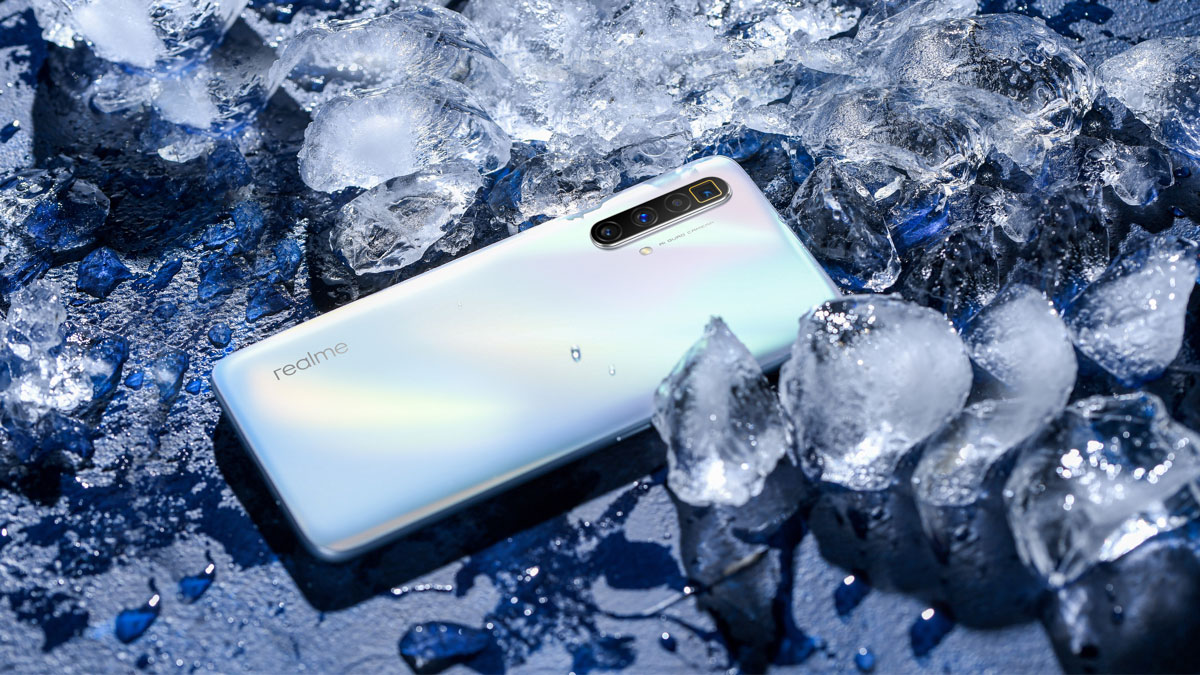
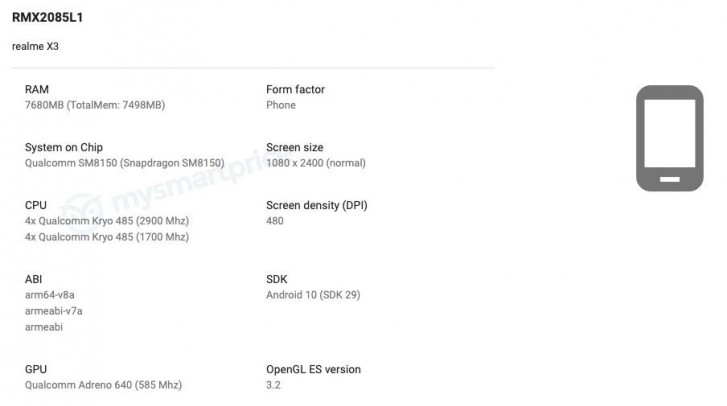
Realme is expected to launch the Realme X3, X3 Pro and X3 Super Zoom. The X3 SuperZoom made its official entry in Europe on May 26. However, there has been no word about the X3 and X3 Pro even though we already know they exist via leaks. The Realme X3 has just appeared once again on the Google Play Console, key specs in tow.
Realme X3 SuperZoom
The listing shows the device will be powered by the same Snapdragon 855+ at the heart of the SuperZoom. The X3 will come with 8GB of RAM but there is no indication if it will feature support for 5G.
The X3 is also listed to pack a display resolution of 1,080 x 2,400px resolution. The phone may come with 90Hz display unlike the SuperZoom with 120Hz but that is not stated. It will run Android 10 operating system out of the box.
The Realme X3 recently appeared for certification on India’s BIS website with model numbers RMX2081L1, RMX2085L1, RMX2086L1 which are likely regional variants. There is information yet on the launch date.
OnePlus launched its first smart TVs, Q1 and Q1 Pro ahead of Diwali festive season last year in India. Unlike TVs from Xiaomi, the OnePlus’ offerings are premium models with QLED panel and come with a hefty price tag. But it still has issues with software just like any other brand. To fix it, the company has been seeding out updates since its launch. Currently, the brand’s TVs are receiving their fourth update called OnePlus TV OTA4.
According to the announcement post for the new update on OnePlus Community, OnePlus TV OTA3, the last update for Q1/Q1 Pro introduced some bugs. So the latest update is all about fixing it and adding support for third-party AirPlay service apps.
OnePlus TV OTA4 Official Changelog
Match the setting value of Color Space, Brightness and MEMC with actual display effect more accurately.
Enhanced Ultra Smooth effect to make it more obvious in display.
Corrected the version rollback issues of certain downloaded apps after OTA upgrade.
Improved the experience around Netflix server connectivity.
Fixed the MX Player installation error.
Added support for third party AirPlay service apps.
Like any other OTA update, the new update for OnePlus TV Q1/Q1 Pro is being seeded out in batches. But interested users can share their unit’s serial number with Catherine W (OnePlus TV software engineer) on OnePlus community to receive the update early.
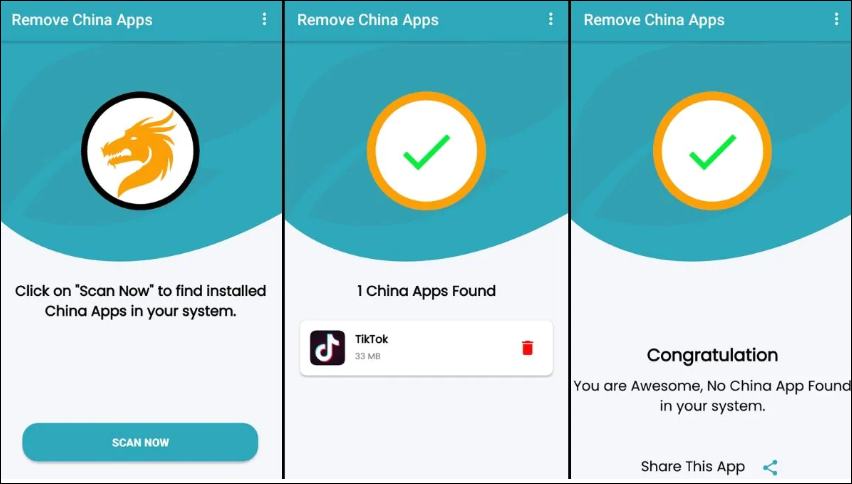
On May 17, a new app was published on the Google Play Store known as Remove China Apps. The app basically scans Chinese apps on Android devices and uninstalls them. It soon gained widespread popularity, recording over 1 million downloads and positive reviews in a short period.
Google has now delisted the Remove China Apps from Google Play. According to Google’s Deceptive Behaviour rules, an app cannot encourage users to remove third-party apps. Since the app was designed to help users uninstall Chinese apps from their Android smartphones, Google had to remove it.
Google confirmed to Gadgets 360 that it took the decision to pull the popular app for violating Google Play’s Deceptive Behaviour Policy that doesn’t allow apps that “encourage or incentivise users into removing or disabling third-party apps” and “mislead users into removing or disabling third-party apps”.
The app is riding on the back of recent anti-China sentiments fuelled by the COVID-19 outbreak, India-China border dispute, and other things which have led to the rise of boycott China movement in India.
This happens to be the second of such app riding on the back of anti-China sentiments that have been pulled down from the Play Store in recent times. Just a few hours before Remove China Apps was pulled down, the Mitron app which seems to mirror TikTok was also removed from the store. The app is a free short video sharing app and a social platform for users to share content online. It was also removed, in this case, for violating spam and repetitive content policies.
OnePlus is known for smartphones and even smart TVs. But recently, the company announced to diversify its product portfolio. But who would have thought it will make jackets. Yes, you heard it right. OnePlus is running a contest for jacket designs on its community.
OnePlus has a new contest for its fans in which the participants have to design community exclusive coach jacket. The registration for the same is already open and interested individuals can apply for it before June 5 from the source link provided at the end of this post.
Once registered, participants will have to submit their design entries (multiple entries allowed) in PNG file format before June 15 20:00 EST. The company’s review board will select the top 8 entries and announce them by June 25.
The final two winners of the top 8 will be decided by votes from the public on OnePlus Community and Twitter. Unfortunately, these jackets will not be made available for sale. Instead, it will be given away to members who are active in online and offline community activities.
All the participants who submit their design entries will be awarded 200 community points. Whereas, the shortlisted top 8 entries will be featured in OnePlus channels and will also be receiving 1000 community points.
Last but not least, the final two winners will be getting the special edition of community jacket (probably the one they designed) and a VIP ticket to next OnePlus offline launch event which will include return flight as well as one-night accommodation.
Recently, a tipster had shared leaked details of the upcoming Xiaomi Redmi 9 series. The leak revealed that the Redmi 9 lineup includes Redmi 9A, Redmi 9C with NFC, Redmi 9C (non-NFC), and Redmi 9. The leak revealed that the Redmi 9 is fueled by Helio G70. There have been contradictory reports that the Helio G80 could be powering the Redmi 9. A fresh tweet from another leakster claims that the Redmi 9 is driven by Helio G80. He also revealed the launch date of the Redmi 9 smartphone for the Vietnamese market.
Redmi 9 specifications (Rumored)
The new leaks state that the Redmi 9 has a 6.5-inch full HD+ LCD panel with a top-center positioned punch-hole. It has a plastic rear and frame. The phone is backed by a 5,000mAh battery. The retail package of the device will ship with an 18W charger.
It has a front camera of 8-megapixel. The device is blessed with a quad-camera setup on its rear. It has a 13-megapixel main lens, an 8-megapixel sensor, a 5-megapixel shooter, and a 2-megapixel lens.
The Redmi 9 is expected to arrive in Vietnam in two models such as 3 GB RAM + 32 GB storage and 4 GB RAM + 64 GB storage. The device is expected to be priced under $150 in Vietnam. The leak further states that the Redmi 9 is likely to arrive with cheaper pricing in India and China.
At present, Xiaomi is silent on the arrival of the Redmi 9 series. Hopefully, the Chinese firm will start its launch at some point this month.
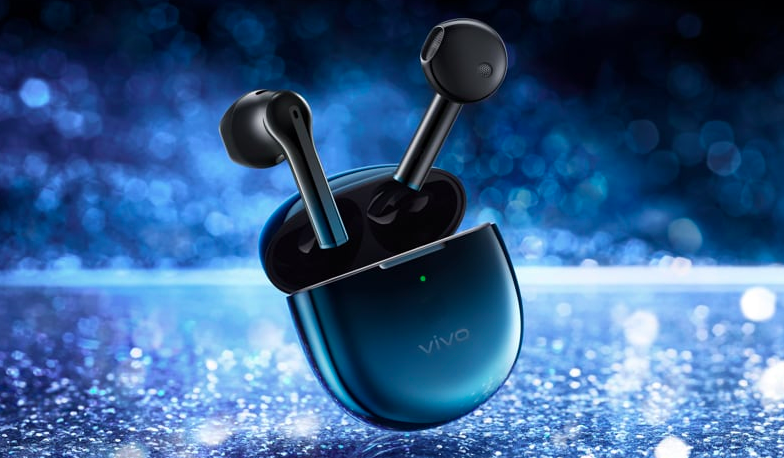
Vivo launched a new pair of TWS earbuds along with the much-awaited X50 series in China on Jun. 1. This premium pair of earbuds have the same 14.2mm large drivers as the Vivo TWS earbuds that were launched in 2019, but Vivo has upgraded the Bluetooth version to 5.2.
Available in an eye-catching blue and an equally appealing white color option, the Vivo TWS Neo Earbuds has gone up for sale on Giztop. Regardless of the color option you chose, the newfangled earbuds from Vivo will set you back only $99.
An absolute steal at this price, the Vivo TWS Neo Earbuds adopts an ultra-light semi-in-ear design that enables high-quality streaming. Weighing in at only 4.7 grams, each earbud is lighter than a coin. Moreover, it comes with a built-in 14.2mm large sound unit that supports apt X and AAC high-definition audio decoding technology.
The Vivo TWS Neo Earbuds has been integrated with a low latency mode of 88ms for enhanced gaming and video calling experience. To achieve a perfect sync between video and audio while you are watching movies or playing games, all you need to do is to switch to Super Low Latency Mode.
The earbuds use a new aptX adaptive codec for CD-rated audio quality. Furthermore, they have three DeepX Stereo modes, meaning, you can fully customize your overall listening experience. You can choose between three modes including heavy mode, clear voice mode, and high pitch mode to match the audio playing on your earbuds.
The Vivo TWS Neo Earphone also uses the smart call noise reduction technology to eliminate ambient noise like running, riding, wind interference, and so on using its dual microphones. As if that weren’t enough, it employs the industry’s first dual-capacitance in-ear sensing technology which is not only more accurate but is also comparatively more power-efficient.
You can head straight to this link to check out more details about the Vivo TWS Neo Earbuds and place your order via Giztop.
The Gizmochina Coupons is a community that finds, reports, and evaluates deals and coupons of Chinese products from online shops. Please visit it here to find more coupons to save money on mobiles and smart gadgets.
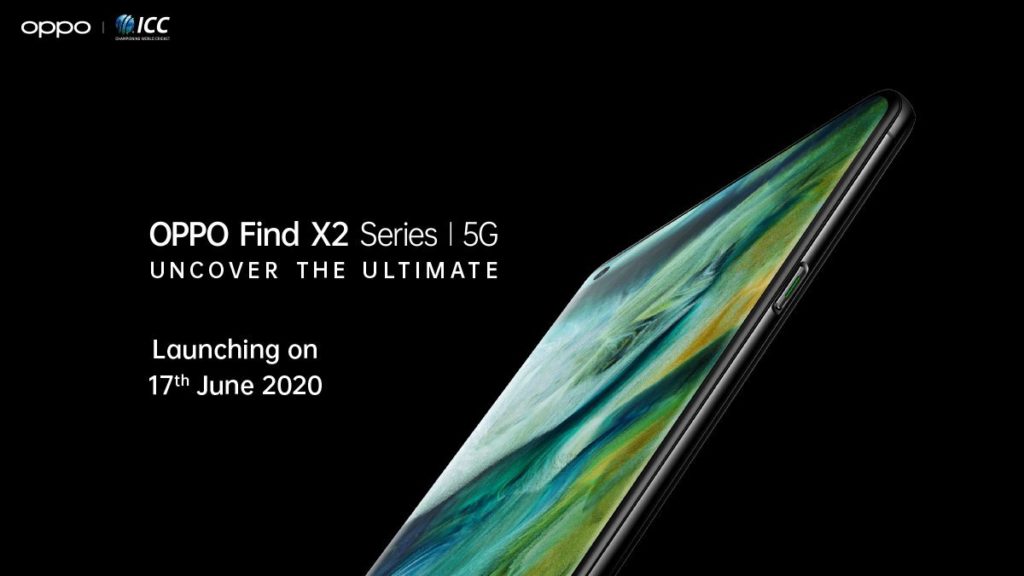
Oppo Find X2 series initially debuted in China and was soon made available in Europe. Now, the company is all set to bring its flagship smartphones of 2020 to India on June 17. The Find X2 and Find X2 Pro feature high-end specifications but its pricing will matter in the world’s most price-conscious smartphone market.
The Oppo Find series is known for its innovativeness. The last handset in the series, the Find X was one of a kind smartphone with futuristic design. But this year, the company took a safe route and launched a conventional flagship duo.
The Find X2 and Find X2 Pro have similar specs except for the rear panel, camera setup, battery capacity, and IP certification. That means both the phones sport 6.7-inch QHD+ AMOLED display with a punch hole, 120Hz refresh rate, Qualcomm Snapdragon 865, 5G connectivity, WiFi 6, Bluetooth 5.1, NFC, LPDDR4 RAM, UFS 3.0 storage, 32MP selfie camera, stereo speakers, ColorOS 7.1 based on Android 10, and 65W SuperVOOC 2.0 fast charging.
Talking about dissimilarities, the regular Find X2 comes in glass and ceramic finishes. Whereas, the Find X2 Pro is available in ceramic and vegan leather finishes. Further, the former has a 4,200 mAh battery and is only IP54 certified. But the latter is IP68 certified and features a 4,260 mAh battery. Weirdly, both of them lack wireless charging albeit being a premium smartphone.
Lastly, talking about cameras, the Find X2 Pro comes equipped with a 48MP primary sensor with OIS, a 13MP periscope 5x optical zoom camera with OIS, and another 48MP sensor with an ultra-wide lens. The regular Find X2, on the other hand, features a 48MP primary snapper with OIS, a 12MP telephoto shooter with OIS, and a 12MP ultra-wide angle camera.
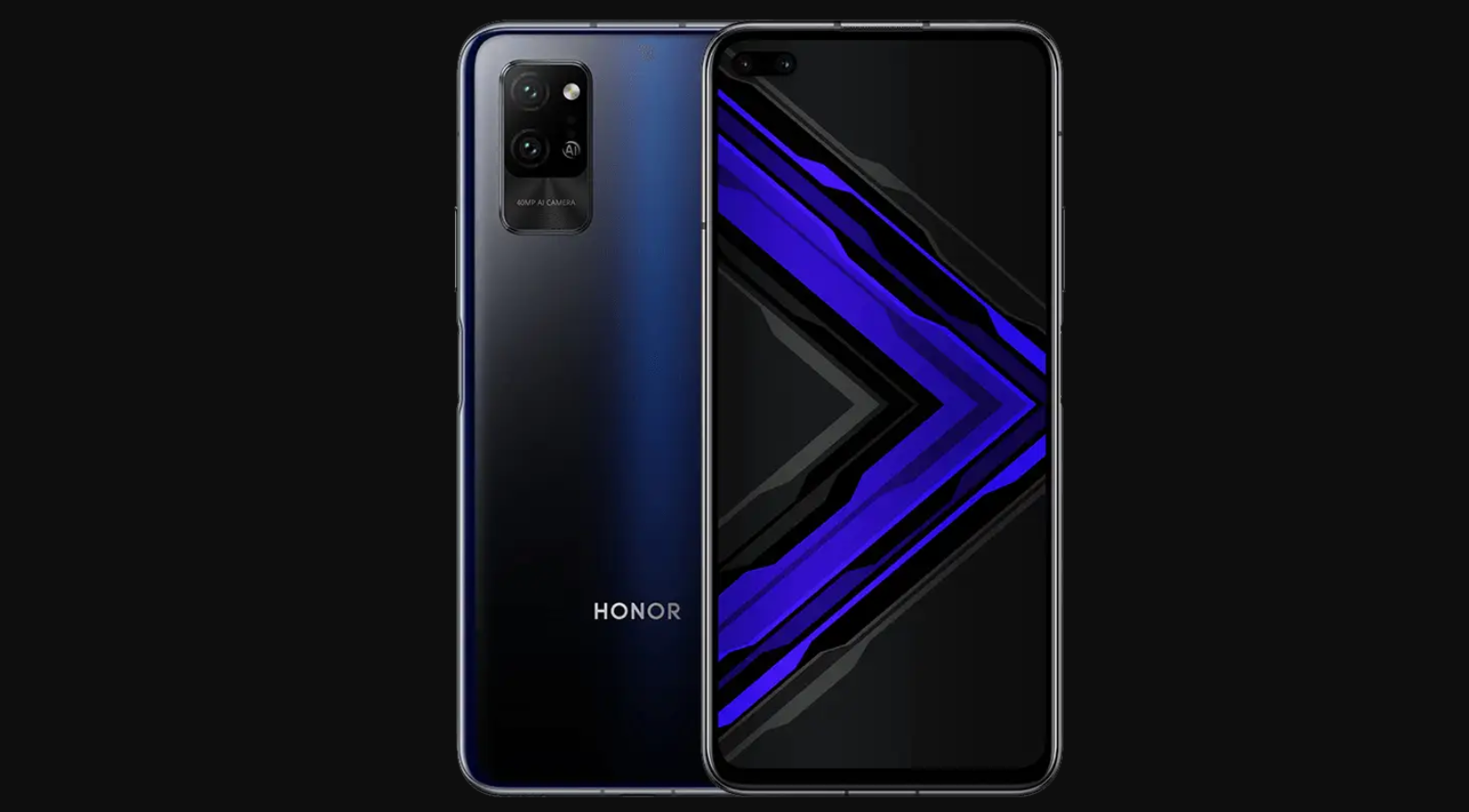
Earlier today (3rd June 2020), Honor finally launched its Play4 series of smartphones in China. The lineup consists of the base Play4 and the Play4 Pro variant. Both smartphone are 5G enabled and feature an Infrared Temperature sensor.
Honor Play4
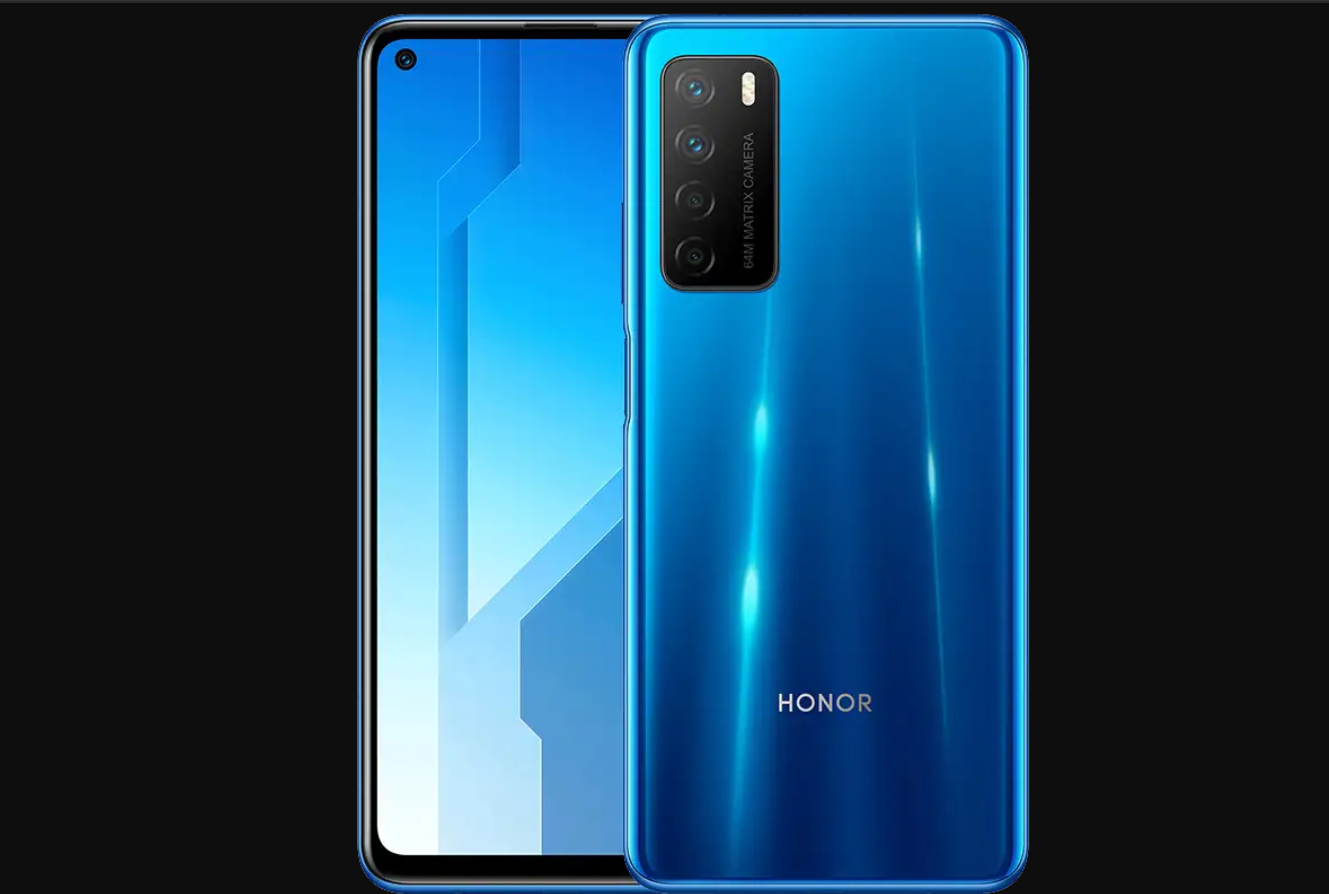
The Honor Play4 was unveiled today and features MediaTek’s Dimensity 800 5G chipset. It sports a 6.81-inch FHD display with a single punch hole selfie camera on the front. On the rear, a quad camera setup can be found, which consists of a 64-megapixel primary camera, 8-megapixel wide angle lens, 2 megapixel macro shooter, and a 2 megapixel depth of field sensor.
Honor Play4
The Honor Play4 targets the mid range segment and also offers VC liquid cooling technology and a 12 layer heat dissipation structure. The device is powered by a large 4,300mAh battery pack that supports fast charging up to 22.5W. It is offered in three color variants, namely Iceland Phantom, Phantom Blue, and Phantom Night Black.
Honor Play4 Pro
The Honor Play4 Pro is the high-end model from the series and targets the upper mid-range segment in the market. It sports a smaller 6.57-inch display with a dual punch-hole selfie camera cut out on the front (32 megapixels + 8 megapixel). On the rear, the device houses a dual-camera setup, unlike the base variant. Its primary sensor is a 40 megapixel Sony IMX600 RYYB sensor alongside an 8-megapixel telephoto lens with 3x optical zoom.
The smartphone features Huawei HiSilicon’s Kirin 990 5G SoC, which supports dual mode 5G. It supports up to 40W fast charging and runs Magic UI 3.0, which is also found on the base Play4 variant. The device is also available in three color variants, including Mecha Blue, Icelandic Illusion and Fantasy Night Black. A notable inclusion in the Pro variant is also the special IR temperature sensor that is housed in a separate Honor Play4 Pro version.
Honor Play4 Pro
This Infrared sensor can measure temperatures from -20 degrees Celsius to 100 degrees Celsius. The smartphone itself does not emit infrared, but rather it absorbs infrared energy from a person or an object to calculate the exact temperature. During this time of crisis, avoiding the Coronavirus infection and keeping regular tabs on one’s health is a necessary step.
Price and Availability
The Honor Play4 series is currently available for pre-order in China. The base variant starts from 1,799 Yuan (roughly 253 US Dollars) for the 6GB RAM and 128GB storage variant and 1,999 Yuan (roughly 281 US Dollars) for the 8GB RAM and 128GB storage version. On the other hand, the Honor Play4 Pro retails for 2,899 Yuan (roughly 407 US Dollars) for the 8GB RAM and 128GB storage variant, while the special version with the IR temperature sensor is sold for 2,999 Yuan (roughly 421 US Dollars).
Best known for manufacturing top-end smartphone accessories, Baseus took the wraps off about a hundred new products during a recently concluded conference.
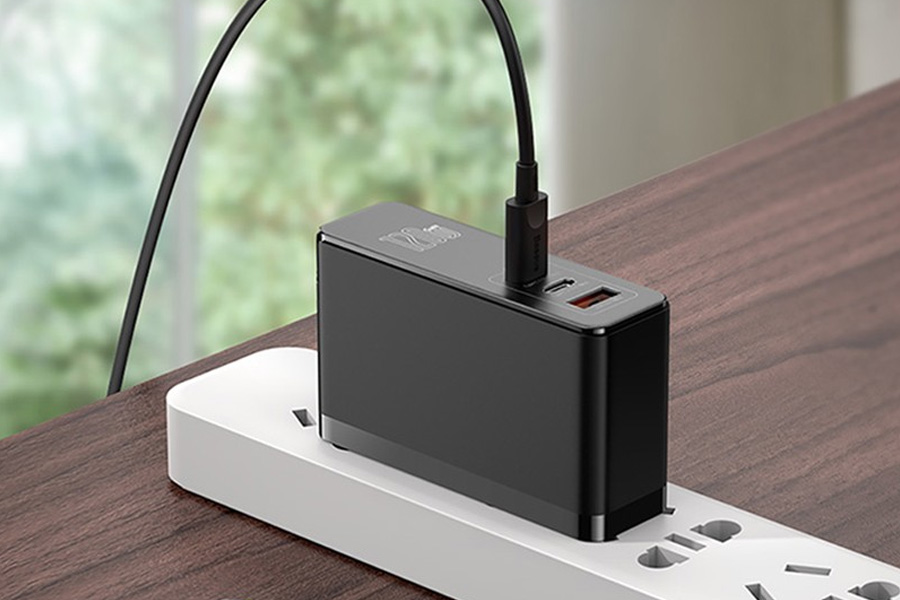
The Chinese tech firm launched products designed to provide reliable safety to mobile phones, car accessories, consumer electronics, chargers, lighting, and so on. The Baseus 2C1A GaN Fast Charger was without an iota of doubt the most impressive product launched by the company during the conference.
The burning question popping inside your mind at the moment would be what makes the fast charger the most impressive product launched by Baseus. It is not only the first GaN charger but also the world’s first 2C1A USB PD GaN charger that comes in 65W, as well as 120W variants.
The Baseus 120W 2C1A GaN Charger is currently available on Giztop bearing a $59.99 price tag. Moreover, you can choose between black, as well as white color options. The 2C1A GaN Charger features a 100W 5A fast charging cable that comes with Emark chip.
It is extremely lightweight and has a 90-degree folding plug. Moreover, it comes with a built-in GaN and SiC third-generation semiconductor materials and features two USB Type-C ports along with a USB Type-A port. The Baseus 120W 2C1A GaN Charger allows you to simultaneously charge two laptops or three devices.
The maximum output power of Type-C port is 120 Wattm which is compatible with the PD charging for notebook computers. Aside from that, Baseus 120W 2C1A GaN Charger can be touted as best-in-class power electronics as it features controller and protection circuitry.
More importantly, the Baseus 120W 2C1A GaN Charger works with most Type-C phones, laptops, MacBooks, switch game console, tablets, and various other devices. You can follow this link to check out more details about the 2C1A GaN Charger and place your order via Giztop.
The Gizmochina Coupons is a community that finds, reports, and evaluates deals and coupons of Chinese products from online shops. Please visit it here to find more coupons to save money on mobiles and smart gadgets.
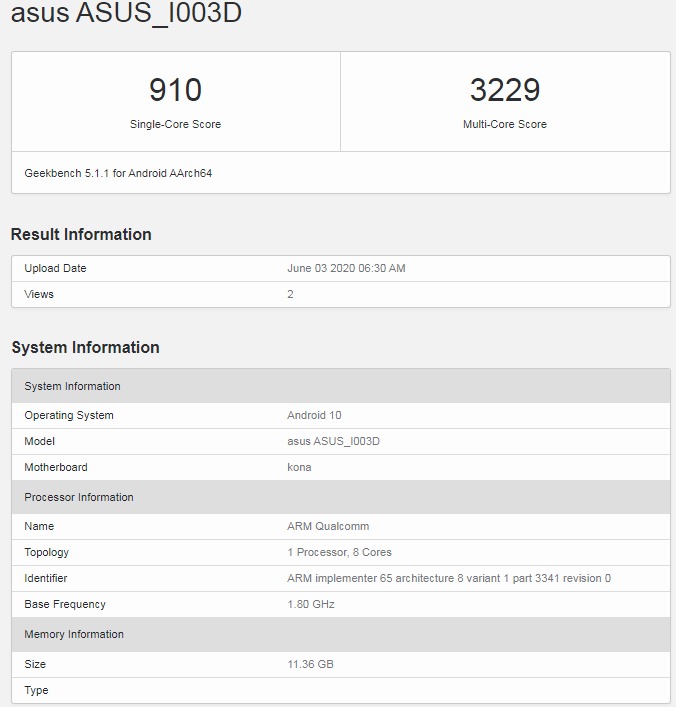
Recent reports have revealed that ASUS is working on the launch of the ROG Phone 3 gaming-focused flagship phone. It is expected to break cover in the ongoing quarter of the year. Last month, the 8 GB RAM variant of the ROG Phone 3 had appeared on the Geekbench benchmarking platform. Today, a higher RAM edition of the same phone has appeared on the same benchmarking site.
The 8 GB RAM variant of the ROG Phone 3 was spotted with model number ASUS_I003DD model number on Geekbench 5. The 12 GB variant of the same phone seems to have appeared as ASUS_I003D. Like 8 GB edition, the higher RAM version is seemingly powered by the Snapdragon 865 SoC. The smartphone is loaded with Android 10 OS. In the single-core and multi-core tests, the ROG Phone 3 has scored 910 and 3229, respectively.
Last month, the ROG Phone 3 was spotted at the database of the Wi-Fi Alliance. The listing had revealed the support for features like Android 10 OS, Wi-Fi 802.11ax, Wi-Fi Direct and Miracast.
The ASUS ROG Phone 2 that debuted in July 2019 had arrived in 8 GB RAM and 12 GB RAM editions. It was made available in options like 8 GB RAM + 128 GB storage, 12 GB RAM + 256 GB storage, 12 GB RAM + 512 GB storage and 12 GB RAM + 1 TB storage. There is a possibility that the ROG Phone 3 could be also available in multiple variants. Like its predecessor, the ROG Phone 3 may break cover in July.
Earlier today (3rd June 2020), Facebook announced that it has entered into a global deal with Saregama. The social media giant will be licensing one of India’s oldest and largest music label’s music for videos and other social experiences across its other services like Instagram.
In simpler terms, Facebook is bringing songs from the music label to its global social media platform. This arrives after Saregama entered into a partnership with the Swedish music giant Spotify just a few weeks prior. Now, users will be able to choose a wide variety of music to add to their videos, stories, and more via music stickers that are owned by the Indian label. These songs can now be accessed on Facebook and Instagram.
For those unaware, Saregama is one of the largest record labels from the Southeast Asian country, with tracks from various iconic Indian musicians like Lata Mangeshkar, R.D. Burman, Mohammed Rafi, Talat Mahmood, Manna Dey, Kalyanji-Anandji, and Hemant Kumar. It has over 100,000 songs under its belt, which include Bollywood songs, ghazals, and others in more than 25 different languages.
The partnership will bring music under the Indian record label to Instagram as well
The deal with an Indian music label isn’t exactly a new beginning for Facebook as it has already partnered with other giants in the industry. This includes Yash Raj Films, Zee Music Company, and T-Series, which is the top YouTube channel in the world. Back in 2019, reports had surfaced regarding the Facebook testing out Indian music labels for its videos and other features in India and Indonesia and now it seems that these trials were a success with Indian music being available on a global social platform.
We use cookies on our website to give you the most relevant experience by remembering your preferences and repeat visits. By clicking “Accept”, you consent to the use of ALL the cookies.
This website uses cookies to improve your experience while you navigate through the website. Out of these, the cookies that are categorized as necessary are stored on your browser as they are essential for the working of basic functionalities of the website. We also use third-party cookies that help us analyze and understand how you use this website. These cookies will be stored in your browser only with your consent. You also have the option to opt-out of these cookies. But opting out of some of these cookies may affect your browsing experience.
Necessary cookies are absolutely essential for the website to function properly. This category only includes cookies that ensures basic functionalities and security features of the website. These cookies do not store any personal information.
Any cookies that may not be particularly necessary for the website to function and is used specifically to collect user personal data via analytics, ads, other embedded contents are termed as non-necessary cookies. It is mandatory to procure user consent prior to running these cookies on your website.