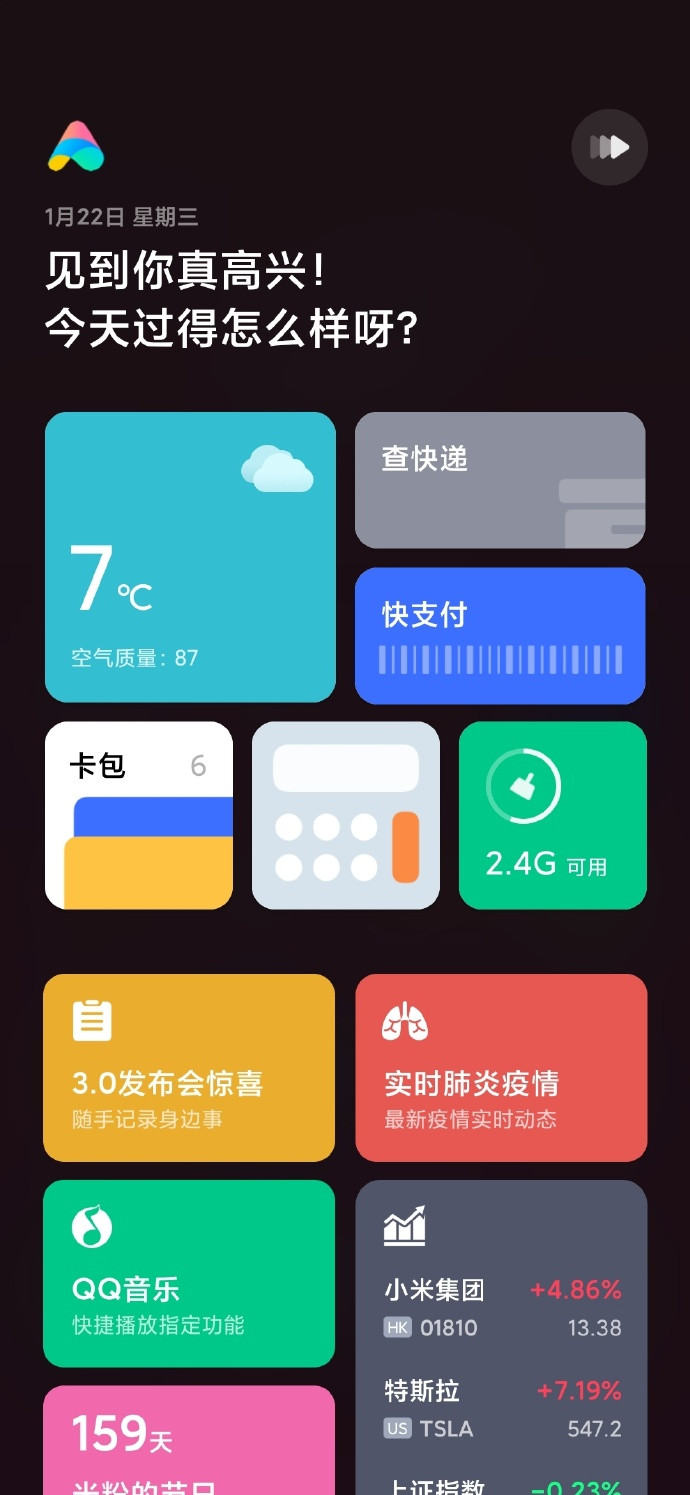
Earlier today, Xiaomi‘s XiaoAi division officially announced that the XiaoAi Shortcut app has added a “Real-Time Pneumonia Epidemic” card. This is obviously in response to the current coronavirus epidemic. Users can view the latest updates regarding the coronavirus epidemic information through the AI key on any Xiaomi smartphone, or by saying “real-time pneumonia epidemic” to the program.
The recent outbreak of a new coronavirus in China has killed nine people and sickened more than 400, and has spread to several other countries. The first case outside of Asia was announced on Tuesday, as federal health officials confirmed that a Washington State man who had recently traveled to China had been hospitalized. It is possibly one of the worst possible epidemics to take place in recent years.
Coronaviruses are named for the spikes that protrude from their membranes, which resemble the sun’s corona. They can infect both animals and people, and cause illnesses of the respiratory tract, ranging from the common cold to severe conditions like SARS, which sickened thousands of people around the world — and killed nearly 800 — during a 2003 outbreak.
It’s good to see that Xiaomi are taking the outbreak seriously and providing users with the relevant information as easily as possible. This quick response and addition will hopefully help Xiaomi users keep up-to-date with the current situation, as well as hopefully keep them safer. Users can also add the a shortcut to the XiaoAi card in the notification bar for quicker access.
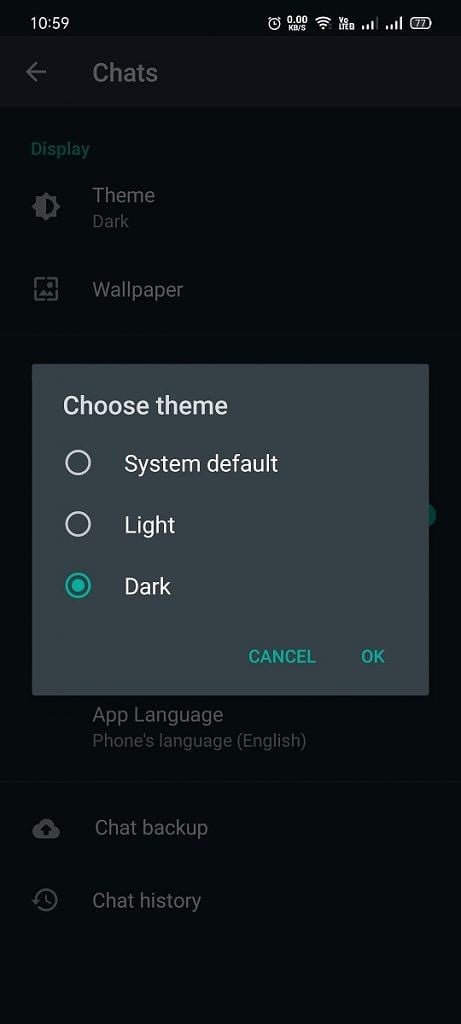
One of the most popular instant messaging platform WhatsApp is now finally rolling out the much-requested feature to its Android beta application — Dark Mode. This is the third major application from Facebook to get Dark Mode after the company rolled out similar feature for Messenger and Instagram.
Do note that the Dark Mode feature is rolling out to Android application and that too only for the users who have opted for the beta build. However, we expect the company to roll out dark mode for everyone in the coming weeks, at least for the Android users.
The latest beta version of the app with version number 2.20.13 through Google Play Beta Program comes with the new dark theme. If you are a part of this program, you can easily enable this dark theme by going to WhatsApp settings > Chats > Themes and then select “Dark” option.
Once you enable the Dark theme, the entire interface will be in the darker shade but it is not completely black. The green color remains as it is but the white shifts to dark grey while the fonts change color from white to black.
If you are not a WhatsApp beta tester, you can join the program from the Play Store but it seems that the program for this app is no longer accepting new entries. However, you can try out this latest update by sideloading the WhatsApp Beta APK on your phone.
Chromebooks, which started off as devices to help students get more resources in a limited budget, are now getting popular. However, it is no longer limited to budget segment and manufacturers are launching new Chromebooks with premium features.
Google has now announced that it is extending the length of time it plans to support new Chrome OS education devices with security and platform updates. From this year, the company will now offer updates for eight years.
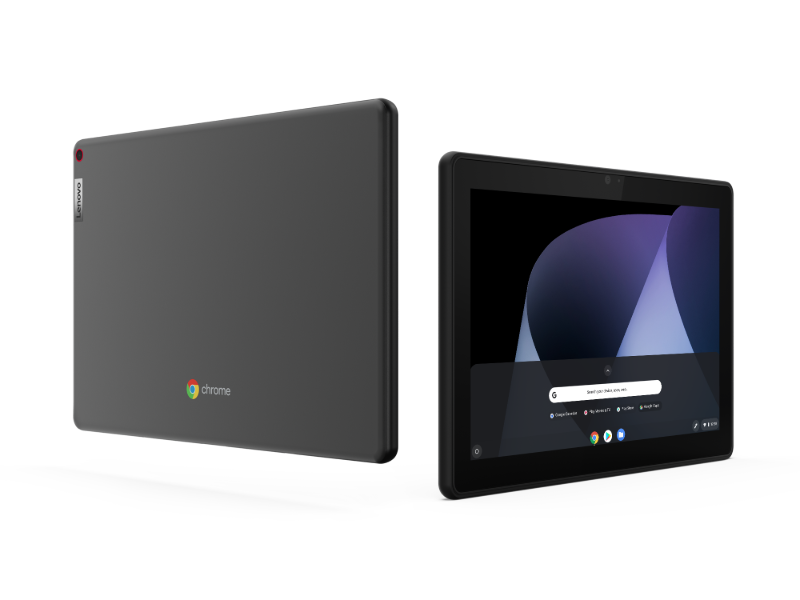
Lenovo 10e Chromebook Tablet
Prior to this, Google had guaranteed to support most devices with at least six years of automatic updates. With additional years of support, the company is also increasing the price of its Chrome Education Upgrade, a one-time license school boards can purchase, from $30 per device to $38 per device.
The company has also confirmed that from now-onwards, latest education devices from Lenovo and Acer — Lenovo 10e Chromebook Tablet and Acer Chromebook 712 will get automatic updates until June 2028. Other new devices could receive similar support as well, if the company opts for this.
So, not all the new Chrome OS devices will receive updates for eight years from manufacture date and the company has clarified that it is up to the manufacturer to detail exactly how long its devices will receive updates.
Alongside the new devices, Google is also introducing new search features to the Chromebook App Hub which is aimed at making it easier for teachers to find specific programs. It allows educators to narrow down an app search by school subject and availability of Google service integrations.
Xiaomi CFO Chew Shou Zhi recently went on Bloomberg for an interview, and he revealed some quite interesting information. According to Chew, Xiaomi is planning to make a huge push for the 5G market in China in 2020. More interestingly however, he also claims that the Xiaomi‘s plan for 2020 includes a big emphasis on Western Europe due to them gaining plenty of traction there.
Chew claims that the company has made huge strides in Western Europe, becoming the 4th largest smartphone maker there. In Spain, Xiaomi is even the LARG, a solid acheivement. The company’s success doesn’t end at smartphones however as they also conquer a big chunk of Western Europe’s wearable market, being the 2nd largest wearable company there.
Perhaps the biggest surprise when it comes to Western Europe however is that Xiaomi’s Scooters are big sellers. The company’s scooters conquer more than 70% of the market share in many countries in Western Europe, though he doesn’t specify which ones. He also mentions that Xiaomi grew by 90% in Western Europe over 2019, making them one of the top 4 fastest growing companies there.
Chew goes on to talk about how Xiaomi plans to launch 10 5G smartphones in China for 2020, and they’re also planning to bring their 5G product portfolio to their other countries of operation, which includes South-East Asian markets, African markets, Latin American markets, the Indian market and of course, the Western European market. When asked about whether Xiaomi plans to bring 5G devices the US however, Chew remains coy, meaning American Mi Fans will probably have to continue waiting.
Ahead of the March 2020 launch of the Huawei P40 series, alleged live shots of the Huawei P40 Pro have appeared online. The pictures show the front view of the device but there seems to be a casing at the rear which makes it impossible to see the back design, including the camera design.
From the pictures, we can make out the dual punch-hole design nested at the top left corner of the display panel giving the device a full-screen, notch-less and immersive display screen. The P40 Pro’s front design also includes a curved-edge design.
Even though we don’t have a view of the rear, the rear design has already been confirmed to include a rectangular camera module which now seems to be a growing trend. The design includes a wide rectangular cut out to project the rear camera. The P40 Pro is reported to feature a quad-camera setup which is one sensor more than that of the P30. The camera housing is expected to have a protrusion from the rest of the glass body.
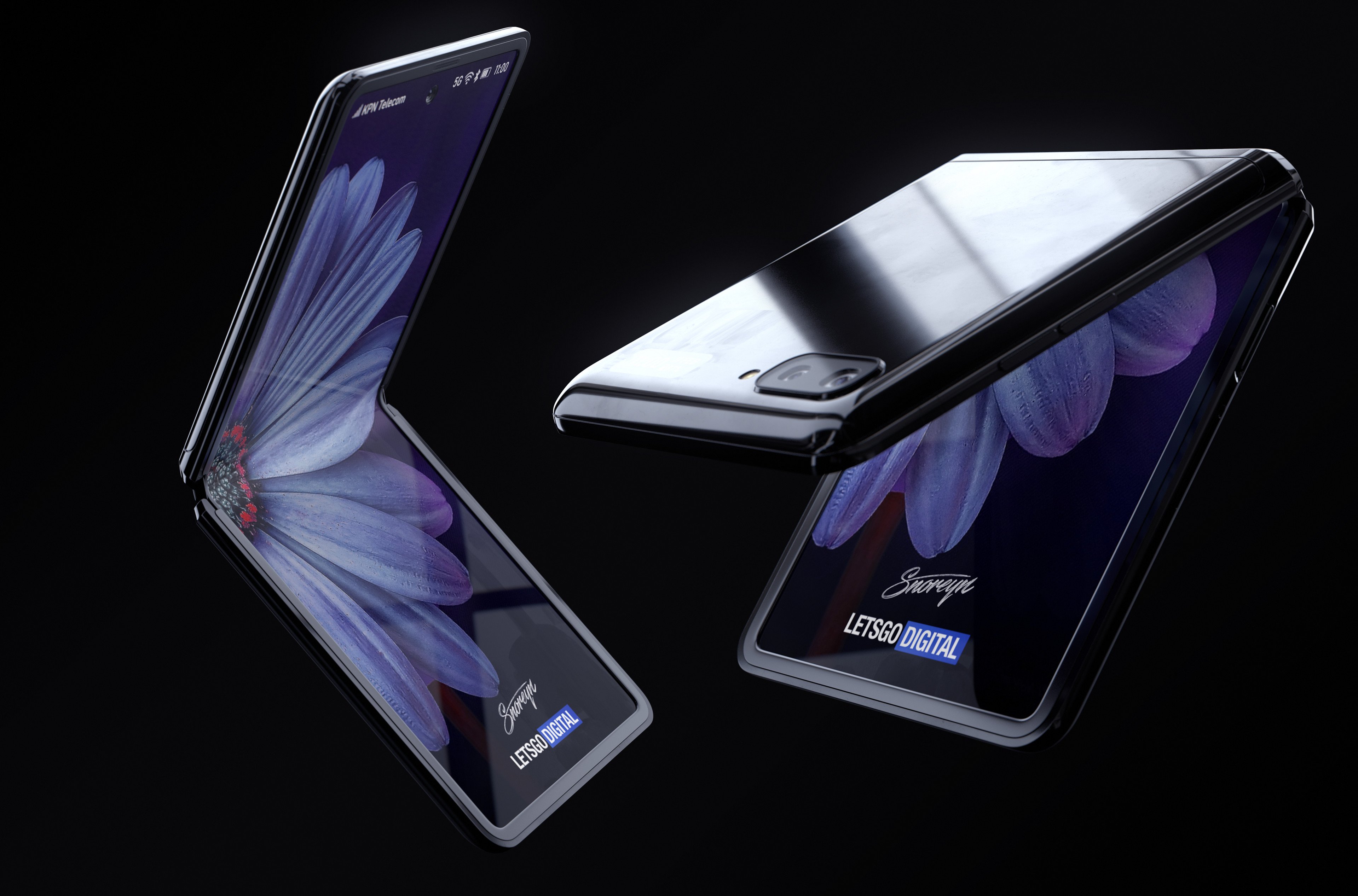
Recent reports have revealed plenty of information on the upcoming Samsung Galaxy S20 series and Galaxy Z Flip smartphones that are scheduled to go official on Feb. 11. The Galaxy S20 series includes Galaxy S20, Galaxy S20+ and Galaxy S20 Ultra 5G. The S20 and S20+ phones will come in 4G and 5G variants depending on the market. The Galaxy Z Flip is a clamshell device with a foldable display. Max Weinbach from XDA Developers had recently revealed plenty of information on the specs of the S20 series. Now he is back with the pricing information of the S20 lineup and Z Flip.
Galaxy S20, S20+ and S20 Ultra pricing (Rumored)
The tipster has revealed that the Galaxy S20 5G will be costing between 900 euros and 1,000 euros. The Galaxy S20+ could be priced between 1,050 euros and 1,100 euros.
The Galaxy S20 Ultra 5G will be priced at 1,300 euros. It is said that the 5G-ready countries will only receive the 5G variant of the S20 series. In countries with 4G, one can expect the S20 models to be cheaper by 100 euros. The Galaxy Z Flip could be priced at 1,400 euros. The tipster has claimed that the pricing could be lower than what he revealed.
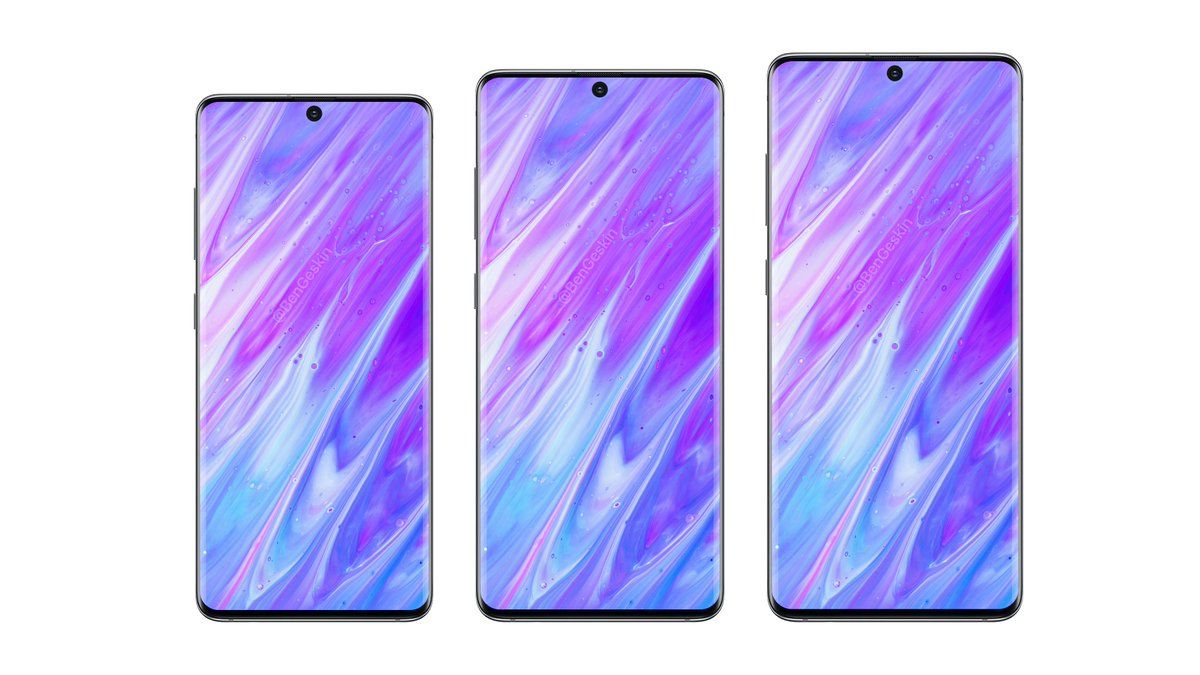
Samsung Galaxy S20 series early renders by Benjanim Geskin
Galaxy S20 series and Galaxy Z Flip specifications (Rumored)
Leaks have revealed that the Galaxy S20 has a 6.2-inch display and the S20+ is fitted with a 6.7-inch display. The more advanced Galaxy S20 Ultra has a bigger 6.9-inch screen. They all have Infinity-O design and carry support for quad HD+ resolution, 20:9 aspect ratio and 120Hz refresh rate. Depending on the market, S20 lineup will come in Exynos 990 SoC or Snapdragon 865 SoC versions. The RAM variants of these phones haven’t been revealed yet.
The S20 and S20+ may come with 128 GB built-in storage and they are going to be equipped with a microSD card slot for more storage. The S20 will have a 4,000mAh battery, S20+ will be featuring a bigger 4,500mAh battery and the Ultra edition will include a behemoth 5,000mAh battery. The One UI 2.0 based Android 10 OS will run on all S20 models.
The S20 and S20+ may have 10-megapixel front cameras whereas the S20 Ultra could be coming with a 40-megapixel front camera. The S20 is expected to arrive with 12-megapixel (main) + 64-megapixel (telephoto) + 12-megapixel (ultrawide) triple camera setup. The S20+ will have a quad camera setup featuring the same three camera lenses as S20 along with a 3D ToF lens. The S20 Ultra 5G will have a 108-megapixel (main) + 48-megapixel (telephoto) + 12-megapixel (ultrawide) + ToF quad camera system on its rear. The S20 series be sporting IP68 certified chassis.
The Galaxy Z Flip is rumored to be fitted with a 6.7-inch foldable AMOLED screen with Infinity-O design. The Snapdragon 855 powered phone could be having a 3,300mAh battery inside with 15W fast charging support. The dual camera setup of the phone may include a 12-megapixel primary shooter. It may come with a selfie snapper of 10-megapixel. The phone could be housing a 1-inch secondary display for checking notifications. The device may come with an internal storage of 256 GB.
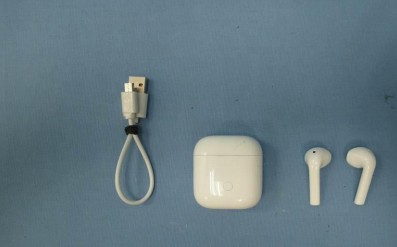
Now, the upcoming Realme Buds Air Neo have surfaced online through the listing on Taiwanese National Communication Commission (NCC). While it doesn’t reveal much information about the earbuds, it gives us a clear look at the design.
While the Realme Buds Air Neo looks very similar to the Apple AirPods-like design of the Buds Air, there are some minor difference. Firstly, the upcoming Buds Air Neo will come with a microUSB port for charging, unlike the USB Type-C port on its predecessor.
This means that the upcoming Realme Buds Air Neo could be a cheaper variant of the Buds Air TWS earbuds. Although it has the same carry case, we expect the company to drop wireless charging feature to make them more budget-friendly.
When the Buds Air Neo first appeared in a teaser video shared by the company, we expected it to be a premium and upgraded variant with features like active noise cancellation. However, that no longer seems to be the case given that its more of a budget-friendly option.
Since the device has already passed through certification process, we expect Realme to launch this Buds Air Neo in the coming weeks or months.
The recently launched Buds Air from Realme comes with a battery life of 3 hours for continuous playback and up to 17 hours with the charging case. At a price point of ₹3,999, the device comes with several interesting features like the charing case which comes with support for wireless charging and has a Type-C port for wired charging.
You can check out our review of the Realme Buds Air here.
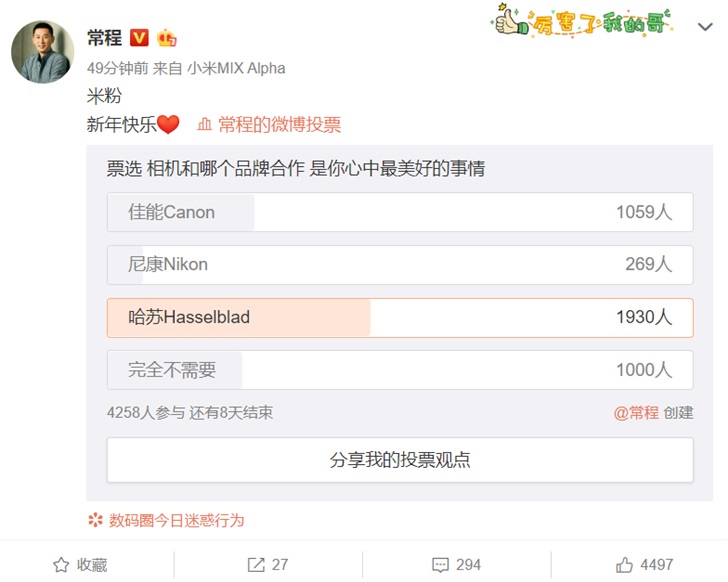
Today, Chang Cheng, who recently joined Xiaomi from Lenovo as a vice president, hosted a poll on his Weibo account asking users with which company should Xiaomi collaborate for the camera sensors.
He had listed out three companies — Canon, Nikon, and Hasselblad along with the fourth option that was for “No one”. Currently, Hasselblad is leading the list with most votes — 1,930. In comparison, Canon and Nikon have received 1,059 and 269 votes respectively.
With camera being one of the crucial department for smartphones, device manufacturers are now collaborating with camera sensor manufacturers to have an optimised camera sensor for their devices.
Nokia has been partnering with ZIESS since long time for their camera sensors while Huawei is also collaborating with Leica for its flagship smartphones. Xiaomi has also recently partnered with Samsung for the 108-megapixel camera sensor, touting the Mi Note 10 as the world’s first smartphone to have such high megapixel sensor.
However, do note that this is just a poll by Chang Cheng of Xiaomi and it does not mean that the company will indeed partner with any of this brand for camera sensors. It seems like this is just to gauge the user’s perspective.
For those who are unaware, Chang Cheng joined Xiaomi as Vice President earlier this month. Prior to that, he was the Head of Mobile Division at Lenovo, the company where he worked for about 19 years.
Soon after his announcement of joining Xiaomi, Lenovo released a statement that could possibly entangle the former VP in legal constraints. Lenovo says that Chang Cheng joining Xiaomi technically breaches the non-compete contract.
If you own the POCO F1, you may want to check your phone for the Android 10 update as a few users have reported that the update has hit their phones.
Actually, XDA Developers reported that it is a beta update but some users who say they are not beta testers have received the update and the changelog also confirms it is a stable update
The update arrives as version 11.0.4.0QEJMIXM and weighs in at 1.9GB in size. Apart from bringing Android 10, the update also comes with some improvements and optimizations and January 2020’s security patch.
Some of the fixes include the inability to open notification settings in the Notification shade in Second Space and inability to notification shade in some cases. Both bugs have now been fixed. The changelog also says that Game Turbo has been optimized. Some users in Europe have also reported that Themes is now available for them which was not the case before.
If you check your phone and do not get the update, then you may want to wait until there is a wider roll-out by POCO.
The POCO F1 was released in 2018 and was one of the best phones released that year. It received much praise for its low-price combined with flagship specs.
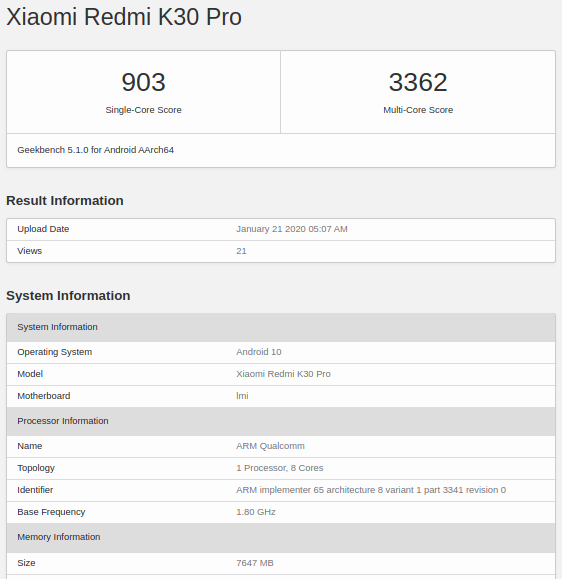
Xiaomi launched the Redmi K30 5G and 4G models in December last year and the models only went on sale this January. The models were premium mid-rangers with the 5G version packing a 5G-enabled Snapdragon 765G chipset while the 4G version features a Snapdragon 730G SoC. Redmi was expected to launch a K30 Pro in China having a flagship specs lineup including the latest Snapdragon 865 SoC. The Xiaomi Redmi K30 Pro has now appeared on the website of benchmarking outfit GeekBench.
The GeekBench listing shows the device is powered by a Qualcomm Snapdragon 865 chipset just as expected. However, the score isn’t too impressive but that may be because the device was underclocked to 1.80GHz. The device is also listed to feature 8GB of RAM and will run Android 10 out of the box likely with the MIUI 11 custom skin on top.
The Redmi K30 Pro is expected to continue with the dual punch-hole selfie camera and quad-camera setup at the rear. The phone is also expected t come with a curved edge display design. The K30 came with an LCD display as well as a side-mounted fingerprint sensor. We expect an even better OLED display with under-display fingerprint sensor onboard.
There is no word yet on when the K30 Pro will go official but we expect that to happen soon, likely after the Mi 10 series launch.
A few days after the official announcement, Samsung Galaxy Note 10 Lite is debuting in various markets. It just launched in India and now we even know its official listing price. That is why we think writing a specs comparison with other devices in the same price range may be extremely useful for potential buyers. In this specs comparison, we will highlight the differences between Samsung Galaxy Note 10 Lite, Huawei Nova 6 and Oppo Reno3 Pro: all high-end smartphones, but all with a non-excessive price. After reading the comparison, you can let us know which one would you pick by using the comment box below the post.
Samsung Galaxy Note 10 Lite vs Huawei Nova 6 vs Oppo Reno3 Pro
Samsung Galaxy Note 10 Lite
Huawei Nova 6
Oppo Reno3 Pro
DIMENSIONS AND WEIGHT
163.7 x 76.1 x 8.7 mm, 199 g
162.6 x 75.7 x 8.6 mm, 197 grams
159.4 x 72.4 x 7.7 mm, 171 g
DISPLAY
6.7 inches, 1080 x 2400p (Full HD+), Super AMOLED
6.57 inches, 1080 x 2400p (Full HD+), LTPS IPS LCD
Triple 12 + 12 + 12 MP, f/1.7, f/2.4 and f/2.2
32 MP f/2.2 front camera
Triple 40 + 8 + 8 MP, f/1.8, f/2.4 and f/2.4
Dual 32 + 8 MP f/2.0 and f/2.2 front camera
Quad 48 + 13 + 8 + 2 MP, f/1.7, f/2.4, f/2.2 and f/2.4
32 MP f/2.4 front camera
BATTERY
4500 mAh, fast charging
4100 mAh, fast charging 40W
4025 mAh, fast charging 30W with VOOC Flash Charge 4.0
ADDITIONAL FEATURES
Hybrid Dual SIM slot
Dual SIM slot, optional 5G
Dual SIM slot, 5G
Design
According to us, Oppo Reno3 Pro has undoubtedly the most attractive design. First of all, it is thinner and lighter, one of the thinnest smartphones to feature a battery with a capacity above 4000 mAh. Further, it has an almost totally clean rear side since all the elements of the camera are included in the camera module and there is an in-display fingerprint reader. The phone also comes with a punch-hole display and a very high screen-to-body ratio. While Oppo Reno3 Pro is the most attractive, Huawei Nova 6 looks like the most original with its “Nova” pattern on its glass back.
Display
The most amazing screen belongs to the Oppo Reno3 Pro. It is the only device of this trio to feature a display with a 90 Hz refresh rate. Further, it is HDR-compliant and it has a high DCI P3 coverage. The silver medal goes to the Samsung Galaxy Note 10 Lite that is the only affordable flagship to support the S Pen, great for productivity users. Huawei Nova 6 has an IPS panel, it is not a bad display but it offers nothing special, just an average screen like the ones you can find on a lot of mid-range smartphones.
Hardware/Software
Huawei Nova 6 wins the hardware comparison thanks to its Kirin 990 chipset: the latest flagship SoC from Huawei built at 7 nm. The device also comes in a variant with 5G connectivity. The Oppo Reno3 Pro comes right after with a Snapdragon 765G chipset paired with up to 12 GB of RAM and up to 256 GB of internal storage. Samsung Galaxy Note 10 Lite still comes with high-end hardware, but not at the same level as its rivals. On the other hand, it is the only to support micro SD. In each case, you get Android 10 out of the box with a customized user interface.
Camera
In order to give you a definitive opinion, we have to test each camera department of this trio. Unfortunately Samsung Galaxy Note 10 Lite just debuted, so we had no chance to test its camera performances. On the paper, Oppo Reno3 Pro looks more gorgeous with its 48 MP quad-camera, but Huawei Nova 6 is a valid opponent with its 40 MP triple camera and an ultrawide dual front camera.
Battery
The bigger 4500 mAh battery on board of the Samsung Galaxy Note 10 Lite will surely provide a longer battery life than both Huawei Nova 6 and Oppo Reno3. But Huawei Nova 6 has a way faster charging technology (70 percent in just 30 minutes).
Price
Huawei Nova 6 (without 5G) is sold for about €380/$421 in its base variant in India, Samsung Galaxy Note 10 Lite costs about €494/$548, and Oppo Reno3 Pro is rumored to launch in India next month with a €545/$605 price tag. While Oppo Reno3 Pro looks like a more refined choice, Huawei Nova 6 offers a higher value for money, while Samsung Galaxy Note 10 Lite may be better for productivity and power users due to the S Pen and a longer-lasting battery.
Canalys reports that after 8 long years of stagnation, the PC market has finally recorded its first full year of growth. According to Canalys, a total of 268.1 million units were shipped globally in 2019, which is a 2.7% over 2018. The top three vendors of vendors this year were Lenovo, HP and Dell who make up the bulk of sales for desktops, notebooks and workstations.
Ishan Dutt, an analyst at Canalys, claims that PCs had a very impressive holiday turnout. “This is impressive given the market registered record growth in Q3. Despite supply chain issues, vendors remain bullish, especially in commercial. Intel’s continued efforts to improve supply will help maintain volume in 2020, but constraints are unlikely to ease quickly. The upshot, however, is the upgrade opportunities OEMs have with SMBs who have delayed refreshes in anticipation of new chipsets.”
Lenovo has shipped 64.8 million units registering an 8.6 per cent growth. This was closely followed by HP that has registered a 4.7 per cent growth. Dell took the third spot with 46.5 million PCs shipped, recording a 5.3 per cent growth this year. Apple took the fourth spot with 19.1 million units and 3.3 per cent annual growth. Acer, at number fifth position, shipped a total of 17 million units, registering an annual decline of 5.3 per cent. Whereas Acer maintained the fifth spot.
“This past year was a wild one in the PC world, which resulted in impressive market growth that ultimately ended seven consecutive years of market contraction,” said IDC program veep Ryan Reith. He said that despite emerging form factors and demand for mobile computing, the bounce was a “clear sign PC demand is still there.” Shipments in three of the four quarters last year were up, IDC added.
Both research houses concurred that businesses fleeing Windows 7 – which has ran out of official support – was the main driver. Mikako Kitagawa, senior principal analyst, described it as “vibrant business demand.” “Contrasted against the ongoing weakness in consumer PC demand, business PC demand has led to unit growth in five of the last seven quarter,” she added.
Jitesh Ubrani, research manager at IDC, sounded a note of caution before the PC vendors get carried away on a way of growth. “Despite the positivity surrounding 2019, the next 12 to 18 months will be challenging for traditional PCs, as the majority of Windows 10 upgrades will be in the rearview mirror and lingering concerns around component shortages and trade negotiations get ironed out.”
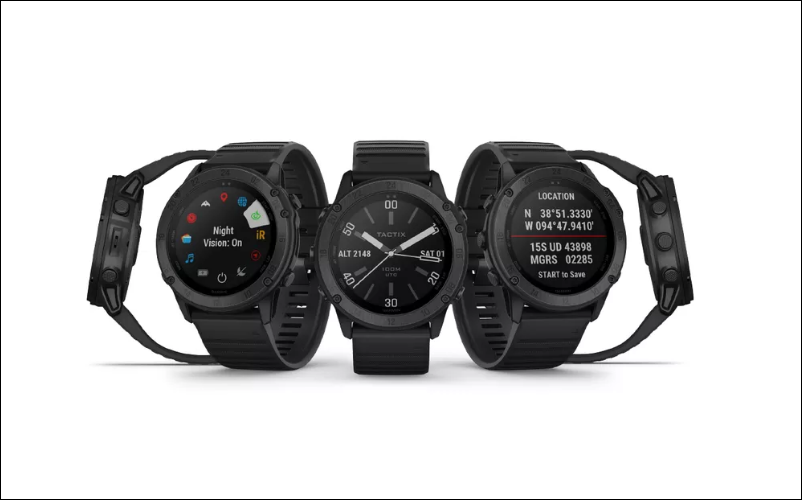
Smartwatch maker Garmin has launched the Tactix Delta smartwatch. The smartwatch is the latest in its lineup of rugged smartwatches touted to have been built to military standards.
The Garmin Tactix Delta is a features a huge 1.4-inch display similar to what was used on the Fenix 6 last year. The watch equally comes with a power manager feature which gives you battery life predictions based on which settings you turn on and off. The watch also comes with a new stealth mode which completely disables storing and sharing of your information. There is also a kill switch that can be set to erase all device memory.
The Tactix Delta smartwatch equally comes with a range of “tactical features” that are making a return from its previous Tactix smartwatches. There’s Jumpmaster mode, which is designed to help guide skydivers to their objective, and dual-position GPS, which can display two sets of coordinate systems on a single screen.
There’s also a more typical set of smartwatch features included. The Garmin Tactix Delta can store up to 2,000 songs, supports Garmin Pay, and can be set to receive notifications from a paired smartwatch. Garmin says you’ll get 21 days of battery life when the device is in smartwatch mode or 80 days in battery saver watch mode.
As for the price, the Garmin Tactix Delta comes with a huge price tag of $899.99.
Huawei announced the EMUI 10 version last year and since then they update has been pushed to several models in China. While several models in China have already gotten the update, there has been little information about the availability of the update outside China. The company only released a beta update for a few international models.
Huawei has now released a press statement confirming the full list of devices that are available on the global market that are eligible for the refreshed user interface, based on Android 10. The release itinerary shows that the Mate 20 and P30 flagship lineup will start receiving the OTA update, with more devices to follow “in later months”. Here’s the full list:
The models that will get the update includes all those sold outside China. Do note that models that were imported from China running Chinese version which doesn’t have Google Services preinstalled are getting a different schedule and will likely get the updates earlier.
EMUI 10 is an important update for Huawei phones as it improves smoothness and performance on existing devices. The company has even added a system-wide dark mode which even forces apps that don’t have a dark mode to comply. The system settings are better organized in this new version and the OS is designed to offer a better experience when working other devices like a Windows 10 laptop. EMUI 10 allows the smartphone to cast its screen directly on to the Windows 10 device, offering a seamless working experience. The update equally brings Android 10-inherent features.
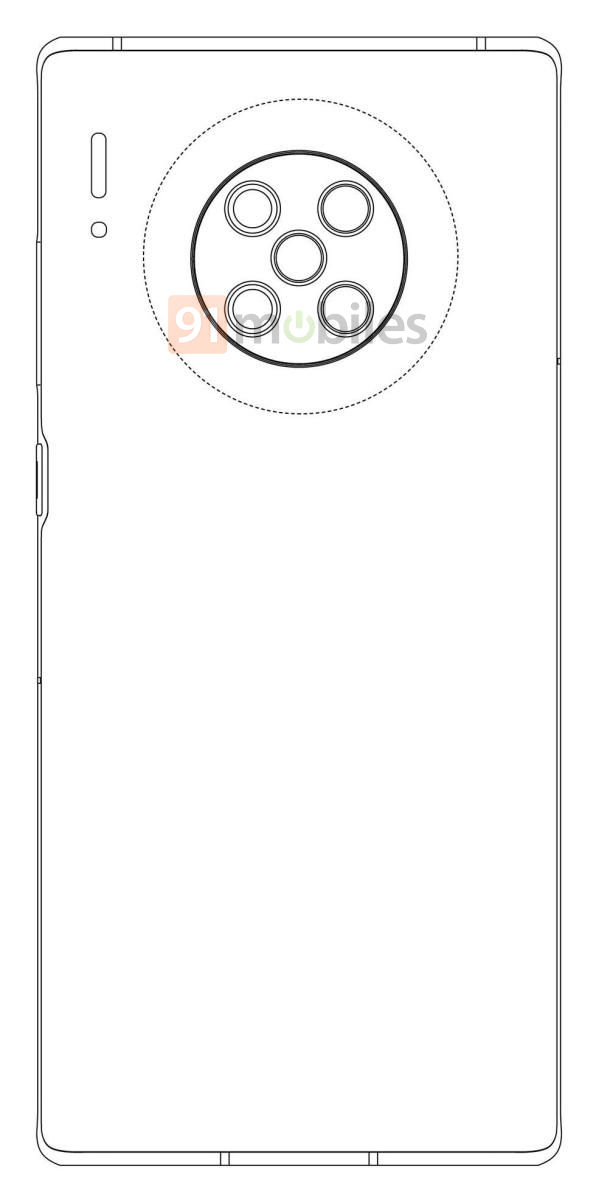
A design patent regarding the Huawei Mate 40 Pro has revealed that the smartphone will arrive with a Penta camera set up on the rear. The patent as filed by the Chinese tech giant in Germany and showcases a smartphone that could have a total of eight cameras.
Huawei Mate 40 Pro with a Penta Camera setup on the rear (Image Via 91mobiles)
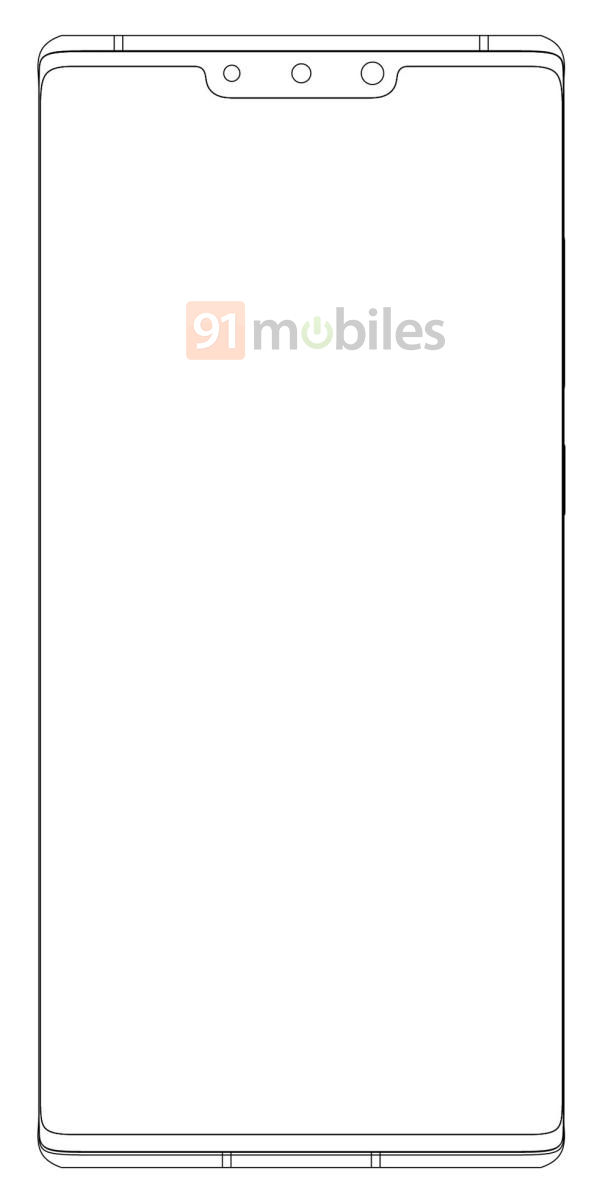
Huawei’s Mate 40 series is an upcoming flagship smartphone lineup from the company which is expected to arrive in the fourth quarter of 2020. It is possible for no drastic changes are made to the successor of last year’s Mate 30 series in terms of design (circular camera module), but could arrive with the additional imaging sensor. According to the design patents the Mate 40 Pro houses three front facing cameras and five rear facing ones. This adds up to a large total of 8 image sensors in one smartphone body, highest yet.
Penta camera setup isn’t exactly a new never before seen feature but its implementation and adoption in modern flagships are still low. However, Huawei has seemingly filed a patent with DPMA, a German patent agency. The patent reveals a few interesting aspects regarding the flagship, like a design similar to the Mate 30 Pro but with one additional image sensor on the rear, between the four.
Front of the supposed Huawei Mate 40 Pro reveals a triple camera module
Notably, the patent does not reveal the name of the smartphone seen in the designs. So, it is quite likely that it is not the Mate 40 Pro but another offshoot or variant within the same series. However, considering that the patent has appeared this early in the year might suggest that it is still possibly the Mate 40 series. Unfortunately, no official statements or announcements have been made by Huawei, yet.
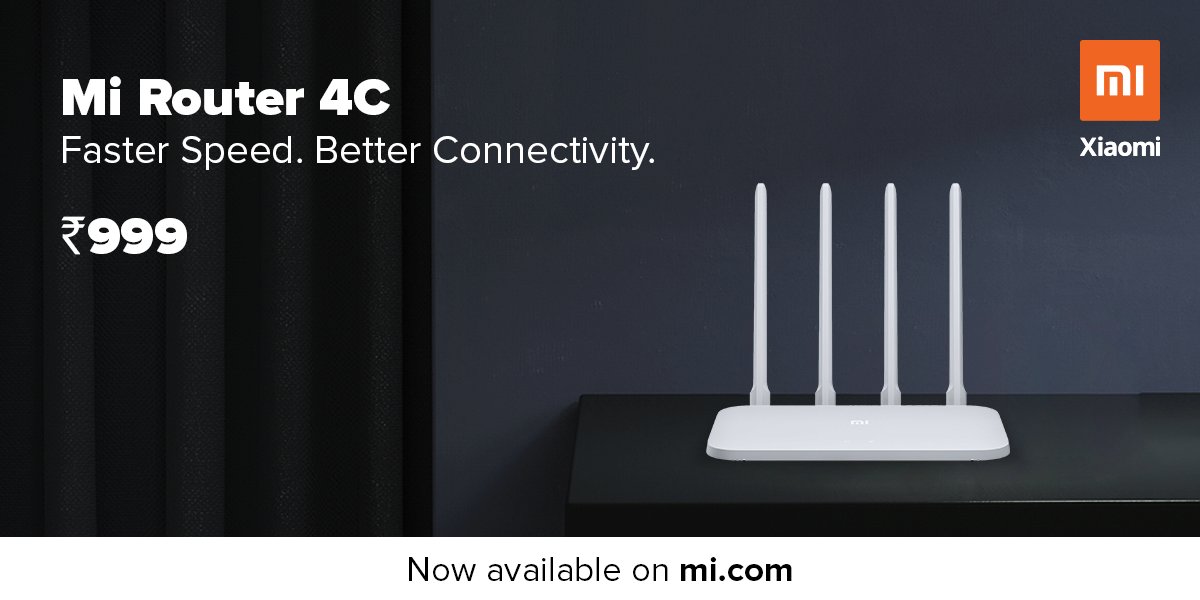
Yesterday, Xiaomi India shared a teaser poster for a new product. It was easy to see the teaser was for a WiFi-related product which is why we were not surprised when it announced the Mi Router 4C today.
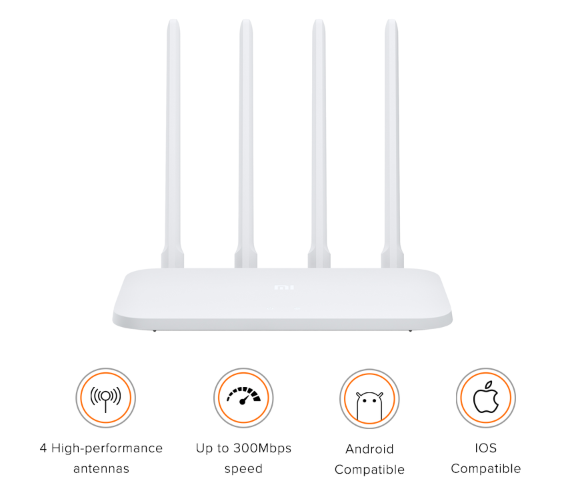
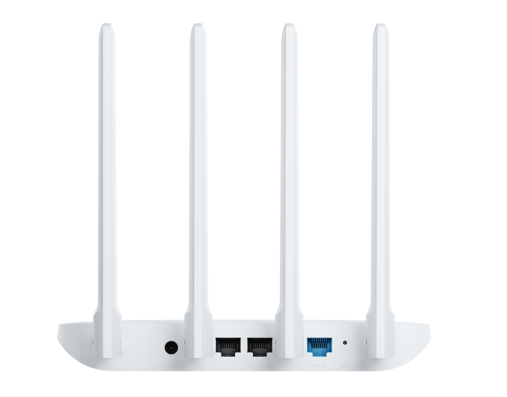
The Mi Router 4C comes in white with four high-performance omnidirectional antennas. It has a MediaTek MT7628N processor inside with 64MB of DDR2 RAM and 16MB flash storage. There are three ethernet ports on the back along with a reset button and the power jack.
Xiaomi says the router can connect up to 64 devices at a time, boasts speeds of up to 300Mbps, and provides a low-latency connection for video streaming and online gaming. It has a repeater mode in case you want to use it to extend the network of another router you already own.
Setting up and connecting is easy and you can manage connections and devices using the Mi WiFi app which is available on iOS and Android. With the app, you can blacklist unwanted internet activity, block suspicious devices, and set time limits for your children’s devices. There is also a WiFi optimization feature that can be activated with just a tap.
The Mi Router 4C is priced at ₹999 (~$14) and is available on mi.com. The only disadvantages it has are its support for only 2.4GHz networks and lack of a USB port for connecting a storage device. But we can’t complain, seeing how affordable it is.
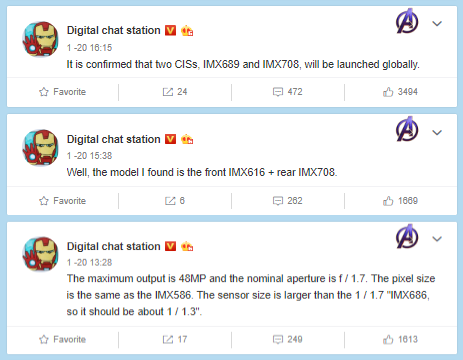
Yesterday, a reliable tipster from China revealed that Sony will be launching Sony IMX689 and IMX708 sensor will be made official globally in the coming days. He shared some details of on the specs of the IMX708 and said it is a customized sensor. Companies like Huawei, OPPO and OnePlus are also expected to use the sensor on forthcoming phones. It is speculated that the OPPO Find X2 that is expected to debut in Q1 this year with the latest Sony sensor could be one of the first devices to feature the Sony IMX708 lens.
According to the leakster, the sensor size of the Sony IMX708 could be around 1/1.3-inch. It could be able to capture images of up to 48-megapixel like the Sony IMX586 lens. He added that he came across a device that has a Sony IMX708 lens on the back and a front-facing camera of Sony IMX616 lens. The latter is said to be a 32-megapixel lens.
The Huawei P40 series are expected to go official in March and rumors surrounding it have claimed that it could be coming with a 52-megapixel lens. OnePlus will be launching the OnePlus 8 series in Q2. Hence, it appears that the OPPO Find X2 could be the best candidate to feature the Sony IMX708 48-megapixel lens on the rear and a Sony IMX616 32-megapixel selfie snapper. Recently, OPPO VP Brian Shen had hinted that the Find X2 has an exclusive custom sensor.
Moreover, in December, it was officially revealed that the Find X2 will be arriving with Sony’ latest image sensor that is called All Pixel Omnidirectional PDAF that will be accompanied with the new 2×2 On-Chip Lens (OCL) solution. The new Sony sensor has on-ship lens for two pixels instead of one lens on each pixel. The new lens will allow the phone to capture photos with faster and accurate autofocus and it will be also well able to focus efficiently in low-light conditions.
There is no concrete evidence yet that the OPPO Find X2 will be equipped with Sony IMX708. Hence, it is advisable to take this report with a grain of salt.
So far, it is known that the OPPO Find X2 will be powered by the Snapdragon 865 mobile platform. It will support NSA and SA dual-mode 5G networks, but there won’t be support for mmWave 5G. The SoC could be accompanied by LPDDR5 RAM and UFS 3.0 storage.
It is speculated that the Find X2 will arrive with a 6.5-inch curved OLED display by Samsung that supports 120Hz refresh rate and quad HD+ resolution of 1440 x 3168 pixels. The display will have a punch-hole at its top-left corner. Irrespective of full HD+ and quad HD+ resolution, users will be able to switch between 60Hz and 120Hz refresh rate on the Find X2. The other details of the phone are currently under the wraps.
Reportedly, Oppo Reno 3 Pro might be arriving with a 44 megapixel dual punch hole selfie camera for India. The news arrives from a leakster that shared the information on his Twitter handle.
Notably, Arun Maini (AKA Mrwhosetheboss), a popular tech Youtuber, had shared an image of a smartphone with dual front facing cameras on his official Twitter page. This was retweeted by Mukul Sharma, a leakster from India, who suggested that the device in the image is the Oppo Reno 3 Pro.
I saw @Mrwhosetheboss talking about the world's first 44MP +2MP selfie snappers touting smartphone and I could not sleep. I wished it to launch in India first. And then I thought, wait, the Oppo Reno 3 Pro is launching soon right? 😉 Feel free to retweet.#OppoReno3Pro
Furthermore, the leakster’s post also talked about the image resolution of both the selfie shooters. The primary lens is a 44 megapixel sensor while the secondary camera is a 2 megapixel lens. Although the rumor has not been confirmed officially from Oppo or any other source, the Reno 3 series for India is expected to be unveiled soon. So, the device may just arrive with the dual punch hole selfie camera module.
As of right now, finer details regarding the smartphone are still unknown. However, a few speculations can be made based on previous coverage of the Oppo Reno 3 series. The smartphones are expected to arrive in two variants, a base and Pro version. The former is expected to arrive with a MediaTek 5G chipset while the latter will sport Qualcomm Snapdragon 765G processor, which features an X52 5G Modem.
Reportedly: Oppo Reno 3 Pro with a 44MP + 2MP Dual punch hole front facing camera
Under the hood, it is expected to be packed with 12GB of RAM, house 48 megapixel quad camera setup on the rear and support fast charging up to 30W. It is also likely to feature an in-display fingerprint scanner for security and offer a 90Hz refresh rate and 180Hz touch sampling rate on its 6.5 inch FHD+ display panel. For color variants, Blue, Red, Black, and White are reportedly planned for the device.
Earlier today, Qualcomm announced three new mobile processors and one of them is the Snapdragon 720G. This new chipset is the successor to the Snapdragon 710 Mobile Platform. Following the announcement, Realme’s CEO, Madhav Sheth took to Twitter to announce that they will launch a Snapdragon 720G phone. Now, Xiaomi has also announced it will launch one too.
CEO of Xiaomi India, Manu Kumar Jain, posted a tweet revealing that Xiaomi will be one of the first brands to launch the latest Snapdragon processors from Qualcomm. He then listed the Snapdragon 865, Snapdragon 765G, and the Snapdragon 720G, thus confirming that there will be a Xiaomi (or Redmi) phone powered by the new Snapdragon 720G processor.
Excited! @Xiaomi will be one of the first brands to launch the latest #Qualcomm#Snapdragon high-end premium chipsets!
We already know the Mi 10 and Mi 10 Pro will be powered by the Snapdragon 865, and Redmi already announced a phone powered by the Snapdragon 765G processor called the Redmi K30 5G. However, our guess is as good as yours when it comes to the Snapdragon 720G phone. Nevertheless, we have a couple of guesses.
While there has been no report of a Mi 10 SE, we cannot rule out the possibility of it launching. The Mi 8 SE and the Mi 9 SE are powered by the Snapdragon 710 and Snapdragon 712 mobile platforms respectively, so it is not far fetched that the Mi 10 SE will have the new Snapdragon 720G inside.
Another possible device is the Mi 10 Lite which should be the successor to the Mi 9 Lite. However, that may not launch until the third quarter of the year.
The Snapdragon 720G brings new features such as WiFi 6, Bluetooth 5.1, and support for 90Hz and 120Hz displays. Unlike the Snapdragon 712 and Snapdragon 710 that are 10nm processors, the Snapdragon 720G is an 8nm chipset with more powerful cores. The smaller node size will translate to an improvement in performance and efficiency.
Are you excited about the Snapdragon 720G? Which manufacturer do you think will announce a phone powered by the new processor first, Realme or Xiaomi? Do let us know your guesses in the comment box.
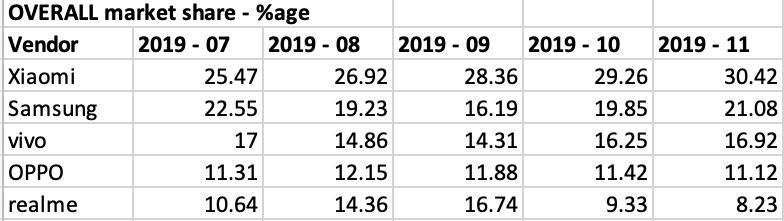
A new report from the IDC (International Data Corporation) brings the market share of various smartphone manufacturers. It suggests that Realme‘s market share has plunged whilst Xiaomi and Samsung still maintain growth after the festive season’s sale.
IDC is known for providing data statistics for various different categories in various different industries. In its recent report, it details the market share of smartphone OEMs. According to the data provided, Realme’s shipments peaked in September which is around the festive month. The company saw a market share of 16.74 percent which has since declined to 9.33 percent in October and 8.23 percent in November.
Overall Market Share via IDC
Upasana Joshi, Associate Research Manager at IDC, stated that the bulk of the purchases of Realme smartphones were from online e-retailing platforms especially during the festive month. Realme has a focus on being an online focused brand with over 80 percent of all sales originating from the internet. The company saw a rise up to September which was its peak, before falling in the following months.
On the other hand, Xiaomi in the same time frame launched its much anticipated Redmi Note 8 series through its subsidiary brand. This was soon followed by price cuts for other handsets and more attractive offerings during the festive season which helped the brand. Unlike Realme, Xiaomi also markets its products through offline channels as well, including official stores and authorized sellers. Furthermore, a Xiaomi spokesperson also mentioned that the final quarter of 2019 was successful for the company, which saw over one million Redmi Note 8 units being sold in India within just a month.
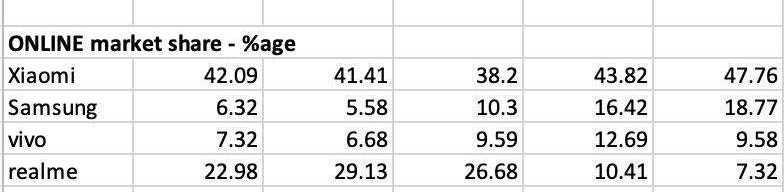
Online Market Share
Samsung too saw a similar slight increase in market share like Xiaomi. The South Korean tech giant went from a 16.19 percent market share in September to 19.85 percent in October and 21.08 percent in November, during 2019. Notably, its online market share saw a sizable rise as well, from 10.3 percent in September to 18.77 percent in November. Reportedly, the launch of the Galaxy M30 was accredited for Samsung’s growth in the online category.
We use cookies on our website to give you the most relevant experience by remembering your preferences and repeat visits. By clicking “Accept”, you consent to the use of ALL the cookies.
This website uses cookies to improve your experience while you navigate through the website. Out of these, the cookies that are categorized as necessary are stored on your browser as they are essential for the working of basic functionalities of the website. We also use third-party cookies that help us analyze and understand how you use this website. These cookies will be stored in your browser only with your consent. You also have the option to opt-out of these cookies. But opting out of some of these cookies may affect your browsing experience.
Necessary cookies are absolutely essential for the website to function properly. This category only includes cookies that ensures basic functionalities and security features of the website. These cookies do not store any personal information.
Any cookies that may not be particularly necessary for the website to function and is used specifically to collect user personal data via analytics, ads, other embedded contents are termed as non-necessary cookies. It is mandatory to procure user consent prior to running these cookies on your website.