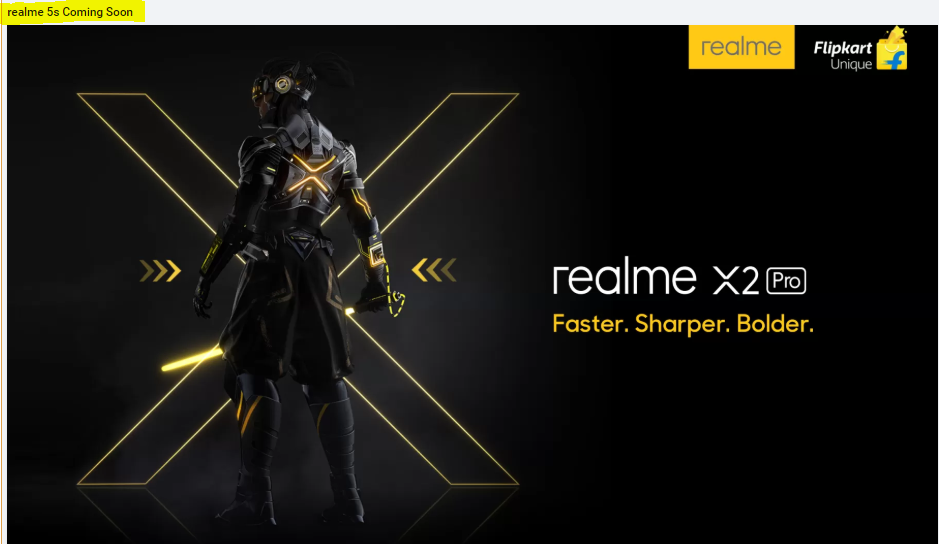
The Realme 5 series might soon get a new member and it may launch alongside the Realme X2 Pro on November 20 in India. This new phone will launch as the Realme 5s.
The Realme 5s has the model number RMX1925 but other than this, its specifications are unknown. However, we believe the differences between the Realme 5 and Realme 5s will be marginal.
Realme is expected to announce “other surprises” at the Realme X2 Pro event on November 20. There are reports the young brand will unveil its first fitness tracker on that day but the Realme 5s looks like it will show up too.
Infinix S5 Lite, the company’s upcoming budget smartphone for the Indian market, has been teased by online marketplace Flipkart. The teaser poster of the device reveals that it will be launched for a price of ₹7,999, which is roughly $112.
The smartphone is teased to get launched in three days which means that the launch will take place on 15th November. The teaser also shows the upcoming phone’s render, revealing that it will come with a punch-hole display.
The upcoming Infinix S5 Lite is expected to be a stripped-down model of the Infinix S5 smartphone launched in India last month, carrying a price tag of ₹8,999, roughly $126.
While nothing much is known about this upcoming smartphone, the render of the phone reveals some key features. It shows that there will be a punch-hole display with a cut-out in the top-left corner for housing the front-facing camera.
On the back side, the device will come with a triple-camera setup where the sensor will be aligned vertically in the top-left corner, along with an LED flash. We can also see a fingerprint sensor on the back panel.
Currently, there’s no official information about the phone’s processor, RAM or internal storage capacity, as well as the software version and battery capacity. But as per the reports, the phone will come with a 6.6-inch HD+ display with 1600 x 720 pixels screen resolution and will be powered by MediaTek Helio P22 octa-core processor along with 4GB of RAM and 64GB of internal storage.
In the camera department, the device will have a triple-camera setup on the back with 16MP primary sensor, 2MP secondary sensor and a QVGA camera. On the front side, there will be a 16MP snapper for taking selfies and video calling.
We expect the Infinix S5 Lite smartphone to come in multiple variants and at least in two gradient color options — Green and Black. To know more about this smartphone, we’ll have to wait for a couple of days more, till the device goes official in India on 15th November.
Android is the world to automation, there are several Apps and Mods that make it perform several easy to moderate tasks automatically. The Android Ecosystem provides incredible features to perform any work using countless Apps. There are multiple apps to accomplish a single type of work. Similarly, there are multitudes of apps to automate tasks on Android. We have compiled a list of the apps through which you can attain automation to complete tasks using an Android smartphone.
Our modern-day smartphones are already smart enough to communicate with the environment and the users efficiently and effectively.
The automation apps turn smartphones into smartest by instructing the phone to do a particular task at the accurate time and condition. There’s a wide variety of apps, some are free and some are expensive. Moreover, some are developed many years ago and others have come to the origin in the past few months.
We have listed automation apps that can save you a lot of time by simply triggering tasks automatically at a specific time or event.
List of best apps automation apps on Android
Tasker
It is the most sophisticated automation app available for Android users. It can fully automate your tasks using multiple triggers, events, and actions from the single task. It triggers apps suing widgets, actions, date and time, location, etc. Moreover, Tasker allows the user to create tasks, perform actions, exporting the tasks, hardware acceleration, screen locks, sound profile and every other possible change in the hardware. It is bundled with over 200 possible actions, potential triggers, and complicated rules. It is a world to the automation on Android devices.
It is the one and only choice for advanced users. It can control basic alarm and can load news app without initializing anything from your end. It can keep your coffee ready once you arrive home, can set the favorite title on the smart speaker and event adjusts the lights at a particular event. However, it comes only for $6.50.
Pros:
Controls complex tasks
Several Triggers and actions
Cons
Complex and confusing to the user
Only available in the Paid version
If you’re interested to grab the Tasker, then you can do so by hitting the link below.
It is the simplest automation app available for the Android users. It runs different recipes aka actions. It is the best companion if you’re an avid social media user. It can seamlessly synch and connect different social media networks. It even supports syncing realtime data such as call logs and messages to Google sheets and other storage options. IFTTT is an easy to tool to backup your data on several sites including Google Drive, Dropbox, Box, and other cloud storage services.
IFTTT stands for its primary triggers of If This, Then That. We can think of various possibilities by applying these conditions to any recipe. It supports several services such as Facebook, Box, Google Drive, Evernote, Twitter, RSS, Instapaper, Pocket, Flickr, YouTube, LinkedIn and many more. Plenty of new services are added every week, so don’t miss out on anything.
It can even interact with smart devices like Google Home, Amazon Alexa, Philips Hue, and other devices. IT can automate the tasks for your home, office and for navigation.
Pros
Simple to use
Available for Free
Seamless Backups
Smart devices compatibility
Cons
The working is limited to a single trigger at a time.
Inability to perform complex tasks.
If you want automation with the simplest setup, then IFTTT is the only option you should try. It is available for free from the link below.
It is another automation app that can take decisions of your choice automatically. It is aimed to make your life easier by shifting the manual actions towards automation. It supports various Triggers including SMS, battery level, incoming call, the screen on/off, wifi status, GPS status, time, location, application, NFC, cell id, activity recognition and many more. On the basis of the above triggers, it can show different notifications, play sound, Bluetooth State, toggle WiFi state, etc. It can even turn off, reboot the smartphone using root access.
AutomateIt supports 17+ languages including English, German, Spanish, Polish, Russian, Dutch, Chinse, etc. It comes with some default useful rules that you can use straight after the installation. Make your smartphone more smart with this simple and free Android automation tool. The paid version is also available with composite triggers and actions. The pro version is also free from any kind of in-app advertisement.
Automate aka the old Llma app is another good option to try for automation on Android. It can perform multiple tasks on Android like managing audio, Bluetooth, GPS, Wi-Fi, NFC, SMS< FTP, Google Drive, etc. It also has the ability to control music, take photos o the basis of your battery level, location, time or on the basis of any other trigger. It can even be integrated using Tasker plug-ins.
The app uses different blocks and dots to create new automated tasks. Apart from some primary automation, the user can manually create their own automation using a flowchart. The user has to just pick and apply already predefine option in between different expressions, variables, and functions. The automation flows are safe and easy to share among the community.
THere’s a never-ending list of supported building blocks in the app. However, the free version fo the AUtoamte allows just 30 blocks at a time.
Pros
Featureful Application
Easy to use and customize
Free version support up to 30 blocks
Cons
Inability to create graphical actionable overlays.
It is available for download via the Play Store link below.
A beautiful user interface welcomes the users after installing the MacroDroid App. The easily accessible macros, Templates make the automation just a few taps away. It is a simple and smarter solution to automate tasks on Android. It can easily help to reduce battery drain by automatically dimming the screen and switching off Wi-F-. MacroDroid can also read out aloud your SMS and other notifications. It can even remind you to perform certain tasks.
MacroDorid can be enjoyed by the beginners as well as by some advanced users. The ability to create customized actions using 100+ constraints and events. There’s vast support for the different content types like battery level, headphone inserted, time and day, connected devices and many more.
The beginners can easily use the already developed macros, ro can edit these macros without any issue. There’s a built-in forum to help the new users. It is available for free but contains in-app advertisements for monetization.
Pros
Support comprehensive constraints
Excellent support
Beautiful User Interface
Highly intuitive with quick automation
Cons
Free version limited to only 5 macros.
It is available both in the free as well as the paid mode.
As the name suggests, the app revolves the most around the location trigger. It uses advanced artificial intelligence to manage settings. It can easily silent your smartphone when you arrive at work, sets the wallpaper, toggling Wi-Fi are some features of the Locale. The app uses geofencing algorithms for instant location detection.
The easy configuration and hassle-free experience make the Local app favorite among the users. It’s efficient and energy-saving approach using the sophisticated sensor fusion technology enhances the battery life. It has built-in conditions for location, charger, movement, orientation, calendar, and battery. The users can play with certain features like display brightness, ringtone, Bluetooth, wallpaper, Wi-Fi and some other settings.
The Plug-in environment for the Locale helps users to get pre-made automation from the Google Play Store
These are some best automation apps available for Android. There’s avast support for each of the apps listed above, so there won’t be any issue while testing them out. If you still have any problems while using the apps, then do comment below, we will our level best to resolve those issues.
Huawei has been the most talked-about tech company, thanks to the simmering trade embargo slammed on the company by the US government. The company has continued to forge ahead, with an impressive H1 2019 phone shipments. The second half of the year is also looking promising with the Mate 30 series breaking barriers despite the US ban which ensured the sleek smartphone shipped with official Google Services.
Huawei isn’t forgetting is staff who made wading through the stormy water looked easy. The tech giant has disclosed that it will double the salaries of its over 190,000 employees in October to thank them for enduring the Trump administration’s blacklisting of the Chinese company for allegedly spying on behalf of the Chinese government.
An internal message to staff obtained by the Nikkei Asian Review read; “In 2019, the company and all employees were, and are, facing extraordinarily external challenges. Upon approval by the company’s president, a special dedication award will be paid.”
The memo also revealed that the bonus will be distributed to all active employees of Huawei and its direct subsidiaries with a performance rating above C and no information security violations. The bonus will be equal to each staff member’s basic October salary. Huawei presently has 194,000 employees spread across 170 countries.
Xiaomi had launched its first wireless mouse in the year 2017, carrying a price tag of 69 Yuan which roughly converts to $10. After around two year, the company has now finally launched its successor in its home market.
Xiaomi Wireless Mouse 2 has now been launched in China for a price of 59 Yuan, which roughly converts to $8. As with other Xiaomi products, this one too adopts minimalistic design which the company claims is quite comfortable to use.
The newly launched Xiaomi Wireless Mouse 2 comes with 1000dpi photoelectric sensor that can be accurately positioned when moving quickly. The company has made a simple design upgrade with this second-generation wireless mouse.
It is now using a symmetrical design and the user can now easily use the mouse through left hand or right hand. The mouse has also adopted aluminium alloy roller and the surface of the product is sandblasted and anodised. The device also has a subtle texture which ensures that it doesn’t get slip from the hand even if the hands are sweaty.
Just like the first-generation wireless mouse from the company, this one too is using the 2.4GHz wireless frequency. It comes with a removable battery design so that the battery can be replaced by opening the upper cover. The company claims that the battery can provide one year of usage.
The Xiaomi Wireless Mouse 2 comes in two color options — Black and White. As mentioned, the device is priced at 59 Yuan (~$8) and is now available for purchase in the company’s home market China.
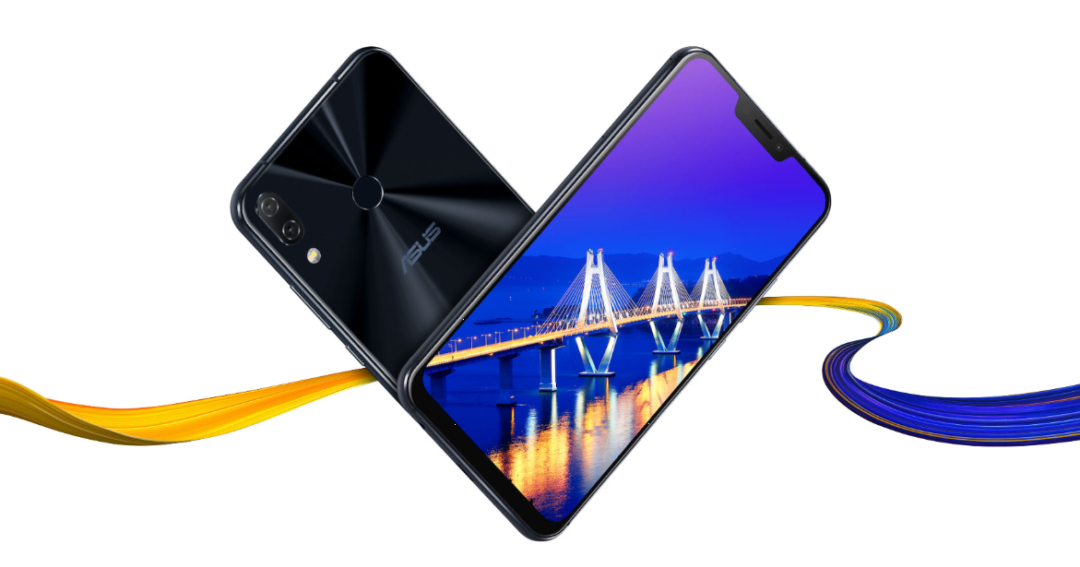
Asus 5Z flagship smartphone was launched in July last year and the company slashed the phone’s pricing in India a few months ago. Now, the company has announced yet another price cut on the smartphone.
Along with that, the Taiwanese company has also slashed the pricing for its flagship smartphone of the current year — Asus 6Z. The Asus 5Z has got a price cut of up to ₹7,000 while the 6Z has got price cut of up to ₹5,000.
The 6GB RAM + 64GB storage and 6GB RAM + 128GB storage model of the Asus 6Z is now available for ₹27,999 and ₹30,999 instead of its original price of ₹31,999 and ₹34,999. The top-end model with 8GB RAM and 256GB storage, which was launched for ₹39,999, is now available for ₹34,999.
On the other hand, the Asus 5Z with 6GB RAM and 64GB storage was launched at ₹29,999 while the 6GB + 128GB model was launched at ₹32,999. Both of them recently got price cut, bringing down the pricing to ₹21,999 and ₹24,999 respectively. Now, with this new price cut, the devices are available for just ₹16,999 and ₹18,999 respectively.
The top-end model of the Asus Zenfone 5Z with 8GB RAM and 256GB storage was launched for ₹36,999 but the smartphone’s pricing was slashed earlier this year to ₹28,999. With this new price cut, the device is now available for purchase at just ₹21,999, representing a massive price drop of ₹7,000.
The Asus Zenfone 5Z features a 6.2-inch Full-HD+ LCD notched display and is powered by Qualcomm‘s Snapdragon 845 processor, coupled with Adreno 630 graphics processor for ensuring a smooth experience with gameplay and graphics.
It comes with a dual-camera setup on the back consisting of a 12-megapixel primary camera with Sony IMX363 sensor, 4-axis OIS, 3-axis EIS, f/1.8 aperture and phase detection autofocus, and an 8-megapixel secondary sensor with f/2.2 aperture, OV8856 sensor, and 120-degree wide-angle lens.
There’s an 8-megapixel snapper with support for Face Unlock feature. It also has a fingerprint sensor placed on the backside, which according to Asus, can unlock the device in 0.3 seconds. The phone runs Android 9 Pie operating system out-of-the-box and is powered by a 3,300mAh battery with ASUS BoostMaster fast charging.
On the other hand, the Asus 6Z features a 6.4-inch IPS LCD notch-less display that carries support for Full HD+ screen resolution and is protected by Gorilla Glass 6 on top. Under the hood, the device is powered by the Snapdragon 855 octa-core chipset.
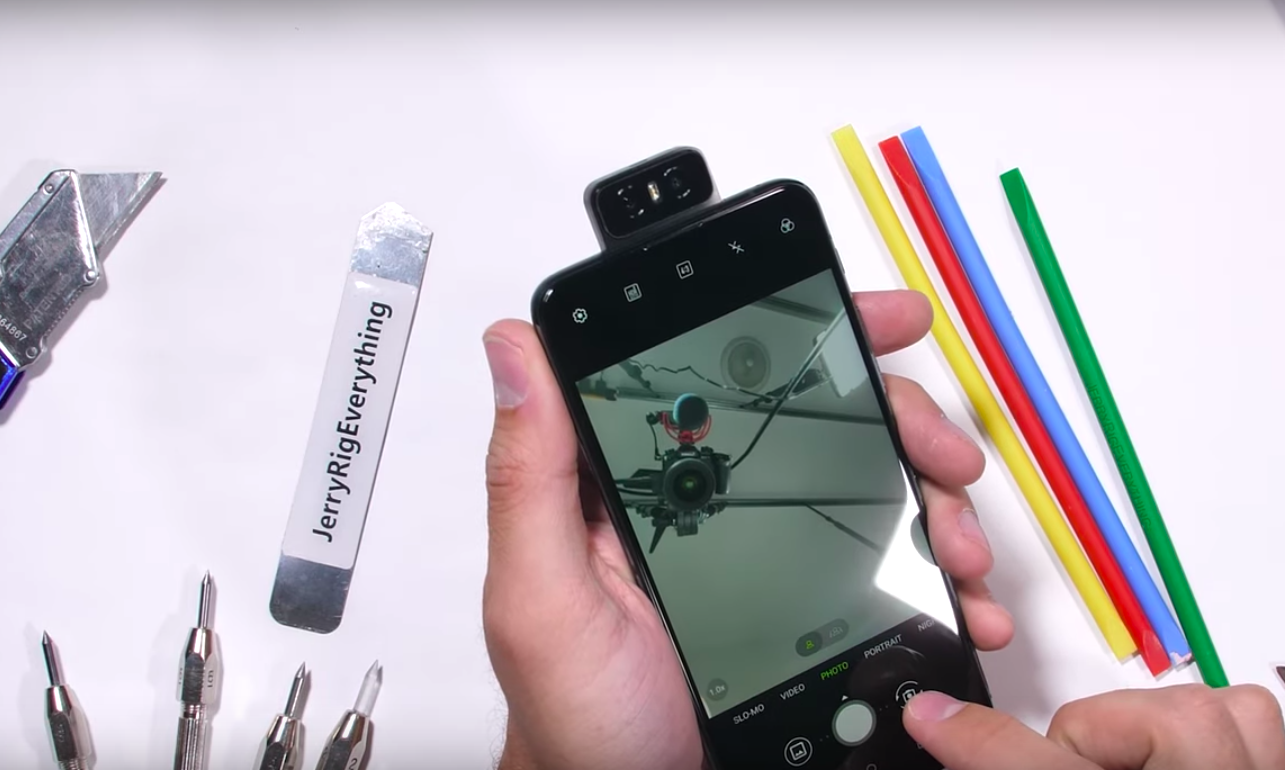
It comes with flip camera design that houses the dual rear cameras which also double as the selfie shooters. Specs wise, the main camera is a 48MP Sony IMX586 primary sensor with f/1.79 aperture, teaming up with a 13MP ultra-wide angle sensor with a 125-degree field of view. The camera module also includes laser autofocus and dual-LED flash.
The smartphone is running Android 9 Pie operating system out-of-the-box and the device comes powered by a massive 5,000mAh battery that has support for 18W fast charging as well as 10W reverse charging.
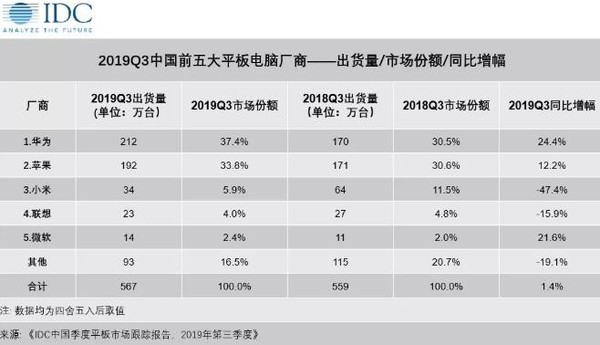
Huawei is one of the few manufacturers still active in the tablet business. This year, it launched the MediaPad M6 series which has three models including a Turbo version of the 8.4-inch model. An IDC report has revealed that the Chinese tech giant now has the largest share of the Chinese tablet market.
IDC’s quarterly report for Q3 2019 shows Huawei shipped a total of 2.12 million units last quarter, a growth of 24.4% compared to the previous year. Based on this, Huawei’s share of the market rose to 37.4%, pushing it to the top of the list for the very first time.
IDC does state that the Chinese tablet market has actually been growing for the past 6 quarters albeit at a narrow pace of just 1.4%. A total of 5.67 million tablets were shipped in Q3 2019.
Apple has the second-largest market share with 33.8% and it shipped 1.92 million units last quarter. Xiaomi shipped 340,000 units and has a market share of 5.9% while Lenovo comes in fourth with a market share of 4% and a total of 230,000 units shipped. Both Xiaomi and Lenovo recorded a decline in growth of 47.4% and 15.9 respectively compared to the same quarter last year.
Xiaomi didn’t announce new models for the Mi Pad series which explains why its market share dropped significantly. It has been reported that Huawei, Apple, and Microsoft (which has the 5th largest share in China) have recorded success in the tablet market thanks to their continuous innovation and investments in research and development.
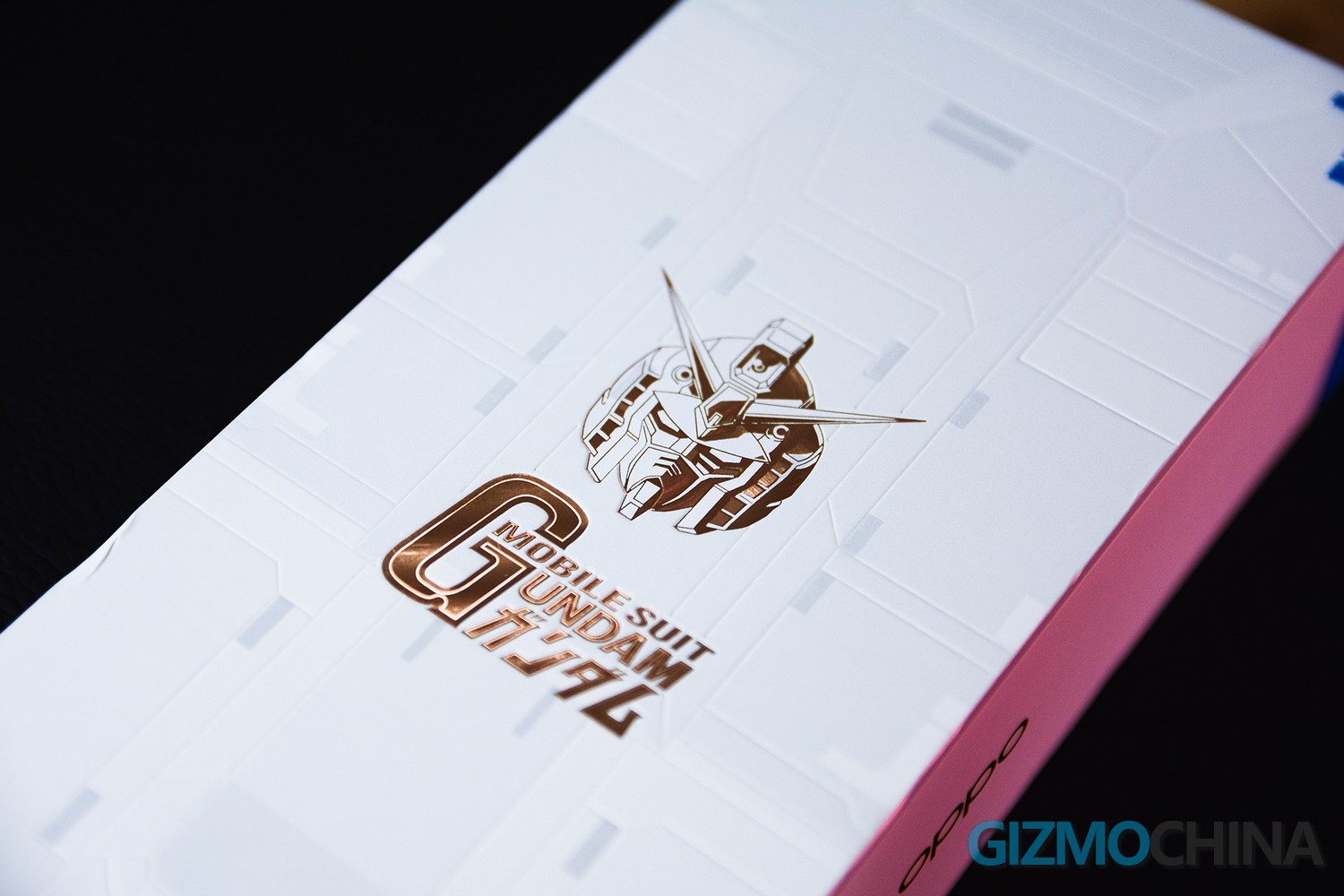
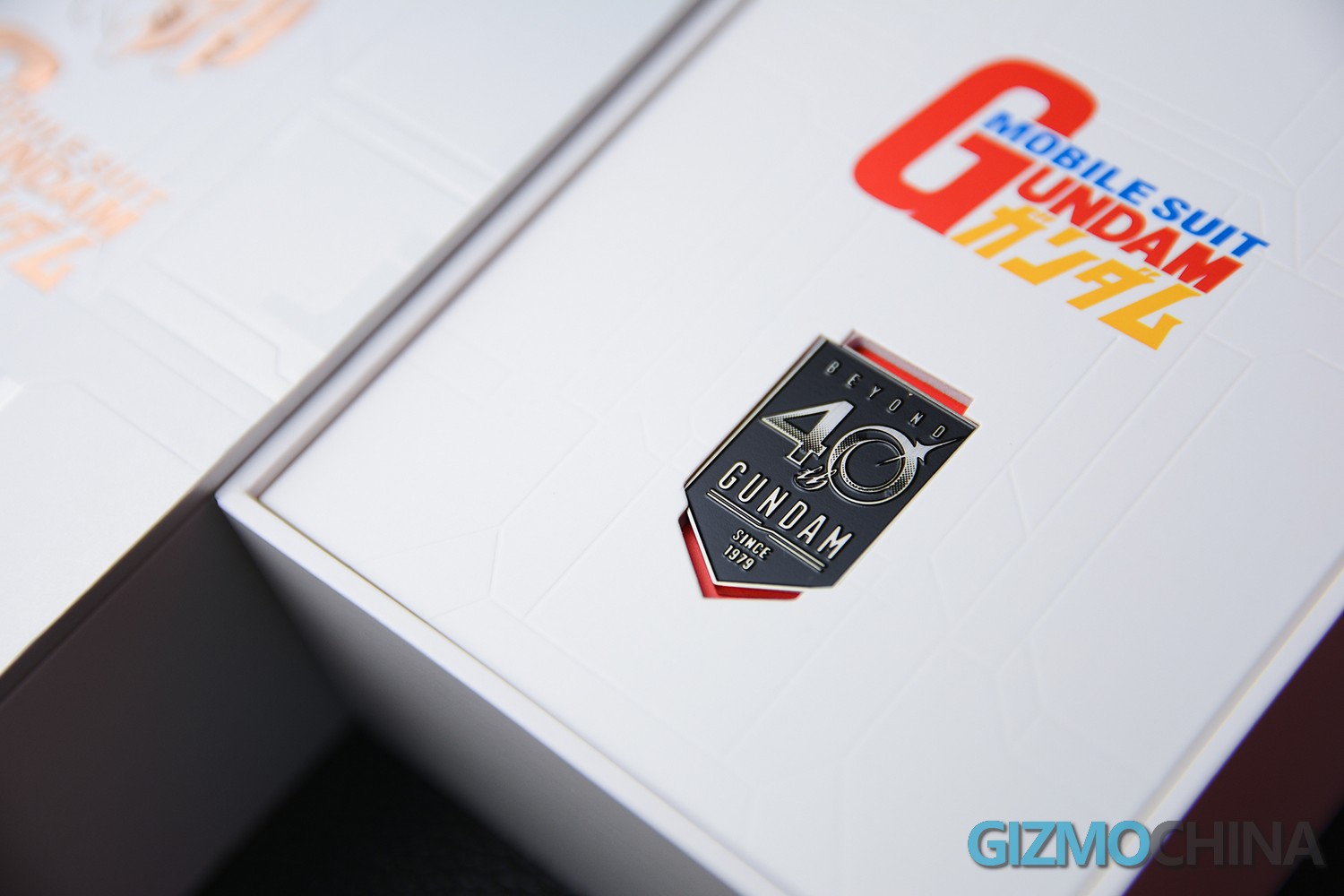
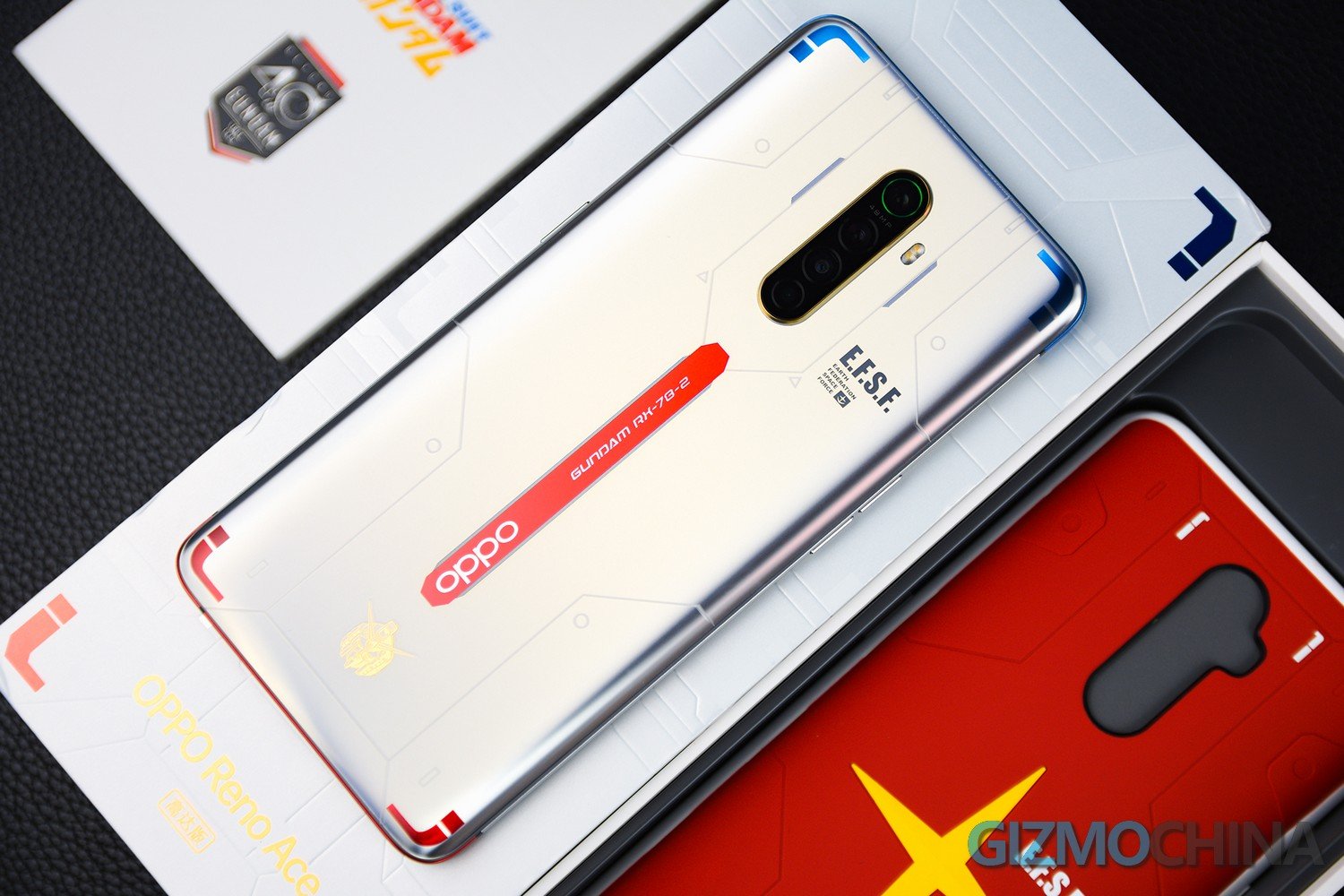
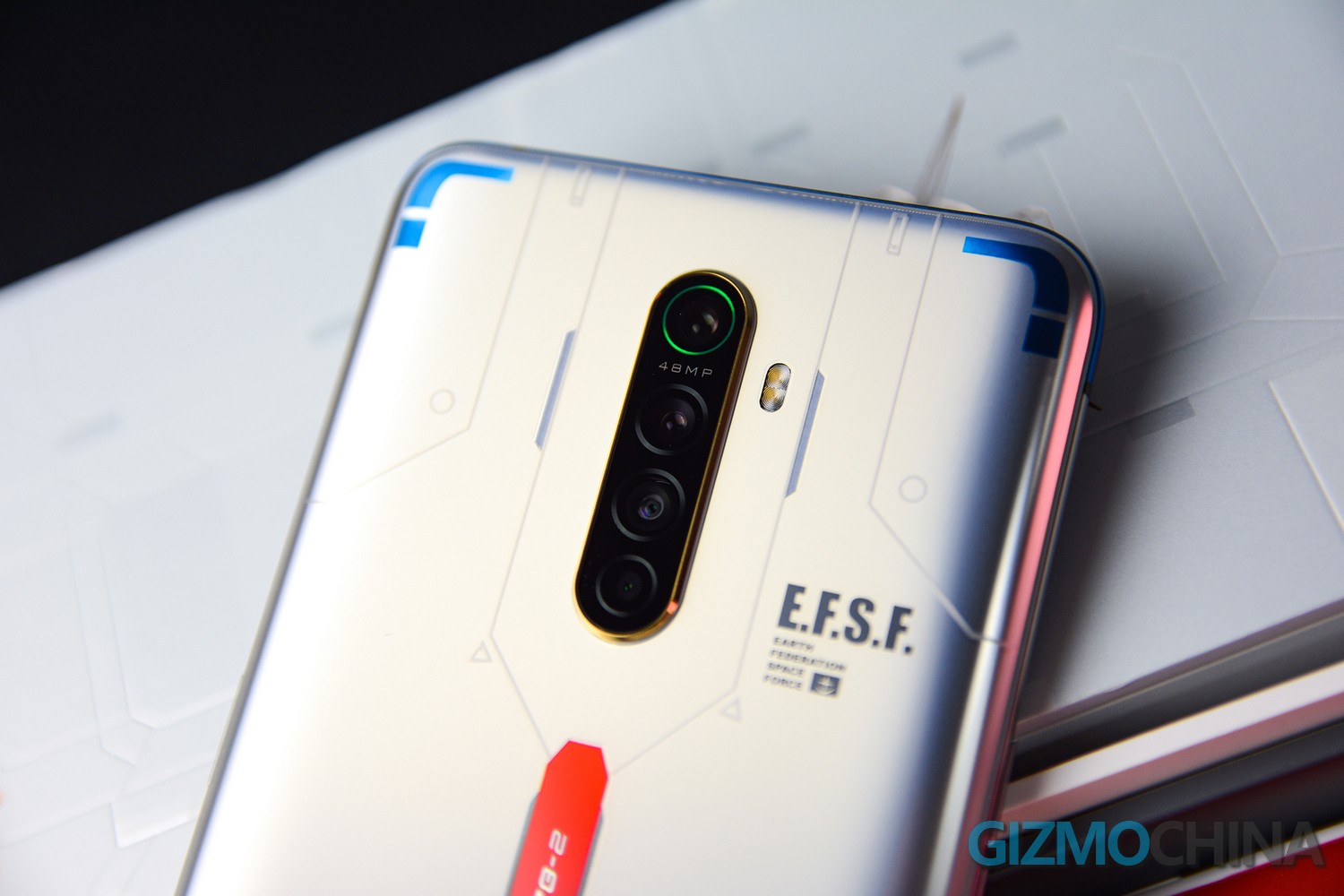
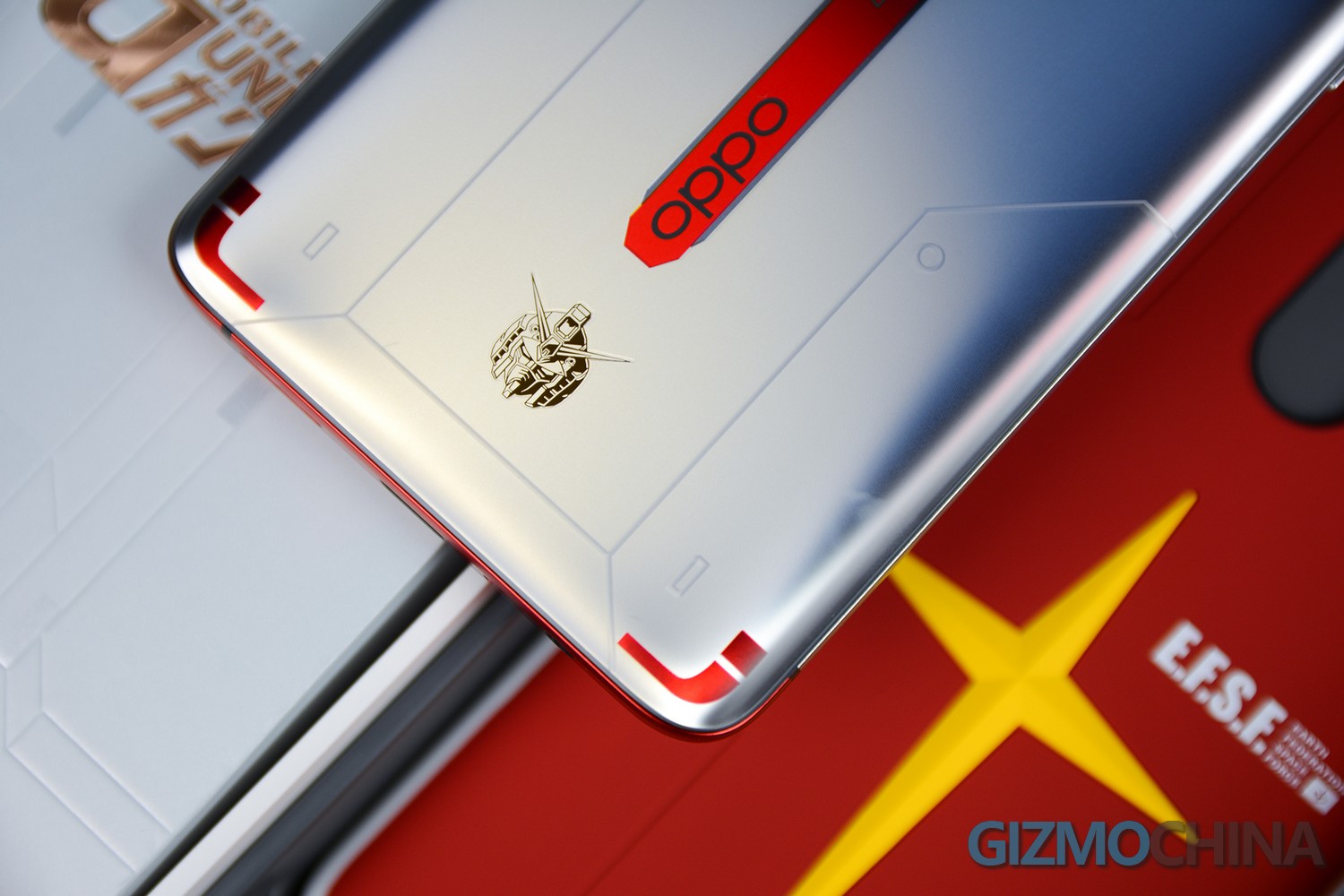
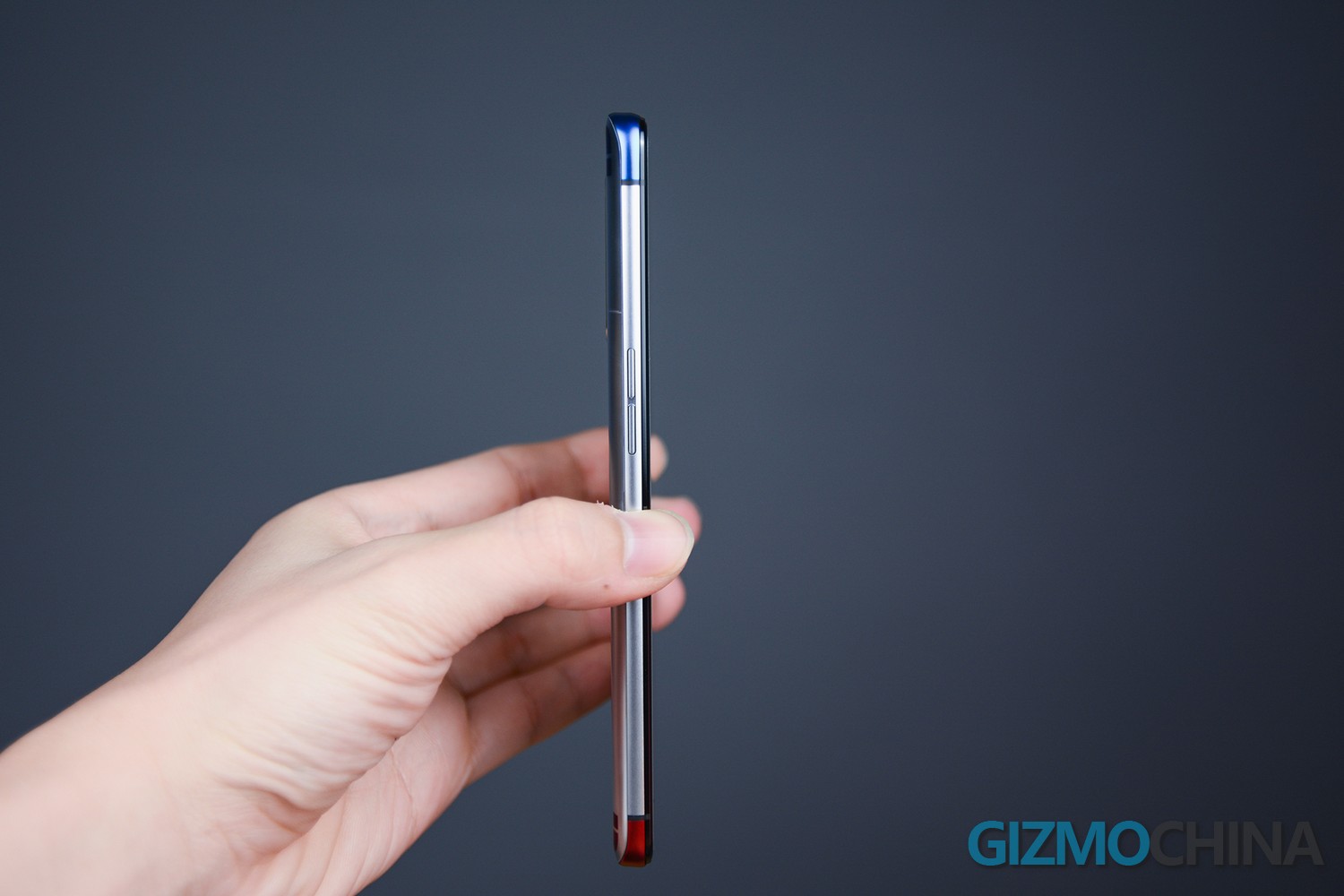
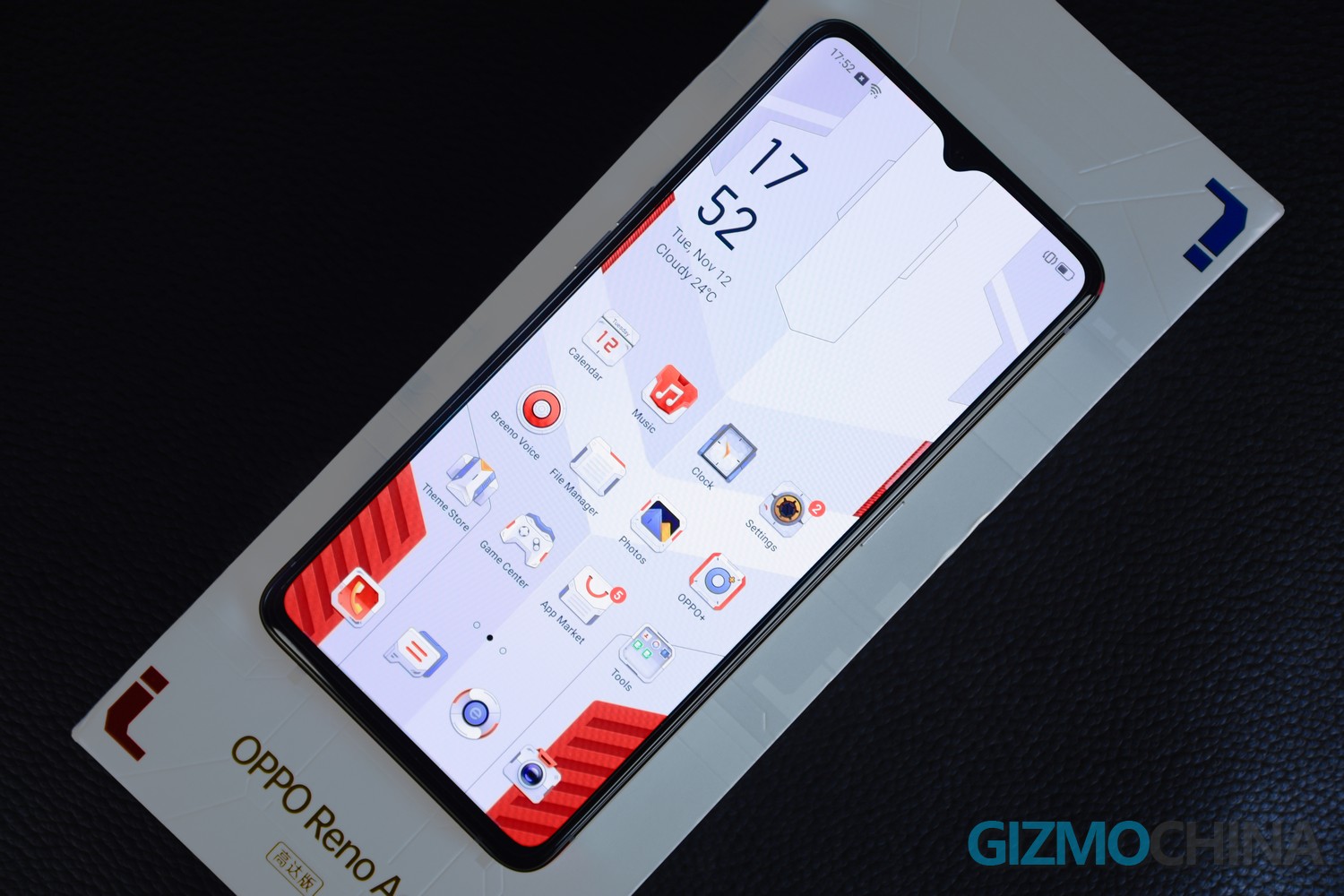
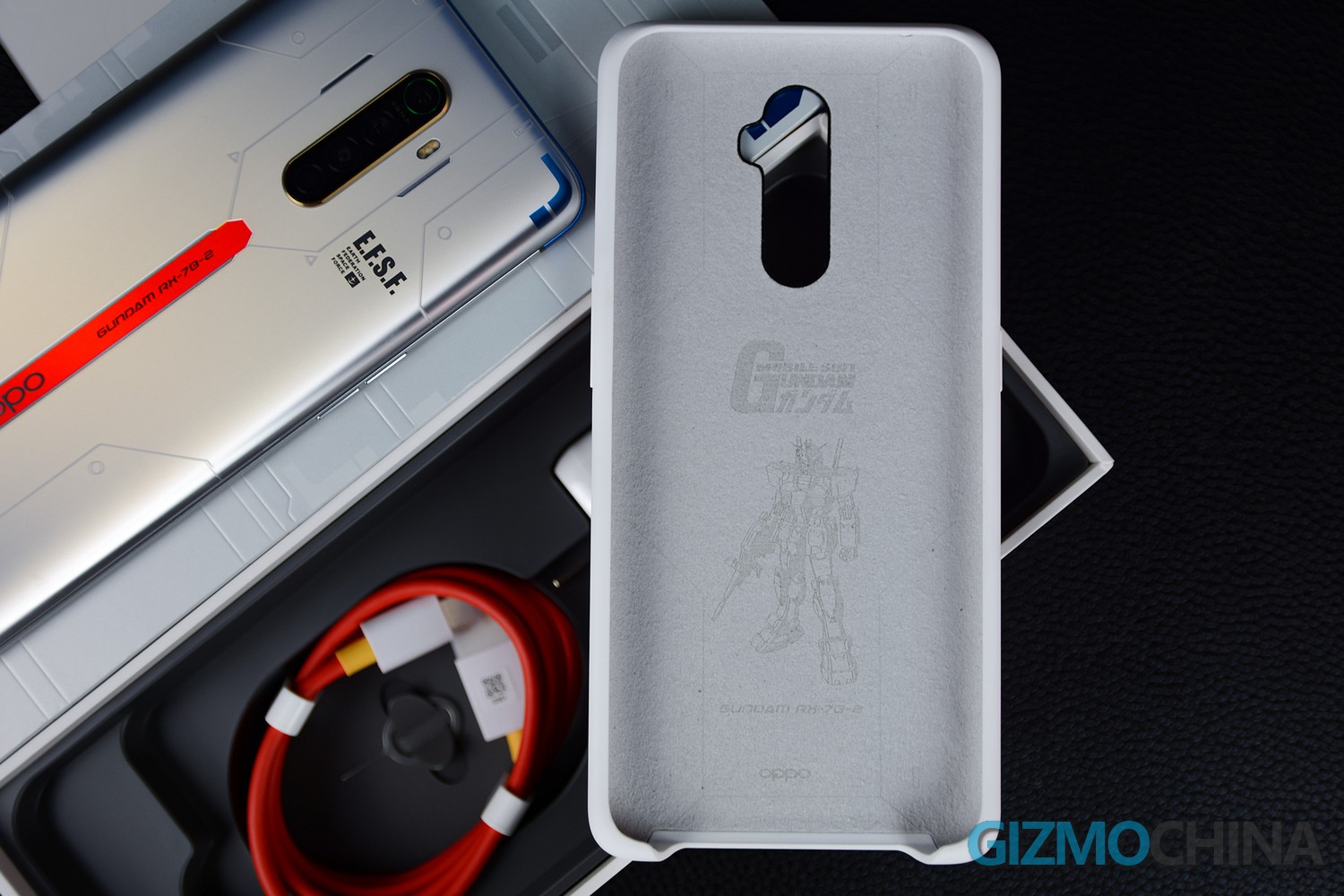
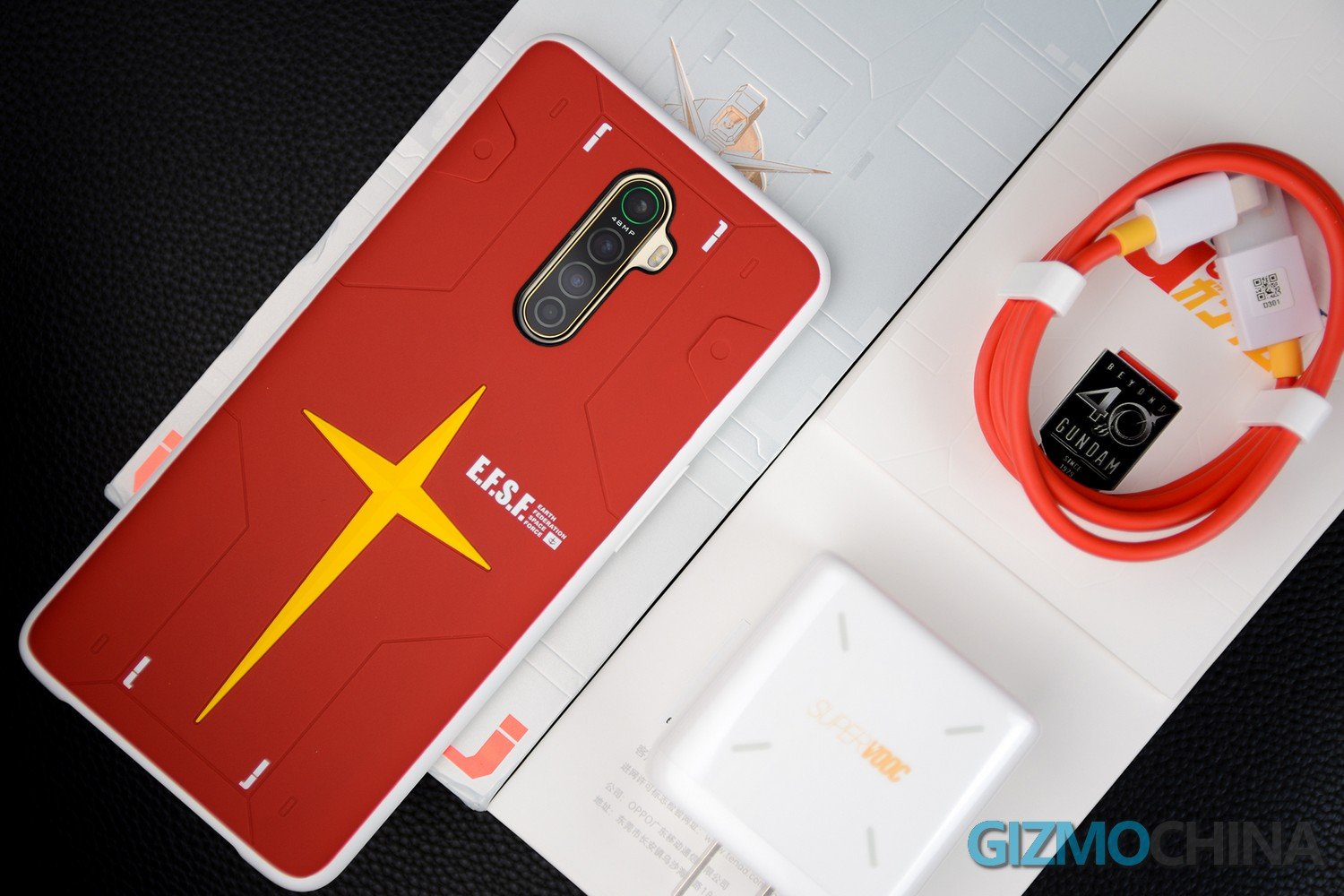
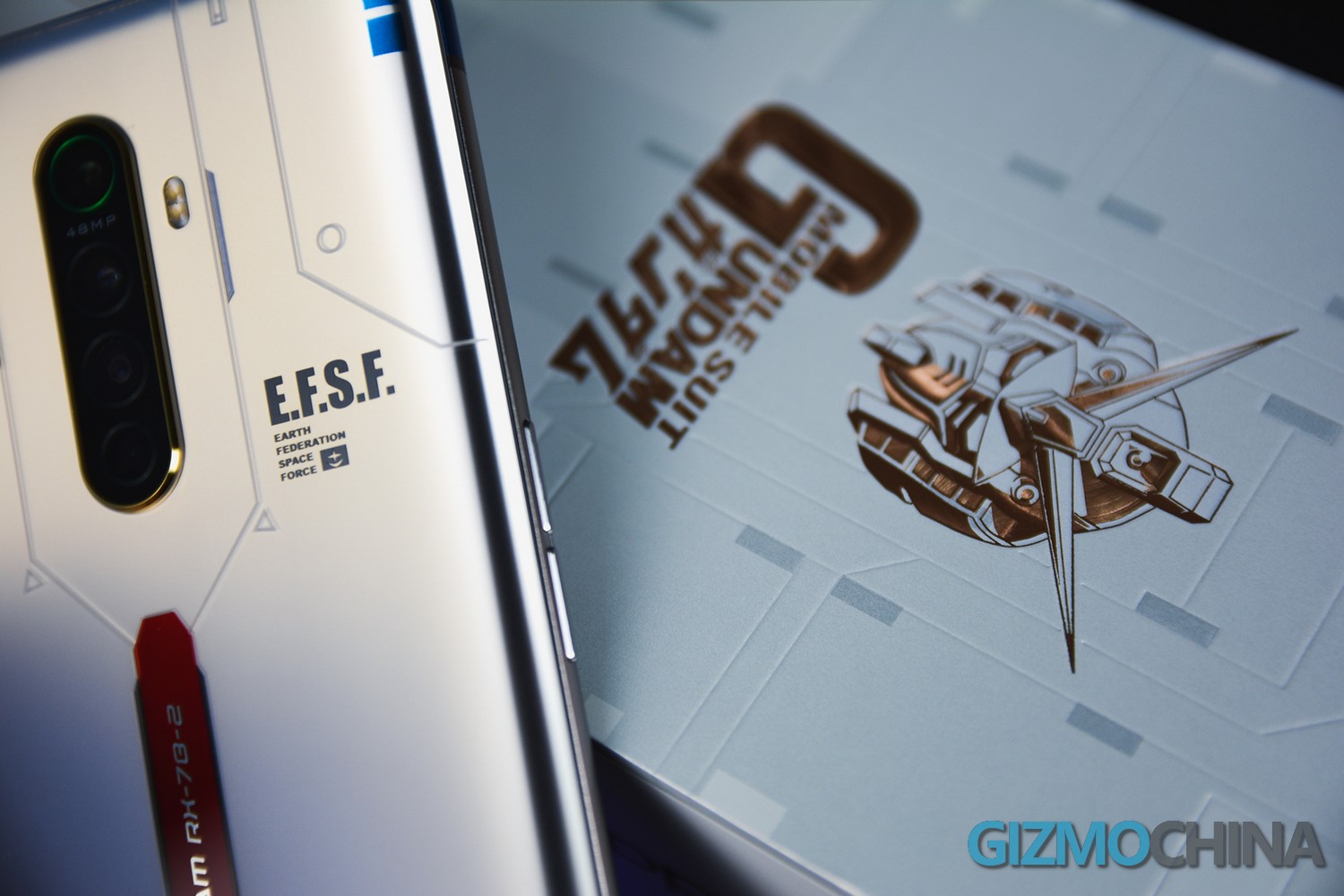
Earlier this year, along with the OPPO Reno Ace flagship smartphone, the company had also announced a limited-edition OPPO Reno Ace Gundam Edition. The OPPO Reno Ace Gundam Edition has been announced by the company to celebrate the company’s 40 year anniversary. It has a special appeal, thanks to the customised design and also comes along with some customised accessories. OPPO has said that it will be selling only 30,000 units of the smartphone.
Apart from the design and memory configuration, almost everything else remains the same in terms of specifications. The phone features a 6.5-inch Full HD+ display with 20:9 aspect ratio, 1080 x 2400 pixels screen resolution, and 90Hz refresh rate. It also comes with an in-display fingerprint sensor.
OPPO Reno Ace Gundam edition hands on
Under the hood, the device is powered by the Qualcomm Snapdragon 855 Plus octa-core processor along with 8GB of RAM and 256GB of UFS 3.0 internal storage. The company says that there’s a heat dissipation pipe for regulating its internal temperature.
On the back side, the phone comes with a Sony IMX586 48-megapixel main lens with f/1.8 aperture, a 13-megapixel telephoto lens with support for 5x hybrid zoom, an ultrawide lens of 8-megapixel and a macro lens of 2-megapixel. There is a selfie camera of 16-megapixel inside the front notch of the smartphone.
The device is fuelled by a 4,000mAh battery which comes with 65W SuperVOOC Flash Charge technology, which is currently the fastest charging technology. It takes only 30 minutes to completely charge the device and by charging it only for 5 minutes, the battery can gain 27 percent power. It also supports other rapid charging technologies like USB-PD and Qualcomm’s Quick Charge.
As for the pricing, the OPPO Reno Ace Gundam Edition is priced at 3,599 Yuan which roughly converts to $505. The company has also announced Unicorn Gundam C1 gamepad for the phone, which will go on sale from 11th November for 299 Yuan (~$42).
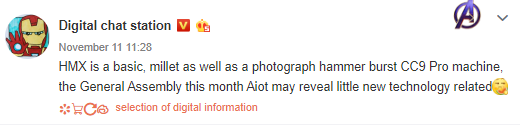
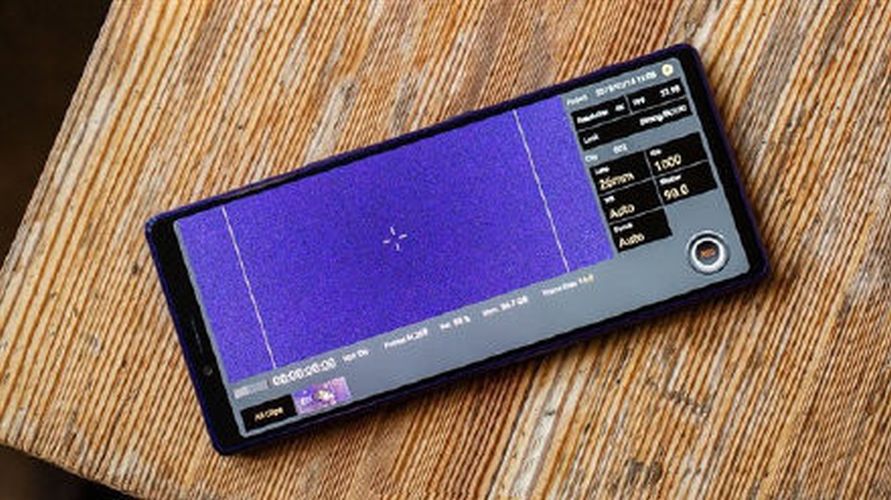
The Mi CC9 Pro which launched last week is one of the smartphones with the best cameras according to DxOMark. It holds the top spot alongside the Huawei Mate 30 Pro with a score of 121. However, it may not be Xiaomi’s top camera phone for long.
According to the credible Chinese leaker @Digital Chat Station, Xiaomi has a camera-centric phone in development that trumps the Mi CC9 Pro in camera performance. He doesn’t reveal any other info about the phone but adds that we may get more details during Xiaomi’s AIoT event.
We also inferred from the Weibo post that Xiaomi may be working with Samsung again for the new device.
At the moment, rumors say we may get the Redmi K30 phone this year but knowing Xiaomi, they may still have a few more models in the pipeline scheduled to launch before the end of the year. One of these phones may be the one that takes the crown from the Mi CC9 Pro.
At the IFA 2019 tech trade show, Sony had launched the Sony Xperia 5 flagship phone. Despite launching flagship and mid-range phones at regular intervals, Sony’s smartphone business is not doing well. The Japanese firm could sell only 600,000 smartphones in the third quarter of the year. In the same period last year, it had sold 1.6 million units. Sony is reportedly working on Xperia 3 flagship phone that is likely to go official in the first quarter of 2020. Months ahead of the launch, leaked photos of the purported Xperia 3 has appeared to reveal some its features.
The first image showcases the display of the alleged Xperia 3 smartphone. What’s unusual about the display is that it features a large punch-hole. The size of the punch-hole is as big as a fisheye. The other image shows that the device is fitted with a rear-mounted fingerprint reader. The predecessor flagship phones such as Xperia 1 and Xperia 5.
Past reports have revealed that the Sony Xperia 3 exists in two models that are codenamed as Kona and Huracan. It is speculated that one of the them supports 5G connectivity whereas the other lacks support for it. The Xperia 3 is rumored to be powered by Snapdragon 865 that is yet to go official. In September, Sony’s next flagship phone was reportedly was spotted through its firmware distribution server with SM8250 (codename for Snapdragon 865). Nothing else is known on the specs of the Xperia 3.
The Snapdragon 865 mobile platform is rumored to be equipped with one 2.84GHz Cortex-A77 (custom Kryo core), three 2.42GHz Cortex-A77 cores (custom Kryo cores) and quad 1.8GHz Cortex-A55 cores (custom Kryo cores). It is expected to come equipped with 587MHz Adreno 650 graphics. The Snapdragon 865 chipset is expected to get announced at the upcoming Snapdragon Tech Summit 2019 that will be held between Dec. 3 and Dec. 5 in the U.S. The Sony Xperia 3 flagship phone featuring the SD865 may get unleashed at the Mobile World Congress (MWC) 2020 tech trade show in February.
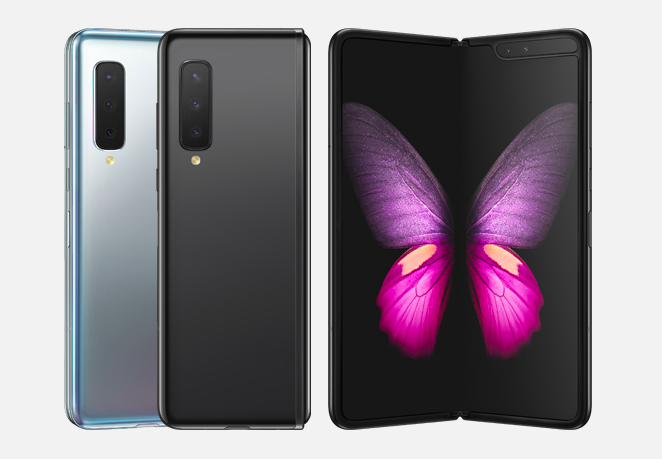
Three days after selling out its entire consignment of Galaxy Fold devices in China under five minutes, Samsung once again ran out-of-stock within a few minutes on Monday. The foldable smartphone sold like hot cakes during the 11.11 (Singles’ Day) sales event in China, despite the mammoth ~$2,000 price tag. Samsung did not mention the number of devices that were sold during the second phase. However, the company is replenishing its supply lines fairly quickly, meaning that the Galaxy Fold will be available shortly.
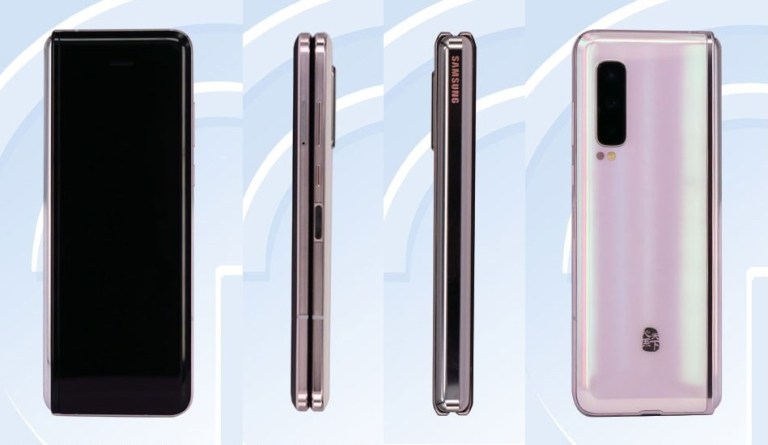
In related news, Samsung plans to unveil the Galaxy W20 5G in China on Nov. 19. What was initially rumored to be a new clamshell-designed foldable smartphone, turned out to be nothing but a 5G-enabled variant of the Galaxy Fold with a new processor! The specifications of the smartphone surfaced online through the TENAA listings yesterday.
The Galaxy W20 5G (model number SM-W2020) flaunts a 7.3-inch flexible AMOLED display with a resolution of 2152 x 1536 pixels. The secondary cover display uses a 4.6-inch unit with a resolution of 1680 x 720 pixels. According to the TENAA listing of the device, it is powered by a 2.956 GHz Snapdragon 855+ SoC with 12 GB of RAM and 512 GB of native storage.
In terms of optics, the W20 5G seems to borrow the same Hexa-camera setup present on the Galaxy Fold. The rear panel is equipped with two 12-megapixel sensors and a 16-megapixel unit. Present on the upper surface of the inner display is the 10-megapixel and 8-megapixel lenses. The 10-megapixel selfie camera is present above the cover display. The TENAA listing also reveals a side-mounted fingerprint scanner. The foldable phone runs on Android 9 Pie OS that is customized with the latest edition of One UI.
The Samsung Galaxy W20 5G draws power from a 4,135 mAh battery. The smartphone could ship with 15W fast charging according to its 3C listing. The WPC certification of the device confirmed the presence of wireless charging on the device. Samsung is currently selling the Galaxy Fold in China for CNY 15,999 (~$2,286). The Galaxy W20 5G will be priced higher than the Galaxy Fold.
MIUI is to Xiaomi as ColorOS is to OPPO. While Xiaomi is already rolling out a stable version of the latest iteration called MIUI 11 to its devices, OPPO is gearing up for the launch of the latest version of its own skin which will arrive as ColorOS 7.
It was previously reported that ColorOS 7 will be unveiled on November 20 in Beijing, China. For OPPO fans outside China, you won’t have to wait long as the BBK-owned company has begun sending invites for a launch in India exactly a week after the Beijing event.
The ColorOS 7 event scheduled for November 27 will be held in New Delhi.
There are no official details about what to expect but it should come with a new UI, Dark Mode for those who don’t like the mainly white bright theme of ColorOS 6. We also expect it to come with new animations, a new version of Game Boost, and a number of useful features to make usage easier.
ColorOS 7 should bring Android 10 to most of OPPO’s new phones but older models may be stuck on the version of Android they are currently running.
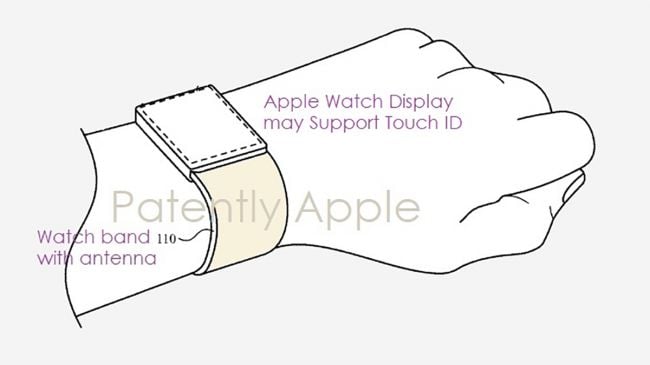
Although the Apple Watch is an impressive bit of technology, the Cupertino-based electronics giant continues to look for innovative ways to improve its highly popular smartwatch. Based on the latest patent filing with the US Trademark and Patents Office, it can be said that Apple could be contemplating the idea of adding Touch ID to the display of the Apple Watch.
The news first appeared on Patently Apple last week claimed that the Cupertino company could be planning to introduce a touch-sensitive device, a force-sensitive device, a temperature-sensitive device and/or a fingerprint sensor underneath the display. This will be done by relocating the internal watch antennas within the wristband. While the current-generation Apple Watch can be used to unlock MacBooks, make secure payments through Apple Pay and more, native support for Touch ID will throw a whole new level of authentication to the mix.
The patent application titled “Antenna Assemblies for Watch Bands” explains how Apple plans to embed antennas within the wrist band, ensuring the perfect balance between form, functionality, and comfort. The watch band enables wireless communication via the stretchable antenna while protecting its structural integrity and operational capabilities. The watch band flexes, stretches and bends freely with the body and protects the antenna from damage caused by external impacts.
Embedding cellular, Wi-Fi and Bluetooth antennas within the band is a tough challenge, considering the amount of stress and torture these bands have to endure. Embedding antennas within the wristband would dramatically reduce aftermarket replacement options and increase the prices. Apple has high hopes for this technology, enough to file a patent. As with any new technology, it is never known whether Apple will ever bring these innovations. Nonetheless, it is interesting to see the direction that the company plans to take for the future.
In related news, Apple slashed the prices of the Watch Series 3 in India after the launch of the Series 5. Prices of the Series 3 GPS now start at Rs. 20,990 (~$294) while the GPS + Cellular variant is available at Rs. 29,990 (~$418). The Apple Watch Series 5 is priced from Rs. 40,900 (~$572) for the GPS-only variant while the GPS + cellular variant is priced at Rs. 49,900 (~$698). The Watch Series 5 flaunts a Low-Temperature Polysilicon and Oxide (LTPO) Retina display with a variable refresh rate, eliminating the need for refreshing the display, thus conserving power.
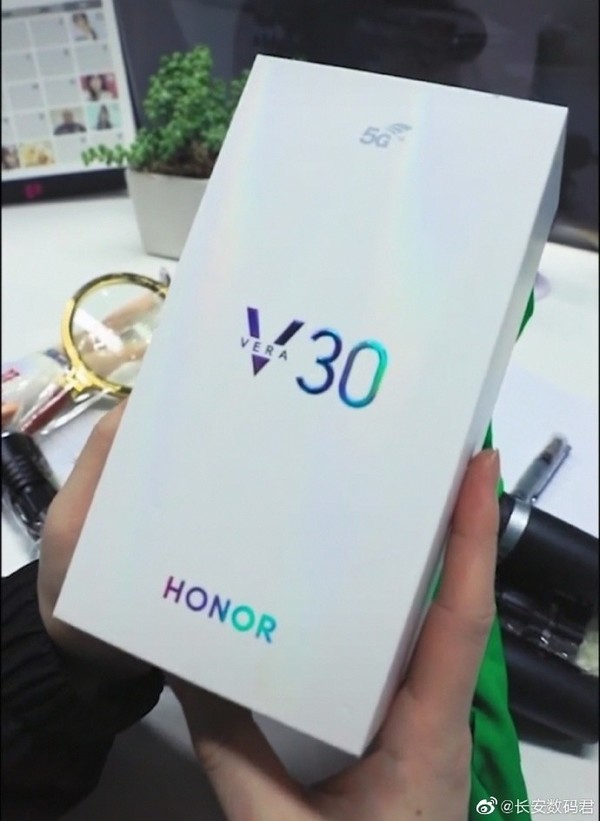
Honor will be announcing the Honor V30 series on November 26 through an unveil event in Beijing, China, but there’s still plenty of time for leaks, including this new one. The latest leak gives us a look at the device’s box design and details. There’s the logo for the Vera 30, as well as a 5G logo and Honor’s own logo, all on a clean white background.
The rumor mill has so far revealed that the Honor V30 Pro will be equipped with an OLED display with dual selfie snappers whereas the standard model will be equipped with an LCD display and single punch-hole for its selfie camera. The V30 is said to be powered by the Kirin 990 SoC whereas the Honor V30 Pro could be driven by the Kirin 990 5G chipset.
The device is said to feature a quad camera system on its rear. It may include a 60-megapixel primary lens, a 16-megapixel superwide lens, a 2-megapixel macro lens and a 3D ToF sensor. On other side, it may feature a quad camera system with a 60-megapixel main lens, an 8-megapixel telephoto lens, a 20-megapixel superwide lens and a ToF camera.
According to even more rumors, the standard V30 could have a 4,000mAh battery whereas the Pro model could be equipped with a larger 4,200mAh battery. The 3C appearance of the alleged V30 Pro phone has revealed that it may arrive with support for 40W fast charging. The Pro model may also support wireless charging. Lastly, the Honor V30 series is expected to support NSA and SA 5G connectivity in China.
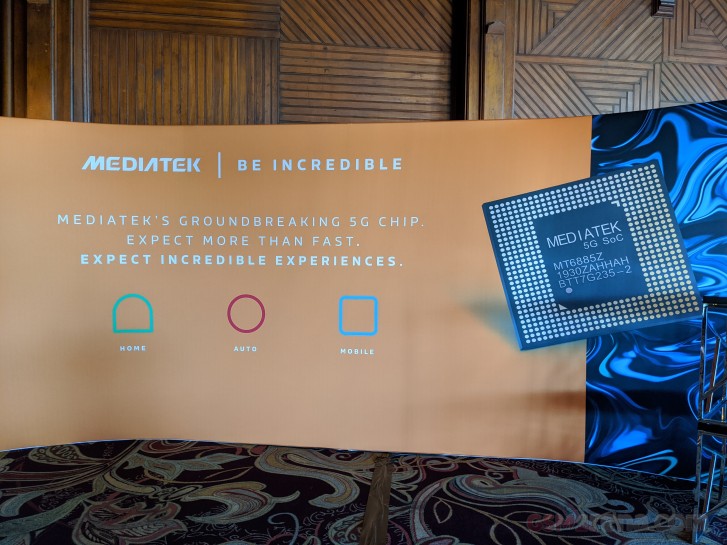
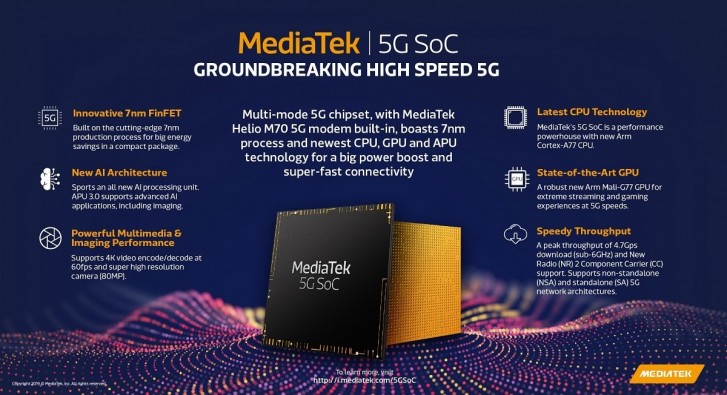
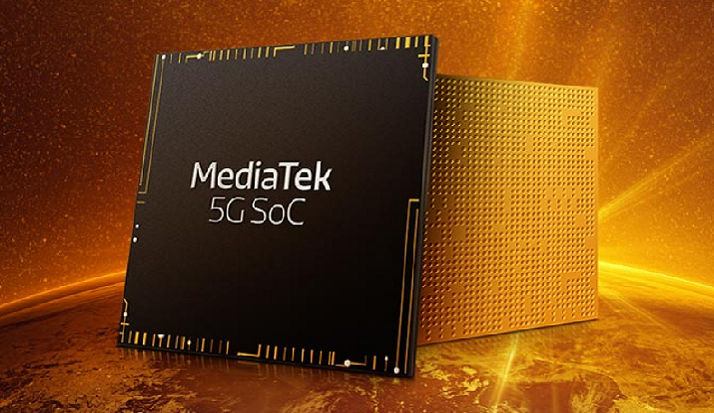
MediaTek has confirmed that it will be unveiling its first 5G chipset at its annual Summit event on 26 November. According to Mediatek’s website, the upcoming MT6885Z chipset is based on the Helio M70 modem that supports 5G capabilities and is built on the 7nm die lithography. Additionally, the chipset features the ARM Cortex-A77 CPU and Mali-G77 GPU.
Aside from that, the new chipset is also expected to support 4K video encoding and decoding at 60 fps, as well as the capability to work with smartphone camera sensors of up to 80MP resolution. All on the aforementioned 7nm FinFET process. Allegedly the MT6885 is already in mass production and should start shipping to manufacturers in Q1 2020.
The company will also bring out an aggressively positioned mid-range 5G capable processor in the MT6873, one of the first of it’s kind, though it’s only expected to enter mass production only in the second quarter of 2020. It may even be more efficient than other competitors, as MediaTek may be planning to utilize TSMC’s upcoming 6nm manufacturing node.
Prior to this, the company had also debuted two other chips to its line-up earlier this year: the gaming-focused Helio G90, and the mid-range Helio P65 SoC. It is also rumored that Redmi is working on a 5G smartphone powered by MediaTek’s chipset which isn’t surprising given that the Xiaomi sub-brand opted for Helio G90T chipset for its Redmi Note 8 Pro.
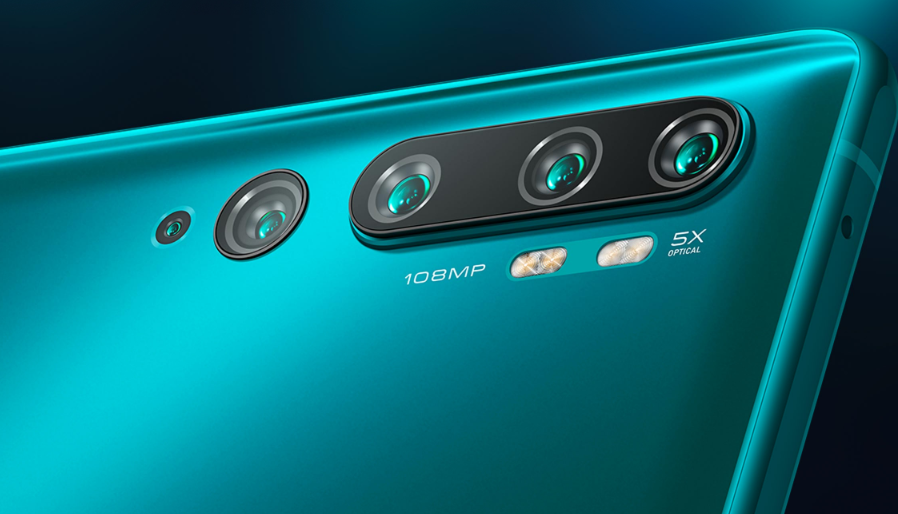
Just when we thought 64MP was likely going to be the upper limit for smartphone cameras, Samsung announced the ISOCELL Bright HMX sensor with a massive 108MP resolution. This has set a new benchmark for smartphone cameras and currently, Xiaomi is the only manufacturer to have smartphones that use this chipset. But that’s likely going to change in the coming months as Samsung has added support for 108MP resolution in the camera app code of the latest OneUI 2.0 beta.
The current Galaxy S10+ comes with a modest 12MP +12MP+16MP camera setup
While checking the camera app code in the latest beta version, XDA’s Max Weinback found that the camera app now supports a resolution of 12,000 by 9,000 pixels, essentially translating to 108MP. Given that Samsung is usually serious about new feature additions to its software, it’s very likely that the company is currently working on a new smartphone with the 108MP sensor.
Xiaomi’s Mi CC9 Pro / Mi Note 10 Pro and the Mi Mix Alpha are the only two smartphones that employ this 108MP Samsung sensor on its back. While we don’t know which Samsung model will get it, there are rumors that say that the S11 series could feature this sensor.
Just like the CC9 Pro, the new Samsung smartphone should employ pixel binning to churn out 27MP or even 12MP photos from this 108MP sensor.
Samsung will be launching the Galaxy W20 5G foldable phone in China on Nov. 19. It was previously believed to be a new clamshell foldable phone from the company. However, newer reports have claimed that it is nothing but a 5G version of the Galaxy Fold for China that is equipped with a newer chipset. Yesterday, it appeared on TENAA with preliminary specs. The listing has now been updated to reveal its entire specifications. The TENAA listing reveals that the Galaxy W20 5G foldable phone is driven by Snapdragon 855+ mobile platform.
Samsung Galaxy W20 Specifications
The Galaxy W20 5G foldable phone for China has a model number of SM-W2020. The TENAA appearance has revealed that the phone will is fitted with a 4.6-inch display that supports 720 x 1680 pixels. It serves as covering display. Unfolding the device will reveal its flexible AMOLED screen of 7.3 inches that produces 1536 x 2152 pixels resolution.
The Android 9 Pie OS runs on the device. It could be customized with the latest version of One UI 2.0 custom ROM from Samsung. TENAA reveals that it features an octa-core processor that works at 2.956 GHz. This clocking speed belongs to the Snapdragon 855+ mobile platform. The Galaxy Fold 5G phone available outside of China is equipped with SD855+. However, China will be getting Snapdragon 855+ edition of the Galaxy W20 5G. Its chipset is supported by 12 GB of RAM and it has a massive native storage of 512 GB.
For photography, it seems to be equipped with the same six cameras that are available on the Galaxy Fold. The back panel of the phone has 12-megapixel + 12-megapixel + 16-megapixel triple camera system. Flanked above the inner screen is a 10-megapixel + 8-megapixel dual camera system. Above the cover display is a selfie shooter of 10-megapixel.
The TENAA images of the Galaxy W20 5G phone reveals that it features a side-mounted fingerprint reader. The device is backed by a 4,135mAh minimum rated battery. Its 3C listing has revealed that it could be shipped with 15W fast charging. The WPC certification of the SM-W2020 has revealed that the phone will be also carry support for wireless charging.
MediaTek is betting big on 5G to make a solid comeback into the smartphone industry. And according to a new report from Taiwan, MediaTek will be shipping its mid-range 5G chip to Huawei next year. This will be the second 5G chip from the company, code-named MT6873, targeted at the affordable segment of the smartphone market.
For the past couple of years, MediaTek has focused on developing products for 5G technology. And as 5G networks have started to roll out across the globe, the company is back into the limelight. The company’s flagship-grade 5G chipset, codenamed MT6885Z, will be officially announced on November 26. While that’ll power the expensive 5G handsets in the market in the coming months, the MT6873 chipset is really the chip we should be excited about.
MT6873 will be targeted at the mid-range smartphone market and should end up on phones around $300. We still haven’t seen any affordable 5G mid-range smartphones in the market but by Q2 2020, things are expected to change. This chip is said to power Huawei’s mid-range smartphones and we could see it inside one or two Honor 5G devices too.
Huawei’s high-end Kirin 990 5G will power its flagship models, which opens up the spot for mid-range and low-end devices. In the past couple of years, Qualcomm has traditionally supplied some chips for Huawei and Honor’s mid-rangers. However, with MT6873’s entry, MediaTek could grab a small share of those shipments next year.
MediaTek is also reportedly developing a third 5G chip for the smartphone market, targeted at a more affordable price segment. The chip should power smartphones that cost around $250.
The Samsung Galaxy Fold’s launch that was carried at the beginning of this year was marred with controversy as the display of its review units started malfunctioning. This resulted in Samsung having to delay the launch until September 2019, six months after the formal announcement. The Galaxy Fold has recorded impressive sales figures ever since and even went out-of-stock in a few markets. Samsung has now signed an exclusive deal with Korean supplier Dowoo Insis for Ultra-Thin Glass (UTG) panels that will be used on next-generation foldable displays.
The Samsung Galaxy Fold has an integrated polyamide film over its flexible display panel, which resembles a screen protection film. If a person tries to remove this film, they accidentally end up damaging the display. After the marketing nightmare post the media launch back in May 2019, Samsung tucked the edges of the film underneath the Fold’s frame so that people would not rip off the display.
Another major reason for seeking an alternative to the polyamide film is the trade restrictions imposed by Japan on exporting goods to South Korea since August 2019. The film used by Samsung on the Galaxy Fold was supplied by Japanese firm Sumitomo.
The UTG supplied by Dowoo is said to be thinner than 100 microns, with certain speculations putting the figure close to 30 microns, which is half the thickness of the human hair. UTG is an ultra-thin tempered glass that can fold without breaking and is more scratch-resistant than the polyamide film used on the Galaxy Fold. Dowoo’s current manufacturing capacity stands at 500,000 units. Samsung Venture has invested approximately KRW 12 billion as part of the deal.
The contract is apparently mid to long term, with Samsung planning to invest even more in the coming days to increase Dowoo’s manufacturing capacity in South Korea and build new units in Vietnam. According to Samsung’s projection, the company is aiming to sell between five and six million foldable smartphones by 2020. Dowoo needs to match its production capacity to meet demands. If the foldable smartphone market picks up the pace as per Samsung’s estimate, Dowoo needs to supply a lot more UTG panels in the coming years. At least Samsung will not have to worry about rival companies poaching Dowoo’s UTG panels as the exclusive deal makes Samsung the sole owner of every panel manufactured by Dowoo Insis.
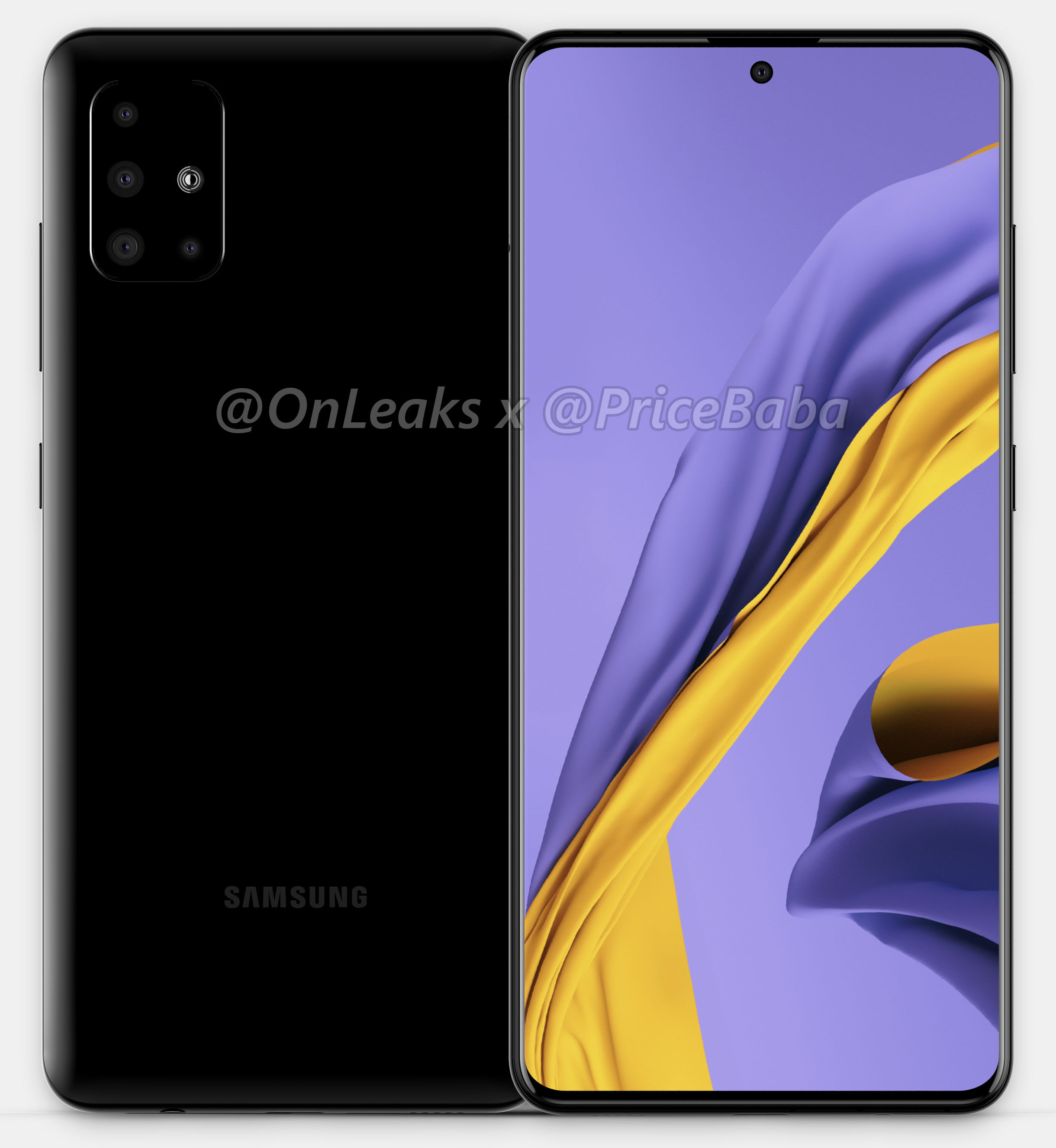
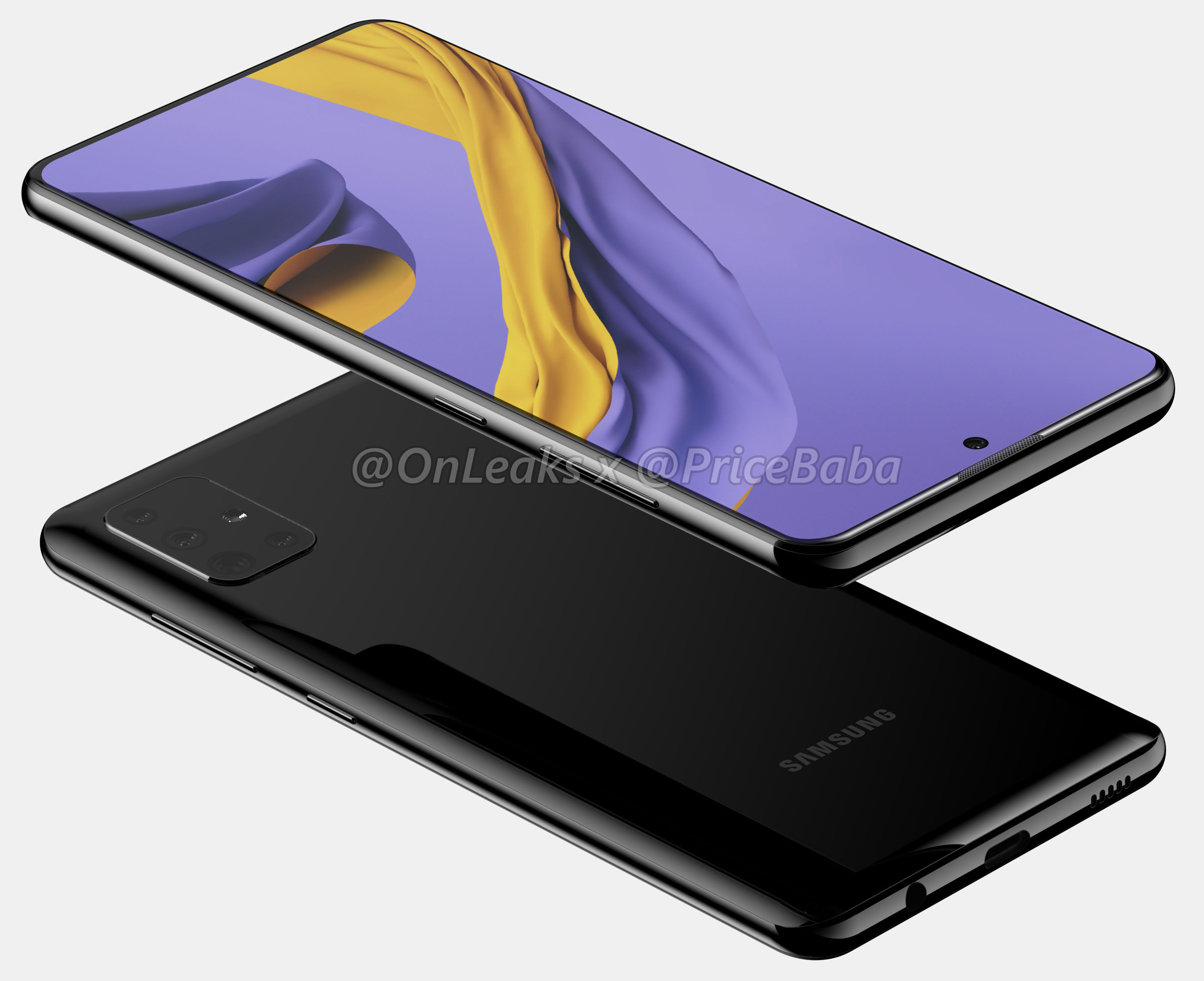
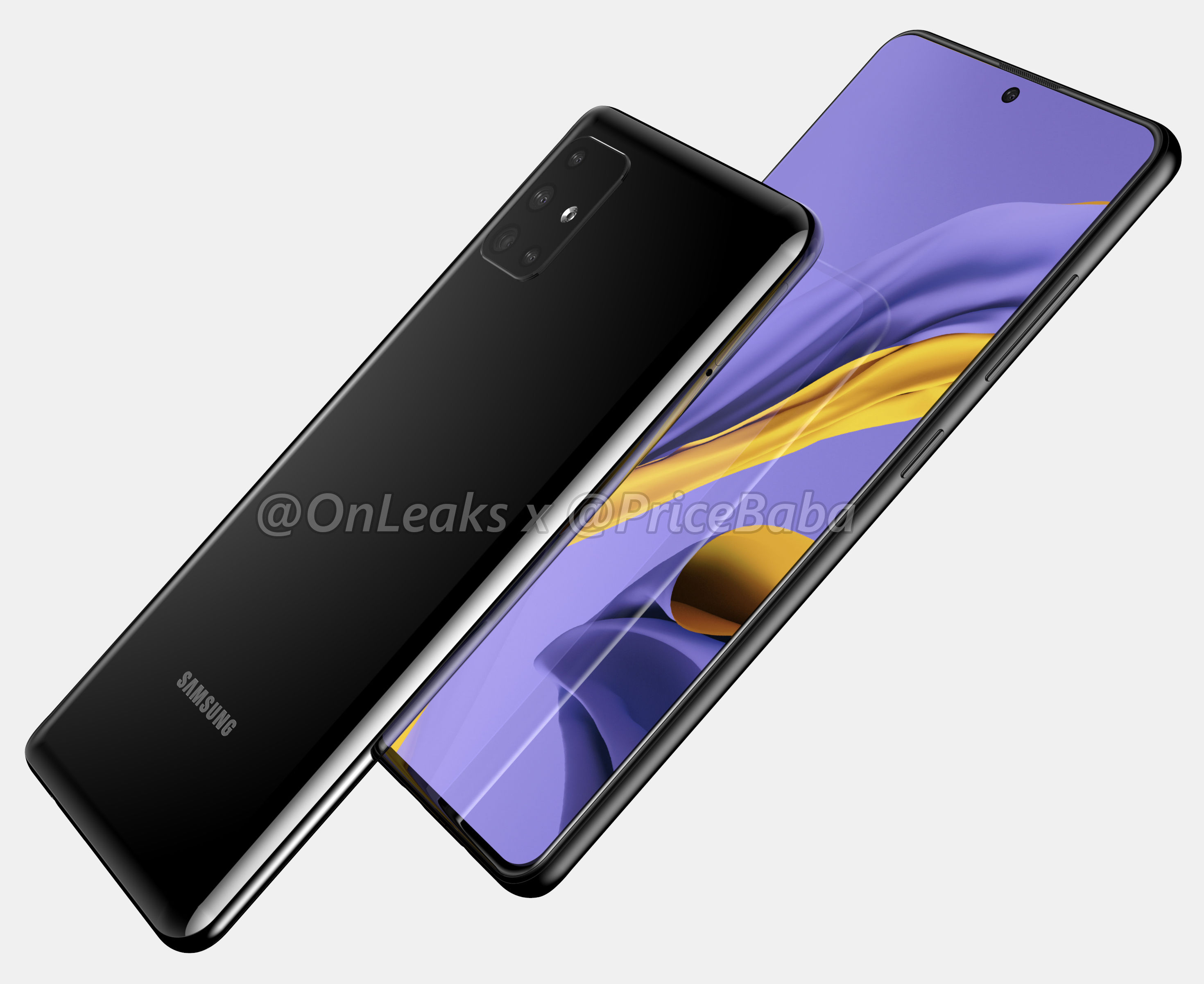
Samsung launched the Galaxy A50s mid-range smartphone in August. It had arrived as the updated version of the Galaxy A50 that was made official earlier this year. Recent reports have revealed that the South Korean company will be soon unveiling the Galaxy A51 smartphone by the first quarter of the coming year. PriceBaba has teamed up with known tipster OnLeaks to reveal the new renders of the Galaxy A51 smartphone.
The new renders show that the Galaxy A51 will be sporting an impressive front as it features a Note 10 series-like top-center positioned punch-hole on the display. The handset measures 158.4 x 73.7 x 7.9mm and it seems to house a 6.5-inch display. With no fingerprint reader on the rear, it appears that the phone will be equipped with an in-display fingerprint sensor.
The back panel of the Galaxy A51 features a quad camera system. The thickness of the device increases to 8.5mm at the camera bump. Speaking of the camera, the smartphone features a rectangular housing with four camera sensors and an LED flash at the top-left corner of the rear shell. The back panel of the phone that seems to curve towards the edge is made out of glass. The smartphone is equipped with a volume rocker and a power button on the right edge. An ejectable SIM tray can be seen on the left side. The bottom of the Galaxy A51 features a USB-C port, a 3.5mm headphone slot and an external speaker.
Samsung Galaxy A51 Specifications (Rumored)
Recent reports have revealed that the Galaxy A51 is equipped with a 6.5-inch S-AMOLED display that offers full HD+ resolution. For capturing selfies, it is expected to feature a 32-megapixel selfie snapper. The primary lens in its quad camera system could be of 48-megapixel.
The Galaxy A51 handset is likely to be fueled by a 4,000mAh battery. The One UI 2.0 based Android 10 OS runs on the device. The Geekbench listing of the phone had revealed that it will be featuring Exynos 9611 chipset and 4 GB of RAM. The handset may arrive in the market in 64 GB and 128 GB storage editions. The smartphone could be available in color edition such as silver, black and blue.
We use cookies on our website to give you the most relevant experience by remembering your preferences and repeat visits. By clicking “Accept”, you consent to the use of ALL the cookies.
This website uses cookies to improve your experience while you navigate through the website. Out of these, the cookies that are categorized as necessary are stored on your browser as they are essential for the working of basic functionalities of the website. We also use third-party cookies that help us analyze and understand how you use this website. These cookies will be stored in your browser only with your consent. You also have the option to opt-out of these cookies. But opting out of some of these cookies may affect your browsing experience.
Necessary cookies are absolutely essential for the website to function properly. This category only includes cookies that ensures basic functionalities and security features of the website. These cookies do not store any personal information.
Any cookies that may not be particularly necessary for the website to function and is used specifically to collect user personal data via analytics, ads, other embedded contents are termed as non-necessary cookies. It is mandatory to procure user consent prior to running these cookies on your website.