Xiaomi has been aggressive with the push of updated of its latest MIUI 11 to its models. The Redmi Note 5 and Redmi 5 are among the latest models to have gotten the update. IThomes reports that it’s readers who use the Redmi Note 5 and it’s smaller sibling to have disclosed the push of the update to their models.
Both models got the MIUI V11.0.1 stable ROM but sorry to disappoint, the two models will still continue to rock Android 9. The package size of the Redmi Note 5 update is 677M while that of the Redmi 5 is 591M.
Even though the update didn’t usher both models to the Android 10 party, MIUI 11 brings several amazing features to the table including Dark Mode. The new features include new icons for the UI which is a traditional feature of successive MIUI versions. The update also brings smoother animations, Ultra Power Saving Mode as well as Kids Mode which provides a safe digital environment for kids by running only apps whitelisted by their parent or guardian. MIUI 11 equally tracks the owner’s smartphone usage time in order to help avoid spending too much time. Other features include earthquake alerts, the ability to cast to an external display with the added feature of continuous casting even when the display is turned off to save battery.
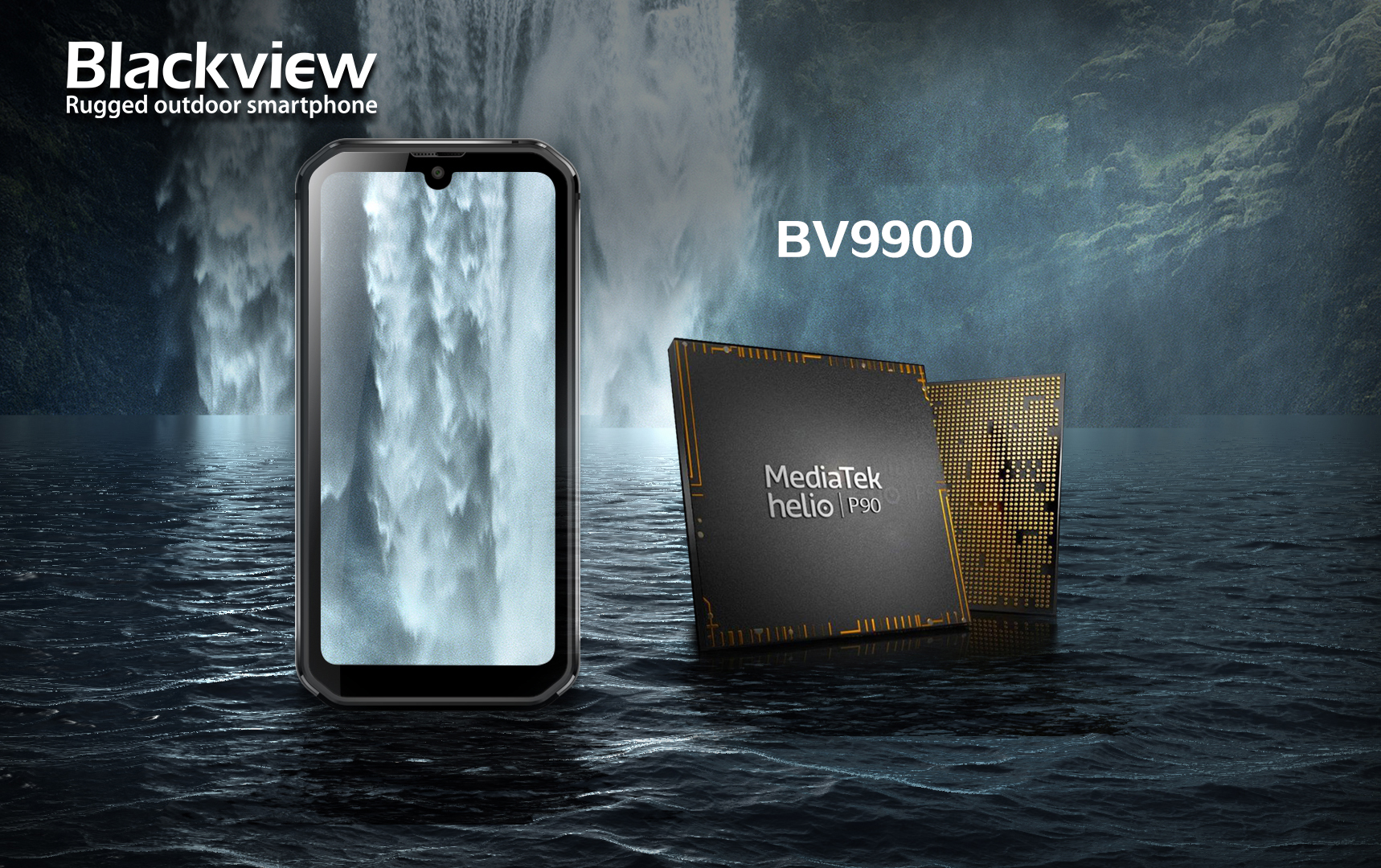
Rumors making rounds around the web since last year were talking about a Helio P90 that would be announced by the rugged smartphone manufacturer, Blackview. Recently, the company announced its latest flagship Series -BV9800- and expectations were contradicted as it turned out that they adopted Helio P70 instead. Of course, that didn’t affect the new series in any way as it has many other killer features like the FLIR® Lepton® thermal camera as well as a Sony® 48MP sensor and until now the Indiegogo campaign has reached $520,000 backed by 1300 backers.
That was until today as the Blackview Marketing manager, Yan, revealed that his team is busy for the upcoming Helio P90 rugged phone, Blackview BV9900, that will launch on Indiegogo before the end of this year. We don’t expect to be widely available on e-commerce platforms before January, however, it is expected to be announced in December. Judging by its name, it will be the company’s next flagship and will carry a competitive features combo, otherwise, it wouldn’t launch on Indiegogo where customers always pick products that sell themselves.
According to the marketing manager, the upcoming Helio P90 flagship phone is a great addition to the BV series, so you can expect the same waterproof, drop-proof and dustproof performance as in every rugged smartphone from Blackview. That’s all the information we have so far, we’ll keep you posted if anything new comes up.
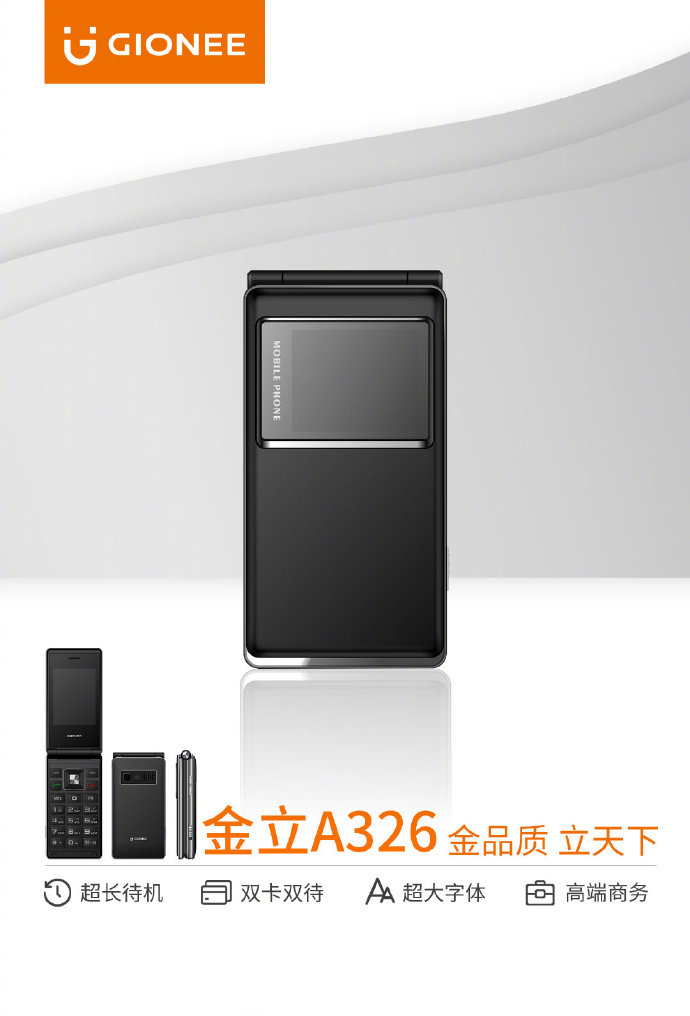
Gionee continues to make efforts to ensure that its celebrated comeback into the tech industry attains the needed goal of giving the company a slice of the pie. The company launched the Gionee M11 and M11s as well as the Gionee K3 in September. The company is perhaps trying to elicit nostalgia with the launch of its latest phone. The Gionee A326 is a flip phone that brings to mind the classic era when flip phones held sway.
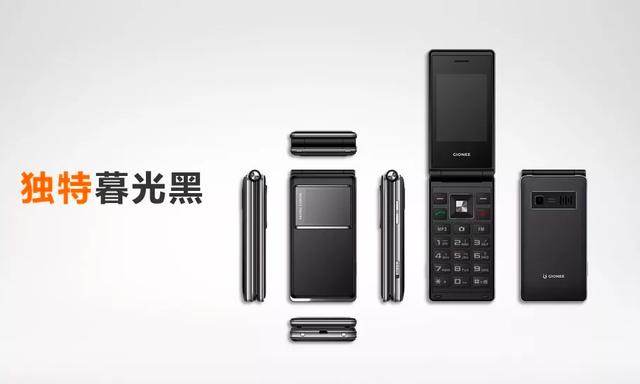
The phone features a clamshell design which is compact and easy to carry around. The main display shouldn’t be more than 2.8 inches wide while there is a smaller secondary display at the front which should display the time and notifications. It comes in black colour as the main colour but there are other colour options of Starry Blue, Elegant red and what looks like Rose Gold. The design affirms the superior craftsmanship for which Gionee is known. In terms of hardware, Gionee A326 supports dual SIM card and dual standby and has a long standby time.
Other details are not revealed but this isn’t likely an Android phone since the specs are of feature phone level. It may likely run KaiOS.
The pricing and availability have not been announced but with this model, Gionee hinted that it is attempting to satisfy the needs of the compact phone niche markets in an era where almosts all brands are focused on large-display, touchscreen models.
Xiaomi have been fairly aggressive as of late, with their name making the headlines almost daily. Their Xiaomi Mi CC9 Pro brought their camera performance to the international standard, and the Mi Note 10 Pro looks to push that further. Now, the company’s looking to improve their displays by using 120Hz OLED displays according to reports.
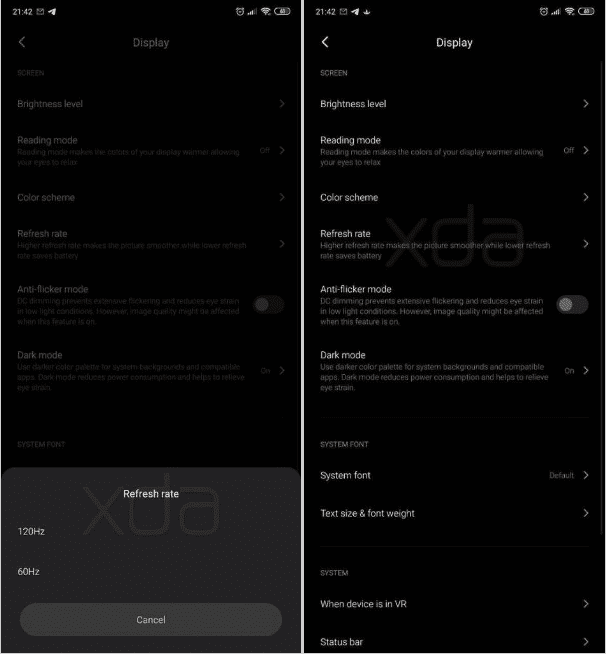
This report comes from a notorious Weibo leaker @数码闲聊站. According to them, Xiaomi are already internally testing 120Hz AMOLED displays for their smartphones, and they’ll be ready for commercial use by next year. This is also backed up by the MIUI 11 beta, which rather surprisingly contains options that refer to the presence of a 120Hz display.
If these reports are true, which the probably are, there’s a high chance the much coveted feature will make an appearance on next year’s Xiaomi flagship device. What’s more interesting in my opinion is how this will affect their sub-brands. If the next version of the Pocophone or K20 comes with 120Hz, we could have another bona fide flagship killer soon.
Xiaomi have been pulling out all the stops as of late. From finally bringing the much requested app drawer to MIUI to launching tons of new gadgets and devices, they’ve been charging ahead non-stop. Now with these new developments and their many improvements, next year is looking like a particularly bright year for the Chinese giant. Hopefully they keep it up as they’ve been very exciting to watch.
Qualcomm has scheduled its annual Snapdragon Tech Summit to hold from December 3 to December 5. The event will again hold in Maui County in the US State of Hawaii. The tech giant is expected to unveil its next-generation technologies, including the next-gen Snapdragon 865 that would feature on flagship smartphones next year. This douses speculations that the chipset could be launched this November.
The Snapdragon 865 will no doubt be the star of the event. As for the name, it was earlier confirmed when Chinese luxury brand 8848 unveiled its upcoming Titanium M6 5G handset expected to hit the market next year. The Snapdragon 865 will be the successor of the present Snapdragon 855 which was announced at the event last year and presently grace flagship models released this year.
Quite surprisingly, Qualcomm has kept details of the SD 865 a closely guarded secret but the SoC is said to have appeared on GeekBench earlier in August. We expect the chipset to come with a version integrated with a 5G modem. The tech giant may equally announce 5G-integrated chipsets for mid-range phones that would be released in 2020 as well. An earlier leak by tipster Roland Quandt says the next-gen flagship chipset has the model number SM8250. He also disclosed that the chipset will come in two variants that go by the codenames- Kona and Huracan. Both variants will have support for LPDDR5X RAM and UFS 3.0 flash storage. It is expected to be built on TSMC’ 7nm FinFet process.
Further, we expect the chipset to come with an updated Adreno GPU and new CPU cores, possibly based on the latest powerhouse Cortex-A75 part from Arm. Qualcomm also doubled down on image processing and machine learning capabilities last year, and these are likely to be areas of focus one again with the Snapdragon 865.
Apart from the Snapdragon 865, another product Qualcomm may unveil is an upgraded variant of the Snapdragon 8cx SoC, the company’s first dedicated laptop chip. The Snapdragon 8cx was first announced during the Snapdragon Tech Summit 2018. The chipset brings enhanced CPU, GPU, and video processing capabilities. Also, a new Snapdragon Wear chip for smartwatches may also make the product catalogue for the event as well as a new audio product.
We’ll give you extensive coverage of the event here on Gizmochina when it kicks-off.
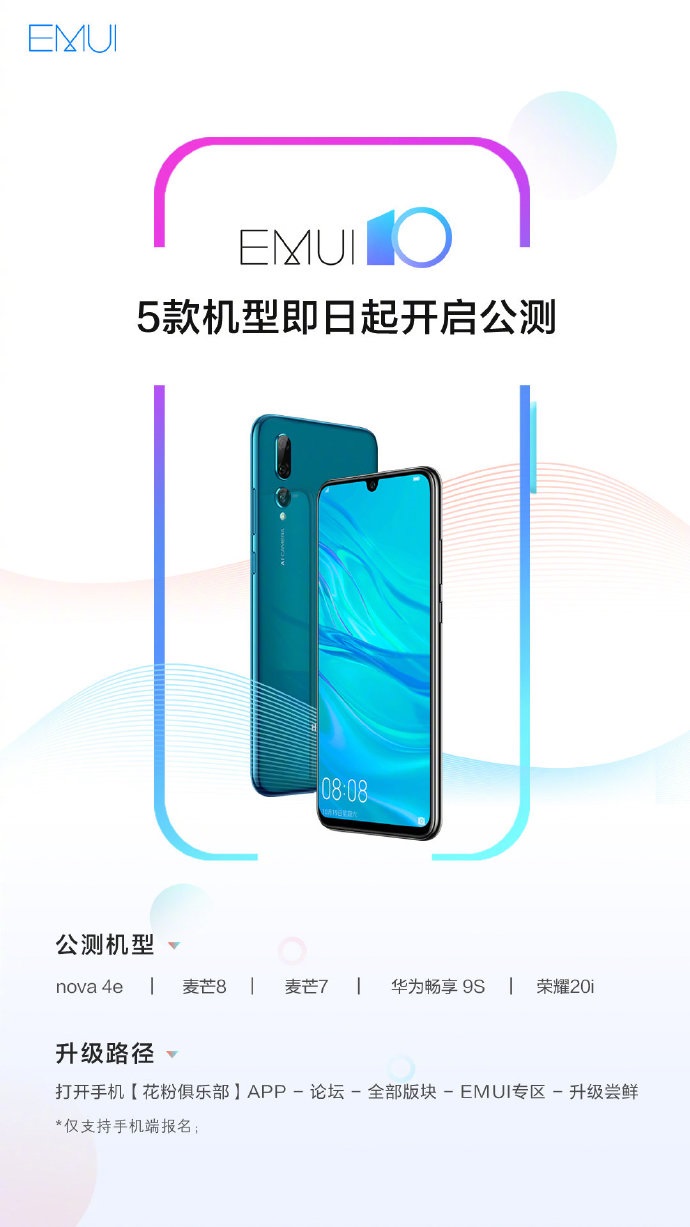
Huawei has opened up the EMUI 10 public beta program to five more devices today. These devices are the Huawei Nova 4e, Honor 20i, Huawei Maimang 8, Huawei Maimang 7, and the Huawei Enjoy 9S. As per usual, this only applies to the Chinese ROM, and there are plenty of bugs within the software so install at your own risk.
Apply for EMUI 10 Beta Program
The user needs to install a beta user app and then follow the instructions below.
Open beta user app and accept terms and conditions.
Now, login with your Huawei ID, as well as your phone number and email.
Select “Personal” from the bottom bar > tap on “Join Project” > select “Available Project” and finally Sign Up.
Note: Before applying, make sure you’re on the latest version of the EMUI, and the device should not be rooted. There will be some bugs and third-party apps can behave abnormally. Your device must have 6GB of free internal space. Otherwise, the upgrade may fail.
EMUI 10 features various new advancements and performance tweaks. It comes with a whole new UX inspired by a Magazine style layout depicting cleaner UI elements, new screen transitions, menus and notifications panel. The new colourful Always-On-Display brings a unique charm to the device.
Dark Mode support
Enhanced security with a distributed system.
Mutual aid sharing to improve hardware capabilities.
One-Touch Screen Sharing
Multi-Screen Sharing collaboration
Huawei HiCar
ARK Compiler
GPU Turbo
Super File System
Lin Turbo
It also incorporates the Android 10 features, which will improve the overall performance and security of the device.
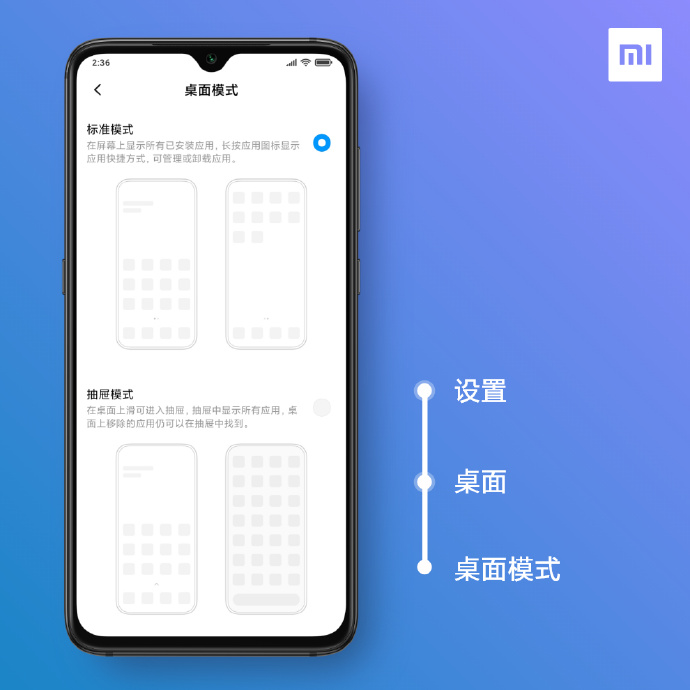
Earlier today, Xiaomi updated the built-in launcher in MIUI 11 on its smartphones which introduces support for the long-awaited “application drawer” feature which can be accessed by swiping up from the home screen. It was first seen with the previous beta version of MIUI which has now made it to the public release. To turn on desktop mode:
Navigate to Settings > Desktop > Desktop mode (on or off)
Xiaomi’s MIUI draws a lot of inspiration from Apple‘s mobile operating system which is iOS. The latter offers a dedicated search option which can be accessed by swiping down and comes in handy when a user is trying to access an app that might be located on another page or within a folder. In comparison, the MIUI only has the Google search bar which is not the fastest way to search for any installed application.
When the app drawer is expanded, the recently used apps are placed on the top while other apps are listed, in alphabetical order. There’s a downward-facing arrow on the top which users can tap on to collapse the app drawer.
This feature has already been available on the Poco launcher and due to popular demand has been introduced to MIUI 11. What are your thoughts to the latest addition to Xiaomi’s Android skin? Have you ever encountered a bothering situation trying to find an installed app on your Xiaomi device? Let us know in the comments below.
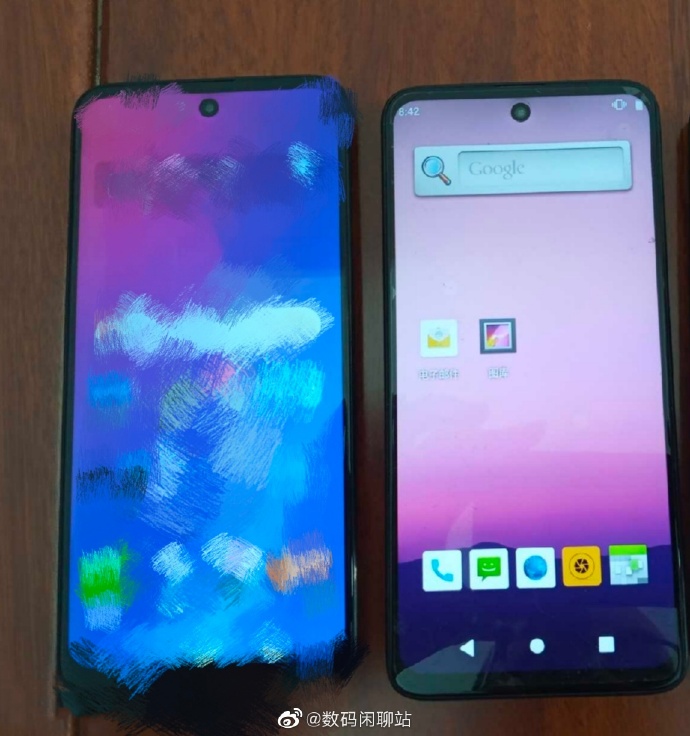
The smartphone industry has been bestowed with a different kind of notch design, all in a bid to trim down the bezels and give users a more immersive user experience. We have seen OEMs use a notch design, pop-up selfie, flip camera mechanism, waterdrop notch and of late, punch-hole design. Samsung can be regarded as the first to use the punch-hole design and is still the only OEM to use the design on an OLED screen since it manufactures the punch-hole AMOLED panels. That may change soon as the Vivo S5 is said to come with a punch-hole AMOLED screen.
A tipster has now leaked images of what he says is the punch-hole design that would be used on phones next year. The Weibo leak shows the punch-hole will be located in the middle of the display. It bears semblance with the waterdrop notch design except that it looks smaller. The tipster equally disclosed that the display will be used on models priced around a thousand yuan (~$100) which means it would be on budget phones. That perhaps explains why it looks so ugly. In our thoughts, the waterdrop design looks cooler or better still, the punch-hole looks better on the side of the display.
What we can take out from the design is that it allows the front top bezel to be further trimmed giving it an ultra-thin outlook. The centralised punch-hole is located where there used to be the top bezel or notch so it won’t pose any problem of software adaptation. In addition, the front speaker is moved to the top edge of the phone.
The industry is driving by trends and so, we can’t rule out the possibility that this design style can turn out to become popular with fans. Also, the idea that it would be found on budget models is also quite thrilling since there are absolutely no budget phones with punch-hole camera design presently. The punch-hole design would likely be for LCD screens, by the way.
We really don’t find this design attractive. What about you? Let us know what you think about the leaked punch-hole design in the comments section.
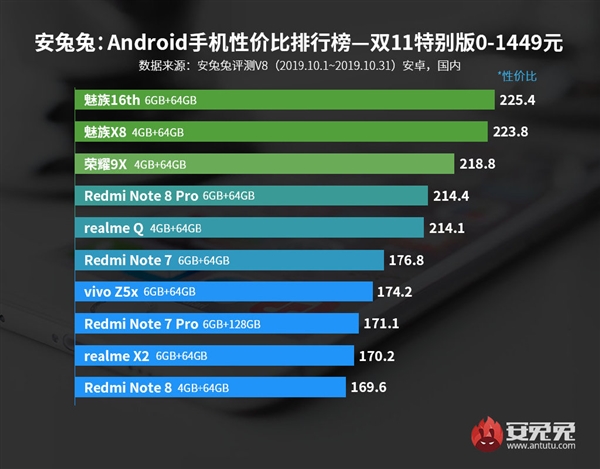
Ahead of the Double 11 sale in China which will take place on 11th of November, AnTuTu has released lists of smartphones with the highest benchmark results in different price brackets. Essentially, these benchmarks highlight the most cost-effective smartphones, in terms of CPU performance which will help potential buyers to pick the devices that offer the most value for money. The different price brackets include the following:
Yuan 0-1449 (~$0-207):
The most cost-effective smartphone in this segment is the Meizu 16th 6 GB + 64 GB which is the company’s flagship smartphone from 2018 and is equipped with Snapdragon 845 SoC. It is closely followed by the Meizu X8 4 GB + 64 GB and Honor 9X 6 GB + 64 GB that secure 223.8 and 218.4 points respectively. Surprisingly, the least value for money handset, based upon AnTuTu benchmarks, in this segment in the Xiaomi Redmi Note 8 Pro 4 GB + 64 GB which was launched in Q3 of 2019.
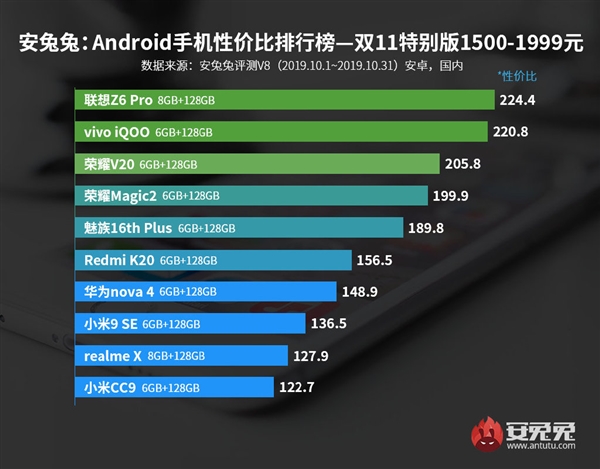
Yuan 1550-1999 (~$214-285):
The most cost-effective smartphone in this segment is the 8 GB + 128 GB variant of the Lenovo Z6 Pro which features the flagship-grade Snapdragon 855 SoC from Qualcomm. The number two and three spots in this list are secured by the Vivo iQOO 6 GB + 128 GB variant and Honor V20 6 GB + 128 GB variant. Once again, the least value for money device in this price bracket is from Xiaomi, the CC9 6 GB + 128 GB.
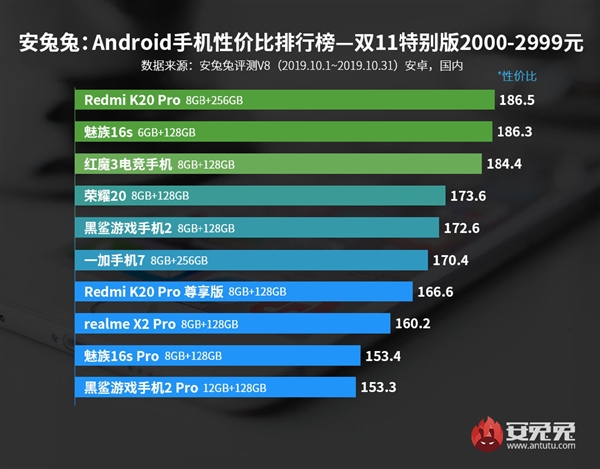
Yuan 2000-2999 (~$214-428)
The most cost-effective model in this price segment is the K20 Pro 8 GB+256 GB, followed by Meizu 16s 6 GB+128 GB and gaming centric Red Magic 3 8 GB+128 GB variant. All three models are equipped with the Snapdragon 855 SoC which is 7 nm fabrication process. The lowest value for money offering handset based on benchmark results is the 12 GB + 128 GB variant of the Xiaomi Black Shark 2 Pro.
The most value for money smartphones in the segment include the OnePlus 7T 8 GB+256 GB, Asus ROG Phone 2 8 GB + 128 GB and Vivo iQOO Pro 5G 8 GB + 128 GB. While the OnePlus 7T has a 90 Hz refresh rate display, the Asus ROG Phone 2 takes that a step further with a 120 Hz refresh rate display. The least value for money, based upon benchmarks in this price bracket is the photography centric Huawei P30 with 8 GB RAM and 128 GB ROM.
To wrap things up, these charts are only indicative of most value for money at different price points based on the highest synthetic benchmarks. Before purchasing a smartphone, one must also consider other crucial factors like display size and type, battery capacity and camera performance.
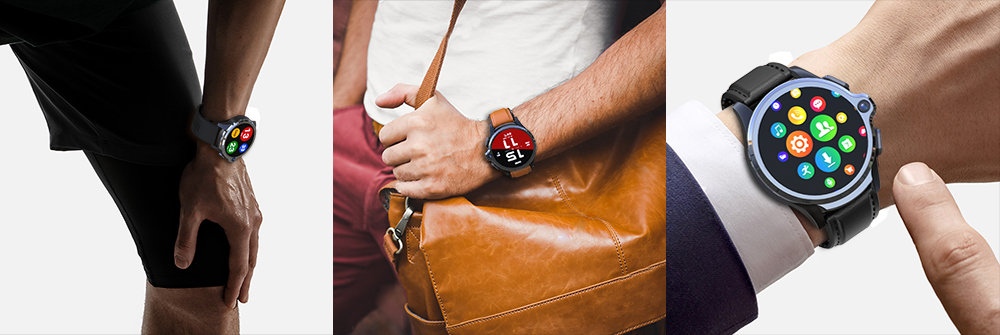
This year’s Double 11 Shopping Festival is expected to be the greatest of all times and deals on countless products will be available for everyone to grab. Among them, you will find Kospet offering discounts on all smartwatches. Of course, the top stars of the promotion will be the new KOSPET Prime as well as KOSPET Optimus Pro.
KOSPET Prime is the latest flagship smartwatch of the company and what makes it different from other watches is its Face ID unlock. It collects 1086 facial features and automatically adapts to changes in your appearance, safeguarding the privacy and security of your personal information.
Unlike other typical smartwatches, the Prime comes with a full Android OS and supports 4G connectivity so that you can make calls and send messages without the need of your smartphone. Also, it comes with a dual-camera setup (8MP/2MP) that helps with face unlock as well as video calls. Do you want to leave your smartphone at home and go out to exercise? Do it. KOSPET Prime is a smartphone on your wrist.
Since it comes with a full Android OS, it also features Google Assistant and you can search for interesting places, check navigation, ask about the weather or set schedules. What’s more, you can turn KOSPET Prime into a WiFi Hotspot to provide an internet connection to other devices around you.
Besides its smartphone functions, it is also great as a sports smartwatch. There are 9 exercise modes supported as well as real-time continuous heart rate monitoring and a built-in GPS to track your route and evaluate your exercise effects. The 9 exercise modes monitor your movement status in real-time to make workouts more efficient.
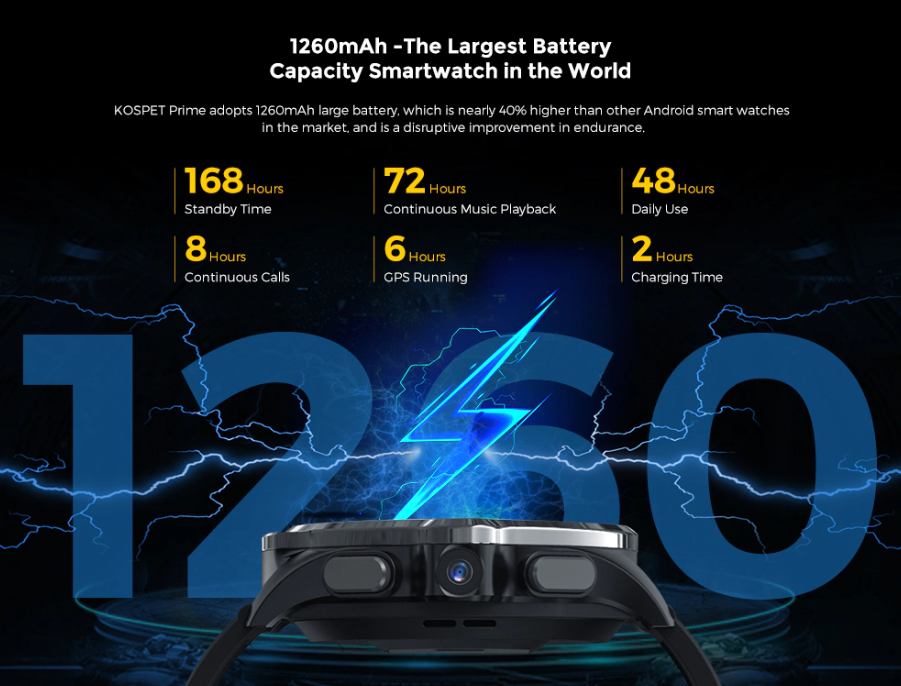
And if all these functions seem very power-hungry, you are right. But KOSPET has taken care of it by installing a huge, 1260mAh battery which delivers 168h of use. The watch can give you 72h of continuous music playback with just 2 hours of charging.
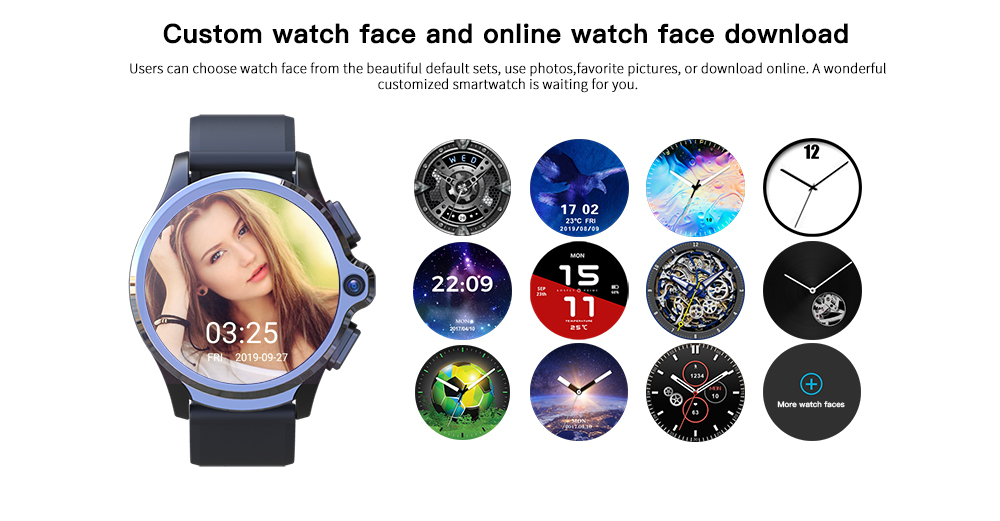
Lastly, running on Android 7.1.1 means that it supports all Google applications. It has Google Play Store, Google Maps, Google Voice and other Google applications preinstalled and you can install whatever third-party application you want. What’s more, you can choose a watch dial from the default sets or use one of your favorite photos to make KOSPET Prime more personal.
In order to celebrate the Aliexpress 11.11 Sale Festival, you can use the coupon code ILOVEAE20 to get a $200-$20 discount, which is available on Nov. 11th. What’s more, there are some Kospet products having great discount, such as KOSPET PRIME, KOSPET OPTIMUS PRO, KOSPET KW99 and KOSPET MAGIC. You can click here to get more double 11 deals information.
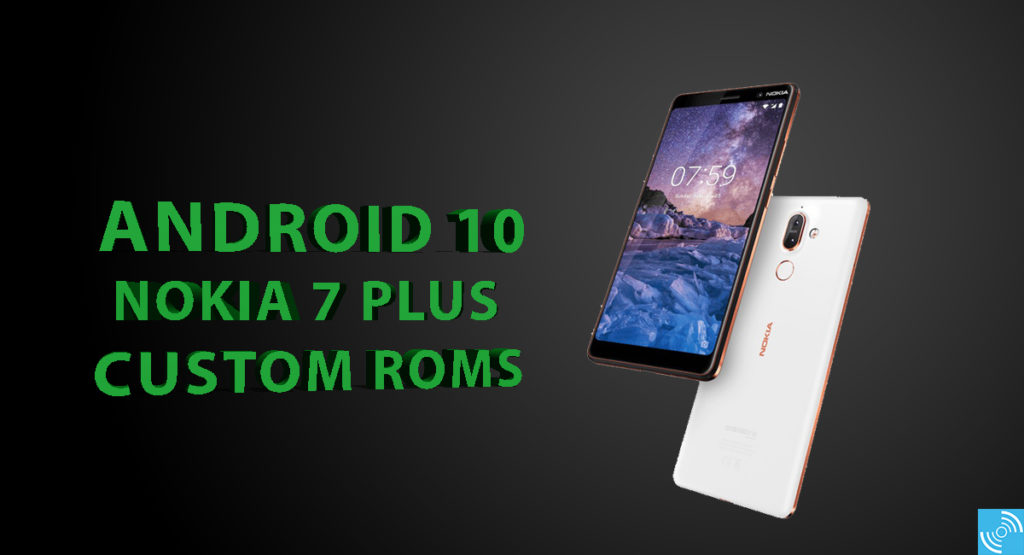
Nokia was once the pioneer of the mobile industry, but due to its inability to evolve as per the demand made it fail. Thanks to the HMD Global – a Finnish Company that owns Nokia, grabbed the nerve of the users and launched several new Android-based Nokia Smartphones. For the past few years, the company has launched various smartphones, including the Nokia 7 Plus. It was launched last year, featuring mid-range specifications and features.
The Android One based smartphone was launched with Android 8.1 Oreo and later received the Android 9.0 Pie. The upgrade to Android 10 is also on books, but some users are looking for alternates as they are fed up from the stock Android experience. To cater to the demand, the third-party developers at XDA have developed several new Android 10 based custom ROMs for the Nokia 7 Plus.
The Nokia 7 Plus features a 6.0-inch IPS LCD capacitive display waving the resolution of 1080 x 2160 pixels at an 18:9 aspect ratio. The display is protected by a Corning Gorilla Glass 3 and supports 403 ppi density along with a 77.2% screen-to-body ratio. It comes powered by a Qualcomm Snapdragon 660 chipset coupled with an Octa-Core processor and Adreno 512 GPU.
Nokia 7 Plus is available two different storage variants such as 4GB + 64 Gb and 6 GB + 64 GB internal storage. The storage can be expanded upto 256GB with a microSD card. In optics, the smartphone comes with a dual-camera module consisting of a 12-megapixel primary sensor and a 13-megapixel sensor with a 2x optical zoom. Further, there’s an inbuilt Zeiss optics, dual-LED dual-tone flash, and HDR support. On the front, there’s a 16-megapixel camera for selfies and video calling.
The smartphone supports WiFi, Bluetooth 5.0, GPS, NFC, and USB 2.0. Nokia 7 Plus hosts a 3800 mAh Li-Ion non-removable battery with 18W fast battery charging support. It is available in Black/Copper and White/Copper colors. There’s a rear fingerprint sensor for quick authentication.
Android 10 Features
Android 10 has fully refined the Android operating system by introducing upgrades to the core system. The security, performance, and support for next-gen technologies are part of the latest package. The features such as smart replies and focus mode are making the smartphone more intelligent.
Android 10 Features at a glance
Live Caption: The Android 10 users need not convert audio messages into transcripts. The Android 10 has an inbuilt feature of Live Captions, and it will be available on Pixel smartphones this fall.
Smart Reply: Android 9.0 Pie introduced a reply from the notification bar, and Android 10 has moved a bit further with smart replies. It will offer recommended user actions once they receive a message.
Dark Mode: How anyone can forget about teh Dark Mode? It is the hottest feature right now, and many users are looking for dark alternates of the primarily used apps. Apart from the apps, the Android 10 offers official native Android dark mode. The user can switch to dark moe across all apps with a single toggle.
Improved Sound: Unlike the older versions, Android now offers the users to tweak the output of their smartphones. They can filter background noise and fine-tune the audio.
Gesture Navigation: Gesture Navigation is now the internal part of Android. The users can go back and forth with more fluid gestures. It enhances the overall user experience by introducing smooth and straightforward gestures.
Enhanced privacy controls: Android 10 has made the user driver of its data. All the data privacy-related settings have been accumulated in a single place. The users can easily manage ads, apps, and web activity settings from a single location.
Security Updates: Ahead of Project Treble, the Android 10 security updates will be rolled out via regular Google Play System updates.
Similarly, there are many other advancements in Android 10. These features are the reason that users are looking for Android 10 based custom ROMs.
List of Android 10 based Custom ROMs for Nokia 7 Plus
Most of the Custom ROMs are free from Bug. These can be used as daily drivers for the Nokia 7 Plus. If you got any issue while using the ROM, you can directly contact the developer or post the topic in the respective threads.
Pixel Experience
The Pixel Experience ROM is known for its features extracted from Pixel devices. The Pixel phone launcher, wallpapers, icons, and ringtones are part of teh Pixel Experience ROM. It is designed to offer maximum stability and security for the users. The developer always builds the ROM to enhance the overall functioning of the device.
All the features such as WiFi, Ril, Mobile data, double-tap to wake, Adaptive brightness, dark theme, flashlight, camera, VoLTE, Selixnux are working without any issue. The fingerprint issue has also been resolved via the latest update, and now there are no known issues for the ROM. It will work flawlessly on your Nokia 7 Plus.
Follow the links below if you are interested in flashing the Pixel Experience ROM on your device.
HavocOS 3.0 is based on the AOSP code and is inspired by Google Pixel. It has refined Material Design 2 UI that is well accepted by the users. Apart from the Android 10 and Pixel-based features, the ROM also incorporates additional customization options.
All the features like WiFi, RIL, display gestures, adaptive brightness, dark theme, ambient display, flashlight, camera, VoLTE, and fingerprint sensor are working on HavocOS 3.0. The user needs to flash Gapps externally to enable Google services. However, the developer has rectified all the issues on the ROM.
HavocOS 3.0 supports stock kernel, so make sure you’re using the same kernel before installing the ROM. Before installing, make sure to read all the instructions carefully by heading over to the link below.
LineageOS provides support for maximum Android devices. It’s basic code and support attracts the users to install LineageOS on their devices. LineageOS 17.0 unofficially support Nokia 7 Plus. It is a free and open-source ROM vast number of smartphones. It was forked out of the CyanogenMod in 2016 and rebranded the project as LineageOS.
LineageOS 17.0 is based on Android 10 and will pack all the features of the latest Android. It will extend support for Wi-Fi direct printing, call recording on support, phone calls, and Systrance Android Studio Tool. All the features are working on teh LineageOS 17.0.
The users need to flash Gapps externally if they need Google services. The link to download the ROM can be found below.
These are some Android 10 custom ROMs available for Nokia 7 Plus. However, it is not confirmed whether the Nokia 7 plus will get the Android 10 update or not, but the stable custom ROMs are always there at the service of the device owners. In the future, if any new custom ROM arrives, then we will surely add it to our list.
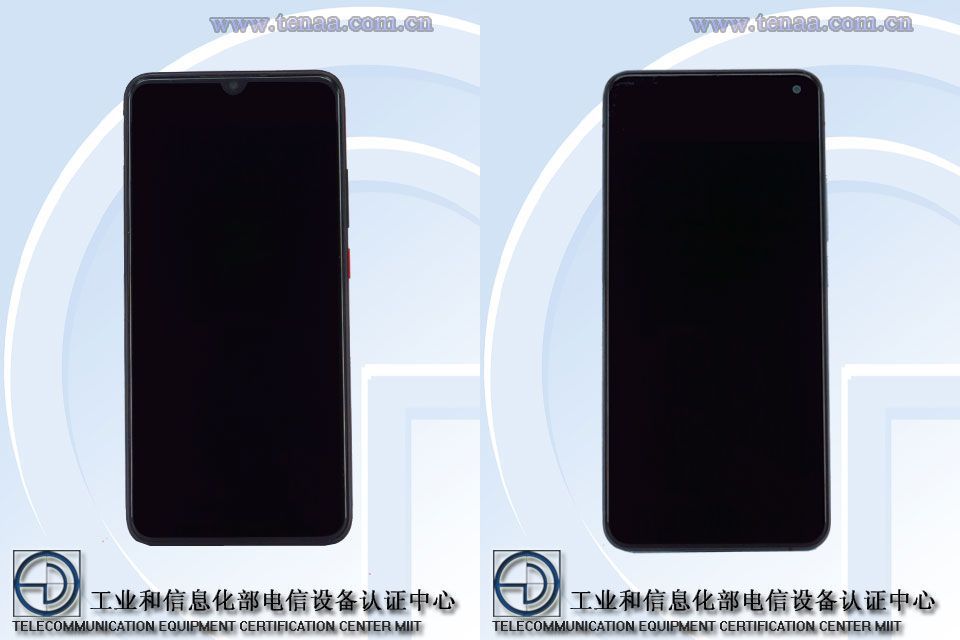
Earlier this year, Vivo had launched Vivo S1 and Vivo S1 Pro smartphones. The Chinese manufacturer has claimed that it will be announcing the Vivo S5 series on Nov. 14. Hence, it can be said that the series will more than one smartphone.. Continuing the trend, the lineup may include Vivo S5 and Vivo S5 Pro smartphones. Both phones were spotted with full specifications on TENAA. However, the listings did not include images. Now the listings have been updated with their images.
The Vivo V1932A/T was believed to be the Vivo S5 series phone even though its TENAA images were available. It is only after the appearance of the TENAA images it can be said that the Vivo V1945A/T also belongs to the same series. The Vivo V1945A/T has inferior specs when compared to the Vivo V1932A/T. Hence, it appears that these phones could be respectively arriving as Vivo S5 and Vivo S5 Pro in China.
Vivo V1945A/T and Vivo V1932A/T front
Vivo V1945A/T phone features a waterdrop notch on its display. It has a 6.38-inch AMOLED display. other side, the Vivo V1932A/T has a punch-hole display. It also equipped with an AMOLED display, but the size is 6.44 inches. Both displays are embedded with in-screen fingerprint readers.
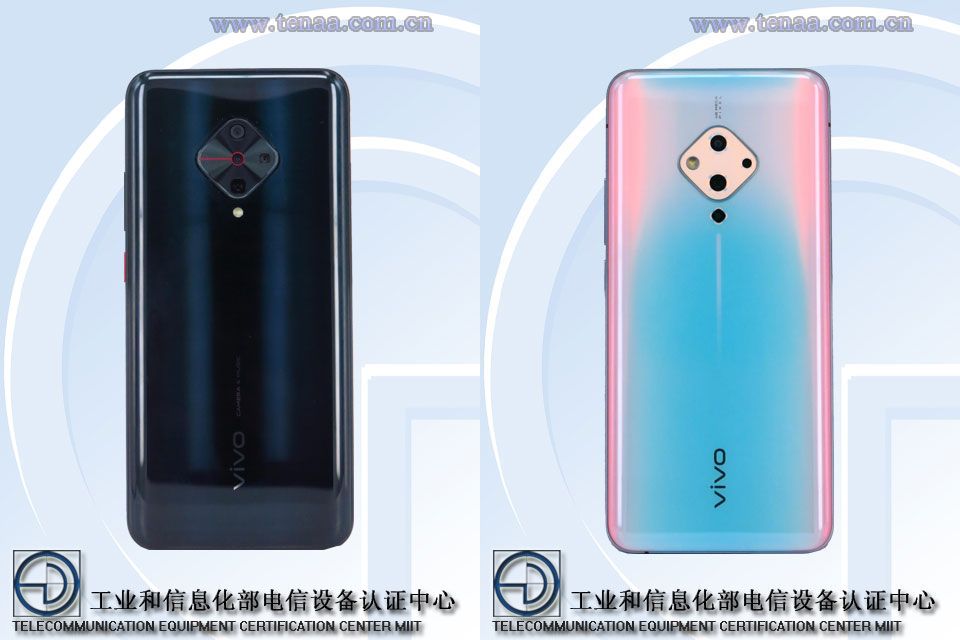
Moving on the other rear side of the Vivo V1932A/T and Vivo V1945A/T phones, both devices are fitted with diamond-shaped quad camera module with different arrangements for their quad cameras.
As it can be seen in the below images, the Vivo V1945A/T has a camera lens placed on the right side of three camera sensors that are arranged vertically inside the diamond-shaped camera housing. An LED flash can be seen below it. TENAA has revealed that the Vivo V1945A/T has a 48-megapixel + 8-megapixel + 2-megapixel + 2-megapixel quad camera system.
Vivo V1945A/T and Vivo V1932A/T rear
The Vivo V1932A/T’s diamond-shaped camera housing has an LED flash and three sensors placed at its four corners. Below the housing is the fourth camera sensor. TENAA has stated that it is equipped with 48-megapixel + 8-megapixel + 5-megapixel + 2-megapixel quad camera setup. Both phones have 32-megapixel front-facing cameras.
The alleged Vivo S5 is powered by 2.0GHz octa-core processor and 6 GB / 8 GB of RAM. On the other side, the alleged Vivo S5 Pro is rumored to be fueled by Snapdragon 712 that is assisted by 8 GB of RAM. Both phones are expected to arrive in China in 128 GB and 256 GB storage options.
The purported Vivo S5 has a 4,390mAh minimum capacity battery. The 3C appearance of the phone has revealed that it could be shipped with 18W rapid charger. The purported Vivo S5 Pro has a 4,010mAh minimum rated battery. Its 3C listing has revealed that it could be coming with a 22.5W fast charger. There is no information available on the pricing of the upcoming Vivo S5 series smartphones.
In related news, the Vivo S5 (V1945A/T) seems to be heading to markets outside of China such as Russia and India as Vivo V17. The V17 is expected to get announced by the end of this month in the aforementioned markets.
This was made known by Xiaomi’s Liu Anzhen which is the Deputy General Manager of Touchscreen division of Xiaomi’s Mobile phone. The Mi CC9 Pro features a curved AMOLED display which is curved at the front and back sides.
The exec expressed is appreciation to the team that worked together to bring out the display. Xiaomi and Visionox’s cooperation is also said to extend to the Mi foldable phone that is in development.
Visionox has its roots from the strong OLEDs project team of Tsinghua University, one of the most prestigious universities for science and technology in the world. The brand’s OLED panels are expected to find their way into smartphones from other top brands like Huawei from next year.
Samsung, the world’s leading smartphone company, isn’t doing well in China, which is the world’s largest smartphone market. The South Korean market share in China has declined drastically and the company has even stopped manufacturing phones in China since October 2019.
Now, the company seems to be making some efforts to grab back the lost market share in the Chinese market. The company is hoping to drive grown in the market with the new 5G technology.
Samsung Galaxy A91
Samsung is all set to launch the Galaxy Fold 5G smartphone in China as Samsung W20 5G. Soon, the company is expected to offer affordable flagship devices with support for 5G technology in the company’s Galaxy A lineup.
It is being reported that the Samsung Galaxy series smartphone with model number SM-A7160 is in the works. The smartphone in question is the Samsung Galaxy A71 and the 5G model of the same carries model number SM-A716B.
The company has already launched Galaxy A90 5G in the Chinese market and now it could launch the Galaxy A71 5G in the country. Interestingly, it could be the first smartphone from the South Korean giant to come powered by the company’s own mid-range Exynos 980 chipset which comes with 5G support.
Samsung is currently using Snapdragon 855 SoC and Exynos 9825 chipset for the 5G smartphone but for mid-range devices, it will need to make the switch to cost-effective chipsets and this is where the Samsung Exynos 980 comes in.
However, Samsung won’t be the first smartphone maker to make use of Exynos 980 SoC. Vivo is set to launch Vivo X30 smartphone in China which will be powered by the Samsung Exynos 980 SoC that is an 8nm octa-core chip with two Cortex-A77 cores, six Cortex-A55 cores, and the Mali-G76 GPU.
It has an integrated 5G modem that should help reduce power consumption compared to the Exynos 9825, which requires a separate 5G modem. The 980 also supports the new Wi-Fi 6 standard, which is currently exclusive to Samsung’s flagship smartphones. It also comes with a few other impressive features like HDR10+ video decoding and support for 108MP camera sensors.
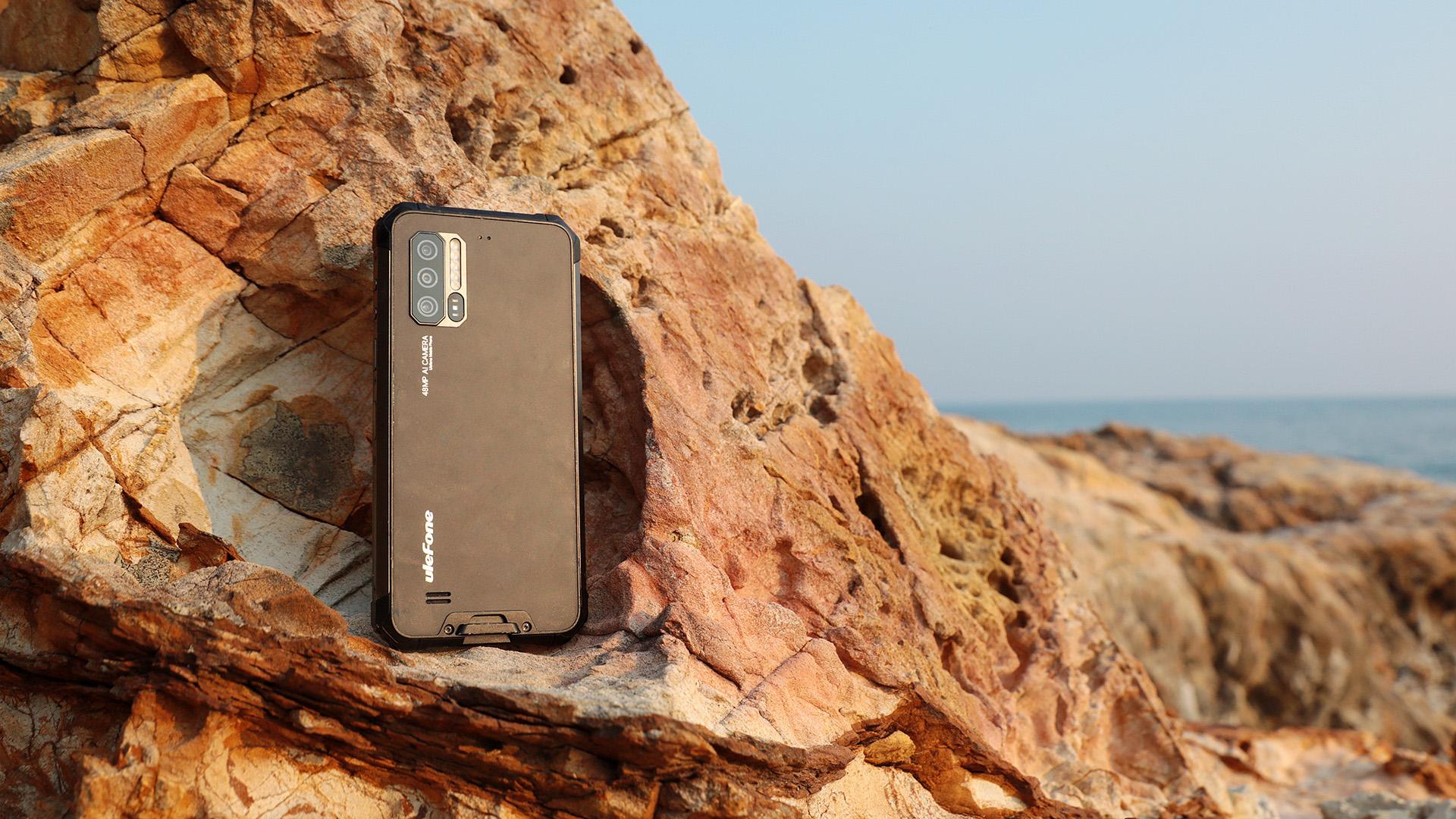
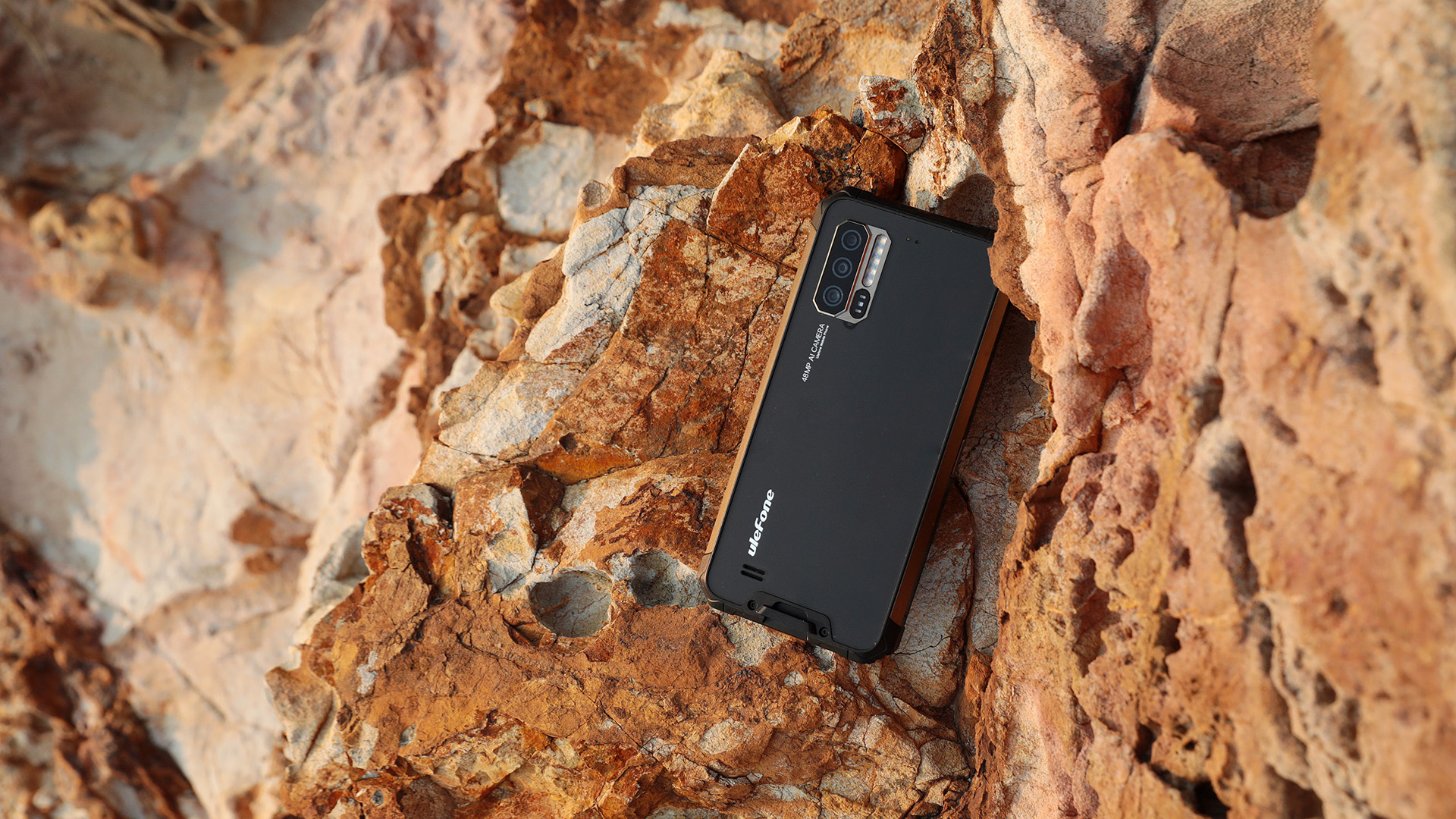
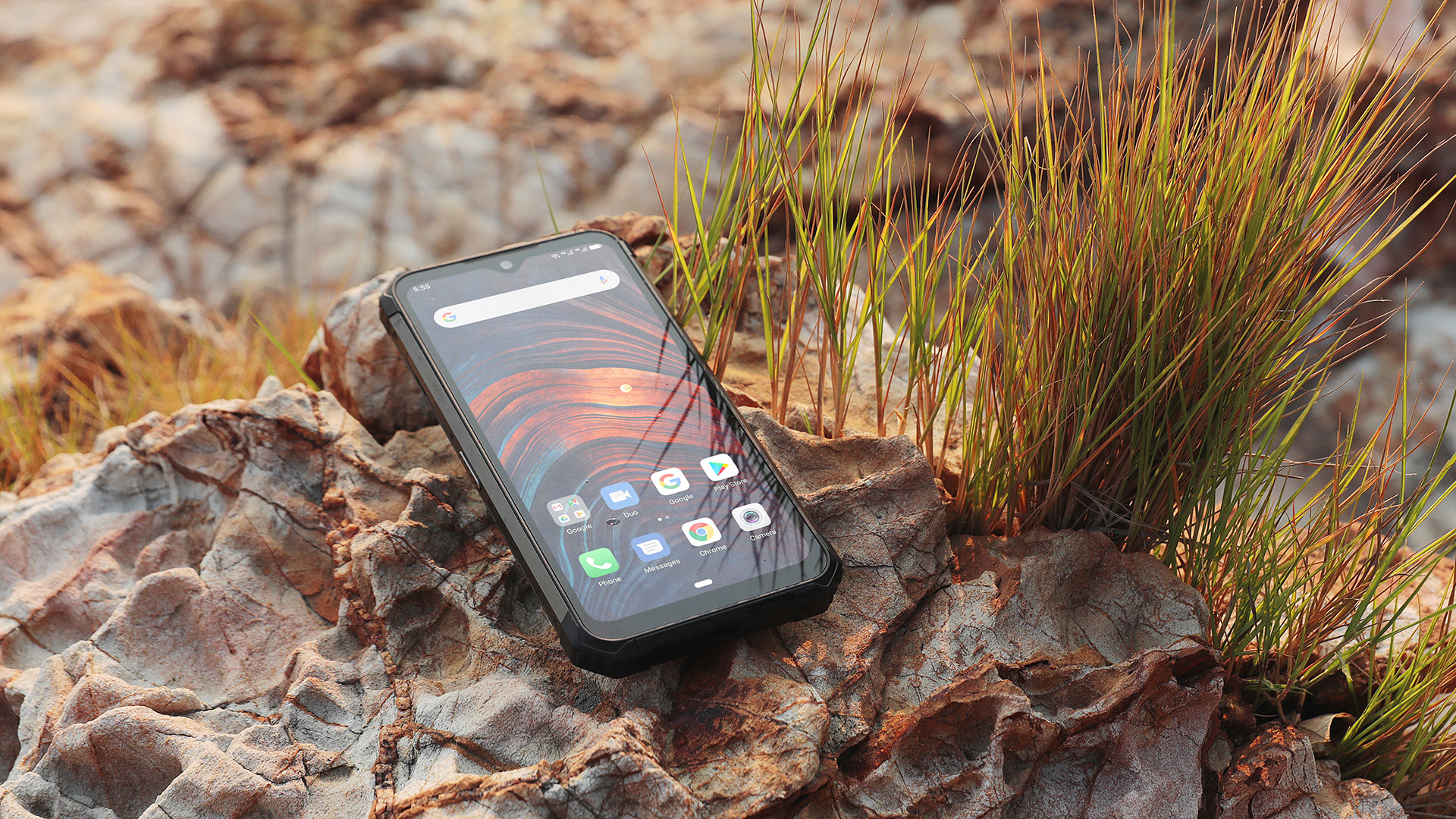
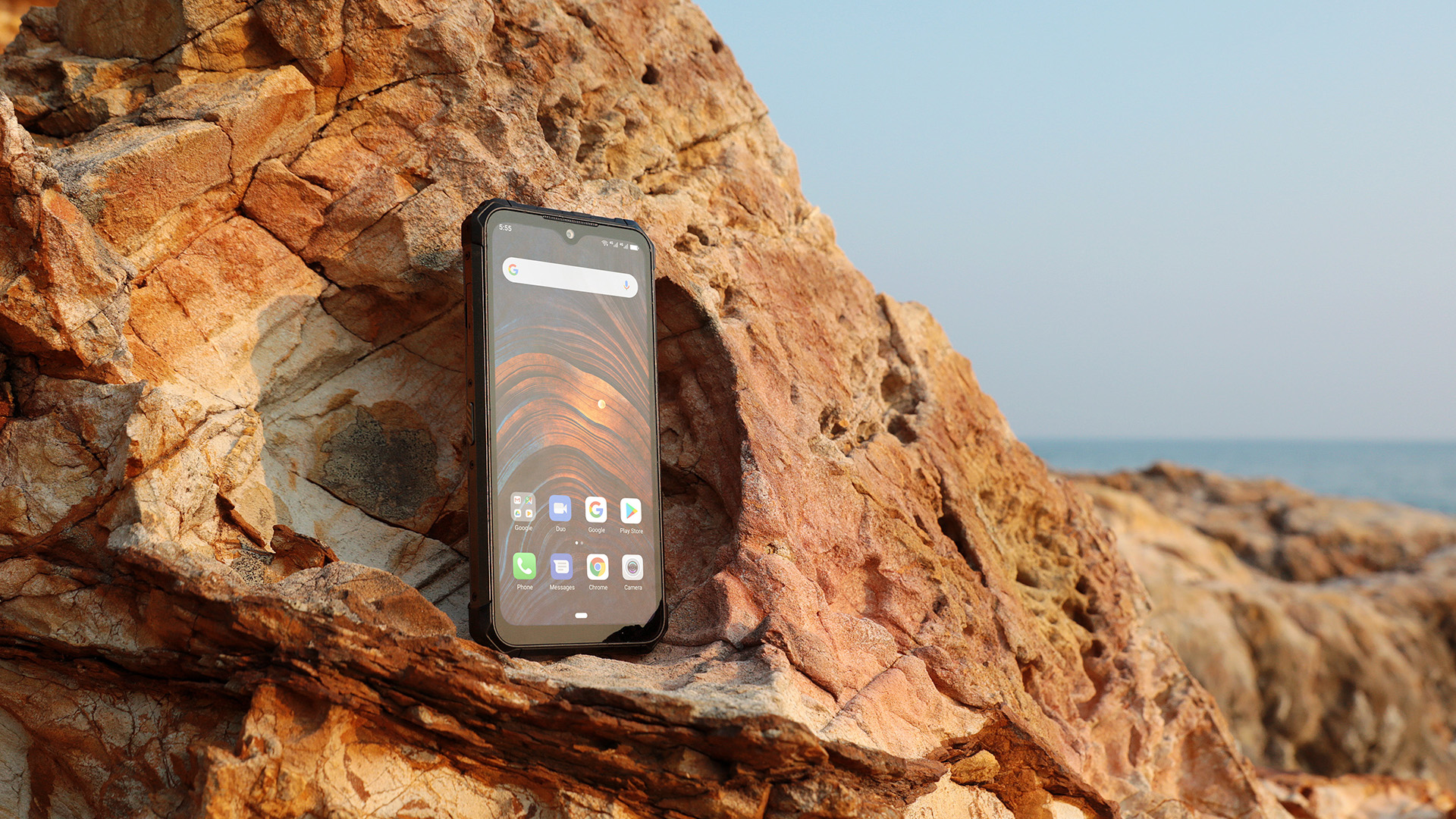
After the first hand-on video that Ulefone released yesterday, today they are back with a more extensive durability test video where they showcase the rugged character of Ulefone Armor 7, their annual flagship. As you already know, the phone features IP68, IP69K, and MIL-STD-810G certification so let’s take a look at how it did.
As you can see in the video, the device is capable of withstanding drops to a concrete floor, rocks, and even a puddle of sand. On all occasions, the phone comes out perfectly fine. In addition, besides being drop-resistant, it’s also protected against water and dust. The tortures it went through pushed the certifications to their limit but the phone came out alive.
1 of 2
Being a flagship device, its specs are worthy of its category. It comes with a Helio P90 AI SoC backed by 8GB of RAM and 128GB of internal storage as well as a triple rear camera with AI scene recognition and 48MP main sensor, and a 16MP selfie shooter. Also, there is a 6.3″ FHD+ waterdrop screen, 5500mAh battery with Qi 10W wireless charging, face and fingerprint unlock, NFC with Google Pay, Android 9.0 Pie, etc. It is a top rugged smartphone and a decent performer too.
1 of 2
The Armor 7 is currently selling at just $369.99 over at Banggood and you can check out all the details and specs on the company’s official page. Don’t forget the upcoming 11.11 Shopping Festival of Ulefone on Aliexpress is coming where you’ll have the chance to buy Ulefone phones at super-low prices, participate in giveaway events, and grab many discount coupons.
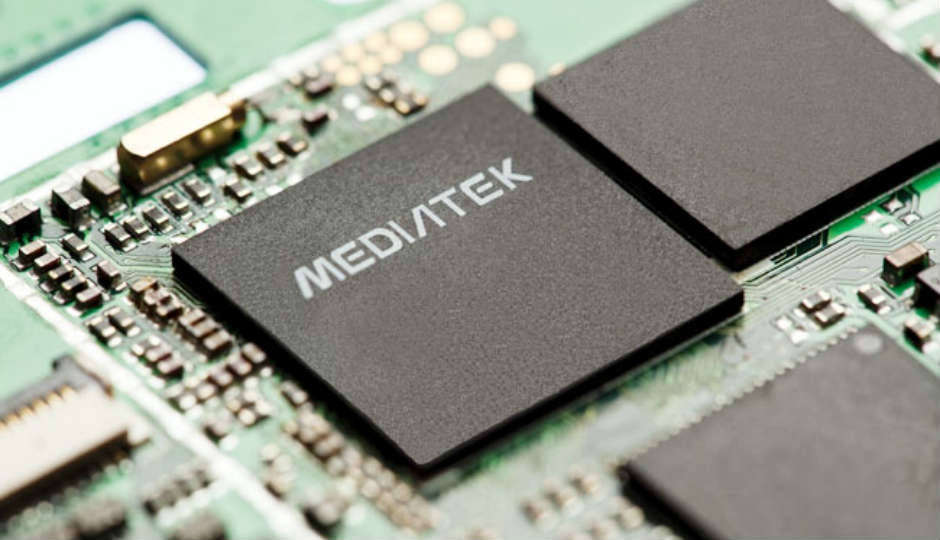
Earlier this year, Taiwanese chip MediaTek announced its flagship smart TV-centric chipset, dubbed the S900 its highlighting feature is the capability to decode 8K video. According to a fresh press release, the mass production of the chip has now begun at the TSMC foundries who also happens to be the contract manufacturer for companies like Apple, Qualcomm and Nvidia.
The MediaTek S900 is manufactured using 12 nm FinFET process and it consists of a multi-core CPU comprising of ARM Cortex-A73 cores, and Mali-G52 GPU that supports 8K video decoding, HDR10+ and external graphics which enable customers (OEMs in this case) to customize their products. In terms of I/O support, the chipset supports HDMI 2.1A, which offers a maximum bandwidth of 48Gps — enough to deliver HDR10+ content, as well as 4K videos running at 120Hz or 8K videos at 60Hz.
The MediaTek S900 also supports AI PQ, short for Artificial Intelligence Picture Quality. With the combination of MediaTek’s proprietary MiraVision-Pro and AI PQ, the S900 supports AI scene recognition, enabling S900-powered TVs to improve picture quality by optimizing colour saturation, brightness, sharpness, dynamic motion compensation and picture noise, even for native 8K output.
MediaTek has already provided a NeuroPilot software development kit (SDK) for the chipset which allows developers to build apps for the platform. TVs powered by this chipset, when equipped with other necessary components can act as a hub for controlling smart home or IoT devices via voice and gesture controls.
Commercially available smart TVs featuring this chipset are expected to launch in early 2020 which is when we will be able to see what the MediaTek S900 brings to the table, in terms of real-world performance.
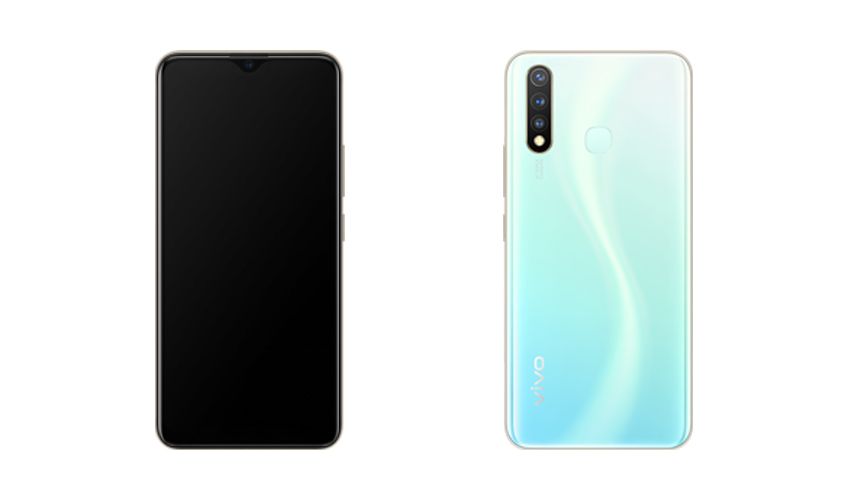
In October, the Vivo V1941A/T smartphone had appeared on TENAA with all its specifications and images. However, the handset has not gone official yet. Today, the name of the device has been confirmed through its new listing on the database of China Telecom. The device will be soon launching in China as Vivo Z5i.
Vivo Z5i Price and Release Date (Rumored)
The China Telecom listing reveals that the Vivo Z5i has a price tag of 1,998 Yuan (~$286). Since the phone is still under the wraps, it is advisable to wait for official confirmation on its pricing.
The listing states that the Vivo Z5i was supposed to launch in China on Nov. 1. The date has already passed which indicates that it may go official soon in the coming days. The smartphone will be available in three color options such as Agate Black, Spar Blue and Jade Porcelain Green in the home market. The Vivo Z5i will be selling alongside other Z-series phones such as Vivo Z5 and Vivo Z5x in China.
The Vivo Z5i has a 6.53-inch IPS LCD display with waterdrop notch. It supports full HD+ resolution of 1080 x 2340 pixels and 19.5:9 aspect ratio. The TENAA listing had revealed that the phone is powered by 2.0GHz octa-core processor. Through its China Telecom appearance, it is now confirmed that it is fueled by Snapdragon 675 mobile platform. The SoC is supported by 8 GB of RAM. The native storage of the device is 128 GB. For more storage, it is equipped with a microSD card slot. The phone may arrive in multiple variants since TENAA had revealed 4 GB / 6 GB / 8 GB RAM variants and 64 GB / 128 GB storage editions.
A fingerprint reader can be seen on the rear shell of the Vivo Z5i. The Android 9 Pie OS runs on the device. It could be featuring the latest FunTouch OS 9.2 UI. The device is backed by a 4,920mAh minimum. The 3C appearance of the phone had revealed that it could be shipped with 18W fast charger.
The Vivo Z5i has a front-mounted camera of 16-megapixel. On its rear is a 16-megapixel + 8-megapxiel + 2-megapixel triple camera system. The connectivity features of the phone include Wi-Fi 802.11ac, Bluetooth 5.0, GPS, microUSB 2.0 and 3.5mm audio jack. The body of the Vivo Z5i is made out of plastic and it measure 162.15 x 76.47 x 8.89mm. It weighs 193 grams.
The Vivo Z5i resembles with the Vivo U3 in terms of specs and design. The only major difference is that Vivo U3 comes in 4 GB / 6 GB RAM variants and 64 GB of native storage. Launched in last month, the 4 GB and 6 GB models of the Vivo U3 are respectively priced at 999 Yuan (~$143) and 1,199 Yuan (~$171) in China.
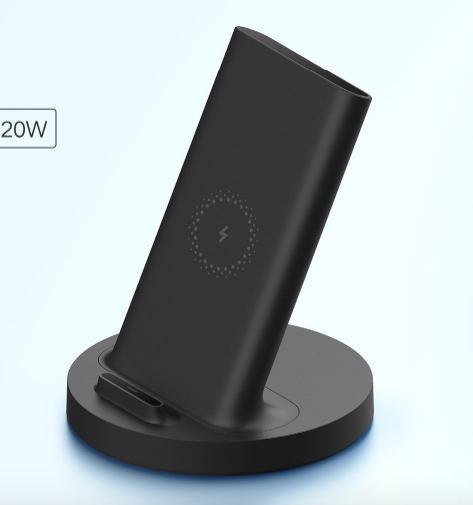
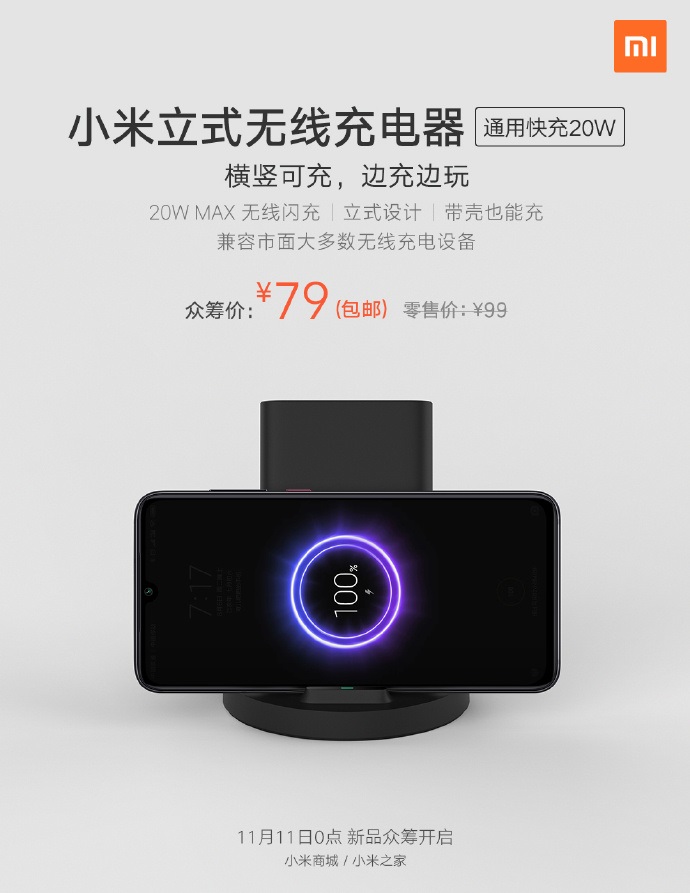
On the 8th of November, Xiaomi introduced an all new wireless charger which will be available for purchase at the company’s crowdfunding website, starting 11th of November which happens to be the Chinese Single’s Day. The latest offering is rated at 20 W and it is placed below the 30W wireless charger with a built-in fan that the company had previously launched.
In terms of looks, the 20 W wireless charger from Xiaomi has a minimalist design with a circular base and an angled back which somewhat looks similar to its power banks. It is offered in black colour that seems to have a matte finish which gives it a classic and elegant look. One highlighting feature of the power bank is that it is capable of charging smartphones in both landscape and vertical position.
Due to its design, the device also doubles as a dock which will allow the user to quickly look at incoming notifications. The 20 W wireless charger from Xiaomi is based on Qi wireless charging technology, therefore, it can also be used to charge devices compatible with this technology which includes Apple iPhones and Samsung’s Galaxy Note and S-Series of smartphones.
While it is capable of charging smart devices at 20W of maximum power, devices like the iPhone only support wireless charging at 7.5 W. Accordingly, charging times will vary based on different handsets.
Lastly, talking about the price of the 20 W wireless charger from Xiaomi, it will initially be offered at a discounted price of Yuan 79 ($11). The retail price of device is Yuan 99 ($14).
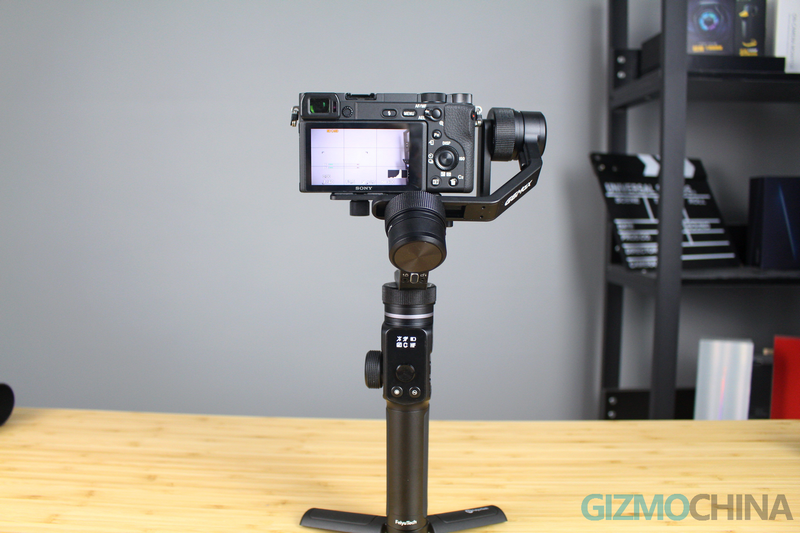
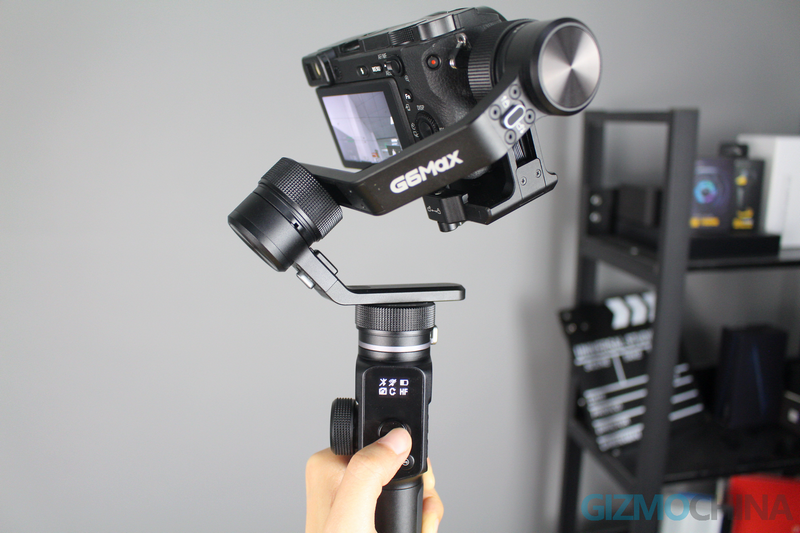
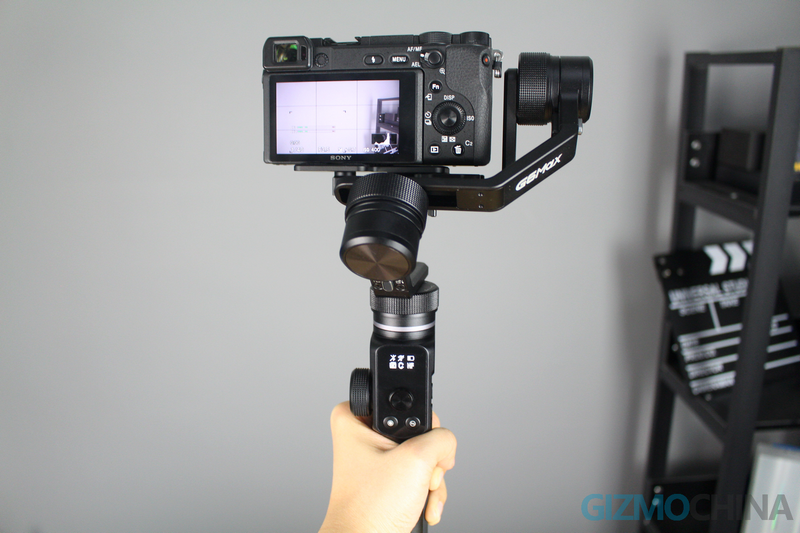
Feiyu Tech, one of the most famous gimbal manufacturers, will release their latest camera gimbal, called G6 Max 3-Axis Stabilized Handheld Camera Gimbal. We got the G6 Max and use it for a few days. Let’s take a look.
Design:
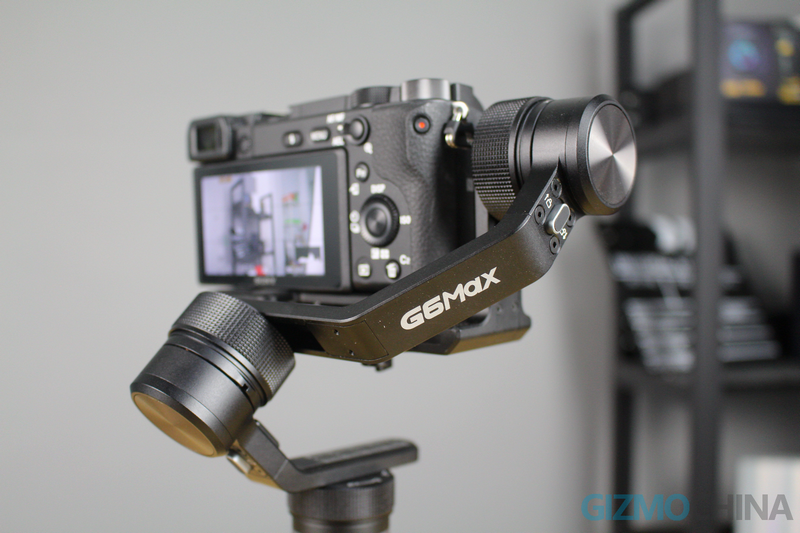
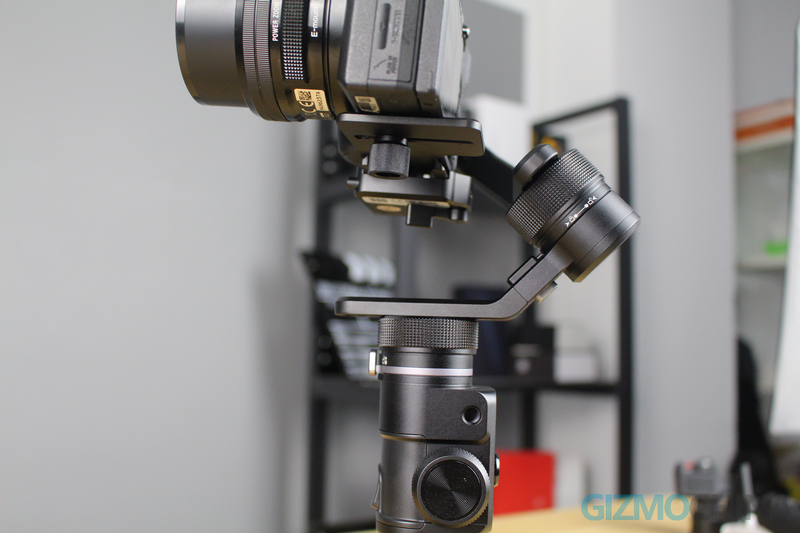
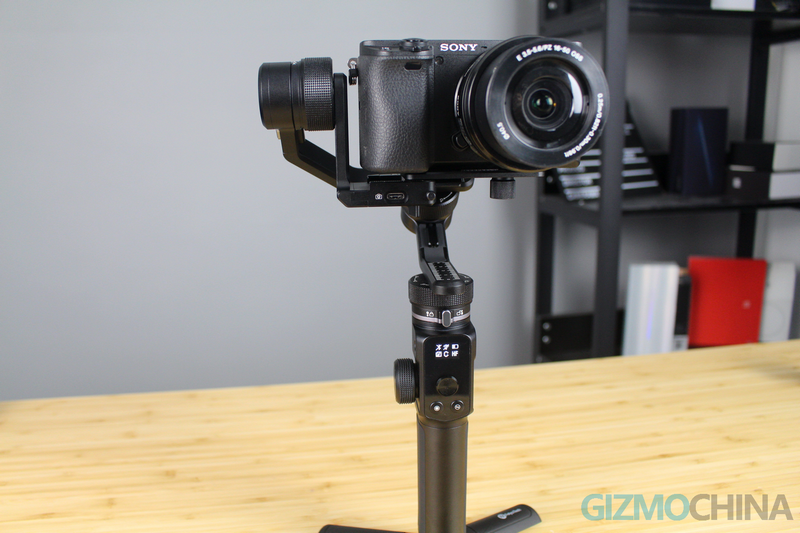
It seems that Feiyu Tech is passionate about releasing camera gimbal with light weight. The Feiyu G6 Max gimbal has 665g net weight and small size, and it is as big as the Feiyu G6 Plus gimbal. Although it has the light weight and small size, the G6 Max also has good metal construction, which makes it firm and stable.
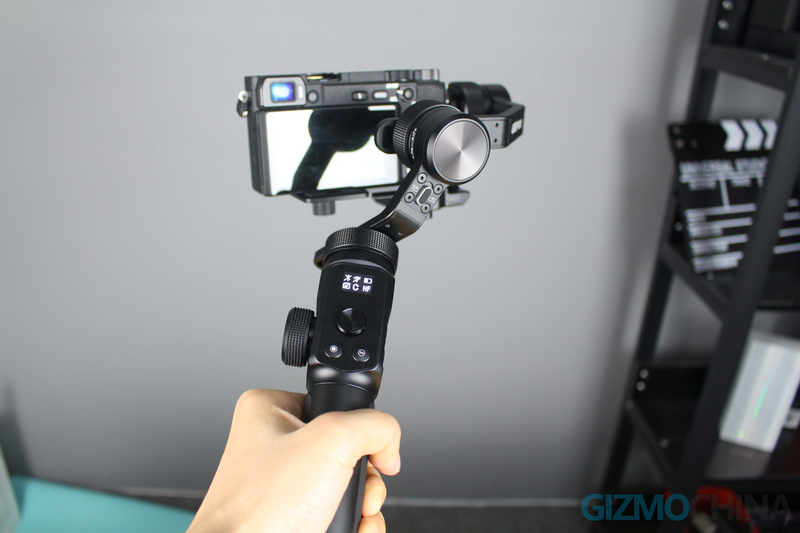
The G6 Max is a 3-axis camera gimbal. From top to bottom, there are three axis position locks, which make important roles on balancing.
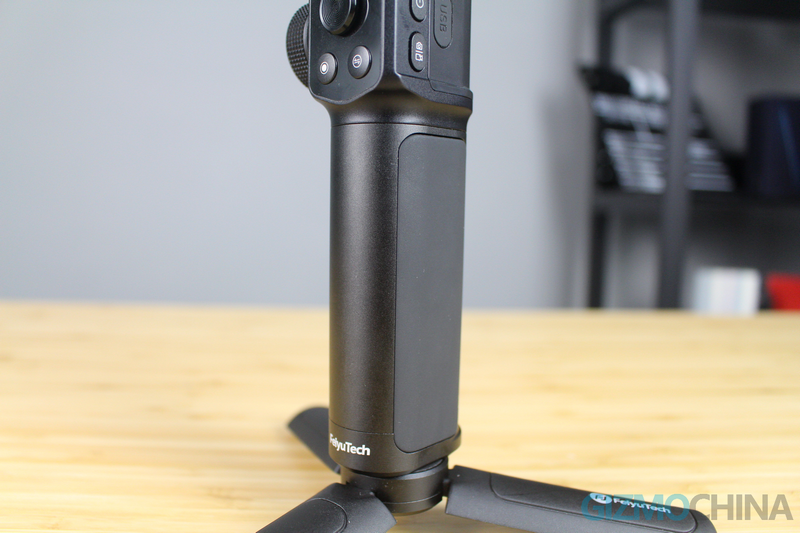
Coming in oval shape design, the touch of the handle is good. There are two pieces of silicone rubber embedded in the handle, which makes you have comfortable holding experience.
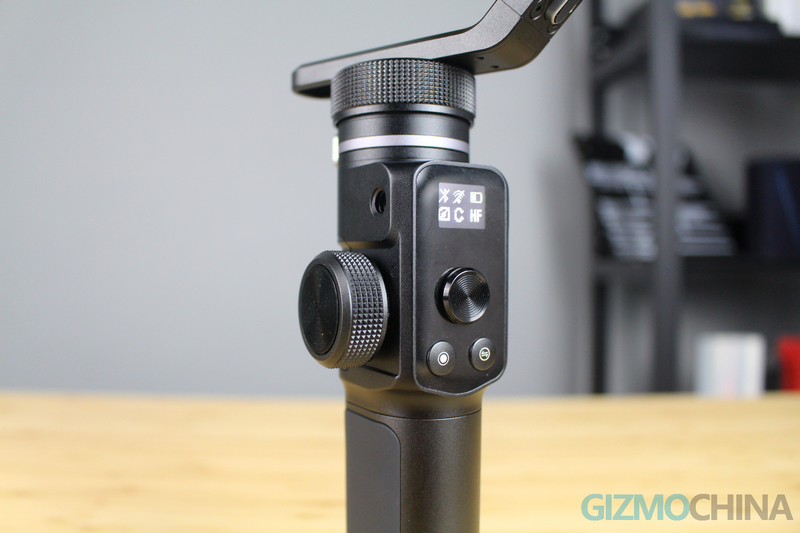
Take a look at the stick. On the front side, there is a display, a joystick, a shutter button and a function button. The display of G6 Max is bigger than G6 Plus. And the rotary which is beside them is the multifunction knob.
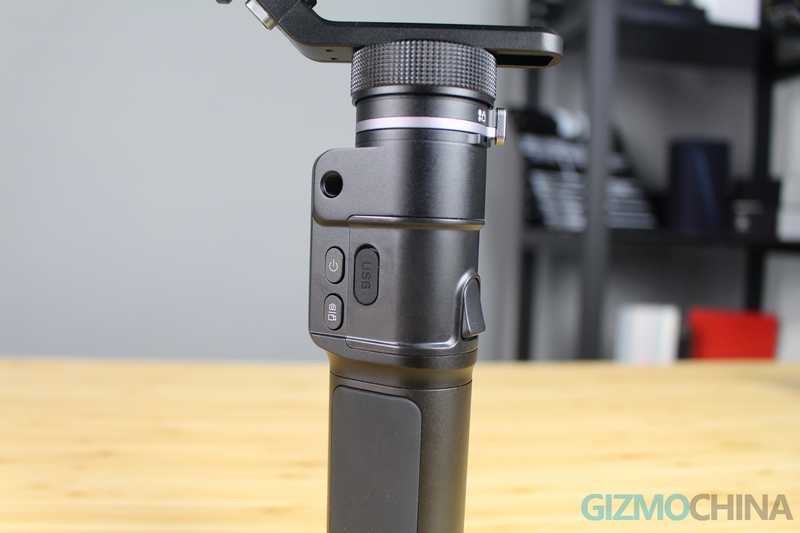
On the other side, you will notice the power button, camera mode button, Type-C port and trigger button.
It is a portable gimbal, and it can be perfectly fit in your bag. But it is hard to put the G6 Max gimbal into the pocket on your clothes.
Performance:
From my own experience, it is simple to balance the G6 Max. However, when turning on the gimbal after balancing, the G6 Max will vibrate occasionally.
The G6 Max has five modes, which are pan mode, follow mode, all follow mode, fast follow mode and selfie mode. It is easy to switch mode. All you need to do is tap the function button or trigger button. What’s more, the switching movement between these modes is smooth and stabilized.
Most of operations, like focusing and panning, can be finished by the buttons, joystick and knob. After updating, I think the knob can support more functions expect tilting, like zooming.
The G6 Max supports Bluetooth and Wi-Fi to directly operate the camera or smartphone, which provide more stable connection. Also, you can download the Feiyu ON App to control the gimbal and camera.
The Feiyu G6 Max does a good job on stability, which is above the average. It performs well when walking, while the frame will have a small vibration when running or other intensive movements. But the vibration can be accepted.
Although the net weight of G6 Max (665g) is heavier than the G6 Plus (663g), I think the G6 Max feels lighter than most of the camera gimbal selling on the market when you use it.
Battery:
The Feiyu G6 Max gimbal can last around 9 hours, which can support outdoor shooting for a long time. By the way, the G6 Max is fueled by built-in battery, which is more convenient than external battery.
Conclusion:
The Feiyu G6 Max is a portable and stable gimbal. I like its size, design, modes and smooth movements. If you want to record your life by video, I do recommend the Feiyu G6 Max camera gimbal to you.
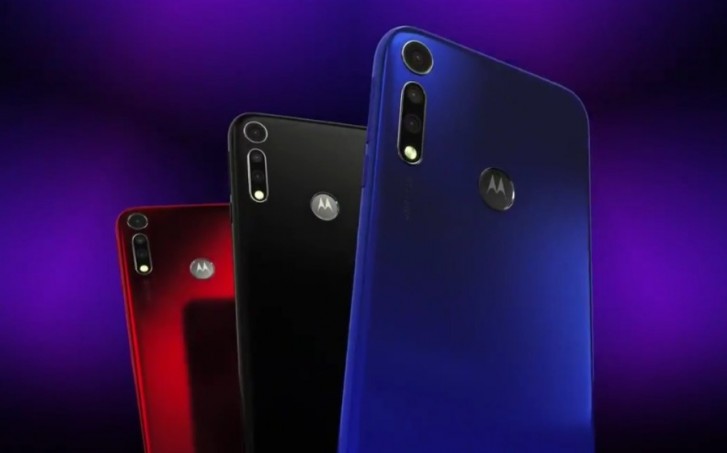
Motorola has recently launched the Moto G8 Plus and Moto G8 Play in Brazil. While Motorola fans were expecting the company to unleash the Moto G8, there was no official announcement on it. The arrival of the Moto G8 could be close at hand as popular tipster has shared a commercial of the phone that showcases its design.
The Moto G8 commercial shows that it will be arriving in three color editions such as blue, black and red. The front and rear design of the phone is quite similar to the Moto G8 Plus and G8 Play handsets.
The Moto G8 does not appear different from its siblings. It has a triple camera system on its rear. The primary lens of 48-megapixel is placed separately from the module that features ultrawide and depth sensors and an LED flash. A Motorola logo that is probably embedded with a fingerprint scanner can be seen on the backside of the device.
Moving on to the frontside of the Moto G8, it is fitted with a waterdrop notch enabled screen. It is likely to support full HD+ resolution. The specifications of the Moto G8 are currently under the wraps.
The new commercial debunks the early rumors that had shown the Moto G8 phone with a different rear design and a punch-hole display. The said device has already gone official in August as Motorola One Action smartphone.
The Moto G8 Plus has a 6.3-inch IPS LCD display with waterdrop notch. It supports 1080 x 2280 pixels full HD+ resolution and 19:9 aspect ratio. The Snapdragon 665 SoC powers the phone with 4 GB of RAM and it has 64 GB of onboard storage. There is a shared SIM slot for additional storage.
The G8 Plus has 48-megapixel + 16-megapixel + 5-megapixel triple camera system. It has a front-facing camera of 25-megapixel. The 4,000mAh battery of the phone supports 15W fast charging through USB-C. It runs on Android 9 Pie OS.
The Moto G8 Play has a 6.2-inch IPS LCD display with HD+ resolution of 720 x 1,520 pixels and 19:9 aspect ratio. It is powered by Helio P70 chipset and 2 GB of RAM. It has 32 GB of storage and a shared SIM slot for more storage. The rear shell of the device features a 13-megapixel + 8-megapixel + 2-megapixel triple camera system and it has a front camera of 8-megapixel. A 4,000mAh battery fuels the smartphone.
The Moto G8 Plus and G8 Play are respectively priced at R$ 1,495 (~$365) and R$ 1,099 (~$268) in Brazil.
We use cookies on our website to give you the most relevant experience by remembering your preferences and repeat visits. By clicking “Accept”, you consent to the use of ALL the cookies.
This website uses cookies to improve your experience while you navigate through the website. Out of these, the cookies that are categorized as necessary are stored on your browser as they are essential for the working of basic functionalities of the website. We also use third-party cookies that help us analyze and understand how you use this website. These cookies will be stored in your browser only with your consent. You also have the option to opt-out of these cookies. But opting out of some of these cookies may affect your browsing experience.
Necessary cookies are absolutely essential for the website to function properly. This category only includes cookies that ensures basic functionalities and security features of the website. These cookies do not store any personal information.
Any cookies that may not be particularly necessary for the website to function and is used specifically to collect user personal data via analytics, ads, other embedded contents are termed as non-necessary cookies. It is mandatory to procure user consent prior to running these cookies on your website.








 The most cost-effective smartphone in this segment is the
  The most cost-effective smartphone in this segment is the 8 GB + 128 GB variant of the
  The most cost-effective model in this price segment is the
 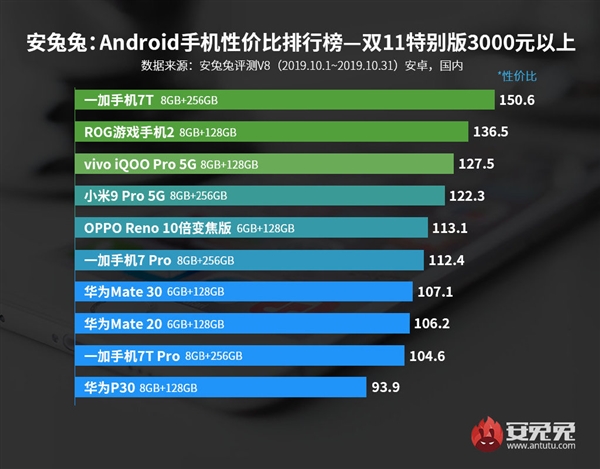 The most value for money smartphones in the segment include the