Advertisement

Feiyu G6 Max 3-Axis Stabilized Handheld Camera Gimbal Review

Feiyu Tech, one of the most famous gimbal manufacturers, will release their latest camera gimbal, called G6 Max 3-Axis Stabilized Handheld Camera Gimbal. We got the G6 Max and use it for a few days. Let’s take a look.
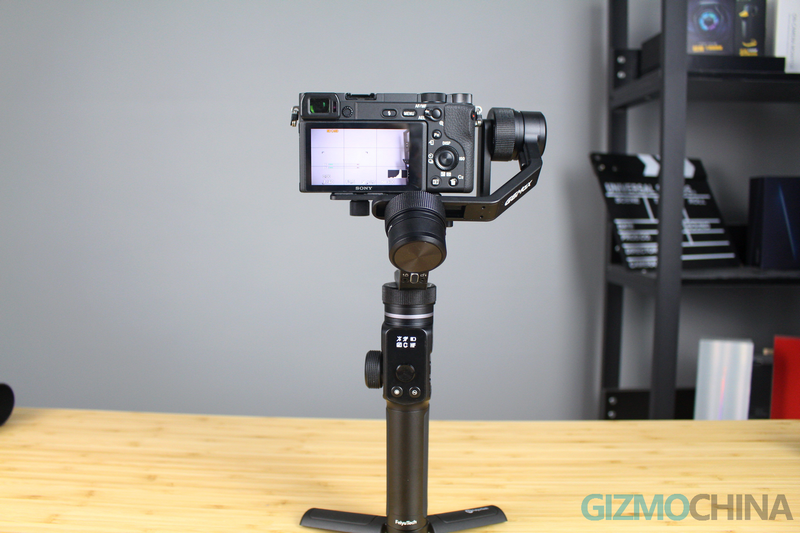
Design:

It seems that Feiyu Tech is passionate about releasing camera gimbal with light weight. The Feiyu G6 Max gimbal has 665g net weight and small size, and it is as big as the Feiyu G6 Plus gimbal. Although it has the light weight and small size, the G6 Max also has good metal construction, which makes it firm and stable.
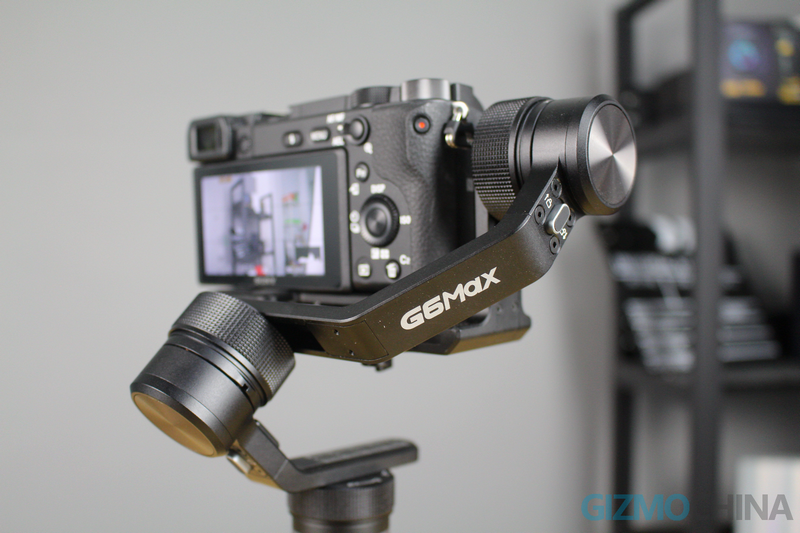
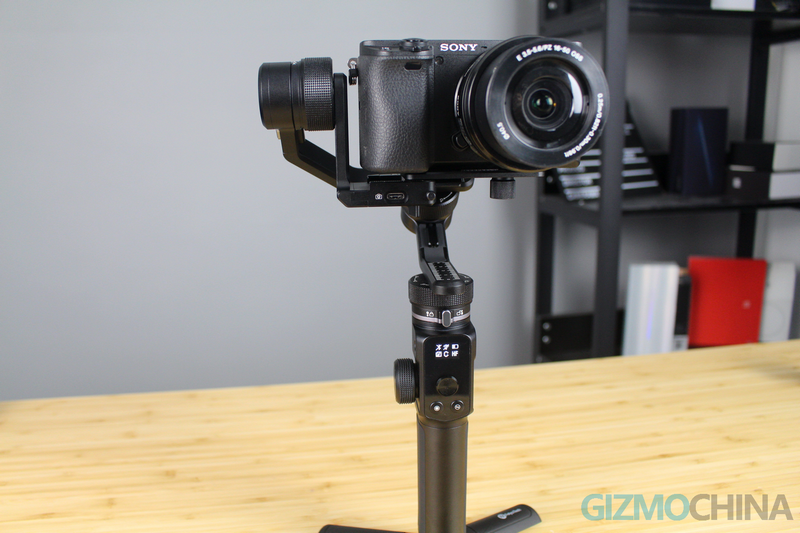
The G6 Max is a 3-axis camera gimbal. From top to bottom, there are three axis position locks, which make important roles on balancing.

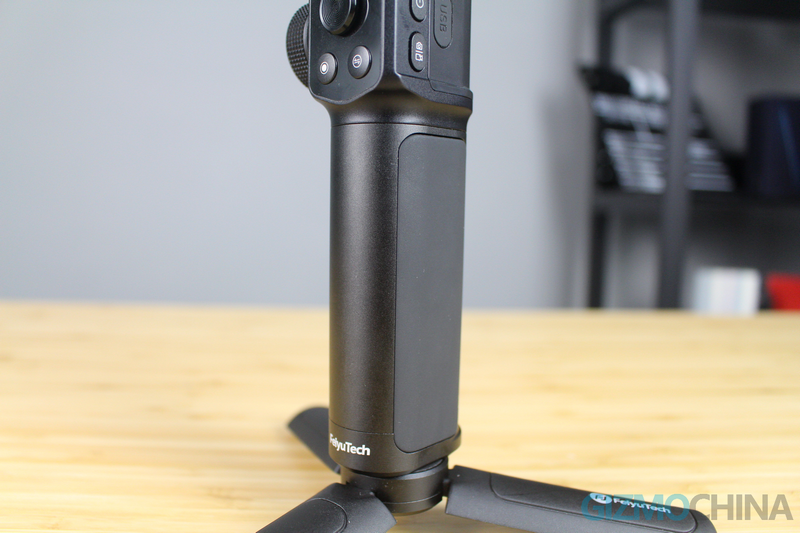
Coming in oval shape design, the touch of the handle is good. There are two pieces of silicone rubber embedded in the handle, which makes you have comfortable holding experience.
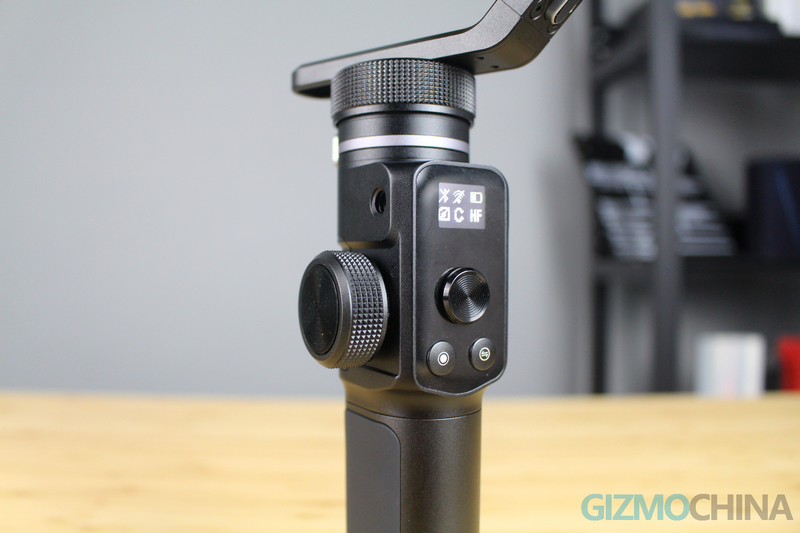
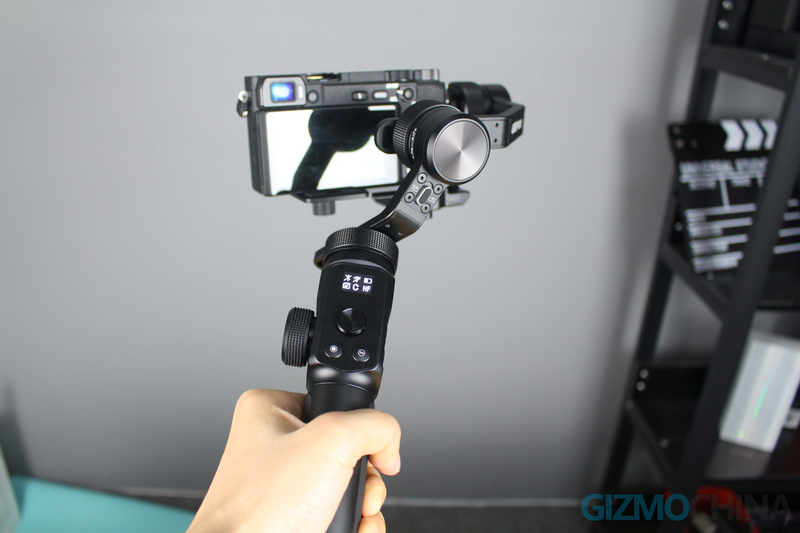
Take a look at the stick. On the front side, there is a display, a joystick, a shutter button and a function button. The display of G6 Max is bigger than G6 Plus. And the rotary which is beside them is the multifunction knob.
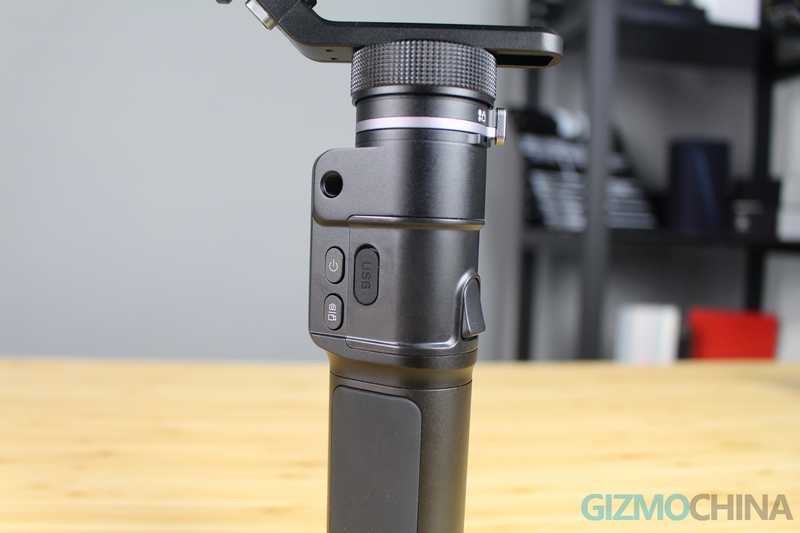
On the other side, you will notice the power button, camera mode button, Type-C port and trigger button.
It is a portable gimbal, and it can be perfectly fit in your bag. But it is hard to put the G6 Max gimbal into the pocket on your clothes.
Performance:

From my own experience, it is simple to balance the G6 Max. However, when turning on the gimbal after balancing, the G6 Max will vibrate occasionally.
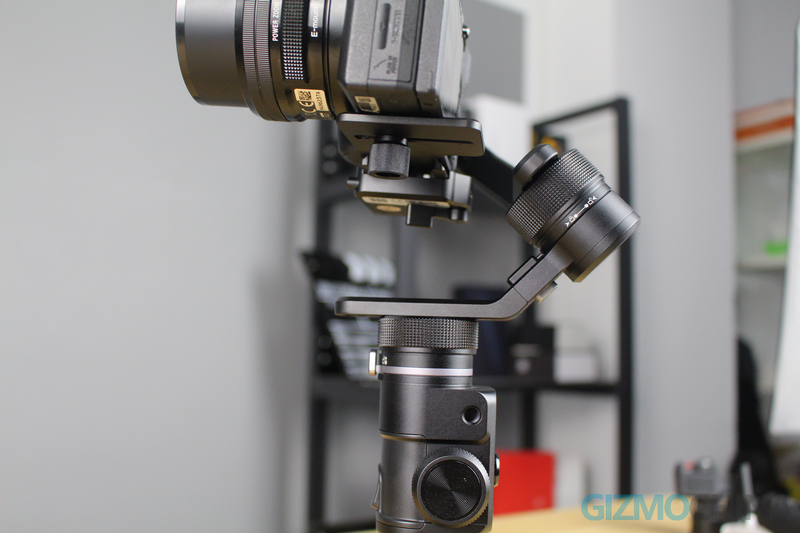
The G6 Max has five modes, which are pan mode, follow mode, all follow mode, fast follow mode and selfie mode. It is easy to switch mode. All you need to do is tap the function button or trigger button. What’s more, the switching movement between these modes is smooth and stabilized.

Most of operations, like focusing and panning, can be finished by the buttons, joystick and knob. After updating, I think the knob can support more functions expect tilting, like zooming.
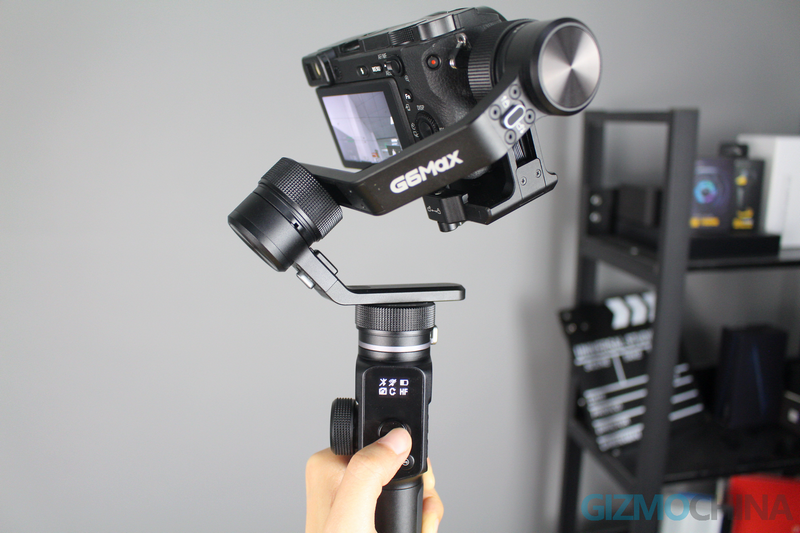
The G6 Max supports Bluetooth and Wi-Fi to directly operate the camera or smartphone, which provide more stable connection. Also, you can download the Feiyu ON App to control the gimbal and camera.

The Feiyu G6 Max does a good job on stability, which is above the average. It performs well when walking, while the frame will have a small vibration when running or other intensive movements. But the vibration can be accepted.
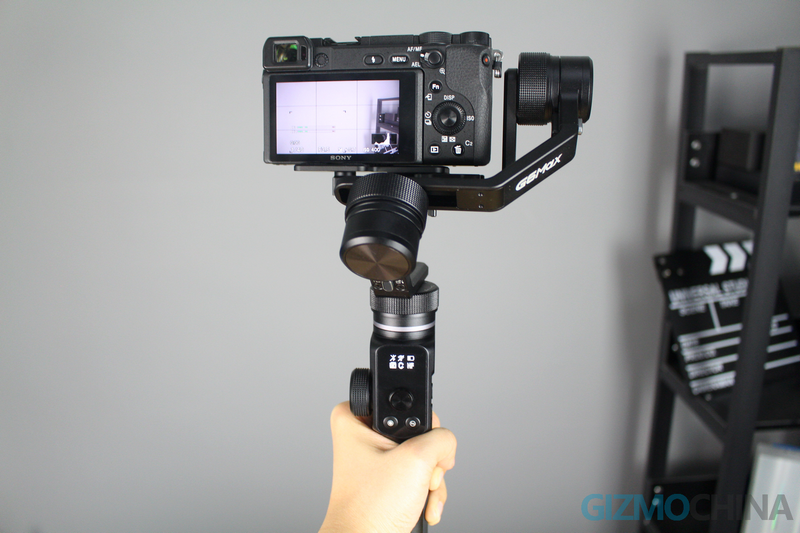
Although the net weight of G6 Max (665g) is heavier than the G6 Plus (663g), I think the G6 Max feels lighter than most of the camera gimbal selling on the market when you use it.


Battery:

The Feiyu G6 Max gimbal can last around 9 hours, which can support outdoor shooting for a long time. By the way, the G6 Max is fueled by built-in battery, which is more convenient than external battery.
Conclusion:

The Feiyu G6 Max is a portable and stable gimbal. I like its size, design, modes and smooth movements. If you want to record your life by video, I do recommend the Feiyu G6 Max camera gimbal to you.

Moto G8 promo video leaked; Launch could be imminent

Motorola has recently launched the Moto G8 Plus and Moto G8 Play in Brazil. While Motorola fans were expecting the company to unleash the Moto G8, there was no official announcement on it. The arrival of the Moto G8 could be close at hand as popular tipster has shared a commercial of the phone that showcases its design.
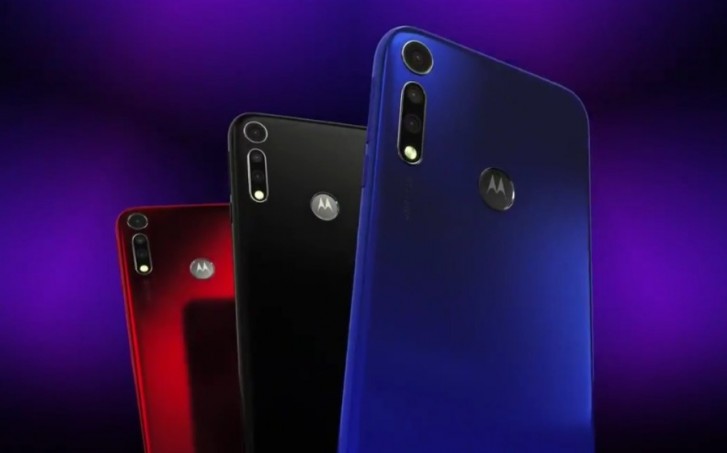
The Moto G8 commercial shows that it will be arriving in three color editions such as blue, black and red. The front and rear design of the phone is quite similar to the Moto G8 Plus and G8 Play handsets.

The Moto G8 does not appear different from its siblings. It has a triple camera system on its rear. The primary lens of 48-megapixel is placed separately from the module that features ultrawide and depth sensors and an LED flash. A Motorola logo that is probably embedded with a fingerprint scanner can be seen on the backside of the device.

Moving on to the frontside of the Moto G8, it is fitted with a waterdrop notch enabled screen. It is likely to support full HD+ resolution. The specifications of the Moto G8 are currently under the wraps.

The new commercial debunks the early rumors that had shown the Moto G8 phone with a different rear design and a punch-hole display. The said device has already gone official in August as Motorola One Action smartphone.

Moto G8

Moto G8 Plus and Moto G8 Play Specifications

The Moto G8 Plus has a 6.3-inch IPS LCD display with waterdrop notch. It supports 1080 x 2280 pixels full HD+ resolution and 19:9 aspect ratio. The Snapdragon 665 SoC powers the phone with 4 GB of RAM and it has 64 GB of onboard storage. There is a shared SIM slot for additional storage.

The G8 Plus has 48-megapixel + 16-megapixel + 5-megapixel triple camera system. It has a front-facing camera of 25-megapixel. The 4,000mAh battery of the phone supports 15W fast charging through USB-C. It runs on Android 9 Pie OS.

The Moto G8 Play has a 6.2-inch IPS LCD display with HD+ resolution of 720 x 1,520 pixels and 19:9 aspect ratio. It is powered by Helio P70 chipset and 2 GB of RAM. It has 32 GB of storage and a shared SIM slot for more storage. The rear shell of the device features a 13-megapixel + 8-megapixel + 2-megapixel triple camera system and it has a front camera of 8-megapixel. A 4,000mAh battery fuels the smartphone.

The Moto G8 Plus and G8 Play are respectively priced at R$ 1,495 (~$365) and R$ 1,099 (~$268) in Brazil.


(source)

Redmi Watch could be coming soon, hints Redmi GM Lu Weibing

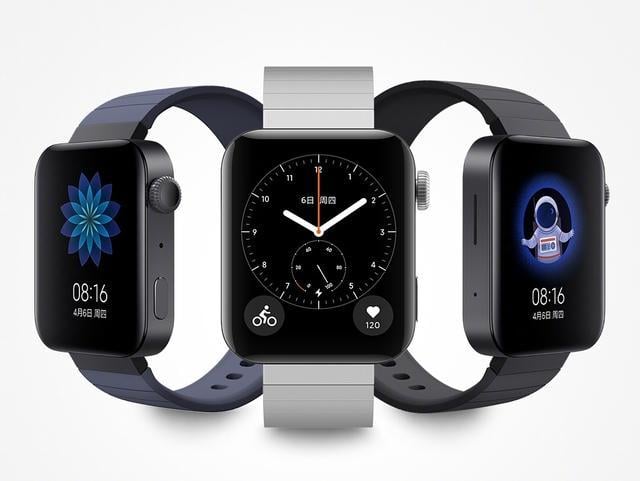
Xiaomi recently launched its first WearOS-powered smartphone, dubbed as Mi Watch. Now, it seems that its newly separated entity Redmi is also gearing up to launch its own smartphone which could be named Redmi Watch.

Lu Weibing, General Manager of the Redmi brand, has taken to microblogging platform Weibo to hint that the Redmi Watch could be coming soon. He wrote on the social media platform: “How do you feel about the first Redmi Watch? Looking forward to the Redmi Watch?” While this isn’t a confirmation, it looks like a credible hint that the smartwatch from the brand is coming soon.

Redmi Watch Teased

If you look at the pattern, this makes the sensor. Redmi has been launching a slightly cheaper product of every major product that Xiaomi launches. So far, Redmi has done the same with the laptops and Smart TVs and smartwatches could be next.

Currently, nothing is known about the Redmi Watch but if it is indeed coming, we expect it to come with a similar design to that of Mi Watch. It could be a watered-down variant of the Mi Watch to offer it at an aggressive price point.

Xiaomi Mi Watch
Mi Watch

If the Redmi Watch is coming, expect it to get stripped of eSIM support and pack smaller capacity battery to cut down the pricing. However, we expect it to be running the same software as the Mi Watch — MIUI for Watch which is based on Android WearOS.

The Xiaomi Mi Watch comes with a 1.78-inch AMOLED display with a 44mm frame and is powered by Qualcomm Snapdragon Wear 3100 4G chipset. It is fuelled by a 510mAh battery which the company claims can offer up to 36 hours or two days of battery life on a single charge.

As per the report, a Pro variant of the Mi Watch is also in works which will reportedly feature a round dial. The launch date of Xiaomi’s Mi Watch Pro variant is also not confirmed but if it is coming, we expect it to get launched by the end of this year. The recently announced Mi Watch is all set to go on sale on November 11th in China.

(Source)

Smartwatch shipments in Q3 of 2019 grew 42% in comparison to last year

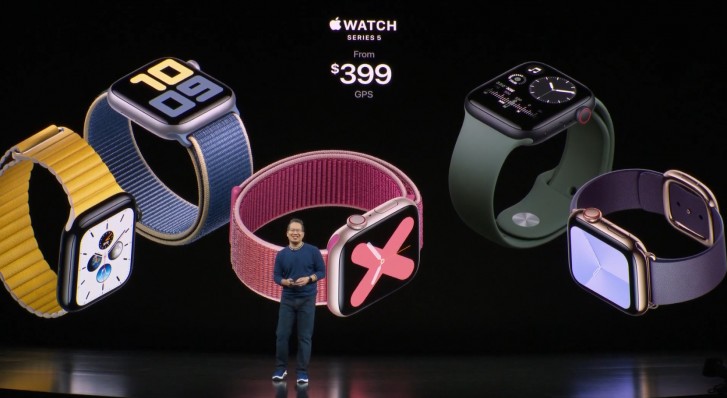
According to a report published by Strategy Analytics, global smartwatch shipments in the Q3 of 2019 reached 14.2 million units which are 42% higher in comparison to the 10 million units sold in the same quarter of the yesteryear. “Smartwatch growth continues to soar, as consumers increasingly accessorize their smartphones with fitness-led and health-focused wearables,” said a senior analyst from the research firm.

Out of all the units sold, the Apple Watch accounted for 6.8 million units making it the most popular smartwatch. In comparison to Q3 of 2018, when Apple sold 4.5 million, the sales of its smartwatches in Q3 of the current year grew an astounding 51 percent. Correspondingly, the Apple Watch lineup single-handedly accounts for almost half of the market share.

Other leading manufacturers in this segment include Samsung and Fitbit. The South Korean Electronics giant shipped 1.9 million smartwatches worldwide in Q3 of 2019, almost doubling from 1.1 million a year ago. Speaking of its market share, it jumped from 11 percent last year to 13 percent in the current year, making it the second-largest manufacturer of smartwatches. One of the most selling models from the company is the Galaxy Watch Active 2 which is expected to boost sales even further in the forthcoming festive season.

Closely followed by Samsung is Fitbit which sold 1.6 million smartwatches worldwide in Q3 of 2019, growing slightly from 1.5 million a year ago. Despite the growth in sales, it’s market share fell to 11 percent from 15 percent in the third quarter of the preceding year. “Fitbit continues to underperform in the smartwatch industry average, however, its recent takeover by Google could provide it with some relief and increased market share,” said Neil Mawston, Executive Director at Strategy Analytics.

Some readers might be surprised as Xiaomi seems out of sight in this report, however, it is hidden in the other segment. Noteworthy, it is one of the largest manufacturers of smart bands which happens to be a smart wearable and not a smartwatch in particular. Having said that, the company has recently launched its first smartwatch, dubbed the Mi Watch, it starts at Yuan 1299 and is packed with features. This device ticks almost every box that consumers in the budget and mid-range segment look for, therefore, Xiaomi is assumed to make a significant mark in smartwatch sales report in the coming quarters.

(source)


Sony IMX686 image sensor teased with sample shots

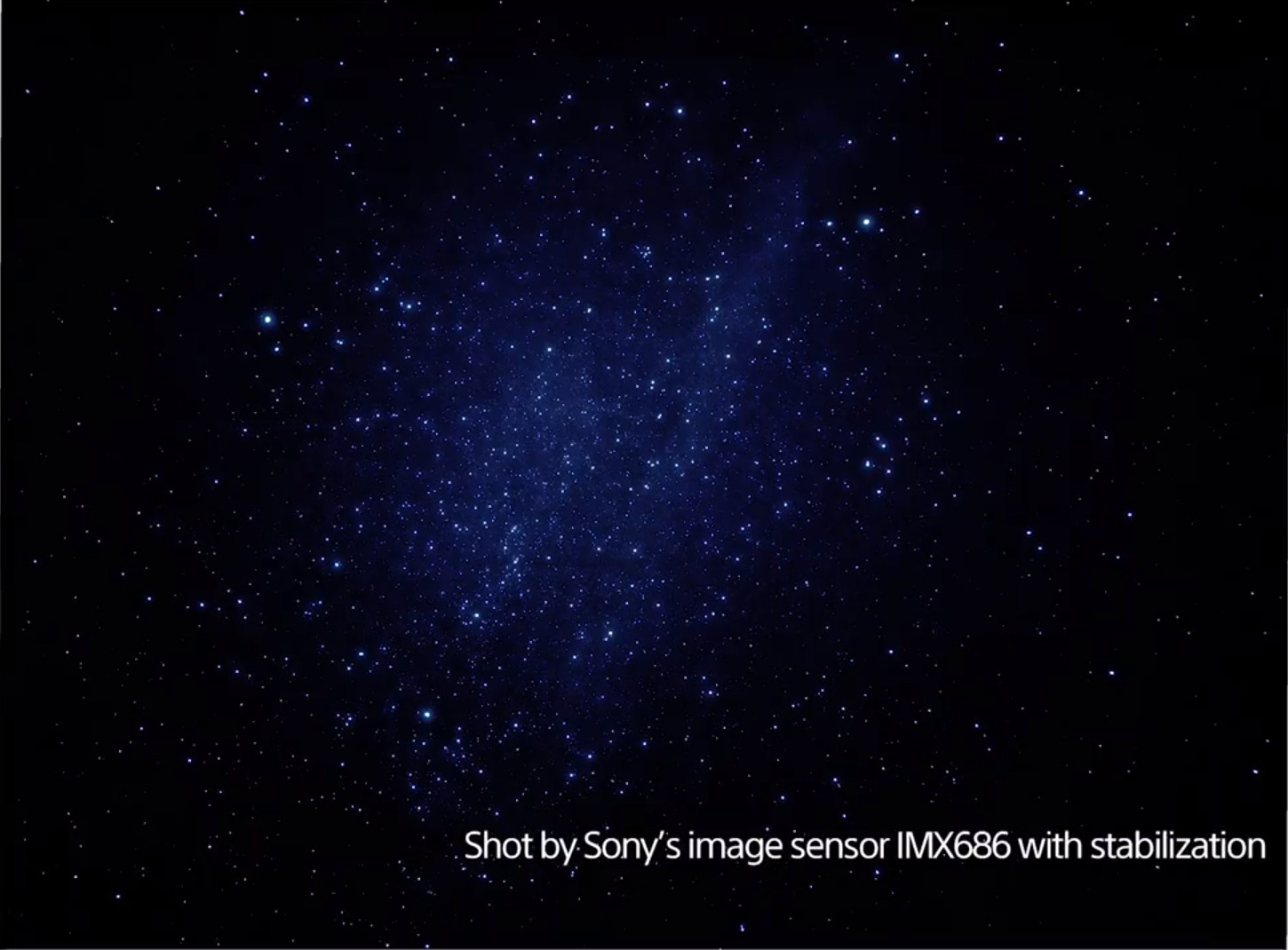
Since the past few months, Chinese tipsters have been claiming that the IMX686 is the next flagship phone image sensor from Sony. A new video teaser of the Sony IMX686 has been shared through Sony China’s Weibo account.  The video includes some of the sample shots captured using the next-generation image sensor.

Sony is yet to reveal the details of the Sony IMX686. The sample images are shown through the video shown below. Hopefully, the Japanese tech giant will roll out a press release to reveal the configuration and features of the image sensor along with actual camera samples.

The Sony IMX686 is not yet available on any smartphone. The sample shots were taken by using a prototype board with Sony IMX686 sensor connected to a PC. The sample shots show that the IMX686 can capture highly detailed photos in any lighting conditions. Some of the shots show the wide-angel photo capturing capabilities of the sensor.

The numbering of the Sony IMX686image sensor indicates that it could be the successor of the Sony IMX586 lens that was unveiled in 2018. It is the latest major image sensor for mobile devices. It has been used on many flagship phones and some mid-rangers that were designed to offer flagship-grade photo shooting experience. Samsung has recently launched the 64-megapixel and 108-megapixel camera sensors. Sony’s IMX686 could be a 60-megapixel or 64-megapixel lens that may offer richer photography experience than Samsung’s product.

A reliable Chinese tipster has claimed that the Sony IMX686 sensor will be available on the upcoming Huawei Nova 6 smartphone. Other leaks have revealed that phones like OPPO Reno 3v and Vivo X30 Pro will be also equipped with Sony IMX686.

Please note that the above shown images are not actual camera samples but screengrabs from Sony’s Sony IMX686 teaser video. The sample images suggest that the Sony IMX686 will offer stellar photography and experience. Hopefully, phones featuring the new image sensor from Sony may hit the Chinese markets before the end of 2019.

Which phone could be the first device featuring the Sony IMX686? Share us your views by posting your comments below.


(source)

Honor President shares 5G speed screenshot from Honor V30 smartphone

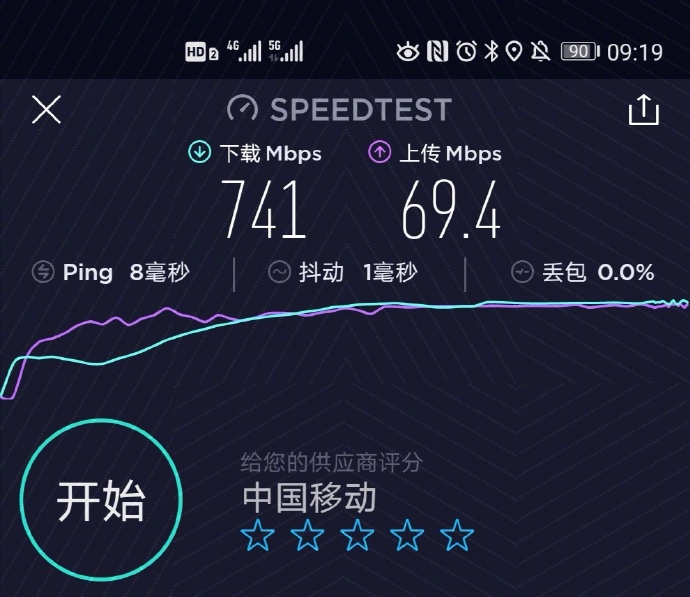
Huawei’s sub-brand Honor has already confirmed that the company will soon launch its Honor V30 series smartphones powered by the company’s own Kirin 990 5G chipset. Today, Honor President Zhao Ming has shared a screenshot of the device showcasing the internet speed on the upcoming device.

Honor V30 5G Speed Test

In the screenshot, we can see that the phone managed to get 741 Mbps download speed and 69.4 Mbps upload speed. This showcases the acceleration of the 5G technology as the next-generation mobile network technology on the network of China Mobile.

Recently, an image of the smartphone’s front panel leaked online, which confirmed that the phone will feature a hole-punch display for housing camera sensors whereas the Pro model will house two camera sensors in the punch-hole design.

As for the main camera module at the back of the device, reports indicate that it will come with a 60-megapixel primary sensor, coupled with a 16-megapixel super wide-angle lens, a 2-megapixel macro lens, and a ToF camera sensor, completing the quad-camera setup.

Whereas the Honor V30 Pro is expected to come with an 8-megapixel telephoto lens instead of the 2-megapixel macro lens and the wide-angle shooter will also be upgraded to 20-megapixel. So, the Pro model will come with better camera specs than the standard model for the quad-camera setup.

On the front side, the smartphones will come with a 32-megapixel sensor while the Pro model will be accompanied by a secondary sensor which remains unknown. Both the devices are expected to come with a 90Hz refresh rate for the full-screen display and the punch-hole will be on the top-left corner.

Honor V30 Pro renders
Honor V30 Pro renders 2

We expect both the smartphones to come running EMUI 10 custom user interface based on the latest Android 10 operating system. However, the phones will likely lack support for Google apps and services, if the company isn’t granted a special license.

As for the power, the Honor V30 will be powered by a 4,000mAh battery and will come with support for 22.5W fast charging while the V30 Pro is expected to come powered by a 4,200mAh battery with 40W fast charging and 15W wireless charging support.

While the phone’s launch date, pricing and availability information still remains unknown, some reports indicate that the Honor V30 series will be priced under 3,000 Yuan which roughly converts to $420. We are expecting the smartphones to get launched in the coming weeks and the company should announced the date pretty soon.


Realme X2 Pro Flipkart landing page appears head of November 20 launch

The Realme X2 Pro flagship phone is available for purchase in China and Europe. Last month, the Chinese firm had confirmed that it will be debuting the Realme X2 Pro in India on Nov. 20. A landing page for the phone has become active on India’s Flipkart online retailer site.

The landing page of Realme X2 Pro does not reveal details on the specs of the phone. However, it showcases the achievements of the company that had made its debut in the country in 2018. With 10 million smartphone shipments in Q3 2019 and 808 percent year-over-year growth rate, it is the fast growing smartphone brand in the world.

The Realme X2 Pro flagship phone is available for purchase in China and Europe. Last month, the Chinese firm had confirmed that it will be debuting the Realme X2 Pro in India on Nov. 20. A landing page for the phone has become active on India’s Flipkart online retailer site. The landing page of Realme X2 Pro does not reveal details on the specs of the phone. However, it showcases the achievements of the company that had made its debut in the country in 2018. With 10 million smartphone shipments in Q3 2019 and 808 percent year-over-year growth rate, it is the fast growing smartphone brand in the world. Based on the Counterpoint September 2019 market research data, Realme is currently the number 3 smartphone brand in India. Globally it is on the 7th position. Such a stupendous growth is being achieved by Realme with 3.5 million units monthly production capacity. Realme is the first smartphone brand to sell a phone with 64-megapixel camera phone. The Realme XT that features it in a quad camera system had debuted in India in September and the company has already solder over 2 million units of the device. Since its arrival in India, the company has been mainly focused on capturing the mid-range market by selling budget-friendly phones. However, the company is now gearing up to launch its first flagship phone – the Realme X2 Pro in the country. The landing page for the phone has a tagline that reads “Faster. Sharper. Bolder.” Realme X2 Pro Specifications The Realme X2 Pro has a waterdrop notch enabled 6.55-inch Fluid AMOLED display that offers 1080 x 2400 pixels resolution and 20:9 aspect ratio. The display of the phone offers 90Hz refresh rate with a maximum brightness of 1000nits. The phone’s display is integrated with a fingerprint reader. The Android 9 Pie OS along with ColorOS 6.1 UI runs on the Realme X2 Pro. The latest Snapdragon 855+ fuels the smartphone with up to 12 GB of LPDDR4x RAM. It comes with up to 256 GB of UFS 3.0 storage. The back panel of the phone flaunts 64-megapixel + 8-megapixel + 13-megapixel + 2-megapixel quad camera system and it has a front-facing camera of 16-megapixel. The device is packed with a 4,000mAh battery that supports 50W SuperVOOC Flash Charge technology. In China, the Realme X2 Pro has a starting price of 2,699 Yuan (~Rs. 27,200). The device may arrive with similar pricing in India. Apart from Flipkart, it could be also available on Realme India’s online and offline markets.

Based on the Counterpoint September 2019 market research data, Realme is currently the number 3 smartphone brand in India. Globally it is on the 7th position. Such a stupendous growth is being achieved by Realme with 3.5 million units monthly production capacity. Realme is the first smartphone brand to sell a phone with 64-megapixel camera phone. The Realme XT that features it in a quad camera system had debuted in India in September and the company has already solder over 2 million units of the device.

Since its arrival in India, the company has been mainly focused on capturing the mid-range market by selling budget-friendly phones. However, the company is now gearing up to launch its first flagship phone – the Realme X2 Pro in the country. The landing page for the phone has a tagline that reads “Faster. Sharper. Bolder.”

Realme X2 Pro Specifications

The Realme X2 Pro has a waterdrop notch enabled 6.55-inch Fluid AMOLED display that offers 1080 x 2400 pixels resolution and 20:9 aspect ratio. The display of the phone offers 90Hz refresh rate with a maximum brightness of 1000nits. The phone’s display is integrated with a fingerprint reader. The Android 9 Pie OS along with ColorOS 6.1 UI runs on the Realme X2 Pro.

The latest Snapdragon 855+ fuels the smartphone with up to 12 GB of LPDDR4x RAM. It comes with up to 256 GB of UFS 3.0 storage. The back panel of the phone flaunts 64-megapixel + 8-megapixel + 13-megapixel + 2-megapixel quad camera system and it has a front-facing camera of 16-megapixel. The device is packed with a 4,000mAh battery that supports 50W SuperVOOC Flash Charge technology.

In China, the Realme X2 Pro has a starting price of 2,699 Yuan (~Rs. 27,200). The device may arrive with similar pricing in India. Apart from Flipkart, it could be also available on Realme India’s online and offline markets.


Poco F2 cases appear on Spigen’s website

The Poco F2, the successor to the Xiaomi Poco F1, is a much-awaited smartphone for the fans of Xiaomi’s sub-brand. Although numerous rumors and speculations regarding the whereabouts of the device have surfaced periodically in the past, no concrete evidence has been presented. That is until popular smartphone cover-maker Spigen listed a Rugged Armor Case for the Poco F2 on their official website.

This time around various details of the smartphone can be seen from Spigen’s listing. However, Spigen is currently using the renders of the Redmi K20 Pro inside one of its cases, as evident from the source of the image. While this would not have been such an important story had some local cover-maker uploaded pictures of the Poco F2. Spigen being a reputed manufacturer, might have insider information currently unknown to the world.

Poco F2 Rugged Armor casePoco F2 Rugged Armor case
Poco F2 Rugged Armor case

As suggested by the images, the Poco F2 shares most of its characteristics (hardware and software) with the Redmi K20 series. The smartphone could feature a pop-up selfie camera along with a center-aligned triple-camera layout at the back. The Poco F1 featured a notched display along with dual rear cameras.

The Poco F2 seems to sport an edge-to-edge display with provisions for a pop-up front camera and a slim chin. The smartphone is likely to feature an in-display fingerprint scanner. While the chin is too small to accommodate a physical sensor, the rear panel does not have the provision either. 

Although the cover hides most of the F2’s rear panel, the cutouts reveal the triple-camera setup, complete with an LED flash module arranged vertically with the lenses. The first lens on the top features a red border, a design element that is currently seen on the Redmi K20 lineup. The volume rockers are present on the right edge of the Poco F2 with the power button placed right below. The speaker and USB Type-C port are visible on the bottom edge, while a 3.5mm port could be present on the top.

Poco F2 Liquid Case
Poco F2 Liquid Case

The Spigen Rugged Armor cover for the Poco F2 is available for $25. Since the device has not been officially launched, one might want to postpone the purchase, as the final product may vary. The Poco F2 is likely to be a flagship-killer like its predecessor. The Poco F1 is a powerhouse, featuring last year’s flagship Qualcomm Snapdragon 845 SoC. Keeping up with the tradition, the Poco F2 might feature the latest Snapdragon 855+ chipset. Ideally, the smartphone ought to sit right below Xiaomi’s flagship, the Redmi K2 Pro, while featuring a price tag between Rs. 20,000 (~$282) and Rs. 22,000 (~$310).


(source)

OnePlus 8 Pro expected to come with super smooth 120Hz display

ASUS’ first gaming smartphone ROG Phone was the first phone to come with a 90Hz display in 2018. With the launch of OnePlus 7 Pro this year, the trend of including a 90Hz screen became mainstream and many smartphone manufacturers started offering the same in their flagship smartphones, including Google.

Now, Samsung is also expected to include a 90Hz display on its upcoming Galaxy S11 flagship smartphone. But, if the new reports are to be believed, then OnePlus is moving a step forward for its next year’s flagship smartphone.

OnePlus 8 Pro 120Hz Display Teaser

As per the report, the OnePlus 8 Pro will feature a super smooth display with 120Hz refresh rate. However, it won’t be the first smartphone to do so as ASUS ROG Phone II is already offering 120Hz display.

Interestingly, rumors indicate that the Apple iPhones getting launched next year will also feature a 120Hz display which the company is expected to call “ProMotion OLED” display. For those who are unaware, Apple introduced “ProMotion” display on its iPad Pro around two year ago and is expected to offer the same with upcoming iPhones.

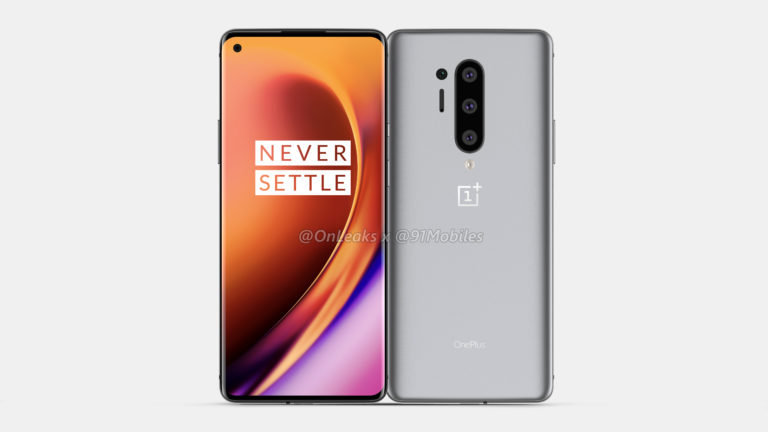
OnePlus 8 Pro renders

Not only the 120Hz display, the OnePlus 8 Pro is also expected to come with quad-camera setup on the back which will include an ultra-wide-angle shooter, a telephoto camera that will likely support 3x optical zoom, and a primary camera of an unknown resolution. The primary sensor could be of 64MP or 108MP.

The smartphone could be powered by Qualcomm’s upcoming Snapdragon 865 flagship chipset, coupled with at least 8GB of RAM and 128GB of internal storage. The renders of the phone have already surfaced online, giving us an early look at how the smartphone could look like with a punch-hole display.

The OnePlus 8 and 8 Pro smartphones are reportedly set to go official in the second quarter of next year, i.e. Q2 2020. We expect to get more details about these devices through leaks as the launch nears.

(Source)

Samsung Galaxy Fold smartphone sold out in just five minutes in China

After months of delay, Samsung’s ambitious foldable smartphone — Samsung Galaxy Fold — was finally made available for purchase, soon after the company fixed few issues related to its design and display.

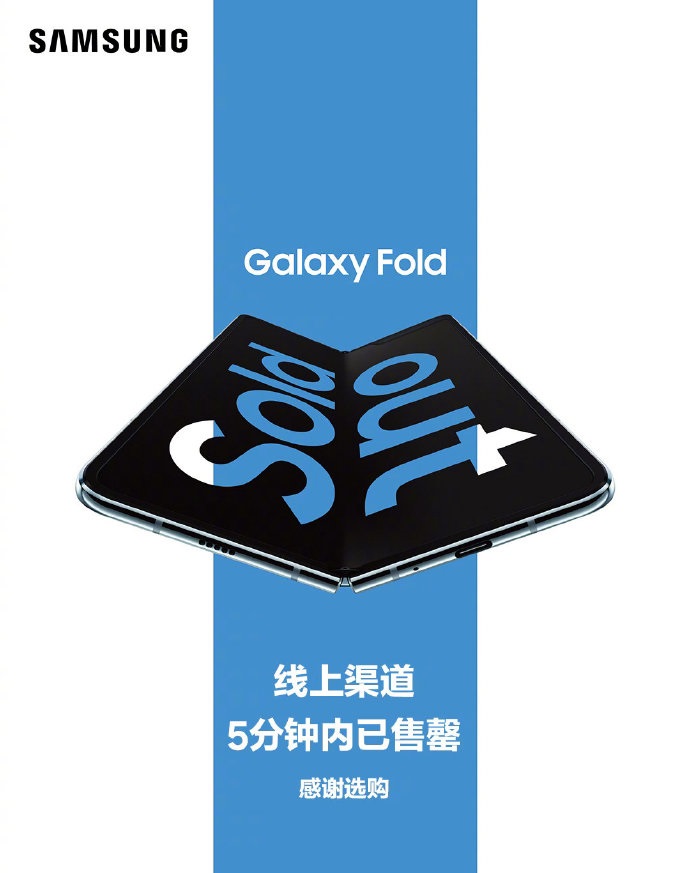
The Samsung Galaxy Fold smartphone went on sale in China today at 10:00 AM local time for a price of 15,999 Yuan which roughly converts to $2,293. Samsung has now announced that all the units were sold out in just five minutes.

Samsung Galaxy Fold Sold Out China

However, its noteworthy that the South Korean giant has not revealed how many units it sold during those five minutes. There’s a high possibility that the units were quite limited for the first sale in China but the exact number is not yet known.

Earlier, it was reported that the company has reportedly sold around 500,000 units of Galaxy Fold smartphones globally. On the other hand, its rival Huawei has launched Huawei Mate X foldable smartphone for a price of 16,999 Yuan (~$2,414) which went on sale last month in China.

The Samsung Galaxy Fold smartphone presents a 7.3-inch Infinity Flex Display with a 1536 x 2152 pixels screen resolution. In this mode, you can use three apps at the same time which Samsung calls Three-app Multitasking.

When folded into phone mode, it offers a 4.6-inch display with 840 x 1960 pixels screen resolution. It comes with a feature called App Continuity which automatically adjust an app when you switch screens. It is powered by a 7nm processor paired with 12GB of RAM and packs 512GB of internal storage using UFS 3.0 technology.

The phone comes equipped with a camera module that is made up of a 16-megapixel ultra-wide camera, a 12-megapixel telephoto camera, and another 12-megapixel wide-angle camera. On the front side, it comes with a 10-megapixel sensor for taking selfies and video calling. It runs the latest Samsung One UI with Android 9 Pie operating system out-of-the-box. The phone packs a 4,380mAh battery which is split into two units.


Realme X2 Pro Master Edition Cement variant to go on sale on November 11

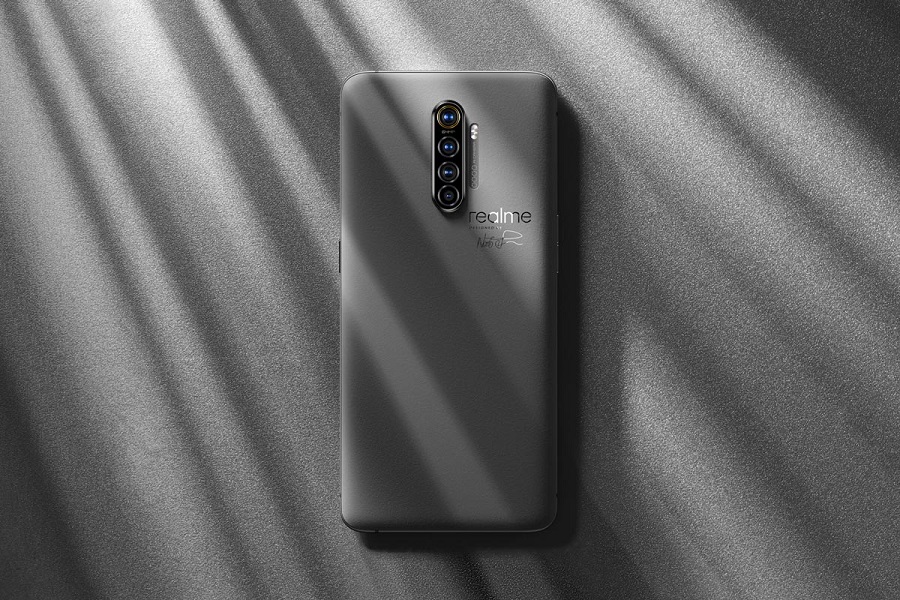
Last month, OPPO-backed Realme launched its first premium flagship smartphone in its home market China, dubbed as Realme X2 Pro. The company had also launched Realme X2 Pro Master Edition, which is a premium custom version of the device.

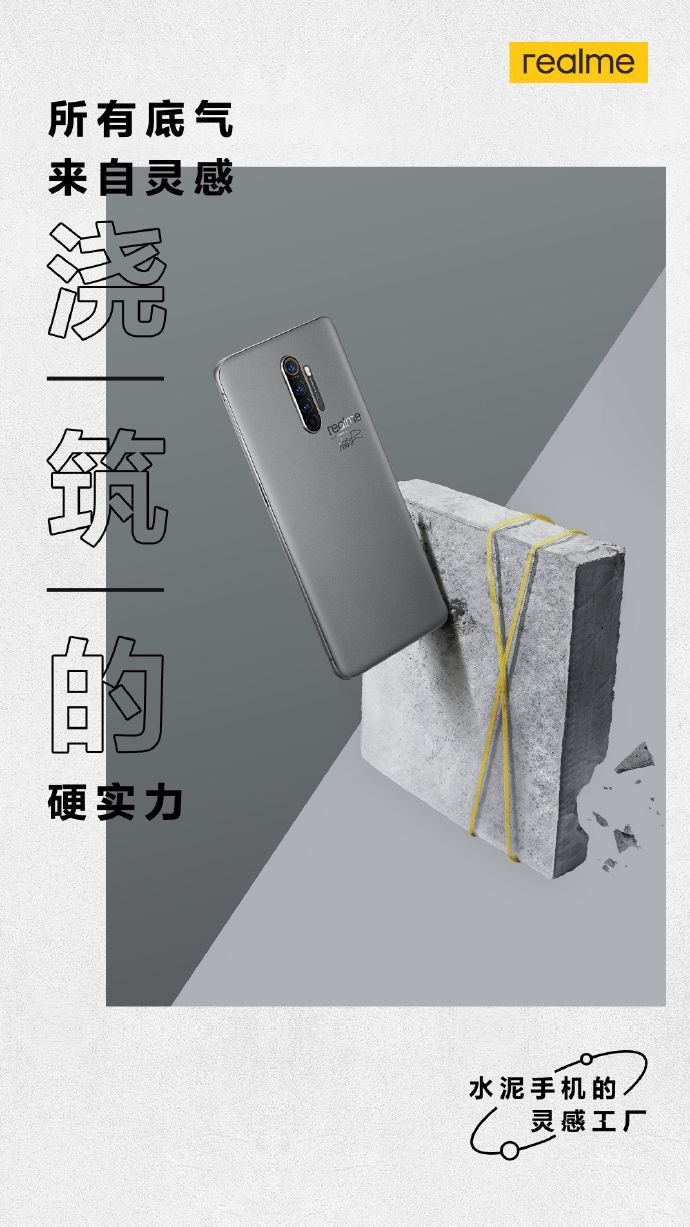
While the X2 Pro has been available for purchase, the Master Edition is scheduled to go on sale in China from 11th November. Now, the company has announced that the Realme X2 Pro Master Edition “Cement” variant will be available for purchase on 11th November.

Realme X2 Pro Master Edition Cement Version

This is interesting that the company has also announced the sale for just variant of the Master Edition — Cement. The other variant, which is called Red Brick variant, will apparently not go on sale next week.

For those who are unaware, the Realme X2 Pro Master Edition is crafted by Japanese designer Naoto Fukasawa and comes with a signature of the designer on the back panel. The Master Edition packs 12GB of RAM and 256GB of storage.

The smartphone carries a price tag of 3,299 Yuan (approximately $452) but at the time of launch, the company had said that the first 100 units of the Master Edition will be available with 100 Yuan discount (~$14).

Apart from the design and memory configuration, everything else remains the same on the Master Edition as the standard version. It flaunts a 6.5-inch Full HD+ AMOLED display with waterdrop notch and offers screen resolution of 1080 x 2340 pixels that carries support for 90Hz refresh rate. The smartphone promises a screen-to-body ratio of 91.7 percent.

The device also comes with an in-display fingerprint scanner that is claimed to unlock the device in just 0.23 seconds. Under the hood, the display is powered by Qualcomm Snapdragon 855 Plus chipset which is clocked 2.96GHz and packs Adreno 640 GPU.

Realme X2 Pro Master
Realme X2 Pro Master Edition “Cement” Version

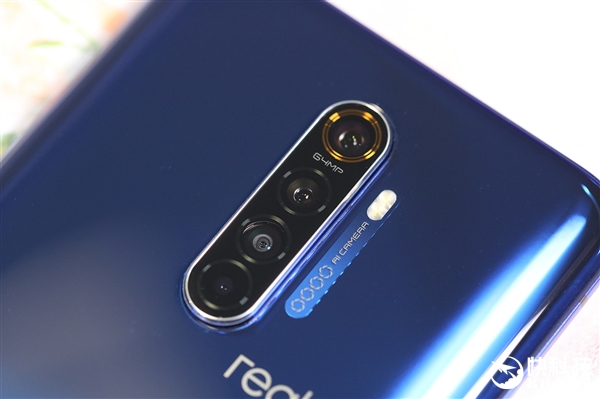
The phone features vapor chamber liquid cooling, superconducting carbon fiber multi-layer scheme, multi-layer graphite sheet and other heat-dissipating materials.  In the camera department, the phone has a quad-camera setup on the back that consists of Samsung GW1 64-megapixel lens with f/1.8 aperture, a telephoto lens of 13-megapixel with support for up to 20x hybrid zoom, a ultrawide lens of 8-megapixel with 115-degree field-of-view and a 2-megapixel depth sensor.

On the front side, the device features an AI driven 16-megapixel selfie shooter that has support for super night scene along with 4-in-1 pixel merging technology. Connectivity options on the device include Dual SIM, 4G VoLTE, Wi-Fi 802.11ac, Bluetooth 5.0, USB-C, dual frequency GPS, and NFC.

The phone is also equipped with stereo dual speakers coupled with Dolby Atmos and Hi-Res audio technologies. The device runs Android 9 Pie operating system out-of-the-box with ColorOS 6.1 on top. The phone features tactile linear motor which assists in 4D in-game vibrations. The handset is powered by a 4,000mAh battery with 50W SuperVOOC Flash Charging technology which can be fully charged in 35 minutes.


Xiaomi starts rolling out MIUI 11 stable version to second batch of devices

Last month, Xiaomi officially released its next-generation custom Android skin — MIUI 11 and has already started rolling out the new update to compatible devices. The company has revealed the roadmap for the phased rollout of this new version of MIUI for Xiaomi and Redmi smartphones.

After rolling out MIUI 11 for the first batch of devices, the company has now started offering the new stable version update to its second batch of devices in China in which Xiaomi has listed 15 devices.

MIUI 11

The list smartphones in the second batch which is scheduled to receive the new MIUI 11 stable version includes Mi 9 Pro 5G, Mi 6, Mi MIX 2, Redmi Note 7, Mi CC9 Mito Customized Edition, Mi 9, Redmi K20 Pro, Mi CC9, Redmi K20 Pro Premium Edition, Redmi Note 6 Pro, Mi Note 3, Redmi Note S2, Redmi Note 5A Standard Edition, Redmi Note 5A High Edition, and Redmi 7A.

In the first batch, the company had rolled out the update for twelve devices, which included Mi 9 Pro 5G, Mi 9 SE, Mi Mix 3, Mix 2s, Mi 8, Mi 8 Youth Edition, Mi 8 Explorer Edition, Mi 9 In-Display Fingerprint scanner variant, Mi 8 SE, Mi Max 3, Redmi K20, Redmi Note 7 Pro, and Redmi 7.

To recall here are some of the features that MIUI 11 introduces:

  • New Icons and smoother animations: With the latest MIUI 11, Xiaomi has tweaked the look of the icons found in the UI and they now have a minimalist yet appealing look. The company has also tweaked the animations which are slower in comparison to MIUI 10 but they now provide for a rich and immersive experience.
  • Ultra Power Saving Mode: As the name suggests, this mode is meant for prolonging battery life when running out of charge. According to the company, while in this mode, a device can provide a battery backup of upto 24 hours with just 5% of battery. When this mode is turned on, the device turns off the Wi-Fi module, hides non-essential apps, turns the display colour to black/white whilst restricting background processes.
  • Kids Mode: This mode is meant for parents who want to create a safe digital environment for their kids. While in kids mode, the device will only be able to run applications that are whitelisted by their parent or guardian. Besides, it also has an education space which Xiaomi claims is an intuitive manner to teach young kids.
  • Digital Wellbeing: With this feature, device owners will be able to check how much time they spend on each application and if needed they can cut down the usage time in order to maintain a healthy mental and physical well-being.
  • Earthquake alerts: With the help of data provided by regional offices, devices running MIUI 11 can notify its owner in case of an ongoing earthquake or after one takes place. Moreover, it will also provide additional details like nearby relief centres and places to avail medical service in case of a mishap.
  • Casting to external display: This feature will allow smartphones running on MIUI 11 to wirelessly cast onscreen content which includes games, videos, documents and other applications to TV, given the TV also supports this functionality. Xiaomi has thoughtfully designed this feature so users can even hide personal items to keep all sensitive things private. Moreover, the device can continue to cast even when its display has been turned off.

Apart from the update roadmap for the Chinese market, the company has also revealed timeline for MIUI 11 stable update for the users in India. You can find out more about the MIUI 11 update in India here.


Xiaomi Mi Note 10 Pro vs Huawei Mate 30 Pro vs Samsung Galaxy Note 10+: Specs Comparison

Xiaomi officially unveiled the Mi CC9 Pro alongside its Pro Premium Edition and launched them in the European market as the Mi Note 10 and 10 Pro. The strongest point of these smartphones is the camera department: they are already considered as the best camera phones by a lot of people, including experts from DxOMark. But is it true and is it worth choosing the Mi Note 10 Pro instead of other camera phones? Here we will try to let you find out by comparing it with the other best camera phones released recently: Huawei Mate 30 Pro and Samsung Galaxy Note 10+!

Xiaomi Mi Note 10 Pro vs Huawei Mate 30 Pro vs Samsung Galaxy Note 10+

Huawei Mate 30 Pro Samsung Galaxy Note 10+ Xiaomi Mi Note 10 Pro
DIMENSIONS AND WEIGHT 158.1 x 73.1 x 8.8 mm, 198 g 162.3 x 77.2 x 7.9 mm, 196 g 157.8 x 74.2 x 9.7 mm, 208 g
DISPLAY  6.53 inches, 1176 x 2400p (Full HD+), OLED 6.8 inches, 1440 x 3040p (Quad HD+), Dynamic AMOLED 6.47 inches, 1080 x 2340p (Full HD+), Super AMOLED
PROCESSOR Huawei Hisilicon Kirin 990, octa-core 2.86 GHz Samsung Exynos 9825, octa-core 2.73 GHz Qualcomm Snapdragon 730G, octa-core 2.2 GHz
MEMORY  8 GB RAM, 128 GB – 8 GB RAM, 256 GB – nano memory card slot 12 GB RAM, 256 GB – 12 GB RAM, 512 GB – micro SD slot 8 GB RAM, 256 GB
SOFTWARE  Android 10, EMUI 10 Android 9 Pie, One UI Android 9 Pie, MIUI
CONNECTIVITY  Wi-Fi 802.11 a/b/g/n/ac, Bluetooth 5.0, GPS  Wi-Fi 802.11 a/b/g/n/ac/ax, Bluetooth 5.0, GPS Wi-Fi 802.11 a/b/g/n/ac, Bluetooth 5.0, GPS
CAMERA  Quad 40 + 40 + 8 MP + TOF camera, f/1.6 + f/1.8 + f/2.4
32 MP front camera
Quad 12 + 12 + 16 MP, f/1.5-1.8-2.4 + f/2.1 + f/2.2
10 MP f/2.2 front camera
Penta 108  + 12 + 5 + 20 + 2 MP, f/1.7, f/2.0, f2.0, f/2.2 and f/2.4
32 MP f/2.0 front camera
BATTERY  4500 mAh, fast charging 40W, Fast wireless charging 27W 4300 mAh, fast charging 45W, Fast wireless charging 20W 5260 mAh, fast charging 30W
ADDITIONAL FEATURES Hybrid Dual SIM slot, reverse wireless charging, waterproof IP68, Face ID Hybrid Dual SIM slot, reverse wireless charging, waterproof IP68 Dual SIM slot

Design

In my opinion, the Horizon display found on the Huawei Mate 30 Pro and the punch-hole screen of the Samsung Galaxy Note 10+ make them much more attractive than the Mi Note 10 Pro, if we talk about the design. Despite it has a wider notch, I personally prefer the Huawei Mate 30 Pro because of its Horizon display with extremely curved borders allowing the absence of physical keys since they support the side touch technology. Note that Huawei Mate 30 Pro and Samsung Galaxy Note 10+ are waterproof and dustproof with the IP68 certification, while Xiaomi Mi Note 10 Pro does not provide any kind of water and dust resistance.


Display

There is no doubt about the fact that Samsung Galaxy Note 10+ has the most advanced display. First of all, it supports a higher Quad HD+ resolution. Second, it has a wider diagonal and the support to the HDR10+ standard which is not supported on Huawei Mate 30 Pro and Xiaomi Mi Note 10 Pro. Last but not least, Samsung Galaxy Note 10+ supports the S Pen for handwriting and drawing with up to 4096 pressure levels. Samsung Galaxy Note 10+ has one of the best AMOLED panels you can find on a mobile device.


Hardware/Software

Besides boasting the best display, Samsung Galaxy Note 10+ also comes with the most advanced hardware side. It is powered by either the Snapdragon 855 or the Exynos 9825 chipset, it boasts up to 12 GB of RAM and up to 512 GB of internal storage which you can furtherly expand with a micro SD. The Note 10+ also comes in a 5G variant, just like the Mate 30 Pro. Talking about the Mate 30 Pro, Huawei’s flagship takes the second place with its Kirin 990 chipset and up to 8 GB of RAM. In terms of hardware, Xiaomi Mi Note 10 Pro is just a mid-ranger due to its Snapdragon 730G chipset, and this is its weak point.


Camera

While there is no way Xiaomi can compete when it comes to performance, it sports the most impressive camera department. According to DxOMark, it is the best camera phone ever alongside the Huawei Mate 30 Pro. The Mi Note 10 Pro sports a 108 MP rear penta-camera with 5x optical zoom, while the Huawei Mate 30 Pro has a quad-camera with two amazing 40 MP sensors. While both are superior when it comes to rear cameras, Samsung Galaxy Note 10+ is able to take better selfies.


Battery

Xiaomi Mi Note 10 Pro is the winner even when it comes to battery life since it boasts a mammoth 5260 mAh battery. Unfortunately, it does not support wireless charging and reverse wireless charging, unlike Huawei Mate 30 Pro and Samsung Galaxy Note 10+.


Price

Xiaomi Mi Note 10 will start from €599/$662 globally, Huawei Mate 30 Pro is still not available globally, while Samsung Galaxy Note 10+ starts from €1129/$1099. The most complete device is the Samsung Galaxy Note 10+, despite Mi Note 10 Pro has a higher value for money.


Xiaomi Mi Note 10 Pro vs Huawei Mate 30 Pro vs Samsung Galaxy Note 10+: PRO and CONS

Huawei Mate 30 Pro

PROS

  • Horizon display with side touch
  • 5G (optional with integrated modem)
  • Reverse wireless charging
  • Face ID
  • Android 10

CONS

  • Worse display


Xiaomi Mi Note 10 Pro

PROS

  • Not excessive price
  • Best cameras
  • Huge battery

CONS

  • Worse hardware


Samsung Galaxy Note 10+

PROS

  • Best and bigger display
  • Reverse wireless charging
  • S Pen
  • 5G (optional)

CONS

  • Big dimensions

ZTE launches Blade A7 Prime and Blade 10 Prime in the US

ZTE has announced two new phones for the US. The Blade A7 Prime is a $99 phone with entry-level specs while the $179 Blade A10 Prime packs more powerful specs and features.

ZTE Blade A7 Prime featured


Blade A7 Prime

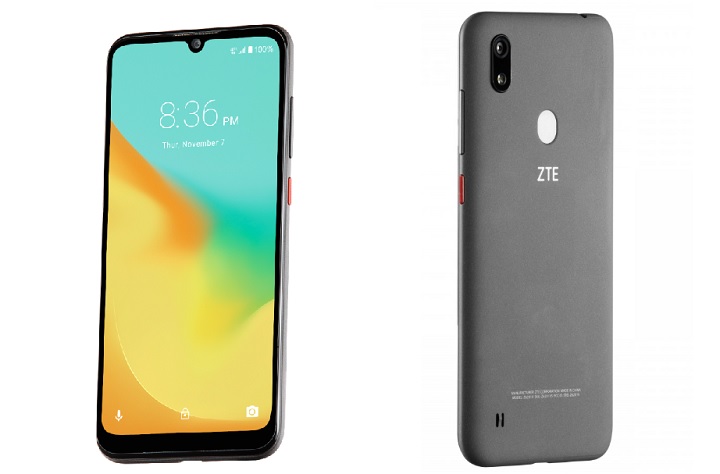
The Blade A7 Prime has a 6.09-inch screen with an HD+ resolution and a waterdrop notch. It has a thick chin and a red power button as we have seen on a lot of ZTE phones this year.

The phone is powered by an Helio A22 processor paired with 3GB of RAM and 32GB of expandable storage. A single 16MP camera sits on the back along with a fingerprint scanner while a 5MP camera is in front for selfies. The back cover is made of plastic with a textured finish that reminds one of the OnePlus One’s SandStone finish. There are two holes at the bottom of the phone for the speaker.

The ZTE Blade A7 Prime runs Android 9 out of the box. It packs a 3200mAh battery and charges via a USB Type-C port. It also has an audio jack at the top and DTS Sound.

You can purchase the phone unlocked from the American carrier, Visible.

Blade A10 Prime

Blade A10 Prime

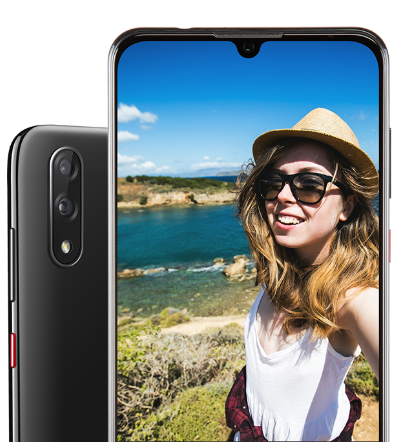
The Blade A10 Prime comes with a bigger 6.3-inch screen with an FHD+ resolution and a 19:9 aspect ratio. Like the Blade A7 Prime, there is also a notch but it is home to a 16MP camera.

There is a more powerful Helio P60 processor under the hood along with 3GB of RAM and 64GB of internal storage that can be expanded (up to 2TB). A 16MP + 5MP dual camera combo sits on the back. You also get a fingerprint scanner and a 3200mAh battery. The Blade A10 Prime has a USB Type-C port, an audio jack, and DTS Sound. It runs Android Pie out of the box, and just like the A7 Prime, it is compatible with hearing aids (M4/T3).

The phone is available on Visible for $179 starting today. There is only one color variant available and it is black.


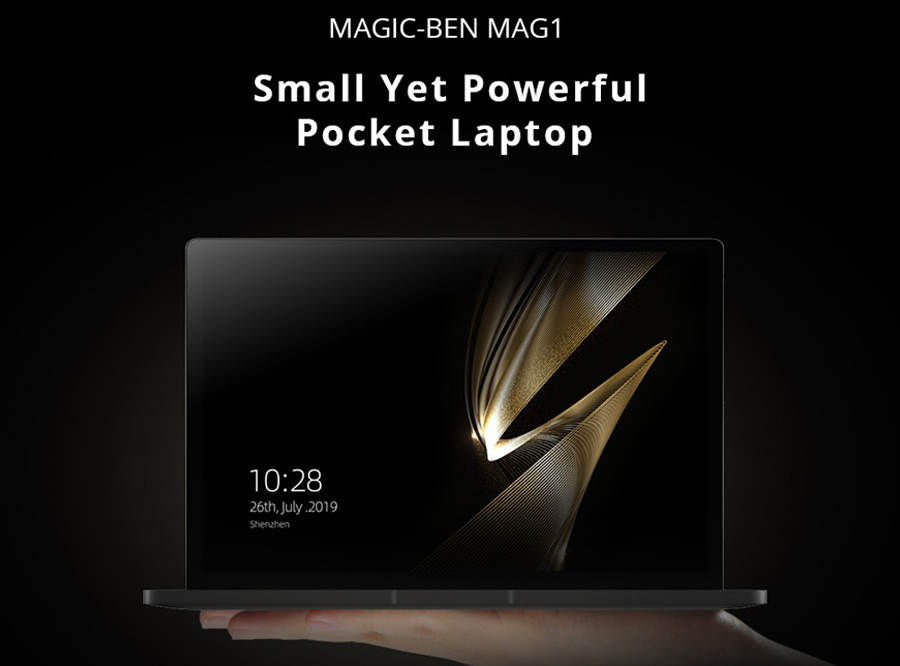
Get Great Discounts on the Magic-Ben MAG1 Pocket Laptop from GeekBuying [Coupons]

China’s popular e-tailer GeekBuying has launched a new promotion dubbed The 2019 11.11 Sale Shopping Festival, dolling out great discounts on a wide range of products across various categories.

Magic-Ben MAG1

The shopping festival gives you a chance to check in to share $11,000,000 coupons, in addition to winning marvelous gifts such as the Xiaomi Redmi headset, Tronsmart T6 Plus Bluetooth speakers, AMAZFIT GTR smartwatch, and Xmas LED Light. The products have been placed under specific categories so that consumers do not end up spending a lot of time searching for their favorite device.

GeekBuying 11.11 Shopping Festival

Among a myriad of other top-notch products, the first section called Flash Deals includes two well-received variants of the Magic-Ben MAG1 pocket laptop that are currently available for considerably lowered prices. We will not only shed light on these discounts but also show how you can save more money at checkout.

Magic-Ben MAG1 4G LTE Pocket Laptop [8GB RAM+256GB ROM]

Featuring 8GB of RAM, along with 256GB of internal storage space, the aforesaid model usually retails for $907.99, but as part of the recently kicked-off 11.11 Sale on GeekBuying, you can buy it for just $709.99. Furthermore, you can even extend this 22 percent discount by applying coupon code MagicBen4GL.Magic-Ben MAG1 Mini Laptop


The coupon helps you get an extra $10 off by bringing the already lowered asking price of the Magic-Ben MAG1 further down to just $699.99 even before you place your order. You can click here to place your order and get a discount. If you are a new user, do not forget to take advantage of the 2% OFF New User Coupon before clicking the ‘Place Your Order’ button.

Magic-Ben MAG1 4G LTE Pocket Laptop [16GB RAM+512GB ROM]

Those who do not mind shelling out a few extra dollars for more power under the hood can go for the larger model that ships with 16GB of RAM and offers a hefty 512GB of internal storage capacity so that you can save all your multimedia content without worrying about running out of space. There are no prizes for guessing, the aforesaid model doesn’t come cheap.

To get your hands on this considerably larger Magic-Ben MAG1 variant, you’d normally need to spend a whopping $1047.99, but much to the relief of those on a tight budget, GeekBuying is offering it for just $873.99. This is a 17 percent drop in the device’s original asking price.

Magic-Ben MAG1 Mini Laptop

On top of that, you can grab an extra $ off simply by applying coupon code MagicBen4GH at the time of checking out. The coupon enables you to reduce the retail price of the slightly larger Magic-Ben MAG1 laptop variant to only $859.99 during the checkout process.

If this would your first order with GeekBuying, you can use the 2% OFF New User Coupon and save more money. You can follow this link to and place your order without wasting time as the promo will be valid for only two days.

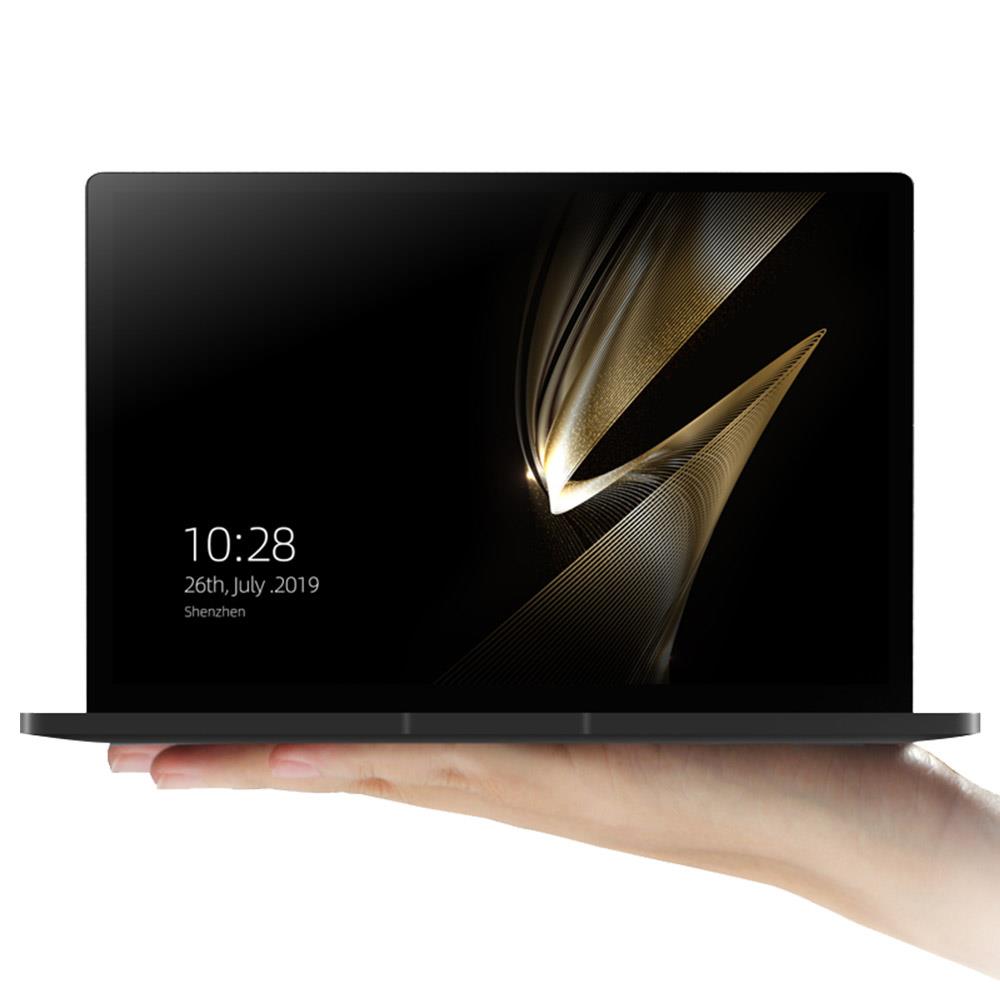
The compact, yet powerful Magic-Ben MAG1 laptop boasts an impressive array of features. Here are a few of them:

  • 8.9-inch Touchscreen with 2560×1600 pixels resolution
  • Fingerprint recognition for added safety
  • Intel Core m3-8100y, Dual-Core processor
  • 8600mAh high-capacity battery
  • Windows 10 OS with latest software updates
  • Dual Band 2.4GHz / 5.0GHz WiFi

Buy Alfawise LS02 1080P FHD Dash Cam for Just $74.99 from Gearbest [Coupon]

A dashcam is an important car accessory that records the video of the vehicle on the driving road. It gives crucial evidence in case of car accidents and provides a much-needed safety to the driver.

Alfawise LS02 1080P FHD Dash Cam

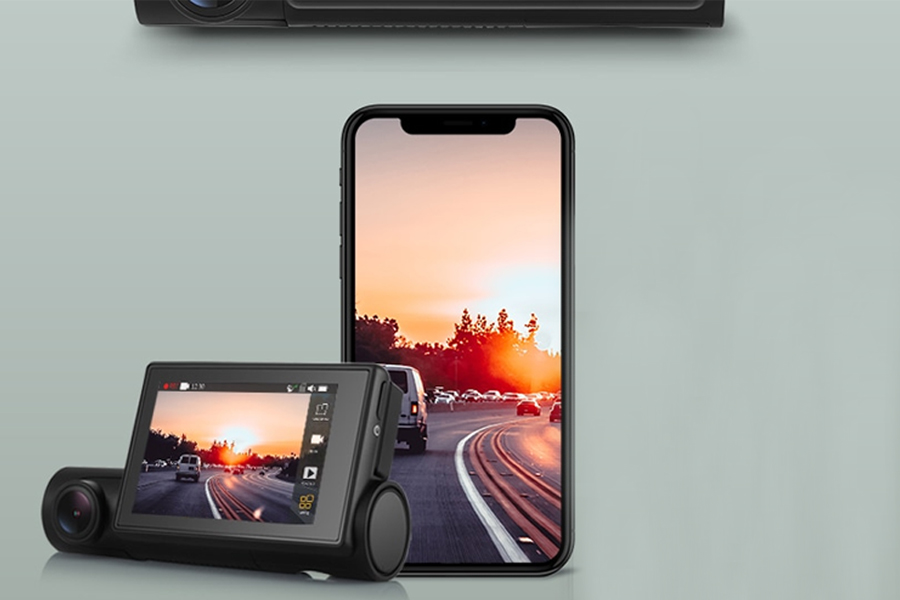
If you’ve restlessly been searching for a budget car DVR that doesn’t compromise on performance, the Alfawise LS02 1080P FHD dash cam might just fill the bill. With a full HD video processor under the hood, the Alfawise LS02 records crystal clear images, as well as your locations using its GPS function.

Loaded with a slew of similar useful features, the Alfawise LS02 understandably carries a $100.26 price tag, but Gearbest is giving you a chance to buy it for a reduced price of only $85.99. As if that weren’t enough, you can extend this 14 percent discount by applying coupon code ILALFA1014.

The aforesaid coupon enables you to save $11 more at the time of checking out. In other words, you can bring the already reduced asking price of the Alfawise LS02 further down to $74.99 simply by applying the coupon. Moreover, you can get an add-on item for just $2.11 if you spend $20, as part of Gearbest’s latest promo.

Alfawise LS02 Dash Cam 1080P Smart WiFi Car DVR Dual Camera and Super capacitors- Black

This feature-rich dashcam sports a 3.0 inch large OLED touch screen, which is large enough to operate conveniently. Furthermore, it houses a dual-camera setup (front and back) for all-around recording during your driving trip. It helps avoid disputes

The Alfawise LS02 supports GPS and WiFi, allowing you to track your location on the map, and it can be easily controlled using an app. Powered by supercapacitors, the dashcam comes with a built-in SONY 1080P IMX370 STARVIS image sensor that captures ultra-clear images even in dark environments.

To know more about the Alfawise LS02 1080P dashcam and to place your order, all you need to do is to follow this link without wasting time. With several pieces already sold out at the time of writing, this promo is slated to end in just four days.

OnePlus continues to soar as India’s Premium phone market hits record high

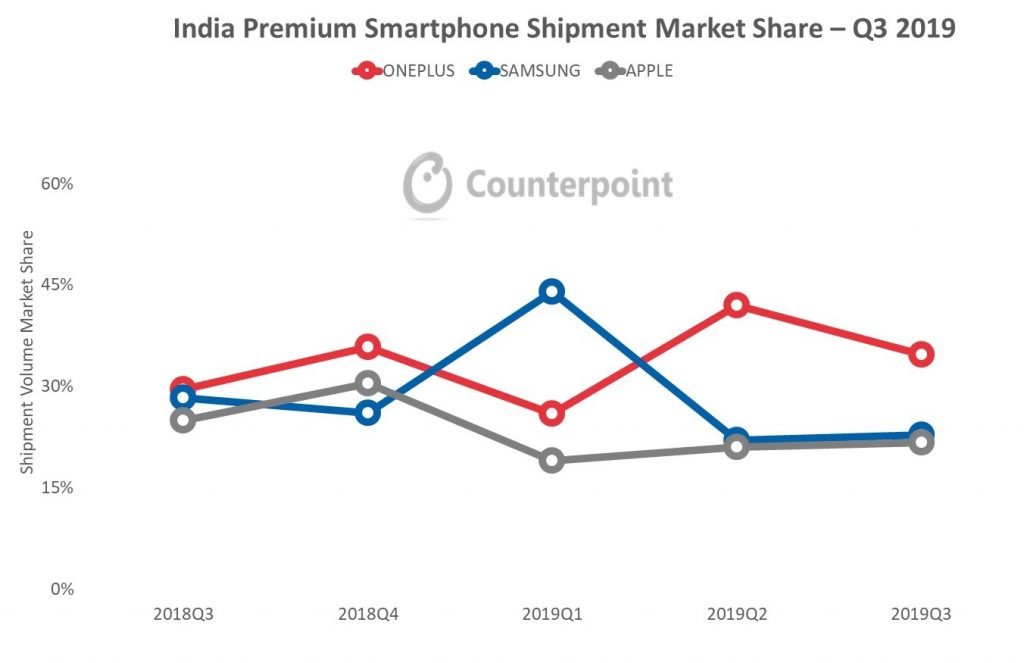
Recent data from research firm Counterpoint Research shows that shipments in the premium smartphone segment grew astronomically by 66% YoY. This segment is comprised of smartphones with retail prices between Rs. 30,000 (roughly US$493) or higher

OnePlus 7T Pro 5G McLaren

According to the report, the segment’s massive growth was aided by new launches, aggressive offers, and channel push, before the important festive season. Smartphone OEMs had begun to promote aggressively mouthwatering offers on premium smartphone well-ahead of the festive season, most of them as early as the last week of September. Offers included payment plans (EMI), cashback and exchange offers.

The data also showed that OnePlus‘ rise in the premium smartphone market continued in Q3 2019. The OP 7T and 7T Pro played huge roles in giving OnePlus its widest ever portfolio in the Indian market which accounts for a quarter of its global shipments. The OnePlus 7 and OnePlus 7 Pro were the best-selling and third best-selling models during the quarter, respectively.

India Q3 2019 presmium smartphone market share CounterpointOnePlus cornered a market share of 35% to lead the premium market segment, representing a 95% increase YoY. This is followed by Samsung with a 23% market share and Apple in third place with 22% market share. OnePlus grew faster (+95%) than the segment (+66%) and remained the fastest-growing brand, driven by strong performances of both the 7 and 7T series. Samsung shipments were helped by the new Galaxy Note 10 series, while the price cut for iPhone XR drove Apple’s shipments. However, the cumulative share of top three brands declined to 79% in Q3 2019 as compared to 83% in Q3 2018, highlighting a growing presence of other brands in the segment, mainly OPPO, Xiaomi, and Asus. More than 20 flagship phone variants launched in Q3 2019, the highest ever in a single quarter.

Counterpoint Research notes that the Indian premium smartphone market still has a long way to go despite the amazing Q3 2019 outing. The segment contributed just 5% of the entire market in terms of volume. In comparison, the premium phone segment accounts for 50% and 22% of the smartphone market in the US and China respectively.


(source)


Huawei Y9s full specs published on official site

Just yesterday, we reported that Huawei’s Y9 series will be getting a new member called the Huawei Y9s. Today, the phone’s full listing has appeared on Huawei’s official website.

Huawei Y9s featured

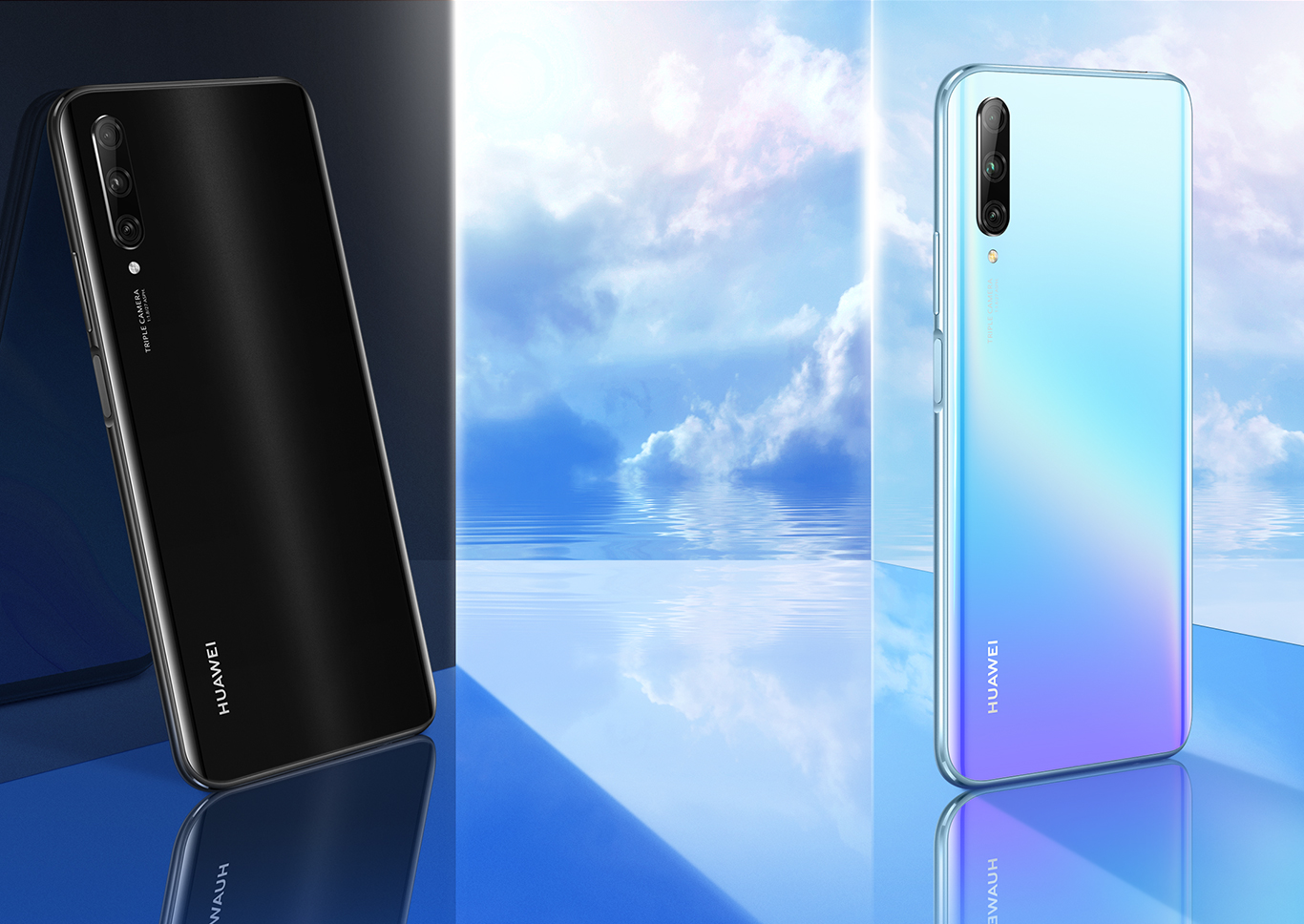
The Huawei Y9s has the same 6.59-inch FHD+ Ultra FullView Display as the Huawei Y9 Prime 2019 that launched in the first half of this year. It also retains the pop-up selfie camera design. However, there have been some changes in the design.

The phone has a side-mounted fingerprint scanner buried under the power button and its triple rear cameras share the same housing. It also ditches the two-tone design for a single finish Midnight Black and a color-changing Breathing Crystal.

Huawei has swapped the 16MP sensor of the Prime model for a 48MP f/1.8 sensor. You still get an 8MP f/2.4 ultrawide angle camera with a 120° field of view and a 2MP f/2.4 depth sensor. The selfie camera also remains a 16MP sensor but with an f/2.2 aperture now.

Huawei Y9s colors

The Huawei Y9s is powered by the same Kirin 710F processor and it gets 6GB of RAM and 128GB of storage which can be expanded via a MicroSD card slot (512GB max.). The phone packs a 4000mAh battery with support for 10W charging via a USB Type-C port.

Huawei will ship the phone with EMUI 9.1 out of the box based on Android 9 Pie. The Huawei Y9s should launch soon and should have a price tag higher than the Y9 Prime 2019 as a result of the upgraded camera and larger RAM.


(Source, Via)

Oukitel Y1000 full specs released, coming November 11th at just $99.99 (video)

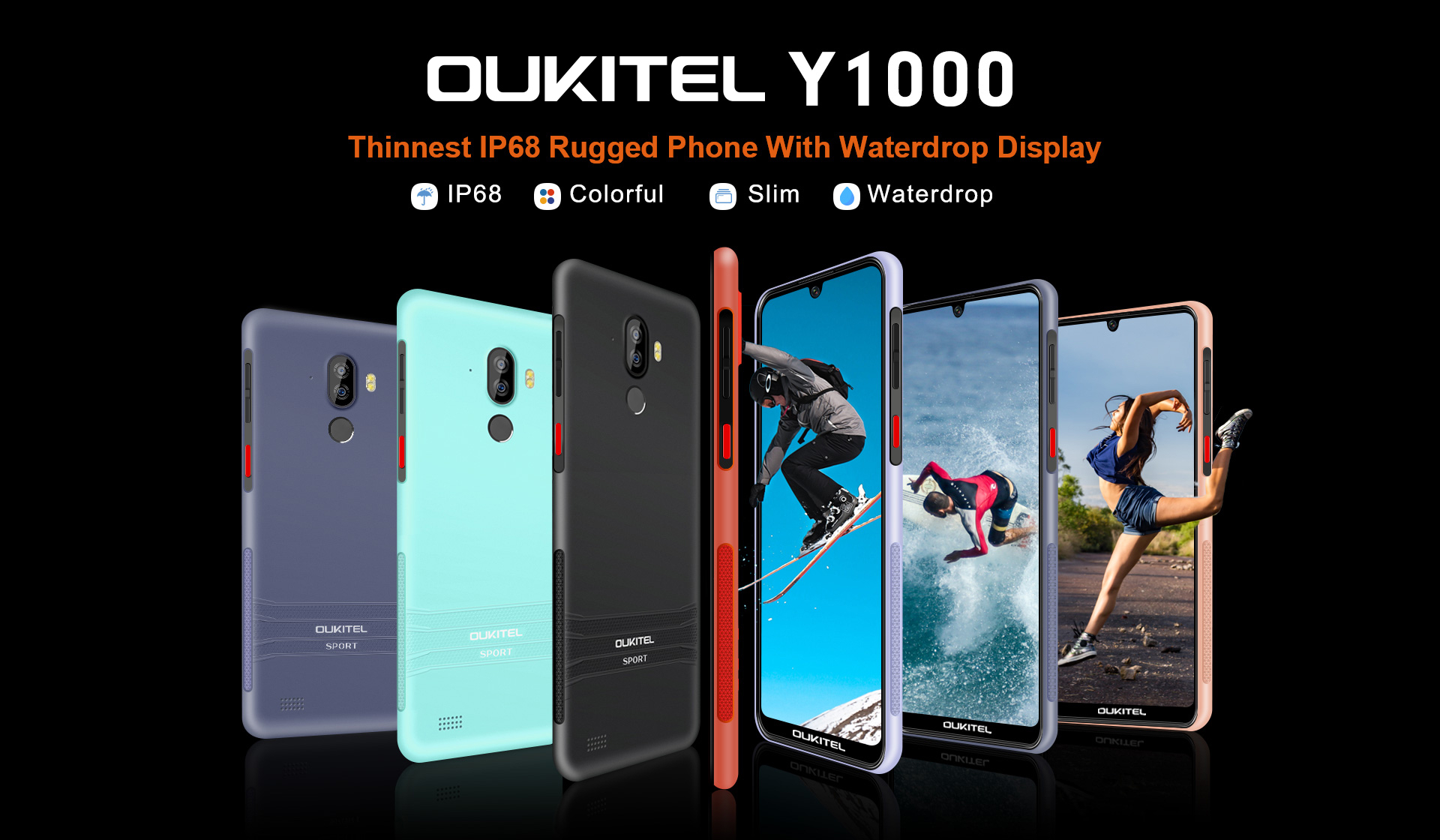
Oukitel’s “Young Series” just recently got another member as the company announced the new sports tri-proof smartphone, Oukitel Y1000. Doing away with the cumbersome weight of traditional rugged smartphones and gaining a super-thin body, it becomes a new standard in the rugged smartphone market. Today, the Chinese manufacturer announced that the official presale will begin on 11.11 on the occasion of the global shopping festival.


Breakthrough in Design

Moving away from the traditional manufacturing methods of rugged phones, the Y1000 combines a layer of hard PC+GF cover and another layer of soft TPU material cover. When it drops, the phone is elastic to protect itself. Also, the USB port doesn’t need a plug as it is IP68 waterproof by itself. In addition, the frame around the screen sits a bit higher than the glass so that the screen remains intact when the phone falls facing down.

Oukitel Y1000

Of course, besides the USB port, the whole device is waterproof, dust-proof and shockproof, and it is giving a good hand feel. The whole body is quite thin and slim at only 11.2mm and weighs just 212g. Those numbers are 30% and 39% less than, let’s say, Oukitel WP2 which is a traditional rugged smartphone.


Big battery for a whole day of use on a single charge

Oukitel Y1000

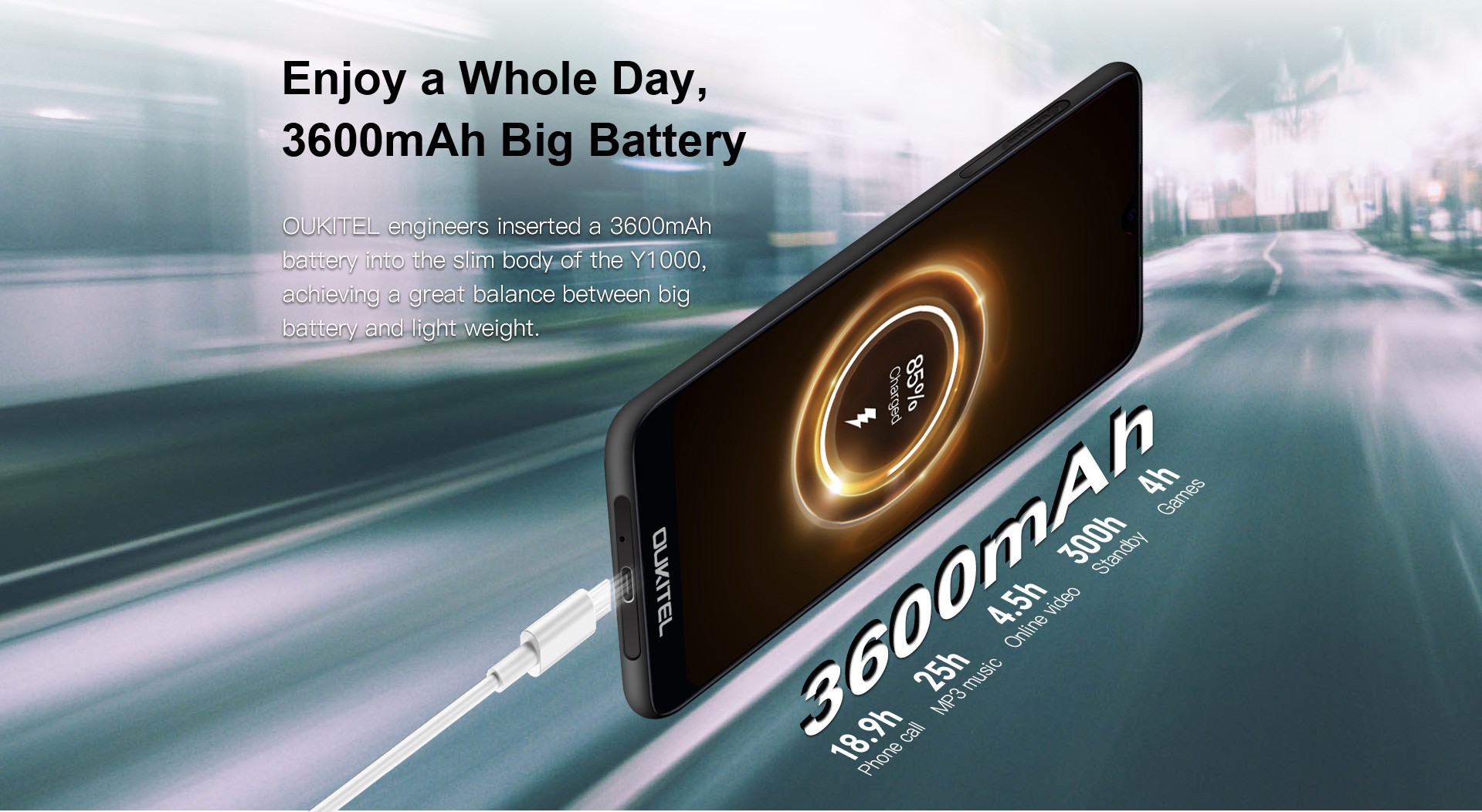
A thin body has its disadvantages too, as it cannot host a very large battery. Hence, the 3600mAh battery of the Y1000 is enough for a whole day’s use. If you love to listen to music while exercising, it supports up to 25 hours of music playback. This is achieved due to the MediaTek MT6580P quad-core SoC that is very power-conservative.


Memory

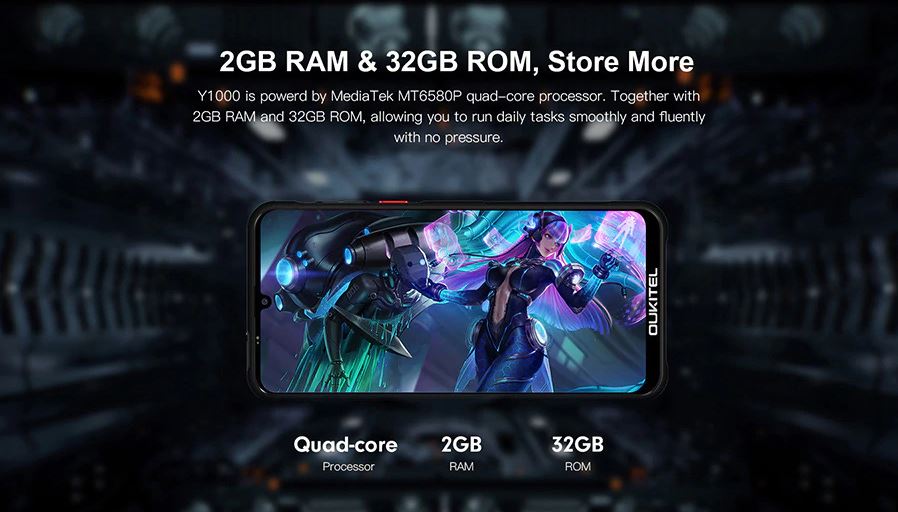
Oukitel Y1000The Y1000 is a 3G entry-level smartphone when it comes to hardware specs. It is powered by the MT6580P quad-core SoC backed by 2GB of RAM and 32GB internal storage that can be expanded up to 128GB more via the microSD slot. Also, there is an 8MP/2MP dual rear camera and a 5MP selfie shooter placed in the waterdrop notch.

Oukitel Y1000

Oukitel Y1000 will go on presale with a price of just $99.99 instead of the $129.99 retail price on November 11th and you can get it on the Oukitel Official Store on Aliexpess. Check out the detailed specs on the official product page.


iPhone 11 Pro Max scores 117 on DxOMark, behind Mi CC9 Pro Premium

After nearly two months following the launch of the iPhone 11 Pro Max, DxOMark finally releases its camera review for the Apple flagship. The phone scores high, beating several other flagships announced this year but it ends up third on the list with a score of 117, losing to the Huawei Mate 30 Pro and the still-fresh-out-of-the-oven Xiaomi Mi CC9 Pro Premium Edition.

Apple iPhone 11 Pro Max


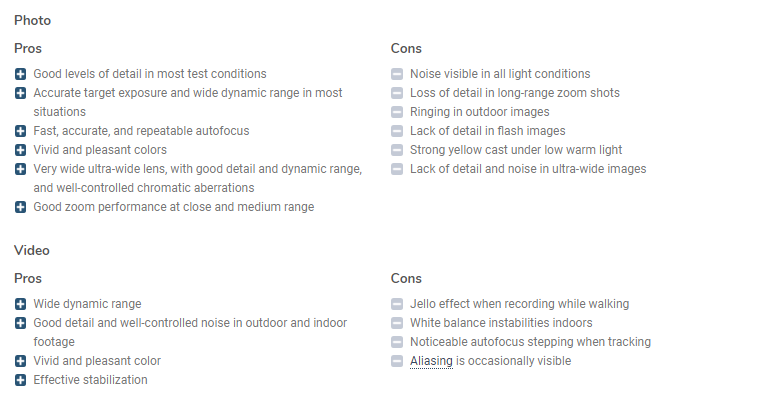
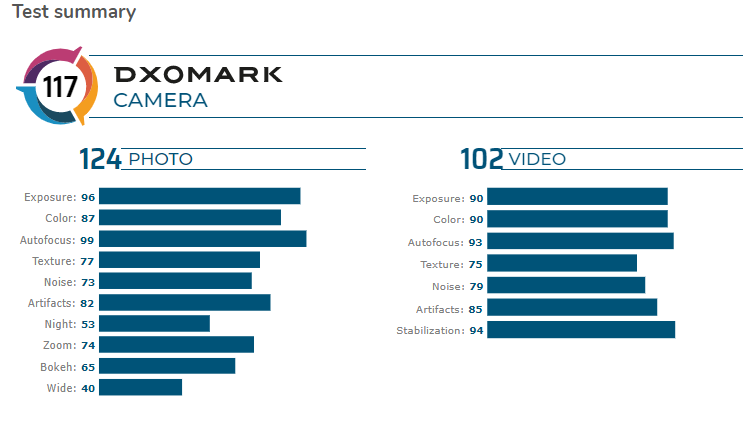
The iPhone 11 Pro Max’s score of 117 is made up of a photo score of 124 and a video score of 102. Its video score beats that of the Mate 30 Pro and ties with that of the Mi CC9 Pro Premium Edition making it and the Xiaomi the best phones for video recording but it loses to both phones when it comes to photos.

A breakdown of the photo score shows the iPhone 11 Pro Max is great at exposure, color accuracy, and autofocus but it scores low when it comes to very low-light photos and this is because of the Mate 30 Pro and the Mi CC9 Pro sporting much larger image sensors. It is important to state that the iPhone is better than the Huawei flagship and Xiaomi premium mid-range phone at taking wide-angle photos.

iPhone 11 Pro Max DxOMark

DxOMark praises the new Deep Fusion feature as it helps with rendering fine details such as freckles, the hair on pets, and distant foliage, making it a great at taking landscape and portrait photography. However, while it is better at noise reduction than the iPhone XS Max, it cannot keep up with the competitors.

Even though it scores lower than the Mate 30 Pro and Xiaomi CC9 Pro in low-light, the iPhone 11 Pro Max does a fantastic job when taking photos at night. DxOMark mentions that you are better off with the flash auto mode turned off when taking night photos so you don’t get overexposed photos.

For videos, the iPhone 11 Pro Max renders colors well and its video HDR allows it to capture details excellently. It is also good at video stabilization but surprisingly not as good as the iPhone XS Max, no thanks to a more visible jello effect.

Overall, the iPhone 11 Pro Max earns its spot as one of the top five phones with the best camera. If it had a larger sensor and better zoom, it most likely will be at the top of the list.


(Source)