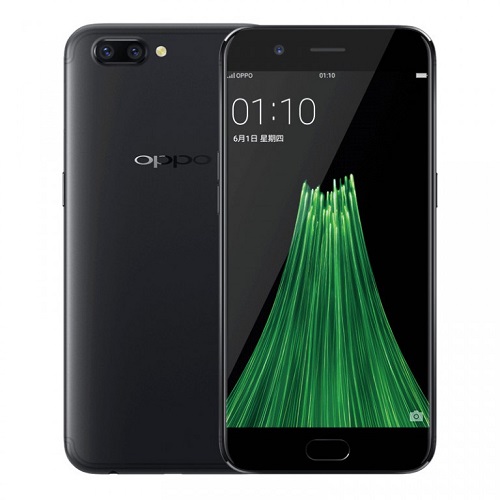
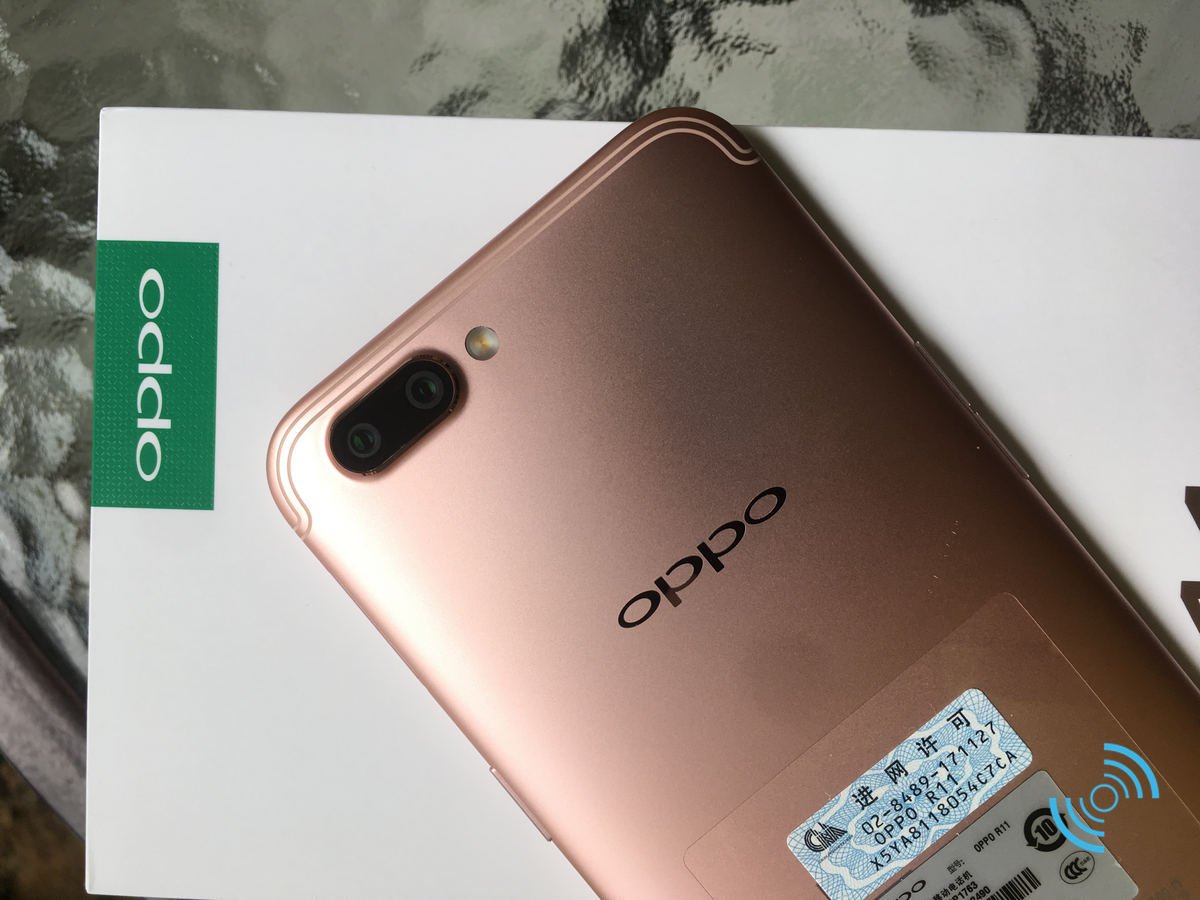
The OPPO R11 and R11 Plus were unveiled a few weeks ago and they are already on sale in China. For those outside China, OPPO has announced that its first stop is Taiwan.
The dual camera smartphone is the world’s first Snapdragon 660 device. It has a 5.5-inch 1080p display, 4GB of RAM and 64GB of storage. The dual camera combo includes a 16MP f/1.7 Sony IMX398 sensor and a 20MP f/2.6 Sony IMX350 sensor with telephoto lens. The front camera is a 20MP f/2.0 sensor.
OPPO bundles the R11 with a 3000mAh battery with its VOOC fast charge technology. There is Android 7.1.1 Nougat on board with OPPO’s Color OS 3.1 on top.
Before the introduction of Android Nougat moniker, it was referred to as Android 7.0 and Android N. Now, when the tech enthusiasts are speculating on the launch name of Android 8.0, a leaked information has hinted that it would be launching as Android Oatmeal Cookie. However, previous speculations claimed that Google’s Android 8.0 would be introduced as Android Oreo.
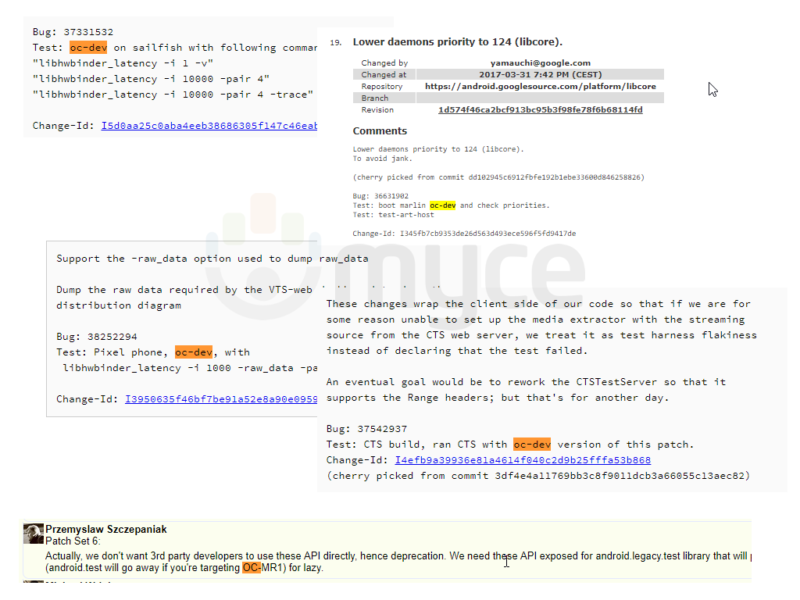
The Android 8.0 source code and commit logs contains some references to “oc-dev.” It is now being speculated that “oc” may probably stand for “Oatmeal Cookie.” This is not just one evidence that claim that Android 8.0 would be called Oatmeal Cookie. It is said that there were references of Oatmeal Cookie at the Google I/O 2017 event that was held in May this year.
However, before accepting Android 8.0 as Oatmeal Cookie, one should also consider that it could be a temporary codename that is being internally used to referred to Android 8.0. In 2013, Google had referred to Android 4.4 as Key-Lime Pie, but it was actually launched as Android KitKat. Hence, there is a possibility that Google introduce Android 8.0 with a different moniker.
Here are the references of Oatmeal Cookie in Google I/O slide
Looks like at least internally Android O is “Oatmeal Cookie.” Noticed this in an I/O slide. pic.twitter.com/9AZD0Zdc8l
Oatmeal Cookie appears at I/O as (presumably) the internal codename for O, so I’m still hopeful for a release name of Android Oreo 🙂 pic.twitter.com/LRHihJvtNs
As far as Android Oreo moniker is concerned, it seems that it won’t be happening because Google and Nabisco reportedly could not development an agreement on using “Oreo” name for Android 8.0. The first developer preview of Android 8.0 was released in March. In May came its second developer preview. Earlier this month, the third Android 8.0 developer preview was released. Google is expected to release the last developer preview soon and in the third quarter of this year, Google will be releasing the final version of Android 8.0 At that time, its actual moniker will be announced.
It goes without saying that the Google Pixel 2 and Pixel XL 2 smartphones will come preinstalled with Android O. Also, the Android O be also brought first to last year’s Pixel and Pixel XL smartphones. In 2016, the first non-Google branded smartphone to deliver Android 7.0 out-of-the-box experience was LG V20. Speculations have it that the LG V30 that is rumored to get announced on Aug. 31 would be the first non-Google phone to arrive preinstalled with it.
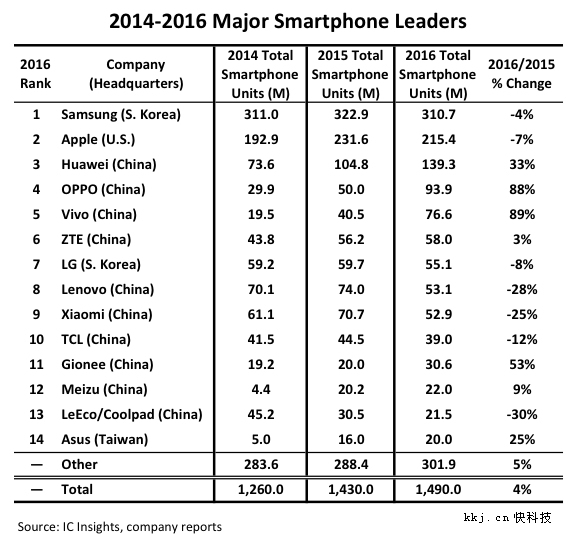
IC Insights, a semiconductor market research company based in the US, published a report of 2016’s top smartphones shipments. According to the source, China’s smartphone companies have been a dominating force in the market, holding a total of 11 places out of the 14.
Among the Chinese manufacturers include, Huawei ranked 3rd, OPPO 4th, Vivo 5th, with ZTE holding 6th. In addition to this Lenovo, Xiaomi, TCL, Gionee, Meizu and LeEco/Coolpad came accordingly in order.
Last year’s report for Xiaomi’s shipments saw a decrease to 52.9 million units, down since 2015 by 25%. However, this year speculation believes that Xiaomi has recoiled back significantly.
According to the industry analyst, Kevin Wang, in Q2 2017, Xiaomi sales have reached 23 million, predicting 3Q17 will have another 28 million, and closing 2017 the expected figure will be expected to exceed 80 million shipped units.
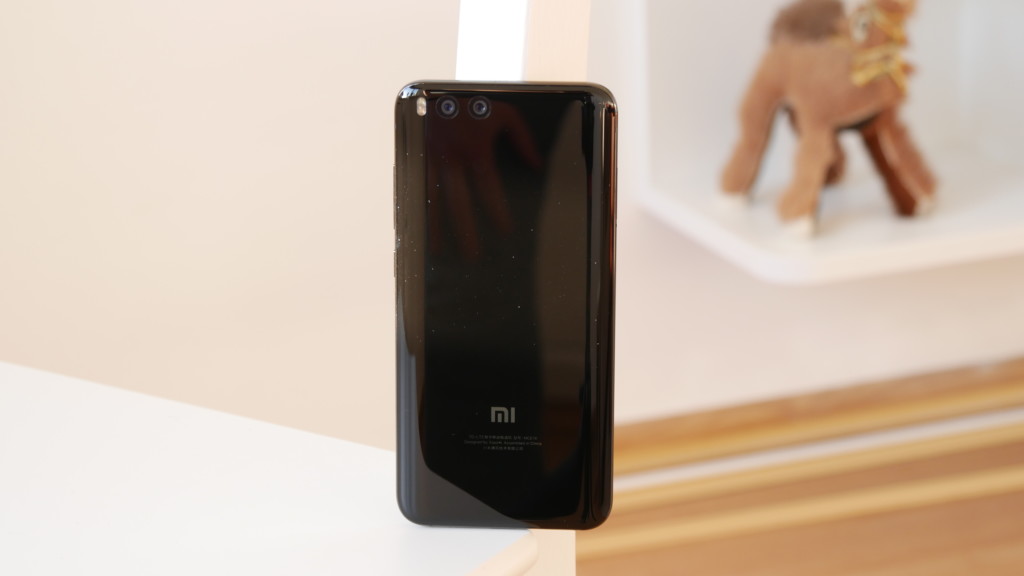
Xiaomi Mi 6
What is also interesting to see is the rapid increase in popularity for companies OPPO and Vivo, seeing massive increases of 88% and 89%, respectively. The next largest increase has been Gionee by 53%.
OPPO and Vivo, both owned by BBK Electronics, have seen this large influx of shipments has been primarily due to home market interest in the photography/selfie smartphones. Phones such as Oppo’s R-series and Vivo’s V/Y-series are expected to be the key drivers to the rapid shipment increase between 2015 and 2016. This hasn’t been limited to the home market however, international shipments to countries such as India, Indonesia and in Oppo’s circumstance, with Australia and selected parts of Europe have also played important roles in boosting the company’s shipments.
OPPO R11 Dual Cameras
Other Chinese manufacturers such as ZTE and Meizu have seen small but healthy increases to their shipments, however, it is uncertain what 2017 will bring, depending on what compelling devices they plan to release before the turn to 2018.
Whilst some Chinese manufacturers have seen positive outcomes after 2016’s report, companies such as Lenovo and especially LeEco’s side have felt the pinch in the fall in consumer demand for their phones. The backslash to LeEco’s business plan into the US has now left them tumbling on the leaderboard and unless the company’s negative shipments growth change or they improve their market approach, it is uncertain whether they’ll be appearing in next year’s report.
Lenovo felt similar effects especially in international shipments, where the company had dissolved the ZUK spinoff.
Have IC Insights’ Report surprised anyone? What are your thoughts on the top 14 companies? Were there any missing companies you’d expect on the leaderboard?
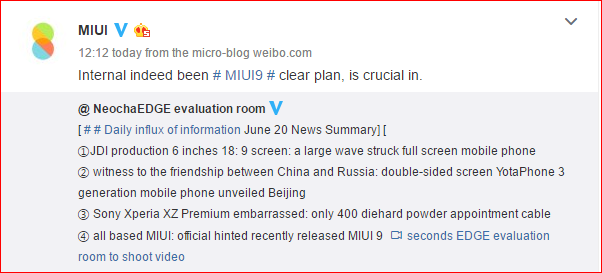
A few days back Xiaomi’s MIUI official Weibo page released a teaser poster that talked about the MIUI in development and which is thought to refer to the upcoming MIUI 9. That news was captured in the video news summary of an online media outfit and MIUI official in sharing the news broadcast has officially indicated that the MIUI 9 is in development.
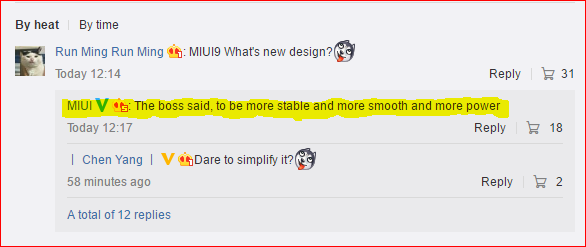
The confirmation was further boosted in the comment section where the MIUI official shared some details about the design of the new interface in response to a question about its design. The MIUI official hinted that the boss, that is Lei Jun says the MIUI 9 will be more stable, more smooth and more powerful
In addition, a purported screenshot of the MIUI 9 was leaked recently showing the background. It shows the WeChat app can be switched between the chat interface and the wallet just the same way you can switch apps. That could be a new feature which will allow a new interface to be opened in a new tab within the same app. The leaked screenshot could also mean MIUI 9 is already in an advanced stage and may soon enter closed beta.
MIUI 9 will be based on Android 7.0 Nougat from the start and another sign it could be coming soon is the observation that apart from the Mi 6 and 15 other models, MIUI 8 developer ROM closed beta and the stable version on all other Xiaomi models have been suspended for a while now. Obviously, we’ll be getting more details on this soon.
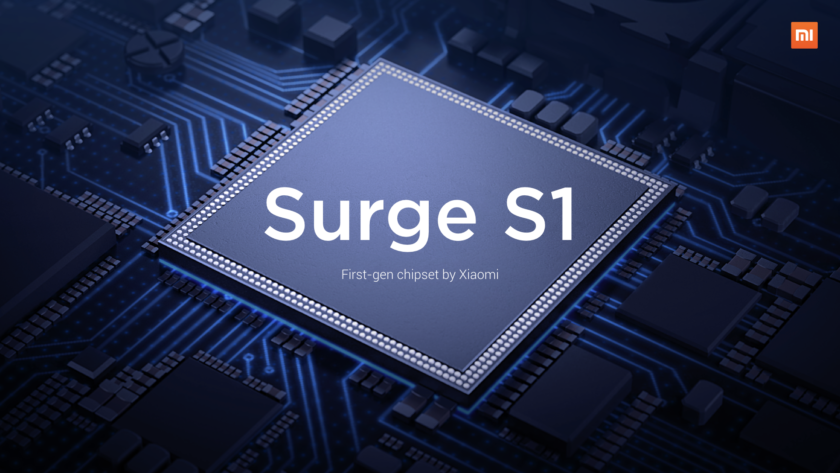
In February, Xiaomi had introduced its in-house chipset named as Surge S1. It was introduced through the Xiaomi Mi 5c phone. The chipset was after more than two years of development. Fresh information that has appeared this morning states that Xiaomi is now working on its second-generation in-house chipset that is expected to arrive as Surge S2.
The Surge S1 was manufactured by Taiwan Semiconductor Manufacturing Company (TSMC). It was built with 28nm manufacturing process. With few months of launching the Surge S1, the Chinese company has begun working on its successor. Rumors have it that the mass production of Surge S2 chips will begin soon, revealed a Taiwanese publication by citing Chinese media.
Xiaomi has conducted sampling of its upcoming Surge S2 chip. TSMC will be manufacturing the new chipset and it will be built with 16nm process technology. Its mass production is expected to begin in the third quarter of this year. Since the Surge S1 powered the Xiaomi Mi 5c, speculations are rife that the upcoming Surge S2 would be present under the hood of Xiaomi Mi 6c and 6s. Both the smartphones are rumored to debut in the last quarter of 2017.
The Xiaomi Surge S1 is an octa-core processor that feature four Cortex A53 cores running at 2.2 GHz and another four Cortex A53 cores working at 1.4 GHz. It is coupled with Mali-T860 MP4 chipset and features Cat. 4 LTE modem. It supports LPDDR3 RAM and eMMC 5.0 storage. In terms of performance, it is not on par or better than the Snapdragon 625 chipset (built with 14nm process). Hence, there is a possibility that the Surge S2 could be as powerful as the Snapdragon 625 or 652 SoC. It seems that it will take some for Xiaomi to manufacture a higher-end chip that can power a flagship phone.
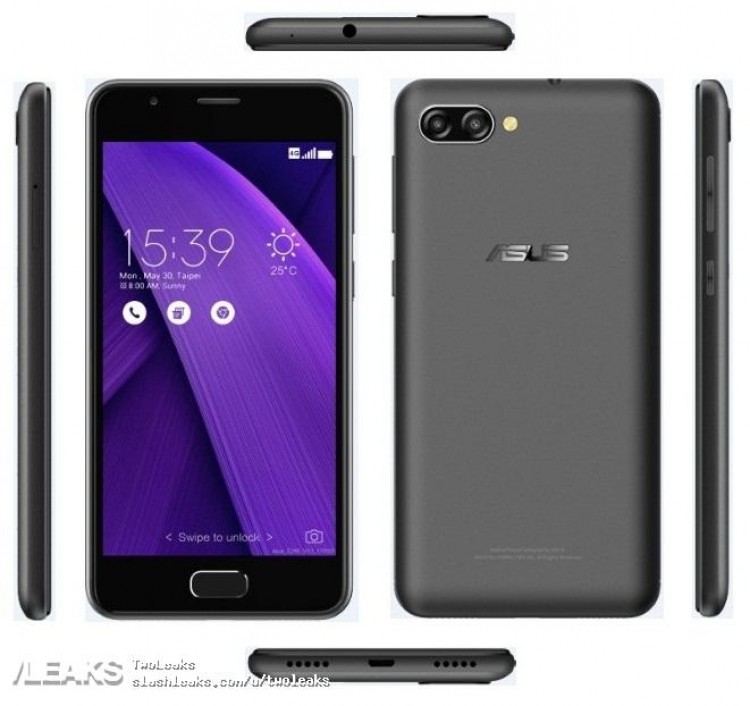
ASUS is yet to announce its ZenFone 4 series smartphones. However, rumors hint that the Taiwanese company will soon launch couple of smartphones from the new ZenFone 4 series. The ZenFone 4 Max has recently Bluetooth SIG certification which indicates it may launch. Today, another unreleased and budget friendly ASUS phone with dual rear cameras has been in leaked images. Also, it specifications and pricing have also surfaced.
The images show the phone may come with polycarbonate body. Below the display is its physical Home button. The rear panel has a dual camera module at its top-left corner. It features a 3.5mm audio jack on its topside and the bottom side has a microUSB port placed between two external speakers.
The ASUS Pegasus 4A features a 5-inch display that supports an HD resolution of 720 x 1,280 pixels. One of the evidences that show that it is a mid-range phone is that it is powered by MediaTek MT6737V chipset. The ZenFone 3 Max, ZenFone Pegasus 3 and several other smartphones from Chinese companies like Leagoo, Oukitel, Umidigi and so on are powered with this chipset.
The MediaTek chip on Pegasus 4A is supported by 3 GB of RAM. The native storage of the phone is 32 GB. Its frontal camera is of 5-megapixel. The rear side is fitted with a dual camera module that includes a 13-megapixel sensor and an 8-megapixel sensor. The phone is running on Android 7.0 Nougat OS and is packed with a 4,100mAh battery.
Even though it is a smartphone with low specifications, it is rumored to arrive with a slightly costlier pricing of 1,799 Yuan (~$263). The probable reason behind increased pricing of the phone could be because of its dual rear camera system. It measures 144.26 x 71.26 x 9.1mm and its weight is 160 grams.
The MediaTek chip powered ASUS Pegasus 4A will be aimed towards Asian and European markets. With MTK onboard, it is unlikely to launch with in the U.S. because of its incompatibility with LTE bands in the U.S. Since a lot of details of the smartphone has appeared even before its launch, it is likely that the Pegasus 4A may debut in July.
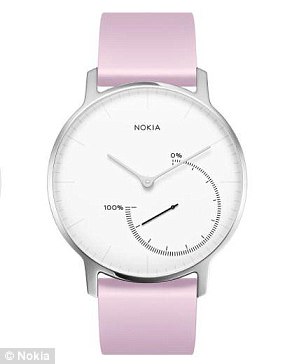
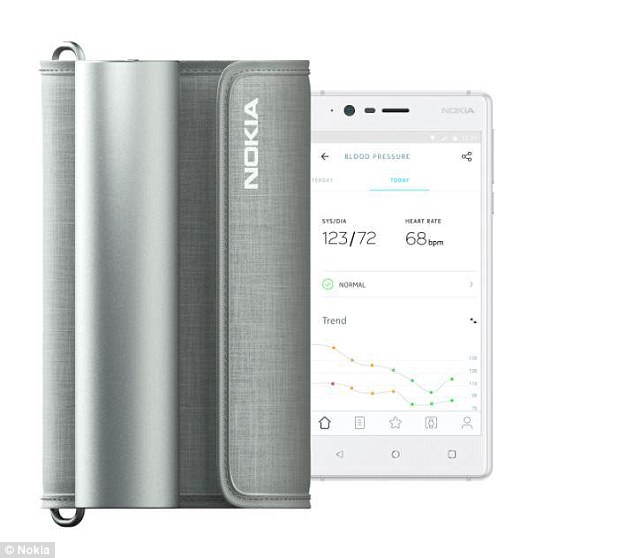
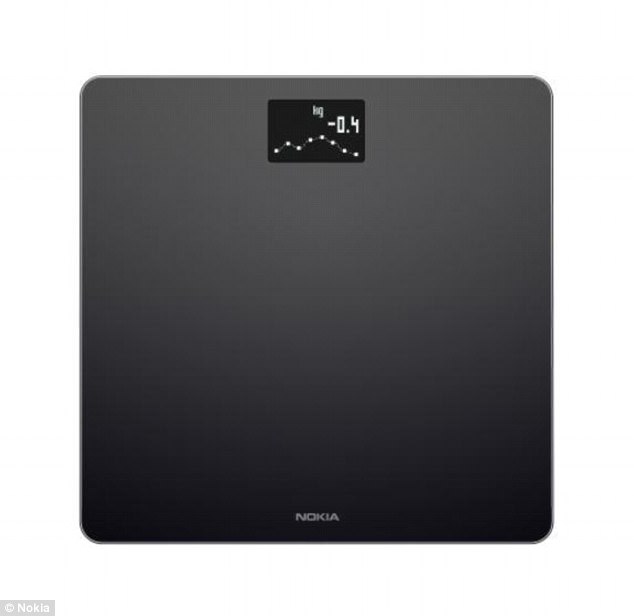
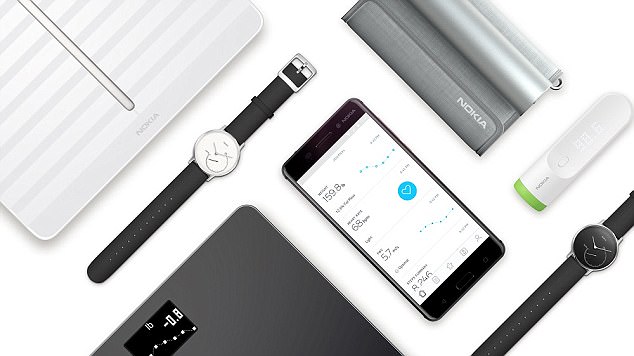
Nokia has made a foray into the smartwatch and fitness wearable sector with the unveiling of a couple of its fitness gadgets which includes a smartwatch, weighing scale, blood pressure monitor and a sleep tracker. The move may be unconnected with the recent acquisition of popular watchmaker Withings. The new gadgets come with affordable prices with the cheapest being the activity and sleep tracker called Go, which will cost £39.95.
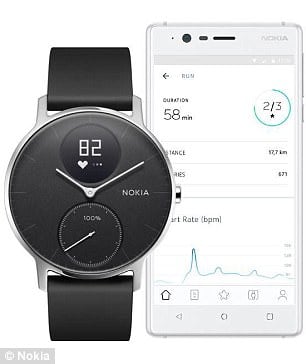
The most interesting gadgets should be the Nokia branded smartwatches which include a mid-range Nokia Steel and a high-end Nokia Steel HR. The Nokia Steel smartwatch has a traditional watch face but comes with sleep and activity tracking features. The mid-range smartwatch can also sync with a custom phone app and the weighing scale which was also unveiled.
Nokia Steel HR
On the other hand, the Nokia Steel HR has a more refined look which s quite similar to the Steel but comes with more features such as a heart rate monitor, ability to receive text, calls and event alerts. The Steel HR also has a sleep cycle analysis tool. As for battery life, the smartwatch can last up to 25 days on a full charge, something which sets it apart from the Apple Watch. A third wearable gadget is the Nokia Go which is a basic activity tracker that comes in different colours with a rubber strap and looks similar to Fitbit wearable.
As far as the prices go, the Nokia Steel is priced at £119, while the Nokia Steel HR is priced at £169.95. The Nokia Go is the cheapest with a price tag of £39.95. The Nokia Weighing scale that can also calculate BMI will retail for £59.95 while the hi-tech Blood Pressure Monitor costs £109.95. All the gadgets will connect to the New Nokia Health Mate app which is already available for download on iOS and Android app store. The smartwatches, BP monitor and Weighing scale are said to become available in the market as from September.
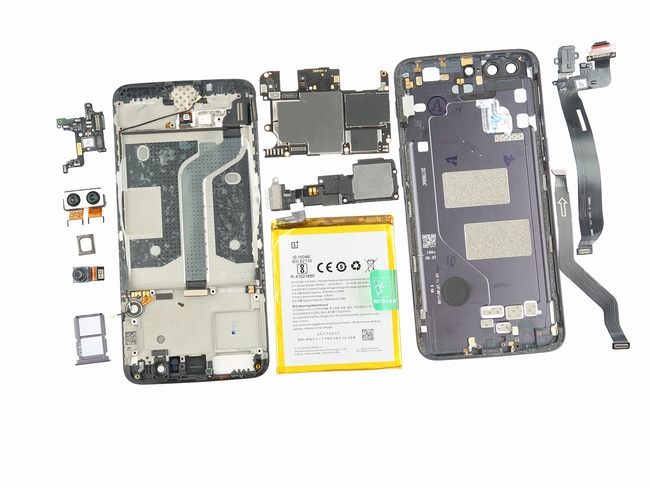
OnePlus 5 is now available in multiple regions such as the U.S., Canada, China and India. It is the first phone from the company to come with dual rear cameras and it is driven by the most potent mobile chipset, the Qualcomm Snapdragon 835. The SoC is coupled with 8 GB of RAM. Within few days of its launch, the OnePlus 5 has been criticized for using the same display as its predecessor, for cheating on benchmarking apps, for its resemblance with iPhone 7 Plus and lower optical zoom on its camera than promised. My Fix Guide has done a comprehensive teardown of the newly launch OnePlus 5 to reveal its innards.
The teardown begins by removing the SIM card tray. Then, a T1 Torx screwdriver is used to remove the two screws that are located near the USB Type-C port at the bottom side of the phone. The back cover is released from the fuselage by sliding a crowbar along the edge of the display. Since the rear cover is connected to the motherboard, it cannot be completely removed.
The battery connect and USB-C cable can be disconnected after removing the screw for the metal plate that secures them. Plenty of metal contacts are present on the rear cover of the phone. The USB-C and 3.5mm audio jack is also affixed on the rear shell. These two items can be removed by unscrewing the four screws that secure them. The 3.5mm headphone jack and USB-C port of the OnePlus 5 is different from its predecessor.
The top part of the fuselage is occupied by the motherboard. At the center is the battery and the lower part is occupied by the loudspeaker module. This suggest that OnePlus has used the often-used three-part design for adding these parts. After removing some screws and graphite sticker. After disconnecting the cable that goes to the motherboard, it can be removed. The dual rear cameras are present without any adhesive. The rear-facing dual cameras of OnePlus 5 utilizes a Sony IMX398 16-megapixel f/1.7 aperture wide angle lens. along with a Sony IMX350 20-megapixel f/2.6 aperture telephoto lens that offers 1.6x optical zoom.
The microphone is attached with glue which can be easily removed and the bottom loudspeaker can be removed by unscrewing 8 screws. The board that is placed at the bottom is quite thin and fixed to the fuselage by using adhesive. Hence, it requires some time to remove it.
[envira-gallery id=”137786″]
By pulling off the green tap, the battery which fixed to the fuselage using two-side adhesive can be removed. It has a 3,300mAh battery Li-Po 3.8V battery that is provided by ATL. Its model number is BLP637. It supports 5V/4A DASH rapid charging function. To conclude, OnePlus has used a lot of sealing for the internal components and also for the rear cover. Such sealing design is only seen in smartphones of some companies like Apple, Samsung, OPPO and Vivo. However, some of the connectors including rear camera connector that are not fixed by metal plate can easily go loose.
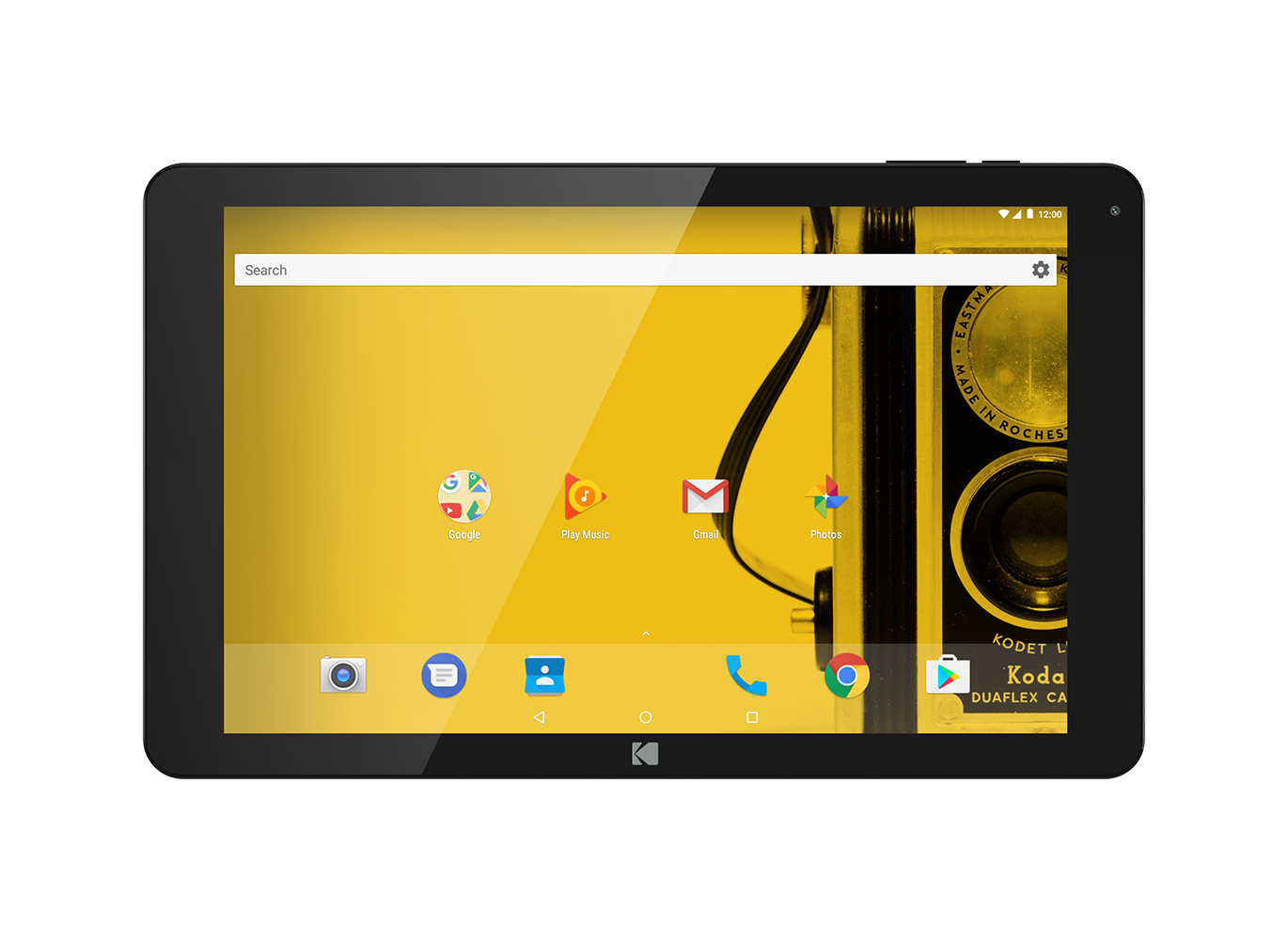
Remember the Kodak Ektra smartphone released late last year? It appears it is the first of other android devices Kodak has in its pipeline. The brand famous for its photography-related products has released two new tablets made in partnership with Archos.
The Kodak Tablet 7 and the Kodak Tablet 10 are made by French company Archos, whom recently announced a number of new phones. The tablets will also be sold and distributed by Archos.
Kodak Tablet 7
The Kodak Tablet 7 like the name says has a 7-inch 1024 x 600 display. It is powered by a MediaTek MT8321 quad-core processor paired with 1GB of RAM and 16GB of storage. There is a separate microSD card slot for up to 64GB of extra storage and two mini SIM slots that support 3G networks.
The Tablet 7 has an 8MP primary camera and a 2MP front facing camera for video calls. There is Android 7.0 Nougat out of the box and a 2500mAh battery that should last up to 3.5hrs. The tablet has an audio jack and a micro USB port.
[envira-gallery id=”137764″]
Kodak Tablet 10
The Tablet 10 is different with its bigger 10-inch 1280 x 800 display, 32GB of built-in memory, 6000mAh battery and design. Every other thing is the same as that of the Tablet 7.
Kodak bundles both tablets with Cyberlink apps that lets you edit photos and videos on the go.
It’s been two days since the release of the OnePlus 5 and many fans and reviewers have already been able to test out OnePlus 5’s flashy new camera features. There is, however, been a feature that OnePlus has not been transparent about; this being the ‘optical zoom’ feature.
The OnePlus 5’s dual camera setup houses a 16-megapixel IMX398 regular sensor with f/1.7 lens and a 20-megapixel IMX350 sensor with f/2.6 telephoto lens. The latter provides the further zoom that the 16-megapixel sensor cannot handle. This method operates the same as many other devices, such as Oppo’s R11 and Apple’s iPhone 7 Plus.
Optical zoom theoretically provides consistent quality; however, the claim OnePlus had published on their website and announcement about OnePlus 5’s 2.0x “lossless” zoom isn’t purely optical.
According to the co-founder Carl Pei, the telephoto lens zooms to a maximum at 1.6x zoom, then the OnePlus 5 switches to software-powered ‘SmartCapture Multiframe Technology’, known as ‘digital zoom’, providing the remaining 0.4x zoom.
Optical zoom is at 1.6x, the remaining 0.4x is realized through SmartCapture multiframe technology.
Carl Pei, Co-Founder of OnePlus, officially tweeted that they have advertised the OnePlus 5 provides 2x lossless zoom, and not optical. This is an attempt to clear uncertainty for consumers and fans who have hit confusion about OnePlus’ marketing.
Uncertainty and initial disappointment haven’t been limited to the camera either, as more users have discovered the OnePlus 5 has its predecessor’s display leading to more concern on what other unclear components we do not know currently.
What are your thoughts on OnePlus 5’s Lossless Zoom Feature?
One big surprise of 2016 has been OPPO. The brand, which was relatively unknown to the world, has managed to get into the big players club, a feat for which, many companies have struggled for years. The strategy adopted by the company has been pretty straightforward, create a standard quality smartphone with upper mid-range specs, market it like crazy to the common masses –especially the young generation — by roping in popular celebrities to promote the product and create a super strong offline channel which will drive sales. This has worked wonders for the brand, with its OPPO R9 model, released early last year, becoming the best-selling smartphone of the year.
OPPO R11
The company has continued a similar strategy for its successor, which brings us to the OPPO R11. The phone has some big shoes to fill and it is an extremely important phone for the brand as this model will decide whether OPPO continues its mind-boggling growth in 2017 as well.
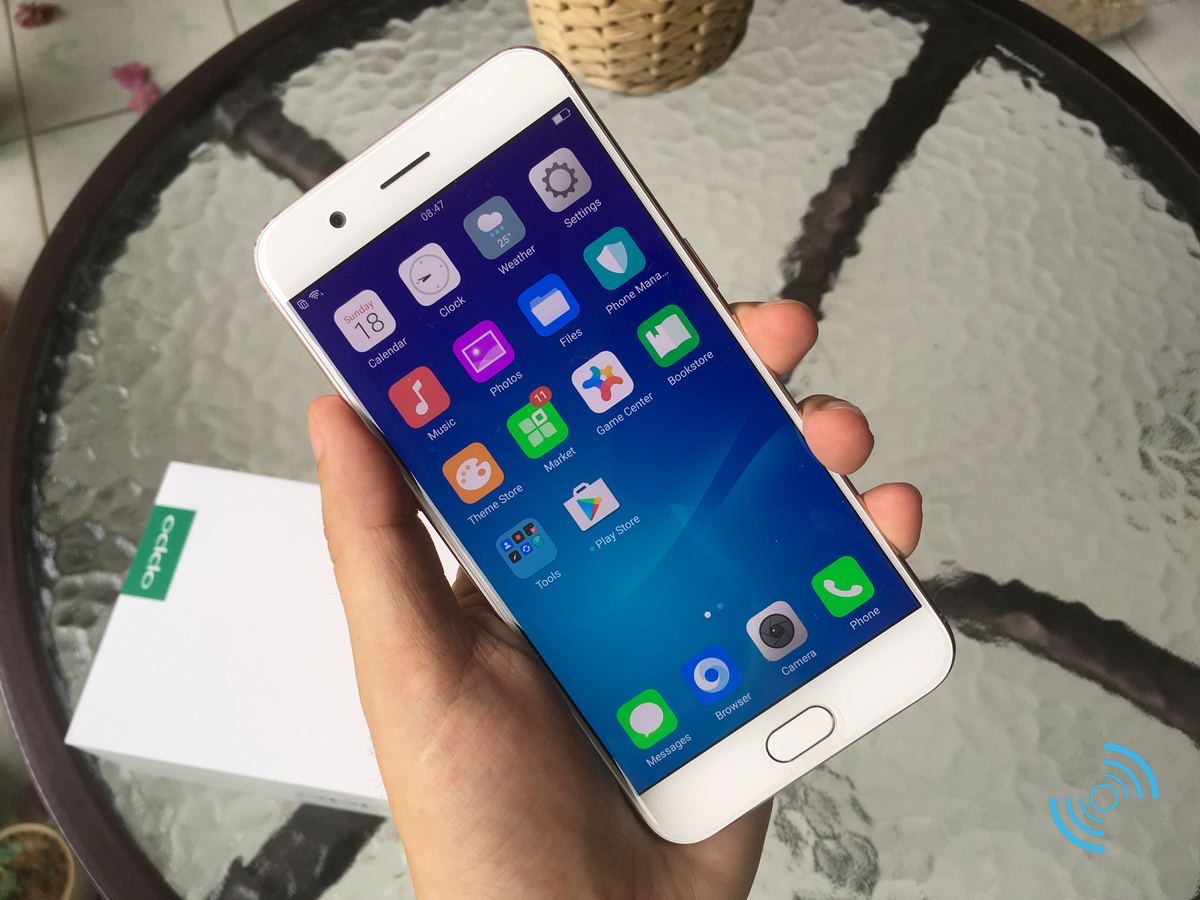
Recently, we got to play around with the OPPO R11 and we can confirm that the basic strategy of the company remains the same. The phone looks and feels solid, the UI is fluid and the camera is pretty good. This is just our first impressions and we are going to test it in detail very soon.
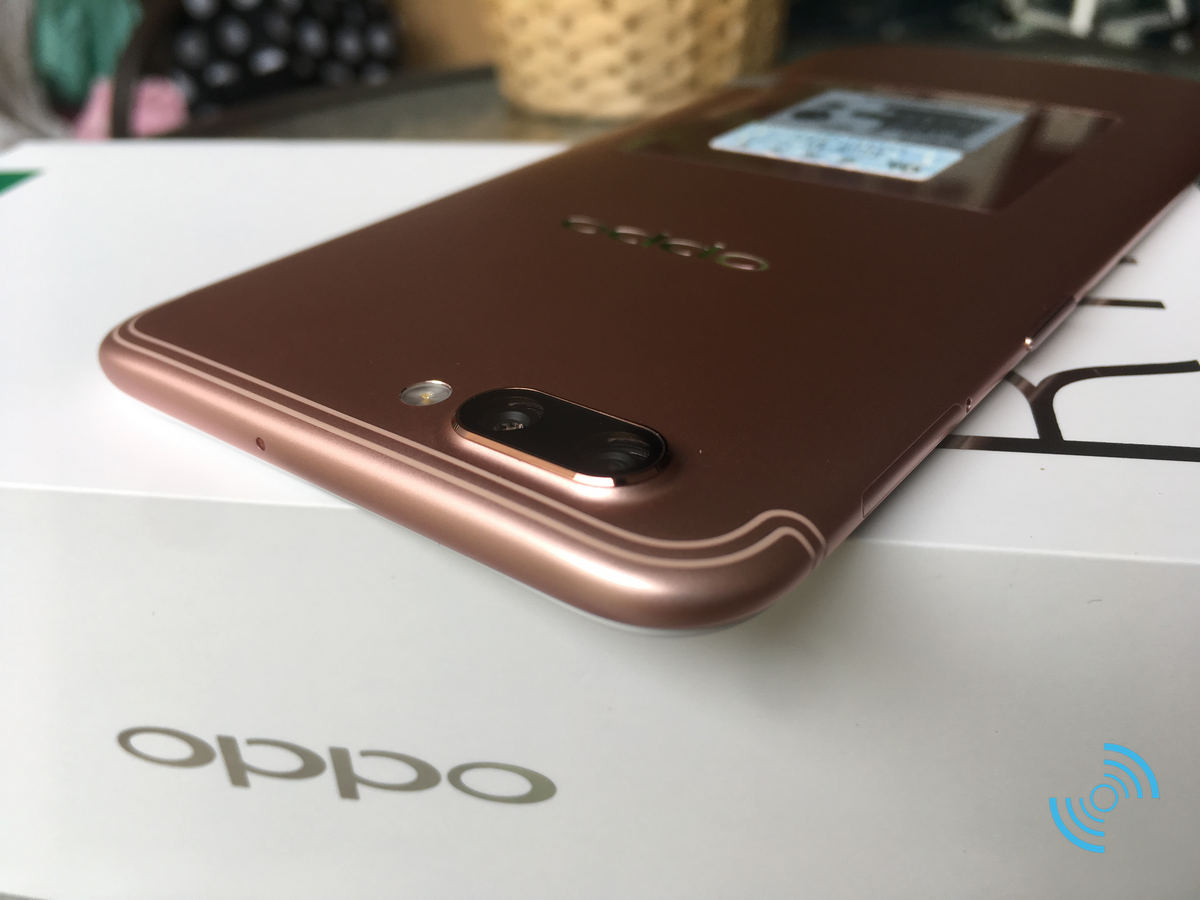
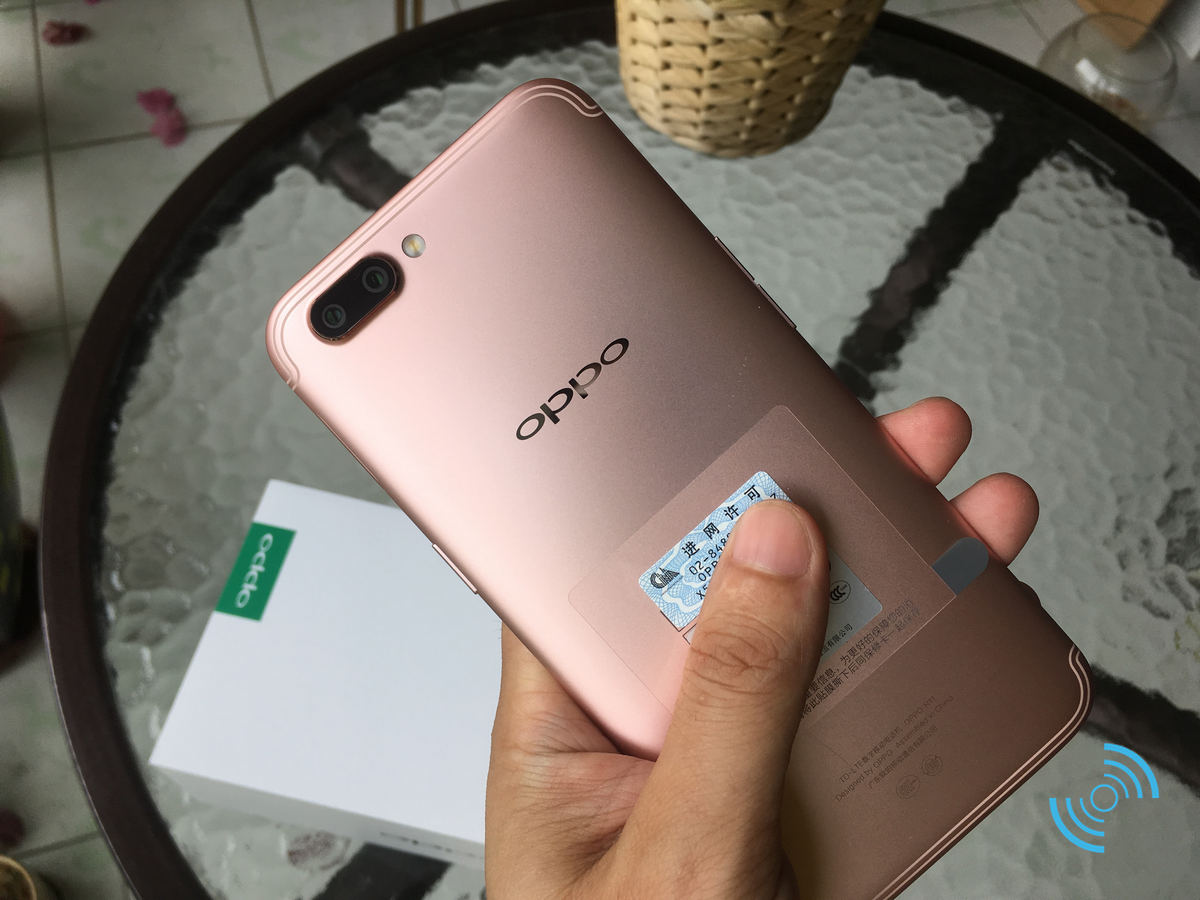
OPPO has never been the smartphone company that shies away from copying a good design, and it’s all the more evident with the OPPO R11. Apple came up with a good design for the iPhone 7 Plus and OPPO thought it was about time Android lovers got a taste of this. The R11 replicates the exact dual camera arrangement as the iPhone 7 Plus, making it look so much like the Apple flagship.
Antenna band design
Even the antenna bands are similarly placed near the edges. To be fair, calling this as a direct copy from Apple would be wrong. Many smartphones have adopted this less intrusive antenna band design (placed near to the edges) and the R11, in fact, differentiates itself with a two line antenna design, instead of a single thick one.
But overall, the phone does have an iPhone-esque feel.
OPPO R11 Dual Cameras
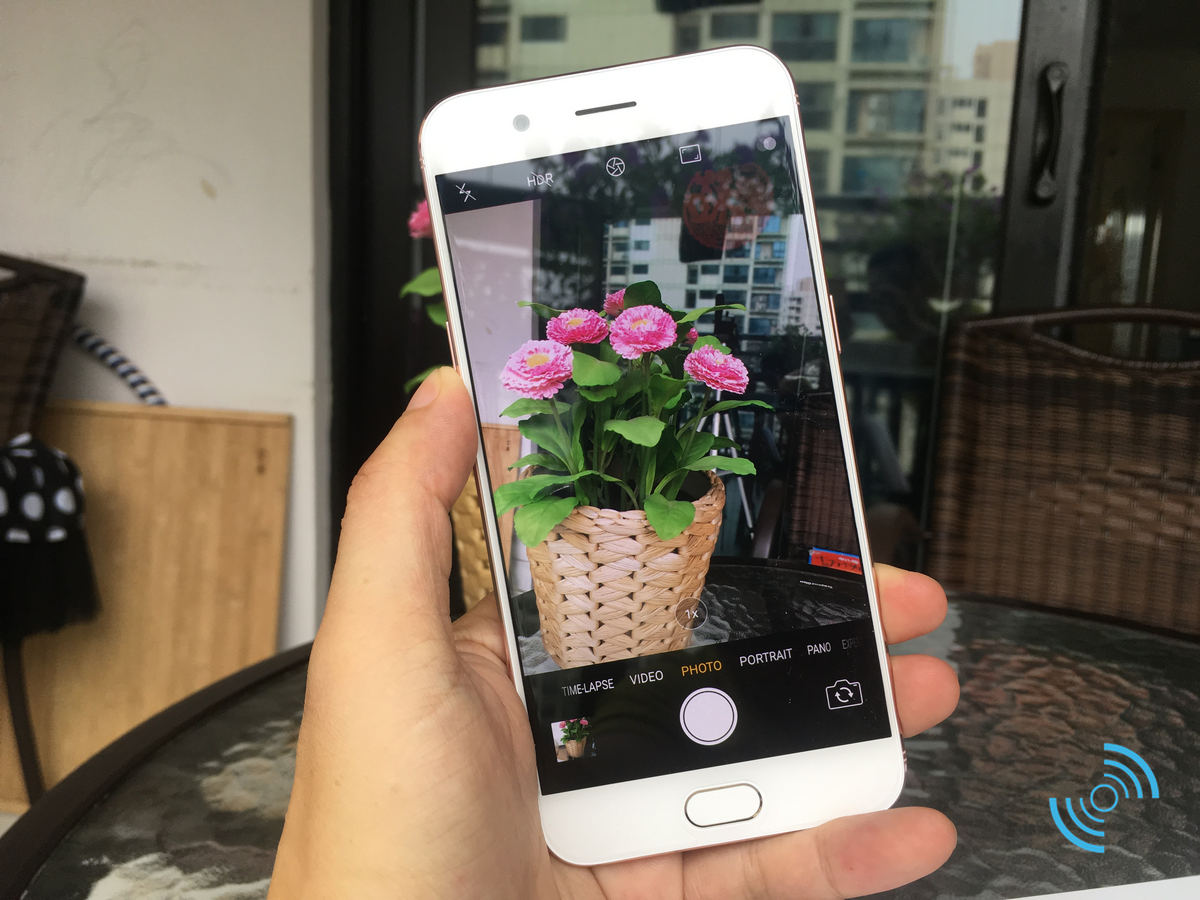
The front of the phone is simple, with a large sensor on top and a physical home button at the bottom of the display. The bezels on the sides are also sufficiently thin. The fingerprint is fast and responsive and so is the touch screen.
Coming to the back, you have an iPhone-like dual camera placement, along with dual tone flash. The back has a smooth finish.
OPPO R11 top
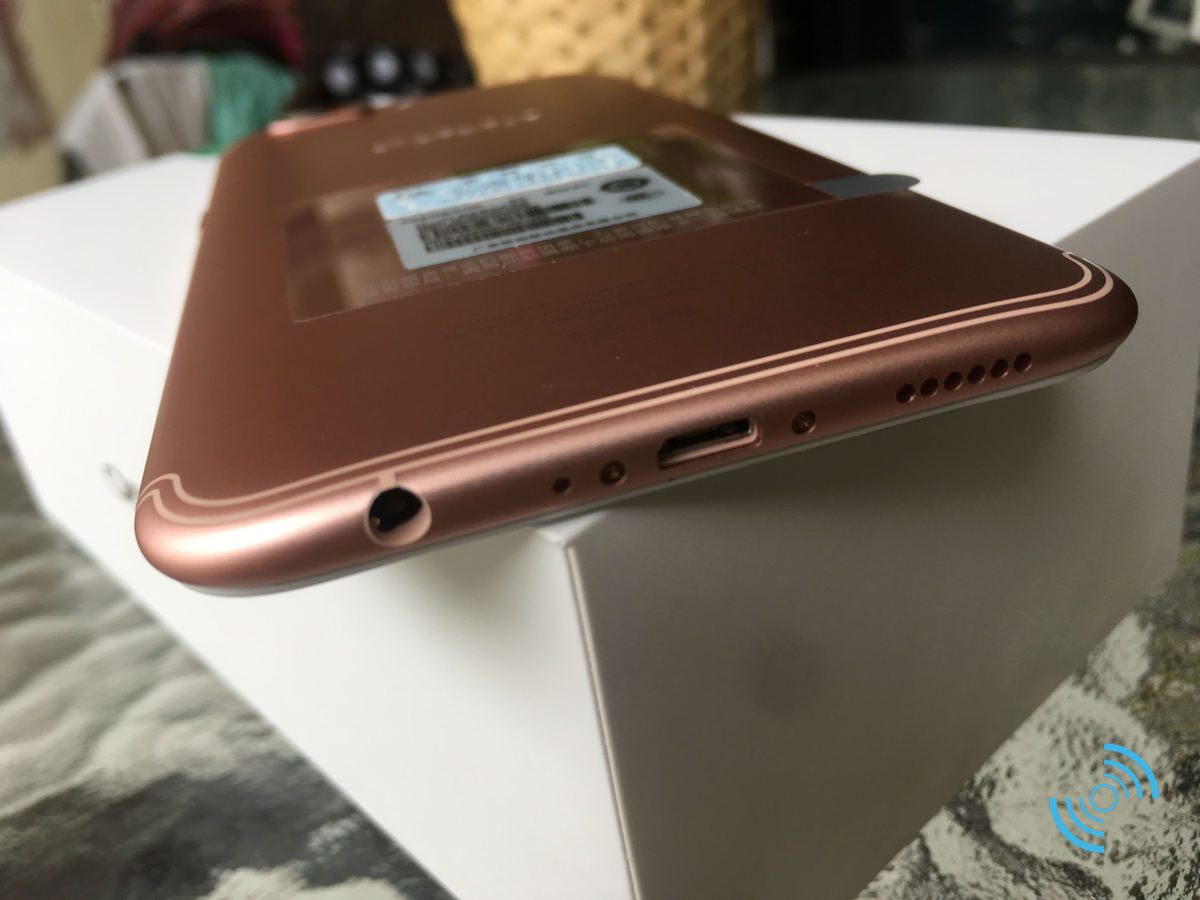
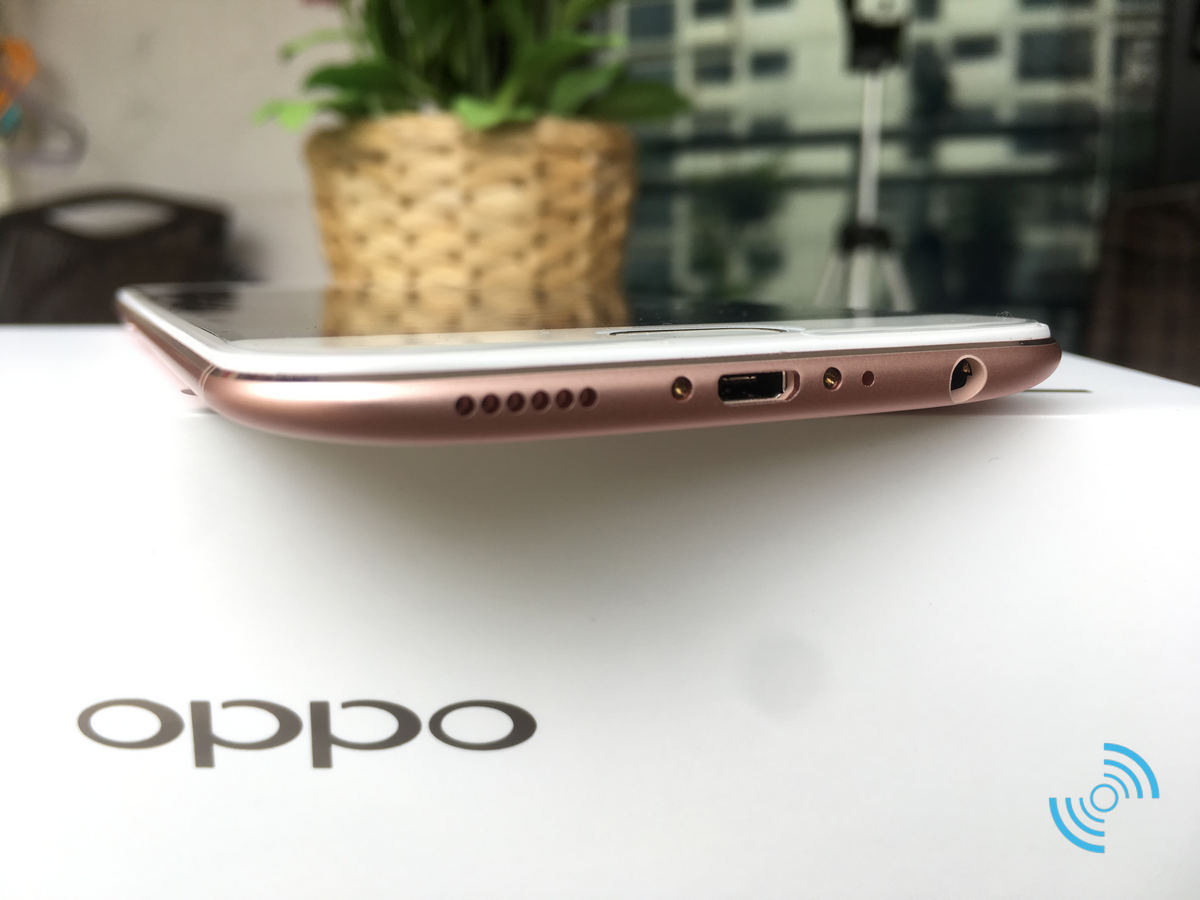
All the important ports, including the 3.5mm headphone jack, are located at the bottom of the phone. Note that the phone comes with a hybrid dual SIM slot, so you can use a MicroSD card slot at the expense of a nano SIM.
OPPO R11 bottom ports
So you’ll find a speaker, USB port, and a headphone jack at the bottom. While it’s great to see that the phone didn’t copy Apple in ditching the 3.5mm headphone jack, it’s extremely disappointing to see OPPO continue its tradition of going with the old MicroUSB 2.0 port. I haven’t seen a USB Type-C OPPO phone yet, which leads me to believe that there’s a big reason why OPPO is still sticking with the MicroUSB standard. Maybe it has something to do with the company’s proprietary fast charging tech, VOOC, but we haven’t got an official explanation yet.
For software, the phone is running on Android 7.1.1 with ColorOS 3.1 on top.
oppo r11 camera ui
While we’ll compare the cameras on the R11 with all other flagship models very soon, our initial impression is that the dual camera performs well. It’s fast to focus and the photos come out clear and crisp. But we’ll soon see how good it is as compared to the top players in the Chinese market like the Huawei P10, Nubia Z17 in our upcoming comparison.
Check out the remaining OPPO R11 Hands on images down below and let us know what you think about the phone and its design.
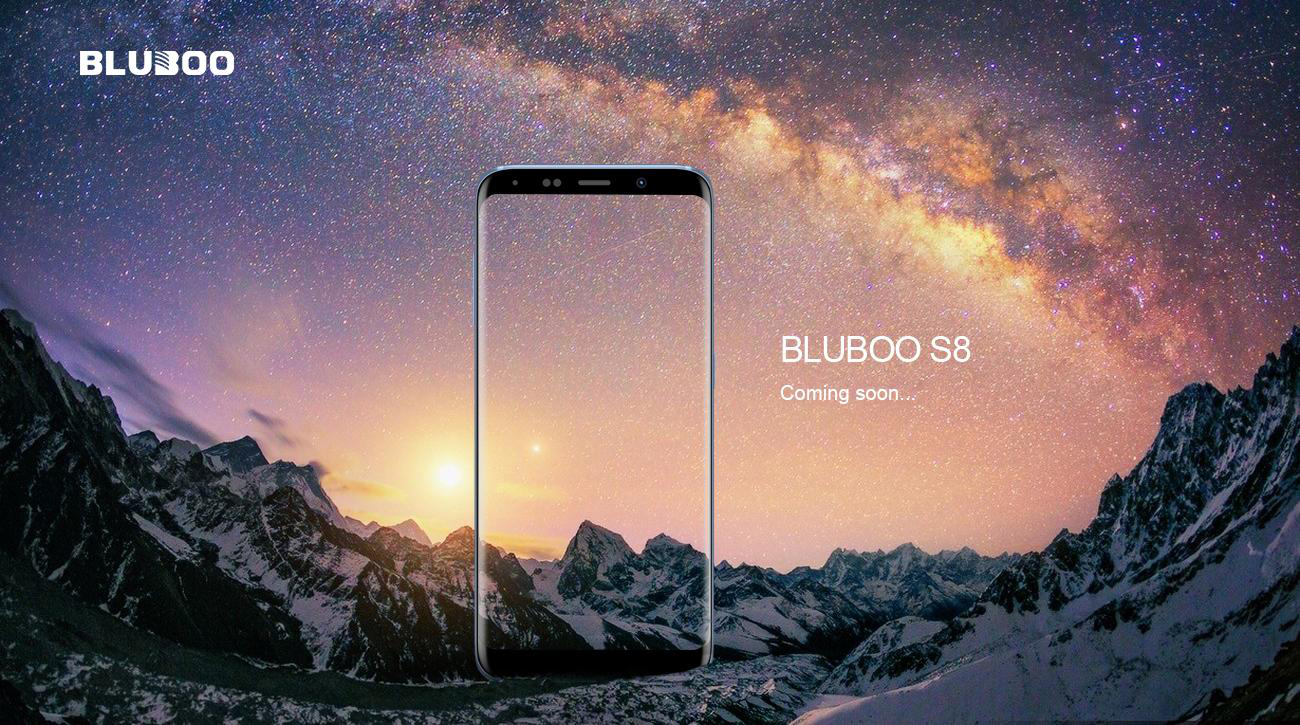
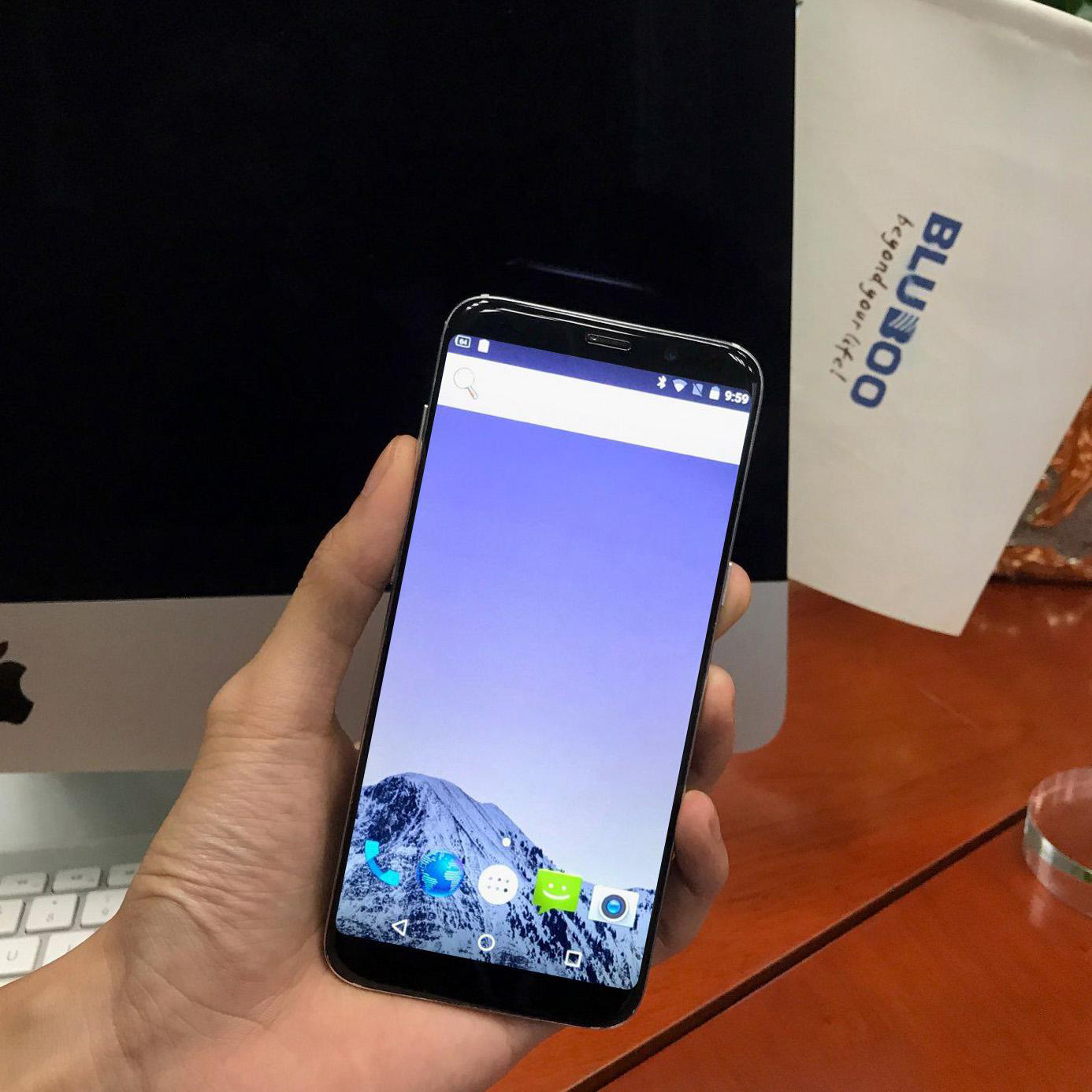
With the launch of the Galaxy S8 and Galaxy S8 Plus this year, we should expect to see more smartphones with the same 18:9 aspect ratio. Chinese company BLUBOO has entered the race with its upcoming phone, the BLUBOO S8.
The BLUBOO S8 is touted as the world’s first full-screen flagship phone powered by a MediaTek processor. The few details available says the phone will have a 5.7-inch HD+ screen with a 1440 x 720 resolution. It is said it will be powered by the still elusive Helio X30 processor.
The BLUBOO S8 will have a 4GB RAM + 64GB ROM model and a 6GB RAM + 128GB version. It will have dual Sony cameras on the back with dual LED flash. A leaked image of a working prototype shows it has on-screen buttons but is missing a front-mounted fingerprint scanner. So we expect the scanner is at the back.
There is no mention of a possible price range of the upcoming phone or when we should expect it.
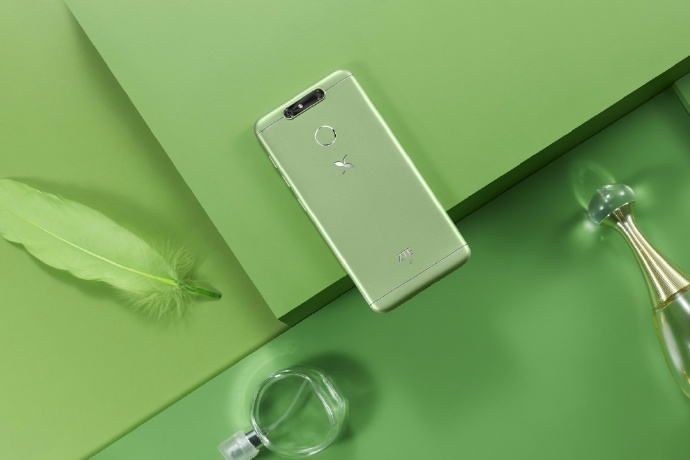
Earlier today, a new ZTE smartphone with model number V0840 showed up on TENAA. A few hours later, the V0840 was announced as the ZTE Small Fresh 5.
The ZTE Small Fresh 5 is a mid-range phone that looks similar to the Blade V8 trio launched this year. It has a 5-inch HD display and is powered by the Snapdragon 425 mobile platform. There is a 3GB RAM variant with 16GB of built-in storage and a 4GB RAM model with 32GB ROM. Both models have a microSD card slot that accepts 128GB cards.
The ZTE Small Fresh 5 has some interesting features. It packs dual rear cameras (13MP + 2MP) spaced 20mm apart that can take bokeh pictures and 3D images. Apart the regular volume rocker and power buttons, the Small Fresh 5 has two extra physical buttons. Sadly ZTE doesn’t say what these two buttons are for. The phone also has a real time translation feature that supports up to 23 languages.
The front facing camera is a 5MP sensor and there is a rear-mounted fingerprint scanner too that can be used for payments. The phone comes with ZTE’s MiFavor UI 4.2 based on Android 7.1 Nougat. There is dual SIM support and under its metal body lies a 2500mAh battery.
The ZTE Small Fresh 5 is priced at ¥999 (~$146) for the 3GB model and ¥1399 (~$205) for the 4GB version. It is also available in Dark Gray and Elegant Gold. ZTE says the new phone will go on sale on July 5.
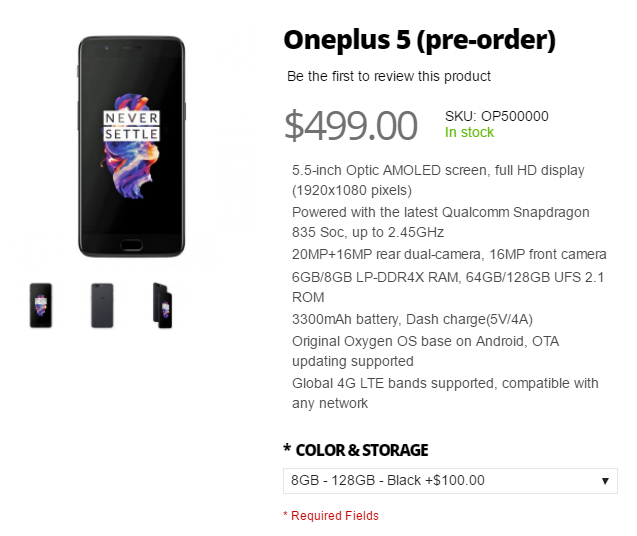
The OnePlus 5 will officially go on sale on the 27th of June. However you can pre-order from our online shop Giztop.com starting at $499.
OnePlus has released its new flagship in two variants: a 6GB RAM + 64GB model and an 8GB RAM + 128GB model. The former is available in gray for $499 on Giztop and you can grab the 8GB model in black for $599. Shipping is before June 26, which is a day earlier than the official date.
The OnePlus 5 is a 5.5-inch phone with an optic AMOLED display from Samsung. It has dual rear cameras (a 16MP main sensor and a 20MP telephoto lens) and another 16MP camera up front. There is a 3300mAh battery with Dash Charge, a 3.5mm audio jack, NFC and a front-mounted fingerprint scanner.
In need of a cheap smartphone that has the same 18:9 display ratio made popular by the Samsung Galaxy S8 (and S8 Plus)? Then you may want to wait for the Leagoo KIICAA S8.
According to Leagoo, the KIICAA S8 is the first of a series that will be sold online only. Apart from the unique display with its rounded corners, the KIICAA S8 brings a number of impressive specs at a budget price.
The KIICAA S8 will have a 5.72-inch display with rounded corners and a 1440 x 720 resolution. It will also come in two other variants: KIICAA S8 Lite and a KIICAA S8 Premium. The S8 Premium will reportedly have a 5.9-inch display.
It appears all three will be powered by MediaTek’s new MT6763 processor. This is an octa-core chip built using the 16nm process. It is clocked at 2.0GHz and consists of 8 Cortex-A53 cores paired with a Mali G71 MP2 GPU. RAM will start at 4GB and max out at 6GB and it will be paired with 64GB and 128GB of storage respectively.
The OnePlus 5 was unveiled two days ago and is also already on sale in some parts of the world, though global availability isn’t until June 27. But it appears the early availability in select locations in the world isn’t a problem. OnePlus co-founder, Carl Pei announced that the OnePlus 5 is its fastest selling device ever.
🔥🔥🔥The first numbers are in, the OnePlus 5 is our fastest selling device ever!🔥🔥🔥
While he didn’t provide a figure for units sold, he was excited to share pictures of the long queues at pop-up locations around the world. These queues are similar to what you see when a new iPhone is about to go on sale and it is good to see an android phone pull that kind of fan loyalty.
Paris 🔥 London 🔥 Copenhagen 🔥 Berlin 🔥 Helsinki 🔥 Amsterdam 🔥 New York 🔥
The OnePlus 5 brings a ton of new features, biggest being the addition of dual rear cameras. There is also an 8GB RAM version, a Snapdragon 835 processor, DCI-P3 support, Global band support and a number of new additions for OxygenOS.
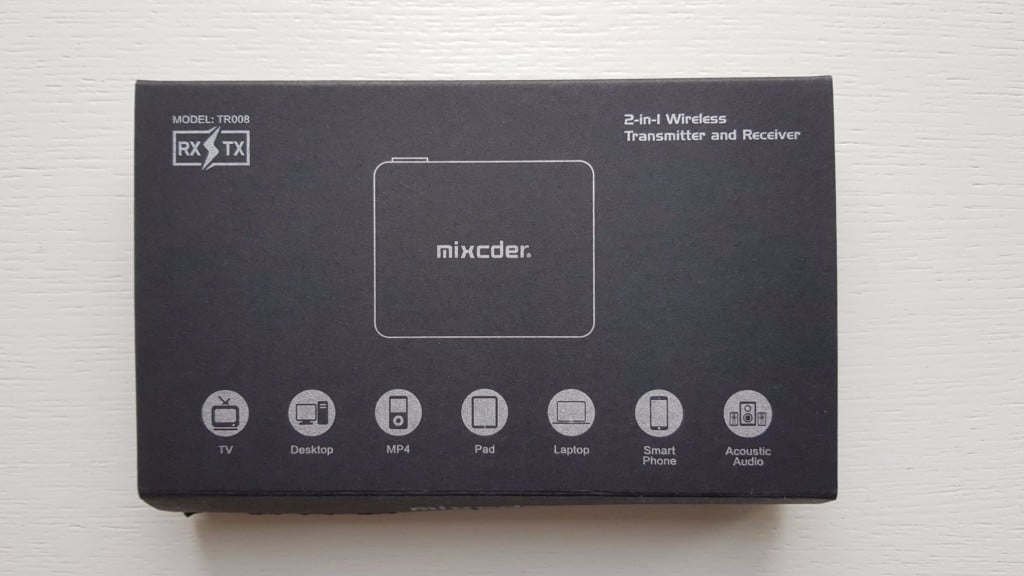
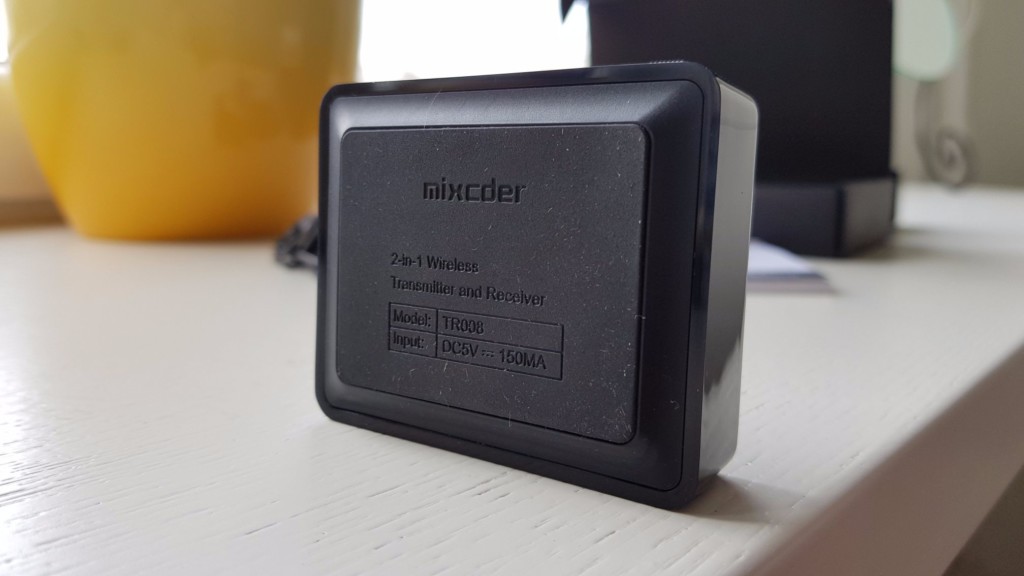
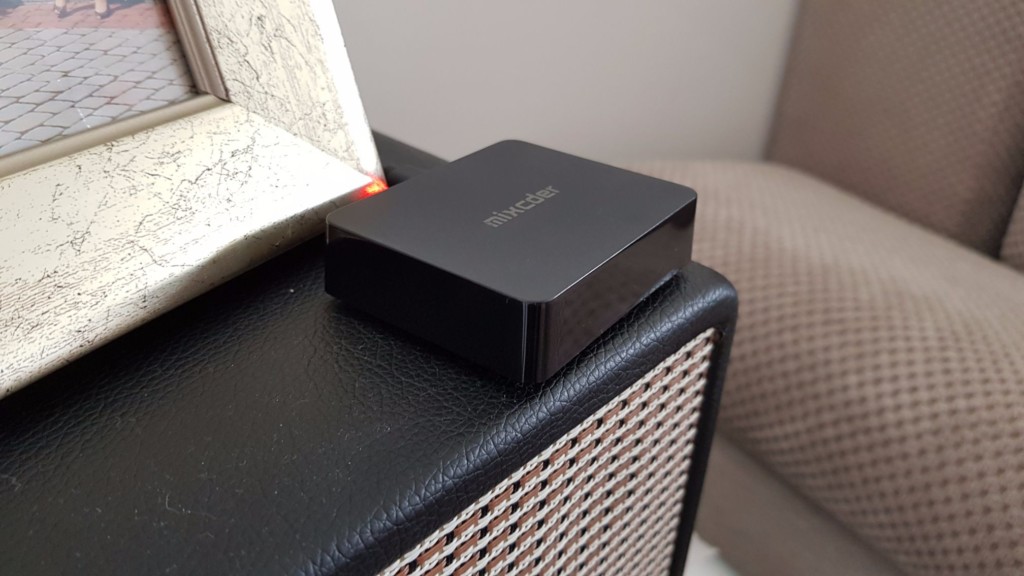
I have always liked the Bluetooth receivers since I have quite a few speakers that do not support any wireless streaming protocols but all of my music is on my phone. I have used a few Bluetooth transmitters in the past and I just came across the Mixcder TR008 2 in 1 Bluetooth transmitter & receiver that costs about $60. Learn more in the full Mixcder TR008 review.
UNBOXING
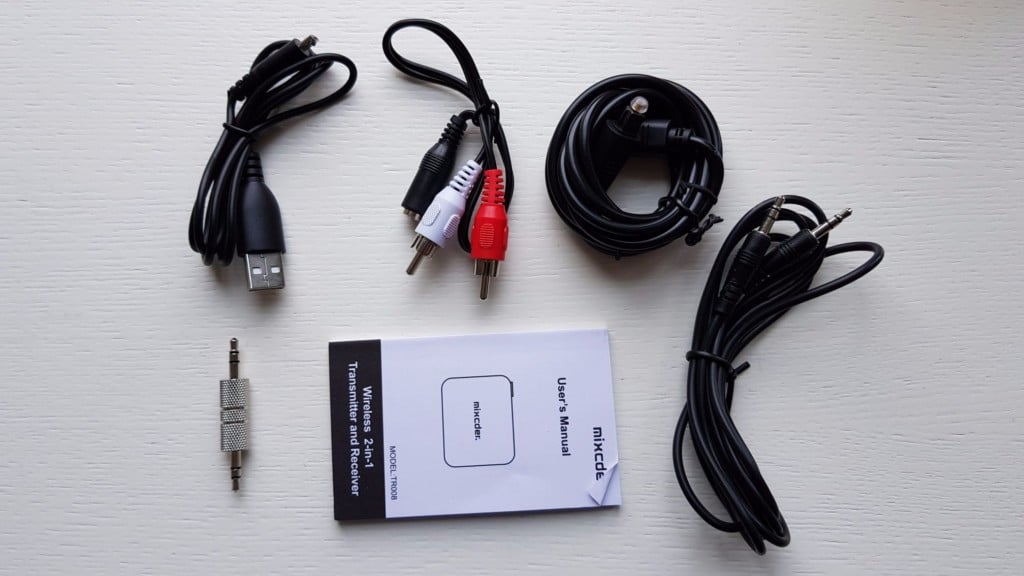
The device ships with the 3.5mm cable and audio jack adaptor, TOSLINK optical PDIF audio cable, 3.5mm to RCA adapter, micro USB charging cable and some paperwork.
DESIGN and FEATURES
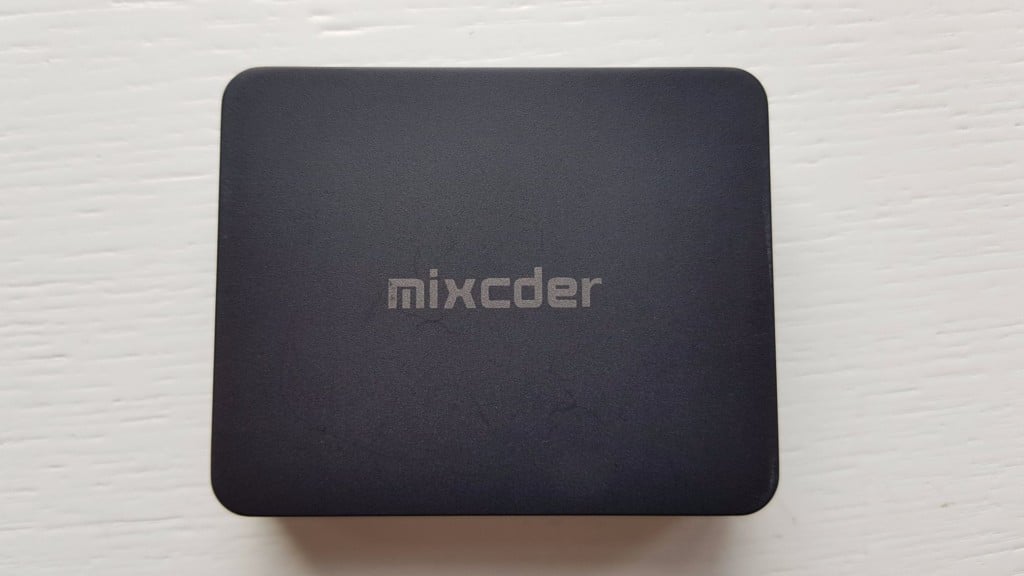
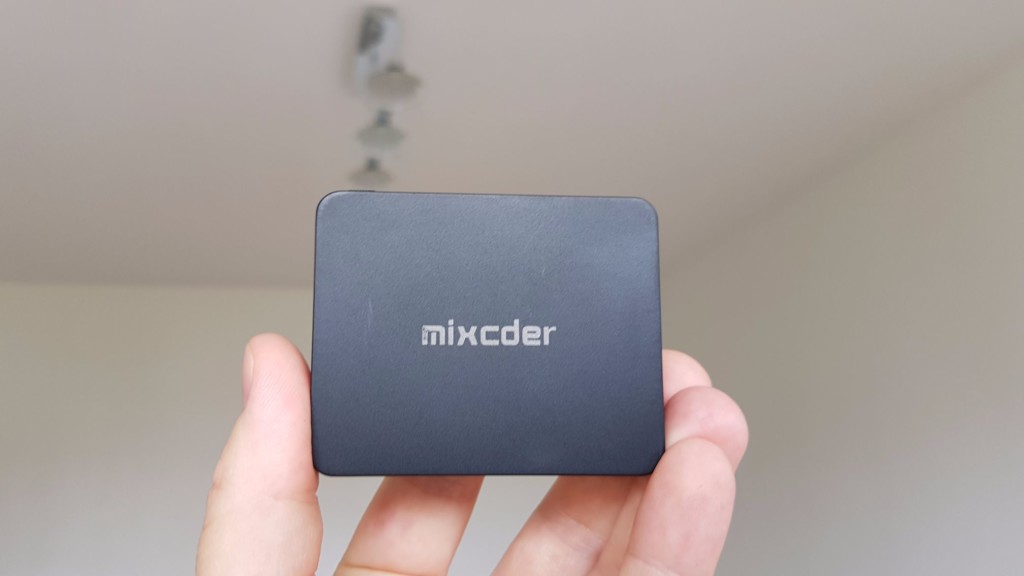
The device is made of quality plastic and it is very compact.
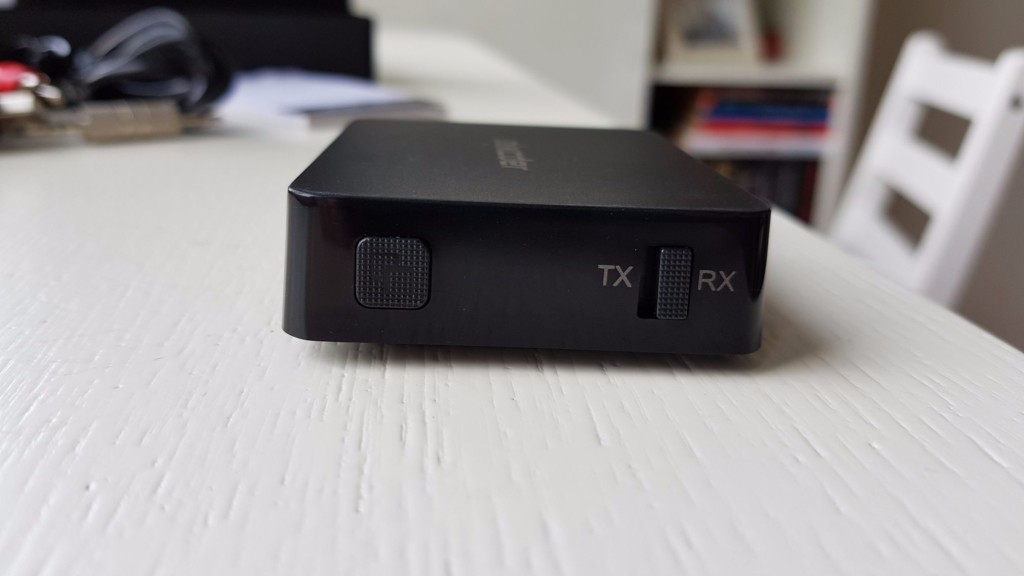
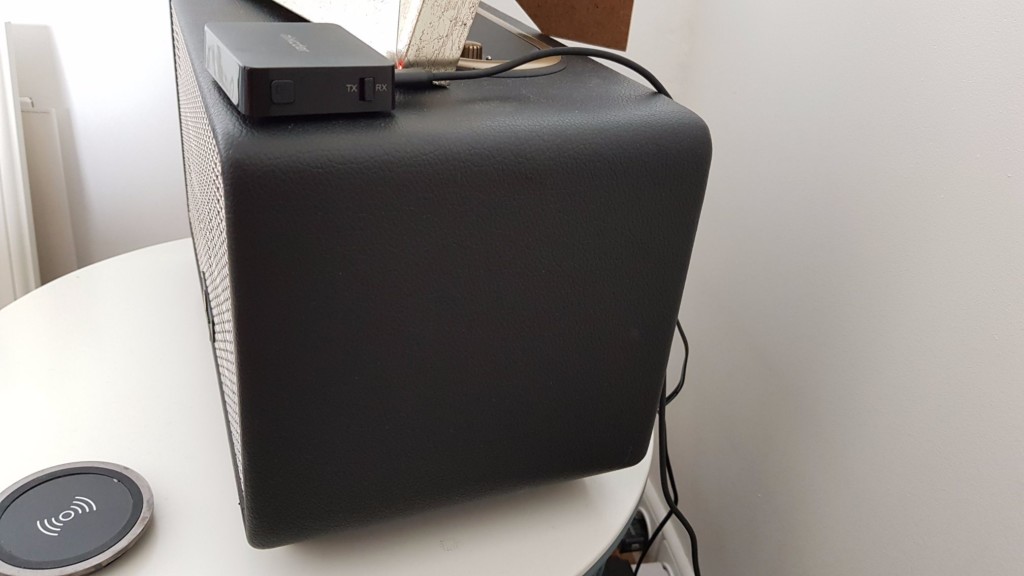
On the right, we have a transmitter/receiver mode and the function key.
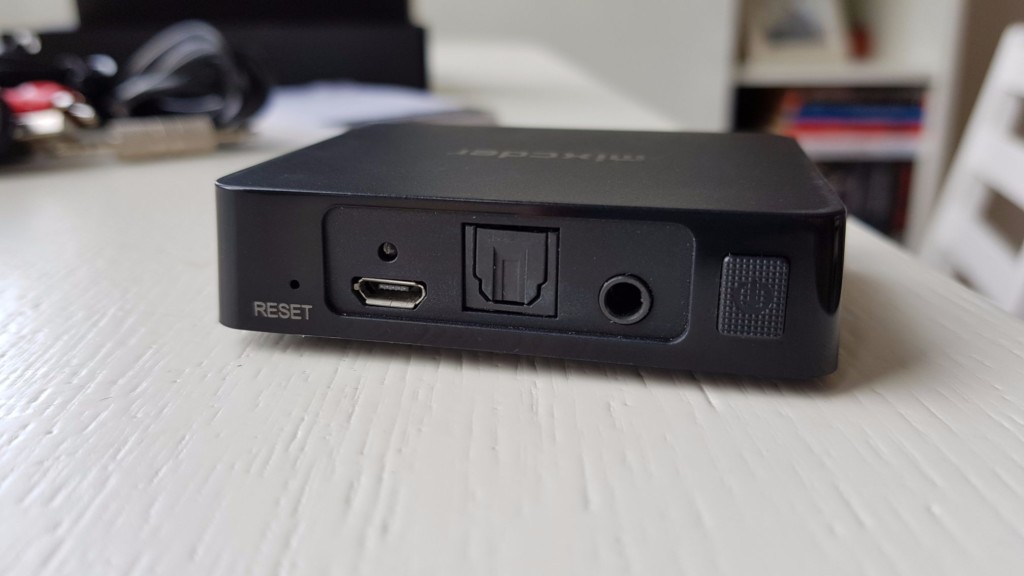
On the back of the unit, we have all the ports and the power button.
The bottom is made of rubber material to prevent the gadget from sliding on the table or other surfaces.
FUNCTIONALITY
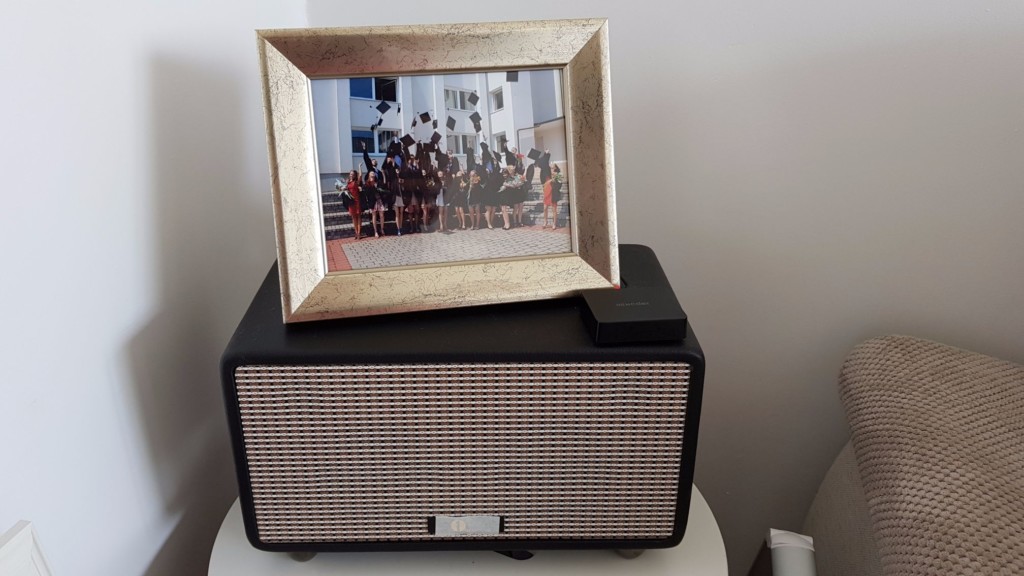
I decided to test this gadget with my old-school speaker that does not have Bluetooth built-in. With the Mixcder TR008 unit, you can switch between TX and RX mode. Transmitter mode (TX) allows you to turn a non-Bluetooth TV, PC, CD player or other devices into a Bluetooth transmitter while pairing with Bluetooth devices. The Receiver mode (RX) lets you turn a non-Bluetooth speaker, headphones or other devices into a Bluetooth receiver.
I didn’t have any issues connecting the unit the speaker and then pairing it with my phone (tested with the Samsung Galaxy S8). The sound quality has been great and I didn’t have any connectivity issues thanks to the Bluetooth 4.2.
CONCLUSIONS
The Mixcder TR008 has been working fine so far as I’ve been testing it for a couple of weeks. It would have been nice if it was made of some premium materials like aluminum but that would be the only shortcoming that is worth mentioning. Other than that, the device works as advertised so far and thus, I can recommend it.
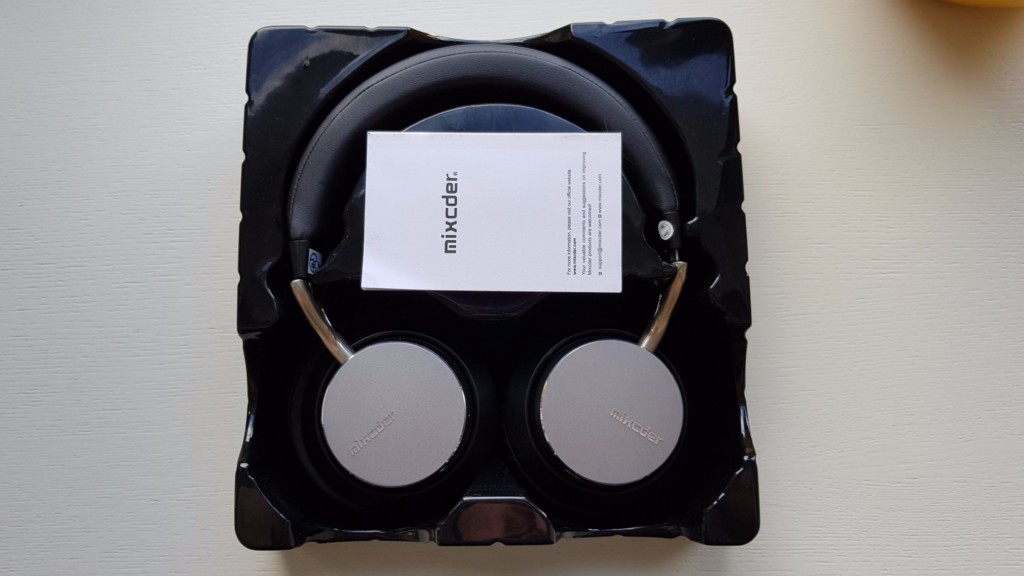
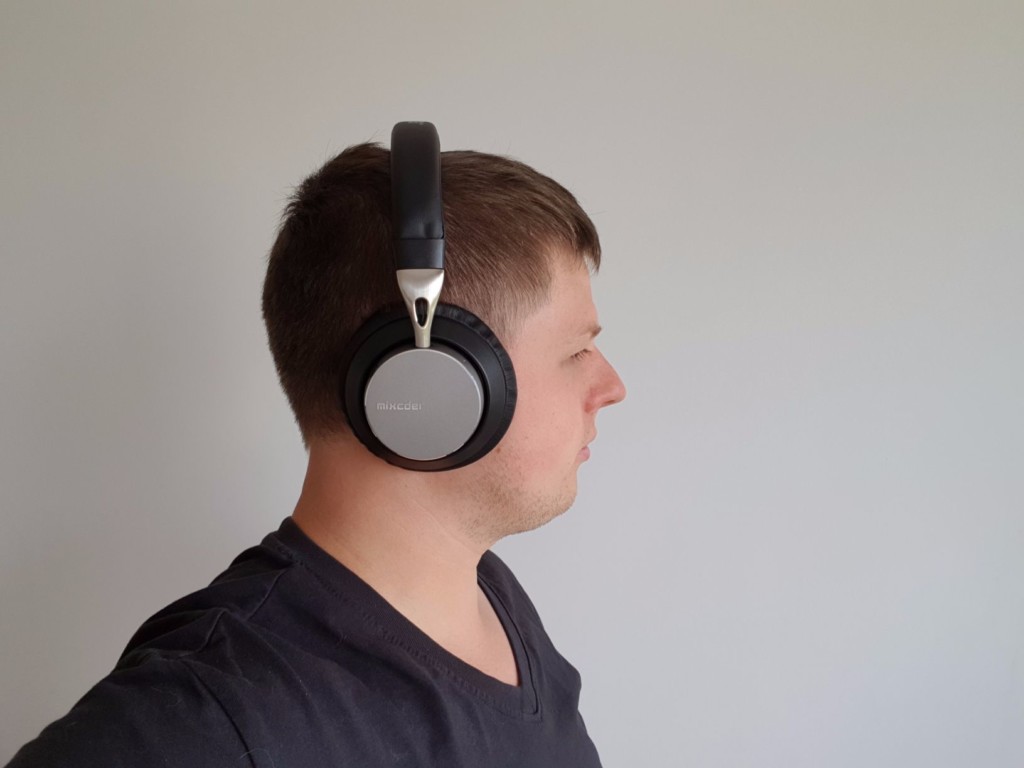
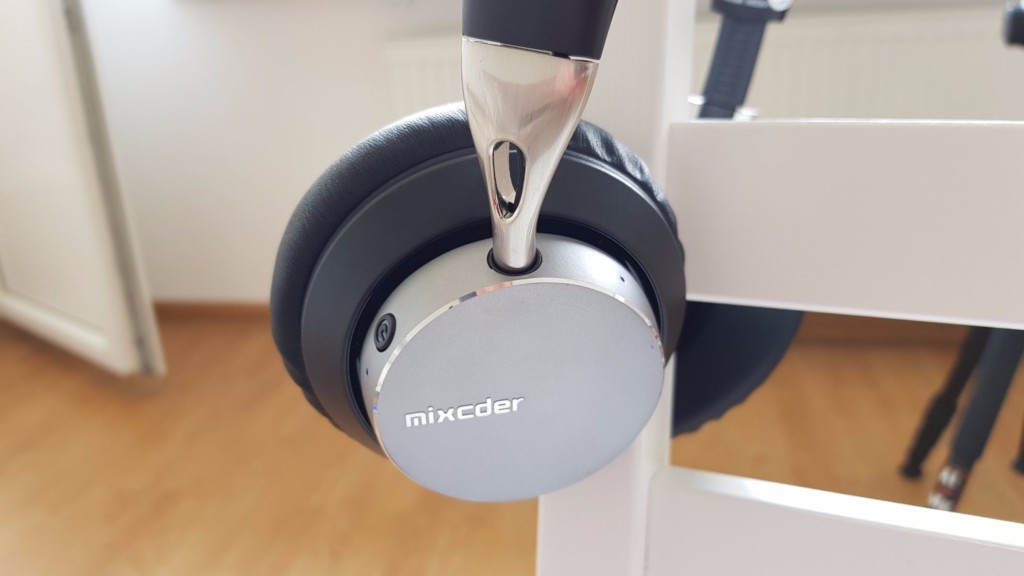
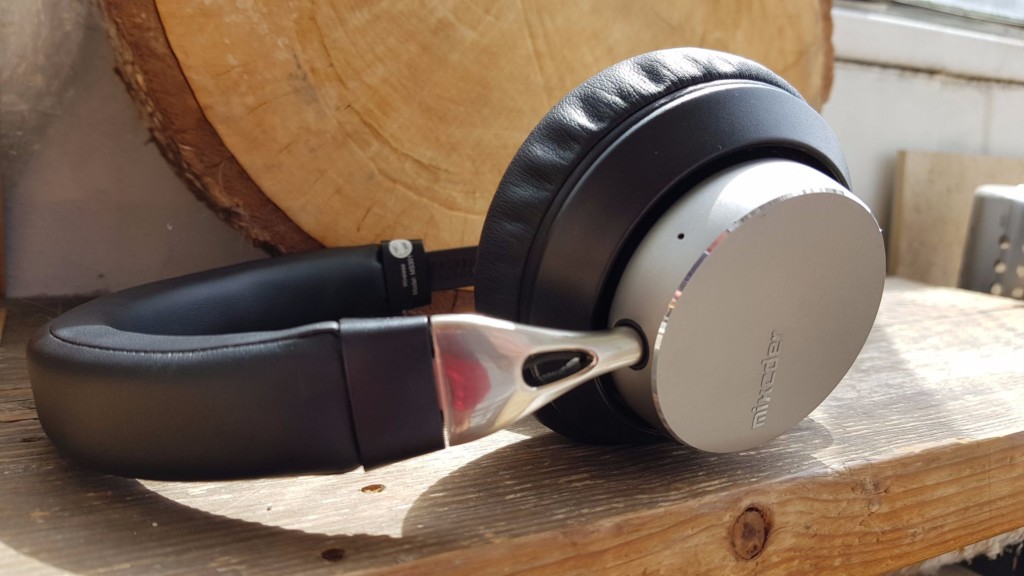
Mixcder is not a newcomer to the headphone game as the company has released quite a few different models. The Mixcder MS301 is one of their latest premium headsets that has good sound quality, great looks and more for the price of about $90. Learn more in the full Mixcder MS301 Bluetooth noise isolation headphones review.
UNBOXING
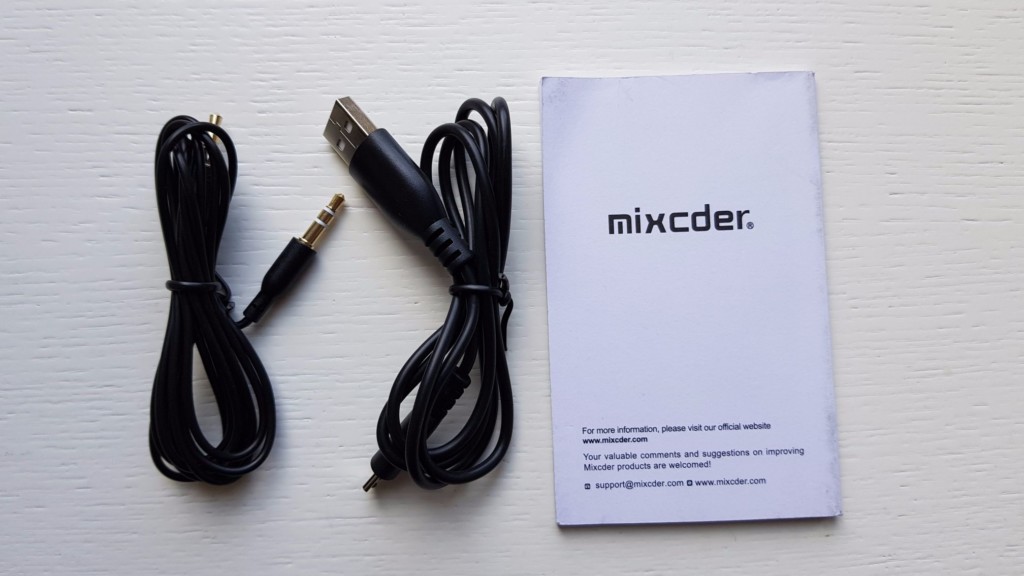
What you are getting in the box is the micro USB charging and the 3.5mm audio cables, and some documentation.
DESIGN
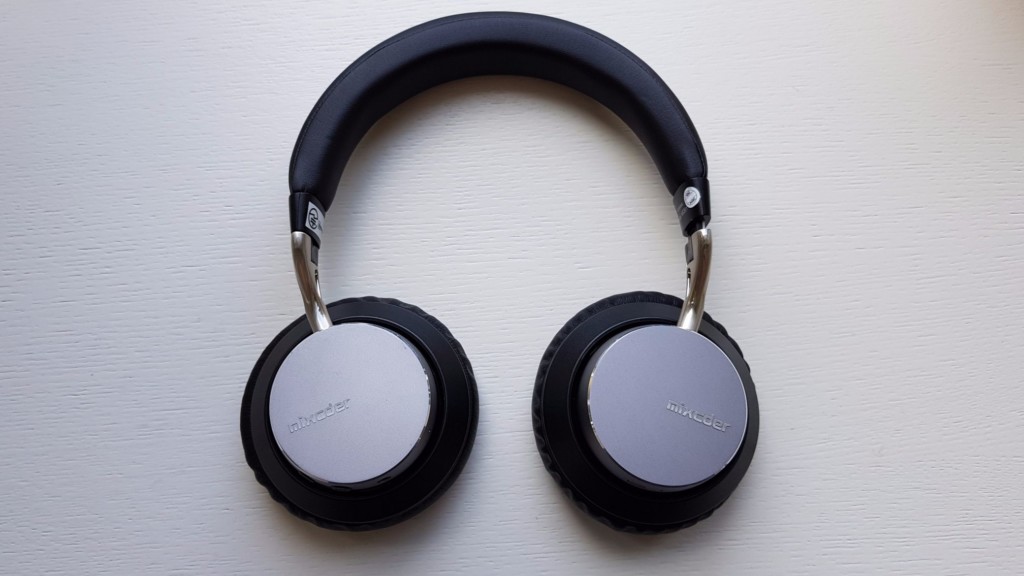
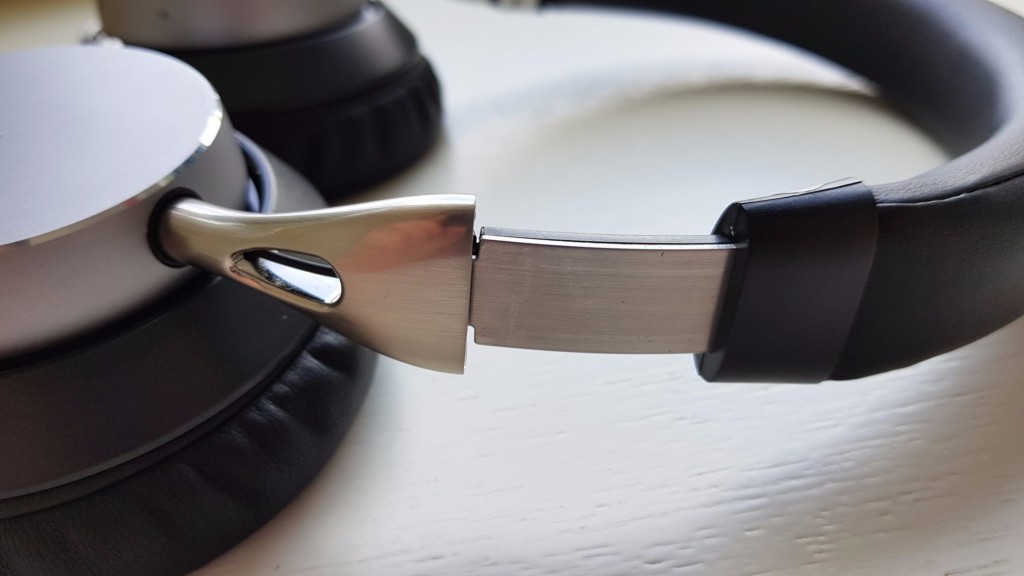
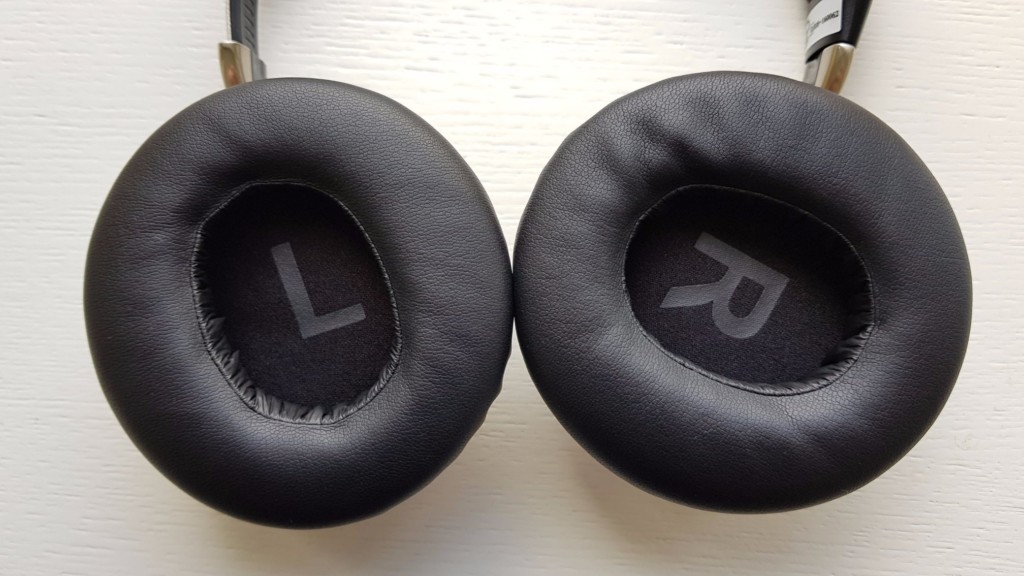
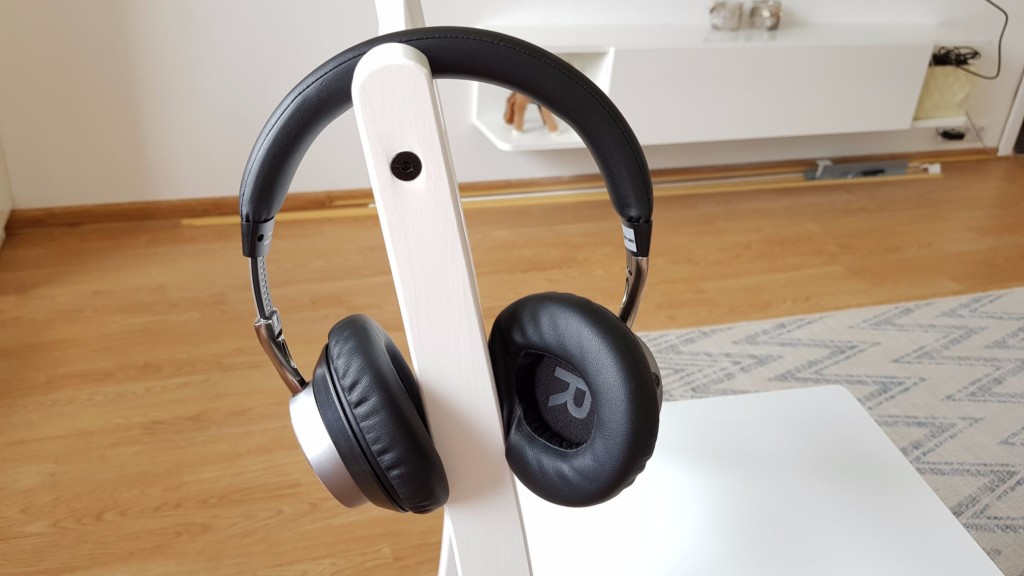
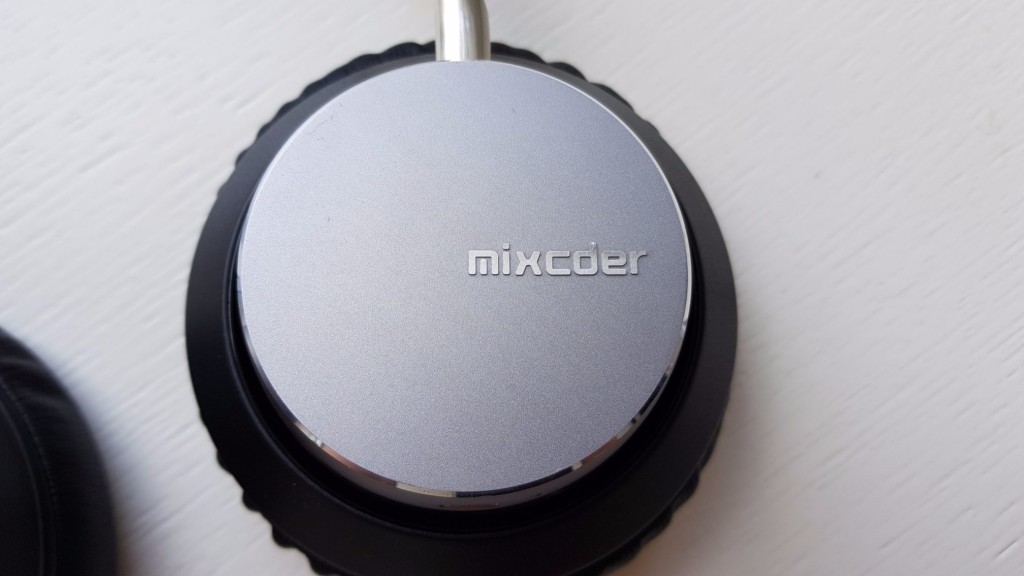
When it comes to the design of the headphones, they look really premium. The headset combines aluminum housing on the outside and soft leather on the inside.
The headphones are very elastic and the speaker part can be easily adjusted.
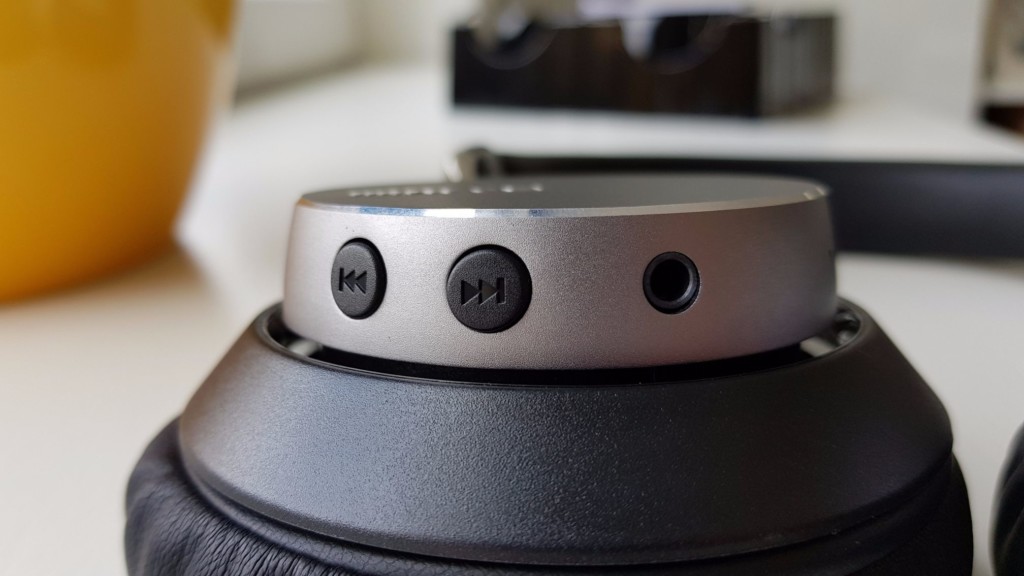
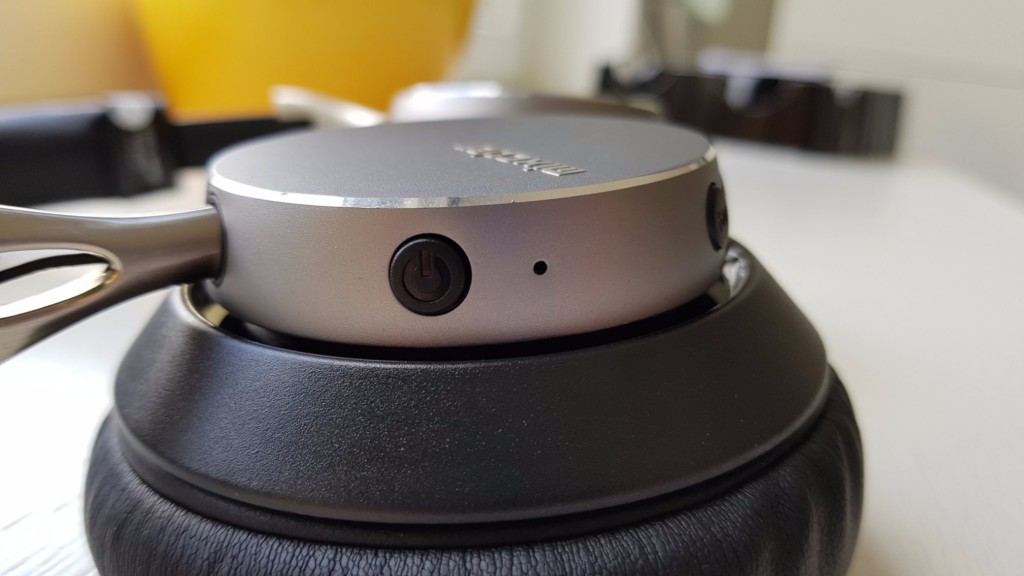
On the right we have a 3.5mm headset jack, a set of controls, which include volume up/down, skip tracks buttons, play/pause/answer call button as the Mixcder headphones have the embedded mic for hands-free calling. The call quality is good as I could hear everyone clearly and I did not have any complaints from the people I spoke to via the phone.
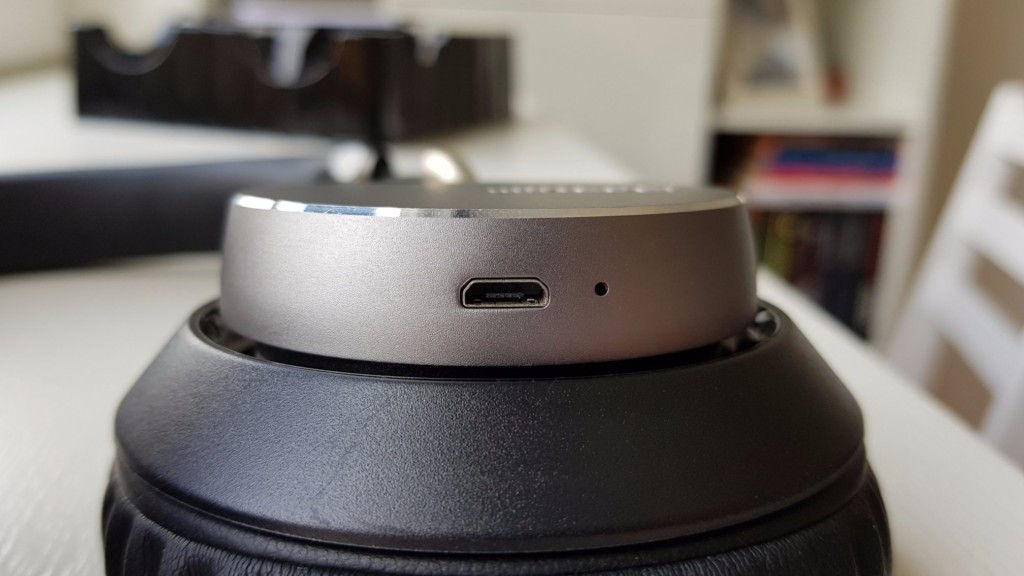
On the left headphone, we have a micro USB port for charging.
What’s most important – these headphones are very comfortable to wear and I didn’t want to take them off even after a few hours.
SOUND QUALITY
The sound quality is just impressive thanks to the 40mm large-aperture driver with advanced APTX-LL technology, that provides lossless transmission and crystal clear, smooth sound without compression or interruptions via Bluetooth.
The headphones are loud, the sound that is coming out is balanced, has rich tones and depth in it. The level of bass is really good too. Overall, I am very pleased with the sound quality.
As for noise isolation, it is not on par with the premium headsets from Sony or Bose but the headset still does a decent job canceling the outside noise.
CONNECTIVITY and BATTERY LIFE
The headphones work either via the Bluetooth 4.2 or via the 3.5mm headset cable. I did not have any latency issues and in general, I have no complaints about connectivity.
As for the battery, I could get over 18 hours of music playback, which is quite an impressive result.
CONCLUSIONS
Mixcder MS301 are pretty good Bluetooth noise isolation headphones that offer great build quality, they are comfortable to wear, the sound quality is really good, battery life is awesome and in general, we haven’t noticed any issues yet.
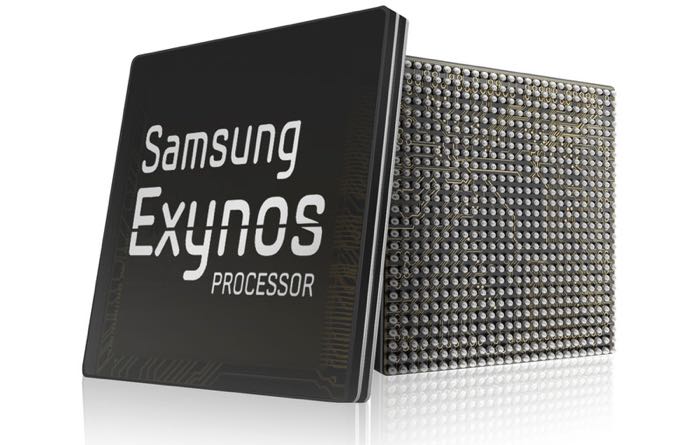
An insider revealed on Weibo that next year’s Galaxy S9 and S9 Plus will launch with an Exynos 9810 that will have CDMA network support. He however didn’t mention if there will no longer be Snapdragon variants of the Galaxy S Series anymore.
When Samsung launches a new flagship, it usually comes in two versions: an Exynos powered variant and a Snapdragon variant. One of the major reasons for having a Qualcomm variant is because a large part of the CDMA technology used by cellular networks such as Sprint and Verizon is owned by Qualcomm.
If there will be no more Snapdragon variants of the Galaxy S series, then it means they both have reached an agreement in relation to CDMA patents issue. It may also mean Samsung will be able to sell its chips to third party OEMs.
Earlier this year, Taiwan’s fair Trade Commission accused Qualcomm of abusing the “Standard Essential Patent” by preventing Samsung from selling its chipsets and modems to other smartphone companies. Irrespective of the licensing issue between them, Samsung still made the Snapdragon 835 chip for Qualcomm. However, Qualcomm is moving to TSMC for the production of the Snapdragon 845.
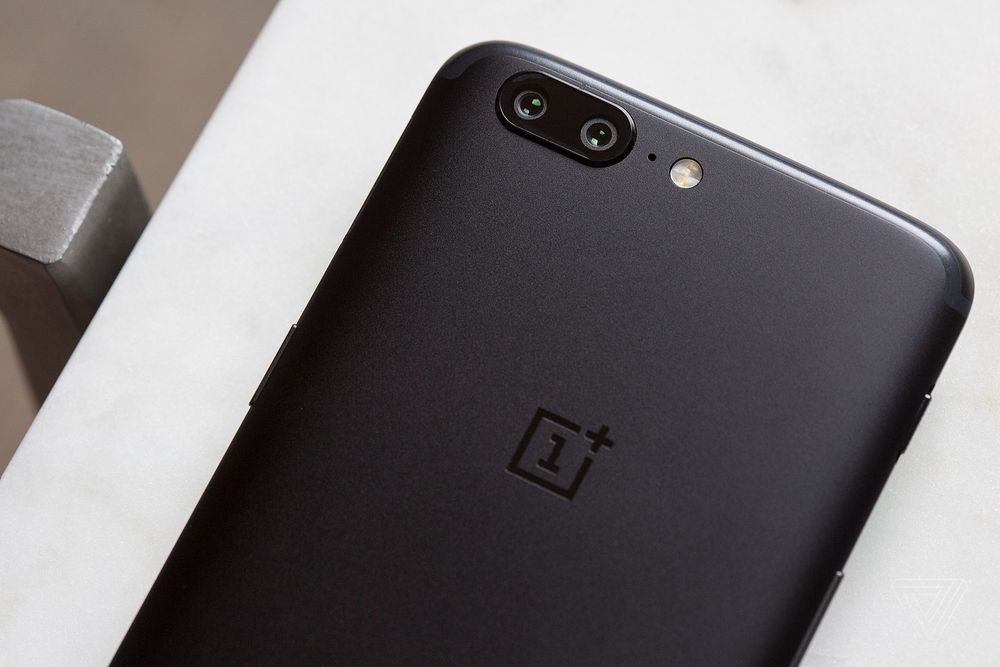
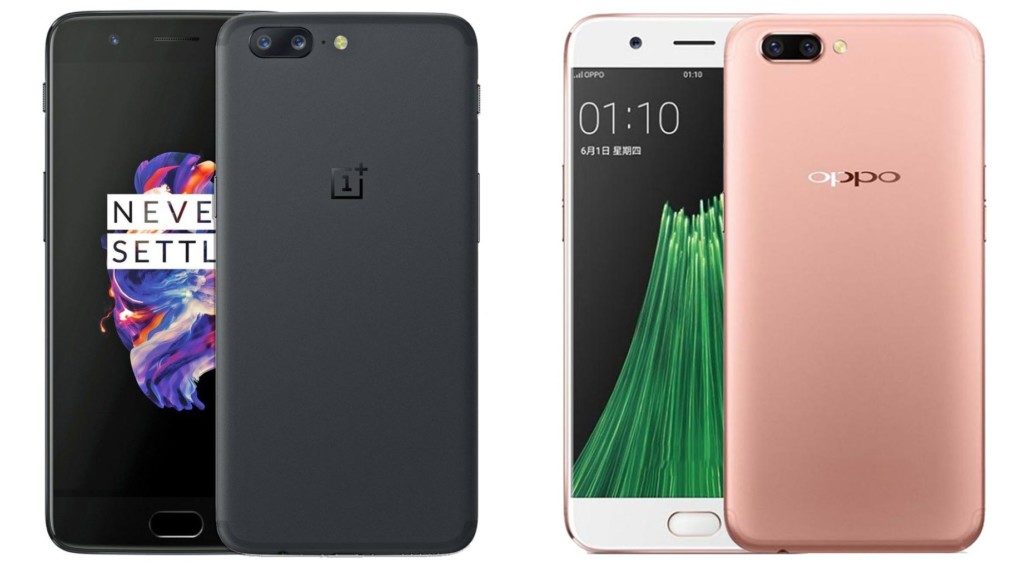
This week’s release of the OnePlus 5 and Oppo’s R11 June 10 release, we can finally compare the OnePlus 5 and its sister Oppo R11 between each other.
Both the phones look very similar to each other and to the iPhone 7 Plus, but there are some key differences that set them apart from each other.
Design
From the image, we can see OnePlus has opted for antenna lines that curve toward the edges of the phones, same principle as the R11. But they are not exactly the same as the R11 has a three line design while OnePlus 5 uses a single band antenna design. Further OP5 differs from the R11 in terms of the notification slider, USB-C and the microphone between the cameras and flash on the OnePlus 5.
Hardware Specifications
In this department, we begin to see where the resemblance beings to depart. The CPUs powering each device differ, the OnePlus 5 housing Snapdragon’s high-end 835 processor compared to the Upper-Mid Tier Snapdragon 660. The RAM is greater in the OnePlus at 6/8GB whilst the R11 houses 4/6GB. OnePlus has also ensured consumers that internal storage will be 64/128GB UFS 2.1 whilst the R11 will come with 64GB with eMMC speeds.
Camera
Both smartphones run with dual-rear firing shooters, to the general consumer both smartphones almost share near-identical camera setups. The OnePlus 5 (16-megapixel IMX398 regular sensor with f/1.7 lens and a 20-megapixel IMX350 sensor with f/2.6 telephoto lens), R11 (16-megapixel IMX398 regular sensor with f/1.7 lens and a 20-megapixel IMX376 sensor with f/2.6 telephoto lens).
The clearest difference is the telephoto lens, it appears that the R11 will be using a more recent variant, however, following OnePlus and DxO’s collaboration, we should be expecting the OnePlus 5’s camera performance to be better.
As for the front-facing selfie shooter, there is more difference, the OnePlus 5 16-megapixel IMX371 with f/2.0 lens and the Oppo R11 20-megapixel with f/2.0 lens.
Features
The OnePlus includes NFC and USB-C (with audio output) not found on the R11. Whilst the R11 offers MicroSD expansion (up to 256GB). In terms of connectivity, both OnePlus 5 models will come with Global band support, whilst the R11 will support a limited amount.
Do the key differences provide a clearer division between OnePlus 5 and Oppo’s R11?
We use cookies on our website to give you the most relevant experience by remembering your preferences and repeat visits. By clicking “Accept”, you consent to the use of ALL the cookies.
This website uses cookies to improve your experience while you navigate through the website. Out of these, the cookies that are categorized as necessary are stored on your browser as they are essential for the working of basic functionalities of the website. We also use third-party cookies that help us analyze and understand how you use this website. These cookies will be stored in your browser only with your consent. You also have the option to opt-out of these cookies. But opting out of some of these cookies may affect your browsing experience.
Necessary cookies are absolutely essential for the website to function properly. This category only includes cookies that ensures basic functionalities and security features of the website. These cookies do not store any personal information.
Any cookies that may not be particularly necessary for the website to function and is used specifically to collect user personal data via analytics, ads, other embedded contents are termed as non-necessary cookies. It is mandatory to procure user consent prior to running these cookies on your website.