In recent weeks, OnePlus has been working hard to polish its OxygenOS operating system, providing many new features as well as quality-of-life improvements. The brand has just released the OxygenOS 14.0.0.701 update for the OnePlus 11 smartphone which comes with a long list of changes and improvements.
OxygenOS 14.0.0.701 changelog
New smooth animations
Adds wallpaper zoom and seamless icon transitions during app launch and exit for a smoother visual experience.
Adds a bounce animation effect when sliding to the bottom of the notification drawer and optimizes the layer effects of Quick Setting icons and widgets, bringing a more natural and delicate visual effect.
Optimizes the transition animations for Home screen icons and widgets and adds wallpaper zoom animations upon device unlock.
Adds wallpaper zoom animations and gradual brightness transitions when the screen is turned on or off.
Optimizes the background colors and Gaussian blur effects in Quick Settings, Notification drawer, Home screen drawer, and Global Search.
Optimizes the transition animation when the Lock screen clock and buttons disappear upon device unlock.
Optimizes animations when entering and exiting Global Search, ensuring a smoother and more consistent visual experience.
New touch control experience
Adds a transition animation when swiping in from one side of the screen to exit an app before it starts up.
Adds a transition animation when swiping in from one side of the screen to go back to the previous page before a new page is opened.
Adds a transition animation when swiping inward from a side of the screen or swiping up to exit an app in landscape mode.
You can now tap the lower right corner of a large folder to view more apps.
You can now pull down app icons in large folders and then open an app in just one move.
Improves touch control responsiveness. Tapping and swiping on the Home screen and Recent tasks screen is now faster and more stable.
Increases touch responsiveness for app usage scenarios, for example, when opening and closing apps, entering and exiting recent tasks, or swiping on the gesture guide bar to switch between apps.
Optimizes animations when using large folders. Dragging apps on the Home screen is now smoother.
System
Adds a horizontal layout for the Lock screen clock.
You can now choose not to show the track when drawing the Lock screen pattern to unlock your device.
You can now adjust the volume in Quick Settings.
You can now adjust the size of a floating window by dragging its bottom and swipe up to close a mini window.
Improves system stability.
Integrates the April 2024 Android security patch to enhance system security.
This update is currently being pushed to Indian users, with plans for a global release in the coming days. As usual, the update will arrive in batches, so expect it to take around a week to arrive on your device. That being said, you can also manually check the availability of the update on your device by navigating to Settings > About Device > OxygenOS > Check for Update.
HP unveiled the new ZBook Power 16 G11 (Zhan 99) mobile workstation on its official website on May 10th. It boasts a larger 16-inch 16:10 aspect ratio display compared to the previous generation’s 15.6-inch 16:9 screen. Users can choose from multiple display options with varying resolutions (1920×1200 or 2560×1600), brightness (300-1000 nits), color gamut (45% NTSC or 100% sRGB), and touch support.
The laptop has a bunch of customization options to choose from
Under the hood, you can configure it with either Intel Core Ultra processors (i5, i7, i9) or AMD Ryzen processors (including Pro versions). Both options come with Nvidia RTX Ada graphics ranging from RTX 500 to RTX 3000. The machine also boasts dual DDR5 SO-DIMM memory slots, dual M.2 solid-state drive slots, a 5-megapixel camera with infrared face recognition and privacy shield, and rich interface options including Thunderbolt 4 and RJ45 ethernet.
It packs an 83Wh battery with a 150W power adapter and weighs in at least 2.04kg (Ryzen) and 2.122kg (Intel). The consumer version might offer RTX 4050 graphics but is not yet available. Specific information on RAM and storage capacity is not mentioned in the report.
Bugatti unleashed details about their beastly new V16 engine destined for the upcoming Chiron successor at the “Automotive Future Summit” in London. This hybrid powerhouse throws out the turbochargers of the past, stretches nearly a meter long, and signifies the end of the classic W16 engine as Bugatti wraps up production of the Mistral and Bolide.
The engine will allow the car to get from 0-200 km/h in only 5 seconds
The new V16 muscles its way into a plug-in hybrid system, churning out over 1,000 horsepower by itself. But wait, there’s more! Three electric motors join the fray, two for the front wheels and one for the rear, bringing the total system output to a mind-blowing 1,800 horsepower. Bugatti boasts the car can launch from 0 to 200 km/h in a mere 5 seconds, hit 300 km/h in 10 seconds, and reach a staggering top speed of 445 km/h. For those wanting a taste of electric driving, a 24.8 kWh battery offers an 80-kilometer electric range.
Leaked spy photos suggest the interior will embrace a retro theme, drawing inspiration from the intricate design of Swiss mechanical watches. Production is expected to be extremely limited, possibly even below 300 units.
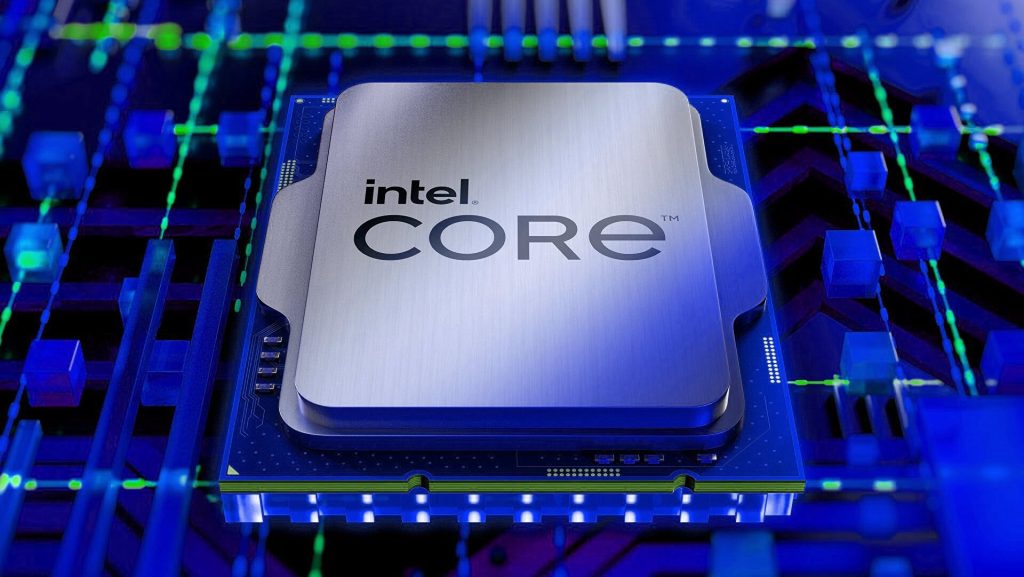
Intel introduced its Meteor Lake processors towards the end of last year. The company is also expected to release the next Arrow Lake desktop CPUs later this year. According to a leak, the first Arrow Lake CPUs will be named Core Ultra 9 285K, Core Ultra 7 265K, and Core Ultra 5 245K.
Now the recent leak from tipster MebiuW on Weibo suggests that at least the Core Ultra 9 285K (which is considered as a successor of the i9 14900KS) will have a 700MHz lower clock speed than the 14900KS. The Core i9 14900KS reaches up to 6.2GHz, whereas the 285K will reportedly cap at 5.5GHz.
The Arrow Lake CPUs may offer better stability
While the 14900KS will reach a 12% higher clock speed as compared to the upcoming 285K, the new Arrow Lake CPU will reportedly still perform better. However, the difference won’t be much. The tipster noted that the 285K will have a less than 12% higher single-core performance (with a 12% lower clock speed) as compared to the 14900KS.
Actually, it could still be an overall improvement over the 14900KS. The 13th and 14th generation Core i9 CPUs are not really stable and power efficient. In fact, there have been numerous reports of the chips crashing while playing games or doing similar heavy tasks. It could be due to the high temperature.
The extremely high clock speeds give Intel chips a slight edge in performance against AMD‘s offerings. Now it seems that Intel is focusing on stability as well.
The Core Ultra 9 285K, is expected to feature 24 cores and 24 threads of which 8 cores will be based on the Lion Cove P-Core architecture & 16 cores will be based on the Skymont E-Core architecture. It is unclear at this point whether the unlocked K-series chips will also utilize 20A or go with TSMC’s 3nm process node.
Ridley has launched its first electric road bike called the Ridley E-Grifn. The new e-bike is well suited for urban as well as off-road movement and it comes with some decent features. The performance cycling company is offering both pedal-powered and assisted versions of the Grifn.
Features
The E-Grifn reflects the uncompromising design strategy of Ridley and it comes with the Mahle X20 drive unit. The drive unit itself contributes about 3.2kg to the overall weight of the e-bike. The bike’s torque sensor is capable of delivering a maximum torque of 55Nm which is a decent output for a hub motor. The Mahle X20 drive unit delivers almost zero mechanical resistance at speeds above 15.5 mph (25 km/h). the Ridley E-Grifn has a 350Wh integrated battery in addition to an optional 171Wh range extender. The range extender, if included, replaces the water bottle mount on the e-bike.
The E-Grifn can be fully recharged in just 3.5 hours and achieves 80% charge within two hours. The bike has a 72-degree steerer that straddles between the steeper angles of a performance road bike and a shallower gravel bike. It has a lower bottom bracket than other performance road bikes and 420mm mainstays. This design allows the e-Grifn to generate the needed optimal power when accelerating. The bike is versatile to ride on the road and in slight off-road conditions and will come with up to 42mm tires. Buyers can decide to do away with the front derailleur clamp to suit their gearing preferences. Mechanical and electronic gear shifting options are available with the E-Grifn.
Customers can finetune their preferences for the Ridley E-Grifn and Grifn via the company’s online configurator. This also includes the desired paintwork for the bike. The Ridley E-Grifn is priced starting from €5,499 ($5,910) and can be purchased directly via the company’s website.
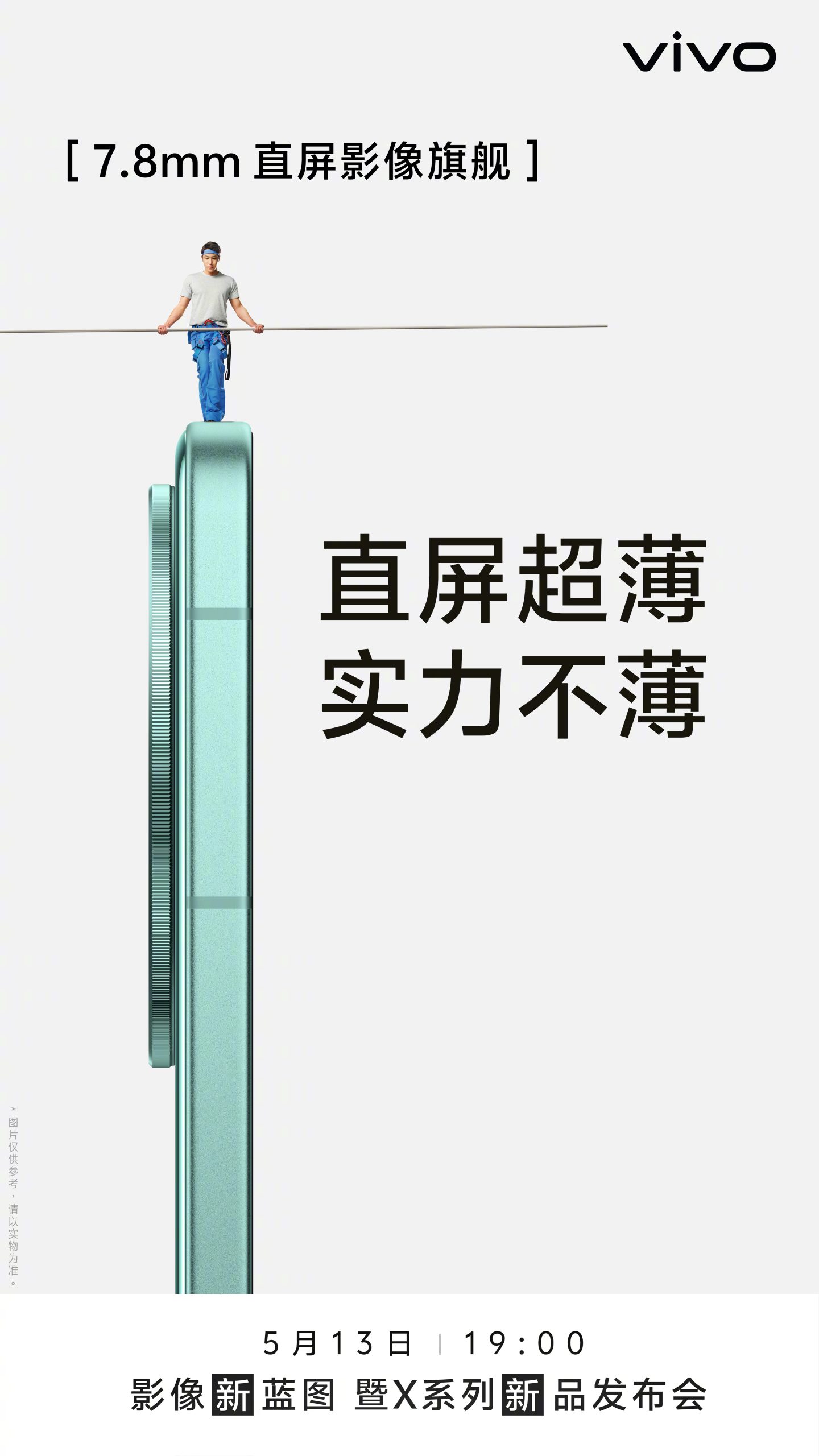
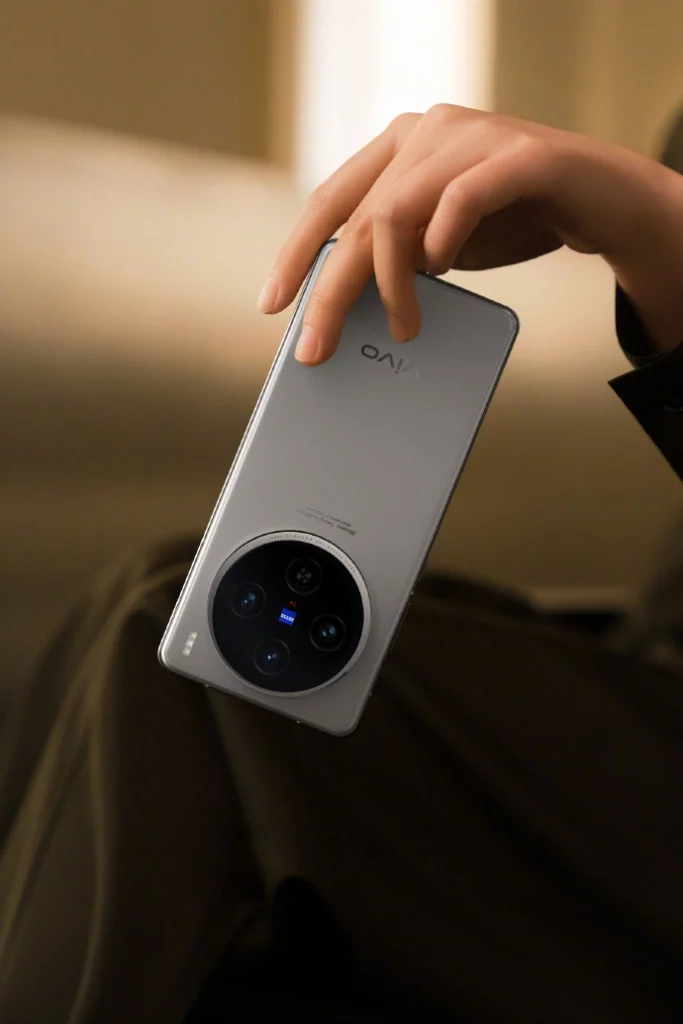
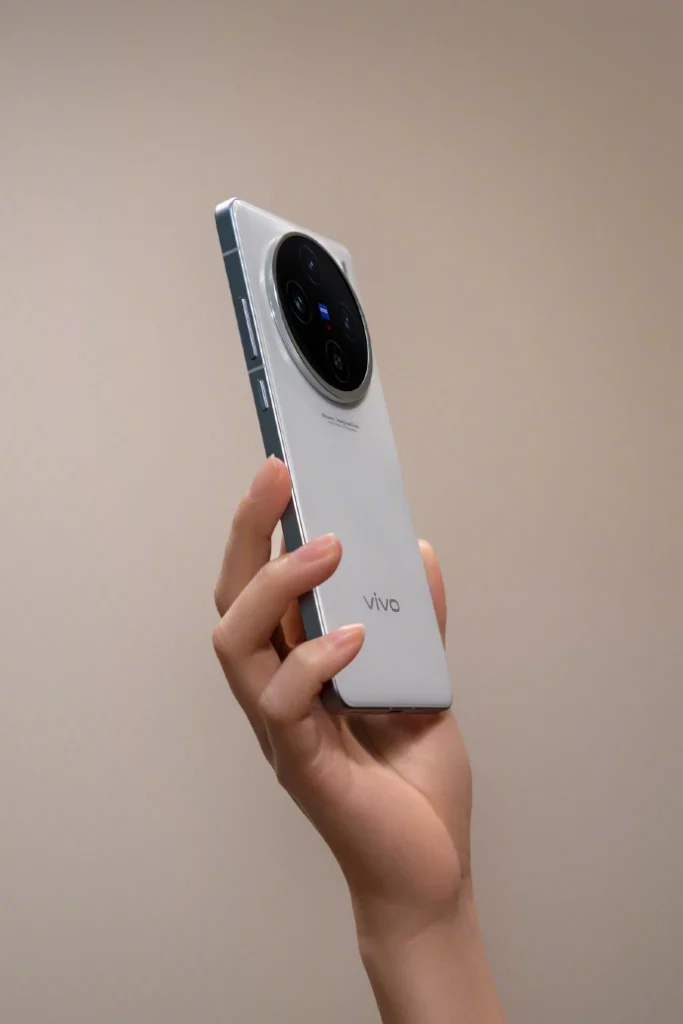
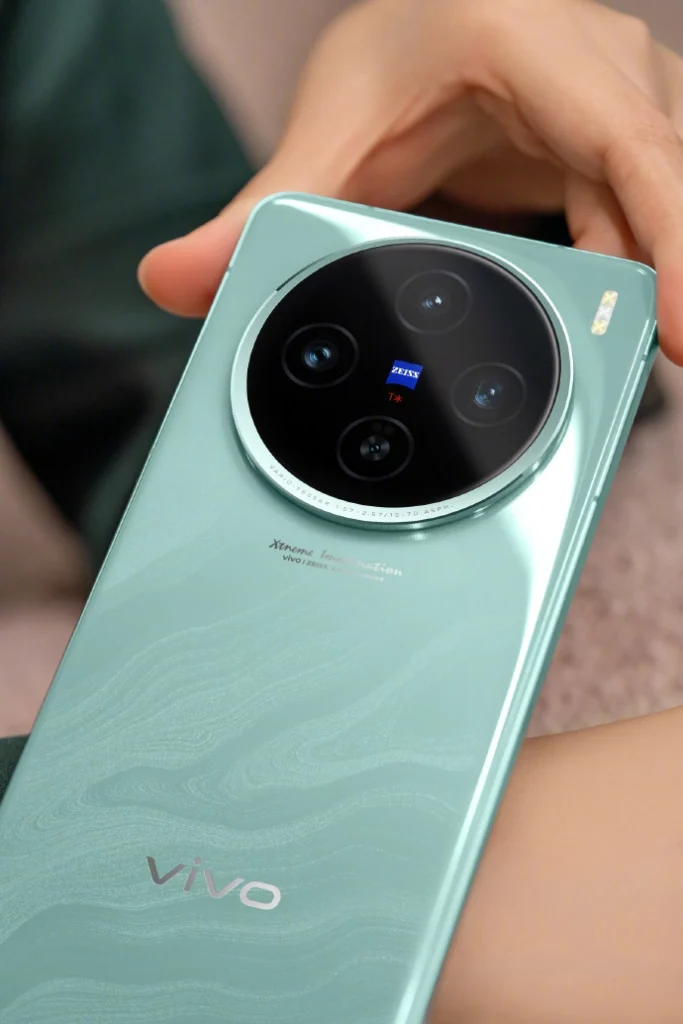
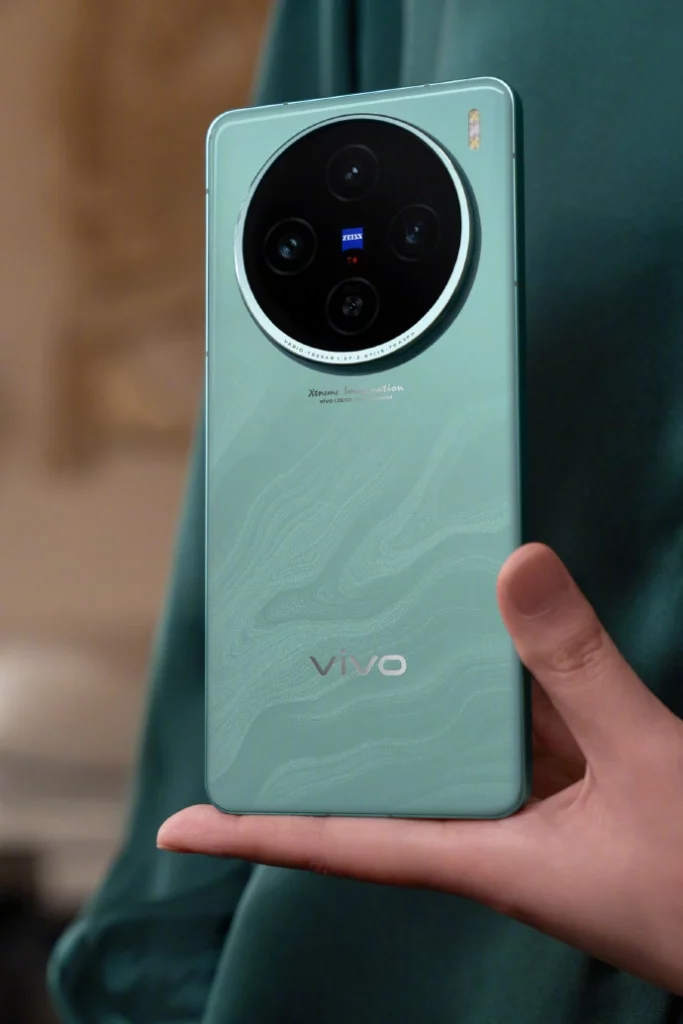
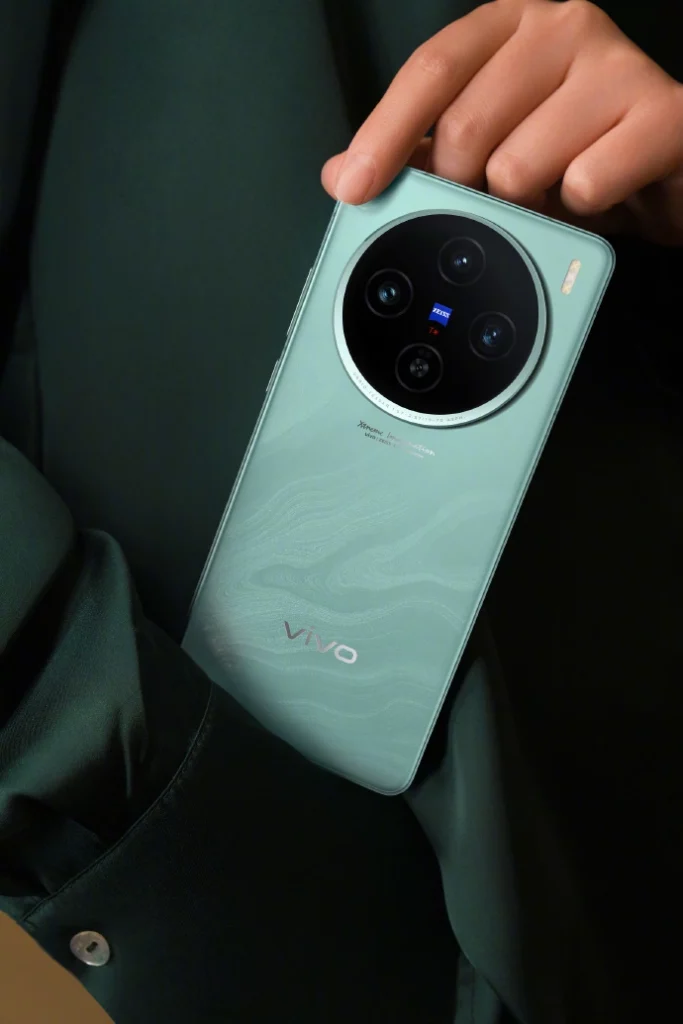
vivo’s upcoming X100s smartphone will be introduced to the market as the successor to the X100. While the X100 comes with the Dimensity 9300 chipset, the X100s is expected to feature the Dimensity 9300 Plus. vivo had already announced that the vivo X100s will have a thickness of 7.8mm, and now they have shared hands-on images.
Vivo X100s thin profilevivo X100s
You might wonder why vivo advertises the phone’s 7.8mm thickness as it is a great thing. If you consider the recently introduced flagship phones are now almost all above 8mm, phone manufacturers realize the modern devices are uncomfortably thick. The predecessor of the X100s, vivo X100 released a year ago has a thickness of 8.5mm. While the vivo X100S may not have camera specs as impressive as the Ultra model, its thinner design undoubtedly provides a better feel in hand.
vivo X100s
Many Android smartphone manufacturers are now starting to move away from curved displays, and vivo has also opted for a flat display with the vivo X100s. The previously released phone, vivo X100 actually had a curved display. Using a flat display can be beneficial in reducing the device’s thickness, so opting for a flat display is certainly a good idea. Thus, with the vivo X100s, vivo joins the flat display trend in their X series, as the X90s had come with a curved screen previously.
Official vivo images showcase the X100s in at least two color options. The phone’s back reveals the show with its huge camera array, while the right side houses the combined power and volume buttons.
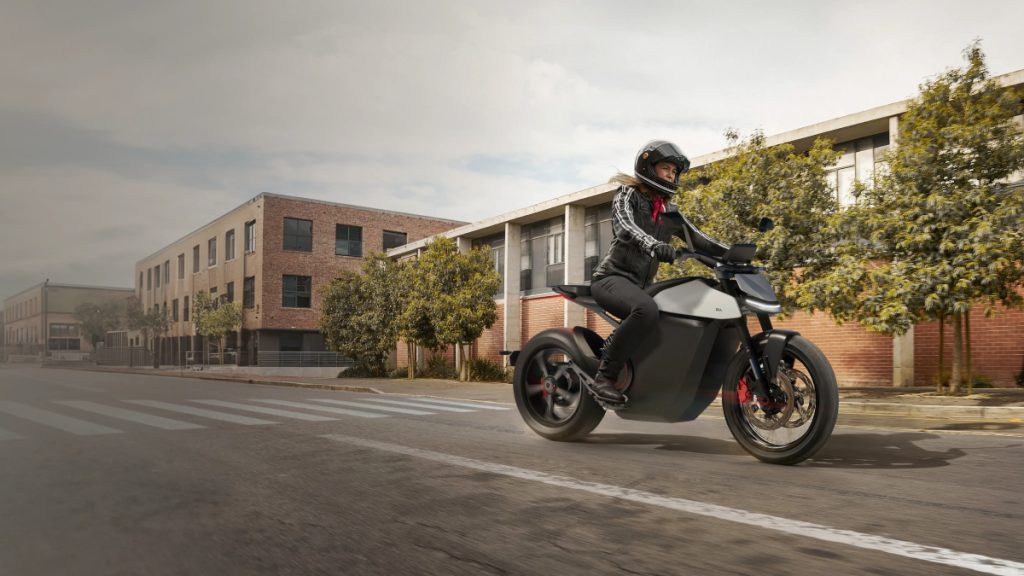
Bengaluru-based EV manufacturing brand, Ola Electric has filed patents for three upcoming electric bikes. The new motorcycles are similar to the Ola Roadster concept e-bike that is listed on the company’s website. The famous Ola S1 e-scooter lineup has been a huge hit even with the issues relating to battery fires previously. Ola Electric plans to foray into the electric motorcycle segment with the filing of the patents for the upcoming motorcycles.
Design & Features
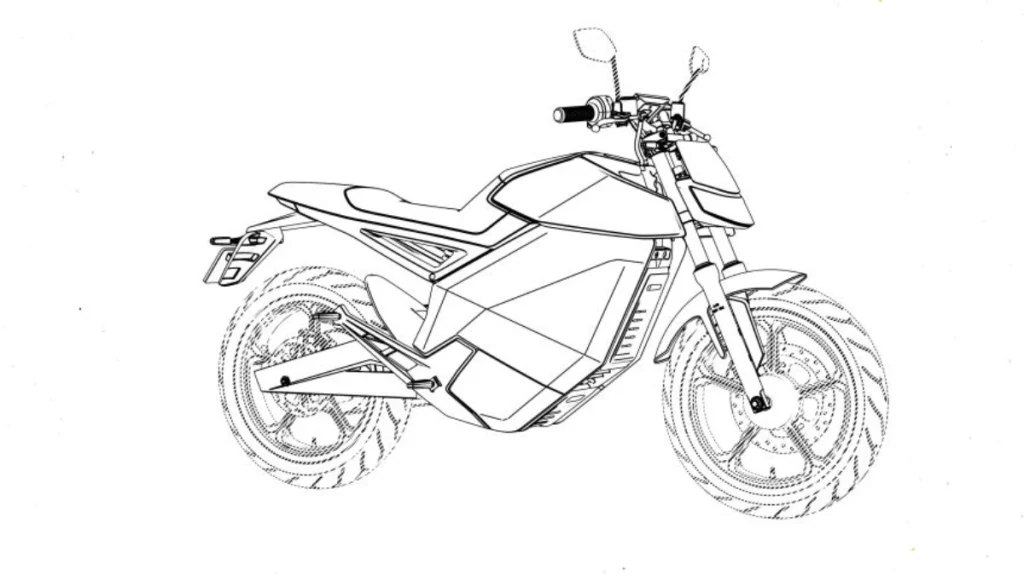
Ola has tinkered with several ideas in the past but these recent patent filings could signal a new lineup. The latest journals for patents in India indicate that three new patents for electric motorcycles were filed by the company. The three designs in the patents could translate to three different versions of the Cyber Racer model. The three models, from the patent images, have visual distinctions that set each of them apart from the others.
As per the models, the patent with the thinnest tire and basic alloy wheel design seems to be the base model. It has a hub-mounted motor at the rear wheel, a basic swingarm, and shock absorbers. It has sharp creases and a flat single-piece seat. The other two models are sportier than the base variant and both seemingly share the same basic specs including the powertrain, suspension, swingarm, and most of the details on the panel. There are however some differences that distinguish the two models from each other.
One of the models comes with a single-seat architecture while the other features a dual-seat layout. The ergonomics are also slightly different between the two sporty models of the upcoming Ola Electric motorcycles. The single-seat version has a taller and flatter handlebar while the other has a clip-on handlebar.
There are still several differences between the three Ola Electric patents including their battery cooling, bodywork, and front faces. There are no indications yet on the launch date of these models. The patent filing could however indicate that the unveiling of the new Ola Electric motorcycles could be on the horizon.
Microsoft, following the introduction of its AI assistant Copilot, has already integrated a dedicated Copilot button on its latest Surface devices. This move suggests a future where the Copilot button becomes a commonplace on laptops, further enhanced by the speed of upcoming Qualcomm laptop chipset designed to accelerate AI tasks.
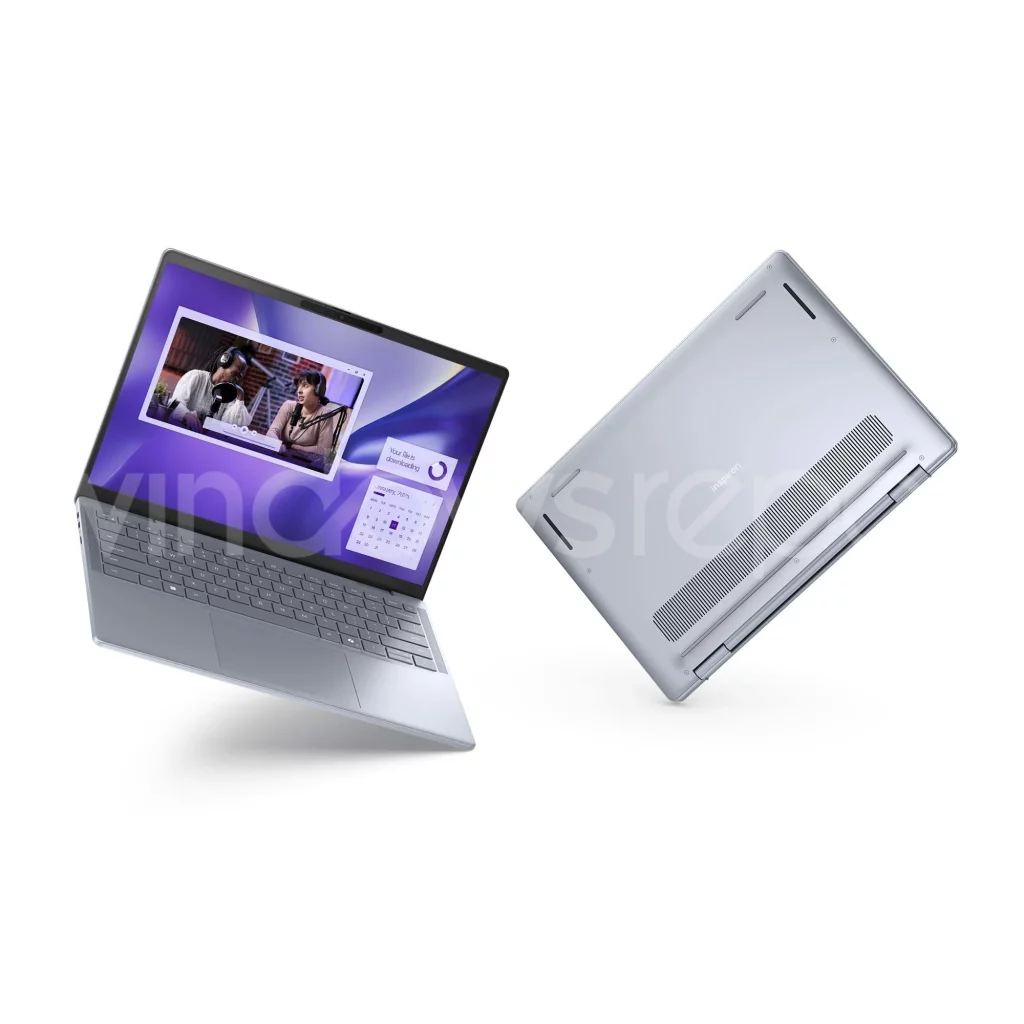
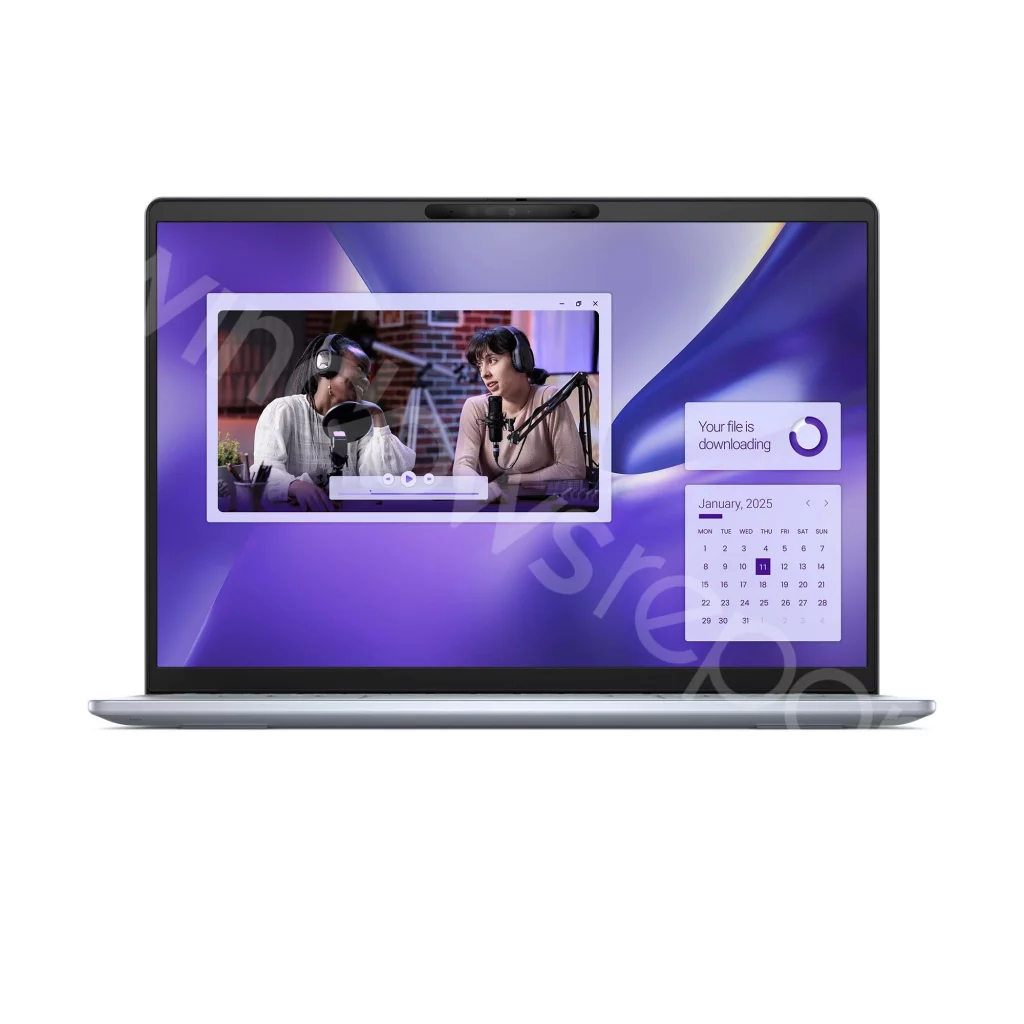
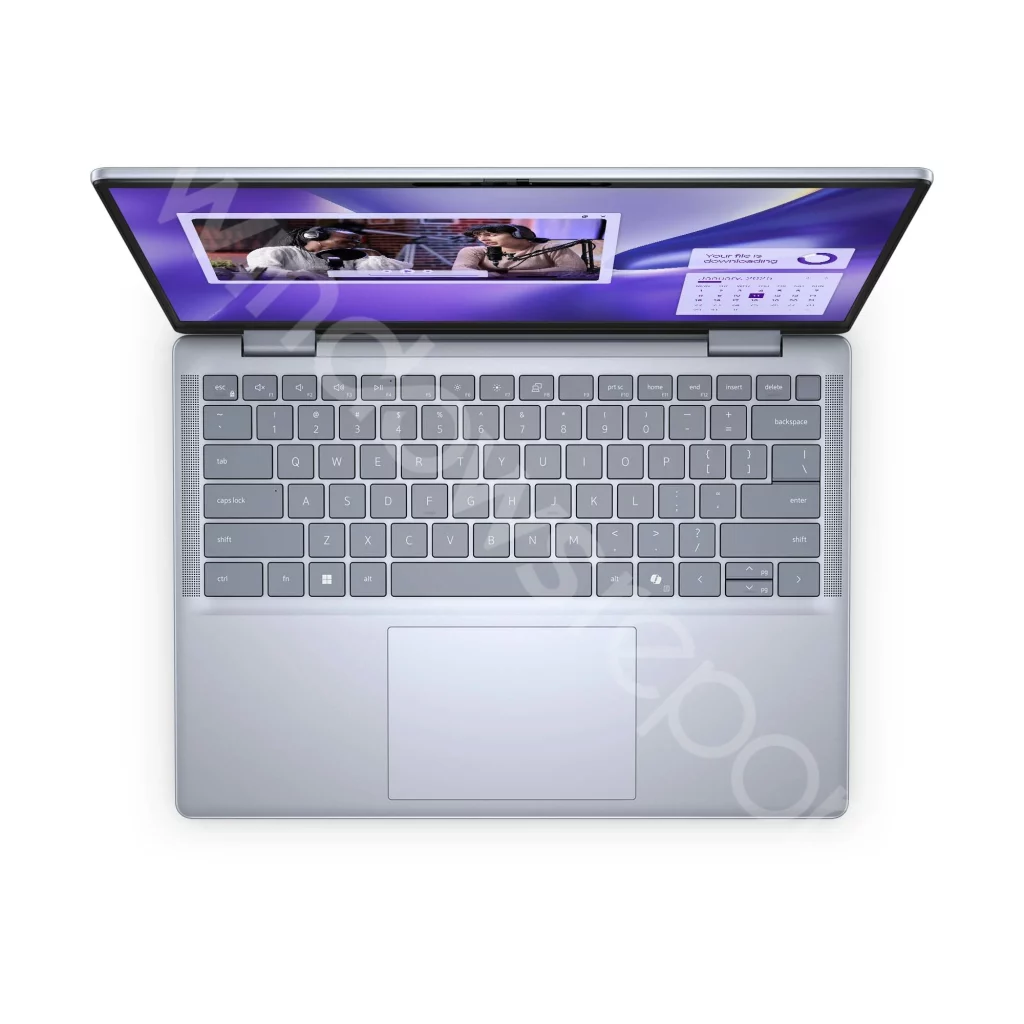
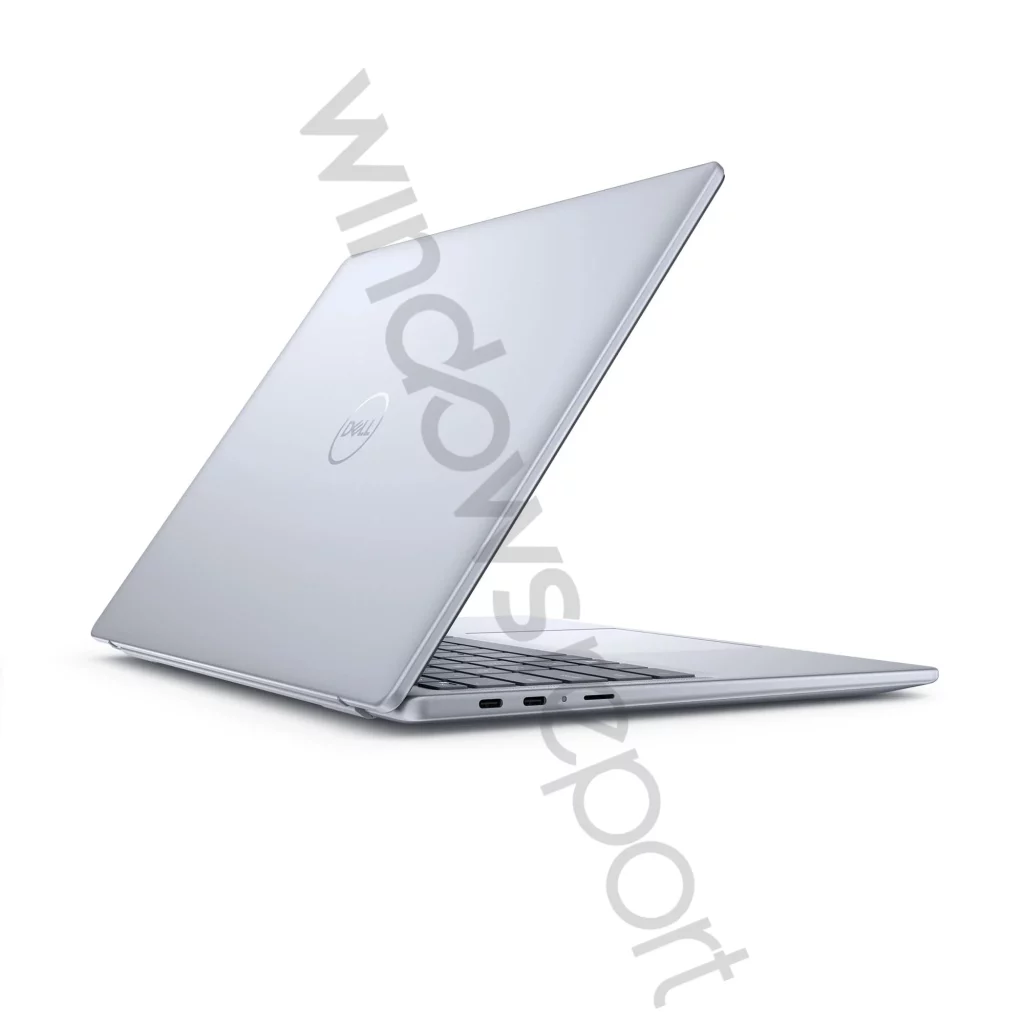
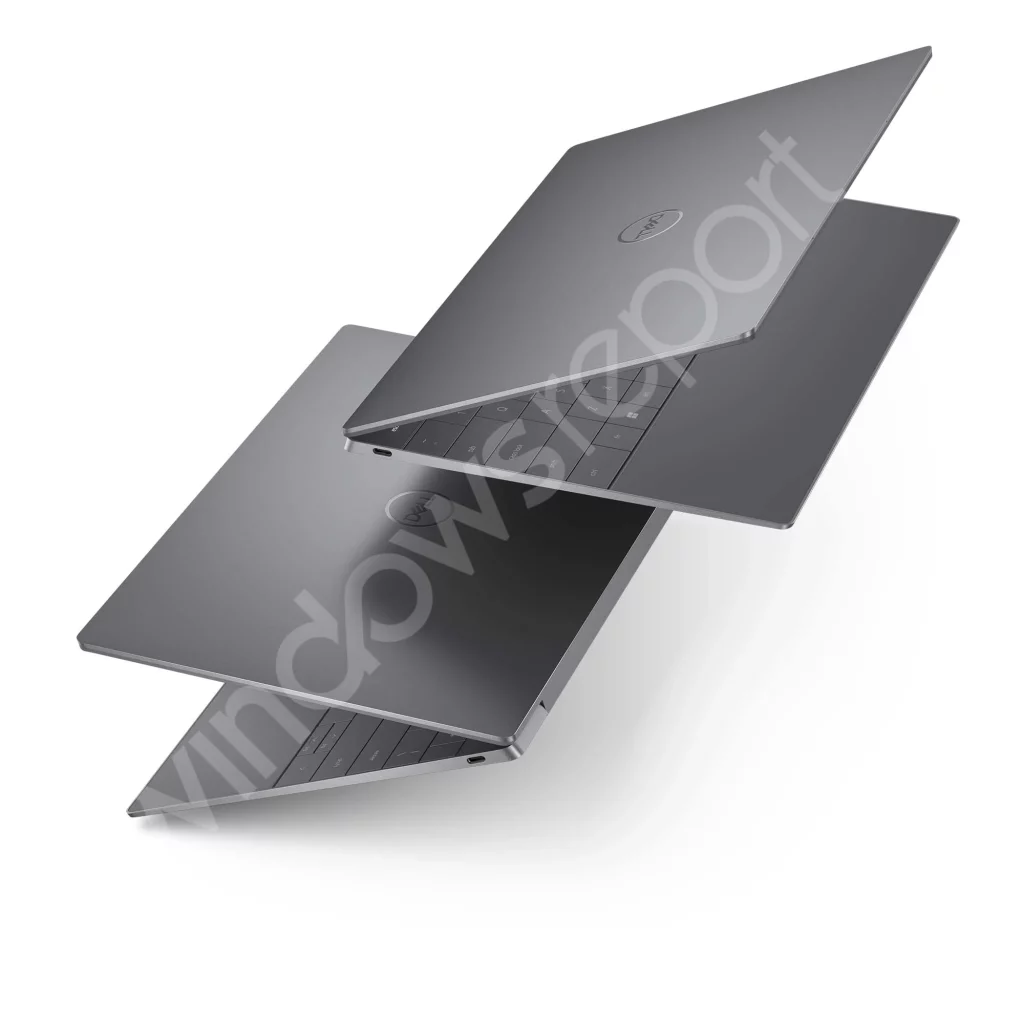
With the latest news from Windows Report, Dell’s upcoming laptop with the Snapdragon X Elite processor has appeared ahead of the launch. Previously, the specs of the Dell Inspiron 14 7441 Plus were revealed through Geekbench results, featuring a 16-core Snapdragon X Elite processor.
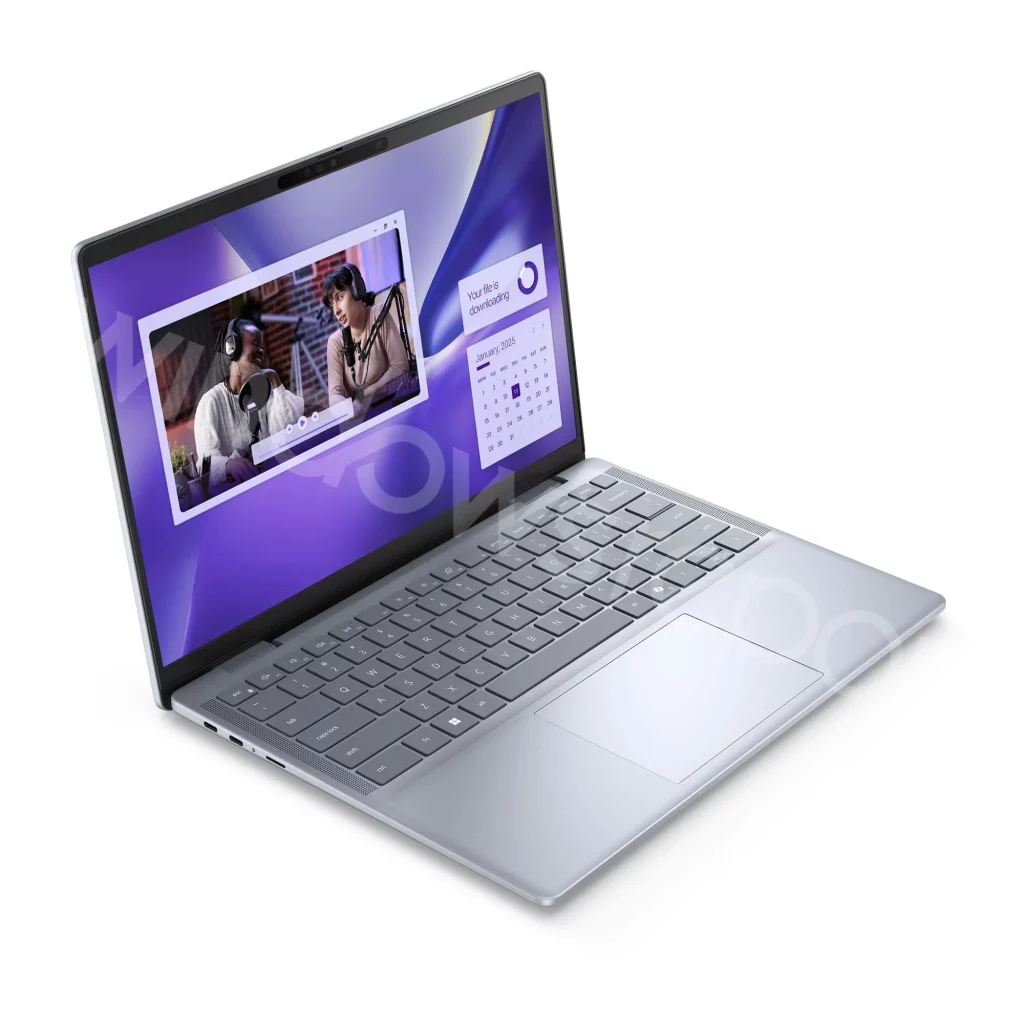
Dell Inspiron 14″ 7441 Plus & XPS 13″ 9345
The Inspiron 14 7441 Plus might be released with Windows 11 24H2 Preview Build installed, and the rumors suggest that this version of Windows will come equipped with AI Explorer and various AI features. Leaked render images reveal that the design of the Inspiron 14 7441 Plus is very similar to the previous Inspiron laptops but with a sleeker and thinner profile. The device features 2 USB-C ports, 1 USB-A port, and 1 microSD card slot, with a fingerprint sensor located on the power button.
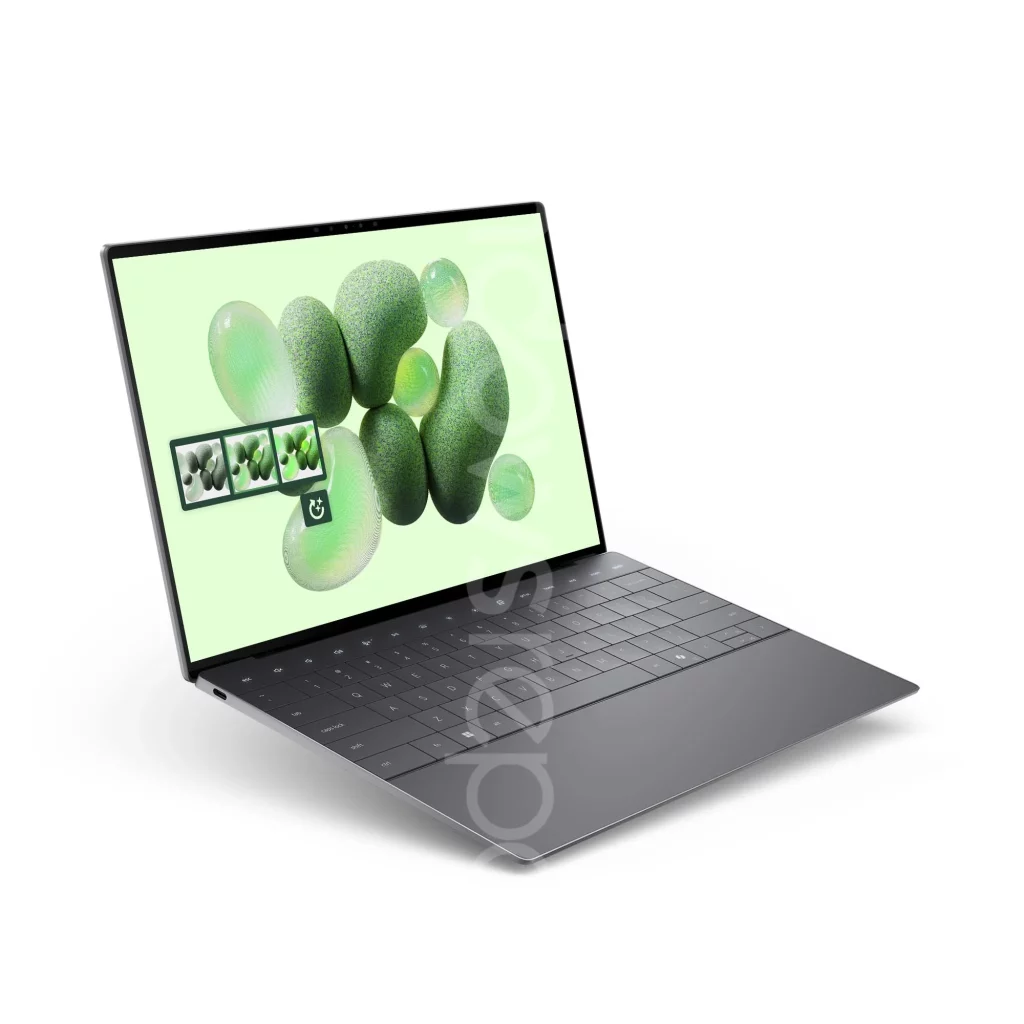
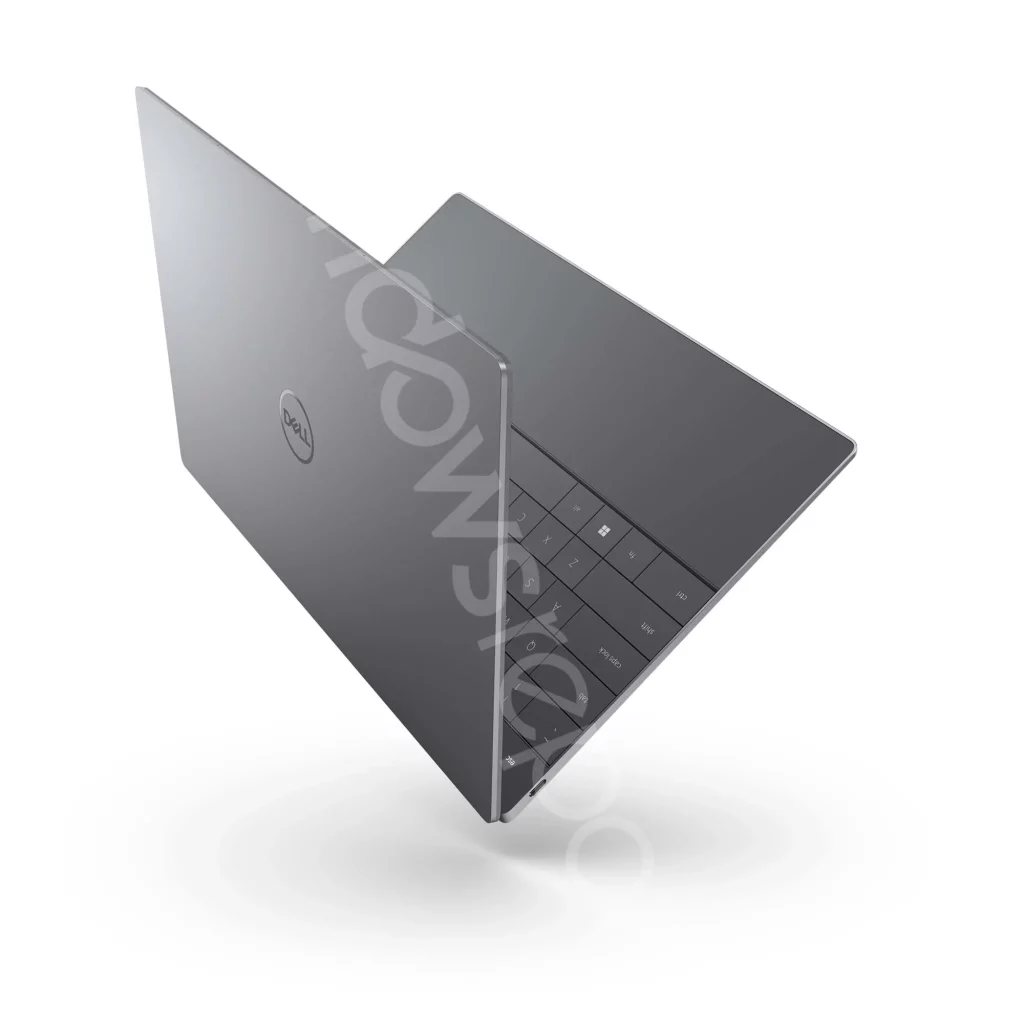
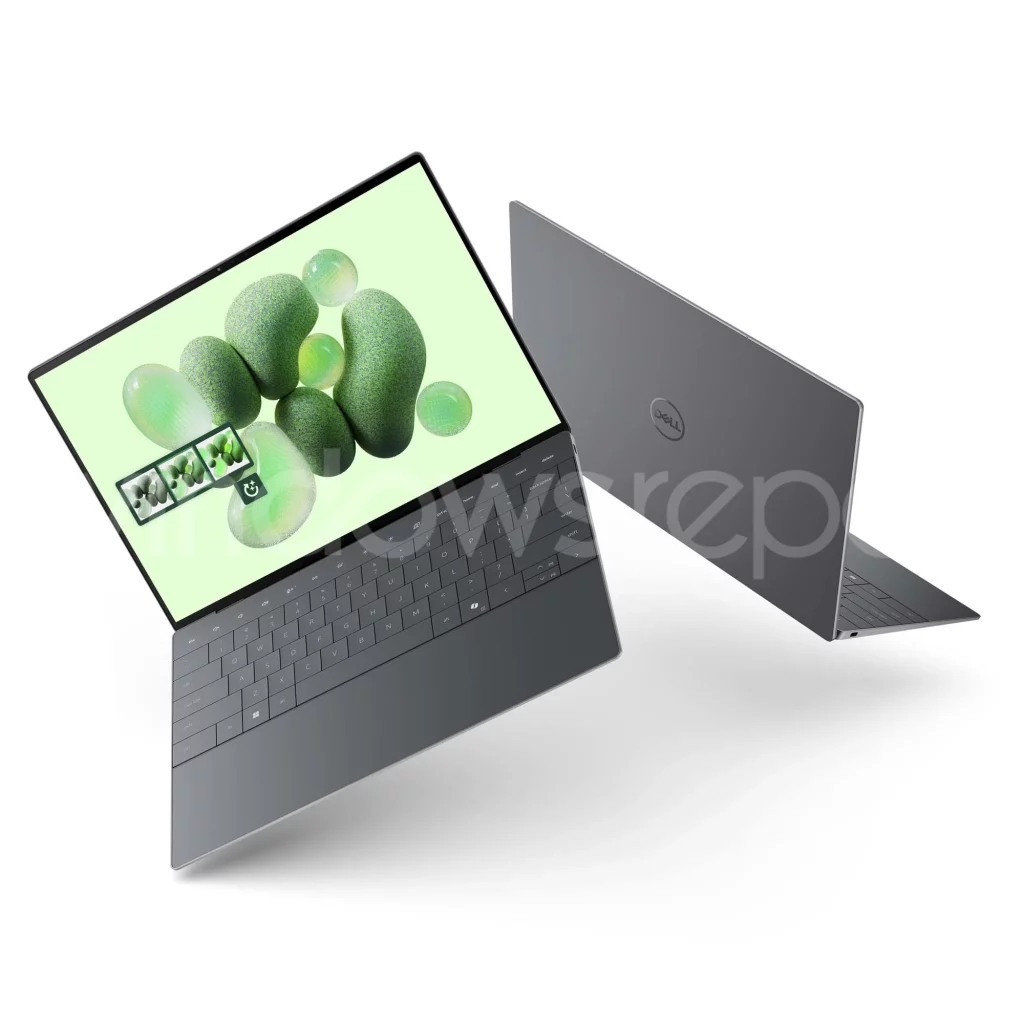
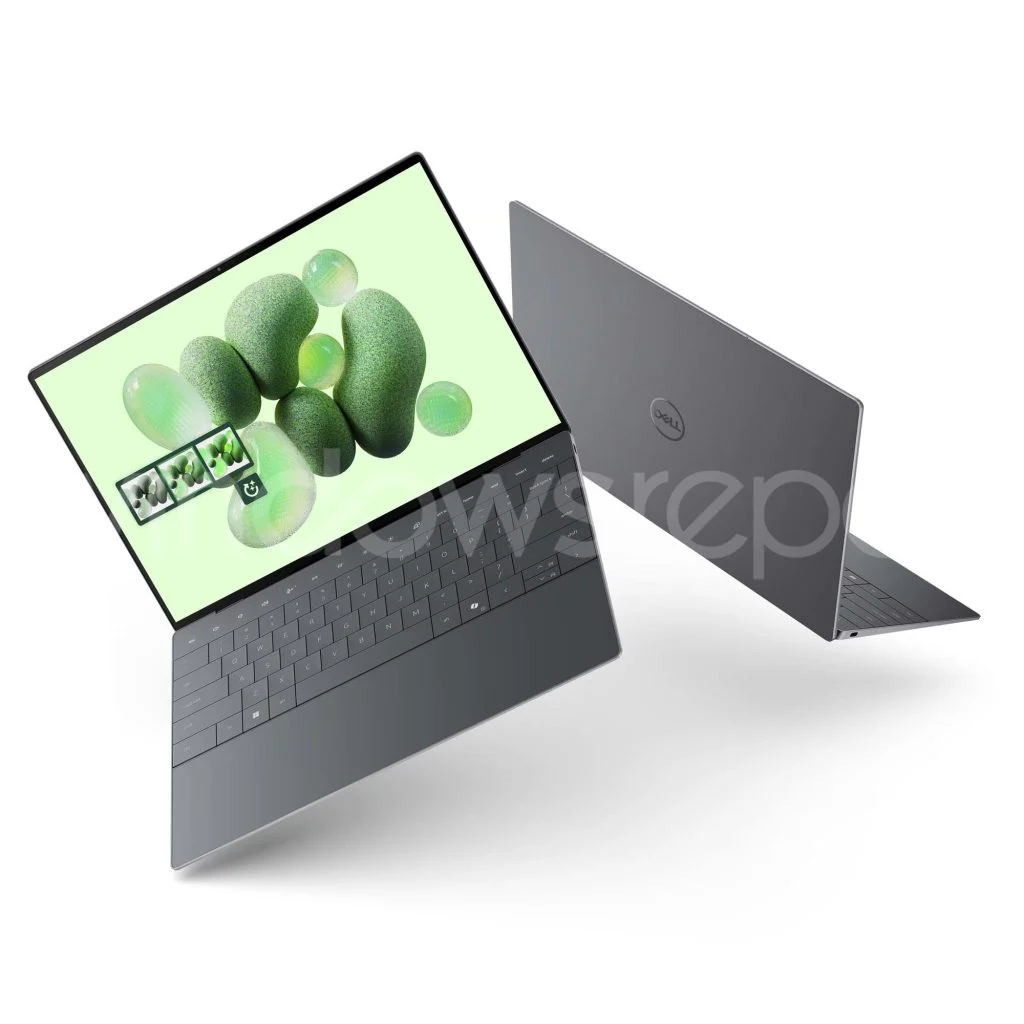
Additionally, render images of the XPS 13 9345 have been leaked, showing a similar design to the Dell XPS 13 Plus. According to Windows Report, the upcoming laptop will be introduced with either the Snapdragon X Elite or Intel Ultra processor, as the previous 13 Plus model came with the 13th gen Intel Core i7-1360P processor.
Dell XPS
Dell’s XPS series is known for its incredibly slim design, and the next XPS device, the Dell XPS 13 9345, will also feature only 2 USB-C ports, positioned with one on each side.
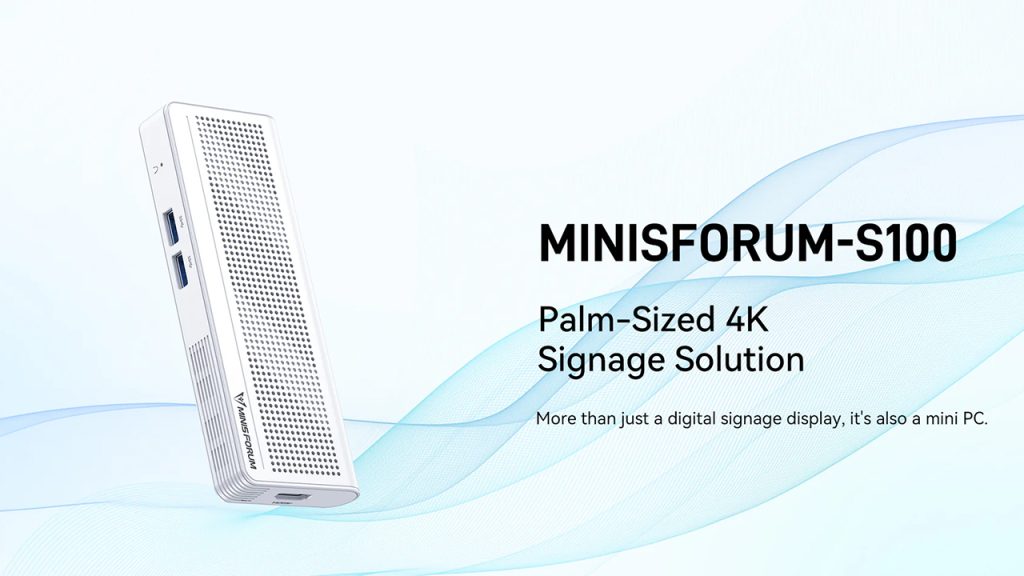
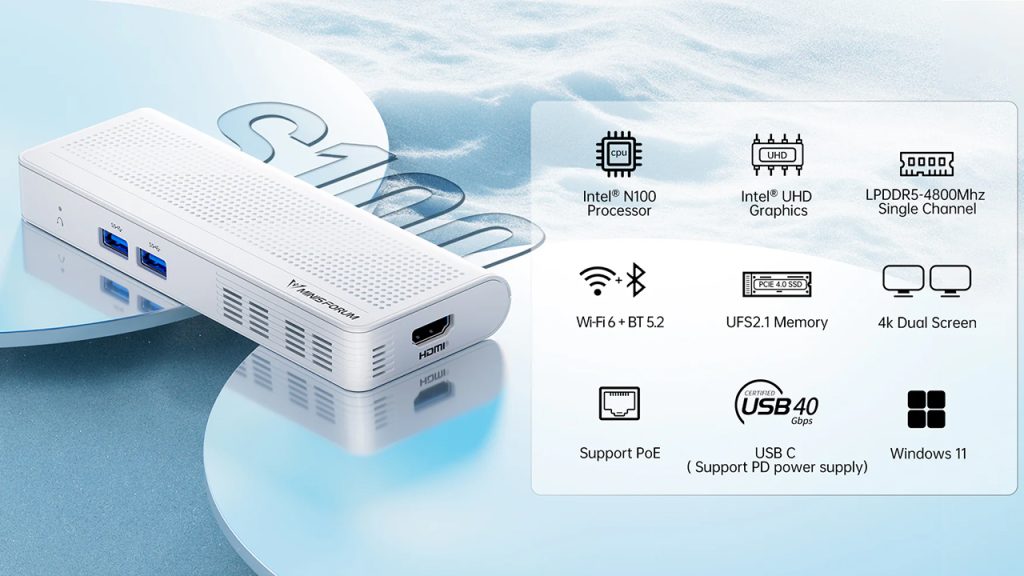
Minisforum unveiled the S100 mini PC after it was introduced at CES 2024. The Minisforum S100 is a pocket-sized mini PC that does not require a power plug for its recharging. It is powered by the Alder Lake-N CPU called the N100 and comes with a pocket-sized design. The new Minisforum S100 mini PC supports Power over Ethernet (PoE). The gadget is suitable for digital signage, small workspaces, and educational settings that do not require high computing power.
Features
The new mini PC joins a list of specs-laden devices that it has released of late. The S100 is currently being launched at a discounted and promotional price. It is a lightweight and compact mini PC powered by the Intel N100 processor. The processor has a quad-core setup and omits Hyper Threading. The 6W Intel N100 is paired with 8GB of LPDDR5 memory. The Minisforum S100 does not feature a storage drive due to its pretty small size. It therefore has only 256GB of UFS 2.1 storage.
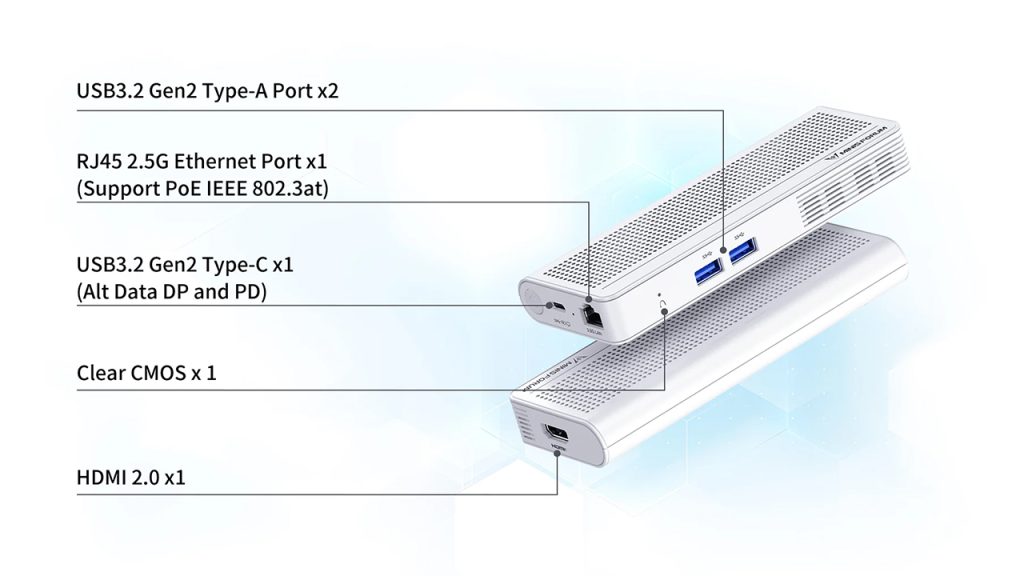
The Minisforum S100 has an in-built cooling system despite its small size. It is equipped with a small fan attached to a heatsink. The device operates at a noise level of 24dB when it’s idle and 43 dB at full load. The mini PC does not require a dedicated power cable for its operation. Apart from its support for PoE, the S100 has a USB 3.2 Gen 2 Type-C port that is used to power the device. The mini PC also has two USB 3.2 Gen 2 Type-A ports and one HDMI 2.0 interface.
Pricing
The S100 is compatible with Bluetooth 5.2 and WiFi 6 connectivity. It supports dual 4K displays and is equipped with Windows 11 operating system pre-installed. The launch price of the Minisforum S100 is $189 and can be purchased directly via the Minisforum website.
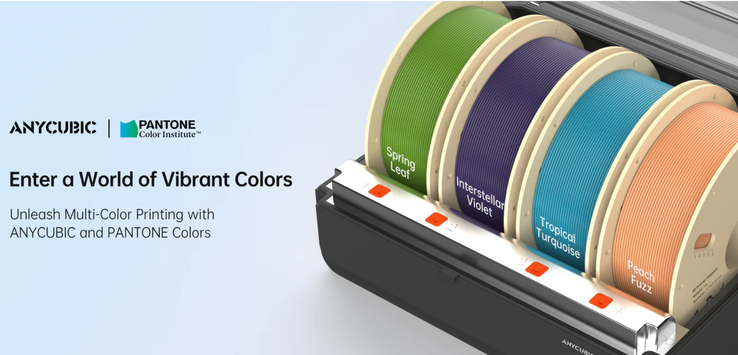
Anycubic has launched the Kobra 3 Combo, its latest 3D printer which takes over from the Kobra 2 released in September last year. The Kobra 3 Combo is primed to deliver multicolor 3D printed models and is offered with a reduced price tag. The package also includes The Anycubic exclusive PANTONE-validated filaments.
Features
The full package of the Kobra 3 Combo consists of the Kobra 3 3D printer, Kobra 3 camera, a mystery box, and 1kg of the Anycubic x PANTONE filament. The filament is available in several colors including Peach Fuzz. The Anycubic Color Engine Pro accessory is capable of feeding up to 4 filaments of different colors to a single FDM printer and it uses a simultaneous drying function. The Kobra 3 printer has a production rate of up to 600 millimeters per second, which is about double the rate of the previous Kobra 2 model (300 mm/s). The build volume of the new FDM printer is 250 x 250 x 260mm.
The Anycubic Kobra 3 Combo bundle is being offered for $549 or $449 for the first 3,000 customers to order the product after its release date. The Early Bird Super Value customers might also be eligible for a limited free gift worth $189, according to the company. The Kobra 3 Combo offers will extend from May 7 until June 30, 2024. In comparison, the Anycubic Kobra 2 was offered at a $299.99 price tag.
More details about the Anycubic Kobra 3 Combo offer and other juicy offerings by the company can be viewed on the brand’s official website. The company provided the rules for customers to stand a chance of winning the 30 Free Kobra 3 Combo on the website.
Xiaomi made a lot of buzz after announcing the HyperOS update. Now it is not limited to this and continues to release the new update for more devices. Xiaomi Mi 11X and 11X Pro are among the devices that received the HyperOS update. Basically, these two smartphones are rebranded versions of the Redmi K40 and Redmi K40 Pro. The Redmi K40, sold as POCO F3 in the global market, is sold as Mi 11X in India.
Xiaomi Mi 11X ve 11X Pro HyperOS update
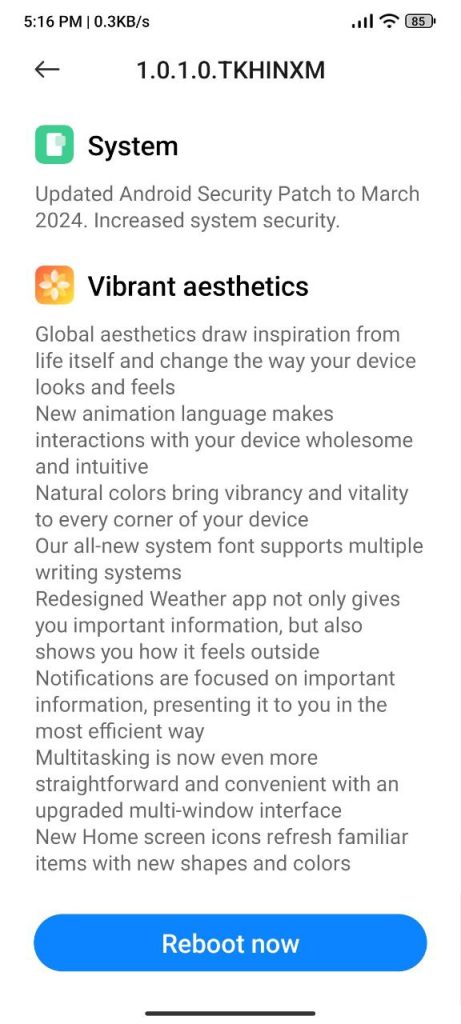
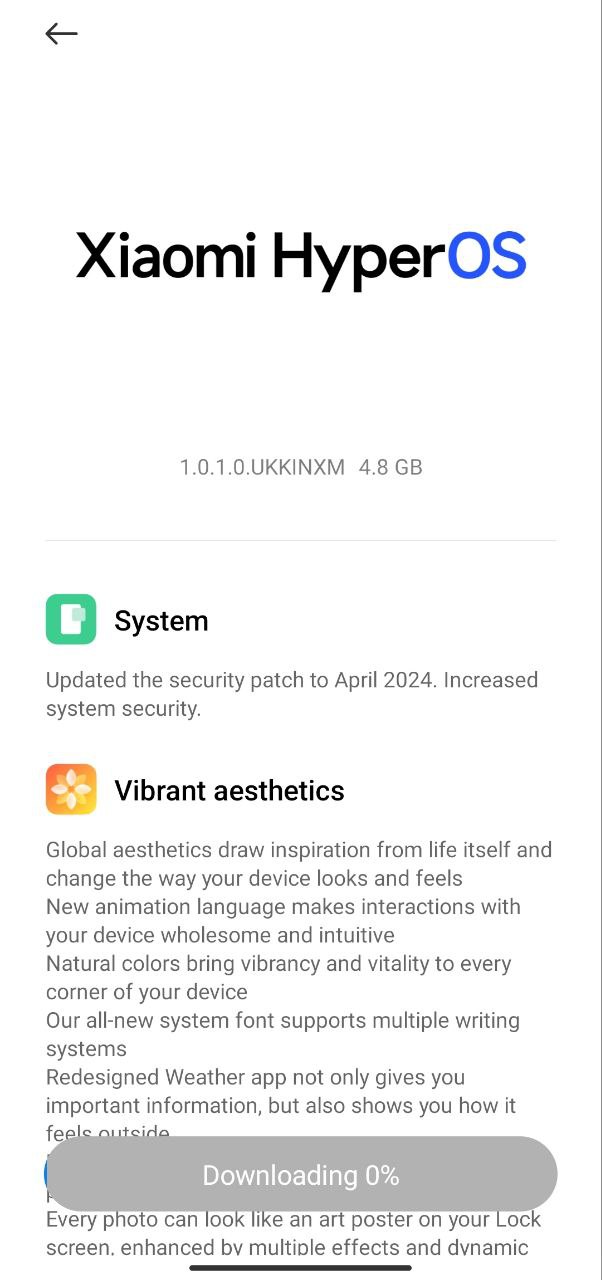
Xiaomi Mi 11X and 11X Pro have received the HyperOS update with build numbers OS1.0.1.0.TKHINXM and OS1.0.1.0.UKKINXM. The Mi 11X received HyperOS based on Android 13, while the Mi 11X Pro received the HyperOS update based on Android 14. The reason behind this lies in the processor difference. The Mi 11X has the Snapdragon 870, but the 11X Pro is powered by the Snapdragon 888 processor. The SD 888 is a more up-to-date chip, which helps to be eligible for the Android 14 update. We advise Mi 11X users not to worry, though. Because HyperOS optimizations are included in the new update.
OS1.0.1.0.TKHINXMOS1.0.1.0.UKKINXM
Xiaomi Mi 11X receives the March 2024 security patch while Mi 11X Pro receives the April 2024 security patch. The update to the Mi 11X is 1.6GB in size, while the Pro model has received the latest Android 14 version with the new update which has a large size of 4.8GB. These are the last major updates for these devices, so you may need to use Custom ROM in the future.
Recent rumors surged about Meizu exiting the smartphone market to focus on AI-based products. However, those don’t seem to become true. Meizu is defying expectations with the upcoming launch of not just one, but five new smartphones.
We know that Meizu isn’t introducing phones as frequently as before. The Chinese tech giant Meizu is now more focused on mid-range and premium devices. For example, Meizu’s newly introduced Meizu 20 and Meizu 21 series are powered by flagship chipsets. Overall, we can say that the company is into offering powerful chipsets on the new smartphones.
Meizu to release 5 new smartphones
Recent reports suggested Meizu might be leaving the smartphone scene, but forget that! They’re launching five new phones soon. Specs and launch dates are still under wraps, but one thing’s clear, Meizu isn’t going anywhere.
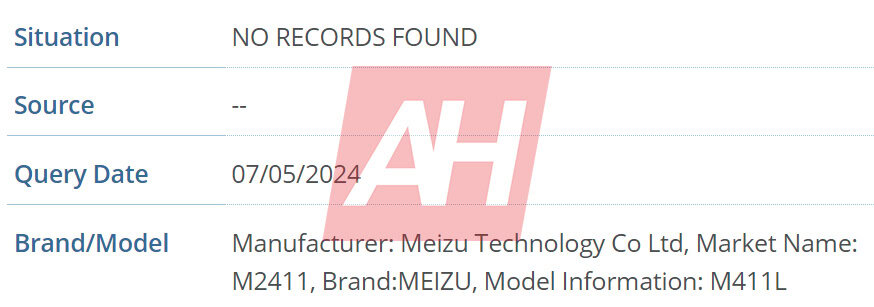
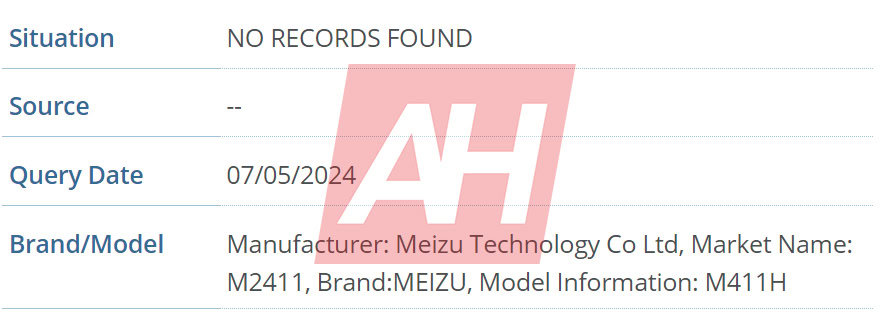
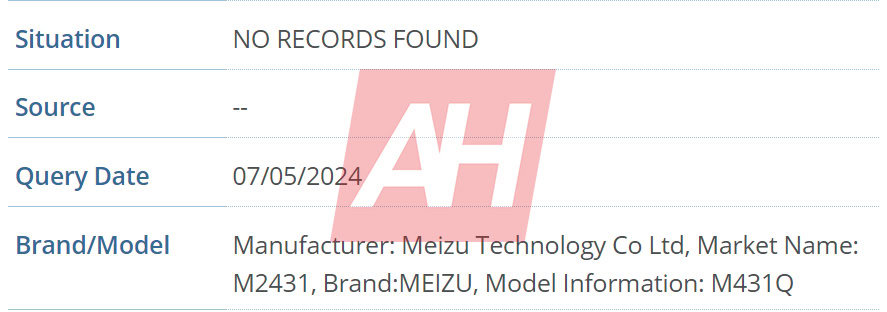
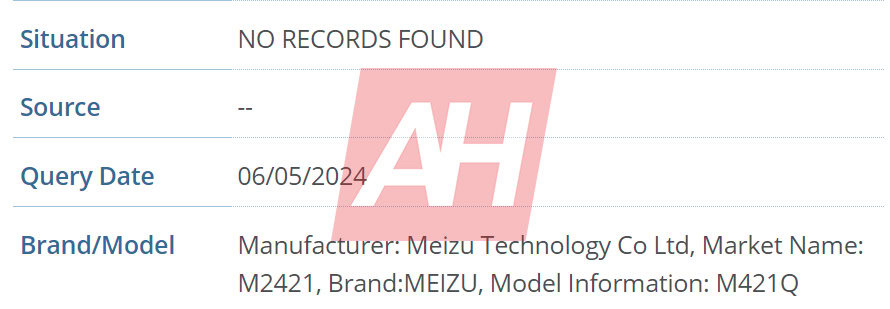
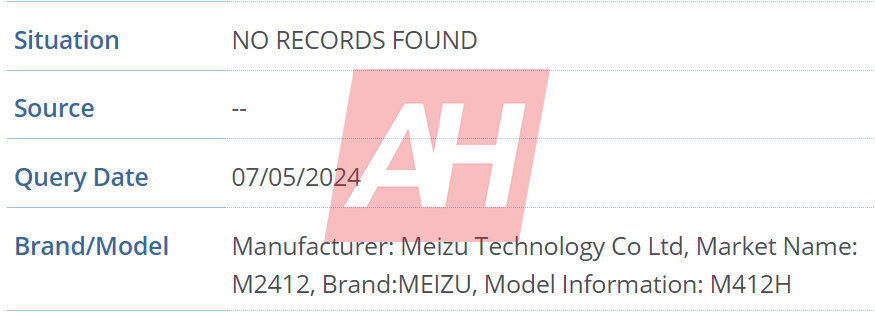
The 5 upcoming smartphone models to be introduced by Meizu have surfaced in the database of the Android Headlines team. The model numbers of the 5 different upcoming smartphones are M411H, M411L, M412H, M421Q, and M431Q. More details about these devices are unfortunately not available yet, but we can say that Meizu is currently working on 5 different devices. Actually, the leaked image of the Meizu 21 Note had emerged earlier.
Meizu 21 Note
The phone has a camera setup design similar to iPhone Pro lineup. The upcoming Meizu 21 Note is expected to feature a 6.8-inch 120 Hz OLED screen. Additionally, the phone will come with powered by Snapdragon 8 Gen 2 and carry a 5500 mAh battery. Judging from the leaked images, we can say that the Meizu 21 Note won’t be a flagship device as the cameras appear relatively small. As we mentioned, the camera system of the Meizu 21 Note may not be that great. However, Meizu doesn’t hesitate to offer high-end chipsets in many of its phones. And we can say that the Meizu 21 Note will also be a snappy phone thanks to the Snapdragon 8 Gen 2 chipset.
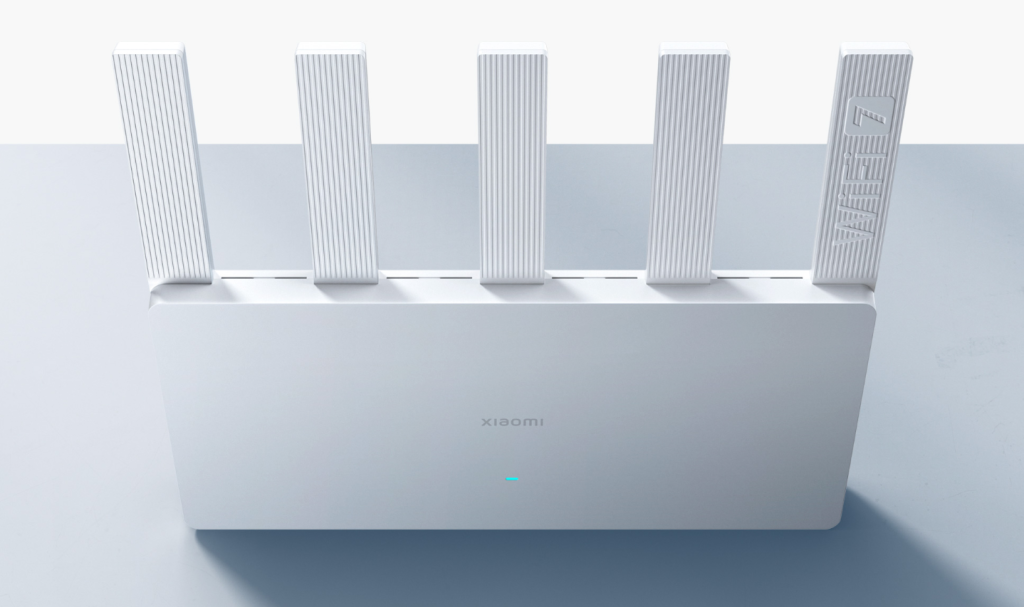
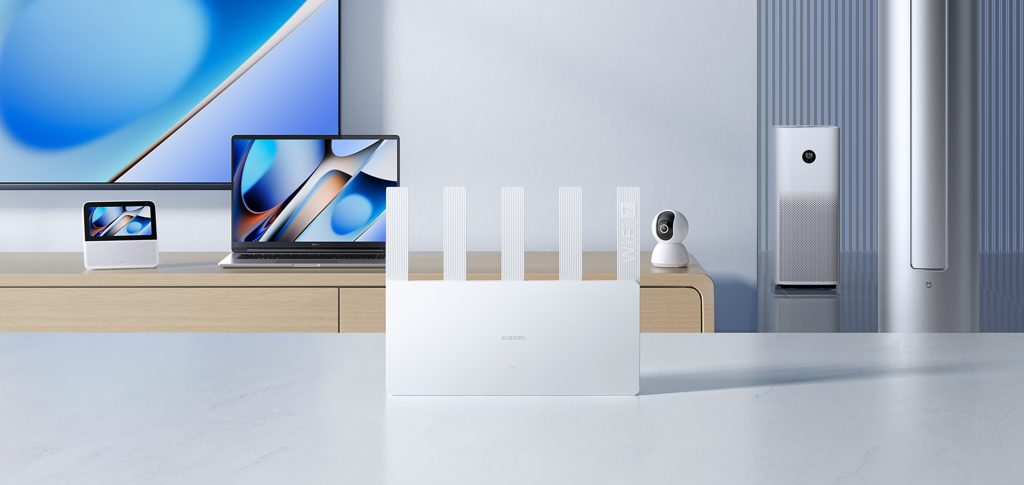
Xiaomi has taken the wraps off a new router in China, the BE5000, boasting the latest Wi-Fi 7 technology at an attractive price point. While details on a global launch are yet to be revealed, the BE5000 offers a significant upgrade for Chinese consumers looking to boost their home Wi-Fi.
The BE5000 promises blazing-fast speeds, with a theoretical maximum of 5,011 Mbps. Xiaomi claims this translates to a noticeable improvement over Wi-Fi 6, with throughput and speed increases of up to 68% and 48%, respectively.
The BE5000 packs features like Multi-Link Operation and Xiaomi’s Xrange 2.0 technology for smoother connections and wider coverage. This translates to a more stable connection, which is especially beneficial for larger homes or users battling signal drops.
Gamers will appreciate the built-in game accelerator, while integration with Xiaomi’s HyperOS system allows for easy connection and management of smart home devices.
The BE5000 sports a sleek white design with five antennas and offers a variety of connection options, including a 2.5G port and three Gigabit LAN ports.
Pricing
The Xiaomi BE5000 router is priced at just 279 yuan (around $40) in China. It is currently unknown if or when the brand plans to launch the router in the global market.
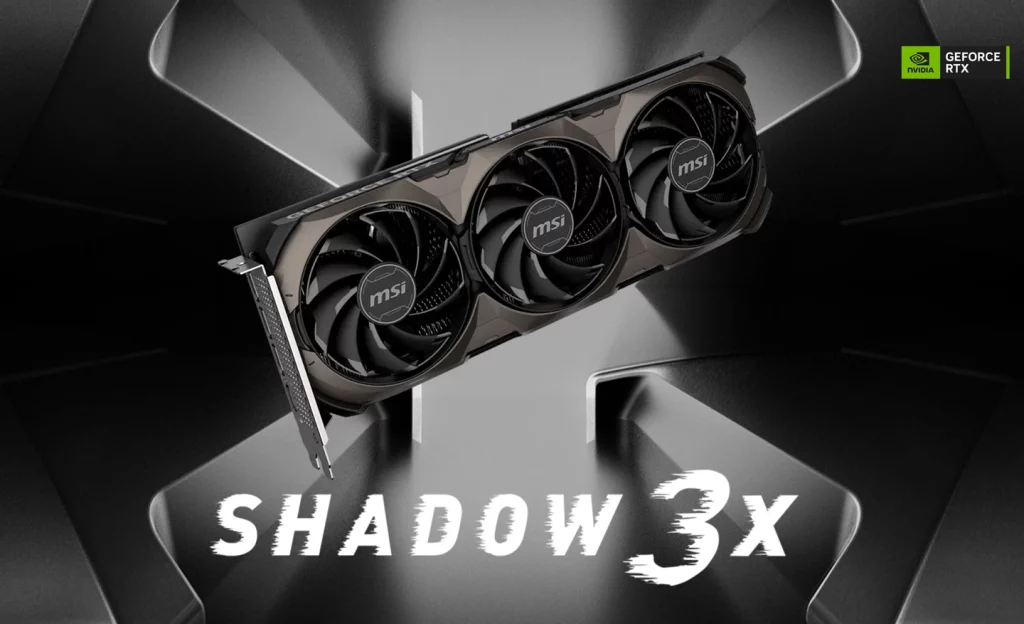
MSI is back once again to shake things up with the launch of the RTX 4070 Ti SUPER Shadow 3X graphics card, the first product in their new Shadow series. This card boasts the latest NVIDIA Ada Lovelace architecture and impressive specs, promising high-performance gaming.
The GPU has three DisplayPort 1.4a ports and one HDMI 2.1a interface
The Shadow series departs from the existing Ventus series with a dark brown color scheme, offering a sleek and stylish look for those seeking a more subtle aesthetic. While technical specifications seem similar to the Ventus series, the Shadow series might appeal to those prioritizing a unique visual design for their PC build.
Packing serious muscle, the RTX 4070 Ti SUPER Shadow 3X features 8448 CUDA cores, 16GB of GDDR6X memory, and a boost clock of 2640 MHz. This ensures smooth performance for even the most demanding games. Connectivity options include three DisplayPort 1.4a and one HDMI 2.1a interface, providing flexibility for multi-monitor setups and high-resolution displays.
Information regarding the specific features and potential differences between the Shadow and Ventus series remains limited. The official MSI website currently uses the same product description for both series. However, the launch of the RTX 4070 Ti SUPER Shadow 3X suggests MSI might be expanding their graphics card lineup to cater to diverse user preferences. We’ll likely learn more about the defining characteristics of the Shadow series as MSI unveils future models.
BYD unveiled the Hiace 07 EV, a feature-packed electric SUV built on their new e-platform 3.0 Evo. This platform promises a powerful and efficient driving experience. The Hiace 07 EV boasts a sleek, coupe-like design inspired by BYD’s Ocean Network family. It offers a spacious interior with ample storage and a unique dual-state LED logo at the rear.
The company is launching a dedicated charging service for the mobile app as well
Technology is a major focus inside, with a HUD display, crystal gear lever, and premium sound system. Standard features include in-vehicle toll collection, smartphone connectivity, and voice control for over 1,000 car functions. Comfort is well-considered with ventilated/heated seats and a magnetic charging microphone for voice interaction.
BYD is launching a dedicated charging service on their Haiyang App for seamless charging. Safety is prioritized with 11 airbags, advanced driver-assistance features (planned for future installation), and a direct tire pressure monitoring system.
The Hiace 07 EV comes in three powertrain options, with two-wheel drive models offering 230kW or 170kW motors. The four-wheel drive version features a combined 390kW of power. An impressive high-performance motor enables a top speed of 225km/h. The single-motor model offers a choice between 550km and 610km of range, while the dual-motor version boasts a 550km range. Additionally, the Hiace 07 EV implements a fast charging technology that utilizes the full capacity of most public DC charging stations. With its stylish design, tech-laden interior, and impressive range, the BYD Hiace 07 EV appears to be a pretty solid option in the electric SUV market.
Keychron surprised fans with the unexpected launch of the V4 Max, a three-mode customizable mechanical keyboard in their V Max lineup. This 60% layout keyboard starts at an affordable US$69 (around ¥498). The V4 Max provides a comfortable typing experience with a Gasket structure, PC positioning plate, and sound-dampening materials. South-facing RGB lighting adds a touch of personalization.
For connectivity, there are options of 2.4Ghz wireless, Bluetooth and wired connection.
For customization, users can choose from three Jiadalong Jupiter switches (tactile, linear, or tactile with a bump) and durable OSA PBT double-shot keycaps. Connectivity is versatile with 2.4GHz wireless, Bluetooth, and wired options. Dual 2.4GHz receivers ensure wider compatibility.
The V4 Max boasts impressive specs, including hot-swappable switches, up to 1000Hz polling rate for smooth response, and QMK/VIA compatibility for customized layouts. It even supports switching between Windows and macOS layouts with ease. A 4000mAh battery keeps the keyboard powered, with support for 5V 1A charging.
Keychron offers two models: the V4M-Z2 kit (US$69) for those who want to personalize everything and the V4M-B1 keyboard (US$89) that comes pre-equipped with switches and keycaps. Interestingly, Keychron hasn’t officially announced the V4 Max, and the launch date remains a mystery. The official website even shows the product as out of stock with a launch countdown stuck at zero. Would you be enticed to buy this keyboard when it comes back in stock?
While we are still a few months ahead of the Android 15 official release, most of the new features and changes have already been revealed, thanks to developer preview and beta builds. I have gone through all the features that have been discovered in Android 15 so far and can tell you that it’s going to be an exciting OS upgrade.
Android 12 was the last OS upgrade that brought a whole new design language and a plethora of new features. While the recent ones, Android 13 and Android 14, haven’t been very impressive. They didn’t introduce groundbreaking features or any UI changes; felt like minor upgrades.
But Android 15 is coming with plenty of exciting features that’ll make you eagerly wait for it. While you wait for the official release, check out the 10 best features Android 15 will offer.
Satellite Connectivity Support
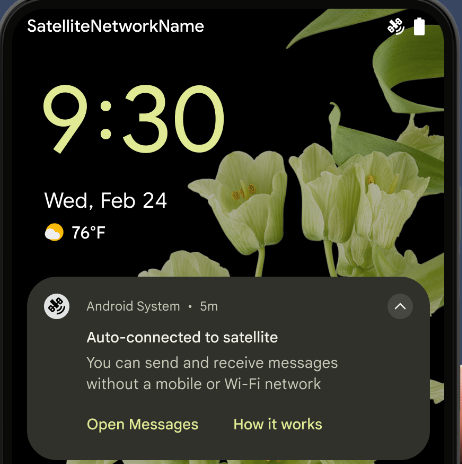
Ever since Apple announced satellite connectivity support for iPhones, Android users have been desperately waiting to try this. Google has finally listened to them as Android 15 is confirmed to bring this new feature.
With satellite connectivity support, you’ll be able to text your friend even if there are no cell towers nearby. Android 15 also allows SMS apps and preloaded RCS apps to use satellite connectivity support for sending and receiving messages. This means the satellite connectivity will not be limited to emergency uses only. It could be a big blow to Apple, which restricts satellite connectivity support on iPhones for emergency uses only.
Android 15 Developer Preview 2 build supports satellite connectivity at the operating system level. However, we are not sure if the final release will have this feature at the OS level. If this happens all Android 15 phones will have satellite connectivity support, even the budget phones.
Find Your Phone Even if It’s Offline
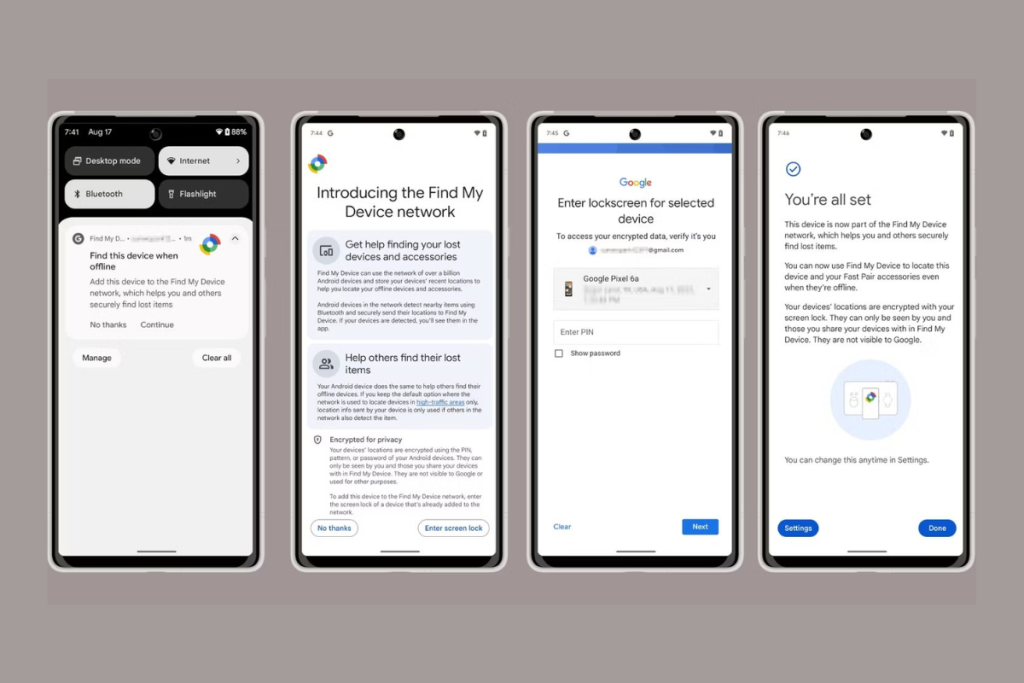
Google’s Find My Device feature is getting a major upgrade in Android 15. As per the findings by Android Police, all Android 15 phones can ping each other via Bluetooth and can contribute to the network, which will help other Android users find their lost devices.
The Find My Network relies on Android devices broadcasting, which are essentially Bluetooth signals. The nearby Android devices part of the Find My Device network can pick up Bluetooth signals from the broadcasting device and upload the encrypted location details to Google’s servers. Only the broadcasting device owner and the people with access to the encryption key can decrypt the location.
That means billions of Android devices will ping each other via Bluetooth once they’re added to the Find My Device network, and can help others find their lost Android devices. If everything goes well, Android will have a much bigger lost device tracking network than Apple’s Find My network.
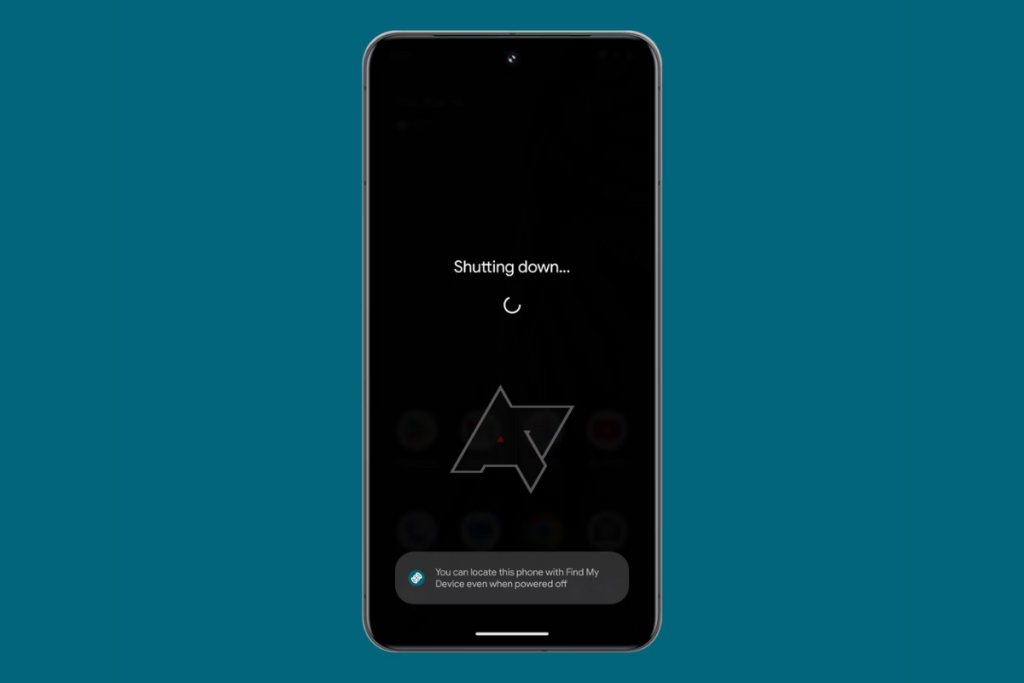
Google is also reportedly working on a “Powered Off finding” feature that will allow users to find their Android devices even if it’s powered off. Sadly, this feature can’t be enabled on any Android device running Android 15 or later as it requires hardware support for powering the Bluetooth controller when the device is shut down.
The Pixel 8 models will reportedly support Powered Off Finding once they are upgraded to Android 15. Sadly, this feature won’t come to older Pixel devices, including the Pixel 7 series and Pixel Fold.
Google hasn’t confirmed the Powered Off Finding feature, but it’s likely to be announced at the Pixel 9 series launch in October this year.
Battery Health
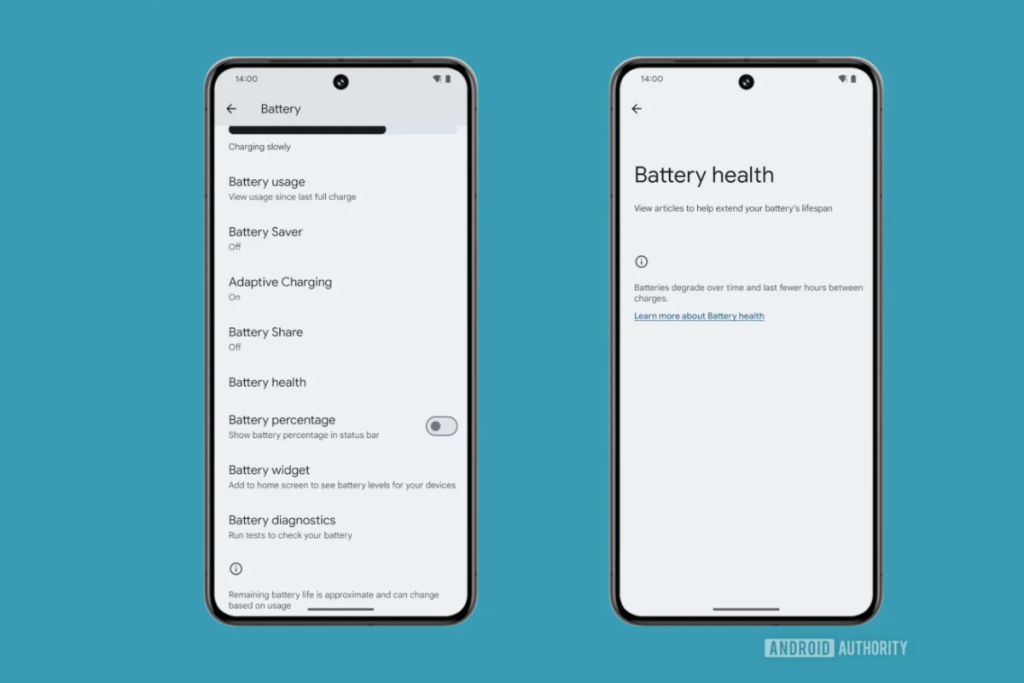
Android 15 could allow users to see the battery health of their device. This feature was first spotted in Android 14 QPR2 Beta 2, but it wasn’t fully backed in, and hence never made to any Google Pixel device. It seems Android 15 will make the battery health information accessible to users.
The battery degrades over time because its capacity to hold the charge becomes lesser with time. The battery health feature tells the percentage of original battery capacity remaining, and hence it’s a useful metric that helps users replace the battery at the right time.
Apple iPhones have had the battery health feature for years, and now, it seems to be coming to Android devices with Android 15.
App Archiving
App archiving is a handy feature that lets you save some storage by uninstalling unused apps while keeping user data. So, when you reinstall the app next time, you can get back where you left off. Apple iPhones already have this feature as “offload apps”.
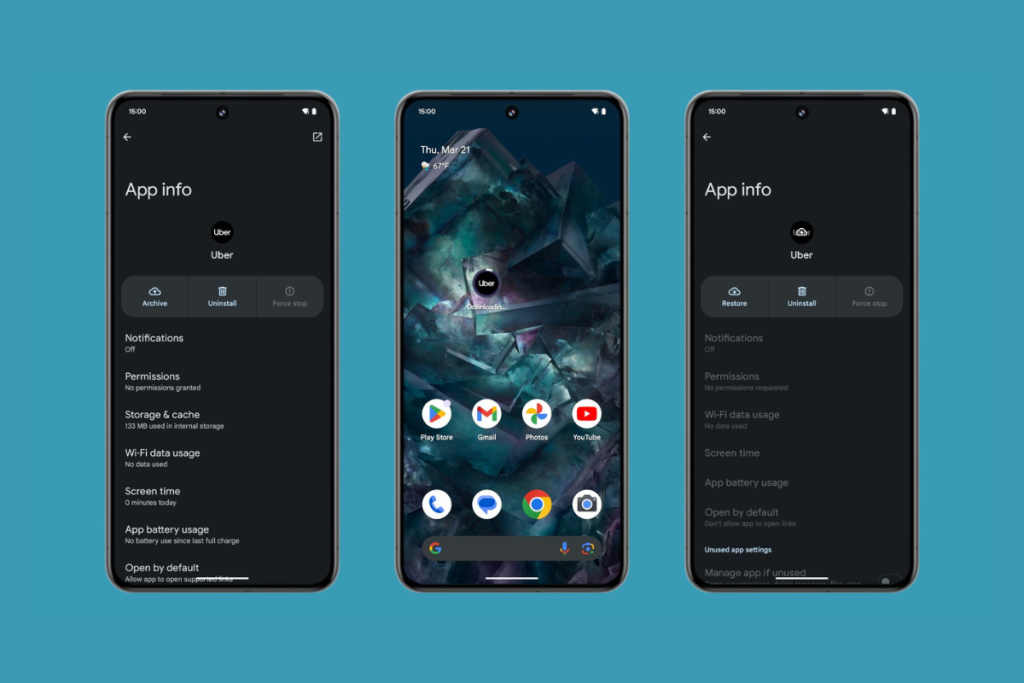
Google already has the app archiving feature through the Google Play Store. The drawback here is you can’t archive apps installed outside of the Google Play Store. Android 15 supports app archiving at the OS level, thus allowing users to archive any installed apps from the app info page.
Android 15 also has an option to automatically archive apps that you don’t use often. When you archive an app, the app icon becomes gray(ish) and shows a download icon, tapping on which redirects you to the Google Play Store to download the app. You can also unarchive an app by tapping Restore on the app info page.
Notification Cooldown
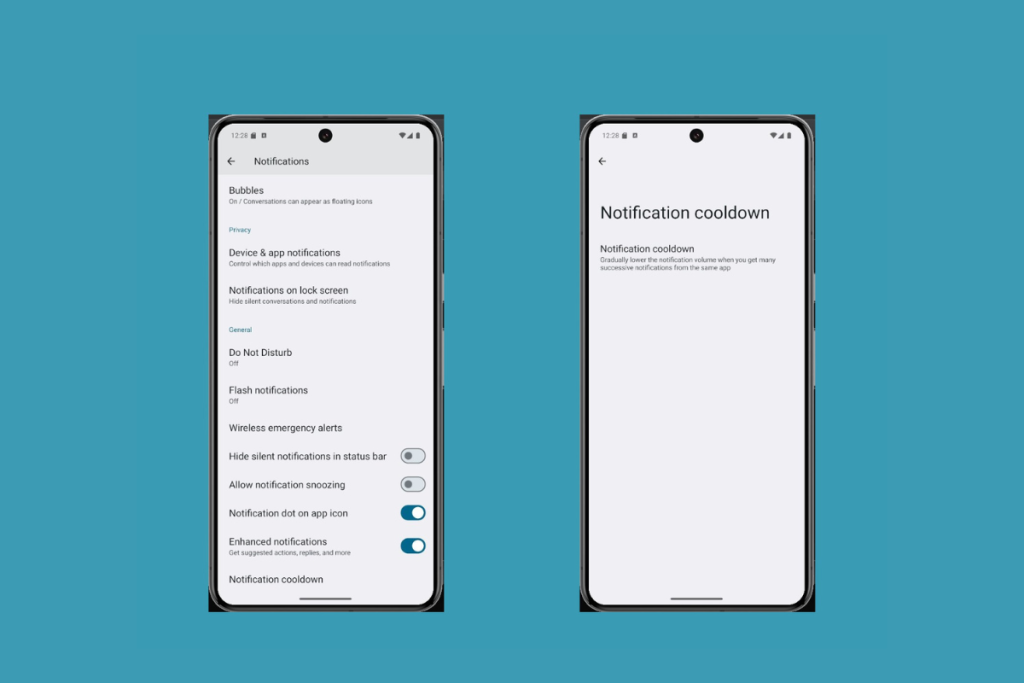
Another useful feature coming to the new Android OS is “Notification cooldown.” It lowers the volume of successive notifications from the same app. This feature prevents users from getting annoyed by too many notifications.
The notification cooldown was spotted in the first Developer Preview build of Android 15 but was hidden in the first beta. Probably, Google is taking more time in baking this feature before releasing it to the public.
Folks at Android Authority have also spotted a new toggle called “vibrate when unlocked” in fresh builds of Android 15. Enabling it will prevent your locked phone from vibrating when you receive successive notifications from the same app. The device will only vibrate for successive notifications when it’s unlocked.
High-Quality Webcam Mode
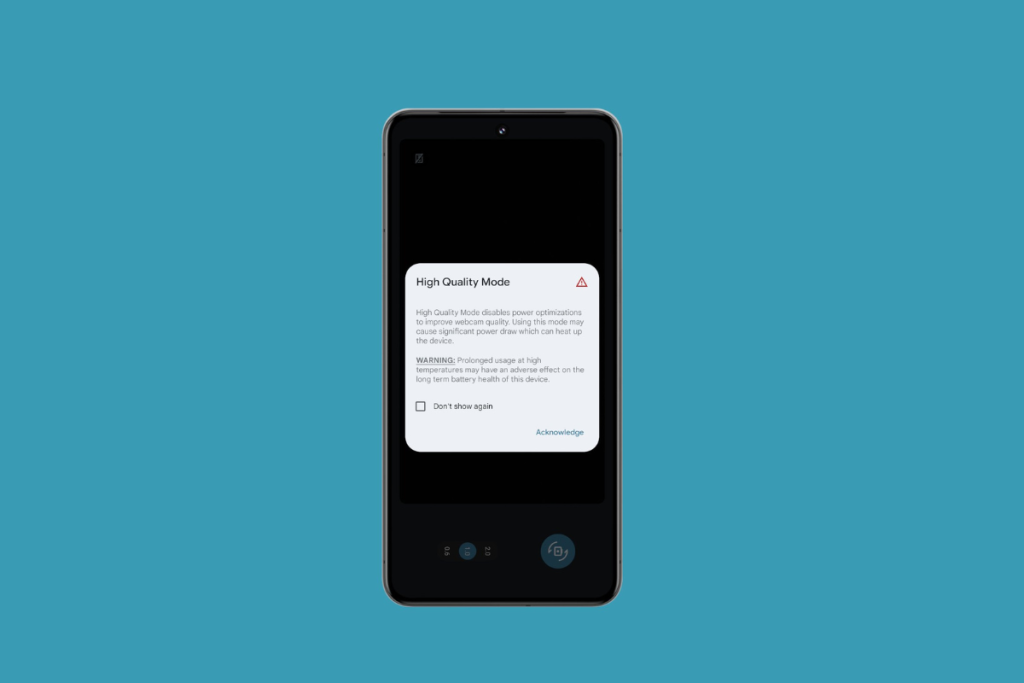
There are many third-party apps to use your smartphone as a webcam for your PC. But what’s better than having it natively integrated into the system? Well, Google introduced this feature in the Android 14 QPR 1 release for Pixel smartphones, but the output was below average.
Android 15 introduces a new high-quality webcam mode that results in significantly improved video quality. There’s a new “HQ” symbol in the webcam preview that enables this new webcam mode. It disables power optimizations on the device to offer better video quality. Hence, an increased battery drain if used for a longer duration.
Partial Screen Sharing
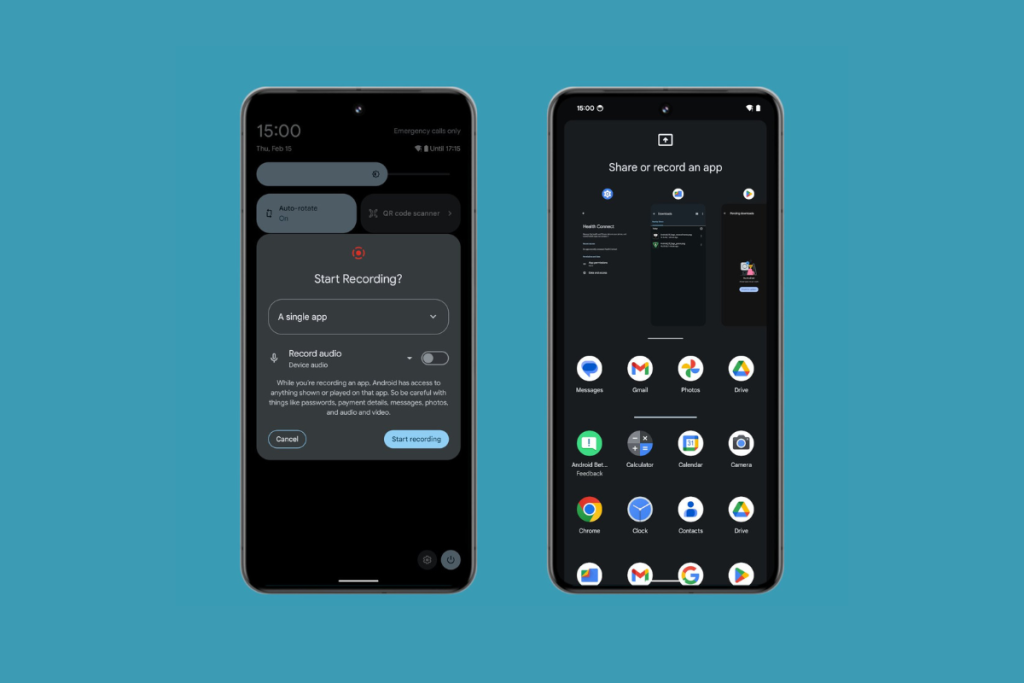
Partial screen sharing is another useful and privacy-focused addition to Android 15 that allows users to share and record a single app rather than the entire screen. So, you can stay calm even if you mistakenly open an app that you didn’t want while screen sharing.
This feature was first introduced in Android 14 QPR 2 on Pixel devices but will now be available to all Android 15 devices. The new OS might offer additional privacy features such as private space and sensitive notifications, which I’ll cover later in this post.
Edge-to-Edge Apps by Default
Android smartphones can show more content than before, thanks to slim bezels and large screen sizes. However, many apps don’t use the entire height and width to show their content. Android 15 resolves this by forcing all apps to go edge-to-edge by default, improving the user experience.
Private Space
Android 15 might introduce Private Space for securing your important apps and files. As the name suggests, it creates a private space where you can add apps and data, and use a different password or PIN for better security. Samsung phones already have a similar feature with a different name “Secure Folder.”
Users will be able to hide private space from the apps list, change the lock screen, install apps in private space, and delete private space.
Google still hasn’t announced Private Share as I write this post. However, we believe that one of the upcoming Android 15 beta builds will include this feature.
Sensitive Notifications
OTP frauds have been growing exponentially. One of the major reasons is malicious third-party apps with access to messages. They can read all your messages, including those containing OTPs, and can use them for all sorts of negative purposes. Android 15 aims to fix that by introducing “Sensitive Notifications” that prevent malicious apps from reading your OTPs.
These are the 10 best features that have been discovered in Android 15 so far. Google may add more features to the new OS until it reaches the platform stability phase. While Android 15 doesn’t have an official release date yet, it’s expected to arrive sometime in October.
Before you leave, don’t forget to check the Motorola, Samsung, OnePlus, and Google Pixel phones that’ll get the Android 15 update. Also, check our Android 15 section for the latest news around the new Android OS.
Last year in September, Huawei announced the Eyewear 2 smart glasses in China. The company has now revealed the launch of the sunglasses version of the same product. It will be announced at the Summer 2024 product launch event in the country on May 15. Alongside the smart glasses, the brand is also expected to unveil other devices including laptops, tablets, and more.
Huawei Eyewear 2 sunglasses launching in China next week
The Huawei Eyewear 2 sunglasses are seen in a squarish frame. The upcoming offering will serve those who wear sunglasses occasionally when they go outside and for fashion purposes. They will also be ideal for those who don’t wear prescription glasses.
The details about the Eyewear 2 sunglasses are not known yet but we can expect the same specs and features as the prescription glasses. The latter is offered in five styles including rimless, aviator, square half-rim, titanium hollow, and gold wire.
To recall, the Huawei Eyewear 2 smart glasses come with interchangeable Zeiss prescription lenses. Users can perform various functions by tapping or swiping on the temple area of the glasses. The Eyewear 2 is equipped with a built-in speaker that has a forward-facing dual diaphragm immersive unit for improved audio. There is also triple noise cancellation onboard for clear quality on calls.
The Huawei Eyewear 2 smart glasses are rated to offer 11 hours of battery life on a single charge. There is support for fast charging with 10 minutes of charging said to offer three hours of usage. The Eyewear 2 smart glasses carry a starting price tag of EUR 300 in Europe and CNY 1,699 in China.
Apple has just launched its most expensive iPad Pro with the new M4 chip. Now Bloomberg’s Mark Gurman reports that Apple is deploying its M series chips in its cloud servers, and it seems to be related to the AI features in the upcoming iPhone 16 lineup.
Some AI features may require more compute than what on-device processing can offer
Apple is working on some AI features for the iPhone 16 series. Earlier it was reported that the company is focusing on running the AI features on-device for privacy of user data. The company also acquired French startup Datakalab to make its on-device LLM more capable and efficient. However, it seems that Apple still needs to run some more demanding AI features on the cloud. Here comes the deployment of Apple Silicon (M series chips) in its servers.
According to Mark Gurman, the servers running on Apple Silicon are specially designed to handle AI-related tasks. Apple is using its M2 Ultra chip (that powers last year’s Mac Pro and Mac Studio) in its AI servers. Although, the company reportedly has plans to use the new M4 chips as well going forward.
Dedicated chips for the servers are also under development
There are also reports that the company is developing dedicated chips for its AI servers which will use TSMC’s 3nm process node. However, that’s far from completion, unlike the iPhone 16 series. It could be a reason behind the deployment of the M2 Ultra chips. The dedicated AI server chip is expected to enter mass production in the second half of 2025.
Choosing the cloud servers for running some of the features (that might also involve working with user data) is a shift from Apple’s initial plan. Nonetheless, it’s good to see that the company is arranging the computing and running the features on their own servers instead of asking companies like Google to handle the job with their models on their servers.
People involved with the development of the dedicated server chips informed that the chips have components inside to protect user privacy. The company reportedly uses a method called “Secure Enclave” to isolate data from security vulnerabilities.
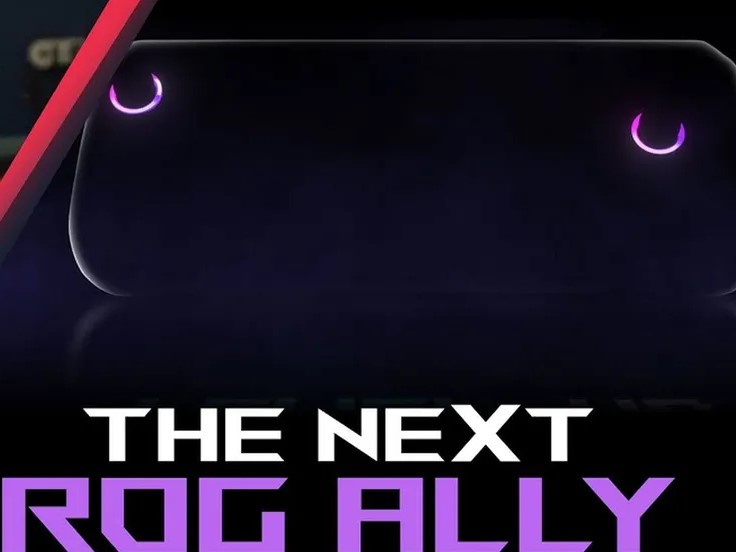
The ASUS ROG Ally was launched last year. Now, the Taiwanese brand has confirmed an improved version of the first-generation handheld console. It’s not going to be the Ally 2, a true successor to the original offering. Instead, the upcoming iteration is the ROG Ally X and it will be announced early next month. ASUS SVP Shawn Yen shared some juicy details about the forthcoming handheld console with The Verge. Read on to know everything below.
ASUS ROG Ally X is coming soon, key changes revealed
The ASUS ROG Ally X will be launched on June 2. It is confirmed to pack changes in terms of battery life, RAM and SSD, ports, physical changes, and more repairability.
Perhaps, the biggest change on the ASUS ROG Ally X is the battery unit. Yen says that it will pack a massive increase in the battery capacity and it is way more than 30 to 40 percent. The original Ally had more room for a larger battery pack. The company has seen how users strap giant external batteries to the handheld consoles.
ASUS revealed that the ROG Ally will have more than 16GB RAM capacity found in the current generation so that it can be allocated to the GPU without impacting the system. The SSD slot is also getting an upgrade from the M.2 2230 to M.2 2280 meaning users can plug in larger drives. The company has also moved the SD card reader away from the heatsink.
The ASUS ROG Ally X will also be more repair-friendly with interchangeable redesigned joystick modules. There will be revised grips and slightly tweaked D-pads and triggers. The upcoming handheld will be slightly weight heavier due to the larger battery pack. The console will also be available in a Black colour variant.
ASUS says that the improvements will make the Ally X a bit more expensive than the original console. However, the latter is said to stick around and get some discounts.
We use cookies on our website to give you the most relevant experience by remembering your preferences and repeat visits. By clicking “Accept”, you consent to the use of ALL the cookies.
This website uses cookies to improve your experience while you navigate through the website. Out of these, the cookies that are categorized as necessary are stored on your browser as they are essential for the working of basic functionalities of the website. We also use third-party cookies that help us analyze and understand how you use this website. These cookies will be stored in your browser only with your consent. You also have the option to opt-out of these cookies. But opting out of some of these cookies may affect your browsing experience.
Necessary cookies are absolutely essential for the website to function properly. This category only includes cookies that ensures basic functionalities and security features of the website. These cookies do not store any personal information.
Any cookies that may not be particularly necessary for the website to function and is used specifically to collect user personal data via analytics, ads, other embedded contents are termed as non-necessary cookies. It is mandatory to procure user consent prior to running these cookies on your website.