
Concerns about Nvidia’s high-power 16-pin connector just won’t go away. Even with the updated 12V-2×6 standard, fresh reports of melting connectors on the flagship GeForce RTX 5090 are popping up, making people question whether the design is really up to the job for these power-hungry GPUs.
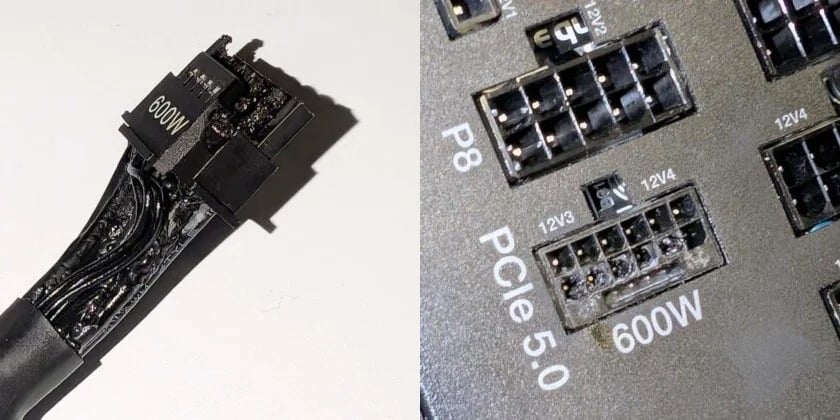
In the latest cases, hardware site Club386 shared that their RTX 5090 Founders Edition got badly damaged after the 12V-2×6 power connector melted during testing. The photos they posted show badly charred and deformed pins on both the graphics card and the cable, plus damage to the power supply. Importantly, they were using a solid 1000W Be Quiet Dark Power 13 PSU with a single native 12V-2×6 cable, properly installed, no user mistakes.
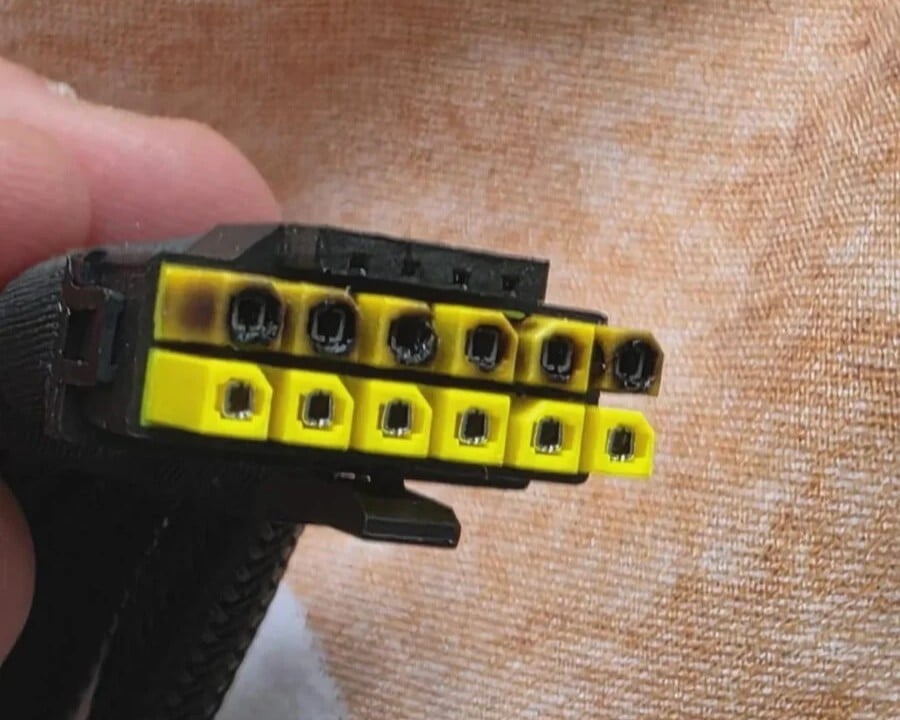
YouTuber Daniel Owen also ran into the same problem on his RTX 5090 Founders Edition. The connector melted even though he used a 4×8-pin to 12V-2×6 adapter. These failures add to a growing list of issues with the RTX 50-series since launch, happening even when people lower power limits and use the right cables.
The 12V-2×6 connector was supposed to fix the melting problems from the older 12VHPWR design. It has shorter sense pins to better detect if the cable isn’t fully seated and can handle more power. But real-world use, especially with the RTX 5090’s massive spikes that can go over 500-600W, keeps exposing weaknesses. Things like uneven current across the pins, slight cable bending, and heat buildup seem to still be causing trouble.
Club386 didn’t hold back, calling the connector a “flawed” design that’s “not fit for purpose” and pushing Nvidia to finally admit there’s still a problem. These incidents show how tough it is to push hundreds of watts through a small connector during heavy gaming, AI work, or benchmarking.
Nvidia has stood by the connector, saying it meets ATX 3.1 specs and recommending native cables from good PSUs. Some third-party companies like MSI have started offering reinforced cables with better monitoring. Still, these high-profile failures mean that if you’re dropping big money on an RTX 5090, it’s smart to double-check your cabling, make sure everything’s fully seated, and maybe consider undervolting.
If you’re affected, make sure to document everything for RMA purposes. It remains to be seen if or when Nvidia comes up with a proper hardware fix or other solutions to finally end this connector drama.
Don’t miss a thing! Join our Telegram community for instant updates and grab our free daily newsletter for the best tech stories!
For more daily updates, please visit our News Section.
(Source: Club386)

Comments