Advertisement

Add GIZMOCHINA as Preferred Source on Google

OPPO Find X10 and Xiaomi 18 Pro take different approaches to flagship smartphone design, performance, and photography. While OPPO focuses on a high-refresh-rate display, a massive battery, and Hasselblad-tuned cameras, Xiaomi counters with a Snapdragon flagship processor, a secondary rear display, and Leica camera technology. Both offer premium hardware, but their differences make this comparison particularly interesting for buyers choosing between performance, photography, and everyday practicality.
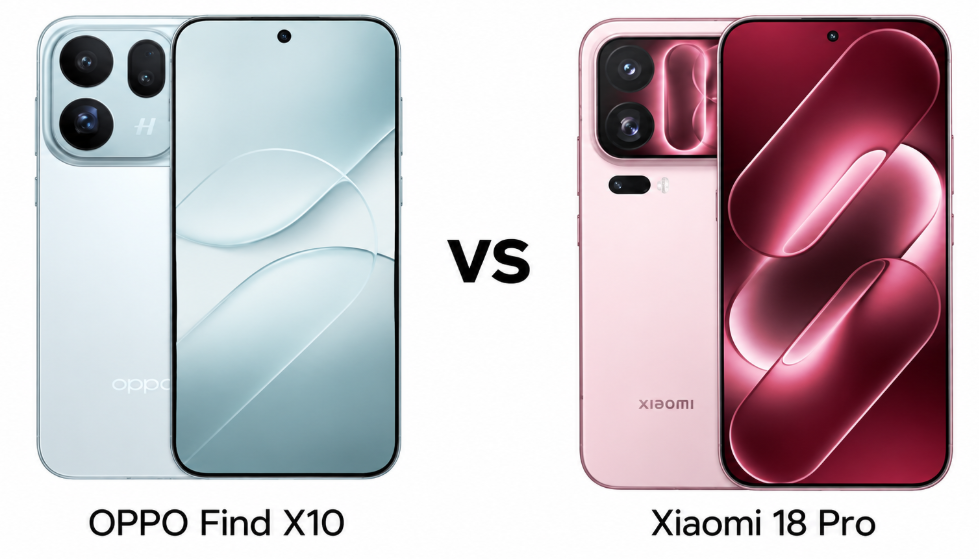
Major Feature:

CategoryOPPO Find X10Xiaomi 18 ProWinner
Dimensions156.5 x 74.3 x 8.4 mm151.8 x 72 x 8.5 mmXiaomi – More compact design
Weight216 g203 g / 208 gXiaomi – Lighter construction
BuildGorilla Glass Victus 2, glass back, aluminum frameDragon Crystal Glass 3, aluminum frameOPPO – Gorilla Glass Victus 2 protection and premium rear glass
Water ResistanceIP68/IP69IP68OPPO – Better ingress protection
Display TypeLTPO AMOLED, 1B coloursLTPO AMOLED, 68B coloursXiaomi – Wider colour support
Display Size6.59 inches6.4 inchesOPPO – Larger viewing area
Resolution1272 x 2772 pixels1120 x 2436 pixelsOPPO – Higher resolution
Refresh Rate144Hz120HzOPPO – Smoother refresh rate
Peak Brightness3600 nits4000 nitsXiaomi – Higher peak brightness
Secondary DisplayNot available2.7-inch AMOLED, 120HzXiaomi – Additional rear display
Operating SystemAndroid 17, ColorOS 17Android 17, HyperOS 4Tie – Both run Android 17
ProcessorDimensity 9600M (3nm)Snapdragon 8 Elite Gen 6 (2nm)Xiaomi – Newer 2nm flagship platform
GPUARM G1-UltraAdrenoXiaomi – Flagship Snapdragon graphics platform
RAM12GB / 16GB12GB / 16GBTie – Same maximum RAM
Storage256GB / 512GB / 1TB256GB / 512GB / 1TBTie – Same storage options
Storage TypeUFS 4.1UFS 4.1Tie – Same storage technology
Main Camera200MP, f/1.6, 1/1.4-inch, OIS200MP, f/1.7, 1/1.28-inch, OISXiaomi – Larger primary sensor
Telephoto Camera200MP periscope, 2.8x optical zoom, OIS200MP periscope, 3.2x optical zoom, OISXiaomi – Longer optical zoom
Ultrawide Camera50MP, 15mm, PDAF50MP, 17mm, 102° FoV, PDAFOPPO – Wider focal length
Camera TuningHasselblad Color CalibrationLeica lens technologyTie – Different premium camera partnerships
Rear Video8K@30fps, 4K@120fps8K@30fps, 4K@120fpsTie – Comparable maximum recording capabilities
Selfie Camera50MP ultrawide, PDAF50MP wide, PDAFOPPO – Wider selfie perspective
Selfie Video4K@60fps4K@60fpsTie – Same maximum resolution and frame rate
LoudspeakerStereo speakersStereo speakers, Dolby AtmosXiaomi – Dolby Atmos support
Wi-FiWi-Fi 7Wi-Fi 7Tie – Same latest Wi-Fi generation
BluetoothBluetooth 6.2Bluetooth 6.0OPPO – Newer Bluetooth version
USBUSB Type-C 3.2, OTGUSB Type-C 3.2, DisplayPort, OTGXiaomi – DisplayPort support
Additional FeaturesSatellite connectivity (1TB model)UWB supportTie – Different connectivity advantages
Battery Capacity8000mAh (Global)7000mAhOPPO – Larger battery
Wired Charging80W100WXiaomi – Faster wired charging
Wireless Charging50W50WTie – Same wireless charging speed
Reverse Wireless Charging10W27WXiaomi – Faster reverse wireless charging
Price / Value$800 / ₹78,500$1,000 / ₹1,20,000OPPO – More affordable flagship package
Overall WinnerLarger battery, smoother display, better durability and valueStronger camera hardware, newer chipset and secondary displayOPPO – Better overall value and more balanced everyday experience
Disclaimer: Specs are based on available data. Actual performance may vary. Verify details from official sources before buying.

1. Design and Display

Build and Feel

The OPPO Find X10 features a glass-and-aluminum construction with Gorilla Glass Victus 2 protection and IP68/IP69 certification. Xiaomi 18 Pro uses Dragon Crystal Glass 3 on the front, an aluminum frame, and IP68 protection. OPPO offers stronger overall ingress protection, including resistance to high-pressure water jets. Xiaomi, however, introduces a more distinctive design with its secondary display on the rear, adding practical functionality beyond conventional flagship aesthetics. Both feature premium construction, although OPPO’s protection credentials provide additional reassurance for everyday use.

Display Quality

OPPO features a 6.59-inch LTPO AMOLED display with a 144Hz refresh rate, Dolby Vision, HDR10+, and 3600-nit peak brightness. Xiaomi offers a smaller 6.4-inch LTPO AMOLED panel with a 120Hz refresh rate and 4000-nit peak brightness. Both deliver vibrant colours and premium HDR support, but OPPO’s higher refresh rate makes scrolling and animations smoother. Xiaomi counters with a sharper brightness specification and a useful 2.7-inch secondary AMOLED display.

Verdict

OPPO wins the main display comparison with its 144Hz refresh rate and stronger protection. Xiaomi remains more distinctive thanks to its innovative rear display.

2. Specifications Including Battery

Performance

The OPPO Find X10 runs on the MediaTek Dimensity 9600M processor, featuring an octa-core CPU and ARM G1-Ultra GPU. Xiaomi 18 Pro uses Qualcomm’s Snapdragon 8 Elite Gen 6, built on a 2nm process, with an octa-core CPU reaching 5GHz and an Adreno GPU. Both support up to 16GB RAM and 1TB UFS 4.1 storage. However, Xiaomi’s newer Snapdragon platform and advanced manufacturing process give it a promising advantage in demanding applications, gaming, and long-term performance. OPPO remains a capable flagship contender, but Xiaomi looks more appealing for performance-focused buyers.

Battery and Charging

OPPO packs an 8000mAh global battery, significantly larger than Xiaomi’s 7000mAh unit. Both use silicon-carbon battery technology and support 50W wireless charging. However, Xiaomi takes the lead in wired charging with 100W support compared to OPPO’s 80W. OPPO also supports 10W reverse wireless charging, while Xiaomi offers faster 27W reverse wireless charging. The larger battery gives OPPO an advantage for extended usage, but Xiaomi’s faster charging and reverse wireless capabilities make its overall charging package more versatile.

Verdict

Xiaomi wins on processing power and charging versatility, while OPPO takes the battery capacity advantage. OPPO is better for endurance-focused users.

3. Camera

Main and Secondary Lenses

Both smartphones feature impressive 200MP primary cameras and 200MP periscope telephoto sensors. OPPO uses a 200MP f/1.6 main camera with a 1/1.4-inch sensor, alongside a 200MP periscope camera offering 2.8x optical zoom. Xiaomi features a larger 1/1.28-inch primary sensor with an f/1.7 aperture and a 200MP periscope telephoto camera offering 3.2x optical zoom. Xiaomi’s larger primary sensor should provide an advantage in light gathering, while its longer optical zoom offers greater reach. Both include 50MP ultrawide cameras with autofocus. OPPO brings Hasselblad colour calibration, whereas Xiaomi benefits from Leica lens technology.

Selfie Camera

OPPO features a 50MP ultrawide selfie camera with autofocus and 4K video recording at 60fps. Xiaomi also offers a 50MP front camera with autofocus, HDR, and 4K recording at 60fps. However, OPPO’s wider 18mm field of view should be more convenient for group selfies and capturing more background scenery. Xiaomi’s 21mm camera offers a comparatively conventional perspective. Both provide strong video capabilities, making either phone suitable for content creators who frequently record themselves.

Verdict

Xiaomi gets the edge with its larger primary sensor and longer optical zoom. OPPO remains competitive with its ultrawide selfie camera and Hasselblad tuning.

4. Pricing

The OPPO Find X10 is priced around $800 (₹78,500), making it considerably more affordable than the Xiaomi 18 Pro, which is priced around $1,000 (₹1,20,000). This creates a substantial difference between the two smartphones, particularly for buyers comparing flagship features against overall expenditure. 

OPPO offers a compelling combination of a large battery, premium display, and high-resolution cameras at a lower asking price. Xiaomi commands a higher premium for its Snapdragon platform, secondary rear display, and Leica camera system. Both target premium smartphone buyers, but their pricing positions make them suitable for different budgets.

Is the price justified? 

Xiaomi justifies some of its premium through its advanced processor, larger primary camera sensor, additional rear display, and faster wired charging. These features make it attractive for enthusiasts seeking distinctive flagship hardware. However, the $200 difference is difficult to overlook. 

OPPO delivers a larger battery, faster main display refresh rate, stronger water resistance, and an impressive camera setup for considerably less. Unless Xiaomi’s secondary screen and Snapdragon performance are priorities, OPPO offers a more balanced purchase.

Verdict

OPPO wins the value-for-money comparison. Its lower pricing, larger battery, and premium hardware make it the more sensible flagship purchase.

Disclaimer:
Prices are approximate and may vary based on country, region, launch timing, and applicable taxes. Always check whether the listed price is for a China unit or a global/international variant when purchasing.

5. Conclusion

The OPPO Find X10 stands out with its 144Hz LTPO AMOLED display, 8000mAh global battery, IP68/IP69 protection, Hasselblad camera tuning, and 50MP ultrawide selfie camera. Xiaomi 18 Pro counters with the Snapdragon 8 Elite Gen 6 chipset, a larger primary camera sensor, Leica optics, 100W wired charging, and an innovative secondary rear display. 

Both smartphones offer 200MP main and periscope cameras, making them particularly interesting options for photography enthusiasts. Xiaomi delivers a more feature-diverse experience, especially for users who appreciate additional display functionality and flagship processing power. 

However, OPPO combines its hardware advantages with a considerably more accessible price. Its larger battery and smoother main display also make it an attractive everyday companion.

Verdict

The OPPO Find X10 is the overall winner because it delivers a more balanced flagship experience at a significantly lower price. Xiaomi 18 Pro is the better choice for users prioritising Snapdragon performance, Leica photography, and its secondary display. However, OPPO offers the stronger combination of battery life, display smoothness, durability, and value for money, making it the more practical purchase for most buyers.


FAQs

1. Which phone is better for gaming, OPPO Find X10 or Xiaomi 18 Pro?

The Xiaomi 18 Pro is better suited for gaming, thanks to its Snapdragon 8 Elite Gen 6 processor and Adreno GPU.

2. Which phone has better zoom photography?

The Xiaomi 18 Pro offers better optical zoom reach with its 3.2x periscope camera compared to OPPO’s 2.8x optical zoom.

3. Which phone offers better battery backup?

The OPPO Find X10 should deliver better battery endurance with its larger 8000mAh battery.

4. Is Xiaomi 18 Pro worth buying over OPPO Find X10?

Xiaomi is worth considering for its Snapdragon chipset, Leica cameras, and rear display, but OPPO offers better value at a lower price.

5. Which phone is better for everyday use?

The OPPO Find X10 offers a more practical combination of battery capacity, display smoothness, durability, and affordability.

Disclaimer: Prices, specifications, and availability may vary by region and retailer. Recommendations in this article are based on editorial opinion, feature-based value, and market positioning at the time of writing. Readers are advised to do their own research before making a purchase.

Read More:

Comments