Advertisement

Add GIZMOCHINA on Google:

As an Amazon Associate, Gizmochina earns from qualifying purchases. Links on this page may earn us a commission at no extra cost to you.

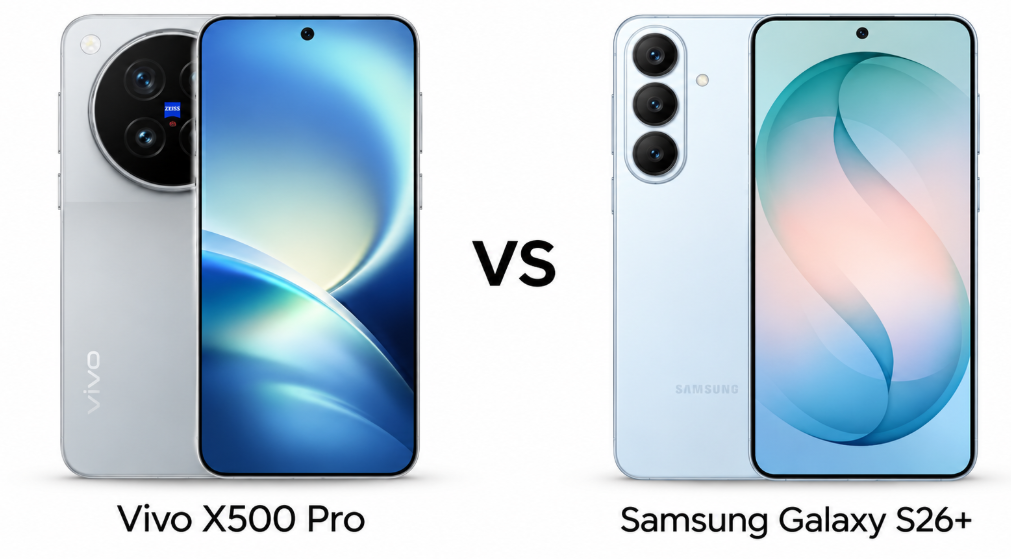
Vivo X500 Pro and Samsung Galaxy S26+ take different approaches to the premium smartphone experience. Vivo focuses on advanced photography, faster charging, and a compact flagship design, while Samsung combines a sharper display, long-term software support, and productivity features. Both target buyers seeking high-end performance, but their differences in cameras, battery life, and pricing make this comparison particularly important for anyone choosing a premium Android phone.
Major Features:

CategoryVivo X500 ProSamsung Galaxy S26+Winner
BuildGlass front, aluminum frame, glass or glass-fiber reinforced plastic backGorilla Glass Victus 2 front and back, Armor Aluminum 2 frameSamsung — premium glass protection
Water ResistanceIP68/IP69IP68Vivo — higher water-resistance rating
Display6.36-inch LTPO AMOLED, 144Hz, Dolby Vision, 4500 nits peak6.7-inch Dynamic LTPO AMOLED 2X, 120Hz, HDR10+, 2600 nits peakVivo — higher refresh rate and peak brightness
Resolution1216 × 2660 pixels1440 × 3120 pixelsSamsung — sharper resolution
Operating SystemAndroid 17, OriginOS 7, up to 5 major OS upgradesAndroid 16, One UI 9, up to 7 major OS upgradesSamsung — longer software support
ProcessorMediaTek Dimensity 9600 Pro (2nm)Snapdragon 8 Elite Gen 5 (3nm) or Exynos 2600 (2nm)Vivo — advanced 2nm platform, subject to real-world testing
RAM12GB12GBTie — identical RAM capacity
Storage256GB, 512GB, 1TB256GB, 512GBVivo — offers a 1TB option
Storage TypeUFS 4.1UFS 4.XVivo — specified storage standard
Main Camera50MP, f/1.6, OIS50MP, f/1.8, OISVivo — wider aperture
Telephoto Camera64MP periscope, 3.5x optical zoom, OIS10MP telephoto, 3x optical zoom, OISVivo — higher resolution and greater optical zoom
Ultrawide Camera50MP with autofocus12MPVivo — higher resolution and autofocus
Selfie Camera50MP with autofocus12MP with dual-pixel autofocusVivo — higher resolution and 4K 60fps video
Rear VideoUp to 8K at 30fps, 4K up to 240fps in listed modesUp to 8K at 30fps, 4K at 60fpsVivo — higher listed 4K frame-rate options
AudioStereo speakers, 24-bit/192kHz Hi-Res audioStereo speakers, high-bitrate audio supportVivo — specified Hi-Res audio support
Battery6510mAh silicon-carbon4900mAhVivo — larger battery capacity
Wired Charging90W45WVivo — faster charging
Wireless Charging40W20W Qi2.2Vivo — higher listed charging power
Reverse ChargingReverse wireless and reverse wired4.5W reverse wirelessVivo — supports wired and wireless reverse charging
ConnectivityWi-Fi 7, Bluetooth 5.4/6.0, NFC, infraredWi-Fi 7, Bluetooth 6.0, NFC, UWBSamsung — UWB support
Productivity FeaturesUSB-C 3.2, OTGSamsung DeX, Wireless DeX, DisplayPort 1.2Samsung — desktop productivity features
Price / ValuePriced around $950 / ₹93,000Priced around $1,200 / ₹1,00,000Vivo — lower price with stronger camera and battery hardware
Disclaimer: Specs are based on available data. Actual performance may vary. Verify details from official sources before buying.

1. Design and Display

Build and Feel

The Vivo X500 Pro combines a glass front, aluminum frame, and glass or glass-fiber reinforced plastic back, depending on the variant. Its IP68/IP69 rating offers stronger protection against dust and high-pressure water jets. Samsung uses Gorilla Glass Victus 2 on both sides, an Armor Aluminum 2 frame, and an IP68 rating. Its construction feels more focused on durability and everyday refinement. Vivo’s more extensive water-resistance rating provides an advantage for users who frequently encounter challenging outdoor conditions, while Samsung offers a familiar premium finish.

Display Quality

Vivo features a 6.36-inch LTPO AMOLED display with a 144Hz refresh rate, Dolby Vision, HDR10+, and a claimed peak brightness of 4,500 nits. Samsung counters with a 6.7-inch Dynamic LTPO AMOLED 2X panel, a sharper QHD+ resolution, 120Hz refresh rate, HDR10+, and 2,600 nits of peak brightness. Samsung suits users who prefer a spacious screen for reading, streaming, and multitasking. Vivo delivers smoother scrolling and broader HDR format support, making it attractive for gaming and compact-phone enthusiasts.

Verdict

Vivo wins on refresh rate, peak brightness claims, and water resistance. Samsung is better for immersive viewing, higher resolution, and a larger workspace, making the choice dependent on display priorities.

2. Specifications Including Battery

Performance

The Vivo X500 Pro uses the MediaTek Dimensity 9600 Pro, built on a 2nm process, paired with 12GB RAM and UFS 4.1 storage. Samsung offers the Snapdragon 8 Elite Gen 5 in selected markets or the Exynos 2600 in other regions, alongside 12GB RAM. Both target demanding gaming, multitasking, and AI workloads, although real-world performance will depend on thermal management and software optimization. Vivo’s newer platform and fast storage look promising, while Samsung’s established Galaxy ecosystem and regional chipset options make its performance profile more dependent on the version purchased.

Battery and Charging

Vivo packs a 6,510mAh silicon-carbon battery with 90W wired charging, 40W wireless charging, and reverse wireless and wired charging. Samsung uses a 4,900mAh battery, 45W wired charging, 20W Qi2.2 wireless charging, and 4.5W reverse wireless charging. Vivo has a clear advantage in battery capacity and charging flexibility, potentially making it more suitable for heavy users and frequent travelers. Samsung supports USB Power Delivery 3.0 and offers a balanced charging setup, but its smaller battery and slower charging make Vivo the more compelling option for users who prioritize endurance.

Verdict

Vivo wins for battery capacity, charging speed, and reverse charging versatility. Samsung remains competitive for everyday performance, but Vivo offers the more convincing package for power users.

Check price →
Where to buy
Vivo X500 Pro
Latest price on Amazon

3. Camera

Main and Secondary Lenses

Vivo equips the X500 Pro with a 50MP main camera featuring optical image stabilization, a 64MP periscope telephoto camera with 3.5x optical zoom, and a 50MP autofocus ultrawide camera. Zeiss optics, lens coating, and advanced video recording options further strengthen its imaging credentials. Samsung uses a 50MP stabilized main camera, a 10MP telephoto camera with 3x optical zoom, and a 12MP ultrawide camera. Its Horizon Lock and Super Steady video features are useful for action footage. Vivo’s higher-resolution telephoto and ultrawide cameras suggest greater flexibility for portraits, distant subjects, and landscapes, while Samsung prioritizes practical everyday shooting and stabilized video.

Selfie Camera

Vivo features a 50MP autofocus selfie camera capable of recording 4K video at 60fps. Samsung has a 12MP selfie camera with dual-pixel autofocus, HDR10+ support, and 4K recording at 60fps. Vivo offers greater resolution and a wider field of view, which may benefit group selfies, travel content, and detailed video calls. Samsung’s autofocus system and HDR support remain useful for consistent results across different lighting conditions. For creators who frequently record themselves, Vivo appears better equipped, although final image quality will still depend on processing, exposure, and skin-tone reproduction rather than megapixel counts alone.

Verdict

Vivo wins on camera versatility, telephoto hardware, ultrawide resolution, and selfie specifications. Samsung remains a capable everyday camera phone, but Vivo looks more appealing for photography enthusiasts and content creators.

4. Pricing

The Vivo X500 Pro is priced around $950 / ₹93,000, while the Samsung Galaxy S26+ is priced around $1,200 / ₹1,00,000. Vivo is the less expensive option in both quoted markets, although the difference is considerably larger in dollar terms than in rupees. That makes the Vivo particularly attractive to buyers seeking flagship-level hardware without paying the highest premium. Samsung commands a higher price for its display experience, extended software support, and productivity ecosystem. Actual retail prices may vary by storage configuration, region, import duties, and promotional offers, so local availability matters when comparing the final cost.

Check price →
Where to buy
Samsung Galaxy S26+
Latest price on Amazon

Is the price justified?

Vivo’s pricing looks more compelling because it combines a substantial battery, faster charging, versatile cameras, and a high-refresh-rate display at a lower starting price. Samsung’s premium is easier to justify for buyers who value seven major Android OS upgrades, Samsung DeX, UWB, and the broader Galaxy ecosystem. However, these advantages may not matter equally to every user. For hardware-focused buyers, Vivo offers stronger apparent value, while Samsung suits those who intend to keep their phone for years and use its productivity features regularly.

Verdict

Vivo wins on overall hardware value, offering more camera flexibility and faster charging for less. Samsung justifies its premium mainly through software longevity and productivity features.

Disclaimer:
Prices are approximate and may vary based on country, region, launch timing, and applicable taxes. Always check whether the listed price is for a China unit or a global/international variant when purchasing.

5. Conclusion

The Vivo X500 Pro distinguishes itself with Zeiss-backed imaging, a 64MP periscope telephoto camera, Dolby Vision support, a 144Hz display, and a large silicon-carbon battery. Its IP68/IP69 protection and reverse wired charging add practical benefits for demanding users. Samsung’s Galaxy S26+ counters with a sharper QHD+ display, Gorilla Glass Victus 2 protection, seven major OS upgrades, Samsung DeX, Wireless DeX, and UWB support. These features make it a more attractive choice for users invested in Samsung’s connected-device ecosystem. Both phones deliver a premium Android experience, but their strengths serve different priorities. Vivo emphasizes hardware versatility and charging convenience, whereas Samsung focuses on software longevity, productivity, and a polished everyday experience.

Verdict

Overall winner: Vivo X500 Pro. Its stronger camera hardware, larger battery, faster charging, brighter 144Hz display, and lower starting price make it the better all-round hardware package. Samsung Galaxy S26+ is the better choice for buyers prioritizing long-term software support, a sharper screen, and productivity tools.

Disclaimer: Prices, specifications, and availability may vary by region and retailer. Recommendations in this article are based on editorial opinion, feature-based value, and market positioning at the time of writing. Readers are advised to do their own research before making a purchase.

Read More:

Comments