
Add GIZMOCHINA as Preferred Source on Google
Apple launched its premium VR headset, the Apple Vision Pro, in February this year. One of the notable features of Apple’s VR headset is called EyeSight, where a display mimics the wearer’s eyes to make the user’s interaction with the real seem more natural. According to Apple “EyeSight reveals your eyes on the front of your Apple Vision Pro, and lets those nearby know when you’re using apps or are fully immersed in an experience.”
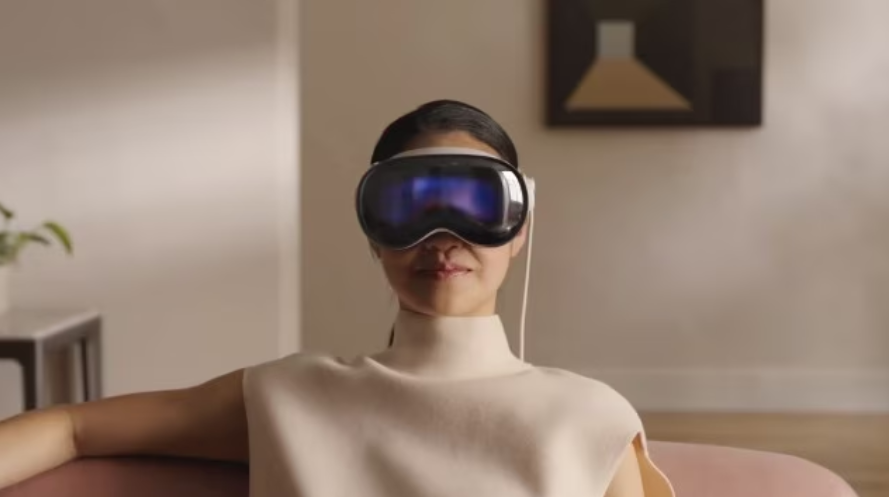
Meta is expected to replicate Apple’s EyeSight feature for its future VR headsets
Now the news is that Meta has applied for a patent that is somewhat similar to Apple’s EyeSight feature. You can see the patent illustration below. Reportedly, Meta aims to replicate the EyeSight feature which is far from being perfect on its own.

Meta‘s patent abstract notes that it is a method for updating a subject avatar with a facial expression collected in real-time. The method includes receiving, from a sensor on the facial interface of a headset, a signal indicative of a movement in a facial muscle from a user of the headset. The process involves determining the facial expression of the user with the signal from the sensor in the facial interface of the headset, based on a machine learning algorithm trained to associate the facial expression with the movement of the facial muscle.
Then it adjusts a subject avatar for the user of the headset based on the facial expression and provides the subject avatar to an immersive reality application hosted by a remote server.
The headset will reportedly include various sensors such as ECG, EEG, and PPG sensors to assess the cardiovascular conditions of a user.
One of the limitations of VR headsets like the Meta Quest 3 or the Apple Vision Pro is that the wearer becomes disconnected (sort of) from the real world. According to Apple, they developed EyeSight to maintain the connection of the wearers with the real world.
While it’s common for companies to take inspiration from the developments and achievements of their competitors, the jaw-dropping aspect of the whole development is that it emerged only a couple of months after Zuckerburg himself claimed that its Quest headset stands tall against the Vision Pro in a variety of aspects.
(Via)


Comments