
Add GIZMOCHINA as Preferred Source on Google
The Pixel 10 series is Google‘s most refined lineup to date, featuring upgraded displays, a new Tensor G5 processor, and improved on-device AI capabilities. The phones also support Qi2 magnetic charging and come with fresh features like Magic Cue, Camera Coach, and Pixel Journal.
But despite these additions, the Pixel 10, 10 Pro, and 10 Pro XL are not the right fit for everyone. Several compromises and missing features could make this lineup less appealing depending on user needs and expectations.
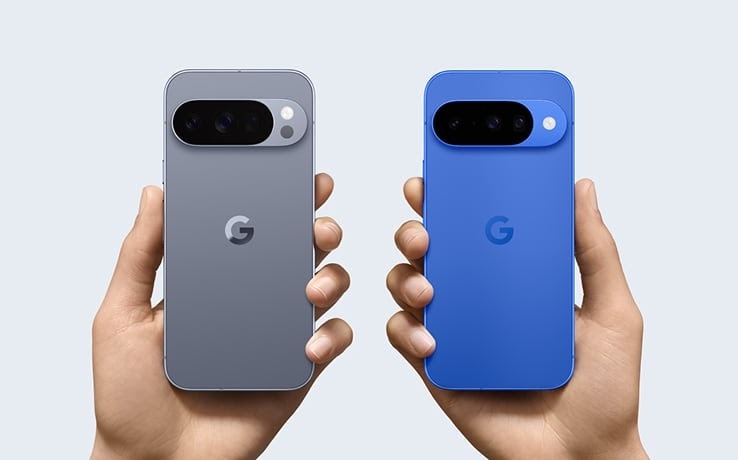
Power Users Who Demand Snapdragon-Level Performance
The Pixel 10 lineup runs on Google’s in-house Tensor G5 chipset, which focuses on AI and efficiency rather than raw power. While the G5 shows improvement over last year’s Tensor G4, it still cannot match the performance of the Snapdragon 8 Elite or Apple A18 Pro.
Benchmark scores tell the story. On AnTuTu, the Tensor G5 scores around 1.2 million, which falls well below the Snapdragon 8 Elite’s score of over 2.2 million. GPU performance remains a weak spot, making the Pixel 10 series less suitable for graphics-intensive gaming or demanding creative workflows.
Thermal management also continues to lag behind competing flagship devices. Anyone looking for top-tier performance for gaming, rendering, or intensive multitasking may find the Pixel 10 series underwhelming.
Photographers Hoping for a Big Camera Leap
Google maintains its strong camera reputation with the Pixel 10 series, but it did not introduce groundbreaking changes. The Pixel 10 adds a telephoto camera, which is new for a non-Pro Pixel, but the main and ultra-wide sensors are smaller than those in the Pixel 9.
The Pro models carry over much of the Pixel 9 Pro’s hardware. The main, ultra-wide, and telephoto sensors remain the same, although software improvements attempt to enhance the overall output. Features like Auto Best Take and Camera Coach assist with better compositions, but they do not compensate for the lack of hardware upgrades. Users upgrading from the Pixel 8 Pro or Pixel 9 Pro may not notice a significant difference in image quality or versatility.
Travelers and SIM Swappers
Google has moved to an eSIM-only setup for Pixel 10 devices in the United States. This decision could cause problems for users who frequently travel or switch SIMs. Many global carriers still rely on physical SIM cards, and eSIM compatibility remains inconsistent in several regions.
While physical SIM support continues in some markets like India, the transition to eSIM-only hardware suggests that future Pixel models may drop the SIM tray altogether. For users who rely on dual SIMs or frequently swap SIM cards while traveling, this change can be frustrating.
Buyers Expecting Class-Leading Battery or Charging
Battery life and charging speeds remain moderate in the Pixel 10 series. The Pixel 10 has a 4970mAh battery, the Pro has 4870mAh, and the Pro XL tops out at 5200mAh. While these capacities are competitive, real-world endurance does not outperform rivals.
Wired charging speeds max out at 29W for the Pixel 10 and 39W for the Pro XL. Wireless charging supports the new Qi2 standard with Pixelsnap, but the maximum speeds are limited to 15W (Pixel 10 and 10 Pro) and 25W (Pro XL).
Competitors like OnePlus, Xiaomi, and Samsung already support faster charging speeds both wired and wireless. Google also does not include a charger in the box, which may add to the cost for users who want to take full advantage of the new charging tech.
Anyone Expecting AI to Fix Everything
AI is central to the Pixel 10 experience. Google introduced features like Magic Cue, Add Me, Camera Coach, and Pixel Journal, all powered by on-device generative models. Some of these tools work well in specific scenarios, like guided photo tips or private journaling prompts. However, many features are still in their early stages and may not consistently deliver results.
Inconsistent detection, occasional UI glitches, and limited language support affect the overall experience. Add Me struggles in low light, Camera Coach fails in unpredictable scenes, and Pixel Journal can feel too generic to be meaningful. Google will likely improve these features over time, but users expecting flawless AI integration from day one may be disappointed.
So, Who Should Wait?
Users of Pixel 8 or 9 Pro devices will see only modest gains with the Pixel 10 series. Anyone prioritizing hardware performance, fast charging, or camera breakthroughs may want to wait for future models or explore alternatives like the Galaxy S25 Ultra or Xiaomi 15 Ultra.
The Pixel 10 lineup brings smart features, improved software, and longer update cycles, but it still has room to grow in terms of performance, battery innovation, and global usability.
| Preview | Product | |
|---|---|---|

|
Google Pixel 9 (Porcelain, 256 GB) (12 GB RAM) | Check Price on Amazon |
Please Note: When you buy something using the links in our articles, we may earn a small commission at no cost to you.

Please Note: When you buy something using the links in our articles, we may earn a small commission at no cost to you.
For more daily updates, please visit our News Section.
Stay ahead in tech! Join our Telegram community and sign up for our daily newsletter of top stories! 💡




Comments