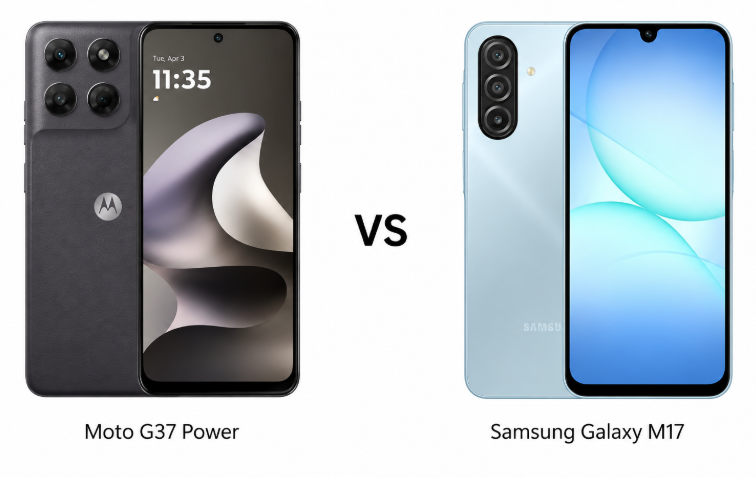
Motorola Moto G37 Power and Samsung Galaxy M17 target two very different types of budget smartphone buyers. One focuses on massive battery life and performance, while the other delivers a sharper AMOLED display, versatile cameras, and long-term software support at a lower price. This comparison breaks down which phone actually offers the better everyday experience and which one gives more value for the money in the competitive sub-₹16,000 segment.
Major Features:
Feature
Motorola Moto G37 Power
Samsung Galaxy M17
Winner
Display
6.67-inch IPS LCD, 120Hz, HD+
6.7-inch Super AMOLED, 90Hz, FHD+
Samsung – Sharper AMOLED panel with richer colors and better contrast
The Motorola Moto G37 Power focuses on durability and practicality with an eco-leather finish, IP64 protection, and MIL-STD-810H certification. The textured rear panel gives it a more premium hand feel than expected in this price segment, while the stereo speakers and headphone jack add extra usability for media lovers. It feels like a phone designed for rough everyday use rather than pure style.
The Samsung Galaxy M17 takes a cleaner and more modern approach. Its slimmer body and Gorilla Glass Victus protection make it look more refined, while Samsung’s software polish complements the premium appearance. Although it lacks stereo speakers and a headphone jack, the overall design feels more compact and easier to carry daily.
Display Quality
Samsung clearly has the stronger display setup with a Super AMOLED panel, Full HD+ resolution, and deeper contrast levels. Colors appear richer, blacks look cleaner, and streaming content feels noticeably sharper. The 90Hz refresh rate is lower on paper, but the visual quality easily compensates.
Motorola counters with a 120Hz IPS LCD panel that feels smoother during scrolling and casual gaming. However, the lower resolution reduces sharpness, especially while reading text or watching videos.
Verdict
The Galaxy M17 delivers a better visual experience and a more polished design overall. The Moto G37 Power still stands out for ruggedness, stereo sound, and practical features that many budget phones continue to remove.
2. Specifications Including Battery
Performance
The Motorola Moto G37 Power gains an edge in raw performance thanks to the Dimensity 6400 chipset in the Indian model. App loading speeds, multitasking, and gaming feel slightly faster, while the 120Hz refresh rate adds smoother responsiveness during daily use. The inclusion of UFS 2.2 storage also helps the phone feel quicker in real-world usage.
Samsung’s Exynos 1330 remains reliable for normal tasks like social media, streaming, and light gaming, but it does not feel as responsive under heavier workloads. Still, Samsung compensates with One UI 7 and an impressive promise of six major Android upgrades, making the software experience more future-proof.
Battery and Charging
Battery life is where Motorola dominates. The massive 7000mAh battery can comfortably stretch into two days for many users, and 30W charging plus reverse wired charging increase its practicality. Heavy users and travelers may find this setup extremely appealing.
Samsung’s 5000mAh battery is still dependable for full-day use, but it cannot match Motorola’s endurance advantage.
Verdict
The Moto G37 Power is the stronger choice for performance-focused users and anyone prioritizing battery life. The Galaxy M17 feels more balanced long term because of Samsung’s software support, but Motorola delivers better hardware value today.
3. Camera
Main and Secondary Lenses
Samsung takes a noticeable lead in camera versatility. The Galaxy M17 includes a 50MP main sensor with OIS, an ultrawide lens, and a macro camera, giving users more flexibility for landscapes and casual photography. OIS also helps stabilize shots in low light and improves video steadiness, making the camera feel more reliable overall.
Motorola keeps things simpler with a single 50MP rear camera. Daylight shots can still look detailed with natural colors, and the ability to record 2K video is a nice advantage at this price. However, the lack of ultrawide photography limits creativity, and low-light consistency is not as strong.
Selfie Camera
Samsung again holds the advantage with its 13MP front camera. Selfies appear sharper with slightly better skin tones and improved detail retention. Video calls also benefit from the cleaner front camera processing.
Motorola’s 8MP selfie camera is acceptable for casual use, but the results feel softer in comparison.
Verdict
The Galaxy M17 offers a more complete camera system with better versatility, stabilization, and selfie quality. The Moto G37 Power remains decent for casual photography, but Samsung provides a more polished imaging experience overall.
4. Pricing
The Motorola Moto G37 Power is expected to cost around ₹16,000 ($200), while the Samsung Galaxy M17 sits closer to ₹13,000 ($150). The price gap makes the Samsung device immediately attractive for budget-focused buyers, especially considering the AMOLED display, OIS camera, and long software support.
Motorola justifies its higher pricing with a larger battery, stronger performance, stereo speakers, eco-leather finish, and additional practical features like reverse charging and a headphone jack. For users who consume a lot of media or spend long hours gaming, those upgrades can feel worthwhile.
Samsung’s pricing feels especially aggressive because it does not compromise heavily in core areas. The software support alone adds long-term value that many budget phones fail to offer.
Verdict
The Galaxy M17 delivers stronger overall value for money due to its lower price and balanced feature set. The Moto G37 Power earns its premium mainly through battery life and performance-focused hardware.
Disclaimer: Prices are approximate and may vary based on country, region, launch timing, and applicable taxes. Always check whether the listed price is for a China unit or a global/international variant when purchasing.
5. Conclusion
The Motorola Moto G37 Power stands out as a battery-centric device aimed at heavy users. Its 7000mAh battery, stereo speakers, rugged durability, and smoother 120Hz display make it particularly appealing for gaming, streaming, and extended usage. It feels like a practical entertainment phone built to last long between charges.
The Samsung Galaxy M17 focuses more on balance and long-term ownership. The AMOLED display, versatile camera setup with OIS, slimmer design, and six years of Android upgrades create a package that feels more refined for everyday use. Samsung’s software ecosystem also adds familiarity and consistency that many users appreciate over time.
Verdict
Moto G37 Power is the better option for users who prioritize battery life, performance, and multimedia features. The Galaxy M17 is the smarter all-rounder thanks to its display quality, cameras, software support, and lower pricing. For most buyers in this segment, Samsung delivers the more complete experience, while Motorola targets power users who need maximum endurance.
Disclaimer: This comparison is based on the specifications provided and is intended for general informational purposes. Actual performance, camera results, battery life, and overall experience may vary depending on real-world usage, software updates, and individual preferences.
We use cookies on our website to give you the most relevant experience by remembering your preferences and repeat visits. By clicking “Accept”, you consent to the use of ALL the cookies.
This website uses cookies to improve your experience while you navigate through the website. Out of these, the cookies that are categorized as necessary are stored on your browser as they are essential for the working of basic functionalities of the website. We also use third-party cookies that help us analyze and understand how you use this website. These cookies will be stored in your browser only with your consent. You also have the option to opt-out of these cookies. But opting out of some of these cookies may affect your browsing experience.
Necessary cookies are absolutely essential for the website to function properly. This category only includes cookies that ensures basic functionalities and security features of the website. These cookies do not store any personal information.
Any cookies that may not be particularly necessary for the website to function and is used specifically to collect user personal data via analytics, ads, other embedded contents are termed as non-necessary cookies. It is mandatory to procure user consent prior to running these cookies on your website.



Comments