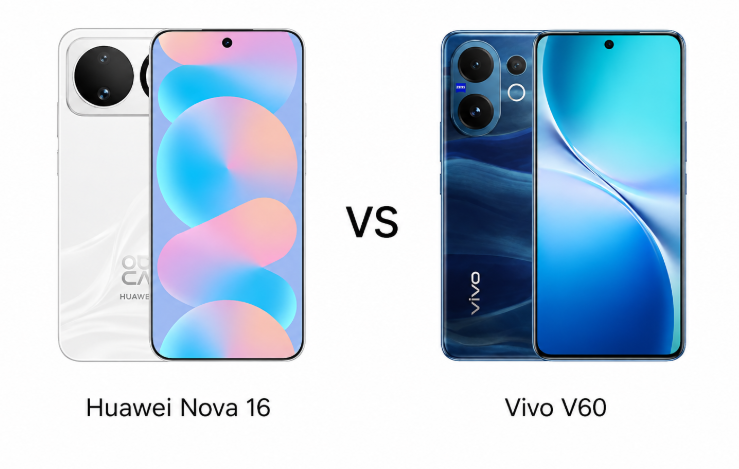
Huawei Nova 16 and Vivo V60 target buyers looking for premium features without stepping into flagship pricing. Both smartphones bring large batteries, capable cameras, high-refresh-rate displays, and modern designs, but they take different approaches when it comes to performance, photography, and overall value. This comparison breaks down their key differences to help determine which device deserves a spot in your pocket.
Major Features:
Category
Huawei Nova 16
Vivo V60
Winner
Build Quality
Glass front, aluminum back
Glass front, plastic/glass back
Huawei – More premium materials
Durability
IP65
IP68/IP69
Vivo – Better water and dust resistance
Display Quality
OLED, 1280 x 2800, 120Hz
AMOLED, 1080 x 2392, 120Hz
Huawei – Sharper display
Display Brightness
HDR Vivid
Up to 5000 nits peak
Vivo – Much brighter outdoors
Processor
Kirin 9010S
Snapdragon 7 Gen 4
Vivo – Newer chipset
Software
HarmonyOS 6.1
Android 15, 4 upgrades
Vivo – Better long-term support
RAM & Storage
Up to 12GB/512GB
Up to 16GB/512GB
Vivo – More memory options
Main Camera
50MP Wide
50MP Wide, Zeiss optics
Vivo – Better image tuning
Telephoto Camera
50MP, 3.7x zoom
50MP, 3x zoom
Huawei – Longer optical zoom
Ultrawide Camera
No
8MP Ultrawide
Vivo – More shooting flexibility
Selfie Camera
50MP Ultrawide
50MP AF Selfie
Vivo – Autofocus advantage
Video Recording
4K Front & Rear
4K Front & Rear
Tie – Similar capabilities
Battery Capacity
7000mAh
6500mAh
Huawei – Larger battery
Charging Speed
100W
90W
Huawei – Faster charging
Extra Battery Features
Reverse charging
Reverse + Bypass charging
Vivo – More useful features
Connectivity
Wi-Fi 7, Bluetooth 6.0
Wi-Fi 6, Bluetooth 5.4
Huawei – Newer standards
Fingerprint Scanner
Side-mounted
Under-display
Vivo – More premium solution
Price
Around $450 / ₹42,000
Around $425 / ₹37,000
Vivo – Lower price
Value for Money
Premium battery-focused package
Balanced feature set
Vivo – Better overall value
Disclaimer: Specs are based on available data. Actual performance may vary. Verify details from official sources before buying.
The Huawei Nova 16 and Vivo V60 take different approaches to design. Huawei uses a more premium construction with an aluminum back paired with a glass front, giving the device a sturdier and more refined feel in daily use. It also carries an IP65 rating, which provides protection against dust and water splashes. The Vivo V60 counters with a much stronger IP68/IP69 rating, making it better suited for users who prioritize durability and water resistance. Its under-display fingerprint scanner also delivers a more modern experience than Huawei’s side-mounted solution.
Display Quality
Huawei equips the Nova 16 with a high-resolution OLED panel that delivers sharper visuals and excellent clarity. The HDR Vivid support and 2160Hz PWM dimming make it particularly appealing for multimedia consumption and long viewing sessions. Vivo’s AMOLED display is brighter, reaching significantly higher peak brightness levels while also supporting HDR10+. Outdoor visibility is excellent, and colors appear vibrant and punchy.
Verdict
Huawei offers a more premium-looking design and sharper screen, while Vivo delivers superior durability and brightness. Users focused on display clarity may prefer the Nova 16, whereas those wanting better outdoor usability and stronger protection will find the V60 more appealing.
2. Specifications Including Battery
Performance
The Huawei Nova 16 is powered by the Kirin 9010S chipset paired with 12GB of RAM across all variants. Every day, performance feels smooth, and HarmonyOS remains highly optimized for multitasking. However, the Vivo V60 gains an advantage with the newer Snapdragon 7 Gen 4 platform built on a 4nm process. Combined with Android 15 and a promise of four major Android upgrades, it offers stronger long-term software support and broader app compatibility.
Battery and Charging
Battery life is a major strength for both phones. Huawei packs a massive 7000mAh battery that comfortably handles heavy usage and can easily stretch into a second day. The 100W charging system is among the fastest in the segment. Vivo’s 6500mAh silicon-carbon battery is slightly smaller but still excellent, while its 90W charging remains impressively quick. Features such as bypass charging and reverse charging add extra versatility for gamers and power users.
Verdict
Huawei wins on battery capacity and charging speed, making it ideal for endurance-focused buyers. Vivo takes the lead in processing efficiency, software longevity, and overall platform flexibility.
3. Camera
Main and Secondary Lenses
The Huawei Nova 16 focuses on a dual-camera setup featuring a 50MP main sensor and a 50MP periscope telephoto camera with 3.7x optical zoom. Image quality should be strong, particularly for portraits and zoom photography. Vivo adopts a more versatile approach with a 50MP main camera, a 50MP periscope telephoto lens, and an additional 8MP ultrawide camera. The inclusion of Zeiss optics enhances color tuning and image processing, providing a more polished photography experience.
Selfie Camera
Both devices feature impressive 50MP front cameras capable of 4K video recording. Huawei uses an ultrawide selfie camera that is particularly useful for group photos and travel shots. Vivo’s autofocus-equipped selfie camera offers more reliable sharpness and consistency, especially when recording video or taking close-up portraits.
Verdict
Huawei delivers excellent zoom performance and a capable selfie system, but Vivo’s extra ultrawide camera and Zeiss-tuned imaging create a more complete camera package. For users who enjoy experimenting with different shooting styles, the V60 feels more versatile overall.
4. Pricing
The Huawei Nova 16 is priced around $450 (₹42,000), while the Vivo V60 is priced around $425 (₹37,000). Despite being slightly cheaper, the Vivo offers a newer Snapdragon chipset, stronger water resistance, an additional ultrawide camera, longer software support, and multiple memory configurations. These advantages make its pricing highly competitive within the upper mid-range segment.
Huawei justifies its higher price through premium materials, a larger battery, faster charging, and a sharper display. Buyers who place greater value on battery endurance and display resolution may find the premium worthwhile. However, the overall feature balance leans slightly toward Vivo.
Verdict
Both phones offer solid value, but the Vivo V60 extracts more features from a lower price point. Huawei remains attractive for battery-focused users, while Vivo provides a stronger all-around value proposition.
Disclaimer: Prices are approximate and may vary based on country, region, launch timing, and applicable taxes. Always check whether the listed price is for a China unit or a global/international variant when purchasing.
5. Conclusion
The Huawei Nova 16 stands out with its premium aluminum-backed design, high-resolution OLED display, massive 7000mAh battery, and 100W charging system. It is clearly aimed at users who prioritize endurance, display sharpness, and premium hardware. The periscope zoom camera also adds appeal for portrait and telephoto photography enthusiasts.
The Vivo V60 differentiates itself with Snapdragon 7 Gen 4 performance, Zeiss-enhanced cameras, an ultrawide lens, superior IP68/IP69 protection, a brighter AMOLED display, and four guaranteed Android upgrades. These strengths create a more balanced smartphone that caters to a wider audience.
Verdict
Huawei Nova 16 is the better choice for users who want maximum battery life, faster charging, and a sharper display. The Vivo V60 is the stronger overall smartphone thanks to its more versatile camera system, newer chipset, better durability, longer software support, and lower price. For most buyers seeking the best combination of features and value, the Vivo V60 is the more compelling option.
Disclaimer: This comparison is based on the specifications provided and is intended for general informational purposes. Actual performance, camera results, battery life, and overall experience may vary depending on real-world usage, software updates, and individual preferences.
We use cookies on our website to give you the most relevant experience by remembering your preferences and repeat visits. By clicking “Accept”, you consent to the use of ALL the cookies.
This website uses cookies to improve your experience while you navigate through the website. Out of these, the cookies that are categorized as necessary are stored on your browser as they are essential for the working of basic functionalities of the website. We also use third-party cookies that help us analyze and understand how you use this website. These cookies will be stored in your browser only with your consent. You also have the option to opt-out of these cookies. But opting out of some of these cookies may affect your browsing experience.
Necessary cookies are absolutely essential for the website to function properly. This category only includes cookies that ensures basic functionalities and security features of the website. These cookies do not store any personal information.
Any cookies that may not be particularly necessary for the website to function and is used specifically to collect user personal data via analytics, ads, other embedded contents are termed as non-necessary cookies. It is mandatory to procure user consent prior to running these cookies on your website.


Comments