
Add GIZMOCHINA on Google:
Samsung has taken a solid step forward with battery tech in its latest foldables, and it’s already talking about where that technology might go next. After putting silicon-carbon (Si-C) batteries into the new Galaxy Z series, the company is now openly discussing the possibility of bringing them to regular flagship slab phones, while also giving a small update on its long-rumored rollable display project.]
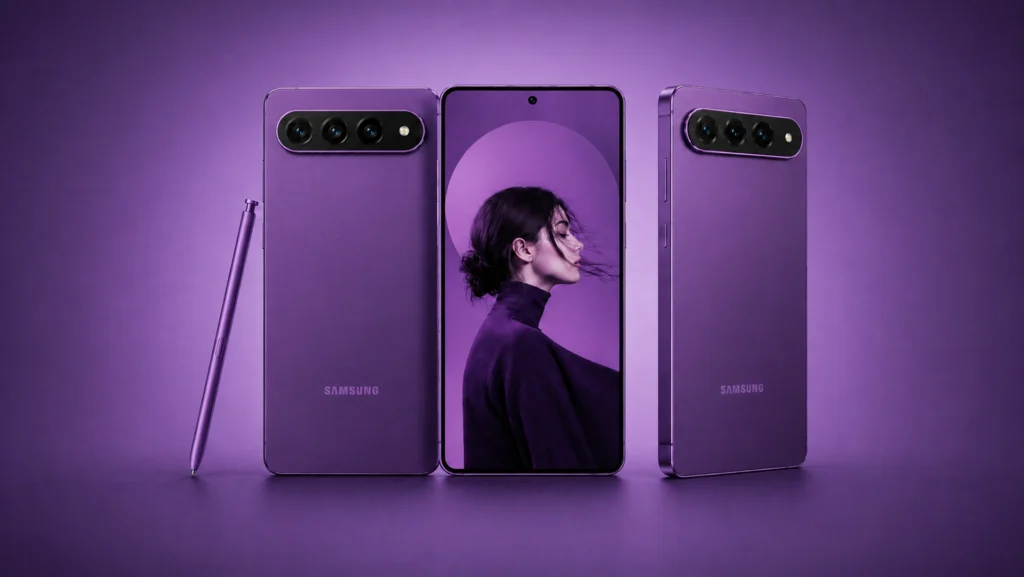
The newly launched Galaxy Z Fold 8, Galaxy Z Fold 8 Ultra, and Galaxy Z Flip 8 are Samsung’s first phones to use silicon-carbon batteries. These cells pack higher energy density than traditional lithium-ion ones. The book-style Fold 8 models got larger batteries than last year’s Fold 7, while the Flip 8 keeps the same capacity as its predecessor but in a slimmer body.
The big question now is if or when it’ll show up in the main Galaxy S lineup. At a media briefing in London, Moon Sung-hoon, Vice President of Hardware at Samsung’s Mobile Experience division, was asked about future use in phones like the Galaxy S27 series. His answer was straightforward: it would depend on whether the battery actually makes a meaningful difference to the user experience, product by product.
Earlier reports suggest Samsung has been exploring ways to improve the battery capacity of the Galaxy S27 Ultra. If things go well, the phone could finally push past the usual 5,000 mAh range and land somewhere around 5,500 mAh.
That said, Galaxy fans looking forward to the next flagship should keep their expectations in check. Unlike many Chinese smartphone makers, Samsung has a major presence in Europe and the US, where a single-cell lithium-ion battery over 20 Wh (roughly 5,200–5,300 mAh) triggers higher certification and transportation costs. A dual-cell battery can bypass those rules by keeping each cell under the limit, but it is more expensive to manufacture and takes up more space for the same capacity, which is less ideal for a handset.
Google, Apple, and Samsung have consistently stayed at or under the ~20 Wh single-cell limit in their phones sold in Europe and the US. You almost never see them go meaningfully above it with a single cell (unlike some Chinese brands that either accept higher shipping costs or use dual-cell designs). It will be interesting to see whether Samsung breaks with that tradition.
Don’t miss a thing! Join our Telegram community for instant updates and grab our free daily newsletter for the best tech stories!
For more daily updates, please visit our News Section.
(Source)

Comments