Add GIZMOCHINA as Preferred Source on Google
As an Amazon Associate, Gizmochina earns from qualifying purchases. Links on this page may earn us a commission at no extra cost to you.
DJI recently expanded its handheld camera lineup with two distinct devices: the Osmo 360 II and the Osmo Pocket 4P. While both are highly portable and share some of the company’s latest processing technology, they are designed for fundamentally different types of video production. Choosing between them comes down to how you prefer to shoot and the environments you typically work in.
1. Design and Build
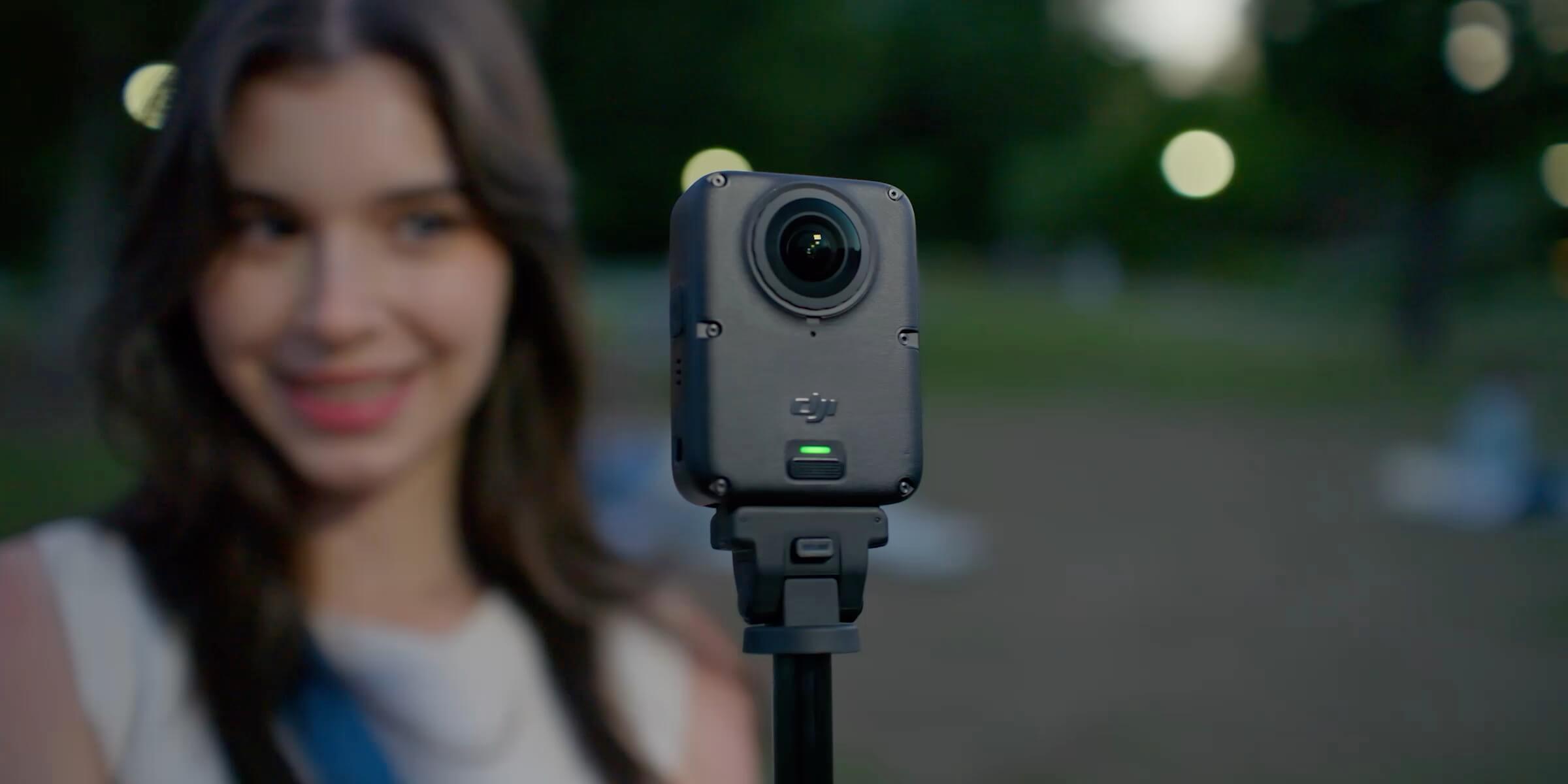
The physical construction of these cameras dictates their best use cases. The Osmo 360 II is built for durability and unpredictable environments. It carries an IP68 rating, meaning it can handle water immersion up to 10 meters without needing an external waterproof housing.
It is also rated to operate in temperatures as low as -20 degrees Celsius. DJI has included replaceable lens protectors, which is a practical update for a camera meant to be mounted on bikes, helmets, or used in action sports where scratches are likely.

The Osmo Pocket 4P, conversely, is a much more delicate device. Weighing 230 grams, its defining feature is a 3-axis mechanical gimbal. It isn’t weather-sealed or ruggedized for extreme sports. Instead, it is designed for handheld use in controlled environments.
It features a bright 2.0-inch rotating touchscreen that doubles as a quick power-on switch, allowing you to start recording quickly. It is a tool built for smooth, deliberate camera movements rather than rough handling.
2. Sensors and Image Quality
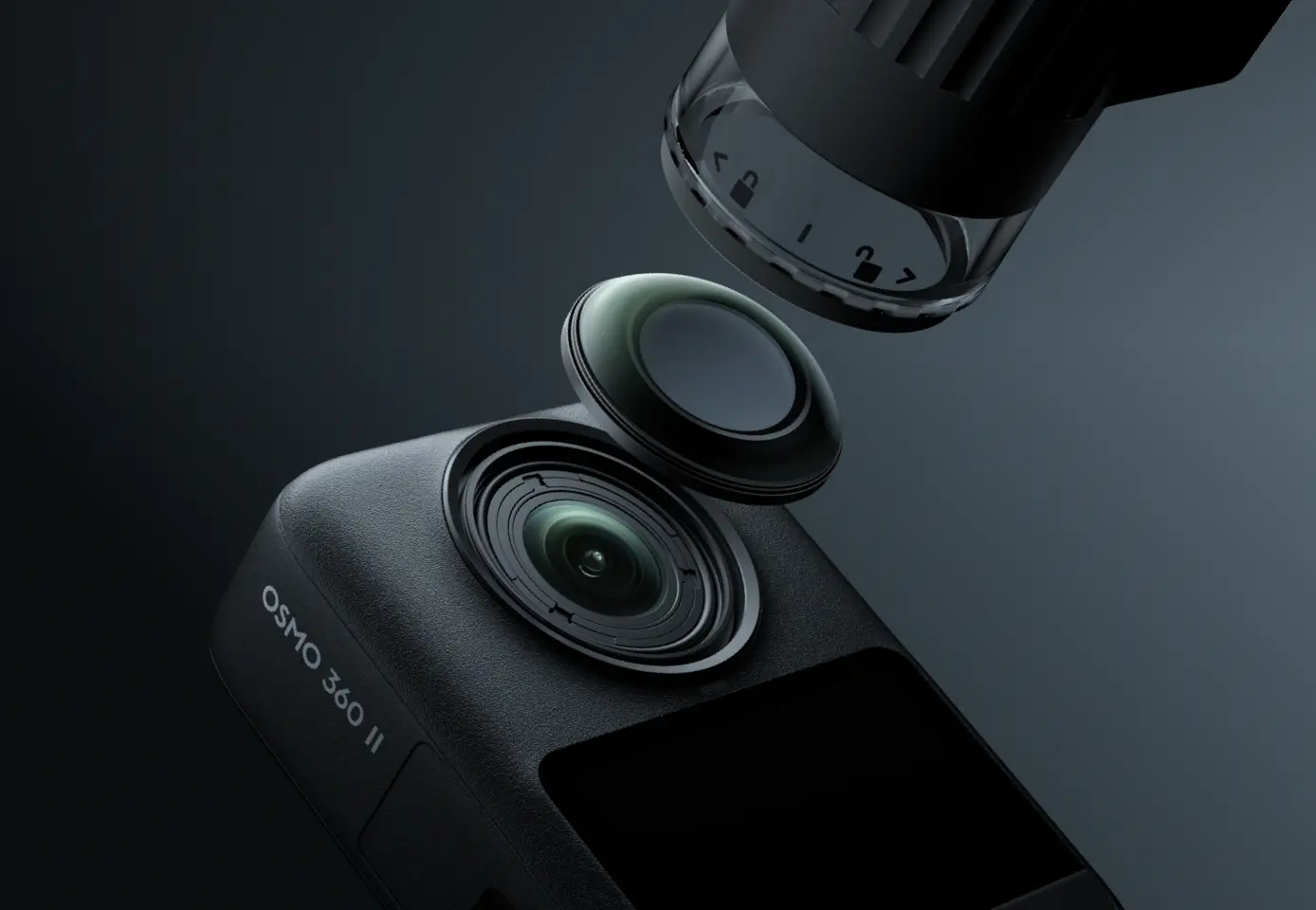
This is where the two cameras diverge the most in terms of workflow. The Osmo 360 II uses dual 1/1.1-inch square CMOS sensors. The square aspect ratio is an interesting design choice, intended to improve sensor utilization and capture native 8K panoramic video at up to 60fps.
It also includes a 14.5-stop dynamic range, 10-bit color depth with D-Log M, and an AI Super Night 2.0 mode for low-light situations. The appeal here is the ability to capture everything around you and decide on the exact framing later in post-production.
The Pocket 4P takes a more traditional photography approach, introducing a dual-camera system to the Pocket line. The main wide-angle camera uses a 1-inch sensor (20mm equivalent, f/2.0) with LOFIC technology, which DJI says provides up to 17 stops of dynamic range.

Alongside it is a 60mm medium-telephoto lens with a 1/1.28-inch sensor (f/1.8). This secondary lens provides 3x optical zoom, allowing for more natural depth of field and background compression in portrait shots. It also supports 4K video at up to 240fps for slow motion and uses the D-Log 2 color profile. If your priority is standard, high-quality video right out of the camera, the Pocket 4P has a clear edge.
3. Tracking, Storage, and Connectivity
Both cameras offer subject tracking, but they process it differently. The Pocket 4P uses ActiveTrack 8.0, physically moving the gimbal to keep subjects centered, even when using the telephoto lens. The Osmo 360 II relies on digital tracking, cropping into the 360-degree sphere to keep a subject in frame, which is currently limited to a 4K resolution output.
Both models feature built-in internal storage. The Osmo 360 II includes 128GB (about 105GB usable), while the Pocket 4P has 103GB. This allows users to start recording immediately without needing to supply their own microSD card right away, though both support expansion up to 1TB. For file transfers, the Pocket 4P supports USB 3.1 speeds up to 800MB/s, making it relatively quick to offload large video files.

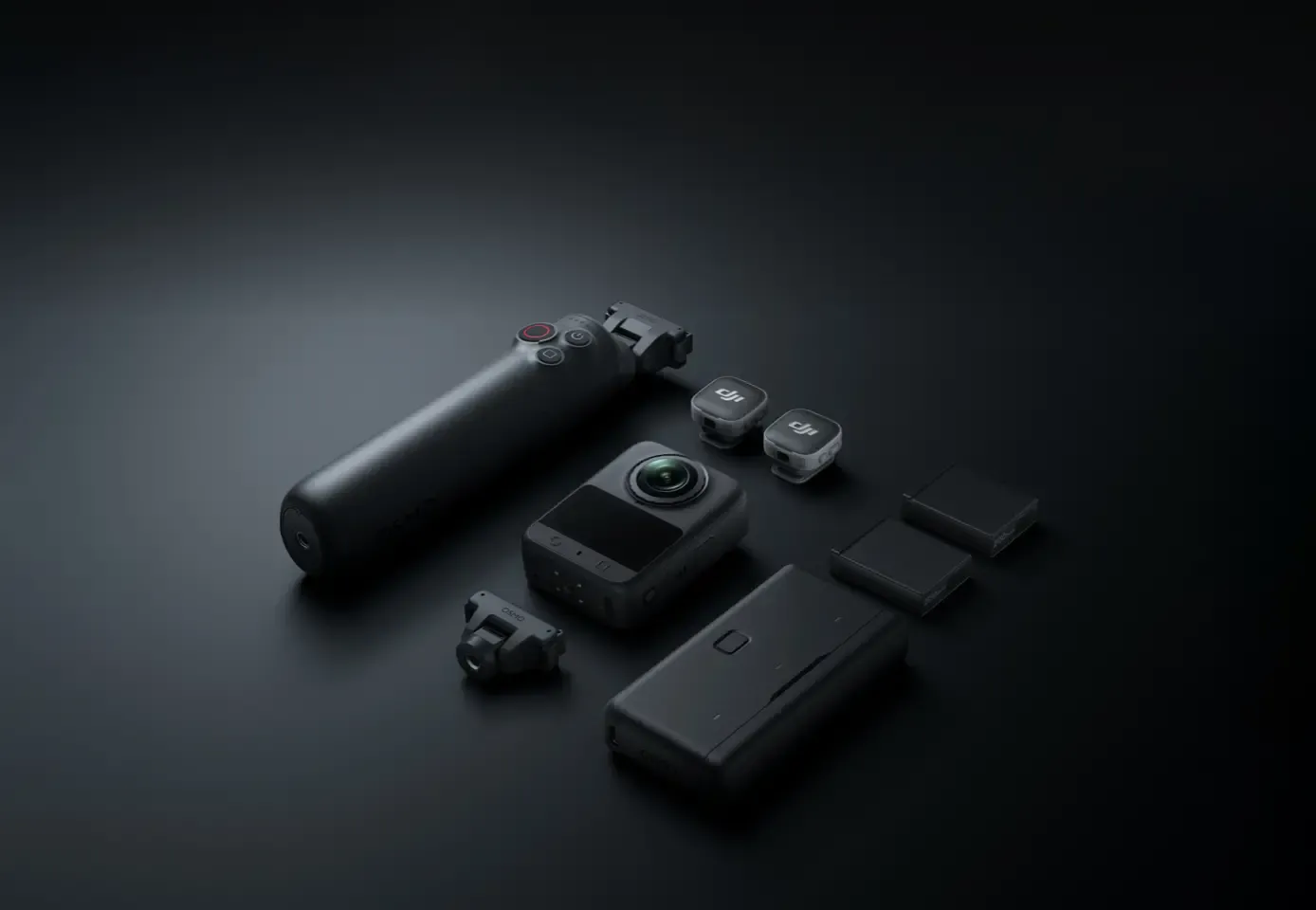
Audio capture is handled by a four-microphone array on the Osmo 360 II and a three-microphone array on the Pocket 4P. Both devices also support direct connections to DJI’s wireless microphone ecosystem, such as the Mic Mini 2.
For battery life, the Pocket 4P offers up to 210 minutes of recording at 1080p and supports fast charging to 80 percent in 18 minutes. The Osmo 360 II, handling the higher processing demands of 8K video, provides up to 100 minutes of continuous recording on its 2150mAh battery.
4. Which One Should You Buy?
Pricing for both cameras is remarkably competitive. In China, the Osmo 360 II starts at CNY 3,299 ($489) for the Standard Combo, while the Osmo Pocket 4P starts slightly higher at CNY 3,799 ($563).
If you are an action sports junkie, a motorcyclist, or someone who wants to capture immersive VR-ready environments, the Osmo 360 II is the obvious choice. Its 8K resolution gives you massive flexibility to crop into standard flat videos later, and its IP68 rating means it can take a beating.
However, if you are a YouTuber, a solo filmmaker, or a travel vlogger who prioritizes image quality, optical depth of field, and perfectly smooth tracking shots, the Osmo Pocket 4P is unparalleled. The addition of a 60mm telephoto lens to a 1-inch main sensor on a mechanical gimbal makes it one of the most capable pocket cameras ever made.
For more daily updates, please visit our News Section.
Stay ahead in tech! Join our Telegram community and sign up for our daily newsletter of top stories!