Add GIZMOCHINA as Preferred Source on Google
As an Amazon Associate, Gizmochina earns from qualifying purchases. Links on this page may earn us a commission at no extra cost to you.
Robot vacuums have become far more capable than the simple floor-cleaning machines they once were. Today’s premium models can map your home, recognize objects, avoid obstacles, vacuum and mop at the same time, and even wash and dry their own mops when they’re done. The latest LG RONi and Roborock S9 MaxV Ultra take that hands-free approach even further, but they focus on different parts of the cleaning experience.
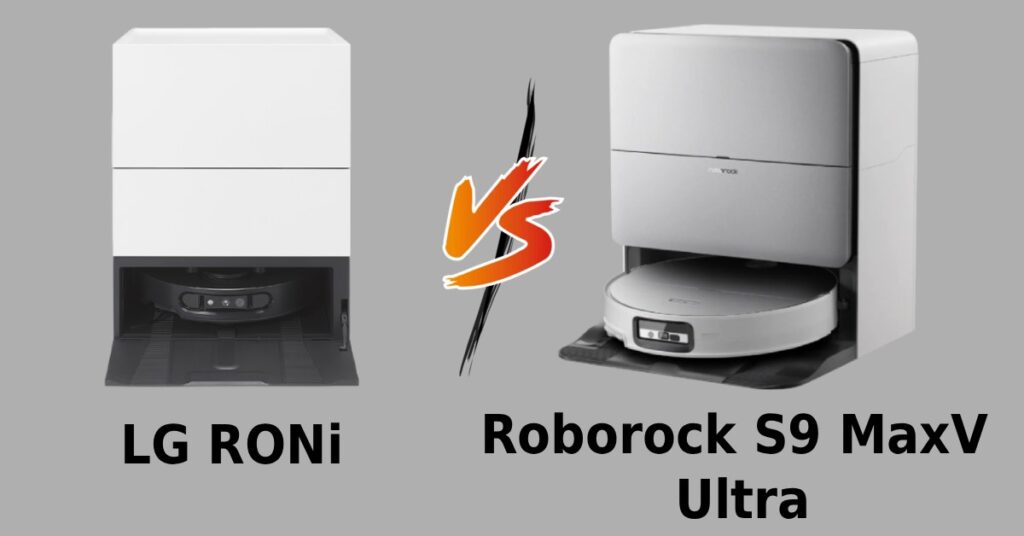
LG RONi puts its biggest bet on 100°C steam cleaning, with the robot and its dock designed to use high-temperature steam to tackle dirt and keep the mops clean. Roborock’s S9 MaxV Ultra is built for performance, combining 22,000Pa suction, advanced obstacle avoidance, and a more aggressive mopping system.
Both are built to handle most of the work on their own, but the better choice depends on whether you care more about deep mopping and hygiene or all-around cleaning performance.
1. Design
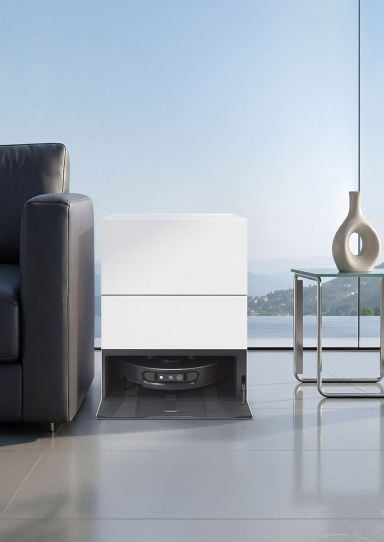
The biggest difference between the two is their design.
LG designed RONi to disappear when it’s not in use. The company offers two versions of it. One with a Hidden Station that fits under a kitchen sink cabinet and stands just 15cm tall. It also supports automatic water supply and drainage, so you don’t need to make major changes to your kitchen.
And another Object Station version, which looks more like a small side table and can be placed anywhere in the home.
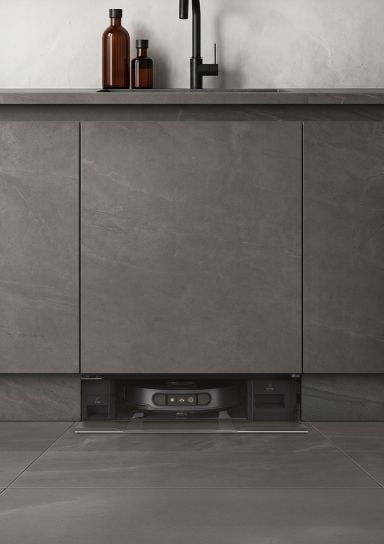
Both stations have a front door that opens when the robot enters or leaves. When cleaning is complete, the door closes, hiding the robot and its camera. The RONi also has a Privacy by Design certification, and the camera stays behind the closed station door when the robot is not in use.
Meanwhile, the Roborock S9 MaxV Ultra doesn’t try to hide its hardware. Its RockDock Ultra sits openly in the room and handles tasks such as emptying the dustbin, washing the mop, and drying by itself.
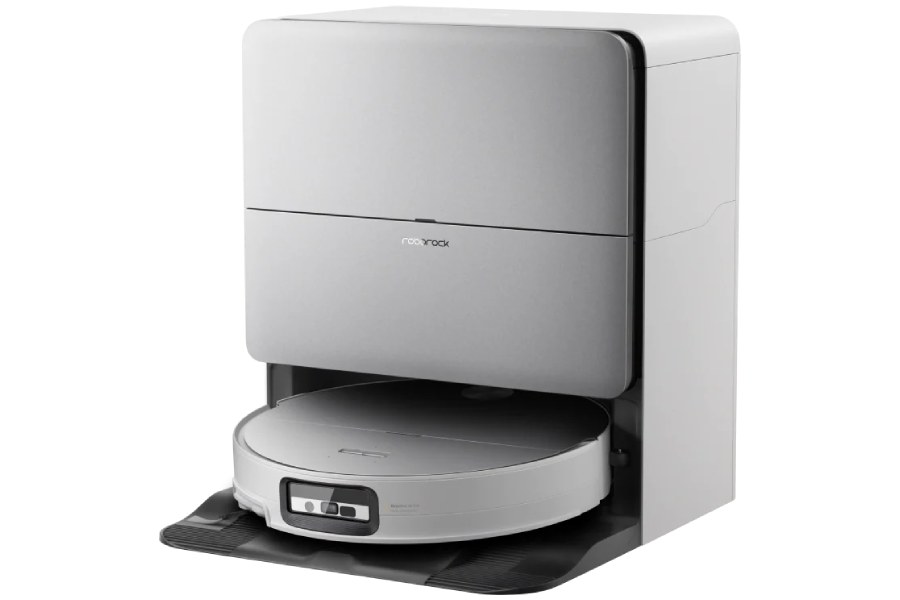
The robot measures 350 x 353 x 79.8mm, allowing it to get under most furniture. The dock can also be connected directly to water and drainage systems for automatic refilling and draining.
2. Cleaning
The two robots also take different cleaning approaches. The RONi has 30W of suction, mop pads that spin at up to 180rpm, and a side brush that extends around 46mm to reach corners. But suction isn’t its biggest selling point. LG is focusing heavily on hygiene instead.
The RONi is the first robot vacuum to use 100°C steam to clean both the robot and its station. LG says the steam system can eliminate 99.99% of four types of bacteria from the mop pads and station.
Roborock takes a more traditional performance-focused approach with the S9 MaxV Ultra. It offers up to 22,000Pa of suction, more than twice the suction power of the company’s S8 MaxV Ultra. Its VibraRise 4.0 mopping system vibrates 4,000 times per minute and uses 80°C hot water to wash the mop. The dock then dries it after cleaning.
The robot can lift its brush by 18mm when it detects carpet and can climb thresholds up to 4cm. The dock is also 7.98cm tall, which Roborock says makes it the shortest in its class.
If you care most about suction and picking up dirt from floors, the S9 MaxV Ultra has the stronger numbers. But if keeping the mop and dock clean is a greater concern, the RONi’s 100°C steam system offers an alternative.
3. Navigation and obstacle detection
Both robots use AI to navigate around the home and avoid objects. LG’s RONi uses eight sensors and can recognize more than 120 types of objects, including cables, flower pots and pet waste. If something blocks its path, the robot can notify you through the LG ThinQ app. It can then return to the area and clean it once the obstacle has been removed.
The RONi can also change its cleaning settings depending on the room. For example, it can use stronger cleaning settings in areas such as the kitchen.
Roborock’s S9 MaxV Ultra uses Reactive AI 3.0 and can identify 108 types of objects. It also uses LiDAR to map the home and plan cleaning routes.
Roborock has an advantage when it comes to remote monitoring. Features such as Pet Snap and Video Cruise allow owners to check on pets remotely. The RONi doesn’t offer the same kind of pet-monitoring features.
4. Price and availability
LG launched the RONi in South Korea for 2.19 million won, or around $1,420. Both the Hidden Station and Objet Station versions have the same starting price.
The company has not yet confirmed plans to bring the RONi to other markets. LG also offers an optional appliance subscription that includes service visits, regular steam maintenance, and replacement parts such as mop pads and batteries.
The Roborock S9 MaxV Ultra is more widely available. It is listed at $1,799.99 in the US and is also sold in markets such as the UAE and Egypt. In South Korea, it costs around 1.41 million won, making it cheaper than the RONi at local prices.
5. Which one should you choose?
The LG RONi makes more sense if you don’t want a large robot vacuum dock sitting in the middle of your kitchen or living room. Its hidden design and steam-cleaning system also make it a better fit if hygiene is more important to you than maximum suction power.
The Roborock S9 MaxV Ultra is the better choice if you want strong suction, advanced navigation, and more mature smart features. Its wider availability and pet-monitoring tools are also useful advantages.
Neither robot is clearly better than the other. They are built around different ideas. LG is trying to make the robot vacuum disappear into your home. Roborock is trying to make it as powerful and capable as possible. Which approach works better depends on whether you care more about keeping the hardware out of sight or getting the most cleaning power and smart features from your robot vacuum.
For more daily updates, please visit our News Section.
Stay ahead in tech! Join our Telegram community and sign up for our daily newsletter of top stories!