Add GIZMOCHINA as Preferred Source on Google
As an Amazon Associate, Gizmochina earns from qualifying purchases. Links on this page may earn us a commission at no extra cost to you.
TVs have become astonishingly thin, bright, and smart, but their audio performance still tends to be fairly average. That’s where premium soundbars come in. In 2026, the best options aren’t merely slim speaker boxes meant to make dialogue louder.
They offer real height channels for Dolby Atmos, wireless surrounds, room calibration, multiroom music, smarter voice enhancement, and enough bass to make a blockbuster feel appropriately irresponsible.
The right choice depends on what you value most: maximum cinematic immersion, a minimalist single-bar setup, easy rear-speaker placement, or tight integration with your TV brand. These are the best soundbars and home-theater alternatives to consider right now.
1. Samsung HW-Q990H
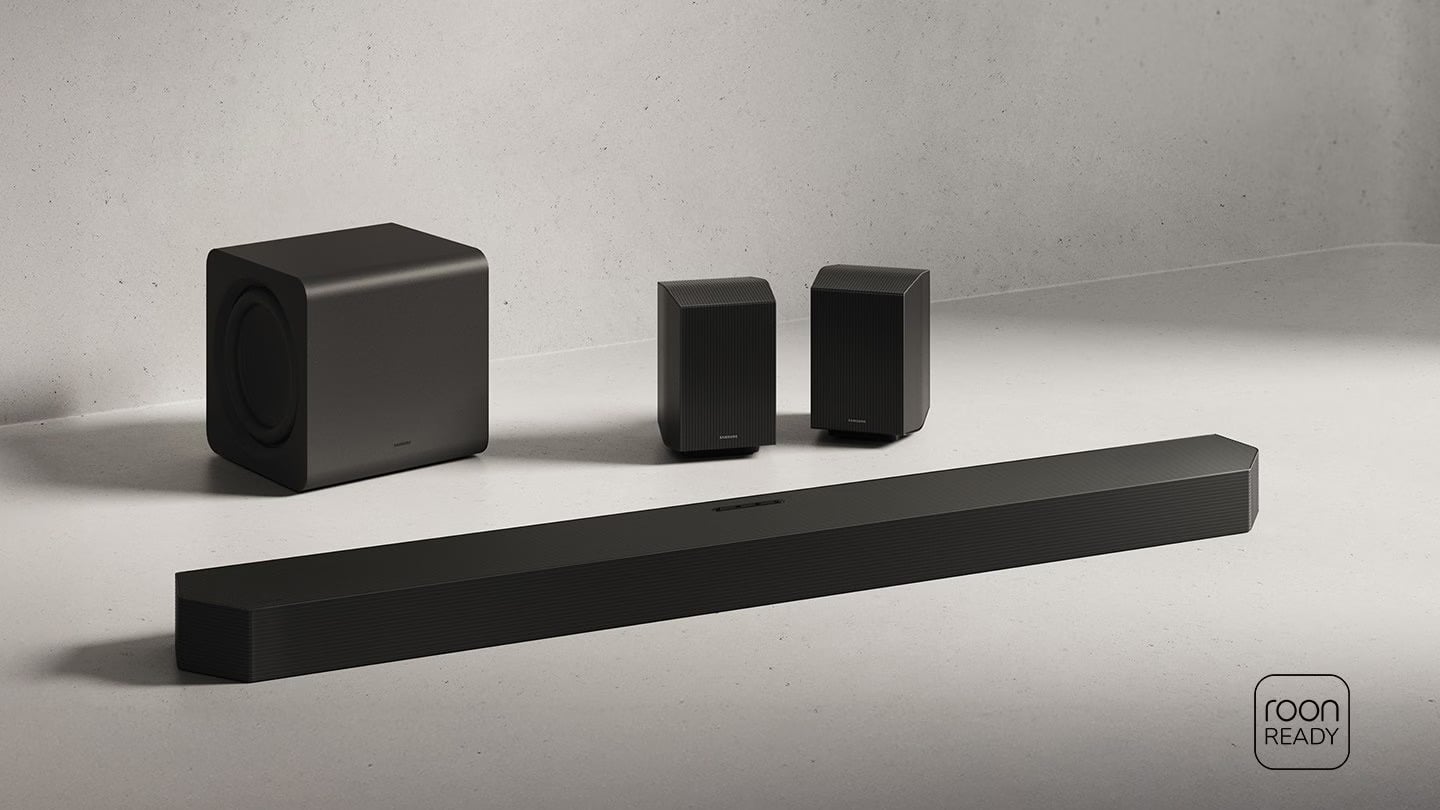
The Samsung HW-Q990H is the all-in-one answer for someone who wants a full home-theater experience without assembling an intimidating rack of separate components. It is an 11.1.4-channel system with a main soundbar, wireless subwoofer, and wireless rear speakers included in the box. That means it has dedicated channels for front, side, rear, and overhead sound, not just virtual processing trying to convince you sound is behind your couch.
The headline features are exactly what you would expect from Samsung’s flagship: Dolby Atmos, DTS:X support through HDMI eARC, two HDMI inputs with 4K/120Hz passthrough, Adaptive Sound, Game Mode Pro, and room-tuning through SpaceFit Sound Pro. There is also Active Voice Amplifier Pro, which adjusts dialogue based on the noise in your room, an increasingly useful feature for households with loud air conditioners, pets, or people who somehow always start talking during the important scene.
For Samsung TV owners, Q-Symphony remains the biggest reason to buy. It lets compatible Samsung TVs and sound devices work together instead of muting the TV speakers once the soundbar is connected. The HW-Q990H can pair with compatible Samsung TVs and, depending on the TV generation and supporting devices, expand a Q-Symphony system with Music Frames or Music Studio speakers. That creates a flexible, unusually broad soundfield.
At $1,699.99, it is expensive, but it includes the subwoofer and rear speakers that competitors often sell separately. For a buyer starting from nothing, that makes Samsung’s package particularly compelling.
2. JBL Bar 1300XMK2
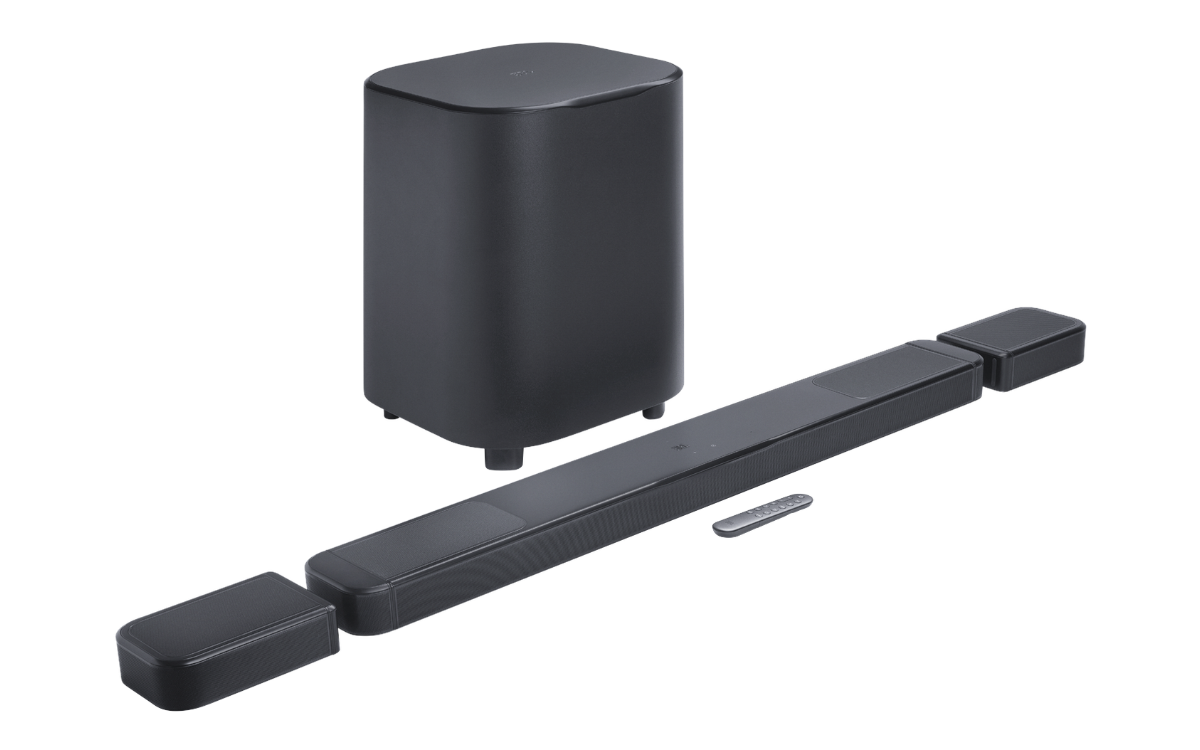
The JBL Bar 1300XMK2 takes a clever approach to rear speakers: it makes them detachable. Pull the wireless speakers off either end of the soundbar, put them behind your seating position, and you have a proper surround setup without permanently running power cables to the rear of the room.
It is another ambitious 11.1.4-channel system, with six up-firing drivers across the bar and detachable speakers, a 12-inch wireless subwoofer, and a claimed 1,570 watts of maximum output. More importantly, it supports both Dolby Atmos and DTS:X, so it is built for people who want enveloping effects from movies, games, and compatible streaming content.
JBL also has a few genuinely practical tricks. The detachable rear speakers can become portable Bluetooth speakers, and its Broadcasting feature lets you carry one or both into another room while continuing to hear whatever is playing on TV. There is even a Night Listening mode that mutes the main soundbar and subwoofer so you can use the detached speakers for quieter, closer listening.
It is priced at $1,699.95 and lands directly against Samsung’s flagship. Choose it if you value a cleaner, more adaptable room setup and actually like the idea of portable surround speakers. Choose Samsung if Q-Symphony and a more deeply integrated Samsung ecosystem matter more.
3. Sonos Arc Ultra

The Sonos Arc Ultra is for buyers who want seriously upscale Atmos performance but do not want a subwoofer and rear speakers dominating the room on day one. Its major innovation is Sound Motion, a compact dual-membrane woofer system designed to create deeper bass without making the soundbar enormous.
The Arc Ultra supports a 9.1.4 spatial audio experience, uses 14 Sonos-engineered drivers, and includes Dolby Atmos, HDMI eARC, Wi-Fi, Bluetooth, AirPlay 2, Trueplay room tuning, and four levels of AI-powered Speech Enhancement. It is also exceptionally well positioned for expanding later: add a Sonos Sub and Era 300 rear speakers when you want a more complete surround system.
Sonos’ software remains a major selling point. Setup is straightforward, multiroom music is excellent, and the app offers useful tuning controls. The Arc Ultra can also swap TV audio to one or two Sonos Ace headphones.
At $1,099, it is not cheap for a soundbar alone. But it is arguably the most elegant route to premium sound for people who prioritize industrial design, music streaming, and easy whole-home expansion.
4. Harman Kardon Enchant 1100
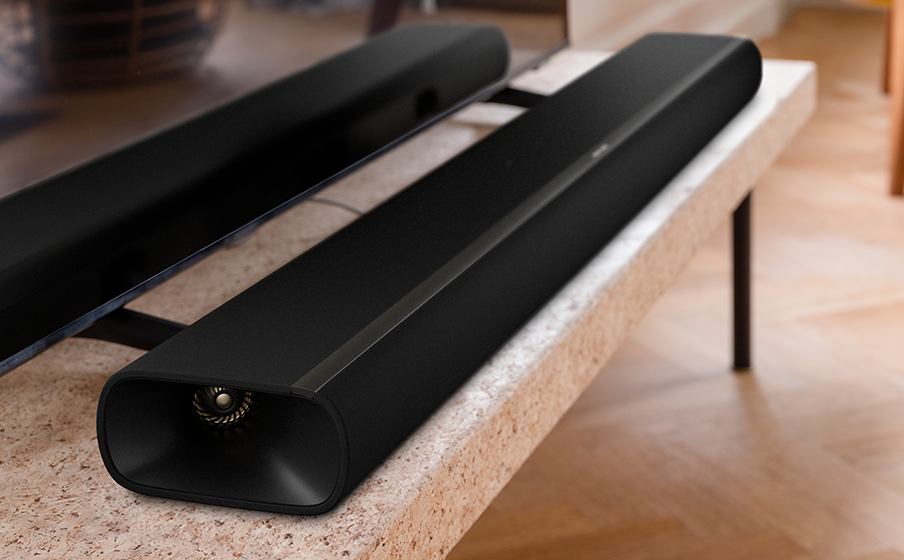
The Harman Kardon Enchant 1100 is the choice for someone who wants a premium soundbar that looks as refined as it sounds. Its minimalist design hides an 11-driver setup with two up-firing channels, Dolby Atmos, DTS:X, MultiBeam processing, and PureVoice dialogue enhancement.
Unlike the Samsung and JBL systems, this is a standalone bar: no included subwoofer or rear speakers. That naturally limits its low-end impact and surround separation compared with a full package, but it also makes the Enchant 1100 far easier to place in a living room where clutter is unacceptable.
It supports HDMI eARC, one HDMI input, HDR10 and Dolby Vision passthrough, Wi-Fi, Bluetooth, AirPlay, Chromecast, and Spotify Connect. At 45.2 inches wide, it is also a good fit for larger TVs without becoming visually overwhelming. It is priced at $999.95.
5. Bose Lifestyle Ultra Soundbar
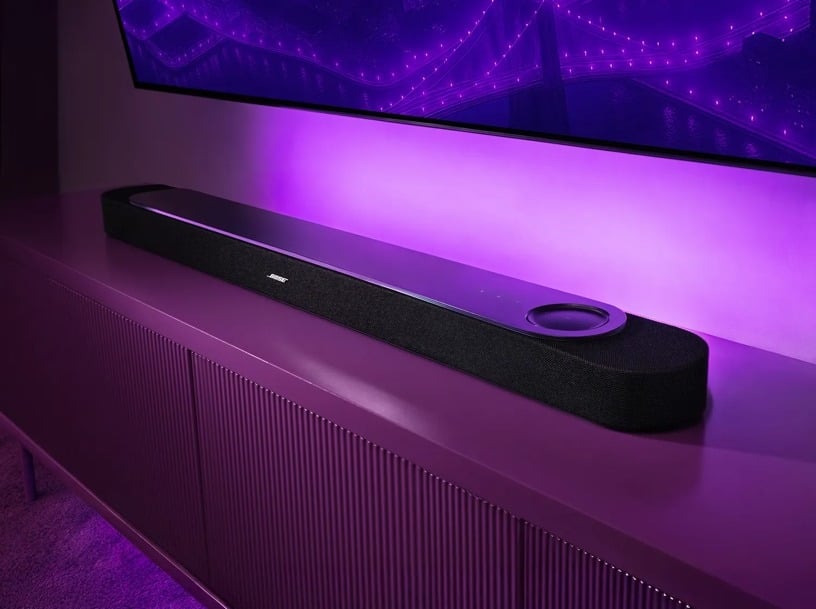
The Bose Lifestyle Ultra Soundbar is another premium standalone option, focused on elegant design and big sound from one bar. It uses a 5.1.2 configuration, Dolby Atmos, PhaseGuide speakers, TrueSpatial processing, CleanBass technology, and SpeechClarity for dialogue.
It lacks the channel count and included rear speakers of the Samsung or JBL packages, but Bose’s appeal is simplicity. It offers Wi-Fi, Bluetooth 5.3, AirPlay 2, Google Cast, Spotify Connect, Alexa, and app-based control in a polished package that looks at home almost anywhere.
Priced at $1,099, it is best for someone who wants richer, more cinematic TV audio without turning their living room into an equipment showcase.
6. TCL Q85H Q Class
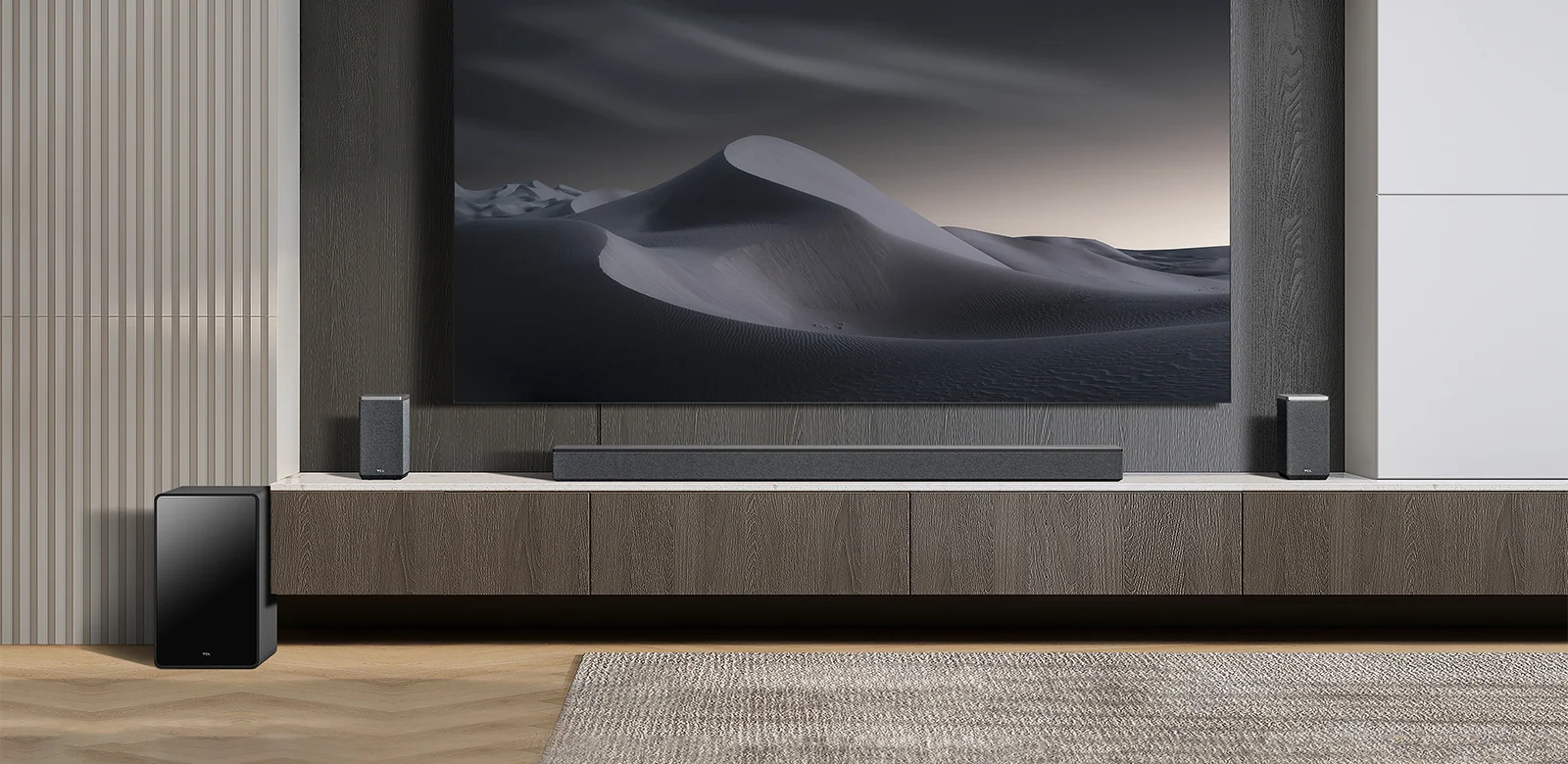
The TCL Q85H Q Class is the value pick for buyers who want a complete Dolby Atmos system without spending flagship money. It is a 7.1.4-channel package with a main soundbar, wireless subwoofer, and wireless surround speakers. At $599.99 on sale, down from $899.99, it costs far less than the Samsung and JBL systems while still including the components needed for real surround sound.
The system supports Dolby Atmos and DTS:X, with up-firing speakers in the soundbar and wireless surrounds for height effects. TCL also includes a built-in center channel for dialogue, built-in tweeters for high-frequency detail, and Ray Danz technology with acoustic reflectors to widen the front soundstage.
The wireless subwoofer uses a 6.5-inch driver and Bass Boost technology. It will not deliver the same low-end output as JBL’s much larger 12-inch subwoofer, but it should offer a major improvement over a standalone soundbar. TCL lists up to 860 watts of total audio power.
TCL includes HDMI eARC, an HDMI input, digital optical audio, USB audio playback, Bluetooth 5.1, AirPlay 2, and the TCL Home app. The Q85H also supports TCL TV Ready and Roku TV Ready integration. Its AI Sonic Auto Room Calibration adjusts the system for the room, while preset modes cover standard, movie, music, voice, game, and sports listening.
For more daily updates, please visit our News Section.
Stay ahead in tech! Join our Telegram community and sign up for our daily newsletter of top stories!