Add GIZMOCHINA as Preferred Source on Google
As an Amazon Associate, Gizmochina earns from qualifying purchases. Links on this page may earn us a commission at no extra cost to you.
For a long time, the action camera market felt fairly predictable. Year after year, new models would arrive with slight bumps in resolution or frame rates, but the core experience remained largely the same. Now that we are in 2026, the industry has shifted its focus. Instead of just chasing higher numbers on a spec sheet, manufacturers are addressing the actual pain points of recording video on the go. We are seeing the introduction of variable apertures, better computational processing, and more practical mounting systems.
Whether you are recording a cycling route, documenting a family trip, or just want a hands-free way to capture your daily routine, the current lineup of cameras offers distinct approaches to solving these problems. Here is a look at the best action cameras available in 2026.
1. DJI Osmo Action 6
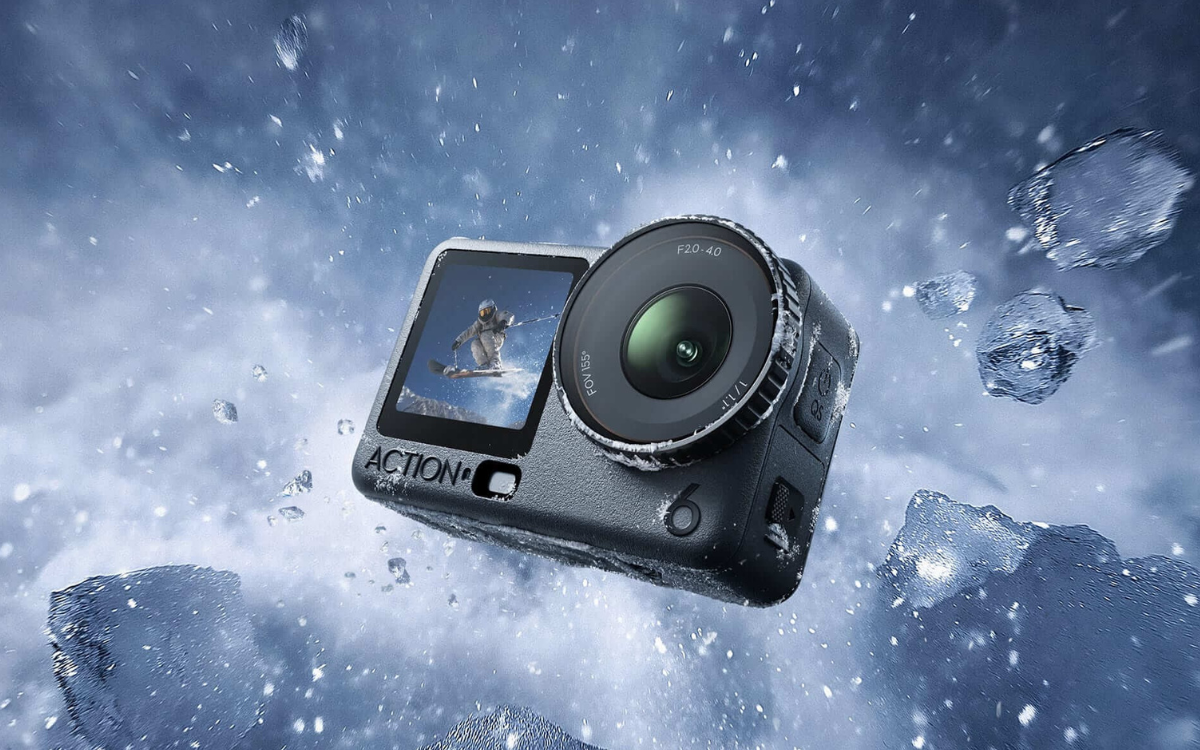
DJI has been steadily iterating on its action camera line, and the Osmo Action 6 brings a significant hardware change: a variable aperture. Ranging from f/2.0 to f/4.0, this allows the camera to physically adjust to different lighting conditions. In practical terms, this means you can get better light intake in dim environments at f/2.0, or stop down to f/4.0 in bright sunlight to retain detail without overexposing the shot.
The camera is built around a new 1/1.1-inch square sensor. The square format is particularly useful for creators who need to export video for both traditional widescreen platforms (like YouTube) and vertical platforms (like TikTok or Instagram Reels). You can shoot once in the 4K Custom mode and crop your preferred aspect ratio later.
DJI also included 50GB of built-in storage, which serves as a helpful safety net if you forget your microSD card, along with a battery rated for up to four hours of use in standard conditions.
2. Insta360 Ace Pro 2
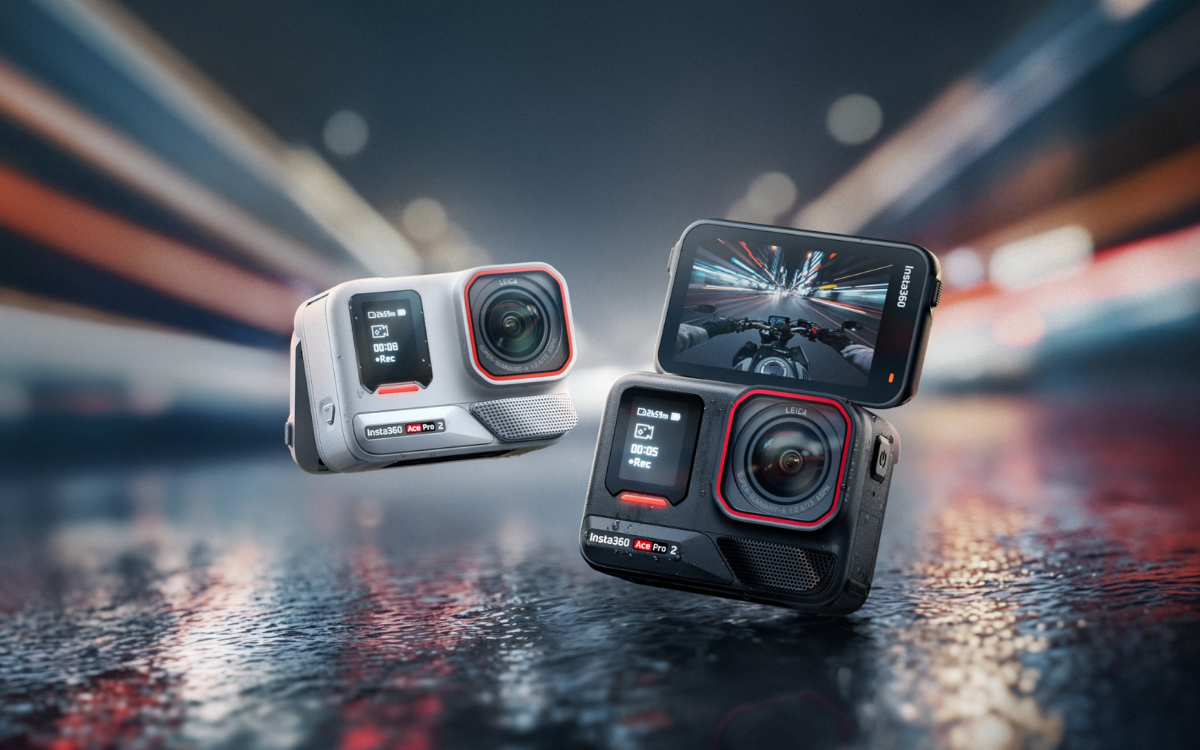
Insta360 has taken a different route with the Ace Pro 2, focusing heavily on processing power and sensor resolution. Co-engineered with Leica, the camera features a 1/1.3-inch sensor capable of recording 8K video at 30 frames per second. While 8K might be more resolution than most people currently need, it offers a lot of flexibility for cropping and reframing in post-production.
What makes the Ace Pro 2 stand out is its dual-chip architecture. It uses a dedicated imaging chip alongside a 5nm AI chip to handle noise reduction and image processing. This setup is especially noticeable in the PureVideo low-light mode, which cleans up grainy footage quite effectively.
The hardware design also includes a 2.5-inch flip touchscreen and an integrated wind guard, which helps reduce audio clipping when you are moving at higher speeds.
3. GoPro Hero 13 Black
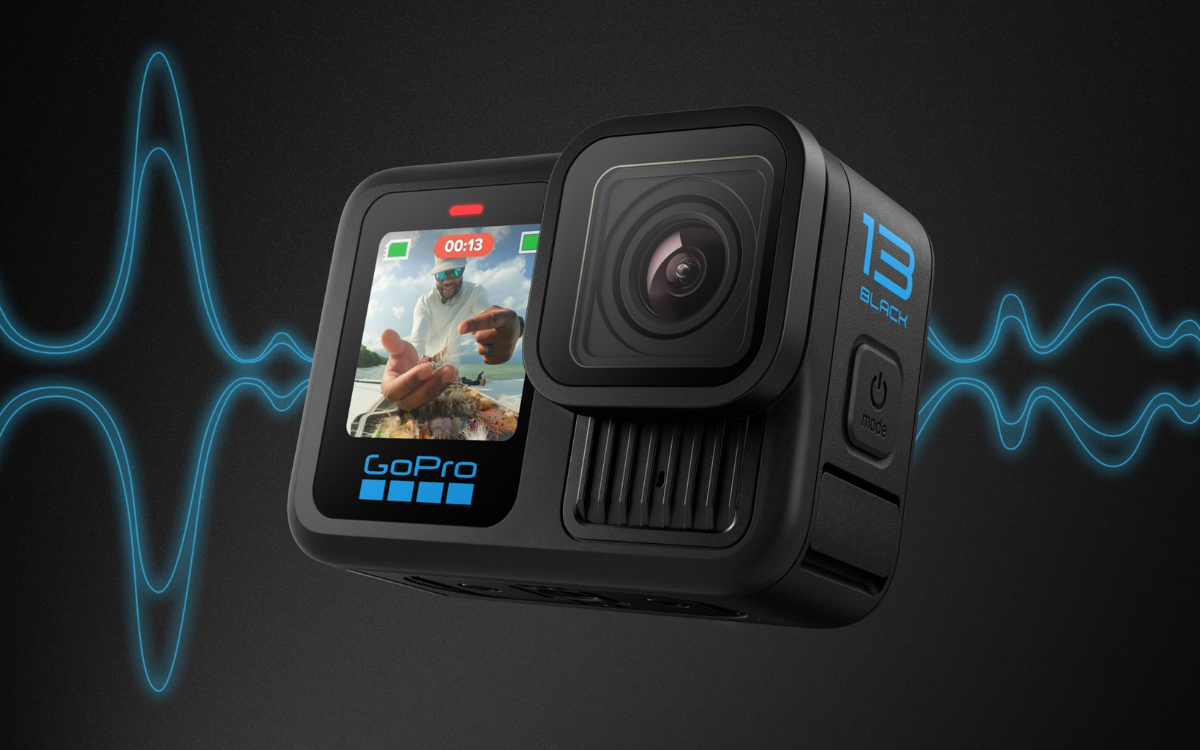
GoPro has maintained its familiar form factor with the Hero 13 Black, but it has heavily expanded its lens ecosystem. The camera introduces the HB-Series lenses, which the camera automatically detects when attached, adjusting its settings accordingly.
You can swap between a Macro Lens Mod for close-ups, an Ultra Wide Lens Mod for a broader field of view, or an Anamorphic Lens Mod if you prefer a cinematic 21:9 aspect ratio with traditional lens flares.
Internally, it uses a 27-megapixel 1/1.9-inch CMOS sensor that shoots 5.3K video at 60fps. GoPro has also added a Burst Slo-Mo feature, allowing you to capture 400fps at 720p for short 15-second bursts.
To support these features, the Hero 13 Black uses a 1900mAh Enduro battery for improved efficiency, and the company has also integrated a magnetic mounting system, making it much easier to move the camera between different mounts without dealing with thumbscrews.
4. Akaso Brave 8
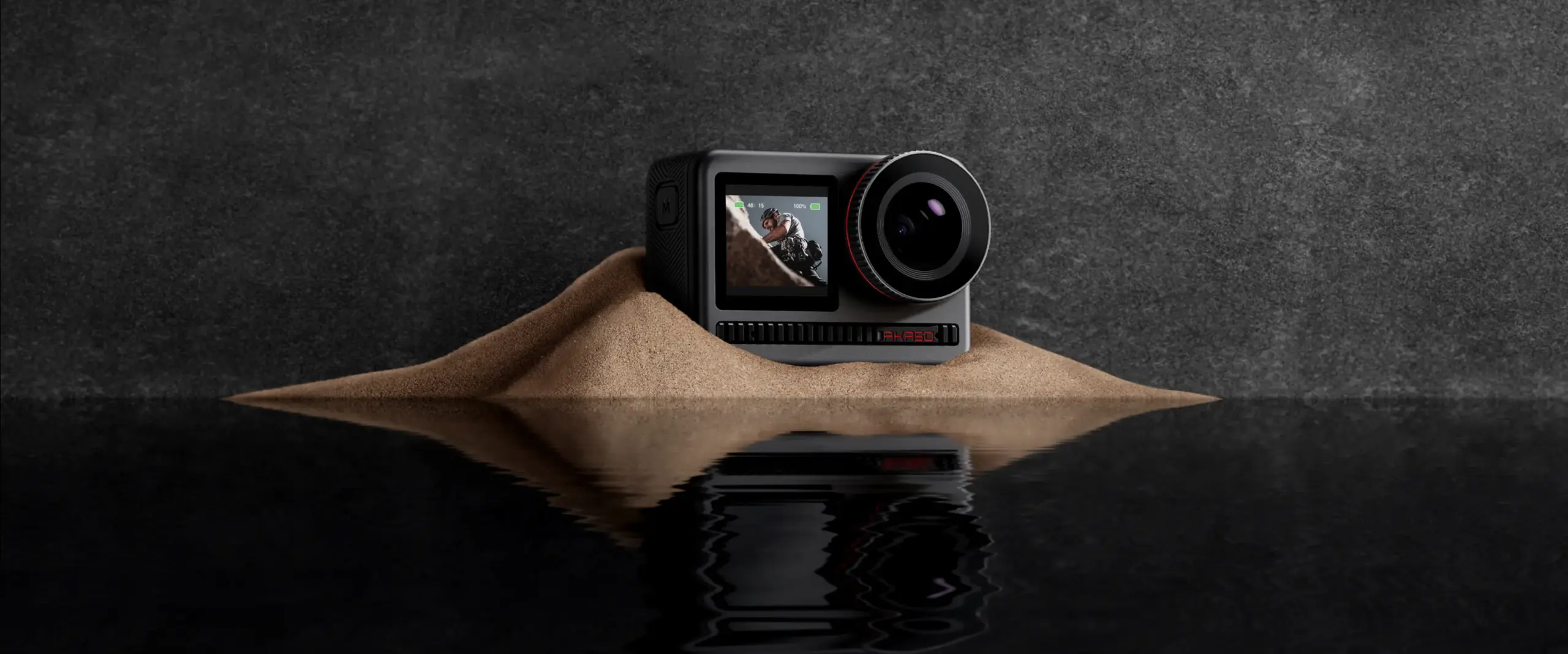
Not everyone needs a flagship camera, especially if it is going to be subjected to rough conditions where it might get damaged. The Akaso Brave 8 fills the gap for users who want reliable performance without the premium price tag.
It is equipped with a 1/2-inch CMOS sensor that records 4K video at 60fps and takes 48-megapixel still photos. The camera includes dual color screens, which makes framing shots easier if you are recording yourself.
It also features Akaso’s SuperSmooth in-app stabilization and AI Face Metering to help keep subjects properly exposed. While it may lack the advanced computational features of the more expensive models, it provides a very solid baseline experience for everyday use.
5. Insta360 Go Ultra
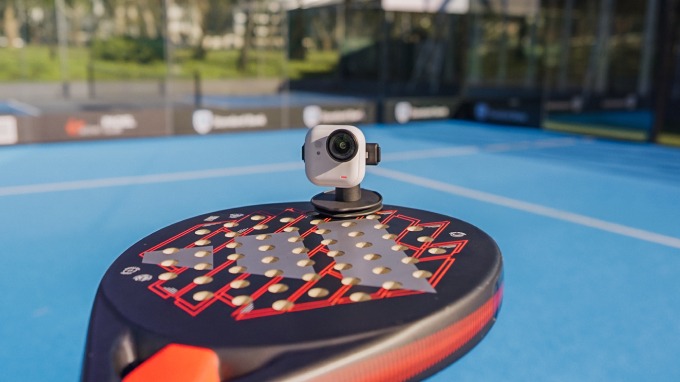
If traditional action cameras feel too bulky, the Insta360 Go Ultra is designed to be as unobtrusive as possible. Weighing just 53 grams, the standalone camera unit is small enough to clip to a hat or wear on a magnetic pendant under your shirt. Despite its size, it houses a 1/1.28-inch sensor and shoots 4K video at 60fps.
The Go Ultra relies on an Ambient Light Sensor to help calibrate colors and reduce flickering in artificial light. Because the camera itself is so small, battery life is limited to about 70 minutes.
However, it comes with the Action Pod, a housing with a 2.5-inch flip screen that charges the camera and extends the total runtime to roughly 200 minutes. It is an excellent choice for point-of-view recording where a standard camera would be too heavy.
6. DJI Osmo Nano
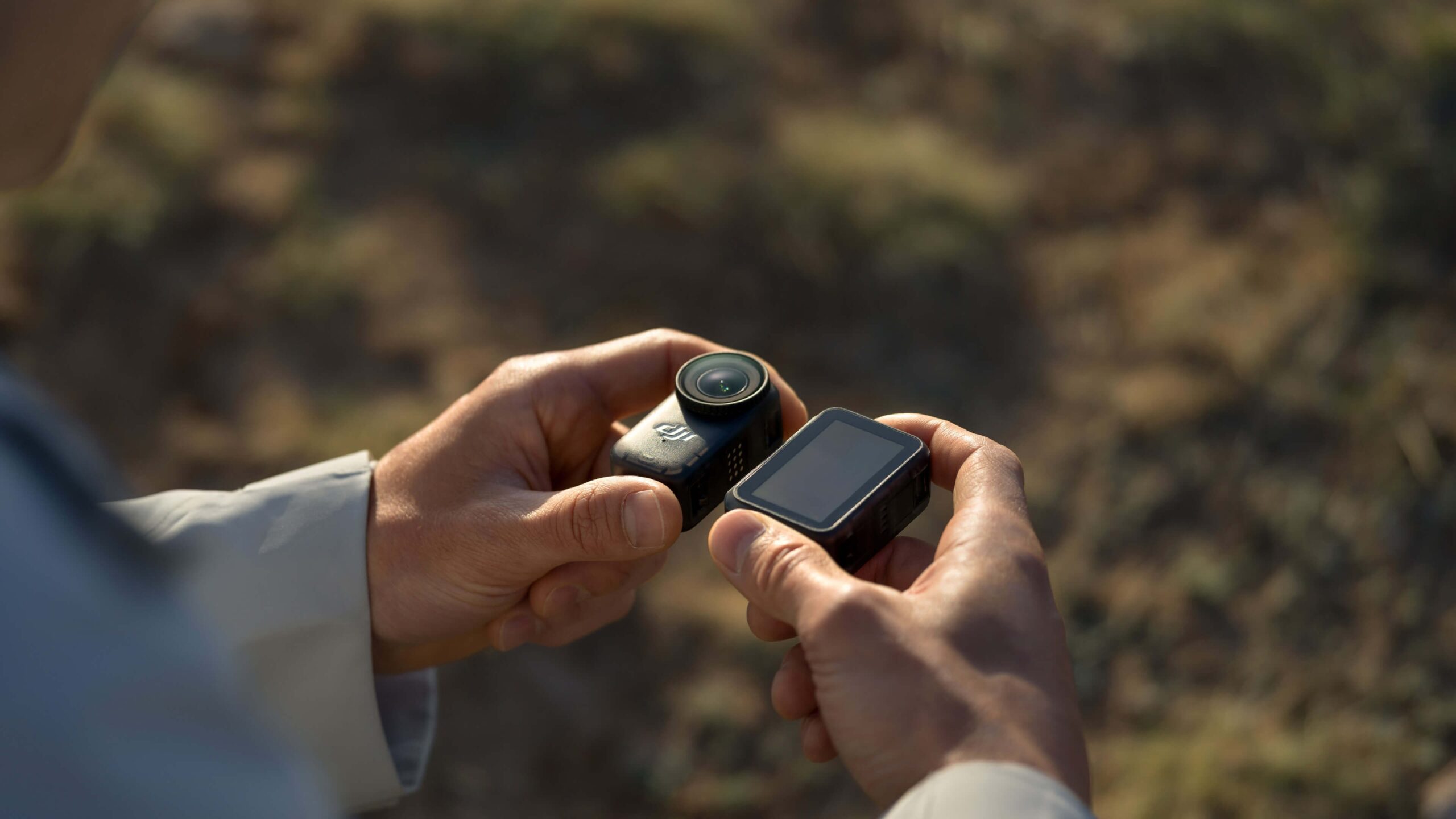
DJI’s answer to the ultra-compact market is the Osmo Nano. It shares a similar philosophy with the Go Ultra, weighing in at 52 grams and designed for wearable, hands-free recording. It features a 1/1.3-inch sensor, 4K/60fps recording, and a wide 143-degree field of view.
The Osmo Nano differentiates itself with its color science, supporting 10-bit D-Log M, which gives video editors more room to color grade their footage. It also features a dual-sided magnetic design, allowing you to mount it facing forward or backward easily.
The camera pairs with a Multifunctional Vision Dock that provides a screen for live viewing, remote control, and fast charging. Furthermore, it supports direct connection to DJI’s wireless microphones, which is a significant advantage if you want clear audio without carrying a separate receiver.
For more daily updates, please visit our News Section.
Stay ahead in tech! Join our Telegram community and sign up for our daily newsletter of top stories!