Add GIZMOCHINA as Preferred Source on Google
As an Amazon Associate, Gizmochina earns from qualifying purchases. Links on this page may earn us a commission at no extra cost to you.
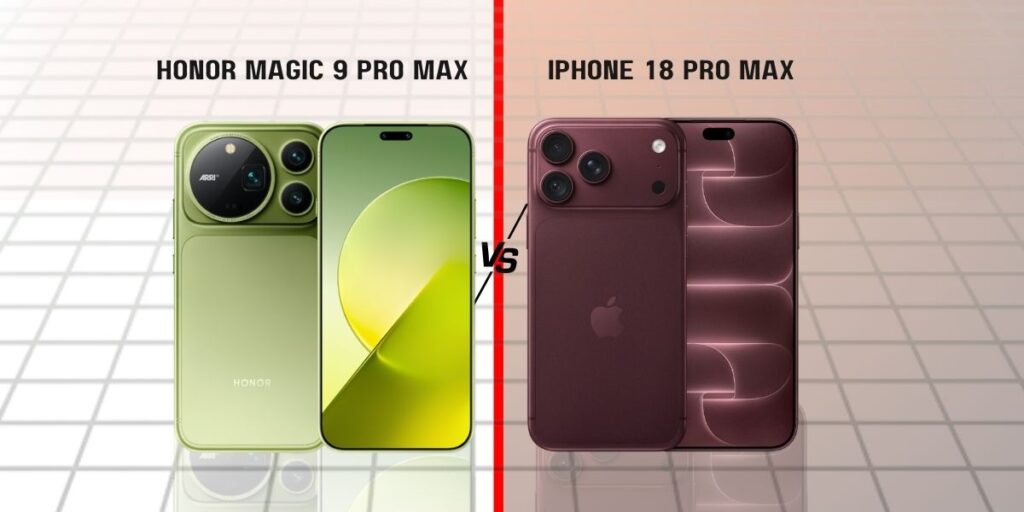
Apple spent this year’s autumn event telling everyone that the iPhone 18 Pro Max has the best camera it has ever put in an iPhone — the usual. Three weeks later, Honor launched the Magic 9 Pro Max, its first phone with the “Pro Max” name, and a very different approach to cameras.
The two phones also have similar prices at higher storage levels, and both put their cameras at the center of the experience. But the hardware underneath is very different.
Apple has added a mechanical aperture to its main camera, while Honor has gone with two 200MP sensors and a partnership with cinema camera maker ARRI. Here’s how the two phones compare.
1. Aluminum design vs. a camera-inspired body
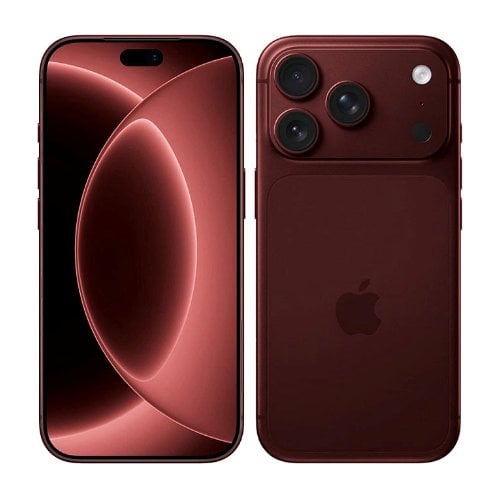
The iPhone 18 Pro Max still looks unmistakably iPhone. It has an aluminum unibody, Ceramic Shield 2 on the front, and a Ceramic Shield back with MagSafe. Apple says the new front glass is three times more scratch-resistant than the one used on the iPhone 16 Pro.
It comes in Black, Silver, Glacier, and Burgundy. The phone is IP68 rated, weighs around 240 grams, and is about 9mm thick. Apple also says 40% of the phone uses recycled materials, including 85% recycled aluminum in the frame.
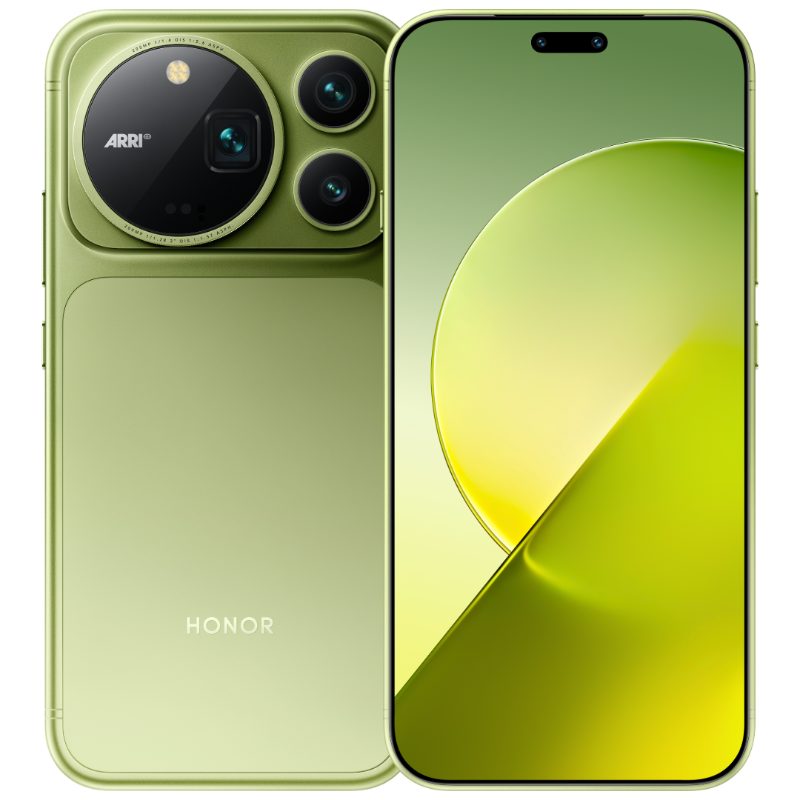
As for Honor, instead of the round camera island used on previous Magic phones, it now has an asymmetric camera plateau inspired by ARRI cinema cameras. The lens ring also gets a precision-cut metal finish that gives the phone a camera-like appearance.
The Magic 9 Pro Max comes in Moss Green, Silver Halide, and Shadow Black. It has IP68, IP69, and IP69K ratings, giving it higher water and dust protection than the iPhone. Despite its larger camera module and much bigger battery, it is also lighter at around 233 grams and thinner at 8.6mm.
2. Apple gives fewer display numbers
The iPhone 18 Pro Max has a 6.9-inch Super Retina XDR display with ProMotion up to 120Hz. Apple says the panel is brighter and has better anti-reflection compared with last year’s model, but it does not give a peak brightness number.
The redesigned Dynamic Island can also handle up to three Live Activities at the same time while continuing to support Face ID.
Honor is much more specific with its display specifications. The Magic 9 Pro Max uses a 6.8-inch LTPO OLED panel with a claimed peak brightness of 10,000 nits and 6,000 nits at a 20% window. It can go as low as 1 nit and uses a 5,600-layer silicon nitride coating that brings reflectivity down to 1.5%.
The display also supports 4320Hz PWM dimming and has received TÜV Rheinland’s low-reflection certification. Honor says it is the first phone to receive the TÜV Rheinland Global Eye Protection 6.0 certification.
Those numbers look very different on paper, but actual outdoor visibility will depend on more than peak brightness alone. The iPhone has also traditionally performed well in bright sunlight.
3. One variable aperture vs. two 200MP cameras
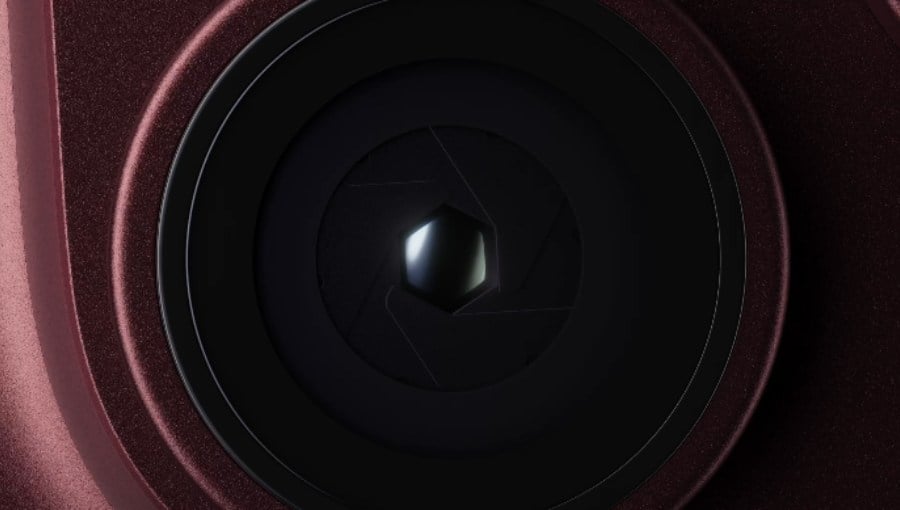
This is where the two phones take very different paths. The iPhone 18 Pro Max uses a 48MP Fusion Main camera with a physically adjustable aperture. It is the first iPhone to offer a mechanical variable aperture.
Inside the camera, you now have six laser-cut blades that can switch between four settings: ƒ/1.48 for more light, ƒ/1.8 as the default, ƒ/2.8 for more depth, and ƒ/4.0 for effects such as starbursts around bright lights.
The main camera covers 24mm and 48mm equivalents at 1x and 2x. It is joined by a 48MP Ultra Wide camera at 13mm and ƒ/2.2, along with a 48MP Telephoto camera covering 100mm and 200mm equivalents at ƒ/2.8. Apple says the system offers up to 8x optical-quality zoom and 16x total optical range.
Apple has also added new Pro controls that let users manually adjust aperture, shutter speed, and white balance in the Camera app. A histogram is available for checking exposure. Photographic Styles 3 adds texture and grain controls alongside the existing tone and color adjustments.
Another new feature is Apple Reference Image, which cryptographically signs what the camera captured so users can later verify whether a photo has been edited. However, it will not be available at launch in China, while capture will not be available in the EU.
The front camera is an 18MP Center Stage camera that can automatically widen its frame to include more people.
In the case of Honor, it doesn’t have an aperture ring, but two 200MP sensors. The main camera uses a 1/1.28-inch sensor with an f/1.57 aperture, 24mm equivalent focal length, 3-degree stabilization, and a CIPA 8.0 rating.
The 200MP telephoto camera uses a 1/1.4-inch sensor, f/2.6 aperture, and 85mm focal length. Both cameras were developed with ARRI and support ARRI’s LogC3 color curve.
There is also a 50MP ultra-wide camera and a 3D depth sensor on the back. For selfies, the phone borrows a page from Apple — it’s a 1:1 square camera, but higher in resolution: a 55MP.
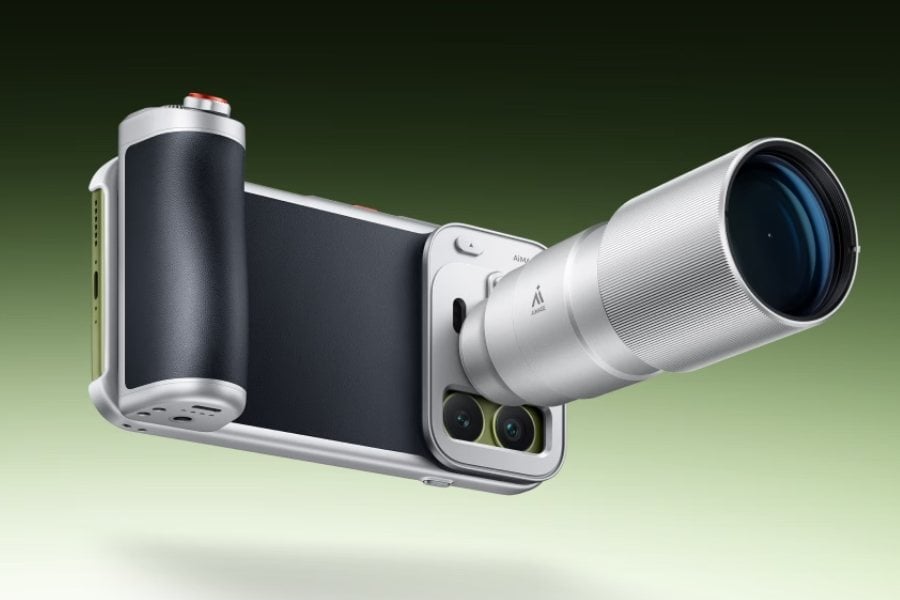
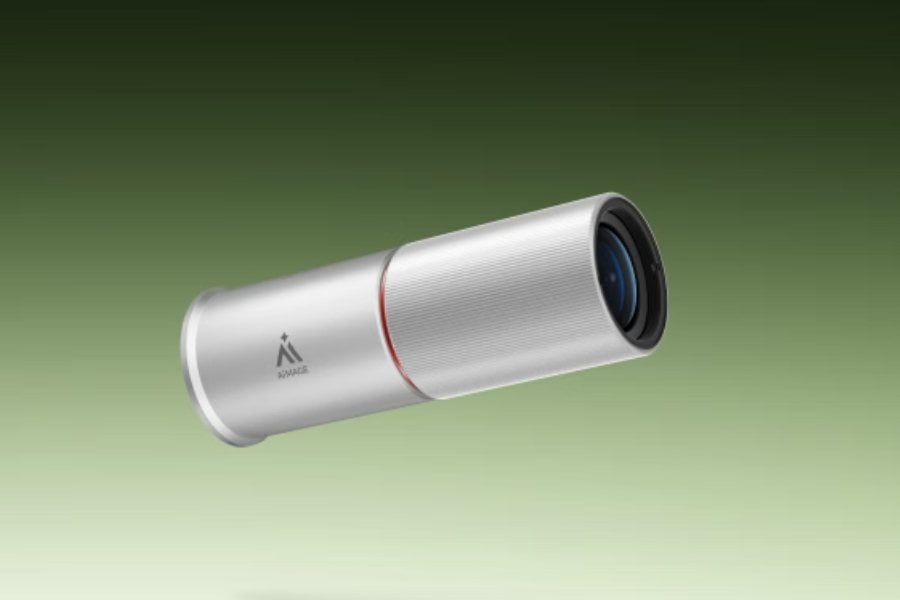
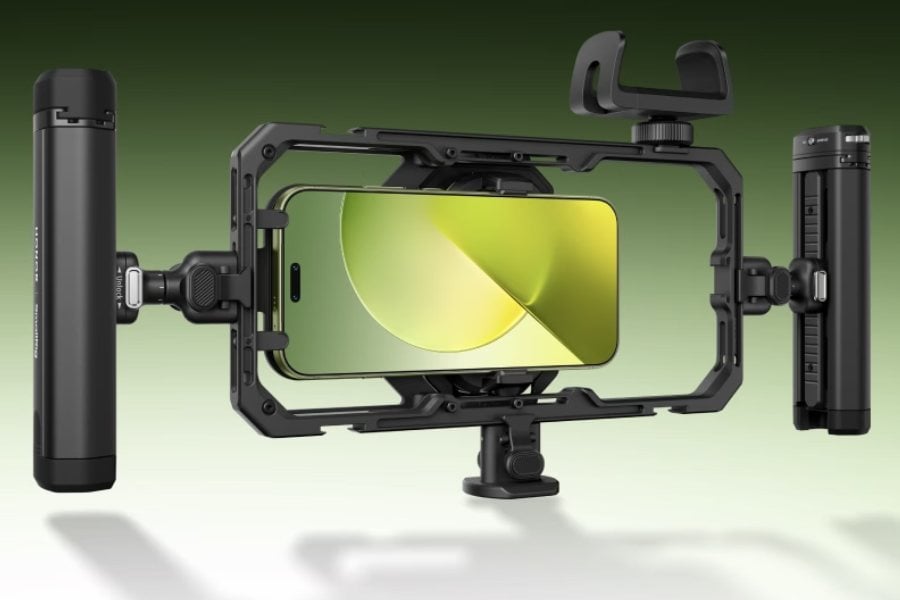
The cameras are processed by Honor’s H1 imaging chip, which handles RAW-domain noise reduction. The phone also offers 87 official ARRI Looks for color grading.
Honor says its gun microphone improves noise reduction by 462% compared with a normal omnidirectional microphone. The company also sells a G200 teleconverter with a 200mm equivalent focal length, a G500 teleconverter with a 500mm equivalent focal length, and a SmallRig video cage for mounting accessories.
In simple terms, Apple is using fewer sensors but adding more physical camera controls, while Honor is using much higher-resolution sensors and ARRI’s cinema color processing. They are simply different approaches to smartphone photography.
4. Video: more control after shooting vs. in-camera processing
Apple’s video features give users more options after recording. Cinematic mode effects can now be applied to regular video recorded at up to 60fps. Time-lapse recording goes up to 4K with Dolby Vision HDR.
Audio Mix can also separate music from background noise, rather than only separating voices. For more advanced video work, the phone supports ProRes RAW, Apple Log 2, genlock for multicamera setups, and 4K 120fps Dolby Vision.
Honor’s video system uses the ARRI LogC3 pipeline and downloadable Looks so users can get a particular color style during recording. Its 2.39:1 Movie Live mode records a three-second cinematic 4K live photo after the shutter is pressed. AI Color Tracking can also take the color grade from a reference photo and apply it while recording.
Honor does not provide video frame-rate details with the same level of detail as Apple, so a direct video comparison will have to wait for hands-on testing.
5. A20 Pro vs. Snapdragon 8 Elite Extreme Gen 6
The iPhone 18 Pro Max is powered by Apple’s A20 Pro, built on a 2nm process. It has a six-core CPU with two performance cores and four efficiency cores, along with 50% more memory bandwidth than the A19 Pro.
The seven-core GPU is rated up to 40% faster than the previous generation, while the new dual 16-core Neural Engine offers twice the AI performance of the A19 Pro.
Apple has also changed the chip packaging. The die now sits next to the memory instead of stacking them, keeping the memory away from the chip’s main thermal path. The A20 Pro can then sit directly against a new vapor chamber with three times the surface area of the previous model.
Apple says this design can deliver up to 40% better sustained performance. The phone also has Apple’s N1 wireless chip with Wi-Fi 7, Bluetooth 6, and Thread support. The C2 modem is said to offer faster uploads than the C1X while using 15% less power. US models also support mmWave.
The Magic 9 Pro Max uses Qualcomm’s Snapdragon 8 Elite Extreme Gen 6, which is also built on a 2nm process and reaches up to 5.01GHz. Honor cites Qualcomm’s benchmarks showing a 13% CPU improvement, 44% GPU improvement, and 35% NPU improvement over the previous generation. A pre-launch AnTuTu test also put the phone above 5.5 million points.
6. Battery
Apple does not reveal the iPhone 18 Pro Max’s battery capacity. Instead, it quotes up to 45 hours of video playback for eSIM-only models, which Apple describes as its biggest battery-life improvement on an iPhone.
General use is rated at up to 30 hours per charge. With the right adapter, wired charging can reach 50% in around 15 minutes, while five minutes of charging can provide roughly seven hours of video playback. Unofficial regulatory filings suggest the iPhone 18 Pro Max has a battery capacity of around 5,567mAh for the US model, but Apple has not confirmed that figure.
Honor gives a much larger number: 8,800mAh. The Magic 9 Pro Max uses the company’s “Qinghai Lake blade battery” with 40% silicon content and 1000Wh/L energy density. It supports 100W wired charging and 80W wireless charging, along with 50W wireless charging in compatible cars.
7. Siri AI vs. Honor’s AI button
The iPhone 18 Pro Max ships with iOS 27, Apple Intelligence, and the new Siri AI. Siri can understand personal context, see what’s on the screen, and perform actions inside apps such as Messages and Reminders.
The new Siri features start with English, while French, Japanese, Korean, Portuguese, and Spanish are scheduled for October. The feature will not be available in the EU at launch.
iOS 27 also introduces iPhone Handoff, which lets users move between two iPhones using the same number. For now, the feature works with T-Mobile in the US and Telekom in Germany.
Honor uses MagicOS with its YOYO assistant. The Magic 9 Pro Max has a dedicated hardware button for YOYO, which can be used for one-press video highlight capture, recurring reminders, and proactive tasks. Honor Connect also lets the phone connect with devices such as the iPhone, Apple Watch, and Mac.
The Magic 9 Pro Max also uses 3D face recognition alongside a 3D ultrasonic fingerprint sensor. The iPhone continues to rely on Face ID for biometric authentication.
8. Availability is another major difference
The iPhone 18 Pro Max starts at $1,299 for 256GB and is available in 512GB, 1TB, and 2TB storage options as well. What’s more important here is that you can get the device in most countries around the world, including the US, the UK, most of the EU, China, Japan, and Australia.
The Honor Magic 9 Pro Max starts at 6,499 yuan (about $968) for the 12GB/256GB model in China. The 16GB/1TB version costs 8,499 yuan (about $1,266). Honor also sells a 10,999-yuan (about $1,639) Master Photographer Package that includes the teleconverter kit.
However, the phone is currently exclusive to the Chinese market. The phone is expected to reach Europe sometime in November or December, but a US launch is not in the cards, as Honor isn’t officially present there.
For daily updates, please visit our News Section.
Stay ahead in tech! Join our Telegram community and sign up for our daily newsletter of top stories!