
Add GIZMOCHINA as Preferred Source on Google
As an Amazon Associate, Gizmochina earns from qualifying purchases. Links on this page may earn us a commission at no extra cost to you.
If you are looking at Casio’s higher-end offerings this fall, you will notice the new Oceanus Manta OCW-SG1000MC-1A. Scheduled for release in Japan this November 2026 for ¥748,000 ($4,730), it is a limited-edition piece capped at just 300 serialized units worldwide. Instead of focusing on mechanical complexity, this model centers heavily on material engineering and efficient solar technology.
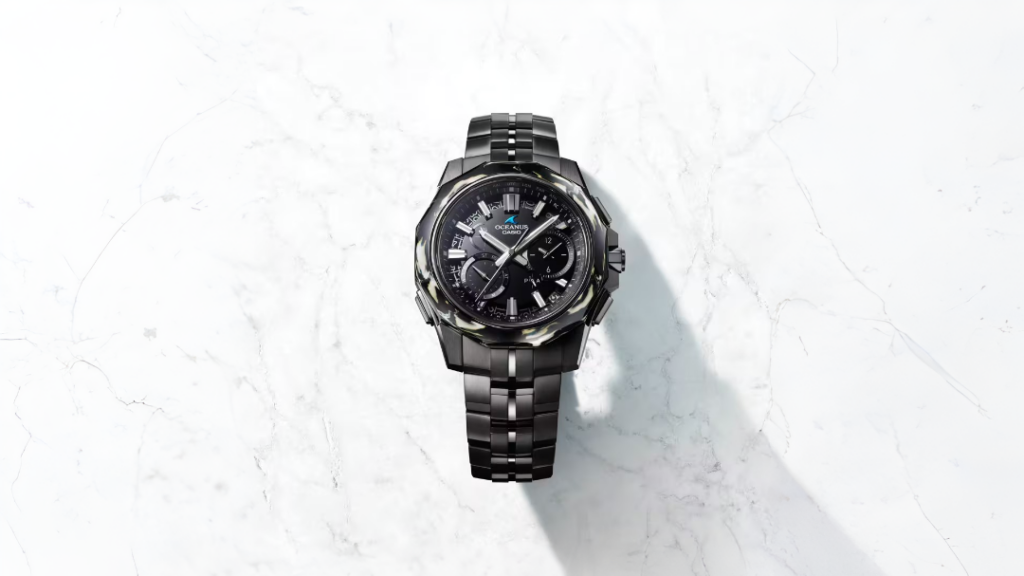
Design Details
The watch features a distinctive marble ceramic bezel made using a mixed-molding process that combines two differently colored ceramic materials. After sintering, cutting, and polishing, the process creates a black-and-white marble pattern that varies from one unit to another.
This means if you get your hands on one of the 300 pieces, the bezel will have its own unique pattern, along with subtle blue-green highlights where the two ceramic colors blend.
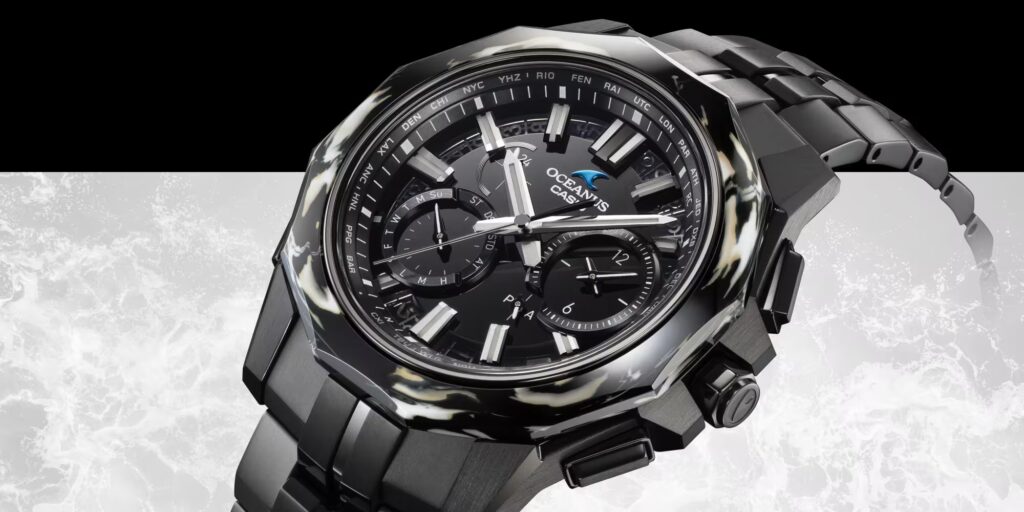
Moving to the main dial, you will find a glossy black ceramic surface with a cutout around the outer edge. This exposes a skeletonized metal date wheel. To keep the monochrome color scheme consistent, Casio gave the date wheel a gray vapor-deposited finish and applied a black ion-plated treatment to the dial ring.
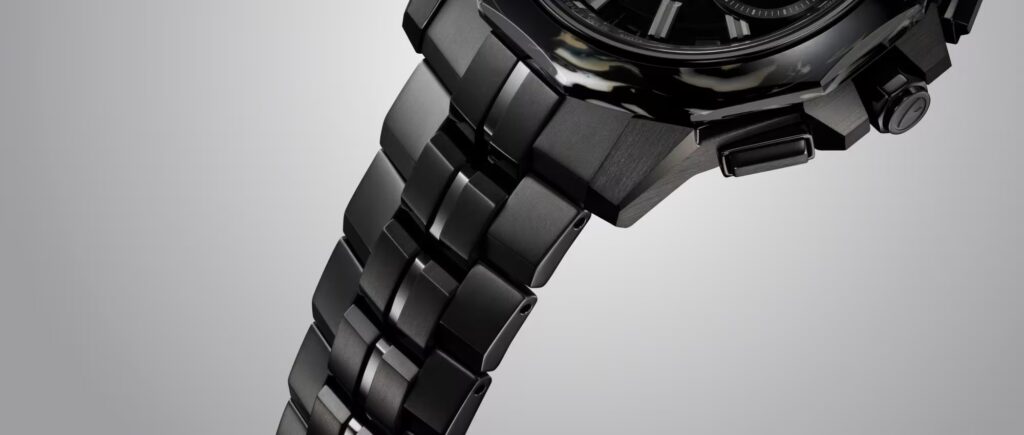
The case and bracelet are built from titanium, which keeps the watch relatively light on your wrist at exactly 100 grams. Both components are treated with a diamond-like carbon (DLC) coating for scratch resistance and finished with Zaratsu polishing. For sizing, the titanium bracelet includes a slide-adjust mechanism in the clasp, making it easier for you to get a precise fit without needing tools.
Inside, the watch runs on Casio’s Gallium Tough Solar system. Adapted from solar cells used in satellites, this technology is significantly more efficient than standard solar watch panels. Because of this efficiency, you don’t have to look at a large, semi-transparent dial. Instead, a small crescent-shaped solar cell sits beneath the date wheel, drawing enough power through the dial’s cutouts to run the watch’s connectivity features.
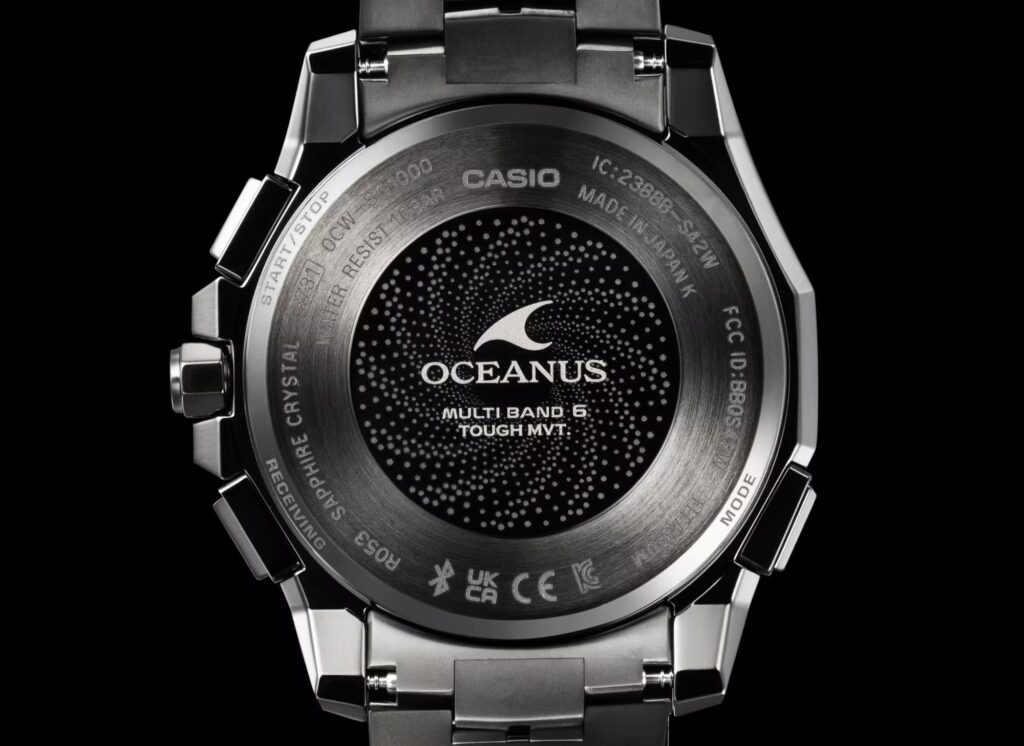
For timekeeping, you get a hybrid system. It includes Multiband 6 radio control, which syncs with standard time transmitters. You can also use Bluetooth. When you connect the watch to the Casio Watches smartphone app, it automatically adjusts the time, lets you manage world time settings for about 300 cities, and can ping your phone if you misplace it.
Additionally, you get 100-meter water resistance and a sapphire crystal with anti-reflective coating on both sides. On a full charge, you can expect the watch to run for about five months under normal use, or up to 18 months if you enable the power-saving mode.
In related news, Casio has also launched three new Baby-G BGA-20K watches with faces that change every day, alongside five new Baby-G BGA-3000 models with solar power and automatic time synchronization.
For more daily updates, please visit our News Section.
Stay ahead in tech! Join our Telegram community and sign up for our daily newsletter of top stories!
(Casio)


Comments