Add GIZMOCHINA as Preferred Source on Google
As an Amazon Associate, Gizmochina earns from qualifying purchases. Links on this page may earn us a commission at no extra cost to you.
Hasselblad, Zeiss, Leica, and ARRI are familiar names for most of us in the photography and filmmaking scene, but you might not be aware that you can get their camera on a smartphone. Not that they make them, but they have partnered with smartphone makers to bring their camera expertise on different levels to a handheld.
Oppo uses Hasselblad’s imaging expertise for its Find X series, Vivo works with Zeiss on optics and camera accessories, Xiaomi has brought Leica deeper into phone development, and Honor is now using ARRI’s cinema technology to improve video recording.
At first glance, you might think these brands are simply helping phone makers improve their cameras. But not every partnership is the same—one focuses on tuning photo colors, while another focuses on developing camera hardware itself.
So if you’re thinking of buying a flagship Android phone in 2026, beyond the usual Samsung or Google, it’s always better that you understand what each camera partnership means.
1. Hasselblad and Oppo
Hasselblad’s first major smartphone partnership began with the OnePlus 9 series, which launched in March 2021. OnePlus announced the agreement as a three-year camera co-development effort. Before that, Hasselblad’s only phone-related project was the 2016 Hasselblad True Zoom Moto Mod for Motorola’s Moto Z series, an accessory that added 10x optical zoom.
On the OnePlus 9 Pro, much of Hasselblad’s work went into color reproduction and software. Natural Color Calibration involved lab testing and tuning hundreds of real-world scenes through computational photography. The partnership also brought a redesigned Pro Mode inspired by Hasselblad’s Phocus software, along with support for 12-bit RAW photography in Pro Mode, including on the main camera.
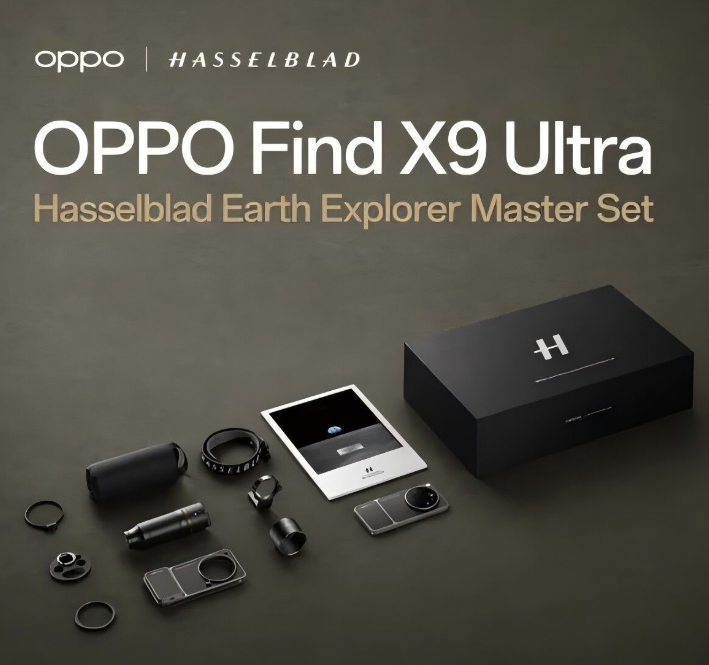
Oppo joined the arrangement in 2022, announcing its own three-year partnership with Hasselblad. The company said the move brought the existing OnePlus collaboration to the corporate level, covering both smartphone brands. The Oppo Find X5 series was the first result, with natural color calibration again playing a central role.
The OnePlus partnership eventually came to an end. The OnePlus 13 was the last flagship to carry Hasselblad branding, while the OnePlus 15 switched to the company’s own DetailMax Engine. Oppo, meanwhile, extended its agreement with Hasselblad in July 2025 at an event in Gothenburg, Sweden, announcing plans to develop a new mobile imaging system together.
That brings us to the Oppo Find X10 series, which launched in China in September. The Oppo Find X10 has two 200MP cameras that Oppo says were co-developed with Hasselblad, alongside an 8,000mAh battery. The Find X10 Pro Max has 200MP sensors on its main, ultra-wide and telephoto cameras, a combination Oppo calls a first for smartphones. The entry-level Find X10 E also includes a Hasselblad imaging system.
Oppo says all three rear cameras on the Pro Max can record 4K at 120fps and 8K at 30fps, while the standard Find X10 supports the same recording options on its two 200MP cameras.
Both the Find X10 and Find X10 Pro Max support a Hasselblad Teleconverter Kit, and the Pro Max has a matte orange accent ring around its camera module. Oppo’s global launch for the series is scheduled for October 21 in Mallorca, Spain.
2. Zeiss: From Nokia and Sony to Vivo
Zeiss has one of the longest histories in mobile photography among these four brands. Its optics appeared on Nokia phones during the company’s feature-phone era in the mid-2000s, and the branding later returned on Nokia smartphones made by HMD Global.
The Nokia-Zeiss relationship ended by mutual agreement in 2021. The Nokia XR20, released in August that year, was the last Nokia phone to carry Zeiss branding, with the end of the partnership formally confirmed in July 2022.
Zeiss had already established another smartphone partnership with Sony. The Xperia 1 II, released in 2020, marked the beginning of their collaboration, which continues today. Zeiss contributes optical expertise and its T* anti-reflective coating, which is intended to reduce reflections and improve contrast while preserving image quality.
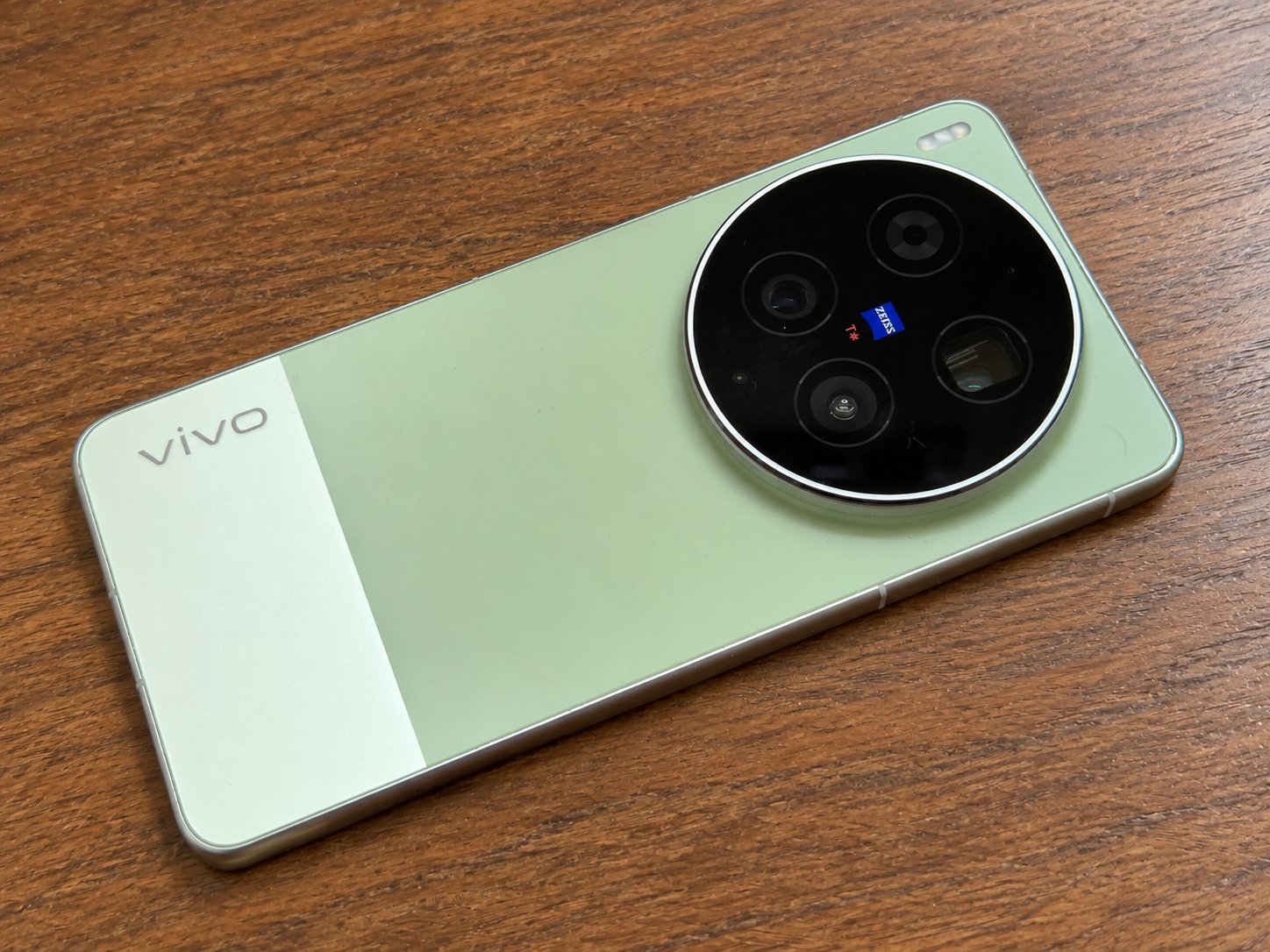
Vivo announced its global partnership with Zeiss in December 2020. The companies agreed to co-develop imaging systems for Vivo’s premium phones, establish the Vivo ZEISS Imaging Lab as a joint research and development program, and work together on optical components.
The Vivo X60 series was the first product of the collaboration. Its camera features included Zeiss T* coating and a Biotar portrait filter inspired by the distinctive background blur of classic Zeiss lenses.
The Vivo X300 Ultra continued that work with a 200MP main camera at a 35mm equivalent focal length, a 200MP periscope telephoto at 85mm and a 50MP ultra-wide at 14mm. Announced on March 30, 2026, the phone went on sale in China on April 3 before launching globally on April 15. It supports 4K video recording at up to 120fps.
Vivo also sells Zeiss telephoto extenders that attach directly to the phone, with 200mm and 400mm equivalent options. The 400mm version uses a 15-element optical design.
The partnership continues with Vivo’s newer X500 lineup. The Vivo X500 Pro and X500 Pro Max launched in China on September 21, followed by the global announcement of the X500, X500 Pro, and X500 Pro Max on October 6. The X500 Pro Max includes a 200MP Zeiss APO telephoto camera and supports the 400mm Zeiss Telephoto Extender Gen 2 Ultra.
3. Leica: From Huawei to Xiaomi
Leica entered the smartphone market in a major way in 2016 through its partnership with Huawei. The Huawei P9 arrived with a dual-camera system featuring a dedicated monochrome sensor. Leica worked on the optics, image processing, and color modes too.
The two companies continued working together on Huawei flagships such as the P20 Pro and P30 Pro. The partnership, however, ended in March 2022, making that year’s Huawei P50 series as the last phones with Leica branding.
Surprisingly, though, Xiaomi announced a collaboration with Leica not so long after. The two companies announced a long-term imaging partnership in May, and Xiaomi’s CEO said the deal would cover everything from optical design to the look and feel of the final images.
The Xiaomi 12S series was the first device under the partnership. It introduced two Leica color profiles: Authentic, which aims for a more natural look, and Vibrant, which produces punchier colors. Xiaomi has kept both options on later phones.
The relationship has since moved beyond tuning cameras and image processing. Xiaomi now describes the partnership as a strategic co-creation model, with Leica involved earlier in the phone’s development.
The Xiaomi 17 Ultra gives a good look at the hardware behind the partnership. Its main camera uses a 50MP Light Fusion 1050L sensor with a 1-inch format, LOFIC technology for improved dynamic range, and a 23mm equivalent focal length. The lens has an f/1.67 aperture.
The remaining cameras include a 200MP periscope telephoto with continuous optical zoom between 75mm and 100mm equivalent. Its aperture shifts from f/2.39 to f/2.96, and the lens carries Leica APO certification. The 50MP ultra-wide camera has a 115-degree field of view and can take macro shots from as close as 5cm.
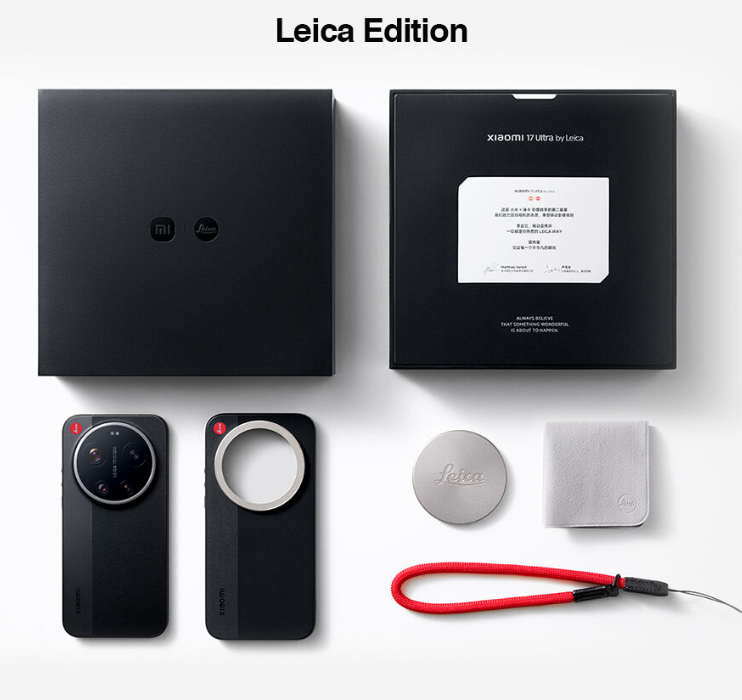
There’s also a Leica Edition 17 Ultra with a few extras of its own. It has a red Leica dot and a knurled frame that give it a camera-like appearance, while a built-in Master Zoom Ring lets users adjust focal length, white balance, and exposure. You also get a Leica Moment mode that recreates the color rendering of the Leica M9.
Xiaomi brought the 17 Ultra to international markets, including Europe and Australia, in early 2026. The phone is not available in the US.
Xiaomi’s newest Leica phones are the Xiaomi 18 Pro and 18 Pro Max, which launched in China in September. Both use a 200MP Leica main camera, a 200MP periscope telephoto with 3.2x optical zoom and a 50MP ultra-wide. Xiaomi has confirmed a global release later in 2026 but hasn’t announced a date yet.
4. ARRI and Honor
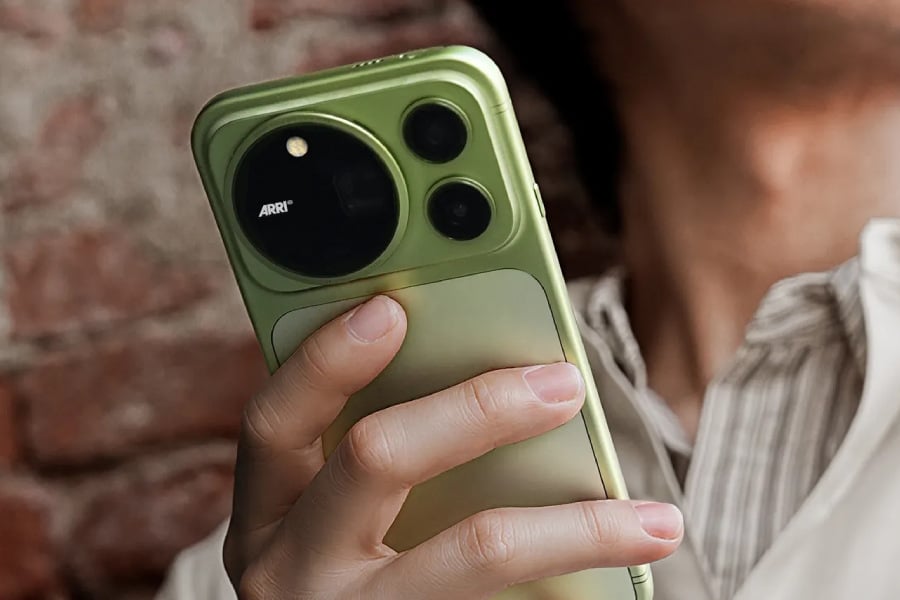
Unlike the other three brands, ARRI had no earlier smartphone partnership before Honor. The company is best known for cinema cameras, and its collaboration with Honor marks its entry into mobile imaging.
Called the Cinematic Imaging Partnership, the agreement produced its first commercial device in the Honor Robot Phone, announced in August 2026. ARRI said the phone incorporates selected parts of its image science, including LogC3, the ARRI Wide Gamut 3 color space and ARRI Looks.
Adapting these technologies for a smartphone required a separate implementation to account for smaller sensors, compact optics, and real-time image processing.
The Honor Magic9 Pro Max brings the same technology to a conventional flagship. It launched in China in September.
Its rear camera system consists of a 200MP main camera with a 1/1.28-inch sensor and f/1.57 aperture, a 200MP telephoto camera with a 1/1.4-inch sensor and f/2.6 aperture, and a 50MP ultra-wide camera.
ARRI’s contribution is most visible in Cinema Mode, which records up to 4K at 60fps using ARRI LogC3, 10-bit color, and ARRI Wide Gamut 3. Users get 14 preset ARRI Looks and access to a library of 87 additional grades. Honor has also borrowed design cues from ARRIFLEX cinema cameras for the rear camera layout.
For now, the Magic9 Pro Max is available in China. Honor says releases in Europe, the Middle East and Africa, and Southeast Asia are coming soon, but it hasn’t provided dates or announced US availability.
5. How the four camera partnerships compare
Hasselblad and Leica started with a lot of software and color-tuning work before moving into hardware development. Zeiss has stayed closer to optics, coatings, and external lenses. Meanwhile, ARRI is currently focused on cinema-style video processing.
| Partner | Previous phone partners | Current partners | Main contribution |
| Hasselblad | OnePlus (2021–2025), Motorola (2016 Moto Mod) | Oppo | Color calibration, co-developed camera systems, teleconverter kit |
| Zeiss | Nokia/HMD (until 2021) | Vivo, Sony | Optics, T* coating, telephoto extenders |
| Leica | Huawei (2016–2022) | Xiaomi | Co-created optics, APO telephoto, color profiles and camera controls |
| ARRI | None | Honor | LogC3 recording, ARRI Looks and cinema color science |
6. What the partnerships mean when buying a phone
A camera brand’s name tells you who contributed to the system, but it doesn’t automatically tell you how good the results will be. The type of contribution matters more than the logo.
For buyers interested in external camera accessories, Vivo’s Zeiss telephoto extenders and Oppo’s Hasselblad Teleconverter Kit are the most tangible examples. If video editing is a priority, Honor’s ARRI LogC3 workflow is more directly relevant, although the Magic9 Pro Max is currently limited to China.
For still photography, the Xiaomi 17 Ultra and Oppo Find X10 series use different camera hardware and image processing techniques. Comparing their photos, especially in challenging lighting, will reveal more about their strengths than their brand partnerships alone.
Ultimately, these collaborations go beyond putting a familiar name on a phone. Each brings something different to mobile imaging, from more accurate color reproduction and improved optics to longer zoom ranges and video tools suited to professional filmmaking.
For daily updates, please visit our News Section.
Stay ahead in tech! Join our Telegram community and sign up for our daily newsletter of top stories.