
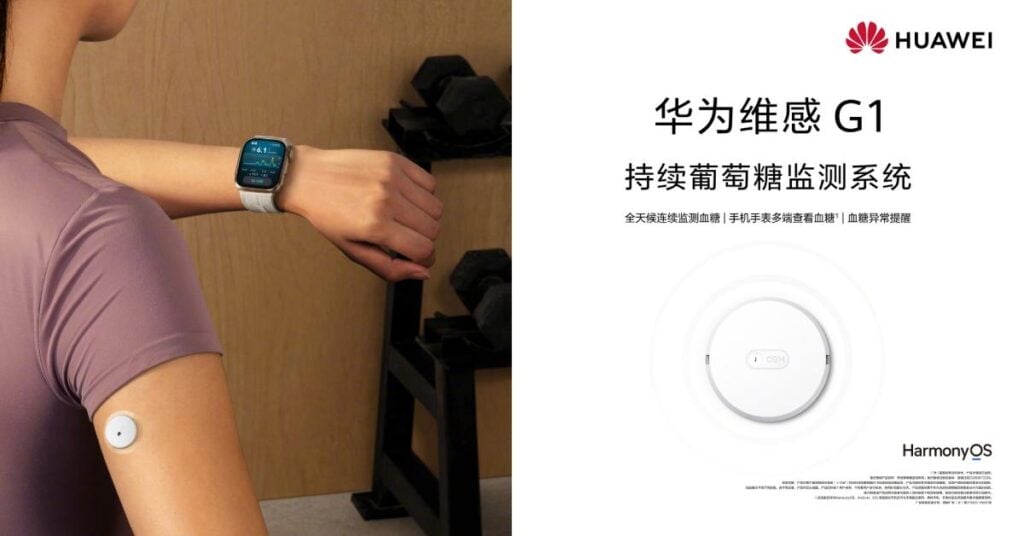
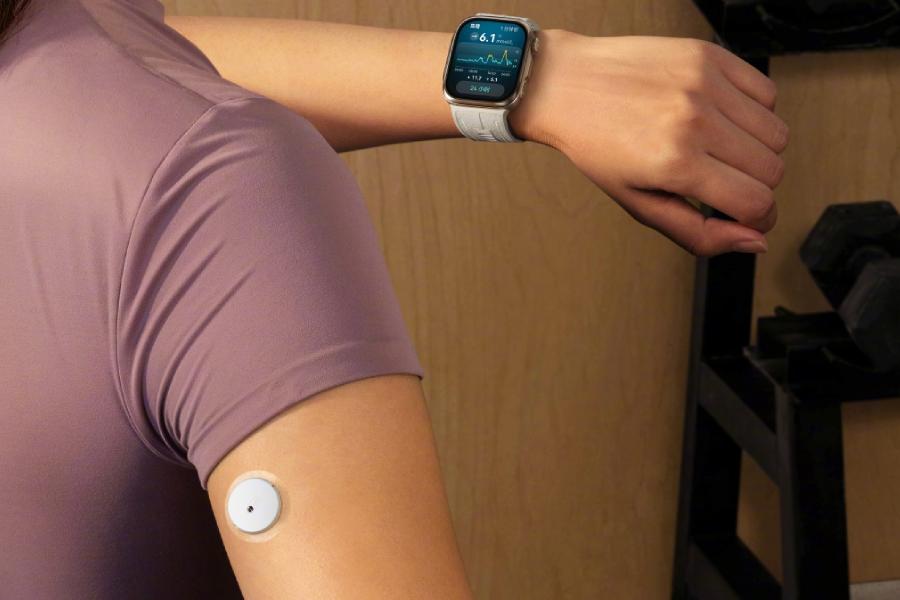
Huawei has officially unveiled the Huawei Sense G1, its first continuous glucose monitoring (CGM) device. It is an arm-worn sensor that tracks glucose levels throughout the day and night. It can alert users when readings fall outside normal ranges, and you can check your numbers on your phone or your smartwatch.
What the Huawei Sense G1 brings
The teaser poster shows a small, round sensor that looks somewhat like an Apple AirTag. It attaches directly to the arm, with a tiny needle sitting beneath the skin to collect readings from the fluid surrounding cells.
The sensor uses glucose oxidase and electrodes to measure glucose levels in this fluid and convert the results into blood sugar readings. Unlike traditional glucose meters, there is no need to prick your finger for each measurement.
Huawei has also shared a few details about everyday use. The Sense G1 is intended for a single user, requires no calibration, and has a sensor lifespan of up to 16 days.
As for accuracy, a report suggests the Sense G1 has a mean absolute relative difference (MARD) below 10%. This figure measures how closely a CGM’s readings match laboratory reference measurements, with a lower percentage indicating better accuracy. The tipster also claims glucose readings can lag behind actual blood sugar levels by around 5 to 15 minutes.
There is already some confirmation of its medical credentials. China’s National Medical Products Administration approved the Huawei Sense G1 as a Class III medical device.
Class III is the country’s highest medical device risk category, which also covers products such as cardiac stents and artificial joints. It is the first Class III medical device from Huawei’s consumer hardware business.
Li Xiaolong, CTO of Huawei Terminal BG, says the Sense G1 has been the longest development project the company has undertaken. He first wore a test version in December 2023, giving the device roughly 35 months of testing and development.
Huawei has been building up its health monitoring technology for some time. The company introduced its TruSense health monitoring system in 2024, and its smartwatches can already assess diabetes risk. However, those watches cannot directly measure glucose levels, which is where the Sense G1 comes in.
Huawei hasn’t announced how much the Sense G1 will cost or when it will go on sale. The company could reveal more about it at an event later this month, where it may also introduce the Huawei Mate X8 foldable and MateBook Fold S. The latter is expected to follow the original MateBook Fold Ultimate Design.
FREE DAILY NEWSLETTER
Joel Explains
What matters in phones and gadgets, before it reaches you. From Gizmochina’s editor-in-chief, every morning.
Join 1,500+ readers. One email a day, unsubscribe in one click.


Comments