As an Amazon Associate, Gizmochina earns from qualifying purchases. Links on this page may earn us a commission at no extra cost to you.
Some of the most interesting Android phones arriving this fall won’t be available in the US. Oppo already sells its latest Find X10 flagship in Europe, Vivo is preparing to bring its X500 series to India, and Xiaomi will introduce its latest Pro models to global markets on November 17. Yet none of these launches come with a confirmed US release.
That’s not particularly unusual for these three Chinese phone makers. Oppo, Vivo, and Xiaomi are among the world’s biggest smartphone brands, but their flagship phones rarely make it to the US. Meanwhile, OnePlus, which has had a meaningful presence, decided to call it quits on the entire Western market.
As a result, American buyers are limited to a handful of Android brands to choose from. We see you Motorola, Samsung, and Google. Here’s what US buyers are missing and how they can actually get hands-on with one.

1. Why the US keeps missing out
Xiaomi, Oppo, and Vivo have established themselves in markets across Asia and Europe, but none has built a meaningful retail presence in the US. And the American market itself has a lot to do with it.
Unlike many other regions, where people can walk into a store or buy a phone directly from a manufacturer, the US smartphone market is heavily controlled by carriers. Getting a phone in front of American buyers often means securing carrier partnerships, something these three Chinese brands have never managed to do on a meaningful scale.
That doesn’t mean Americans cannot own their phones. Import retailers sell both Chinese and global versions, although buyers need to check network band compatibility, software support, and warranty coverage before placing an order. A global version is generally the safer option, but even that doesn’t guarantee full compatibility with every US carrier.
OnePlus’ situation is a little different. It already had an established US and European presence, including retail stores and carrier partnerships. However, in July, the company confirmed it would conclude new product rollouts in North America and Europe. It hasn’t announced an end to support for existing devices, and its customer service channels remain open under the company’s existing warranty obligations.
For now, that makes the following three flagship lineups particularly interesting for anyone willing to import a phone.
2. Oppo Find X10 Pro Max

The Oppo Find X10 Pro Max is the only phone in this group that already has a global version on sale. Oppo unveiled it in China in September before bringing the Find X10 series to international markets on October 21. Its biggest talking point is the camera system, which puts three 200MP sensors on the back of a single phone.
The cameras cover the main, ultra-wide, and telephoto focal lengths, all developed with Hasselblad. The main camera also gets a claimed 17-stop dynamic range through Oppo’s DeepPix sensor technology.
The 6.78-inch LTPO display supports a refresh rate of up to 144Hz in compatible games and reaches a claimed 3,600 nits of local peak brightness. Powering the phone is MediaTek’s 2nm Dimensity 9600 Pro, paired with ColorOS 17. It also carries IP66, IP68, and IP69 ratings.
The battery is where US buyers need to pay attention to the regional differences. The Chinese model packs an 8,000mAh battery with 80W wired and 50W wireless charging. European buyers get a smaller 7,150mAh battery, although the charging speeds remain the same.
It starts at €1,799 (£1,499) for the 12GB RAM and 512GB storage configuration.
3. Vivo X500 Pro Max
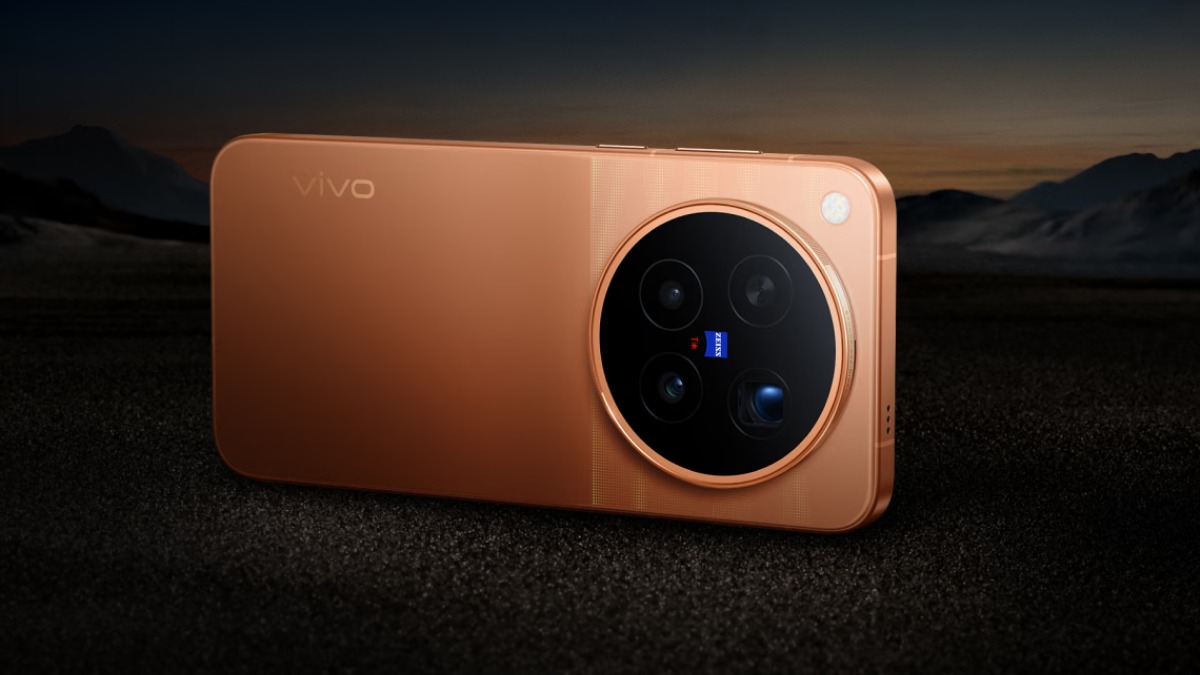
The Vivo X500 Pro Max starts at 6,999 yuan (~ $1050) in China, and unlike Oppo’s flagship, which spreads its 200MP sensors across three cameras, Vivo is using the big sensor for its periscope telephoto system.
The phone has a 200MP ZEISS APO periscope camera with an 85mm-equivalent focal length and a large 1/1.4-inch sensor. Vivo also sells an optional ZEISS Telephoto Extender Gen 2 Ultra, which adds a 400mm-equivalent focal length. It’s a clip-on accessory sold separately, but it gives the phone considerably more reach for distant subjects.
The remaining cameras include a 50MP main sensor with gimbal-grade stabilization and a 50MP ultra-wide camera. Likewise, it comes with a 144Hz AMOLED display and an 8,000mAh battery, with 90W wired and 40W wireless charging.
The X500 Pro Max uses the same Dimensity 9600 Pro as the Find X10 Pro Max and runs OriginOS 7 based on Android 17.
For buyers outside China, Vivo confirmed that the X500 series will launch in India on November 26. We can expect a European launch as well.
4. Xiaomi 18 Pro and Xiaomi 18 Pro Max
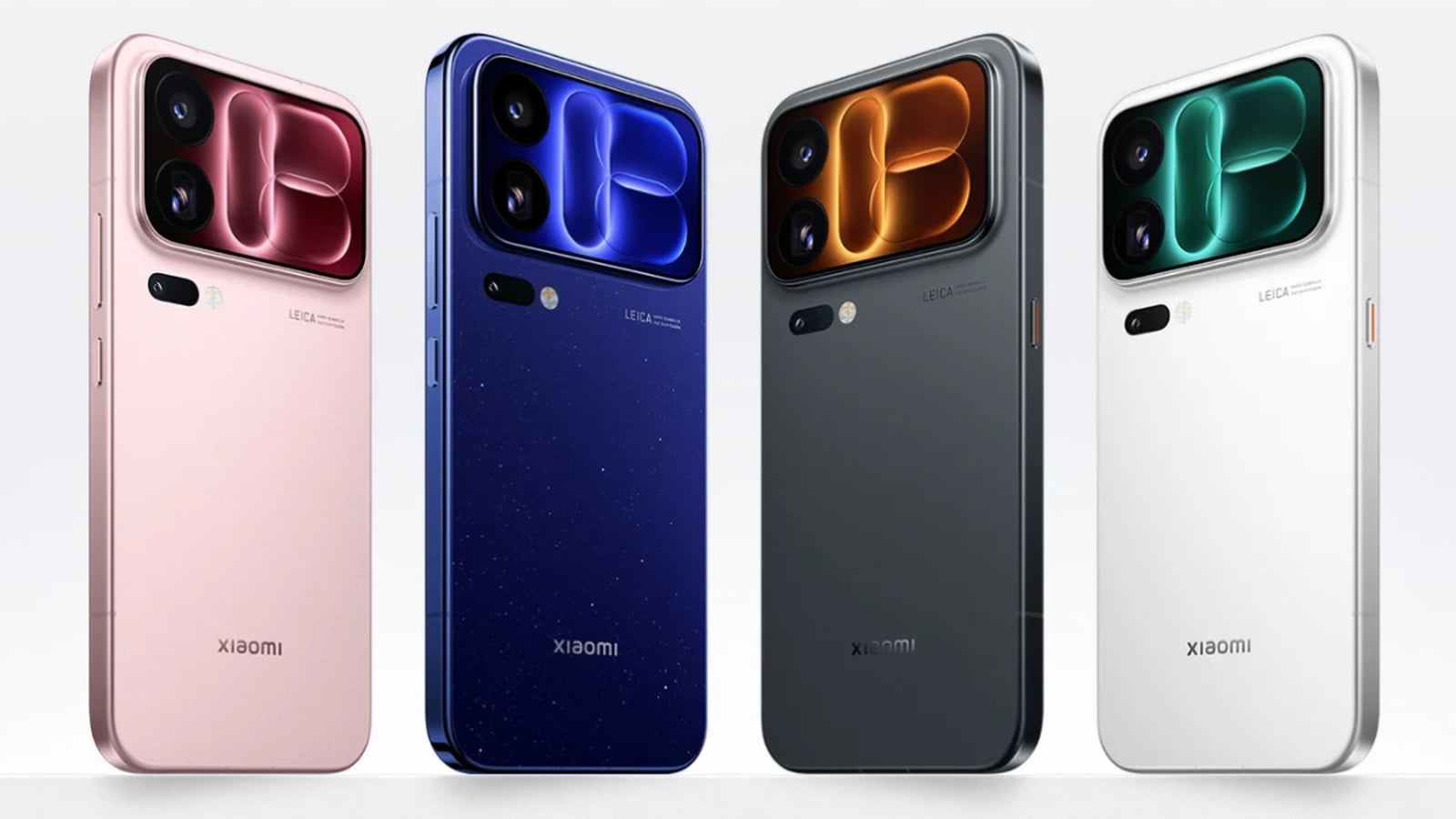
Xiaomi is the next manufacturer preparing to take its latest flagship phones outside China. The Xiaomi 18 Pro and Xiaomi 18 Pro Max launched in China in September, and the company has now confirmed a global launch event in Paris for November 17.
Both phones carry dual 200MP Leica cameras and a secondary display on the back. The rear screen allows users to access information and take selfies using the main cameras.
The two models also differ in their processors and battery capacities. The Xiaomi 18 Pro runs on the Snapdragon 8 Elite Gen 6 and packs a 7,000mAh battery. The Pro Max moves up to the Snapdragon 8 Elite Extreme Gen 6, built on a 2nm process, alongside a larger 8,500mAh battery.
The global versions could be quite different in one important area. Per European energy-label listings, the 18 Pro will have a 6,000mAh battery, while the Pro Max could get a 7,050mAh cell.
Likewise, European retailer listings suggest the Xiaomi 18 Pro could start at around €1,400, with the Pro Max costing close to €1,850. These aren’t official prices, though.
There’s also some history behind this launch. Xiaomi kept the previous-generation Xiaomi 17 Pro and 17 Pro Max exclusive to China, while the standard Xiaomi 17 and Xiaomi 17 Ultra made it to global markets earlier this year.
Bringing the new Pro models to international markets would therefore be a notable change. However, Xiaomi hasn’t announced a US release, so American buyers shouldn’t assume the Paris event changes that.
5. Getting one from the US
None of these phones is officially sold through US carriers or the brands’ US stores. That leaves import retailers as the main option for anyone interested in buying one.
The global Oppo Find X10 Pro Max is listed at Giztop from $1,599. It is currently the easiest of the three to get in a global version, although buyers should still check the supported network bands and warranty terms before ordering.
The Vivo X500 Pro Max is another possibility, but buyers may have to wait for its international availability or import the Chinese version. Xiaomi’s situation should become clearer after the November 17 launch, although a global announcement alone doesn’t guarantee US retail availability.
There are a few things worth checking before importing any of these phones. Make sure the exact model supports your carrier’s LTE and 5G bands, confirm VoLTE compatibility, and check whether the seller provides a usable warranty in the US. Chinese versions can also come with region-specific software and services, making a global model a better choice when one is available.
OnePlus’ withdrawal adds another wrinkle to the US Android market. The company will continue supporting existing phones, but its decision to stop new launches in North America and Europe means buyers have one fewer established brand to consider when shopping for their next flagship.
And there are more Chinese launches coming before the month ends. The Honor 700 series is scheduled to arrive in China on November 23, followed by Huawei’s Mate X8 foldable on November 24. Neither has a confirmed US launch. Honor is not subject to the same US restrictions as Huawei, however, so their situations shouldn’t be treated as identical.
FREE DAILY NEWSLETTER
Joel Explains
What matters in phones and gadgets, before it reaches you. From Gizmochina’s editor-in-chief, every morning.
Join 1,500+ readers. One email a day, unsubscribe in one click.