
As an Amazon Associate, Gizmochina earns from qualifying purchases. Links on this page may earn us a commission at no extra cost to you.
A recently published patent application (US 2026/0362887 A1), titled “Integrated energy-collecting display module,” reveals that Garmin is investigating placing miniature solar cells in the tiny dark gaps between the pixels of AMOLED (and potentially microLED) displays.
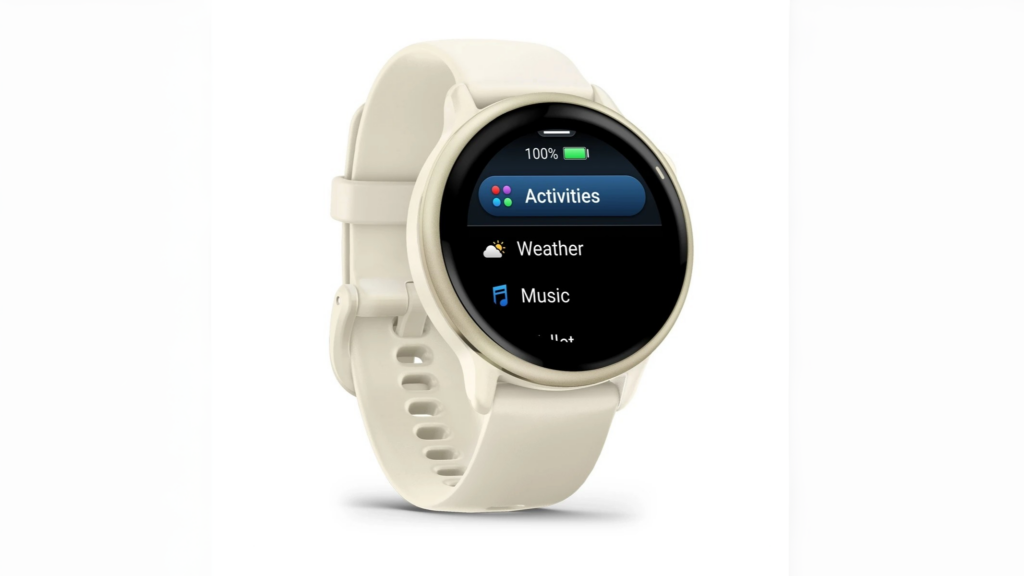
Filed in May 2025 and published in November 2026, the design would allow the smartwatch to harvest ambient light and slowly top up its battery while being worn outdoors, with no separate charging session required.
Unlike traditional solar layers that sit over an entire display (which can dull colors and reduce brightness) or solar rings placed around the bezel (which can enlarge the watch or shrink the usable screen area), this approach interleaves the photovoltaic elements only in the non-emissive spaces. Clear windows sit directly over each subpixel so the display’s own light passes through unimpeded. The result, according to the filing, should be a brighter, higher-contrast image while still collecting energy.
The timing is notable. Just weeks before the patent’s publication, Garmin COO Brad Trenkle discussed the ongoing battery-life gap between AMOLED and the company’s longer-lasting MIP (Memory-in-Pixel) displays in an interview.
He acknowledged that the difference has narrowed significantly with each generation of OLED watches, but said it has “not completely converged,” which is why MIP models, especially those with solar charging, remain in the lineup for now. When asked whether in-screen solar would inevitably dull an AMOLED display, Trenkle replied that, as a thought experiment, it need not.
If the technology described in the patent reaches production, it could help close that remaining gap and reduce one of the main advantages MIP currently holds. Garmin has explored solar-AMOLED ideas in earlier patents as well, but this inter-pixel approach appears more refined and manufacturable.
Of course, a patent does not guarantee a commercial product. Many filings never leave the lab. Still, the concept points to Garmin’s clear interest in combining the visual appeal of AMOLED with meaningful solar assistance, potentially bringing fans closer to the best of both worlds in future watches.
FREE DAILY NEWSLETTER
Joel Explains
What matters in phones and gadgets, before it reaches you. From Gizmochina’s editor-in-chief, every morning.
Join 1,500+ readers. One email a day, unsubscribe in one click.



Comments