
As an Amazon Associate, Gizmochina earns from qualifying purchases. Links on this page may earn us a commission at no extra cost to you.
After months of relentless climbs that left PC builders and upgraders reeling, the memory market is flashing its first real signs of relief. Spot prices for older DDR4 modules have started heading down, and analysts are dialing back expectations for how sharply contract prices will keep rising next year. It’s not a full reversal, but the pressure that defined much of 2026 may finally be easing.
TrendForce points to growing caution among buyers as the main driver. Uncertainty around US data center policies and broader geopolitics has made demand harder to forecast, prompting more restrained purchasing. Chinese cloud service providers have also trimmed some of their server DRAM orders, adding to questions about how strong overall growth will actually be in 2027.
On the consumer side, the picture is even softer. Extremely high prices have put many buyers off, while retailers and distributors are ordering smaller volumes and focusing on clearing existing stock. The firm expects consumer DRAM demand next year could therefore come in weaker than earlier projections suggested.
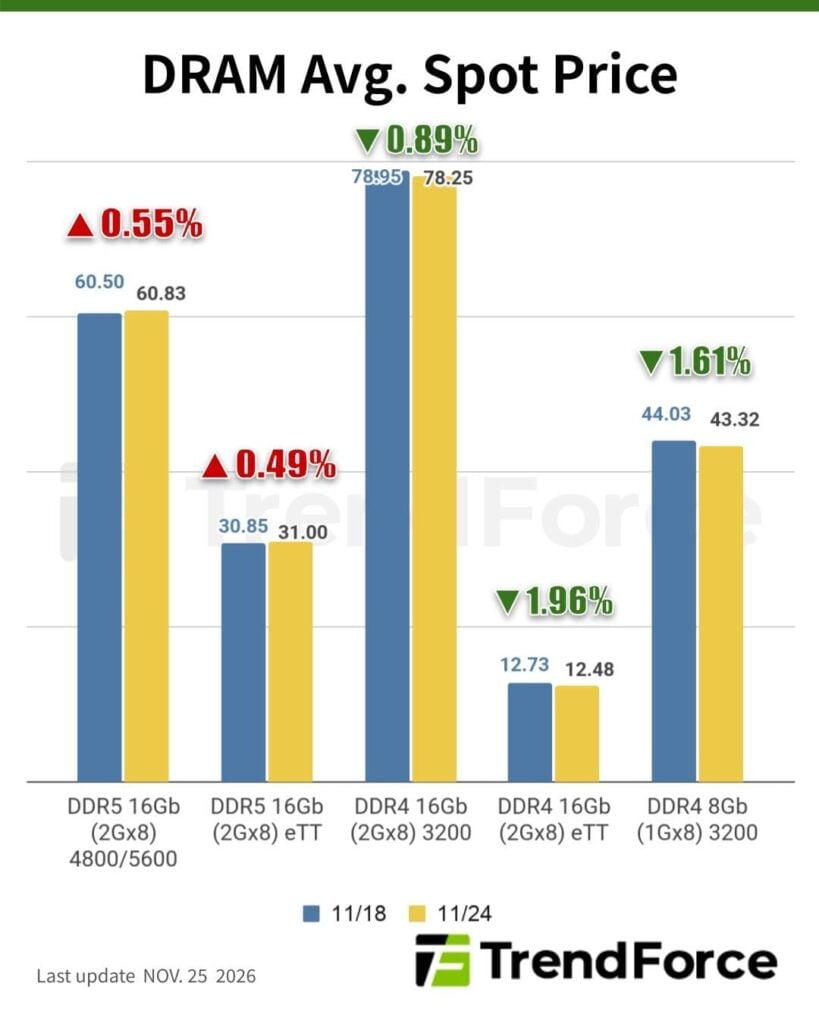
The clearest price drops so far are concentrated in older standards. DDR4 and DDR3 spot prices are moving lower as consumer-market demand weakens. Mainstream DDR4 chips recently recorded week-over-week declines of around 1.6 percent.
DDR5 is a different story. Contract prices for the current mainstream standard are still expected to rise in 2027, though TrendForce now anticipates a more moderate increase than in its previous forecast.
Supply dynamics are shifting as well. The big three manufacturers, Samsung, SK hynix, and Micron, have redirected substantial capacity toward high-bandwidth memory for AI accelerators, which has constrained conventional DRAM output.
TrendForce expects consumer DRAM production to grow significantly year over year in 2027. While volumes should still sit below 2024 levels, the increase, combined with softer demand and efforts to clear inventory, could help bring the market into better balance.
(Source: TrendForce)
FREE DAILY NEWSLETTER
Joel Explains
What matters in phones and gadgets, before it reaches you. From Gizmochina’s editor-in-chief, every morning.
Join 1,500+ readers. One email a day, unsubscribe in one click.


Comments