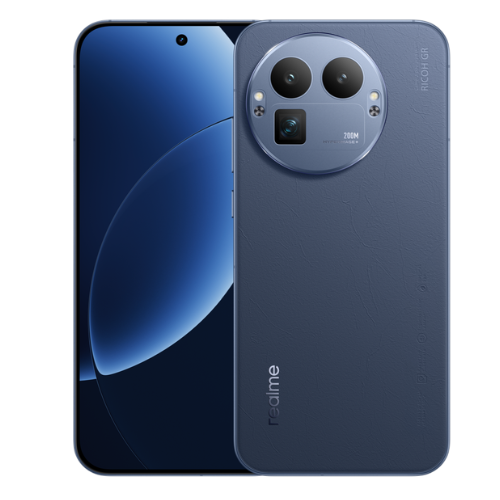
Oppo has relaunched the Oppo Pad Air 5 in China in a new Starry White shade. It comes months after the debut of the standard Pad Air 5 and, aside from the new color, retains most of the same hardware as the original model.
However, the refreshed finish now comes with noticeably higher pricing across configurations.
The tablet starts at 2,099 yuan (~$309) for the 8GB + 128GB version, while the top-end 12GB + 256GB Soft Light model costs 2,999 yuan (~$442). That makes the new edition more expensive than the regular Pad Air 5, which launched at 1,899 yuan (~$280) for the same entry-level storage option.
Oppo Pad Air 5 Specifications
Like the standard version, the Starry White Edition features a 12.1-inch LCD display with a 2.8K resolution and a 120Hz refresh rate. Oppo says the panel has German TÜV Rheinland anti-reflection certification to make the screen easier to read outdoors under bright light.
Under the hood, the tablet uses MediaTek’s Dimensity 7300-Ultra chipset, paired with LPDDR5X RAM and UFS 3.1 storage. It is powered by a large 10,050mAh battery, and it supports 33W fast charging.
The Pad Air 5 also has AI features like one-click PPT generation, note summarization, and cross-app content collection. The tablet can also optimize handwriting in real time during note-taking, reducing the need to adjust pen settings manually.
The SIM-enabled variant continues to support standalone 5G connectivity. Oppo is also highlighting ecosystem features that allow the tablet to automatically share a nearby Oppo phone’s 5G connection without needing to manually enable hotspot mode.
Design-wise, the Pad Air 5 remains relatively slim at 6.83mm thick and weighs just under 600 grams depending on the version. Other features include Wi-Fi 6, Bluetooth support, an 8-megapixel front and rear camera setup, keyboard and stylus compatibility, and ColorOS 16 out of the box.
The new Starry White Edition will go on sale in China on May 29th through Oppo’s official channels.
For more daily updates, please visit our News Section.
A new Xiaomi smartphone has reportedly appeared on China’s 3C certification platform. Rumor surrounding this device suggests that it could be a new addition to the K90 family, which already includes the Redmi K90, K90 Pro Max, and Redmi K90 Max. As usual, the 3C listing has only revealed the fast-charging capabilities of the device
Redmi K90 Ultra 3C certified
According to the certification listing, the alleged Redmi K90 Ultra carries the model number M332BF and supports 100W wired fast charging. Tipster Digital Chat Station claims it could arrive as a mid-range performance-focused smartphone.
Another leak from tipster Xiaomu Technology has revealed a wider set of expected specifications. The smartphone is tipped to feature a 1.5K flat OLED panel with high refresh rate support and a Snapdragon 8 Elite chipset.
The leak also mentions dual stereo speakers, an ultrasonic fingerprint scanner and IP68/IP69 ratings for dust and water resistance. One of the more interesting additions could be a built-in physical cooling fan, something usually seen on gaming-oriented smartphones.
The device is tipped to pack an 8,500mAh battery alongside 100W charging support, which could appeal to heavy gamers and power users looking for extended screen time. The device will lack support for wireless charging.
In terms of product positioning, Redmi may position the K90 Ultra below the Redmi K90 and K90 Max models in the lineup hierarchy. The phone is expected to launch in China around June or July, with a possible starting price of 2,799 Yuan (~$410).
For more daily updates, please visit our News Section.
Vivo has officially confirmed the launch of its first wireless over-ear noise-cancelling headphones in China. Set to launch alongside the Vivo S60 series of smartphones, the new audio product is set to debut on May 29 and marks the company’s entry into the premium over-ear headphones category after focusing mainly on TWS earbuds over the years.
Vivo reveals lightweight design and ANC features
Vivo over-ear headphones
According to official teasers, the upcoming Vivo wireless headphones will be available in Cloud White and Breeze Purple color options. The company says the headphones weigh around 238 grams, suggesting a focus on long-duration comfort during travel, office use and entertainment sessions. The teaser images also show a minimal design with large cushioned earcups and a clean finish.
Vivo has confirmed support for active noise cancellation, which is expected to reduce surrounding noise in crowded places such as public transport, cafés and workplaces. While the company has not disclosed the exact ANC level or audio tuning details yet, the feature appears to be one of the main highlights of the product. Details related to drivers, audio codecs and battery backup are still under wraps.
One of the more notable features announced so far is support for seamless cross-ecosystem triple-device connectivity. This means users will be able to switch between smartphones, tablets and computers without repeatedly pairing the headphones each time. The feature could especially benefit users who work across multiple devices during the day.
The headphones have already appeared on Chinese e-commerce platforms ahead of launch, with reservations now live. With this product, Vivo seems to be expanding its audio lineup beyond true wireless earbuds and entering a segment currently dominated by brands offering premium over-ear listening experiences.
For more daily updates, please visit our News Section.
If you are used to charging your smartwatch every night, looking at Garmin’s spec sheets can be a bit of an adjustment. Instead of measuring battery life in hours, Garmin’s premium outdoor watches measure it in weeks and months.
While they have been on the market for a bit, the Garmin Enduro 3 and Fenix 8 remain two of the most capable options in Garmin’s high-end lineup. Both watches offer excellent battery life, but they take very different approaches to how they manage power and what features they prioritize. If you are trying to decide which one makes sense for your routine, here is a straightforward breakdown of how their batteries actually compare.
Garmin Fenix 8
The Fenix 8 is Garmin’s flagship, designed to do a little bit of everything. It includes new hardware like a built-in speaker and microphone for taking calls, a dive-rated casing for scuba diving, and a built-in LED flashlight. Because it has so many features, the battery life depends heavily on which version you choose.
To make a fair comparison with the Enduro 3, we have to look at the largest Fenix 8 model, the 51mm. If you choose the vibrant AMOLED display version, you can expect up to 29 days in smartwatch mode, which drops to about 13 days if you leave the screen on all the time. For GPS tracking during workouts, it lasts up to 84 hours.
If you want to maximize the Fenix 8’s battery, you can opt for the 51mm Solar edition. This version swaps the AMOLED screen for a more power-efficient Memory-in-Pixel (MIP) display and adds a solar charging lens. With this setup, smartwatch battery life reaches up to 30 days, or 48 days if you spend a few hours outside in the sun each day. In GPS mode, it provides 95 hours of tracking, stretching to 149 hours with solar assistance. For most users, this is more than enough capacity for regular training, long hikes, and daily wear.
Garmin Enduro 3
The Enduro 3, on the other hand, is built with a very specific goal: to last as long as possible between charges. To achieve this, Garmin made some practical trade-offs. The Enduro 3 skips the built-in microphone, speaker, and dive-proof hardware found on the Fenix 8. It also uses a lightweight titanium bezel and a nylon band, bringing its weight down to just 63 grams (compared to the 51mm Fenix 8 Solar’s 95 grams).
By streamlining the hardware and focusing entirely on efficiency, the Enduro 3 delivers notable numbers. In standard smartwatch mode, it lasts up to 36 days. If you are outdoors enough to take advantage of the solar charging, that number extends to a very impressive 90 days.
When it comes to continuous GPS tracking, which is the most important metric for ultrarunners and thru-hikers, the Enduro 3 provides 120 hours of battery life. With solar assistance, that figure climbs to 320 hours.
Which one fits your needs?
If we are looking strictly at which watch has the longer battery life, the Enduro 3 is the clear winner. It offers more than double the maximum solar GPS battery life of the Fenix 8 (320 hours compared to 149 hours) and nearly doubles the solar smartwatch life (90 days compared to 48 days).
However, the right choice depends on how you plan to use the watch. If you want the convenience of voice commands, the ability to answer phone calls from your wrist, and a watch that can handle recreational scuba diving, the Fenix 8 is the more versatile daily device, and its battery life is still excellent.
But if your main priority is minimizing how often you need to plug your watch in, or if you regularly participate in multi-day outdoor events where charging simply isn’t an option, the Enduro 3 is the more practical tool for the job.
For more daily updates, please visit our News Section.
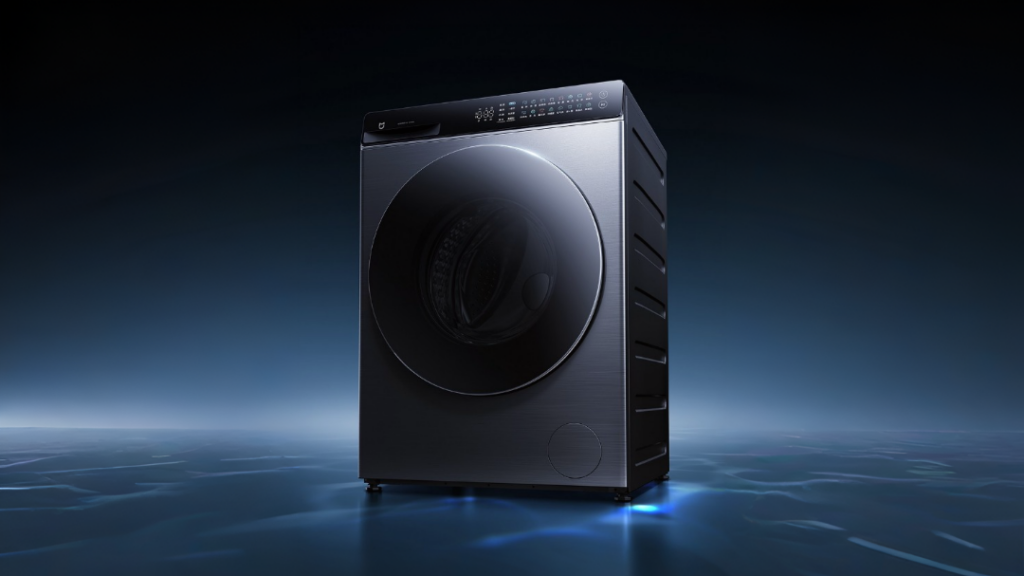
Xiaomi has released a new washer-dryer combo in China, and it comes with a very long name: the Mijia Washing Machine Pro Extreme Edition Super Electrolytic Smart Dosing Washer Dryer 13kg. It is currently available for pre-order on Xiaomi Youpin for 4199 yuan (about $618).
Mijia Washing Machine Pro 13kg Specifications
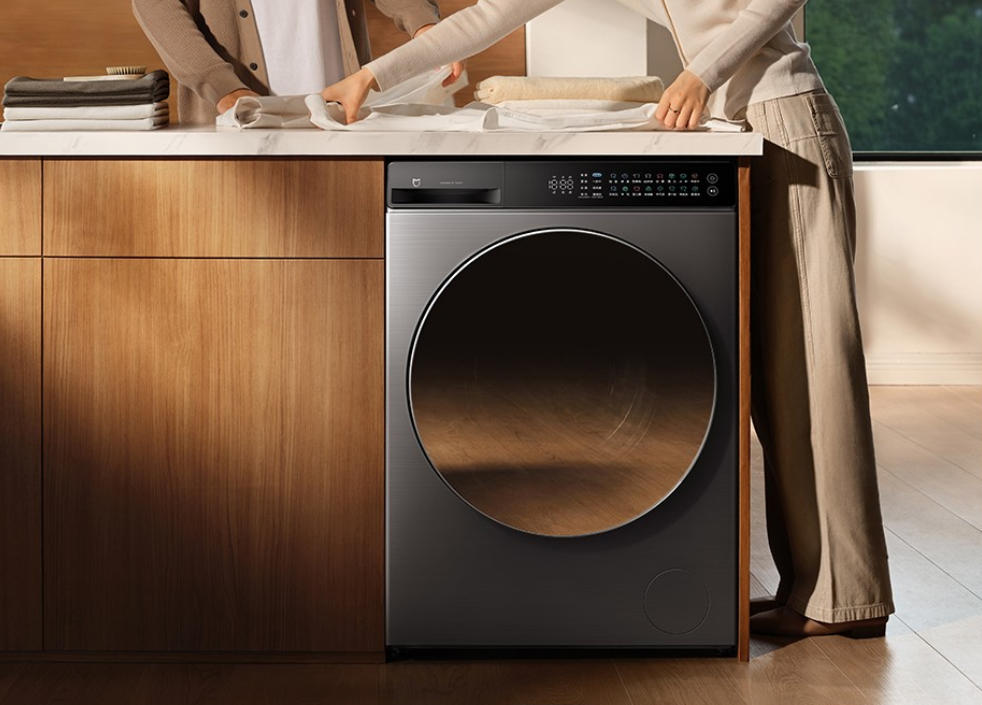
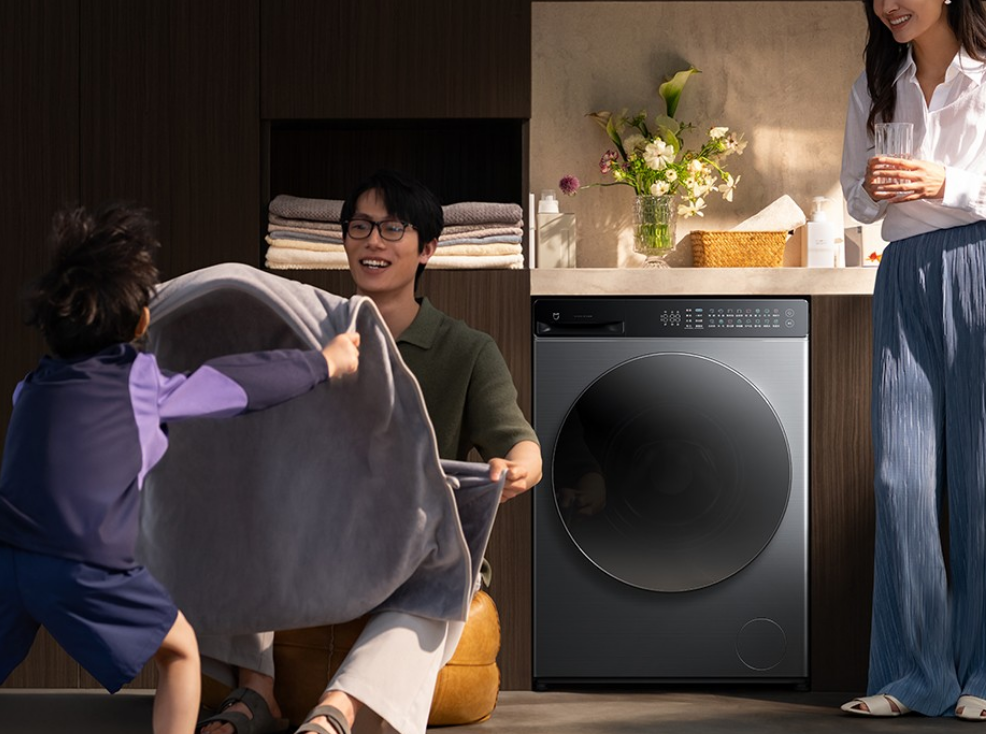
The machine is built for larger households, offering a 13kg washing capacity and a 9kg drying capacity. According to Xiaomi, this is enough room to wash bulky items like heavy curtains, multiple bedding sets, or up to 65 T-shirts in a single load.
The primary feature of this model is its electrolysis technology. Instead of relying solely on water temperature and detergent, the machine generates activated oxygen molecules to help break down dirt. Xiaomi says this process is designed to handle difficult stains, such as soy sauce or blood, without leaving chemical residue on the fabric. The company also says that the system can help brighten white clothing and prevent colors from bleeding during mixed loads.
Regarding cleaning performance, the washer has a wash ratio of 1.3, which is higher than the standard baseline rating of 1.03. For hygiene, it uses a combination of high-temperature steam and electrolyzed cold water to reduce bacteria, viruses, and dust mites.
For daily use, the washer features an automatic dispensing system. Once the detergent and softener reservoirs are filled, the machine automatically releases the appropriate amount for each cycle based on the load’s weight and soil level. The tanks hold enough liquid for about a month of typical use.
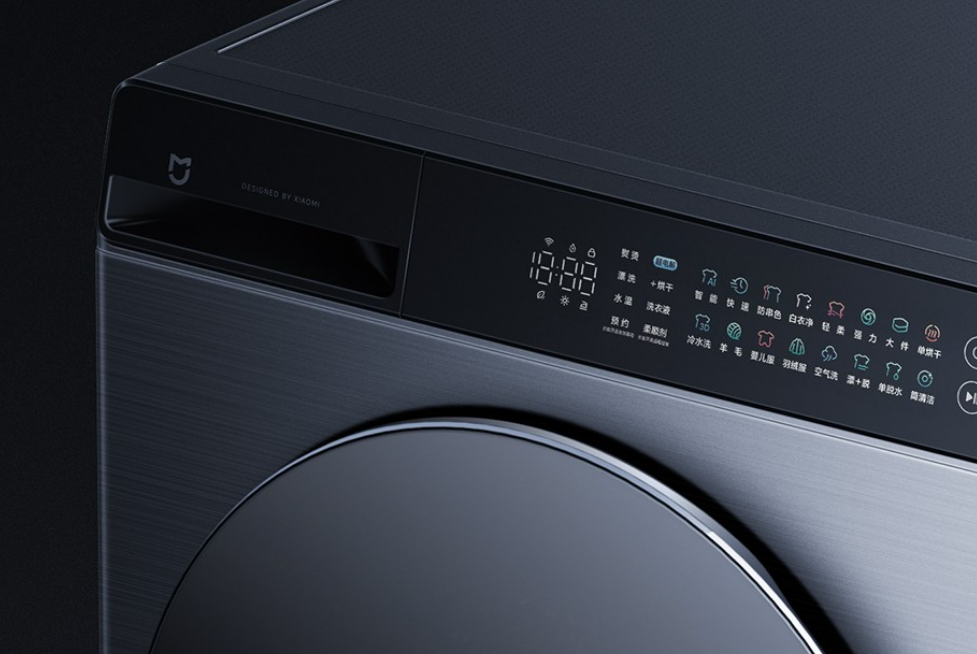
There are 31 wash programs available, including specific settings for wool, down jackets, and pet hair. There is also an air wash mode that uses steam to remove odors and wrinkles without a full water cycle. For faster results, a quick wash setting can complete a standard cycle in 36 minutes.
Like most Xiaomi appliances, the washer connects to the Mi Home app via the company’s HyperOS ecosystem. This allows users to start cycles remotely, check how much time is left, or schedule a wash for later in the day. It also supports voice commands through compatible smart speakers and receives software updates over the air.
In related news, Xiaomi has recently introduced a new instant hot water dispenser with a built-in ice maker capable of producing over 40 ice cubes at a time, alongside delivering hot water in just three seconds. The company has also launched a new AI-powered split air conditioner that supports rapid 15-second cooling.
For more daily updates, please visit our News Section.
Xiaomi has listed the Mijia Instant Hot Water Dispenser Max Ice Maker Edition on Xiaomi Youpin with a price tag of 1999 yuan (roughly €250 at the current exchange rate) ahead of its crowdfunding rollout.
At first glance, it looks like a fairly clean desktop appliance, but Xiaomi is packing quite a few features into it. The biggest selling point is obviously the ability to handle both hot water and ice production from a single unit, which makes it a bit more versatile than standard countertop dispensers.
For the ice-making side, Xiaomi says the machine uses continuous water circulation technology to reduce bubbles and produce clearer ice cubes. The company is also using inverter compressor technology similar to what is found in modern refrigerators, allowing the unit to operate across temperatures ranging from 5°C to 38°C.
The built-in ice compartment supports automatic dispensing with a single button press, so users do not need to scoop or manually break apart ice. Xiaomi says the storage area can hold more than 40 ice cubes at once, which should be enough for small gatherings or regular daily use. There is also insulation inside the compartment to slow down melting.
On the hot water side, the dispenser uses a 2050W thick-film heating system that can reportedly provide hot water in around three seconds. Users can choose between several preset temperature levels or fine-tune the temperature between 40°C and 90°C through the Mi Home app.
Xiaomi is also putting a noticeable focus on hygiene here. The ice storage section and cold water tank both include UV antibacterial lighting, and the system supports automatic high-temperature cleaning for the internal pipes and storage areas.
Like many recent Xiaomi home appliances, this feels aimed at people who want something a little more premium and convenient without moving into ultra-expensive smart kitchen territory. It is probably overkill for basic daily use, but for households that regularly use ice, make drinks, or entertain guests, the all-in-one approach could actually be pretty practical.
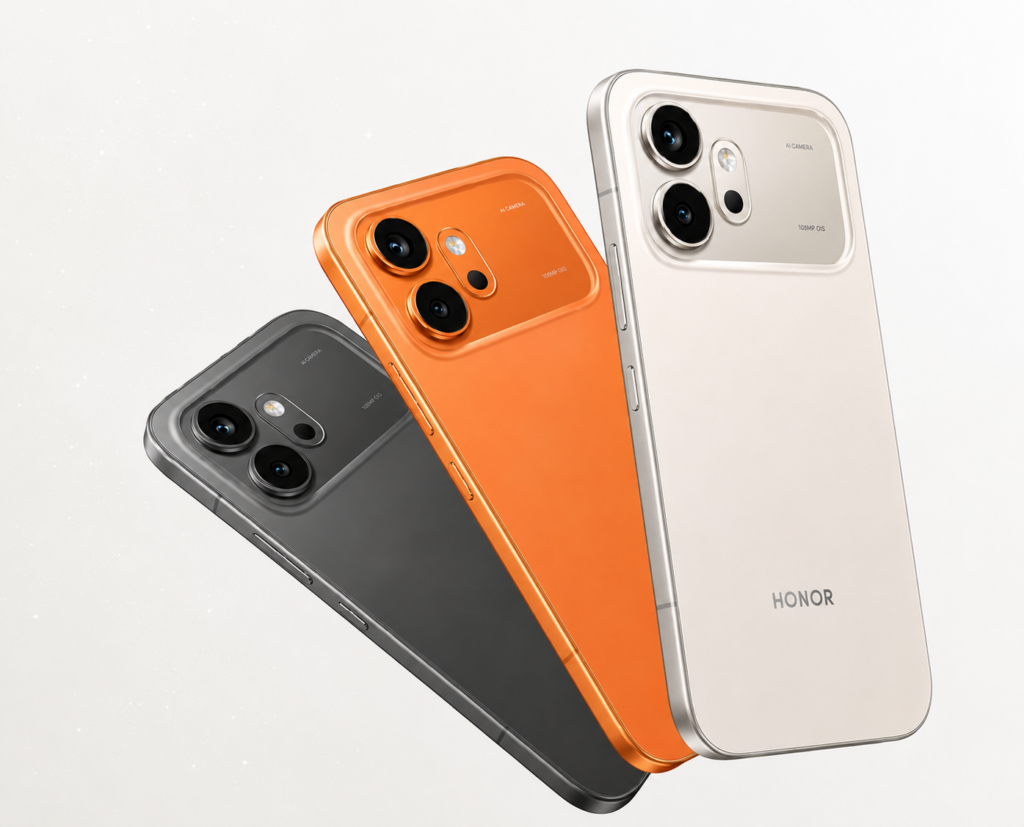
Honor is set to launch the WIN Turbo in China on May 29, and the company has already been teasing several aspects of the phone over the past few days. In its latest teaser, Honor confirmed that the device packs a huge 10,000mAh battery, with some reports suggesting the actual rated capacity could be slightly higher at around 10,080mAh. Either way, it is an unusually large battery for a phone that still appears relatively normal in size and design.
Honor claims the WIN Turbo can handle over 14 hours of continuous gaming or more than 22 hours of short video playback. Marketing numbers are usually best taken with some caution, but realistically, this thing should still outlast most phones pretty comfortably.
Charging does not seem compromised either. The phone supports 80W wired fast charging and even 27W reverse charging, so it can double as a power bank for smaller devices if needed.
Honor WIN Turbo
Unlike the more expensive WIN and WIN RT models, the Turbo version is apparently skipping the built-in cooling fan. Instead, Honor seems to be focusing more on battery life and everyday gaming rather than pushing fully flagship-level performance.
Honor WIN
The phone is expected to use MediaTek’s Dimensity 8500 Elite chip, which should still be more than capable for gaming, multitasking, and general use. It is not aiming for premium territory, but that is probably the point here.
Other leaked specs include a flat 1.5K LTPS display, a metal frame, and a 50MP main camera with OIS. Storage options are rumored to go up to 16GB RAM and 512GB storage. Honor is also preparing several color options, including black, white, and blue finishes.
Interestingly, the WIN Turbo reportedly shares its base platform with the Honor Power 2. The difference is that this model drops the active cooling hardware, which may help keep the overall cost lower and the body relatively slim and light despite the giant battery inside.
Most phones today are already good enough for a full day, so Honor seems to be targeting people who simply do not want to think about charging very often at all. If the pricing lands in the right place, the WIN Turbo could end up becoming one of the more interesting battery-focused phones this year.
Honor has officially introduced its latest audio product in China, the Honor Earbuds Clip-On Pro. Priced at 599 yuan ($88), the new earbuds lean into the growing trend of open-ear audio, opting for a cuff-like design that attaches to the outside of the ear rather than sitting inside the ear canal.
Honor Earbuds Clip-On Pro Specifications
In terms of aesthetics, the Earbuds Clip-On Pro features a C-shaped chassis built around an aerospace-grade nickel-titanium memory wire. This three-point support structure is designed to adapt to various ear shapes and distribute weight evenly, keeping the buds secure during workouts without applying excessive pressure. Available in Prism Black and Rose Gold, the earbuds feature polished metallic accents and come with an IP55 rating for dust and water resistance.
On the audio front, the Earbuds Clip-On Pro are equipped with 10.8mm dual-magnetic titanium-coated drivers. They support the LHDC 5.0 codec and carry a Hi-Res Audio Wireless certification for high-quality playback. Because open-ear designs are naturally prone to sound leakage, Honor has included a reverse acoustic system to help keep your audio private in public spaces.
For voice calls, the earbuds use a triple-microphone setup, two air-conduction mics and one bone-conduction VPU, paired with AI noise reduction. Honor claims this system can filter out wind noise at speeds up to 9 meters per second.
The earbuds also feature Honor’s software features. They integrate directly with the YOYO voice assistant, which can be triggered via touch or voice commands. The companion software supports real-time dual-ear translation, automatic transcription, and smart summarization. The assistant can also read out real-time notifications so users don’t have to constantly check their phone screens.
For connectivity, the earbuds use Bluetooth 5.4 and support dual-device pairing across Android, iOS, and HarmonyOS devices, allowing you to seamlessly switch between a phone and a laptop. They also feature automatic wear detection and intelligent left/right channel recognition, meaning you don’t have to check which bud goes on which ear before putting them on.
Coming to the battery life, Honor says the 56mAh batteries in the earbuds can provide up to 11 hours of standalone playback with the voice wake-up feature disabled. The 500mAh pebble-shaped charging case extends that total to 47 hours. Recharging the buds takes about 50 minutes, while the USB-C case itself tops up in just over an hour.
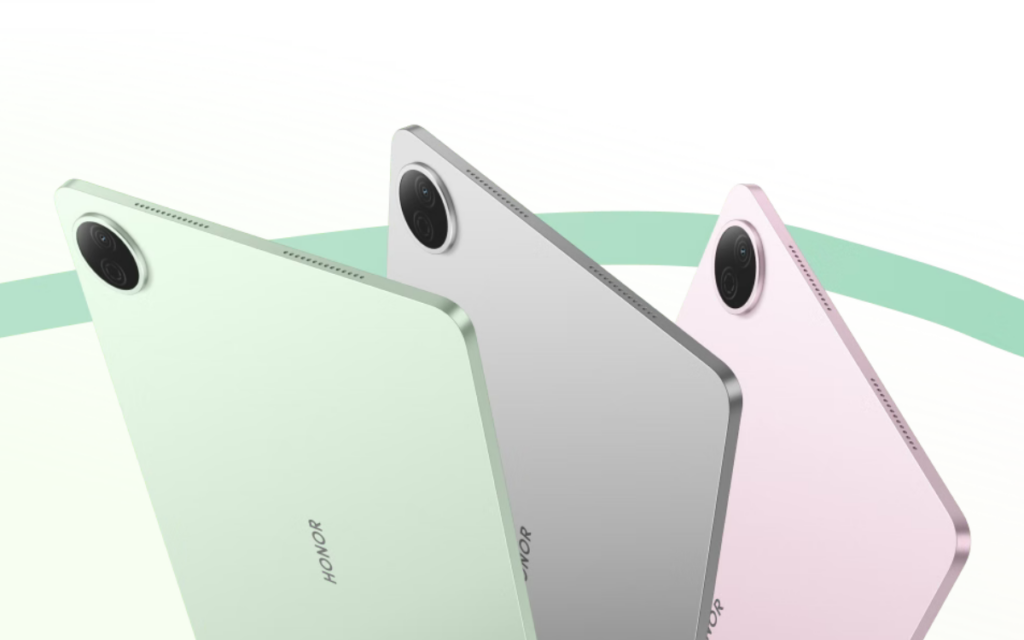
The Honor Pad 20 features a 12.1-inch 3K TFT LCD IPS display with a 3000 x 1872 resolution, 120Hz variable refresh rate, and 292 PPI pixel density. It also comes with DCI-P3 wide color gamut coverage, 1.07 billion colors, a 1500:1 contrast ratio, and up to 700 nits brightness for vibrant visuals and improved outdoor visibility.
Honor is selling the device in three variations, including a standard model and a Soft Light Edition. The latter uses a matte, dual anti-glare coating designed to reduce reflections and mimic the texture of paper, which is intended to make reading and note-taking easier on the eyes.
Under the hood, the tablet is powered by the Snapdragon 7 Gen 3 chipset, featuring one Cortex-A715 core at 2.63GHz, three Cortex-A715 cores at 2.4GHz, and four Cortex-A510 cores at 1.8GHz.
On the software side, the Pad 20 runs MagicOS 10, based on Android 16. The user interface includes a desktop-style layout with multi-window support for multitasking. Honor has also included several AI software tools aimed at students, such as automatic course transcription, note organization, and an exam preparation assistant. For writing and drawing, the tablet supports the USB-C Honor Magic-Pencil 4s.
The tablet also supports cross-platform connectivity with Android, HarmonyOS, and iOS devices, including file transfers, device collaboration, AirPods pairing, and cross-device editing with Apple ecosystem products.
For photography and video calls, the tablet is equipped with an 8MP rear camera featuring an f/2.0 aperture and autofocus. The front camera also features an 8MP sensor with an f/2.2 aperture.
The tablet is powered by a 10,100mAh battery. Honor includes a 45W charger in the box, though the device can handle up to 66W charging if you use a compatible adapter. It also includes a six-speaker audio setup.
Pricing and Availability
The Honor Pad 20 is available in several configurations. The Lingyue Edition offers options of 6GB RAM with 128GB storage priced at 2,099 yuan ($315) and 8GB RAM with 128GB storage for 2,299 yuan ($345).
The Soft-Light Edition starts at 2,499 yuan ($375) for the 8GB RAM and 128GB storage model, goes up to 2,999 yuan ($450) for the 8GB RAM and 256GB variant, and reaches 3,399 yuan ($510) for the 12GB RAM with 256GB storage version.
The tablet, offered in Gray, Green, and Pink, is open for orders now and will be available for purchase in China starting May 27th.
For more daily updates, please visit our News Section.
Saving YouTube videos for offline viewing remains popular in 2026. Most users choose between browser-based online video downloaders and dedicated Android video downloader apps. Both options work differently and are designed for different types of users. Choosing the wrong option can result in slower downloads, failed transfers, or a poor overall experience. Some people only need quick downloads occasionally, while others want faster speeds and background downloading for daily use.
AI – Generated image for representation only
What Is an Online Video Downloader?
An online video downloader is a web-based service that works directly inside a browser. Users do not need to install anything. The process is simple: open the website, paste the YouTube link, choose the format or quality, and download the file.
These tools work across Android, iPhone, Windows, Mac, and tablets, making them convenient for users who switch between devices. Since nothing is installed, they also save storage space and avoid background processes.
Online downloaders improved significantly in 2026. Many now support multiple platforms beyond YouTube, offer downloads up to 4K quality, and process links faster than older tools.
One example is VidsSave, which works as a YouTube downloader online tool and supports YouTube, Instagram, TikTok, Facebook, Twitter/X, Pinterest, Vimeo, and more than 40 other platforms. It offers MP4 downloads, MP3 conversion, and multiple resolution options. It also includes a shortcut feature where users can add “vids” before “YouTube” in a YouTube URL.
What Is a Video Downloader App?
A video downloader app is a native Android application installed directly on a phone or tablet. These apps are usually distributed as APK files because they are often unavailable on the Google Play Store.
Installation normally requires downloading the APK from the official website, enabling “Install from Unknown Sources,” and manually installing the app. While setup takes a few minutes, the long-term experience is usually smoother for frequent users.
Dedicated apps offer features like background downloading, multiple simultaneous downloads, better storage integration, and stronger performance.
One widely used example in 2026 is VidMate. The app supports more than 1,000 websites, including YouTube, Instagram, TikTok, Facebook, and Pinterest. It offers 4K downloads, MP3 extraction up to 256kbps, batch downloading, and background downloading. VidMate also uses multi-threaded downloading for faster speeds.
Head-to-Head Comparison
Setup and Accessibility
Online tools are easier to access because they work instantly in a browser without installation or permissions. They are useful on shared devices, borrowed phones, and tablets.
Apps require a one-time APK installation, but become easier to use long-term once setup is complete.
Download Speed and Performance
Online tools are limited by the browser environment and usually handle one download at a time. Downloads may stop if the browser tab closes or the screen locks.
Dedicated apps deliver faster performance because they use the device’s processor and memory directly. Multi-threaded downloading also improves speeds, especially for large files and 4K videos.
Background Downloading
Online tools are less reliable for background downloading because browsers often need to stay open.
Apps fully support background downloading, allowing users to continue using other apps, play music, or lock the screen while downloads continue.
Platform Support and Updates
Online tools use server-side updates, so fixes happen instantly when platforms change. Users do not need to do anything manually.
Apps may require updates when YouTube or other platforms change their systems. Some apps include built-in updates, while others require downloading a newer APK version.
Storage and Device Impact
Online downloaders use almost no storage beyond the downloaded file itself and do not run background services. This makes them better for older phones with limited storage or RAM.
Apps take up storage space and may run background processes, but they are more suitable for users who download videos frequently.
Privacy and Security
Online tools run inside the browser sandbox and usually do not require accounts, giving them limited device access.
Apps require installation permissions, and APK downloads carry a slightly higher risk if downloaded from unofficial sources. They are safer when installed only from official developer websites.
Which One Should You Choose?
Choose an online tool if you download videos occasionally, use multiple devices, want zero setup, or prefer quick one-off downloads. Tools like VidsSave are ideal for this type of usage.
Choose a dedicated app if you download videos frequently, need faster speeds, want background downloading, or prefer an all-in-one Android downloader. Apps like VidMate work better for heavy users.
Many people use both options together: online tools for quick downloads on any device and dedicated apps for regular Android use.
Final Verdict
Feature
Online Tool
Dedicated App
Setup Required
None
One-time APK install
Download Speed
Good
Faster
Background Downloading
Limited
Full support
Platform Updates
Instant
Requires app update
Storage Impact
Zero
Moderate
Best For
Casual users
Frequent users
Both methods are highly capable in 2026. Online tools are simpler and lightweight, while dedicated apps provide a smoother long-term experience for heavy users. The better choice depends on download frequency, device type, and setup preference.
Honor has launched the Watch 6 Plus in China with a focus on long battery life and advanced sports tracking features. It is priced from 1,199 yuan (around $176) and features a motorsport-inspired design. The smartwatch is currently available for pre-orders in China and will officially go on sale starting May 29.
Honor Watch 6 Plus Specifications
The watch is built around a 1.46-inch AMOLED display with a 464 x 464 resolution. Honor says the screen can reach a peak brightness of 3,000 nits, which should make it easy to read in direct sunlight. It also includes wet-touch support, allowing the screen to remain responsive if you are using it in the rain or during a sweaty workout.
In terms of hardware, the Watch 6 Plus has a 46.5mm circular dial and a 10.8mm thick case. Depending on the color you choose, options include Speed Blue, Twilight Brown, Racing Grey, and Shadow Black, the front shell is made from either aluminum alloy or 316L stainless steel, paired with a reinforced polymer fiber back. Without the strap, the watch weighs approximately 41 grams.
The smartwatch uses a huge 1,000mAh battery that Honor says can last up to 35 days on a restricted long-endurance Bluetooth mode, or roughly 17 days under normal daily use. If you are using the independent GPS continuously for activities like hiking or long-distance running, the battery is rated for about 42 hours.
For location tracking, the watch uses dual-frequency (L1 and L5) six-satellite GNSS positioning. It includes standard health sensors for continuous heart rate, blood oxygen, and sleep monitoring, alongside over 120 sports modes. Honor has added specific tracking features for badminton and football; the badminton mode logs data like swing speed and rally count, while the football mode records sprint speeds and creates movement heatmaps.
The software is based on a MagicOS-inspired interface and covers the usual smartwatch features. It supports Bluetooth 5.4 calling via a built-in microphone and speaker, NFC for tap-to-pay services, and Baidu Maps navigation. The device has 5ATM and IP69 ratings for water and dust resistance, meaning it is safe for pool swimming but not intended for diving or high-pressure water sports.
Oppo today launched the Oppo Enco Air 5s in China, alongside the Reno 16 series and Oppo Pad 6. Much like a lot of audio launches lately, Oppo is betting on AI features and ecosystem tricks as the main draw of the earbuds.
The Enco Air 5s come in Moonlight White, Midnight Black, and Starlight Purple finishes. The earbuds adopt a semi-in-ear design and weigh just 3.9 grams each. Oppo says the shape is designed to fit different ear types comfortably while still offering “good noise cancellation” despite not using a fully sealed in-ear fit.
The Enco Air 5s features a 12mm dynamic driver and supports dual-channel stereo sound. Oppo has also added adaptive sound optimization and spatial audio effects, which the company says can create a more immersive listening experience.
For noise management, the earbuds support intelligent switching between deep noise cancellation, light noise cancellation, and transparency modes. There’s also a three-microphone setup with AI-backed ENC call noise reduction. Oppo claims the earbuds use flagship-level voice noise cancellation algorithms to improve call clarity in noisy environments.
Battery and Connectivity
Like many recent Oppo launches, the Enco Air 5s pushes ecosystem connectivity almost as much as audio quality. The earbuds support dual-device connection, allowing users to stay connected to two devices at once, and Oppo says they work with both Android and Apple devices.
The earbuds also include sliding volume controls, remote camera functionality, AI translation, AI assistant support, and audio sharing features. Oppo is additionally promoting cross-device switching between supported products within its ecosystem.
The Enco Air 5s uses Bluetooth 6.0 and supports a wireless range of up to 10 meters. The earbuds are also rated IP55 for dust and water resistance.
Moreover, Oppo says the earbuds can deliver up to nine hours of playback on a single charge and up to 48 hours total with the charging case under default settings. With active noise cancellation enabled, battery life drops to 4.5 hours on the earbuds and 25 hours with the charging case.
The charging case packs a 530mAh battery and charges through USB Type-C. Oppo says a full recharge of both the case and earbuds takes around 90 minutes. The company has also included TÜV Rheinland-certified battery durability claims.
Pricing and availability
The Oppo Enco Air 5s is currently available in China through Oppo’s official channels and partner retailers. The Moonlight White and Midnight Black variants are priced at 269 yuan (~$37) during the introductory sale, while the Starlight Purple version costs 299 yuan (~$41). Regular pricing is 299 yuan (~$41) and 329 yuan (~$45), respectively.
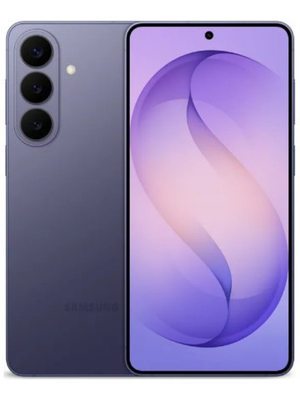
Even though the Galaxy S26 FE is still months away from launch, accessory makers have apparently already started preparing cases for it. As a result, early renders based on those case molds are now giving us a fairly decent look at the device from different angles.
At first glance, the Galaxy S26 FE looks very similar to the regular Galaxy S26 that launched earlier this year. The phone appears to use flat sides, slim display bezels, and Samsung’s familiar vertically aligned triple-camera setup on the back.
The rear camera module still protrudes quite a bit from the body, with the flash sitting separately beside the lenses instead of inside the camera island itself. It is a design Samsung has been sticking with lately.
On the front, the renders show a centered punch-hole selfie camera and what is expected to be a flat AMOLED display. The power and volume buttons remain positioned on the right side of the frame.
One interesting detail coming from the case renders is the appearance of a magnetic ring design, which points toward Qi2 wireless charging support. While the 2027 Galaxy S27 series is rumored to finally include built-in magnets, the upcoming FE model still appears to rely on magnetic cases, much like the rest of the S26 lineup.
The Galaxy S26 FE has already surfaced in several databases over the past few weeks, including GSMA IMEI listings and benchmark platforms, suggesting Samsung is actively testing the device ahead of launch.
Current rumors point to an October 2026 release, with the device expected to use Samsung’s Exynos 2500 chipset alongside upgraded battery life and solid overall cameras. As usual, the FE model will likely focus on offering a balanced flagship-like experience without fully flagship pricing.
There is still plenty we do not know yet, but based on these early renders, Samsung does not seem interested in dramatically changing the FE formula this year. Instead, the company appears to be refining the existing design while bringing a few newer features down from the flagship lineup.
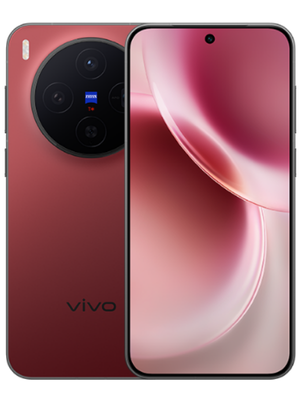
Vivo is preparing to launch the S60 series in China on May 29, and ahead of the event, most of the key specifications for both models have already leaked online. The lineup is expected to include the standard Vivo S60 along with a slightly toned-down S60 Vitality Edition.
Both phones are rumored to pack a huge 7200mAh cell with support for 90W fast charging, which is honestly pretty massive considering these are still relatively slim phones. Battery life could end up being one of the biggest selling points here.
The regular Vivo S60 is expected to run on Qualcomm’s Snapdragon 8s Gen 3 chip, putting it closer to the upper mid-range category. On the back, leaks point to a triple-camera setup featuring a 50MP main camera, an 8MP ultra-wide sensor, and a 50MP IMX882 periscope telephoto camera with 3x zoom. There is apparently also a 50MP selfie camera on the front.
Vivo also seems to be bringing a few flagship-style features down to this series. Reports mention an ultrasonic fingerprint scanner, stereo speakers, an X-axis linear motor, infrared support, and both IP68 and IP69 ratings for water and dust resistance.
The S60 Vitality Edition will likely be the more affordable option. It is rumored to use the MediaTek Dimensity 7500 processor while keeping the same battery and charging setup. The camera system sounds a bit simpler though, as the telephoto lens may be missing on this version.
Both devices are expected to use a 6.59-inch flat display with 1260p resolution, along with metal frames and glass backs. Vivo is also putting quite a bit of focus on the design this time. The “Starry Sea” color option in particular has a textured shimmering finish that blends into the camera module, giving the phone a more premium look than most devices in this segment.
The S-series has always tried to balance style and practical hardware rather than going fully performance-focused, and the S60 lineup seems to follow that same formula. Big battery, decent cameras, premium-looking design, and enough power for gaming and daily use. If Vivo manages to price these aggressively, the phones could end up getting a lot of attention in the mid-range market.
The Snapdragon X processors have mostly been found in laptops so far, but Asus is trying something different. The company just released the Asus VM441 in India, and it’s an all-in-one (AiO) desktop built around the ARM-based Snapdragon X chip.
Asus VM441 AiO Specifications
The idea is to offer a basic, quiet computer for a home office or living room. Because the Snapdragon chip doesn’t generate as much heat as typical desktop processors, Asus managed to keep the computer’s profile pretty thin.
It features a 23.8-inch 1080p touchscreen with standard specs, 300 nits of brightness, and 100% sRGB color coverage. It sits on a simple metal stand that lets you adjust the tilt, and the whole machine comes in a plain white finish.
Under the hood, it has an 8-core Snapdragon X processor, 16GB of LPDDR5X RAM, and either 512GB or 1TB of PCIe 4.0 storage. Since it has the Qualcomm NPU built-in (hitting 45 TOPS), it qualifies as a Copilot Plus PC.
In practical terms, that just means it can handle some local AI tasks, like blurring your background on video calls or filtering out microphone noise, without slowing down the main processor.
The port situation is decent for a home PC. On the back, you get an HDMI port, an Ethernet jack, and three USB-A ports. There is also a USB-C port and a headphone jack on the side where they are easier to reach.
For video calls, there is a 5-megapixel camera that supports Windows Hello facial login and includes a physical privacy slider. Asus also throws in a wireless mouse and keyboard, plus a copy of Microsoft Office Home 2024.
For wireless connectivity, it features Wi-Fi 6E and Bluetooth 5.3. The VM441 ships with the Single Language edition of Windows 11 Home.
Pricing and Availability
The Asus VM441 is available now in India. The 512GB model costs ₹1,01,990, and the 1TB version is ₹1,11,990. You can buy it online through Amazon, Flipkart, or the Asus website, as well as in physical stores like Croma.
For more daily updates, please visit our News Section.
Honor has officially launched the Honor 600 series in China. The lineup includes the Honor 600 Vitality Edition, Honor 600 Super Edition, and Honor 600 Pro. To recall, the Honor 600 and 600 Pro were unveiled for the global market in April. The Chinese Honor 600 bears some similarity with the Honor 600 Super.
Honor 600 series specifications and features
Honor 600 Vitality
The Honor 600 Vitality and Honor 600 Super feature a 6.57-inch OLED display with a 1.5K (2728×1264p) resolution, 120Hz refresh rate, and up to 8000nits local peak brightness. The Honor 600 Pro also uses a 6.57-inch OLED panel with similar resolution and refresh rate support. All three smartphones run MagicOS 10 based on Android 16. Honor has not yet revealed the software update commitment for the new series.
Honor 600 Super
The Honor 600 Vitality features a 50-megapixel main camera with OIS and a 12-megapixel ultra-wide camera, while the Honor 600 Super adds a 200-megapixel primary sensor with OIS and a 12-megapixel ultra-wide macro camera. The Honor 600 Pro includes a 200-megapixel main camera, a 12-megapixel ultra-wide macro sensor, and a 50-megapixel telephoto camera with Sony IMX856 sensor and OIS support. Each phone also comes with a 50-megapixel front-facing camera.
The Honor 600 Vitality and Honor 600 Super are powered by the Snapdragon 7 Gen 4 chipset, while the Honor 600 Pro is equipped with the MediaTek Dimensity 8550 Elite processor along with Honor Phantom Engine 3.0. The standard model packs a 7,000mAh Qinghai Lake battery with 80W charging support and 27W wired reverse charging. The Honor 600 Super includes a larger 8,600mAh battery with 80W fast charging and 27W wired reverse charging. The Honor 600 Pro houses an 8,000mAh battery with support for 80W wired charging and 50W wireless charging.
Honor 600 Pro
Other features across the lineup include stereo speakers, NFC, Wi-Fi 6, Bluetooth 5.4, USB Type-C, IR blaster, and IP68, IP69, and IP69K ratings. The Pro model additionally offers an ultrasonic fingerprint scanner, while the Super edition includes an optical fingerprint sensor.
Honor 600 series price and availability
The Honor 600 Vitality starts at CNY 2,699 (~$396) for the 8GB + 256GB variant, while the 12GB + 512GB version costs CNY 3,399 (~$499). It is available in Good Luck Orange, Vitality White, and Obsidian Black colour options.
The Honor 600 Super starts at CNY 3,299 (~$484) for the 12GB + 256GB model and goes up to CNY 3,699 (~$543) for the 12GB + 512GB variant.
The Honor 600 Pro starts at CNY 3,899 (~$572) for the 12GB + 256GB version, while the 16GB + 512GB model is priced at CNY 4,699 (~$690). The Pro and Super models come in Lucky Star, Feather Blue, Green Apple, and Obsidian Black shades.
For more daily updates, please visit our News Section.
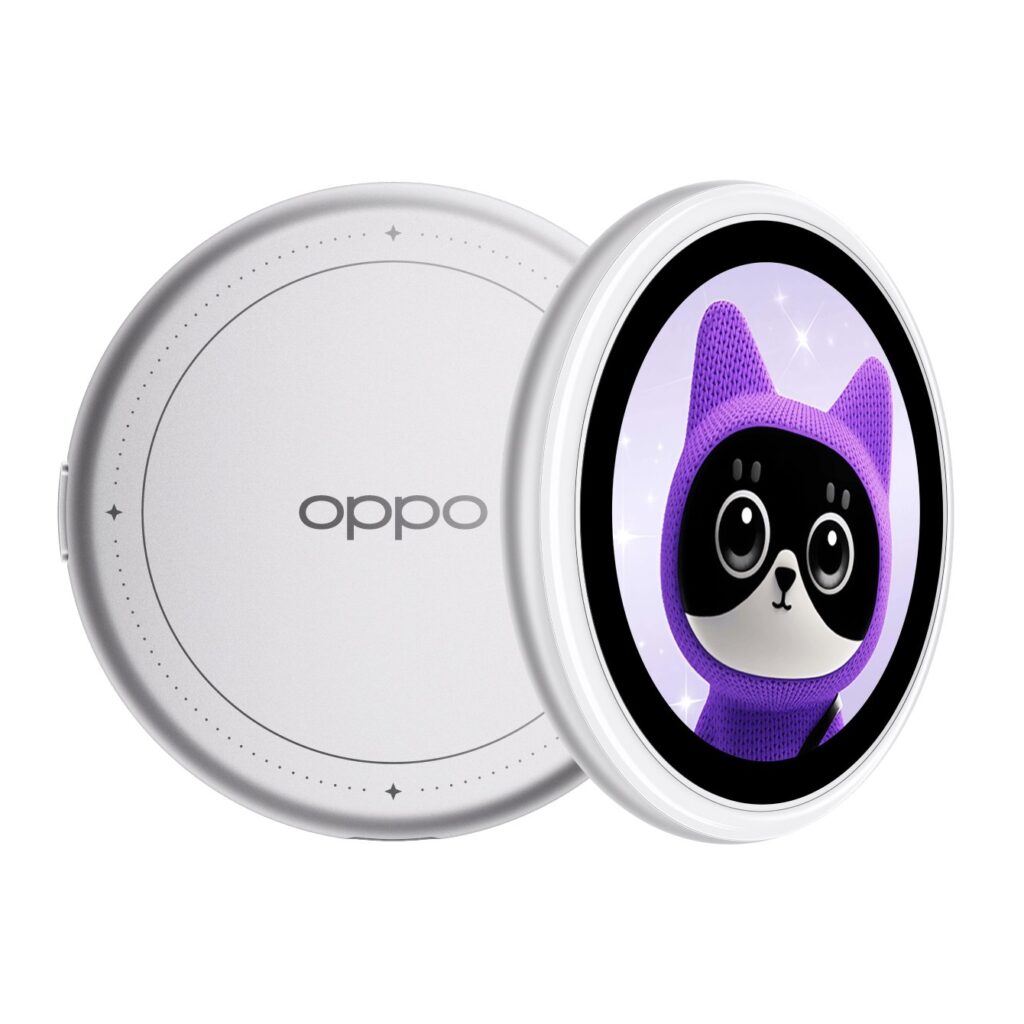
Oppo has announced a new accessory called the Oppo Bubble, alongside the Reno 16 series, in China, and it is designed to make selfies and group photos more convenient. The compact magnetic display attaches to the back of supported Oppo smartphones and brings a small secondary screen experience with customization and remote camera preview features. The company has also confirmed pricing, battery details, and compatibility information.
Oppo Bubble brings a magnetic secondary display experience
Oppo Bubble
The Oppo Bubble is being marketed as a compact “playful selfie screen” and is the first magnetic circular secondary display launched by the company. It has a slim body measuring around 7mm in thickness and weighs about 27.5 grams, making it light enough to carry around or attach to a smartphone without adding much bulk.
On the front, the device gets a circular AMOLED touchscreen that can display static wallpapers, live photos, and videos. Users can personalise the screen with custom images, emojis, and decorative themes, allowing the accessory to double up as a design element on the rear panel of the phone. Oppo has also added carousel support for wallpapers and media playback on the tiny screen.
The accessory supports wireless remote camera preview functionality. This allows users to check framing, preview shots, and adjust angles while taking selfies or group pictures. Oppo says the Bubble can support wireless live preview from up to 10 metres away, which could help during long-distance shots or tripod photography. Users can also trigger photos remotely without needing to hold the smartphone.
Oppo Bubble
Apart from attaching magnetically to the back of a smartphone, the Oppo Bubble can also work as a standalone hanging display accessory when paired with a compatible protective case. Oppo has included a 550mAh battery inside the device, and the pairing process does not require cables. Supported Oppo smartphones can detect and connect to the accessory automatically when brought nearby.
Compatible models currently include the Oppo Reno16 series, Oppo Reno15 series, Oppo Reno14 series, Oppo Find X8 series, Oppo Find X9, Oppo Find X9 Pro, and Oppo Find X9 Ultra, with more devices expected to receive support later. The accessory has been priced at CNY 499 (~$75).
What do you think about Oppo’s new Bubble accessory? Would you use a magnetic mini display like this for selfies or customisation?
For more daily updates, please visit our News Section.
The Oppo Find X9, announced in October 2025, is an excellent all-around flagship smartphone. The AMOLED screen is bright and crisp, and the Dimensity 9500 ensures buttery-smooth performance, even under heavy load. The cameras are also promising, capturing great details across various lighting conditions. Still, that’s not enough to beat the competition.
Several rivals offer better value or outright beat it in one area and a couple of newer premium options are now in play too.
These are the five best alternatives to the Find X9 worth your money right now.
The Vivo X300 (review) is one of the strongest alternatives to the Find X9 on the list, featuring a more capable camera setup. It replaces the Find X9’s 50MP primary sensor with a 200MP sensor, while also offering a higher resolution 50MP selfie camera.
Besides better cameras, the Vivo X300 also offers a brighter AMOLED screen with LTPO support for improved power efficiency. The Oppo Find X9, however, excels in battery capacity.
The biggest advantage of getting an OnePlus 15 over the Find X9 is the faster, more efficient Snapdragon 8 Elite Gen 5 processor. (click here for a detailed chip comparison) So, if you’re into hardcore gaming or editing stuff, this could make a notable difference.
Furthermore, the OnePlus smartphone offers a slightly bigger 6.78-inch display with a higher 165Hz refresh rate and tougher Gorilla Glass Victus 2 protection. The camera specs, though, are pretty much identical. The rear camera setup boasts a 50MP primary shooter, a 50MP periscope telephoto lens with a slightly higher 3.5x optical zoom, and a 50MP ultrawide shooter. The selfie camera has a 32MP resolution, just like the Oppo phone.
Both smartphones offer nearly the same set of connectivity features, but their battery capacities and charging speeds differ. The OnePlus 15 takes the lead with a larger 7,300mAh battery and 120W quicker wired charging.
Realme GT 8 Pro is a strong flagship smartphone that outperforms the Oppo Find X9 in several key aspects. To begin with, it comes with a more powerful processor, the Snapdragon 8 Elite Gen 5. The GT 8 Pro also offers a bigger 6.79-inch screen, featuring a higher 144Hz refresh rate and nearly twice the local peak brightness.
Both smartphones share identical camera specs, except for a higher 200MP resolution on the periscope telephoto lens of the Realme phone. This should result in superior detail in zoom shots. The battery capacities are almost the same, but the Realme phone has an edge in the wired charging speed (120W vs 80W).
The Xiaomi 17 (review) is a compact flagship phone, featuring a 6.3-inch LTPO AMOLED screen and a powerful Snapdragon 8 Elite Gen 5 chipset inside for top-tier performance and efficiency.
The Xiaomi phone boasts a triple rear camera setup, all with 50MP sensors similar to the Oppo Find X9, but excels on the other side with a higher-resolution 50MP selfie camera.
The battery capacity of 6,300 mAh doesn’t match the Find X9, but the Xiaomi 17 excels in wired charging speed. It also offers faster reverse charging.
Finally, we have a non-Chinese smartphone on the list, boasting strong flagship specs in the price segment Oppo Find X9 falls into. The Galaxy S26 offers a 6.3-inch LTPO AMOLED panel with tougher Gorilla Glass Victus 2 protection on both sides.
The chipset you get depends on where you buy the device from. In the US, Canada, China, and Japan, the Galaxy S26 chips ship with a Snapdragon 8 Elite Gen 5 chip, while the rest of the world gets an Exynos 2600 variant. The Snapdragon 8 Elite Gen 5 has an upper hand over the Dimensity 9500 and Exynos 2600, but there’s no major difference between the other two.
While the S26 takes good photos and videos, the Find X9 may have an edge in secondary cameras. This means you’ll get better zoom and ultrawide shots on the Find X9 than on the S26, but the latter produces better, natural shots with its main camera. And, the big gap of battery capacity and charging speed between Galaxy phones and their Chinese rivals still exists.
Connectivity: Wi-Fi 7, Bluetooth 5.4, NFC, USB Type-C 3.2
Also worth a look
Since we first put this list together, two pricier heavyweights have landed worth weighing if your budget stretches: the Vivo X300 Ultra, with its serious periscope camera setup, and the Xiaomi 17 Pro. Both sit a tier above the Find X9, but they’re the phones to cross-shop if you’re chasing the very best.
Oppo has launched the Oppo Pad 6, the latest in its flagship tablet line. But it now costs 700 yuan, or some $103 more than its predecessor, and it’s not like you’re getting a major upgrade for the price.
The Oppo Pad 6 retains the 12.1-inch LCD screen with a 3000 x 2120 resolution and 144Hz refresh rate.
The brand, however, introduced a new soft light screen version that uses nano-etching to reduce glare by 97%, according to the company. It also has a paper-like color mode designed to make long reading sessions easier on the eyes.
The rest of the screen specs, like 900 nits peak brightness and DCI-P3 color gamut, are the same, though.
Design-wise, the Pad 6 measures 5.99mm thick and weighs around 577 grams. Oppo is offering the device in Starlight Blue, Starlight Silver, and Deep Space Gray finishes.
Inside, the Pad 6 gets an iterative upgrade in the form of the MediaTek Dimensity 9500s chipset. This is paired with LPDDR5X RAM and UFS 3.1 storage. Oppo claims the tablet scores more than 3.06 million points on AnTuTu benchmarks and can handle simultaneous 3K video recording and 144fps gaming workloads.
The tablet even shares a 10,420mAh battery with 67W charging with its predecessor. Oppo says it can last up to 56 days on standby and maintain healthy battery capacity for four years.
A lot of software, and even more AI underneath
Like most Android launches in 2026, AI features are everywhere. The Pad 6 includes real-time audio transcription for classroom recordings, AI-generated note summaries, handwriting beautification, and a “circle to search” feature for solving questions by circling them on-screen. Oppo is also adding a journaling mode that lets users drag photos into notes, convert rough sketches into polished illustrations, and even import Live Photos.
The tablet ships with ColorOS 16 and includes several productivity-focused features aimed at students and office users. Oppo’s multi-window system allows multiple resizable apps on-screen at once, while the bundled PC-style WPS office suite supports advanced formatting and spreadsheet editing. The Pad 6 can also connect with phones and computers for clipboard syncing, screen mirroring, and drag-and-drop file transfers.
Oppo is additionally trying to make the Pad 6 more platform-agnostic than previous devices. The tablet supports file sharing with Android devices as well as Apple hardware, including the iPhone, iPad, and Mac. It can also share a phone’s 5G connection automatically without requiring a separate hotspot setup.
Other specifications include Wi-Fi 7 support, six speakers, dual Bluetooth headphone connectivity, and 8-megapixel front and rear cameras. There’s no SIM card support or fingerprint scanner, with facial recognition handling biometric authentication instead.
Pricing and Availability
Besides the processor, the Oppo Pad 6 doesn’t really bring major improvements in other areas. Still, Oppo has increased the starting price from 2,599 yuan (~$383) for the previous generation to 3,299 yuan (~$486). The 12GB / 256GB and 16GB / 512GB variants are priced at 3,899 yuan (~$575) and 4,099 yuan (~$604), respectively.
Meanwhile, the Soft Light Edition with 8GB / 256GB and 12GB / 256GB storage configurations costs 3,599 yuan (~$531) and 3,999 yuan (~$589), respectively.
The sale starts on May 29. The conversions are based on current exchange rates.
For more daily updates, please visit ourNews Section.
HP has updated its mobile workstation lineup with the ZBook 8 G2a, a 14-inch laptop featuring AMD’s latest Ryzen AI processors.
HP ZBook 8 G2a Specifications
The base model starts with an AMD Ryzen AI 5 Pro 435 processor, and you can configure the machine up to a Ryzen AI 9 HX Pro 470, which includes Radeon 890M graphics.
For memory and storage, the laptop supports up to 64GB of DDR5-5600 RAM and a 2TB PCIe Gen5 NVMe SSD, providing enough capacity for standard workstation tasks and managing larger datasets.
HP offers a wide variety of 14-inch display options for this model. The base screen is a 1920×1200 (WUXGA) 60Hz panel with 300 nits of brightness.
Upgrade options include a 2560×1600 120Hz variable refresh rate display at 500 nits, as well as 800-nit panels equipped with HP’s Sure View privacy screen for working in public areas. Touchscreen variants are also available depending on the specific configuration you choose.
Physically, the ZBook 8 G2a weighs 3.21 pounds and is 0.75 inches thick. It includes a 68 Whr battery that supports fast charging, which HP says can reach a 50% charge in about 30 minutes.
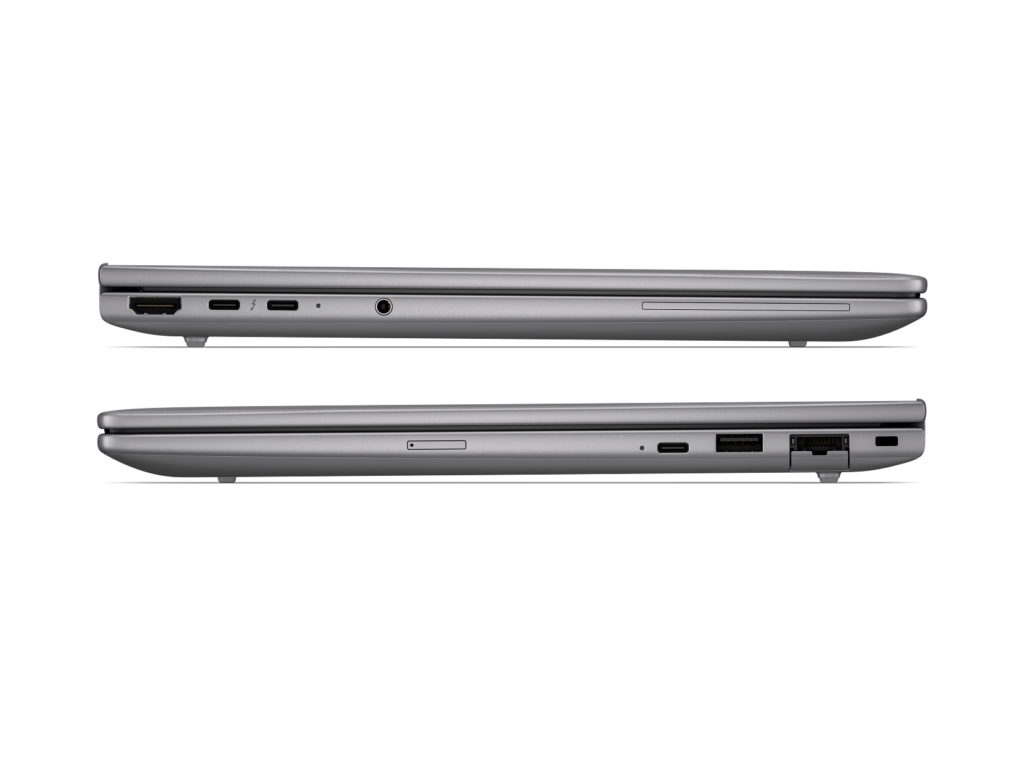
The port selection is practical for an office environment, featuring two Thunderbolt 4 ports, one USB-C 10Gbps port, one USB-A, an HDMI 2.1 output, an RJ-45 ethernet jack, and a headphone combo jack.
The laptop also supports Wi-Fi 7, Bluetooth 6.0, and optional 5G connectivity, alongside a spill-resistant backlit keyboard and an IR camera.
Pricing and Availability
In the US, the base configuration is priced at $2,796, while a fully configured model costs over $7,800. Availability and configuration options will vary by region; for example, the UK currently only has the entry-level model available without customization.
For more daily updates, please visit our News Section.
We use cookies on our website to give you the most relevant experience by remembering your preferences and repeat visits. By clicking “Accept”, you consent to the use of ALL the cookies.
This website uses cookies to improve your experience while you navigate through the website. Out of these, the cookies that are categorized as necessary are stored on your browser as they are essential for the working of basic functionalities of the website. We also use third-party cookies that help us analyze and understand how you use this website. These cookies will be stored in your browser only with your consent. You also have the option to opt-out of these cookies. But opting out of some of these cookies may affect your browsing experience.
Necessary cookies are absolutely essential for the website to function properly. This category only includes cookies that ensures basic functionalities and security features of the website. These cookies do not store any personal information.
Any cookies that may not be particularly necessary for the website to function and is used specifically to collect user personal data via analytics, ads, other embedded contents are termed as non-necessary cookies. It is mandatory to procure user consent prior to running these cookies on your website.