Advertisement

Infinix Note 60 Ultra’s Dimensity 8-series chip, 12GB RAM revealed via Geekbench listing spotted

Infinix appears to be preparing the launch of the Note 60 Ultra, the top-end model in the upcoming Note 60 lineup. The device was recently listed on the Carlcare service platform, which revealed its model number X6877, and now the same handset has surfaced on Geekbench. Here’s a look at the details that have emerged through the listing.

Infinix Note 60 Ultra Geekbench listing

As per the Geekbench listing, the device is powered by the Dimensity 8400 Ultimate chipset. As usual, the chipset’s name is not mentioned in the listing, but the technical details available in it are sufficient to state that it features the said chipset. The processor configuration includes one core clocked at 3.25GHz, three cores operating at 3GHz, and four efficiency cores running at 2.10GHz. For graphics, it features the Mali-G720 MC7 GPU.

In terms of benchmark performance, the phone achieved 1609 points in the single-core test and 6762 points in the multi-core test on Geekbench 6.5. The listing also confirms that the device includes 12GB of RAM and runs Android 16 out of the box.

Infinix Note 60 Ultra specifications (rumored)

Rumors surrounding the Infinix Note 60 Ultra suggest it may feature a 144Hz AMOLED display and a 200-megapixel primary camera, along with Infinix XOS 16 software. The handset is also expected to include a 7,000mAh battery supporting 100W wired charging and 30W wireless charging.

Additionally, reports hint that the Note 60 Ultra will support two-way satellite communication. Infinix’s collaboration with Italian design house Pininfarina indicates that the device may adopt a more premium design approach compared to previous Note series models. The Carlcare service platform listing has also revealed that the Note 60 Ultra could arrive in two storage configurations, namely 12GB+256GB and 12GB+512GB.

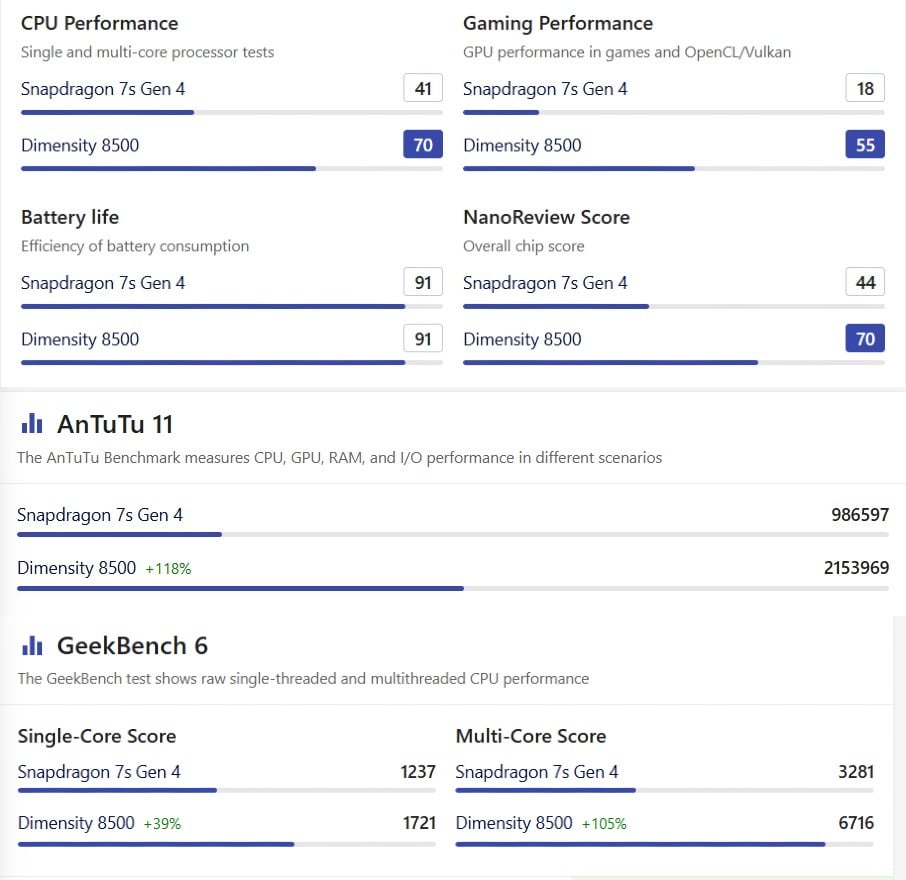
The Note 60 series also include the Note 60 and Note 60 Pro. Previously seen Geekbench listings have indicated that these devices will be powered by the Dimensity 7400 Ultimate and Snapdragon 7s Gen 4 chipsets respectively, positioning the Ultra variant as the most powerful option in the lineup.

For more daily updates, please visit our News Section.

Stay ahead in tech! Join our Telegram community and sign up for our daily newsletter of top stories.

(via)

Xiaomi Tag Tracker Appears on EU Retailers, Supports Apple Find My and Google Find Hub

Xiaomi is preparing to launch its first Bluetooth item tracker, the Xiaomi Tag, with retail listings already appearing across European markets before official confirmation.

As reported by WinFuture, the Xiaomi Tag has surfaced on Xiaomi’s UK and France online stores and through third-party retailers. French pricing stands at €17.99 per unit, though some sellers offer it below €15. A four-pack costs €59.99, reducing the per-unit price to approximately €15.

The tracker measures 7.2mm thick and operates on a replaceable CR2032 battery rated for one year of use. Its plastic housing will launch in white only, according to current listings.

The Xiaomi Tag supports Bluetooth 5.4 and NFC connectivity, integrating with both Apple’s Find My network and Google’s Find Hub. This dual-platform compatibility allows iOS and Android users to track tagged items through their respective ecosystems.

Current specifications notably exclude UltraWideBand technology, despite earlier evidence suggesting UWB support in HyperOS software code. This omission has prompted speculation about a potential premium variant featuring UWB for enhanced precision tracking.

Xiaomi has not announced a launch date, though the Tag could arrive alongside new hardware ahead of MWC 2026 in early March.

The tracker’s compatibility with established networks from Apple and Google removes barriers to adoption, allowing users to leverage existing infrastructure rather than relying on a proprietary Xiaomi network.

Don’t miss a thing! Join our Telegram community for instant updates and grab our free daily newsletter for the best tech stories!

For more daily updates, please visit our News Section.

(via: WinFuture)

Asus launches ROG Kithara open-back gaming headset with 100mm planar drivers and HIFIMAN tuning

Asus is stepping a little outside its usual gaming headset formula with the new ROG Kithara. Instead of focusing on RGB lighting or wireless features, this one leans heavily into sound quality, and it does so with help from HIFIMAN, a brand better known in audiophile circles than esports arenas.

The Kithara is an open-back headset built around large 100mm planar magnetic drivers. That alone makes it unusual in the gaming space, where dynamic drivers are far more common. At $299, the Kithara is clearly aimed at enthusiasts rather than casual players.

The headset uses a fully open-back design, which helps create a wider, more natural soundstage. That can be useful for competitive games where spatial awareness matters, but it also means there’s no isolation.

Asus claims a frequency response of 8Hz to 55kHz, which is wider than human hearing, but the real takeaway is likely the tuning. It’s expected to offer a fairly balanced sound signature with good separation between bass, mids, and treble. In theory, that should make footsteps and directional cues easier to pick out without muddying everything with exaggerated low-end.

Unlike many gaming headsets, the Kithara includes a 4.4mm balanced connector, alongside standard 3.5mm and 6.3mm options, plus a USB-C adapter. The detachable boom mic uses MEMS technology and covers a typical 20Hz to 20kHz range.

The frame uses metal in key areas, including hinges and headband supports, and extra earpads are included in the box. At around 420 grams, it’s not lightweight. That’s often the trade-off with planar designs. Whether it feels comfortable over longer sessions will depend on head shape and tolerance for weight.

Reportedly, there’s no wireless mode, no active noise cancellation, and no flashy lighting. That may disappoint some ROG fans, but it seems intentional. Asus seems to be prioritizing sound over features this time.

A Different Direction for ROG

The ROG Kithara feels less like a traditional gaming headset and more like a crossover product. It’s positioned somewhere between an audiophile headphone and a competitive gaming too

Don’t miss a thing! Join our Telegram community for instant updates and grab our free daily newsletter for the best tech stories!

For more daily updates, please visit our News Section.

(Source)

ColorOS 16 February 2026 Update: Popout Feature, Reflection Removal, and PowerPoint Translation

OPPO has added a new set of features and improvements to ColorOS 16 for February 2026. This is not a major software upgrade, but a feature update focused on the Photos app and productivity tools. The goal is to improve editing, document handling, and file security.

The Photos app gets several upgrades. The new Popout feature creates a layered effect by separating the main subject from the background. This makes people or objects stand out more clearly in a photo. It works directly inside the gallery, so users do not need any third party apps.

The AI Eraser has also been improved. It now removes unwanted objects with fewer visible marks left behind. Edited areas look cleaner and more natural. The Remove Reflections tool has been upgraded as well. It reduces glare in document photos and portraits, including reflections on glasses, for clearer results.

OPPO has also introduced a limited time New Year Watermark themed around the Year of the Horse. Users can find it by going to Photos App > Select Photo > Edit > Watermark. The feature is available from February 6, 2026 to March 3, 2026. It requires OS version 13.1 and above, and Photos App version 15.75.0 and above. The feature is available in Indonesia, Malaysia, and the Philippines. The Photos app can be updated through the App Market if needed.

On the productivity side, ColorOS 16 now supports PowerPoint translation. Users can translate entire presentations into multiple languages while keeping the original formatting. The feature allows users to view the original and translated text side by side and export the translated file.

The Private Safe feature has also been improved. Adding images and files is now faster, making it easier to store sensitive content securely.

These February 2026 features will roll out in phases from February 6 to February 28. Supported devices include OPPO Find X9 Pro, OPPO Find X9, OPPO Find X8 Pro, OPPO Find X8, OPPO Find N5, OPPO Reno14 Pro 5G, and OPPO Reno14 5G. Rollout timing may vary by device and region.

For more daily updates, please visit our News Section.

Stay ahead in tech! Join our Telegram community and sign up for our daily newsletter of top stories!

(Source)

Vivo X300 vs OPPO Find X9: Same Price, But One Clearly Wins

Choosing between two flagship phones at the same price is never simple, especially when both promise top-tier performance, premium design, and next-gen cameras. The Vivo X300 and OPPO Find X9 sit in the same price bracket, target the same premium buyers, and even share the same chipset. But their priorities are different. One leans heavily into ultra-high-resolution photography and display brightness, while the other focuses on battery endurance and cinematic video features.

For buyers spending around $650 (₹76,000), this comparison matters. The real question isn’t which phone is powerful; both are, but which one better fits daily habits, content style, and long-term usage needs.

Major Features:

FeatureVivo X300OPPO Find X9Winner
BuildGlass front & back, aluminum alloy frameGlass front (Gorilla Glass 7i), glass back, aluminum frameOPPO – Gorilla Glass 7i + higher Mohs level
Water ResistanceIP68/IP69IP68/IP69Tie – Same rating
Display TypeLTPO AMOLED, 120HzAMOLED, 120HzVivo – LTPO advantage
Peak Brightness4500 nits3600 nitsVivo – Higher peak brightness
PWM Dimming2160Hz3840HzOPPO – Higher PWM frequency
HDR SupportHDR10+, HDR VividDolby Vision, HDR10+, HDR VividOPPO – Adds Dolby Vision
ChipsetDimensity 9500 (3nm)Dimensity 9500 (3nm)Tie – Same chipset
Storage TypeUFS 4.1UFS 4.1Tie – Same
Main Camera200MP (1/1.4″), OIS50MP (1/1.4″), OISVivo – Higher resolution
Telephoto50MP 3x periscope50MP 3x periscopeTie – Similar specs
Ultrawide50MP50MPTie – Same resolution
Video Features4K@120fps HDR4K@120fps, 10-bit, Dolby Vision, LOGOPPO – More advanced video formats
Selfie Camera50MP AF32MPVivo – Higher resolution + AF
Bluetooth5.46.0OPPO – Newer version
Battery (Global)6040mAh7025mAhOPPO – Larger capacity
Wired Charging90W80WVivo – Faster wired
Wireless Charging40W50WOPPO – Faster wireless
Reverse WirelessNo (reverse wired only)10W reverse wirelessOPPO – Reverse wireless support
Price~$650 / ₹76,000~$650 / ₹76,000Tie – Same price

Please Note: When you buy something using the links in our articles, we may earn a small commission at no cost to you.

1. Design and Display

Build and Feel

The Vivo X300 uses glass on both sides with an aluminum alloy frame and IP68/IP69 protection. It feels sleek and compact, making daily handling easier. The OPPO Find X9 also offers glass and aluminum construction, but adds Gorilla Glass 7i for improved scratch resistance. Both look premium, though Vivo feels more refined while OPPO gives off a sturdier impression.

Display Quality

Vivo offers a 6.31-inch LTPO AMOLED panel with a 120Hz refresh rate and an impressive 4500-nit peak brightness. OPPO features a larger 6.59-inch AMOLED display with Dolby Vision, 3840Hz PWM dimming, and 3600-nit peak brightness. Vivo leads in brightness, but OPPO’s Dolby Vision and higher PWM dimming enhance media comfort.

Verdict

Vivo wins for brightness and compact feel, while OPPO offers better durability and cinematic display support.

2. Specifications 

Performance

Both phones run Android 16 on the MediaTek Dimensity 9500 (3nm) with up to 1TB UFS 4.1 storage. Performance, gaming, and multitasking should feel equally smooth. With five major Android updates promised, longevity is strong on both sides. Real-world speed differences will be minimal.

Battery and Charging

OPPO clearly leads in battery capacity with 7025mAh and 80W wired plus 50W wireless charging. Vivo offers 6040mAh (global) with faster 90W wired and 40W wireless charging. Vivo charges slightly faster, but OPPO should last longer on a single charge. Endurance matters more for heavy users.

Verdict

Performance is tied, but OPPO takes this section due to its significantly larger battery.

3. Camera

Main and Secondary Lenses

Vivo features a 200MP main camera with Zeiss optics, supported by 50MP telephoto and ultrawide lenses. It focuses on extreme detail and sharpness. OPPO uses three 50MP sensors with Hasselblad color tuning and supports 10-bit LOG and Dolby Vision video. Vivo feels sharper for photos, while OPPO is stronger for professional-style video.

Selfie Camera

Vivo includes a 50MP autofocus selfie camera with 4K recording. OPPO offers a 32MP front camera with 4K support but no autofocus. Vivo delivers better clarity and focus for selfies.

Verdict

Vivo is better for high-resolution photography and selfies. OPPO is better for advanced video creators.

4. Pricing

Both phones are priced around $650 (₹76,000). At this level, buyers expect flagship performance and premium features. Vivo justifies the price with a 200MP camera and ultra-bright display. OPPO counters with a massive battery and Dolby Vision support. The value depends on whether camera detail or battery life is the priority.

Verdict

Both offer strong value, but OPPO offers slightly more hardware advantages at the same price.

Disclaimer:
Prices are approximate and may vary based on country, region, and applicable taxes.

5. Conclusion

Vivo stands out with its 200MP camera, Zeiss optics, and brighter LTPO display. OPPO distinguishes itself with a 7025mAh battery, Dolby Vision display and video, and Hasselblad color calibration. Vivo feels photography-focused, while OPPO feels built for endurance and multimedia.

Final Verdict

Overall, the OPPO Find X9 is the better choice. It matches Vivo in performance, delivers longer battery life, supports advanced video features, and maintains flagship display quality at the same price. Vivo remains an excellent option for photography lovers, but OPPO offers a more balanced package for most users.


Read More:

One UI 8.5 will be the last feature update for these Galaxy devices

One UI 8.5 last update device list

Samsung will debut One UI 8.5 (based on Android 16 QPR2) later this month with the Galaxy S26 series. Soon, the new software will begin rolling out to older Galaxy devices. Unfortunately, this is going to be the last feature update for many Samsung devices, which includes devices across every Galaxy lineup.

In this post, we’ve curated a list of Galaxy devices that will receive One UI 8.5 as their last feature-packed update. This also means they won’t receive One UI 9 and future One UI updates. However, that doesn’t mean the end of the road for them as they will continue to receive security patches for a while, but without the latest features or upgrades.

No more feature updates beyond One UI 8.5 for these Samsung devices

  • Galaxy S22
  • Galaxy S22+
  • Galaxy S22 Ultra
  • Galaxy S21 FE
  • Galaxy Z Fold 4
  • Galaxy Z Flip 4
  • Galaxy A73 5G
  • Galaxy A53
  • Galaxy A33
  • Galaxy M05
  • Galaxy F14
  • Galaxy F05
  • Galaxy XCover 6 Pro
  • Galaxy Tab S8
  • Galaxy Tab S8+
  • Galaxy Tab S8 Ultra
  • Galaxy Tab A9
  • Galaxy Tab A9+

To clarify, Samsung hasn’t yet announced which Galaxy devices will receive the One UI 8.5 update. However, it’s almost certain to reach every Galaxy device that received the One UI 8.0 update or launched with it. Based on that, we’ve prepared the above list.

If your Samsung device is on the list, it will soon become ineligible for future One UI releases, including One UI 9, which is expected to be released in the second half of 2026. To ensure you do not miss out on the latest features and upgrades, you will need to upgrade to a newer model. Don’t forget to check out the list of Samsung devices that promise seven major OS updates, six major OS updates, or four major OS updates to find a reliable option that will stay relevant for years to come.

Also read: Samsung One UI 8.5: Here’s everything you need to know

We’ll keep updating you with the latest developments around One UI in our Samsung section. You can visit the section regularly for the latest updates, or join our Telegram channel to get instant notifications about the latest happenings in tech.

Lenovo announces Xiaoxin Pro GT 13, its largest 3.5K tablet display yet

Lenovo has officially announced the Xiaoxin Pro GT 13 as the biggest screen tablet in the Xiaoxin series.

As the name suggests, the headline feature is the 13-inch panel with a 3504 × 2190 resolution and a 16:10 aspect ratio. That works out to a 3.5K resolution and a pixel density of 319 PPI, making it also the highest-resolution screen on a Xiaoxin tablet. The screen refreshes at 144Hz. 

Moreover, Lenovo says the tablet has a typical brightness of 600 nits and a peak brightness of up to 800 nits. It also offers 12-bit color depth, covers 99 percent of the DCI-P3 color gamut, and supports Dolby Vision for HDR content.

Lenovo says the panel carries its PureSight Pro certification and has TÜV Rheinland certifications for low blue light and flicker-free performance. It has also passed testing by the National Eye Engineering Center, which the company highlights as a sign of eye comfort and display quality.

Lenovo Xiaoxin Pro GT 13 has an understated design

Design-wise, the Xiaoxin Pro GT 13 looks familiar. Teaser images show a back panel that closely resembles the Xiaoxin Pro GT tablet Lenovo released in 2025. One noticeable change is the camera setup. Instead of a dual-camera system, this model uses a single rear camera. Lenovo has confirmed it’s a 13-megapixel sensor.

The tablet will be available in two color options: pink and silver. Both versions feature a matte metallic finish.

What Lenovo hasn’t confirmed yet is the processor. Last year’s model came with the Snapdragon 8 Gen 3, so it’s reasonable to expect something in that range again. There’s speculation that it could feature a newer Snapdragon 8 Elite or even the Snapdragon 8 Gen 5, but for now, that remains unannounced.

Lenovo is expected to share more details in the coming days. And as always, we will keep you posted on that. 

For more daily updates, please visit our News Section.

Stay ahead in tech! Join our Telegram community and sign up for our daily newsletter of top stories.

Xiaomi Pad 8, Pad 8 Pro variants, color options leaked before global launch

Xiaomi is rumored to soon hold a global launch event to announce the Xiaomi 17 and 17 Ultra. A new leak, courtesy of tipster Sudhanshu Ambhore, reveals that the Pad 8 lineup will also debut alongside the 17 series. While the specifications of the Pad 8 and Pad 8 Pro are already known since they have been available in the Chinese market for the past few months, the tipster has shared key details about the variants and colour options ahead of their global launch.

Xiaomi Pad 8, Pad 8 Pro configurations, color options

Xiaomi Pad 8 series teaser-
Xiaomi Pad 8 series teaser

The leak reveals that the Xiaomi Pad 8 will be available in 8GB+128GB and 8GB+256GB memory options, whereas the Pad 8 Pro will arrive in variants such as 8GB+256GB and 12GB+512GB. Both devices will be offered in three shades, including blue, grey, and green.

Xiaomi Pad 8, Pad 8 Pro specifications

The Xiaomi Pad 8 and Pad 8 Pro are expected to feature an 11.2-inch LCD panel that supports a 3.2K resolution, a 3:2 aspect ratio, a 144Hz refresh rate, and 800 nits of peak brightness. The Pad 8 has the Snapdragon 8s Gen 4 chip and supports 45W charging, a 13-megapixel rear camera, and an 8-megapixel front camera.

On the other hand, the Snapdragon 8 Elite-powered Pad 8 Pro offers 67W charging, a 50-megapixel rear camera, and a 32-megapixel front camera. Both devices share other common features, such as a 9,200mAh battery, HyperOS 3-based Android 16, Xiaomi Focus Touch Pen Pro support, PC-grade WPS and CAD support, and a quad-speaker setup.

These devices also offer connectivity features such as Wi-Fi 7, USB-C 3.2 Gen 1, NFC, and an IR blaster. It appears that the devices will lack support for 5G/4G connectivity.

For more daily updates, please visit our News Section.

Stay ahead in tech! Join our Telegram community and sign up for our daily newsletter of top stories.

Vivo V70, V70 Elite price, pre-orders details leaked before February 19 launch

Vivo is scheduled to launch the Vivo V70 series on Feb. 19 in India, and the lineup is expected to include two models, the V70 and the V70 Elite. One of the major highlights is that the V70 Elite is tipped to become the company’s first V-series smartphone powered by a Snapdragon 8-series chipset. Ahead of the launch, a new leak has surfaced online revealing possible pricing, storage variants, and pre-order details for the upcoming lineup.

Vivo V70 series price leaked (rumored)

Vivo V70 Elite
Vivo V70 Elite

According to tipster Abhishek Yadav, the Vivo V70 could arrive in two configurations, including 8GB+256GB priced at Rs 45,999 (~$510) and 12GB+256GB at Rs 49,999 (~$555). The device is expected to be offered in Passion Red and Lemon Yellow colour options.

The Vivo V70 Elite, on the other hand, is tipped to start at Rs 51,999 (~$575) for the 8GB+256GB variant, while the 12GB+256GB model may cost Rs 56,999 (~$630) and the 12GB+512GB version could be priced at Rs 61,999 (~$685). The leak also claims that pre-bookings may begin from Feb. 12 and continue until Feb. 24, with sales likely scheduled between Feb. 25 and Feb. 28. A promotional Superweek period is also expected from February 25 to March 3.

For reference, the previous-generation Vivo V60 5G debuted at Rs 38,999 (~$430). The V60 series lineup did not have an Elite variant.

Vivo V70, V70 Elite specifications

The Vivo V70 Elite is said to feature a Snapdragon 8-series chipset, likely the Snapdragon 8s Gen 3, paired with LPDDR5x RAM and UFS 4.1 storage. It may include a 6.59-inch OLED display with 1.5K resolution, along with a 6,500mAh battery and support for 90W fast charging. Camera details suggest a triple rear setup featuring a 50-megapixel primary sensor with OIS, an ultra-wide lens, and a 50-megapixel periscope telephoto camera offering 3x optical zoom and up to 100x digital zoom. For selfies and video calls, the device is expected to feature a 50-megapixel front camera with autofocus.

The standard Vivo V70 is tipped to run on the Snapdragon 7 Gen 4 chipset and may share several display and camera characteristics with the Elite model. Both devices are expected to feature an aluminium alloy frame, IP68/69 dust and water resistance, and OriginOS 6 based on Android with up to six years of software support.

For more daily updates, please visit our News Section.

Stay ahead in tech! Join our Telegram community and sign up for our daily newsletter of top stories.

OnePlus rolls out OxygenOS 16 update to the last eligible device

OnePlus OxygenOS 16 update rollout

The OxygenOS 16 update is now rolling out to the last eligible OnePlus device, the OnePlus Pad Lite. This entire rollout has been smooth, which began in early November with high-end devices like the OnePlus Open, OnePlus 13, and gradually expanded to mid-range and cheaper Nord CE models.

As shared by OnePlus in a post on the official community, the OxygenOS 16 update for the OnePlus Pad Lite is tagged with the firmware versions OPD2481_16.0.3.500(EX01) and OPD2480_16.0.3.500(EX01). It’s currently available in India as the initial rollout, but it will soon expand to the remaining regions.

If you’re rocking a OnePlus Pad Lite, navigate to Settings > System & Updates > Software update to manually check for the available update. If it doesn’t show up, you can join the OnePlus Release Candidate Program to reduce the wait time. For this, go to Settings > System & Updates > Software update > Beta Program and tap the “update now” button to download the update.

With the OnePlus Pad Lite now joining the OxygenOS 16 party, there’s no more OnePlus device left to receive this major upgrade. However, note that the rollout progresses in batches, so it may take some time to reach all users across all regions.

To recap, here’s a list of OnePlus devices that have received the OxygenOS 16 update:

  • OnePlus Open
  • OnePlus 13, 13R, 13S
  • OnePlus 12, 12R
  • OnePlus 11, 11R
  • OnePlus 10 Pro
  • OnePlus Nord 5, Nord 4, Nord 3
  • OnePlus Nord CE 5, Nord CE 4, Nord CE 4 Lite 5G
  • OnePlus Pad 3, Pad 2, Pad, Pad Lite

Soon, OxygenOS 16 and Android 16 will become old topics as Google has already been working on its successor, Android 17. In fact, the first beta build could drop as soon as this month. You can read more about Android 17 here.

You can regularly visit the OnePlus section on Gizmochina to know which devices are getting the update. Alternatively, you can join us on Telegram to stay notified about the latest software releases, smartphone launches, AI news, and tech breakthroughs.

Truke Bass S2 sleep-focused earphones launched with Rs 499 (~$5) offer price

Truke has launched the Bass S2 sleeping earphones in India, introducing a sleep-focused audio product aimed at comfort and relaxation. Priced aggressively, the earphones highlight a compact in-ear design, soft silicone construction, balanced sound output, and an affordable entry into the sleep audio category. Here is a closer look at the specifications, features, and pricing details.

Truke Bass S2 specifications and features

Truke Bass S2
Truke Bass S2

The Truke Bass S2 is designed specifically for overnight use, focusing on comfort during extended listening sessions. It features an ultra-compact in-ear form factor with a smooth profile intended to reduce pressure while lying down, especially for side sleepers. The earphones are built using skin-friendly silicone materials that aim to provide a secure yet gentle fit during sleep. The lightweight construction and flexible cable design help maintain comfort during movement throughout the night.

Truke Bass S2
Truke Bass S2

In terms of audio performance, the Bass S2 comes equipped with a 13mm driver engineered to deliver clear and balanced sound suitable for calming music, white noise, podcasts, and guided meditation or sleep content. The earphones feature a high-flex TPE cable designed for durability during nightly use and different sleeping positions. The product is primarily focused on passive listening experiences rather than active smart features, making it simple to operate for users seeking distraction-free audio during rest. Its compact design also makes it suitable for travel or quiet listening sessions outside the bedroom.

Truke Bass S2 price and availability

The Truke Bass S2 is priced at Rs 799 in India. As part of the introductory offer, customers can purchase it at Rs 499 (~$5) through the official Truke website until 18th February. The earphones will also be available on Amazon and Flipkart starting Feb. 18, 2026 at the same introductory price. The device currently comes in a Black colour option, while a blue variant is expected to arrive later. With

For more daily updates, please visit our News Section.

Stay ahead in tech! Join our Telegram community and sign up for our daily newsletter of top stories.

Xiaomi announces Xiaomi-Robotics-0, its first-generation robot large-scale model

Xiaomi is best known for smartphones, smart home gear, and the occasional electric vehicle update. Now it wants a place in robotics research too.

The company has announced Xiaomi-Robotics-0, an open-source vision-language-action (VLA) model with 4.7 billion parameters. It’s designed to combine visual understanding, language comprehension, and real-time action execution, which Xiaomi says are the core of “physical intelligence.” And according to the company, it’s already setting multiple state-of-the-art records in both simulations and real-world tests.

At a high level, robotics models like this solve a closed loop: perception, decision, and execution. A robot needs to see the world, understand what it’s being asked to do, decide on a plan, and then carry it out smoothly. Xiaomi says Robotics-0 was built specifically to balance broad understanding with fine motor control.

1. The Xiaomi-Robotics-0 model is built on two main components

Xiaomi-Robotics-0-Autonomous-Robot-Demo

To do that, the model uses what’s known as a Mixture-of-Transformers (MoT) architecture. It splits responsibilities between two main components.

The first is a Visual Language Model (VLM), which acts as the “brain.” It’s trained to interpret human instructions — including vague ones like “Please fold the towel” — and understand spatial relationships from high-resolution visual input. This part handles object detection, visual question answering, and logical reasoning.

The second component is what Xiaomi calls the Action Expert. This is built around a multi-layer Diffusion Transformer (DiT). Instead of producing a single action at a time, it generates something called an “Action Chunk,” — understand it as a sequence of movements — using flow-matching techniques to keep motion accurate and smooth.

One common issue with VLA models is that when they learn to perform physical actions, they tend to lose some of their original understanding capabilities. Xiaomi says it avoided that by co-training the model on both multimodal data and action data. The result, at least in theory, is a system that can still reason about the world while learning how to move within it.

2. How is it trained?

The training process happens in stages. First, an “Action Proposal” mechanism forces the VLM to predict possible action distributions while interpreting images. This aligns its internal representation of what it sees with how actions are performed. After that, the VLM is frozen, and the DiT is trained separately to generate accurate action sequences from noise, relying on key-value features rather than discrete language tokens.

Xiaomi also tackled another practical problem called inference latency. It is when delays between model predictions and physical movement can create awkward pauses or unstable behavior. 

Xiaomi says it implemented an asynchronous inference, decoupling model computation from robot operation, so movements remain continuous even if the model takes extra time to think.

To improve stability, Xiaomi is using a “Clean Action Prefix” technique, which feeds the previously predicted action back into the model to ensure smooth, jitter-free motion over time. 

Meanwhile, a Λ-shaped attention mask biases the model toward current visual input instead of relying too heavily on past states. The goal is to make the robot more responsive to sudden environmental changes.

3. Xiaomi-Robotics-0 Benchmark

In benchmark testing, Xiaomi-Robotics-0 reportedly achieved state-of-the-art results in LIBERO, CALVIN, and SimplerEnv simulations, outperforming around 30 other models. 

More interestingly, Xiaomi deployed it on a dual-arm robot platform in real-world experiments. In long-horizon tasks like folding towels and disassembling building blocks, Xiaomi says the robot demonstrated steady hand-eye coordination and handled both rigid and flexible objects without obvious breakdowns.

Unlike earlier VLA systems that often sacrificed multimodal reasoning once action training began, the Robotics-0 model retains strong visual and language capabilities, especially in tasks that blend perception with physical interaction.

For more daily updates, please visit our News Section.

Stay ahead in tech! Join our Telegram community and sign up for our daily newsletter of top stories.

(Source)

Xiaomi 18 tipped to feature larger display, 200MP periscope telephoto camera

Xiaomi is expected to unveil the Xiaomi 18 series in September in China. Initially, the lineup may include the Xiaomi 18, 18 Pro, and 18 Pro Max, followed by the Xiaomi 18 Ultra’s launch by the end of the year. Today, tipster Digital Chat Station shared a Weibo post revealing key details about the Xiaomi 18.

Xiaomi 18 key details tipped

Xiaomi 18 series leak by DCS

To recall, the Xiaomi 17 and 17 Pro are compact flagship phones equipped with a 6.3-inch display. DCS’s latest leak suggests that the Xiaomi 18’s display size may slightly increase to 6.4 inches while still retaining a compact form factor. It is likely that the Xiaomi 18 Pro may also feature a 6.4-inch display. The inclusion of a larger screen could allow Xiaomi to incorporate more advanced components inside.

Past reports have claimed that the Xiaomi 18 will finally receive a periscope telephoto camera, which would be a major upgrade since its predecessor features a standard telephoto camera. The new leak reveals that not only the Xiaomi 18, but also other models in the series, such as the 18 Pro, 18 Pro Max, and 18 Ultra, may all feature a 200-megapixel periscope telephoto camera.

The tipster has previously claimed that the Xiaomi 18 Pro and 18 Pro Max will feature dual 200-megapixel cameras, possibly for the primary and periscope telephoto sensors. Speaking of the Pro models, these devices are expected to retain a rear-facing secondary display, but it may be more versatile than before.

Moving to the chipset department, early reports suggest that the Xiaomi 18, 18 Pro, and 18 Pro Max may feature the Snapdragon 8 Elite Gen 6. Xiaomi may reserve the more advanced and costlier Snapdragon 8 Elite Gen 6 Pro for the Xiaomi 18 Ultra.

For more daily updates, please visit our News Section.

Stay ahead in tech! Join our Telegram community and sign up for our daily newsletter of top stories.

iQOO 15 Ultra draws solid consumer interest after launch, 15,000 units sold in initial three days

The iQOO 15 Ultra debuted in China earlier this month as a performance-focused flagship designed for gaming enthusiasts and power users. Soon after its launch, early market reports began surfacing, offering insight into how the device is performing commercially during its initial sales phase. A newer update that has emerged has revealed that the 15 Ultra has met with an amazing market response.

Early sales performance and demand trends

iQOO 15 Ultra sales report

According to the above-shown tech blogger, the iQOO 15 Ultra reportedly sold out during its first sale cycle, with approximately 15,000 units shipped within the first three days. The data is sourced from third-party tracking and should be considered indicative rather than official. Despite that, the figures suggest healthy initial demand, particularly considering the premium positioning of the device.

DCS’s iQOO 15 Ultra market response Weibo post, which was released soon after the launch

Earlier, tipster Digital Chat Station indicated that early performance of the latest Ultra model exceeded expectations. JD.com platform data reportedly showed that the Ultra variant achieved around 1.5 times the same-period sales compared to the previous Pro model. Sales momentum continued to grow, reaching roughly 2.3 to 2.4 times the second-day growth of the earlier Pro generation. The tipster also highlighted strong interest in higher-memory versions, with the 24GB+1TB configuration seeing notable demand among early buyers.

iQOO 15 Ultra specifications, price

iQOO 15 Ultra
iQOO 15 Ultra

The iQOO 15 Ultra is positioned as a gaming-centric flagship powered by the Snapdragon 8 Elite Gen 5 chipset, paired with LPDDR5X Ultra Pro RAM and UFS 4.1 storage. It features a 6.85-inch flat Samsung M14 AMOLED display with 2K resolution and a 144Hz refresh rate, along with advanced touch response capabilities aimed at competitive gaming scenarios. Cooling is handled through an Ice Dome thermal system with active airflow components designed to sustain high performance.

The device runs OriginOS 6 based on Android 16 and includes a triple-camera setup consisting of a 50-megapixel main camera, 50-megapixel ultra-wide lens, and 50-megapixel periscope telephoto camera. Powering the handset is a 7400mAh battery supporting 100W wired and 40W wireless charging.

Pricing in China starts at 5,699 Yuan (~$825) for the 16GB+256GB model and goes up to 7,699 Yuan (~$1,115) for the 24GB+1TB variant. While the iQOO 15 Ultra is a very exciting device for performance enthusiasts, it is unlikely to launch outside China, limiting its global availability despite strong early interest.

For more daily updates, please visit our News Section.

Stay ahead in tech! Join our Telegram community and sign up for our daily newsletter of top stories.

Oppo Find X9 Ultra battery size finally emerges in a new leak

In March, Oppo is expected to unveil the company’s ultimate flagship phone — the Find X9 Ultra. So far, reports have revealed many details about its core specifications, but some information has yet to surface. In a recent X post, tipster Yogesh Brar mentioned the X9 Ultra’s display refresh rate and battery size.

Oppo Find X9 Ultra battery size tipped

OPPO-Find-X8-Ultra
Oppo Find X8 Ultra

Previous reports have revealed that the Find X9 Ultra will feature a 6.82-inch flat OLED panel that supports a 2K resolution, similar to the previous generation. However, its screen refresh rate had not appeared in any leaks. Brar claims that the X9 Ultra’s EVT (Engineering Validation Test) unit supports a 144Hz refresh rate. He believes the retail unit will likely support a 120Hz refresh rate.

Another detail that had remained unclear about the Find X9 Ultra is its battery size. Oppo has previously claimed that it won’t launch a flagship phone without a 7,000mAh battery, which suggests that the X9 Ultra would pack a similarly sized battery. The tipster mentioned that the X9 Ultra will house a 7,050mAh battery.

This indicates that the Find X9 Ultra’s battery will be smaller than the Find X9 Pro, which packs a larger 7,500mAh battery. The X9 Ultra’s rumored battery is still larger than the Find X8 Ultra, which houses a 6,100mAh battery. Reports suggest that the X9 Ultra will arrive with support for 80W wired and 50W wireless charging.

As per reports, the Find X9 Ultra will feature a 200MP (main) + 50MP (ultra-wide) + 200MP (3x periscope) + 50MP (periscope) quad-camera setup and a 50MP front camera. Under the hood, it is expected to feature the Snapdragon 8 Elite Gen 5 chip and run on ColorOS 16 based on Android 16.

For more daily updates, please visit our News Section.

Stay ahead in tech! Join our Telegram community and sign up for our daily newsletter of top stories.

Samsung Galaxy S26 Plus’ global version appears on Geekbench, reveals Exynos 2600!

A South Korean edition of the Samsung Galaxy S26 Plus was spotted on the Geekbench benchmarking platform in January. Now, its global edition has also emerged on the same benchmarking platform ahead of the Feb. 25 launch. Here’s a look at the details that have surfaced through the listing.

Samsung Galaxy S26 Plus Geekbench listing

Samsung Galaxy S26 Plus Geekbench listing
Samsung Galaxy S26 Plus (global version) Geekbench listing

The SM-S947B Samsung phone that has appeared on Geekbench is the global version of the Galaxy S26 Plus. This device has been found to be equipped with the Exynos 2600, which is mentioned with its part number s5e9965. Therefore, it appears that the S26 Plus will ship with Samsung’s Exynos chip in most markets.

There’s still a possibility that the S26 Plus may come with the Snapdragon 8 Elite Gen 5 for Galaxy in the US. While its US edition hasn’t been spotted on Geekbench yet, the Galaxy S26’s US edition was spotted with the Snapdragon chip on the same benchmarking platform last month.

The Galaxy S26 Plus Geekbench listing further reveals 12GB of RAM and Android 16, which is expected to be overlaid with the latest One UI 8.5. It scored 2,304 and 9,015 points in the single-core and multi-core tests on Geekbench 6.5, respectively.

As per recent reports, it appears that the Galaxy S26 Ultra will only be available with the Snapdragon 8 Elite Gen 5 for Galaxy in all markets across the globe. The Exynos 2600, which is the world’s first 2nm chip, is expected to be a powerful offering, featuring a 10-core architecture with up to 3.80GHz clock speeds. Only time will tell how the Exynos 2600 performs in real-world usage compared to its Snapdragon counterpart.

For more daily updates, please visit our News Section.

Stay ahead in tech! Join our Telegram community and sign up for our daily newsletter of top stories.

(via)

Upcoming Vivo X300 Max 3C certified, set to launch with Vivo X300 Ultra

Vivo is expected to hold a major launch event in China next month (March). The event will see the arrival of multiple devices, such as the Vivo X300 Ultra, Vivo X300 Max, Vivo Pad 6 Pro, and the company’s first vlogging camera. Among these, the X300 Ultra and Pad 6 Pro have already been approved by China’s 3C certification platform. Now, the Max model has also appeared in the 3C database, meeting a very important prerequisite before launch.

Vivo X300 Max 3C certified

Vivo X300 Max 3C certified

The above-shown 3C listing shows that an upcoming Vivo phone with model number V2548A has been spotted with a 90W charger. As per previous reports, this phone will be called the Vivo X300 Max when it hits the Chinese market. For those unfamiliar, this device was initially dubbed the Vivo X300s by the rumor mill.

Vivo X300 Max specifications (rumored)

According to a fresh Weibo post by tipster Digital Chat Station, the Vivo X300 Max will arrive with a 6.78-inch LTPO OLED panel with a flat design. It will support a 1.5K resolution and possibly a 120Hz refresh rate. For security, it will feature an ultrasonic in-screen fingerprint sensor.

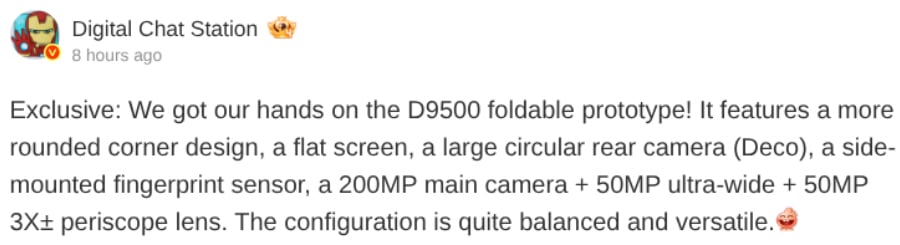
On the back, the Vivo X300 Max will have a large circular camera module equipped with a 200-megapixel main camera, an ultra-wide lens, and a 50-megapixel periscope telephoto lens with macro capabilities, co-developed with Zeiss and featuring a new optical setup.

The X300 Max will ship with Android 16 with a layer of OriginOS 6 on top and will support band N79 in China. Under the hood, it will feature the Dimensity 9500 and a battery of around 7,000mAh capacity with 90W fast charging support. Finally, it will also have an IP68/69-rated dust- and water-resistant chassis.

In China, the device is expected to rival the Xiaomi 17 Max and Oppo Find X9s series phone.

For more daily updates, please visit our News Section.

Stay ahead in tech! Join our Telegram community and sign up for our daily newsletter of top stories.

BenQ MA270S and MA320UG launch with “Nano Gloss” finish, up to 5K resolution, 120Hz, and Thunderbolt 4

BenQ has added two new models to its Mac-focused monitor lineup, and this time the company is clearly aiming higher. The new MA270S and MA320UG lean into glossy panels while keeping the Thunderbolt-heavy connectivity and color tuning that BenQ has been building into its MA series. If you’ve been looking at the Apple Studio Display but hesitating on the price, these might be worth a closer look.

BenQ MA270S

The headline feature here is what BenQ calls Nano Gloss coating. Instead of going fully matte, which can mute contrast, or fully reflective, which can be distracting, the company is trying to strike a middle ground. The idea is to preserve the punch and clarity of a glossy screen while softening glare just enough for everyday use.

Both monitors use IPS panels and cover nearly the full P3 color space: 99% on the 27-inch model and 98% on the 32-inch.

The MA270S is probably the more direct competitor to Apple’s own display. It’s a 27-inch 5K panel (5120 x 2880), which works out to around 218 pixels per inch, essentially the same pixel density as Apple’s 27-inch Retina displays. That means proper macOS scaling, crisp text, and no awkward resolution compromises. For designers, photographers, or anyone who spends all day staring at small UI elements, that matters.

BenQ MA320UG

The MA320UG, on the other hand, takes a slightly different route. It’s larger at 32 inches and sticks to 4K resolution, but adds a 120Hz refresh rate. That won’t turn it into a gaming monitor, but animations and scrolling do feel noticeably smoother at higher refresh rates.

Both models include two Thunderbolt 4 ports, with up to 96W power delivery, plus additional USB-C, USB-A, and HDMI ports. There’s also KVM support for switching between systems. Small touches like brightness and volume control directly through macOS keyboards help the experience feel more native.

Ports on the MA320UG and MA270S

The stands are fully adjustable, with height, tilt, pivot, and swivel support. Nothing flashy there, just practical ergonomics.

Pricing hasn’t been confirmed yet, though the monitors are already listed on BenQ’s European website. If the company keeps them below Apple’s pricing, they could appeal to users who want sharpness or a glossy panel without committing to Apple’s ecosystem pricing.

Don’t miss a thing! Join our Telegram community for instant updates and grab our free daily newsletter for the best tech stories!

For more daily updates, please visit our News Section.

(Sources: 1, 2)

Baseus EnerGeek GT 21 combines charger & power bank; powers 3 devices at once

Baseus has introduced a new portable charger in China that tries to solve a common annoyance: carrying both a wall charger and a power bank.

The new EnerGeek GT 21 combines the two into a single device. It’s a 67W charger with built-in AC prongs, but it also packs a 10,000mAh battery inside. So you can plug it directly into a wall like a normal adapter, or toss it in a bag and use it as a power bank later. It includes a retractable USB-C cable built into the body, which extends up to about 80cm.

In addition to the built-in cable, there’s a USB-C port and a USB-A port. You can charge up to three devices at once, though power is shared when everything is plugged in.

When used as a power bank with all three outputs active, the built-in cable can deliver up to 45W, while the remaining two ports share a combined 15W.

There’s also a small digital display on the front. It shows remaining battery percentage and output details.

On the battery side, the capacity is rated at 10,000mAh, which should provide at least one full charge for most modern smartphones in real-world conditions. It supports common fast-charging standards like PD, PPS, AFC, UFCS, and SCP, so compatibility shouldn’t be an issue either.

The foldable prongs make it easier to carry, and the size appears compact enough to replace both a wall brick and a power bank in a travel bag. For frequent travelers, that kind of consolidation can actually make a difference.

The EnerGeek GT 21 is currently priced at CNY 399 (around $58) in China. There’s no word yet on international availability, but Baseus typically brings its products to other markets, so a wider launch wouldn’t be surprising.

It’s not a revolutionary device, but it does feel practical. If the build quality holds up, it could be a solid option for people who want fewer cables and fewer chargers to think about

Don’t miss a thing! Join our Telegram community for instant updates and grab our free daily newsletter for the best tech stories!

For more daily updates, please visit our News Section.

(Source)

Casio launches premium G-Shock MRGB2100D-2A in the US with titanium build and Bluetooth sync

Casio has launched the MRGB2100D-2A in the United States. The premium G-Shock MR-G timepiece had previously been released in Japan, Europe, and the UK. It is priced at $4,700 and now joins the brand’s US catalog as part of the flagship MRG-B2100 series.

Casio MRGB2100D-2A

Casio MRGB2100D-2A Specifications

The MRGB2100D-2A has a silver-toned case with a blue dial inspired by the Japanese hanada-iro shade. The dial features a horizontal texture, bold metallic hour markers, a framed date window at 3 o’clock, and a small day sub-dial at 7 o’clock, creating a balanced, highly legible layout.

Casio builds the MRGB2100D-2A using premium materials. Its octagonal bezel is made of Cobarion, a Japanese alloy four times harder than titanium with a platinum-like shine. The case and crown use Ti64 titanium, while the bracelet is crafted from DAT55G, another titanium alloy prized for its durability and wear resistance. Each of the 27 bezel components is individually polished for precision, and a titanium carbide coating further improves scratch resistance.

Casio MRGB2100D-2A

The watch features solar-powered timekeeping, Multi-Band 6 radio calibration, and Bluetooth connectivity via Casio’s Mobile Link app, which enables auto time adjustment, watch status updates, and a phone finder. It offers 200-meter water resistance, magnetic resistance, a screw-lock crown, and sapphire crystal glass with an anti-reflective coating.

Casio MRGB2100D-2A

Casio includes additional design elements inspired by traditional Japanese woodworking techniques. The dial’s latticework structure, known as kigumi, allows light to pass through and power the solar panel. The 12 o’clock marker features a precision-assembled two-part structure that reflects Yamagata Casio’s advanced manufacturing technology.

The MRGB2100D-2A weighs 122 grams and measures 49.5 x 44.4 x 13.6 mm. It supports a full-auto calendar, LED Super Illuminator light, and power-saving mode. The watch is available now through the official Casio store and select retailers.

In related news, Casio’s latest G-Shock and Baby-G lineup introduces playful pastel tones with translucent straps, while two new Valentine’s-themed Baby-G models have also launched in the US.

For more daily updates, please visit our News Section.

Stay ahead in tech! Join our Telegram community and sign up for our daily newsletter of top stories! 💡