Anker has launched its Prime Power Bank (26K, 300W) in the United States, a high-capacity portable charger aimed at users who need serious power on the go. First shown at IFA 2025, the accessory is now available at a discounted price ahead of its wider rollout to Europe and other regions in mid-October.
The Prime Power Bank is listed at $229.99, but early buyers can grab it for less. Anker’s online store offers an in-page coupon that brings the price down to $184, while Amazon is running a flat $45.99 discount. Both promotions are valid through October 6.
Inside, the device carries a 26,250mAh (99.8Wh) battery, which is just within the TSA limit for carry-on use. According to Anker, the power bank can charge a MacBook Pro (M4) from 0 to 50% in 27 minutes, an iPhone 17 Pro Max in 22 minutes, and a Galaxy S26 Ultra in 26 minutes.
The power bank supports up to 300W total output across three ports: either USB-C port can deliver up to 140W on its own (PD 3.1), but when both are used simultaneously, they offer a combined 250W. The USB-A port adds up to 22.5W, or 20W when all three ports are active.
Recharging is also a highlight. Anker says this is the first power bank to support 250W two-way charging, allowing it to refill completely in under 30 minutes with a compatible wall adapter. That’s significantly faster than many competing options from brands like Baseus and Belkin.
The design includes a TFT display that shows charging data and battery health in real time, plus Bluetooth connectivity for monitoring through the Anker app. At 6.3 x 1.5 x 2.5 inches and 1.32 pounds, it’s compact enough for travel but not exactly pocket-friendly. It’s also compatible with Anker’s upcoming Prime charging base, which will let users dock it on a desk.
For anyone carrying a laptop, phone, and tablet, the Prime Power Bank looks like a strong all-in-one option—especially while launch deals are live.
Acerpure India has launched its Neo Series Smart TVs in the Indian market. The lineup includes Aspire Neo, Swift Neo UHD LED, and Elevate Neo QLED models, offering screen sizes from 32 to 65 inches. All models run on Google TV 5.0 based on Android 14, allowing users to access apps through a streamlined interface and control the TV with Google Assistant.
The Aspire Neo is available in 32-inch and 43-inch sizes. It features a 60 Hz refresh rate, Dolby Audio with 30W speakers, 1 GB RAM, and 8 GB storage.
The Swift Neo UHD LED comes in 43-inch, 55-inch, and 65-inch options. It includes Dolby Atmos, AI Picture Quality (AIPQ), Filmmaker Mode, Karaoke, and advanced gaming features such as ALLM, VRR, and MEMC. Hardware includes 2 GB RAM and 16 GB storage.
At the top end, the Elevate Neo QLED series is offered in 43-inch, 55-inch, and 65-inch versions. It adds QLED panels with Dolby Vision and Dolby Atmos, MEMC, ALLM, VRR, and gamepad support. The model is equipped with 40W speakers for enhanced audio output.
All three series support dual-band Wi-Fi, Bluetooth, Chromecast, satellite tuner, three HDMI 2.0 ports, and two USB 2.0 ports. Aspire models display 16.7 million colors, while Swift and Elevate push this to 1.07 billion colors, with the QLED Elevate adding improved contrast and color accuracy.
Extra features include AI Content Creator, Filmmaker Mode, and lifestyle functions such as Karaoke. Gaming performance is improved through variable refresh rate and auto low-latency modes.
Pricing & availability
The Acerpure Neo Series Smart TVs start at Rs. 22,499 and are available on Amazon.in and the Acerpure Online Store.
Please Note: When you buy something using the links in our articles, we may earn a small commission at no cost to you.
In other news, Acerpure India has also launched the Nitro Series Gaming TVs in four sizes (43″, 55″, 65″, 75″) exclusively on Flipkart, starting at ₹18,999. The 4K QLED TVs feature 120Hz refresh rate, ALLM, VRR, MEMC, AI picture enhancements, HDR10, Dolby Vision, and Filmmaker Mode. They support plug-and-play gamepads, run on Google TV 5.0 (Android 14) with 2GB RAM/16GB storage, and include dual-band Wi-Fi, Bluetooth, Chromecast, and multiple ports.
For more daily updates, please visit our News Section.
One of Android’s defining traits has always been freedom—the ability to install apps from anywhere, not just Google Play. But that openness may be under threat. Google’s proposed developer registration rules could make sideloading far more difficult and put independent app stores at risk, sparking concerns that Android is moving closer to Apple’s locked-down ecosystem.
Under the new system, every developer would need to register with Google, providing government-issued ID, app identifiers, and signing keys. Crucially, this requirement extends beyond the Play Store. That means Google would effectively hold the keys to all Android app installations, no matter the source.
In a recent blog post, F-Droid warned the rules could “end the F-Droid project and other free/open-source app distribution sources as we know them today.” For more than 15 years, F-Droid has served as a hub for free and open-source apps, offering users a transparent alternative to Google Play. Sideloading APKs—whether from F-Droid, websites, or other app stores—has long been a hallmark of Android’s flexibility. Now, that freedom could be sharply curtailed.
Google says the move is about security, citing a desire to limit malware. But critics argue the reasoning doesn’t hold up. The Play Store itself has repeatedly hosted malicious apps despite Google’s screening, while platforms like F-Droid rely on community oversight and open-source code to ensure safety. Opponents say the real cost will be borne by small developers and privacy-focused projects unwilling—or unable—to hand over personal IDs and comply with corporate-level verification. If Google revokes a developer’s registration, their apps could become orphaned overnight.
The fallout could be global. In Europe, the Digital Markets Act requires tech giants to support alternative app stores, and Google’s rules may face scrutiny as a potential barrier. In the US, regulators are already investigating Google’s dominance in app distribution, adding another layer of antitrust pressure. Some developers estimate that as many as 30% of F-Droid’s 4,000+ apps could disappear if compliance proves too difficult.
While stronger safeguards against malware are welcome, centralizing app control under Google risks undermining the very openness that made Android stand out.
Smartphone makers love to push the “pro photography in your pocket” line, but Oppo is going further than most. Ahead of its October 16 China launch, the company has set up a direct comparison between the upcoming Find X9 Pro and one of the most serious cameras around — the $11,000 Hasselblad X2D II 100C.
In a Weibo post, Oppo’s Find Series manager Zhou Yibao shared side-by-side shots, putting the Find X9 Pro up against the Hasselblad camera. Oppo’s sample — marked on the right — look surprisingly close in color and sharpness, especially with the brand’s image processing at work. The Hasselblad still has the upper hand in dynamic range and natural depth, thanks to its giant 3.76µm pixels compared to the phone’s tiny 0.5µm ones.
The star of Oppo’s camera system is a 200MP ISOCELL HP5 sensor used for the telephoto lens at 70mm. Unlike older high-megapixel sensors that binned down to 12MP, this one repirtedly captures at the full 200MP (or 50MP) in good light.
According to leaks, the full setup includes a 50MP Sony LYT-828 main camera with OIS, a 50MP ultrawide, and the 200MP periscope offering 3.5x optical zoom (and up to 120x hybrid). Hasselblad’s signature touches, like XPAN mode and a new triple-exposure trick, are also part of the package. There’s even an optional imaging kit with a teleconverter that extends the reach from 70mm to 220mm.
Specs elsewhere are just as ambitious. The Find X9 Pro is said to run on MediaTek’s new Dimensity 9500, backed by a huge 7,500mAh battery with 80W wired and 50W wireless charging. The 6.78-inch LTPO OLED screen offers a 1.5K resolution at 120Hz, while the design stays relatively slim at 8.25mm thick and 224g.
At around $1,000, the Find X9 Pro obviously isn’t replacing Hasselblad gear for professionals. But for travelers or creators who want high-quality shots without hauling a bulky camera, Oppo’s latest flagship is shaping up as one of the boldest camera phones yet.
Portronics has launched its latest portable projector, the Pico 14. This is a tiny new rechargeable DLP unit designed to project a massive screen from a small form factor. The Pico 14 was built for on-the-go use, so here’s why you should look out for this one.
Meet the Portronics Pico 14
One of the biggest highlights of this projector is its size. The Pico 14 measures just 73×73×60mm in dimensions and weighs around 250 grams. So it is just slightly heavier than some smartphones like the iPhone 17 Pro Max. IT has a rounded squarish body, which also supports tripods. Portronics’ new mini projector can output up to 100-inch screens at 720p resolution with a brightness of 1600 lumens.
Portronics Pico 14
The brand promises 30,000 hours of lamp life. The Pico 14 supports 4K input and can be used without a wired power connection thanks to its 4,800mAh battery pack. As per official claims, the projector can last for up to 60 minutes on wireless operation. Other notable features include auto focus, remote control, auto vertical and manual horizontal keyston correction, dual band WiFi, Bluetooth 5.4, and a built-in 3W speaker for audio.
This projector runs on the Android 13 OS, and during operations, has a max noise output of just 25 decibels in Eco mode. The Portronics Pico 14 was just announced in the Indian market for 28,349 INR, which is roughly about 320 US Dollars. It is available for purchase via Amazon India, Flipkart, and leading online and offline retailers with a 12 month warranty out of the box.
ASUS has just announced an exclusive giveaway for PC gaming enthusiasts. The company is offering a rare price of a GeForce RTX 5090 graphics card that has been signed by Nvidia’s CEO, Jensen Huang. So here’s how you can participate in this giveaway.
ASUS Offering RTX 5090 Autographed by Nvidia’s CEO
For those looking forward to an upgrade, the RTX 5090 might be the perfect fit. This GPU is Nvidia’s most powerful consumer graphics card. However, this giveaway isn’t a regular one where you enter your name in a lottery like system. To get the flagship GPU, one must participate in ASUS’s DreamCraft challenge and show off their creativity to win this card. The contest involves designing a next gen graphics card.
ASUS’ RTX 5090 Giveaway
This giveaway arrives as the Taiwanese PC maker celebrates its 30th anniversary with this challenge. Entering this giveaway requires you to first design a graphics card. This can be done by hand drawn art, using tools in Photoshop, or even taking the help of AI. Once this is done, simply share this futuristic design on your social media profiles, like X (formerly Twitter), with the hashtags ASUSGraphicsCard30th and #ASUSDreamCraft in the caption.
The company also recommends that the picture has a 1080 x 1350 pixels resolution. Each user can submit up to three designs. Lastly, head to the ASUS DreamCraft page on the brand’s official website and submit a screenshot of your online post to confirm the designs. The entries will officially close on 31st October 2025, and the winners likely be announced soon after.
For more daily updates, please visit our News Section.
BenQ has introduced two new home theater projectors, the TK705i and TK705STi. Both models deliver 4K UHD resolution at 3,840 x 2,160 pixels on screens up to 150 inches and come with integrated Google TV, allowing users to stream from Netflix, Prime Video, YouTube and more without extra devices.
Picture Quality
The projectors use BenQ’s Cinematic Color technology, covering 98 percent of the Rec. 709 color spectrum. They also include HDR-PRO, which combines global and local HDR adjustments for better contrast, more detail, and balanced brightness. With 3,000 ANSI lumens, both models can produce clear and vivid images even in daylight.
Gaming Features and Connections
For gaming, the TK705i and TK705STi support HDMI 2.1 with Auto Low Latency Mode and offer a 5 ms input lag at 4K/60 Hz. This makes them suitable for responsive play on the PlayStation 5, Xbox Series X, and Nintendo Switch. Both models come with two HDMI 2.1 ports and a USB-C port with 30W Power Delivery for connecting laptops, soundbars, or mobile devices.
Setup and Placement
Setup is simplified with 8-way Smart Image Adaptation, autofocus, auto-keystone correction, and zoom functions. The TK705i includes a motorized zoom lens that allows flexible placement. The TK705STi uses short-throw optics, which can project large images from a short distance, making it ideal for smaller rooms.
Pricing & availability
The BenQ TK705i is priced at €1,399 and the TK705STi at €1,599, both including VAT.
For more daily updates, please visit our News Section.
Realme is gearing up for a fiery collaboration with HBO’s legendary franchise, Game of Thrones. The company has confirmed that the Realme 15 Pro will soon arrive in a Limited Edition design inspired by the epic fantasy saga. So here’s everything you need to know.
Realme 15 Pro Gets a Game of Thrones Limited Edition Makeover
The Chinese brand has just teased a special edition collaboration with Warner Bros. Discovery Global Consumer Products that brings this limited time crossover with Game of Thrones. So fans can expect the same reliable performance of the standard 15 Pro, wrapped in a bold and collectible finish that pays homage to Westeros’ most iconic themes. A major element of this makeover includes a heat sensitive back panel that allows the phone to change colors from black to red when it heats up.
Realme 15 Pro Game of Thrones Limited Edition
Apart from this, the Realme 15 Pro Game of Thrones Limited Edition also has black and gold accents with nano-engraved dragon motifs. Along with these external aesthetic changes, the special edition Realme 15 Pro also features a custom UI themes, which is inspired by House Stark and House Targaryen from the franchise. Furthermore, Realme will ship this smartphone in a gift box that features a tiny replica of Westeros, an Iron Throne smartphone stand, and collectable house insignia cards.
The Realme 15 Pro Game of Thrones Limited Edition will debut in the Chinese market with a tall 6.8-inch curved AMOLED display with a 1.5K resolution and a 144Hz refresh rate. Under the hood, it is equipped with the Snapdragon 7 Gen 4 SoC, which is paired with up to 12GB of RAM and 512GB of internal storage. A huge 7,000mAh battery pack powers this device, which supports 80W wired fast charging.
For more daily updates, please visit our News Section.
Nothing’s sub-brand CMF has officially unveiled the CMF Headphone Pro, and it’s not just another pair of over-ears. It brings a unique modular design for better personalization options along with high end features like ANC and an impressively long battery life on a budget. So here’s everything you need to know.
CMF Headphone Pro: What makes it special?
Following the brand’s design focused philosophy, the CMF Headphone Pro arrives with Nothing’s signature minimalist aesthetic that blends fashion and audio quality. One of the biggest highlights is the swappable earcups that let users mix and match different color options on these headphones. Along with this, you get tactile buttons and sliders, with the latter being called an Energy Slider that allows for fine tuning the bass and treble levels on the go.
Nothing’s CMF Headphone Pro
There is even a roller to change audio levels, music controls, and toggle ANC. Nothing has packed the CMF Headphone Pro with a dedicated customizable button that can act as an AI shortcut that brings ChatGPT integration. The brand’s budget subsidiary brings 40mm dynamic drivers and a 3 mic setup for ENC and a Wind Noise Conduction Mesh. This also allows for up to 40 decibels of ANC (Active Noise Cancellation) and a transparency mode.
It connects via Bluetooth 5.4, with support for AAC, SBC, and LDAC audio codecs. For gamers, the CMF Headphone Pro features a low latency mode as well. The brand’s budget over-the-ear headphones feature Nothing Tuning for the company’s distinct audio signature. On a single full charge, the headphones can last for up to 100 hours with ANC off, which can fall to 50 hours with ANC enabled when paired via AAC. Just 5 minutes of charging also offers up to 5 hours of audio playback.
Other notable features include IPX2 splash resistance, dual device connection, and Google Fast Pair and Microsoft Swift Pair support. CMF has just announced the Headphone Pro in three color options, namely Light Green, Light Gray, and Dark Gray. It will be available for purchase on 7th October 2025 in the US and EU for 99 US Dollars and 99 Euros, respectively.
For more daily updates, please visit our News Section.
Xiaomi’s latest flagships, the Xiaomi 17 Pro and 17 Pro Max, went official on September 25 with a starting price of 4,999 yuan. Just days later, the company quietly published the official prices for repair parts on its website.
For the 17 Pro, basic parts are fairly inexpensive. A new battery costs 199 yuan, while a replacement charger is 55 yuan, and the data cable is just 19 yuan. Even speakers are cheap, 15 yuan for the top one, 25 yuan for the bottom. Cameras, however, are another story.
Xiaomi 17 Pro
The wide-angle rear camera is listed at 450 yuan, while the periscope zoom camera will set you back 245 yuan. The front shooter is 65 yuan, and the ultra-wide rear is 80 yuan.
The biggest cost comes from the motherboard and the display. Depending on the storage option, the Xiaomi 17 Pro motherboard ranges from 2,730 yuan for the 12GB+256GB version up to 3,190 yuan for the 16GB+1TB version. The OLED display is priced at 990 yuan, and the rear glass panel costs 425 yuan.
The 17 Pro Max sees slightly higher numbers across the board. Its screen replacement jumps to 1,050 yuan, while the battery cover costs 495 yuan. The wide-angle rear camera is 435 yuan, the telephoto module is 350 yuan, and the ultra-wide remains at 80 yuan. Motherboards here are more expensive too, starting at 2,990 yuan and climbing to 3,450 yuan for the top configuration.
Vivo is gearing up to launch its next mid-range powerhouse. The Vivo V60e was just spotted on Flipkart via a dedicated microsite. It brings a bunch of high end features, a huge battery pack, fast charging speeds, and impressive water and dust resistance. So let’s check it out.
Vivo V60e is Coming Soon: Everything you need to know
Just yesterday, we covered an official Flipkart listing that accidentally revealed the pricing of the upcoming Vivo V60e. But now, a Flipkart microsite has basically teased the new mid range phone once again. The Vivo V60e’s microsite confirms that it will pack a 200MP main rear camera and an 8MP ultra wide angle lens. This makes the V60e the first 200MP camera smartphone from Vivo that is priced under 40,000 INR.
Vivo V60e
Meanwhile, the front houses a 50MP shooter for selfies and video calls that even includes auto focus. The front also houses a quad curved display. The Chinese brand’s mid range phone is powered by a massive 6,500mAh battery pack, which will support 90W wired fast charging. It will also be equipped with the MediaTek Dimensity 7360 Turbo SoC. Other notable features include NFC support, IP68 and IP69 rating for water and dust resistance, and Android 15 OS based FuntouchOS 15 custom skin out of the box.
Vivo will likely unveil this model in India soon, with the Flipkart listing confirming two color options. This includes the Elite Purple and Noble Gold variants. Based on what we know so far, the Vivo V60e will have a starting price tag of 34,999 INR for the base 8GB + 128GB model, while the 8GB + 256GB and 12GB + 256GB variants cost 36,999 INR and 38,999 INR, respectively.
For more daily updates, please visit our News Section.
The Xiaomi 17 lineup launched in China on September 25 with strong buzz, but fresh analysis suggests sales momentum may already be slowing. According to Ming-Chi Kuo, shipments for the Xiaomi 17 series are now expected to come in below those of last year’s Xiaomi 15, with weaker-than-expected demand for the base model dragging the numbers down.
Xiaomi introduced three models this year—the Xiaomi 17, 17 Pro, and 17 Pro Max—highlighting Qualcomm’s Snapdragon 8 Elite Gen 5, larger batteries (up to 7,500mAh), and Leica’s camera tuning with 16.5EV dynamic range. The Pro and Pro Max also brought standout touches such as a 2.9-inch rear AMOLED “Magic Back Screen.” Early response was positive, with strong pre-orders and launch-day excitement.
But Kuo’s latest survey points to a downward revision in shipments, with estimates cut by around 20% from the initial 10 million target. That would put total sales below the Xiaomi 15 series’ roughly 8 million units. The key challenge is the standard Xiaomi 17, which was expected to contribute more than half of overall shipments but is instead accounting for only 15–20% of demand.
At the same time, Apple’s iPhone 17 appears to be eating into Xiaomi’s base-model sales in China. Unlike previous years, Apple’s entry model has reportedly received stronger-than-expected uptake thanks to upgrades such as a 120Hz display.
If National Day Golden Week (October 1–7) fails to reverse the trend, Xiaomi may resort to price adjustments to stimulate sales. For now, Pro and Pro Max models are holding steadier, but they’re unlikely to offset the weaker base model.
Kuo notes the outlook applies only to China, where Xiaomi holds about 15% of the premium market. Globally, only the Xiaomi 17 and a rumored Ultra are expected to launch, which could help limit the impact of this slowdown.
OnePlus is building momentum for its next flagship, and the latest teasers give a closer look at both the design and a possible launch date. Shared on Weibo, the images show the OnePlus 15 with slimmer bezels, a flat display, and a new square-shaped camera module. Interestingly, one image shows the lock screen set to October 27 — which lines up with reports pointing to a late-October launch in China, followed by a global rollout in November.
The phone is expected to feature a 6.78-inch BOE X3 Oriental AMOLED panel with 1.15mm uniform bezels, making it even narrower than the Xiaomi 17’s 1.18mm frame. It supports 1.5K resolution and a 165Hz refresh rate, marking a step up from the 120Hz screen on the OnePlus 13. Under the hood, Qualcomm’s new Snapdragon 8 Elite Gen 5 is confirmed, offering a 20% boost in CPU performance and a 23% uplift in graphics. OnePlus’s gaming optimizations should enable supported titles like Call of Duty Mobile and Delta Force to run at 165fps.
OnePlus 15
On the design front, OnePlus is using a new aerospace-grade nano-ceramic metal mid-frame, which it claims is stronger than aluminum yet lighter than titanium. The company also touts improved heat dissipation and a more durable finish that resists corrosion. A “Quenching Texture” and “Ice Skin” finish debut in the new Sand Dune color option, while the camera module has been simplified into a square housing for a triple-lens setup that could include a 50MP periscope telephoto.
Rounding out the package, leaks suggest a 7,000mAh battery with 120W fast charging. Pricing in China may start at CNY 3,999 (~$560), which is lower than the OnePlus 13 at launch. If true, the OnePlus 15 could offer a rare mix of flagship performance and aggressive pricing when it launches next month.
OnePlus is getting ready to launch its next flagship, the OnePlus 15, soon. The device’s pre-orders are live, teasers are out, and official renders have given us a clear look at the design. On top of that, live shots from various tipsters have filled in more gaps about the hardware.
From the looks of it, the OnePlus 15 will be a familiar upgrade in some areas and a departure in others. The phone adopts a flatter design, introduces a new camera housing, and is powered by Qualcomm’s latest Snapdragon 8 Elite Gen 5 chip.
At the same time, the company appears to be making some trade-offs in display resolution, camera hardware, and even haptics. Here’s a breakdown of everything we know so far.
A fresh design
First things first, OnePlus is skipping the “14” branding and moving straight to the OnePlus 15. The device features a completely redesigned rear camera module, which looks closer to what OnePlus shipped on the OnePlus 13T series earlier this year. The layout is boxier and more structured than the circular camera islands of recent flagships.
The front of the device features a flat display with rounded corners. OnePlus says it has ultra-thin 1.15mm bezels around the display. Other hardware specs of the device include a dedicated “Plus” key on the left, and the volume rocker and power button on the right.
So far, the OnePlus 15 has been shown in silver, but leaks suggest it will also come in Mist Purple and Absolute Black.
Display
OnePlus is promoting the OnePlus 15’s screen as one of its standout features. The flat OLED panel will reportedly support a 165Hz refresh rate, up from 120Hz on the OnePlus 13.
OnePlus 15
The panel, however, may be a 1.5K resolution display, which is technically lower than the 2K screens used on its predecessor. However, it might not make that big of a difference.
The screen will come in around the 6.7–6.8-inch range, which is in line with competitors like Samsung’s Galaxy S25 Ultra and Apple’s iPhone 16 Pro Max.
Snapdragon 8 Elite Gen 5
At the center of the OnePlus 15 is Qualcomm’s new Snapdragon 8 Elite Gen 5 chipset. It’s the first phone from OnePlus to ship with the chip, and benchmark results already place it close to Apple’s A19 Pro in single-core performance, while edging ahead in multi-core.
The device has also been spotted on Geekbench with 16GB of RAM, and it will run Android 16. In China, that means ColorOS 16, while the global release will bring OxygenOS 16.
Battery and charging
The OnePlus 15 is expected to launch with a 7000mAh battery. If true, this would give the OnePlus 15 one of the largest batteries in any mainstream flagship. That extra capacity is paired with 100W wired charging and 50W wireless charging.
Cameras
One of the more surprising news is that OnePlus 15 is ditching its long-running Hasselblad partnership. It’s been confirmed, and it is moving to its in-house DetailMax Engine instead.
This new imaging platform is supposed to focus on clarity and realism rather than artificial enhancements. According to OnePlus, the goal is to create photos that retain fine details even when zoomed in.
The rumored camera setup of the OnePlus 15 includes:
When compared to the OnePlus 13’s main 50MP sensor (1/1.43-inch, f/1.6), the newer sensor is actually smaller. The periscope lens also shrinks from a Sony IMX882 (1/1.95-inch) to the smaller Samsung JN5.
It will be interesting to see how the camera performs in real life, but OnePlus has shared a few camera samples for you to look at.
Haptics and other hardware tweaks
Another area where the OnePlus 15 may be scaling back is haptics. According to reports, it is moving from the larger AAC CSA+0916Turbo (602 mm²) vibration motor used in the OnePlus 13 to a smaller AAC ESA1016 (560 mm²) unit.
Launch timeline
The OnePlus 15 is confirmed for an October 2025 launch in China, alongside the OnePlus Ace 6. A rebranded version of the Ace 6 is expected to launch in India as the OnePlus 15R.
Global markets may see the OnePlus 15 in November or December, a little earlier than last year’s timeline. Realme and iQOO are also preparing Snapdragon 8 Elite Gen 5 phones for India, so OnePlus will want to stay competitive.
Sony’s much-anticipated WH-1000XM6 headphones have officially made their way to India, marking the debut of the brand’s latest flagship over-the-ear headphones. These are a pair of wireless noise cancelling headphones that promise improved sound quality. So here’s everything you need to know.
Sony WH-1000XM6 Wireless Headphones: What Does it Offer?
To recall, the company first unveiled the WH-1000XM6 headphones back in May 2025. Sony’s latest premium headphones arrives with the new HD Noise Canceling Processor QN3, which is seven times faster than its predecessor. The ANC system (Active Noise Cancellation) works using a twelve mic setup, which also pairs this with Adaptive NC Optimizer for different noise levels.
The Sony WH-1000XM6 are finally available in India
Sony has redesigned the driver unit on the WH-1000XM6 for improved sound quality. The brand even worked with matering engineers from Sterling Sound, Battery Studios, and Coast Mastering to tune the sound. The WH-1000XM6 arrives with a vegan leather headband and the return of the foldable design. It also offers a touch panel for controls, tactile buttons, and soft and stretchable earpads.
Other notable features include Auto Ambient Sound mode, Game EQ for shooters or Cinema 360 Reality Audio Upmix for movies, a dedicated mute button, Edge-AI and DSEE Extreme upscaling tech, LDAC support, and up to 40 hours of battery life (ANC off).
The foldable design also brings a more compact case that has a magnetic buckle. Sony just announced its top-end hearable in three color options in the Indian market, namely Black, Platinum Silver, and Midnight Blue. You can buy the WH-1000XM6 model from Amazon India, Reliance outlets, Croma, Sony Centers, and ShopatSC.com for 39,990 INR.
OnePlus is preparing to launch its next flagship, the OnePlus 15, in China this October, and early details suggest it could be one of the brand’s most gaming-focused devices yet. With Qualcomm’s new Snapdragon 8 Elite Gen 5 chip at its core and a display that pushes refresh rates higher than any previous OnePlus phone, the device is shaping up to appeal strongly to mobile gamers.
The OnePlus 15 will feature a 6.78-inch BOE X3 Oriental AMOLED panel with a 165Hz refresh rate, up from 120Hz on the OnePlus 13. That puts it in rare company, as most mainstream flagships stop at 120Hz.
Under the hood, the Snapdragon 8 Elite Gen 5 promises a 20% CPU uplift and 23% GPU improvement compared to the Snapdragon 8 Elite found in the OnePlus 13. Benchmark leaks also show notable gains: Geekbench single-core scores are up by 25%, with multi-core performance hitting around 11,000 points.
Gaming is the clear highlight. OnePlus China president Louis Lee confirmed on Weibo that titles such as Call of Duty Mobile, Delta Force, Arena Breakout, League of Legends: Wild Rift, and Naruto Mobile will support 165 fps on the new phone. Independent testing by Geekerwan showed Delta Force running at an average of 164.9 fps over 30 minutes, with 1% lows at 148 fps and a relatively modest 4.7W power draw—indicating both strong stability and efficiency.
Other rumored specs include ColorOS 16, slim bezels, and a large 7,000mAh battery with 120W charging. Pricing is tipped to start below the OnePlus 13’s launch price of CNY 4,499 (~$630), which could make it a strong alternative to the Xiaomi 17 series and Samsung’s Galaxy S26 Ultra. A global launch is expected in early 2026.
The Snapdragon 8 Elite Gen 5 is barely out of the gate, and the first benchmark battles are already heating up. Xiaomi was first to market with the new 3nm chip inside its 17 series, but Honor is wasting no time trying to claim the upper hand. Early numbers from the upcoming Magic 8 suggest it may already have an edge over the Xiaomi 17 Pro.
Honor’s product manager Li Kun shared a Weibo post showing the Magic 8’s AnTuTu V11 score: 4,166,339. That’s notably higher than the Xiaomi 17 Pro’s 3,749,435. A closer look at the breakdown shows Honor leading across the board—CPU (1,213,845 vs. 1,053,385), GPU (1,468,351 vs. 1,332,311), memory (570,553 vs. 529,807), and UX (913,590 vs. 833,932). On paper, that’s about an 11% advantage.
Of course, raw numbers only tell part of the story. The Magic 8 dropped 7% battery during the run, while the 17 Pro only lost 2%. This difference in battery consumption isn’t too surprising. The 17 Pro was tested at over 90% charge, and Xiaomi phones often drop more slowly at higher levels—likely a quirk in how the battery percentage is reported. Thermal behavior was also mixed—the Magic 8 gained 13°C as compared to 20°C of the Xiaomi 17 Pro.
Both phones have more than just performance to prove. The Xiaomi 17 Pro brings Leica-backed cameras and a unique 2.7-inch rear display, while Honor is teasing a 200MP telephoto sensor on the Magic 8 Pro with sample images already circulating online.
With Honor’s Magic 8 series set to debut in October, the early lead in benchmarks adds fuel to an already interesting rivalry. Xiaomi may have been first to launch with Qualcomm’s new chip, but Honor looks determined to show it can tune the hardware even better.
Xiaomi 15T Pro and Xiaomi 14T Pro are back-to-back flagships, and their comparison matters because it highlights how much progress Xiaomi has made in just one year. With upgrades in durability, performance, battery endurance, and camera versatility, the 15T Pro aims to redefine premium standards, while the 14T Pro still delivers strong value with faster charging and a lower price. This comparison helps determine whether the leap to the newer model is worth the added cost or if the 14T Pro remains the smarter buy.
Build and Feel: Xiaomi 15T Pro introduces a stronger chassis with 6M13 aluminum alloy rated at 330 N/mm rigidity, compared to the 14T Pro’s 281 N/mm. This makes it notably more durable under pressure. Its use of Gorilla Glass 7i also represents a step up in protection from the Gorilla Glass 5 on the 14T Pro, offering improved scratch resistance. Both phones feature an IP68 rating, but the 15T Pro enhances water resistance up to 3m versus 2m on the 14T Pro. Overall, the 15T Pro is the sturdier and more rugged device, making it more appealing for users who prioritize durability.
Display Quality: The 15T Pro comes with a larger 6.83-inch AMOLED panel against the 14T Pro’s 6.67 inches. Both share a 144Hz refresh rate and 3840Hz PWM dimming, but brightness is slightly different: the 15T Pro peaks at 3200 nits, while the 14T Pro reaches 4000 nits. Despite the higher peak brightness of the 14T Pro, the 15T Pro maintains consistent HDR10+ and Dolby Vision support. Resolution is marginally higher on the 15T Pro at 1280 x 2772, providing sharper visuals. The 14T Pro, however, still offers slightly better outdoor legibility due to higher peak brightness.
Verdict: The Xiaomi 15T Pro wins in terms of toughness and screen sharpness, while the 14T Pro still excels in brightness. For durability and overall premium feel, the 15T Pro has the edge.
Please Note: When you buy something using the links in our articles, we may earn a small commission at no cost to you.
2. Specifications
Performance: The Xiaomi 15T Pro runs on the newer Dimensity 9400+ chip, built on a 3nm process, compared to the Dimensity 9300+ on the 14T Pro at 4nm. With higher clock speeds (3.63 GHz Cortex-X925) and the Immortalis-G925 GPU, the 15T Pro offers stronger raw performance and efficiency. The 14T Pro’s Immortalis-G720 GPU is powerful but falls short against the generational jump of the 15T Pro. For multitasking, gaming, and demanding apps, the 15T Pro provides smoother and more future-ready performance.
Battery and Charging: Battery capacity sees an increase from 5000 mAh on the 14T Pro to 5500 mAh on the 15T Pro. Wired charging, however, is faster on the 14T Pro at 120W, fully charging in 19 minutes, while the 15T Pro uses 90W wired charging, taking 36 minutes. Both support 50W wireless charging, but the 14T Pro completes faster at 45 minutes versus 56 minutes. In practice, the 15T Pro delivers longer endurance per charge, while the 14T Pro caters to users who prioritize extremely fast top-ups.
Verdict: The Xiaomi 15T Pro offers better long-term performance and longer battery life, whereas the 14T Pro holds an advantage in charging speed. For power users who need endurance and performance, the 15T Pro is preferable.
3. Camera
Main and Secondary Lenses: Both models use a triple Leica-tuned camera system with a 50 MP main and a 12 MP ultrawide. However, the telephoto setup differs: the 15T Pro employs a 50 MP periscope telephoto with 5x optical zoom, while the 14T Pro has a 50 MP standard telephoto with 2.6x optical zoom. The periscope lens in the 15T Pro dramatically improves versatility for long-range photography. Video also gets upgraded with 8K@30fps compared to the 14T Pro’s 8K@24/30fps, alongside more 4K frame rate options.
Selfie Camera: The front cameras are similar at 32 MP, but the 15T Pro uses an f/2.2 aperture versus the 14T Pro’s f/2.0. While this means slightly less light intake, the 15T Pro compensates with wider 21mm framing, useful for group selfies. Both support 4K video and HDR10+. The difference here is minor, with the 14T Pro potentially better in low-light selfies, while the 15T Pro excels in framing versatility.
Verdict: The Xiaomi 15T Pro’s telephoto upgrade with 5x optical zoom is a clear step forward, making it the superior choice for camera enthusiasts.
4. Pricing
The Xiaomi 14T Pro launched at around $700, while the 15T Pro comes in at approximately $900. The $200 difference reflects the stronger processor, bigger battery, sturdier build, and improved telephoto camera of the 15T Pro. However, the 14T Pro still offers immense value for its price, with faster charging and higher peak brightness making it compelling for cost-conscious buyers. The 15T Pro justifies its higher cost for users seeking flagship durability and performance.
Disclaimer: Prices are approximate and may vary based on country, region, and applicable taxes.
5. Conclusion
The Xiaomi 15T Pro brings noticeable generational improvements: Gorilla Glass 7i protection, tougher frame rigidity, a more efficient Dimensity 9400+ chip, and a 5x periscope zoom camera. The 14T Pro’s strengths lie in its faster 120W charging and brighter display, catering to users who prioritize speed and outdoor visibility. Both devices retain Leica camera tuning, Dolby Vision displays, IP68 resistance, and wireless charging, ensuring they remain competitive flagships.
Verdict: For users who value endurance, durability, and enhanced camera versatility, the Xiaomi 15T Pro is the better investment. For those looking for flagship performance at a lower price with quicker charging, the Xiaomi 14T Pro still stands strong as a more budget-friendly flagship alternative.
October is shaping up to be a pretty exciting month for smartphone enthusiasts, as most brands are preparing to release their latest flagship phones powered by the recently announced Dimensity 9500 and Snapdragon 8 Elite Gen 5, which bring incredible performance and power efficiency. We’re also expecting to see some mid-range phones from Motorola, Vivo, and Redmi. So, it’s going to be a jam-packed month for smartphone launches.
If you’re up for a smartphone upgrade, the wait might be worth it. We’ve curated a list of smartphones that are expected to launch in October, along with their launch date and specifications.
While the launch date has not been announced yet, the company has confirmed that it will be the first phone in India to feature the Snapdragon 8 Elite Gen 5 chip. The official poster also reveals that the device gets over 4 million AnTuTu points.
Realme has also confirmed that the GT 8 Pro features a 2K AMOLED screen with a 144Hz refresh rate, up to 7000 nits of peak brightness, and a massive 7,000mAh battery. It will have an ultrasonic fingerprint scanner and a 200MP periscope telephoto camera with 3x optical zoom and 12x lossless zoom.
The phone is expected to feature 120W wired charging, while there’s no clarity on wireless charging. On the software side, it will boot Android 16 with Realme UI 7 out of the box.
2. Xiaomi 17
Launch: October 2025 (expected)
Xiaomi 17 just launched in China as the first Snapdragon 8 Elite Gen 5 phone, and it’s also confirmed to launch soon in India. In China, the company also launched the Xiaomi 17 Pro and Xiaomi 17 Ultra, but there’s no certainty around their India launch.
The standard Xiaomi 17 has a 6.3-inch LTPO OLED display with a variable 1-120Hz refresh rate and 3500nits of peak brightness. It’s IP68-rated and features Xiaomi Dragon Crystal Glass protection.
The rear side features a triple camera setup similar to that of its predecessor, the Xiaomi 14. There’s a 50MP OIS-enabled main shooter, a 50MP telephoto shooter with OIS and 2.6x optical zoom, and a 50MP ultrawide camera. It’s capable of recording up to 8K video, whereas the 50MP selfie camera can record up to 4K. The battery comes in at 7,000mAh (Si/C) with support for 100W wired, 50W wireless, and 22.5W reverse wireless charging.
3. Vivo V60e
Launch: October 7, 2025 (expected)
The Vivo V60e is expected to be released on October 7th. However, we already know pretty much everything about the device. According to a recent leak, the V60e will be the first phone to feature a 200MP camera in the segment. Additionally, there will be an 8MP (likely an ultrawide unit) on the rear side, as well as a 50MP selfie camera.
The smartphone reportedly brings a 120Hz AMOLED screen, Dimensity 7360 processor, and a 6,500mAh battery with 90W fast charging support. It will also offer an IP68/P69 rating, IR blaster, NFC, and three major Android updates. An early Flipkart listing was also spotted recently, revealing that the Vivo V60e starts at INR 34,999 for the 8GB + 128GB variant. The 8GB + 256GB variant will cost INR 36,999, and the top-end 12GB + 256GB will cost INR 38,999.
4. iQOO 15
Launch: October 2025 (expected)
The performance-packed iQOO 15 is expected to be unveiled in China next month. Later this year, it will be released globally. The brand has already confirmed some key specs of the phone, including the Snapdragon 8 Elite Gen 5 powerful chipset, a 6.85” 144Hz QHD display, a Q3 gaming chip, and a periscope telephoto camera.
The iQOO 15 is confirmed to feature a color-changing back design and will ship with OriginOS 6 out of the box, not just in China, but worldwide. Overall, it will be a solid flagship phone with high-end hardware.
5. OnePlus 15
Launch: October 2025 (expected)
The OnePlus 15 is also set to make its debut in China next month and is expected to launch in the international market later this year. This one will also be powered by the new Snapdragon 8 Elite Gen 5 chipset, paired with high-end specs, including a 1.5K display with a 165Hz refresh rate and a massive 7,000mAh battery, supporting 120W wired and 50W wireless charging.
OnePlus 15OnePlus 15OnePlus 15
The smartphone is said to feature a triple rear camera setup, including a 50MP OIS-enabled primary shooter, a 50MP periscope telephoto lens, and an ultrawide camera. Also, since the OnePlus and Hasselblad partnership has ended, the OnePlus 15 will likely introduce an in-house image engine. The phone will boot Android 16 OS, likely with different custom skins: OriginOS 6 in China and OxygenOS 16 for the rest of the world.
6. Oppo Find X9 series
Launch: October 16, 2025 (official)
This one will also be a flagship series, but unlike many others on the list, Oppo is opting for the MediaTek Dimensity 9500, which, by the way, performs neck-and-neck in benchmarks (see the benchmark data here). It will launch in China on October 16, with the global launch expected towards the end of the month.
Oppo has been teasing the Find X9 and Find X9 Pro lately. However, there could also be an Ultra model in the pipeline, which might be released later with a Snapdragon chip. According to a recent leak, the Find X8 will feature a 6.59” 120Hz 1.5K OLED screen, a Dimensity 9500 chip, and a 7,025mAh battery with support for 80W wired and 50W wireless charging. The triple rear camera setup may include a 50MP Sony LYT808 primary sensor, a 50MP Samsung JN5 ultra-wide unit, and a 50MP Sony LYT600 periscope lens. There may be an additional 2MP True Chroma sensor for better color accuracy. The front side features a 32MP selfie shooter.
Oppo Find X9Oppo Find X9 Pro
The Find X8 Pro is expected to bring a larger 6.78-inch OLED screen with LTPO support, the same Dimensity 9500 chipset, an ultrasonic fingerprint scanner, and a bigger 7,500mAh battery with the same charging capabilities. It also features triple 50MP cameras, but with better sensors: a Sony LYT-828 primary sensor, a Samsung HP5 periscope camera, and a Samsung JN5 telephoto lens. The selfie camera is said to be a 50MP unit.
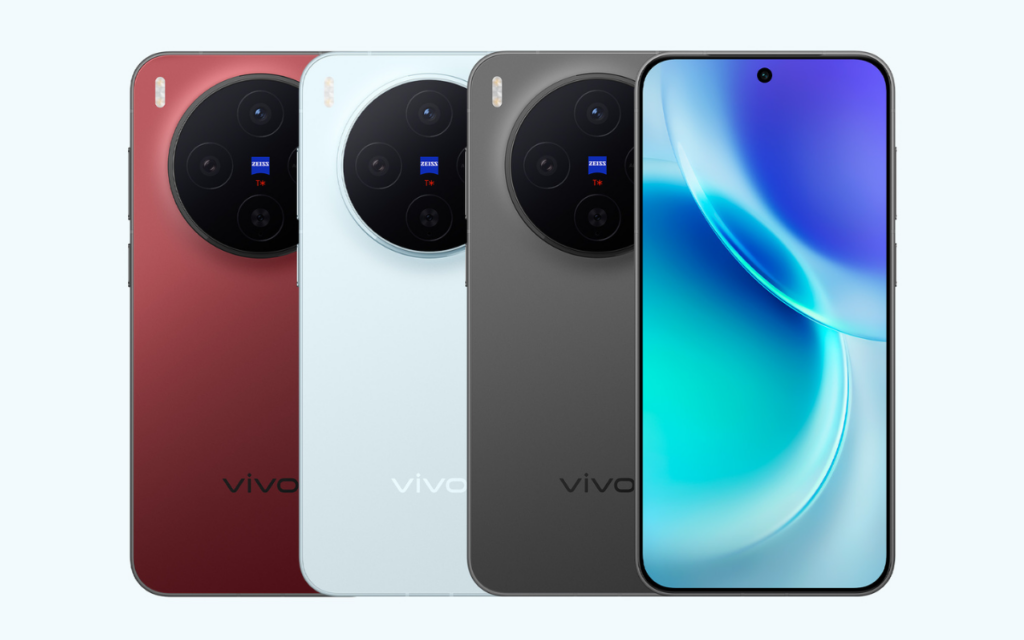
Alongside a mid-range Vivo V60e, the brand is also preparing to unveil a high-end Vivo X300 series. It’s officially confirmed to launch in China on October 13, and might be released outside China before the end of the year.
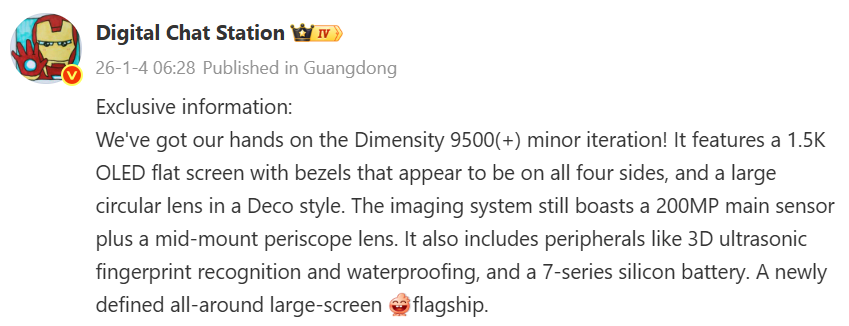
The Vivo X300 series comprises the X300 and X300 Pro, both of which will feature the Dimensity 9500 chip at their core. Besides, the X300 will reportedly feature a 6.31” 120Hz LTPO panel, a 50MP selfie camera, and a triple camera setup on the back consisting of a 200MP primary camera, a 50MP ultrawide unit, and a 50MP periscope telephoto lens. The phone is said to offer a 6,000mAh battery with 90W fast charging support and a 3D ultrasonic fingerprint 2.0.
Vivo X300 color optionsVivo X300 Pro color options
As for the Pro model, it may offer a 6.78-inch OLED screen, a more powerful camera setup, and a bigger battery with support for wireless charging as well.
Launched in August in China, the Redmi Note 15 mid-range series is expected to come to India in October. The series consists of three models: Redmi Note 15, Note 15 Pro, and Note 15 Pro+.
The Redmi Note 15’s key specs include a 6.77” 120Hz AMOLED screen, a Snapdragon 6 Gen 3 chipset, a 50MP + 2MP dual rear camera setup, an 8MP selfie camera, and a 4,800mAh battery with support for 45W fast charging.
The Redmi Note 15 Pro brings a 6.83” 120Hz AMOLED screen, a Dimensity 7400 Ultra processor, a 50MP + 8MP dual rear camera setup, a 20MP selfie camera, and a massive 7,000mAh battery with 45W fast charging support.
The Redmi Note 15 Pro+ offers a 6.83” 120Hz AMOLED screen, a Snapdragon 7s Gen 4 chip, triple rear cameras (50MP + 50MP + 8MP), a 32MP selfie camera, and a 7,000mAh battery with 90W fast charging.
The Edge 60 Neo was announced at IFA 2025 and is expected to be released in India in October. It’s powered by a 4nm Dimensity 7400 chipset, paired with up to 12GB RAM and 512GB storage.
The Motorola phone features a 6.36” LTPO OLED display with 120Hz refresh rate, Full HD+ resolution, HDR10+, Gorilla Glass 7i protection, and a 300nits of peak brightness. It features a triple camera setup on the back, including a 50MP primary camera with OIS, a 13MP ultrawide unit, and a 10MP telephoto camera with 3x optical zoom and OIS. It has a 32MP selfie camera.
The battery comes in at 5,000mAh with support for 68W wired and 15W wireless charging. Other key highlights of the Edge 60 Neo include an IP68/IP69 rating, MIL-STD-810H certification, NFC support, Wi-Fi 6E, Bluetooth 5.4, an in-display fingerprint scanner, and stereo speakers with Dolby Atmos.
After teasing the arrival of the Red Magic 11 Pro series for the past few weeks, Nubia has finally confirmed its launch. Set to launch on Oct. 17, the Red Magic 11 Pro series will be gaming-focused smartphones powered by the latest Snapdragon 8 Elite Gen 5 SoC. Here is all that is known about the new series.
Red Magic 11 Pro series key specifications (rumored)
While there is no official confirmation yet, the Red Magic 11 Pro lineup is expected to include two models such as the Red Magic 11 Pro and 11 Pro+. Both phones may pack the same configuration, but the Pro+ edition may offer 24GB of RAM and 1TB of storage.
According to tipster Digital Chat Station, the Red Magic 11 Pro series will have a flat display integrated with the next-generation under-screen selfie camera. Under the hood, the series will feature the Snapdragon 8 Elite Gen 5 chip and a huge 8,000mAh battery.
Red Magic 11 Pro series key specifications tipped
The Red Magic 11 Pro series will also come equipped with other features, such as an ultrasonic in-screen fingerprint sensor, water cooling technology, a built-in fan, and an IP68-rated body. The official teasers also confirm that the series will have the water-cooling technology, but its exact details are not known yet.
Previous reports have suggested that the Red Magic 11 Pro series could be equipped with a 50-megapixel front-facing camera. It is also said to include a top-end touch control chip aimed at improving responsiveness in gaming scenarios. The company is expected to share more details about the Red Magic 11 Pro lineup in the coming days.
For more daily updates, please visit our News Section.
We use cookies on our website to give you the most relevant experience by remembering your preferences and repeat visits. By clicking “Accept”, you consent to the use of ALL the cookies.
This website uses cookies to improve your experience while you navigate through the website. Out of these, the cookies that are categorized as necessary are stored on your browser as they are essential for the working of basic functionalities of the website. We also use third-party cookies that help us analyze and understand how you use this website. These cookies will be stored in your browser only with your consent. You also have the option to opt-out of these cookies. But opting out of some of these cookies may affect your browsing experience.
Necessary cookies are absolutely essential for the website to function properly. This category only includes cookies that ensures basic functionalities and security features of the website. These cookies do not store any personal information.
Any cookies that may not be particularly necessary for the website to function and is used specifically to collect user personal data via analytics, ads, other embedded contents are termed as non-necessary cookies. It is mandatory to procure user consent prior to running these cookies on your website.