Advertisement

Realme 7i vs Redmi Note 9 vs POCO M2: Specs Comparison

India has a new all-rounder: we are talking about the Realme 7i, a very affordable phone offering unique features for its price segments, such as a great 64 MP camera and a 90 Hz refresh rate! It is definitely one of the highest value for money devices of the moment, but can you actually get more interesting handsets in the Indian market? The answer is not easy to give because it depends on the users’ needs. In the same price range, among the hottest devices in the Indian market, there are Redmi Note 9 and POCO M2. This is the reason why we decided to compare them to the new Realme 7i.
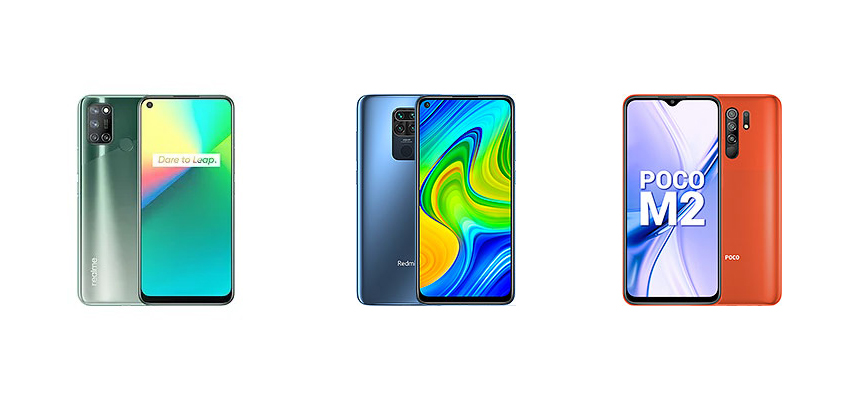
Realme 7i vs Xiaomi Redmi Note 9 vs Xiaomi POCO M2

Xiaomi Redmi Note 9 Realme 7i Xiaomi POCO M2
DIMENSIONS AND WEIGHT 162.3 x 77.2 x 8.9 mm, 199 grams 164.1 x 75.5 x 8.9 mm, 188 grams 163.3 x 77 x 9.1 mm, 198 grams
DISPLAY 6.53 inches, 1080 x 2340p (Full HD+), 395 ppi, IPS LCD  6.5 inches, 720 x 1600p (Full HD+), IPS LCD 6.53 inches, 1080 x 2340p (Full HD+), 395 ppi, IPS LCD
PROCESSOR MediaTek Helio G85, octa-core 2 GHz Qualcomm Snapdragon 662, octa-core 2 GHz Mediatek Helio G80, octa-core 2 GHz
MEMORY 3 GB RAM, 64 GB – 4 GB RAM, 64 GB – 4 GB RAM, 128 GB – micro SD dedicated slot 8 GB RAM, 128 GB – micro SD dedicated slot 6 GB RAM, 128 GB – 6 GB RAM, 64 GB – micro SD dedicated slot
SOFTWARE Android 10, MIUI  Android 10, Realme UI Android 10, MIUI
CONNECTIVITY Wi-Fi 802.11 a/b/g/n/ac, Bluetooth 5, GPS  Wi-Fi 802.11 a/b/g/n/ac, Bluetooth 5, GPS Wi-Fi 802.11 a/b/g/n/ac, Bluetooth 5.0, GPS
CAMERA Quad 48 + 8 + 2 + 2 MP f/1.8, f/2.2, f/2.4 and f/2.4
13 MP f/2.3 front camera
Quad 64 + 8 + 2 + 2 MP, f/1.8 + f/2.3 + f/2.4 + f/2.4
16 MP f/2.1 front camera
Quad 13 + 8 + 5 + 2 MP f/2.2, f/2.2, f/2.4 and f/2.4
8 MP f/2.0 front camera
BATTERY 5020 mAh, fast charging 18W  5000 mAh, fast charging 18W 5000 mAh, fast charging 18W
ADDITIONAL FEATURES Dual SIM slot, reverse charging 9W Dual SIM slot Dual SIM slot, water-repellent

Design

The POCO M2 does not offer the most modern design you can get in the affordable segment. With its waterdrop notch and centrally-placed camera module, it looks definitely more outdated than its two rivals. The Realme 7i is the most futuristic one with its punch-hole display and its camera module reminiscent of the iPhone 11 lineup. On the other hand, the Redmi Note 9 offers a water-repellent coating which is always useful for those who often use their smartphone outside. Thanks to its 20:9 aspect ratio, Realme 7i has a taller and narrower design which makes it even more attractive.


Display

Do you prefer having a Full HD+ display with a higher level of detail or an HD+ display with a lower definition and a higher 90 Hz refresh rate? If your answer is the first, then go for the Redmi Note 9. It has a Full HD+ display just like the POCO M2, but it comes with higher brightness, so it has a definitely better panel. If you do not mind so much about the resolution and you would like to try a higher refresh rate to get a smoother viewing experience, then the perfect option for you is the Realme 7i with its 90 Hz display. POCO M2, Redmi Note 9, and Realme 7i all come with IPS displays: what changes are the resolution and the refresh rate.


Specs & Software

The Realme 7i wins the hardware comparison. What makes its better is not the chipset, but its memory configuration. It sports 8 GB of RAM, while you can get max 4 or 6 GB of RAM with Redmi Note 9 and POCO M2. Further, while Redmi Note 9 and POCO M2 are equipped with eMMC internal storage, Realme 7i has faster UFS 2.1 native storage with a 128 GB capacity. Also, consider that the Snapdragon 662 is built with a better production process than Helio G80 and Helio G85 (11 nm vs 12 nm), so it is even less energy-demanding. Last but not least, the 90 Hz refresh rate will let the Realme 7i look smoother (but as said above, say goodbye to FHD+ resolution). If you need the device with the best performance, go for the Realme 7i. All run Android 10 out of the box.


Camera

Given that the Realme 7i has a better main sensor for its rear camera setup, it wins the camera comparison as well. It sports a 64 MP midrange-class main camera paired with an 8 MP ultrawide lens and a pair of 2 MP lens for macro and depth info. The secondary sensors are the same as Redmi Note 9 and POCO M2, but the main sensor changes. The Redmi Note 9 is superior to the POCO M2 thanks to its 48 MP main sensor. Besides being a better camera phone, Realme 7i is even a better selfie phone thanks to its 16 MP front snapper.


Battery

There are no huge differences between the battery life of these handsets: they have more or less the same battery capacity (around 5000 mAh), but given that Realme 7i has a lower display resolution and a more efficient chipset, it should last a bit more. On the other hand, Redmi Note 9 supports reverse charging and it can be used as a power bank.


Price

Realme 7i is priced Rs. 11,999 / $164 in India (8/128 GB), Redmi Note 9 costs Rs. 12,499 / $170 (4/64 GB), and POCO M2 costs Rs. 10,999 / $150 (6/64 GB). Realme 7i sports a higher refresh rate, better cameras, and a superior hardware department. But Redmi Note 9 has a Full HD+ resolution instead of HD+, as well as reverse charging. POCO M2 is inferior to both but it has a higher value for money. I would personally try the Realme 7i. What would your choice be?


Realme 7i vs Xiaomi Redmi Note 9 vs Xiaomi POCO M2: PROs and CONS

Xiaomi Redmi Note 9

PROs

  • Water-repellent
  • Reverse charging
  • Good price
  • MIUI 12 out of the box
  • IR sensor
  • Full HD+ display
  • NFC (depends on the market)

CONS

  • Nothing particular


Realme 7i

PROs

  • 90 Hz display
  • Best cameras
  • UFS 2.1 storage
  • Long battery life

CONS

  • HD+ display


Xiaomi POCO M2

PROs

  • Water-repellent
  • Very affordable
  • IR sensor
  • Full HD+ display

CONS

  • Inferior cameras
Renders and specs of the OnePlus Buds Z leaked ahead of launch

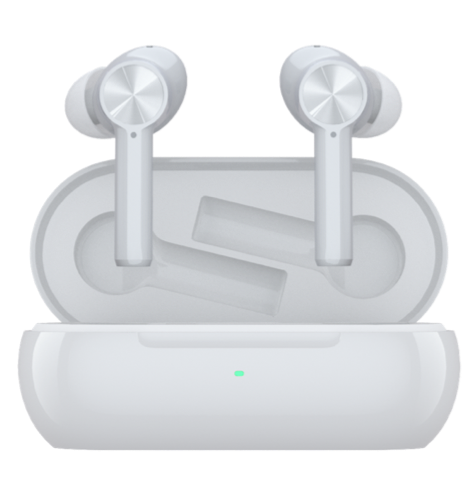
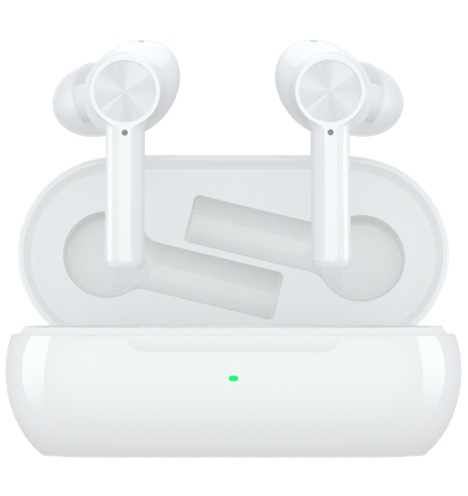
OnePlus has confirmed that it will announce a new pair of TWS earbuds at its launch event next week. The earbuds are expected to arrive as the OnePlus Buds Z. Today, the folks at Oxygen Updater, have been able to get their hands on renders of the earbuds, thus giving us a good look at the design.

OnePlus Buds Z renders
OnePlus Buds Z

According to the post by Oxygen Updater, the renders were extracted from an APK sent by an anonymous individual. Sadly, they can’t share the APK for verification, as the source has requested they don’t.

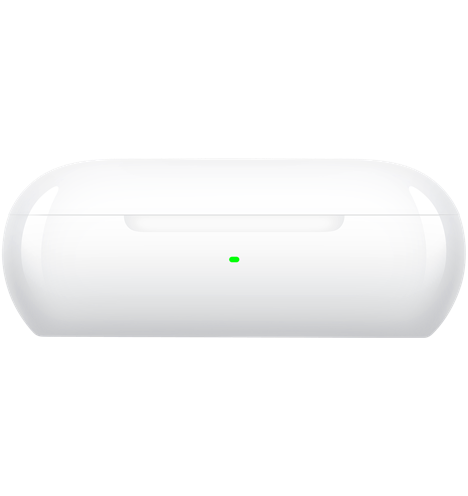
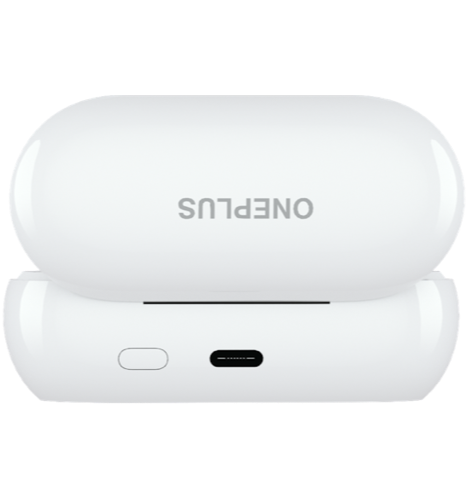
The OnePlus Buds Z will indeed have silicone ear tips that should keep the noise out and the sounds in. The earbuds will come in a large pill-shaped case with a glossy finish. The earbuds lay sideways in the case, unlike the OnePlus Buds that sit vertically. There is an LED in front while the back is home to the USB-C charging port and the pairing button.

The OnePlus Buds Z will be available in three color variants – white, gray, and black, but only two are shown above.

Specs of the TWS earbuds were also revealed earlier today by Ishan Agarwal, the young Indian leaker. In an exclusive post by 91Mobiles, the leaker revealed that the OnePlus Buds Z will have 10mm drivers and not 13.4mm drivers. It will also have Dolby Atmos and Dirac Audio Tuner.

With respect to battery life, the OnePlus Buds Z will last up to 5 hours on a single charge. With the case, the battery life goes up to 20 hours in total. There is also support for fast charging – a 10-minute charge will provide up to 3 hours of listening time. As expected, they will connect via Bluetooth 5.0 and it has been reported that each earbud will have dual microphones. OnePlus already confirmed that the OnePlus Buds Z has an IP55 rating.


Apple files an “iPhone for Life” trademark in Hong Kong

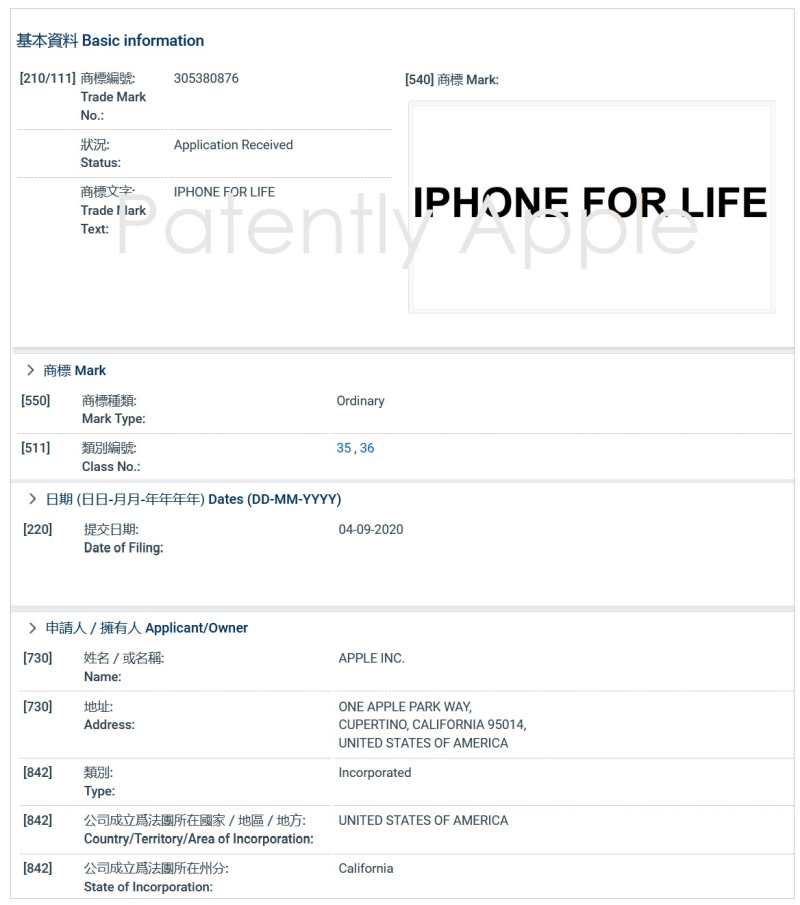
Apple has recently filed a new trademark in Hong Kong. The trademark slogan from the patent suggests it could be a program similar to the already existing iPhone Upgrade Program of the company.

The trademark application, first spotted by Patently Apple, is filed by representatives of Apple in Hong Kong. However, unlike the article says, Apple has filed it last month(September 4) and not April. Further digging, it is to be filed by a firm named Baker & Mckenzie on behalf of Apple. Also, the trademark has Class 35 and 36 sub-categories. This generally deals with retail sales and franchising, and financial services respectively.

Apple iPhone for Life Trademark
Credits: Patently Apple

That said, going by the name, the patent could be similar to the iPhone Upgrade Program that Apple itself provides for the users. For the unware, iPhone Upgrade Program is Apple’s own trade-in service. If you buy an iPhone from Apple Store, or online through the Apple Store app or website with a 24 months agreement, you have to complete the first 12 months payment. After this, you are eligible to trade-in your existing iPhone canceling the remaining 12 months for the old one. The program will reset for 24-months again for the new iPhone.

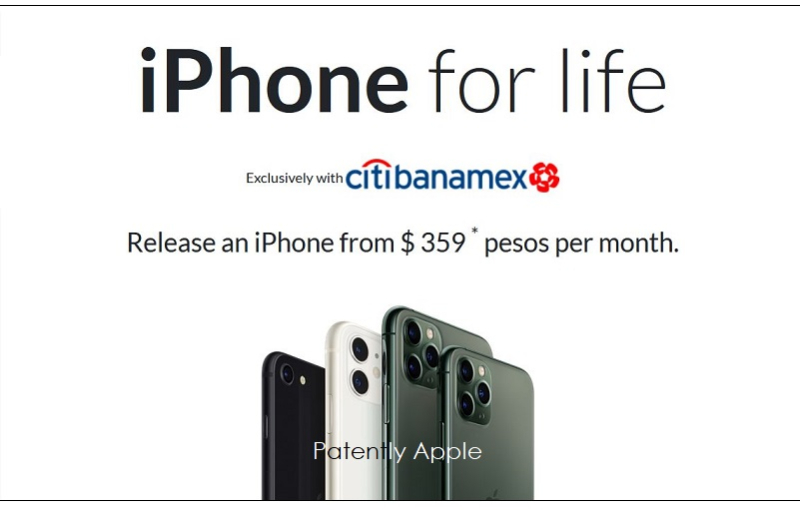
Coming back, the new trademark could either be a rebrand of the already existing program or a pre-emptive measure by Apple themselves to protect its Official Apple resellers. Also, this would probably restrict other companies from copying and adopting it. The slogan is reportedly in use for marketing already outside the US. You can look at an example below.

Credits: Patently Apple

At the moment, Apple has not disclosed any official details about the patent yet. But we can expect more details about the program in the days to come. And who knows, it could also be a bundled program in various markets for the future iPhones.

Up Next: Apple isn’t ditching iPhone notch anytime soon

Nokia Android 11 update roadmap is finally here

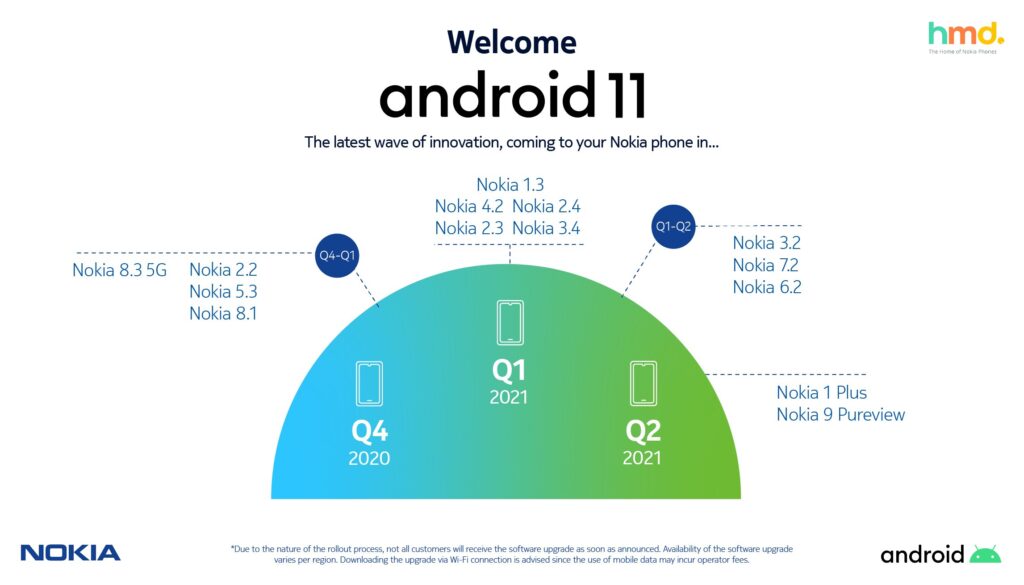
HMD Global, the company behind Nokia-branded smartphones and feature phones is known for updating its devices in a timely manner since its inception. Surprisingly, for Android 11, it has announced the list of eligible phones and update roadmap only now, over a month after Google officially released Android 11 stable. Anyway, better late than never.

Nokia Logo Featured

The Finnish company has not launched many smartphones since last year. Therefore, only 14 devices are eligible for Android 11 update. Out of these, the first four will get the update by the end of this year (Q4 2020), whereas the remaining 10 will be receiving it by Q2 2021.

That said, here’s the official Android 11 roadmap for Nokia smartphones by HMD Global.

Nokia Android 11 Update Timeline/Schedule

HMD Global Android 11 Update Roadmap Timeline Schedule

It is worth noting that the above Android 11 update timeline/schedule for Nokia-branded handsets are rough estimates. The actual rollout may vary across regions depending on various factors.


Diamond-like carbon coatings will make your smartphone display glass more durable

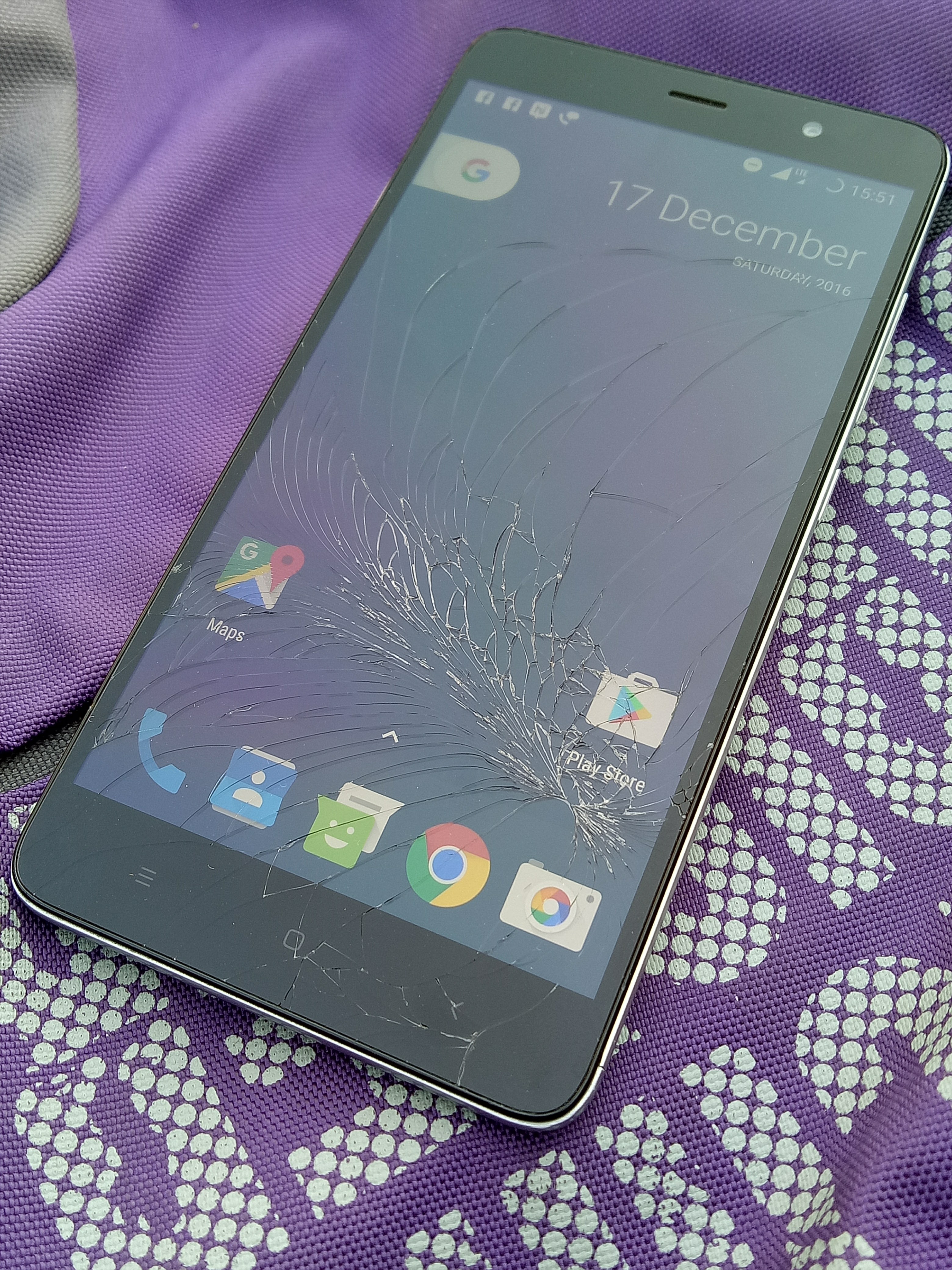
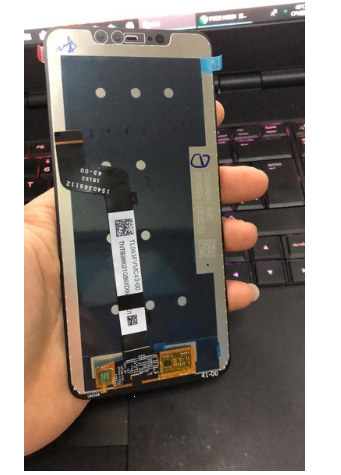
Gorilla Glass, a specialized glass manufactured by Corning for electronics, especially handheld gadgets like smartphones is found anywhere. Over the years, Corning improved its glass and it is currently at its seventh generation called Gorilla Glass Victus. Though it is better than its predecessors, a report states that Apple and other smartphone manufacturers are looking to make Gorilla Glass even more durable by using diamond-like carbon(DLC) coatings.

Xiaomi Redmi 4 Broken Display Glass Sudarshan R
Xiaomi Redmi 4

A report posted on Seeking Alpha by Robert Castellano (via PhoneArena) quotes an Allstate subsidiary SquareTrade study from November 2018 that Americans dropped more than 50 million screens in 2017 and spent a whopping $3.4 billion to fix them. These repairs cost as less as $170 to up to $329.

A staggering amount of $14 billion had been spent in repairs by the people of the US from 2007 till 2017. One survey even revealed that iPhone users were six times more likely to damage their handsets than to either lose them or have stolen.


This is the reason why Apple and other smartphone companies are considering to make use of diamond-like carbon coatings over Gorilla Glass. This coating, with its properties like low friction, high hardness, and high corrosion resistance, can improve the durability of Gorilla Glass or any aluminosilicate glass.

DLC coatings also have properties like thermal conductivity and electrical resistivity. Therefore, they can be used as protective coatings not only on displays but also on sensors and flexible semiconductors.

Currently, three companies have developed systems to coat normal glass, Corning Gorilla Glass, and other aluminosilicate glasses with diamond-like carbon coatings. Two of them are Intevac – a public company and Denton Vacuum – a company with 50-year expertise in the equipment business.

Last but not least, this coating is reported to increase the cost of per display in pennies and therefore, it may not increase the overall cost of a finished smartphone by a higher margin.


[Update is live] Android 10 update may arrive for the Nokia 5.1 today; Android 11 roadmap may follow shortly after

Update: As promised, HMD Global has released the Android 10 update for the Nokia 5.1 today. The update is available in waves with Armenia, Azerbaijan, Belarus, Georgia, Kazakhstan, Mongolia, Ukraine, and Uzbekistan getting it first. Users in India will receive the update much later but latest by October 29.

Original Story:

Yesterday, HMD Global released the Android 10 update for the Nokia 3.1. The update comes more than a quarter later after it was promised. Of all the devices scheduled to get the Android 10 update, the only one left is the Nokia 5.1, and there is a high chance it will be available today.

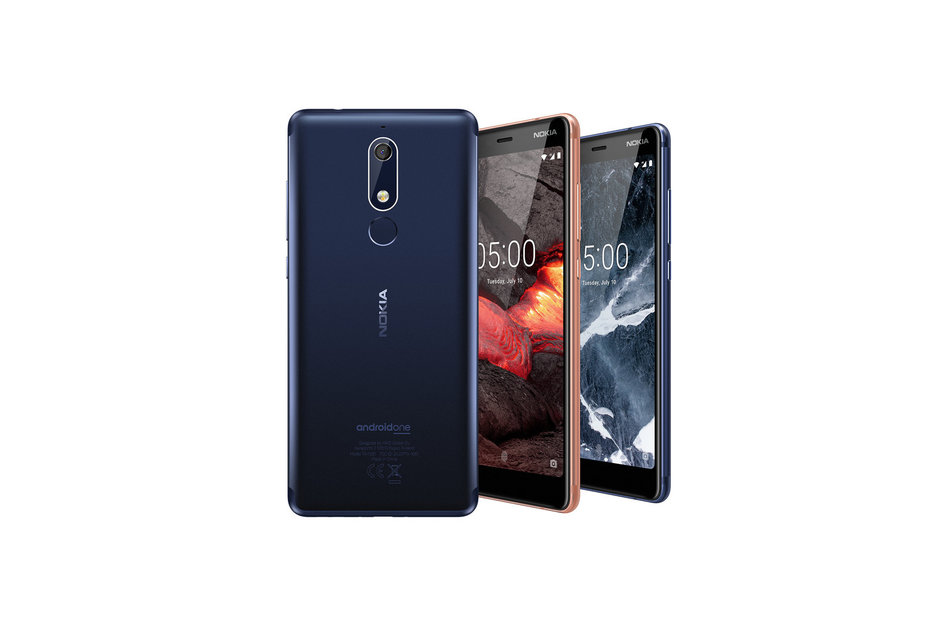
Nokia 5.1

When the Nokia 3.1 Android 10 update announcement was made, a Twitter user asked Juho Sarvikas, the Chief Product Officer at HMD Global, when the update will be available for the Nokia 5.1. His response was “Give us like ~24h”. This means the update should be announced today or latest by tomorrow.

The Nokia 5.1 was released in 2018 with Android 8.0 Oreo. The Helio P18-powered phone was updated to Android Pie last year and the coming Android 10 update will be its second major OS upgrade.

Since the Nokia 5.1 is the last Nokia device to be updated to Android 10, we expect HMD Global to release its Android 11 update roadmap soon. Actually, the roadmap was accidentally posted last month but the tweet was deleted. The shared image also had some missing devices, so there is a chance that the new one will have more phones on the list.


Amazon sends Legal Notice to India’s Future Group after recent deal with Reliance Retail

Amazon has just sent a legal notice to Future Group for breaching the terms of its contract after a recent deal with Reliance Retail. The second largest Indian retail chain received the notice for selling a portion of its business to the Ambani owned retail chain.

Back in August 2020, Future Group announced that it was selling off its retail and wholesale operations along with its logistics and warehousing business to Reliance Retail for 3.4 billion US Dollars. Although, Future Group already had a deal with Amazon, before the Reliance Retail deal came into play. The e-retail giant had acquired a 49 percent stake in Future Coupons, a subsidiary of Future Group’s real estate business, back in 2019.

Amazon India

The deal also gave Amazon a 3.58 percent stake in Future Retail and right of first refusal to purchase more stake in Future Retail as well. According to a TechCrunch report, local news networks reported on the legal notice, which arrived as Amazon and the Indian firm had a deal that would restrict the Indian firm from entering into a deal with certain other firms.

The legal notice also arrives amid rumors of Amazon planning on acquiring a multi billion dollar stake in Reliance Retail as well, which is India’s largest retail chain at the moment. Currently, the online retailing segment only accounts for 3 to 7 percent of the total retail sales in the country. Thus, with Reliance Retail launching its own e-commerce business in the region, Amazon and Flipkart would face stiff competition in the market.

Amazon

Industry analysts have stated that retail is crucial for the future of American e-commerce firms in India. Amazon arrived in the country seven years ago and has since invested more than 6.5 billion US Dollars in the local business. The e-commerce giant has also confirmed that it has filed a legal notice but has refrained from divulging any additional information at the moment. So stay tuned for more updates.


MediaTek announces MT9602 smart TV SoC; will debut in Motorola TVs

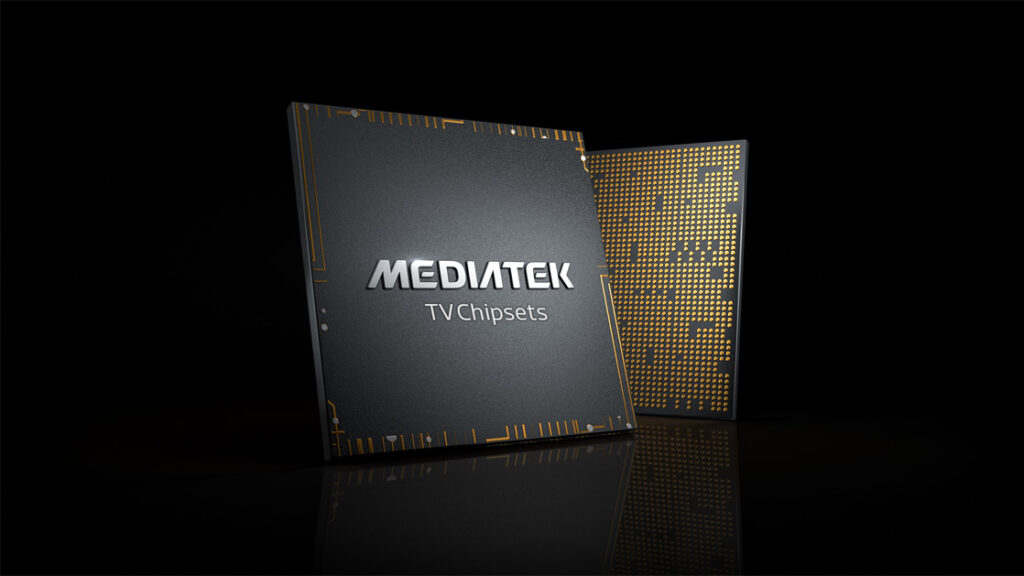
MediaTek is one of the two popular companies other than Amlogic to be known for its TV chipsets. Most high-end smart televisions from different companies use silicon from the Taiwanese chipmaker. Today, the company has announced a  new TV chip called MT9602 to further expand its portfolio. This SoC will be debuting in the new Motorola smart TVs that are scheduled to launch tomorrow (October 9) in India.

MediaTek Smart TV SoC Chipset Featured

The newly unveiled MediaTek MT9602 smart TV SoC includes a quad-core processor consisting of 4 x ARM Cortex-A53 cores clocked at 1.5GHz. Whereas, for graphics. It features Arm Mali-G52 MC1 GPU.

According to the company, this chipset can support up to 2GB RAM and 4K resolution (3,840×2,160 pixels) at 60Hz refresh rate. Like any modern silicon, it also supports popular HDR standards and video codecs like HLG, HDR10, HDR10+, Dolby Vision, AV1, AVS2, HEVC, VP9, H.264, and SHVC 4K60@10bit video decoding with H.264 encoding.

As for connectivity, it supports HDMI 1.4/2.0 with HDCP 2.2, HDMI 2.1a, and USB 2.0. For audio, there’s support for Dolby Atmos decoding and 4x directional microphones. Last but not least, this chip also includes a few technologies from MediaTek like AI-PQ, AI-AQ, and AI-Voice.

As we stated in the beginning, the MediaTek MT9602 smart TV SoC will be debuting in Motorola-branded smart televisions by Flipkart that are set to launch tomorrow in India alongside other home appliances.


(Via)

LCD shipments for small to mid sized panels to stay level till 2025

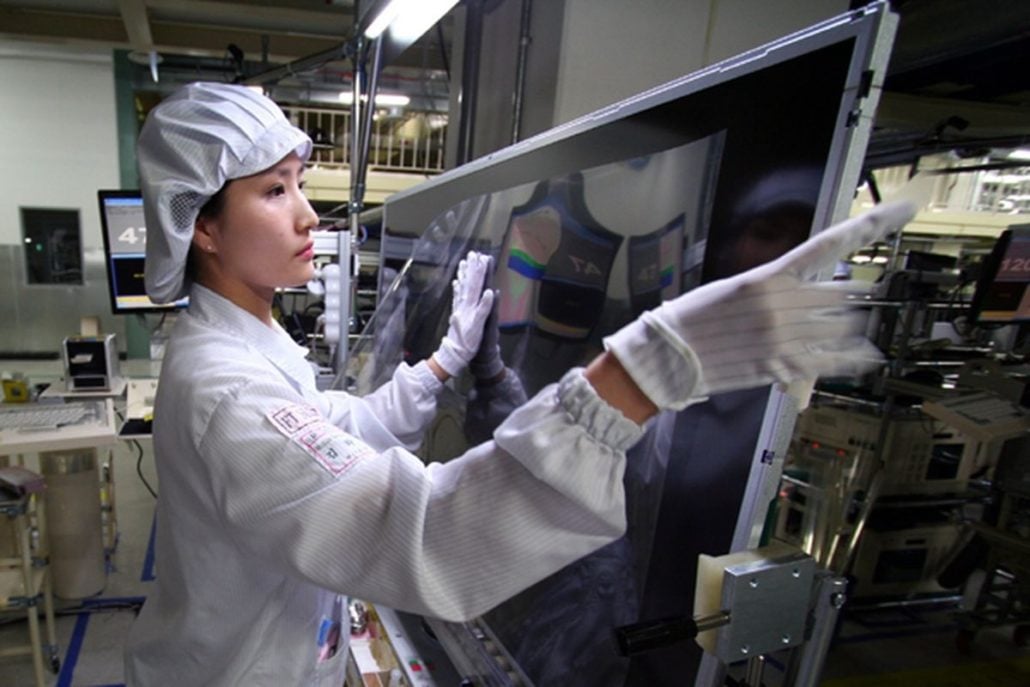
A new report has revealed that the global shipments of small to mid sized LCD panels will remain steady for at least the next 5 year period. It is being forecasted that the displays will reach 1.82 billion units in 2025, despite seeing an on year fall of 19.7 percent to 1.81 billion units in 2020 due to the Coronavirus pandemic.

LCD

According to a DigiTimes report, the demand for smartphone displays is currently the largest application segment for small to mid sized LCD panels. Furthermore, this segment is expected to recover in 2021. The report states that the global handset display shipments will grow by a CAGR (compound annual growth rate) of 3.1 percent from 2020 to 2025, with smartphone applications rising at a higher CAGR of 5.9 percent.

Although, this also includes AMOLED displays, which are expected to reach 40 percent of the total handset display panel segment by 2023. This would result in the LCD smartphone display’s CAGR fall by 0.8 percent during the five year period, as per estimation. For those unaware, AMOLED panels have been growing in popularity with each passing year.

LCD

However, the rise of IoT applications within the industry for automotive, smart speakers, and household appliances will have the related IoT applications aso boost the sales of small to mid sized LCD panels starting from 2022. The report estimates that these displays for IoT applications will grow by a CAGR of 6.1 percent between 2020 to 2025.


Semiconductor sales grow in August 2020

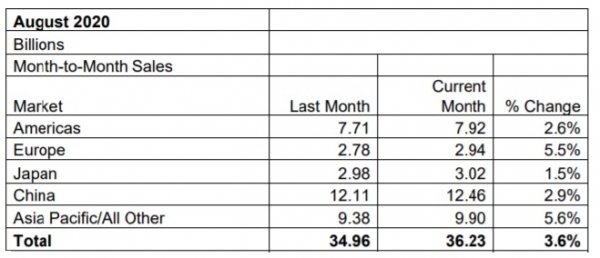
The Semiconductor Industry Association (SIA) has reported that the worldwide sales of semiconductors have grown in the month of August 2020. As per their report, the sales reached 36 billion US Dollars.

Semiconductor

According to TheElec report, the growth marks a 4.9 percent increase year on year from back in 2019 during the same month. Furthermore, this also showcases the growth of 3.6 percent from back in July 2020. Notably, the rise arrives as the seventh consecutive month where the industry has seen growth, with the most noticeable surge being seen in America.

In the US, sales rose by 23.6 percent year on year, reaching 7.92 billion US Dollars in the month of August. Similarly, other regions like China and the Asia Pacific also witnessed a growth of 3 percent and 2.1 percent respectively from the same month from back in 2019. However, despite the overall growth, the semiconductor sales in Europe declined by 10.1 percent, with Japan also seeing a drop of 1.4 percent as well.

Although, all other regions saw growth when compared to July 2020, with the Asia Pacific/All Others seeing a 5.6 percent growth, and Europe sales rising by 5.5 percent. China, the Americas, and Japan saw an increase of 2.9 percent, 2.6 percent, and 1.5 percent, respectively. But SIA also noted that it expected to see a negative trend from the remainder of the year, as uncertainties remain high from the coming months.


HONOR Watch GS Pro & HONOR Watch ES debut in India

Last week, HONOR, the sub-brand of HUAWEI, announced to launch HONOR Watch GS Pro and HONOR Watch ES in India today (October 8). As expected, these two wearables have been now unveiled in the country for a cheaper price tag than in Europe. Surprisingly, the brand did not announce HONOR CHOICE True Wireless Earbuds, which was tipped to launch alongside these two smartwatches.

HONOR Watch GS Pro India Price & Availability

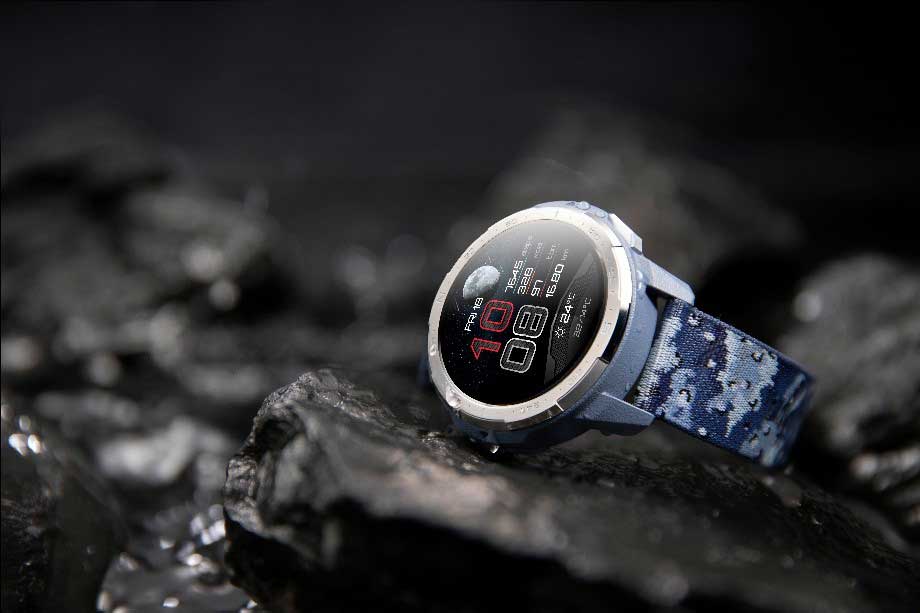
The HONOR Watch GS Pro is the brand’s first rugged smartwatch. It was initially unveiled at IFA 2020 for European markets. Some of its notable features include 1.39-inch circular AMOLED display, MIL-STD-810G certification for durability, 25-day battery life, over 100 workout modes, built-in GPS, Bluetooth calling, Kirin A1, and LiteOS.

HONOR Watch GS Pro Camo Blue

This wearable is priced at ₹17,999 in India and will be sold exclusively on Flipkart. It will be available for purchase starting October 16 during Flipkart Big Billion Days sale.

HONOR Watch ES India Price & Availability

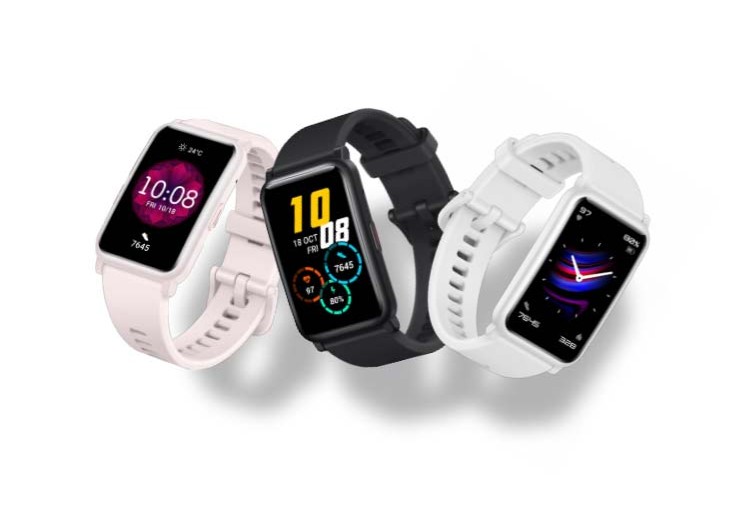
The HONOR Watch ES, on the hand, is the company’s first smartwatch with a 1.64-inch rectangular AMOLED display. Unlike the above wearable, this one is targeted at fashionable customers. Further, to make it stand out amongst competitors, apart from the design, this watch also comes with 12 animated workout courses.

HONOR Watch ES Featured
HONOR Watch ES – Coral Pink, Meteorite Black, and Icelandic White

That said, this smartwatch will be exclusive to Amazon India for a price tag of ₹7,499. It will go on sale starting Amazon Great India Festival sale, which is scheduled to begin from October 17.


Google faces antitrust challenge in India over abuse in Smart TV market

Troubles for Alphabet’s Google in terms of antitrust cases seem to be piling up. The company is now facing a new antitrust case in India which alleges that the tech giant is abusing its Android operating system’s position in the Smart TV market.

The development, which was first reported by Reuters citing an unnamed person and two lawers as the source, is the fourth antitrust challenge for Google in India. As per the report, the company has been under the radar since June this year.

Google

The allegation is regarding Google’s agreements with companies that effectively stop them from using both the Android system and a modified version of it on different devices that the companies make.

For example, if a company is making and selling smartphones powered by the Android operating system, the same company cannot sell Smart TV running its competition platform such as Amazon Fire TV. Similarly, if the company is selling Smart TV running a different OS, then it cannot offer Google’s services and apps on their phones.

EDITOR’S PICK: Genshin Impact has brought in $60 million in the first week, becomes the world’s No. 2 grossing mobile game

As per the report, the Competition Commission of India (CCI) has been looking into the allegations that Google engages in anti-competitive practices by creating barriers for firms wanting to use or develop modified versions of Android for Smart TVs, such as Amazon Fire TV’s operating system.

The case against Google has been filed by two antitrust lawyers — Kshitiz Arya and Purushottam Anand. CCI had directed Google to submit its written responses to the allegations and the company has sought more time.

In the past couple of years, Google has faced three issues related to antitrust in the Indian market. Currently, the tech giant is also facing antitrust challenges in the United States and China is also gearing up for the same.


LG Wing sees lackluster pre orders, but within company’s expectations

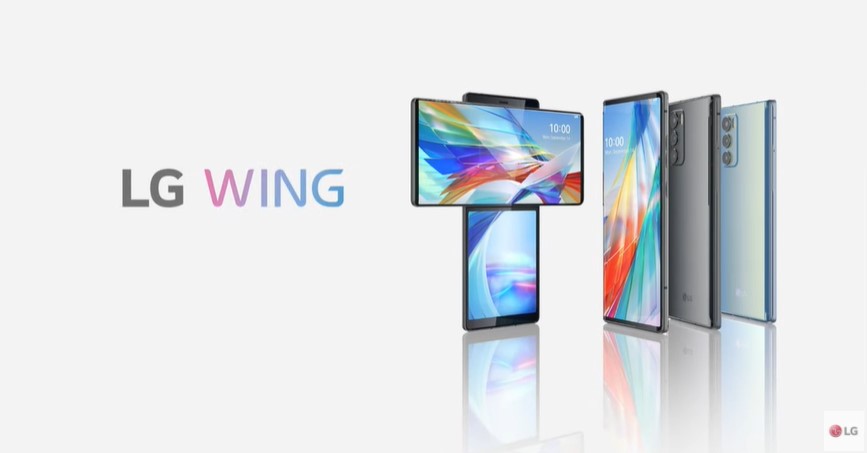
The LG Wing has been available for pre orders, with a new report suggesting that the device only managed to reach 1,275 units. While this figure is woefully unimpressive, it is still apparently in line with the company’s expectations.

LG Wing featured

LG Wing is priced at 1.09 million Won (roughly 940 US Dollars), which is quite a bit more reasonable than other smartphones with such a unique design or any foldable handsets. It arrives with a 6.8 inch primary display and a 3.9 inch secondary screen underneath. The device is powered by a Qualcomm Snapdragon 765G, allowing 5G networking support as well.

According to a PhoneArena report, the South Korean company only managed to get 1,275 units in pre orders. In comparison, the Samsung Galaxy Z Fold 2 saw 80,000 units for pre orders. Although, this is not surprising since the former is one of the top brands in the entire industry while the former is struggling in the market, which is also why the brand is experimenting on smartphones with a unique design.

Notably, a tweet from Sleepy Kuma on Twitter revealed the information as well as the comparison. However, it also revealed that the lackluster pre orders for the LG Wing aren’t something unexpected since LG was reportedly only aiming at 3,000 units in pre orders. In other words, the figures won’t be disappointing with the company only expecting such a small number of pre orders, which the brand will likely be met.


Genshin Impact has brought in $60 million in first week, becomes the world’s No. 2 grossing mobile game

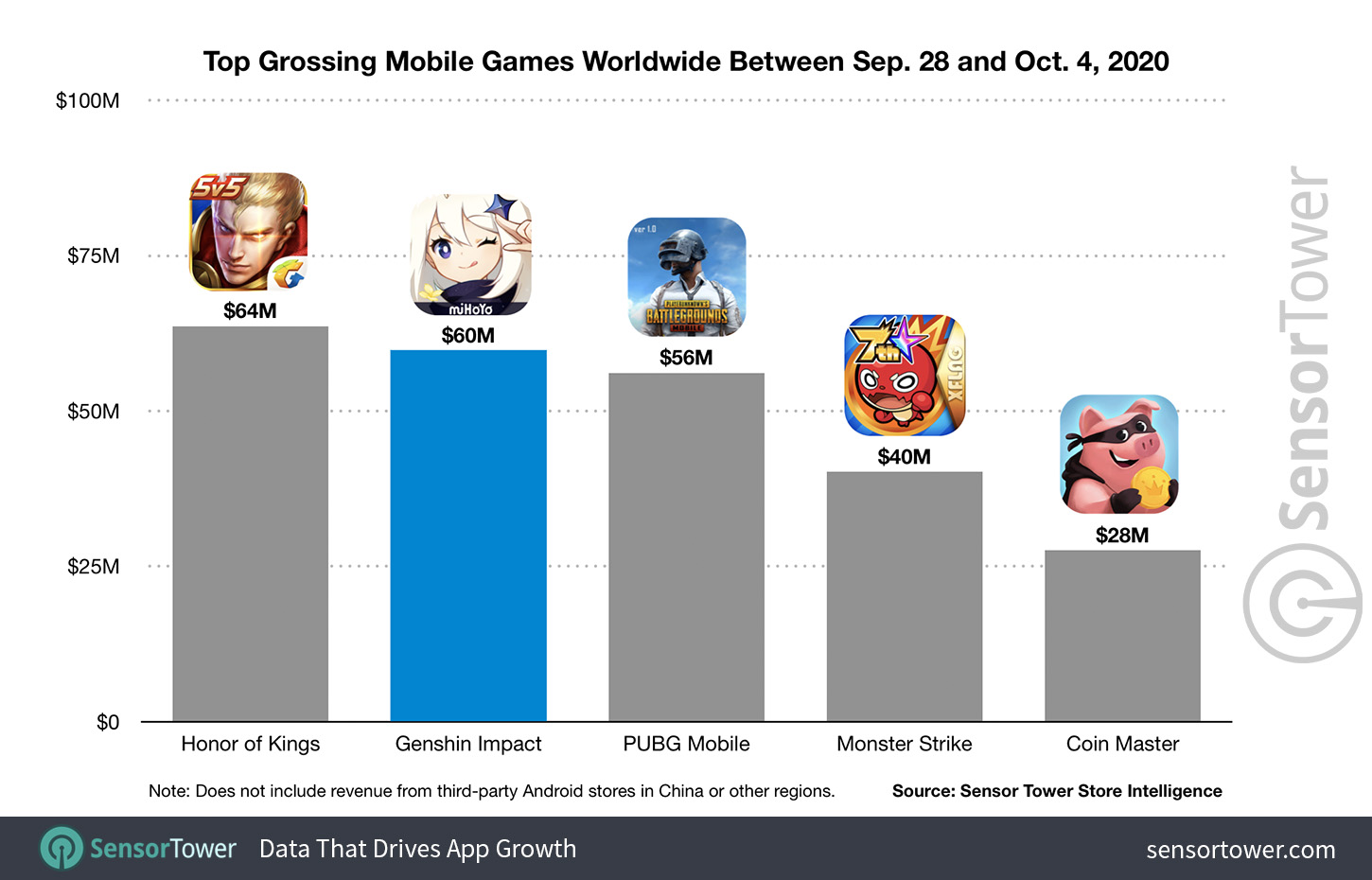
The newly released mobile RPG video game, Genshin Impact, has seen great success since its launch. The game was released by Chinese publisher miHoYo and has generated over $60 million in player spending in both the App Store and Google Play combined within the first week of its official launch.

Genshin Impact

According to a SensorTower report, the video game is currently the world’s second highest grossing title, just behind Honor of Kings from Tencent Games and above PUBG Mobile. As per the report, it is also the highest earning mobile game in the RPG genre in the world this week and ranks above other known titles like Monster Strike and Fate/Grand Order, which arrive in second and third places respectively.

Genshin Impact has seen great success across the globe, especially in China, where the Chinese version of the game brought in close to $25 million in player spending so far on Apple’s App Store alone, which is close to 42 percent of its total revenue. This figure doesn’t include any other third party app stores. While the game has become popular globally, its primary market is still its home country, with $35 million or about 58 percent of its revenue coming from China alone.

Genshin Impact

At the moment, Genshin Impact is also the third highest grossing mobile game title in China, during its launch week. Similarly, it also ranked third in Japan and fifth in the US in terms of revenue generating mobile games. Furthermore, the App Store brought in the majority of the revenue, accounting for $42 million or 70 percent of the total revenue. On the other hand, Google Play brought in just $17.7 or about 30 percent of the total revenue.


Samsung estimates 58% rise in profits to $10.6 billion in Q3 2020

South Korean giant Samsung Electronics has today revealed that the company’s profit for the three months that ended in September, i.e. in Q3 2020, has likely witnessed a growth of 58 percent compared to last year.

As per the company, the operating profit for the third quarter of this year stands at 12.3 trillion Korean won, which is about $10.6 billion. Consolidated sales were approximately 66 trillion won for the quarter, up about 6.5 percent than a year ago.

Samsung Logo

The numbers revealed by Samsung in its earnings guidance is higher than the 10.5 trillion won that analysts had predicted for the September quarter. In the second quarter, the company had posted a 23 percent jump in operating profit to 8.1 trillion won (~$7 billion).

Samsung has not provided a breakdown of how its different business units performance. However, it is being speculated that the results are driven by a rise in smartphone sales, consumer electronics, and home appliances in the third quarter as well as higher earnings in the memory-related business.

EDITOR’S PICK: Huawei may sell the Honor mobile phone business, predicts analyst Ming-Chi Kuo

The South Korean giant is in a pretty good position right now and is expected to register further growth in the coming quarters, at the expense of Huawei. The Chinese giant is facing several issues and is currently fighting to keep its business afloat and the biggest beneficiary seems to be Samsung.

Apart from the smartphone business, Samsung is also impacting Huawei in the network equipment business. Last month, the company won a network equipment supply contract from Verizon worth around $6.6 billion.


Apple isn’t ditching iPhone notch anytime soon

After months of speculation and anticipation, Apple has finally confirmed that it will be hosting a digital event on 13th September. While the company has not confirmed the devices getting launch, it is going to launch its next-generation iPhone 12 models.

Ahead of the official launch, most of the details about the upcoming smartphones have already been leaked online. We know that all the models will have an OLED display panel and the usual wide notch on top of the screen.

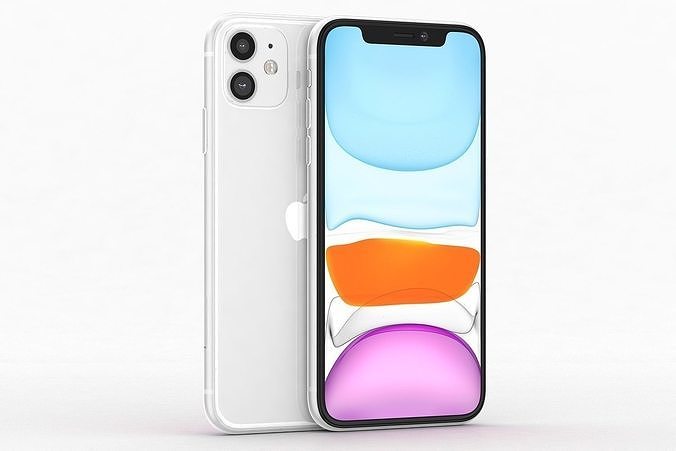
apple iphone 11 white

If you were hoping that the next year’s iPhone model will get rid of the notch on top of the display for a full-screen experience or some other kind of solution so that the company could offer edge-to-edge experience and better STB ratio, then you will be disappointed.

A popular leakster has claimed through a tweet that iPhone 13, which will get released in 2021, will also have a notch on top of the display, but it will be a bit thinner compared to what Apple is currently offering.

EDITOR’S PICK: Broadcom is ending its exclusivity deal for seven years in EU antitrust deal

Many smartphone manufacturers have been trying out different types of solutions to get rid of the big notch on the display. Android phone makers have adopted pop-up camera modules, dot-notch, and pill-shaped notch to offer a better screen-to-body ratio.

However, it seems that Apple isn’t interested in trying out such solutions. Instead, it seems like the company is waiting for the under-display camera technology to be solid enough for mainstream commercial usage.


POCO X3 NFC launching in Indonesia on October 15

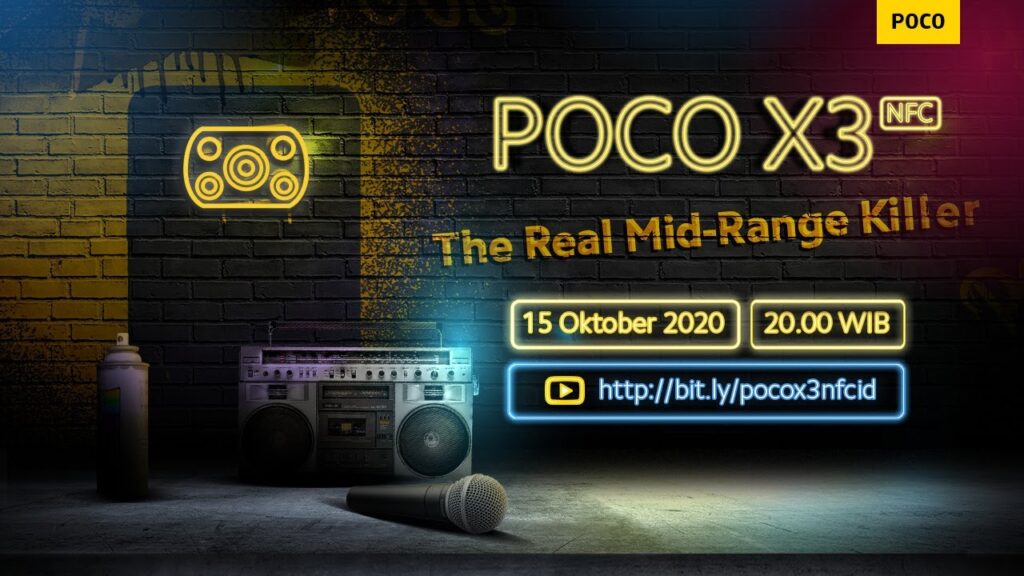
POCO X3 NFC made its global debut in Europe in early September. Later, in the same month, a slightly different version of the handset called POCO X3 was unveiled in India. Now, the brand has confirmed to launch the original model in Indonesia on October 15.

POCO X3 NFC Indonesia Launch Teaser

The POCO X3 NFC is the successor to POCO X2 launched in the first quarter in India as a rebranded Redmi K30 4G. It is the world’s first smartphone to come with Qualcomm Snapdragon 732G chipset.

Just like its predecessor, it sports a 120Hz refresh rate LCD panel, however, its back is made of polycarbonate. But unlike its forerunner, it is IP53-certified for splash resistant. Also, it comes with a better 13MP ultra-wide-angle camera.

Further, the POCO X3 NFC is thicker and heavier at 9.4mm and 215g, compared to POCO X2, which measures 8.8mm and weighs 208g respectively. That’s because it has a larger 5,160mAh battery than the 4,500mAh unit present inside the previous model. 

That said, it is not as thick (10.1mm) and heavy (225g) as the Indian POCO X3 that comes with a beefier 6,000mAh battery.

The POCO X3 NFC is sold in two variants – 6GB +64GB  & 6GB +128GB in Europe priced at €229 and €269 respectively. It should cost less in Indonesia when it will launch in the country on October 15.


Broadcom ending its exclusivity deal for 7 years in EU antitrust deal

Broadcom is apparently going to end the exclusivity deals that it had offered to TV and modem makers for seven years in a deal with EU antitrust regulators. This move arrives after a year long investigation by the European Commission that hasn’t found any wrongdoing on Broadcom’s part.

Broadcom

For those unaware, the European Commission started an investigation against the US based chipmaker in June 2019, and had even threatened to issue an interim order, the first in two decades, to stop such practices during the course of the investigation. Broadcom is a known supplier of Apple and even makes chips for smartphones, computers, and even networking equipment as well.

According to the EU competition regulator, “Broadcom will suspend all existing agreements containing exclusivity or quasi-exclusivity arrangements and/or leveraging provisions concerning Systems-on-a-Chip (SoCs) for TV set-top boxes and Internet modems, and has committed not to enter into new agreements comprising such terms.” Broadcom

As per the Reuters report, the company will not offer price or non price incentives to TV and modem makers to buy a minimum number of its products in Europe. Furthermore, these purchases will also not be related to the sales of other products either. Similarly, Broadcom will also pledge not to offer price or non price incentives to TV and modem makers to buy more than 50 percent of its products or have its sales related to any other products for more than 50 percent of its products globally, excluding China.


Taiwan sees rise in exports in September because of Huawei stockpiling

Before new sanctions on Chinese giant Huawei were set to kick-off from 15th September, the company had started stockpiling the necessary components to ensure that the business doesn’t go under.

Thanks to that stockpiling from Huawei, Taiwan has witnessed a rise in exports for the month of September. As per the report, the exports jumped 9.4 percent from a year earlier to $30.71 billion last month.

Huawei

EDITOR’S PICK: Redmi General Manager hints the launch of new phones in October; Could it be Redmi K30T?

This is the second-highest monthly tally on record as far as exports from Taiwanese firms are concerned. The month of August had also witnessed a rise in export — an 8.3 percent increase, helped by Huawei.

For those who are unaware, the Trump administration expanded restriction on Huawei in the month of August and banned suppliers from selling chips made in the U.S. or using U.S. technology to Huawei without a special license. The new sanctions took effect in mid-September and thus, the Chinese giant had started stockpiling components.

It’s noteworthy that Taiwan’s September imports unexpectedly fell by 5.4 percent, against economists’ expectations for a 3 percent increase. As per the report, Taiwan, which has China as its largest trading partner, could see around 2 percent exports this month, i.e. October 2020, said Taiwan’s finance ministry.


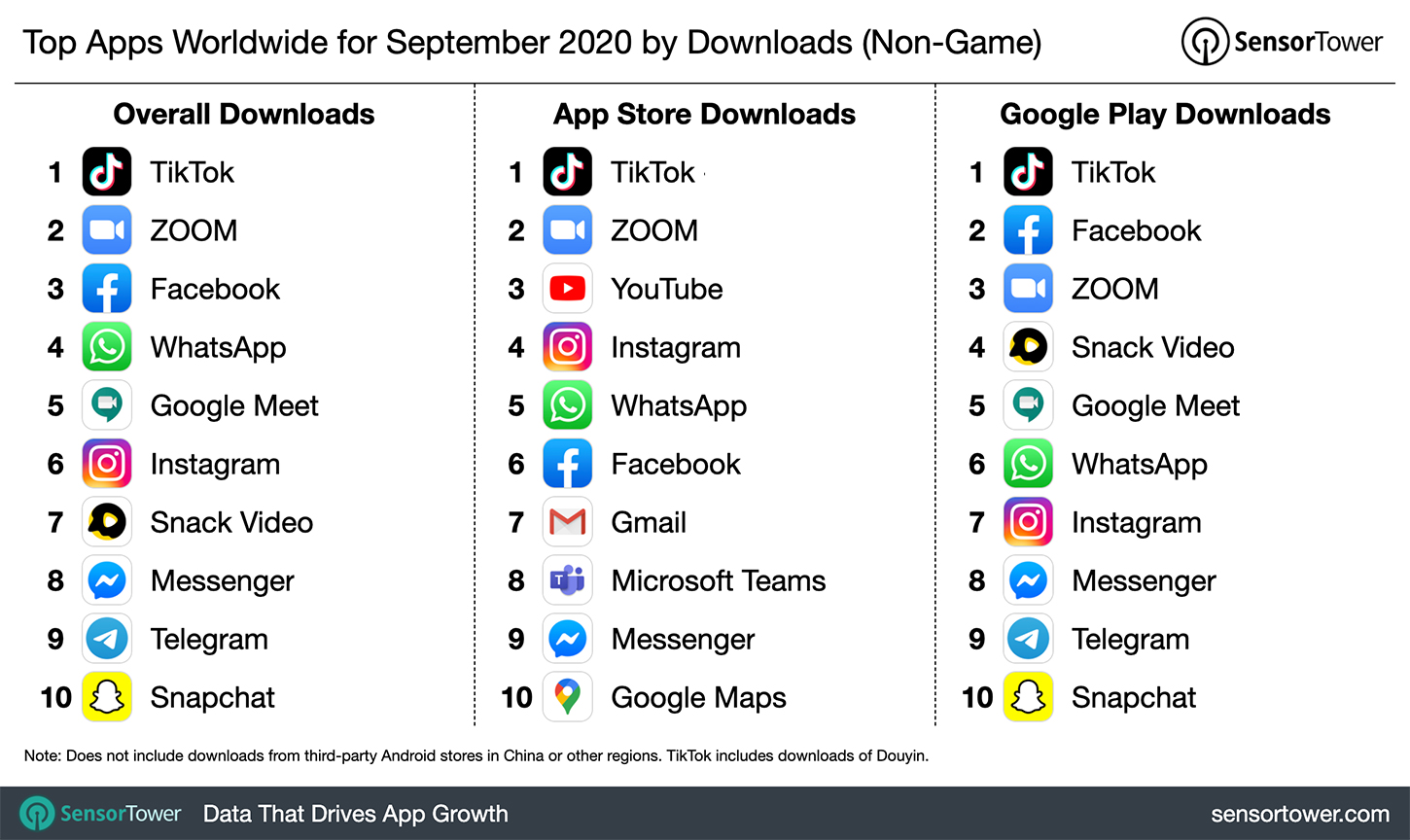
Here are the top 10 app installs for September 2020

Despite facing issues in a few countries, the short-form social media app TikTok continues to be the most downloaded non-gaming app worldwide for September 2020, according to the new report from Sensor Tower.

In the month of September, TikTok witnessed more than 61.1 million installs, which represents a 2 percent increase compared to the same period last year.

Top App Installs September 2020

Zoom was the second most installed non-gaming app with around 55 million installs, a growth of 21.4 times compared to September 2019. Completing the list of the top five most downloaded apps last month include Facebook, WhatsApp, and Google Meet.

Following the top five apps, other apps that made it to the top 10 most installed applications in the month of September 2020 include Instagram, Snack Video, Messenger, Telegram, and Snapchat.

EDITOR’S PICK: U.S. House panel rules Facebook, Apple, Amazon & Google are abusing their market power

As for the countries, it was Brazil which saw the most number of installs in September, representing 11 percent of the total installs worldwide. It was followed by the United States, which captured 9 percent of the total installs.

Do note that the report from Sensor Tower is for non-gaming mobile applications downloaded from 1st September 2020 to 30th September 2020 through Apple App Store and Google Play Store and no third-party app store.

Also, the company has clarified that it does not count Apple’s own applications and pre-installed Google apps. Further, the report includes only unique downloads and combines multiple versions of apps into one. For instance, Messenger and Messenger Lite from Facebook are counted together.