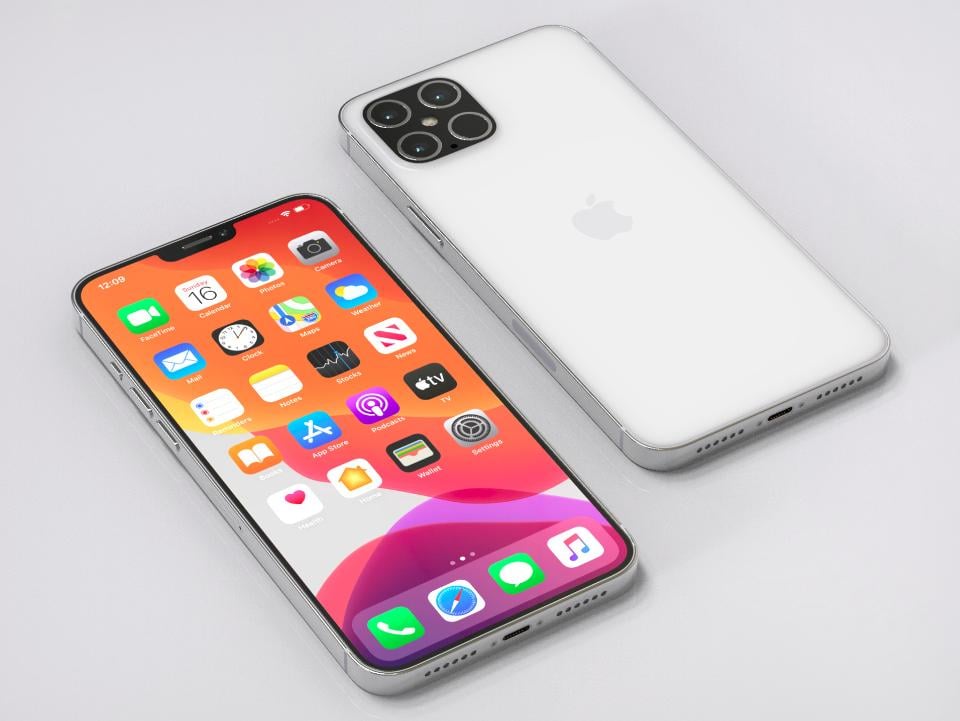
The ongoing COVID-19 pandemic has severely impacted the launch timeline for many companies this year. Recently, Apple also confirmed that the iPhone 12 models launching this year will be “available a few weeks later.”
Now, leaker Jon Prosser claims that the launch event for this year’s iPhone 12 series will take place in October, which definitely falls under “a few weeks later” timeframe. But he says that the company has something else lined up for September.
As per the report, Apple will be launching the new Apple Watch as well as the iPad in September. Jon Prosser says that the Apple Watch Series 6 and the unspecified iPad model will be announced without any launch event.
This is an interesting development because Apple has traditionally launched the new Apple Watch along with the iPhone. If the report turns out to be true, then this will be the first time that Apple Watch will get launched ahead of the new iPhone models.
New, adjusted Apple dates!
Apple Watch & iPad – Via press release – Week 37 w/c Sep 7
iPhone 12 event – Week 42 w/c Oct 12
iPhone 12 devices – Preorders week 42 w/c Oct 12 – Shipping week 43 w/c Oct 19
iPhone 12 Pro devices – Preorder and shipping in Nov (no exact date yet)
As for the iPhone 12, it is being reported that the launch event could take place on 12th October, with pre-booking starting the same week and shipments of the base model beginning a week after that.
However, not all the models will go on sale together. It is being reported that while iPhone 12 will be available for purchase in October itself, other models in the lineup, including the iPhone 12 Pro, will go on sale in November.
John Prosser says that there’s a chance that the dates could slip or change, so we would advise you to take this information with a pinch of salt. This year’s iPhone models, which will have 5G connectivity, are said to come without the charger and earphones in the box.
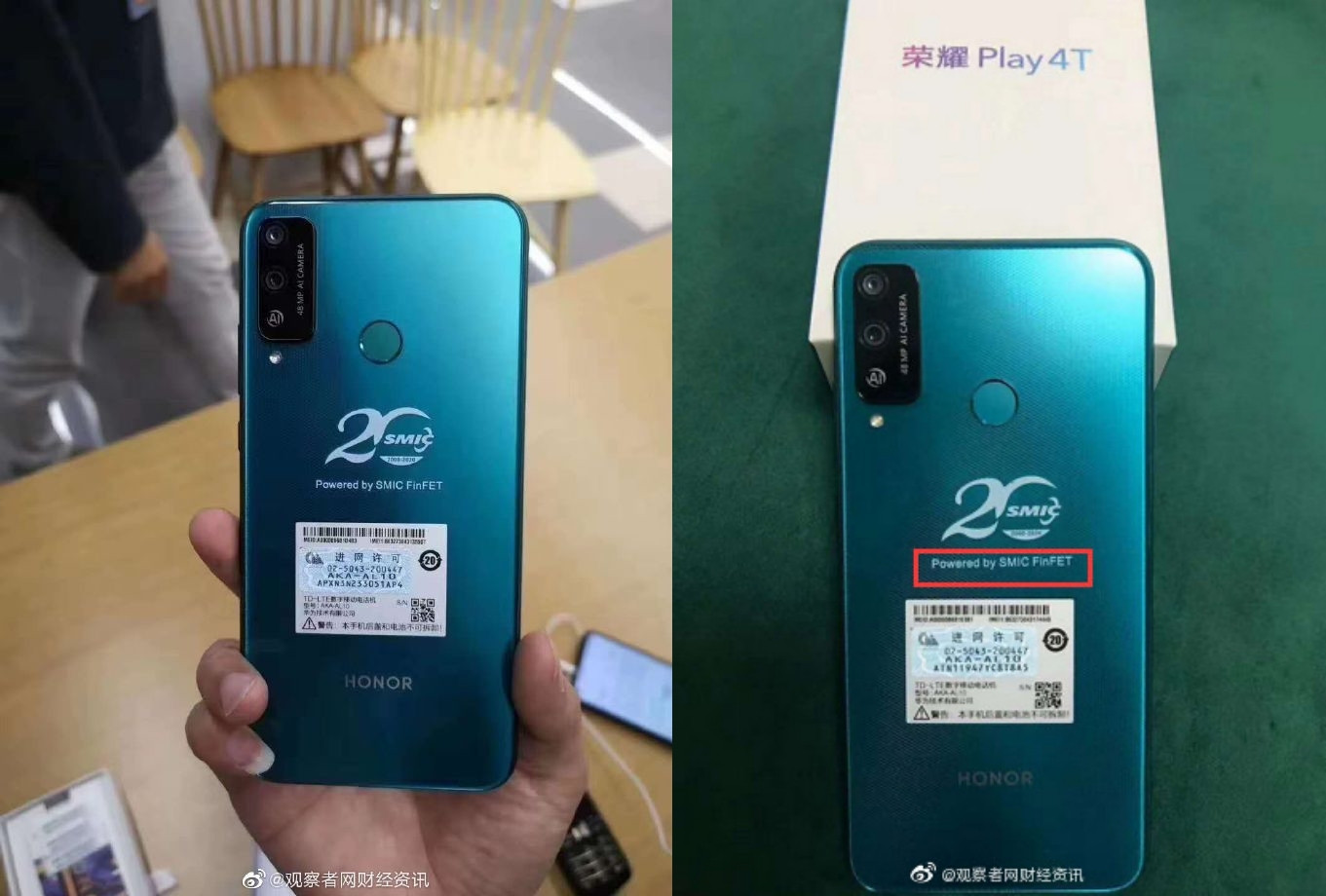
Shanghai-based Semiconductor Manufacturing International Corp (SMIC) last year secured a partnership with Huawei to manufacture some of its chipsets. It later emerged that the Kirin 710A was manufactured at SMIC foundry using the 14nm Finfet process. The chipset was used on the Honor Play 4T and Huawei Enjoy Tablet 2 meaning a level of mass production has been achieved.
Huawei’s Kirin chipsets were previously manufactured solely by TSMC
SMIC has now announced during an interactive platform held on Tuesday (August 11) that it has now been able to improve the yield rate of its 14nm manufacturing node. Apparently, the company was yet to finish fine-tuning the process but had to test run it with supplies for the Kirin 710A to Huawei who is under pressure to source for an alternative after the USgoovernment tended the ban on the use of US technology on Huawei to foreign companies such as TSMC which usesUS tech for their manufacturing processes.
Huawei has kept the Kirin 710 series chipset alive for a long while now. The Kirin 710 is the first chipset in the series followed by the Kirin 710F. They are both manufactured using TSMC’s 12nm node and integrates four A73 and four A53 CPU cores, with a maximum frequency of 2.2GHz. However, the Kirin 710A features the same architecture but since it uses SMIC’s 14nm process, the maximum frequency has dropped to 2.0GHz.
The patronage by Huawei has impacted positively on SMIC’s financial standing going by its report for the second quarter of the year. The financial report shows that as of June 30, 2020, the company’s revenue reached US$938 million, an increase of 4% month-on-month and 19% year-on-year. Gross profit was US$249 million, an increase of 6.4% month-on-month, and a year-on-year increase of 64.5%.
The 14nm/28nm advanced process revenue accounted for a new high, reaching 9.1%, compared with only 7.8% in the previous quarter.
Several smartphone makers are working on an under-display camera technology but it seems that China-based ZTE will be the first to commercially launch a smartphone featuring an under-screen camera.
ZTE’s President for Mobile Business, Ni Fei, has today confirmed that the company will be launching the first smartphone with an under-display camera technology — ZTE A20 5G. As per the report, he has also claimed that the camera result is also good.
The report adds that a blind camera test was carried out with the participation of a few people, which revealed no issues in terms of camera output with this new technology.
So far, the smartphone has also passed through the network access license process, which reveals that it carries model number ZTE A2021. However, it’s likely that the smartphone will get launched as ZTE Axon 20 5G.
Currently, information about the phone’s design is not known but it will come with a true full-screen display given that the camera sensor is now placed underneath the display. Till now, for a full-screen experience, the phone manufacturers had relied on a pop-up front-facing camera. However, it increases the overall weight of the device because of the presence of a mechanical structure.
While not yet confirmed, it is being speculated that the company could be using the under-display camera technology developed by Visionox. It is said to have been optimized through a special pixel arrangement to eliminate the difference in brightness, color gamut, and viewing angle. Visionox has also started mass-producing this technology.
The upcoming phone will serve as a successor to the ZTE Axon 10 Pro 5G which went official earlier this year, which carries model number A2020. We expect more details about the Axon 20 5G smartphone to start surfacing online in the coming weeks.
Although the company has not yet revealed the launch date, we expect the smartphone to go official in China in a few weeks or months. Apart from ZTE, brands like OPPO and Samsung are also working on similar technology for their smartphones.
Motorola is one of the few manufacturers that has a foldable device available for purchase. Now the manufacturer is set to announce a successor to the 2019 Moto RAZR.
It has been reported that invites have been sent out for a September 9 event which is for the launch of the next-gen Moto RAZR foldable phone that will be sold as the Moto RAZR 5G. While the invite does not specifically say that the launch is for the phone, it does hint at it. The tech website DroidLife, reports that it has a description that says “getting ready to flip the smartphone experience once again.”
The Moto RAZR 5G smartphone is expected to come with support for 5G thanks to Qualcomm’s Snapdragon 765G processor. It has also been reported to have 8GB of RAM, 256GB of storage, a 48MP rear camera, a 20MP selfie camera, and a 2845mAh battery capacity with support for 18W fast charging.
Images of the upcoming smartphone leaked earlier this month and they showed some design changes. For starters, the outer display is now bigger. The rear camera has a new design and the front-facing fingerprint scanner is gone. It has also been reported that it has a nano-SIM (and an eSIM), unlike last year’s model that only works with an eSIM.
The launch will be done online as is the trend now. However, Motorola is yet to reveal the time the event will begin. Once they do, we will make sure to inform you.
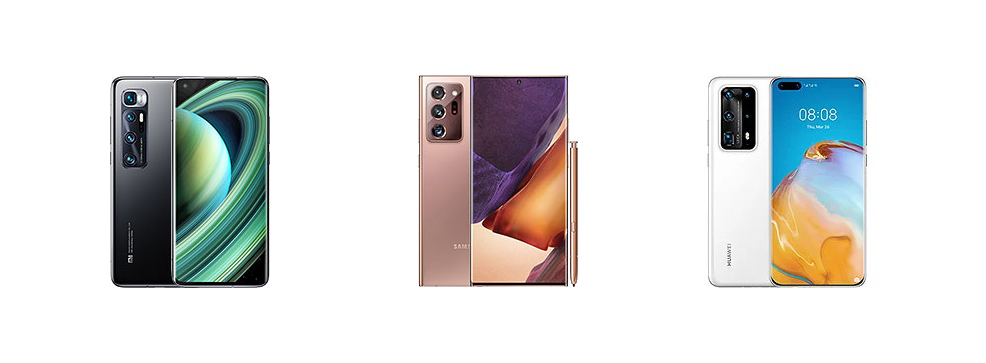
A lot of people would not expect it from Xiaomi, but the Chinese giant just launched the best camera phone on the paper. The Xiaomi Mi 10 Ultra offers a fantastic camera department and it is also the best Xiaomi phone to date. Unfortunately, it will not hit the global market and it will probably remain a China-exclusive. But should Chinese customers look for a top-tier flagship chose the Mi 10 Ultra or there are better choices in the market? In order to establish this, we compared it with the other best camera phones on the paper: Samsung Galaxy Note 20 Ultra and Huawei P40 Pro+. Let’s see who’s better.
Xiaomi Mi 10 Ultra vs Samsung Galaxy Note 20 Ultra vs Huawei P40 Pro+
Xiaomi Mi 10 Ultra
Samsung Galaxy Note 20 Ultra 5G
Huawei P40 Pro+
DIMENSIONS AND WEIGHT
162.4 x 75.1 x 9.5 mm, 221 g
164.8 x 77.2 x 8.1 mm, 208 g
158.2 x 72.6 x 9 mm, 226 g
DISPLAY
6.67 inches, 1080 x 2340p (Full HD+), OLED
6.9 inches, 1440 x 3088p (Quad HD+), Dynamic AMOLED 2X
Dual SIM slot, fast reverse wireless charging 27W, 5G, eSIM
Design
Xiaomi just does not want to release a waterproof phone. All the smartphones released by the company are not waterproof, including the Mi 10 Ultra, despite it is its most powerful flagship. With the Samsung Galaxy Note 20 Ultra and the Huawei P40 Pro+, you get the IP68 certification. Further, the Samsung Galaxy Note 20 Ultra offers a stainless frame and the new Gorilla Glass Victus protection for the front and rear glass. It is definitely the best device in terms of build quality, and it even comes with a more beautiful design, at least according to my tastes. But the Huawei P40 Pro+ is still very nice with its ceramic body, and it is even the most compact phone of the trio.
Display
Huawei P40 Pro+ has the most disappointing display. In a world in which the most expensive flagships offer a 120 Hz refresh rate, Huawei P40 Pro+ is still 90 Hz. On the other hand, Samsung Galaxy Note 20 Ultra has one of the most stunning displays out there, with a Quad HD+ resolution, a high brightness, outstanding colors, and a refresh rate of up to 120 Hz. Xiaomi Mi 10 Ultra still comes with a great panel including a 120 Hz refresh rate and HDR10+, but it can not compete with the Samsung Galaxy Note 20 Ultra in any way. Last but not least, note that the Samsung Galaxy Note 20 Ultra supports the S Pen with a 9 ms response time.
Hardware/Software
The U.S. version of the Samsung Galaxy Note 20 Ultra has the most advanced hardware department because it is fueled by the new Snapdragon 865+ mobile platform. But if we consider the EU version, with its Exynos 990 it falls behind the Xiaomi Mi 10 Ultra, powered by the Snapdragon 865 paired with up to 16 GB of RAM and UFS 3.1 internal storage. All the phones run Android 10 out of the box, but the Huawei P40 Pro+ does not have Google services out of the box.
Camera
It will be a tough fight between Xiaomi Mi 10 Ultra and Samsung Galaxy Note 20 Ultra. But on the paper, Xiaomi Mi 10 Ultra looks more impressive. It has two 48 MP sensors including a periscope one with 120x zoom, dual OIS, a 12 MP telephoto sensor with 2x optical zoom, and a 20 MP ultrawide sensor. The most amazing camera setup ever. But Huawei P40 Pro+ is still one of the best camera phones out there and it may outperform its rivals in some scenarios. In each case, you get an amazing camera phone, so you should not worry so much.
Battery
Xiaomi Mi 10 Ultra has a 4500 mAh battery just like the Samsung Galaxy Note 20 Ultra, but it has to manage a smaller display with a lower resolution. That is why we believe it will last more on a single charge. Further, it has the fastest charging technology ever seen on a phone (up to 120W) as well as the fastest wireless charging technology (up to 50W). With the Huawei P40 Pro+, you get a smaller battery but also the fastest reverse wireless charging technology (27W).
Price
Xiaomi Mi 10 Ultra carries a starting price of just €650/$766 in China, Samsung Galaxy Note 20 Ultra and Huawei P40 Pro+ start from more than €1300 globally and about €1000 and €1175 in China, respectively. The Samsung Galaxy Note 20 Ultra is a more complete device due to the S Pen support, waterproof design, amazing build quality, better display. But it lacks very fast charging speeds. Xiaomi Mi 10 Ultra is an amazing camera phone and it has the highest value for money, while Huawei P40 Pro+ sits in the middle
This isn’t definitely good times for US-China trade relationships with the US government clamping down on several Chinese companies including tech giants Huawei, ZTE and of late, TikTok (ByteDance). Out of this turbulent water comes a report bothering on the US smartphone market performance in the second quarter of the year.
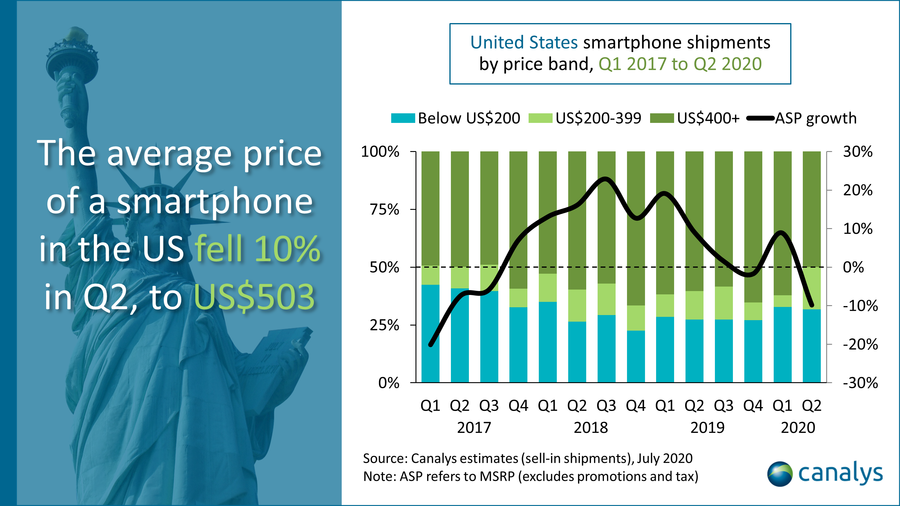
The report published by Canalys stands out in several ways but the major reason why we find this surprising is the disclosure that 70% of smartphones that were shipped in the US in Q2 2020 were manufactured by Chinese OEMs. This is noted to be 10% higher than the estimate for Q1 2020 which was estimated to be 60%.
The report equally shows that the COVID 19 pandemic was responsible for the spike in demand for cheap phones most of which were manufactured in China. This is due to consumers adopting a cost-conscious approach towards spending as a result of job loss and a slowed-down economy. The average price of a phone sold in the US dropped to $503, or 10% less than a year earlier. Also, more people signing up for Lifeline, an assistance program that offers subsidized phone service for low-income families contributed to the jump in the sales of low-end Android devices.
As expected, Apple is still the brand to beat in the US with a 10% jump in shipment compared to last year. The iPhone SE 2020 which was launched for $399 is one of the company’s top-selling model in Q2 2020 which is a reflection of a reduction in consumer’s spending power.
Other brands that also saw a rise in their shipments include Lenovo-owned Motorola with an 8% rise in shipment Year-on-Year. Also, low-cost brands such as Unimax and Wiko also recorded improved shipments.
Samsung’s shipments were flat year-over-year as sales of budget phones like the Galaxy A10e and A20 mitigated the shortfalls recorded from uninspiring sales of flagships like the S20. LG’s numbers dipped 19% over the same period, but it was considered relatively stable. And Chinese connections weren’t a guarantee of success — TCL saw its shipments plunge 43% despite
Canalys also opined that the volatile US-China tensions were creating a “perpetual state of uncertainty” for virtually every phone maker beyond Samsung and LG. Thus, the market may not rebound for phone makers even after the pandemic unless the political climate settles down.
The world’s first modular robot for pets – Pumpkii has finally arrived on the crowdfunding website Indiegogo. As teased by the company a few weeks ago, the Pumpkii modular robot is now available at an affordable starting price of $149. It houses several advanced features that enable the owners to take care of pets even when they’re away.
The interested users can head over to the Indiegogo listing page to check more details about the robot for your beloved pets.
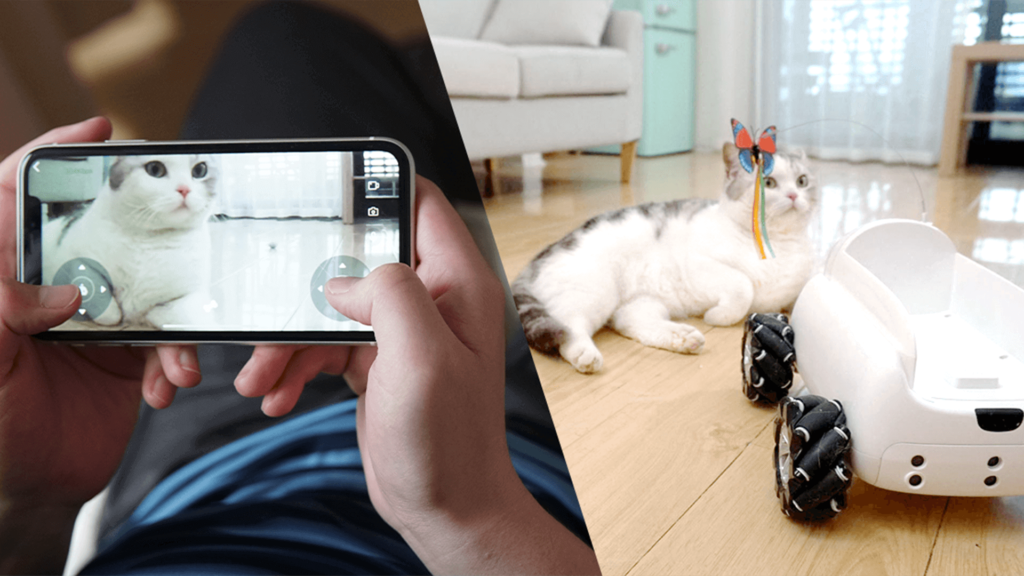
Pumpkii is a multi-function modular robot that entertains your pet, treats them with rewards, and can even arrange live video feed any time. The dedicated app for robot assists users to easily access the features with just a few taps.
Pumpkii robot can move in any direction and can even capture moments of your pet. It is designed to assist both cats and dogs in the absence of their owners. It is an excellent companion for both pets.
Pumpkii Features
Keep Pets Entertained
The advanced Pumkii robot houses support for voice and video interaction. It can even treat pets on the accomplishment of any given task. However, the modular robotic arm allows disposing-off the waste.
Moreover, the treat dispenser enables the owners to feed their pets with 11 different types of treats. The multi-functional snack bucket holds 100 different sized snacks. The owner can even treat the pet remotely using the app.
Live Video
Pumpkii offers an option to watch your pet live in a 720p video stream over a WiFi connection. You can have a voice and video communication with your pet from anywhere in the world. The 110-degree ultra-wide lens brings a clear and wider look of your loved pet.
Advanced Design
The advanced robot has beautiful design along with an omnidirectional Mecanum wheel which enables the robot to move back and forth and in any direction easily. It can move 360-degrees without any major issue on any surface. The flexible Robotic-arm further extends its list of features.
It is carved out of industrial ABS material which can withstand 30 pounds of pressure.
Intuitive Pumpkii App
Pumpkii app improves the functionality of the robot. It packs a beautiful and easy to use interface. The app primarily enables the user to capture photos, control robots, and see live video.
Pumpkii robot houses a 2600 mAh built-in battery which provides 8 hours to 3 days of standby time upon a single full charge. It automatically charges hen the power is less than 40%.
Technical Specifications
CPU: ARM Cortex A9
RAM: 512MB
Storage: 8GB
Camera: 2.0MP with a 110-degree wide-angle.
Connectivity: WiFi, BT 4.1
Video Call Format: QVGA< VGA 720P
Speaker: 1x
Battery Capacity: 2200 mAh
Dimensions: 10.8 x 9.69 x 2.0 inch
Pricing
The interested user can take different perks or pledge and every pledge have different offering. Pumpkii Robot Basic offers a 1x Pumkii robot for $149. In order to get Pumkii and Treat DIspenser then it costs $199 and Pumkii + Robotic Arm costs $249.
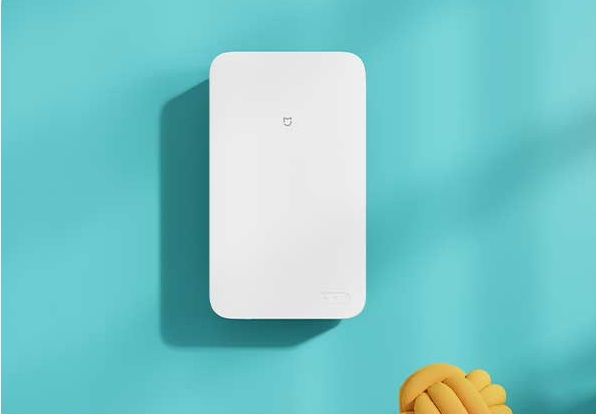
Xiaomi has launched a new product under the MIJIA smart home brand. The product is called MIJIA Fresh Air Blower C1 and is a portable wall-mounted fan which doubles as an air purifier.
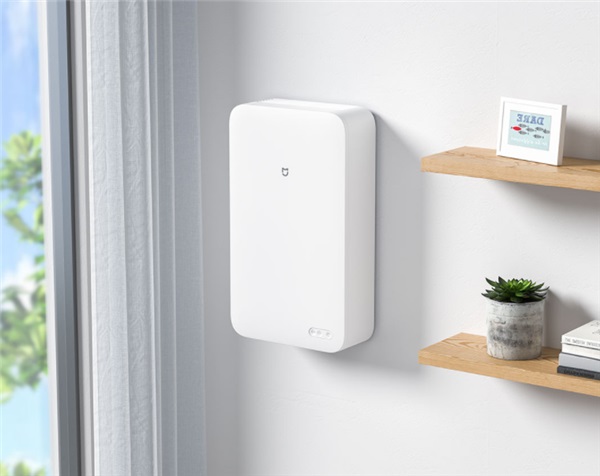
The new product has an ultra-thin body and occupies only 0.16 square meters of wall area. The air bower can filter the air in an area of 28.6 square meters. The air blower can remove common allergens, second-hand smoke, sand and dust and other pollutants from the air, creating a clean living environment with air permeability and clean air.
The device has a thickness of only 13cm and considering the 0.16 square metres of wall space needed for it to be installed, it won’t occupy too much space.
Further, the MIJIA Fresh Air Blower C1 features a built-in composite filter element which uses HEPA13 high-efficiency filter material. The filter can take out common catkins, pollen, second-hand smoke, hair, sand, dust, fine dust and other pollutants layer by layer. It also effectively filters PM2.5 particles. The machine has built-in double centrifugal fans, which can deliver 80m³ of pure fresh air to the room per hour, with a maximum applicable area of 28.6 square meters.
In terms of noise, the dual-channel flow path design of the MIJIA C1 has smooth ventilation. The fan runs smoothly and has low noise making it suitable for use at night without any disturbance to your sleep. In addition, the installation aperture of the device is only 75mm, and only four screws are required for installation. This design isn’t just convenient, it also makes it easy to install without much damage to the wall.
As for the price, the MIJIA Fresh Air Blower C1 carries a price tag of 1,299 yuan. The device will go on pre-sale from August 12 in China on Xiaomi Mall. Xiaomi is also offering free installation in over 300 cities in China.
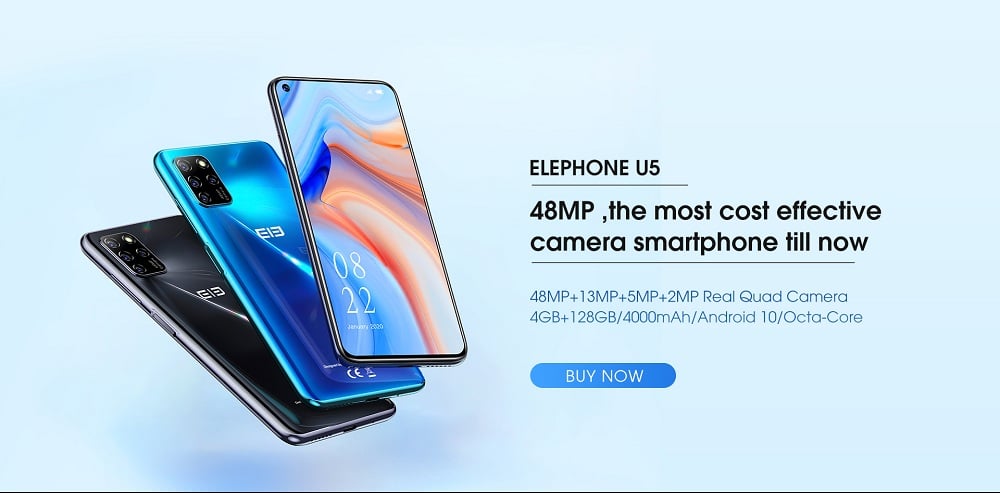
As revealed a few days ago, Elephone U5 is finally here featuring mid-range specifications at an affordable price of $159.99. The new smartphone primarily features an Helio P60 SoC, 4GB RAM, 128GB Internal Storage, and a 4000 mAh battery. It is a fully packed device that can even make contactless payments using the NFC chip. Elephone U5 is already in stock and the interested users can grab it from the Elephone official store.
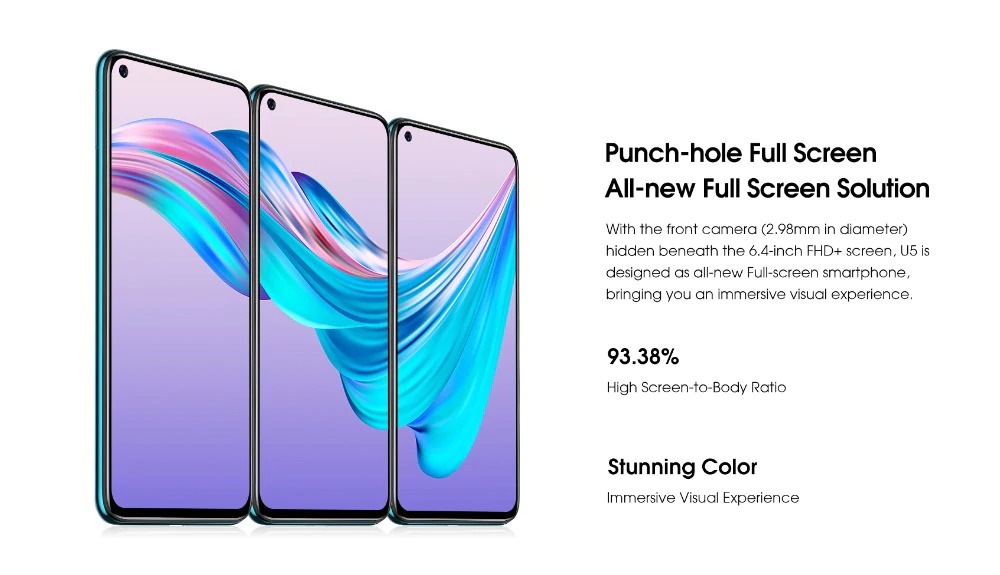
Elephone U5 features a 6.4-inch Full HD+ punch-hole display providing a wider viewing experience with 93.38% high-screen-to-body ratio. Its thin bezels make the display view clearer, larger, and immersive.
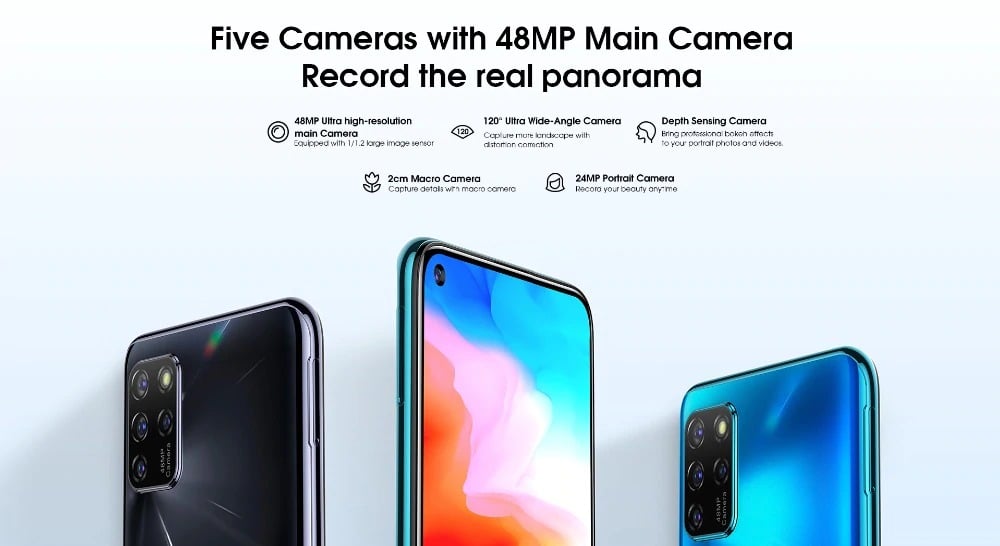
The smartphone consists of a quad-rear camera featuring a 48-megapixel primary camera, a 13-megapixel ultrawide sensor, a 5-megapixel depth sensor, and 2-megapixel macro cameras. It captures ultra-high resolution images with full details and accurate saturation. The depth sensor helps to capture the bokeh effect while macro enables us to get a detailed view of the nearby objects. It can shot clear and detailed photos even in the low-light environment using its Night Mode 2.0 capture. On the front, there’s a 24-megapixel selfie camera for high-quality selfies and video calling.
Elelphoine U5 comes with Helio P60 SoC coupled with an octa-core processor and equally powerful GPU to handle graphics. It is available with 4GB RAM and 128GB internal storage. Moreover, you can expand it up to 512GB via a microSD card slot.
It is a dual SIM device and offers a 4000 mAh battery. The smartphone runs on the Android 10 OS with all its luxuries including improved dark mode, better permissions, and enhanced security. The users can perform contactless payment transactions using NFC chip via Google Pay or any other supported app.
Elephone U5 is available two color options of Ocean Blue and Black for the price of $159.99. The smartphone is already in stock and the users can head over to the Elelphone official store to grab it.
Ulefone is offering massive discounts on its smartphone lineup via the ongoing flash sale. It is a two-day discount extravaganza where you can shop some popular Ulefone Smartphones at jaw-dropping prices. There are several smartphones on discount from Armor rugged series, Power series offering massive battery backup, and Note series boasting big displays. Below we have listed all the smartphones that are up for grabs.
It is an entry-level smartphone offering decent specifications at a compelling price of $99. Ulefone Note 9P offers a massive 6.52-inch display featuring a waterdrop notch. A triple camera sensor is present on the rear side consisting of a 16-megapixel primary sensor, a 5-megapixel macro lens, and a 2-megapixel sensor.
The smartphone is powered with MediaTek MT6762 octa-core processor coupled with 4GB RAM and 64GB internal storage. A 4500 mAh battery sits inside the device to power it for a coupled of days. Moreover, you get face to unlock and fingerprint ID for easy authentication.
Ulefone Note 9P smartphone is avaialbel for $99 from AliExpress.
It is another rugged smartphone that is available at a discounted price of $89.99. Ulefone Armor X7 Pro offers rugged and sturdy design coupled with Media Tek Helio A20 Processor, 4GB RAM, and 32 GB internal storage. The smartphone features a 13-megapixel rear camera and a 5-megapixel selfie camera. There’s a 4000 mAh battery and supports NFC for wireless payments. In connectivity, you get a triple navigation system including GPS + Glonass + Galileo.
Ulefone Armor 7 is a powerful rugged smartphone coupled with Helio P90 chipset, 8GB RAM, and 128GB storage. A 6.3-inch Full HD display is present to give the best viewing experience. IN the camera department, there’s a high-end tripel camera module featuring a 48-megapixel primary sensor and two 2-megapixel sensors. A 5000 mAh battery facilitates users for a couple of days upon a single charge.
Ulefone Armor 7 is available for the price of $289.99, ad n you can grab it from AliExpress.
It houses the Walkie Talkie feature along with the normal smartphone features. It is powered with Helio P70 SoC, 6GB RAM, and 64GB internal storage. Ulefone Armor 3WT houses a 21MP single rear camera. A monotonous 10300 mAh battery is present to withstand smartphone for several days. Ulefone Armor 3WT smartphone runs on the Android 9.0 Operating System.
It is another entry-level rugged smartphone featuring an Helio P35 SoC, 64GB storage, and a 6.3-inch FHD display. There are a 16-megapixel rear sensor and a 2-megapixel front sensor for selfies. THere’s a 6250 mAh battery. You can grab the device for $119 from AliExpress.
The discount is applicable to several other Ulefone smartphones. The discount event will be on August 12 and will end at 23:59 on August 13. You can know more about the ongoing Ulefone flash sale here.
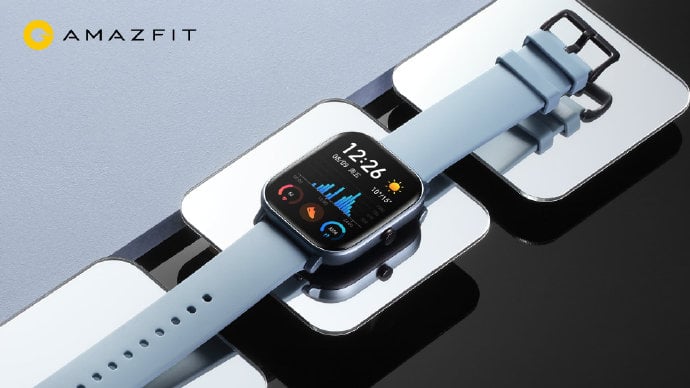
It has been more than a year since Huami announced the Amazfit GTR. The Amazfit GTS on the other hand is a few weeks from its 1-year anniversary. Now, there is a chance the Amazfit GTR 2 and Amazfit GTS 2 may be arriving soon.
The folks at Geekdoing found references to the Amazfit GTR 2 and Amazfit GTS 2 in source code. The GTR 2 is said to be codenamed “Lisbon” and the GTS 2 is codenamed “Newton”. They also found a third device called Amazfit Neo with the codename “Tokyo”.
The Amazfit GTS 2 may switch to a round dial
More details found in the Amazfit app source code by Xiaomiadictos reveals the Amazfit GTS 2 may come with a round dial, a big change from the square dial of the original. While some may not like it, at least the comparisons to the Apple Watch will die this time around.
Other features found include support for XiaoAI (Chinese version) and Alexa voice assistants, NFC, and an unknown one called “Smart Crown”. There are no details about the Amazfit GTR 2 but it too should have an AMOLED display like its predecessor as well as a built-in smart assistant and NFC. We also have no info on the Amazfit Neo which may be a more affordable smartwatch than the GTR 2 and GTS 2.
Amazfit announced the GTS at IFA 2019, so there is a chance the successor will also be announced at this year’s event. However, we expect a release in China first before a global launch.
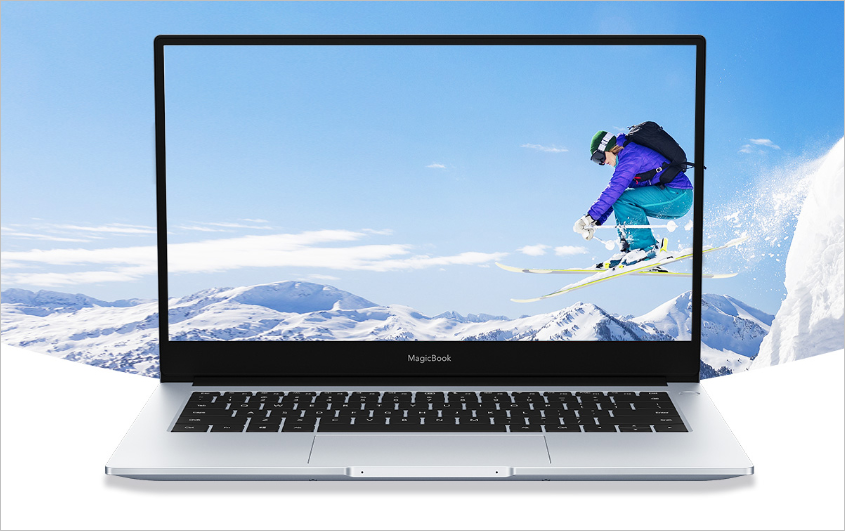
Huawei’s Honor has officially launched a new notebook in a lowkey manner. The laptop dubbed MagicBook 14 SE is an offshoot of the MagicBook 14 Ryzen Edition which was first launched in February this year. This model is actually a rebadge of the MateBook 14 Ryzen version launched in Europe for 599 Euros.
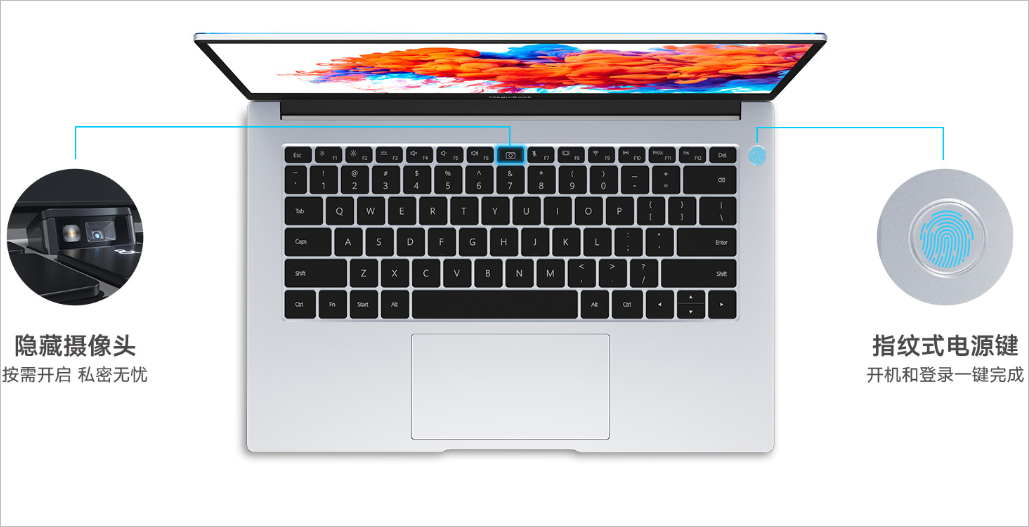
The MagicBook 14 SE adopts the same design with the MagicBook 14 but this model is equipped with a slightly different specs setup and slightly lower price offering.
The Honor MagicBook 14 SE is powered by an AMD Ryzen 5 3500U processor which utilises a 12nm process. The chip has a Zen+ architecture and is integrated with a Radeon RX Vega 8 graphics card.
Other designs and configurations are almost the same. The device comes equipped with DDR4 dual-channel memory and it uses PCIe NVMe SSD for storage. The only difference is that the capacity of the SSD hard disk has been halved from 512GB to 256GB, with 8GB of RAM.
As for the battery life, the new Honor MagicBook 14 SE comes packed with a 56Wh large battery which the company says can provide 1080P video playback for 9.5 hours, web browsing for 9.4 hours, and daily office hours for 10 hours. Further, it also comes with a fast charger which the company claims can charge 46 percent in just 30 minutes.
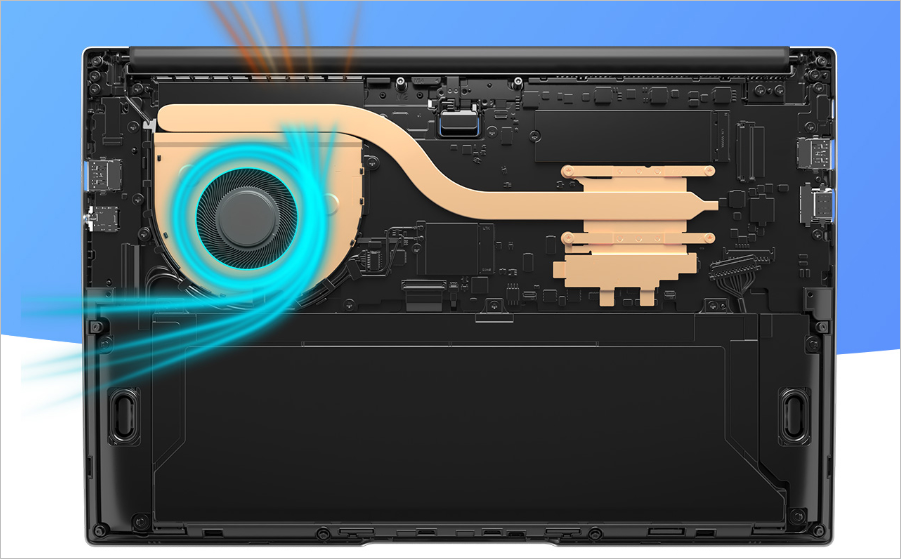
Heat dissipation is one of the main focus of the MagicBook 14 SE as it comes with S-shaped fab design. For higher-density fan blades, the number of fan blades has increased by 49 percent and the air volume and heat dissipation capacity increased by 38 percent.
The MagicBook 14 SE carries an official price of 3299 yuan (~475). It is expected to go on sale for the first time on August 15th, at 0:00 at a discount price of 2999 yuan (~$432). In contrast, the MagicBook 14 Ryzen Edition with Ryzen 5, 8GB/512GB memory is priced at 3599 yuan (~$518). The new notebook will be sold on Vmall and Tmall.
The Xiaomi Mi 10 Ultra that was announced yesterday packs a pretty impressive display. It is not a QHD+ panel but it is still worthy of attention.
The curved AMOLED 6.67-inch screen not only has a 120Hz refresh rate but is a 10-bit panel that is capable of displaying over 1 billion colors. The only other devices, as far as I can remember, that launched this year that are capable of displaying such impressive colors are the OPPO Find X2 Pro and the OnePlus 8 Pro.
While the display of the Find X2 Pro and the OnePlus 8 Pro is supplied by Samsung Display, it has been revealed that the one used in the Mi 10 Ultra was supplied by TCL’s display subsidiary, China Star Optoelectronics Technology (CSOT). The info was revealed on Weibo by the manufacturer itself.
The post also includes some specifications and features of the OLED display such has its Delta E Value of less than 1, JNCD value of less than 0.63, its brightness (800 nits, 1120 nits max.), DCI-P3 color gamut, and MEMC support.
Fact – the Find X2 Pro doesn’t use a true 10-bit panel like that of the Mi 10 Ultra. Actually, it uses a combination of 8-bit color depth and a 2-bit dither algorithm to achieve 1.07 billion colors.
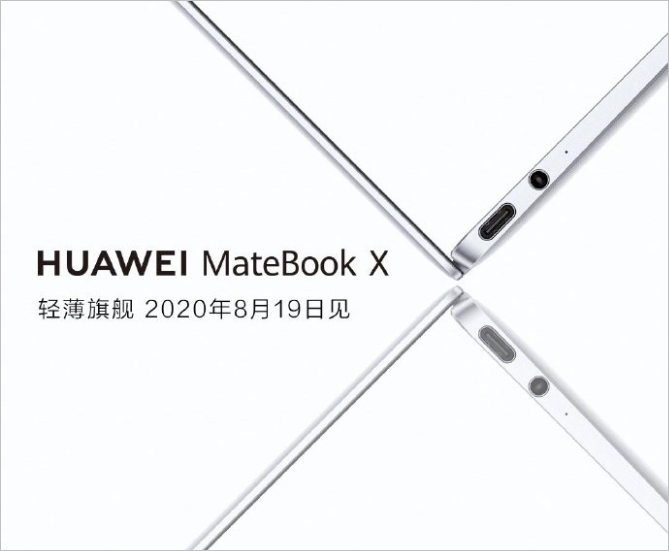
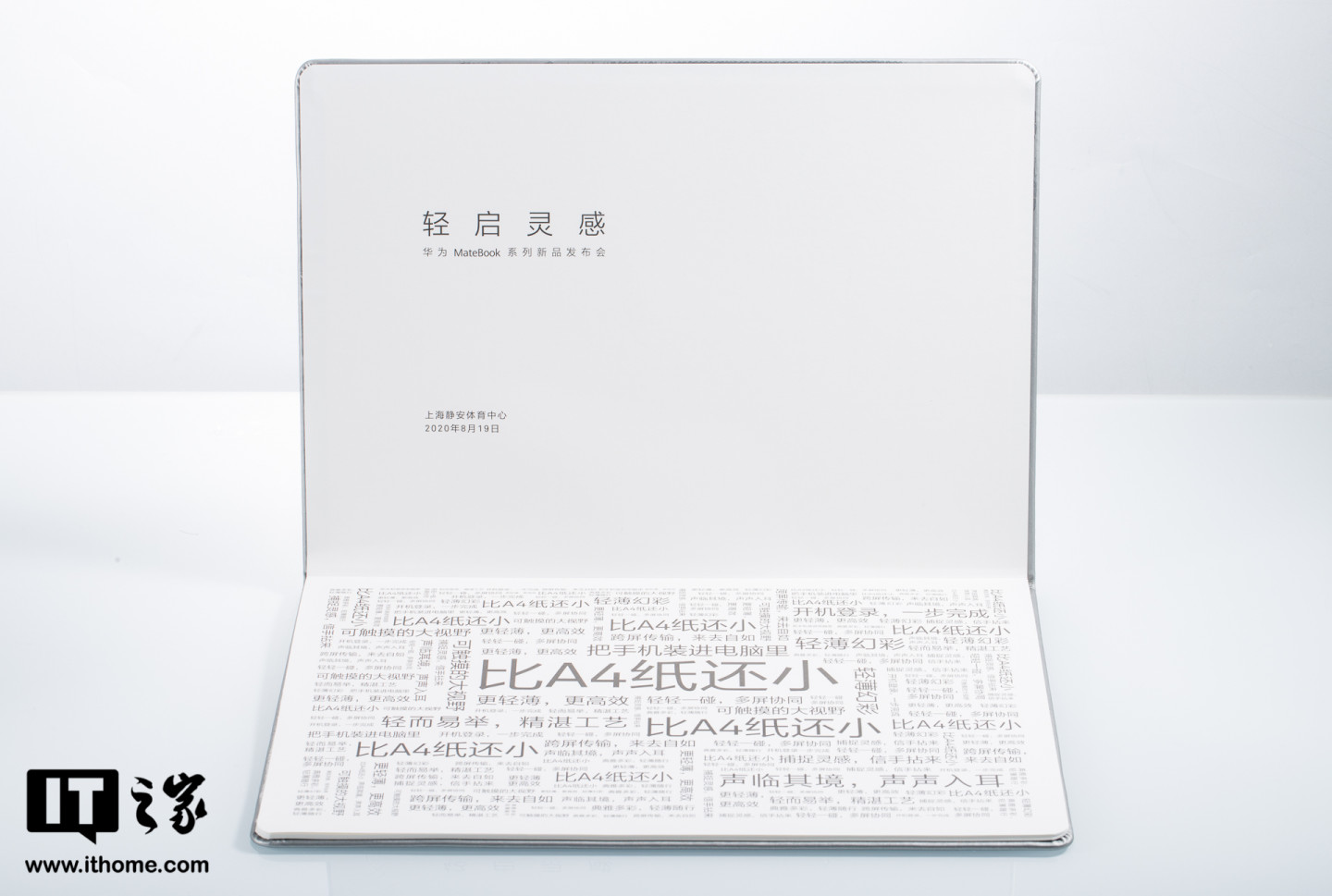
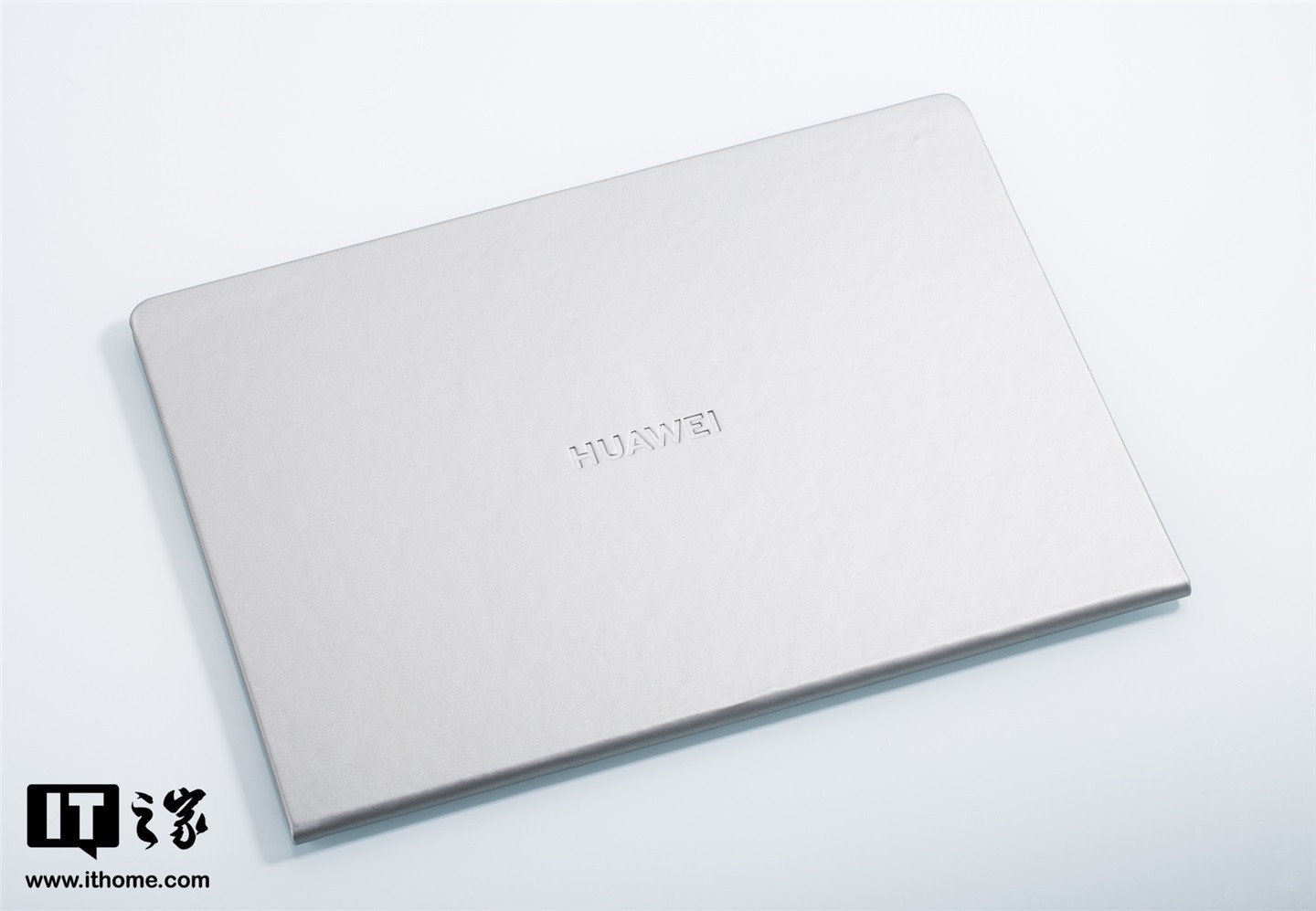
Huawei has scheduled a launch event for august 19 and the product that will be launched is the MateBook X notebook PC. The company has sent out launch invites to some media houses. The one sent to IT home seems to have drawn inspiration from the laptop itself.
The invitation is a booklet designed like a Notebook PC. This is no doubt a reflection of design the laptop will adopt, which is a thin and light build, no bigger than the size of an A4 paper.
The teaser poster of the MateBook X inside the launch invite equally contains a render of the laptop, confirming a thin and light build. The teaser poster also shows the device will utilise the faster USB-C port. It is also shown to have a 3.5mm headphone jack.
The hardware configuration of the MateBook X has not been released by Huawei but we expect it to come with a top of the pack specs. We’ll have to wait until the launch date to find out more details.
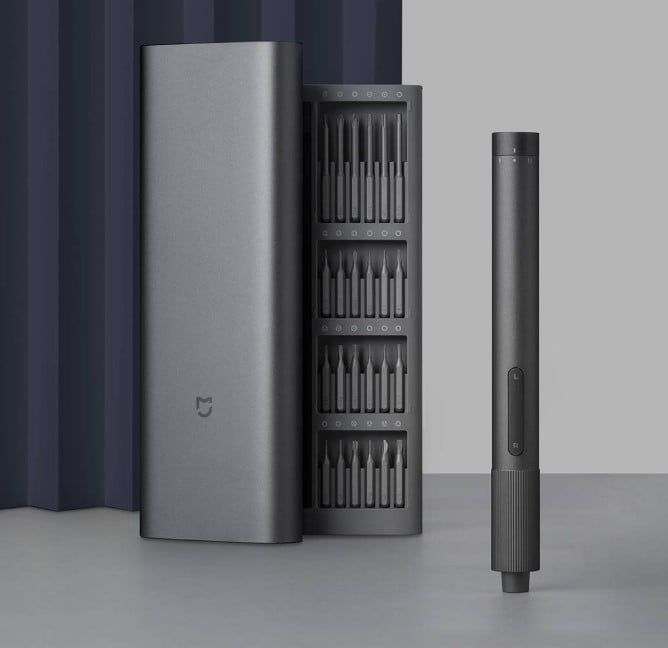
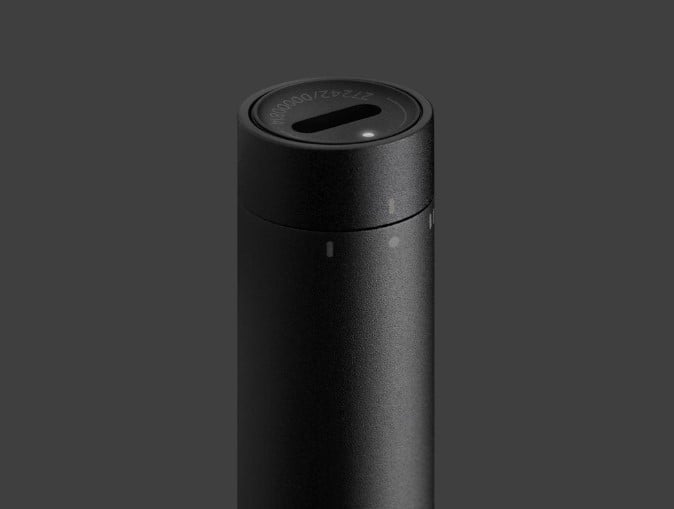
The Mijia Precision Screwdriver Kit a.k.a. Xiaomi Precision Screwdriver Kit just got a new version. The new Mijia Electric Precision Screwdriver Kit now has an electric screwdriver and what makes it even cooler is that it charges via USB-C.
The new screwdriver kit is priced at ¥169 (~$24) which is higher than the price of the Mijia Electric Screwdriver that launched last year. However, the Mijia Electric Precision Screwdriver Kit comes with 24 steel bits, double that of the Mijia Electric Screwdriver.
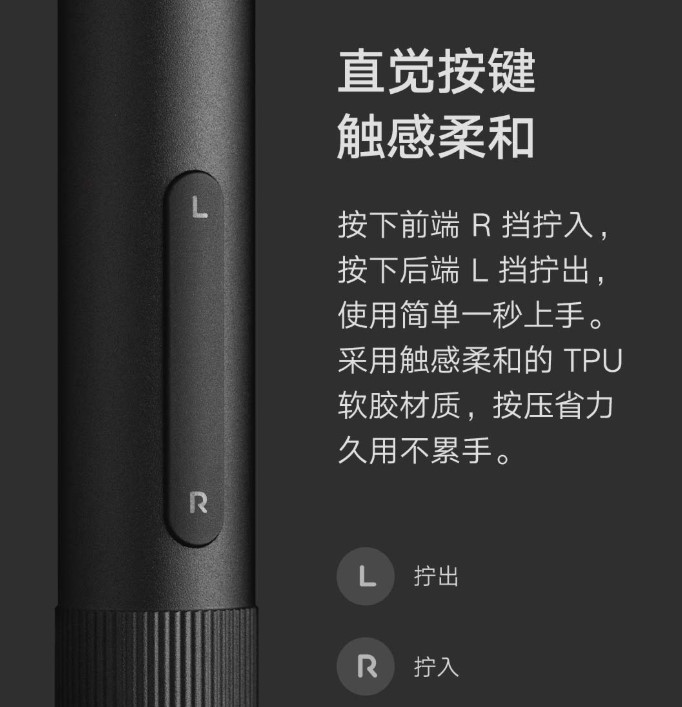
The Mijia Electric Precision Screwdriver Kit has an all-metal gearbox and a strong magnetic motor that can reach a maximum speed of 200 rpm. Because the handle now contains an electric motor, it is significantly thicker. It also has two soft-touch buttons on the side so you can switch between clockwise and anticlockwise rotation.
The top of the handle can be rotated to switch the torque between 0.05N m and 0.2N m. The former is suitable for phones, glasses, and other products with precision screws while the latter is suitable when unscrewing laptops, smart speakers, and other electronic appliances.
The 350mAh built-in battery can be used for tightening or loosening up to 400 screws. The USB-C port for charging is at the top of the handle and it takes between 160 – 200 minutes to fully charge. Below are the screw bits that come with it:
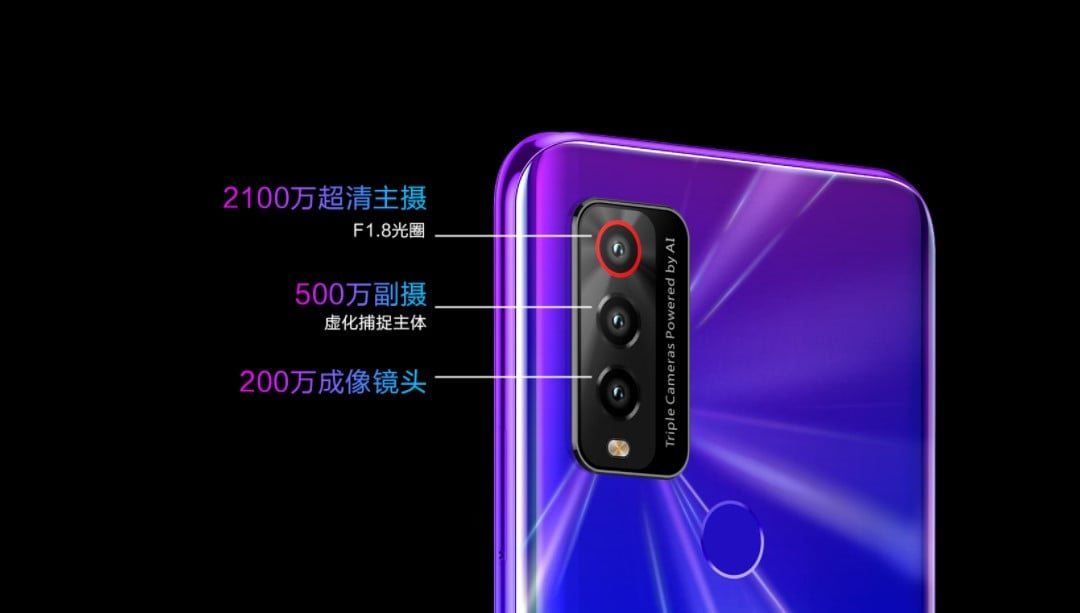
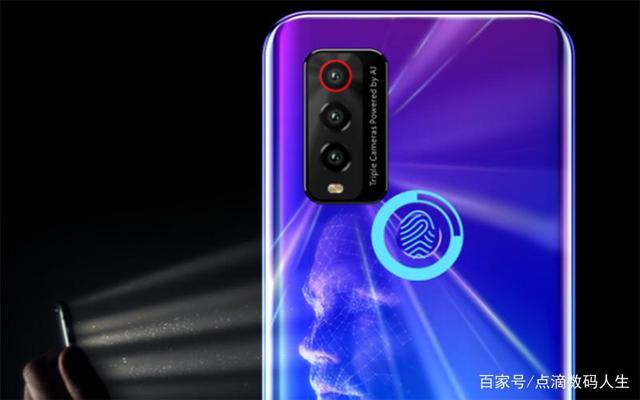
Chinese phone maker Coolpad today held a strategic partnership conference alongside China Telecom and UNISOC group where it officially unveiled one of the cheapest 5G phones in China. The Coolpad X10 5G brings 5G connectivity to the budget segment with a starting price tag of 1,388 yan (~$199).
The affordable 5G phone is powered by a UNISOC T7510 chipset which supports SA/NSA dual-band 5G network mode. The chipset also supports all the mainstream 5G frequency bands in China as well as full Netcom 4G. It adopts HD voice EVS over 5G NR technology, 2T4R transmission technology, Wi-Fi MIMO dual-antenna technology. The phone also supports physical fingerprint and face recognition unlock methods.
The Coolpad X10 5G is equipped with a 6.5-inch high-definition LCD waterdrop screen with a screen-to-body ratio of 93.07%. The waterdrop notch houses a 13MP selfie camera. At the rear aspect, there is 21MP main camera with an f1.8 aperture in a triple camera arrangement. The other imaging sensors include a 5MP depth sensor and a 2MPAI lens. The camera setup also includes a high-sensitivity color temperature flash. The phone is also equipped with an enhanced camera optimization technology which includes super night scene mode.
The X10 5G is available in two memory configurations and these include a 4GB RAM + 128GB storage combo and the top-end 6GB RAM + 128GB storage option. The 5G mobile phone will get power from a 4600mAh battery and is said to utilise a PC-level liquid cooling technology.
In addition, the machine adopts a 3D curved body made of glass and will be available in three colour options: Black, White, and Blue.
In terms of the prices and availability, the Coolpad X10 5G 4GB+128GB version is priced at 1,388 yuan(~$199) and the 6GB+128GB version is priced at 1,588 yuan (~$228). The phone will officially be on pre-sale from August 20.
Xiaomi’s 10th-anniversary event yesterday saw the tech giant announce a number of awesome products. Among the lineup is the Mi 10 Ultra which is the first phone with support for 120W fast charging. There is also the Mi TV Lux Transparent Edition, a literally transparent flatscreen TV. A Xiaomi spokesman has now revealed that there are no plans for these products to get a global release.
Daniel D (@Daniel_in-HD) is the Senior Product Marketing Manager and Global Spokesperson for Xiaomi and he revealed in a tweet that there are no plans for a global release for the Mi 10 Ultra, Redmi K30 Ultra, Mi TV Lux Transparent Edition, and the Ninebot GoKart Pro Lamborghini Edition.
Lots of questions coming in about yesterday's @xiaomi launch, #1 being whether we'll be launching these incredible products across our global markets. For the moment, we don't have plans for official global channels, but stay tuned for future news! pic.twitter.com/mMtdanB7zf
It sure is disappointing news but there is still a chance that at least one of these products may get an international release before the end of the year. However, the chances of the Mi 10 Ultra getting a global release might be the slimmest of them all.
To start with, Xiaomi didn’t announce the Mi 9 Pro 5G outside China last year. So, it is understandable why there are no plans to launch the Mi 10 Ultra globally. Another reason is that the Mi 10 Ultra flagship is assembled at Xiaomi’s new Smart Factory, a next-gen fully-automated production line that is designed for making flagships and as a testing-ground for high-end products.
The Mi 10 Ultra is the first premium smartphone to be assembled at this factory which means if Xiaomi is going to launch the device outside China, it will have to be exported to these markets which will significantly raise the price. The same can be said for the Mi TV Lux Transparent Edition too.
Anyways, we can look forward to the Mi 11 (if that is what it will be called and they don’t pull a Samsung move and jump to Mi 20). Next year’s flagship should get a global release and should pack some of the features of the Mi 10 Ultra including 120W fast charging.
Despite being available for both Android and iOS platforms, WhatsApp does not offer any cross platform support. However, this might soon change and its parent company, Facebook, might soon offer the ability to sync your messages between both operating systems.
While we had previously reported on Facebook Messenger and WhatsApp receiving cross chat feature, this new cross platform support would allow WhatsApp users to access the service in up to four different devices. The news was first reported on by WABetaInfo, which revealed that the cross platform chat synchronization feature is under works. According to the report, this feature would require a Wi-Fi connection to safely decrypt and copy all existing conversations from one device to another.
In other words, any Android user will soon be able to transfer all of their chats over to an iOS device, and vice versa. This is currently not possible, and one would lose all data when switching platforms. So, this feature would be a great quality of life improvement with an added touch of convenience. Reportedly, WhatsApp is also working on a dedicated iPad app, which should be available around the same time as the cross platform feature is introduced. Meaning, soon a person would be able to access their chats through an iPad, iPhone, and Android smartphone as well.
Google is turning the Android platform into a global earthquake detection network that is powered via smartphones. The system is in its nascent stages and was first rolled out today, with The Verge reporting on it.
Android users can opt in for the program which will basically utilize the accelerometer found in your smartphone, to become one data point for an algorithm that can detect earthquakes. What Google hopes is that, when the network gets large enough, people would automatically receive warning messages regarding a possible earthquake impacting their region.
The system is made possible with a large number of Android smartphones scattered across the globe along with a smart algorithm that intelligently utilizes the data it receives. This entire network showcases the fact that smartphones have a lot more passive practical uses to offer. This was also highlighted in previously tested car crash detection and emergency location services systems.
At the moment, Google is rolling this out in small stages. It will be teaming up with the United States Geological Survey and the California Office of Emergency Services within the state. These alerts are currently being generated by the already existing ShakeAlert system that utilizes data generated from conventional seismometers. According to Marc Stogaitis, lead Google Android software engineer, the use of Android aims to fill in the areas where seismometers cannot cover due to expensive costs to set up and maintain.
“We figured out [Android phones are] sensitive enough to detect earthquake waves. As an earthquake wave goes through, they’re able to detect them and usually see both key types of waves, the P wave and the S wave,” said Stogaitis. In other words, your Android device can act as a “mini seismometer” using the accelerometer. The feature is only active when the device is plugged in to help save battery and even gives out helpful tips and actions to be performed under emergency.
Apple is suing a small business by the name of Prepear, and is taking the company to court. The reason for the lawsuit is that its pear shape logo somehow matches its own iconic apple logo branding.
Prepear is a meal planning application that is targetted towards children, but according to Apple, the company is hurting its business despite not even being in the same line of operations. Allegedly, the brand logo similarity is the cause of the issue. Prepear is currently available on both Google Play and App Store and is owned by Super Healthy Kids. In no manner does it even compete with the Cupertino based giant and its logo isn’t even regarding the same fruit.
Prepear responded to the lawsuit with a statement on its official Instagram account stating that “Recently @apple yes, The trillion dollar Apple, has decided to oppose and go after our small business’ trademark saying our pear logo is too close to their apple logo and supposedly hurts their brand?” The meal planning company also pointed out that Apple bullies other smaller businesses in a similar manner, especially if the branding is regarding a fruit logo. The small business is planning on fighting the tech giant as well and already started a petition to garner support from the public, garnering over 25,000 signatures already.
We use cookies on our website to give you the most relevant experience by remembering your preferences and repeat visits. By clicking “Accept”, you consent to the use of ALL the cookies.
This website uses cookies to improve your experience while you navigate through the website. Out of these, the cookies that are categorized as necessary are stored on your browser as they are essential for the working of basic functionalities of the website. We also use third-party cookies that help us analyze and understand how you use this website. These cookies will be stored in your browser only with your consent. You also have the option to opt-out of these cookies. But opting out of some of these cookies may affect your browsing experience.
Necessary cookies are absolutely essential for the website to function properly. This category only includes cookies that ensures basic functionalities and security features of the website. These cookies do not store any personal information.
Any cookies that may not be particularly necessary for the website to function and is used specifically to collect user personal data via analytics, ads, other embedded contents are termed as non-necessary cookies. It is mandatory to procure user consent prior to running these cookies on your website.