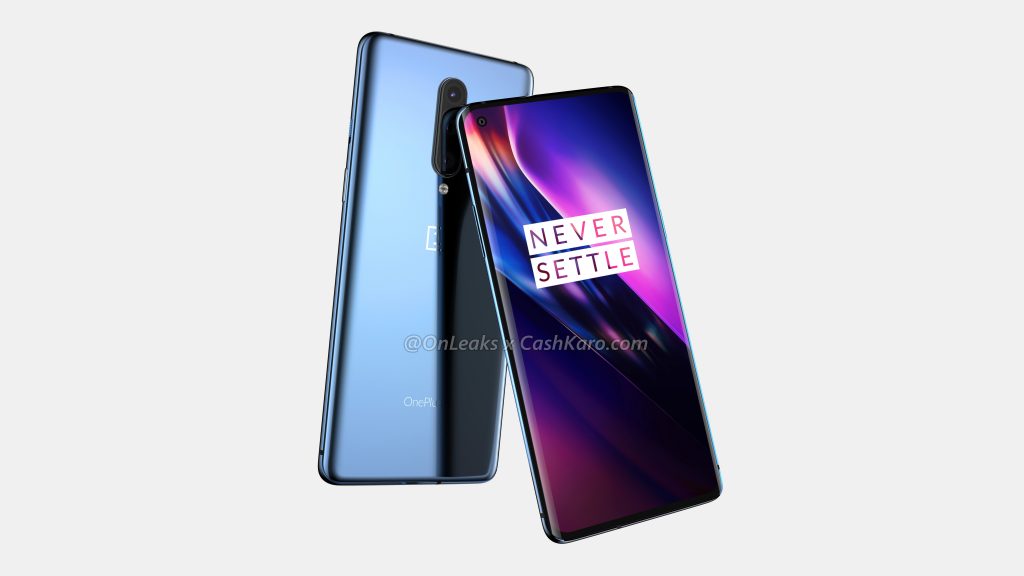
OnePlus 8 series of flagship phones will be made official in the second quarter of this year. India has been one of the major markets for OnePlus. Like the predecessor smartphones, the OnePlus 8 lineup which includes a new member called OnePlus 8 Lite is expected to receive good reception from the country. Well ahead of the launch, the Indian variant of the purported OnePlus 8 that has a model number of IN2011 has been approved by the Bureau of Indian Standards (BIS) in the country.
The BIS listing of the IN2011 has not revealed the actual name of the device. Also, it lacks any information on its specifications. A similar model number i.e. IN2010 was approved by the China’s Ministry of Industry and Information Technology in the recent. It only confirmed the support for dual-mode 5G networks on the device. It is believed that the IN2023 OnePlus phone that was recently spotted on the Geekbench benchmarking platform could be the OnePlus 8 Pro.
It is speculated that OnePlus 8 will be arriving with a 6.4-inch S-AMOLED punch-hole display. It may support 120Hz refresh rate and full HD+ resolution of 1080 x 2400 pixels. The handset will be equipped with an in-screen fingerprint reader. The Snapdragon 865 mobile platform may fuel the phone with 8 GB / 12 GB of LPDDR5 RAM. It could be coming in 128 GB and 256 GB of UFS 3.0 storage options.
The OnePlus 8 may feature a front-facing camera of 32-megapixel. Its rear could be fitted with a triple camera setup with Sony IMX686 64-megapixel main lens, a 20-megapixel ultrawide sensor and a 12-megapixel telephoto lens with 5x optical zoom support. The handset could be backed by a 4,000mAh battery that supports 30W fast charging. Some leaks have claimed that it will carry support for fast wireless charging.
The OnePlus 8 may come in models like 8 GB RAM + 128 GB storage, 8 GB RAM + 256 GB storage and 12 GB RAM + 256 GB storage. These variants could be priced at 3,699 Yuan (~$537), 3,999 Yuan (~$580) and 4,299 Yuan (~$624), respectively. Readers are recommended to digest the specs and pricing leak with a grain of salt.
Jeff Bezos, founder and CEO of Amazon has arrived in India, dressed in an Indian attire. He took to Twitter to reveal that he paid his regards at a memorial dedicated to Mahatma Gandhi and also shared a video of the same.
He is on a three-day visit to India where he will be attending a company event in New Delhi and also likely to meet senior government officials. As Jeff Bezos comes to India, thousands of small traders across 300 cities have planned protests, claiming that the company is distorting local retail market.
Ashok Kumar Gupta, India’s antitrust chief, has said that big e-commerce companies in India should not offer deep discounts which can potentially hurt and small-scale brick and mortar retailers in India.
Hundreds and thousands of small brick-and-mortar retailers, led by the Confederation of All India Traders (CAIT), have planned a countrywide protest against the company. CAIT has also accused Amazon and Flipkart of violating India’s foreign investment rules but the companies have denied the allegations.
During the event, Jeff Bezos said that the company will use its global footprint to export $10 billion worth of ‘Make In India’ goods by 2025. He also stated that Amazon is going to invest $1 billion in digitising the small and medium businesses in India. Amazon has committed $5.5 billion in India investments and sees the country as a key growth market.
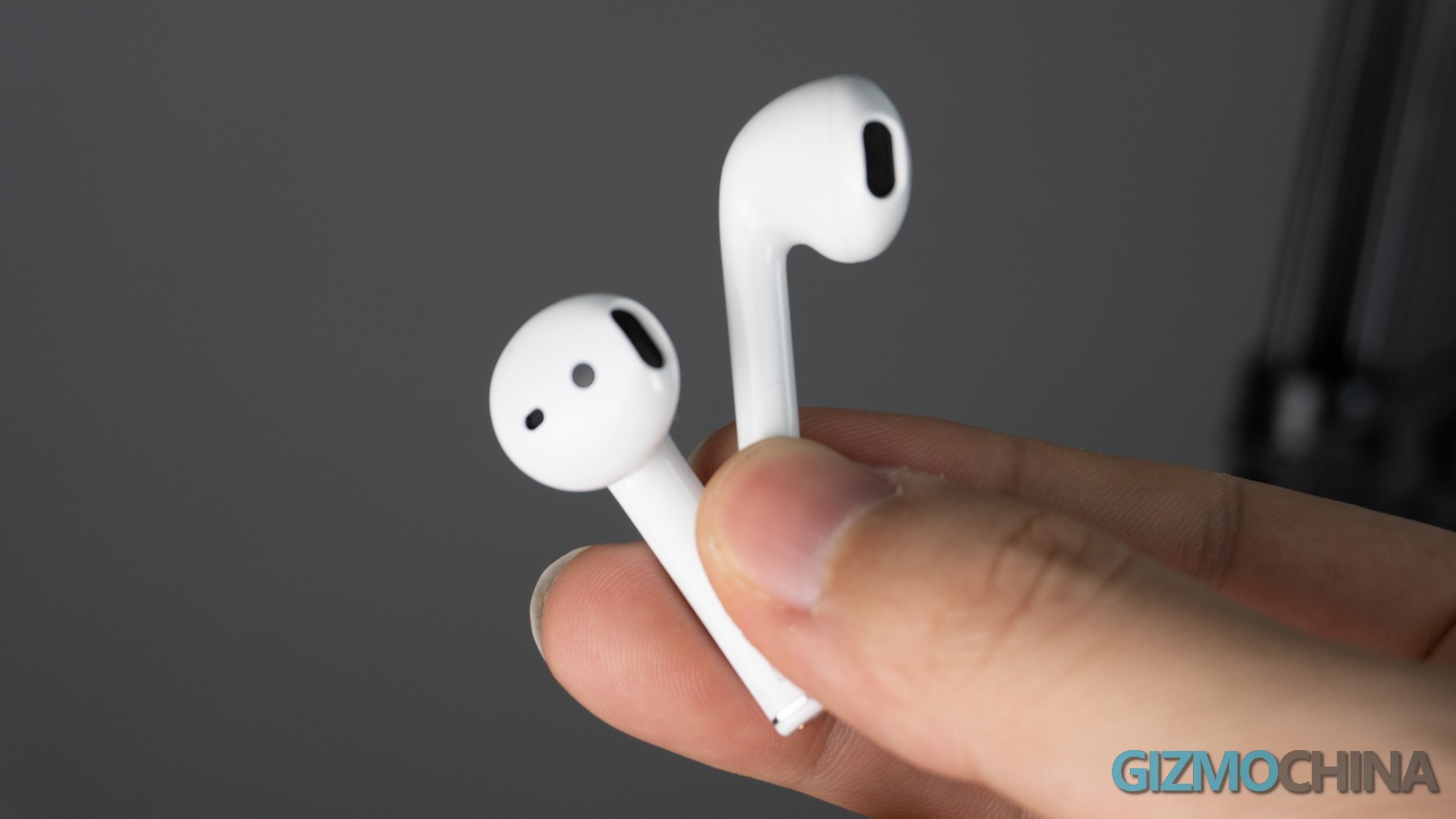
Xiaomi unveiled its first truly wireless earphone dubbed the AirDots TWS earphone towards the end of 2018. Now, the Xiaomi Airdots Basic TWS earphone has gone up for sale carrying a lowered price tag through Banggood.
Aside from shedding light on the aforesaid discount, we will show how you can save more money while placing your Airdots Basic order via the Chinese e-tailer that has a reputation for offering the best bang for your buck. The Xiaomi Airdots Basic would normally set you back $39.99, but Banggood is offering it for a lowered price of just $31.71.
In addition to getting this 21 percent discount, you can avail of free shipping if your cart value exceeds $19.99. On top of that, you can take advantage of the $18 OFF New User Coupon for an extra discount if this is your first order with Banggood.
The rest of the Banggood users, on the other hand, can apply coupon code BGNAXMTWS for an extra $16.02 off at the time of checking out. As a result, the already reduced retail price of the Airdots Basic comes down to only $15.69, making this Xiaomi-branded TWS earphone an absolute bargain.
This ultra-lightweight wireless headset adopts the powerful Bluetooth core for stable and faster transmission. Moreover, it uses noise reduction technology for softer, clearer sound quality and unparalleled calling experience.
The ergonomic design of the Xiaomi Airdots Basic fits comfortably in your ears even for a longer duration. It is made using soft and comfortable silicone material to ensure it doesn’t fall off when you are working out. On top of that, it is anti-sweat, which means it serves as sportswear as well.
This easy-to-pair headphone can summon an AI assistant. Other features include a multi-function button, pause/play music, answer/reject incoming calls, and many more. You can check out more details about the Xiaomi Airdots Basic and grab the discount simply by visit this link.
The Gizmochina Coupons is a community that finds, reports and evaluates deals and coupons of Chinese products from online shops. Please visit it here to find more coupons to save money on mobiles and smart gadgets.
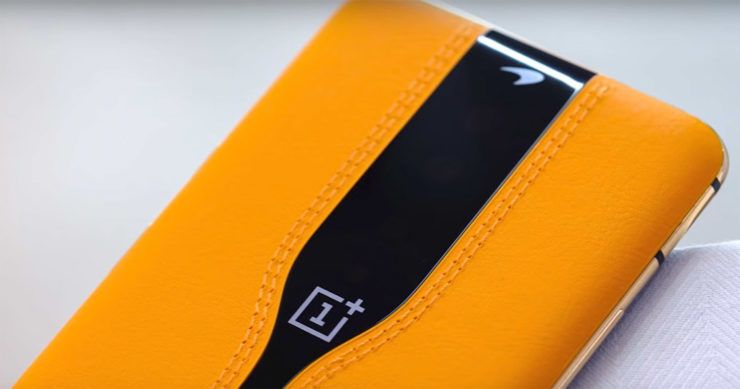
During CES 2020, Pete Lau, CEO of OnePlus made his first official appearance in a podcast with The Verge to discuss many things. The main topic was the OnePlus Concept One McLaren Edition smartphone which was unveiled at the Consumer Electronics Show but the discussion also strayed towards the emerging technological trends like 5G networking and foldable handsets.
In the interview, the senior executive claimed that OnePlus has looked into the technology behind foldable smartphones. However, he also mentioned that the positives “outweighed by the shortcomings or the disadvantages of the current state of the technology.” In other words, the company isn’t planning on releasing a foldable smartphone, at least not yet.
OnePlus Concept One McLaren Edition with disappearing rear cameras
Although, the statement does leave hope for the future as advancement in the display technology areas could lead OnePlus to also make a foldable smartphone. The interview also bears resemblance to a previous statement by the company regarding wireless charging, which was deemed unnecessary back then.
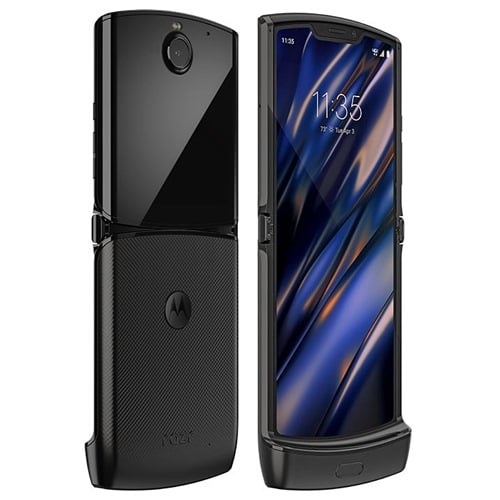
Notably, many examples of foldable smartphones were brought in to question when asked about their viability. Motorola’s Razor was a prominent one that Pete considered one of the better foldable smartphone models currently available but still doesn’t feature a “crisp” display. According to the CEO, foldable smartphones display lose out on display quality with the plastic OLED screen, which is a primary reason Pete Lau hasn’t dwelled into foldable handsets.
Lastly, OnePlus CEO also answered questions regarding camera technology, imaging algorithms and the increasing cost of the company’s smartphones. Pete stated that large investments are being made in the camera department while the company is also collaborating with industry leaders to brings software algorithms to rival Google and Apple.
Motorola Razr
By its extension, he even stated that the cost of a smartphone is raising as more features are being housed in a single unit. A camera lens is expensive while the number of sensors is increasing as well. Thus, OnePlus smartphones will also see a hike in price, but it was also mentioned that the company would still practice its traditional method of operations. Meaning, saving on marketing and other areas to lower the cost burden faced by the consumer.
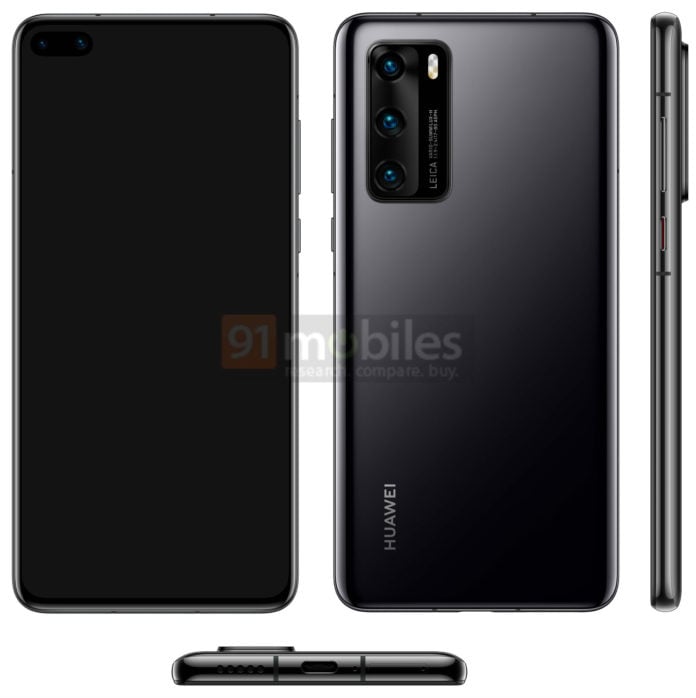
The CAD renders of the upcoming Huawei P40 and Huawei P40 Pro first surfaced on 91mobiles back in December 2019. The renders revealed by reputed leakster Onleaks revealed quite a few key design elements of the P40 lineup. Today, the tipster has teamed up with the same publication once again to bring clearer renders of the Huawei P40. The new renders not only gives a good look at its design, but also reveals its key elements.
According to the latest render, the Huawei P40 flaunts a nearly bezel-less display with dual cameras on the front housed within a pill-shaped punch hole at the top-right corner. The volume and power buttons are located on the right edge.
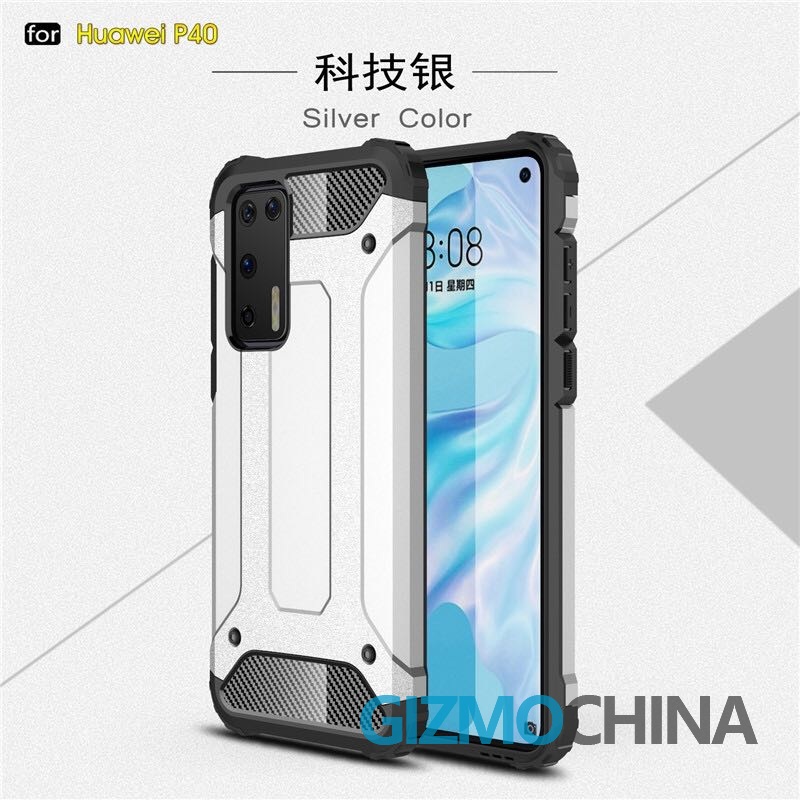
At the rear, the Huawei P40 flaunts a triple-camera setup engineered by Leica, along with a dual-LED flash unit housed within a rectangular module towards the left. The camera module protrudes slightly from the rest of the rear panel. The rear design matches with the case renders of the Huawei P40 that were exclusively shared by GizmoChina today.
The render showcases a black color variant with the Huawei logo imprinted on the bottom left corner in line with the camera setup. The device also flaunts a USB Type-C connector on the bottom edge. Also, it lacks a 3.5mm audio jack.
Not much is known about the Huawei P40 Pro at the moment apart from what the company has revealed so far. The P40 Pro is slated to sport a quad-rear camera setup, along with a curved glass display. Additional details will be available within the next few months as Huawei is planning to launch the P40 lineup at an event in Paris in March 2020. The Huawei P40 range will replace last year’s Huawei P30 and Huawei P30 Pro flagships.
Huawei P40 Specifications and Features (Rumored)
The Huawei P40 is rumored to be powered by the Kirin 990 SoC and sports 5G connectivity. The triple camera layout is rumored to feature a primary sensor, along with a ToF sensor and an ultrawide lens. The Huawei P40 is expected to run on Android 10- based EMUI, but miss out on Google Services due to the US ban. The P40 could sport a display measuring between 6.1 and 6.2-inches.
The P40 Pro is likely to flaunt a periscope with a 10x optical zoom along with a telephoto sensor. The quad-camera setup on the P40 Pro could include a 64-megapixel Sony IMX686 sensor, a 20-megapixel ultrawide lens, a 12-megapixel periscope, ToF sensor, and a macro lens.
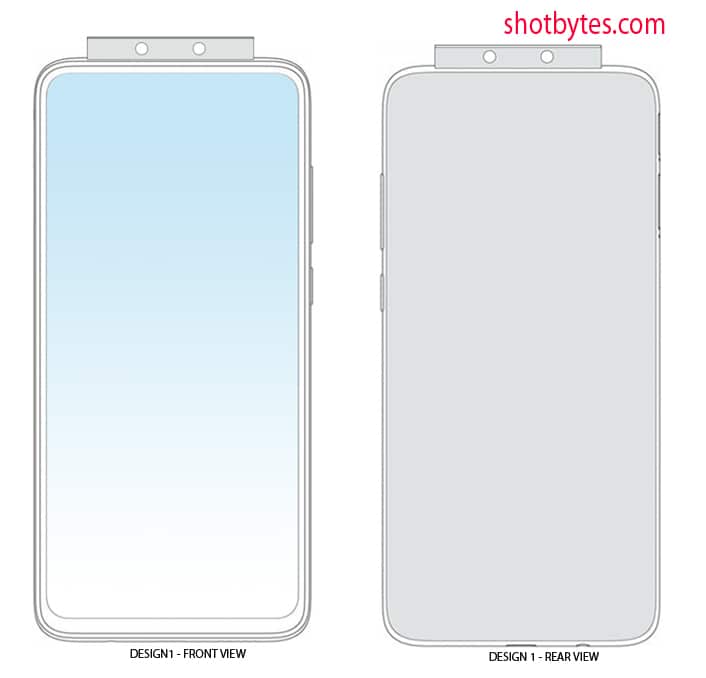
Smartphone manufacturers compete in an industry that has stiff competition. To stay relevant, each brand needs to innovate and improve their offerings. So, people quite often discover patents for future handsets that are either planned or in the works with special and unique features. Now, patents of Xiaomi, the Chinese tech giant, have surfaced online showcasing three unique new pop up camera designs.
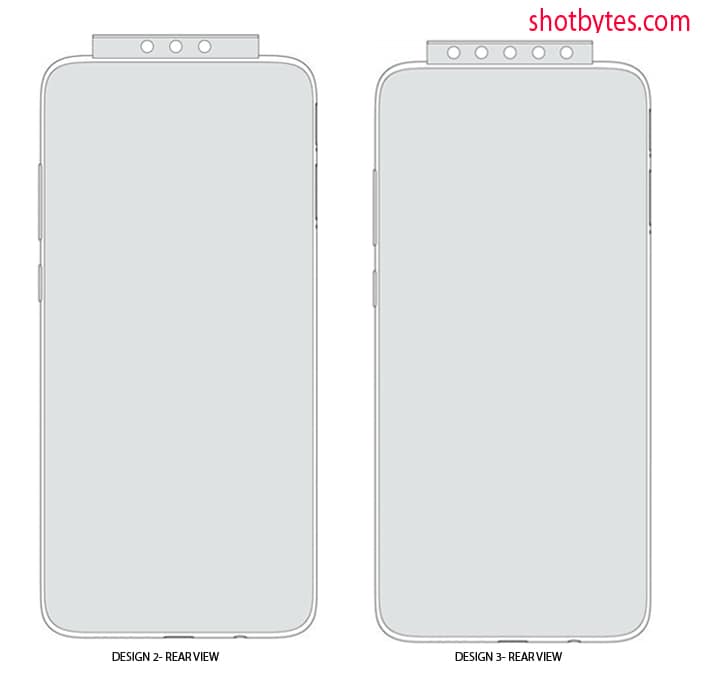
The patents were found in the China National Property Administration (CNIPA) and were for the selfie camera of an unknown smartphone. It can be surmised that the patent is for a new pop up mechanism as the first features a dual front and rear facing camera setup. On the other hand, the rest of the patents detail dual, triple and even a penta camera setup.
Xiaomi patents new Pop Up Camera design with dua front and rear facing sensor (Image via ShotBytes)
The designs are strictly for the camera module as the rest of the smartphone design as seen in the patents remains the same, only the number of camera cut outs differentiate them. Notably, the patents reveal a unique pop up camera design where both the rear and front facing cameras are housed in the same mechanism, on either side. This is currently unheard of since these may sensors have never been crammed into such a small space.
Although it will be a technical marvel and other brands would soon seek to include the technology if it sees the light of day; but unfortunately, it is unknown is Xiaomi actually plans to follow through and develop this. As of right now, no official confirmation has been made but the interesting feature could be useful in future smartphones.
Xiaomi patents reveal also reveal a triple and penta camera setup on the rear. (including dual front facing cameras)
Many smartphone OEMs are shying away from the pop up camera mechanism. The same extends to buyers with doubts regarding durability. However, Chinese companies like Xiaomi seem to be taking a different route as suggested by such patents.
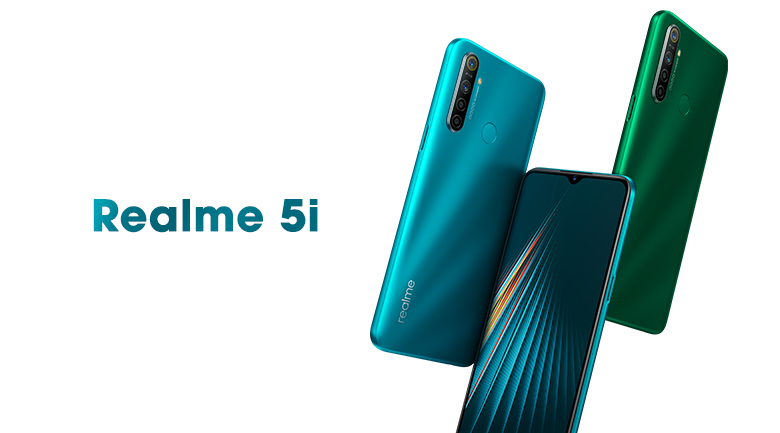
The recently unveiled Realme 5i smartphone has gone on sale for the first time in India through the company’s official website and Flipkart. Also, on open sale is the Realme Buds Air truly wireless earphones that are finally up for grabs. The Buds Air was launched last month alongside the Realme X2 and Realme’s payment service PaySa in India.
Realme 5i and Buds Air Price in India
The Realme 5i starts at Rs. 8,999 (~$127). The smartphone replaces the Realme 5, which the company has officially phased out. The Realme 5i is available in two color options namely Aqua Blue and Forest Green. As part of the launch offer, MobiKwik users are entitled to a 10% cashback (SuperCash). While Reliance Jio users are entitled to benefits worth Rs. 7,550 (~$106).
Meanwhile, the Realme Buds Air truly wireless earphones are priced at a comfortable Rs. 3,999 (~$57). It is available in three colors, namely white, black, and yellow. The Buds Air is on open sale on Flipkart and the official Realme India website.
The Realme 5i flaunts a 6.52-inch IPS LCD display with a resolution of 1600 x 720 pixels, and a waterdrop notch housing the front camera. Powering the Realme 5i is a Snapdragon 665 SoC with 4 GB of RAM and 64 GB of internal storage, further expandable via a microSD card.
The quad-camera setup on the rear consists of a 12-megapixel primary lens, paired with an 8- megapixel ultrawide sensor, and two 2-megapixel sensors for macro and depth effect. The smartphone sports an 8-megapixel selfie camera. Under the hood of the Realme 5i is a 5,000 mAh battery with 10W fast charging. The device runs on Android 9.0 Pie-based ColorOS 6.1.
Realme Buds Air Specifications and Features
The Realme Buds Air (Review) features a custom R1 chip with interesting features like Low Latency gaming mode. According to the company, this helps cut down audio latency delay in half. Further additions include 12mm audio drivers and an advanced multi-layer composite diaphragm. The list of features further includes Dynamic Bass Boost, Bluetooth v5.0 for improved connectivity and seamless audio quality.
The Realme Buds Air truly wireless earbuds feature background noise cancellation during calls and have an LED battery indicator. The Realme Buds Air offers three hours of continuous music playback on a single charge. When combined with the wireless charging case, the earbuds offer up to 17 hours of music playback. The device features instant auto-connect, touch controls, smart in-ear detection, and Google Assistant support with Google Fast Pair for seamless pairing. The charging case has a USB Type-C connector at the bottom that supports 10W fast charging.
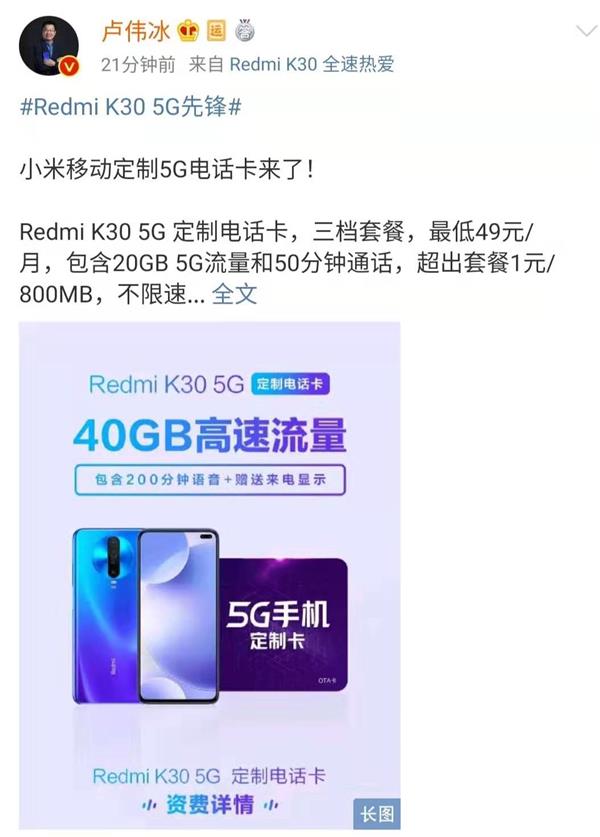
Lu Weibing, Vice President of Xiaomi Group and President of Xiaomi in China, recently went to his personal Weibo to announce some fairly big news. The post reads “#Redmi K30 5GPioneer # Xiaomi Mobile customized 5G phone card is here!” announcing the launch of Xiaomi’s first foray into the realm of 5G providing, with their new Redmi K30 5G bundle.
From this point on, any users who purchase the Redmi K30 5G through Xiaomi Mall will receive a Xiaomi mobile customized sim card, not including phone charges. This card is a 5G customized card specially launched by Xiaomi Mobile for Mi Fans, and supports China Unicom 5G, 4G, 3G networks. Of course, consumers who want to try 5G first need to ensure that their location has 5G signal coverage.
The 5G exclusive custom card launched by Xiaomi Mobile includes three packages of 49 yuan, 69 yuan and 99 yuan.The packages are rated as such:-
The 49 yuan ($7) economic package includes 20GB of data and 50 minutes of voice;
The 69 yuan ($10) value package includes 30GB of data and 100 minutes of voice;
The 99 yuan ($15) package includes 40GB of data and a 200 minute of voice calls.
Xiaomi is clearly attempting to take an upper hand in the 5G race, and it’s a pretty smart move on their part. They’re the first company truly trying to take advantage of the mainstream market by offering a cheap 5G device to their customers, as well as a fairly affordable set of 5G plans to go with it. If this continues, we could see the Chinese giants take an early lead in the race for 5G dominance.
The total number of patents granted by the United States to Chinese companies grew by a significant percentage in 2019. Thus, recording a notable growth among the prominent global economies.
According to the annual report released on Tuesday by IFI Claims, a New Havens-based patent firm, the US granted 34% additional patents to Chinese mainland companies last year. When you put this into perspective, the US granted 333,530 patents to Chinese mainland companies in 2019, a 15% increase from the previous year.
Among the hundred thousand patents filed, Chinese mainland companies filed for 16,900 patents, an increase from 12,599 back in 2018. Patents by US companies stood next in line at 15.95%, the second-fastest growth recorded this year. According to senior analyst Larry Cady of IFI Claims, Chinese companies have recorded the highest volume of patents filed in the past couple of years. The trend has primarily been in the technology sector where China has witnessed some major growth in the recent past.
According to the same survey, US companies hold nearly 49% of the patents granted last year, closely followed by Japan and South Korea. The recent growth spurt saw China climb by 5% to the 4th spot, pushing Germany down to 5th for the first time. Two Chinese conglomerates made it to the list of top 15 companies last year. While Huawei gained six positions to enter the top 10, BOE Technologies climbed up the charts to reach position 13.
According to Cady, the Chinese companies are hopeful of the United States lifting the ban on conducting business with US enterprises. Hence, recording the spurt in filing a patent. Another prominent name in the Top 10 list of companies is CRISPR technologies. It is known for creating hybrid plants, vehicle dashboards, medicinal preparations in the field of cancer treatment, and 3D printing.
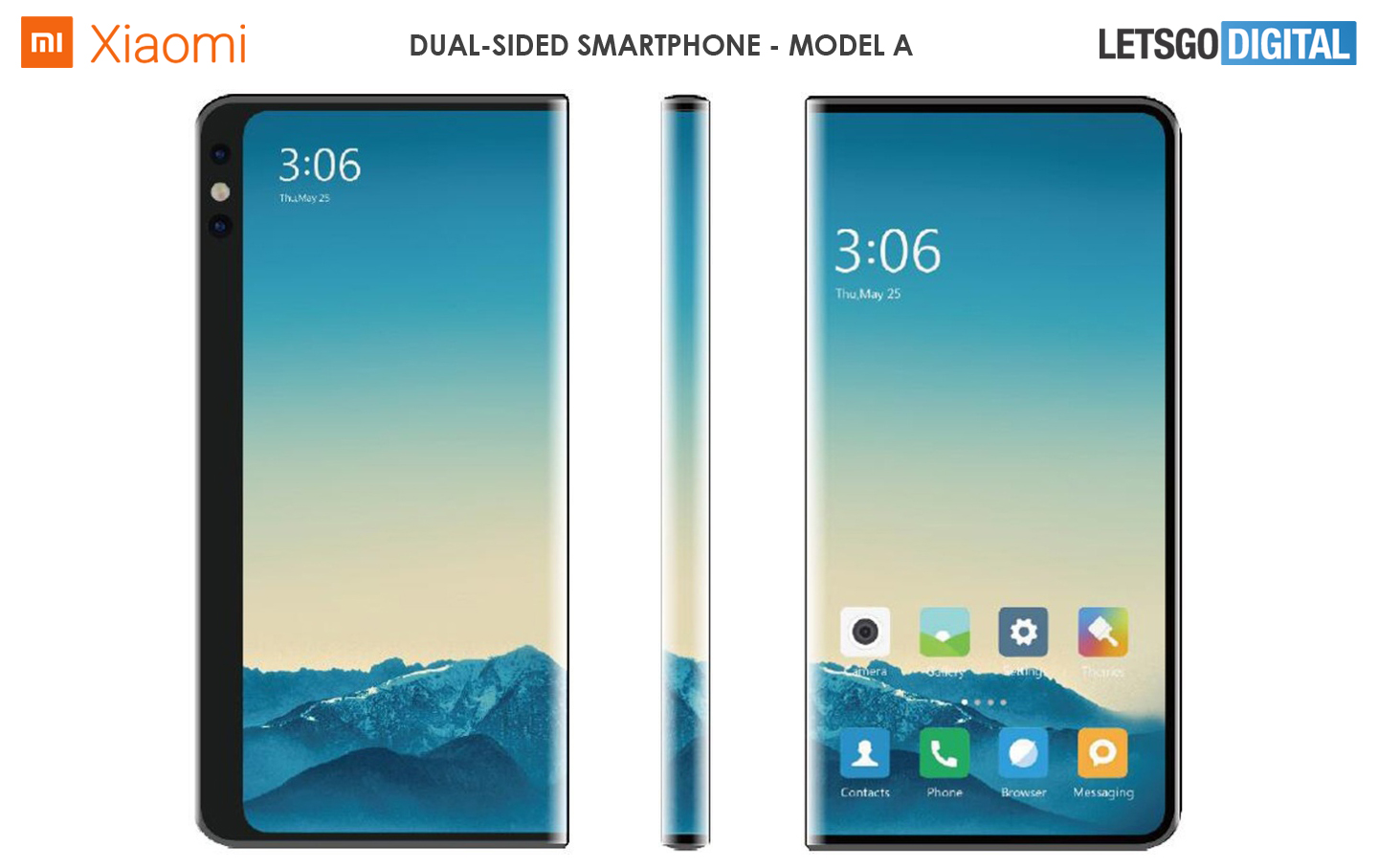
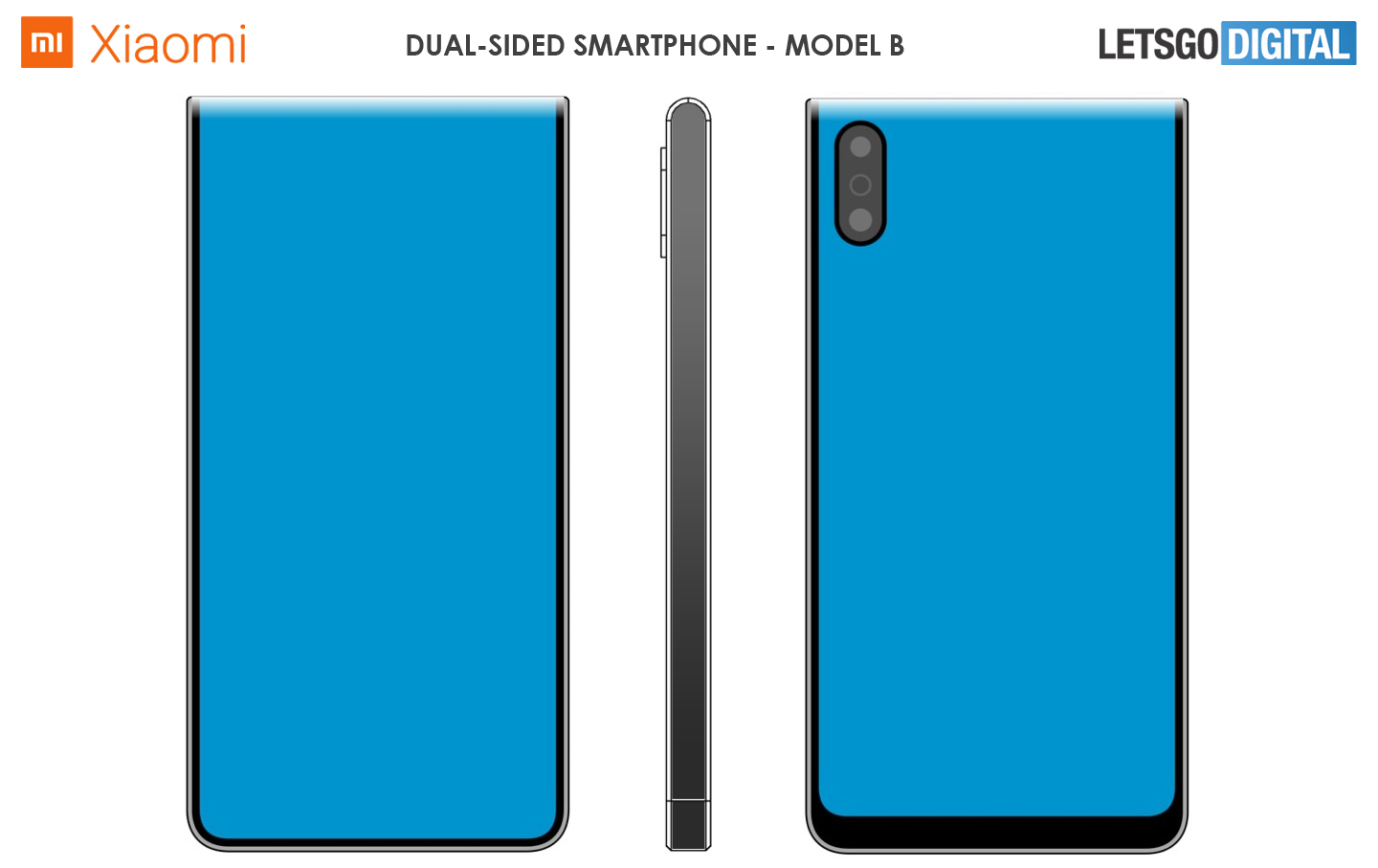
Xiaomi has patented two new and fairly peculiar smartphone concepts in China. These two patents feature designs that are familiar to what we’ve seen from other companies before, but they’re also slightly different in their own way. These two concepts revolve around the idea of displays that only wrap around the device ala the Mi MIX Alpha, instead of folding like the Galaxy Fold and Mate X.
The first design shows a phone that reminds us of the Huawei Mate X, and it’s the more practical of the two patented devices. The display wraps around the side of the device, leaving it sized like a normal sized device. Unlike the Huawei Mate X however, the device doesn’t unfold, allowing the device to be more contained. The camera strip on the patent is much more subtle when compared to the Mate X’s. We actually saw earlier patents for this device recently, so it’s good to see that it’s making rounds.
The second patented device on the other hand is VASTLY more bizarre than the previous device. Instead of forming a wider display, this device features a much longer display that folds over the top of the device. There’s also a small chin at the bottom probably for the sensors, and what appears to be a triple camera setup integrated into display, like some super huge hole punch selfie camera.
It seems a bit more unconventional than the previous device, but if Xiaomi can find a reasonable way to make it more interesting than we’re all for it. While it’s fully possible neither one of these devices will ever fully materialize, it’s certainly interesting to discuss and imagine what they’d be like if they were real. It’s also quite nice to see that Xiaomi are taking a different direction from other companies.
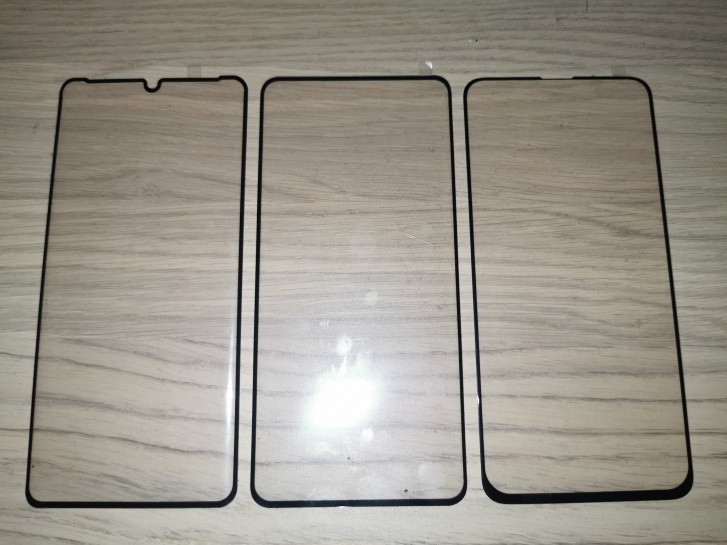
The Huawei P40 series of flagship phones are expected to break cover in March. A screen protector leakv by leakster Teme that had surfaced yesterday had revealed that the upcoming Huawei P40 Pro will be equipped with a curved display. The same tipster has shared an image that compares the screen glass of the P40 Pro with the likes of the predecessor Huawei P30 Pro and the Honor Magic 2 slider phone.
The screen glasses for the P30 Pro (left), P40 Pro (middle) and Honor Magic 2 (right) can be seen in the below image. As it can be seen, the Huawei P30 Pro’s screen glass a cutout for its waterdrop notch screen. However, P40 Pro screen glass does not feature such a cutout. It is speculated that the P40 Pro will be sporting a punch-hole display design. Also, its screen will be curved on all four sides.
In December, reputed tipster OnLeaks had shared the CAD renders of the Huawei P40 Pro. The renders had revealed that the corners of the phone where the display glass meets will have a unique design. The smartphone is expected to house a 6.5-inch OLED display and it is likely to support quad HD+ resolution. The display of the phone is rumored to offer a refresh rate of 120Hz, and it is expected to be equipped with an in-screen fingerprint reader. The device could be equipped with two front-facing cameras.
The Huawei P40 Pro is expected to feature as many as five cameras on its back. Tipster Teme has claimed that it could be equipped with a 52-megapixel 1/1.13” main lens that can churn out 13-megapixel images by using a quad-bayer filter. The sensor size is said to be 0.6micron which suggests that the 13-megapixel photos will have an effective large pixel size of 1.92micron. This tip contradicts previous claims that the Huawei P40 Pro would be a penta-lens setup that will include a Sony IMX686 64-megapixel lens, a 20-megapixel ultrawide lens, a 12-megapixel telephoto lens with 10x optical zoom, a macro camera and a 3D ToF (Time of Flight) sensor.
The Huawei P40 and P40 Pro will be powered by the Kirin 990 5G chipset. It could be housing a mammoth battery of 5,500mAh capacity. It is advisable to digest the specs leak of the P40 series with a grain of salt.
While the Oppo R17 and R17 New Year Editions received the update on 13th January, the R17 Pro, R17 Pro New Year Edition and R17 King Custom Edition will be receiving the new update today.
Along with that, the company has announced that the Oppo Find X is also receiving the update. Do note that the early adopters update for the R17 Pro series and the Find X series is available for the first 2,000 users each.
To become a part of this program and receive the new beta update, you just need to go to Settings menu on your smartphone and head over to the “Software Update” section. There, click on the settings icon in the top-right corner and tap on “Upgrade Early Adopters”.
ColorOS 7 is based on Oppo’s Infinite Design concept that has its core philosophy in lightweight visuals for a clean and user-friendly interface. It brings additional privacy-related features such as the Personal Information Protection option that allows users to protect their personal data from third-party apps and software. To know more about ColorOS 7, including all the new features, click here.
Chinese giant Huawei has today announced that by the end of December 2019, the company’s total worldwide 5G smartphone shipments have exceeded the mark of 6.9 million units.
In the year 2019, Huawei has launched a number of 5G smartphones, including Mate 30 5G series, Mate 20 X 5G, Mate X 5G, Nova 6 5G, Honor V30 series, among others. Do note that the number includes devices from Huawei as well as its sub-brand Honor.
As per the latest report from Master Lu, Huawei and Honor combined has a market share of 25.8 percent in terms of Android smartphones in China. Huawei is leading the market with 15.36 percent market share while Honor ranks second with 10.45 percent market share.
This is quite interesting that despite the overall decline in the Chinese mobile phone market, Huawei’s market share keeps on growing and the cumulative shipments in the first three quarters have exceeded 185 million units.
Recently, Huawei revealed that the company’s revenue topped 850 billion Chinese yuan (approximately $122 billion) this year, a new record high for the Chinese group, registering an 18 percent increase over the previous year.
It also added that the company has sold 240 million smartphones in the year 2019, a significant increase compared to 206 million units last year. This is impressive given that the company achieved such numbers even after getting banned in the United States.
Huawei’s smartphone business became its biggest revenue contributor in the first half of this year. The Chinese company is expected to remain ahead of Apple and behind South Korea’s Samsung Electronics in the global rankings of smartphone brands.
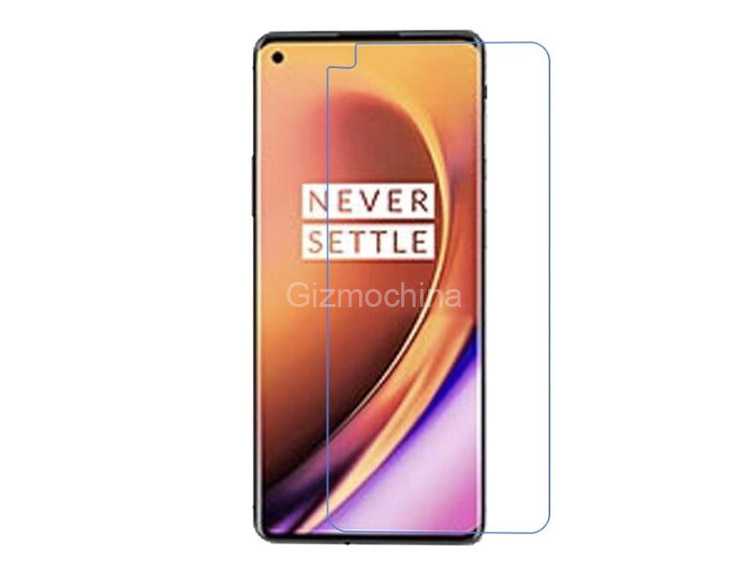
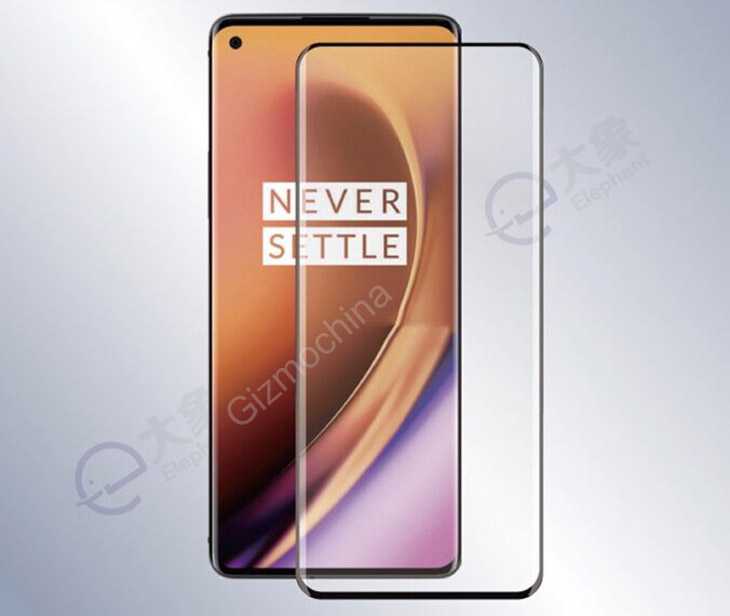
Soon after the launch of the OnePlus 7T series, reputed tipster had released the CAD renders of the OnePlus 8 Pro and OnePlus 8 smartphones. Later, he had also shared the CAD renders of the OnePlus 8 Lite handset. OnePlus is expected to unleash the OnePlus 8 series in Q2 this year. With few months remaining for the launch, the OnePlus 8 rumors are now gaining momentum. Recently, the purported OnePlus 8 Pro was spotted on Geekbench with keys specs. Today, GizmoChina brings the exclusive screen protectors designed for the OnePlus 8 Pro smartphone.
OnePlus 8 Pro flat screen protector
The two images shared in this post showcases the two screen protectors with different designs for the upcoming OnePlus 8 Pro smartphone. In the first image, a flat screen protector can be seen with a cutout at the top-left corner. This design corroborates with the punch-hole display design of the smartphone that was first revealed by OnLeaks. The screen protector shown in the second image has no cutout. Rather, it has a curved edge to edge screen protector.
OnePlus 8 Pro edge to edge curved screen protector
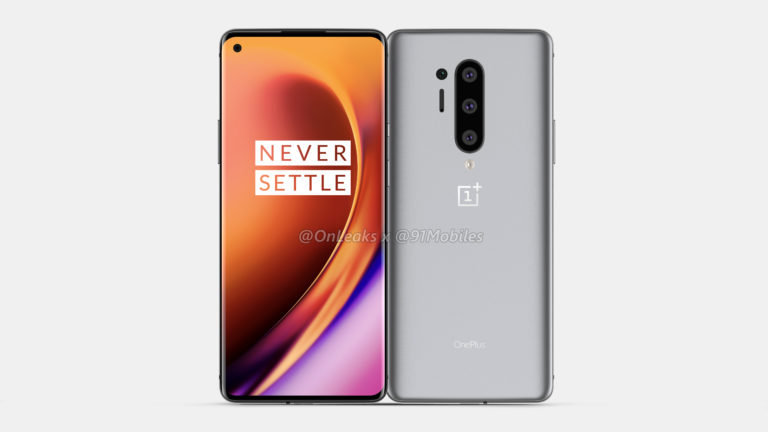
Along with the CAD renders, OnLeaks had revealed that OnePlus 8 Pro will be equipped with a 6.65-inch OLED display. It could be the first smartphone from the company to arrive with support for 120Hz refresh rate along with quad HD+ resolution. The handset is said to have 165.3 x 74.4 x 8.8mm dimensions.
The OnePlus 8 Pro will continue to feature an in-screen fingerprint reader. The CAD renders of the smartphone had revealed it has a vertical triple camera system followed by a LED flash on the upper half of its rear shell. A fourth ToF (Time of Flight) image sensor seems to be present alongside the camera setup. The device lacks a 3.5mm audio jack. Features like power button, volume rocker, alert slider, redesigned speaker grille and USB-C are present on the edges of the device.
CAD render of OnePlus 8 Pro
It is speculated that the IN2023 model number belongs to the OnePlus 8 Pro smartphone. The same was spotted on Geekbench earlier this week. It revealed that the phone is powered by Snapdragon 865 mobile platform and 12 GB of RAM. The phone was found to be preinstalled with the new Android 10 OS. The OnePlus 8 Pro specs leak that had surfaced in December claimed that it features LPDDR5 RAM, up to 256 GB UFS 3.0 storage, a 32-megapixel front camera, and an OIS and EIE enabled quad camera system with a 64-megapixel Sony IMX686 main lens, a 20-megapixel ultrawide lens and a 12-megapixel telephoto lens with 5x optical zoom support.
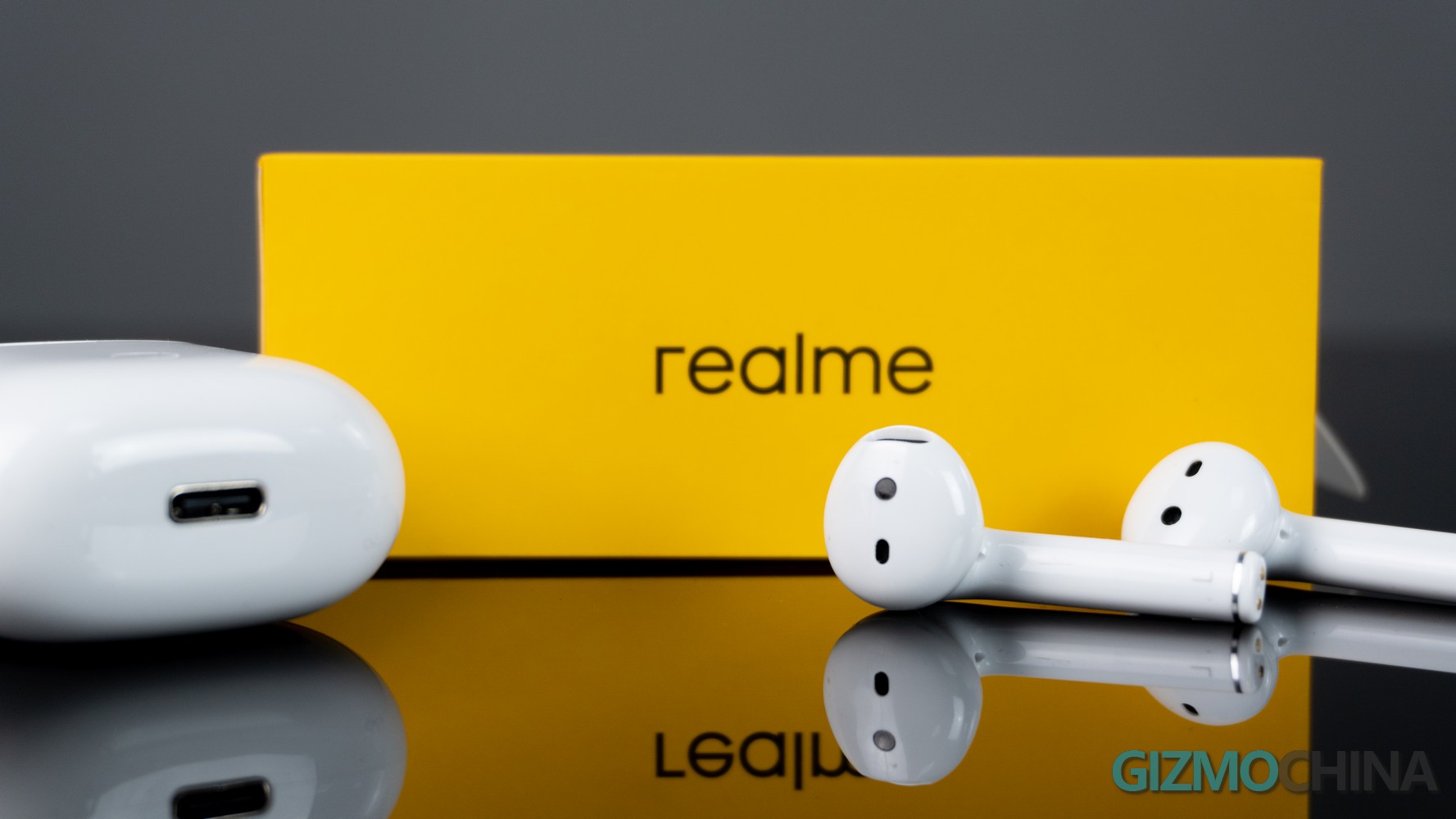
Now, it seems that the company is working a new variant of the same TWS earbuds which could possibly come with more features and thus, a bit costlier price tag. From the teaser introducing Realme UI, it can be seen that the company’s next true wireless earbuds are named Realme Buds Air Neo.
Given that the Realme Buds Air are almost similar to the Apple AirPods and the company has blatantly copied Apple’s design, we expect the company to do the same with the Buds Air Neo and rip-off AirPods Pro to include high-end features like active noise cancellation.
The recently launched Buds Air from Realme comes with a battery life of 3 hours for continuous playback and up to 17 hours with the charging case. At a price point of ₹3,999, the device comes with several interesting features like the charing case which comes with support for wireless charging and has a Type-C port for wired charging.
You can check out our review of the Realme Buds Air here.
Honor already has its presence in the Indian market and yesterday, the company launched a few new products in the market, including Honor 9X smartphone, Honor Band 5i fitness tracker, Honor Magic Watch 2, and wireless earphones.
Now, the company is looking to further expand its product categories in India. In line with this, Honor is set to launch its laptops and smart TV in the Indian market by the end of this quarter, i.e. Q1 2020 or in early next quarter, i.e. Q2 2020.
During an interview at the sidelines of Honor 9X event, Charles Peng, President of Honor India, said: “We are bringing our laptops to India maybe at the end of the Q1 or by beginning of Q2. We are working with the HQ team to meet the demands of the Indian market. Maybe some of them would be the ones that are already launched in China and maybe some would be designed for the Indian market.”
While the company has confirmed that it will soon bring the Honor MagicBook laptops in the Indian market, which model will come first has not been disclosed yet. However, it has been revealed that initially, it will go on sale through online channel only.
In August last year, Honor launched its first smart TV in its home market, dubbed Honor Vision. The same TV set to introduced in the Indian market in October last year during the Indian Mobile Congress in New Delhi.
The highlight of the Honor Vision TV is that it is the first commercially available product to run on the company’s own custom operating system HarmonyOS. Now, the company has confirmed that it will be available for purchase in India and the timeline stated for the same is similar to the one for the Honor MagicBook laptops.
Charles Peng says that the company is currently working with content partners such as Hotstar and Netflix to bring relevant content on the Honor Vision right at the time of its official launch in India.
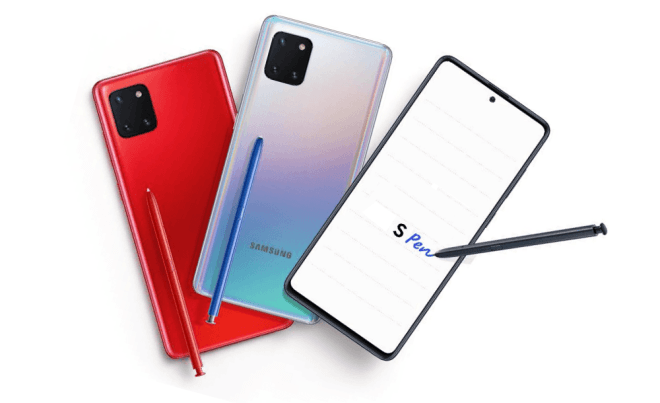
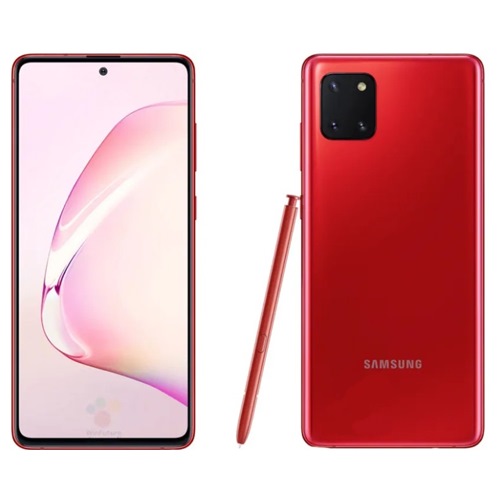
Samsung unveiled the Galaxy Note 10 Lite alongside the Galaxy S10 Lite earlier this month. The company is yet to reveal when the models will launch in India but India blog 91mobiles credits industry sources to have disclosed that reservations for the smartphone will go live on retail and online stores across India from January 21.
The sources are also said to have disclosed that the device will be released in mid-February. This may likely be after the global launch of the Galaxy S20 series on February 11. Also, the Galaxy Note 10 Lite reservations will commence just a few days before the Galaxy S10 Lite’s India launch scheduled to take place on January 23. Pricing is expected to start at Rs 35,990 for the base variant.
As a reminder, the Galaxy Note 10 Lite sports a 6.7-inch Full HD+ Infinity-O display, slightly smaller than the Galaxy Note 10+’s 6.8-inch QHD+ display. The Note 10 Lite is powered by an Exynos 9810 SoC which was used on the Galaxy S9 from 2018. The device is available in 6GB/8GB RAM options and 128GB storage which is expandable up to 1TB via microSD card.
For photography, the Galaxy Note 10 Lite features a triple rear camera setup. At the front, the device packs a 32-megapixel f/2.2 sensor. The device equally comes equipped with an S-Pen which the Galaxy Note series is known for. While its S Pen does have Bluetooth Low-Energy support, it doesn’t have a 6-axis sensor, so you can’t do any of the cool gestures that you can with the Galaxy Note 10/10+’s S Pen. But Samsung did add the Text Export feature which allows users to transfer handwritten notes into text for quick sharing.
As for the interface, the Galaxy Note 10 Lite runs on Android 10-based One UI 2.0 out of the box. It also has features like Bixby, Samsung Pay, AR Emoji, and facial recognition. There’s a fingerprint sensor embedded in the display as well. Keeping the lights on is a massive 4500mAh battery which is even bigger than the Galaxy Note 10+’s 4,300mAh battery. The battery supports 25W super-fast wired charging.
The device comes in Aura Black, Aura Glow and Aura Red colours.
Samsung is expected to announce the Galaxy S20 series of flagship phones through an unveil event on Feb. 11. Recently, Max Weinbach ofXDA Developers had shared the live photos of the upcoming Galaxy S20+ 5G smartphone. Through another leak, he also shared the key specs of the Galaxy S20 Ultra 5G. A new report on the publication by Wienbach has the hands-on video of the Galaxy S20+ 5G handset. The report has also revealed key details of the smartphone.
Starting off with the display of the Galaxy S20+ (SM-G986U), it supports a max resolution of 1440 x 3220 pixels. It will offer a tall aspect ratio of 20:9. These details were through a benchmark test that was carried out on the phone. It did not reveal the exact size of the screen. However, it is speculated that the Galaxy S20+ will be equipped with a 6.7-inch display. The Galaxy S20 and Galaxy S20 Ultra that are rumored to feature 6.3-inch and 6.9-inch displays are expected to support the same resolution and aspect ratio.
Some reports had claimed that Samsung will be replacing the ultrasonic in-screen fingerprint scanner with an optical in-display fingerprint reader. The report has debunked the rumor and claimed that the S20+ will have an ultrasonic in-display fingerprint sensor. An optical in-screen fingerprint reader requires the scanning area to brightly light up. However, an ultrasonic in-display fingerprint sensor does not such lighting. The same was observed on the S20+ through which it could be determined that it has an ultrasonic in-display fingerprint reader. There is no confirmation on whether the device features the latest 3D Sonic Max ultrasonic fingerprint reader by Qualcomm that can scan two fingers simultaneously.
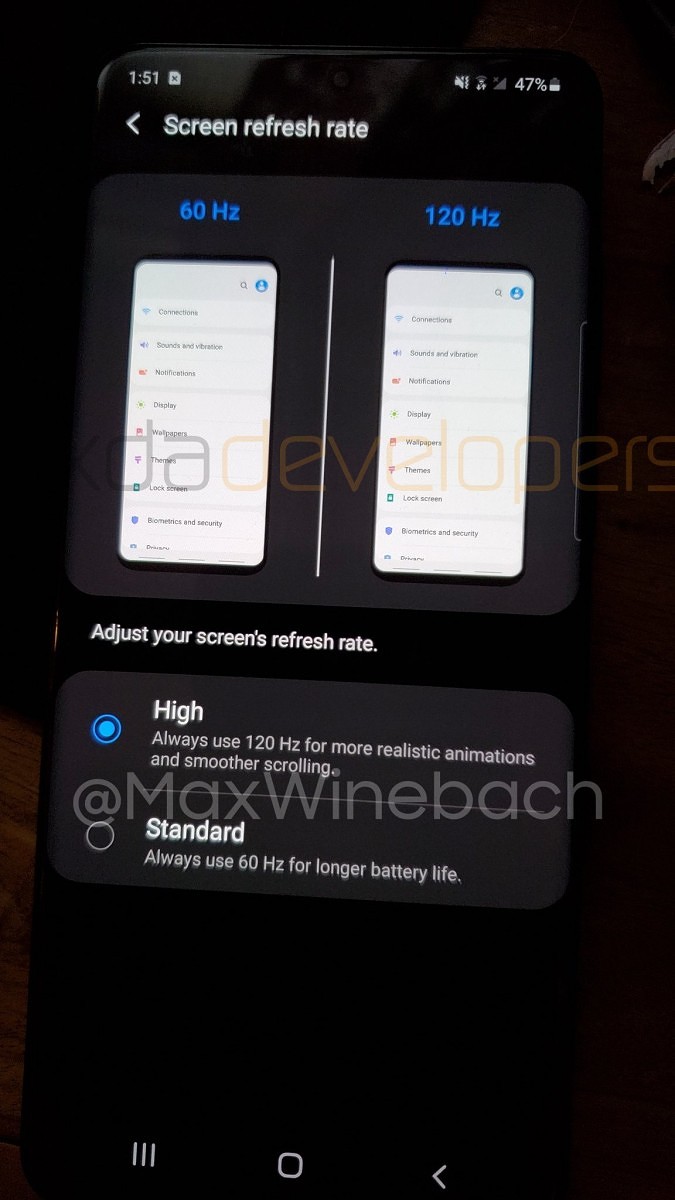
The above shown screenshot reveals that the Galaxy S20+ has a toggle for 120Hz settings. The S20 series will be the first from the South Korean company to arrive with support for 120Hz refresh rate. The report claims that the 120Hz will be only available at full HD+ resolution (1080 x 2400 pixels). It is said that the display will automatically change to 60Hz if the user switches to WQHD+ resolution.
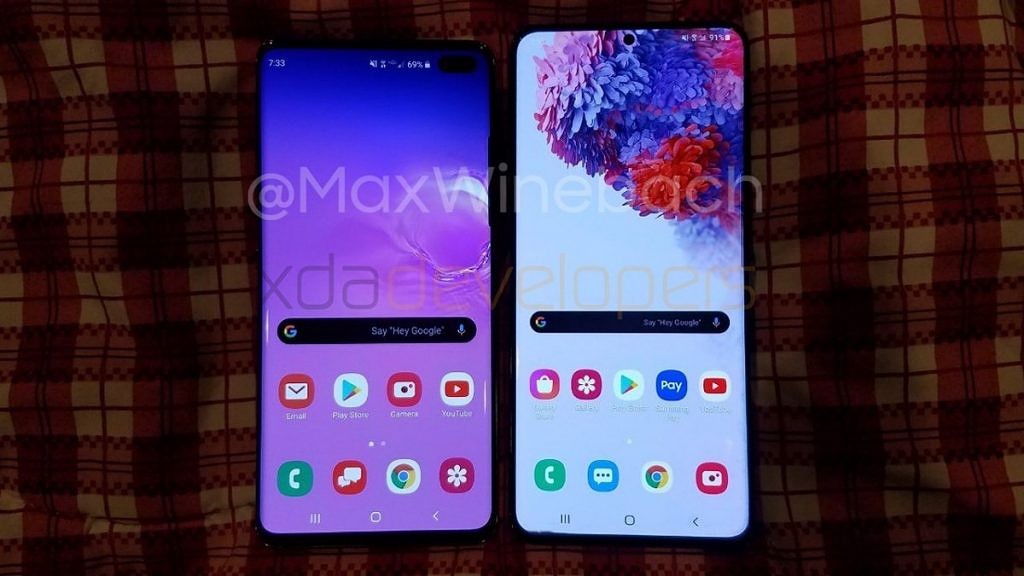
The Galaxy S20+ 5G hands-on video reveals that it has a curved Infinity-O display. The rear shell of the device has a rectangle-shaped camera system housing four lenses and an LED flash. The handset does not feature a 3.5mm audio jack. It will come with AKG USB-C earbuds. The retail package of the device has a 25W fast charger. The same earbuds and charger were made available with the Galaxy Note 10. The following image compares the S10+ with S20+. It reveals that the S20+ is bigger than the S10+. Moreover, the S20 Ultra 5G will be a larger device than the S20+.
The other details that were revealed through benchmark tests show that the Galaxy S20+ has 12 GB of LPDDR5 RAM and it is powered by Snapdragon 865 mobile platform. The device will come with 128 GB of native storage (could be UFS 3.0). It has a minimum rated battery of 4,370mAh which suggests that its typical capacity could be 4,500mAh. All the handsets in the S20 series will be equipped with eSIM support.
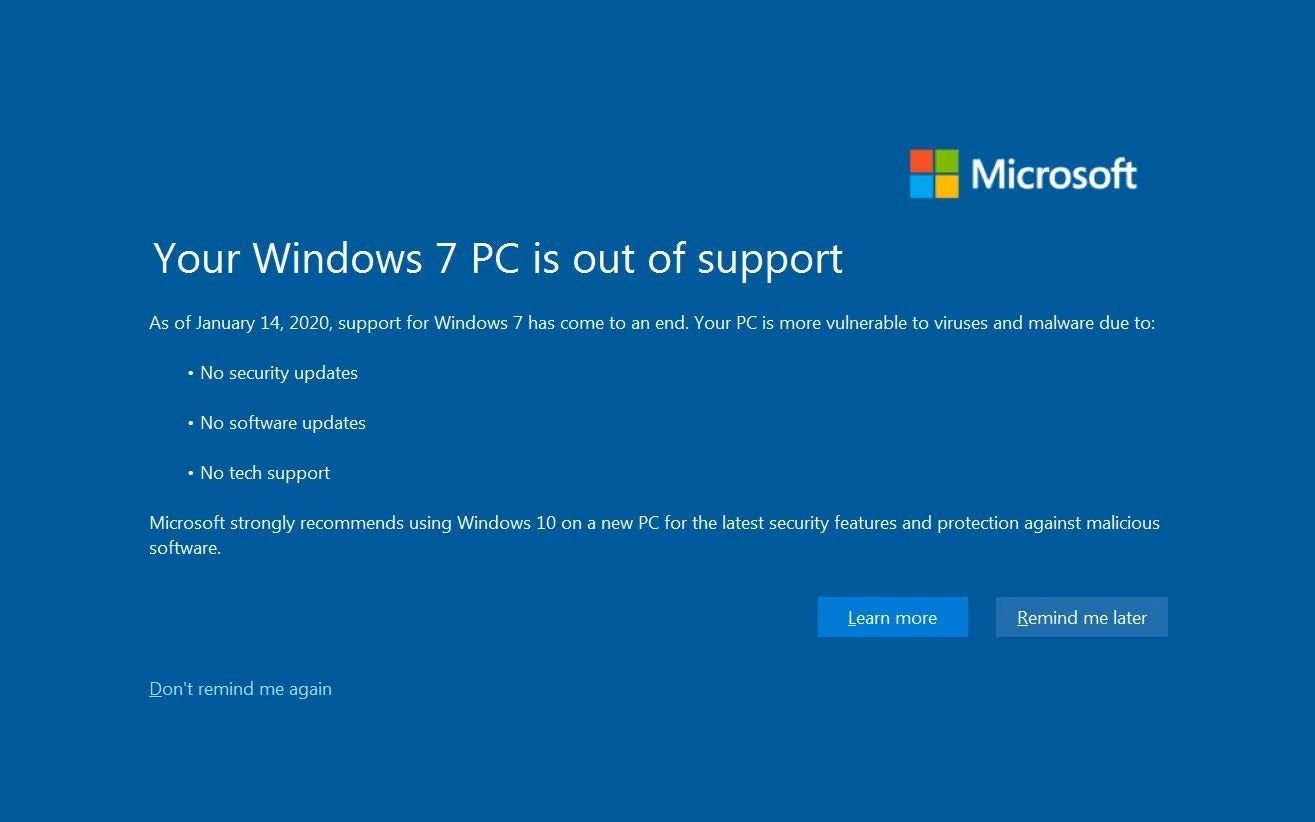
Microsoft has officially announced that it is dropping support of Windows 7. This comes nearly 11 years after the extremely popular operating system was first launched in New York City. The OS came as a suitable fix for the failed Windows Vista which was released before it and indeed, it turned out to be a worthy replacement bringing on board a new taskbar, Aero window management, file libraries, and much more.
Windows 7 went on to amass so much popularity that even the Windows 8 found no place near it. Even the Windows 10 had to wait for nearly 4 years before it could surpass the market share of Windows 7. Available data from Netmarketshare shows that millions of PCs worldwide are still running Windows 7 with the operating system running on 26 percent of all PCs.
Microsoft even had to try to get people to upgrade to Windows 10 free of charge. While that might have helped Windows 10 gain prominence over 7, there are still tens of millions of PCs still running Windows 7. Those PCs will now be left vulnerable to exploits and security vulnerabilities. From today (Wednesday), a full-screen notification will appear for Windows 7 users warning that systems are now out of support.
Businesses and education Windows 7 users will be able to pay for extended security updates, but it could be a costly venture for some. Extended updates for Windows 7 Enterprise is approximately $25 per machine, and the cost doubles to $50 per device in 2021 and again to $100 in 2022. Windows 7 Pro users will be hit the hardest as extended security updates start at $50 per machine and will jump to $100 in 2021 and $200 in 2022. These costs will naturally vary depending on the volume of PCs in use at a business, but they’re still going to be substantial for larger firms. Windows 7 customers with active Windows 10 subscriptions will get a free year of post-retirement updates.
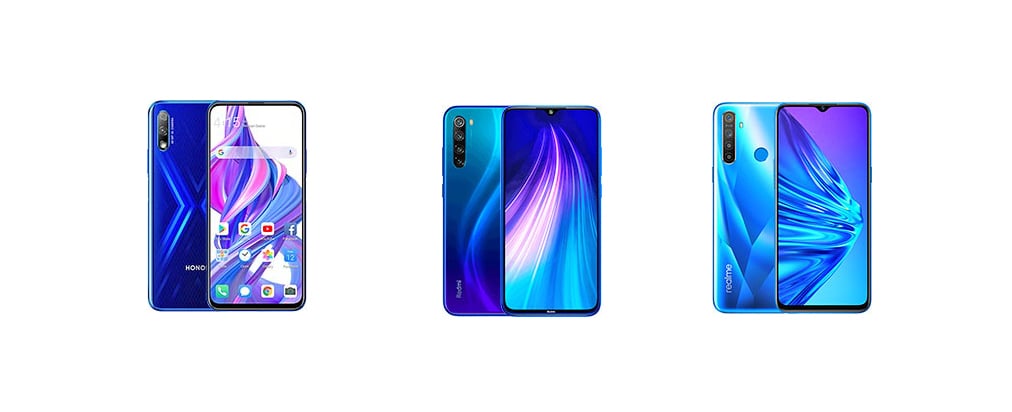
Today the Honor 9X officially debuted in the Indian market. A lot of months have passed since its official announcement, but finally one of the latest affordable smartphones from Huawei’s sub-brand is available to purchase in the Indian peninsula. But will it be nice enough to be a better choice than the competition? In order to establish that, we decided to compare it with two best-selling devices in the Indian market. We chose the best-selling Redmi Note 8 and the Realme 5i which is one of the main contributors to the huge Realme’s success in India.
Huawei Honor 9X vs Xiaomi Redmi Note 8 vs Oppo Realme 5i
Quad 12 + 8 + 2 + 2 MP f/1.8, f/2.3, f/2.4 and f/2.4
8 MP f/2.0 front camera
Quad 48 + 8 + 2 + 2 MP f/1.8, f/2.2 and f/2.4
13 MP f/2.0 front camera
Triple 48 + 8 + 2 MP f/1.8 and f/2.4
16 MP f/2.2 front camera
BATTERY
5000 mAh, fast charging 10W
4000 mAh, fast charging 18W
4000 mAh, fast charging 10W
ADDITIONAL FEATURES
Dual SIM slot
Hybrid Dual SIM slot
Hybrid Dual SIM slot
Design
If there is an impressive feature on the Honor 9X, it is the design. Thanks to a pop-up front camera, it offers a full borderless experience without the need for a notch, like some of the most amazing flagship smartphones. Further, it has an almost completely clean glass back thanks to a compact camera module and a side-mounted fingerprint reader (China version only). And how not to mention the suggestive X-shaped light effects on the rear cover. It is not one of the most compact phones out there, but it is definitely beautiful.
Display
Honor 9X is superior even when it comes to the display. It has a better looking LTPS panel with a wider size and a Full HD+ resolution. Even the Redmi Note 8 has a nice display and you would not notice big differences between the Honor 9X and Redmi Note 8. Realme 5i is way inferior due to its lower definition: its IPS display has just an HD+ resolution and it is even a very wide display, so you should notice the difference without many difficulties.
Specs & Software
The most powerful hardware department belongs to the Redmi Note 8, at least in its most expensive memory configuration. The handset is fueled by the Snapdragon 665 chipset paired with up to 6 GB of RAM and up to 128 GB of internal storage. Realme 5i has exactly the same chipset, but it offers just 4 GB of RAM and just 64 GB of internal storage in its high-end version. The Kirin 710F chipset found on the Honor 9X is inferior to the Snapdragon 665, but the Honor 9X has a 6/128 GB variant, unlike the Realme 5i. Each device boasts Android 9 Pie out of the box.
Camera
Redmi Note 8 offers the most complete rear camera setup: it consists of a 48 MP quad camera including an ultrawide sensor, a dedicated macro camera, and a depth sensor. Right after we got the Honor 9X with a 48 MP triple camera which lacks the dedicated macro camera. With Realme 5i you get a quad camera again, but the main 12 MP sensor is inferior to the ones found on both the Honor 9X and Redmi Note 8, as well as the selfie camera.
Battery
Realme 5i is the king if we talk about battery life. Not only it features a bigger 5000 mAh battery, but it even comes with a more efficient display. Thanks to the HD+ resolution, the energy consumption is inferior to the Redmi Note 8 and Honor 9X, that is why the battery life is even longer than you might expect. Honor 9X and Redmi Note 8 have the same battery capacity, but Redmi Note 8 lasts slightly more in various scenarios.
Price
The price of Honor 9X in India is about $197, Redmi Note 8 costs about €127 and Realme 5i is priced €115. Redmi Note 8 looks like the most complete and well-balanced device with a great hardware department and nice cameras. Honor 9X has a better design, while Realme 5i offers the longest battery life.
We use cookies on our website to give you the most relevant experience by remembering your preferences and repeat visits. By clicking “Accept”, you consent to the use of ALL the cookies.
This website uses cookies to improve your experience while you navigate through the website. Out of these, the cookies that are categorized as necessary are stored on your browser as they are essential for the working of basic functionalities of the website. We also use third-party cookies that help us analyze and understand how you use this website. These cookies will be stored in your browser only with your consent. You also have the option to opt-out of these cookies. But opting out of some of these cookies may affect your browsing experience.
Necessary cookies are absolutely essential for the website to function properly. This category only includes cookies that ensures basic functionalities and security features of the website. These cookies do not store any personal information.
Any cookies that may not be particularly necessary for the website to function and is used specifically to collect user personal data via analytics, ads, other embedded contents are termed as non-necessary cookies. It is mandatory to procure user consent prior to running these cookies on your website.




 The rest of the Banggood users, on the other hand, can apply coupon code BGNAXMTWS for an extra $16.02 off at the time of checking out. As a result, the already reduced retail price of the Airdots Basic comes down to only $15.69, making this Xiaomi-branded TWS earphone an absolute bargain.
 The ergonomic design of the Xiaomi Airdots Basic fits comfortably in your ears even for a longer duration. It is made using soft and comfortable silicone material to ensure it doesn’t fall off when you are working out. On top of that, it is anti-sweat, which means it serves as sportswear as well.