Advertisement

Samsung claims to have sold 1 million units of Galaxy Fold smartphone

Samsung’s first foldable smartphone — Galaxy Fold, went official earlier this year after months of delays because of build quality. However, the smartphone seems to be quite popular in the market.

Samsung Electronic’s president Young Sohn revealed during an event in Berlin that “there’s a million people that want to use this product at $2,000 each.” He then followed up to clarify that the company claims to have sold 1 million units of the Galaxy Fold.
Samsung Galaxy Fold featured

While the numbers are not much compared to the tens of millions of phones that Samsung and Apple move each quarter, but this is quite surprising given the phone’s pricing of around $2,000 as many small manufacturers struggle to achieve the same feat.

For those who are unaware, the Samsung Galaxy Fold smartphone went on sale in September this year, months later than originally planned. Samsung canceled its original launch plans and went back to the drawing board, strengthening the phone’s design and revising parts of it to make it less prone to breakage.

The Samsung Galaxy Fold smartphone presents a 7.3-inch Infinity Flex Display with a 1536 x 2152 pixels screen resolution where can use three apps at the same time which Samsung calls Three-app Multitasking.

When the device is folded into phone mode, it offers a 4.6-inch display with 840 x 1960 pixels screen resolution. It comes with a feature called App Continuity which automatically adjust an app when you switch screens. It is powered by a 7nm Qualcomm Snapdragon 855 octa-core processor paired with 12GB of RAM and packs 512GB of internal storage using UFS 3.0 technology.

Connectivity options on the phone include 5G, 4G LTE, Wi-Fi 6, Bluetooth v5.0, GPS/ A-GPS, NFC, and USB Type-C port. The smartphone also comes with stereo speakers that are equipped with Dolby Atmos surround sound technology.
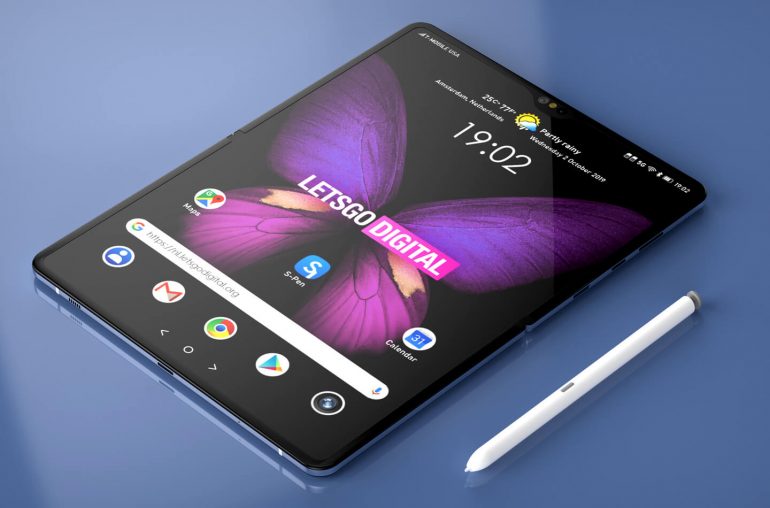
Galaxy Fold with S Pen |3

It comes with camera module that’s made up of a 16MP ultra-wide camera, a 12MP telephoto camera, and another 12MP wide-angle camera. On the front side, it comes with a 10MP sensor. It runs Samsung One UI with Android 9 Pie operating system out-of-the-box and is powered by a 4,380mAh battery which is split into two units and supports Wireless Charging as well as Wireless PowerShare for reverse charging.

Yesterday, the Samsung Galaxy Fold smartphone was launched in the Indian market, which comes packed with 12GB RAM and 512GB storage. In India, the phone has been priced at ₹1,64,999 (~$2,323) and will go on sale from 20th October.


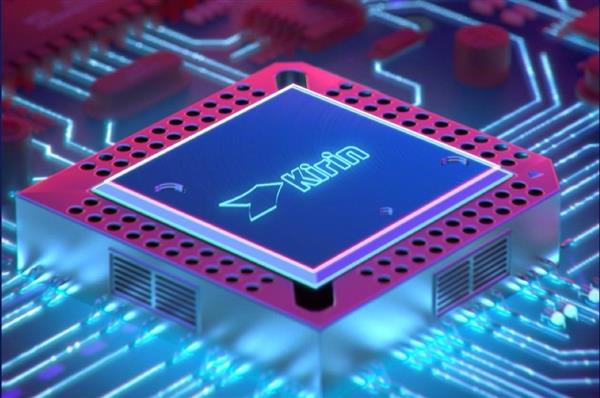
Huawei Kirin 1020 codenamed Baltimore, features 50% better performance than Kirin 990

Huawei launched the Kirin 990 and Kirin 990 5G processors this year, and they’re quite the impressive chipsets. The latter was the very first 5G equipped SoC on the market, with 10.3 billion transistors and 7nm EUV technology. However, the Kirin 990’s CPU / GPU architecture disappointingly saw no big upgrades, though that will finally change with the upcoming Kirin 1020 SoC.

The latest news shows that the Kirin 1020 processor is code-named “Baltimore”. It’s not surprising, since Huawei’s chips have always been named after cities. We also already know the chipset will be built with TSMC’s 5nm process for better power efficiency and more stable performance. The bigger change comes with the CPU cores however.

The Kirin 1020 will also use the new Cortex-A78 cores skipping the A77 cores that you can find in other flagship SoCs like the MediaTek 1000 Dimensity. When compared to the Cortex-A76 on the Kirin 990, the the new core architecture will allow the Kirin 1020 to easily gain a 50% performance improvement over its predecessor.

That’s a huge upgrade to what was already a fairly speedy SoC. On top of that, it gives Huawei the upper hand against other competitors like the aforementioned MediaTek, who are still relying on Cortex-A77 cores for performance. Nothing has been leaked regarding the GPU, but we’re hoping we can expect similarly big upgrade.

(Source)

Samsung Galaxy M31 and M11 in works, claims report

Samsung’s new M-series of smartphones that were introduced this year in India have met with positive reception. In the second half of the year, Samsung had launched Galaxy M10s, M20s and M30s as enhanced versions of the Galaxy M10, M20 and M30 phones that were made official at the beginning of the year. A fresh report has revealed that the South Korean tech giant has already started working on Galaxy M11 and Galaxy M31 phones.

Yesterday, Samsung launched Galaxy A51 and Galaxy A71 as the first Galaxy A 2020 phones. According to a new report on Sammobile, the company will be using the same naming strategy for its upcoming M-series phones. The two new M-series that have reportedly entered developmental phase are Galaxy M11 and Galaxy M31.

The report has revealed that SM-M115F is the model number of the Galaxy M11 phone whereas the model number of the SM-M315F is Galaxy M31. It has further stated that the Galaxy M11 and M31 phones will both arrive in 32 GB and 64 GB storage variants. No other information is available on the specifications of the Galaxy M11 and M31 phones. There is a possibility that the Galaxy M31 will retain the massive 6,000mAh battery that is available inside the Galaxy M30s phone.

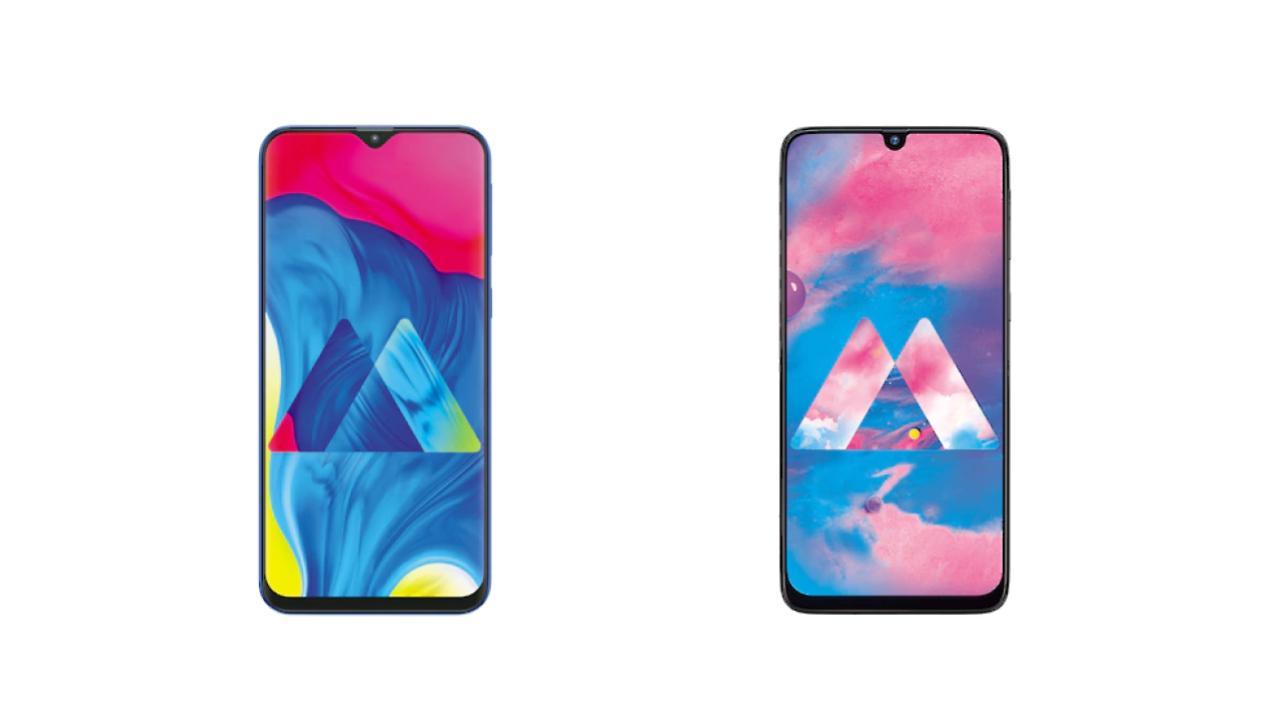
Samsung Galaxy M10 and Galxy M30

Since the M-series phones include Galaxy M20s/20 and Galaxy M40 phones, it is likely that the company could be also planning to launch the Galaxy M21 and Galaxy M41 phones in the coming year. The newly unveiled Galaxy A51 and Galaxy A71 are blessed Galaxy Note 10 like Infinity-O displays. It is unclear whether any of the upcoming M-series phones will sport the new display design.

The Galaxy M10 and Galaxy M20 phones were made official in January followed by a February launch for the Galaxy M30. Hence, it appears that the company will announce the new M-lineup phones in the starting months of 2020 to rival with the budget-friendly phones from its Chinese competitors. The new M-series phones are expected to come preloaded with Android 10 OS. India remains the main market for the Galaxy M-series. It remains to be seen whether the M-series it made available to wider markets.

Speaking of India launch, the newly unveiled Galaxy A51 and Galaxy A71 are also expected to debut in the country in early 2020. The Galaxy A51 has a 6.5-inch FHD+ display, Exynos 9611 SoC, Android 10 OS, up to 8 GB of RAM, up to 128 GB storage, 48-megapixel quad cameras, a 32-megapixel selfie camera, in-display fingerprint reader and a 4,000mAh battery with 15W fast charging. The Galaxy A71 features a 6.7-inch FHD+ display, Snapdragon 730 SoC, Android 10 OS, 6 GB / 8 GB of RAM, 128 GB of storage, 64-megapixel quad cameras, 32-megapixel front camera, in-screen fingerprint sensor and a 4,500mAh battery with 25W fast charging.


(source)

Xiaomi Stock value on the rise after the launch of Redmi K30

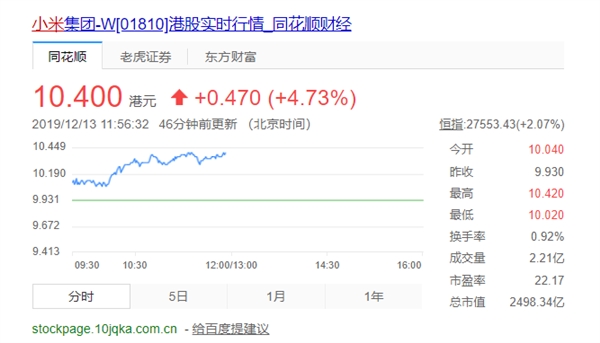
According to a new report, Xiaomi Group’s stocks have been on a constant rise with its recent value rising by 4.73 percent. It was reported that before the day-end it had reached a price of 10.4 HKD which sets a new high for the company since July 2019. The current total market value now sits at 249.834 billion HKD or roughly 32 billion USD.

One of the factors leading to this consistent growth in value has been accredited to the Redmi K30. The smartphone is the first 5G handset from Xiaomi’s subsidiary, Redmi, which is a successor to the popular Redmi K20 series. According to various analysts and brokers, the smartphone is undoubtedly a factor in the rising stocks, with many reiterating on their positive views of the company’s market value.

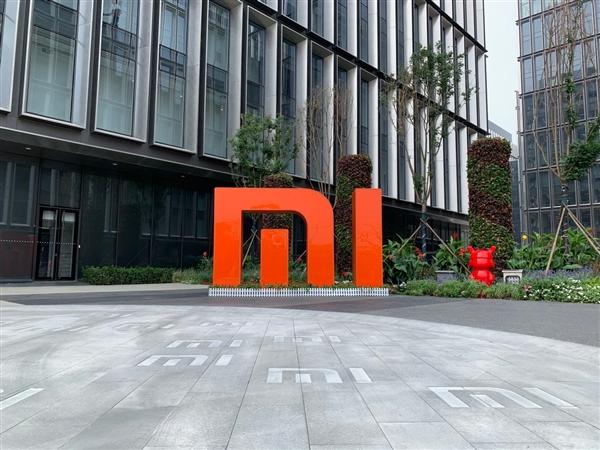
Xiaomi
Xiaomi’s Rising Trend in Stock Value

Redmi K30 was unveiled on 10th December 2019 in two variants, namely a 4G and 5G version. The former is currently available for purchase while the latter will be available in January 2020. The smartphone arrives with top-notch specs and features (like 120Hz refresh rate and Snapdragon 765G) alongside its highlighting 5G networking capabilities at a very aggressive price; this marks the first time a 5G handset is available for under 2000 Yuan or roughly 286 USD.

It is expected that the Xiaomi Group is set on a positive trend which would see its adjusted earnings increase by 29 percent in 2020. CICC (China International Capital Corporation) even gave the smartphone manufacturer an Outperforming rating and a target price of 13.5 HKD per share.

According to Lei Jun, the Founder and Chairman, Xiaomi will continue to promote and develop 5G smartphones in the near future with the release of smartphones over 2000 Yuan in the first half of 2020. The company is also expected to launch at least ten 5G smartphones in 2020 which is in line with many of its senior executives’ belief of 5G being an important advancement in technology.


(Via)

Google Chrome on the way to get native screenshot editor

The world’s most used browser – Google Chrome mitigated the security of Google Chrome by introducing several solutions like password protection and real-time phishing protection in a recent update. According to our folks at XDA, Google Chrome is alls et to ease the process of taking screenshots in the browser. In short, Google Chrome is on the way to get its native screenshot editor feature.

chrome

Must See: Google won’t make Pixel tablets anymore; Will focus on Chrome OS laptops

The new feature was recently spotted in a new commit on Chromium Gerrit. It reveals a new flag named “Chrome Share Screenshots” that enables the UI to take and edit screenshots. There’s no additional information available yet about the upcoming Screenshot feature. However, a bug report reveals that it will use “the Ink image editor library”.

After rolling out the screenshot editor to the above products, Google Chrome in on the verge to get its screenshot editing tool. The feature is currently in the early stage of development, and if everything goes well, it will soon be a part of Google Chrome. The Chrome extensions like Awesome Screenshot might not be happy with the recent chromium developments.

In the recent past, Google is making extra efforts to make its products and services more reliable by introducing small but required features. The Android OS received an official screenshot editor last year with version Android 9.0 Pie. Later, it was rolled out on Google Photos and Google search app on both iOS and Android.

(via)


Samsung to further invest $8 Billion in Chinese Chip Plant

Samsung Electronics is one of the largest known brands for consumer-grade products. However, most are unaware of the South Korean tech giant’s actual size and scale of operations which also includes chip manufacturing processes for other smartphone OEMs. Now, the company is expected to further invest an extra $8 billion in its chipmaking factory in Xi’an, China.

According to a new report, Samsung will increase the investment in the Chinese chip factory to boost the production of NAND flash memory chips. It is speculated that the large investment follows after the company predicts a surge in demand for memory to rebound next year due to limited supplies alongside rising demands for fifth-generation networks and devices.

Currently, Samsung is the world’s largest producer of NAND flash memory chips which are capable of holding data indefinitely and are found in smartphones, USB pen drives, and various types of memory cards. Back in 2017, the company was to invest $7 billion over the course of three years in its Xi’an plant that produces such NAND flash memory chips. This investment followed a $10.8 billion which Samsung had already invested earlier for a testing and packaging plant in Xi’an.

Samsung’s dominance in the NAND flash memory market is evident with many competitors still seeking to rival the South Korean giant. However, none have been as successful in the overseas market as Samsung has. Known competitors include South Korea’s SK Hynix, US-based Micron Technology Inc, and Toshiba Corp group.

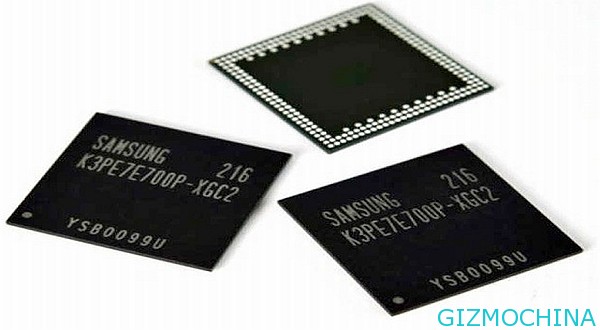
Samsung RAM chips
Samsung RAM chips

The new investment raise from Samsung indicates of the ever-growing smartphone industry. Furthermore, new generation devices with faster memory and processing are expected to make a breakthrough in the market in the near future as well. Thus, Samsung has already started preparing with a large extra investment. Notably, examples of other areas that are expected to be hit with high demand in 2020 include the camera lens module of smartphones.


(Via)

Meizu announces One Moment Awards 2019; Offers chance to win Meizu 17 5G

Today, Meizu official announced its annual image contest named One Moments Awards (OMA) 2019. The contest begins from today and it will come to an end on Jan. 3, 2020. The contest is aimed towards encouraging photographers to capture the beauty of life and all the good things around as photos can move people, tell emotions and exhibit their photography skills. Among the prizes for the contest, the Chinese manufacturer is also giving a chance to win its upcoming 5G flagship phone called Meizu 17.

The winners of the OMA 2019 will be announced in late January. The Chinese firm will be selecting 10 photos for the year and one of them will be awarded Meizu OMA 2019 mobile phone photographer of the year.  The winner will take home the Meizu 17 5G smartphone. There will be one jury award who will win the Meizu OMA 2019 video officer title. He/she will be awarded with a Meizu 17 5G phone, 10,000 Yuan creation funds and an opportunity to shoot for smartphone’s promo material. Here is the link to participate in the contest.

Meizu OMA 2019

Meizu claims that OMA 2019 is not just a photography contest but a systematic study of imaging. It can help users improve their mobile photography skills while providing participants with a platform to display their videography skills.

Meizu’s OMA 2019 photography contest seems to be one of its strategies to build the hype around the upcoming Meizu 17. The description of the contest also confirms that the Meizu 17 will be the company’s first 5G-ready device. It will support dual-mode 5G as it will be driven by the all new Snapdragon 865 mobile platform.

Meizu OMA 2019

Meizu has been consistently working on enhancing the photography experience on its smartphones. The Meizu 16s Pro that was unveiled few months ago is one of the most phones for photography from Meizu. It is equipped with a triple camera system on its back which includes an OIS enabled 48-megapixel Sony IMX586 main lens, a 20-megapixel telephoto lens an a 16-megapixel ultrawide lens with 117-degree field-of-view and a six-LED dual-tone flash. The triple cameras support 3x lossless zoom, 4K video shooting at 60fps, 480fps slow motion video shooting ultrawide angle video shooting, 2.5cm macro shots and super night scene mode. The upcoming Meizu 17 5G phone is also expected to deliver topnotch photography experience. As of this writing, there is no information available on the specs of the Meizu 17.


(source)

Vivo X30 Pro Master Lu benchmarks appear ahead of launch

Vivo will be announcing the Vivo X30 series of smartphones on Dec. 16. Ahead of the launch, the X30 Pro has appeared today on Master Lu benchmarks. The listing has revealed some of the key specs and performance prowess of the Vivo X30 Pro.

The Vivo V1938T phone that has appeared on Master Lu benchmarks seems to be the upcoming Vivo X30 Pro handset. In the recent weeks, the V1938T phone has appeared in leaked shots, AnTuTu, Geekbench and 3C certification database. The X30 Pro Master Lu listing reveals that its display offers full HD+ resolution of 1080 x 2400 pixels which indicates that it will offer tall aspect ratio of 20:9. The device is fueled by the Exynos 980 chipset and 8 GB of RAM. The internal storage of the phone is 128 GB.

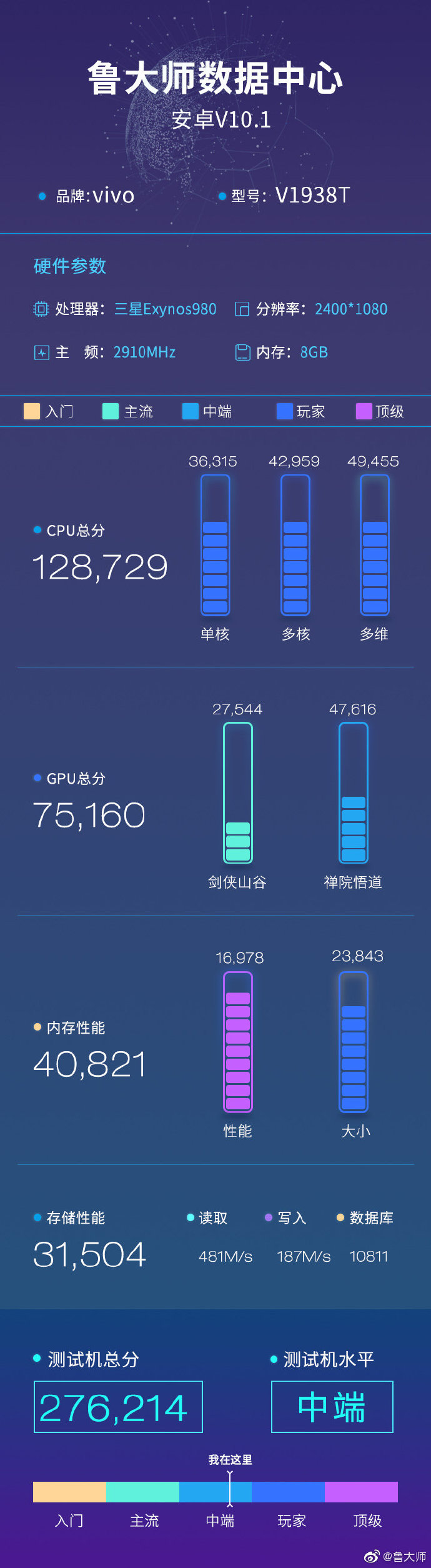
Master Lu benchmarks revealed that the Vivo V1938T has scored 128,729 in the CPU test, 75,160 in the GPU test, 40,821 in the memory test and 31,504 in storage performance.  The total score of the Vivo V1938T phone on Master Lu benchmarks is 276,214. According to the benchmarking platform, the performance of the Exynos 980 SoC is similar to that of the Snapdragon 730G processor.

Vivo X30 Pro 5G Specifications

Recent reports have revealed that the Vivo X30 Pro has a 6.5-inch punch-hole display that offers full HD+ resolution. The Exynos 980 SoC will power the phone with 8 GB of RAM. It will come with a built-in storage of 128 GB. The Android 9 Pie OS along with the renewed version of FunTouchOS is expected to run on the device.

Vivo X30 live photo

The Vivo X30 Pro is expected to sport a front-facing camera of 32-megapixel. On its rear, it features a quad camera setup. It is rumored to include a 64-megapixel main lens, a 32-megapixel portrait sensor, an 8-mgeapixel ultrawide lens and a 13-megapixel periscope lens. The four cameras could be coupled with OIS and EIS along with support for up to 60x digital zoom. The smartphone could be housing a 4,500mAh battery that will arrive with support for up to 33W fast charging. As of this writing, there is no information on the pricing of the Vivo X30 Pro. It is very likely to be priced under 3,000 Yuan (~$430).


EXCLUSIVE: realme Buds Air full Specs & Price Leaked before launch!

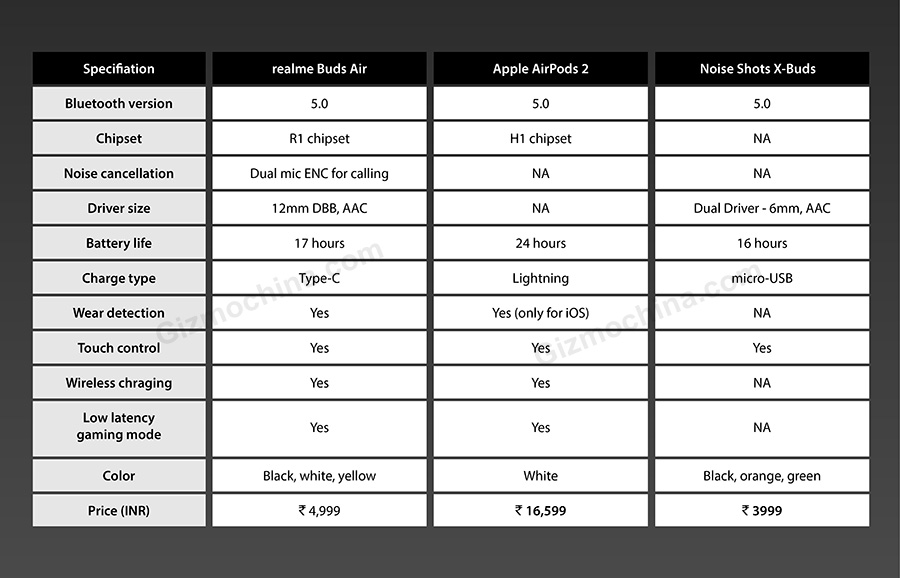
We are all set to meet the first-ever TWS earbuds from realme, the Buds Air on December 17, alongside the Realme X2 model. Now, less than a week before its official release, we have got the complete specs and price leak of the upcoming earbuds. Realme TWS_Comparison LeakAccording to our source, the realme Buds Air will come with 17 hours of battery life. This should be the total battery life of the earbuds when charged with its companion case. It will come with 12mm DBB (Dynamic Bass Boost), which is larger than 11.2mm DBB drivers found on the realme Buds Wireless neckband headphones. We can also confirm that the Buds Air will support AAC codec.

The realme Buds Air comes with wear detection, so it will know when you are wearing it in your ears. The TWS earbuds will feature Bluetooth 5.0 and will come with touch controls, low latency gaming mode, as well as wireless charging. Our source also revealed that the case will come with USB-Type C port and not microUSB.

The realme Buds Air will also feature Dual Mic ENC for calling, however, don’t confuse this with active noise cancellation tech like the ones found in the AirPods Pro. It’s likely to ensure that your audio quality is better during calls.

Finally, our source confirms that the reame Buds Air will indeed be priced at Rs. 4999 (~$71), which is the same figure revealed by a leaked Flipkart listing earlier this week. The earbuds will go on sale immediately after the December 17 launch event in India.

So what do you think? With a 17-hour battery life, wireless charging case, and a decent pair of drivers, the realme Buds Air could be a really competitive TWS option in India.


Realme X50 5G smartphone likely to go official before Spring Festival
After launching the Realme X2 Pro premium flagship smartphone in China and India, the company is now gearing up to launch its first 5G phone in the market. It has already confirmed that the Realme X50 will be the brand’s first 5G smartphone.

While the company has revealed some features of the upcoming Realme X50 5G smartphone, it has not yet confirmed the launch date. Now, it seems almost confirmed that the phone will go official before the Spring Festival in China.

realme-x50-5g
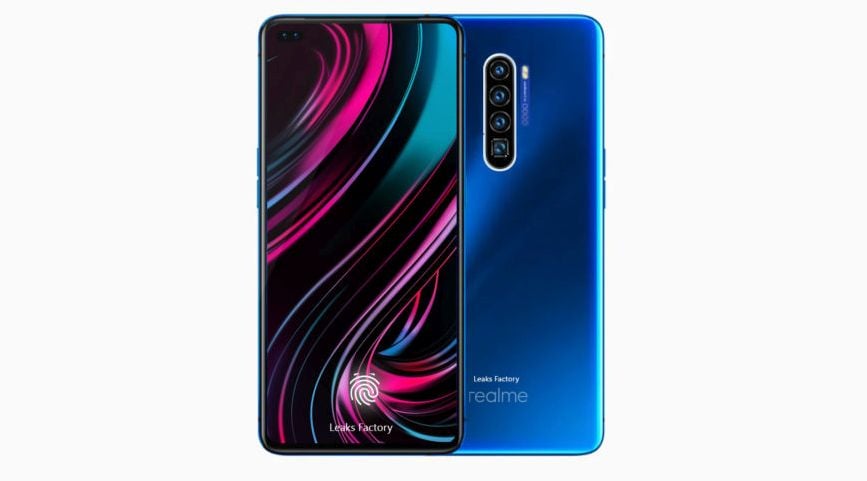
Realme X50 5G render

A few days ago, a user on Weibo asked Realme’s product director if he can show off Realme 5G smartphone to his friends before the Spring Festival and General Manager Wang replied positively.

In addition to that, some users also inquired about the 120Hz refresh rate of the upcoming smartphone, to which Wang replied, “If so, would you buy it?”. This strongly suggests that the company could offer 120Hz refresh rate on the Realme X50 5G.

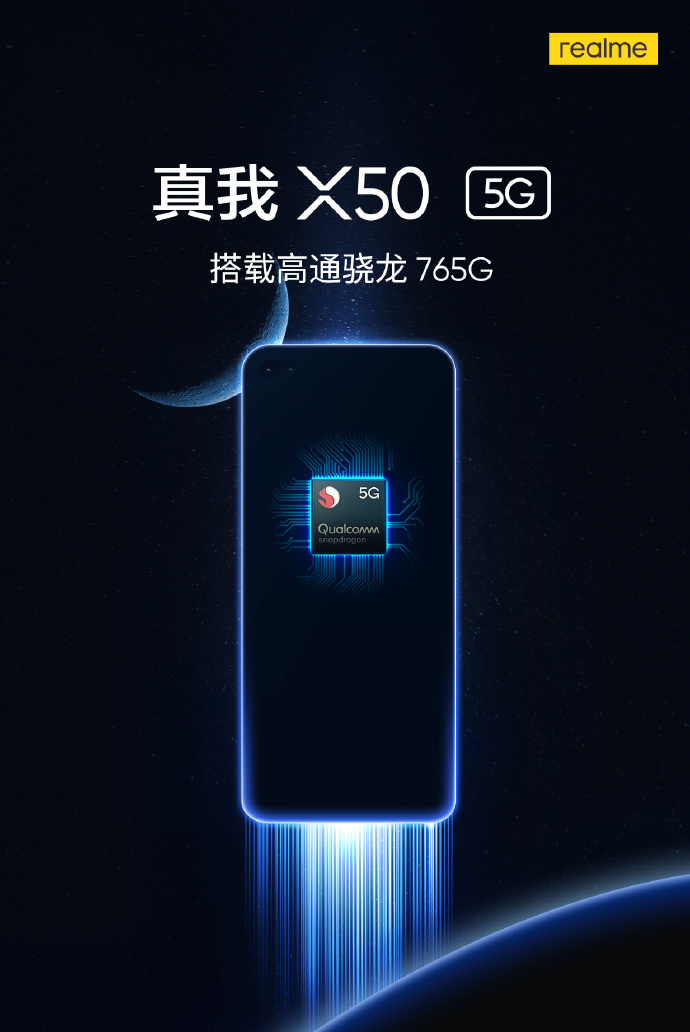
So far, it has been confirmed that the smartphone will come powered by the newly launched Qualcomm Snapdragon 765G chipset which has support for dual-mode SA/NSA 5G connectivity. This is the same chipset that is powering the Redmi K30 smartphone.

Rumors indicate that the phone will be equipped with a 6.44-inch AMOLED display. It could be coming with Sony IMX686 60-megapixel + 8-megapixel + 2-megapixel + 2-megapixel quad rear cameras and 32-megapixel + 8-megapixel dual front cameras.

The device could be backed by a 4,500mAh battery with VOOC 4.0 Flash Charge technology. The handset may come with up of 12GB of RAM and 256GB of internal storage. We expect Android 10-based custom ColorOS 7 running the smartphone.

Since it is driven by a mid-range processor that it is integrated with a 5G modem, the handset is expected to arrive in China with an attractive price tag. The company is also set to launch the Realme X50 Lite (Youth Edition) along with the standard model.


Xiaomi Smart Display Speaker Pro 8 leaks online ahead of its launch

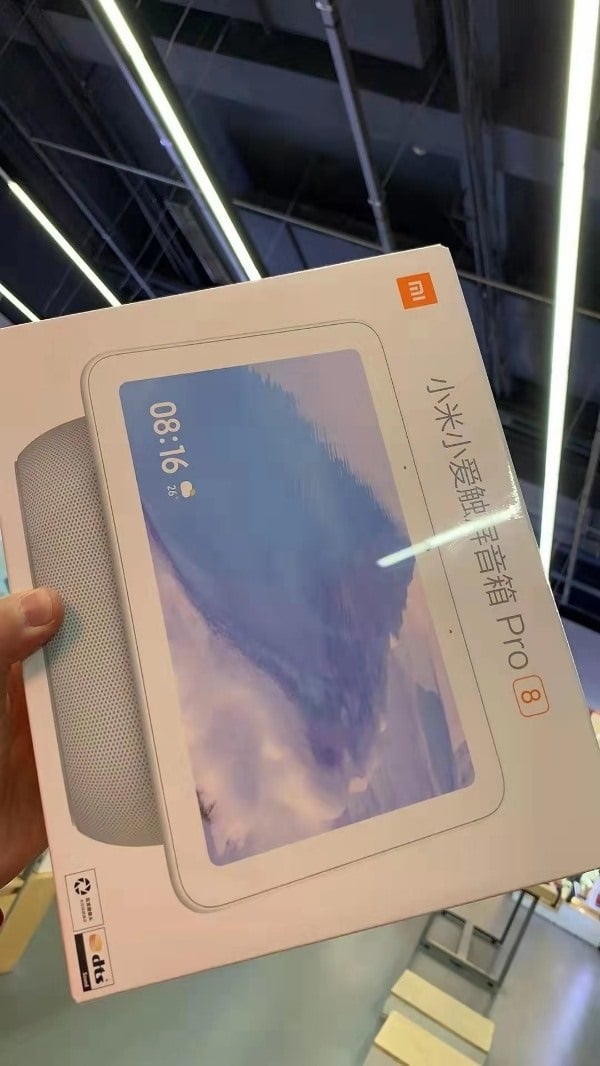
Continuing its spree of launching new devices, Xiaomi is now gearing up to launch yet another product in its home market. Images of the company’s upcoming products, Xiaomi Smart Display Speaker Pro 8 have leaked online.

While the launch date is not yet confirmed, the leaked images have revealed that what the device will look like and what we can expect from it. It is basically a speaker that also comes with a display, similar to Google Nest Hub and Amazon Echo Show.

The image shows that the Xiaomi Smart Display Speaker Pro 8 will come in White color. It will have a long speaker at the bottom and on top of that sits a larger touch-screen display. It seems to have three built-in passive diaphragms which could deliver impressive sound.

The box mentions that with high-power speakers, powerful sound fro the device can reach every corner of the room. It also talks about the Hi-Fi audio processing chip which comes with built-in high performance audio amplifier from Texas Instruments, providing high efficiency, low distortion and advanced multi-band dynamic response control algorithm. It also has DTS professional tuning and other functions.

While the company has not revealed anything about this upcoming product, it is said that the device will be priced at 599 yuan which roughly converts to $86. Since the device has already passed 3C certification process, we expect it to get launched pretty soon.

(Via)

Tim Cook strikes back at critics who say smartphone innovation has peaked

Tim Cook, CEO of Apple, the world’s one of the largest technology company, isn’t of the opinion that the smartphone industry has reached its peak. He even doesn’t think it is anywhere near reaching its peak.

During an interview, he said “I know of no one who would call a 12-year-old mature,” where he is referencing the 12 years since the first iPhone debuted. He added, “sometimes these steps are humongous, sometimes these steps are smaller. But the key is to always make things better, not just change for change’s sake.”

Tim Cook, CEO, Apple

His comments come at a time when the sales of iPhone have declined in recent quarters and the overall smartphone shipments across the industry have slowed over the past several quarters.

The industry-wide slump has been attributed to the notion that many new flagship smartphones only offer minor upgrades over their predecessors. This makes it more difficult for companies to convince consumers to upgrade every year or two. This has contributed to the notion that smartphone innovation has peaked.

While analysts predicted that the iPhone 11 series would offer incremental upgrades over its predecessors, it is being believed that the upcoming iPhone models will come with 5G support as well as a new design and technology. It seems that the company is hoping to bring back the iPhone sales growth with major changes to the lineup.

(Via)

Redmi K30 has two separate punch-holes on its screen

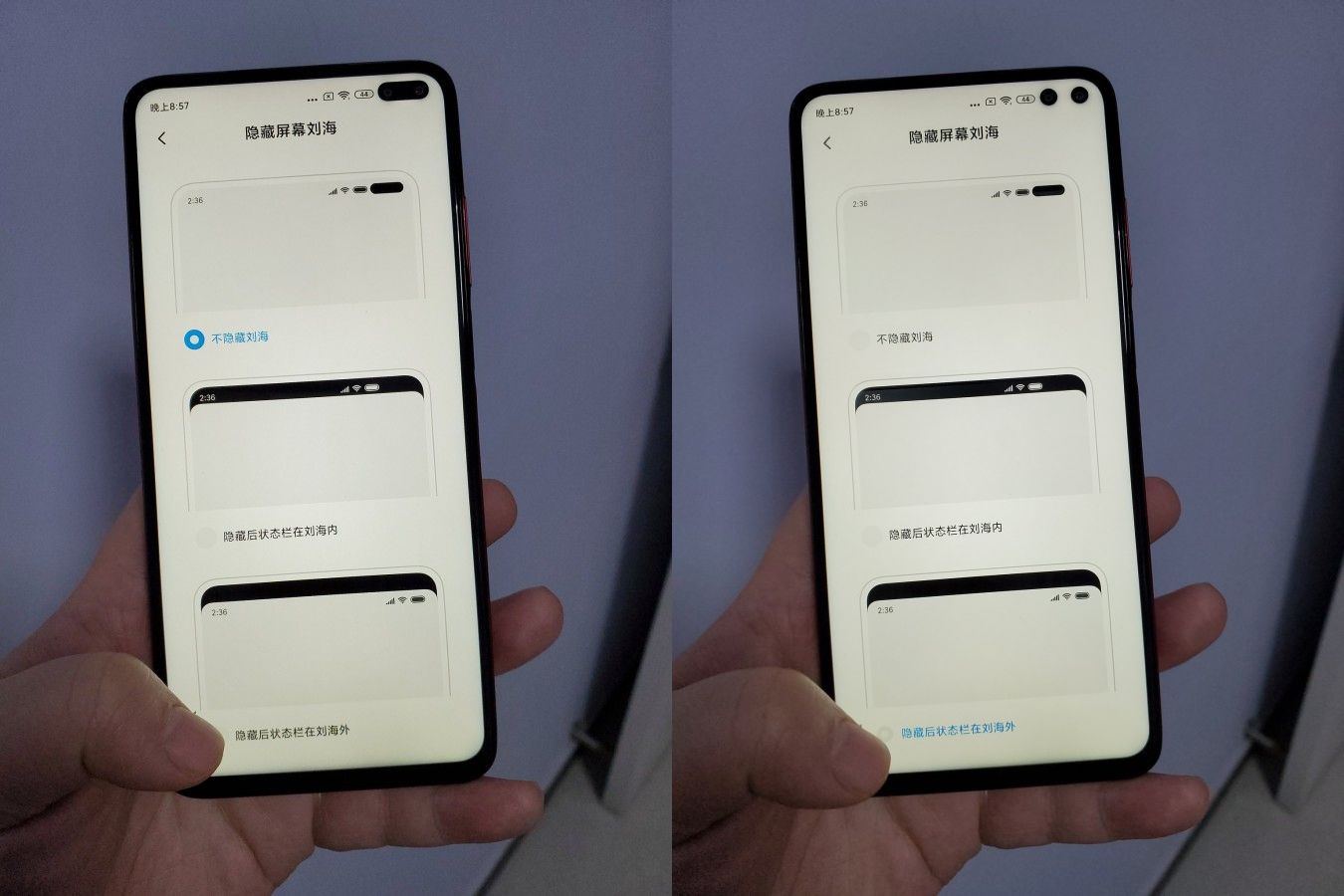
On Monday, Redmi took off covers from the 4G and 5G editions of the Redmi K30 smartphone. The handset arrived as the successor for the Redmi K20 phone that was unveiled earlier this year. Unlike the Redmi K20 that came with a notch-less AMOLED display, the Redmi K30 features a notch-less IPS LCD panel with a cutout for two front-facing cameras. Fresh information reveals that the Redmi K30 does not feature a pill-shaped cutout for the dual selfie snappers as it was thought before. It actually features two separate punch-holes for the two cameras and there is a black bar masked through the software between the two lenses.

On Weibo, multiple users have revealed that while choosing from available options to hide the display cutout through settings, an empty space can be seen between the two lenses for a brief moment. Since the Redmi K30 does not feature an AMOLED screen but an LCD panel, the gap between the two cutouts are not deep black as it would have been on AMOLED screens. Some users have somehow managed to forcibly removed the black gap and the use the phone with two separate punch-holes.

Redmi K30 Specifications

The Redmi K30 comes with a 6.67-inch IPS LCD display that offers 1080 x 2400 pixels full HD+ resolution and a tall aspect ratio of 20:9. The display offers a high refresh rate of 120Hz and it comes with anti-greasy and anti-fingerprint coating. The LCD panel supports HDR10. The TUV Rheinland certified screen can filter the harmful blue light. The two punch-holes on the screen houses a 20-megapixel main selfie camera and a 2-megapixel depth sensor.

The 8nm Snapdragon 730G mobile platform powers the 4G edition of the Redmi K30. Its 5G variant is fueled by the all new Snapdragon 765G SoC. Both models come with up to 8 GB of RAM and up to 256 GB of UFS 2.1 storage. There is a shared SIM slot for supporting a microSD card. The Android 10 OS customized with MIUI 11 runs on the device.

The rear shell of the Redmi K30 feature has a quad camera setup. It has a 64-megapixel main lens, an 8-megapixel ultrawide lens, a 2-megapixel dedicated macro sensor and a 2-megapixel depth sensor along with dual-LED flash. The Redmi K30 is equipped with a side-mounted fingerprint reader. The device is packed with a 4,000mAh battery that supports 30W fast charging.

What’s your opinion on the punch-hole display design of the Redmi K30? Share us your thoughts by posting your comments below.


(via 1, 2)

Redmi K30 vs Realme X2 vs Huawei Nova 6 SE: Specs Comparison

At the launch event of the Redmi K30 series, all the eyes were catalyzed on the Redmi K30 5G due to its new Snapdragon 765G and its 5G capabilities. But Xiaomi also announced another device: the vanilla Redmi K30. It is not a 5G phone and it is nothing we did not already see in the past in terms of specs, but it will carry an incredibly affordable price. That is why we decided to compare it with the most important value for money smartphones released in the recent period. We chose the Realme X2 and the Huawei Nova 6 SE for an amazing value for money comparison between smartphones sold for less than €300.

Xiaomi Redmi K30 vs Oppo Realme X2 vs Huawei Nova 6 SE

Xiaomi Redmi K30 Oppo Realme X2 Huawei Nova 6 SE
DIMENSIONS AND WEIGHT 165.3 x 76.6 x 8.8 mm, 208 grams 158.7 x 75.2 x 8.6 mm, 182 grams 159.2 x 76.3 x 8.7 mm, 183 grams
DISPLAY 6.67 inches, 1080 x 2400p (Full HD+), 395 ppi, IPS LCD 6.4 inches, 1080 x 2340p (Full HD+), 403 ppi, Super AMOLED 6.4 inches, 1080 x 2310p (Full HD+), 398 ppi, LTPS IPS LCD
PROCESSOR Qualcomm Snapdragon 730G, octa-core 2.2 GHz Qualcomm Snapdragon 730G, octa-core 2.2 GHz Huawei Hisilicon Kirin 810, octa-core 2.27 GHz
MEMORY 6 GB RAM, 64 GB – 6 GB RAM, 128 GB – 8 GB RAM, 128 GB – 8 GB RAM, 256 GB – micro SD slot 6 GB RAM, 64 GB  – 8 GB RAM, 128 GB – 8 GB RAM, 256 GB – micro SD dedicated slot  8 GB RAM, 256 GB – nano memory card slot
SOFTWARE Android 10, MIUI Android 9 Pie, Color OS Android 10, EMUI
CONNECTIVITY Wi-Fi 802.11 a/b/g/n/ac, Bluetooth 5, GPS Wi-Fi 802.11 a/b/g/n/ac, Bluetooth 5, GPS  Wi-Fi 802.11 a/b/g/n/ac, Bluetooth 5, GPS
CAMERA Quad 64 + 8 + 2 + 2 MP f/1.9, f/2.2, f/2.4 and f/2.4
Dual 20 + 2 MP f/2.2 and f/2.4 front camera
Quad 64 + 8 + 2 + 2 MP f/1.8, f/2.3, f/2.4 and f/2.4
32 MP f/2.0 front camera
Quad 48 + 8 + 2 MP f/1.8, f/2.4, f/2.4 and f/2.4
16 MP f/2.0 front camera
BATTERY 4500 mAh, fast charging 27W 4000 mAh, fast charging 30W 4200 mAh, fast charging 40W
ADDITIONAL FEATURES Hybrid Dual SIM slot Hybrid Dual SIM slot Hybrid Dual SIM slot

Design

Redmi K30 and Huawei Nova 6 SE offer a slightly more attractive design because they have punch-hole displays. The former has two holes for a dual front camera, while the latter has just a single hole in the display, so a more beautiful front panel. I personally prefer the Huawei Nova 6 SE due to its cleaner design and its more compact dimensions, but it is all a question of tastes. While Realme X2 has a classic waterdrop notch, on the other hand, it offers a definitely interesting rear side with reflective glass and suggestive color variants. Which would you go for?


Display

Not a lot of people would easily think that in 2019 the best display of this comparison is an IPS panel. But it is exactly what we are trying to tell you: the Redmi K30 has an IPS panel, but it also comes with some technologies making it better than the AMOLED display found on the Realme X2. Unlike the X2, Redmi K30 supports the HDR standard and it is even the only affordable phone to offer a 120 Hz refresh rate. So it provides smooth user experience and even richer image quality. Even Huawei Nova 6 SE has an IPS panel, but in this case, you get a classic midrange display with nothing special to offer.


Specs & Software

The performance kings here are both Redmi K30 and Realme X2. Both are fueled by the Snapdragon 730G chipset paired with up to 8 GB of RAM and 256 GB of fast UFS 2.1 internal storage. But there is a small difference: Realme X2 is the only with a dedicated micro SD slot allowing to use both dual SIM and micro SD at the same time. On the other hand, Realme X2 is the only which still runs Android 9 Pie, while Redmi K30 and Huawei Nova 6 SE come with Android 10 out of the box. That is why Redmi K30 is slightly more interesting.


Camera

When it comes to cameras, Huawei Nova 6 SE is the inferior one, while Redmi K30 and Realme X2 are almost at the same level. Both are equipped with a 64 MP quad camera including an ultrawide sensor, a dedicated macro camera, and a depth sensor. And both shoot pretty nice photos but they are not real camera phones. The main difference regards the front cameras: Realme X2 has a single 32 MP sensor, while Redmi K30 has a dual front camera with 20 and 2 MP resolution, including a depth sensor.


Battery

The bigger 4500 mAh battery on the Redmi K30 will most likely allow him to last more on a single charge. But Huawei Nova 6 SE is not so distant with its 4200 mAh unit and it offers a much faster charging technology with a 40W power.


Price

Redmi K30 starts from about €210/$233 in China, Realme X2 starts from €230/$255, and Huawei Nova 6 SE from €280/$311. At the end of the day, I would not choose the Huawei Nova 6 SE because I define Redmi K30 and Realme X2 two devices with a higher value for money. Redmi K30 is the most interesting because of its better display and probably longer battery life.


Xiaomi Redmi K30 vs Oppo Realme X2 vs Huawei Nova 6 SE: PROs and CONS

Xiaomi Redmi K30

PROs

  • Great performance
  • 120 Hz display
  • Punch-hole design
  • Bigger battery
  • Dual front camera
  • Android 10

CONS

  • Nothing particular


Realme X2

PROs

  • Amazing performance
  • Great front camera
  • Micro SD dedicated slot
  • Dolby Atmos

CONS

  • Nothing particular


Huawei Nova 6 SE

PROs

  • Very fast charging
  • Single punch-hole display
  • Android 10

CONS

  • Worse cameras

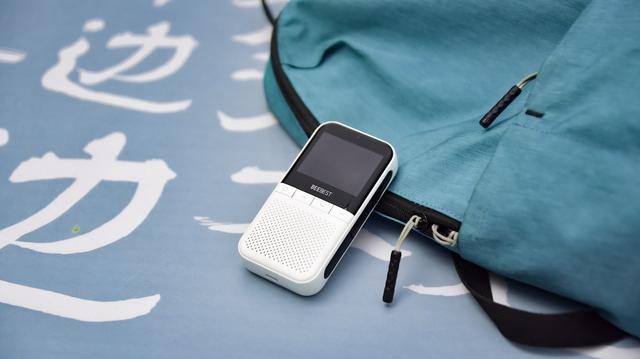
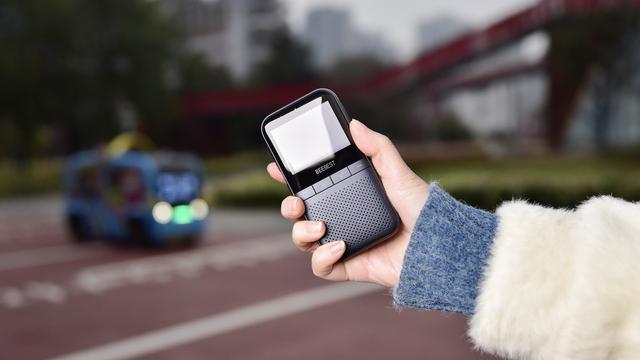
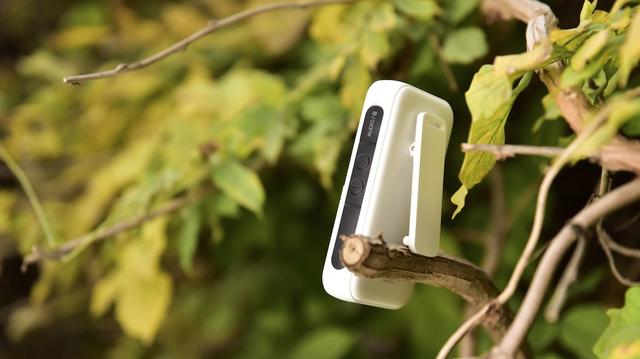
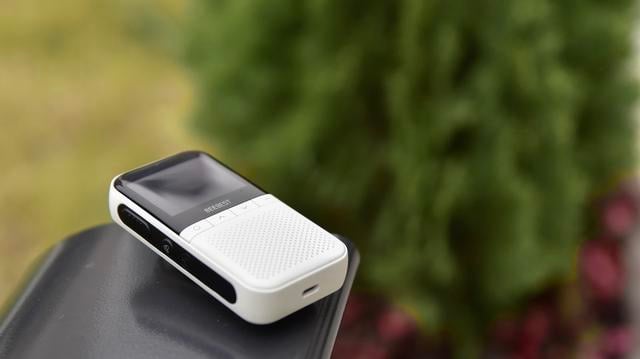
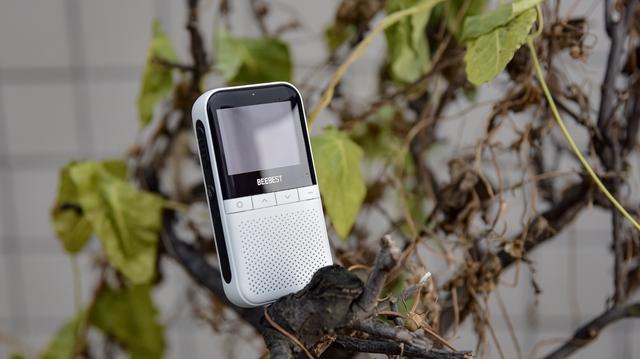
Xiaomi’s BeeBest Smart Walkie-Talkie in pictures- More than just a Walkie!

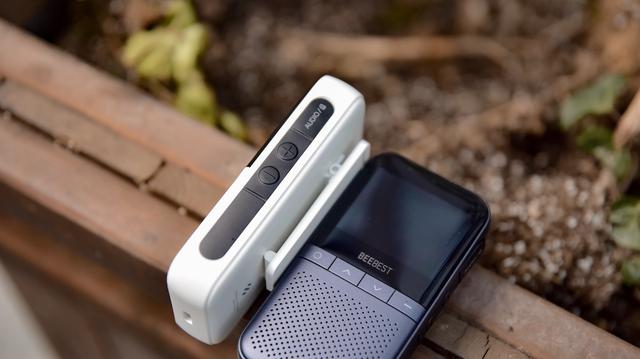
If you have used or owned a walkie-talkie before, then you are that the functions are mostly limited to two-way radio communication over a limited number of channels. This hasn’t really helped the transformation of the gadget from field use to a common gadget you can find everywhere. Xiaomi today crowdfunded a walkie-talkie that can change the market landscape. The product is actually dubbed BeeBest Smart Walkie-Talkie and will likely make owning one attractive.BeeBest Smart Walkie-Talkie

BeeBest is a known brand when it comes to the manufacture of high-end walkie-talkies. We bring you a couple of pictures of the smart walkie-talkie as well as a closer look at the features. BeeBest Smart Walkie-Talkie

Xiaomi first launched the MIJIA Walkie-Talkie in China in 2017 and the product was well received. Turned out the product was manufactured by Fengyu Technology which later went solo under the brand name BeeBest. The MIJIA Walkie-Talkie was later launched as BeeBest Walkie-Talkie in July 2019. The MIJIA Walkie-Talkie 1S was also launched last year and then the MIJIA Walkie-Talkie 2 made its entry in April this year.

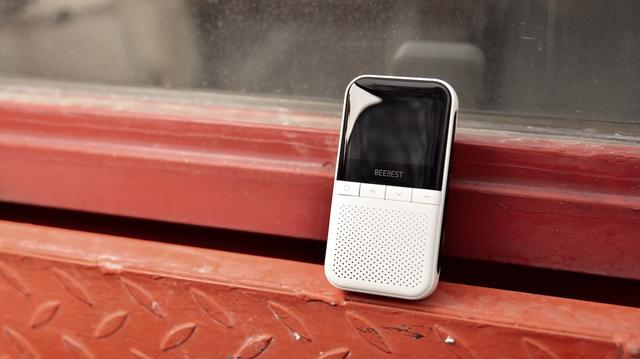
The BeeBest Smart Walkie-Talkie adopts a more compact build which looks like a feature phone if not for the large front speaker and thickness. It, however, has a smaller form factor than the conventional walkie-talkie. Also, there is no extended antenna and that is because it uses a hidden antenna design. It equally comes with WiFi and 4G cellular connectivity. There is a SIM card slot and the intercom function works within a 5000km radius. Another good thing is that multiple devices can be interconnected at the same time with security.

Apart from group communication, you can also communicate with friends individually as there are multiple call modes onboard. There is a dedicated button to activate the intercom function. The button can also be used to inquire about the weather, listen to songs and news as it comes installed with XiaoAI Smart Assistant. The device can even be paired with the MIJIA smart home app.

Further, the walkie-talkie has a built-in GPS, adopts passive hybrid positioning, has SOS function, and can send location information to mobile phones in an emergency.  It gets power from a 2440mAh battery with a battery life of 60 hours. It uses a USB-Cport which means the battery will be charged pretty fast. The device also comes with Bluetooth and the device can be used as a Bluetooth speaker, paired to a smartphone or other device.

In addition, the walkie-talkie features a built-in 2-inch IPS color screen. The screen shows the font and contents clearly even while outdoors. It displays contents such as time, information, battery level, connected groups, etc. The volume rockers are located at the right side of the display.

The device comes with IP54-level water/dust protection, dedicated smart assistant button, built-in back clip and vibration in case it is left on silent mode. 

The BeeBest Walkie Talkie comes in Black Deep Space Blue and Snowy white colour options and costs just 399 yuan ($57). See more pictures of the walkie-talkie from the gallery below.


(source)


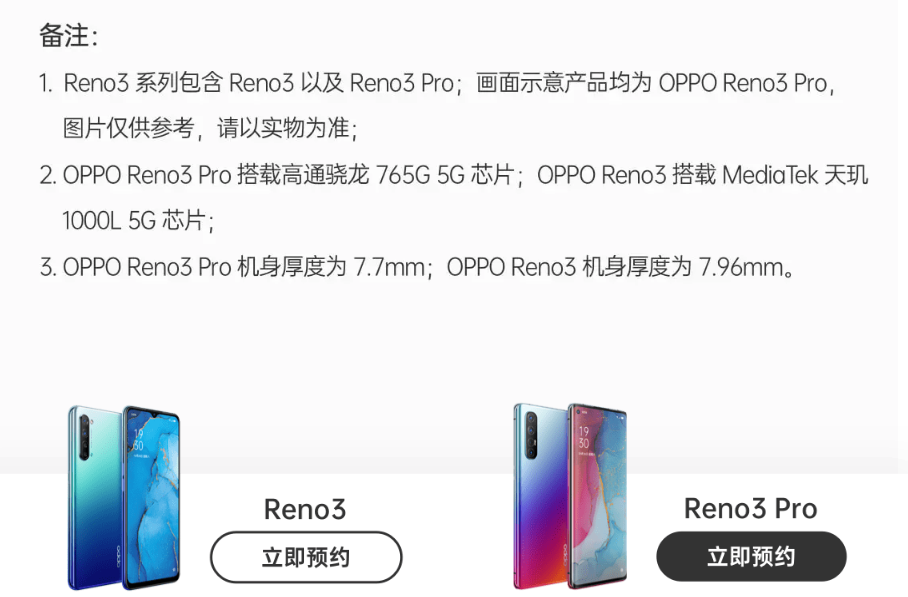
Official website confirms Reno3 will be powered by MediaTek’s Dimensity 1000L 5G SoC

The Reno3 series will be announced in China on December 26. The launch will be for the Reno3 and Reno3 Pro and both will be 5G mid-range phones. While OPPO has announced that the Reno3 Pro will be powered by the Snapdragon 765G processor, it has not said anything about the chipset inside the Reno3. Now, we have official confirmation on the processor that will power the Reno3 as well as some other details, thanks to a page put up by OPPO.

According to the info on the page, the Reno3 will be powered by MediaTek’s Dimensity 1000L 5G processor. MediaTek is yet to announce the chipset which is also known as the MT6885.

Yesterday, the AnTuTu benchmark result of the Reno3 surfaced on the web and it revealed the device has an MT6885Z processor powering it. The benchmark result showed the processor has a Mali-G77 GPU. We presume it also has Cortex-A77 CPU cores like the Dimensity 1000 but at a lower clock speed.

OPPO Reno3 Dimensity 1000L

The page also reveals the Reno3 has a thickness of 7.96 millimeters but does not say if it has the same 4025mAh battery capacity as the Reno3 Pro.

Based on the render we have seen, the Reno3 will have an AMOLED display with a waterdrop notch for the selfie camera. We also already know it will come with 64MP quad rear cameras and have an in-display fingerprint scanner.

The page also says OPPO is running a sweepstakes and the prizes up for grabs include the Reno3, OPPO OO-Fresh Earphones, and OPPO MH13 wired earphones etc.

(Source, Via)

Realme Buds Air will feature Wireless Charging, confirms Madhav Sheth

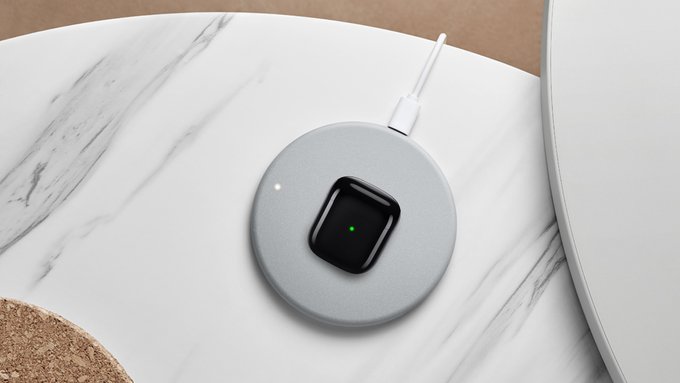
Yesterday we reported that Realme Buds Air could feature Wireless Charging. The news came from a close source with GSMArena, but today, CEO Madhav Sheth has officially confirmed that you can charge the case using wireless charging. We haven’t got any specifications of the earbuds but this feature should explain why the Realme Buds Air could be costlier than offerings like the Redmi Airdots.

realme buds air wirless charging

A premature listing of the earbuds on Flipkart revealed that it could start at Rs. 4,999 (~$71) at launch. In comparison, earbuds from companies like Honor (Flypods 3) and Vivo start at more than $100.

Recent reports have revealed that the retail package of the Realme Buds air will contain the earbuds, USB-C charging cable and a user manual, with up to six months warranty. Expected features of the earbuds include support for built-in voice assistant and touch controls, 12mm Bass boost driver and Bluetooth 5.0.

The brand will announce the Snapdragon 730 powered Realme X2 (earlier called as Realme XT 730G) on December 17 alongside these new earbuds in India. This is the same Realme X2 model that was announced in China back in September. The phone got a special Avocado green color earlier this month.

 

Huawei’s Kirin 990-powered MatePad Pro first sale now rolling!

Huawei sort of attempted to reawaken the tablet market with the launch of the Huawei MatePad Pro towards e end of last month. Not only was the MatePad Pro launched with a Kirin 990 chipset, but it equally came with a 5G version. In terms of aesthetics, the tablet features a premium build.Huawei MatePad Pro

The MatePad Pro has now gone on sale for the first time in China. The sale went live earlier today on VMall and will be wrapped up in a few hours time. It’ll be interesting to get a demographics of the flagship tablet’s sales performance. For this sale, only the 6GB RAM+128GB storage version is on offer and it comes with a price tag of 3,199 yuan (~$454). Of course, Huawei has already disclosed that the 5G version won’t meet with us until next year.
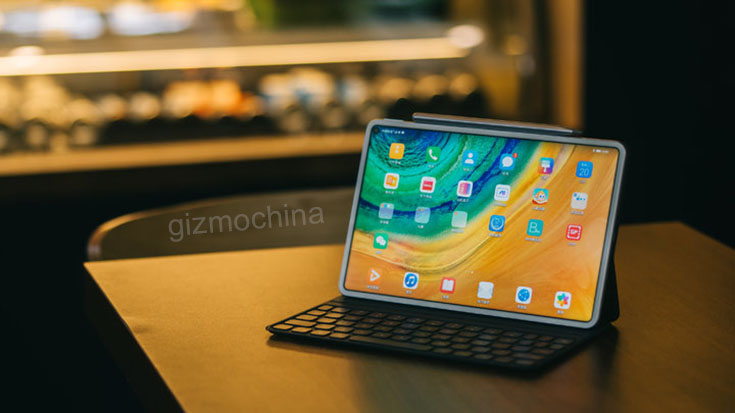
As a reminder, the MatePad Pro is equipped with a 10.8-inch display with rounded corners. The IPS LCD display that features a punch-hole for the front camera supports quad HD+ resolution of 2560 x 1600 pixels and DCI-P3 color gamut. With 4.9mm slim bezels around the display, the MatePad Pro promises a screen-to-body ratio of 90 percent.

Huawei MatePad Pro
Huawei MatePad Pro

The Kirin 990 chipset is paired with 6GB/ 8GB of RAM and there are 128GB/512GB storage options. There is equally a nanoSD card slot onboard for expanding its storage. The package also includes a huge 7,250mAh battery that supports 40W rapid charging. There is also support for 15W wireless charging and 7.5W reverse wireless charging on the tablet. For interface, the tablet runs EMUI 10-flavoured Android 10 OS. Other features include quad speakers, Wi-Fi 802.11ac, Bluetooth 5.1, GPS (only on LTE edition), USB-C, a 13-megapixel main camera with f/1.8 aperture, phase detection autofocus and LED flash. There is also an 8-megapixel selfie camera with f/20 aperture. The device comes with support for M-Pencil stylus that 4096-level pressure sensitivity nib. The stylus can be charged wirelessly by simply attaching it to the device.


(source)


Xiaomi Mi True Wireless Earphones 2S gets Bluetooth certification

Xiaomi’s Mi AirDots Pro is sold outside China as the Mi True Wireless Earphones. In September, Xiaomi announced the Air2 (AirDots Pro 2) which is the successor to the AirDots Pro and should sell outside China as the Mi True Wireless Earphones 2. However, Xiaomi is yet to announce the Air2 outside China and that isn’t surprising seeing as it took about six months before it launched the first model in Europe.

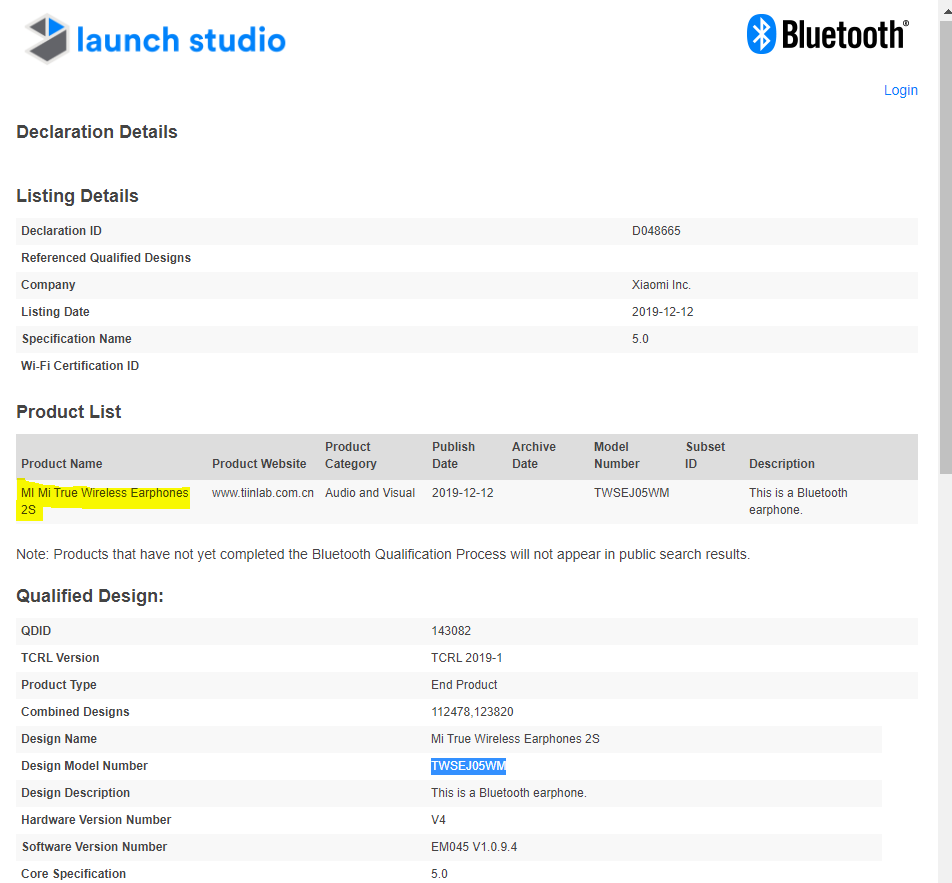
Now, a Bluetooth certification page for another pair of wireless earbuds from Xiaomi called the Mi True Wireless Earphones 2S has been spotted.

Mi True Wireless Earphones 2S Bluetooth Certification

The Mi True Wireless Earphones 2S was certified today by the Bluetooth Special Interest Group. The certification page reveals the model number of the earbuds has TWSEJ05WM and it confirms that it is a higher model than the Mi Air2/AirDots 2 Pro whose model number is TWSEJ02JY.

The certification page says the product website is Tiiinlab.com.cn which is actually the website of the acoustics company behind the 1More brand of audio products.

The earbuds will connect via Bluetooth 5.0 but we do not know what it will look like and what new features it will bring. However, we do hope it will come with Qualcomm’s QCC5126 audio chip and support for wireless charging. We also cannot say when it will launch, though it doesn’t seem like it will be this year.


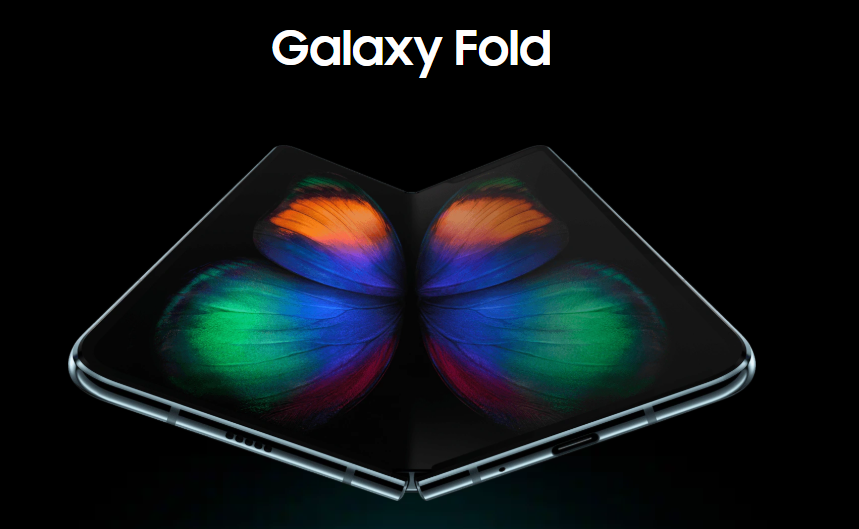
Samsung Galaxy Fold launches in yet another country tomorrow – Indonesia

Samsung’s Galaxy Fold is already available in multiple countries across the globe. Tomorrow, the Fold will be available for pre-order in yet another country, this time in Asia – Indonesia. The official Samsung Indonesia website has a count down timer that shows there’s still more than 12 hours left for the pre-orders to begin the country.

As with other markets, the Galaxy Fold is expected to come in limited quantities and is only available via pre-orders. Also, the company adds that the units will be available on a first-come-first-serve basis. Inside the box, you’ll get a pair of Galaxy buds and a case along with the foldable.

Note that Samsung is yet to reveal the official price tag of the Galaxy Fold 4G in Indonesia. Expect that information to surface tomorrow when the pre-orders begin. For your reference, the Galaxy Fold 4G launched in the U.S. for $1980 which comes to 27 million Indonesian Rupiah.

It is worth adding that the next generation of the Galaxy Fold is expected to release in February 2020 at a cheaper price tag. So it remains to be seen if people are ready to shell out thousands of dollars for the current generation model, just a couple of months before its successor launches in the market.