Elephone PX has finally hit the market after a long period that included a crowdfunding campaign cancellation and a product redesign. The new pop-up camera phone from Elephone appeared in the first unboxing and hands-on video a while back as we had only seen it in photos.
As you can see in the video, the device looks just beautiful and the Crystal Cream color is one of the best we’ve seen so far. The box includes the phone, a SIM ejector, a protective case, as well as a charger and charging cable. The pop-up camera means that the display is clean of any notch and offers an immersive full-display experience. As for the performance and build quality there isn’t much we can say by just seeing a video but it looks snappy and well-built.
1 of 2
Featuring a 6.53″ FHD+ display and the 16MP pop-up selfie camera, the phone sports a fashionable design and notch-less display. The rear camera is a dual setup with 16MP/2MP sensors and right below it lies the fingerprint sensor. The phone is powered by Helio P23 SoC backed by 4GB of RAM and 64GB of internal storage upgradeable up to 256GB more via the microSD slot. Also, there is a 3300mAh battery inside. You can find out more about it on the official product page and buy it at a discounted price on Gearbest.
The best camera out there is the one you carry with you at any time so smartphones have become the best cameras everyone possesses. That’s why every manufacturer has put all its effort into improving the camera performance of their flagships. The problem is that most people would rather buy a mid-range device that usually lacks OIS (Optical Image Stabilization) and that results in shaky videos and blurry low-light photos.
The solution is easy: Just buy a gimbal and you are good to go. But gimbals are usually bulky and heavy and this fact cancels the advantage of the portability offered by a smartphone. The solution to this problem comes from Snoppa Technology, a Shenzhen-based company that released Vmate, A palm-sized gimbal camera that makes everyone’s life easier.
The Snoppa Vmate is practically an external camera for your smartphone adapted on a stabilizing system. It features 4K@60fps video recording and sports a micro 3-axis stabilizing system. The newly designed micro 3-axis stabilizing system can effectively eliminate shakes and jitters when filming handheld on the go, allowing for smooth and highly detailed footage.
As said before, unlike ordinary gimbals which are commonly big and heavy, Vmate only weighs 118 grams. It is so small that it can easily fit into your pocket, handbag or even hanging from your wrist.
Performance-wise, it comes with its own CPU with ARM A53 cores, a 1/2.3 inch sensor, and 81˚ wide lens. The Aperture is f/2.0 and it can shoot video up to 4K@60fps as well as 1080p slow-motion video @240fps! What’s more, it can shoot 12MP photos.
The Vmate is crowdfunded on Indiegogo and has reached 411% of the set goal. According to the information provided, it already is on production stage. You can still grab some Early Bird deals and see all the details about it on the campaign page.
Oppo had launched the A9 2020 smartphone in the Indian market a couple of months back. Last month, the company had slashed the phone’s pricing by ₹1,000, bringing down the starting price of the device to ₹15,990 (~$224) instead of ₹16,990 (~$238).
Till now, the smartphone was available in Marine Green and Space Purple colors. Now, Oppo A9 2020 has got a new color variant in the Indian market — Gradient White. It is now available for purchase through offline stores in the country.
Oppo A9 2020
The 4GB RAM variant is priced at ₹15,990 (~$224) while the 8GB RAM model costs ₹19,990 (~$280). Interestingly, this new variant is now yet available for purchase through online retail stores in the Indian market.
The smartphone comes with a 6.5-inch waterdrop Sunlight Screen which offers a screen resolution of 1600 x 720 pixels and has a screen-to-body ratio of 89 percent. There is also a Blue Shield that filters harmful blue light and protects users from eye fatigue.
Under the hood, the device is powered by Qualcomm Snapdragon 665 chipset and packs 4GB or 8GB RAM and both the variants pack 128GB UFS 2.1 internal storage. It also comes with a dedicated microSD card slot for expanding the storage capacity up to 256GB.
In the camera department, it comes with a quad-camera setup on the back which consists of a 48-megapixel f/1.8 primary camera, an 8-megapixel f/2.25 aperture with 119-degree ultrawide angle camera, and two 2-megapixel cameras with f/2.4 aperture.
On the front side, it features a 16-megapixel camera with f/2.0 aperture with AI beautification. The phone has electronic image stabilization and an Ultra Night Mode 2.0 that also works with ultrawide angle photos.
Features on the Oppo A9 2020 include stereo speakers and Dolby Atmos. The smartphone runs Android 9 Pie-based ColorOS 6.0.1 with features such as Game Boost 2.0 for smoother and more responsive gaming, HyperBoost, Game Space, Game Assistant, and a Riding Mode that mutes all notifications, declines calls and automatically texts back callers.
The device also comes with a rear-mounted fingerprint sensor. The smartphone is powered by a 5,000mAh battery which also supports reverse charging. The company has not mentioned fast charging support, which is a bit disappointing.
Xiaomi commenced its annual Mi Developers Conference 2019 on Tuesday in China. During the first day of the conference, the Chinese tech giant reiterated its mobile+A!oT dual-engine strategy which it is operating presently. Xiaomi also unveiled a variety of IoT smart gadgets under the AQara brand.
The main product is the MIJIA Smart Multi-mode gateway which comes with support for three communication protocols, namely; Zigbee, Wi-Fi, as well as BLE & BLE Mesh. The product is priced at $129 (~$18) and will be officially launched on December 12. Also announced is the Aqara smoke alarm NB-IoT version, which is priced at 299 yuan (~$32) and will equally go on sale on December 12.
In addition, Xiaomi also announced an update to the IoT module family, in which the Xiaomi IoT BLE Mesh module now comes with a reduced price of 6 yuan, the Zigbee 3.0 module’s price is reduced to 10.5 yuan, and the WiFi+ Bluetooth module has a price tag of 9.5 yuan.
According to reports, Xiaomi AIoT has more than 196 million service-connected smart devices, serving 59.99 million homes, and intelligently executing commands 108 million times a day. The service is available globally and in a short while will be expanded further with the launch of the AQara brand in the US.
Using your smartphone in the bright Sunlight is often found difficult if the auto-brightness is turned off. It becomes nearly impossible for the user to see anything until the brightness is turned to the considerable level. However, the Xiaomi has found a new way to adjust the display backlight even if auto-brightness is turned off. Xiaomi has introduced a new “Sunlight Mode” display setting in MIUI 11 to ease the operation under direct sunlight.
Sunlight Mode will switch to the highest brightness level once it gets the direct sunlight. It is equivalent to the “high brightness mode” that is present or get triggered once the ambient light becomes sufficiently bright. According to our folks at XDA Developers, the new model gets triggered once the ambient lighting crosses 12000 lux for 5 seconds. It is reduced and set to the previous state when the lighting drops below 12000 lux for 2 seconds.
In MIUI 11 changelog, Sunlight Mode is said to “adjust the brightness to strong ambient light when automatic brightness is off”. It is quite useful for users who often get into the direct sunlight and hate using the auto-brightness mode. Xiaomi Sunlight Mode will use readings from the ambient light sensor to make it work.
It will come to all the Xiaomi devices running MIUI 11. It is quite a useful feature for users.
Additionally, MIUI 11 is based on Android 10 and feature various new enhancements and features. There’s a whole new UI, Mi Share file-transfer, Aways-On-Display, Digital Wellbeing, Quick Replies, Mi Work and other apps that are present in the MIUI 11. Xiaomi has already rolled out the MIUI 11 to Poco F1, Redmi K20 series, Redmi 5, and various other devices. However, the devices such as Redmi Note 6 Pro, Redmi 7A, Redmi 8 will soon get the stable update
In May 2019, Huawei introduced the P Smart Z 2019, an affordable phone with good specs and also the first Huawei smartphone with a motorized pop-up camera. The selfie camera also offers AI functionality. By using a pop-up selfie camera, you got a great viewing experience without the need for notches or cutouts on the screen.
It was a great idea, but unfortunately it seemed like Huawei had no more interest in that solution. It hadn’t completely disappeared from the market seeing how both the Samsung Galaxy A80 and the Asus ZenFone 6 used it, but Huawei were seemingly done. That was at least until now, as two new patents indicate that the Chinese manufacturer is considering the idea once again.
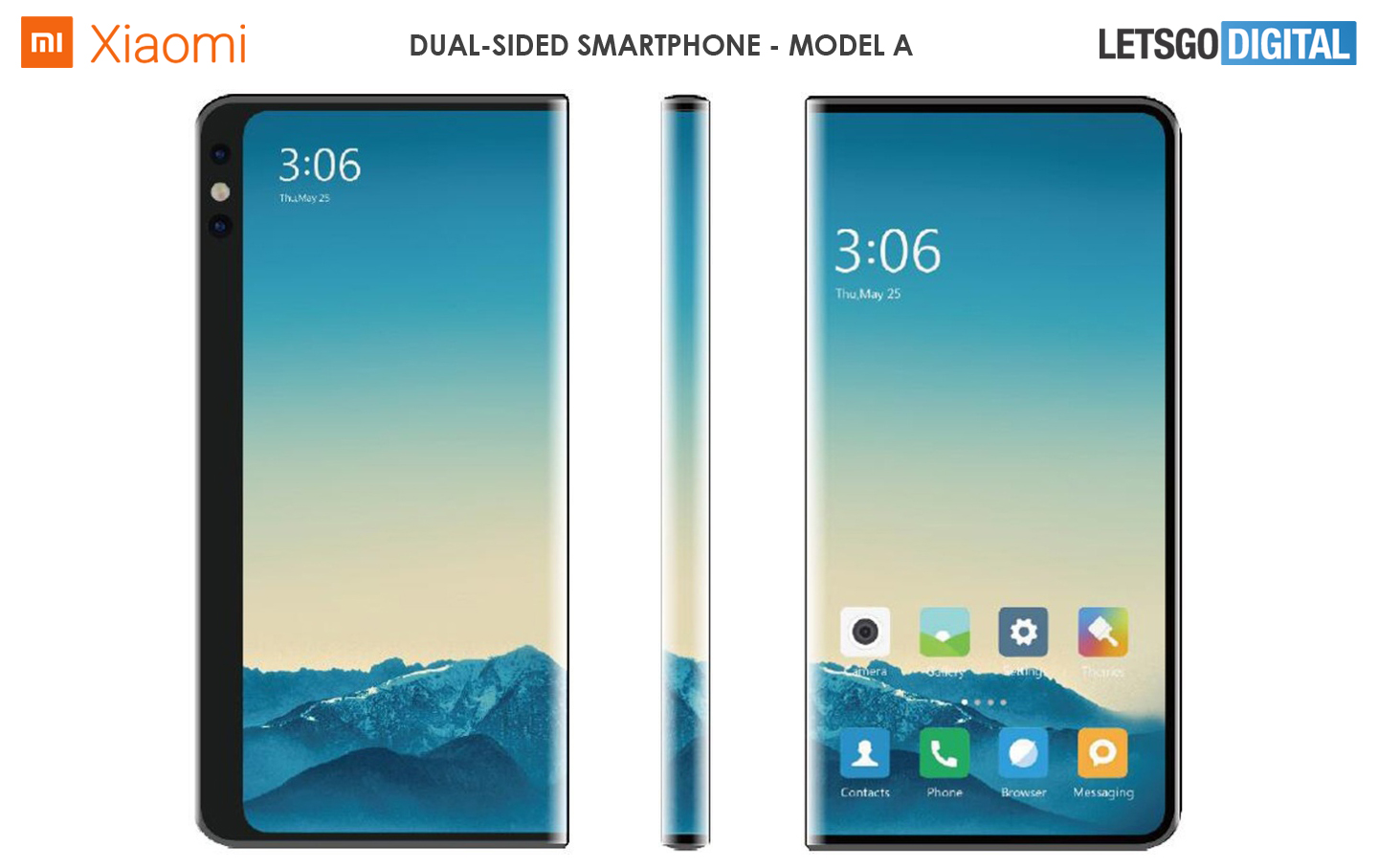
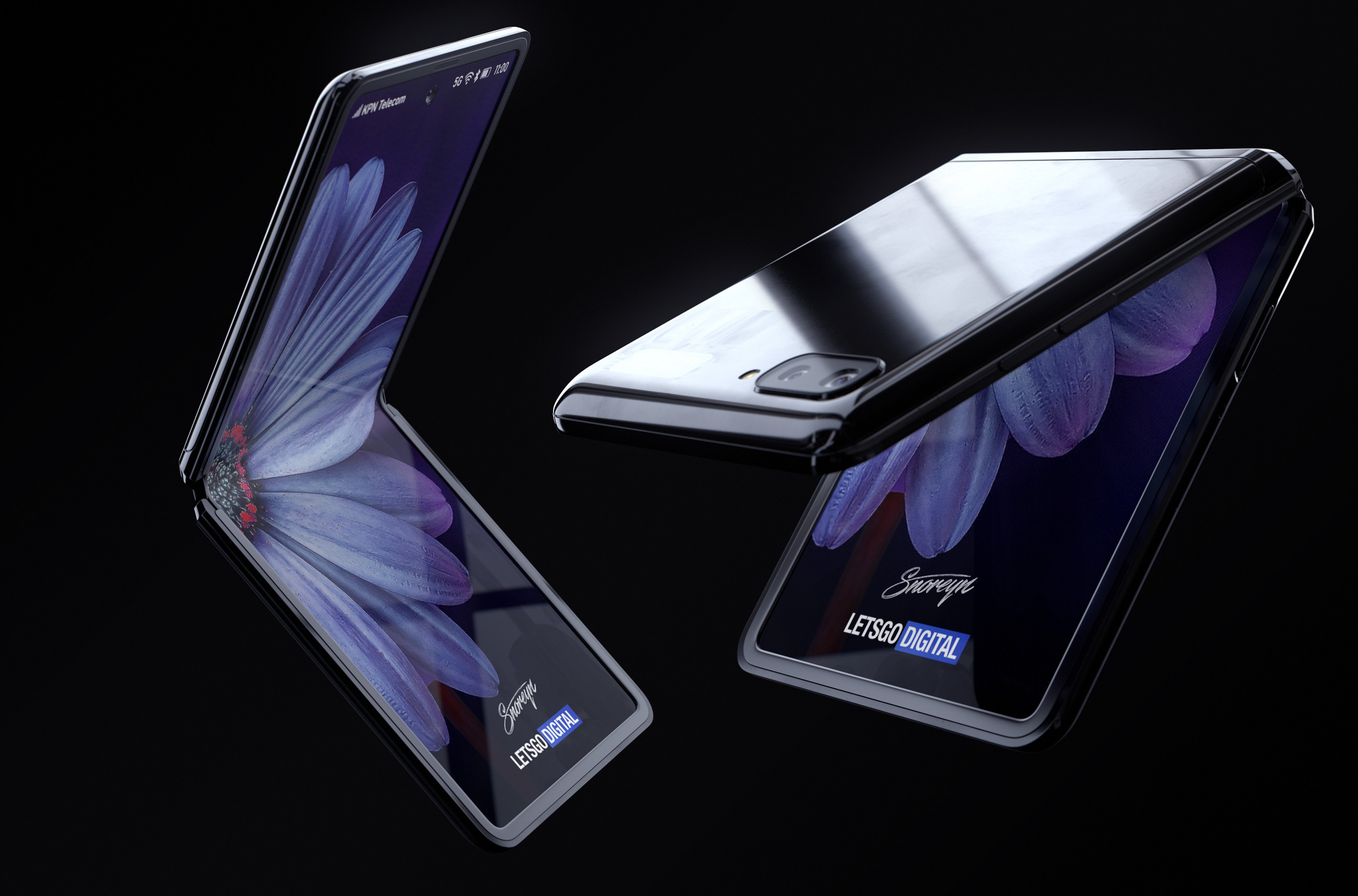
The patent appeared in the WIPO (World Intellectual Property Office) database, as many patent leaks do. They were approved at the end of September, and LetsgoDigital are fondly referring to the device as the Huawei P Smart 2020. For the first smartphone model, Huawei has opted for a single rotating camera. If you want to make a self-portrait, the camera folds open from the rear, so that it faces forward and you can take a selfie.
A second camera lens is placed directly under the rotating camera. It is therefore a dual camera system. The fingerprint scanner is placed directly next to the cameras. The flash is mounted above, which gives it a fairly nice look. Huawei certainly haven’t lost their touch in making aesthetically pleasing smartphones, that’s for sure.
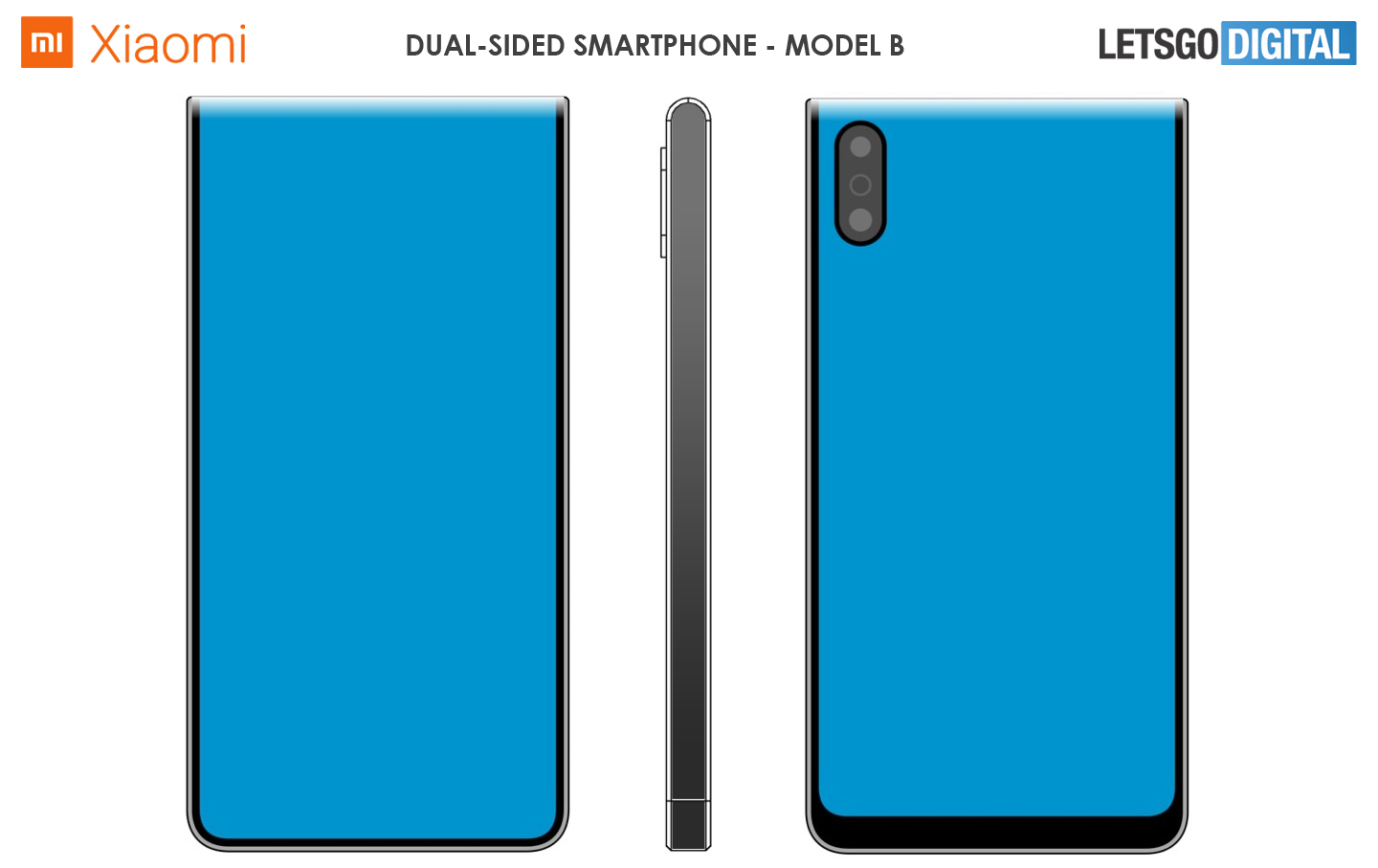
The second smartphone model has exactly the same dimensions, as well as basically identical screen positions. This variant also has a rotating selfie camera, but this time both cameras are included in the rotating system. So you also have a double selfie camera.
The two cameras are placed next to each other, centered in relation to the housing.
This time, there appears to be no fingerprint scanner on the back of the device. This probably means the company is going for the trendy ‘under display fingerprint sensor option. Considering the extra features and stuff, we can probably expect this variant of the Huawei P Smart to be slightly above the other when it comes to pricing.
Xiaomi has another new product for today, and that new product is a projector. The Xiaomi Mijia Laser Projector is the next in Xiaomi’s lineup of Fengmi produced projectors. Fengmi specialize in the production of projectors. Pricing begins at 4999 yuan ($853), which is definitely leaning quite a bit towards to expensive side of the spectrum.
Previously Xiaomi had released the standard Mi Projector, which was a bulky, chunky box that focused mainly on quality. The new Mijia Laser Projector is a follow-up to that device, thought it’s not really a successor to it. It’s not as powerful as the Mi Projector, but it’s also more powerful than their last projector, the portable Mi Projector Vogue.
The specifications are in line with this idea where it’s right in between the powerful Mi Projector and the weaker Mi Projector Vogue. The brightness has been toned down from the staggering 9000 ANSI lumens of the original Mi Projector to a more modest 2400 ANSI lumens. It’s still brighter than most though, which is good.
The Mijia Laser Projector comes with multiple different image optimizations. It allegedly helps with the brightness, color gamut, sharpness, skin color reproduction, HDR display and HDMI output quality. It can achieve brightness levels to up to 1500 ANSI lumens when in highlight mode. It comes with over 85% NTSC’s wide color gamut and the colour performance is rich and vivid.
It uses an upgraded graphics edge processing algorithm which can effectively distinguish the edge and details of the image object for processing. This also enhances the image clarity. The projector is also optimized for lower latency when bring streamed through HDMI. This represents a 50% improvement over previous products.
The Mijia Laser Projector features dual 10W speakers for sound. Images projected can go to up to 150-inches, which is quite good. It also supports 8K video decoding. For software, it runs the same version of MIUI that comes on Xiaomi’s MiTVs. This means the Mi Laser Projector works with Mi Home IoT equipment, which is great.
After releasing the new ColorOS 7 version in China today, OPPO has started accepting limited registrations for ColorOS early adopters program in China. Note that at present, only OPPO Reno users can register for being an early adopter of the new OS. The registrations for OPPO Reno 10X Zoom and Reno Ace models will kick off later today.
If you live in China and wish to register to become an early adopter, follow these steps: Go to “Settings” > “Software Update” > “Upper Right Corner Settings Icon” > Click “Upgrade Early Adoption”. Note that this is only open for original OPPO Reno users right now and 10X Zoom and Ace users will have to wait for a few hours more before they can register.
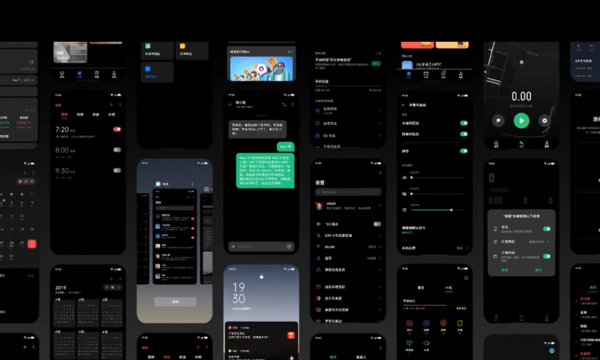
The ColorOS 7 brings a lighter visual interface that’s easy on the eyes and less saturated in colors. It comes with a system-wide dark mode, three-finger screenshot and editing, a special flashback button for multitasking, new UI customization options, and the new OPPO Sans font as well. You can read all about the new features on ColorOS 7 from this launch article.
AS expected, OPPO has announced the roll-out schedule for ColorOS 7 for its devices. The rollout is said to be the biggest in the history of the company and also includes Realme devices.
Below are the OPPO devices getting the update and when it will arrive:
25th November 2019: OPPO Reno, Reno 10x Zoom, Reno FC Barcelona Edition, Reno Ace, Reno Ace Gundam Edition.
December 2019: Reno 2.
Q1 2020: Reno2 Z, Reno Z, Find X, Find X Lamborghini Edition, Find X Super Flash Edition, R17, R17 New Year Edition, R17 Pro, R17 Pro New Year Edition, R17 Pro King Custom Edition, R17 Pro Pikachu Custom Edition, OPPO K5.
It was initially thought that Realme would announce its own OS but that is not the case. Instead, the young brand will be getting a custom version of ColorOS 7 with custom features not available on OPPO devices.
ColorOS 7 brings a revamped user interface that builds on the borderless design of ColorOS 6. There are new icons, new sounds, and new wallpapers. There are also improvements in system performance and new apps such as Breeno which helps you sleep better, and Soloop which is a video editing app.
After weeks of teasers and anticipation, OPPO has finally announced the new ColorOS 7 operating system. The OS builds on the existing ColorOS 6’s borderless concept but makes it a lot lighter and easy on the eyes by decluttering the UI and tweaking its overall colors.
There are a lot of new changes made to ColorOS 7, so let’s take a quick look at them down below.
ColorOS 7 Design
The ColorOS 7 isn’t a revamped UI. So if you have ever used the ColorOS 6, you should be familiar with the overall interface. However, OPPO has increased the white space in the UI and tweaked the UI colors to make it easy on the eyes. The ColorOS 7 tones down the saturation to reduce visual fatigue. At the conference, the company revealed that on average, a user spends around 4.7 hours on his smartphone. Therefore it was necessary for the company to work on a user interface that was light and didn’t wear out the user.
The ColorOS 7 brings four different icon designs, including a couple of minimalistic options.
The company also launched a new OPPO Sans font with the new OS. The Chinese characters of the font were developed by Zhu Zhiwei of Hanyi Fonts while the western characters were developed by the U.S. design company, Pentagram. What’s even more interesting is that the OPPO Sans font has been released free to use for everyone, even for commercial use.
The ColorOS 7 also brings a system-wide dark mode that covers third-party applications as well. You can also schedule the dark mode to apply at a specific time in the day. You can further reduce eye strain in the dark mode by applying the eye protection layer on top.
There are a bunch of new features in the new ColorOS 7 version. For example, there’s a new Focus mode, similar to the Zen mode on OxygenOS.
ColorOS 7 is smarter too. It can automatically switch to drive mode if it connects to the car Bluetooth and it can send a sleep mode reminder at night, depending on your smartphone usage patterns, which activates DND and dark mode on the device.
The ColorOS 7 also comes with a half screen feature which enables the UI to show small cards like contacts, calendar, and alarms on the bottom part of the screen. This is different from the traditional split-screen mode found in the previous version. Talking about split-screen, the new OS comes with a special Flashback (international name may be different) button that will come in handy when you have to quickly switch between two apps.
The button says: Your driver has arrived
We don’t have exact details on how it works in each scenario but imagine if you are gaming and you get a text which you have to urgently reply to. The flashback button comes to your rescue by offering a one-click switch between your game and the messaging app. What’s more, the button will give you a quick snippet of what’s happening in the game.
This button can also come in handy for other scenarios where you want a live view of what’s happening in the other app. For example, if you are texting and if your Uber or in China’s case, DiDi driver has arrived, the button will show a message for the same.
There’s also a new password manager powered by Google. Camera centric features in ColorOs 7 include a tweaked camera UI, portrait mode 2.0, night mode, super stabilization, and Soloop video editor. The OS also supports three-finger long screenshot and cropping.
In terms of performance enhancements, the new ColorOS 7 improves application startup speeds and fluency. The company says that app startup speeds have increased by 25% and system fluency and RAM utilization have improved by 30% and 40% respectively. Even gaming performance is reportedly improved, with touch response and game frame rates improving by 15% and 19% respectively in the new OS. These figures are likely with respect to ColorOS 6’s performance.
OPPO also said that there are more than 300 million ColorOS users worldwide today. The OS has been translated in over 40 countries and in more than 80 languages across the world.
WhatsApp is the most popular social messaging platform, with over 1.5 billion active users in 180 countries. Being popular, it has always remained the favorite den among cybercriminals or intruders. They have attacked the WhatsApp several times via malwares, and other hacking tools. Sometimes the internal loopholes also led them to flaunt the system. Apart from security lapses, WhatsApp is also home to most advanced messaging features throughout the Globe.
WhatsApp always keeps adding the features and enhancements to match the pace of evolving technology. After Google and other tech giants, the WhatsApp has finally bowed to users’ request of dark mode. They are partially rolling out the support for Dark Mode in WhatsApp on Android 10. However, it is not fully functional. The users need to tweak some settings to get the dark mode working.
There are many advantages of using the Dark Mode on digital devices.
Advantages of Dark Mode:
It reduces potential eye strain
It saves battery on AMOLED display phones.
Make phone usage comfortable during the night or low-lit environment.
It even minimizes flickering and blue light.
Disadvantages of dark Mode:
Eye Fatigue due to the continuous usage of dark themes.
Long contents are more challenging to read.
We have compiled a step-by-step guide to install enable WhatsApp Dark Mode on Android 10.
Steps to enable dark mode in WhatsApp on Android 10
Head over to the Settings menu of Android 10.
Now, Open About Phone > Tap Build number 7 times to unlock Developer Options.
Browse to Developer Options > Override force-dark” setting and enable it. (Note: This option will enable dark mode for both the supported and unsupported applications.)
Now, Open WhatsApp and enjoy the darker color palette.
Note: WhatsApp Dark Mode is correctly working on Android 10 based OnePlus 7 Pro, OnePlus 6 and ColorOS 6 based devices.
The above guide will work on almost every device running Android 10. It is always recommended to switch to the dark mode if you having eye strain issues. This little tweak will really help you to reduce eye fatigue. Apart from the dark mode, some blue filter apps for Android are also present to reduce the ill-effects of continuous display usage.
OPPO unveiled ColorOS 7 today at an event in China today. The new operating system brings new features and is designed to make usage more comfortable.
While the new version of ColorOS will be available to a number of OPPO devices in the future via an update, OPPO has announced that the OS will appear first on the Reno 3, its upcoming phone scheduled for release in December.
ColorOS 7 will debut on the OPPO Reno 3
The OPPO Reno 3 will be a 5G phone with support for NSA and SA 5G networks. The details about the phone’s specifications are currently unknown, but last month, it was reported that OPPO and Qualcomm will announce a dual-band 5G phone in December. As at then, the name of the phone wasn’t known but now it has been revealed it will launch as the Reno 3.
The Reno 3 will most likely be powered by Qualcomm’s Snapdragon 7250 processor which will have an integrated 5G modem. However, we have a feeling the phone will not go on sale until next year.
Qualcomm has a summit scheduled for early December where it is expected to announce new processors including the SM7250. It most likely already shipped samples of the chipset to manufacturers and those samples will be used for the Reno 3 launch. However, commercial quantities won’t be available until next year. So while the Reno 3 may launch next month, folks will probably not get their hands on a unit until January.
Today’s launch was for the Chinese unveiling of ColorOS 7. Next week, OPPO will have a global unveiling in India.
Realme X2 Pro, the company’s first flagship phone has made its way to India. The smartphone had gone official first in China and Europe in October. Priced at Rs. 29,999 (~$417), it is an irresistible phone that is packed with plenty of exciting features. Apart from the flagship Snapdragon 855+ processor, the Realme X2 Pro features a 90Hz refresh rate display, a 64-megapixel quad camera system with support for up to 20x hybrid zoom and 50W fast charging technology.
Realme X2 Pro Specifications and Features
The Realme X2 Pro sports a premium appeal as it features a 3D glass design on its back. The front and rear sides of the phone are protected by Gorilla Glass 5 panels. It has a S-AMOLED display of 6.5 inches offers 1080 x 2400 pixels full HD+ resolution, 20:9 aspect ratio, 90Hz refresh rate, 1000nits of brightness, 2000000:1 contrast ratio and carries support for HDR10+ and DCI-P3 color gamut. The TUV Rheinland certified display is designed to safeguard the eyes of the users by filtering the blue light. The third-generation in-display fingerprint scanner available on the Realme X2 Pro can unlock the device in just 0.23 seconds.
Designed to rival with other budget-friendly flagship phones like Redmi K20 Pro and OnePlus 7T, the Realme X2 Pro comes with a 2.96GHz Snapdragon 855+ processor and up to 12 GB of LPDDR4x RAM. It offers users with up to 256 GB of UFS 3.0 storage. A microSD card slot is also available on the device for expanding its storage.
For controlling the internal temperature of the Realme X2 Pro, it is equipped with premium vapor chambers system along with superconducting carbon fibers, a multi-layer graphite sheet and other heat dissipation materials. The handset includes a 4,000mAh battery. It can be fully charged in 35 minutes by using the 50W SuperVOOC Flash Charge rapid charging technology. For better vibration feedback while gaming, the Realme X2 pro has a tactile engine motor.
The Realme X2 Pro’s rear-facing quad camera system has the Samsung GW1 64-megapixel lens with f/1.8 aperture as the primary sensor. It is coupled with an 8-megapixel ultrawide angle lens with 115-degree field-of-view, a 13-megapixel telephoto lens with f/2.5 aperture with support for 5x hybrid optical zoom and 20x hybrid zoom and lastly a 2-megapixel portrait lens with f/2.4 aperture. The device is fitted with a 16-megapixel front camera for shooting selfies. Some of the photography features available on the Realme X2 Pro include 2.5cm super macro mode, 4K video shooting at 30fps, slow-motion videos at 960fps, EIS for front camera, ultra image stabilization for rear camera, video bokeh effect and Super Night Scene 2.0 for enhanced low-light photography.
The Realme X2 Pro is also blessed with dual stereo speakers powered by Dolby Atmos along with Hi-Res sound quality. The Android 9 Pie OS runs on the device. It is overlaid with the latest version of ColorOS 6.1 that tags along Dark Mode. The other features of the Realme X2 Pro are dual 4G VoLTE, Wi-Fi 802.11ac, dual-band GPS, Bluetooth 5.0, NFC, USB-C and 3.5mm audio jack.
Realme X2 Pro Master Edition
Realme X2 Pro Master Edition designed by Japanese designer Naoto Fukawasa was also showcased at the Realme X2 Pro launch event. Red Brick and Concrete are the two color variants of the Master Edition. The special edition smartphone has 12 GB of RAM and 256 GB of storage. Its remaining specs are same as its regular version.
Realme X2 Pro Master Edition Red BrickRealme X2 Pro Master Edition Concrete
Realme India has collaborated with DJI Global to introduce a Realme X2 Pro and OSMO Mobile 3 smartphone gimbal combo. Apart the video and photography features available on the X2 Pro, the OSMO Mobile 3 comes with some additional features liked gesture control, spot mode, story mode and more.
Realme X2 Pro OSMOmobile 3
Realme X2 Pro Price and Availability
The Realme X2 Pro has arrived in India in three models such as:
The regular editions of the Realme X2 Pro come in color variants like Neptune Blue and Lunar White. Customers who had participated in the blind order of the Realme X2 Pro and already paid a deposit of Rs. 1,000 can go ahead and make the remaining payment today or tomorrow. Shipments of the blind order customers begins today. A good thing about the Realme X2 Pro is that its retail box includes a free 50W fast charger.
Realme X2 Pro can be availed exclusively through Flipkart and Realme India’s online store. The first sale will be held on Nov. 26 starting at 12 PM and ending at 11:59 PM on Nov. 27 for limited customers. Realme referred limited customers to those buyers who have an invitation and who participated in the blind order offer. Invites will be available through Flipkart and Realme India’s website every single day starting from tomorrow until 12:30 PM on Nov. 23. Realme India CEO Madhav Sheth said he will be also sharing some invites through his Twitter account after the unveil event.
All those who hate to wait, our first-ever Invite-Only sale goes live on 26th Nov!
Have 5K invites with me, apply & don't miss out on the chance to claim your invite.
Buyers who avail the Realme X2 Pro through the first sale will be provided with Realme Buds Wireless worth Rs. 1,799 (~$25) for free. The brand is so confident about the product that it is providing the first 10,000 customers to return the device for any reason whatsoever to the company’s service center in 7 days. Also, Flipkart is offering cardless payment facility through which the phone can be availed with monthly payments of Rs. 2,500 (~$35). Buyers of the smartphone can also take advantage of Rs. 11,500 (~$160) worth benefits from Jio. The Realme X2 Pro will be available through offline stores in the coming days.
The Realme X2 Pro Master Edition will be available in the next month. Lastly, the company confirmed that the Realme XT 730G will also go official in December. Also, it will be also announcing some exciting new products including Realme’s version of airpods in the coming month.
What’s your opinion on the pricing of the Realme X2 Pro’s pricing and specifications? Share us your thoughts by posting your comments below.
Apart from launching the highly anticipated Realme X2 Pro flagship phone, Realme also unveiled the Realme 5s smartphone. The salient feature of the device that it offers 48-megapixel quad camera experience at a budget-friendly price. Also, it is packed with a behemoth battery. The Realme 5s has arrived in India with an enticing starting price of Rs. 9,999 (~$139).
Realme 5s Specifications and Features
Even though the Realme 5s is a mid-ranger, it sports new crystal design with nano holographic color that allows it to shine when viewed from different angles. The device is fitted with a 6.51-inch IPS LCD display with a reduced waterdrop notch. It offers HD+ resolution of 720 x 1600 pixels and an aspect ratio of 20:9. It is shielded by Gorilla Glass panel. The device promises a screen-to-body ratio of 89 percent.
The 11nm Snapdragon 665 AIE mobile platform fuels the phone with up to 4 GB of RAM. The highest storage edition of the phone comes with an internal memory of 128 GB. There is a dedicated microSD card slot on the device for additional storage.
The back panel of the Realme 5s is fitted with a quad camera system. It features the popular 48-megapixel Samsung GM1 lens as the main lens that is coupled with a 119-degree 8-megapixel wide-angle lens, a 2-megapixel portrait camera and a 2-megapixel macro lens with 4cm focal length. Placed on the frontside of the phone is a 13-megapixel lens with f/2.0 aperture. The front camera can impressive selfies in low-light conditions as it features 4-in-1 pixel binning technology. The photography features that are available on the device include AI scene recognition, Chroma Boost, Super nightscape, bokeh mode, AI HDR, AI beauty, EIS, 240fps slow-motion video recording and 4K video recording at 30fps.
The Realme 5s has a massive 5,000mAh battery that support 10W charging. The huge battery promises 29.9 days of standby time, 48.9 hours of camera usage, 30.8 hours of continuous music playback and 19.1 hours of YouTube usage. The ColorOS 6 that is customized by Realme is present on top of the Android 9 Pie OS. The phone comes with usual connectivity features such as dual SIM support, 4G VoLTE, Bluetooth 5.0, GPS, microUSB 2.0 and 3.5mm audio jack. A fingerprint scanner is available on the backside of the Realme 5s.
The Realme 5s is essentially the same Realme 5 that is already available in India. The new phone comes with an enhanced primary lens for its quad camera system. Also, it features a new color variant.
Realme 5s Price and Availability
The pricing of the different variants of the Realme 5s is as follows:
4 GB RAM + 64 GB storage – Rs. 9,999 (~$139)
4 GB RAM + 128 GB storage – Rs. 10,999 (~$153)
Color Variants: Crystal Blue, Crystal Purple and Crystal Red.
Realme 5s can be bought through Flipkart and Realme India’s online store. The existing Realme 5 will continue to sell alongside the all new Realme 5s phone. The first sale of the phone will be held on Nov. 29. Benefits worth Rs. 7,000 (~$87) from Jio will be available for buyers of the Realme 5s. The handset will be come to offline stores in the near future.
What’s your opinion on the pricing and specs of the Realme 5s? Let us know your thoughts by posting your comments below.
After all the big launches in the past few months, you would have thought that the November-December period was going to a bit slow in terms of new devices. However, there are a bunch of powerful smartphones coming our way in this period, including the Vivo X30 and the Redmi K30. Xiaomi has already confirmed an event for the Redmi K30 in December, and today, we have a few details on the possible specs of the device.
Source: XDA
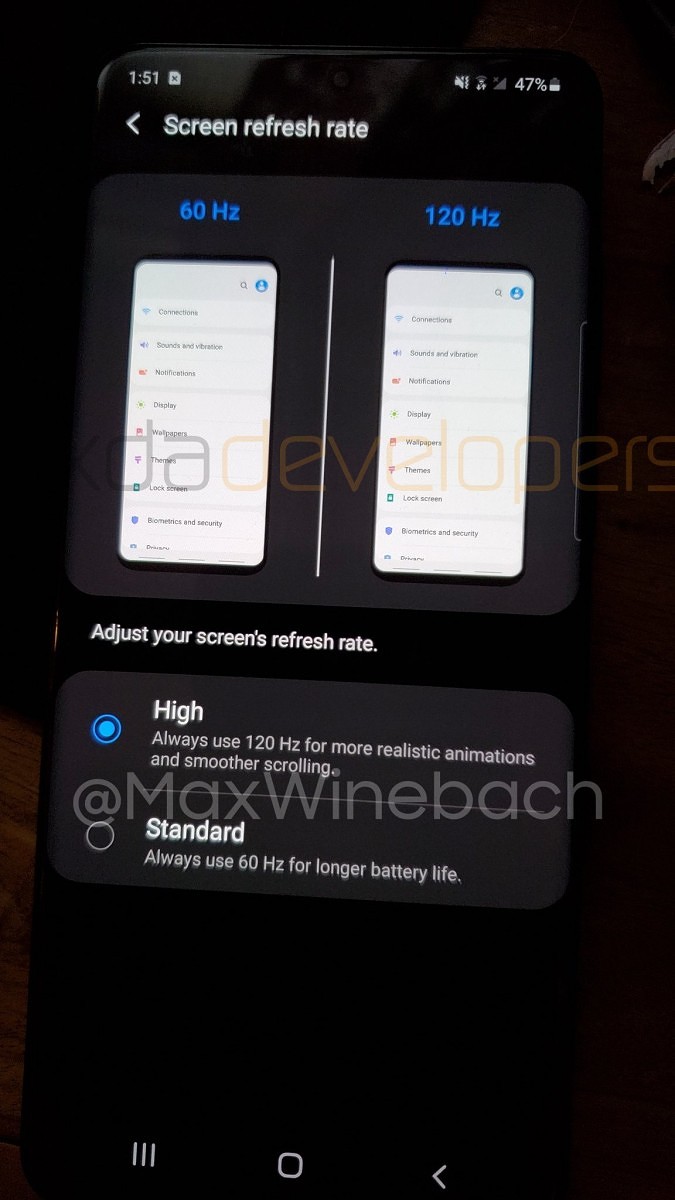
According to XDA, Xiaomi’s upcoming smartphone code-named Pheonix will come with a 120Hz refresh rate and side-mounted fingerprint sensor. XDA managed to extract this information from the recent MIUI 11 nightly builds. What makes it even more interesting is this mystery smartphone could very well be the Redmi K30.
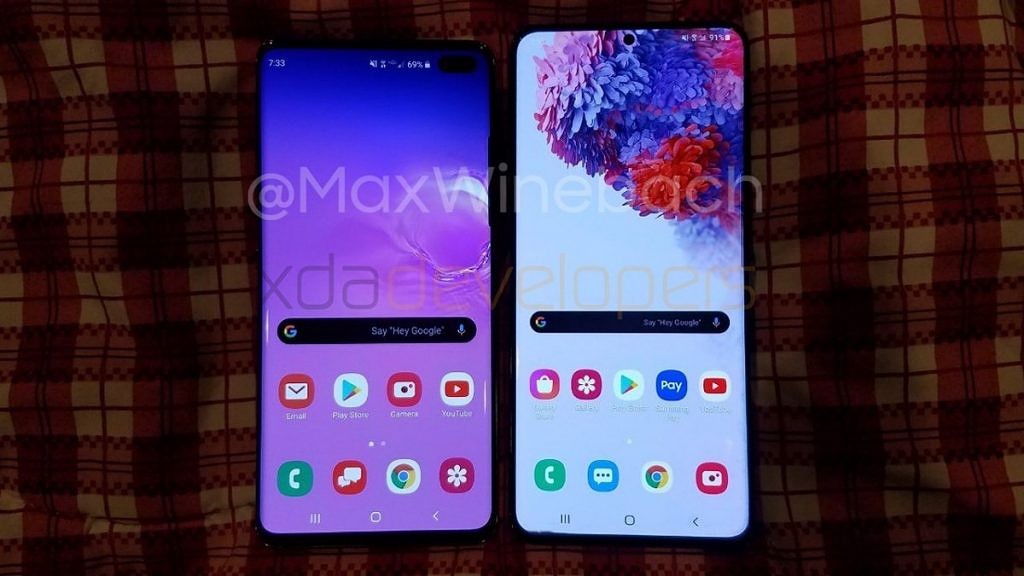
Apart from shifting the fingerprint sensor to the right side, the Redmi K30 could also feature dual punch-hole cameras on the front. The front dual cameras are likely to be placed on the top right corner of the device, just like the Galaxy S10+. In comparison, the upcoming Honor V30 will reportedly feature dual punch-hole cameras on the top left corner.
Alleged leaked image of the Redmi K30 but no sign of side fingerprint sensor
120Hz refresh rate would also be a big deal for an upper mid-range smartphone like the Redmi K30. Currently, smartphones in the segment come with either 60Hz or at max 90Hz screen refresh rates. So this would be a big jump from the competition. Other expected features include the Sony IMx686 60MP sensor and dual-mode 5G (supports SA/ NSA).
There are rumors about the Redmi K30 featuring the upcoming MediaTek 5G chipset, but it’s likely that the company makes use of a new Qualcomm 5G chip for its new device.
Once known and competed with Nova launcher for its extra beneficial features, the Apex launcher is now digging its own grave by pushing scammy advertisements via the new update. Many users have reported the Launcher’s negligent behavior of prompting users to download the Privacy Browser app over Chrome and Firefox. The developers have broken the user’s trust by poping out invasive ads on Apex Launcher.
Several users took to Reddit to report the annoying behavior of Apex Launcher after a recent update. A system prompt pops-out whenever users open another browser app like Chrome or Firefox. The users are retributing by giving a rating of 1-start on the Google Play Store. A user named Jonathan Baez said, “Beginning Nov. 15th, they place an ad before you launch chrome to encourage you to download their privacy browser. Me, along with many other longti”. Whereas, Shay Daves retaliated by saying, “Malware and scummy after this recent update. Uninstalling and reporting the app. Now tries to trick users into downloading a new “privacy browser (ad)” whenever you click any browser icon. “.
The issue is persistent for both the paid and free users. However, it is not the first time that Apex Launcher has involved in such a careless act. Last year also an update to version 4.0 was a nightmare for users. It erased app settings, removed core features, and turned the launcher into an advertisement platform. The official Apex Launcher website cites itself as an ad delivery platform and reads, “Millions of people use Apex Launcher on their Android devices every day. Our app recommendation platform will help your app reach the right audience at the right time.”
The loyal users have also started uninstalling the Apex Launcher after sudden concerns over the invasive ads. Now, it will be a wait and watch to see if Alex launcher manages to recover back and gain trust again. By the way, are you still using Apex launcher?
Soon after OnePlus launched its flagship smartphones — OnePlus 7T and 7T Pro, leaks and rumors about the next-generation OnePlus 8 started surfacing online. Now, in a similar development, more details about the upcoming OnePlus 8 Pro has now surfaced online.
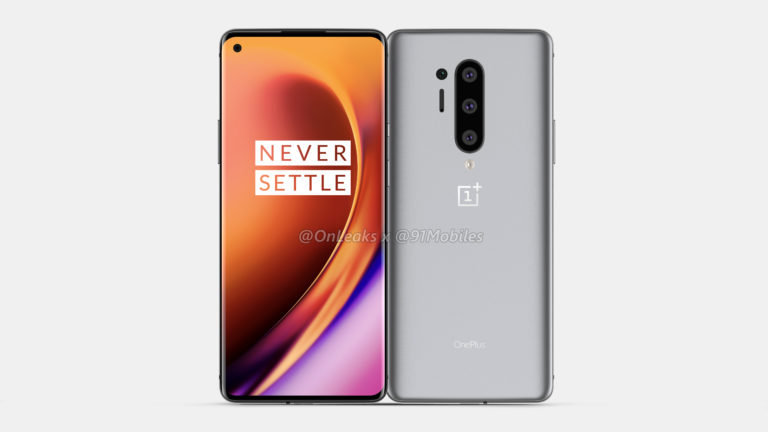
An alleged product diagram of the OnePlus 8 Pro has been leaked online, which showcases the quad-camera setup on the smartphone’s back panel. The source claims that the PDF file of the product diagram was sent to them by an unnamed individual. So, we advise you to take this information with a pinch of salt.
On the back side, the camera module sits at the top-center position, with all the sensors aligned vertically. Along with the triple-camera setup we saw on the OnePlus 7T Pro, the company will be adding a ToF sensor as the fourth one.
As for the front-facing camera, it seems that the company will be ditching the pop-up camera mechanism and will instead opt for the punch-hole design. From the leaked image, it look like OnePlus 8 will have a cut-out in the top-left corner of the display for a single camera sensor while the Pro variant will have two front-facing cameras.
Coming to the specifications, it was earlier reported that the OnePlus 8 Pro will feature a super smooth display having 120Hz refresh rate. However, it won’t be the first smartphone to do so as ASUS ROG Phone II is already offering 120Hz display.
Interestingly, rumors indicate that the Apple iPhones getting launched next year will also feature a 120Hz display which the company is expected to call “ProMotion OLED” display. For those who are unaware, Apple introduced “ProMotion” display on its iPad Pro around two year ago and is expected to offer the same with upcoming iPhones.
The smartphone is most likely to be fuelled by Qualcomm’s next flagship chipset that could be Snapdragon 865. It may feature 12GB of RAM and other details of the phone are currently under the wraps. Some rumors indicate that the phone may arrive with support for faster wireless charging technology.
Qiao Zhongliang, General Manager for Xiaomi Internet has today revealed the company’s strategy for the MIUI for the coming years. He said that the company will focus more on connecting smartphones and IoT devices.
This will enable the company to offer smart life experience with the focus on ease as well as security and user privacy. Xiaomi is aiming to make its MIUI operating system as the smartest one out there.
He has also announced that the company will be releasing/opening a series of new system capabilities that will enable developers to create for the next-generation of Internet of Things (IoT) devices and platforms.
The company has introduced several categories under its MIUI Smart Living system, which includes Mi Work for smart office work, Mi Health for health and fitness routines, Mi Go for smart travel, Mi Home for smart home products, and Mi Game for gaming activities.
Xiaomi has also been working on several new capabilities, such as Artificial Intelligence (AI Kit, AI Service, AI Foundation), Security and Privacy (Authentication Platform, Enterprise Engine, Content Compliance), Interoperability (Mi Pay, Mi Drop, Mi Share), User Interface (UI Kit, MAML), Application Framework (Quick App, Quick App Framework), System Services (Mi Push, Mi Account, Mi Analytics), among others.
Lei Jun, Founder and CEO of Xiaomi Group has said that the rapid growing of 5G technology as well as artificial intelligence and Internet of Things (IoT) will be the main stage for the development in the coming years. He believes that the opportunity posed by the combination of 5G + AI + IoT is once-in-a-lifetime.
Xiaomi has unveiled a new, higher storage variant of the Redmi Note 8 Pro. The new variant comes with 256 GB of storage bundled with 8GB of RAM which makes it the largest memory variant for the premium midrange smartphone. The new variant comes with a modest retail price of 1899 yuan ($271).
Before now, the Redmi Note 8 Pro only has a 6GB RAM and 64GB storage version as well as an 8GB RAM and 128GB storage version. Since there is a dedicated microSD card slot for expansion, that can be put to use if there is need for more space. The microSD slot also doubles as a second SIM slot that takes two nano-SIMs.
To recall, the Redmi Note 8 Pro features a 6.53-inch IPS LCD display with full HD+ resolution of 1080 x 2340 pixels and 91.4% screen-to-body ratio. The screen has the waterdrop notch design where a 20MP selfie camera is housed. The phone also comes with an IP52 splash resistant body and TUV Rheinland certification for the display meaning it filters harmful blue rays. The device is wrapped with Gorilla Glass 5 panels at the front and rear.
The premium mid-ranger is powered by a MediaTek Helio G90T processor paired with 6GB/8GB RAM. To keep the lights on is a 4,500mAh battery that carries support for 18W fast charging. The Note 8 Pro also comes with liquid cooling technology which can be found in popular gaming smartphones. The antennas of the phone are arranged smartly inside the phone so that it does not obstruct signals while holding the device in landscape mode while playing games. You also get a superlinear speaker with smart PA, NFC, IR blaster, dual 4G VoLTE, Wi-Fi 802.11ac, GPS, USB-C and 3.5mm audio jack onboard. It runs MIUI 10 based on Android 9 Pie but that has recently been updated to the latest Android version. It also features Game Turbo 2.0.
There is no word yet on the availability but we believe the tech giant plans to quietly put it up for sales on Mi.com.
Huawei has officially confirmed that its new Huawei Sound X speakers will be announced on November 25, alongside the MatePad Pro flagship tablet. We knew about this upcoming smart speaker and its basic design, thanks to an earlier leak. However, Huawei confirms that the Sound X is co-engineered with Devialet, and that’s a big deal.
Devialet is a premium French high-end Hi-Fi audio equipment brand and its Devialet Phantom range of speakers, especially the Silver Phantom and Phantom Gold, has received extremely rave reviews for its sound quality and volume. So Huawei’s partnership with Devialet for its new smart speakers makes things a lot more exciting. It could be as significant as Leica was for its smartphone cameras.
Previously, a leaked manual revealed that the Sound X will be powered by a 1.5GHz quad-core processor featuring 512MB of RAM and 8GB of storage. There will be two 60W subwoofers and six 1.5W tweeters for a 360° 5.1 home theater surround sound experience. The Sound X connects via Bluetooth 5.0 to your phone and supports 2.4GHz and 5GHz WiFi networks.
Sound X leaked image
The Sound X is a smart speaker. So you can control your lights, robot vacuum cleaner, and smart plugs using Huawei’s HiLink app. The speaker will reportedly come with six microphones that can pick up your voice from up to 5 meters away.
We use cookies on our website to give you the most relevant experience by remembering your preferences and repeat visits. By clicking “Accept”, you consent to the use of ALL the cookies.
This website uses cookies to improve your experience while you navigate through the website. Out of these, the cookies that are categorized as necessary are stored on your browser as they are essential for the working of basic functionalities of the website. We also use third-party cookies that help us analyze and understand how you use this website. These cookies will be stored in your browser only with your consent. You also have the option to opt-out of these cookies. But opting out of some of these cookies may affect your browsing experience.
Necessary cookies are absolutely essential for the website to function properly. This category only includes cookies that ensures basic functionalities and security features of the website. These cookies do not store any personal information.
Any cookies that may not be particularly necessary for the website to function and is used specifically to collect user personal data via analytics, ads, other embedded contents are termed as non-necessary cookies. It is mandatory to procure user consent prior to running these cookies on your website.