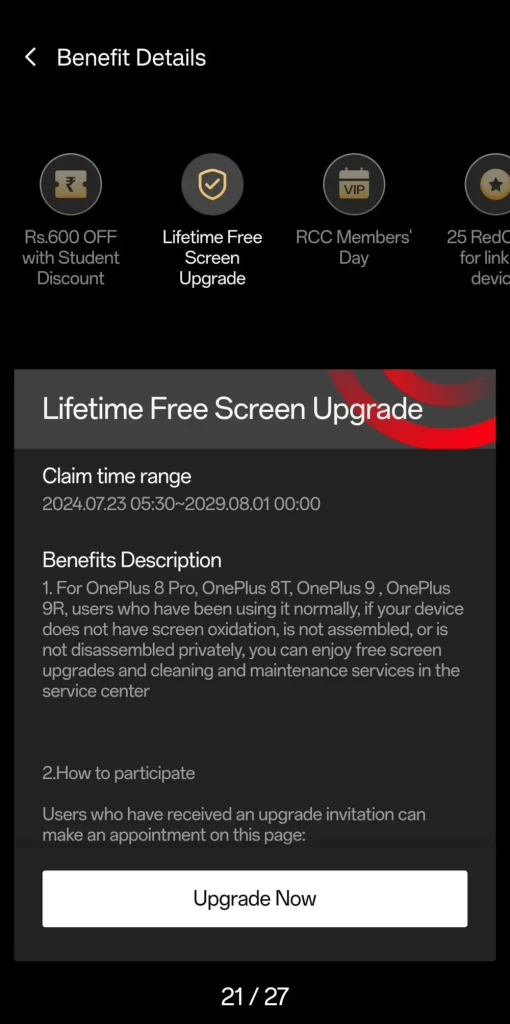
OnePlus has introduced a free screen replacement program in India for specific smartphone models experiencing the “green line” display issue. The initiative targets OnePlus 8 Pro, 8T, 9, and 9R models, offering users a replacement screen at no cost.
OnePlus will expand to other regions in the future
This move comes in response to the increasing prevalence of the “green line” problem, a hardware issue often mistaken for a software defect. OnePlus aims to address customer concerns and enhance device durability through this program.
While currently limited to India, OnePlus has expressed plans to potentially expand the program to other regions. The company has also implemented new screen technology to improve moisture and temperature resistance.
It’s important to note that this free replacement program is specifically for the “green line” issue and does not cover physical damage to the screen.
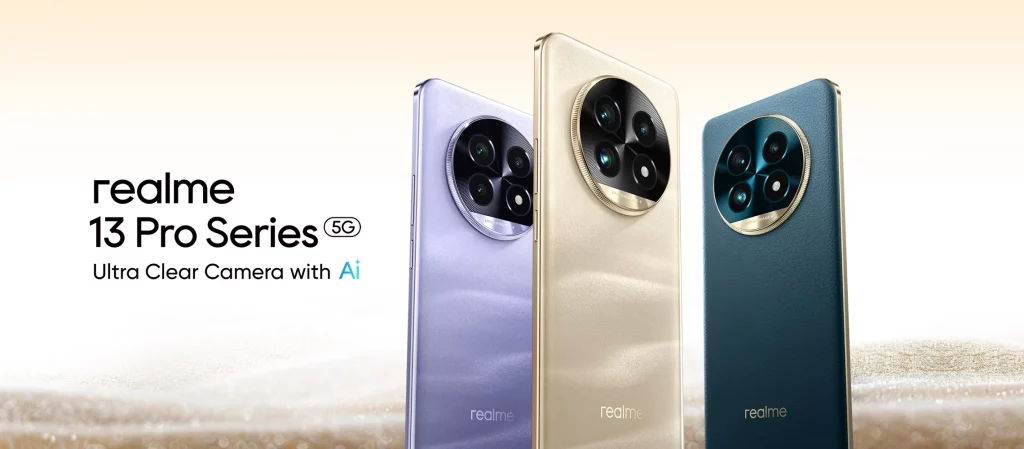
As scheduled, Realme has introduced the Realme 13 Pro and 13 Pro+ smartphones in India. These new smartphones come with many improvements over their predecessors. They have an improved processor, better cooling, and better camera sensors, along with many other upgrades.
Display and Design
Both the Realme 13 Pro and 13 Pro+ feature a 6.7-inch FHD+ 120Hz curved AMOLED display with ultra-narrow bezels and 2160Hz PWM high-frequency dimming. The displays offer up to 2000 nits peak brightness for clear visibility in bright sunlight. They include Realme’s Pro-XDR technology that enhances photo effects with better dynamic range and brightness. The display supports 100% DCI-P3 color gamut and is protected by Corning Gorilla Glass 7i.
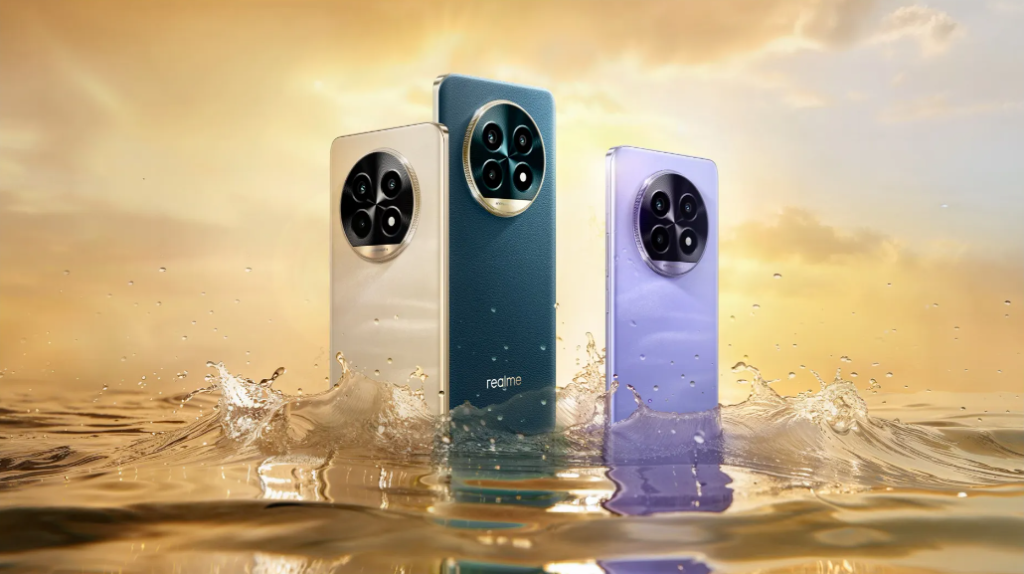
The design of these phones is inspired by Claude Monet’s artwork, available in Monet Gold and Monet Purple for the glass back panel, and Emerald Green for the vegan leather option. The high-gloss AG glass, with the Miracle Shining Craft, creates a shimmering effect.
Additionally, the devices are dust and splash-resistant with an IP65 rating.
Performance and Cooling
Both models are powered by the Snapdragon 7s Gen 2 SoC, paired with up to 12GB of LPDDR4X RAM and up to 512GB of UFS 3.1 storage. They feature a 9-layer cooling system, including a 4500mm² tempered VC and 9953mm² graphite, to keep the devices cool during intensive use.
Camera Capabilities
The Realme 13 Pro+ features a 50 MP rear camera with a Sony LYT-701 sensor ( f/1.88 aperture) and OIS, an 8 MP ultra-wide camera with f/2.2 aperture along with a 50 MP Sony LYT-600 periscope telephoto camera (f/2.65 aperture) offering 3x optical zoom and up to 120x SuperZoom.
Realme 13 Pro 5GRealme 13 Pro Plus 5G
The Realme 13 Pro includes a 50 MP LYT-600 sensor (f/1.88 aperture) with OIS and an 8 MP (f/2.2 aperture) ultra-wide camera. Both models have a 32 MP front camera and AI features like Ultra Clarity, Smart Removal, Group Photo Enhance, and Audio Zoom.
Battery and Charging
Both phones come with a 5200mAh battery. The Realme 13 Pro+ supports 80W SuperVOOC fast charging, reaching 50% in 19 minutes and 100% in 49 minutes. The Realme 13 Pro offers 45W SuperVOOC fast charging.
Software and other features
The devices run on Android 14 with Realme UI 5.0. Realme promises two major Android OS updates and three years of security updates. Connectivity options include 5G, Dual 4G VoLTE, Wi-Fi 6, Bluetooth 5.2, and USB Type-C.
The phones have an in-display fingerprint sensor for security, along with stereo speakers with Dolby Atmos and Hi-Res Audio.
Pricing and Availability
The Realme 13 Pro is available in three variants: 8GB + 128GB for Rs. 26,999, 8GB + 256GB for Rs. 28,999, and 12GB + 512GB for Rs. 31,999. The Realme 13 Pro+ is priced at Rs. 32,999 for the 8GB + 256GB model, Rs. 34,999 for the 12GB + 256GB model, and Rs. 36,999 for the 12GB + 512GB model.
Sales start on August 6th, with early bird sales on July 30th from 6 PM to 12 AM. Pre-booking opens on July 31st. Launch offers include Rs. 3000 off with ICICI Bank, HDFC Bank, and SBI Cards, up to 12 months of no-cost EMI, and a 30-day free replacement guarantee for devices activated before August 12, 2024.
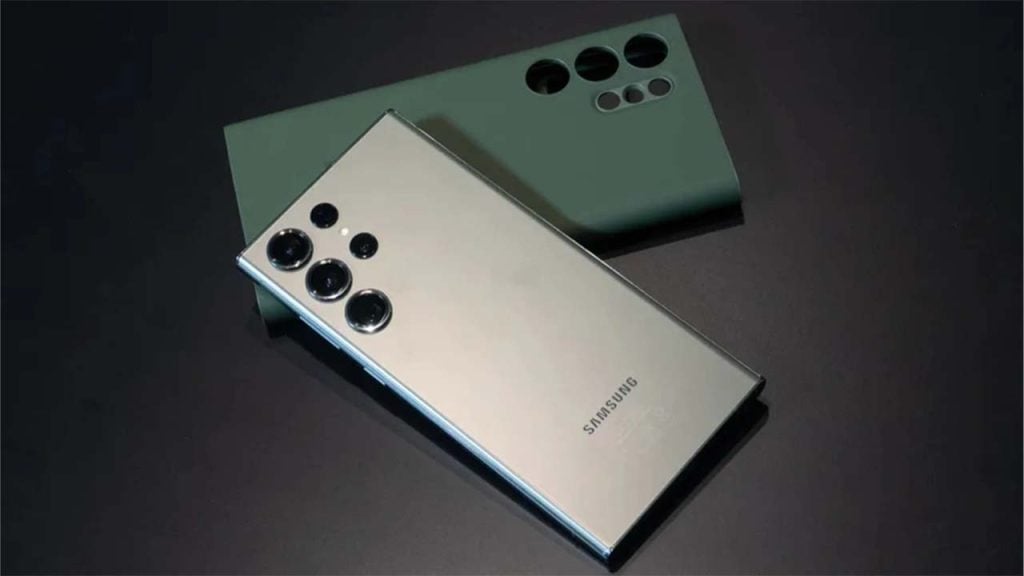
Details about Samsung‘s upcoming flagship, the Galaxy S25 Ultra, have been gradually emerging. Today, a new piece of information suggests that Samsung might be planning an upgrade in RAM capacity.
Reliable tipster @UniverseIce made a post on X (formerly Twitter) mentioning just “16GB” RAM and no specific phone model. However, given the timing of the leak and Samsung’s history with this source, it strongly suggests this refers to the Galaxy S25 Ultra.
This wouldn’t be Samsung’s first time offering 16GB of RAM; the Galaxy S20 and S21 Ultra also had similar options. However, Samsung scaled back to 12GB with the S22 Ultra and has maintained this as the maximum RAM option for its flagships since then.
If true, the 16GB option for the Galaxy S25 Ultra will likely please multitasking enthusiasts, as more RAM can benefit users who run demanding applications simultaneously. The increase in RAM could also be for improved efficiency in AI-related tasks. Google is also rumored to be increasing the RAM to 16GB in the Pixel 9 Pro XL for similar reasons.
This memory will be paired with Qualcomm’s upcoming Snapdragon 8 Gen 4 chip, featuring custom Oryon CPU cores similar to those found in Snapdragon X Elite-powered laptops. There are also rumors of a significantly more powerful GPU, making the phone a strong contender for mobile gaming.
On the camera front, it’s suggested that the Galaxy S25 Ultra will have a 200MP primary sensor, along with a 50MP ultrawide, a 50MP telephoto (with 3x optical zoom), and a 50MP super telephoto (with 5x optical zoom).
Disappointingly, battery life and charging speeds seem to remain unchanged, with the S25 Ultra reportedly sticking to a 5,000mAh battery and 45W fast charging.
Samsung is likely to unveil the Galaxy S25 lineup in January 2025, pre-loaded with Android 15 and the company’s custom One UI 7 interface. The new software is rumored to offer a redesigned user experience, with details about it slowly leaking over time.
Noise is expanding its TWS earbuds lineup with a brand-new model. The new Buds VS102 Elite is the latest wireless earphones from the brand, which brings a shiny design at a budget price tag. It arrives with a long battery life and much more.
Noise Buds VS102 Elite Specs
One of the most eye catching aspects of the Noise Buds VS102 Elite is undoubtedly its design. It packs a matte finish that combines chrome for a more premium and modern look. The hearables are equipped with 11mm audio drivers that promise to offer deep bass. Thanks to its quad mic setup, users also get access to ENC (Environmental Noise Cancellation) which improves your calling experience by reducing background sounds.
On a single full charge, the Noise Buds VS102 Elite offers up to 50 hours of audio playback. It also supports fast charging, with just 10 minutes of charging offering up to 2 hours of playtime. The earbuds comes with Bluetooth 5.3 connectivity and support 50ms low latency. It supports Siri and Google Assistant. Other notable features include an IPX5 rating for water and dust resistance.
Pricing and Availability
The Noise Buds VS102 Elite TWS was announced in India in multiple color options, namely Black, Beige, Green, and Purple. It is listed for purchase on the brand’s official website and on Flipkart, a popular e-retailer in India. Noise’s new earbuds arrive with a special introductory price tag of just 899 INR (roughly 11 US Dollars). Buyers also get a 1 year warranty.
Sony is bringing a fresh new Limited Edition model of its DualSense controller for the PlayStation 5. The brand isn’t a stranger to special variants of its gadgets, and now, the Astro Bot Limited Edition for the PS5 DualSense arrives with a unique new design.
Sony PS5 DualSense Astro Bot Controller
The Japanese tech giant unveiled the Astro Bot Limited Edition DualSense Controller features a Dual Speeder spaceship inspired design. It brings a blue and white body that matches Astro’s iconic color palette. The character’s eye is also showcased on the touchpad along with sci-fi lines to add to this character’s aesthetic. Sony has announced the DualSense Astro Bot limited edition controller for a 79.99 US Dollar price tag.
Sony PS5 DualSense Astro Bot Controller
Pre-orders for the Astro Bot controller will go live on 9th August 2024. For those interested, the special edition DualSense controller is only available in limited quantities in select regions. This includes the US, UK, France, Germany, Belgium, Luxembourg, Netherlands, Italy, Spain, Austria, and Portugal. The new controller is set to launch alongside the upcoming Astro Bot game on 6th September 2024. For those unaware, the new title is a Sony PS5 exclusive.
As per the official blog post, the controller was built to allow users to feel different textures like water, sand, and grass for a more immersive experience. These are offered by combining the adaptive triggers and haptic feedback in the game. Talking about the game itself, Astro Bot is the direct successor to Astro’s Playroom, which launched back in 2020. The game features 80 levels across six different galaxies with 50 planets.
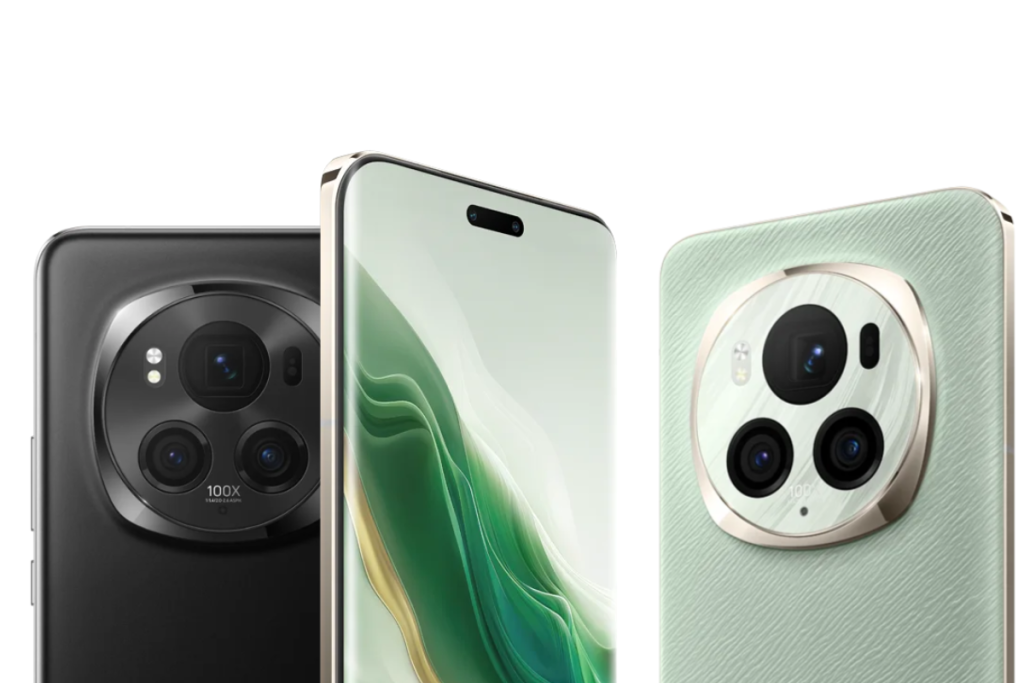
A new Honor Magic series smartphone is set to launch in India soon. HTech recently announced the Honor 200 in the region, and now, it is gearing up to launch the Magic 6 Pro as well. This is a high-end flagship smartphone from the brand and it will be arriving later this week.
Honor Magic 6 Pro India Launch Date
To recall, the Magic 6 Pro was unveiled globally earlier this year in China. Now, the Magic 6 Pro will go official in the Indian market on 2nd August 2024. The company has also confirmed the Flipkart availability of this model. This device sports a tall 6.8-inch curved OLED LTPO display that offers FHD+ resolution, a 120Hz refresh rate, and a peak brightness of 5,000 nits. The screen has Giant Rhinoceros Glass protection and support for Dolby Vision.
Under the hood, it is equipped with the Qualcomm Snapdragon 8 Gen 3 SoC, which is paired with up to 16GB of RAM and 1TB of internal storage. A large 5,600mAh battery pack powers this device, which supports 80W wired fast charging and 66W wireless fast charging. The Chinese announcement claimed that it can offer the Magic 6 Pro charges in just 39 minutes. The flagship phone came in multiple color options as well, namely Lake Blue, Cloud Purple, Qilian Snow, Barley Green, and Velvet Black.
For optics, you get a 50MP ultra-dynamic primary camera with an intelligent variable aperture (f/1.4-f/2.0) for improved low-light performance, and optical image stabilization (OIS). This is paired with a 50MP ultra wide angle lens, and 180MP periscope telephoto shooter with OIS, 2.5x optical zoom, and 100x hybrid zoom. Other notable features include world’s first Swiss SGS multi scene gold label for 5 star drop resistance, variable refresh rate, 4320Hz PWM dimming for eye protection, and more.
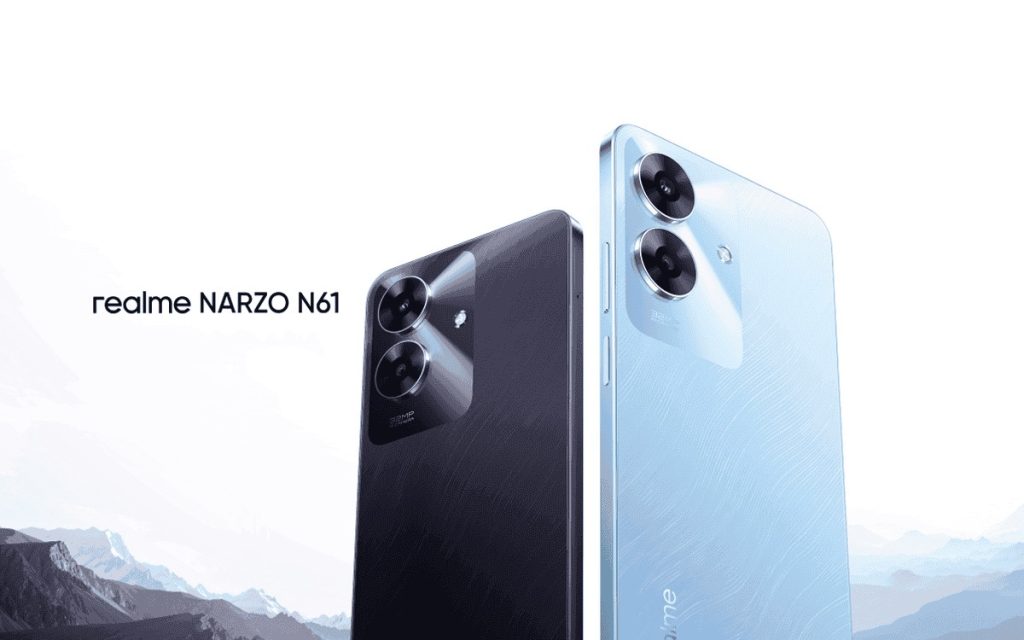
After waiting for over a few weeks, the affordable Realme Narzo N61 was launched in India, and today it will go on sale for Rs, 6,999 via Amazon. It is an introductory price inclusive of the discounts, otherwise, the smartphone will retail for Rs 7499. The phone is available with 4GB RAM + 64GB of storage and 6GB + 128GB of storage options. It is offered in Marble Black and Voyage Blue color options. It is available for purchase from Amazon, with discounts applicable via different cards.
On both Amazon and Flipkart, there’s an introductory discount of Rs 500 on the Realme Narzo N61.
Realme Narzo N61 Features
Realme Narzo N61 features a Unisoc T612 SoC, 6GB of RAM, and 128GB of storage. The smartphone packs a 6.74-inch HD+ LCD panel, which offers a 90Hz refresh rate and 560 nits of brightness. In the camera section, the smartphone features a 5MP camera for selfies and video calling. A 32MP module sits on the rear, along with a 2MP depth sensor.
Realme Narzo N61 comes with a 5,000 mAh battery and supports 15 W fast charging. It runs on Realme UI 4, based on Android 14. There’s a Mini Capsule 2.0, which brings interactive notifications within the front camera’s notch. Moreover, there’s a screen sensitivity increase feature called Rainwater Touch technology that allows users to interact with a wet screen.
In terms of connectivity, the smartphone is equipped with WiFi 5 ac and Bluetooth 5.0 support. Surprisingly, it comes with a 3.5mm headphone jack.
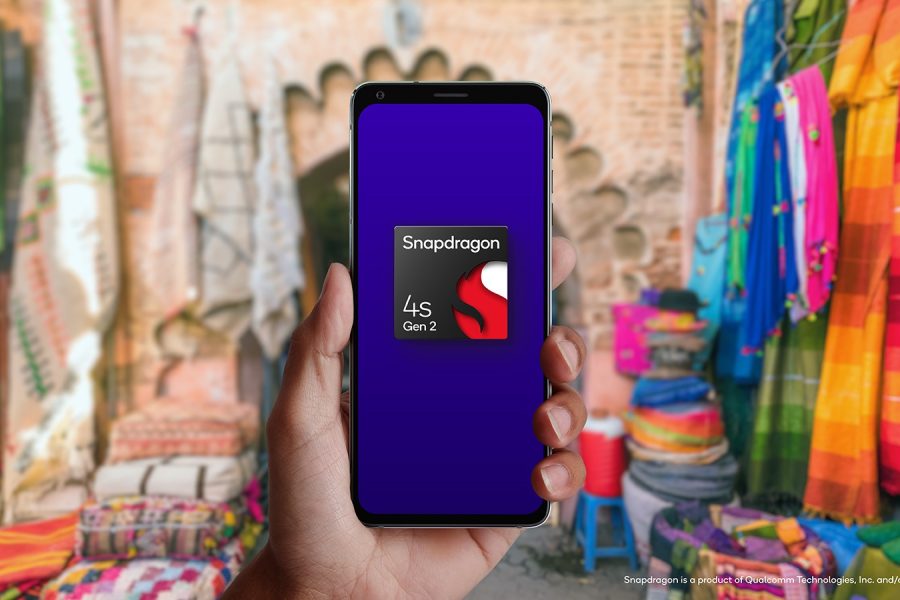
Qualcomm has officially unveiled the Snapdragon 4s Gen 2 chipset today at its Snapdragon For India event. Designed for budget-friendly smartphones, the chip prioritizes affordability over top-tier performance.
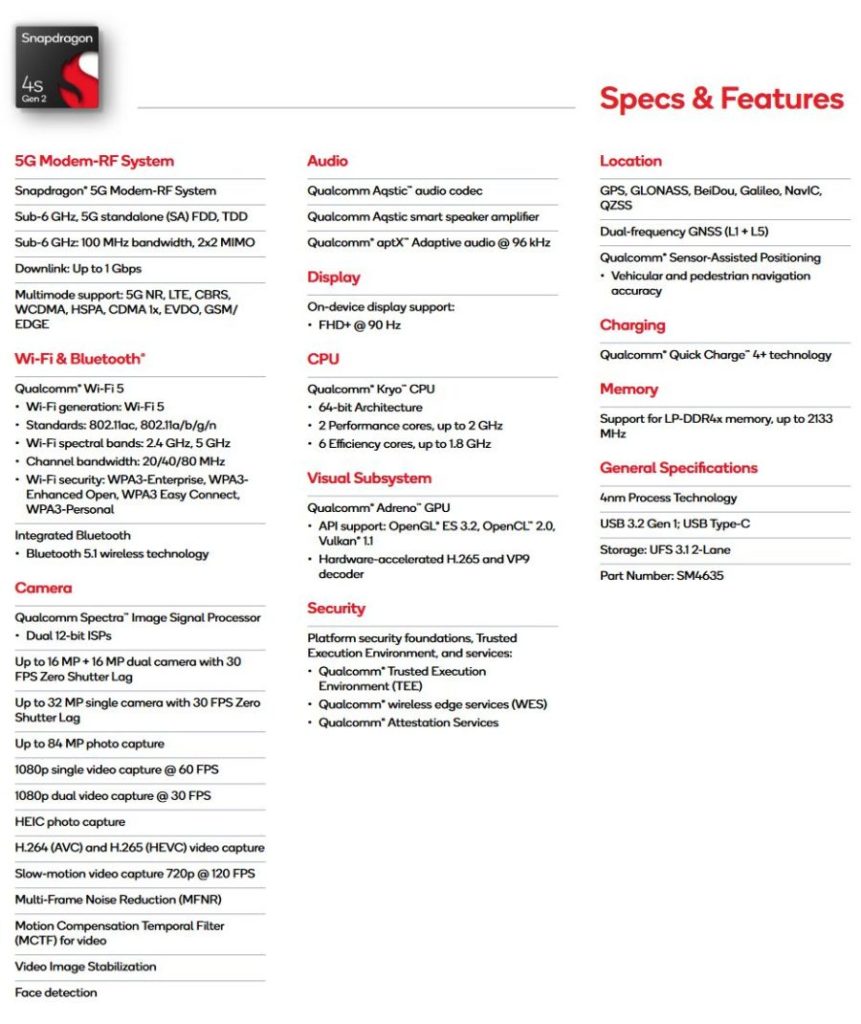
The Snapdragon 4s Gen 2 shares the same 4nm manufacturing process and core configuration as its standard sibling, but Qualcomm has dialed back the performance of its high-performance cores to 2GHz. This places it between the Snapdragon 4 Gen 1 and 4 Gen 2 in terms of performance.
However, the compromises extend beyond the processing power. The 4s Gen 2 supports slower LPDDR4X RAM instead of the faster LPDDR5X found in the 4 Gen 2. Additionally, display quality takes a hit with a maximum refresh rate support of 90Hz compared to the 4 Gen 2’s 120Hz.
Camera capabilities are also scaled back. The dual ISP can no longer handle 108MP image sensors, forcing manufacturers to opt for more modest 50MP or 64MP options.
The focus on affordability extends to the chip’s 5G capabilities. While it has 5G connectivity, download speeds are capped at 1Gbps compared to the 2.5Gbps of the 4 Gen 2.
Connectivity options are similarly limited, adhering to the older Wi-Fi 5 (ac) and Bluetooth 5.1 standards – a common theme for the budget-oriented 4-series chips.
However, the Snapdragon 4s Gen 2 isn’t entirely barebones. It retains the Qualcomm Audio and Voice Communication suite, enabling high-fidelity music streaming at 96kHz. Camera features like multi-frame noise reduction and electronic image stabilization (EIS) are also present, along with dual-frequency reception for improved GPS accuracy.
Xiaomi is confirmed to be the first manufacturer to bring the Snapdragon 4s Gen 2 in the Indian market, likely integrating it into their Redmi line.
The company’s president of the India branch, Muralikrishnan B, shared his excitement about the chip’s potential to democratize 5G access, “We are excited to be working with Qualcomm Technologies to enable access to gigabit-fast connectivity for users. Many people have yet to experience the benefits of 5G, and thanks to Snapdragon 4s Gen 2, Xiaomi can bring 5G connectivity to a broader audience to help reshape the way the world connects and interacts.”
However, the specific Xiaomi smartphone that will debut with the Snapdragon 4s Gen 2 remains unconfirmed.
Xiaomi recently launched two exciting tablets: the Redmi Pad Pro 5G and the Redmi Pad SE. For those considering the all-new Redmi Pad Pro 5G, there’s another option that might be more appealing: the Xiaomi Pad 6. Though it was launched last year, the Xiaomi Pad 6 remains one of the best tablets you can get for under Rs. 30,000 in India.
Both tablets offer impressive features at competitive prices, but depending on your needs, the Xiaomi Pad 6 could be the superior choice, especially if your budget allows for some flexibility. Here’s a breakdown of why:
The Xiaomi Pad 6 boasts an 11-inch 2.8K LCD display with a smooth 144Hz refresh rate. This translates to sharper visuals, crisper text, and a more fluid experience when scrolling, gaming, or watching videos. The higher resolution also means better clarity for detailed tasks like photo editing.
In comparison, the Redmi Pad Pro 5G features a larger 12.1-inch 2.5K LCD display with a 120Hz refresh rate. While the size might be appealing for some, the lower resolution could result in noticeable pixelation on closer inspection. Additionally, the 120Hz refresh rate is still excellent, but the extra smoothness of the 144Hz display on the Pad 6 might be a dealbreaker for those prioritizing a truly premium viewing experience.
Please Note: When you buy something using the links in our articles, we may earn a small commission at no cost to you.
2. Top-Notch Performance for Demanding Tasks
The Xiaomi Pad 6 is equipped with a powerful Snapdragon 870 processor and Adreno 650 GPU. While not the latest flagship, this chipset delivers impressive performance with faster app loading times, smooth multitasking, and the ability to handle demanding games and creative applications with ease.
On the other hand, the Redmi Pad Pro 5G features the Snapdragon 7s Gen 2 SoC, a capable mid-range processor. While it performs well for everyday tasks, it may struggle with intensive applications or heavy multitasking compared to the Snapdragon 870 in the Pad 6. This difference is crucial if you plan to use the tablet for video editing, graphic design, or high-end mobile gaming.
Additionally, the Xiaomi Pad 6 uses LPDDR5 RAM, which is faster than the LPDDR4X RAM in the Redmi Pad Pro 5G. This translates to better multitasking, quicker app loading times, and overall system responsiveness. Paired with UFS 3.1 storage (compared to UFS 2.2 in the Redmi Pad Pro 5G), the Pad 6 ensures blazing-fast data transfer speeds, resulting in a noticeably quicker overall experience.
3. Camera Quality Matters, Even on Tablets
While tablets aren’t primarily photography devices, a decent camera can be handy for capturing documents, video conferencing, or casual snapshots. The Xiaomi Pad 6 sports a 13MP rear camera with PDAF (Phase Detection Autofocus) for faster focusing and sharper results. The 8MP front camera also offers a wider field of view (105°) for better group video calls.
The Redmi Pad Pro 5G features 8MP cameras for both the rear and front, which might not capture as much detail or perform as well in low-light conditions compared to the Pad 6.
4. More Efficient Design
The Xiaomi Pad 6 also boasts a lighter and slimmer design at 490g and 6.51mm compared to the Redmi Pad Pro 5G’s 571g and 7.52mm. While both are portable, the Pad 6’s design might feel more comfortable for extended use, especially during travel or commutes.
It also boasts a newer generation Smart Pen (2nd Gen) with lower latency and improved features compared to the Redmi Pad Pro’s first-generation pen.
5. Price Factor
The most significant factor for many users might be the price difference. The starting price for the Xiaomi Pad 6 (6GB + 128GB) is Rs. 26,999, while the starting price for the Redmi Pad Pro 5G (8GB + 128GB) is Rs. 24,999. While the price gap isn’t massive, it’s crucial to consider your needs.
6. The Bottom Line
If your primary focus is on a large screen for media consumption or a tablet that prioritizes long battery life, the Redmi Pad Pro 5G could be a great choice. However, if you prioritize a sharper and smoother display, top-tier performance, a superior camera, and a more advanced stylus, the Xiaomi Pad 6 might be worth the extra investment.
Ultimately, the choice depends on your individual needs and budget. If you can stretch your budget slightly, the Xiaomi Pad 6 offers a more premium experience. However, the Redmi Pad Pro 5G remains a compelling option with its 5G connectivity, larger display, massive battery, and competitive price tag.
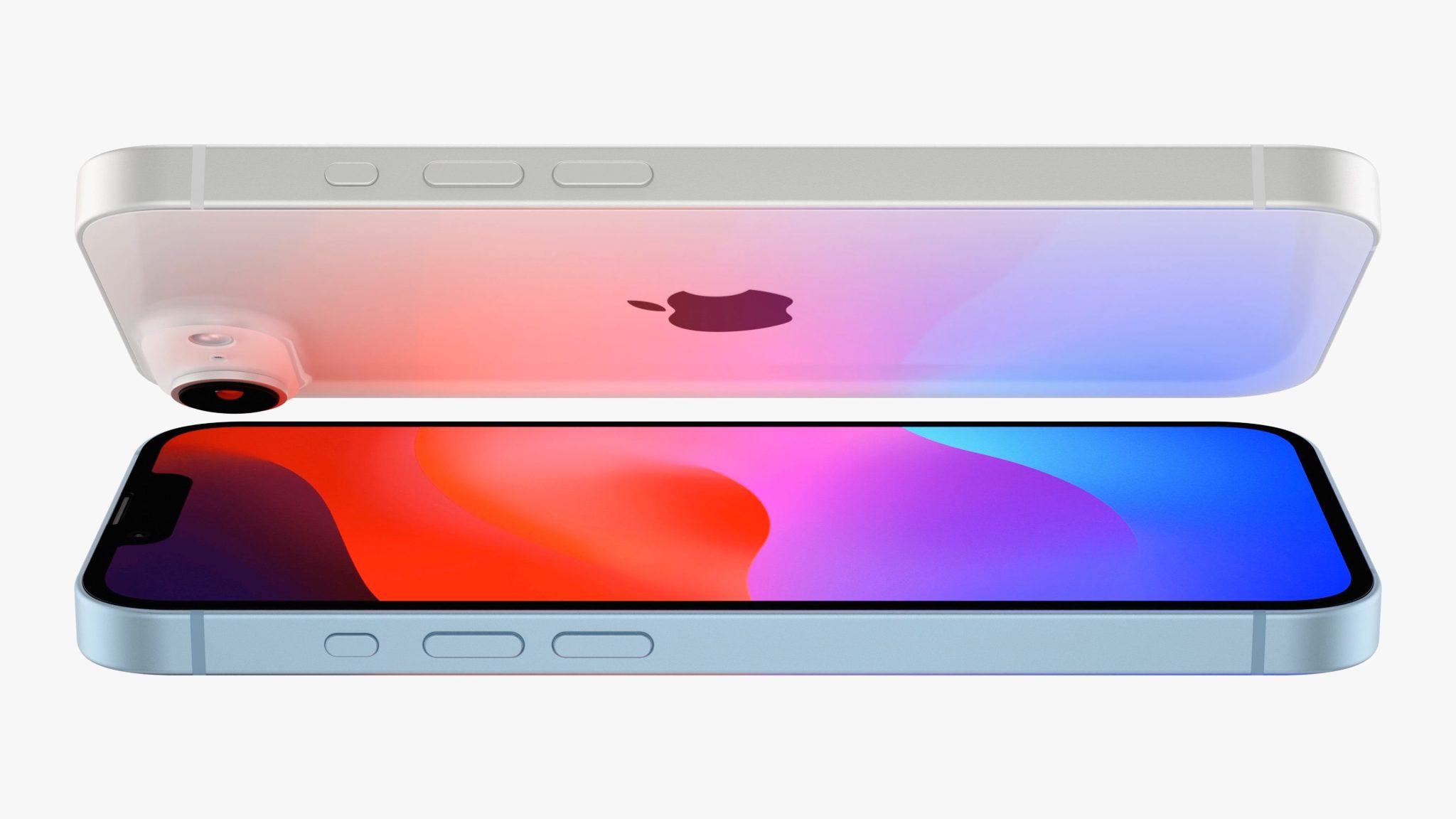
Apple‘s budget-friendly iPhone SE line is rumored to see its next iteration in 2025. Although that’s still a bit far off, there have already been many leaks about the upcoming phone. Now a new report from The Elec suggests that LG Display might join as a second supplier of OLED screens for the upcoming iPhone SE line
BOE is said to be the first supplier for the iPhone SE 4’s display which reportedly won the the bid over Samsung due to its lower panel costs. Apple has previously worked with BOE on other iPhone models, so this partnership isn’t new.
However, BOE’s share for the SE 4 is expected to be the largest it has had for any iPhone. The Elec reports it will provide 60 to 70% of the screens — about 20 million units per year.
Alleged iPhone SE 4 render
The rest of the OLED panels for the iPhone SE 4 are expected to come from a second supplier, rumored to be LG Display. According to The Elec, Apple is planning to use the iPhone 13‘s display panel for the SE 4, but by downgrading the display features.
For those unaware, LG Display supplies panels for the iPhone 13s. Reusing this panel should simplify production for the manufacturer and lower costs for Apple.
A report earlier this month revealed that the iPhone SE 4 will feature a 6.06-inch display, while the iPhone 13 has a 6.1-inch screen. So if The Elec’s report is true, LG Display may need to make some adjustments to the panel to fit the SE 4.
Another display manufacturer, Tianma, has reportedly expressed interest in supplying displays for the iPhone SE 4. However, their technology is believed to be less advanced compared to BOE, making it unlikely they will be included in the supply chain at this stage.
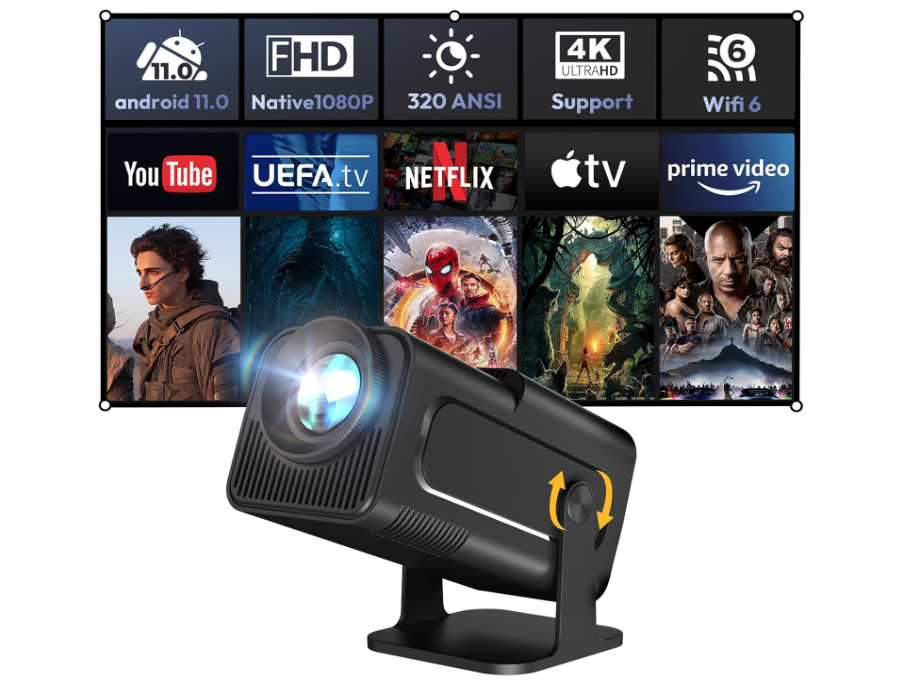
XGODY Gimbal5 Smart Mini Projector stands out as a beacon of innovation and convenience. This advanced projector, embedded with Android 11 and equipped with a plethora of high-end features, promises to revolutionize your viewing experience. Whether you are a movie enthusiast, a gamer, or someone who simply enjoys streaming content on a big screen, the Gimbal5 has something special to offer.
Special Deal:
Don’t miss out on this incredible offer for the XGODY Gimbal5 Smart Mini Projector, now available at Amazon. Enhance your home entertainment experience with this feature-packed projector, and save even more with an additional $20 off coupon on the Amazon page. Plus, enjoy a massive 50% discount by using the code: 32XGODYG5K7 at checkout. This limited-time deal provides unbeatable value for a high-performance projector, making it the perfect time to upgrade your viewing experience.
Let’s delve into its myriad features and discover why this projector is a must-have for your entertainment needs.
Smart Android 11 Operating System with WiFi 6 and Eshare
At the heart of the XGODY Gimbal5 is its smart Android 11 operating system, which comes pre-installed with popular applications like Netflix and YouTube. This feature allows users to access a vast array of video resources through more than 7000 applications, transforming the projector into a versatile entertainment hub. The inclusion of the latest 5G dual-band WiFi 6 technology ensures high transfer rates and lower latency, making streaming smoother and more enjoyable. Furthermore, the Eshare wireless mirroring function allows seamless sharing of content from your smartphone to the big screen, enhancing the convenience and flexibility of your viewing experience.
12000 Lumen Native 1080P Full HD Display
The Gimbal5 projector boasts a native resolution of 1920x1080p, coupled with an impressive 12000 Lumen light source and a high dynamic contrast ratio of 10000:1. This combination results in extraordinarily vivid color reproduction and a crystal-clear viewing experience. The innovative light engine structure design supports a viewing screen display of up to 150 inches, allowing you to create a home theater environment that rivals commercial cinemas. Whether you are watching movies, playing games, or conducting presentations, the Gimbal5’s high-definition display ensures every detail is rendered with stunning clarity.
Electric Precision Focus and 180° Rotational Support
One of the standout features of the Gimbal5 is its electric precision focus. This eliminates the need for manual adjustments, allowing you to achieve sharp, clear images with the simple push of a button on the remote control. The projector’s sleek spotlight design and versatile stand, which supports 180° rotation, provide unparalleled flexibility in positioning. You can easily project onto any wall or ceiling, ensuring a comfortable and immersive viewing experience whether you are seated or reclined, in your living room or bedroom.
Multimedia Compatibility and Bluetooth 5.2
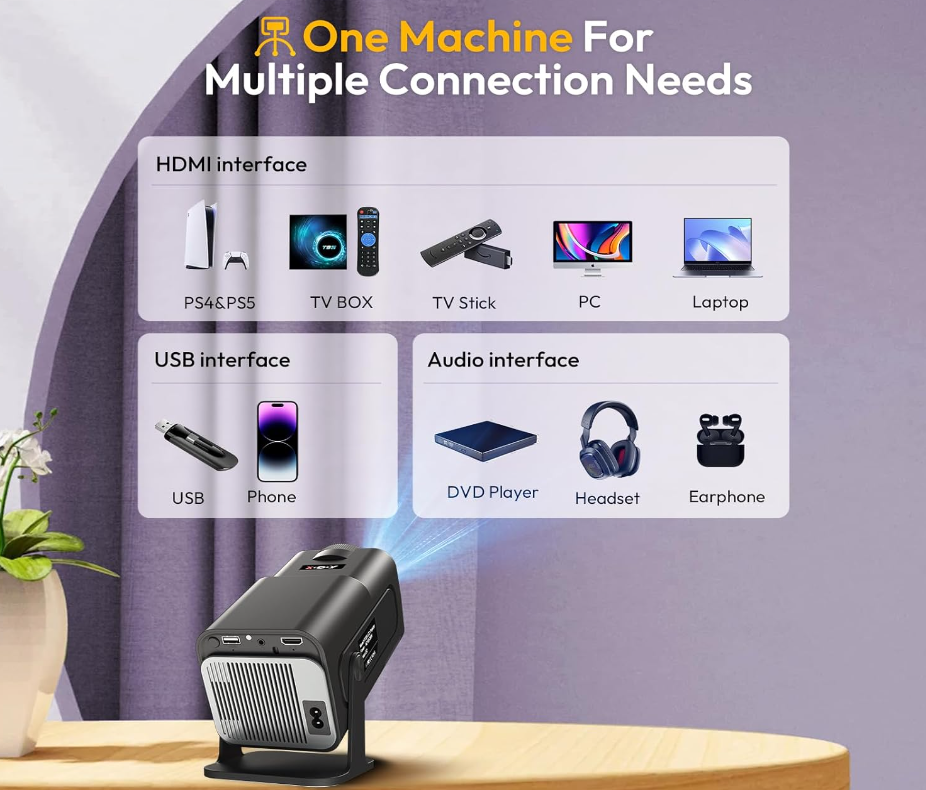
The Gimbal5 is designed to be compatible with a wide range of multimedia devices, thanks to its built-in HDMI, USB, and 3.5mm headphone jacks. This versatility allows you to connect the projector to TV sticks, laptops, USB drives, iOS and Android devices, and gaming consoles like the PS5. The built-in 3W HiFi speaker provides excellent audio quality, and for those who desire an enhanced sound experience, the projector also supports Bluetooth speakers. This makes the Gimbal5 an ideal choice not only for home theater setups but also for fitness routines, game entertainment, and online education.
Highly Cost-effective and Portable Design
Despite its advanced features, the Gimbal5 is remarkably compact, measuring just 6.5×4.3×3.5 inches. This makes it highly portable, allowing you to easily carry it from room to room or take it along on your travel and camping adventures. The all-in-one design ensures that the projector remains a cost-effective solution without compromising on performance. Its balanced configuration makes it suitable for a wide range of uses, providing an experience that exceeds its value.
XGODY Gimbal5 Smart Mini Projectoris a versatile and powerful device that caters to a variety of entertainment needs. Its smart Android 11 operating system, combined with WiFi 6 and Eshare capabilities, ensures a seamless and enjoyable viewing experience. The 12000 Lumen native 1080P Full HD display, electric precision focus, and 180° rotational support provide exceptional image quality and flexibility. Its multimedia compatibility, Bluetooth 5.2 support, and highly portable design make it an ideal choice for both home and on-the-go use. The Gimbal5 is not just a projector; it’s a gateway to a new world of entertainment.
Elevate Your Listening Experience with Picun F6 Headphones
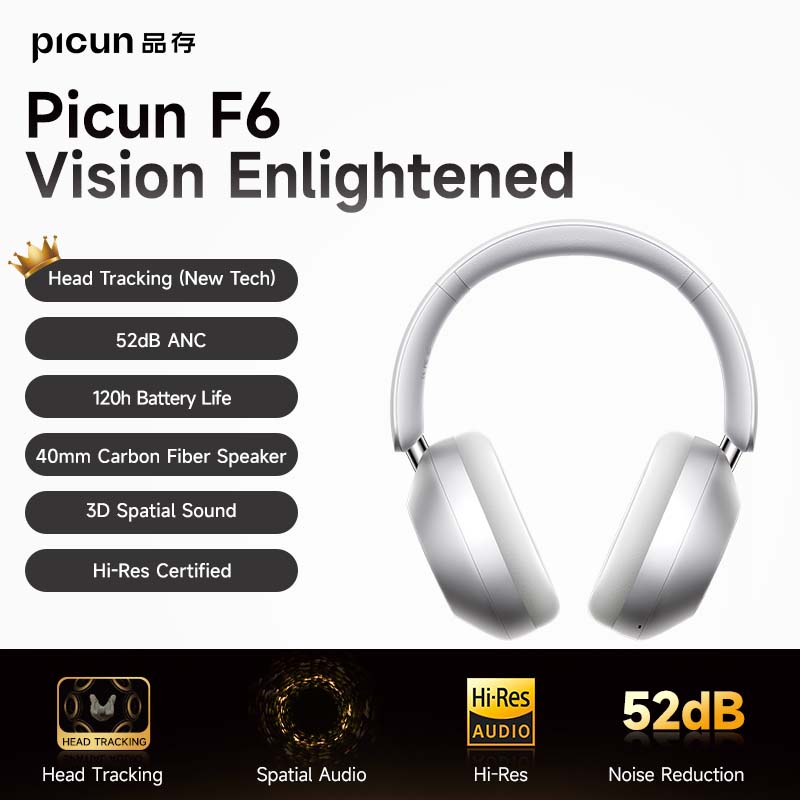
In the fast-paced world of technology and innovation, Picun has always been at the forefront of delivering cutting-edge audio solutions. The new Picun F6 headphones are no exception. Combining advanced features with sleek design, the Picun F6 promises an unparalleled auditory experience. Let’s dive into the standout features that make these headphones a must-have for any audio enthusiast.
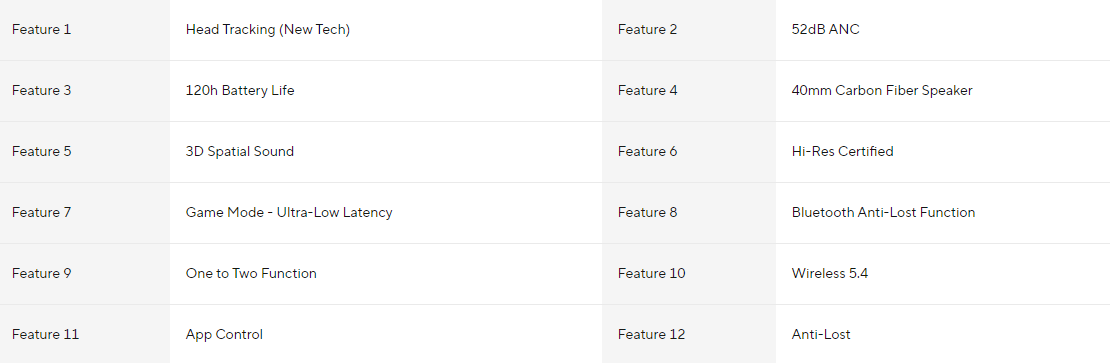
52dB Active Noise Cancellation
Noise can be a significant distraction, whether you’re commuting, working, or simply trying to relax. The Picun F6 headphones feature an industry-leading 52dB active noise cancellation (ANC) technology. This powerful ANC system effectively blocks out ambient noise, allowing you to immerse yourself fully in your music, podcasts, or calls. Whether you’re in a bustling city or a noisy office, the Picun F6 ensures that you enjoy a serene and focused listening environment.
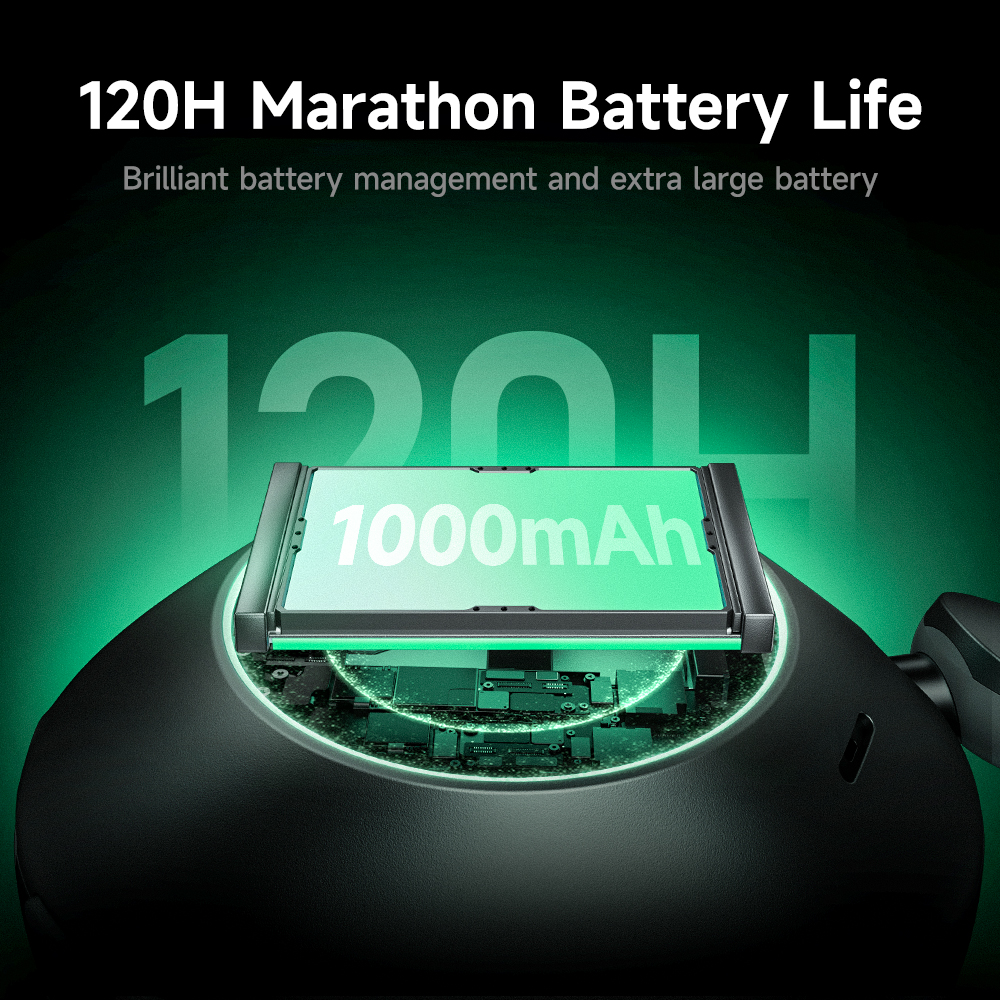
120-Hour Ultra-Long Battery Life
Battery life is a crucial factor for any wireless device, and the Picun F6 excels in this aspect. Boasting an impressive 120-hour battery life, these headphones are designed to keep up with your longest journeys and busiest days. You can listen to your favorite tracks, attend virtual meetings, and enjoy high-quality audio for days on end without worrying about recharging. When it’s time to recharge, the Picun F6 supports fast charging, so you can get back to your audio experience quickly.
Head Tracking Spatial Audio
The Picun F6 introduces a groundbreaking feature that sets it apart from the competition: head tracking spatial audio. This innovative technology provides an immersive 3D audio experience by dynamically adjusting the sound based on your head movements. Whether you’re watching a movie, playing a game, or listening to a live concert recording, head tracking spatial audio ensures that the sound feels lifelike and surrounds you from all directions. This feature enhances the realism of your audio content, making you feel as if you’re right in the middle of the action.
Sleek and Comfortable Design
In addition to its advanced features, the Picun F6 is designed with comfort and style in mind. The adjustable headband allows for a customizable fit, while the ear cups are made from soft, breathable materials that ensure comfort even during extended wear. You can listen for hours without feeling any discomfort. The premium materials and sleek finish add a touch of sophistication, making these headphones not only a pleasure to use but also a fashion statement.
Quick and Easy Setup for Picun F6 Headphones
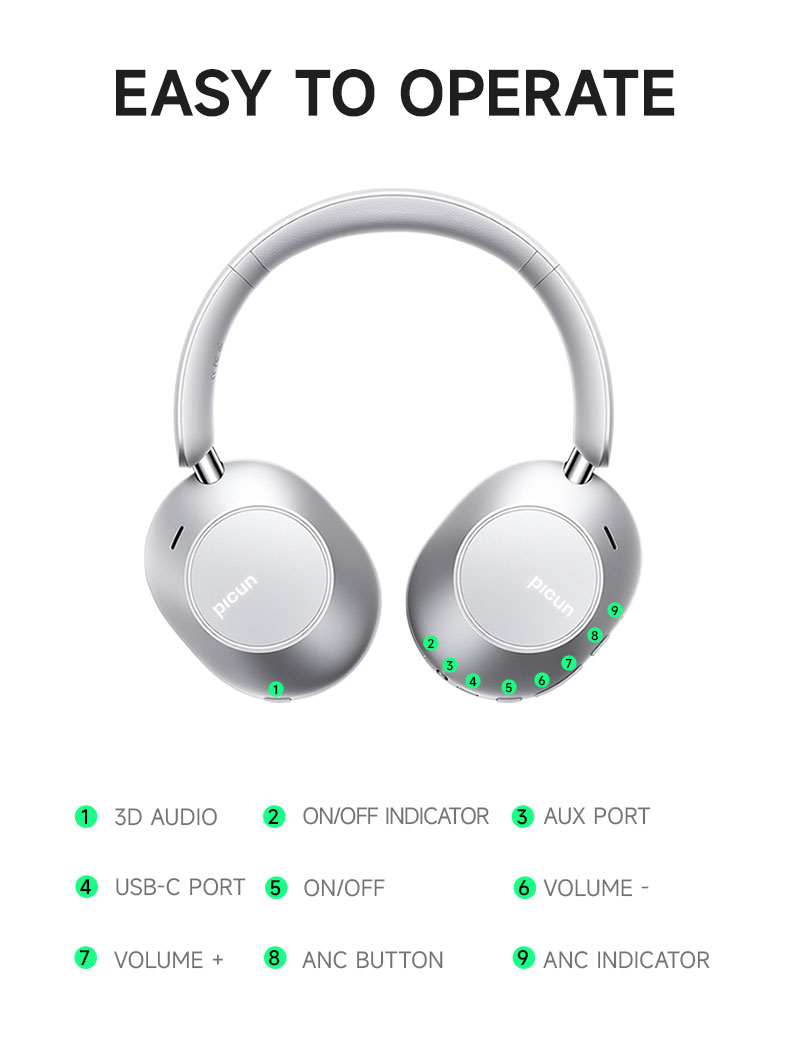
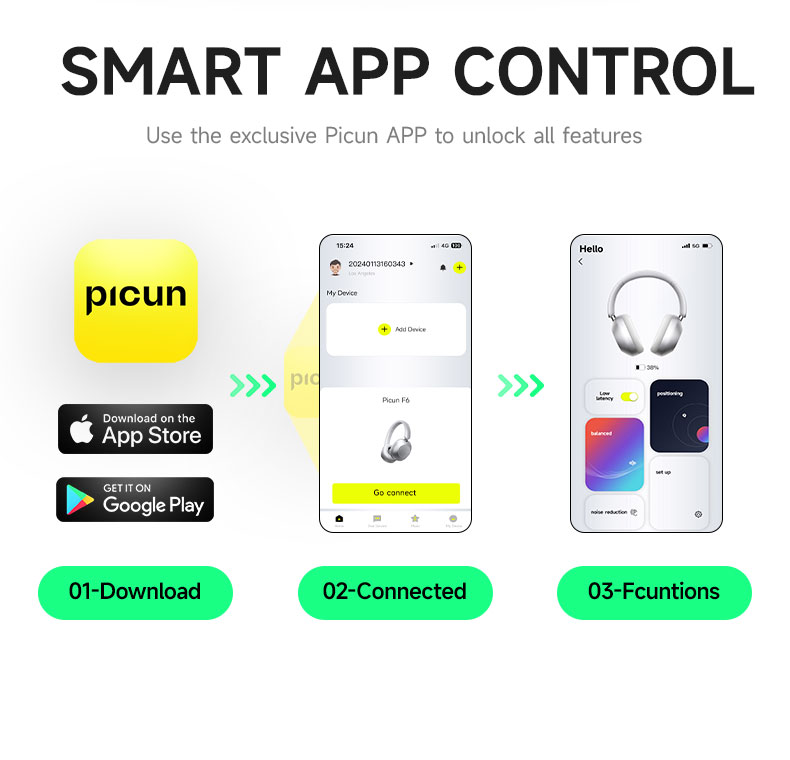
The Picun F6 headphones feature easy-to-use buttons on the earpieces, including a volume rocker that can skip tracks, and buttons for power, ANC modes, and 3D sound. Most controls, along with the jack and USB connection, are on the left side. The Picun app allows for further customization, including settings for low-latency mode and an equalizer with six pre-set profiles. ANC and head tracking modes can also be adjusted via the app, providing more options than the physical buttons. The ANC button cycles through ANC on, ANC off, and transparency mode, while the app offers low, medium, high, and automatic ANC levels. Head tracking and spatial sound effects can be toggled by the buttons, indicated by different tones, or selected in the app, which also allows for calibration and restarting of position detection.
Search @Picun_Global on Twitter for a chance to win free Picun prizes! Want to get a picture of F6? Get this code(14FF8Y9RUF6V)and click on this link to get the exclusive offer!
DJI seems to have several drones in the pipeline. Rumors suggest a mid-range Air 3S and a flagship Magic 4 drone are on the way. But DJI might have something entirely different in the works – a pocket-sized drone called the Neo.
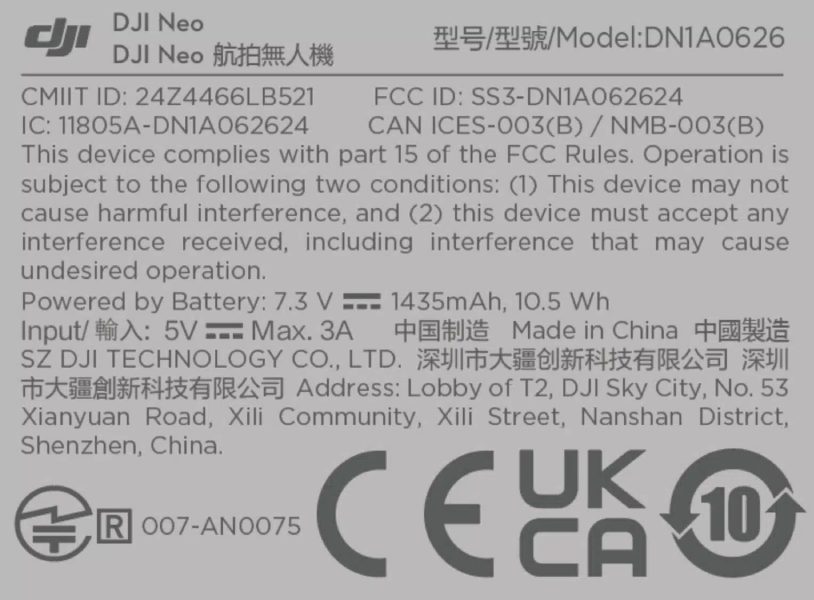
The rumors of this pocketable DJI drone started with a post on X (formerly Twitter) by tipster @DroneMood. The post features an image of a US Federal Communications Commission (FCC) registration label for the DJI Neo, model number DN1A0626. The label also reveals the drone’s battery capacity of 1435mAh or 10.5Wh.
DJI Neo FCC listing
Additionally, the post included stills from a video shared by another X user, @OsitaLV, showing the drone in action. The video tweet, which we’ve embedded below, reveals a very compact drone that appears to have a built-in propeller guard.
Moreover, the absence of an FPV headset in the leaked footage hints that the Neo might be designed as a ‘hover’ drone, similar to the HoverAir X1, rather than a cinewhoop model. So it could focus on selfie-style aerial photography and simple flight operations.
Based on the battery specifications, drone expert Weiliang Zhang estimates that the DJI Neo could weigh around 169 grams and suggests it might have a flight time of about 15 minutes with a full-axis gimbal.
Interestingly, although DJI has yet to officially confirm the Neo, @DroneMood seems to have found a premature listing for the drone on Walmart.
The listing suggests that the DJI Neo Fly More Combo, which typically includes extra batteries, a charging hub, and a carrying case, will be priced at $329. This price point is comparable to the HoverAir X1 combo kit, which sells for $399.
Apart from this, details about the DJI Neo are limited at the moment. We’ll keep you updated with any new information as it becomes available.
It’s been over a couple of weeks fo the famous Prime Day sale, yet Amazon India has once again started gearing up for the upcoming Freedom Festival sale. It will commence around August 15 as an extravaganza to mark India’s Independence Day. The sale will bring a 10% discount for SBI Credit Card holders. There will be a massive discount on smart electronics, laptops, games, toys, Amazon Brands, and other consumer electronics.
Amazon India Great Freedom Festival Sale Details
Specifically for smartphones, there will be offers including up to 24 months of cost EMI, up to Rs 50000 off on exchange offers, and up to Rs 5000 off with coupons. There will be mobile accessories starting at Rs 79.
Amazon India recently revealed the deal details for electronics and accessories, where the user would be able to save up to Rs 45,000 on Laptops, up to 60% discount on tablets, a 75% discount on headphones, and up to 80% discount on smartwatches. Furthermore, there will be up to 6 months of no-cost EMI on Play Station 5.
Like the Prime Day Sale, there will be up to 40% off on the Amexa and Fire TV devices from Amazon. Precisely, up to 35% discount on Alexa Smart Speakers; meanwhile, the Alexa Smart Home will be sold for Rs 3749. There will be up to a 65% discount on smart appliances, including televisions and other items.
We suggest that interested users add their favorite item to the wishlist, and don’t forget when the deal is finally live.
The laptop has a 16-inch 240Hz display with a 2560×1600 px resolution
The laptop boasts a 16-inch 240Hz display with a 2560×1600 resolution, delivering smooth visuals and vibrant colors. Its sleek aluminum-magnesium alloy chassis houses a robust cooling system with dual fans, six heat pipes, and four heat dissipation fins, ensuring optimal performance under demanding workloads.
With a range of connectivity options, including USB-A, USB-C, HDMI, Thunderbolt 4, and RJ45 ports, the Yaoshi 16 Super caters to various user needs. The laptop also features a spacious 32GB or 64GB RAM and ample storage with 1TB or 2TB SSD options.
Priced at 15,499 yuan and 21,999 yuan respectively, the Yaoshi 16 Super offers impressive specifications for gaming enthusiasts and content creators.
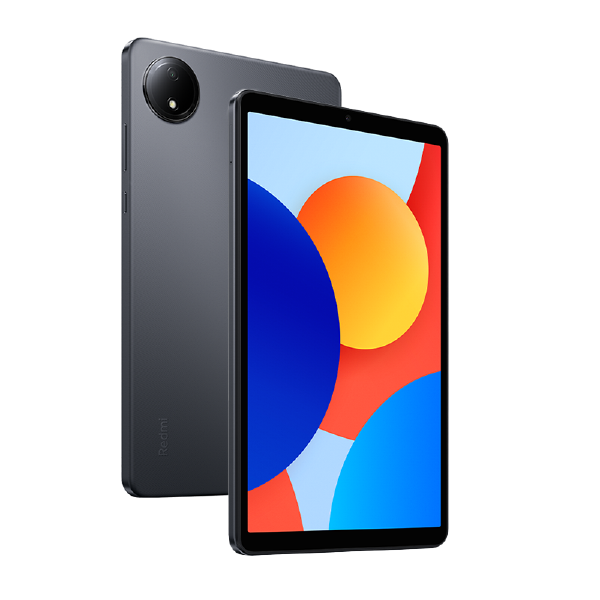
First up, Redmi’s shaking up the tablet market with their Pad SE 4G. At just Rs 10,999, it’s targeting a segment we didn’t even know existed. But who exactly is this budget tab for? We’re diving into the details to find out if it’s a steal or just another budget blip.
Meanwhile, Google’s bringing the Pixel party to India earlier than expected. August 14th is the date to circle for the Pixel 9 series launch. But what’s behind this early arrival?
But wait, there’s more! Apple’s slashing prices on the iPhone 15 Pro models in India. Is this a clearance sale or a strategic move? We’re breaking down the numbers to see if you should grab one now or hold out for the next generation.
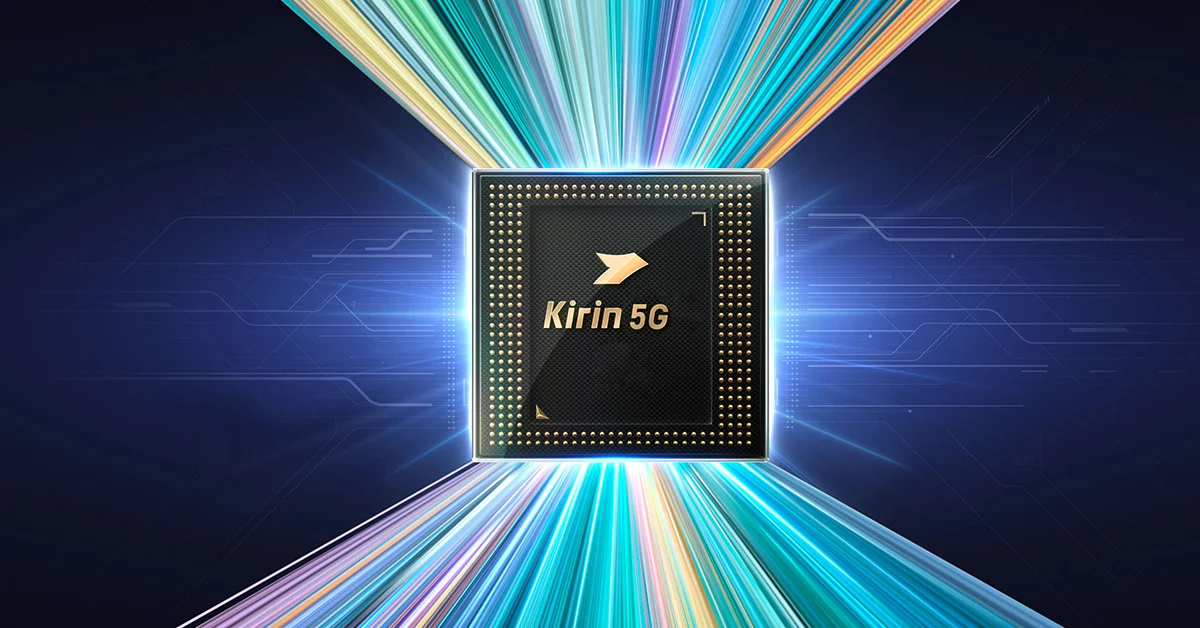
And don’t count Huawei out of the chip race just yet. Their Kirin 9100 is rumored to be giving Snapdragon a run for its money in energy efficiency. Could this be Huawei’s comeback chip? We’re analyzing the leaks to see if it lives up to the hype.
All the juicy details on these stories are in today’s newsletter below.
For just Rs 10,999, Who is the Redmi Pad SE 4G for?
Xiaomi just unveiled a bunch of new tablet models in the Indian market. The Redmi Pad Pro series was announced as a mid-range tablet for users who need capable specs without breaking the bank. Alongside these two models, the company also announced the Redmi Pad SE 4G. This is a more affordable device, but who does this tablet target? Redmi seems to be targeting a rather untapped segment in the market.
There have been numerous leaks about the Pixel 9 series, and Google has released official teasers afterwards. A new microsite on Flipkart has now revealed the launch date for Pixel 9 series in India.
Apple has permanently slashed the prices of the iPhone 15 Pro and iPhone 15 Pro Max for the first time in India. The Cupertino-based tech giant follows the tradition of discontinuing the flagship models with the launch of the new generation. The current generation is due to get their successors in September. The reduction in prices of the iPhone 15 Pro models is likely attributed to the import duty rate cut from 20 to 15 percent by the Indian government at the recently announced budget session.
Earlier this week, a leak from prominent tech tipster Digital Chat Station (DCS) hinted at a new Kirin chip in the works at Huawei. Today, DCS made a follow-up on Weibo, China’s social media platform, revealing some additional details.
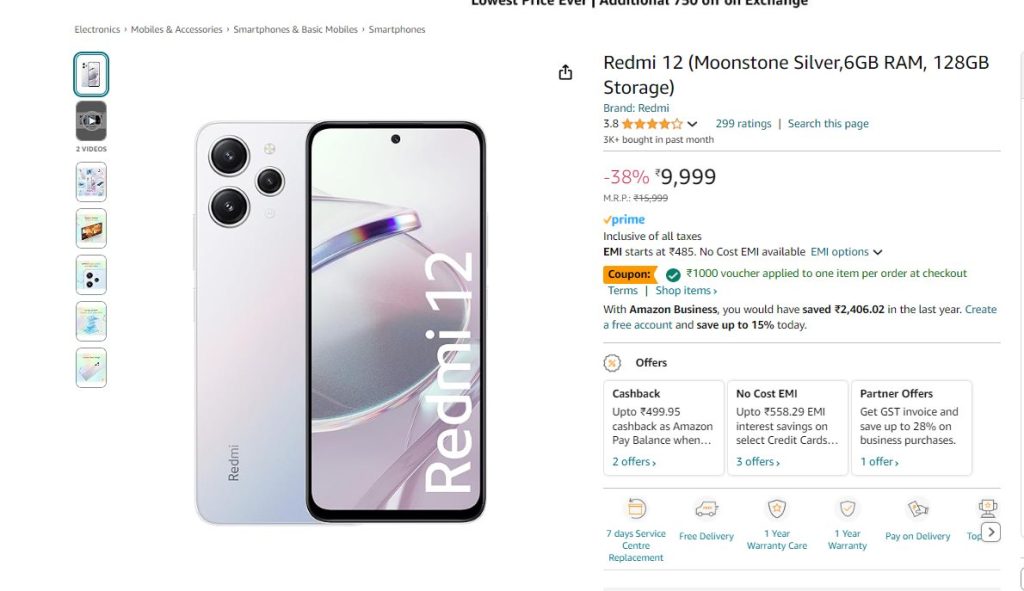
Redmi 12 was launched last summer to get hold of the affordable smartphone market. The recent temporary price slash is making smartphone pricing more attractive. Interested folks can head over to Amazon to get Rs 1000 off, and grab it for the reduced price of Rs 8,999. Usually, the smartphone retails for Rs 9,999 for the 6 GB RAM and 128GB storage variants.
Apart from the coupon discount, interested folks can also save Rs 499 as cashback if they opt for Amazon Pay Balance. Moreover, there are some offers on select credit cards. Overall, interested users can get the smartphone for around Rs 8,499.
Redmi 12 Specifications
The Redmi 12 features a 6.79-inch LCD with 90Hz refresh rate and it offers 550 nits brightness. It is powered by a MediaTek Helio G88 SOC that offers up to 8 GB of RAM and 256 GB of storage. In the optics, there’s a 50 MP primary sensor, an 8 MP ultrawide sensor, and a 2 MP macro sensor. An 8MP sensor sits on the front for selfies and video calling.
Redmi 12 runs MIUI 14 based on Android 13. It is bundled with a 5000 mAh battery and 18W fast-wired charging. There’s a side-mounted fingerprint sensor for easy accessibility, and it features IP53 dust and splash resistance. The smartphone measures 168.6 x 76.3 x 8.2 mm in size and weighs 198.5 g. It is available in Midnight Black, Sky Blue, Polar Silver, and Moonstone Silver.
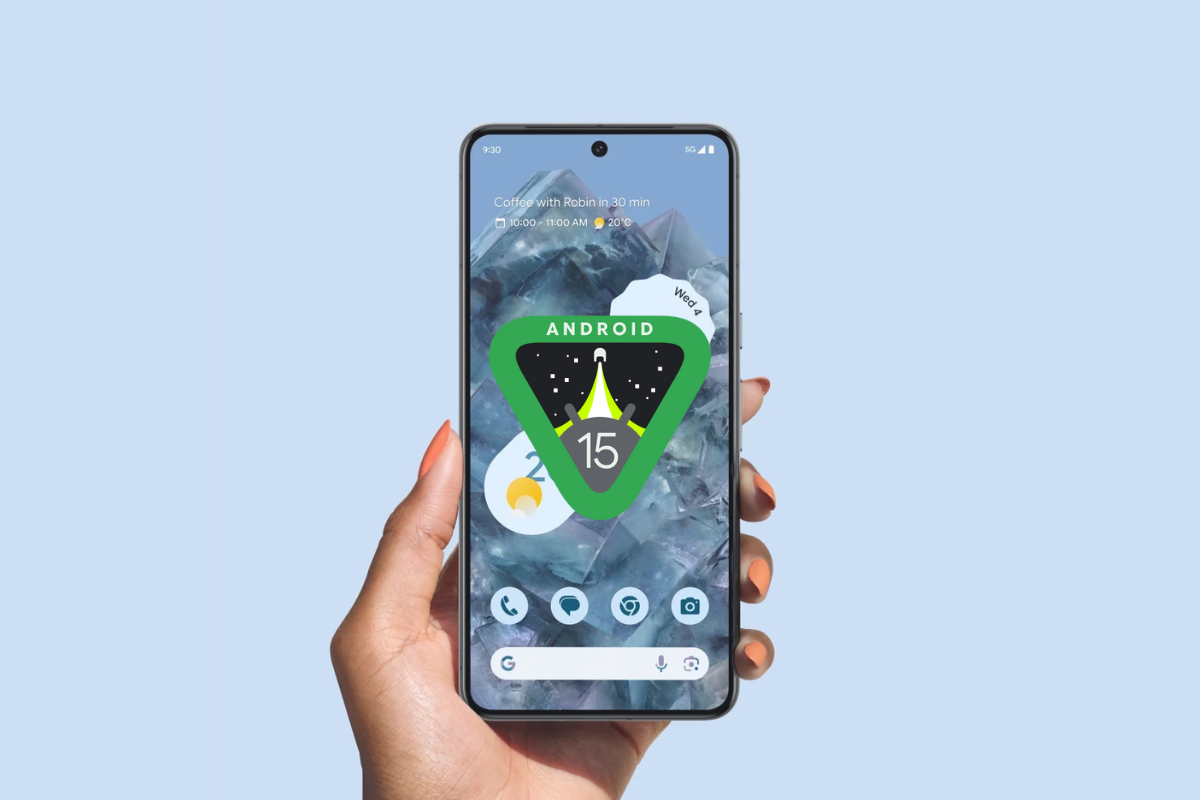
The Android 15 beta development timeline is nearing its end, but there are still some bugs that Google wants to fix before the OS public release. Following that, the company has rolled out a new Beta 4.1 update today. It’s a rather small build with minimal changelog, leading us to believe that it could be the final pre-release build before Google rolls out the stable version.
Google announced the Beta 4.1 update on Reddit. It carries build number AP31.240617.010 for most devices and includes the July 2024 security patches. As usual, Pixel phone owners enrolled in the Android Beta Program (Pixel 6 and above) will be eligible for this update.
As we mentioned earlier, it’s a quite small update, so those expecting new features may find it underwhelming. The changelog for Beta 4.1 lists only one fix: resolving call audio crashes.
This minor update to Android 15 Beta 4 includes the following fixes:

Fixed various issues that sometimes caused device audio to crash while making or receiving calls. (Issue #354086106, Issue #354582492, Issue #354788692, Issue #355129314, Issue #355024157)
Google assures users that those already running earlier Android 15 beta builds on their Pixel devices will automatically receive Beta 4.1 within five days. The update is expected to reach all users within 24 hours and has a download size of less than 4MB, according to AndroidPolice.
This minor bug fix update aligns with the nearing end of Google’s development timeline for Android 15. August is the final month for testing before releasing the final builds. And we’re expecting that Google’s next hardware event, scheduled for August 13th, could be the platform for the official public release of Android 15.
If you’re in the beta program and have yet to receive the update, you can manually check for it by going to Settings > System > Software updates > System update > Check for update. Alternatively, for those with unlocked bootloaders, you will need to go through the manual installation, which requires downloading the OTA file or factory images beforehand.
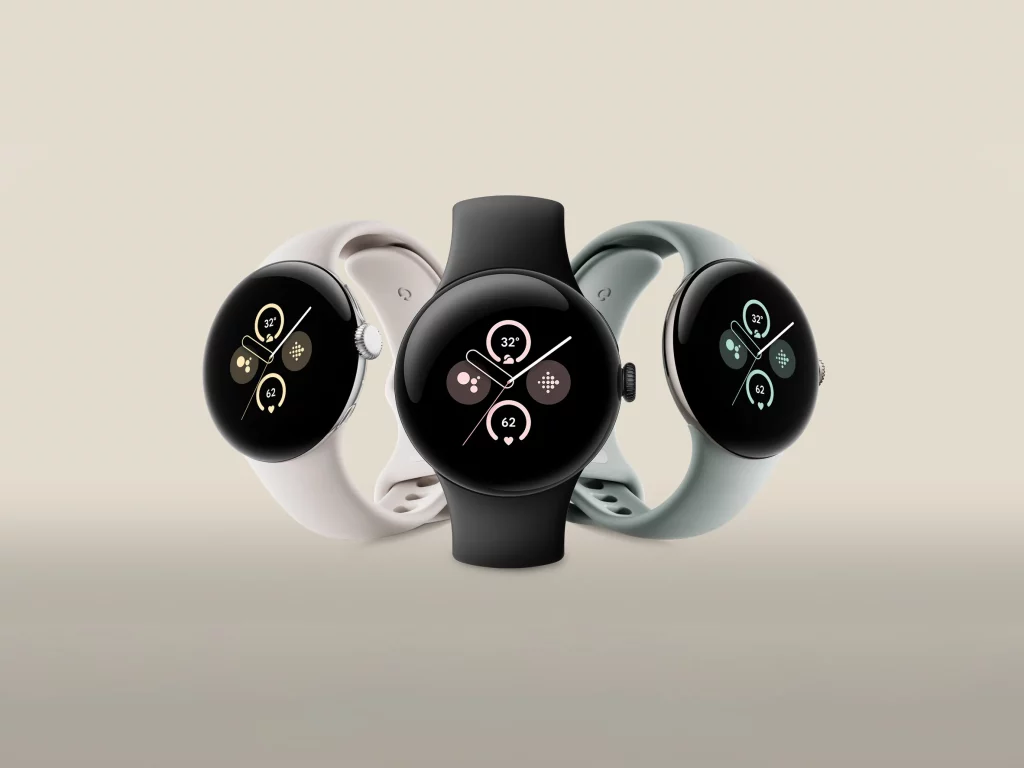
Google‘s upcoming Pixel Watch 3 will offer a wider range of strap options compared to its predecessor. The 41mm model will feature 10 strap choices, while the 45mm variant will include six. These options encompass various materials and styles, including active, sport, woven, metal, leather, and performance loop designs.
Google is offering a complimentary six-month Fitbit subscription.
To enhance the smartwatch experience, Google is offering a complimentary six-month Fitbit Premium subscription with the purchase of a Pixel Watch 3. This subscription provides access to advanced fitness tracking, health insights, and wellness features.
While specific strap colors and materials vary between the two watch sizes, the overall selection will aim to cater to diverse user preferences and lifestyles.
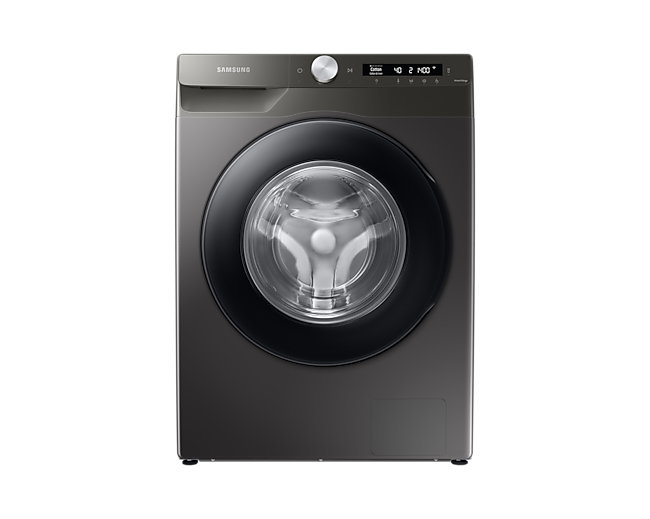
Indian consumer behaviour has seen a significant shift over the past two years, with a growing preference for larger washing machines that can handle greater laundry loads. According to data from Samsung India’s latest consumer research, there has been a notable increase in the sales of front-load washing machines with capacities of 9kg and above, which have grown by 45 percent so far this year. In contrast, sales of 7kg and below front-load washing machines have declined by 26 percent during the same period.
Benefits of larger washing machines highlighted by Samsung
Samsung 9.0 kg Ecobubble Front Load Washing Machine
Samsung India highlighted that larger drum sizes in washing machines offer several benefits. Bigger drum sizes allow more space for the movement of clothes, leading to better-cleaned and untangled garments.
Larger washing machines can handle more clothes per load, reducing the frequency of usage and making the process more time and energy-efficient. These machines are particularly useful for washing essential household items such as bedsheets, curtains, and saris, which are common in Indian households.
The preference for bigger washing machines aligns with a growing awareness of sustainability and energy efficiency among Indian consumers. A consumer dipstick survey conducted by Samsung India revealed that many users optimize the use of their washing machines by ensuring the drum is always full, thereby minimizing energy consumption. However, some users tend to run a second wash cycle with just a few clothes, which can lead to water wastage.
As Indian consumers continue to prioritize convenience and efficiency, the demand for larger washing machines is expected to increase further. The trend is supported by the latest industry data, which reflects the rising sales of washing machines with higher capacities.
To cater to the rising consumer demand, Samsung India offers a wide range of washing machines with larger capacities. These machines are designed to meet the needs of Indian households, providing efficient and effective washing solutions for a variety of laundry requirements.
We use cookies on our website to give you the most relevant experience by remembering your preferences and repeat visits. By clicking “Accept”, you consent to the use of ALL the cookies.
This website uses cookies to improve your experience while you navigate through the website. Out of these, the cookies that are categorized as necessary are stored on your browser as they are essential for the working of basic functionalities of the website. We also use third-party cookies that help us analyze and understand how you use this website. These cookies will be stored in your browser only with your consent. You also have the option to opt-out of these cookies. But opting out of some of these cookies may affect your browsing experience.
Necessary cookies are absolutely essential for the website to function properly. This category only includes cookies that ensures basic functionalities and security features of the website. These cookies do not store any personal information.
Any cookies that may not be particularly necessary for the website to function and is used specifically to collect user personal data via analytics, ads, other embedded contents are termed as non-necessary cookies. It is mandatory to procure user consent prior to running these cookies on your website.