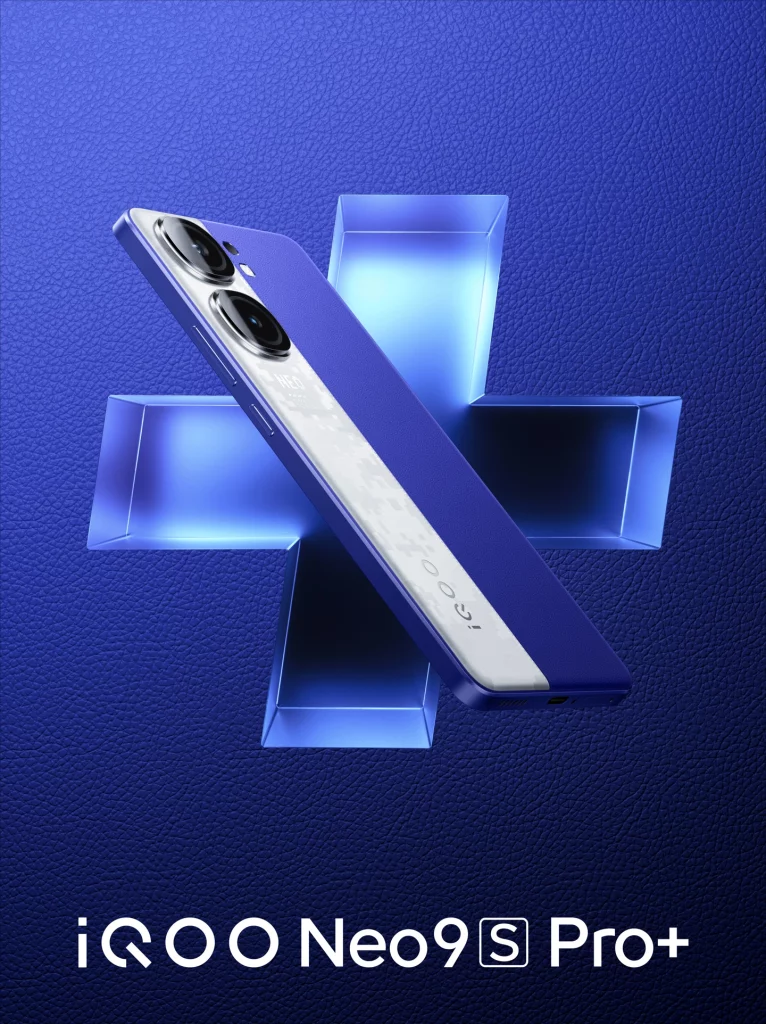
We recently covered reports of iQOO working on a new smartphone called the Neo 9S Pro+, expected to launch sometime in July. Like its predecessors, this new device in the Neo lineup will focus on performance at a reasonable price. Ahead of the official announcement, the launch date of the Neo 9S Pro+ has leaked.
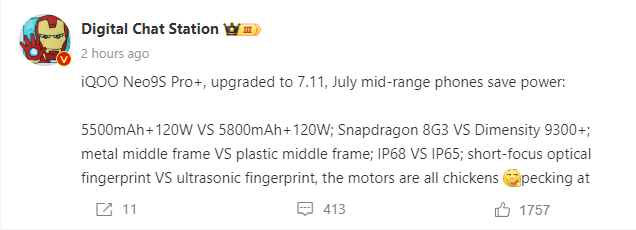
Tipster DigitalChatStation on Weibo has announced that the iQOO Neo 9S Pro+ phone will launch earlier than expected, on July 11th. This new model features a color scheme called “Buff Blue.” The Buff Blue design combines white leather with a sophisticated finish, thanks to Vivo’s innovative TOL rubbing process. The blue-purple areas come with a lychee-textured vegan leather finish.
While full specifications have not been disclosed, some notable features have been revealed. The iQOO Neo 9S Pro+ will have a 6.78-inch 2800×1260 1.5K OLED display with 144Hz refresh rate. It will include a 16MP front-facing camera and a dual rear camera system with two 50MP sensors.
The phone will be powered by the latest Snapdragon 8 Gen 3 processor and an independent graphics chip. The highest configuration of the device might include 16 GB of RAM and 512 GB of storage. It will also have a 5500mAh battery and support 120W fast charging. For security, it will feature a Goodix single-point ultrasonic under-screen fingerprint sensor. The device will run on Android 14-based OriginOS 4.
In related news, Red Magic is also gearing up to launch a new gaming smartphone on July 3 called the Red Magic 9s Pro. Compared to the Red Magic 9 Pro, the 9s Pro model will come with some changes to the design, along with a multilayer heat dissipation ICE 13.5 magic cooling system for its overclocked Snapdragon 8 Gen 3 chipset. This new cooling system is expected to reduce the CPU core temperature by up to 25℃, while also keeping the body of the device cooler.
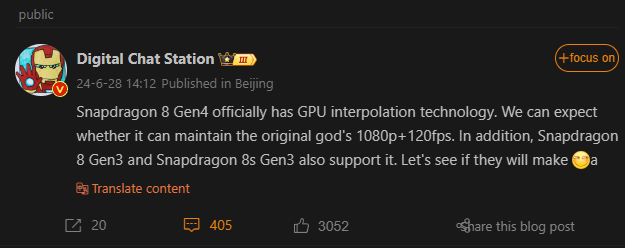
Rumors surrounding the upcoming Samsung Galaxy S25 continue to show up. Earlier leaks suggested that the S25 might be powered by MediaTek’s Dimensity 9400 chipset, while other reports hinted at a slimmer design with rounded corners for Galaxy S25 Ultra. Now, the latest rumor takes the S25’s capabilities to a whole new level, claiming that it will be capable of running Genshin Impact at a smooth 120FPS. This is a significant feat, considering that even many modern flagship devices struggle to maintain 60FPS on this demanding game.
DCS on Weibo
Galaxy S25 series will come equipped with the Snapdragon 8 Gen 4 chipset. Thanks to its AI-powered frame generation, achieving higher FPS during gameplay will be much easier. Considering modern Snapdragon 8 Gen 3 devices can play Genshin Impact at 60 FPS, the new rumors promise double the gaming performance actually. This technology is similar to AMD’s FSR and Nvidia’s DLSS.
Snapdragon 8 Gen 4 will be unveiled in October 2024. However, AI-powered frame generation may not work with every game, as developers need to adapt this technology for their titles. Qualcomm bringing a powerful chipset for the Android market is a great news, especially when considering some console games are already running on the iPhone 15 Pro. There’s only one thing to be concerned about, and that is the Snapdragon 8 Gen 4 being an expensive chipset. You can read our previous article to learn more: Here’s why the Snapdragon 8 Gen 4 will be more expensive than 8 Gen 3.
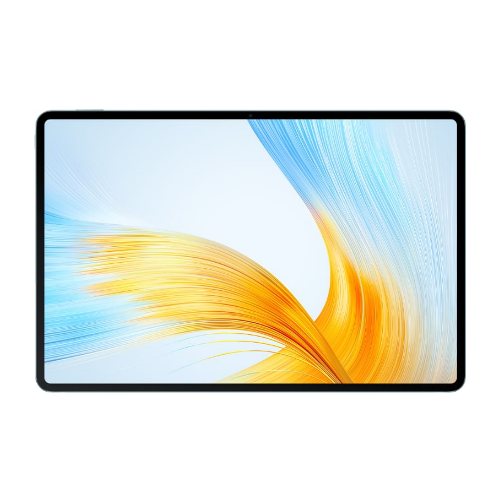
Zhao Ming, the CEO of HONOR Device Co., Ltd. recently revealed that the upcoming Honor MagicPad will be equipped with the same AI defocus vision relief technology as the upcoming Honor Magic V3. For those unfamiliar with the lineup, the upcoming tablet is going to succeed the company’s high-end Honor MagicPad 13 released in July last year.
AI defocus vision relief + 4320Hz PWM for eye-safely
It is also expected that the upcoming Honor MagicPad will support 4320 high-frequency PWM dimming. The 4320Hz high-frequency PWM was first offered by the Honor Magic 6 series. The IEEE Std1789-2015 international standard says that the flickering of a display becomes almost eye-safe when the PWM frequency exceeds 3125Hz. So the Honor Magic 6 and the upcoming high-end MagicPad can be considered eye-safe in this regard.
In addition to addressing eye fatigue, the upcoming MagicPad reportedly offers improved DC dimming, which combines color accuracy and eye protection at low brightness levels.
A tipster claimed that Honor has applied for a patent for AI-defocused vision relief technology, which can make the screen look like a defocused lens. It is expected to help the user in achieving vision relief. The 4320Hz high-frequency PWM dimming paired with the AI-defocused vision relief technology demonstrates the company’s focus on eye-safety.
As mentioned above, the new MagicPad is expected to be released in July along with the Honor Magic V3, which is expected to get even thinner as compared to its predecessor, the 9.9 mm Honor Magic V2, which was released in July last year.
To give you an idea of what to expect from the new tablet, last year’s MagicPad 13 offers a 13″ IMAX Enhanced TFT LCD display with a resolution of 1840 x 2880 pixels (~263 ppi density). The panel supports HDR10 and a peak brightness of 700 nits. It weighs 660g / 673g and is powered by the Snapdragon 888 5G and a 10,050 mAh battery.
Noise has launched a new smartwatch in India. The latest offering is dubbed the Noise Triumph. The key USP of the wearable device is that it comes with two bundled swappable dials. This gives users the option to choose the look of the smartwatch depending on the occasion. The Noise Triumph offers health-tracking and convenient features commonly found on every other smartwatch in the market. Read on to know everything about it below.
Noise Triumph specs and features
As mentioned earlier, the Noise Triumph features swappable dials. They can be changed with a simple snap mechanism. One is rugged making it perfect for outdoors while the other is lifestyle for casual and formal occasions. The smartwatch can also be used with either dial. There is a rotating crown and the device is dust and water-resistant. The Noise Triumph features a large 1.85-inch display with a resolution of 240 x 284 pixels.
On the health-centric front, the Noise Triumph is equipped with a 24×7 heart-rate monitor and a SpO2 sensor. It is capable of tracking sleep patterns and stress levels. The device also offers breathing practice. It also provides hydration and sedentary reminders. The smartwatch packs support for tracking multiple sports modes.
The Noise Triumph is equipped with a built-in speaker and microphone for hands-free Bluetooth calling via a connected smartphone over a 10-meter range. The smartwatch packs convenient features like weather updates, alarms, music control, a calculator, and more. It is claimed to last 7 days on a single charge.
The Noise Triumph carries a special price tag of Rs 1,899. It is offered in Black, Brown, Grey, and Dark Grey color options. The smartwatch can be purchased from Flipkart.
Huawei just announced a brand new affordable tablet, dubbed the MatePad SE 11, in its home market of China. It packs some notable specs and features despite its budget price tag. But what makes it special? Let’s have a look.
1. Huawei MadePad SE 11: Tall display for your favorite movies
One of the advantages of having a tablet is its larger display when compared to a smartphone. While this makes it more cumbersome to carry around, it does have its Pros when consuming media. The bigger screen real estate offers a better viewing experience, and well, the Huawei MatePad SE 11 doesn’t skip out on this.
It sports a tall 11-inch TFT LCD panel that offers Full HD+ resolution, 400 nits of peak brightness, standard 60Hz refresh rate, 207 ppi density, 100 percent sRGB color gamut, and a high 85 percent screen to body ratio. This screen is surrounded by slim bezels for a more immersive viewing experience. Thanks to this tall display, you also get access to multi-window functionality.
2. M-Pen Lite Stylus & Speaker setup
Adding to its intuitive functionality is the support for the M-Pen Lite stylus. The tall 11-inch display is great for consuming media but that’s not all it is restricted to. You can even start doodling, drawing, writing, and taking notes with the addition of the M-Pen Lite stylus. This brings another layer of interaction as well.
Making the audio-visual experience is the speaker setup. You get a big screen that is great for movies, but you also get a great listening experience thanks to a quad speaker setup. This is paired with the brand’s proprietary Huawei Histen 9.0 audio tuning.
3. Budget Specs & Big Battery
Talking about the hardware of this tablet, the Huawei MatePad SE 11 (2024) is equipped with the Qualcomm Snapdragon 685 SoC, which is paired with up to 8GB of RAM and 256GB of internal storage. To recall, this is a budget mid-range chipset that was first released last year.
Although, it is still capable of handling most day to day tasks thrown its way. Under the hood, a massive 7,700mAh battery pack powers this device, which supports 22.5W wired fast charging. So you can expect decent battery life in your daily use.
4. Slim Body with a Premium Design
Tablets are much larger than a smartphone and aren’t as easy to carry around in your hand. So it helps when they aren’t too heavy or chunky. Huawei managed to cram all these aforementioned specifications in an ultra slim 6.9mm body. It weighs just 475 grams in weight as well.
While this isn’t exactly light, it is around the same weight as most tablets of its size like the Apple iPad. But that’s not all, the Chinese tech giant decided to refresh the design to make it more premium by using an aluminum frame in the MatePad SE 11 2024 edition. The new tablet arrives in two color options, namely Space Gray and Star Ocean Blue.
The Honor 200 5G series is confirmed to launch soon in India. The brand has started teasing the upcoming offering. Additionally, Amazon has put up a microsite of the Honor 200 series confirming its availability on the e-commerce platform. The lineup is expected to comprise standard and pro models. It’s unclear if the Honor 200 Lite will also tag along that debuted in global markets last month. Some key details of the Honor 200 5G series have also been teased.
Honor 200 5G series India launch teased
The Honor 200 5G series is confirmed to come with a curved display that is teased to offer visual brilliance with exceptional clarity and comfort. The teaser video reveals that the smartphones will feature a pill-shaped camera island housing three sensors. The brand has confirmed that it has collaborated with Studio Harcourt, a Paris-based portrait photography house. The Honor 200 5G series will come with several AI features to capture studio-level portraits.
Since Honor has started teasing details about the Honor 200 5G series in India, we can expect the brand to officially reveal the launch date of the upcoming offering in the coming weeks.
The Indian variants of the Honor 200 5G series are expected to come with the same specifications as their global counterparts. To recall, the standard and pro feature a 6.7-inch curved AMOLED with an FHD+ resolution and a 120Hz refresh rate. Both phones have a triple rear camera setup of a 50MP main sensor, a 50MP telephoto unit, and a 12MP ultra-wide-angle lens. However, there are slight differences between the camera sensor size on the two devices. Internally, the Honor 200 5G and Honor 200 Pro 5G (review) are powered by a Snapdragon 7 Gen 3 and Snapdragon 8s Gen 3 chipsets. They are backed by a 5,020mAh battery unit with support for 100W charging.
Samsung is reportedly going to experiment with its lineup of flagship tablets. The Galaxy Tab S10 series will reportedly come in only two versions – Plus and Ultra. The lineup is focused on competing with iPads. According to a recently released report from market research firm Canalys, Samsung is the second largest tablet maker in the US.
Galaxy Tab S9 Ultra
However, the company’s market share is significantly lower as compared to Apple‘s in the region. The decision to position the Galaxy Tab S10 Plus as the base model may aim to provide more capable devices and effectively compete with Apple’s latest offerings, while not focusing primarily on pricing.
The news comes from the Korean platform Naver. The source also claims that the Galaxy Tab S10 series is going to be a direct competitor of the Apple iPad, which was recently released with an OLED display. The report also notes that the new flagship tablets from Samsung could be released “as early as the second half of this year”.
Samsung is expected to begin the mass production of the Galaxy Tab S10 Plus and Ultra starting this month.
The company has been releasing three models starting with the Galaxy Tab S8 series, which was introduced in 2022. The Tab S7 series mainly comes in two different models – the Galaxy Tab S7 and Tab S7 Plus. The base, plus, and ultra models of last year’s Tab S9 series come in three different sizes – 11″, 12.4″, and 14.6″. It is said that Samsung may opt for even larger sizes with the Tab S10 series.
Last May, Apple released the 11-inch and 13-inch models of the iPad Pro with OLED displays. It was the first time that an iPad had been equipped with OLED. In contrast, Samsung has been using OLED panels in its high-end tablets since 2014. The report claims that Samsung might choose a 12+” AMOLED panel for the Plus model to compete with the latest 11″ and 13″ iPad Pro models.
It’s been nearly a year since DJI unveiled the Osmo Action 4, a solid mid-range action camera that staked its claim against GoPro’s offerings.
Since then, DJI’s focus has shifted towards its other camera divisions, with new RS camera gimbals and drone releases like the Avata 2 and Mini 4K catering to diverse budgets and functionalities. Rumors are also circulating about an upcoming Air 3S drone.
While DJI has kept its action camera lineup relatively quiet post-Osmo Action 4, competitors like GoPro (Hero 12 Black) and Insta360 (Ace, Ace Pro, X4, Go 3S) have been churning out new models. However, a recent leak suggests DJI might be gearing up to rejoin the action cam fray.
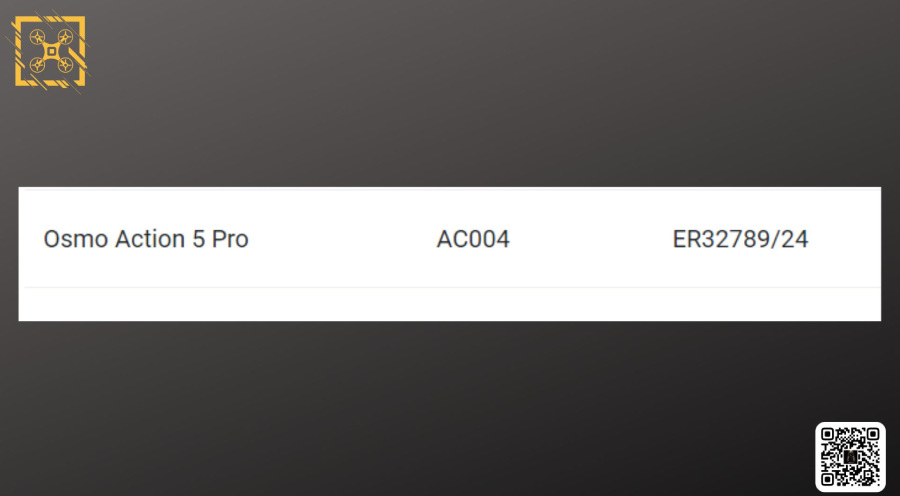
A filing with the UAE’s Telecommunications and Digital Government Regulatory Authority (TDRA), discovered by reliable leak source @Quadro_News, suggests that DJI’s upcoming action camera will be the Osmo Action 5 Pro.
The filing itself is light on specifics, simply linking the model number AC004 to the marketing name “Osmo Action 5 Pro.” But what’s interesting is the “Pro” moniker which is a first for DJI’s action camera line. That could mean we are in for some serious upgrades on the upcoming action camera.
The Osmo Action 4 featured a 1/1.3-inch CMOS sensor, but rumors suggest that the Osmo Action 5 Pro might use the 1-inch sensor from DJI’s Osmo Pocket 3 handheld camera. This upgrade could make the Osmo Action 5 Pro more competitive with models like the Insta360 One R, which has a Leica-co-engineered 1-inch sensor, and the 8K-capable Insta360 Ace Pro.
The leak doesn’t mention a release date for the Action 5, but based on DJI’s past release schedules, a global launch for the Osmo Action 5 series in summer 2024 seems likely.
Android 15 is in its final stage of development. Google has already released early versions of the upcoming OS, allowing developers and testers to get an early look at it ahead of the public release.
Thanks to those early builds, we already know plenty about Android 15, including the new features and enhancements. It seems Android 15 is going to be one of the best OS upgrades in recent years. However, a lot of Android devices won’t be upgraded to the new OS, and that also includes many Vivo and iQOO phones.
In this post, I have curated a list of Vivo and iQOO phones and tablets that are not eligible for the Android 15 upgrade. Review the list to find out if you’ll need to upgrade to a newer model to enjoy the latest features and upgrades.
Vivo, iQOO Phones Not Eligible for Android 15 Update
[Vivo X series]
Vivo X80 Lite
Vivo X70
Vivo X70 Pro
Vivo X70 Pro+
Older X-series devices
[Vivo V series]
Vivo V25
Vivo V25e
Vivo V25 Pro
Vivo V23 5G
Vivo V23 Pro
Vivo V21s
And all older V-series devices
[Vivo T series]
Vivo T1x
Vivo T1x 4G
Vivo T1 5G
Vivo T1 Pro
Vivo T1 (Snapdragon 680)
Vivo T1 (Snapdragon 778G)
[Vivo Y series]
Vivo Y200
Vivo Y100
Vivo Y100A
Vivo Y78
Vivo Y78t
Vivo Y56
Vivo Y55s (2023)
Vivo Y36
Vivo Y36 5G
Vivo Y28
Vivo Y27
Vivo Y27s
Vivo Y27 5G
Vivo Y17s
Vivo Y02t
Vivo Y02A
And all Y-series phones launched before 2023
[iQOO]
iQOO 10 Pro
iQOO 9 SE
iQOO 9 Pro
iQOO 9T
iQOO Z6
iQOO Z6 44W
iQOO Z6 Pro
iQOO Z6 Lite
iQOO Neo 6
And all older iQOO phones
These Vivo and iQOO phones are unlikely to get the Funtouch OS 15 update, based on Android 15.
Please note that this is not the official list. We have prepared it by analyzing the company’s software update policy for its phones and tablets and past rollouts.
Vivo’s Not-So-Great Software Update Policy
Vivo is one of the leading smartphone brands worldwide, yet it lacks a clear-cut software update policy for most phones and tablets. The brand doesn’t guarantee software updates for most of its devices, leaving users in the dark as to how many OS updates they can expect.
It’s difficult to list which Vivo and iQOO (Vivo’s sub-brand) phones and tablets will be upgraded to the next Android OS for sure. However, analyzing past rollouts reveals that the Vivo T and V-series phones typically get two OS updates, and Y-series phones get just one upgrade.
In 2021, Vivo announced three OS upgrades for select upcoming X-series models (previously, it was two OS updates). This means their flagship phones can receive a maximum of three Android updates.
Vivo really needs to work on offering longer OS updates, as its competitors, Samsung and Google, are offering as many as seven OS updates to their flagship phones. Even its sister brands, OnePlus and Oppo, offer up to five years of OS upgrades.
Android 15: When Is It Coming to Vivo Phones?
Google recently released the third beta of Android 15. This was a major milestone as the new OS entered the “platform stability” phase. This means all major changes are already integrated into the new OS, and Google will now focus on polishing it and fixing bugs for the final release.
Android 15 doesn’t have an official release date. However, the official release timeline is the same as last year’s Android 14. The beta releases are also in line with last year’s beta releases of Android 14. So, if things keep moving the same way, Google might release the stable version of Android 15 in October.
Thanks to the Android 15 beta program, many Vivo users are already enjoying the new OS. Currently, the beta program is live for Vivo X100 and iQOO 12. It should gradually expand to more Vivo and iQOO devices in the upcoming weeks and months. However, the stable build is likely to start rolling out around October.
What’s New in Android 15?
Google has added a host of new features and enhancements to the new OS. I’m not going to go through all of them here, but here are the important and major changes:
1. Private Space: Android 15 brings a Private Space to hide your secret apps and files under an additional layer of protection. It uses a separate user profile and lets you set a different lock for better protection.
Things you do in Private Space are hidden from other users. In fact, apps you use inside the Private Space don’t even show in recent apps, and all your downloads stay in that space and aren’t visible to other users.
2. Satellite Connectivity: Android 15 “extends support for satellite connectivity.” It provides support for SMS, MMS, and preloaded RCS apps to use satellite connectivity for sending and receiving messages. This feature in Android 15 won’t be limited to emergency uses only.
The new OS also adds some UI elements for satellite connectivity. It also lets apps detect when a device is connected to a satellite.
3. Theft Detection Lock: If someone snatches your phone and runs away with it, the device senses that motion and immediately locks the screen, preventing bad uses of your device.
The device will lock itself even if it detects suspicious activities like constant attempts to disconnect the phone or multiple failed login attempts. The best thing is that the other person will have to use the same Google account to set up the device after a factory reset. Otherwise, the device will be useless.
4. App Pairs: If you use multiple apps in the split screen mode, app pairs in Android 15 will save you a lot of time. You’ll be able to create shortcuts for your favourite split screen combinations.
The ability to create app pairs will be restricted to wide-screen devices, such as tablets and foldable phones. We don’t know if this will also come to regular smartphones.
5. Partial Screen Sharing: You’ll be able to screen share or record a particular screen, rather than the entire window. This is a great privacy feature to protect others from accidentally seeing your secret stuff.
Which Vivo or iQOO device do you have? And what Android 15 features are you most excited about? Let us know your thoughts in the comments below.
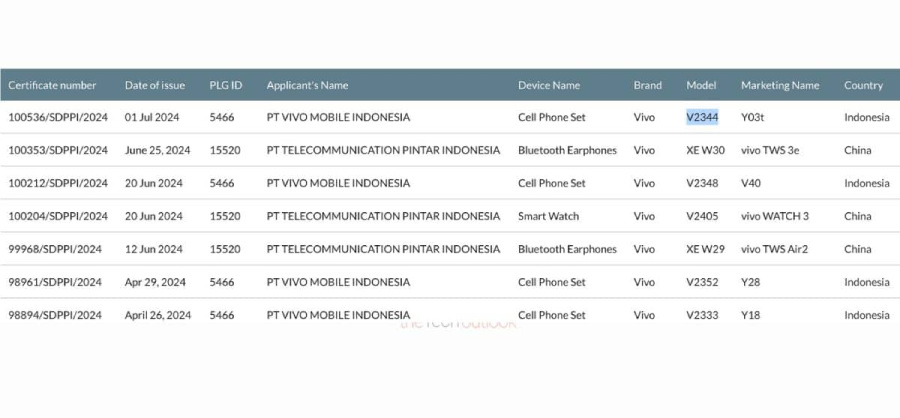
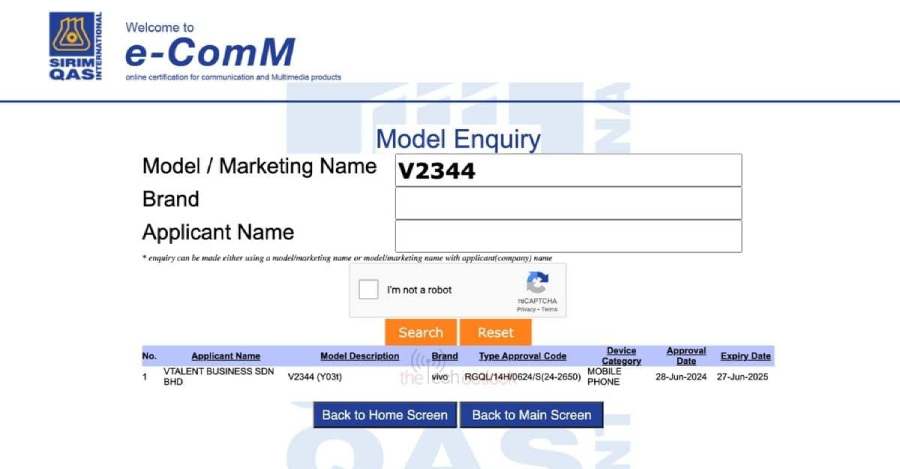
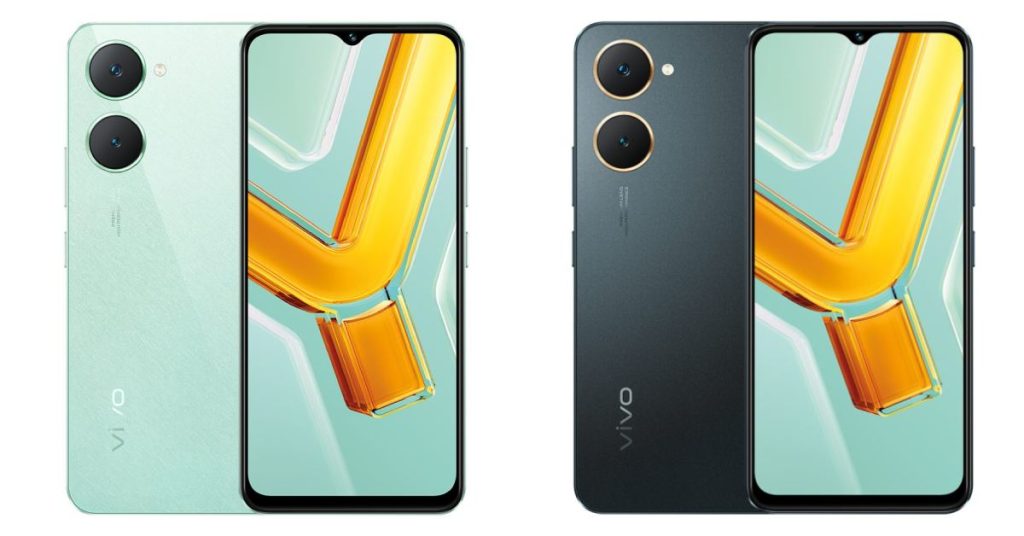
Following earlier reports of the Vivo Y03s and Y03t smartphones in development, the team at TheTechOutlook has spotted the Y03t with model number V2344 on the SDPPI certification database. The certification carries the number 1005-36/SDPPI/2024.
Additionally, the Y03t has also been listed on the SIRIM certification website with type approval code RGQL/14H/0624/S(24-2650). While neither certification reveals specific details about the Y03t’s features, their presence indicates an imminent launch.
Vivo Yo3t SDPPI certificationVivo Y03t SIRIM certification
This comes after we exclusively spotted the device’s appearance on the IMEI database with model number V2409. It is expected that the V2409 is a regional variant of the Vivo Y03t.
With certifications accumulating, it’s reasonable to expect more information regarding the Y03t’s specifications and launch date to surface soon. In the meantime, let’s quickly recap the specifications of the standard Vivo Y03.
Vivo Y03 Specifications
The Vivo Y03 sports a 6.56-inch IPS LCD display with HD+ resolution and a smooth 90Hz refresh rate. Under the hood lies a MediaTek Helio G85 processor paired with 4GB of LPDDR4x RAM and up to 128GB of internal storage. A 5000mAh battery keeps the phone running, supporting 15W fast charging. The operating system is FunTouch OS 14 based on Android 14.
On the camera front, the Y03 boasts a 13MP main sensor accompanied by a QVGA lens on the back. For selfies, a 5MP camera sits on the front. Connectivity options include dual SIM support, 4G connectivity, dual-band Wi-Fi, Bluetooth 5.0, GPS, and an IP54 dust and water resistance rating.
As the Y03 is a budget-friendly package, the Y03t could potentially target a similar market segment. Stay tuned for further updates as we inch closer to the official unveiling of the Vivo Y03t.
iQOO is reportedly working on a new Z-series device. It is rumoured to be the iQOO Z9 Lite. It will be the third device in the Z9 series after the Z9 5G and Z9x 5G phones. Now, the upcoming offering has been spotted on the Google Play Console certification. It previously appeared on the Bluetooth SIG. Read on to know all the details.
iQOO Z9 Lite 5G appears on Google Play Console
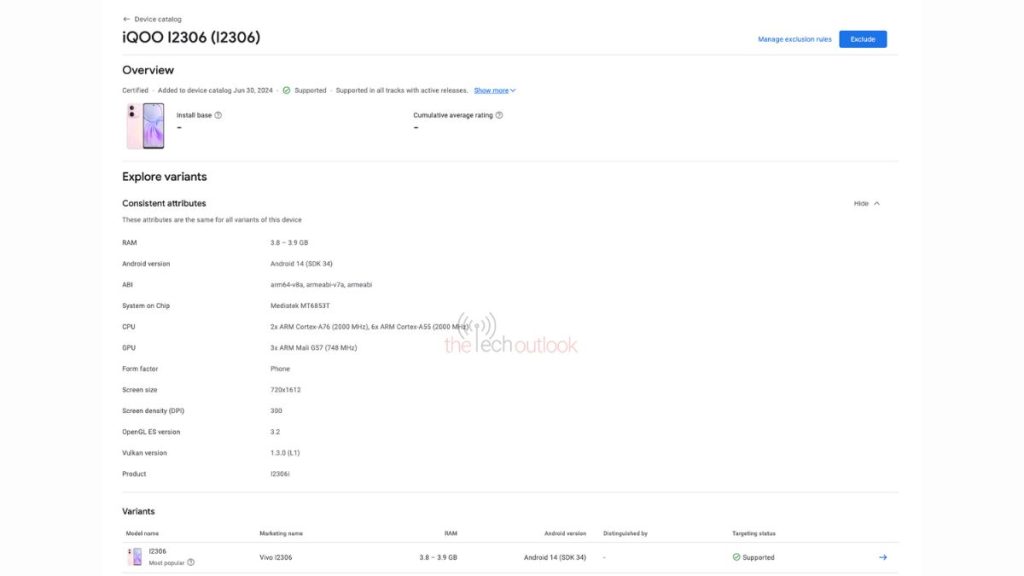
The iQOO Z9 Lite 5G is listed on the Google Play Console certification with the model number I2306. The render of the image shows a centre-aligned punch-hole cutout display with a thick chin and a squarish rear camera module. It is seen in a Light Pink color option. The smartphone will have a display resolution of 720 x 1612 pixels.
The certification listing mentions a processor codenamed MedaiTek MT6853T corresponding to the Dimensity 800U. with two A76 cores clocked at 2GHz and six A55 cores ticking at 2GHz. There’s Mali-G57 GPU onboard. We suggest you to take this information with a grain of salt. The listing reveals 4GB RAM onboard and we can expect more options at launch. The device will ship with Android 14 OS out of the box.
Recently, tipster Mukul Sharma shared that the iQOO Z9 Lite 5G will launch in mid-July. It is expected to be an entry-level 5G smartphone from the Vivo sub-brand. To jog your memory, the iQOO Z9x 5G and Z9 5G smartphones start at Rs 12,999 and Rs 19,999 respectively.
Vivo recently launched the T3 Lite smartphone in India. It remains to be seen if the iQOO Z9 Lite 5G will be a rebranded version of the device. The former has a 6.5-inch 90Hz HD+ display, 50MP main camera, Dimensity 6300, and a 5,000mAh battery with support for 15W charging.
Samsung is about to release its sixth-generation foldables. However, a patent application from the company hints that they are already working on making future foldable and rollable foldables stand out from the competition.
The patent application is about a display technology the company is working on, that will let users unlock the phone by touching anywhere on the screen and not a specific area of that. The abstract of the application notes that the display will have “a fingerprint recognition sensor layer under the display panel”.
The technology aims at “integrating a fingerprint recognition sensor into the display panel, which is the component that occupies the largest area in a portable information communication device,” says the patent application.
So the company’s goal is to develop a display that can implement a fingerprint recognition sensor without a separate external light source. Reportedly, it will also provide improved fingerprint recognition characteristics. In the attached feature the thickness of the layers and regions may be exaggerated for clarity.
Upcoming Galaxy foldables could use the new display technology
Currently, the expensive foldables come with side-mounted finger sensors. However, it could be replaced with the full-screen under-display fingerprint scanner in the near future. @xleaks7 also believes that the new technology could be used in Samsung’s upcoming foldable smartphones such as the Galaxy Z Fold 7 and rollable devices. The patent also reveals that the first and second bases could be flexible.
Many people get disappointed by the side-mounted sensor on a foldable device that costs nearly $2000. This is also a problem the new development will be able to solve.
Reducing the thickness of the phone is reportedly one of the reasons to use a side-mounted fingerprint sensor on a foldable. We will need to see if Samsung manages to solve this problem by integrating the fingerprint recognition system into the display panel.
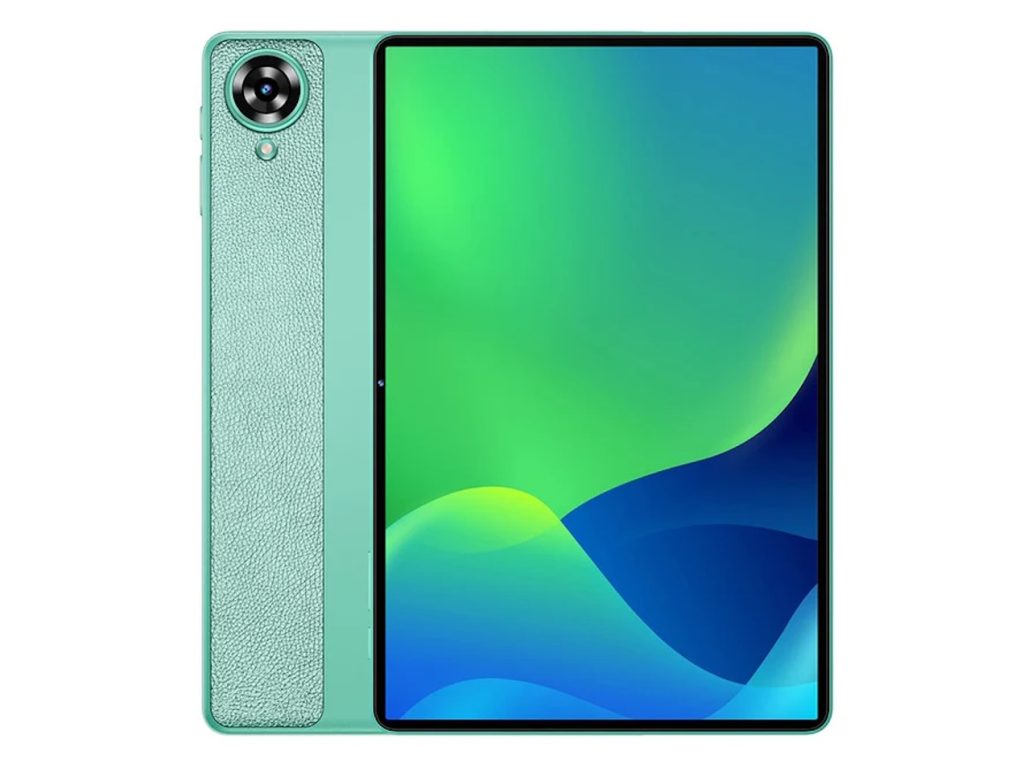
Oukitel has just announced a new tablet. This launch arrives after the OT55 model which was announced back in May 2024 and is dubbed the OT11. It comes with certain similar specs as the OT55, so let’s have a look at the brand’s latest tablet.
Oukitel OT11 Specs
The company’s OT11 model appears to be an entry-level tablet for basic use. This means that it wasn’t built to fulfill a particular purpose. It is equipped with the UNISOC Tiger T606 SoC, which is a chipset often found in budget grade mobile devices. This processor is paired with GB of RAM, but the company is advertising up to 16GB of RAM thanks to virtual RAM expansion. For storage, you get 128GB, which can be expanded using a microSD card slot.
Oukitel OT11 is an Android tablet and it runs on the latest Android 14 operating system out of the box. Although, it’s unclear how many major software upgrades this tablet will receive in the future. The device sports a tall 11-inch display that is certified with Widewine L1 certification. This basically means that you can enjoy content from popular streaming platforms like Netflix and Amazon Prime Video at full resolution. It weighs 524 grams in weight and measures 8mm in thickness.
This tablet houses a quad loudspeaker setup that faces the front. A massive 8,000mAh battery pack powers this device and the brand promises up to 10 hours of web browsing on a single full charge. For optics, you get a 13-megapixel camera on the rear and an 8-megapixel selfie shooter on the front. Other notable features include Dual SIM support, stylus, and face unlock for added security. Pricing and availability regarding the Oukitel OT11 is still at large, but we can expect it to carry a price tag of around 200 US Dollars.
Realme has just announced the latest budget smartphone from its C series in India. The Realme C63 was officially launched in Indonesia back in May 2024, and now, the model has been released in the Indian market. So here is everything you need to know about its specs, pricing, and more.
Realme C63 Specs
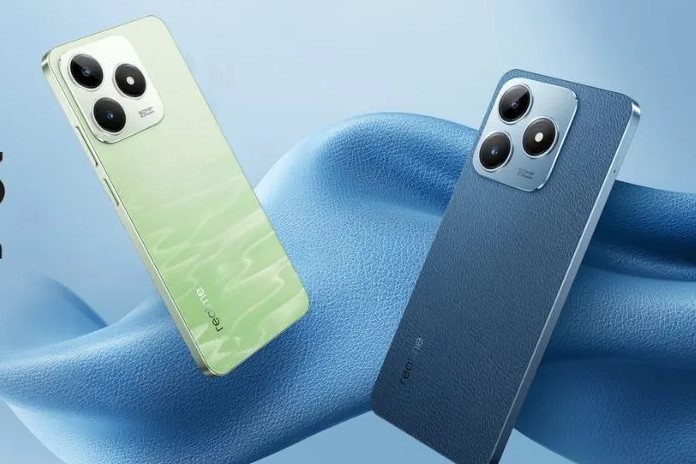
The Realme C63 sports a tall 6.74-inch IPS LCD panel that offers HD+ resolution, 90Hz refresh, a 180Hz touch sampling rate, and up to 450 nits of peak brightness. Under the hood, it is equipped with UNISOC T612 SOC, which is paired with 4GB of LPDDR4X RAM and 128GB of internal storage. This model also supports a microSD card slot that allows for up to 2TB of storage expansion. Notably, it even comes in a vegan leather option.
Realme C63
A large 5,000mAh battery pack powers this device and it also supports 45W wired fast charging. Realme C63 runs on the Android 14 OS based Realme UI custom skin out of the box. For optics, you get a 50-megapixel primary camera along with a depth sensor on the rear. Meanwhile, the front houses an 8-megapixel shooter for selfies and video calls. Other notable features include Dual SIM support, a 3.5mm headphone jack, and a side mounted fingerprint scanner.
Pricing and Availability
The Chinese smartphone maker launched the Realme C63 in India in two color options, namely Jade Green and Leather Blue. As the name suggests, the Blue option uses faux leather at the back for a more premium feel. The device comes in a single 4GB + 128GB variant, which costs 8,999 INR (roughly 108 US Dollars). The first sale of this device will kick off on 3rd July 2024. This device will be available via the brand’s official website, Flipkart, and offline retail stores as well.
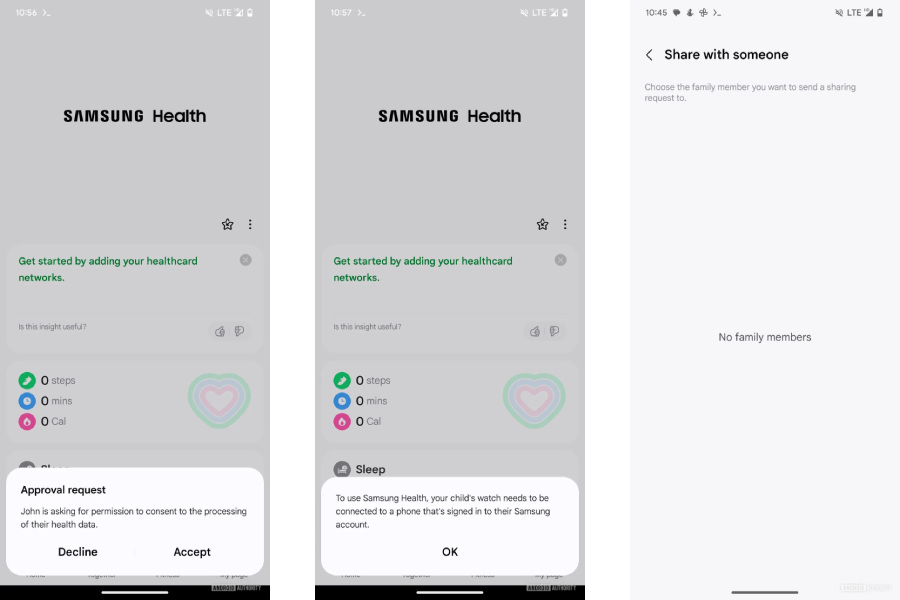
Samsung Health, a popular fitness and health tracking app for Galaxy phones, is taking a tentative step into the realm of family health monitoring.
According to a report by Android Authority, Samsung is prepping a feature that allows users to share their health data with others, likely parents or caregivers who need to keep an eye on children or elderly relatives.
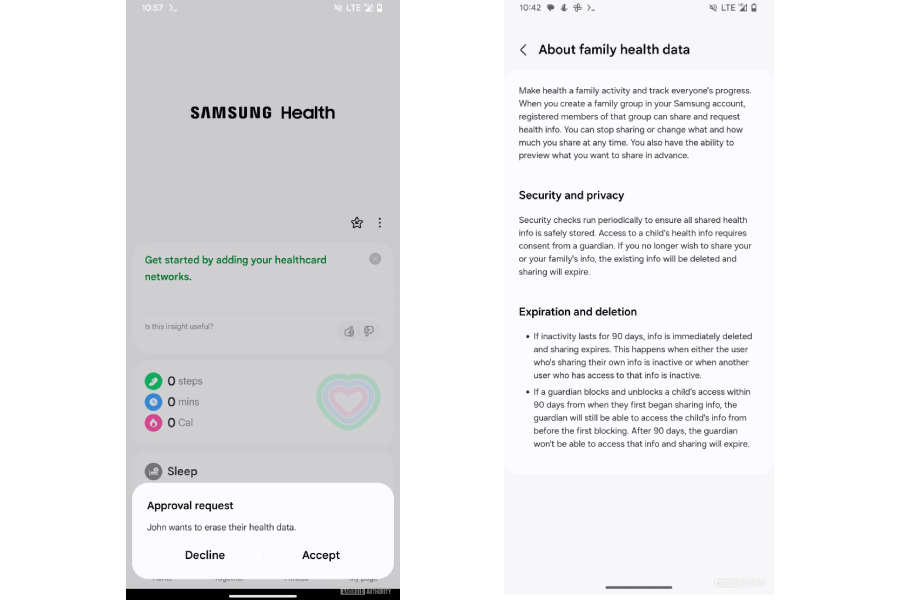
While this might raise privacy concerns, Samsung seems to be taking a measured approach. The report suggests users will have granular control over what data is shared, with the ability to stop sharing entirely whenever they choose. Additionally, safeguards are apparently in place to ensure that only authorized users can access the information.
The screenshots from the report suggest that children (or presumably elderly users) will need a Galaxy phone to participate in data sharing from their Galaxy Watch. This is to likely tie users into Samsung’s ecosystem, requiring them to be fully invested in the brand’s hardware for this specific feature.
As for the children’s health data, it reportedly requires explicit consent from a parent or guardian’s account. There’s also mention of an inactivity clause where if the user sharing data or accessing data remains inactive for 90 days, the sharing will automatically stop, and the shared data will be deleted.
The report further suggests this feature might not be exclusive to the upcoming Galaxy Ring or Watch. Samsung may keep it limited to newer smartwatches for a while before rolling it out to older Galaxy Watches.
This upcoming feature positions Samsung Health as a more comprehensive health management platform. It remains to be seen how effectively the data sharing will be implemented and how users will receive alerts or insights based on the shared information. Regardless, this move signifies Samsung’s growing focus on health and wellness within its ecosystem.
Oppo recently confirmed that the Reno 12 series is set to launch in India soon. The devices have been teased and also seen on landing pages on Flipkart. However, no official release date was shared. Now, a fresh report has claimed that the Reno 12 series will be arriving in the region next week. So here are all the details.
Oppo Reno 12 series India launch date
According to a report from TheTechOutlook, sources close to the matter have claimed that the Reno 12 and Reno 12 Pro will be launching in India on 12th July 2024. Based on what we know so far, the base Oppo Reno 12 5G model will be available with 8GB of RAM and 256GB of internal storage. Meanwhile, the higher end Reno 12 Pro 5G will launch in 12GB + 256GB and 12GB + 512GB storage options.
Reno 12 Pro
In our previous reports, we covered the storage options of the two devices. The color options of the upcoming Reno 12 series were also revealed. Oppo’s Reno 12 is set to drop in India on Sunset Peach, Astro Silver, and Matte Brown. On the other hand, the Reno 12 Pro will come in just two color variants, namely Sunset Gold and Space Brown. To recall, the Reno 12 has a dual curved screen, while the Pro model comes with a quad curved display. These devices were first launched in China back in May 2024.
The brand has confirmed that both phones will house a large 5,000mAh battery pack, which supports 80W wired fast charging. Oppo will launch the Reno 12 series with various AI powered features. This includes the AI Best Face feature, which recognizes human expressions, and corrects closed eyes in photos, while the AI Eraser 2.0 uses generative AI to remove background distractions with high accuracy. Keep in mind that this is still just an unconfirmed report, so take this news with a pinch of salt and stick around for more updates.
Samsung‘s upcoming Galaxy Ring is expected to be unveiled on July 10th at their Unpacked event. While the company has revealed the design of the wearable, details on its health-tracking features are still limited.
However, an APK teardown of the latest Samsung Health app by Android Authorityhas shed some light on the Galaxy Ring’s features.
Unsurprisingly, basic health tracking will be a core function. Users will be able to monitor heart rate and stress levels and can view this data directly within the Samsung Health app which has dedicated interfaces for data visualization.
In addition to basic tracking, the Galaxy Ring will also offer more advanced health metrics. The app hints at features like skin temperature measurement and menstrual cycle prediction.
Interestingly, the Galaxy Ring will also be able to detect snores. However, similar to the Galaxy Watch, it seems that you will need a nearby, charging phone.
Snore tracking on the Galaxy Watch uses the phone’s microphone to record audio and timestamps for snoring and heavy breathing events. The Galaxy Ring is expected to work in a similar manner.
That’s it in terms of health-tracking features. So far, we know that the Galaxy Ring will come in nine different sizes, ranging from 5 to 13, with battery capacity varying by size.
Rings in sizes 5 to 7 will have a 17 mAh battery, sizes 8 to 11 will have an 18.5 mAh battery, and the largest sizes, 12 and 13, will feature a 22.5 mAh battery.
Speaking of size, a report from May revealed that if you’re unsure about the perfect fit, Samsung might send you a sizing kit before you finalize your order.
This kit likely includes sample rings in standard US sizes, allowing you to determine which one fits best. Once you’ve found your ideal size, you’ll need to confirm it on the order page before receiving an email confirmation and shipment of your Galaxy Ring.
Realme continues to offer new devices to users. The company continues the strong rise in the smartphone sector. In this direction, this company wants to take firm steps forward in the tablet industry. Gizmochina makes an interesting discovery. We reveal that Realme is working on introducing a new tablet.
New Realme Pad spotted
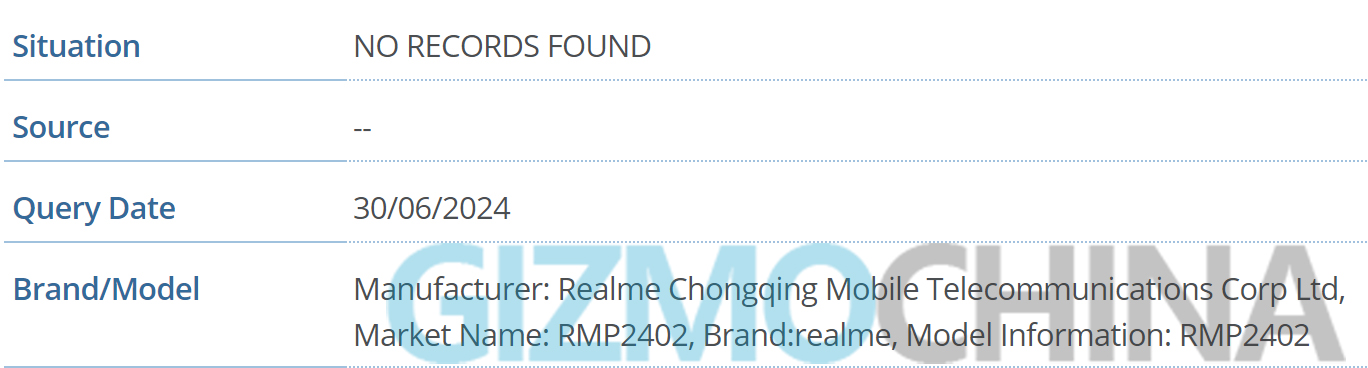
Gizmochina has spotted Realme’s new tablet in the IMEI database with the model number “RMP2402″. We don’t have clear information about this tablet. However, we expect this tablet to be the Realme Pad 3. The new tablet is certain to offer SIM card support. Also, the tablet will be better than the recently introduced Realme Pad 2. Here are the features of Realme Pad 2:
Realme Pad RMP2402
Realme Pad 2 comes with an 11.5-inch IPS display with a 120Hz refresh rate. Powered by the MediaTek Helio G99 chipset, it offers up to 8GB of RAM and up to 256GB of storage. There are 8MP cameras on both the back and front. Also, the device packs a massive 8360mAh battery. This battery can be easily charged with 33W fast charging support. Realme Pad 2 comes out of the box with the Realme UI 4 interface based on Android 13. Also, the SIM card is available to make calls and connect to the internet as you wish.
Realme aims to offer a better experience to users with the new tablet. With this new product, the brand aims to increase market share and meet the expectations of users. We don’t know when the tablet will be introduced. However, the tablet seems to be making a name for the technology world.
Xiaomi is gearing up to officially introduce the highly anticipated Redmi K80 and K80 Pro. Gizmochina recently spotted both models in the IMEI database, and this signals the upcoming launch of the Redmi K80 series in the near future. These new smartphones promise to bring significant enhancements and new features compared to their predecessors, the Redmi K70 and K70 Pro.
Redmi K80 and K80 Pro Spotted
The Redmi K80 and K80 Pro will soon be officially announced, marking the next evolution in Xiaomi’s popular K series. The IMEI database reveals the model numbers for these devices: “24122RKC7C” for the Redmi K80 and “24127RK2CC” for the K80 Pro. These upcoming smartphones are set to offer significant upgrades over the K70 series. Also, it’s worth noting that the Redmi K80 will be introduced in the global market as the POCO F7 Pro.
Redmi K80 24122RKC7CRedmi K80 Pro 24127KC2CC
The previous Redmi K70 and K70 Pro models were equipped with a 6.67-inch OLED display featuring a 120Hz refresh rate, a 50MP main camera, and a 16MP front camera. The K70 was powered by the Snapdragon 8 Gen 2 processor, while the K70 Pro boasted the Snapdragon 8 Gen 3 chipset.
For the new series, the Redmi K80 will include the Snapdragon 8 Gen 3 chipset, and the flagship K80 Pro will have the Snapdragon 8 Gen 4. These upgrades suggest that the K80 series will deliver more powerful performance and innovative features compared to the K70 series. However, detailed specifications for the Redmi K80 and K80 Pro remain under wraps.
Although the official launch date for the Redmi K80 and K80 Pro has yet to be announced, they are expected to be unveiled in November. The new models are expected to capture significant attention and set new standards in the smartphone market. Stay tuned for more updates as we eagerly await the official introduction of the Redmi K80 and K80 Pro models.
Huawei recently unveiled the MatePad SE 11 Vitality Edition in China, which is equipped with the Kirin 710A chipset. Today, the brand has announced a new tablet dubbed the MatePad SE 11 2024 for the home market. The new tablet has arrived with a starting price of 1,299 Yuan (~$180). Here is a look at the specifications, features, and price of the device.
Huawei MatePad SE 11 (2024) specifications and features
Huawei MatePad SE 11 (2024)
The MatePad SE 11 (2024) houses an 11-inch IPS LCD panel that offers a resolution of 1920 x 1200 pixels, a 60Hz refresh rate, 207ppi pixel density, and 400 nits of brightness. With slim bezels, the tablet promises an 85 percent screen-to-body ratio.
Under the hood, the MatePad SE 11 (2024) features the Snapdragon 685 chipset. The device has 8 GB of RAM and 128 GB / 256 GB of built-in storage. It packs a 7,700mAh battery that supports 22.5W fast charging.
The MatePad SE 11 (2024) tablet has a 5-megapixel camera on the front. Its back panel has an 8-megapixel camera. Since it is a Wi-Fi-enabled device, it lacks support for cellular connectivity. The tablet offers other features, such as Bluetooth 5.1 and HarmonyOS 4.0. Lastly, it measures 252.3 x 163.8 x 6.9mm and weighs 475 grams.
Huawei MatePad 11 SE (2024) price and availability
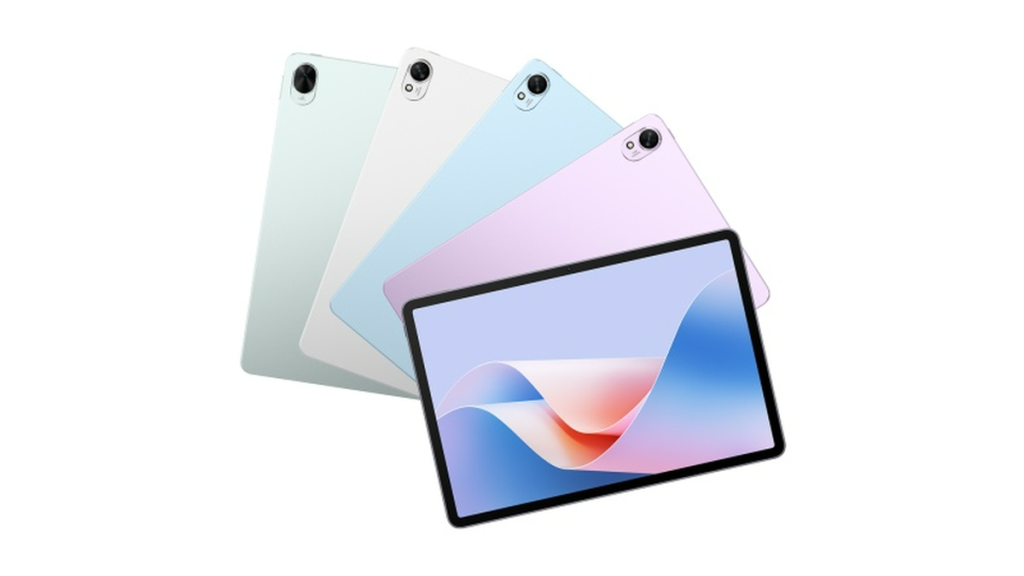
The 8GB+128GB and 8GB+256GB variants of the Huawei MatePad 11 SE (2024) are listed for 1,299 Yuan (~$180) and 1,499 Yuan (~$205), respectively. It is listed for purchase on Vmall in two color options, such as Space Gray and Star Ocean Blue. However, the above image suggests that the tablet may also come in light green, white, and light purple color options.
We use cookies on our website to give you the most relevant experience by remembering your preferences and repeat visits. By clicking “Accept”, you consent to the use of ALL the cookies.
This website uses cookies to improve your experience while you navigate through the website. Out of these, the cookies that are categorized as necessary are stored on your browser as they are essential for the working of basic functionalities of the website. We also use third-party cookies that help us analyze and understand how you use this website. These cookies will be stored in your browser only with your consent. You also have the option to opt-out of these cookies. But opting out of some of these cookies may affect your browsing experience.
Necessary cookies are absolutely essential for the website to function properly. This category only includes cookies that ensures basic functionalities and security features of the website. These cookies do not store any personal information.
Any cookies that may not be particularly necessary for the website to function and is used specifically to collect user personal data via analytics, ads, other embedded contents are termed as non-necessary cookies. It is mandatory to procure user consent prior to running these cookies on your website.