
Add GIZMOCHINA as Preferred Source on Google
The smartphone market changed a lot in the last decade. Most of the top brands who dominated the scene more than 10 years ago disappeared from the top smartphone manufacturers rankings and made way for new companies, especially Chinese ones. But a few old players are still in the scene. Once in a while, some of the old phone manufacturers release smartphone reboots to attract the customers’ attention, especially the nostalgic ones. In this article, we collected all the coolest smartphone reboots released in 2019 and 2020 which gave new life to old and iconic phone series.
Cool Smartphone Reboots 2019 and 2020
Apple iPhone SE 2020
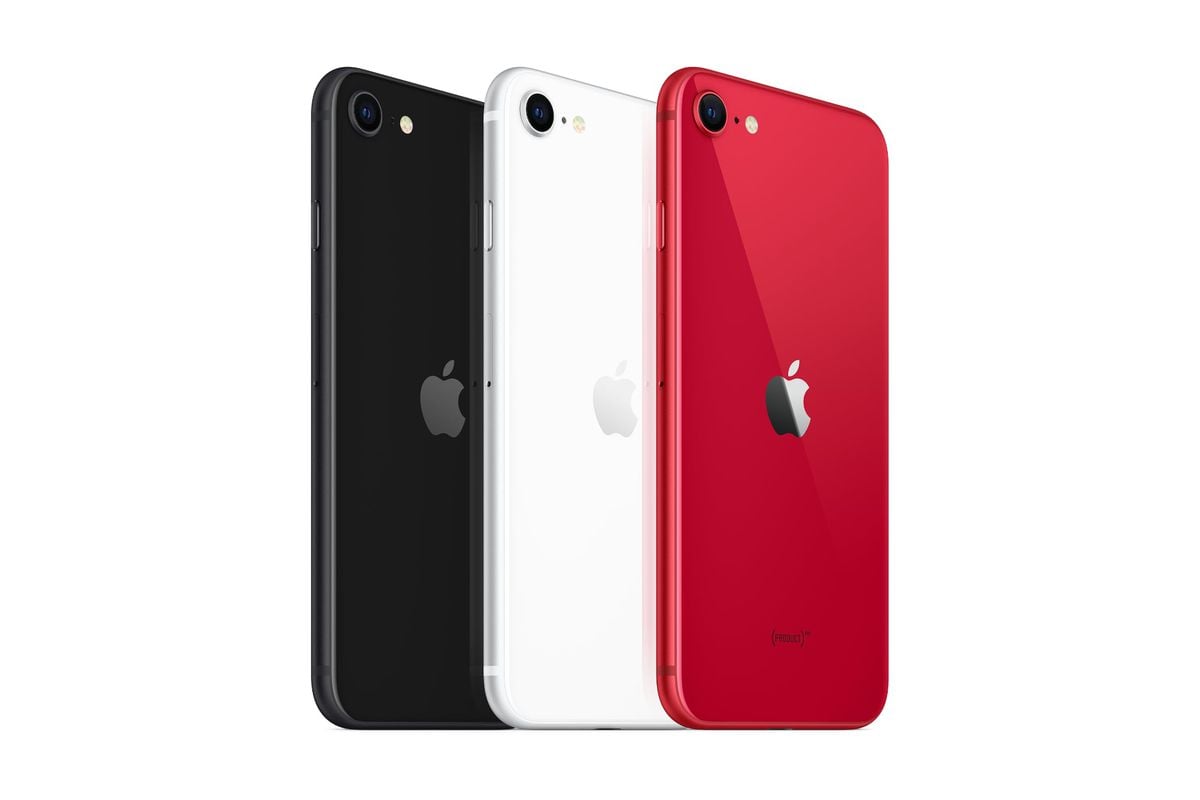
The latest smartphone reboot released in 2020 is the new iPhone SE. It is an upgraded version of the iPhone SE released back in 2016 and it is the most compact and affordable last-generation Apple phone. Unlike the original iPhone SE, it has the same design as the iPhone 8 released in 2017, the same dimensions and even the same weight. It is the only last-generation Apple device with thick bezels around the display and Touch ID. The handset comes with a very compact 4.7-inch display and it can be considered as the most compact modern flagship. But despite its old school design, it packs flagship-class hardware including the same processor as the iPhone 11 series: the Apple A13 Bionic. You even get the same main camera as the iPhone 11 lineup (but there are no secondary sensors). The only real downside is the battery which comes with the same 1821 mAh capacity of the iPhone 8.
Nokia 8110
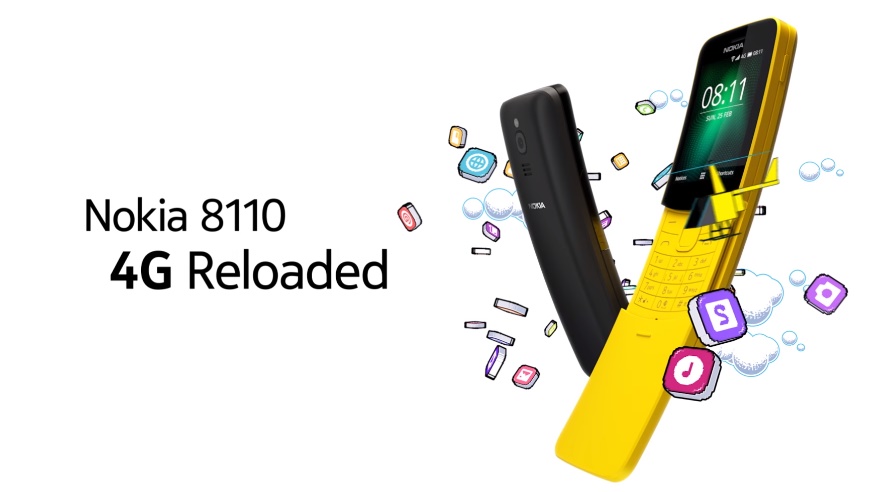
The new Nokia 8110 4G is a revival of the “banana phone”: the iconic 8110 released in 1996 and used in the famous movie “The Matrix” which debuted in 1999. The original Nokia 8110 had a monochromatic display and a slider protecting the keyboard which would activate the phone once opened. And you get the same slider with the new Nokia 8110 4G, but there is no monochromatic display anymore. You get a wider 2.4-inch color display with a resolution of 240 x 320 pixels. But this is not a real smartphone, neither it comes with touch screen. It works with a physical 3×4 keyboard. Despite not being a smartphone, it still comes with the support to 4G networks and a smart operating system. We are talking about KaiOS: a fork of Firefox OS which supports several apps including WhatsApp and Facebook.
Motorola Razr
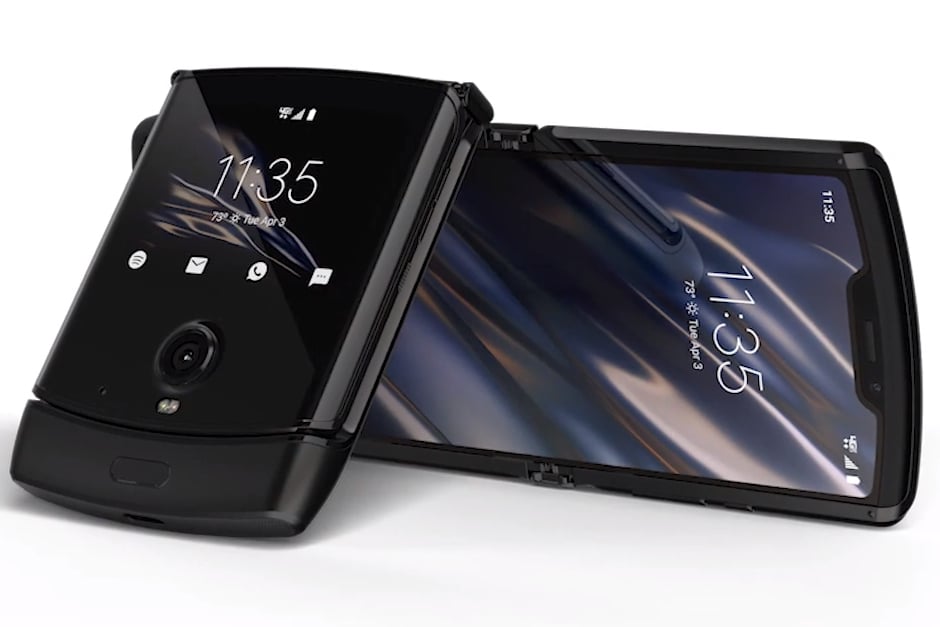
The most impressive smartphone reboot released in the last years is the new Motorola Razr. It is a revival of the Motorola Razr V3 clamshell phone from the early 2000s, as you can easily notice by looking it from the outside. But on the inside, it is a foldable phone with a foldable screen! The handset sports a foldable display with a 6.2-inch diagonal just like a typical smartphone, but it can fold in half and become extremely compact! It also comes with a smaller external display allowing the user to perform several operations such as checking notifications, shooting selfies, answering calls, and more. The Razr is based on the mid-range Snapdragon 710 mobile platform and it costs $1,500/€1,500.
Nokia 5310
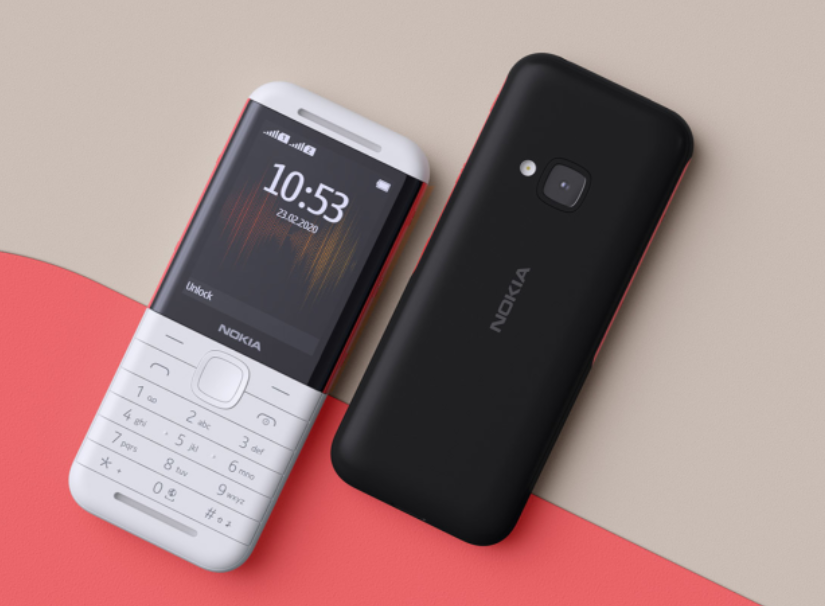
One of the most interesting retro phones brought back to life is the Nokia 5310: a revival of the Nokia 5310 XpressMusic from 2007. Just like its old sibling, the new phone brings the same black/red and white/red paint jobs, as well as hose amazing side-mounted keys to control the music player. The Nokia 5310 (2020) is a feature phone with the Series 30+ operating system, a physical 3×4 keyboard, and a 2.4-inch display. It offers a 16 MB internal storage with a micro SD slot allowing to expand it up to 32 GB, front-facing stereo speakers, Bluetooth and a 3.5 mm jack. Further, it packs a 1,200 mAh battery lasting up to 7.5 hours of talk time and up to 30 days in standby. It only supports 2G and it costs €39. Besides the Nokia 5310, it is impossible for us not to mention the Nokia 2720 Flip, a clamshell phone which runs KaiOS just like the Nokia 8110, packs a GPS + GLONASS receiver and features LTE connectivity. A clamshell feature phone offering smartphone features and providing an even better experience than 8110.
HTC Wildfire X
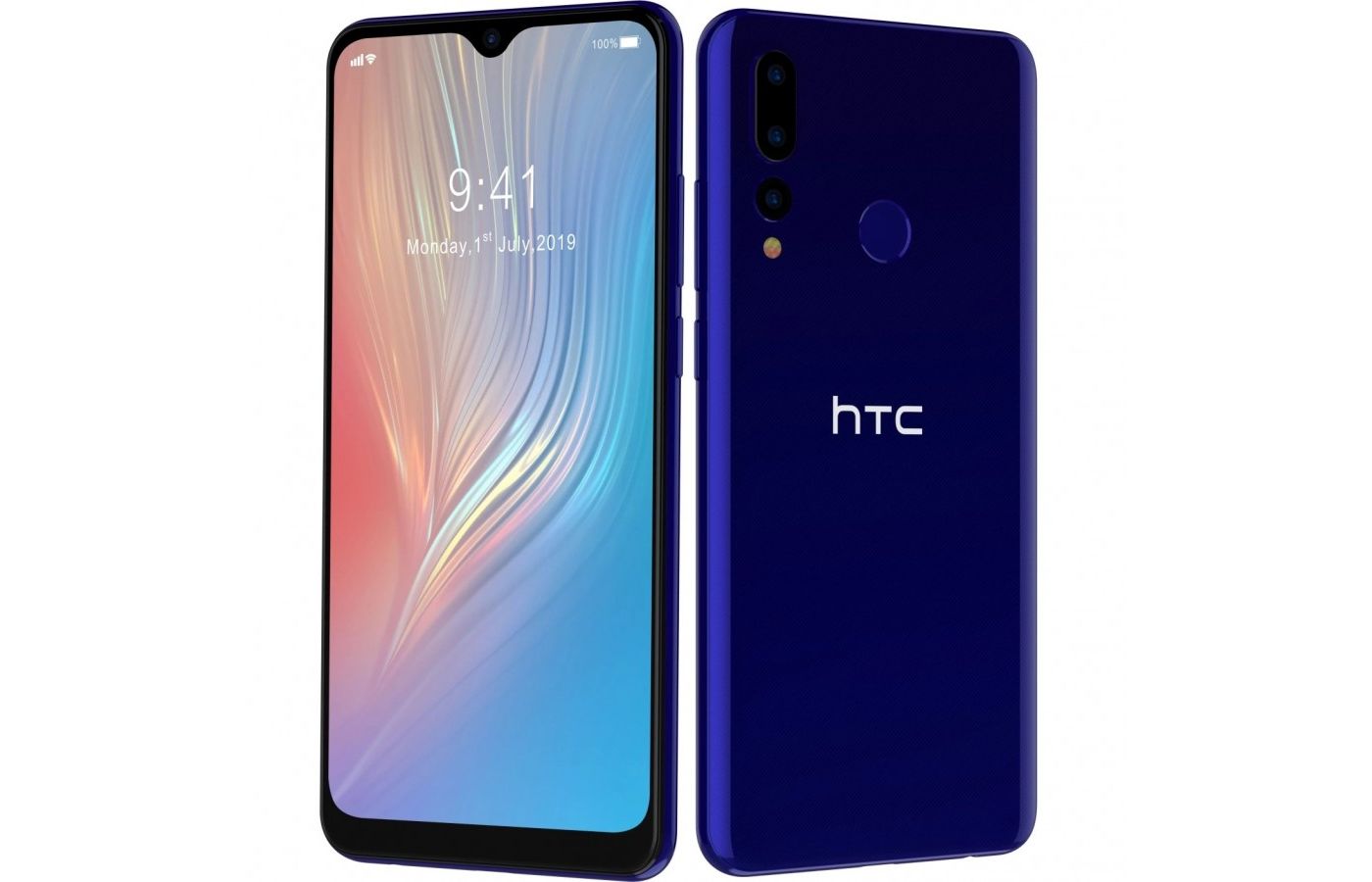
Another classic reborn was launched by HTC in the second half of 2019: the company resurrected the famous Wildfire series which made its success at the beginning of the last decade by launching the Wildfire X. The phone is not manufactured by HTC but it is made by a Chinese company named InOne Smart Technology which licensed the brand for the Indian market. The handset packs entry-level specifications, including a 6.2-inch HD+ display, an Helio P22 chipset and up to 4 GB of RAM paired with up to 128 GB of internal storage. But it has a modern design with a waterdrop notch and narrow bezels.
Nokia 9 PureView
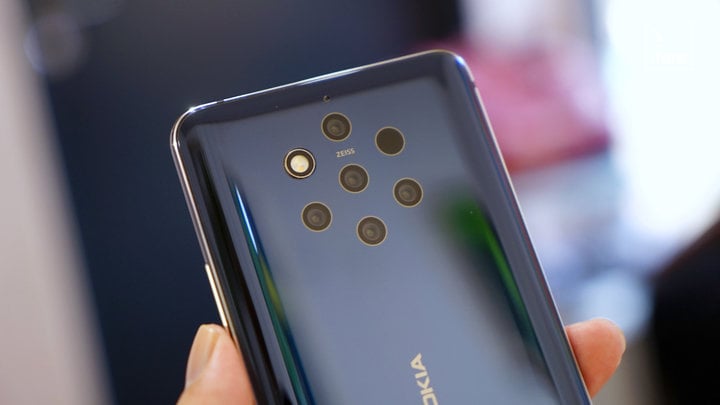
The Nokia 808 PureView was a smartphone released in 2012 which offered astonishing camera specifications. One of the first phones with a camera sensor sporting a resolution above 40 Megapixels and naturally one of the most innovative devices when it came to cameras. In the Windows Phone era, it was followed by the Nokia 1040 PureView, another device known for its amazing 41 MP camera. The Nokia 9 PureView is not a smartphone reboot, but it brings the PureView series back to life with innovative cameras once again. Nokia 9 PureView is the last top-tier flagship released by Nokia and it is made for photography enthusiasts. It sports a 12 MP Penta-camera with 2 RGB sensors and 3 monochromatic cameras (plus a TOF 3D sensor) working simultaneously to capture the best shots. It also packs a powerful Snapdragon 845 chipset and a Quad HD+ P-OLED display.
We think the whole Realme brand deserves a spot among the honorable mentions. A lot of people think Realme is just a name copied from Redmi, but it is not so. The brand already existed in 2010: do you remember the Oppo Real series? It included a device advertised as RealMe.
After 8 years, Oppo re-launched the brand and it quickly entered the top 7 in the ranking of the best global smartphone manufacturers. It is not exactly a smartphone reboot, but we also want to mention the Xiaomi Mi Note 10. If we consider when Xiaomi is born (2010), the Mi Note 10 is indeed a revival of the Mi Note series which was discontinued in 2016.
UP NEXT: Opinion: A refreshed Pixel 2 may be the perfect rival to take on the iPhone SE 2020



Comments