
Add GIZMOCHINA as Preferred Source on Google
Oppo is bringing its Reno 12 series to India, with a launch scheduled for July 12th. The series includes two models – the Oppo Reno 12 and the Oppo Reno 12 Pro. Since these smartphones have already been launched globally, we’re familiar with their specifications. Let’s take a quick look at them.
Oppo Reno 12, Reno 12 Pro Specifications
Both smartphones boast a large 6.7-inch FHD+ display with a 120Hz refresh rate, built with a flexible AMOLED panel. Oppo describes this display as “Quad-Micro Curved Infinite View,” which translates to slim bezels and an impressive 93.5% screen-to-body ratio.

The Reno 12 Pro comes in Sunset Gold and Space Brown, featuring a two-toned back panel. The upper part uses Oppo Glow technology for a smudge-resistant finish, while the lower half sports a glossy look with the Oppo branding. The vanilla model is available in Sunset Peach, Matte Brown, and Astro Silver.
For durability, Oppo says the smartphone has “All-Round Armour protection technology” for improved drop and impact resistance. The chassis is made from a high-strength alloy for added sturdiness. Both devices are IP65-rated for dust and water resistance.
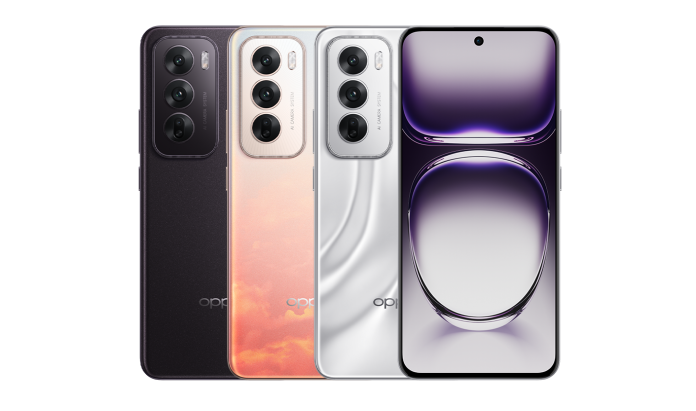
Powering the Oppo Reno 12 series is the MediaTek Dimensity 7300 system-on-chip. This hardware is complemented by Oppo’s suite of AI features, including AI Clear Face, AI Writer, AI Recording Summary, and AI Eraser 2.0.
Both models pack a 5000mAh battery with support for 80W SUPERVOOC wired charging, promising a full charge from 0% in just 46 minutes.
In terms of cameras, the Oppo Reno 12 Pro leads with a triple-camera setup: a 50MP Sony LYT-600 primary sensor with optical image stabilization (OIS), a 50MP telephoto camera using the Samsung JN5 sensor for 2x zoom, and an 8MP Sony IMX 355 ultra-wide-angle lens.
The standard Oppo Reno 12 replaces the telephoto with a 2MP macro lens but keeps the 50MP primary sensor and the 8MP ultra-wide-angle lens. For selfies, the Pro model features a 50MP camera, while the standard model sports a 32MP sensor.



Comments