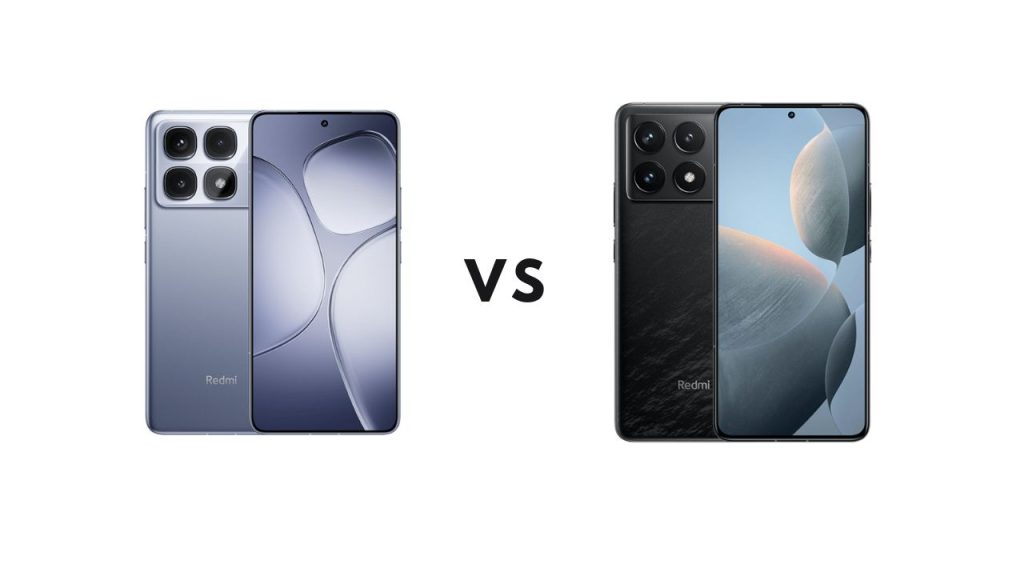
Redmi has expanded its popular K series of smartphones with the new K70 Ultra (Check out our review). This is the latest high-end device from the lineup and sits right alongside the Redmi K70 Pro. But what’s the difference between the two? Which one is worth buying? Here’s a detailed breakdown.
1. Redmi K70 Ultra vs Redmi K70 Pro: Higher Resolution or Faster Refresh Rate
The display on the Redmi K70 Ultra and K70 Pro are quite similar in many ways. Both of these phones sport a 6.67-inch OLED display that offers 4000 nits of peak brightness, 68 billion colors, and Dolby Vision support. However, the Redmi K70 Pro features a higher 2K resolution on its screen while the K70 Ultra has a 1.5K resolution panel.
This means that you can consume media content at a higher resolution. But the K70 Ultra swings back with a faster 144Hz refresh rate over the 120Hz on the Pro variant. In both regards, the trade offs aren’t notable enough to make a big difference. The 144Hz refresh rate isn’t that much higher, just like the 2K resolution. Although, I’d still prefer the higher resolution as a 6.67-inch display is still pretty tall.
2. MediaTek or Qualcomm
The Redmi K70 Pro is one of Xiaomi’s most powerful smartphones since it packs Qualcomm’s latest and greatest Snapdragon 8 Gen 3 SoC. This is the same chipset that powers most ultra high end Android devices. On the other hand, the K70 Ultra packs MediaTek’s flagship chipset, the Dimensity 9300+. These two chips are the fastest processors in the current market and can handle intensive tasks like gaming fairly easily. So you won’t go wrong with either.
3. Design
From a distance, it is hard to tell the difference between the duo. Only with closer inspection can the slight variations be noticed. They are identical from the front and have a similar camera module on the rear. However, the modules are circular on the K70 Pro and rounded squares on the K70 Ultra. The latter has an aluminum frame and a glass back. This metallic frame can also be found on the Pro model. But a major feature missing on the K70 Pro is the IP rating. It has no official rating, while the Ultra variant offers IP68 for water and dust resistance (up to 2m for 30 min).
4. Camera
Another area with a notable variance is the camera department. The Redmi K70 Pro has a versatile triple camera setup with a 50-megapixel main sensor, a 50-megapixel telephoto telephoto shooter (2x Optical Zoom), and a 12-megapixel ultra wide angle lens. Redmi’s K70 Ultra also features three cameras on the rear but skips the telephoto sensor in favor of a macro shooter. You still get a 50-megapixel primary sensor and an 8-megapixel ultra wide angle lens. The K70 Ultra and K70 Pro house a 20-megapixel and 16-megapixel selfie shooters respectively.
5. Pricing
As of right now, both phones are listed on Giztop with nearly identical price tags. The Redmi K70 Ultra is on sale for 429 US Dollars and the K70 Pro has a 439 US Dollar price tag. For this price, the K70 Pro is a slightly better deal. The camera, processors, design, and display are quite competitive. But the camera options are much better when compared to the K70 Ultra.
We use cookies on our website to give you the most relevant experience by remembering your preferences and repeat visits. By clicking “Accept”, you consent to the use of ALL the cookies.
This website uses cookies to improve your experience while you navigate through the website. Out of these, the cookies that are categorized as necessary are stored on your browser as they are essential for the working of basic functionalities of the website. We also use third-party cookies that help us analyze and understand how you use this website. These cookies will be stored in your browser only with your consent. You also have the option to opt-out of these cookies. But opting out of some of these cookies may affect your browsing experience.
Necessary cookies are absolutely essential for the website to function properly. This category only includes cookies that ensures basic functionalities and security features of the website. These cookies do not store any personal information.
Any cookies that may not be particularly necessary for the website to function and is used specifically to collect user personal data via analytics, ads, other embedded contents are termed as non-necessary cookies. It is mandatory to procure user consent prior to running these cookies on your website.