Add GIZMOCHINA as Preferred Source on Google
As an Amazon Associate, Gizmochina earns from qualifying purchases. Links on this page may earn us a commission at no extra cost to you.
Xiaomi‘s newly announced Redmi Pad Pro is a strong contender in the mid-range Android tablet market. It features a large 12.1-inch IPS LCD display with a smooth 120Hz refresh rate and a respectable peak brightness of 600 nits. The tablet is powered by the Qualcomm Snapdragon 7s Gen 2 processor, a capable mid-range chipset, though not the most advanced.
The tablet’s 10,000mAh battery promises long battery life, and with 33W fast charging, you won’t have to wait long to recharge. However, the camera system is somewhat basic, featuring an 8MP sensor on both the front and back.
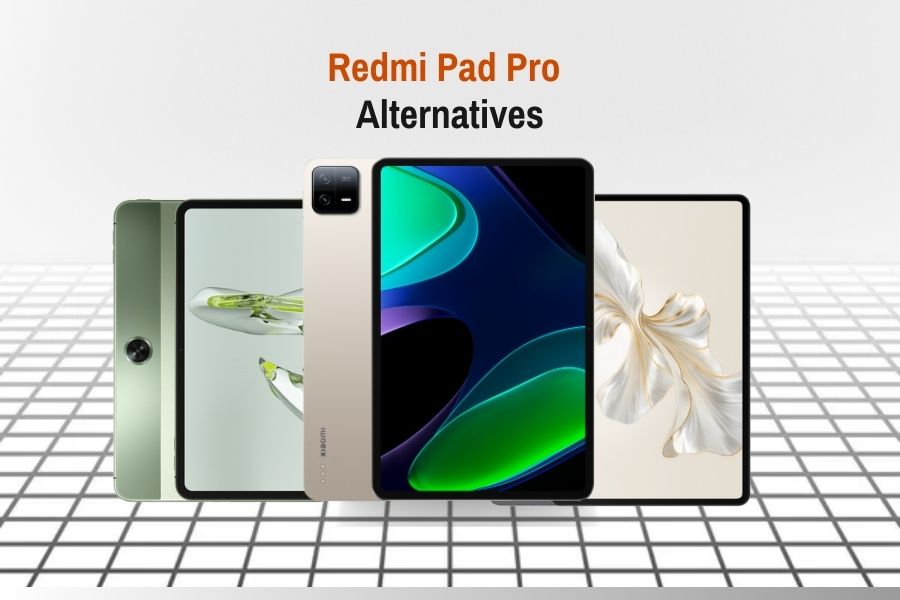
Priced at Rs 21,999 for the base 6/128GB variant, the Redmi Pad Pro offers good value, but there are other compelling options from established brands within the same price range. Let’s explore some of the top alternatives available in the Indian market. Before diving into these alternatives, let’s take a quick recap of the full specifications of the Redmi Pad Pro’s specifications.
| Feature | Redmi Pad Pro |
| Dimensions | 280 x 181.9 x 7.5 mm |
| Weight | 571 g |
| Build | Glass front (Gorilla Glass 3), aluminum frame, aluminum back |
| SIM | No |
| Stylus Support | Yes |
| Display Type | IPS LCD, 68B colors, 120Hz, Dolby Vision, 600 nits (HBM) |
| Size | 12.1 inches |
| Resolution | 1600 x 2560 pixels, 16:10 ratio (~249 ppi) |
| OS | Android 14, HyperOS |
| Chipset | Snapdragon 7s Gen 2 (4 nm) |
| CPU | Octa-core |
| GPU | Adreno 710 |
| Internal Storage | 128GB/256GB |
| RAM | 6GB/8GB |
| Main Camera | 8 MP |
| Selfie Camera | 8 MP |
| 3.5mm Jack | Yes |
| Battery | 10000 mAh, 33W wired |
| Colors | Dark Gray, Blue, Green |
1. Xiaomi Pad 6
The Xiaomi Pad 6 is a familiar face within Xiaomi’s ecosystem. It features a superior Snapdragon 870 5G processor than the Snapdragon 7s Gen 2 in the Redmi Pad Pro. It also comes with LPDDR5 RAM and UFS 3.1 storage, which provides better performance than the LPDDR4X RAM and UFS 2.2 storage found in the Redmi Pad Pro.
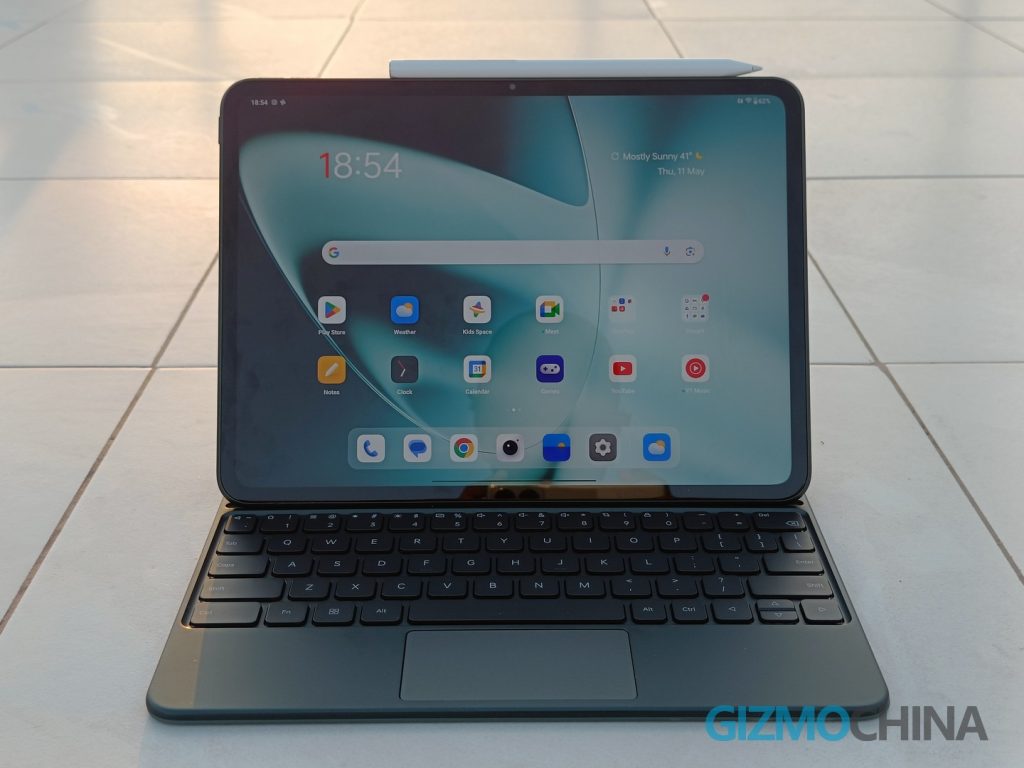
The Pad 6 also has a slightly sharper display that boasts a 144Hz refresh rate, offering smoother visuals. However, these upgrades do come at a cost—the Pad 6 is more expensive than the Redmi Pad Pro.
The latter starts at Rs 21,999 in India, while the Xiaomi Pad 6 is priced at Rs 26,999 for the base model with 6GB of RAM and 128GB of storage. Additionally, it lacks expandable storage and has a smaller 11-inches display compared to Redmi Pad Pro’s 12.1-inches.
| Preview | Product | |
|---|---|---|

|
Xiaomi Pad 6| Qualcomm Snapdragon 870| Powered by HyperOS | 144Hz Refresh Rate| 6GB, 128GB| 2.8K+… | Check Price on Amazon |
Please Note: When you buy something using the links in our articles, we may earn a small commission at no cost to you.
| Feature | Redmi Pad Pro | Xiaomi Pad 6 |
| Dimensions | 280 x 181.9 x 7.5 mm | 254 x 165.2 x 6.5 mm |
| Weight | 571 g | 490 g |
| Build | Glass front (Gorilla Glass 3), aluminum frame, aluminum back | Glass front (Gorilla Glass 3), aluminum frame, aluminum back |
| SIM | No | No |
| Stylus Support | Yes | Yes |
| Display Type | IPS LCD, 68B colors, 120Hz, Dolby Vision, 600 nits (HBM) | IPS LCD, 1B colors, 144Hz, HDR10, Dolby Vision, 550 nits |
| Size | 12.1 inches | 11.0 inches |
| Resolution | 1600 x 2560 pixels, 16:10 ratio (~249 ppi) | 1800 x 2880 pixels, 16:10 ratio (~309 ppi) |
| OS | Android 14, HyperOS | Android 13, MIUI Pad 14 |
| Chipset | Snapdragon 7s Gen 2 (4 nm) | Snapdragon 870 5G (7 nm) |
| CPU | Octa-core | Octa-core |
| GPU | Adreno 710 | Adreno 650 |
| Internal Storage | 128GB/256GB | 128GB/256GB |
| RAM | 6GB/8GB | 6GB/8GB |
| Main Camera | 8 MP | 13 MP |
| Selfie Camera | 8 MP | 8 MP |
| 3.5mm Jack | Yes | No |
| Battery | 10000 mAh, 33W wired | 8840 mAh, 33W wired |
| Colors | Dark Gray, Blue, Green | Black, Blue, Gold |
2. Honor Pad 9
If a large, immersive display is your priority, the Honor Pad 9 matches the Redmi Pad Pro’s 12.1-inch screen size and 120Hz refresh rate. It also features an impressive eight-speaker setup for a richer audio experience. Redmi Pad Pro, on the other hand, has quad speakers.
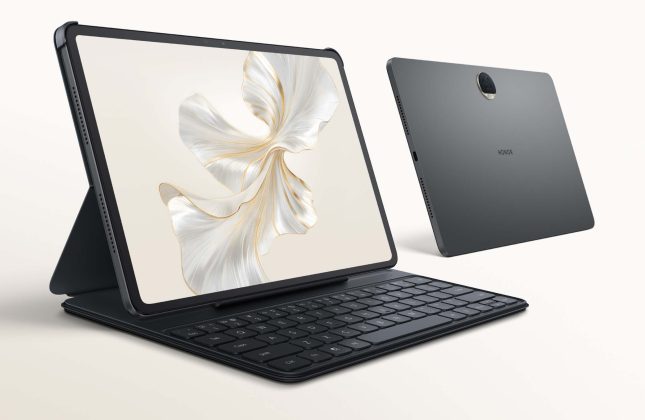
However, the Honor Pad 9 is equipped with a slightly less powerful Snapdragon 6 Gen 1 processor compared to the Redmi Pad Pro. While the Pad 9 handles everyday tasks well, it will not offer the same level of performance as the Redmi Pad Pro, especially for gaming.
Additionally, the Redmi Pad Pro has a larger 10,000mAh battery, providing more extended usage compared to the 8,300mAh battery in the Honor Pad 9. The Honor Pad 9 is priced at Rs 24,999 for the sole 8/256GB variant in India.
| Preview | Product | |
|---|---|---|

|
HONOR Pad 9 with Free Bluetooth Keyboard, 12.1-Inch 2.5K Display, 16GB (8+8GB Extended), 256GB… | Check Price on Amazon |
Please Note: When you buy something using the links in our articles, we may earn a small commission at no cost to you.
| Feature | Redmi Pad Pro | Honor Pad 9 |
| Dimensions | 280 x 181.9 x 7.5 mm | 278.2 x 180.1 x 6.9 mm |
| Weight | 571 g | 555 g or 568 g |
| Build | Glass front (Gorilla Glass 3), aluminum frame, aluminum back | Glass front, aluminum frame, aluminum back |
| SIM | No | Yes (cellular model only) |
| Stylus Support | Yes | Yes |
| Display Type | IPS LCD, 68B colors, 120Hz, Dolby Vision, 600 nits (HBM) | IPS LCD, 1B colors, 120Hz, 500 nits (typ) |
| Size | 12.1 inches | 12.1 inches |
| Resolution | 1600 x 2560 pixels, 16:10 ratio (~249 ppi) | 1600 x 2560 pixels, 16:10 ratio (~249 ppi) |
| OS | Android 14, HyperOS | Android 13, Magic OS 7.2 |
| Chipset | Snapdragon 7s Gen 2 (4 nm) | Snapdragon 6 Gen 1 (4 nm) |
| CPU | Octa-core | Octa-core |
| GPU | Adreno 710 | Adreno 710 |
| Internal Storage | 128GB/256GB | 128GB/256GB/512GB |
| RAM | 6GB/8GB | 8GB/12GB |
| Main Camera | 8 MP | 13 MP |
| Selfie Camera | 8 MP | 8 MP |
| 3.5mm Jack | Yes | No |
| Battery | 10000 mAh, 33W wired | 8300 mAh, 35W wired |
| Colors | Dark Gray, Blue, Green | Gray, Blue, White |
3. Lenovo Tab Plus
The Lenovo Tab Plus is a recent addition to the Indian tablet market. It features a unique 5:3 aspect ratio display which might be more suited for reading but could be less ideal for watching widescreen content.
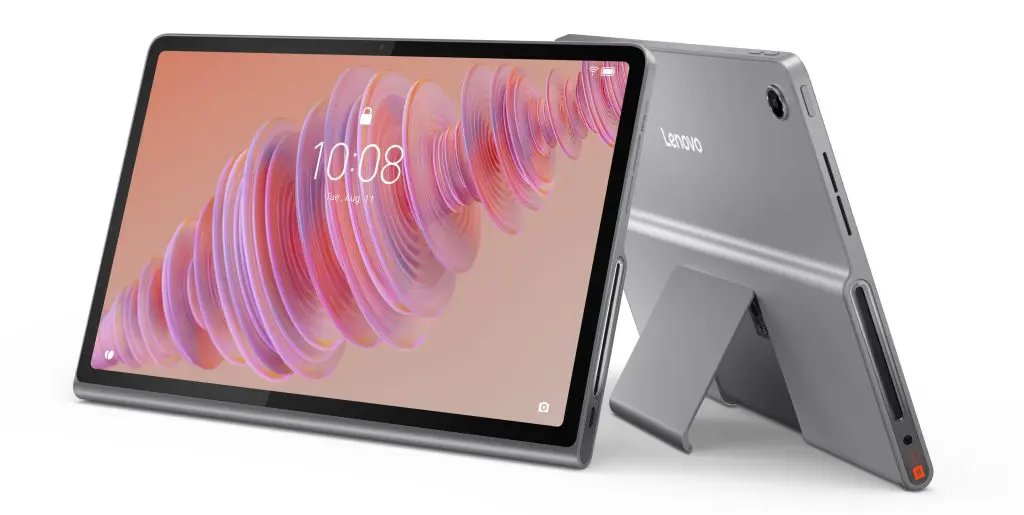
The tablet also boasts a remarkable 26W stereo sound system with eight JBL Hi-Fi speakers, including four matrix tweeters and four force-balanced woofers housed in four-speaker boxes with a combined volume of 22cc. This setup provides deep bass and clear treble, further enhanced by Dolby Atmos and high-resolution audio support.
The Lenovo Tab Plus also offers a built-in kickstand and supports 45W fast charging. However, it compromises on performance with its MediaTek Helio G99 chipset and a smaller 8,600mAh battery compared to the Redmi Pad Pro. Additionally, it lacks features like expandable storage and a fingerprint sensor. The Lenovo Tab Plus is priced at Rs 22,999 in India for the 8/256GB variant.
| Preview | Product | |
|---|---|---|

|
Lenovo Tab Plus with Octa JBL Hi-Fi Speakers| 8 GB RAM, 128 GB ROM| 11.5 Inch, 2K, 90 Hz Refresh|… | Check Price on Amazon |
Please Note: When you buy something using the links in our articles, we may earn a small commission at no cost to you.
| Feature | Redmi Pad Pro | Lenovo Tab Plus |
| Dimensions | 280 x 181.9 x 7.5 mm | 268.3 x 174.3 x 7.7 – 13.6 mm |
| Weight | 571 g | 650 g |
| Build | Glass front (Gorilla Glass 3), aluminum frame, aluminum back | Unspecified |
| SIM | No | No |
| Stylus Support | Yes | Yes |
| Display Type | IPS LCD, 68B colors, 120Hz, Dolby Vision, 600 nits (HBM) | IPS LCD, 90Hz, 400 nits (typ) |
| Size | 12.1 inches | 11.5 inches |
| Resolution | 1600 x 2560 pixels, 16:10 ratio (~249 ppi) | 1200 x 2000 pixels, 5:3 ratio (~203 ppi) |
| OS | Android 14, HyperOS | Android 14 |
| Chipset | Snapdragon 7s Gen 2 (4 nm) | Mediatek Helio G99 (6 nm) |
| CPU | Octa-core | Octa-core |
| GPU | Adreno 710 | Mali-G57 MC2 |
| Internal Storage | 128GB/256GB | 128GB/256GB |
| RAM | 6GB/8GB | 8GB |
| Main Camera | 8 MP | 8 MP |
| Selfie Camera | 8 MP | 8 MP |
| 3.5mm Jack | Yes | Yes |
| Battery | 10000 mAh, 33W wired | 8600 mAh, 45W wired |
| Colors | Dark Gray, Blue, Green | Luna grey |
4. OnePlus Pad Go
The OnePlus Pad Go positions itself as a balanced offering. It features a decent 11.35-inch display with a 90Hz refresh rate and a resolution of 1720 x 2408. The MediaTek Helio G99 processor is the same as the Lenovo Tab Plus, offering a balance between performance and battery life.

It keeps things simple with 128GB or 256GB storage options paired with 8GB of RAM and includes a microSD card slot for expandable storage. The OnePlus Pad Go also has a cellular connectivity option and has a starting price of Rs. 19,999 in India.
| Preview | Product | |
|---|---|---|

|
OnePlus Pad Go 28.85cm (11.35 inch) 2.4K 7:5 Ratio ReadFit Eye Care LCD Display, Dolby Atmos Quad… | Check Price on Amazon |
Please Note: When you buy something using the links in our articles, we may earn a small commission at no cost to you.
| Feature | Redmi Pad Pro | OnePlus Pad Go |
| Dimensions | 280 x 181.9 x 7.5 mm | 255.1 x 188 x 6.9 mm |
| Weight | 571 g | 532 g |
| Build | Glass front (Gorilla Glass 3), aluminum frame, aluminum back | Unspecified |
| SIM | No | Yes |
| Stylus Support | Yes | Yes |
| Display Type | IPS LCD, 68B colors, 120Hz, Dolby Vision, 600 nits (HBM) | IPS LCD, 90Hz, 400 nits (typ) |
| Size | 12.1 inches | 11.35 inches |
| Resolution | 1600 x 2560 pixels, 16:10 ratio (~249 ppi) | 1720 x 2408 pixels (~260 ppi) |
| OS | Android 14, HyperOS | Android 13, OxygenOS 13.2 |
| Chipset | Snapdragon 7s Gen 2 (4 nm) | Mediatek Helio G99 (6 nm) |
| CPU | Octa-core | Octa-core |
| GPU | Adreno 710 | Mali-G57 MC2 |
| Internal Storage | 128GB/256GB | 128GB/256GB |
| RAM | 6GB/8GB | 8GB |
| Main Camera | 8 MP | 8 MP |
| Selfie Camera | 8 MP | 8 MP |
| 3.5mm Jack | Yes | No |
| Battery | 10000 mAh, 33W wired | 8000 mAh, 33W wired |
| Colors | Dark Gray, Blue, Green | Twin Mint |
5. Verdict
Ultimately, the best alternative for the Redmi Pad Pro depends on your individual needs and priorities. If you prioritize raw processing power and a high refresh rate display, the Xiaomi Pad 6 offers a significant upgrade. However, its higher price tag might be a deterrent for some users.
For media consumption enthusiasts, the Honor Pad 9’s eight-speaker setup delivers a compelling audio experience. If you prefer reading e-books, the Lenovo Tab Plus might be a good choice. Budget-conscious users could consider the OnePlus Pad Go, which offers a balanced feature set and cellular connectivity at a competitive price.
By considering these aspects and comparing the detailed specifications, you can decide which tablet best suits your needs and budget in the Indian market.