Add GIZMOCHINA as Preferred Source on Google
As an Amazon Associate, Gizmochina earns from qualifying purchases. Links on this page may earn us a commission at no extra cost to you.
Motorola‘s Edge lineup has become a labyrinth of ever-so-slightly-different phones, and the recently launched Edge 50 and Edge 50 Pro are no exception. Both phones share a lot of DNA — the same big, beautiful pOLED display, and a similar camera system, among other closely matched features.
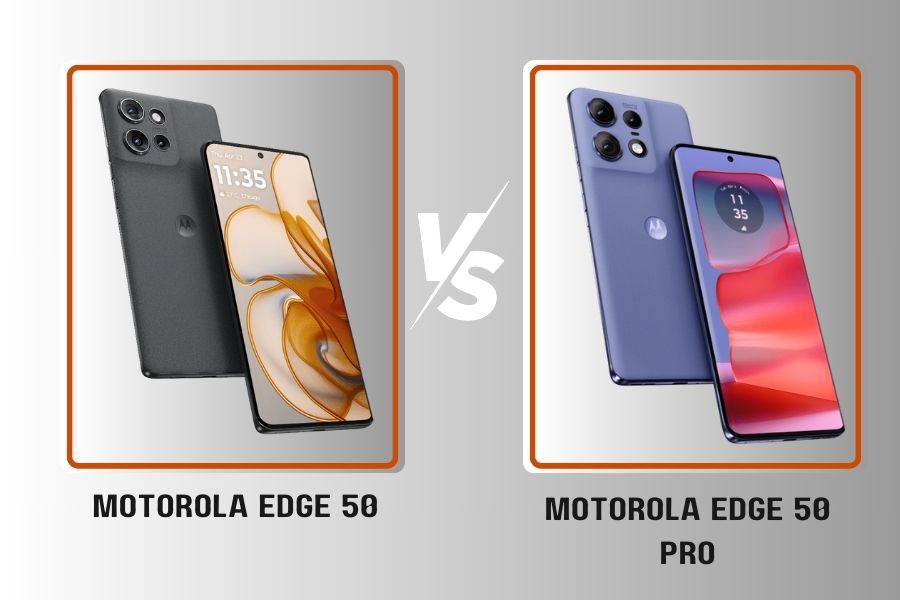
Despite what their names might suggest, the differences between these two phones are quite subtle. Let’s take a closer look to help you decide which one might be the better fit for you.
1. Display
In terms of display, there’s not much difference between the Motorola Edge 50 and the Pro model in most areas. Both feature a 6.7-inch pOLED AMOLED panel with a 1 billion color depth, a resolution of 1220 x 2712 pixels, and a 20:9 aspect ratio.

However, the Edge 50 has a 120Hz refresh rate, while the Pro model steps up to a 144Hz display. Both phones support HDR10+ and come with Gorilla Glass protection, but the exact generation of Gorilla Glass on the Pro variant isn’t specified, while the Edge 50 uses Gorilla Glass 5.
The Pro model offers a higher peak brightness of 2000 nits compared to the Edge 50’s 1600 nits and is the first smartphone with Pantone-validated colors for more accurate real-world colors and skin tones. However, this should make a very minimal difference in real-life usage.
| Preview | Product | |
|---|---|---|

|
Motorola Edge 50 Pro 5G with 68W Charger (Luxe Lavender, 256 GB) (8 GB RAM) | Check Price on Amazon |
Please Note: When you buy something using the links in our articles, we may earn a small commission at no cost to you.
2. Design and Durability
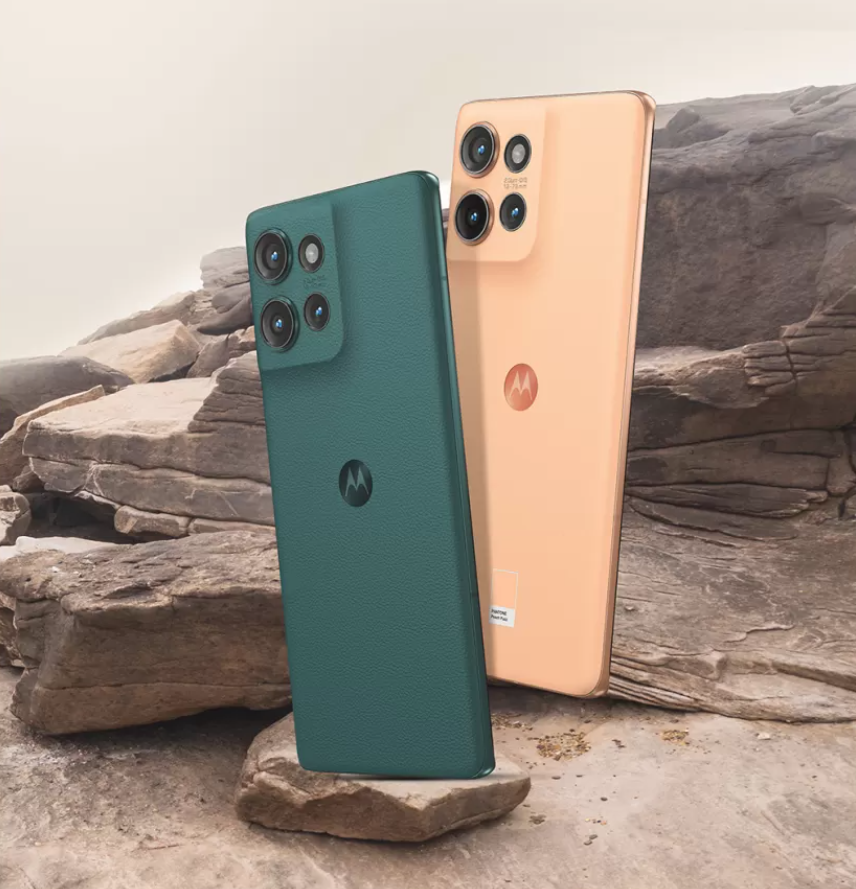
Both phones share a similar design language, featuring a sleek and modern look with a large display and minimal bezels. The Edge 50 comes in two finishes: vegan leather in the Jungle Green and Peach Fuzz color and vegan suede or PU finish in the Koala Grey color.
The Edge 50 Pro, although being a premium option, also features a PU finish in the Moonlight Pearl variant. But Motorola says it is designed by the Italian design house Mazzucchelli 1849 which has a handmade acetate finish. The other two color options, Luze Lavender and Black Beauty come with a vegan leather finish.
Both phones also have an IP68 water and dust resistance rating, ensuring protection from splashes and accidental dips.
One notable feature of the standard Edge 50 is its MIL-STD-810H certification, making it the world’s slimmest phone with this certification. Measuring just 7.79mm thick and weighing 180 grams, it has passed over 30 tests for extreme conditions, including temperature, moisture, dust, and drops. The Edge 50 Pro, though slightly thicker at 8.2mm and weighing 186 grams, remains a lightweight and convenient option.
3. Performance
Under the hood, both phones are powered by Qualcomm’s Snapdragon 7 series processors. The Edge 50 utilizes the Snapdragon 7 Gen 1, while the Pro gets the newer Snapdragon 7 Gen 3. While the Gen 3 offers a slight bump in performance, it’s unlikely to be a game-changer for everyday tasks.
Both phones are paired with 8GB of RAM in their base configurations, though the Pro offers a higher-end 12GB option for those who crave extra multitasking headroom. Storage options are identical across both phones, with 256GB and 512GB configurations available.
On the software front, both devices run the Android 14-based Hello UX interface right out of the box. The OS has all the usual Motorola perks such as Smart Connect, Moto Gestures, Moto Secure with Thinkshield, and Family Spaces, which are consistent across both models.
However, the Edge 50 Pro comes with a better software update policy with three years of Android OS updates and four years of security patches, compared to two years of Android updates and three years of security patches for the Edge 50.
4. Camera
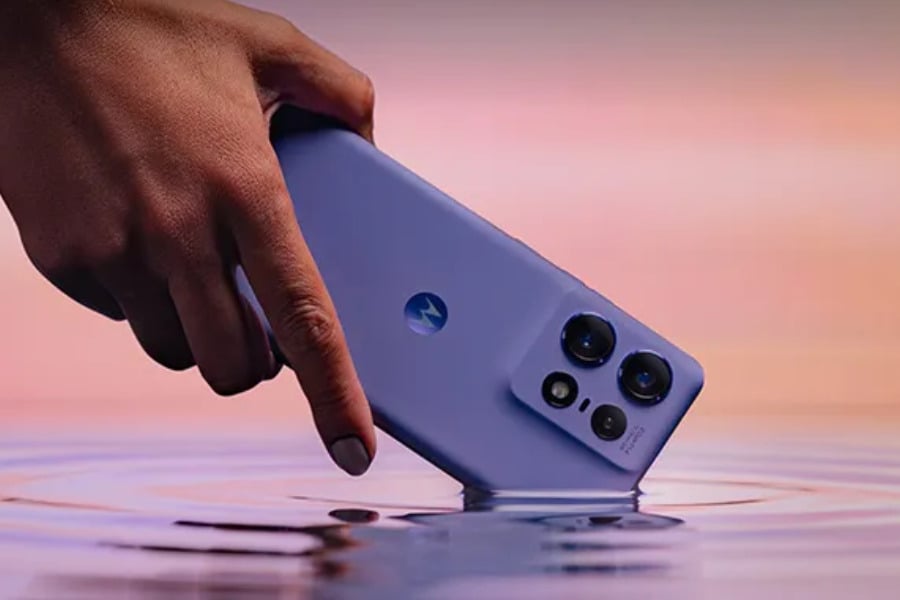
The Edge 50 features a triple-camera setup: a 50MP main sensor, a 13MP ultrawide sensor, and a 10MP telephoto lens with 3x optical zoom. The Edge 50 Pro also has a 50MP main sensor and a 13MP ultrawide sensor, but it upgrades the telephoto lens to a high-resolution 50MP sensor with the same 3x optical zoom.
The Pro’s high-res telephoto should naturally deliver better portraits, but for wide and ultrawide shots you can expect similar results. Both phones also offer similar rear video recording capabilities, topping out at 4K at 30fps. For selfies, the Edge 50 features a 32MP lens, while the Pro model boasts a 50MP camera.
5. Battery and Others
Despite its slim size, the Edge 50 has a bigger battery than the Pro model. It packs a 5000mAh cell compared to 4500mAh on the 50 Pro. However, the latter redeems itself with considerably faster charging support.
It supports 125W wired charging, which Motorola claims can juice up the phone to 100% in just 18 minutes. The Edge 50 offers a more modest 68W wired charging solution. They also support wireless charging, with the Pro model reaching 50W speeds compared to the Edge 50’s 15W.
One notable difference between the Edge 50 and the Edge 50 Pro is that the latter has a USB 3.1 port with DisplayPort 1.4 support which allows for faster data transfer and high-resolution video output to external displays. In contrast, the Edge 50 uses a USB 2.0 port and does not support video output via USB.
Apart from this, the two models are quite similar. Both feature Wi-Fi 6E support, in-display fingerprint sensors, dual speakers with Dolby Atmos, and NFC.
6. Price and Verdict
The Motorola Edge 50 is priced at Rs 27,999 for the 8GB/256GB model, while the Edge 50 Pro starts at Rs 31,999 for the same storage configuration. The higher cost of the Pro model is because of its higher refresh rate display, high-res telephoto lens, slightly better processor, faster wired and wireless charging, and a superior USB port.
If these improvements are important to you, the Edge 50 Pro could be worth the extra cost. However, if you’re looking for the best value without compromising on core performance, the Edge 50 is a no-brainer better deal.
Below is a quick recap of the specifications in the table:
| Feature | Motorola Edge 50 | Motorola Edge 50 Pro |
| Display | 6.7″ pOLED, 2712 x 1220 pixels, 120Hz, 1600 nits (peak), HDR 10+, Corning Gorilla Glass 5 | 6.7″ pOLED, 2712 x 1220 pixels, 144Hz, 2000 nits (peak), HDR 10+, Corning Gorilla Glass (unspecified) |
| Chipset | Snapdragon 7 Gen 1 | Snapdragon 7 Gen 3 |
| RAM | 8GB LPDDR4X | 8GB/12GB LPDDR5 |
| Storage | 256GB UFS 2.2 | 128GB/256GB/512GB UFS 2.2 |
| Rear Camera | 50MP main + 10MP telephoto + 13MP ultrawide | 50MP main + 50MP telephoto + 13MP ultrawide |
| Selfie Camera | 32MP | 50MP |
| Battery Capacity | 5000mAh | 4500mAh |
| Charging | 68W TurboPower, 15W Wireless | 125W wired, 50W wireless, 10W reverse wireless |
| Operating System | Android 14 | Android 14 |
| Biometrics | In-screen fingerprint reader | In-screen fingerprint reader |
| Connectivity | 5G, 4G, Wi-Fi 6E, Bluetooth 5.2, NFC | 5G, Wi-Fi 6E, Bluetooth 5.4, NFC |
| Audio | Dual stereo speakers with Dolby Atmos | Dual stereo speakers with Snapdragon Sound and Dolby Atmos |
| Price (India) | Rs 27,999 | Rs 31,999 (8GB), Rs 35,999 (12GB) |