
Add GIZMOCHINA as Preferred Source on Google
As an Amazon Associate, Gizmochina earns from qualifying purchases. Links on this page may earn us a commission at no extra cost to you.
Vivo recently launched the V40 series smartphones in India, with the V40 Pro as the top-of-the-line offering. Priced at around Rs 50,000, it enters a competitive market filled with strong contenders from Xiaomi, Oppo, and even its own sub-brand, iQOO.
We’ve already compared the V40 Pro to rivals like from other brands like Xiaomi 14 Civi and Reno 12 Pro. But how does it stack up against its own sub-brand’s offering, the iQOO 12?
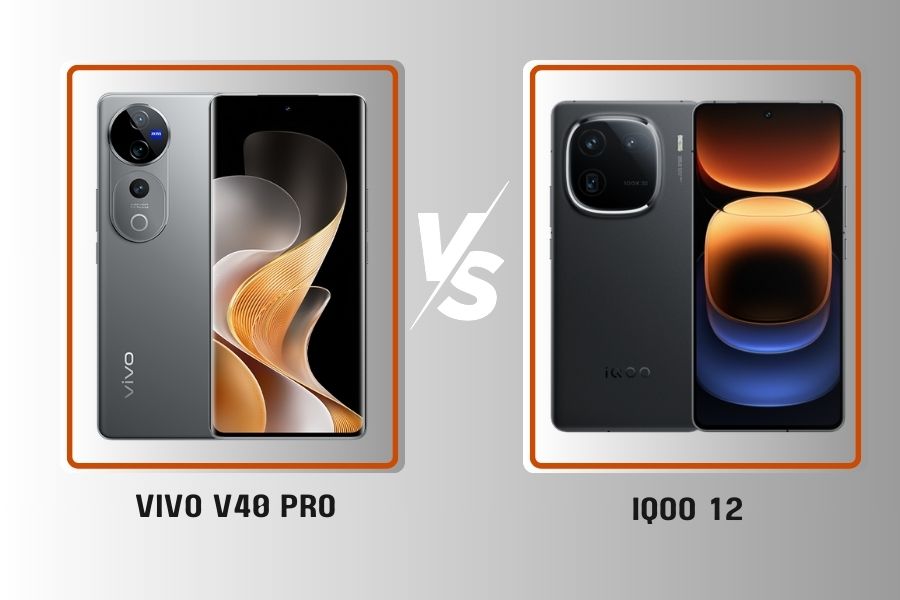
Both phones fall in a similar price range but cater to different needs. The V40 Pro offers a well-rounded experience, while the iQOO 12 focuses on delivering raw power. So which Vivo phone stands out? Let’s dive into the specs, features, and performance to help you decide.
Design and Build
At first glance, the Vivo V40 Pro and iQOO 12 share a similar design with glass fronts and backs. However, there are subtle differences that could sway your decision based on your priorities.
The Vivo V40 Pro is slightly lighter at 192 grams compared to the iQOO 12’s 198.5 to 203.7 grams. While this weight difference may seem minor, it does make the Vivo device feel marginally more comfortable in hand. The V40 Pro’s thinner profile (7.6mm) adds to this comfort.
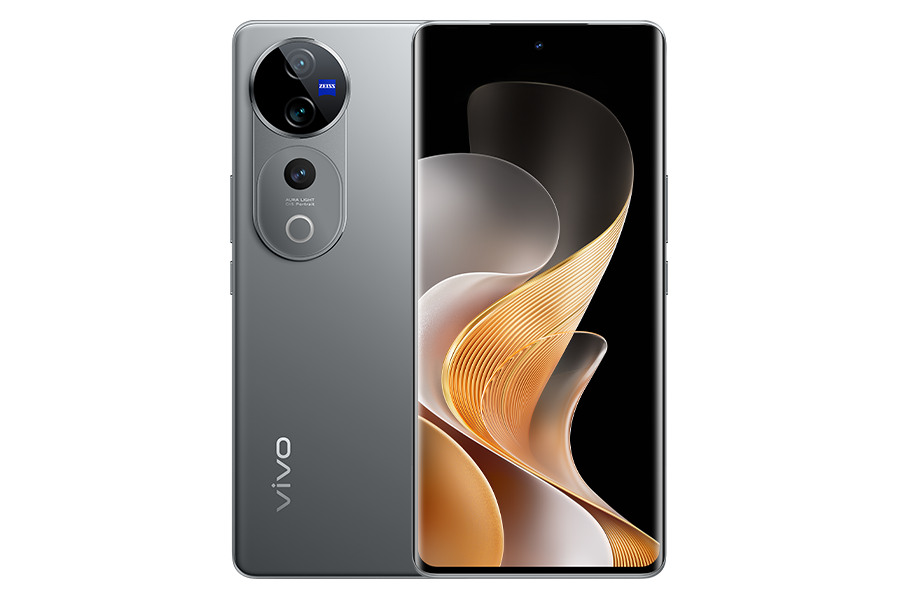
The iQOO 12, on the other hand, features an aluminum frame, which might offer a sturdier feel, but it is thicker at either 8.1mm or 8.4mm. Moreover, the V40 Pro’s IP68/IP69 rating provides superior protection against dust and water, compared to the iQOO 12’s IP64 rating, which is limited to dustproof and splashproof capabilities. If you need a phone that can handle tougher environments, the Vivo V40 Pro has a clear advantage.
Display
Both smartphones feature 6.78-inch AMOLED displays with a resolution of 1260 x 2800 pixels and a 20:9 aspect ratio, resulting in a sharp 453 ppi density. The Vivo V40 Pro provides a peak brightness of 4500 nits, supports HDR10+, and boasts a 120Hz refresh rate, ensuring vibrant content and smooth scrolling.
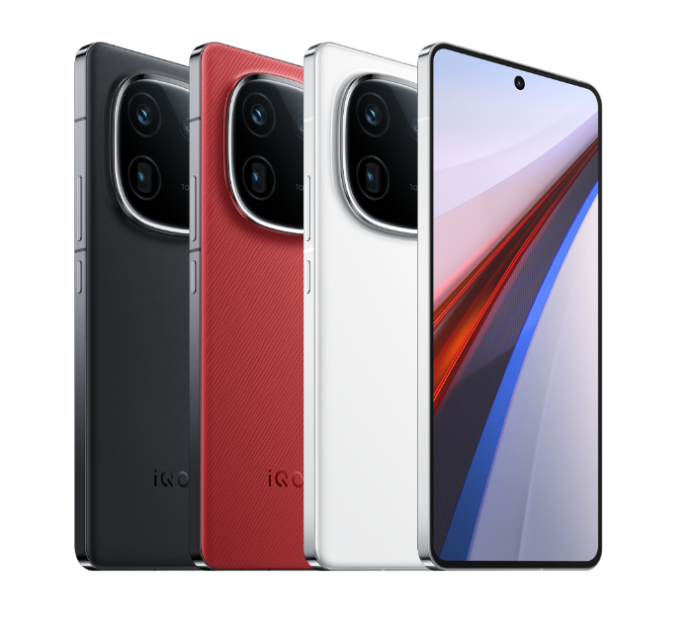
The iQOO 12 goes a step further with an LTPO display offering a higher refresh rate of 144Hz. Although its peak brightness of 3000 nits is lower than the Vivo V40 Pro, it should still be plenty enough for outdoor usage or watching HDR10+ content.
Performance and Software
For performance, the Vivo V40 Pro is powered by the MediaTek Dimensity 9200+ chipset, while the iQOO 12 features the Qualcomm Snapdragon 8 Gen 3. Both chipsets use a 4nm process for efficiency and power, but the Snapdragon 8 Gen 3, with its advanced Cortex-X4 core, may deliver slightly better performance in CPU-intensive tasks and gaming compared to the Dimensity 9200+.
Additionally, the iQOO 12 benefits from LPDDR5X RAM and UFS 4.0 storage, offering superior performance and faster read and write speeds than the LPDDR4X RAM and UFS 3.1 storage in the Vivo V40 Pro.
Both phones run on Android 14 with Funtouch 14 OS, but the iQOO 12 has the advantage in terms of software support. It will receive three years of Android updates and four years of security patches, while the Vivo V40 Pro is limited to just two years of major OS updates and three years of security updates.
Cameras
As for the camera hardware, the Vivo V40 Pro features a triple-camera setup on the back, with three 50MP sensors: a wide-angle, a telephoto with 2x optical zoom, and an ultrawide. The phone has Zeiss optics and a Ring-LED flash adds to its appeal, particularly for users interested in low-light photography and consistent color reproduction.
The front-facing camera is also impressive, with a 50MP sensor capable of 4K video recording, which could be a strong point for content creators.
The iQOO 12 also features a triple-camera setup but with different specifications. The main sensor is a 50MP wide-angle, accompanied by a 64MP periscope telephoto lens with 3x optical zoom and a 50 MP ultrawide lens. The front-facing camera, however, is a more modest 16 MP.
Battery and Charging
Battery capacity and charging speeds are key areas where these phones differ. The Vivo V40 Pro has a larger 5500 mAh battery, offering a slight edge in endurance over the iQOO 12’s 5000 mAh battery.
However, the iQOO 12 excels in charging speed with its 120W wired charging, comparatively faster than the V40 Pro’s 80W. If quick recharges are important to you, the iQOO 12 will get you back to full power faster, making it a more convenient choice for heavy users.
Connectivity and Additional Features
Both smartphones are well-equipped with the latest connectivity options. The Vivo V40 Pro includes Wi-Fi 7 support, Bluetooth 5.3, and NFC, making it a future-proof option for most wireless connectivity needs. It also features a range of positioning systems, including GPS, GALILEO, GLONASS, QZSS, BDS, and NavIC, catering to various global markets.
The iQOO 12, while similar in many respects, offers a few additional features that might appeal to specific users. It includes Wi-Fi 7, Bluetooth 5.4 with aptX HD and Snapdragon Sound, and an infrared port.
Price
Price is often a decisive factor, and both devices are competitively priced within their segment. The Vivo V40 Pro starts at ₹49,999 (approximately $596) for the 8GB RAM + 256GB storage variant and goes up to ₹55,999 (approximately $667) for the 12GB RAM + 512GB storage model.
The iQOO 12, slightly higher in price, starts at ₹52,999 (around $635) for the 12GB RAM + 256GB variant, with the 16GB RAM + 512GB model priced at ₹59,999 (around $720).
| Preview | Product | |
|---|---|---|

|
iQOO 12 5G (Alpha, 12Gb Ram, 256Gb Storage) |India’s 1St Snapdragon 8 Gen 3 Backcase for Mobile… | Check Price on Amazon |
Please Note: When you buy something using the links in our articles, we may earn a small commission at no cost to you.
Conclusion
Both the Vivo V40 Pro and iQOO 12 offer compelling packages, but their appeal depends on the user’s priorities. The Vivo V40 Pro leans towards a more refined design with an emphasis on durability, battery life, and a balanced performance.
In contrast, the iQOO 12 targets users who prioritize raw power, faster charging, and advanced camera features. The choice between these two devices ultimately depends on individual preferences and usage patterns.
Here’s a quick recap of Vivo V40 Pro and iQOO 12’s specifications:
| Feature | Vivo V40 Pro | iQOO 12 |
| Dimensions | 164.4 x 75.1 x 7.6 mm | 163.2 x 75.9 x 8.1 mm or 8.4 mm |
| Weight | 192 g | 198.5 g or 203.7 g |
| Build | Glass front, glass back | Glass front, aluminum frame, glass back |
| Water Resistance | IP68/IP69 dust/water resistant (up to 1.5m for 30 min) | IP64 dustproof and water splashproof (China only) |
| Display Type & Features | 6.78 inches AMOLED, 1260 x 2800 pixels, 1B colors, HDR10+, 120Hz, 4500 nits (peak) | 6.78 inches LTPO AMOLED, 1260 x 2800 pixels, 1B colors, HDR10+, 144Hz, 1400 nits (HBM), 3000 nits (peak) |
| OS | Android 14, Funtouch OS 14 | Android 14, Funtouch OS 14 |
| Chipset | MediaTek Dimensity 9200+ | Qualcomm Snapdragon 8 Gen 3 |
| Memory | 8/12GB LPDDR4X RAM | 12/16GB LPDDR5X RAM |
| Storage | 256/512GB UFS 3.1 | 256/512GB, 1TB UFS 4.0 |
| Main Camera | Triple: 50 MP (wide), 50 MP (telephoto, 2x optical zoom), 50 MP (ultrawide) | Triple: 50 MP (wide), 64 MP (periscope telephoto, 3x optical zoom), 50 MP (ultrawide) |
| Selfie Camera | 50 MP, f/2.0 | 16 MP, f/2.5 |
| Loudspeaker | Stereo speakers | Stereo speakers, Snapdragon Sound |
| 3.5mm Jack | No | No |
| Connectivity | Wi-Fi 7, dual-band; Bluetooth 5.3, A2DP, LE | Wi-Fi 7, tri-band, Bluetooth 5.4, A2DP, LE |
| Battery | Li-Ion 5500 mAh, non-removable | Li-Ion 5000 mAh, non-removable |
| Charging | 80W wired | 120W wired |
| Colors | Ganges Blue, Titanium Gray, Moonlight White | Black, Red, White (BMW M branding) |
| Biometrics | Fingerprint (under display, optical) | Fingerprint (under display, optical) |


Comments