
Add GIZMOCHINA as Preferred Source on Google
Google‘s strategic launch of the Pixel 9 series, including various models, positions the company for potential market share gains. By releasing these devices ahead of Apple’s iPhone 16 series launch, Google aims to capitalize on the upcoming holiday shopping season and capture a larger share of the global smartphone market, according to TechInsights.
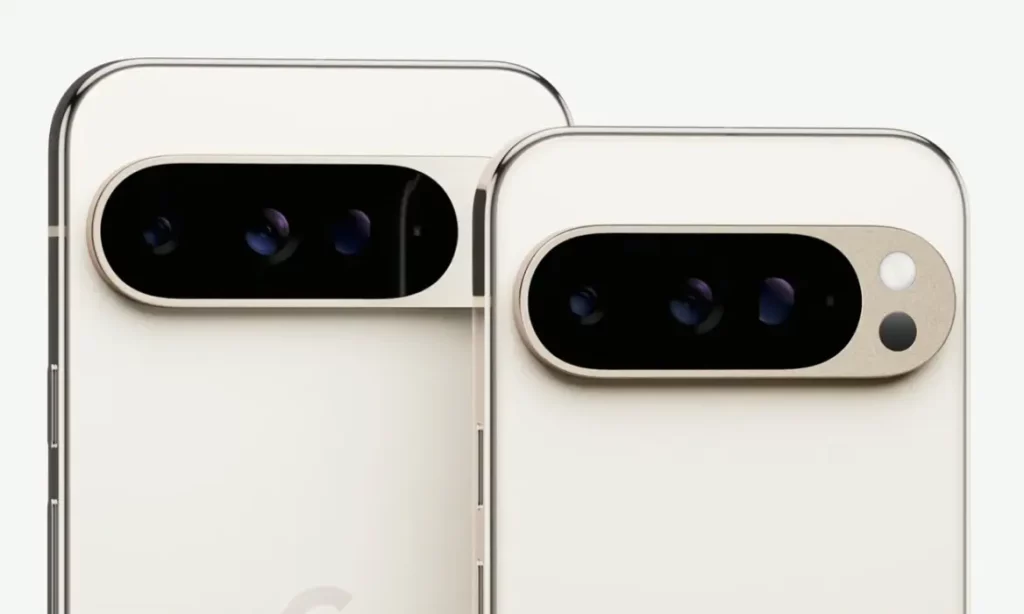
Google’s Pixel 9 series may drive double-digit growth in market share
The Pixel series includes the Pixel 9, Pixel 9 Pro, Pixel 9 Pro XL, and the much-anticipated Pixel 9 Pro Fold. This model stands out with subtle yet significant upgrades over last year’s Pixel Fold. Known for its high profit margins and appeal to tech-savvy consumers, the Pixel 9 Pro Fold is expected to elevate Google’s reputation for technological innovation.
In addition to the foldable model, Google has introduced a smaller variant, the Pixel 9 Pro, which offers almost the same specifications as the larger Pixel 9 Pro XL. This move is designed to attract users who prefer more compact devices without sacrificing performance, potentially broadening the appeal of the Pixel 9 series to a wider audience.
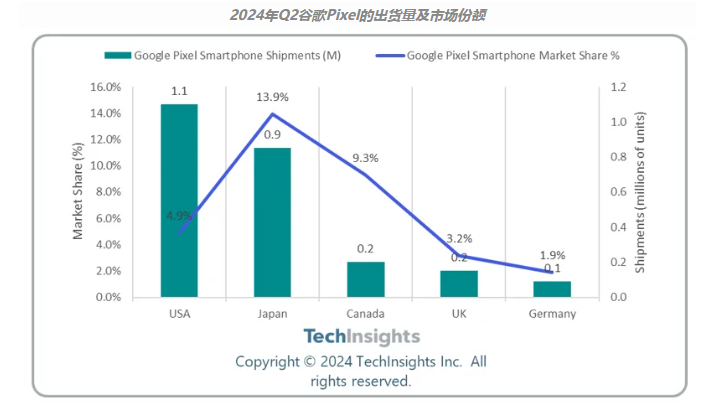
The global expansion of the Pixel 9 series is another significant aspect of Google’s strategy. The series is set to launch in 32 markets worldwide, reflecting Google’s intent to achieve the double-digit growth targets projected by TechInsights for 2024 and 2025.
By expanding its reach to more markets, Google aims to strengthen its presence in the competitive smartphone industry, despite the absence of plans to release the Pixel 9 series in China.
TechInsights also reports that the global smartphone market grew by 7.6% year-over-year in the second quarter of 2024, reaching 289.6 million units. This growth marks the third consecutive quarter of recovery, driven by strong demand in emerging markets like Africa, Latin America, and Asia-Pacific.
Samsung currently leads the market with a 19% share, followed by Apple at 15%, while other brands like Xiaomi, Vivo, and Transsion have also performed well, though their growth rates are beginning to slow.
Despite ongoing challenges such as inventory corrections and geopolitical uncertainties, the competition among top smartphone brands remains robust, with emerging markets continuing to be a key driver of global growth.



Comments